
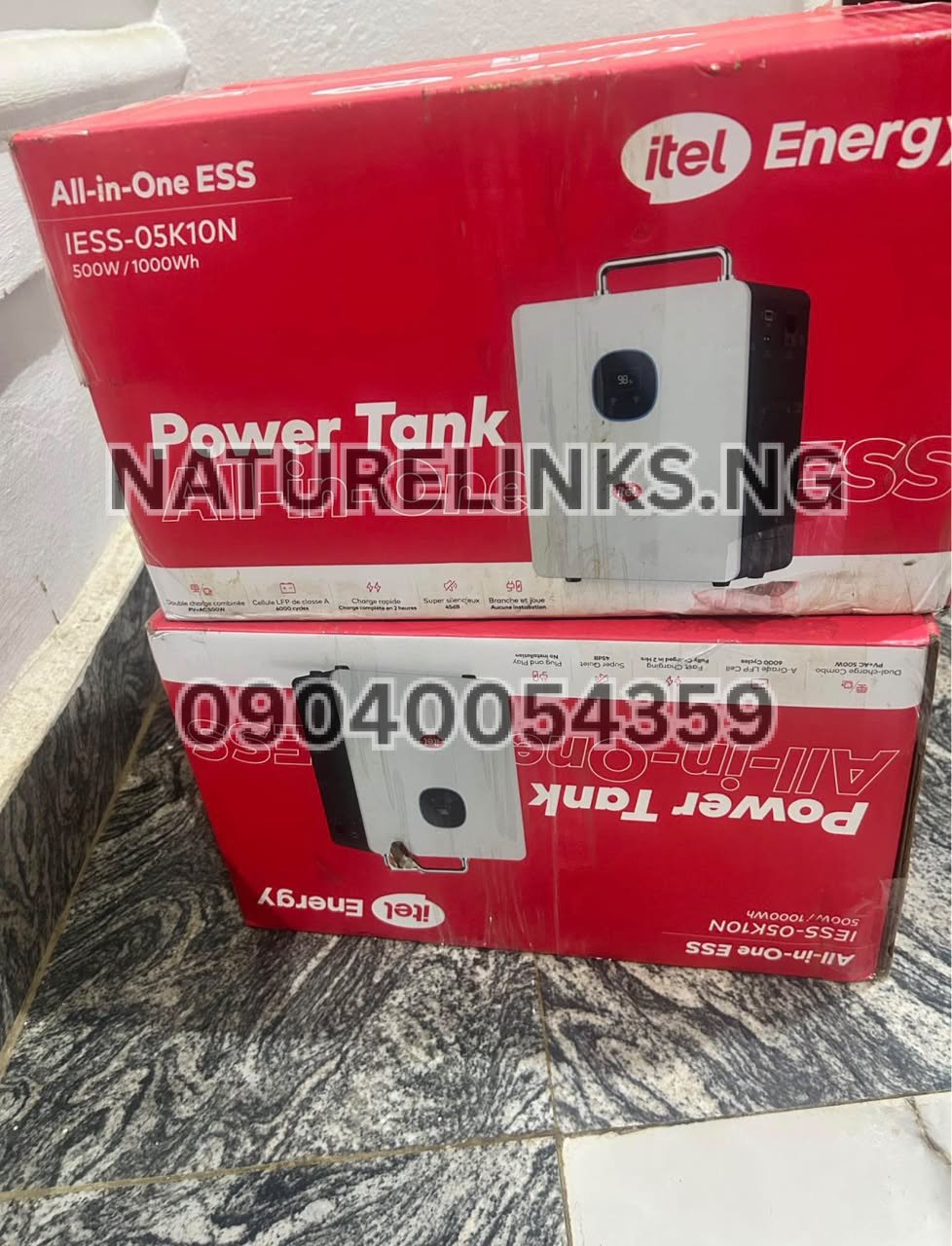
If you are searching “How long can Itel Power Tank run a sewing machine?”, the answer depends mainly on the wattage of your sewing machine, how continuously you sew, and the efficiency of the Power Tank and inverter.
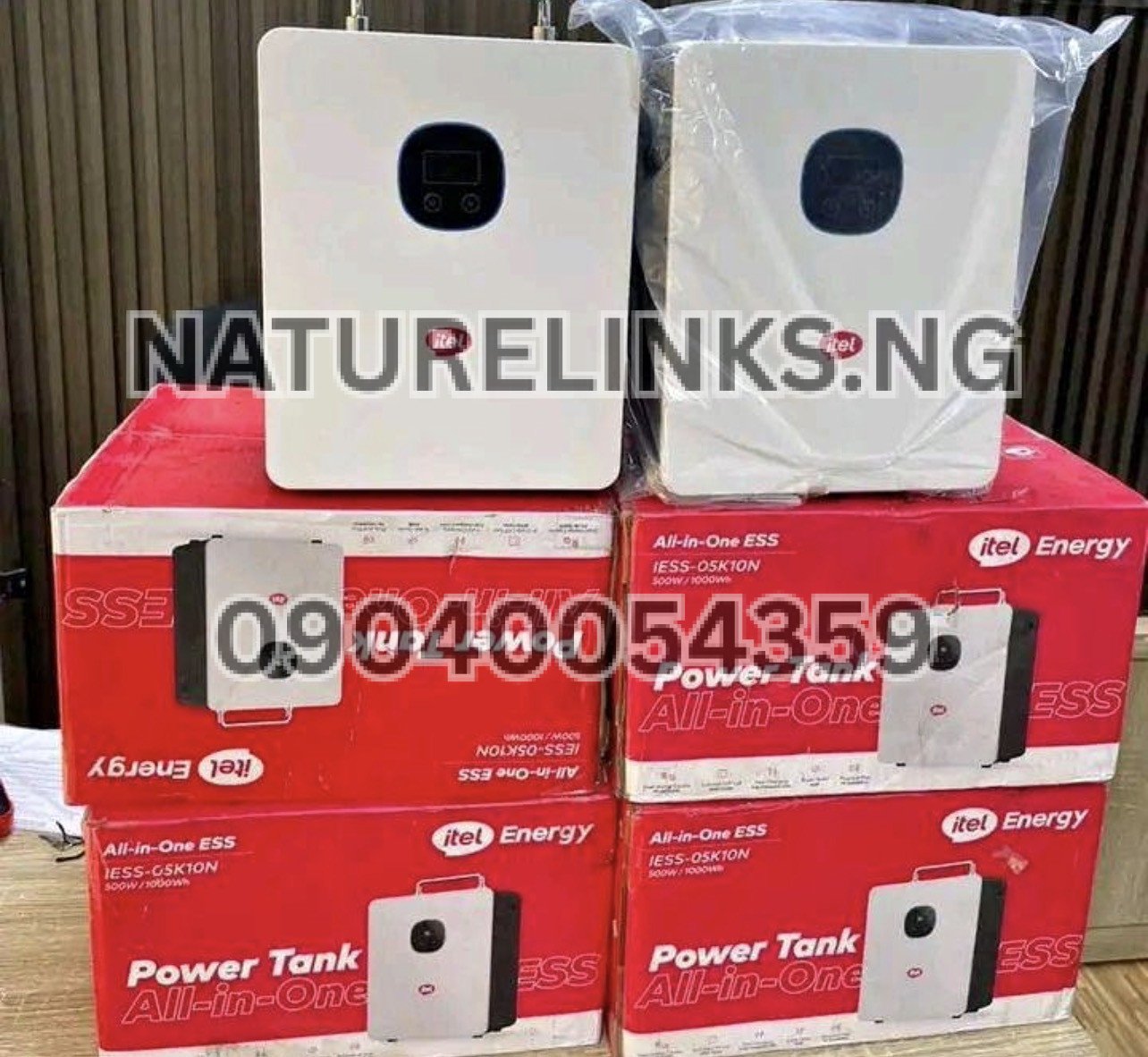
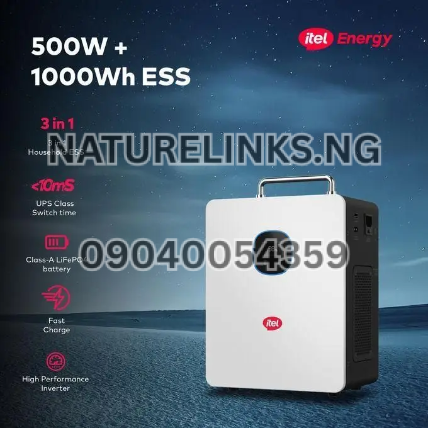
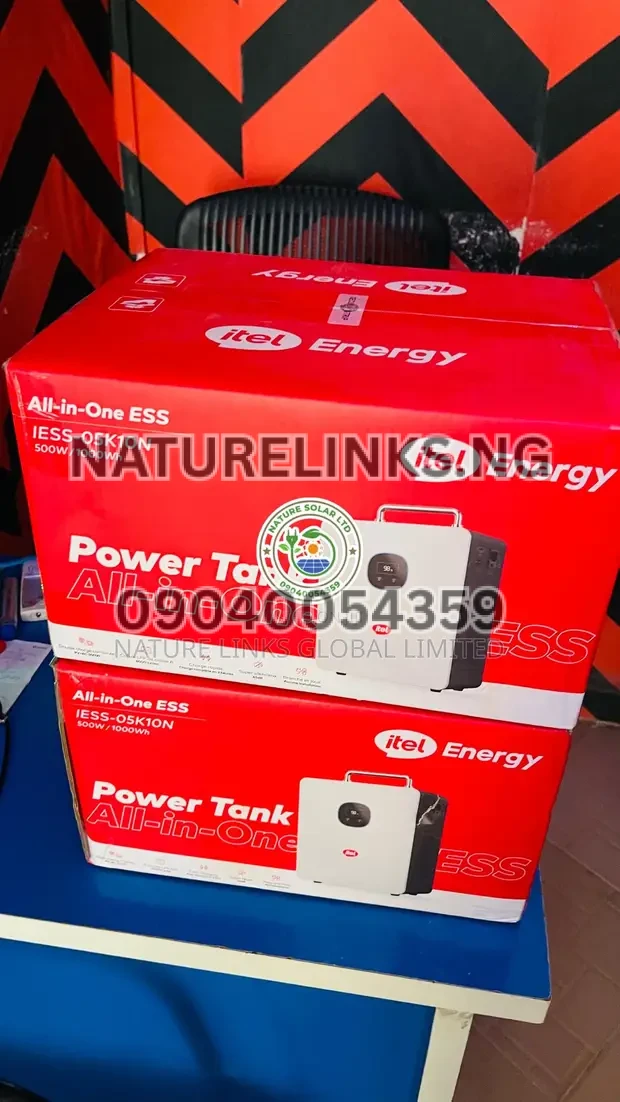
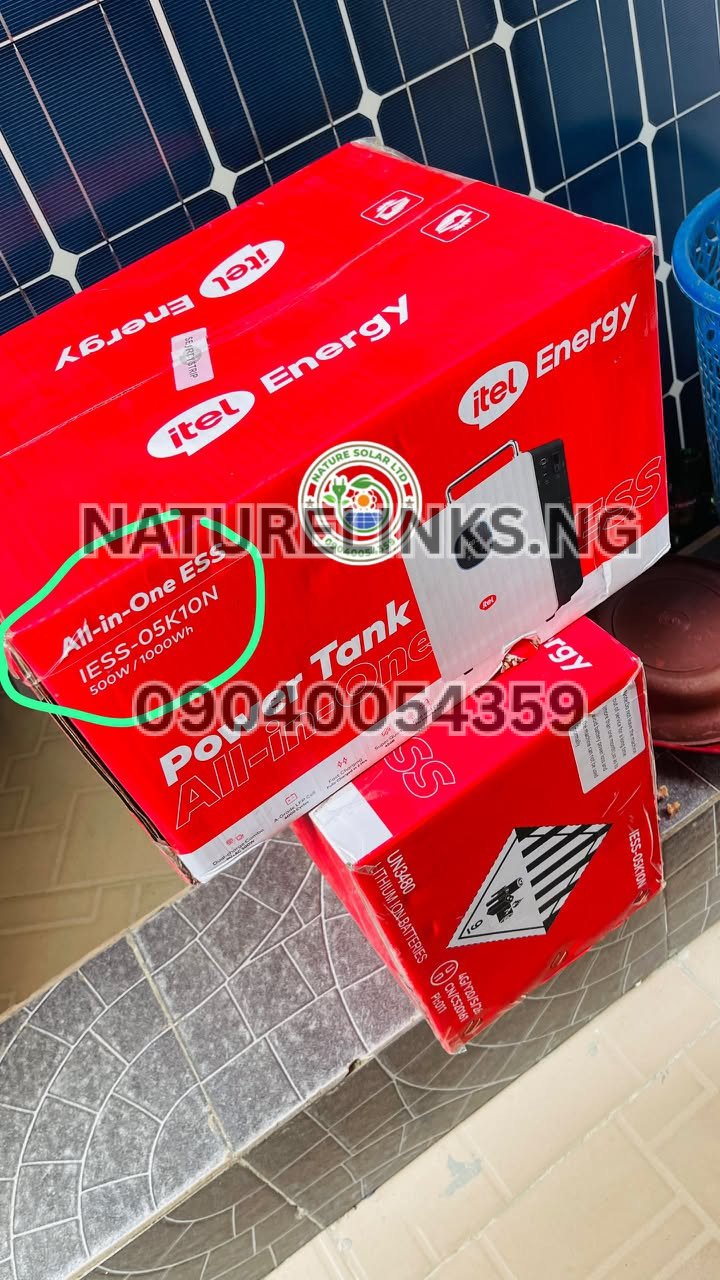
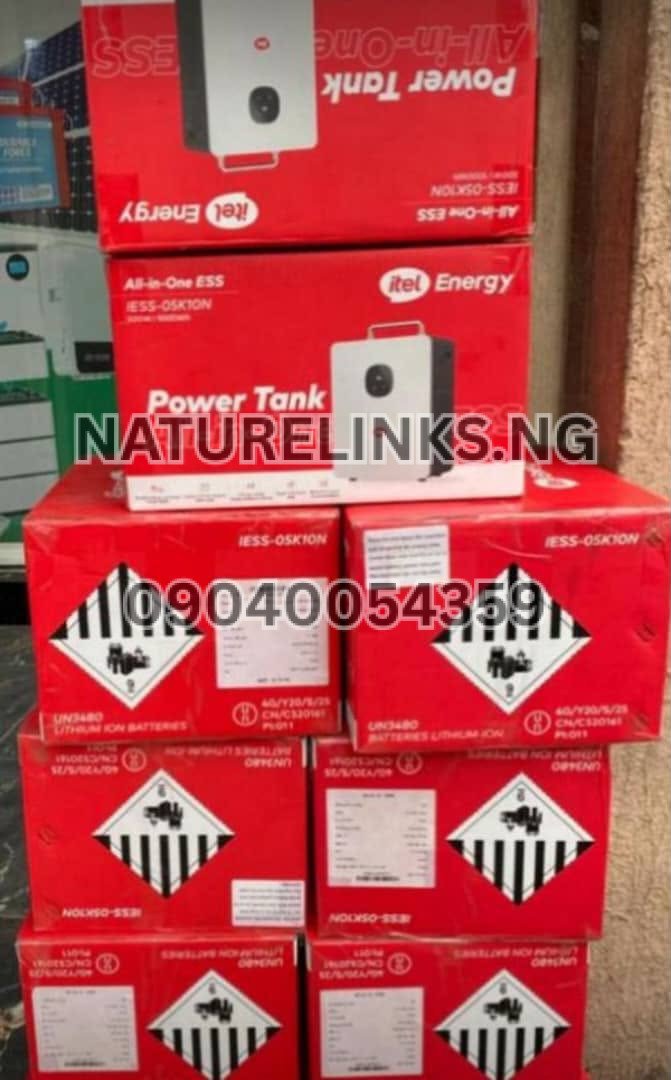
The commonly sold Itel Power Tank configuration in Nigeria has a 1,000Wh (1kWh) LiFePO₄ battery and 500W rated AC output.
For a typical domestic electric sewing machine using around 50–100W, a fully charged 1,000Wh Itel Power Tank could theoretically provide several hours of operation. One Nigerian sewing-machine listing specifies a 50W motor, while other commonly listed domestic machines are around 84–90W.
In real use, however, you should allow for inverter losses and the sewing machine’s changing power demand.
How Long Can Itel Power Tank Run a Sewing Machine?
The commonly advertised Itel Power Tank 500W/1000Wh can run many domestic sewing machines because its 500W continuous AC output is substantially above the typical running consumption of a small domestic machine.
A useful estimate is:
Estimated runtime = Battery capacity ÷ Sewing-machine power consumption
For a 1,000Wh battery:
| Sewing machine load | Theoretical runtime | Practical expectation* |
|---|---|---|
| 50W | 20 hours | Around 15–18 hours |
| 75W | 13.3 hours | Around 10–12 hours |
| 90W | 11.1 hours | Around 8–10 hours |
| 100W | 10 hours | Around 8–9 hours |
| 150W | 6.7 hours | Around 5–6 hours |
| 200W | 5 hours | Around 4–4.5 hours |
| 300W | 3.3 hours | Around 2.7–3 hours |
| 400W | 2.5 hours | Around 2–2.2 hours |
| 500W | 2 hours | Around 1.6–1.8 hours |
*These practical figures are estimates, not guaranteed runtimes. Actual results vary with inverter efficiency, battery condition, machine type, sewing speed, load cycling and other connected devices.
What Is the Typical Wattage of a Sewing Machine?
Sewing-machine power consumption varies considerably.
A Nigerian listing for an electric sewing machine specifies a 50W motor.
A Singer 4423 listing gives a rating of 84W, while another listing for the same model gives 90W.
Some domestic and computerized machines can consume more, while industrial sewing-machine motors can be substantially more powerful. One Nigerian listing for an industrial Juki machine, for example, describes a 550W servo motor.
This is why you should check the rating plate or manufacturer’s manual of your exact sewing machine before calculating runtime.
Can Itel Power Tank Run a Sewing Machine?
Yes, the 500W-rated Itel Power Tank configuration can run many domestic sewing machines whose operating power is comfortably below 500W.
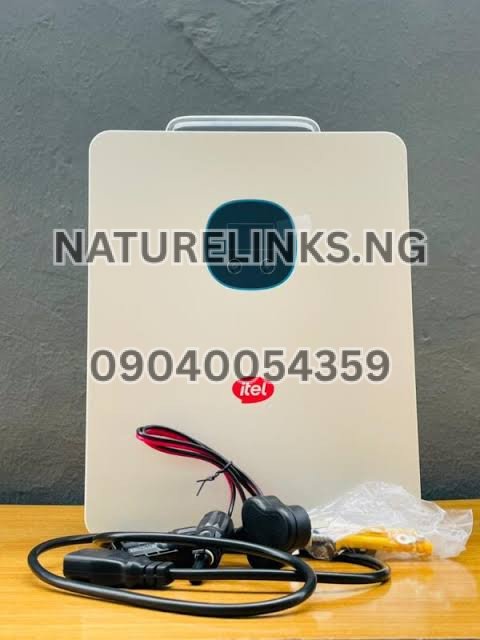
The documented Power Tank has:
- 1,000Wh battery capacity
- 500W rated AC output
- LiFePO₄ battery
- Pure sine-wave AC output
- Battery Management System
- AC charging
- Solar charging capability
- MPPT solar charging on applicable configurations
- Overload and short-circuit protection
The pure sine-wave output is particularly relevant when powering electronic equipment because it provides an AC waveform suitable for many sensitive electronic loads.
Can Itel Power Tank Run an Industrial Sewing Machine?
This depends on the motor.
A small industrial machine with a low-power servo motor may be compatible if its continuous and starting requirements stay within the Power Tank’s limits.
However, do not assume every industrial sewing machine can run from a 500W Power Tank.
Some industrial sewing machines use motors rated at several hundred watts. For example, one Nigerian listing describes a Juki DDL-8100 setup with a 550W electronic servo motor.
Since the commonly advertised Itel Power Tank is rated at 500W continuous output, a 550W motor already exceeds that nominal rating before considering startup or other loads.
For industrial tailoring businesses, check the motor’s:
- Rated wattage
- Starting/surge requirement
- Voltage
- Current
- Motor type
- Controller requirements
before purchase.
Can Itel Power Tank Run a Sewing Machine and Light?
Yes, provided the combined load remains within the Power Tank’s output rating.
For example, consider:
- Sewing machine: 90W
- LED lamp: 10W
- Phone charger: 10W
Total estimated load:
90W + 10W + 10W = 110W
A 110W combined load is comfortably below the 500W rated output of the commonly advertised Power Tank configuration.
The actual runtime would depend on the machine’s real consumption and the other connected devices.
Can Itel Power Tank Run a Sewing Machine and Fan?
It can, provided the total load is within the Power Tank’s output capability.
For example:
- Sewing machine: 90W
- Small fan: 50W
- LED light: 10W
Total:
150W
A 150W load is below the 500W continuous rating of the commonly sold Power Tank.
However, if you add a television, laptop, pressing iron or other appliance, the total load can rise quickly.
How Many Hours Can a 1,000Wh Itel Power Tank Run a Sewing Machine?
A 1,000Wh battery gives you a useful starting point for calculating runtime.
At a constant theoretical 50W load:
1,000Wh ÷ 50W = 20 hours
At 100W:
1,000Wh ÷ 100W = 10 hours
At 200W:
1,000Wh ÷ 200W = 5 hours
But these are theoretical energy calculations.
When using the AC outlet, energy passes through the inverter, which has conversion losses. The sewing-machine motor may also draw different amounts of power depending on how hard it is working.
Therefore, actual runtime will normally be shorter.
How Long Can Itel Power Tank Run a 50W Sewing Machine?
If your sewing machine draws approximately 50W, a 1,000Wh Power Tank has a theoretical runtime of:
1,000 ÷ 50 = 20 hours
Allowing for conversion losses, a reasonable planning estimate would be roughly 15–18 hours, although actual runtime can differ.
A Nigerian product listing specifically identifies a sewing-machine motor at 50W, making this a useful example for a low-power domestic sewing machine.
How Long Can Itel Power Tank Run a 90W Sewing Machine?
At 90W:
1,000Wh ÷ 90W = approximately 11.1 hours theoretically.
After allowing for inverter losses and other real-world factors, you might plan around 8–10 hours rather than assuming 11.1 hours of uninterrupted sewing.
A Singer 4423 listing gives 90W, while another Nigerian listing gives 84W for the model.
How Long Can Itel Power Tank Run a 100W Sewing Machine?
For a 100W sewing machine:
1,000Wh ÷ 100W = 10 hours theoretically.
A practical estimate might be approximately 8–9 hours, depending on inverter efficiency and actual machine usage.
If the machine is not running continuously—for example, if you stop frequently to change fabric, thread needles or adjust the garment—the battery may last considerably longer in terms of elapsed working time.
How Long Can Itel Power Tank Run a 200W Sewing Machine?
At 200W:
1,000Wh ÷ 200W = 5 hours theoretically.
Allowing for system losses, approximately 4–4.5 hours is a more conservative planning figure.
This demonstrates why identifying the sewing machine’s actual wattage is important before purchasing a Power Tank.
How Long Can Itel Power Tank Run a 300W Sewing Machine?
At 300W:
1,000Wh ÷ 300W = approximately 3.3 hours theoretically.
A practical planning estimate would be around 2.7–3 hours, depending on actual power consumption and inverter efficiency.
The 300W load remains below the 500W rated AC output, but it consumes the battery considerably faster than a 50W or 90W domestic sewing machine.
How Long Can Itel Power Tank Run a 500W Sewing Machine?
At a constant 500W:
1,000Wh ÷ 500W = 2 hours theoretically.
Actual runtime would be shorter.
More importantly, 500W is the rated continuous AC output of the commonly advertised Power Tank, so a sewing machine that continuously requires the full 500W leaves essentially no output headroom for other appliances and may be unsuitable if its startup requirement exceeds the available output.
For such a load, a higher-output power station may be more appropriate.
Can a Tailor Use Itel Power Tank During a Power Outage?
A tailor can use a suitably sized Itel Power Tank for backup power, particularly with a lower-power domestic sewing machine.
This can help keep basic sewing operations running during short electricity interruptions without starting a petrol generator.
Potential advantages include:
- Quiet operation
- No petrol required during battery operation
- Portable design
- Rechargeable battery
- Solar charging capability
- Pure sine-wave AC output
- UPS functionality on supported configurations
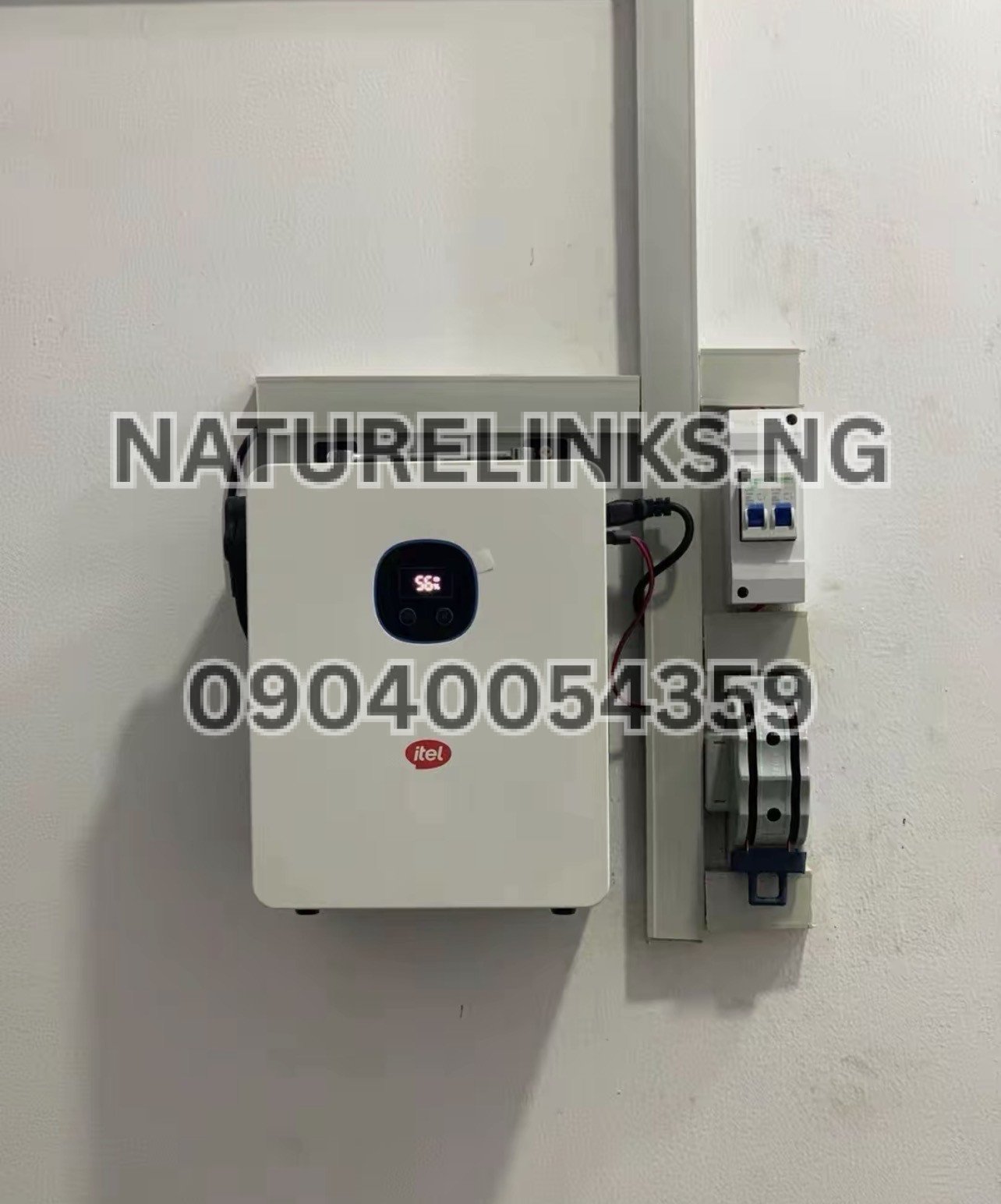
The documented Power Tank is designed as an all-in-one energy-storage system combining the battery, inverter and charging system.
Is Itel Power Tank Good for Fashion Designers?
For a fashion designer using a compatible domestic or lower-power sewing machine, the Power Tank can provide useful backup electricity.
It may be particularly convenient for:
- Home-based tailors
- Fashion designers
- Sewing students
- Small tailoring shops
- Clothing businesses
- Alteration services
- Dressmakers
- Small fashion studios
Before buying, calculate the combined load of the sewing machine, lighting, fan, laptop and other equipment.
Can Itel Power Tank Run a Sewing Machine All Day?
It depends on the machine’s wattage and whether the Power Tank can be recharged during the day.
A low-power 50–100W sewing machine can consume significantly less energy than a 300–500W machine.
For all-day commercial sewing, the most practical setup may involve:
Itel Power Tank + appropriate solar panels + grid charging
The documented Power Tank configuration supports AC charging and solar charging, with listings describing up to approximately 400W PV input.
Solar charging can replenish the battery during daylight, while grid charging can be used whenever electricity is available.
Can Itel Power Tank Charge While Running a Sewing Machine?
The exact behavior depends on the model and operating mode.
The documented Power Tank configurations include UPS/backup functionality and AC/solar charging.
However, you should confirm that the exact model supports the charging-and-load arrangement you intend to use.
If the Power Tank is simultaneously charging and powering a sewing machine, the available charging power and output load should be considered separately.
Can Itel Power Tank Run a Sewing Machine and Laptop?
Yes, provided the combined power requirement remains within the Power Tank’s rated output.
For example:
- Sewing machine: 90W
- Laptop: 60W
- LED light: 10W
Total:
160W
That is below the 500W continuous AC output of the commonly advertised Power Tank.
Actual consumption should be checked from the appliance labels.
Can Itel Power Tank Run a Sewing Machine and Iron?
This combination requires more caution.
A sewing machine may use only around 50–100W, but an electric pressing iron can consume several hundred watts or more.
A typical domestic sewing machine plus a high-wattage iron could approach or exceed the 500W continuous output rating.
Therefore, do not assume that a 500W Power Tank can safely run a sewing machine and pressing iron simultaneously.
Check the wattage of both devices and compare the combined load with the Power Tank’s rated output.
Can Itel Power Tank Run an Overlocker or Serger?
It depends on the specific machine.
Overlockers and sergers have different motor and electronic specifications.
Check the machine’s rating plate for:
- Watts
- Voltage
- Amperage
- Frequency
If the machine’s required power and startup demand fall within the Power Tank’s capabilities, it may be compatible.
Can Itel Power Tank Run a Sewing Machine With a Servo Motor?
Potentially, depending on the servo motor’s rating and startup requirements.
Servo motors are often used in industrial sewing machines and can have different power characteristics from traditional clutch motors.
The important figures are the motor’s actual wattage and peak/startup demand.
Do not choose the Power Tank solely because the sewing machine is described as having a “servo motor.”

What Size Itel Power Tank Do I Need for a Sewing Machine?
For a low-power domestic sewing machine, the commonly advertised 500W/1000Wh Itel Power Tank may provide substantial runtime because many domestic machines consume far less than 500W.
For larger industrial machines, calculate:
Machine running watts + other appliance watts
Then compare that figure with the Power Tank’s continuous AC output.
If the machine approaches or exceeds 500W, consider a higher-output energy-storage system rather than operating the Power Tank at its limit.
What Is the Battery Capacity of Itel Power Tank?
The commonly advertised configuration has a 1,000Wh / 1kWh LiFePO₄ battery.
The 1,000Wh figure describes stored energy.
It should not be confused with the 500W inverter output.
In simple terms:
1,000Wh = how much energy is stored.
500W = approximately how much AC power the inverter can continuously deliver.
Both figures matter when selecting a backup system for a sewing machine.
What Does 500W Mean for a Sewing Machine?
The 500W figure means the Power Tank’s commonly advertised inverter is rated for 500W continuous AC output.
It does not mean the battery will run for exactly two hours with every appliance.
Runtime depends on the appliance load.
A 50W sewing machine uses roughly one-tenth of the power of a 500W load, so the battery can theoretically last much longer.
Does Sewing Speed Affect Battery Runtime?
Yes, indirectly.
A sewing machine’s actual electrical consumption can vary depending on its design and how it operates.
Continuous high-speed sewing may result in different energy consumption from intermittent sewing.
For this reason, the wattage printed on the machine provides a useful planning figure, but actual battery performance is best determined through real-world usage.
Can Itel Power Tank Run a Sewing Machine at Night?
Yes, provided the sewing machine is compatible with the Power Tank’s output rating and the battery has sufficient charge.
This is one of the useful applications of portable battery power for tailors who need to continue working during electricity outages.
Because the Power Tank operates without the engine noise and exhaust associated with a petrol generator, it can also be convenient for indoor work.

Is Itel Power Tank Better Than a Generator for Sewing?
The two options have different characteristics.
The Power Tank provides:
- Battery-powered electricity
- Quiet operation
- No petrol consumption while running from stored energy
- No engine exhaust during battery operation
- Portable operation
- Solar charging capability
- AC charging
- Pure sine-wave output
A petrol generator can provide higher continuous power when properly sized and refueled, but it requires fuel and produces exhaust and engine noise.
For indoor sewing, never operate a petrol generator inside a room or enclosed workspace because of carbon-monoxide risk.
Itel Power Tank Price in Nigeria
Current Nigerian listings show considerable variation for the commonly advertised 500W/1000Wh Itel Power Tank.
One Nigerian listing currently shows approximately ₦279,000, while other Nigerian marketplace listings show prices around ₦350,000–₦399,000 and higher depending on the seller and package.
Price can change because of:
- Exchange rates
- Stock availability
- Seller
- Warranty
- Solar-panel package
- Accessories
- Promotions
- Delivery costs
Always confirm the current price and exact specification before payment.
Where to Buy Itel Power Tank in Nigeria?
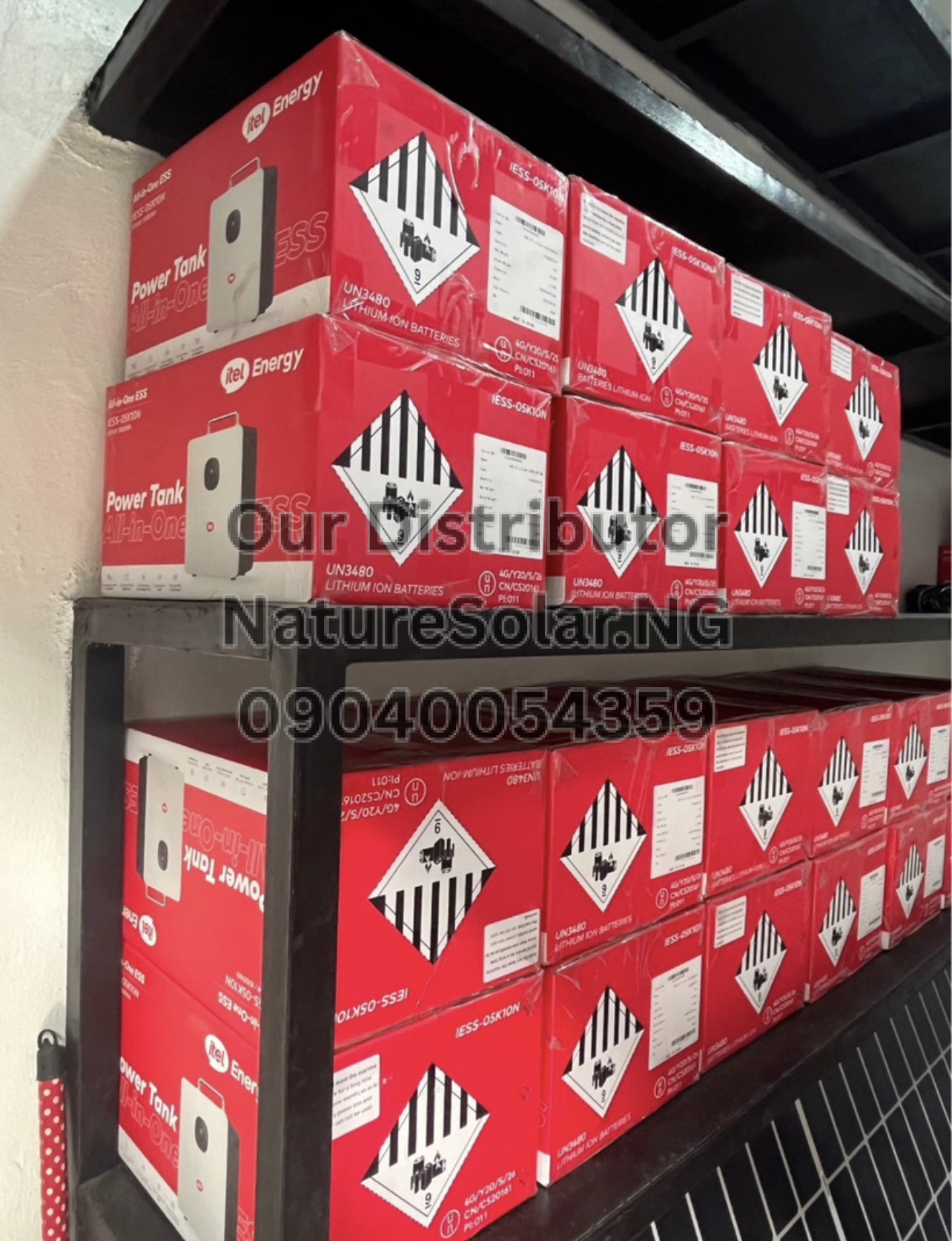
For buyers looking for genuine Itel Power Tank products, the supplied distributor information is:
The Best Seller: Nature Links Nigeria Limited [NatureLinks.NG]
Distributor: Nature Solar Global Limited
CEO: Mr. Joseph Chikeleze
Call: 07049528019
WhatsApp: 09040054359
Shop Address: F1571 Upstairs (F-Line), Alaba International Market, Lagos State 🇳🇬
Before buying, ask for confirmation of:
- Exact model number
- Battery capacity
- Rated output
- Surge output
- Solar input
- AC charging specification
- Warranty
- Accessories
- Current price
Why Tailors Should Check Sewing-Machine Wattage Before Buying
A common mistake is to purchase a power station based only on the battery capacity.
A 1,000Wh battery is useful, but the inverter also has a maximum output.
For the commonly advertised Itel Power Tank:
Battery: 1,000Wh
Continuous AC output: 500W
Listed surge capability: up to 1,000W on some configurations.
Therefore, a sewing machine with a 50W motor and a sewing machine with a 550W industrial motor are very different loads.

How to Calculate Itel Power Tank Sewing Machine Runtime
Use this simple formula:
Runtime = Battery capacity (Wh) ÷ Appliance power (W)
For example:
1,000Wh ÷ 100W = 10 hours
Then allow for inverter losses.
A simple planning calculation might assume approximately 80–90% usable energy through the AC inverter, depending on conditions.
For a 100W sewing machine:
1,000Wh × 0.85 ÷ 100W ≈ 8.5 hours
This is only an estimate, not a guaranteed manufacturer runtime.
Example: Tailor Using a 50W Sewing Machine
Suppose your setup uses:
- Sewing machine: 50W
- LED lamp: 10W
- Phone charger: 10W
Total:
70W
Theoretical runtime:
1,000Wh ÷ 70W = approximately 14.3 hours
With conversion losses, a practical result could be lower.
This setup illustrates why low-power tailoring equipment can work well with a 1kWh battery.
Example: Tailor Using a 90W Sewing Machine
Suppose:
- Sewing machine: 90W
- LED lamp: 10W
- Fan: 50W
Total:
150W
Theoretical runtime:
1,000Wh ÷ 150W = approximately 6.7 hours
Actual runtime would be lower after accounting for inverter losses.
Example: Tailor Using a 200W Sewing Machine
Suppose:
- Sewing machine: 200W
- LED light: 10W
- Fan: 50W
Total:
260W
Theoretical runtime:
1,000Wh ÷ 260W = approximately 3.85 hours
Actual runtime could be lower.
This demonstrates how additional appliances significantly affect battery life.

Can a Sewing Business Depend Only on Itel Power Tank?
For small-scale or backup operations, it may be useful.
For a full-time commercial tailoring business, the answer depends on the machine, working hours, number of machines and available charging sources.
A business operating several industrial sewing machines may require a larger inverter and battery system.
A home-based tailor using one low-power domestic sewing machine may have much lower energy requirements.
Itel Power Tank Solar Charging for Tailors
Solar charging can be particularly useful for tailors who want to replenish battery energy during daylight hours.
The documented 1,000Wh/500W configuration supports solar charging and lists up to approximately 400W PV input on the documented configuration.
This can create a useful operating cycle:
Solar → Power Tank → Sewing machine
The exact solar charging time depends on sunlight, panel capacity, panel orientation, shading, temperature and the battery’s state of charge.
Can Itel Power Tank Reduce Generator Fuel Costs for Tailors?
Using stored battery energy can reduce the amount of time a tailor needs to run a petrol generator.
For example, the Power Tank can be used for essential low-power equipment during shorter outages, while a generator can be reserved for situations requiring higher power.
Actual savings depend on electricity tariffs, generator fuel consumption, charging costs and how frequently the battery is used.
Important Safety Advice for Sewing-Machine Users
When using a Power Tank in a tailoring shop:
- Keep the unit dry.
- Keep ventilation openings clear.
- Do not overload the AC output.
- Inspect cables regularly.
- Do not use damaged extension cords.
- Keep fabric, thread and other combustible materials away from hot electrical equipment.
- Do not modify the Power Tank.
- Use the recommended charging accessories.
- Stop using the unit if it develops unusual heat, smell, smoke or physical damage.
A tailoring workspace often contains fabrics and other combustible materials, so keeping electrical equipment in good condition is particularly important.
Frequently Asked Questions
1. How long can Itel Power Tank run a sewing machine?
A 1,000Wh Itel Power Tank can theoretically run a 100W sewing machine for about 10 hours, while a 50W machine could theoretically run for about 20 hours. Actual runtime will be lower because of inverter losses and real-world operating conditions.
2. Can Itel Power Tank run a sewing machine?
Yes, the commonly advertised 500W/1000Wh configuration can power many domestic sewing machines whose power requirements are well below 500W.
3. Can Itel Power Tank run an industrial sewing machine?
It depends on the motor. Some industrial machines can use several hundred watts. A machine exceeding the Power Tank’s 500W continuous rating should not be connected to that configuration.
4. How many watts does a sewing machine use?
There is no single figure. A Nigerian listing specifies a 50W sewing-machine motor, while examples such as the Singer 4423 are listed around 84–90W. Industrial machines can be considerably higher.
5. Can Itel Power Tank run a sewing machine and fan?
Yes, if the combined wattage remains below the Power Tank’s rated output and the individual appliances are compatible. A 90W sewing machine plus a 50W fan, for example, is about 140W before other loads.
6. Can Itel Power Tank run a sewing machine all day?
A low-power sewing machine may operate for many hours from a fully charged 1,000Wh battery, but continuous all-day operation depends on its wattage and how often the battery can be recharged. Solar charging can help extend operation during daylight.
7. Can Itel Power Tank run a sewing machine and pressing iron?
It depends on the iron’s wattage. Because pressing irons can consume substantial power, the combined load may exceed the 500W continuous rating. Check both appliance ratings before using them simultaneously.
8. How much is Itel Power Tank 500W/1000Wh in Nigeria?
Current Nigerian listings vary significantly. Examples include approximately ₦279,000, ₦350,000 and ₦399,000, depending on the seller and package.
9. Can Itel Power Tank charge with solar?
Yes. The documented configuration supports solar charging, with up to approximately 400W PV input listed for the 1,000Wh/500W system.
10. Where can I buy genuine Itel Power Tank in Nigeria?
Customers can contact Nature Links Nigeria Limited / Nature Solar Global Limited using 07049528019 or 09040054359 on WhatsApp, or visit F1571 Upstairs (F-Line), Alaba International Market, Lagos State 🇳🇬 to confirm current availability, specifications and price.
Final Answer: How Long Can Itel Power Tank Run a Sewing Machine?
If your main search is “How long can Itel Power Tank run a sewing machine?”, the answer depends on the sewing machine’s wattage.
For the commonly advertised 1,000Wh/500W Itel Power Tank, a 50W sewing machine could theoretically run for around 20 hours, a 100W machine around 10 hours, a 200W machine around 5 hours and a 300W machine around 3.3 hours. These figures are theoretical; actual runtime will be shorter because of inverter losses and variations in machine power consumption.
For a typical domestic sewing machine rated around 50–100W, the 1kWh Power Tank provides considerable battery capacity relative to the machine’s running demand. Nigerian listings include 50W sewing-machine examples, while common Singer domestic machines are listed around 84–90W.
Industrial sewing machines require more careful checking because some motors can approach or exceed the Power Tank’s 500W continuous output.

Conclusion
The Itel Power Tank can be a useful backup-power solution for Nigerian tailors and fashion designers, particularly those operating low-power domestic sewing machines. The commonly advertised configuration combines a 1,000Wh LiFePO₄ battery with a 500W pure-sine-wave AC inverter, along with AC and solar charging capabilities.
The most important step before buying is to check your sewing machine’s actual wattage. A low-power 50–100W machine can potentially operate for many hours from a fully charged 1kWh battery, while a 300–500W machine will consume the stored energy much faster. Industrial machines require particular attention to motor rating and startup demand.
For current Itel Power Tank price in Nigeria, availability, warranty, model specifications and purchasing information, customers can contact Nature Solar Global Limited, the accredited distributor in Nigeria, or Nature Links Nigeria Limited using the contact details below.
The Best Seller: Nature Links Nigeria Limited [NatureLinks.NG]
Distributor: Nature Solar Global Limited
CEO: Mr. Joseph Chikeleze
Call: 07049528019
WhatsApp: 09040054359
Shop Address: F1571 Upstairs (F-Line), Alaba International Market, Lagos State 🇳🇬



2 thoughts on “How long can Itel Power Tank run a sewing machine?”