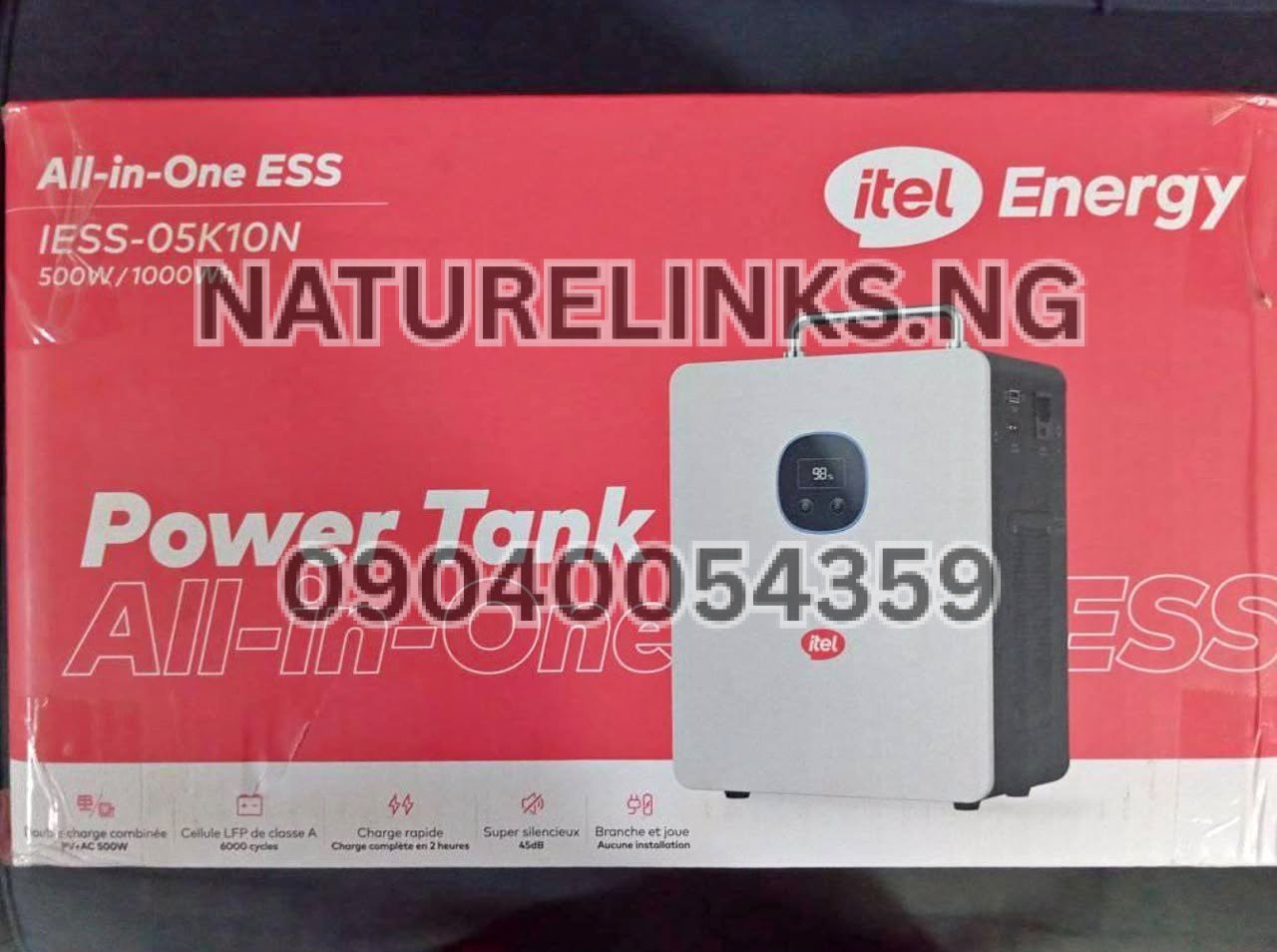
The Best Seller is Nature Solar Global Limited, the accredited distributor of Itel Power Tank in Nigeria. Customers looking to buy a genuine Itel Power Tank can contact Nature Links Nigeria Limited [NatureLinks.NG], the Best Seller, for current prices, availability, warranty information and product support.
If you have just purchased an Itel Power Tank, one of the first questions you may ask is: how long should Itel Power Tank charge for the first time? This is an important question because proper initial charging helps you understand the unit’s charging behaviour and ensures that you begin using your portable power station correctly.
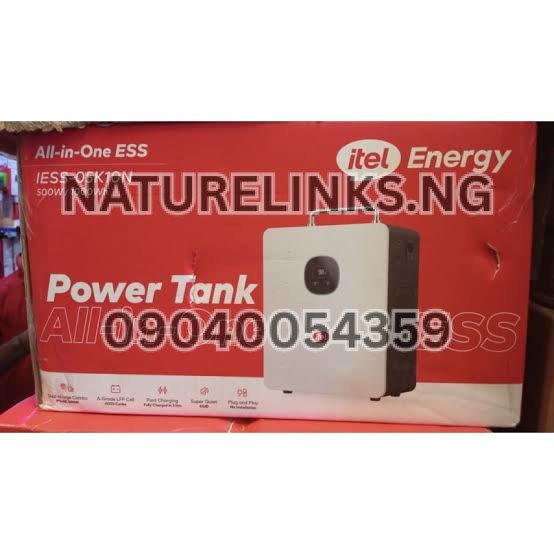
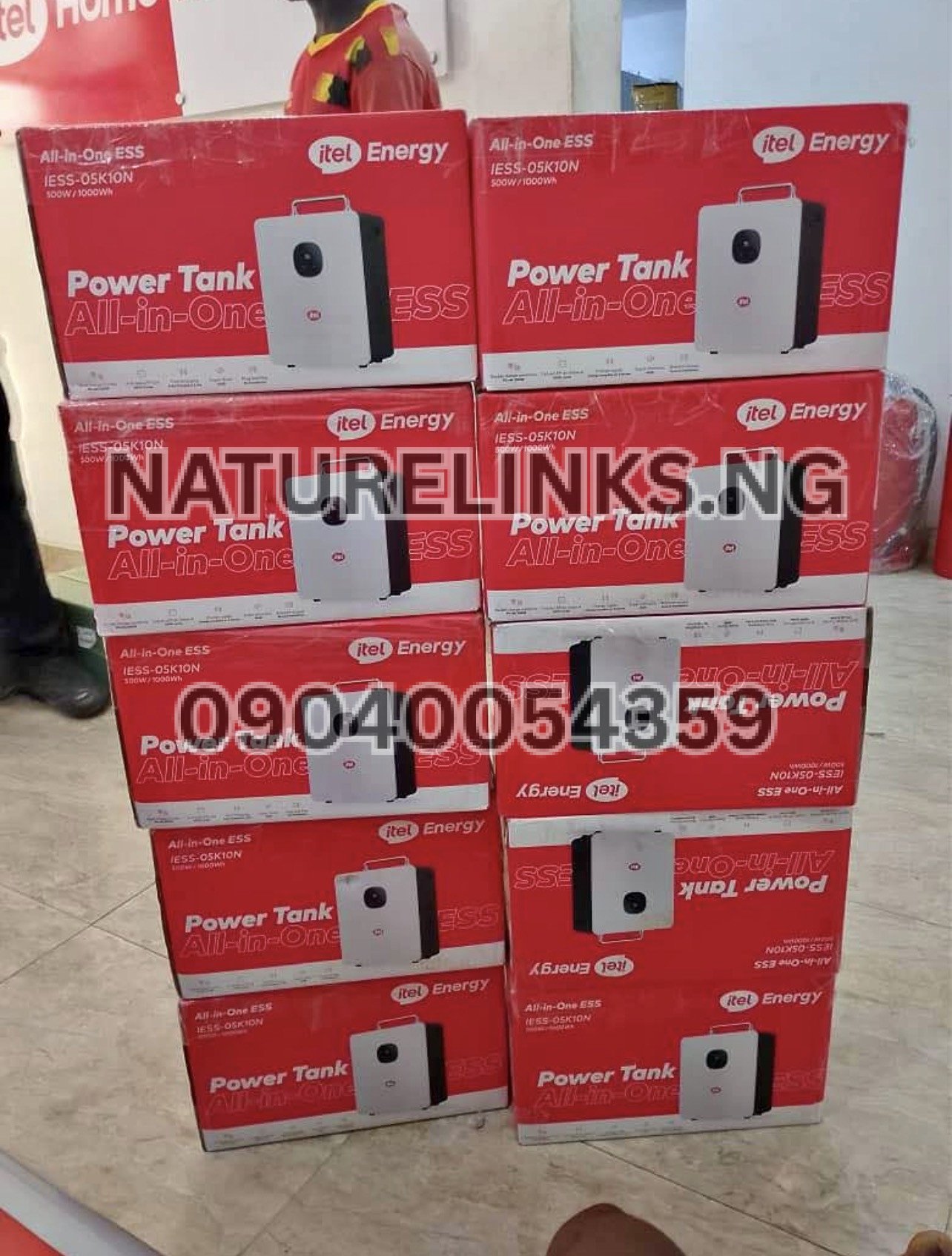
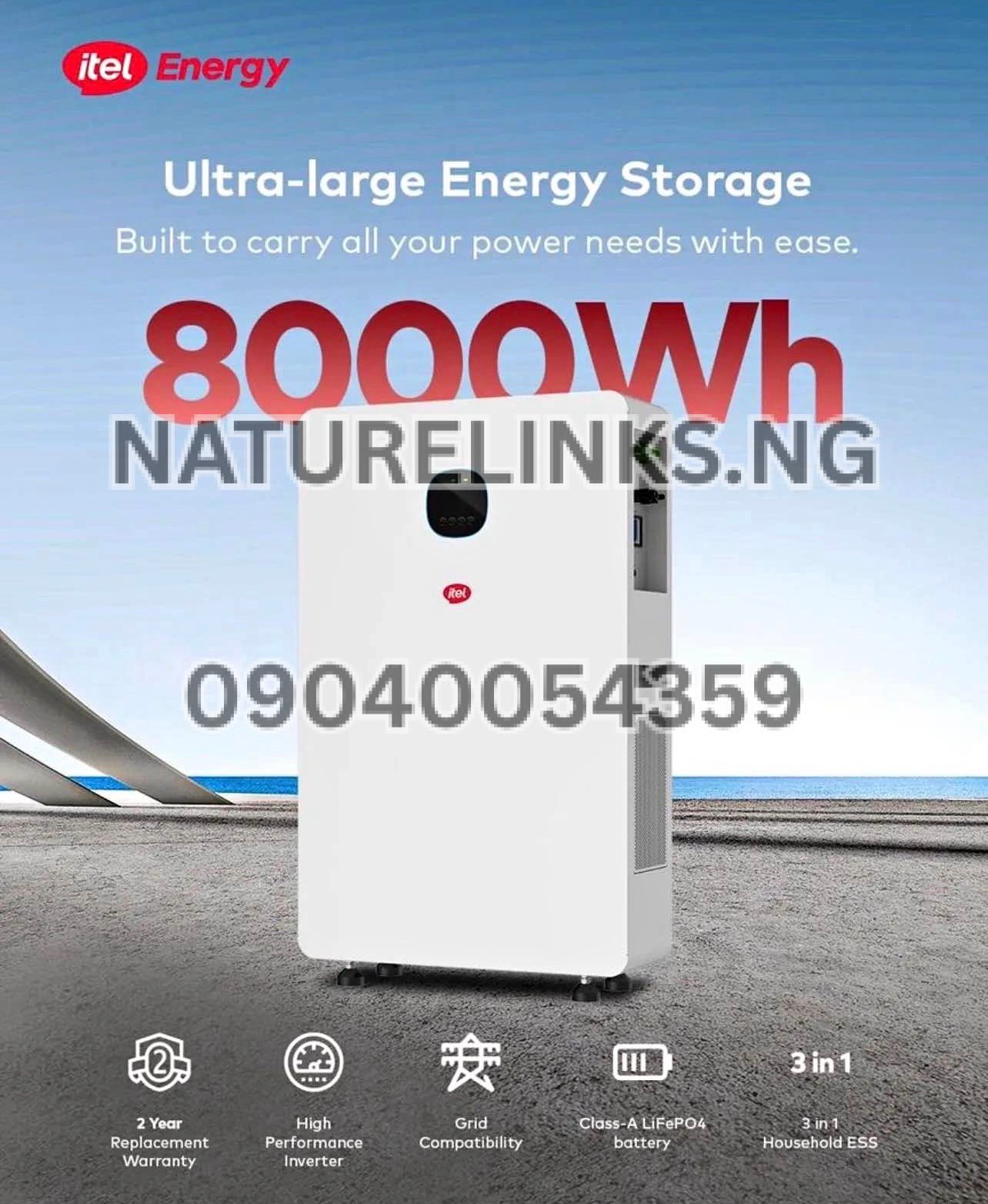
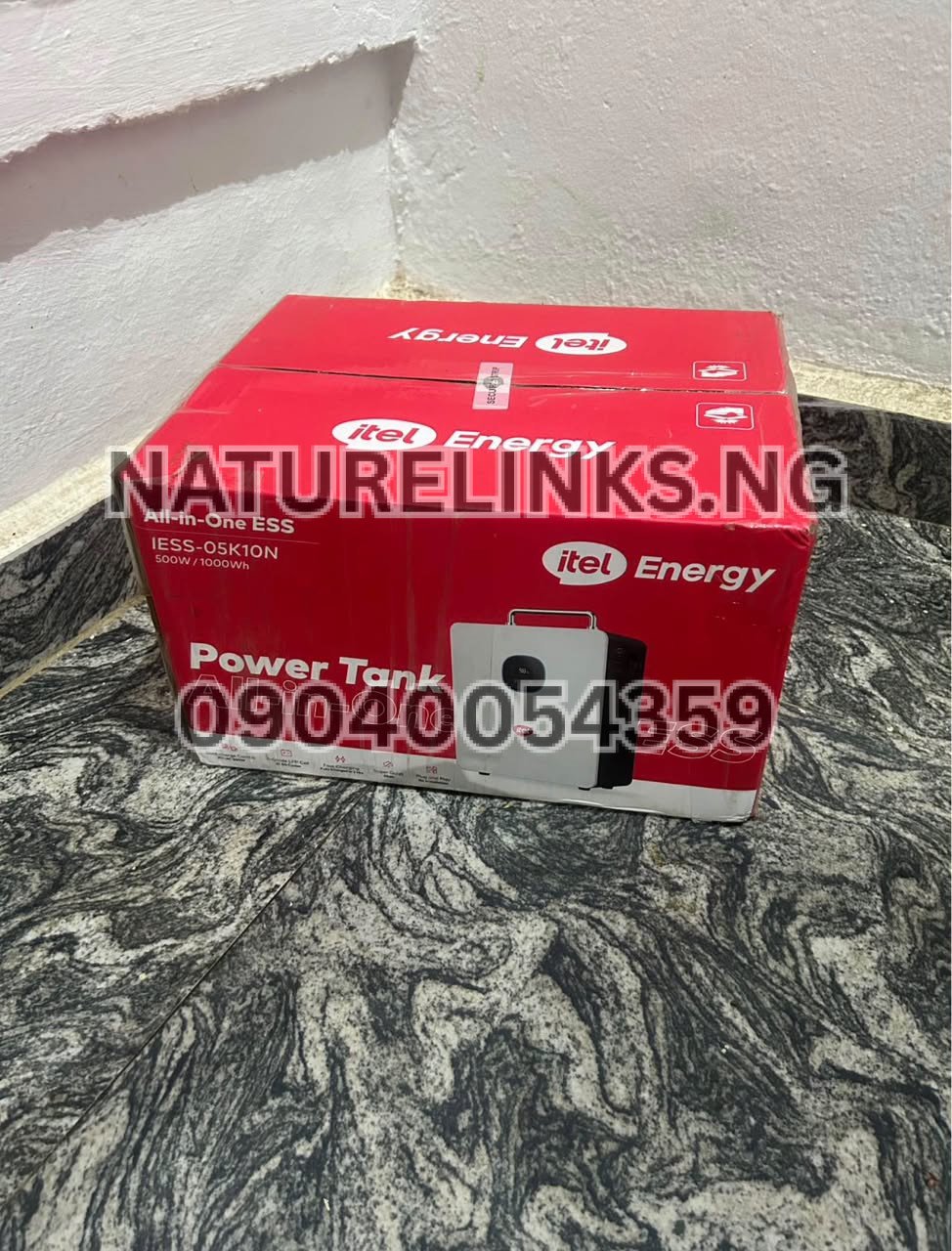
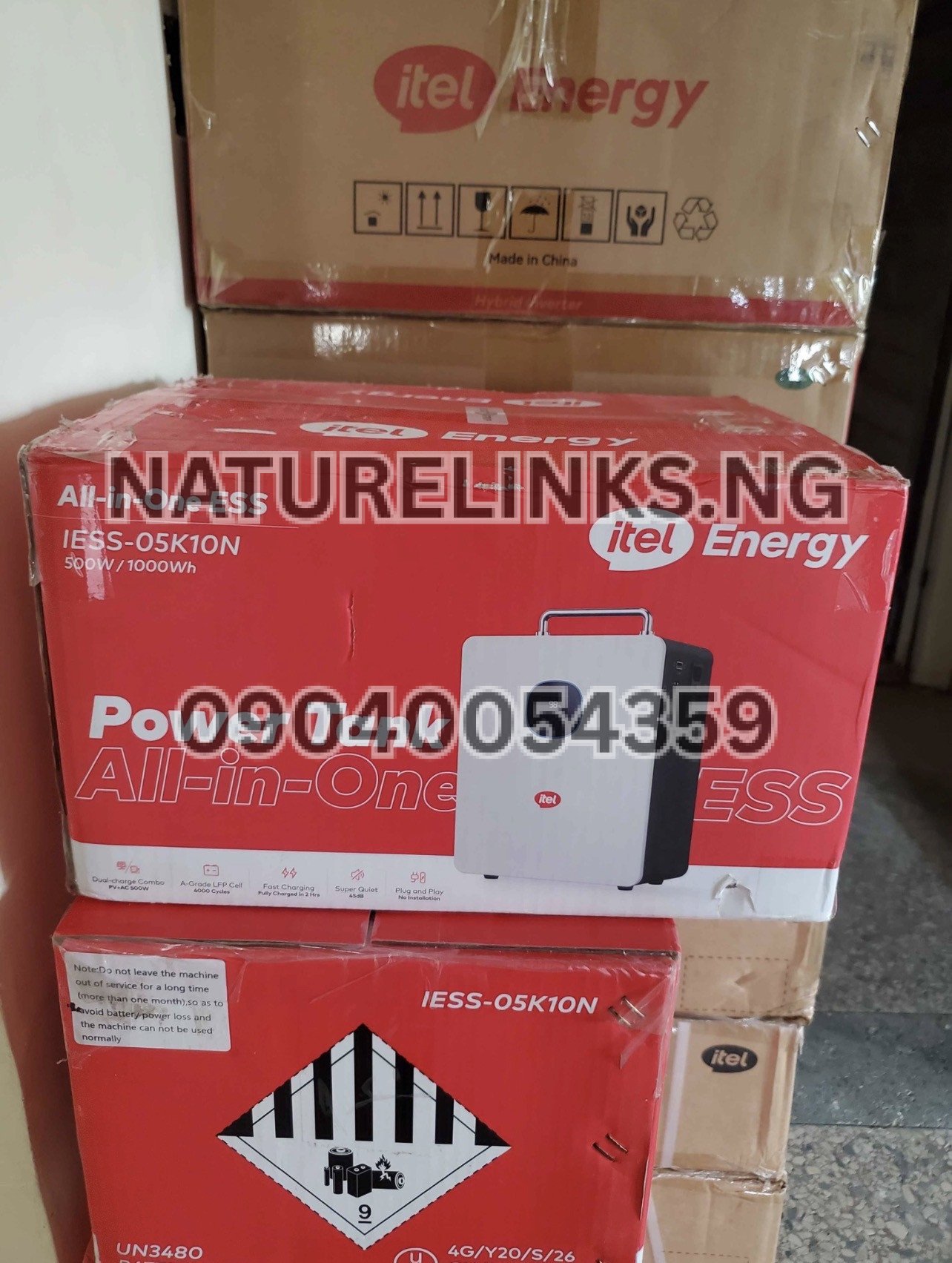
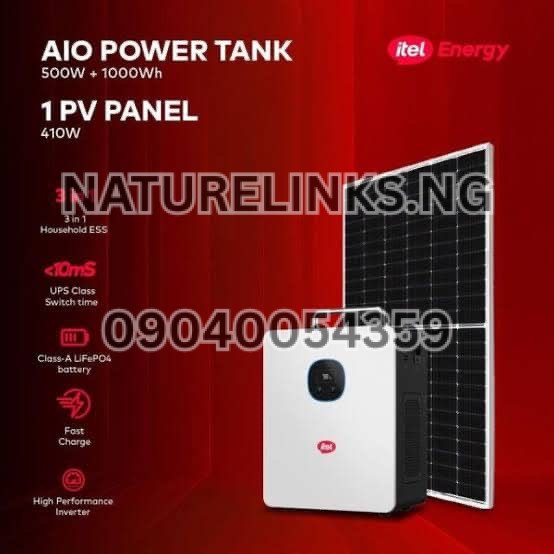
For the commonly listed Itel Power Tank IESS-05K10N, the system has a 1,000Wh/1kWh LiFePO4 battery, a 500W rated pure-sine-wave inverter and support for both grid/AC and solar charging. Published product information advertises charging times of roughly 2 hours under suitable fast-charging conditions, while other configurations and charging methods can take longer.
Therefore, there is not necessarily a special 8-hour or 12-hour “first charge” requirement. The appropriate charging time depends on the exact Itel Power Tank model, charging source, available input power, battery state and whether the unit is being used while charging.
How Long Should Itel Power Tank Charge for the First Time?
“How long should Itel Power Tank charge for the first time?” For the commonly advertised 1,000Wh IESS-05K10N model, a full charge can take approximately 2 hours under suitable grid/solar fast-charging conditions. Some published specifications and retailer information give approximately two hours when charging conditions are optimal.
However, you should not assume that every Itel Power Tank will always reach 100% in exactly two hours.
Charging can take longer when:
- The AC supply is unstable.
- The unit is powering appliances while charging.
- Solar charging is being used with weak sunlight.
- The solar panel is producing less than its rated output.
- The battery begins charging from a very low state.
- The exact Power Tank model has a different charging specification.
- The charging input is limited.
- The battery temperature or protection system reduces charging power.
The best approach for a new unit is to connect it using the specified charging equipment, monitor the battery percentage on the display and allow it to reach a full charge according to the manufacturer’s instructions.
Does Itel Power Tank Need a Long First Charge?
No. A new Itel Power Tank should not automatically be left charging overnight simply because it is being charged for the first time.
Modern lithium battery systems use battery-management and charging controls. The commonly listed Itel Power Tank IESS-05K10N uses a LiFePO4 battery and includes battery-management and protection features.
This means the idea that every new rechargeable battery must receive an extremely long first charge does not generally apply to this type of modern portable power station.
Instead, charge the Power Tank until the battery indicator shows that it is fully charged, following the supplied manual and the specifications of your exact model.
What Percentage Should I Charge Itel Power Tank to the First Time?
For the first charge, it is reasonable to charge the Power Tank to 100% before relying on it for backup power.
A full initial charge allows you to:
- Confirm that the charging system works.
- Check that the battery percentage increases normally.
- Confirm that the display operates correctly.
- Establish the approximate charging time under your local electricity conditions.
- Start your first usage cycle with maximum available energy.
Once the display indicates a full charge, you can disconnect it according to the manufacturer’s instructions and begin using it.
How Many Hours Does Itel Power Tank Take to Fully Charge?
The answer depends on the charging method.
For the commonly listed IESS-05K10N, published information advertises approximately 2 hours under suitable combined grid-and-solar or fast-charging conditions.
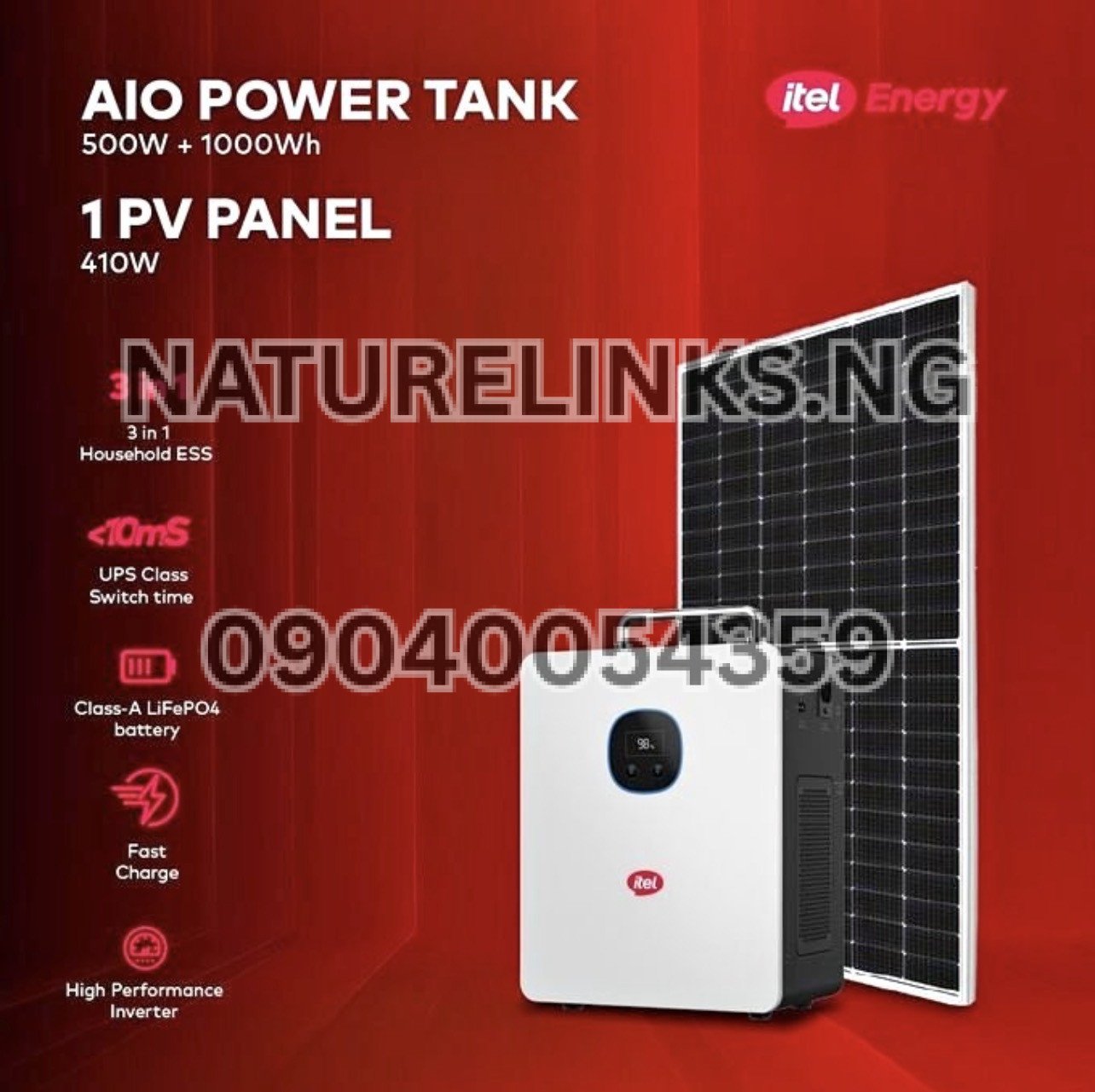
Another published product configuration with a 410W solar panel states approximately 3–4 hours under strong sunlight.
This difference illustrates why buyers should not treat one charging-time figure as universal for every Itel Power Tank package.
Approximate charging expectations
| Charging method | Approximate expectation |
|---|---|
| Fast/optimal charging conditions | Around 2 hours |
| Strong solar charging | Around 3–4 hours in some configurations |
| Weaker sunlight | Longer |
| Unstable or limited AC input | Longer |
| Charging while powering appliances | Potentially longer |
These are indicative figures rather than guaranteed times. Always check the model number and supplied specifications.
Can I Charge Itel Power Tank With NEPA/PHCN Electricity?
Yes. The commonly listed Itel Power Tank supports AC/grid charging, meaning it can be charged from a suitable household electricity supply. Published specifications list an AC input range of approximately 90–280VAC for the IESS-05K10N configuration.
For Nigerian users, this makes the Power Tank useful because you can recharge it when public electricity is available and use the stored energy when there is an outage.
You should use the correct AC charging cable and follow the manufacturer’s charging instructions rather than connecting the unit to an unsuitable power source.
Can Itel Power Tank Charge With a Generator?
A suitable generator can generally provide AC power for charging when its output is compatible with the Power Tank’s input requirements.
This can be useful in areas where public electricity is unreliable. Instead of running a generator continuously to power appliances, you can potentially use the generator to recharge the Power Tank and then use the stored battery energy quietly.
However, generator voltage and frequency should be stable and within the Power Tank’s specified input limits.

Can Itel Power Tank Charge With Solar Panels?
Yes. The commonly listed Itel Power Tank IESS-05K10N supports solar charging through its built-in MPPT system. Published specifications list up to approximately 400W of PV input and an MPPT voltage range of 11–60V for the documented configuration.
Solar charging time depends heavily on sunlight conditions.
For example, a product listing for a 410W solar-panel package gives approximately 3–4 hours under strong sunlight, although actual charging can vary with weather, panel orientation, temperature, shading and system efficiency.
Do not connect solar panels based only on their wattage. The panel voltage and the Power Tank’s maximum PV input specifications must also be compatible.
Should I Charge Itel Power Tank to 100% Before First Use?
Yes, charging it to 100% before the first major use is a practical approach.
This gives you a known starting point and makes it easier to determine how long the battery lasts with your particular appliances.
For example, after the first full charge you could test the Power Tank with:
- Wi-Fi router
- LED bulbs
- Television
- Laptop
- Phone chargers
- Small fan
- POS equipment
- Other low-power electronics
Keep the combined load within the Power Tank’s rated output.
The commonly listed IESS-05K10N has a 500W continuous AC output, despite some sellers marketing it as a “1000W” Power Tank because of its battery capacity or surge capability.
Why Is My New Itel Power Tank Taking Longer to Charge?
A longer charging time does not automatically mean the battery is faulty.
Several factors can affect charging speed.
1. Electricity voltage
Unstable Nigerian electricity supply can affect charging performance.
2. Appliance load
If you are using the Power Tank while charging it, some incoming energy may be going directly to connected appliances instead of increasing the battery percentage.
3. Solar conditions
Clouds, rain, shading and poor panel orientation can significantly reduce solar charging power.
4. Charging source
The charging speed depends on the actual power delivered by the source, not simply the advertised maximum charging capability.
5. Battery state
Charging behaviour can change as the battery approaches full capacity.
6. Model differences
Itel Power Tank products can have different configurations. Always confirm whether you have the IESS-05K10N, IESS-05K10P or another model before comparing charging times.
Should I Use the Itel Power Tank While Charging for the First Time?
It is generally better to let a newly purchased unit complete its first full charge without unnecessary loads if your goal is to verify charging performance.
After the battery is fully charged, you can test the unit with your intended appliances.
If you need to use the Power Tank while it is charging, make sure the connected load and charging arrangement are supported by the exact model.
Some configurations support simultaneous charging and power use, but performance can vary.
What Should I Check During the First Charge?
During the first charging session, check the following:
- The charging indicator appears.
- The battery percentage increases.
- The charging cable and connector remain properly seated.
- There are no unusual warning messages.
- The unit remains in a suitable ventilated location.
- The charging process completes normally.
- The display eventually indicates a full battery.
If you notice unusual overheating, burning smell, damaged cables, sparks, repeated fault codes or abnormal behaviour, stop using the equipment and contact the seller or qualified service personnel.
How Do I Know When Itel Power Tank Is Fully Charged?
The exact indicator depends on the model, but the digital display normally provides battery-status information.
When the battery reaches the full-charge indication shown by your model, the charging process has reached its intended full state.
Do not judge the battery only by how many hours it has been plugged in. The battery percentage/display and the model’s charging instructions are more useful than assuming a fixed number of hours.

Does the First Charge Improve Itel Power Tank Battery Life?
A first full charge is useful for establishing a full starting point, but you should not expect a special “battery activation” effect from leaving the Power Tank connected for an excessive number of hours.
The IESS-05K10N is listed with a LiFePO4 battery and a published cycle-life figure of approximately 6,000 cycles under specified conditions.
Battery longevity is influenced by factors such as:
- Operating temperature
- Charging conditions
- Depth of discharge
- Storage conditions
- Electrical loads
- Charging frequency
- Proper use of the manufacturer’s recommended equipment
How Long Does Itel Power Tank Last After a Full Charge?
Charging time and runtime are different.
The Power Tank’s 1,000Wh capacity describes stored energy, while the appliance wattage determines how quickly that energy is consumed.
For example, a 50W appliance theoretically consumes about 50Wh per hour. A 100W load consumes about 100Wh per hour.
Actual runtime will be lower than a simple theoretical calculation because of inverter losses and other operating factors.
One current product listing gives approximate individual-load examples such as a 65W laptop for around 13 hours and a 100W desktop computer for around 9 hours. These are estimates, not guaranteed results.
Is Itel Power Tank Good for Nigerian Homes?
The Power Tank is designed for portable backup applications where users need electricity for electronics and relatively low-power appliances.
Typical applications include:
- Home backup
- Office backup
- POS businesses
- Small shops
- Wi-Fi routers
- Laptops
- Televisions
- LED lighting
- Small fans
- Phones
- Networking equipment
- CCTV equipment
- Emergency power
The commonly listed 500W configuration should not be treated as a replacement for a high-capacity inverter system for heavy loads.
What Appliances Can I Use With Itel Power Tank?
The answer depends on the exact model and appliance wattage.
For a 500W-rated configuration, suitable loads can include lower-power electronics such as:
- LED bulbs
- Routers
- Laptops
- TVs
- Phone chargers
- Small fans
- POS terminals
- Small electronics
High-power equipment such as electric irons, kettles and other heavy heating appliances can exceed the rated output.
Always check the appliance’s actual wattage before connecting it.
Itel Power Tank 1000Wh vs 1000W: What Is the Difference?
This is one of the most important points for Nigerian buyers.
1,000Wh refers to the battery’s energy capacity.
500W or 1,000W refers to the inverter’s output capability.
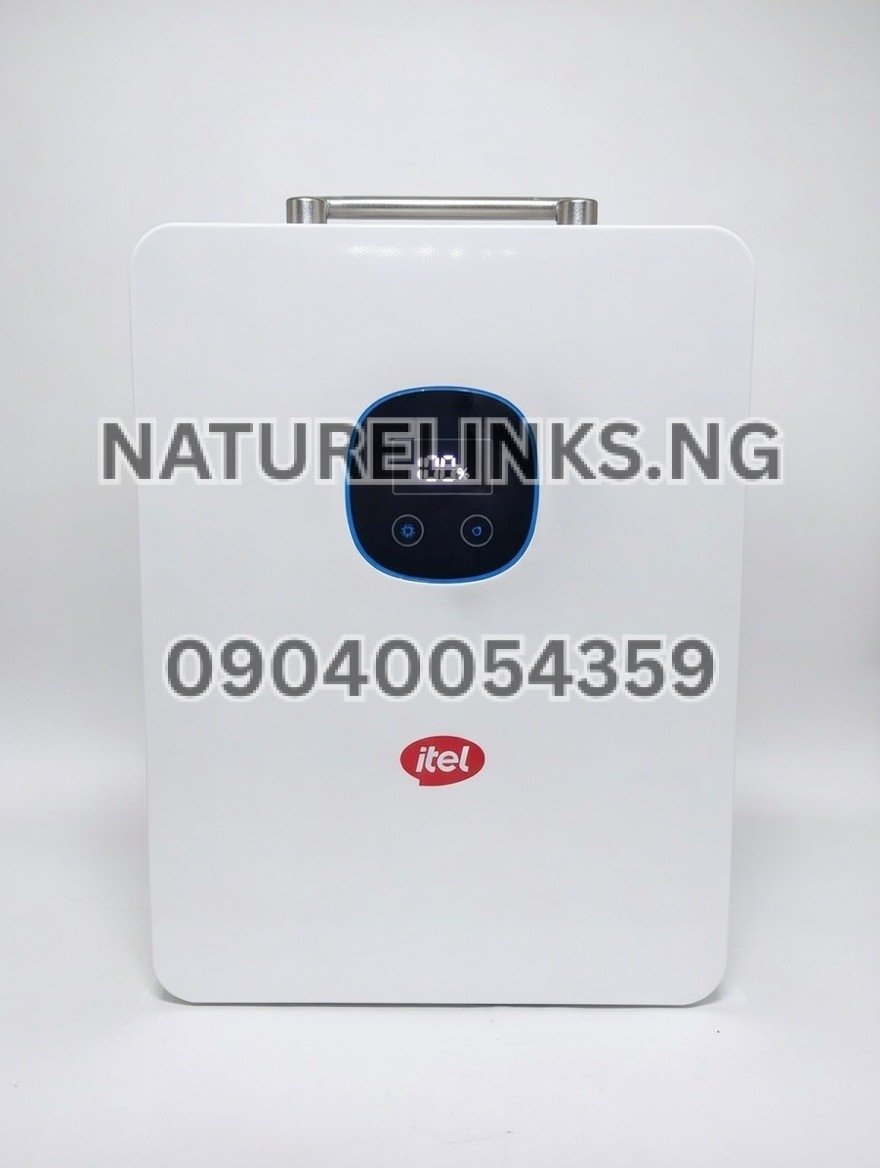
The commonly listed IESS-05K10N has:
- 1,000Wh battery capacity
- 500W continuous AC output
- Up to 1,000W surge output on listed configurations.
Therefore, seeing “Itel Power Tank 1000W” in a Nigerian advertisement does not necessarily mean that the inverter can continuously run a 1,000W appliance.
Check the exact model datasheet before purchasing.
Itel Power Tank First-Charge Tips for Nigerians
For a smooth first charging experience:
Use the correct charger or AC cable
Do not substitute an unknown charger simply because its plug fits.
Charge in a suitable location
Keep the Power Tank somewhere dry, clean and adequately ventilated.
Avoid unnecessary heavy loads
For the first charging test, leaving the unit without significant loads makes it easier to monitor the charging process.
Check the display
Watch the battery percentage and charging indicator.
Do not overload the inverter
The battery may have substantial capacity while the inverter output remains limited.
Keep your receipt and warranty information
This is especially important when buying an expensive power station.
Itel Power Tank Price in Nigeria
The price of an Itel Power Tank in Nigeria varies according to the model, seller, package, warranty and whether a solar panel is included.
Current Nigerian listings for commonly advertised 1,000Wh units show prices around ₦279,000 and above, while packages with solar panels and other accessories can cost significantly more.
Because prices and stock can change, Nigerian buyers should confirm the current price, exact model, warranty and package contents before making payment.
Where to Buy Genuine Itel Power Tank in Nigeria
For buyers searching for Itel Power Tank price in Nigeria, Itel Power Tank 1000Wh price in Nigeria, Itel Power Tank 500W price in Nigeria, or where to buy an original Itel Power Tank, Nature Links Nigeria Limited can provide information about availability and current pricing.
Nature Links Nigeria Limited
Best Seller: Nature Links Nigeria Limited [NatureLinks.NG]
Accredited Distributor: Nature Solar Global Limited
CEO: Mr. Joseph Chikeleze
Call: 07049528019
WhatsApp: 09040054359
Shop Address: F1571 Upstairs (F-Line), Alaba International Market, Lagos State 🇳🇬
Buyers should confirm the exact Power Tank model before payment because specifications can differ between configurations.

Why Buy the Correct Itel Power Tank Model?
When searching online, you may see descriptions such as:
- Itel Power Tank 500W
- Itel Power Tank 1000W
- Itel Power Tank 1000Wh
- Itel Power Tank 1kWh
- Itel Power Tank solar generator
- Itel Power Tank portable power station
- Itel Power Tank inverter
- Itel Power Tank LiFePO4
These terms can refer to closely related configurations, but the technical specifications should not be assumed to be identical.
Ask the seller for the model number and datasheet before payment.
Itel Power Tank Charging Time: Important Buying Checklist
Before buying, ask:
What is the exact model?
What is the battery capacity?
What is the continuous inverter output?
What is the maximum solar input?
What is the AC charging input?
How long does the exact configuration take to charge?
Is the solar panel included?
What warranty is included?
Is the product new and genuine?
What accessories come in the package?
These questions can prevent confusion between battery capacity, inverter output and charging speed.
Frequently Asked Questions About Itel Power Tank Charging
1. How long should Itel Power Tank charge for the first time?
For the commonly listed 1,000Wh IESS-05K10N, published listings advertise approximately 2 hours under suitable fast/combined charging conditions. However, actual first-charge time depends on the charging source, battery state and exact model.
2. Does Itel Power Tank need 8 hours to charge the first time?
Not necessarily. There is no general requirement to leave the modern LiFePO4 Power Tank charging for eight hours simply because it is new. Charge it until the display indicates full according to the manufacturer’s instructions.
3. Can I use Itel Power Tank while charging?
Some configurations support simultaneous charging and operation, but the exact behaviour depends on the model and charging source. For the first charge, avoiding unnecessary loads makes it easier to verify charging performance.
4. Can I charge Itel Power Tank overnight?
It is preferable to follow the manufacturer’s charging instructions rather than adopting a fixed overnight-charging routine. The Power Tank has battery-management and protection systems, but users should still use the correct charging equipment and monitor any unusual behaviour.
5. Can Itel Power Tank charge from NEPA?
Yes. The commonly listed Power Tank supports AC/grid charging, allowing it to recharge from a suitable household electricity supply.
6. Can Itel Power Tank charge with solar?
Yes. The IESS-05K10N configuration supports solar charging through an integrated MPPT controller, with published specifications listing up to approximately 400W PV input.
7. How long does Itel Power Tank take to charge with solar?
It depends on the panel and sunlight. One published 410W-panel configuration states approximately 3–4 hours under strong sunlight, while weaker sunlight can make charging considerably longer.
8. How long does Itel Power Tank last after charging?
Runtime depends on the connected load. A 1,000Wh battery can theoretically supply 100W for around 10 hours before accounting for system losses, but actual runtime will vary according to inverter efficiency, appliance efficiency and operating conditions.
9. Can I charge Itel Power Tank with a generator?
Yes, where the generator provides suitable AC power within the Power Tank’s specified input requirements. Stable generator output is important.
10. Should I fully charge my Itel Power Tank before using it?
Charging it to 100% before your first major use is recommended as a practical way to establish a full starting point and verify that the charging system works correctly. You do not need to leave it charging for an unnecessarily long period after it reaches full charge.

Conclusion
“How long should Itel Power Tank charge for the first time?” The answer is that you should charge the unit to 100% rather than following an arbitrary 8-hour or overnight rule. For the commonly listed IESS-05K10N 1,000Wh/500W Power Tank, published product information indicates approximately 2 hours under suitable fast/combined charging conditions, while solar-only or less favourable charging conditions can take longer.
For Nigerian buyers, the most important things are to identify the exact model, use the correct charging equipment, monitor the battery display, avoid overloading the inverter and follow the supplied manufacturer’s instructions. The Power Tank can provide a convenient rechargeable backup solution for electronics, lighting, networking equipment, small businesses and other loads within its rated capacity.
For current availability, model confirmation, price and purchase information, contact Nature Links Nigeria Limited [NatureLinks.NG], the Best Seller, while Nature Solar Global Limited is identified as the accredited distributor in Nigeria.
Call: 07049528019
WhatsApp: 09040054359
Shop Address: F1571 Upstairs (F-Line), Alaba International Market, Lagos State 🇳🇬