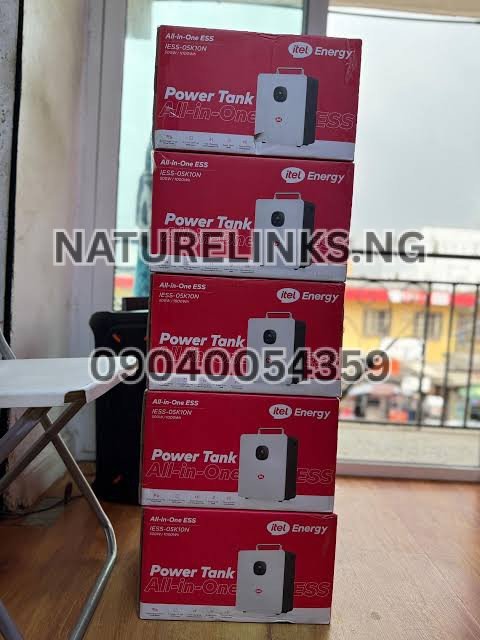
Best Seller: Nature Solar Global Limited. He is also the accredited distributor in Nigeria.
If you are searching for Itel Power Go vs Itel Power Go Pro, you are probably trying to understand which portable power station is suitable for your home, office, shop, laptop, fan, router, TV, phone charging, outdoor activities, or backup electricity needs in Nigeria.
The Itel Power Go and Itel Power Go Pro are closely related portable power stations. Both are built around a 320Wh / 100,000mAh LiFePO₄ battery, and both support up to about 100W charging input. However, the major difference is their output architecture: the standard Power Go is designed mainly around USB and DC outputs, while the Power Go Pro adds a 200W AC outlet, making it possible to power compatible conventional AC appliances and chargers.
For Nigerian buyers, this distinction is important. If your devices can be powered directly through USB-C, USB-A or DC, the standard Power Go may meet your needs. If you want a conventional AC socket for a compatible laptop charger, TV or other small AC equipment, the Power Go Pro offers greater flexibility.
What Is the Difference Between Itel Power Go and Itel Power Go Pro?
The simplest answer is:
Itel Power Go = 320Wh portable power station focused on USB/DC charging.
Itel Power Go Pro = 320Wh portable power station with additional AC output up to 200W.
The battery capacity is essentially the same at 320Wh / 100,000mAh, but the Pro provides an AC inverter/socket that the standard Power Go does not provide in the specifications currently listed for the IESS-320T.
The Power Go is therefore particularly suited to phones, routers, USB-C laptops, lights and compatible DC devices. The Power Go Pro gives you those types of outputs plus a conventional AC outlet for compatible loads.
So when comparing “What Is the Difference Between Itel Power Go and Itel Power Go Pro?”, do not look only at the battery capacity. Look at AC output, USB/DC ports, charging options, maximum load and the type of appliances you intend to connect.
Itel Power Go vs Power Go Pro: Quick Comparison
| Feature | Itel Power Go | Itel Power Go Pro |
|---|---|---|
| Model | IESS-320T | IESS-320ACT |
| Battery capacity | 320Wh / 100,000mAh | 320Wh / 100,000mAh |
| Battery chemistry | LiFePO₄ | LiFePO₄ |
| Maximum total output | About 130W | Up to 200W AC plus USB/DC outputs |
| AC socket | Not listed for standard model | Yes |
| AC output | No conventional AC outlet | Up to 200W |
| USB-C | Up to 65W output | Up to 65W output |
| Solar charging | Up to 100W | Up to 100W |
| Adapter charging | Yes | Yes |
| Portable design | Yes | Yes |
| Emergency light | Yes | Yes |
| SOS function | Yes | Yes |
| Approx. weight | 3.5kg | 3.2kg |
| Main advantage | USB/DC backup | USB/DC + AC versatility |
The standard Power Go’s published specifications identify a 130W total output and 100W maximum charging input, while the Pro is listed with a 200W AC output, 65W USB-C output and up to 100W charging input.
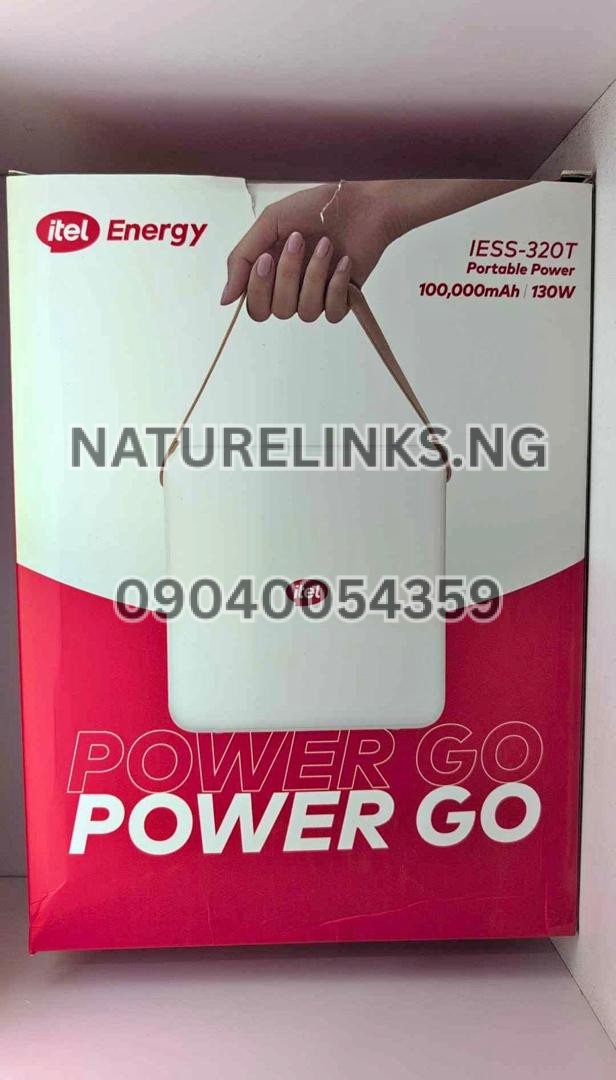
Itel Power Go 320Wh: What Do You Get?
The Itel Power Go IESS-320T is a compact portable power station with a 320Wh / 100,000mAh LiFePO₄ battery.
Its specifications include a maximum total output of approximately 130W, DC input of up to 100W, USB-C input of up to 100W and USB-C output of up to 65W.
This makes it useful for everyday electronics such as:
- Smartphones
- Tablets
- USB-C laptops
- Wi-Fi routers
- USB lights
- Small DC fans
- Speakers
- Cameras
- Power banks
- Other low-power electronic equipment
It is especially useful where your equipment already has USB or DC charging capability.
Itel Power Go Pro 320Wh: What Do You Get?
The Itel Power Go Pro IESS-320ACT also has a 320Wh / 100,000mAh LiFePO₄ battery, but it expands the power-output options.
Its key difference is the 200W AC outlet. The Pro also provides USB-C, USB-A and DC outputs and can recharge using compatible AC/DC adapters or solar input up to approximately 100W.
This makes the Pro particularly useful when you have equipment that normally plugs into a standard wall socket.
For example, instead of requiring a device to have USB-C or DC charging, you can connect a compatible AC charger to the Power Go Pro’s AC outlet, provided the total load remains within the unit’s rated output.
“What Is the Difference Between Itel Power Go and Itel Power Go Pro?”
When Nigerian buyers ask “What Is the Difference Between Itel Power Go and Itel Power Go Pro?”, the most important answer is the AC output capability.
The standard Power Go is primarily a USB/DC portable power solution with a 130W maximum output specification. The Power Go Pro adds a 200W AC output, giving it the ability to support compatible conventional AC equipment.
Both models have the same basic energy-storage capacity:
320Wh = approximately 100,000mAh as marketed by itel.
Therefore, the Pro should not be assumed to have a larger battery simply because it has “Pro” in its name.
The principal upgrade is the output flexibility, rather than a major increase in stored energy.

Does Itel Power Go Pro Have AC Output?
Yes.
The Itel Power Go Pro is listed with a 200W AC output and a pure-sine-wave AC socket. This is one of the clearest differences between the Power Go Pro and the standard Power Go.
This AC output can be useful for compatible:
- Laptop chargers
- Small TVs
- Cameras
- Small electronic equipment
- Other appliances within the rated power limit
However, a 200W AC output does not mean that the Power Go Pro can operate every household appliance.
High-wattage appliances such as electric kettles, irons, electric cookers, large refrigerators and air conditioners generally require substantially more power than this class of portable station is designed to deliver.
Always check the appliance’s actual wattage before connecting it.
Does Itel Power Go Have an AC Socket?
The standard IESS-320T Power Go specifications currently available list USB-C, USB-A and DC outputs rather than a conventional AC socket. Its total output is specified at up to 130W.
That means buyers should not purchase the standard Power Go expecting it to function like the Power Go Pro’s AC-inverter model.
If your laptop, monitor or other equipment requires a conventional AC wall plug, the Power Go Pro may be the more appropriate model, assuming the equipment’s power requirement is within the Pro’s rating.
Itel Power Go vs Power Go Pro Battery Capacity
One important point that can confuse buyers is that both models have 320Wh capacity.
Itel Power Go
- 100,000mAh
- 320Wh
- LiFePO₄ battery
- Up to 130W total output
Itel Power Go Pro
- 100,000mAh
- 320Wh
- LiFePO₄ battery
- Up to 200W AC output
Therefore, the Pro does not automatically provide twice the battery runtime.
The amount of time either unit can run a device depends on:
- Device wattage
- Conversion losses
- Battery condition
- Operating temperature
- Output method
- Whether multiple devices are connected
- The amount of energy already stored

Which Is Better for a Laptop: Itel Power Go or Power Go Pro?
It depends on how your laptop charges.
If your laptop supports USB-C Power Delivery and is within the Power Go’s USB-C output capability, the standard Power Go can be convenient because it can charge compatible laptops directly through USB-C. The published specifications list up to 65W USB-C output.
If your laptop uses a conventional AC charger, the Power Go Pro can be more flexible because its AC socket allows you to plug in a compatible charger, provided the charger and total load remain within the station’s rating.
Before buying, check the wattage printed on your laptop charger.
For example:
- 45W USB-C laptop → potentially suitable for 65W USB-C output
- 65W USB-C laptop → potentially suitable
- 90W/100W USB-C laptop → check actual charging requirements carefully
- 120W+ laptop → not an appropriate assumption for these models
Can Itel Power Go Power a TV?
The standard Power Go can support suitable low-power equipment through its available output ports, but it does not have the same conventional AC output as the Pro.
The Power Go Pro’s 200W AC output gives you more flexibility for compatible TVs and other AC devices. The exact runtime depends on the TV’s actual wattage and battery losses.
For example, a low-power LED TV drawing around 40W will consume considerably less energy than a larger TV drawing 100W.
Always check the label on the TV rather than estimating from screen size alone.
Can Itel Power Go Power a Fan?
The answer depends on the type of fan.
A USB fan or compatible DC fan is particularly suitable for the standard Power Go.
The Power Go Pro can additionally support certain small AC fans if their wattage stays within its 200W AC output rating.
However, starting power can be higher than the running wattage for some motor-driven appliances. Therefore, the manufacturer’s rating and the fan’s actual power requirements should be checked before purchase.
Can Itel Power Go Pro Power a Refrigerator?
You should not automatically assume that the Power Go Pro can power a refrigerator.
Although the Power Go Pro has a 200W AC output, refrigerators contain compressors that can require a higher startup surge than their normal running consumption.
A refrigerator that appears to consume 100W during normal operation may temporarily require substantially more power when its compressor starts.
Therefore, check:
- Refrigerator running wattage
- Starting/surge wattage
- Power Go Pro surge specification
- Required AC voltage
- Expected runtime
For refrigerators and other compressor-based appliances, proper load matching is essential.
Can Itel Power Go Pro Power an Electric Kettle?
Generally, no for typical electric kettles.
Many electric kettles are rated around 1,000W–2,000W or more, whereas the Power Go Pro’s published AC output is 200W.
Connecting an appliance that substantially exceeds the power station’s rating can cause an overload or shutdown.
The same caution applies to:
- Electric irons
- Hot plates
- Electric cookers
- Hair dryers
- High-powered heaters
- Large air conditioners
These appliances require much more power than this portable station is designed to supply.
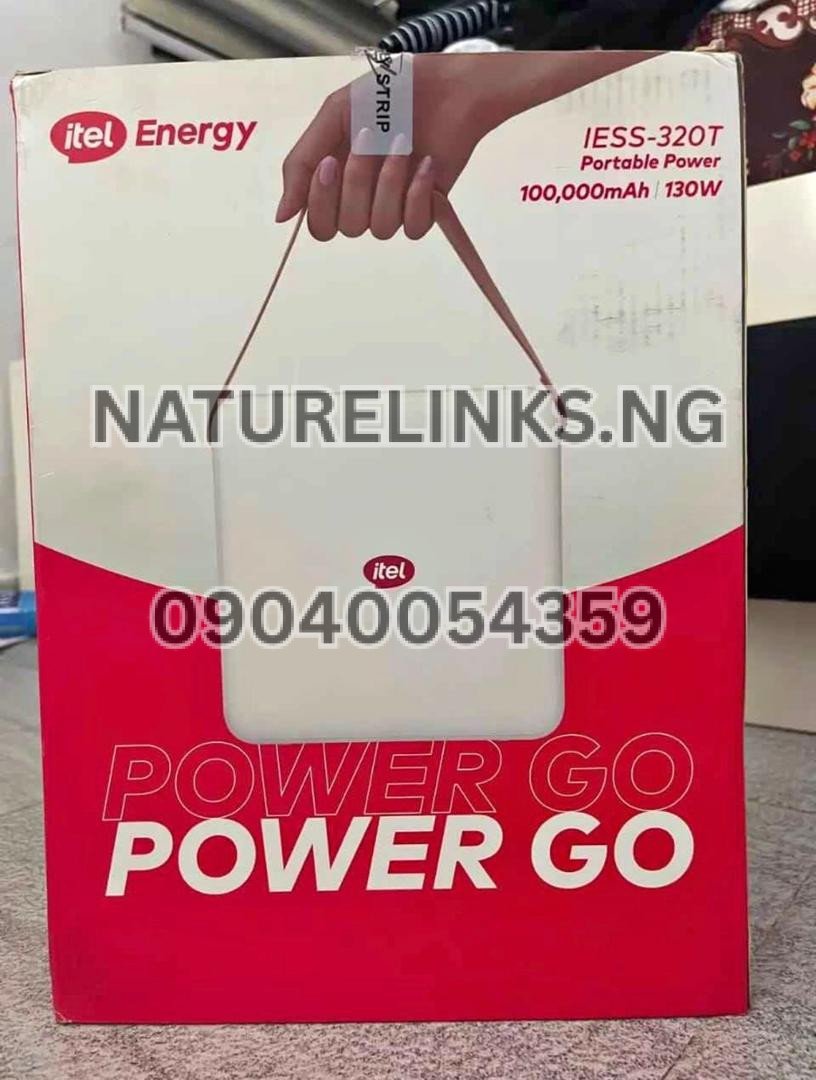
Itel Power Go vs Power Go Pro Charging
Both models support flexible recharging.
The standard Power Go IESS-320T is listed with:
- AC/adapter charging
- USB-C charging
- DC charging
- Solar charging
- Up to 100W charging input
The Power Go Pro is similarly listed with up to approximately 100W input through compatible charging methods, including solar and adapter/USB-C charging.
This means Nigerian users can recharge these portable power stations from:
- Electricity
- Solar panel
- Compatible adapter
- USB-C input
- Other supported DC charging sources
Always use a charger and cable that meet the manufacturer’s input specifications.
Can Itel Power Go Be Charged With Solar?
Yes.
The IESS-320T supports solar charging with a maximum charging input of approximately 100W.
This makes the Power Go useful for Nigerian homes, shops, offices, camping and outdoor activities where solar energy is available.
The actual charging time from solar depends on:
- Solar panel wattage
- Sun intensity
- Weather
- Panel orientation
- Cable losses
- Charge level
- Controller/input limitations
A 100W-compatible panel is commonly referenced for this product class, but buyers should ensure that the panel’s voltage and connector are compatible with the power station.
Can Itel Power Go Pro Be Charged With Solar?
Yes.
The Power Go Pro supports solar charging, with published specifications indicating up to 100W input.
For a Nigerian solar setup, it is important to match the solar panel’s electrical characteristics with the power station’s allowable input range.
Do not connect an oversized or electrically incompatible panel simply because its advertised wattage is higher.
How Long Does Itel Power Go Take to Charge?
The IESS-320T can accept up to approximately 100W input, and current product information indicates that a full charge can take roughly 3.5–4 hours under suitable high-power charging conditions.
Actual charging time can vary depending on:
- Starting battery percentage
- Adapter output
- Solar conditions
- Temperature
- Charging method
- Whether the unit is being used while charging
Using a lower-powered charger can increase charging time.

How Long Does Itel Power Go Pro Take to Charge?
The Power Go Pro is also advertised with up to approximately 100W charging input, with product information indicating around four hours under suitable 100W charging conditions.
Solar charging can take longer when sunlight is weak or intermittent.
For the fastest consistent charging, use a compatible charging source capable of delivering the station’s supported maximum input.
Itel Power Go Battery Life
The standard Power Go uses a LiFePO₄ battery, and current listings state a cycle life of 3,000+ cycles.
LiFePO₄ technology is commonly selected for portable power stations because of its combination of safety, longevity and repeated-cycle capability.
Actual battery lifespan depends on:
- Charging habits
- Operating temperature
- Depth of discharge
- Frequency of use
- Storage conditions
- Load size
The same general principle applies to the Power Go Pro.
Itel Power Go Pro Battery Life
The Power Go Pro also uses LiFePO₄ battery technology and is marketed around long-life battery performance.
Because both products have the same basic 320Wh energy capacity, the Pro does not automatically last longer simply because it is the Pro model.
If both units power the same low-power DC load under comparable conditions, their theoretical energy availability is broadly similar.
The difference becomes more noticeable when you use the Pro’s AC inverter because converting battery DC energy into AC introduces conversion losses.
Itel Power Go Pro Price in Nigeria
Prices in Nigeria can change according to seller, stock, promotions, warranty, delivery and market conditions.
At the time of research, Nigerian listings showed the Power Go Pro around the ₦145,000–₦160,000 range from some retailers, while other marketplaces displayed different promotional prices.
Therefore, buyers should confirm the current price before making payment.
Do not judge a seller solely by a low advertised price. Also check:
- Model number
- Battery capacity
- Original packaging
- Warranty
- Accessories
- Seller reputation
- Availability
- After-sales support
Itel Power Go Price in Nigeria
Current Nigerian listings show significant price variation for the standard IESS-320T.
For example, recent marketplace listings have shown prices around ₦105,000–₦150,000, depending on seller and promotion.
Because online prices change frequently, prospective buyers should request the current selling price and confirm stock before payment.
Is Itel Power Go Cheaper Than Power Go Pro?
In current Nigerian listings, the standard Power Go is generally listed below the Power Go Pro, although prices vary between sellers and promotions.
The price difference reflects more than battery capacity.
The Pro incorporates an AC output system and provides greater flexibility for compatible AC equipment.
Therefore, compare what you need to power, rather than choosing solely based on purchase price.
Which Itel Power Station Should You Buy?
Your choice should depend on your equipment.
Consider Itel Power Go if you mainly need:
- Phone charging
- USB lights
- USB fans
- Wi-Fi router backup
- USB-C laptop charging
- Small DC equipment
- Portable power
- Outdoor charging
- Low-power electronics
Consider Itel Power Go Pro if you need:
- Conventional AC socket
- AC laptop charger
- Small compatible AC TV
- Small AC electronics
- USB and DC charging
- Greater output flexibility
- Up to 200W AC output
This is a feature comparison, not a universal recommendation: the appropriate model depends on the devices you intend to connect.
Itel Power Go vs Power Go Pro for Nigerian Homes
For a Nigerian home experiencing frequent power interruptions, the most important consideration is the type of appliances that need backup.
If your primary needs are:
Router + phones + USB lights + USB-C laptop
the standard Power Go’s USB/DC architecture can be practical.
If your needs include:
Laptop AC charger + small TV + phones + USB devices
the Power Go Pro’s AC outlet can provide additional flexibility.
However, neither should be treated as a replacement for a high-capacity home inverter system when the goal is to power heavy household appliances.
Itel Power Go vs Power Go Pro for Office Use
For remote workers and small offices, both units can be useful for:
- Wi-Fi routers
- Smartphones
- Laptops
- Tablets
- USB accessories
- Small lights
- Cameras
The Power Go can be particularly convenient when devices support USB-C.
The Power Go Pro becomes more flexible where conventional AC chargers are required.
For an office with multiple devices, calculate the combined wattage before purchasing.
Itel Power Go vs Power Go Pro for Students
Students may use these portable power stations for:
- Phones
- Laptops
- Wi-Fi routers
- Study lamps
- Small fans
- Speakers
- Other low-power electronics
The standard Power Go’s compact form factor and USB/DC outputs can be convenient for students whose devices use these connections.
The Power Go Pro offers the added advantage of an AC outlet for compatible equipment.
Itel Power Go vs Power Go Pro for Content Creators
Content creators may need to power:
- Cameras
- Camera batteries
- Smartphones
- LED lights
- Laptops
- Audio equipment
- Wi-Fi equipment
The Power Go Pro’s AC socket can be useful when a device’s charger requires a conventional AC plug.
However, professional lighting and high-powered production equipment can exceed the station’s 200W rating. Always check the wattage before connecting equipment.
Itel Power Go vs Power Go Pro Specifications
Itel Power Go IESS-320T
Battery: 320Wh / 100,000mAh
Battery chemistry: LiFePO₄
Maximum total output: 130W
Maximum charging input: 100W
USB-C output: Up to 65W
USB-A: Multiple ports
DC output: 12V
Solar input: Up to 100W
Weight: Approximately 3.5kg
Charging options: AC/DC/USB-C/solar depending on configuration.
Itel Power Go Pro IESS-320ACT
Battery: 320Wh / 100,000mAh
Battery chemistry: LiFePO₄
AC output: Up to 200W
USB-C output: Up to 65W
DC outputs: Multiple 12V outputs
Charging input: Up to 100W
Solar charging: Supported
Weight: Approximately 3.2kg
Emergency light: Yes
SOS: Yes.
“What Is the Difference Between Itel Power Go and Itel Power Go Pro?” — Final Technical Answer
The easiest way to remember the difference is:
Same basic battery size, different output capability.
The Power Go and Power Go Pro are both 320Wh / 100,000mAh LiFePO₄ portable power stations.
The standard Power Go is rated around 130W total output and is designed around USB/DC connectivity.
The Power Go Pro adds a 200W AC output, making it possible to connect compatible conventional AC equipment while retaining USB and DC charging options.
Therefore, if you are comparing the two products in Nigeria, pay particular attention to AC output, USB-C charging, DC compatibility, appliance wattage, battery capacity and price.

Where to Buy Itel Power Go and Power Go Pro in Nigeria
For buyers looking for an original Itel Power Go, Itel Power Go Pro or other Itel Energy portable power station in Nigeria, Nature Links Nigeria Limited is available for product enquiries and sales.
Best Seller
Nature Solar Global Limited
The company is presented by the supplied business information as the accredited distributor in Nigeria.
Distributor
Nature Solar Global Limited
Nature Links Nigeria Limited
The Best Seller: Nature Links Nigeria Limited [NatureLinks.NG]
CEO
Mr. Joseph Chikeleze
Phone
07049528019
09040054359
Shop Address
F1571 Upstairs (F-Line), Alaba International Market, Lagos State 🇳🇬
Customers should confirm the exact model, current price, available accessories and warranty before completing a purchase.
Why Check the Model Number Before Buying?
The names Power Go and Power Go Pro can easily be confused.
Look for:
IESS-320T — standard Itel Power Go
IESS-320ACT — Itel Power Go Pro
The model number is particularly useful when comparing listings from different Nigerian sellers.
A product listing that simply says “Itel Power Go” may not provide enough information to determine the exact version.
Ask the seller to confirm the model number before payment.
What Should You Check Before Buying Itel Power Go?
Before buying the standard Power Go, check:
- Model: IESS-320T
- Capacity: 320Wh / 100,000mAh
- Battery: LiFePO₄
- Output: Up to 130W
- USB-C: Up to 65W output
- Charging input: Up to 100W
- Solar compatibility: Up to 100W
- Accessories: Confirm what is included
- Warranty: Confirm warranty terms
- Seller: Verify the seller and product authenticity
Current Nigerian listings describe the IESS-320T as a 320Wh LiFePO₄ portable power station with a 100W maximum charging input and 130W total output.
What Should You Check Before Buying Itel Power Go Pro?
Before buying the Pro, check:
- Model: IESS-320ACT
- Capacity: 320Wh / 100,000mAh
- Battery: LiFePO₄
- AC output: Up to 200W
- USB-C: Up to 65W
- Solar input: Up to 100W
- Charging adapter: Confirm included accessories
- Warranty: Confirm warranty
- Serial/model information: Verify before payment
- Maximum appliance wattage: Check before connecting equipment
The manufacturer’s Nigerian product listing currently identifies the Power Go Pro as a 320Wh/100,000mAh station with 200W AC output and up to 100W charging input.
Frequently Asked Questions About Itel Power Go and Power Go Pro
1. What is the difference between Itel Power Go and Power Go Pro?
The main difference is the output system. Both have a 320Wh/100,000mAh LiFePO₄ battery, but the Power Go Pro adds a 200W AC outlet. The standard Power Go is primarily designed around USB and DC outputs with a 130W total-output specification.
2. Is Itel Power Go Pro 320Wh?
Yes. The Itel Power Go Pro IESS-320ACT is listed with a 320Wh/100,000mAh battery.
3. Is Itel Power Go also 320Wh?
Yes. The standard Itel Power Go IESS-320T is listed with a 320Wh/100,000mAh LiFePO₄ battery.
4. Does Itel Power Go Pro have an AC socket?
Yes. The Power Go Pro has a conventional AC output rated up to 200W.
5. Can Itel Power Go charge a laptop?
Yes, provided the laptop’s charging requirements are compatible. Its USB-C output is listed at up to 65W, making it suitable for many USB-C charging laptops within that range.
6. Can Itel Power Go Pro charge a laptop?
Yes. The Power Go Pro can charge compatible laptops through USB-C, and its AC outlet can also be used with compatible laptop chargers, provided the total power requirement stays within the station’s output rating.
7. Can Itel Power Go use solar panels?
Yes. The IESS-320T supports solar charging with input of up to approximately 100W.
8. Can Itel Power Go Pro use solar?
Yes. The Power Go Pro supports solar charging, with published specifications indicating up to approximately 100W input.
9. How many watts can Itel Power Go handle?
The standard IESS-320T is listed with a maximum total output of approximately 130W.
10. How many watts can Itel Power Go Pro handle?
The Power Go Pro provides up to 200W AC output. It should not be used with appliances whose continuous or startup requirements exceed the manufacturer’s limits.
Conclusion
The main difference between the Itel Power Go and Itel Power Go Pro is not the battery capacity. Both models are built around a 320Wh / 100,000mAh LiFePO₄ battery, but they differ significantly in how they deliver power.
The standard Itel Power Go IESS-320T provides up to approximately 130W total output and is designed primarily for USB-C, USB-A and DC-powered devices. The Itel Power Go Pro IESS-320ACT adds a 200W AC outlet, giving users more flexibility when powering compatible equipment that uses a conventional AC plug.
For Nigerian buyers, the right choice should therefore be based on the devices you actually intend to power. If your priority is phones, routers, USB-C laptops, lights and DC devices, the standard Power Go provides a compact solution. If you need an AC socket for compatible equipment, the Power Go Pro offers the additional AC-output capability.
For current availability, price, product authenticity, accessories and purchase enquiries, contact Nature Links Nigeria Limited / Nature Solar Global Limited at 07049528019 or WhatsApp 09040054359, or visit F1571 Upstairs (F-Line), Alaba International Market, Lagos State 🇳🇬.