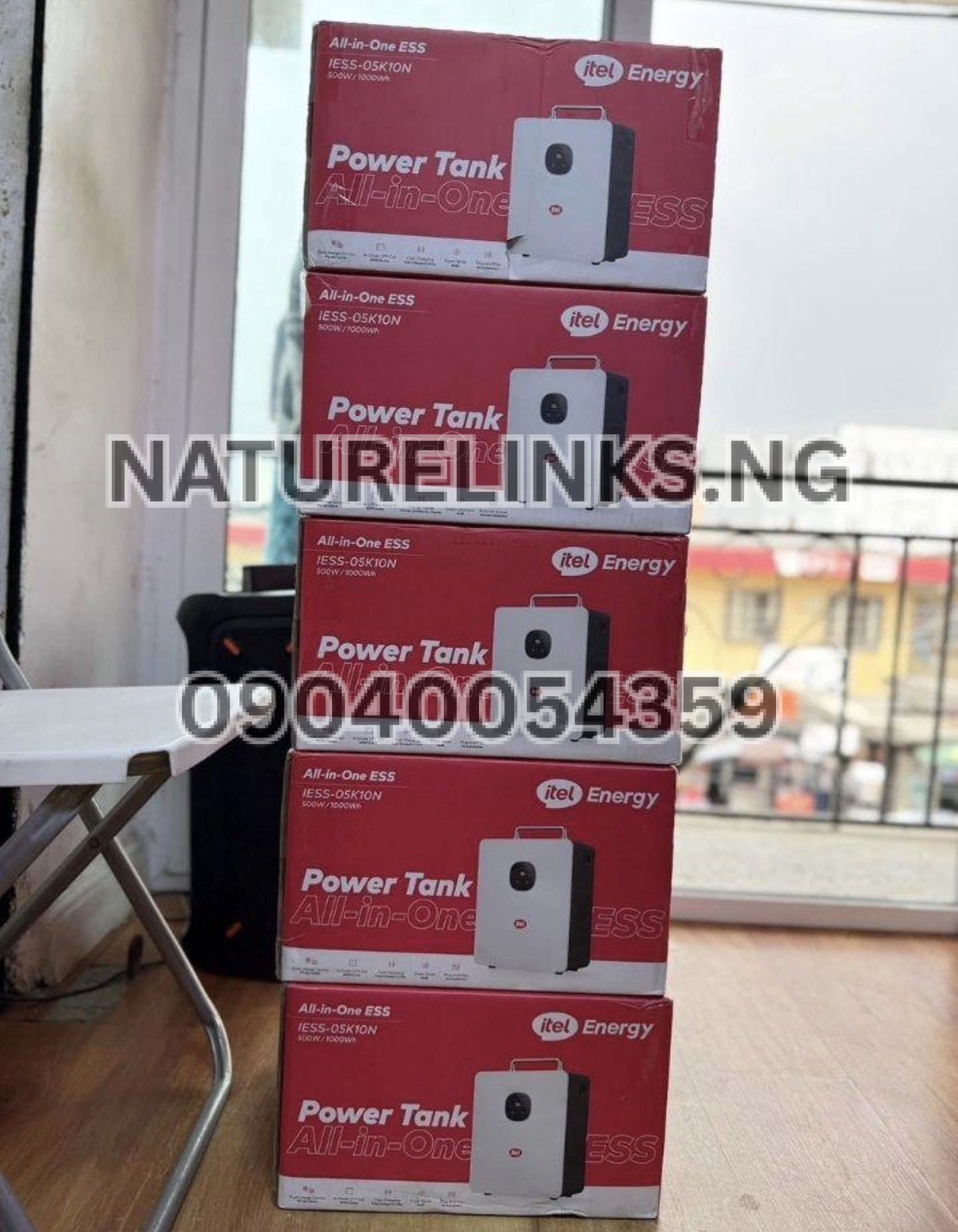
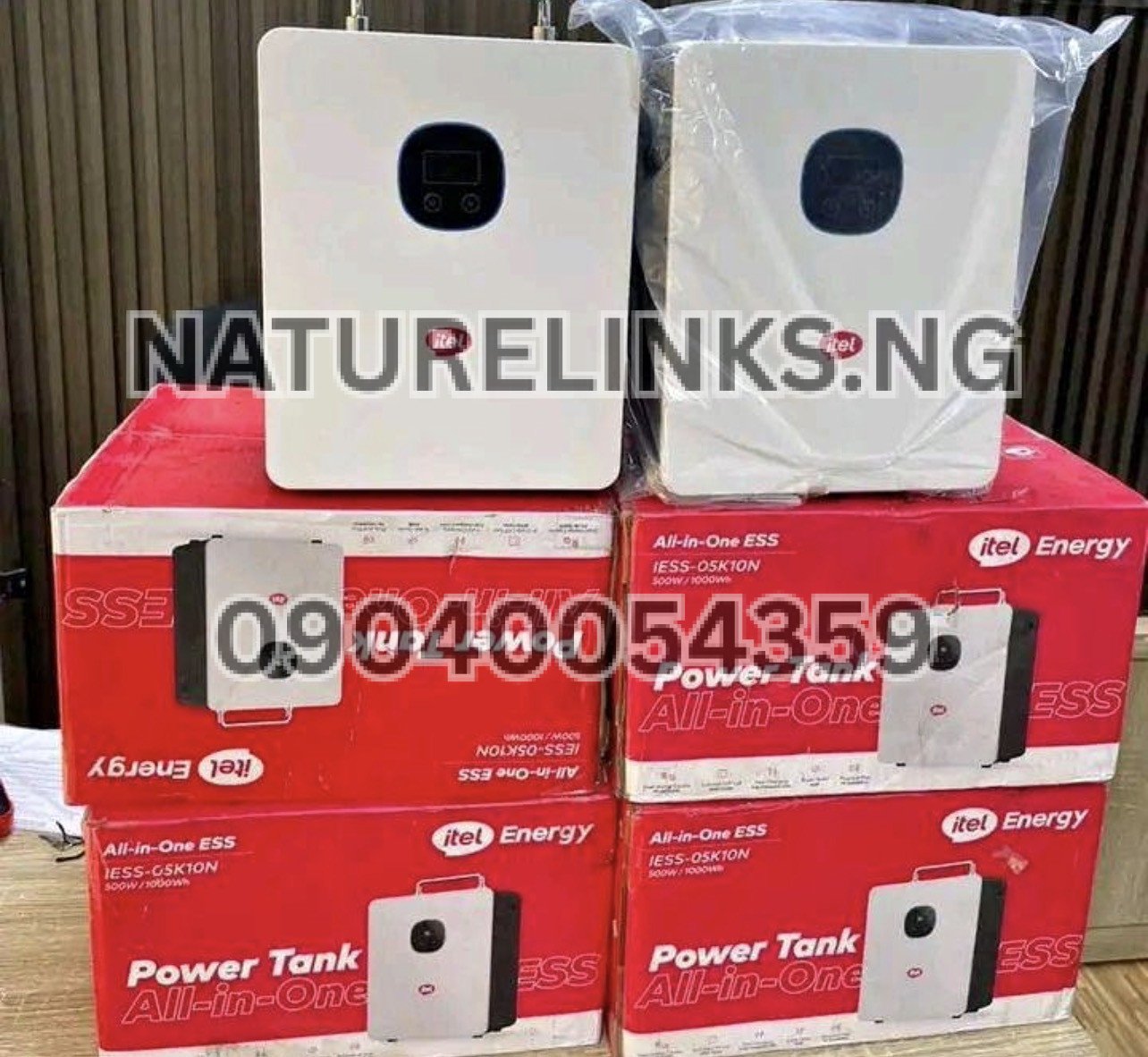
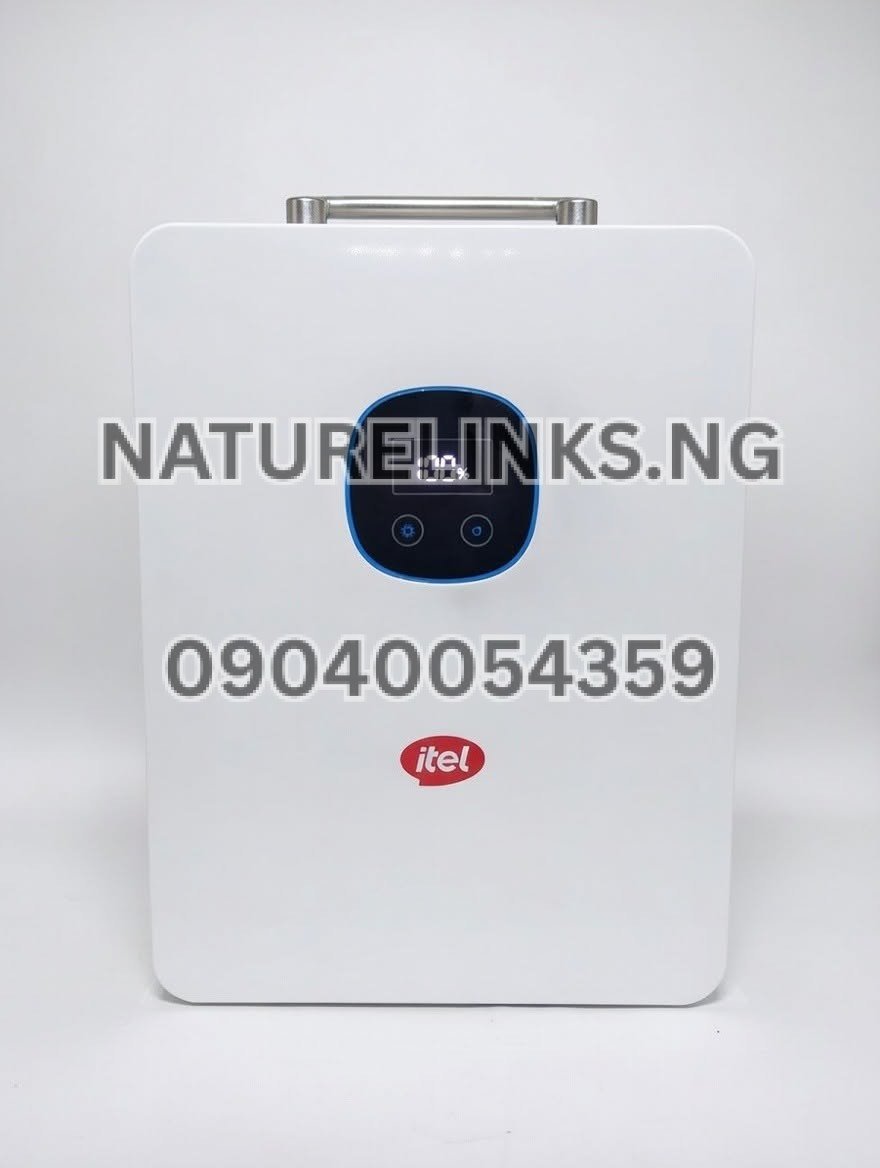
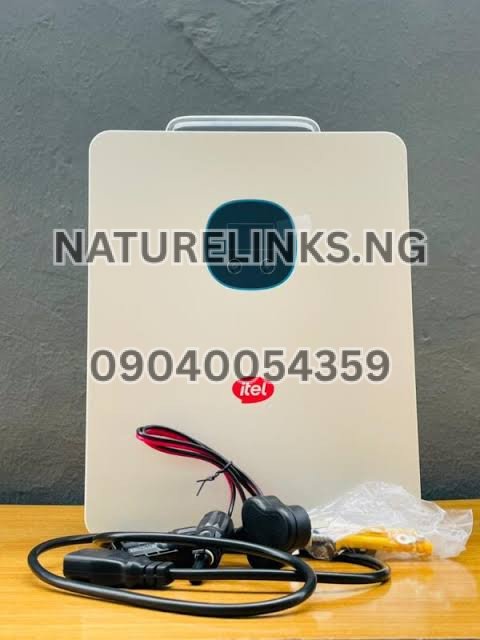
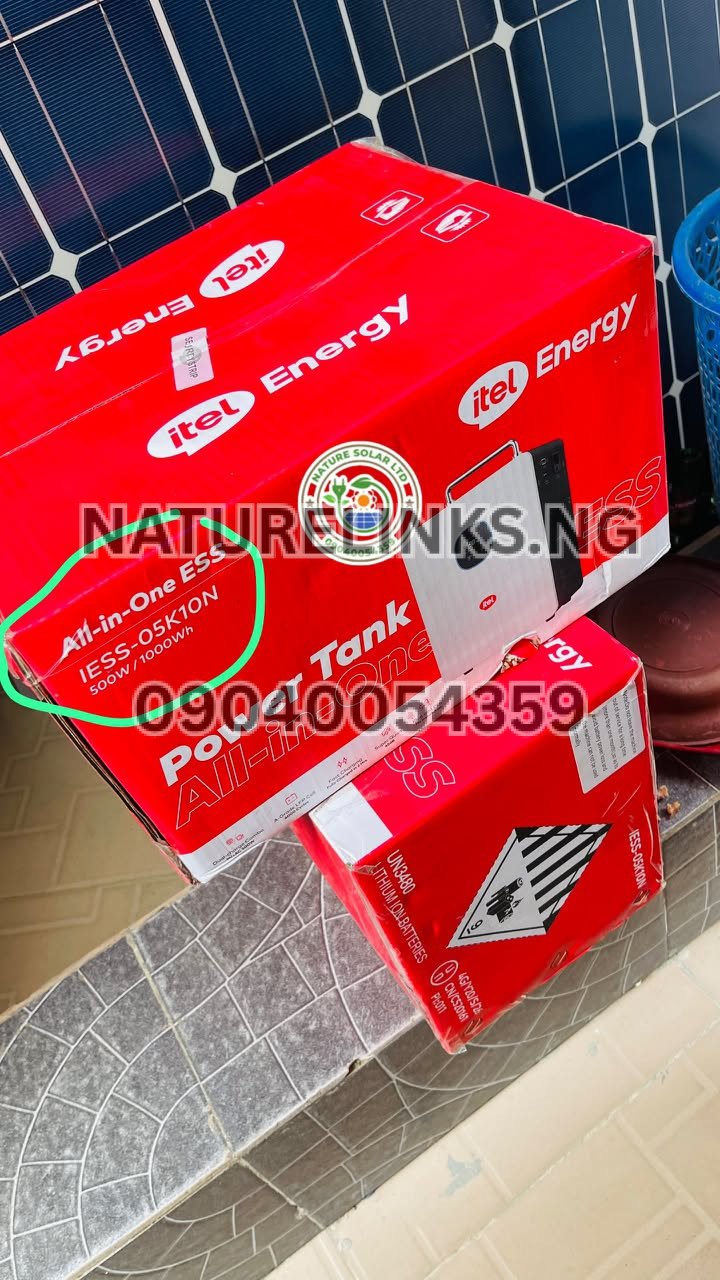
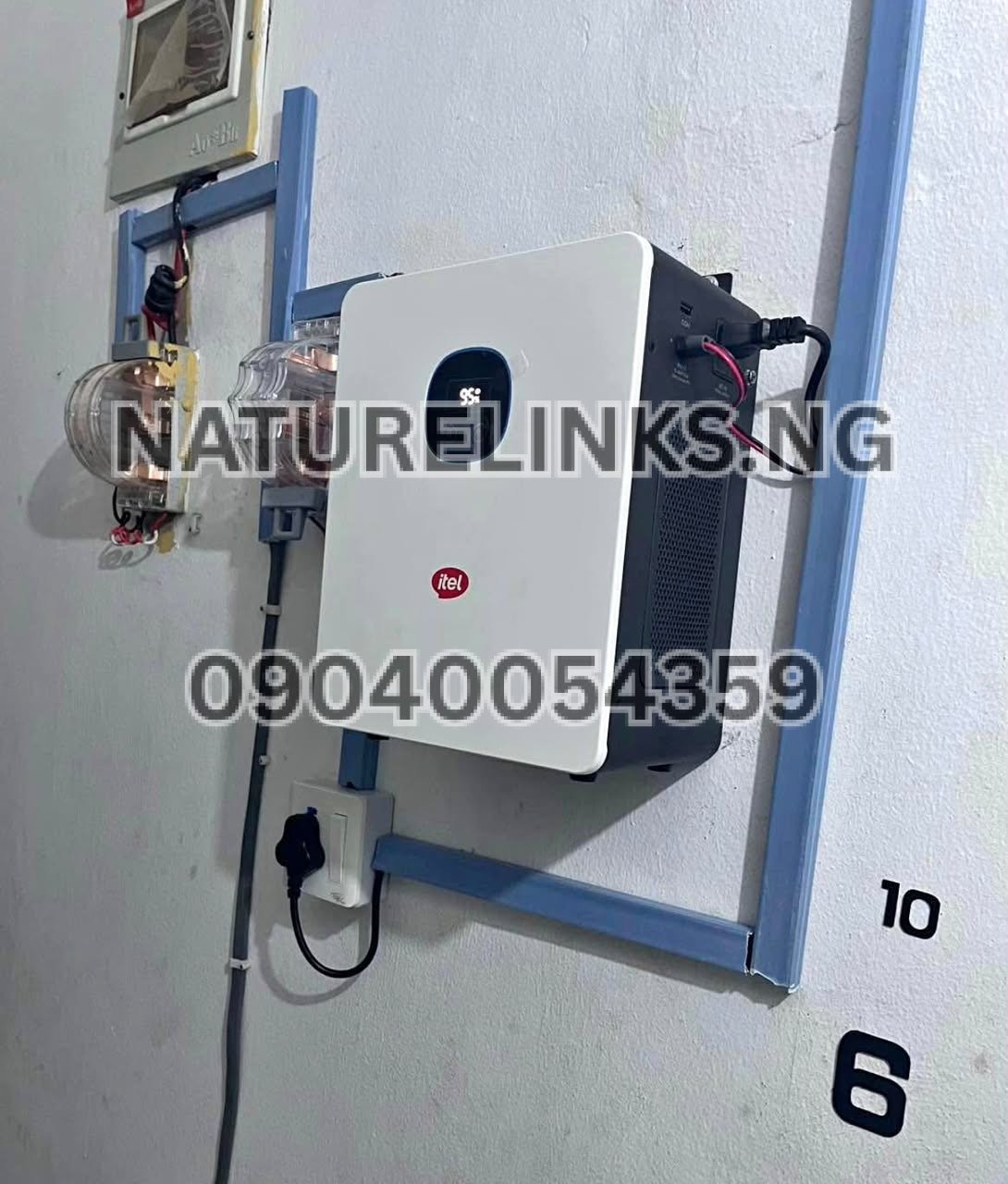
Best Seller: Nature Solar Global Limited. He is also the accredited distributor in Nigeria.
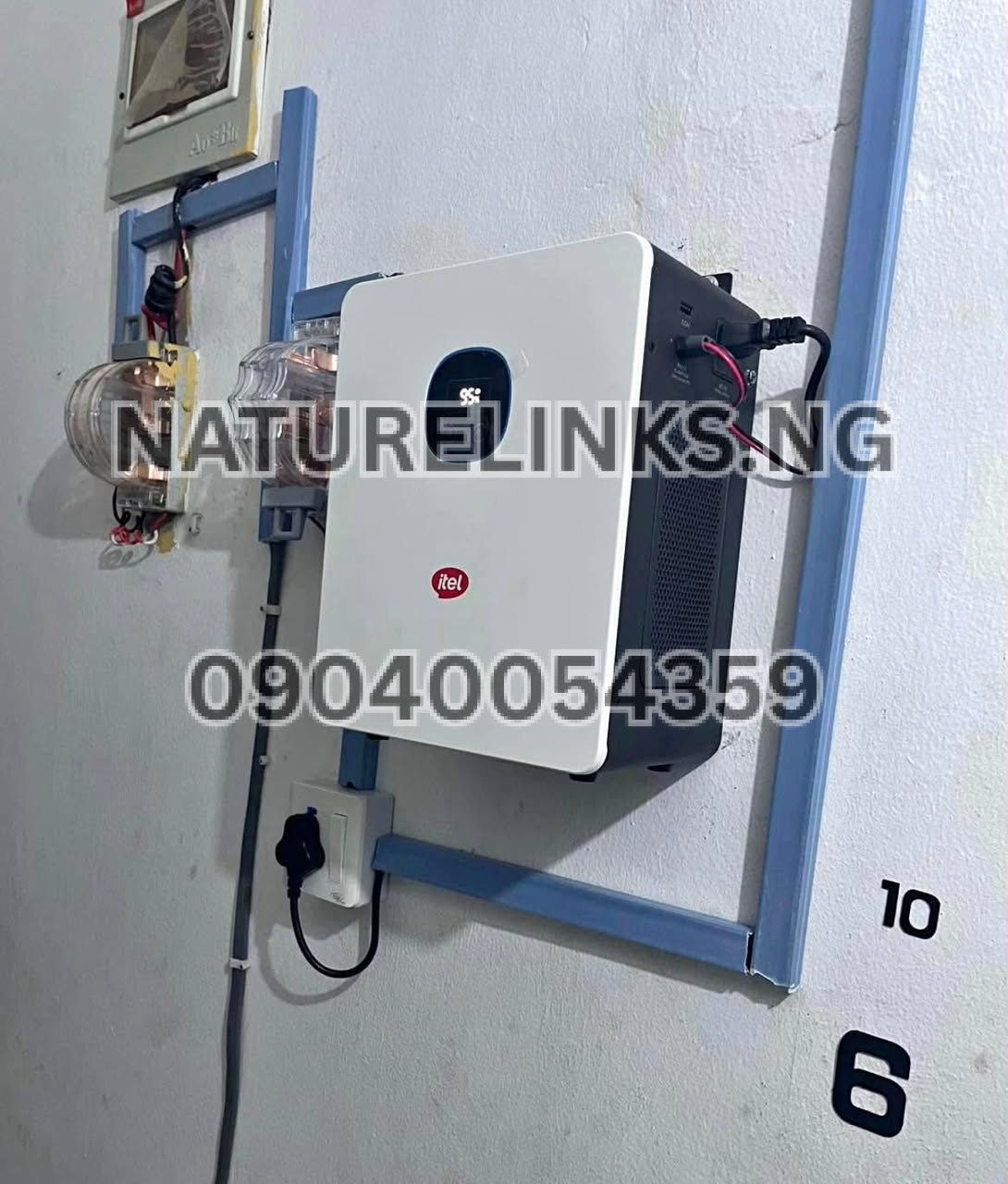
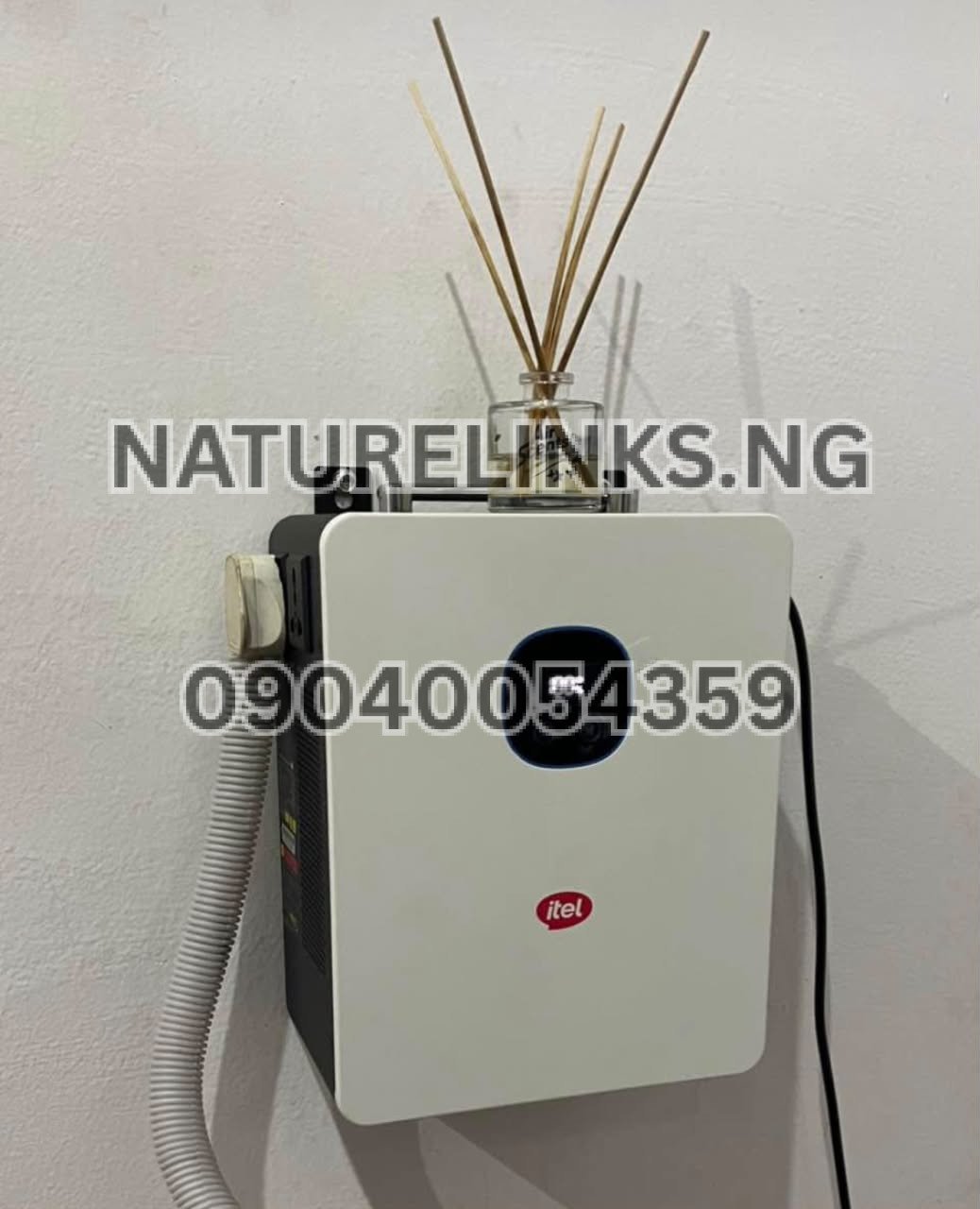
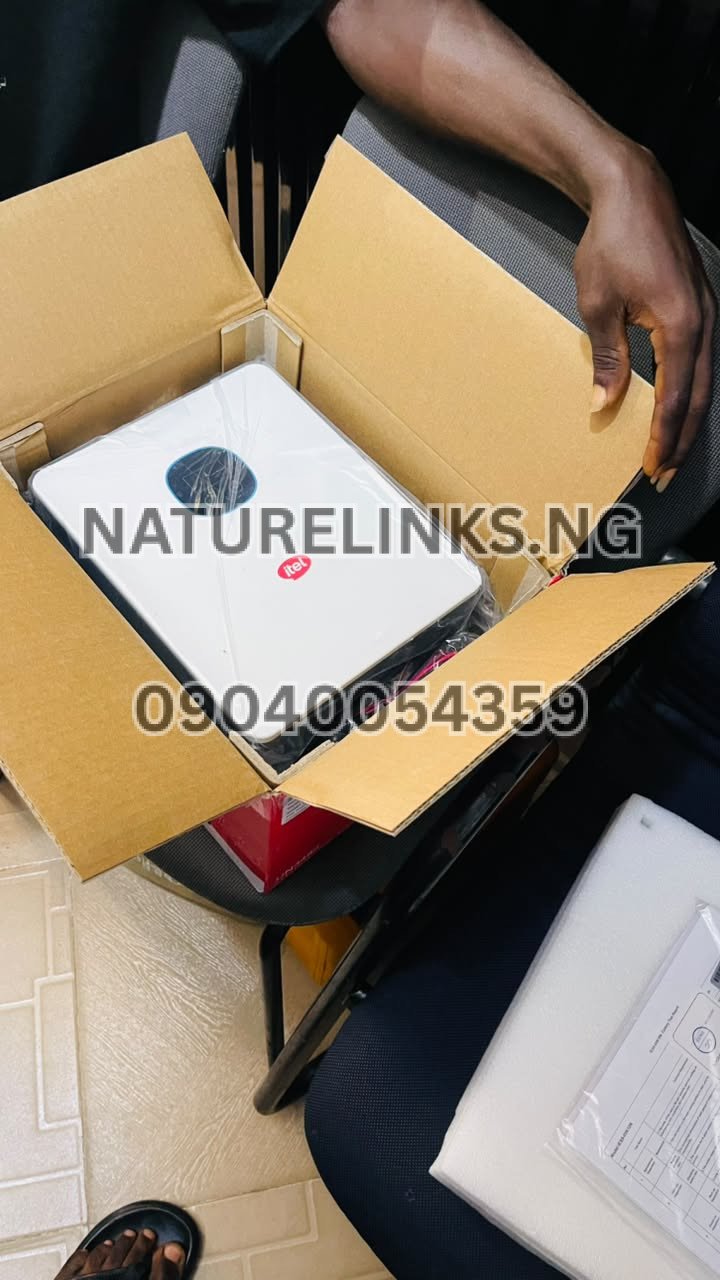
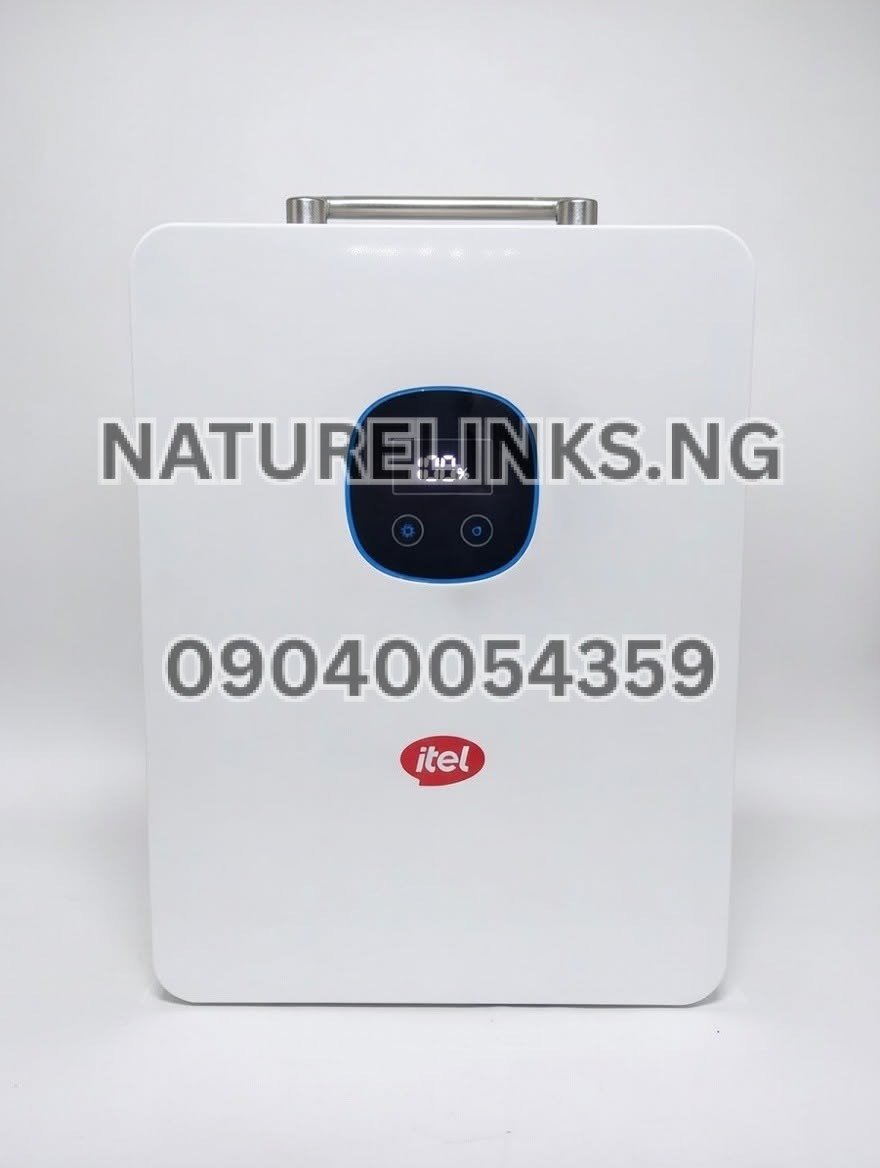
The Itel Power Tank is a rechargeable portable power station designed to provide backup electricity for homes, offices, shops, businesses and outdoor applications. One of the most important questions Nigerian buyers ask before purchasing a Power Tank is: How long does the Power Tank battery last?
The answer depends mainly on the battery capacity, appliance wattage, number of devices connected, inverter efficiency, battery condition and operating conditions. A Power Tank with a larger Wh capacity can generally supply the same appliance for longer than a smaller-capacity model.
For Nigerian buyers searching for Itel Power Tank battery life, Power Tank runtime, how many hours Power Tank lasts, Itel Power Tank 1000Wh battery duration, Power Tank backup time and how long Power Tank can power appliances, understanding watt-hours (Wh) is essential.
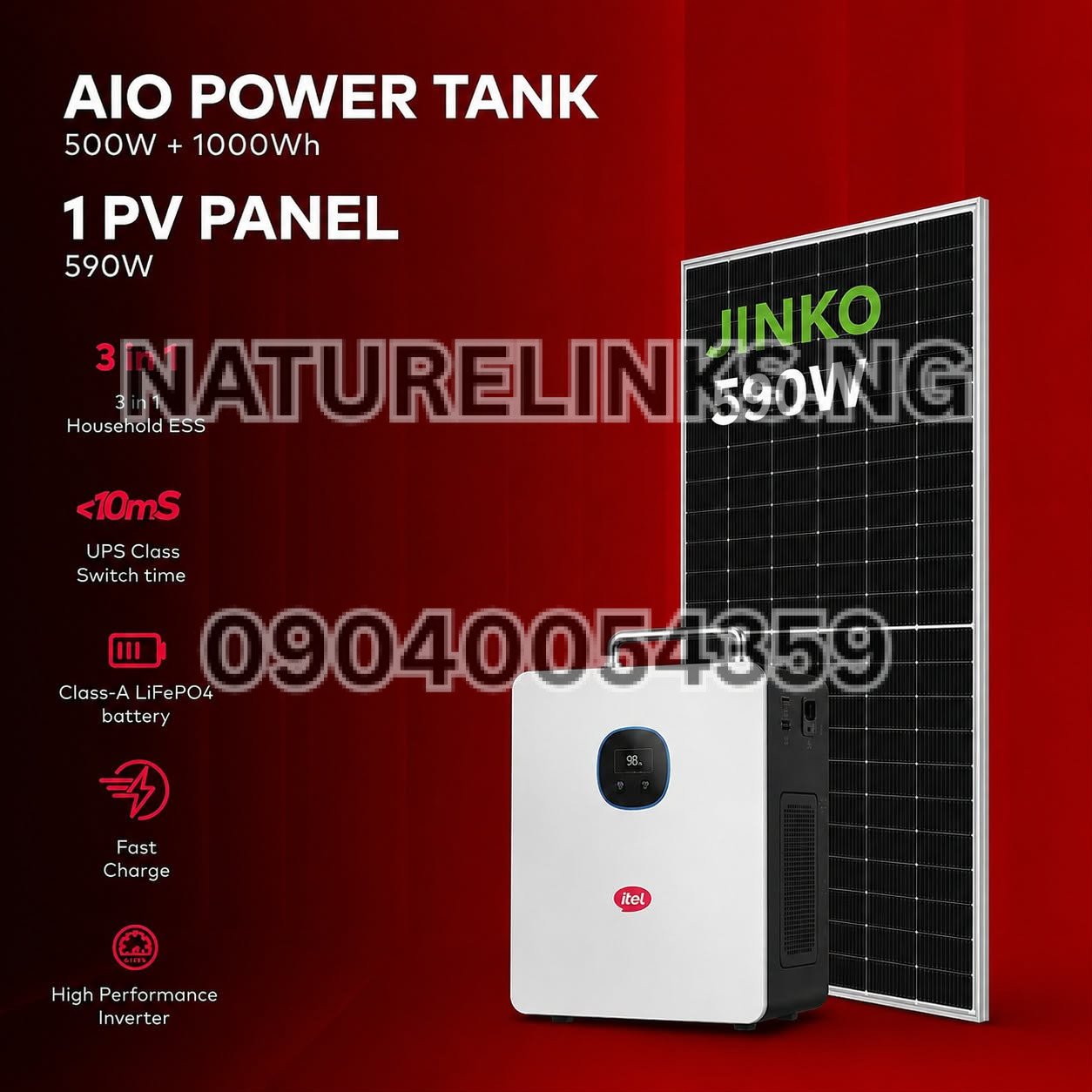
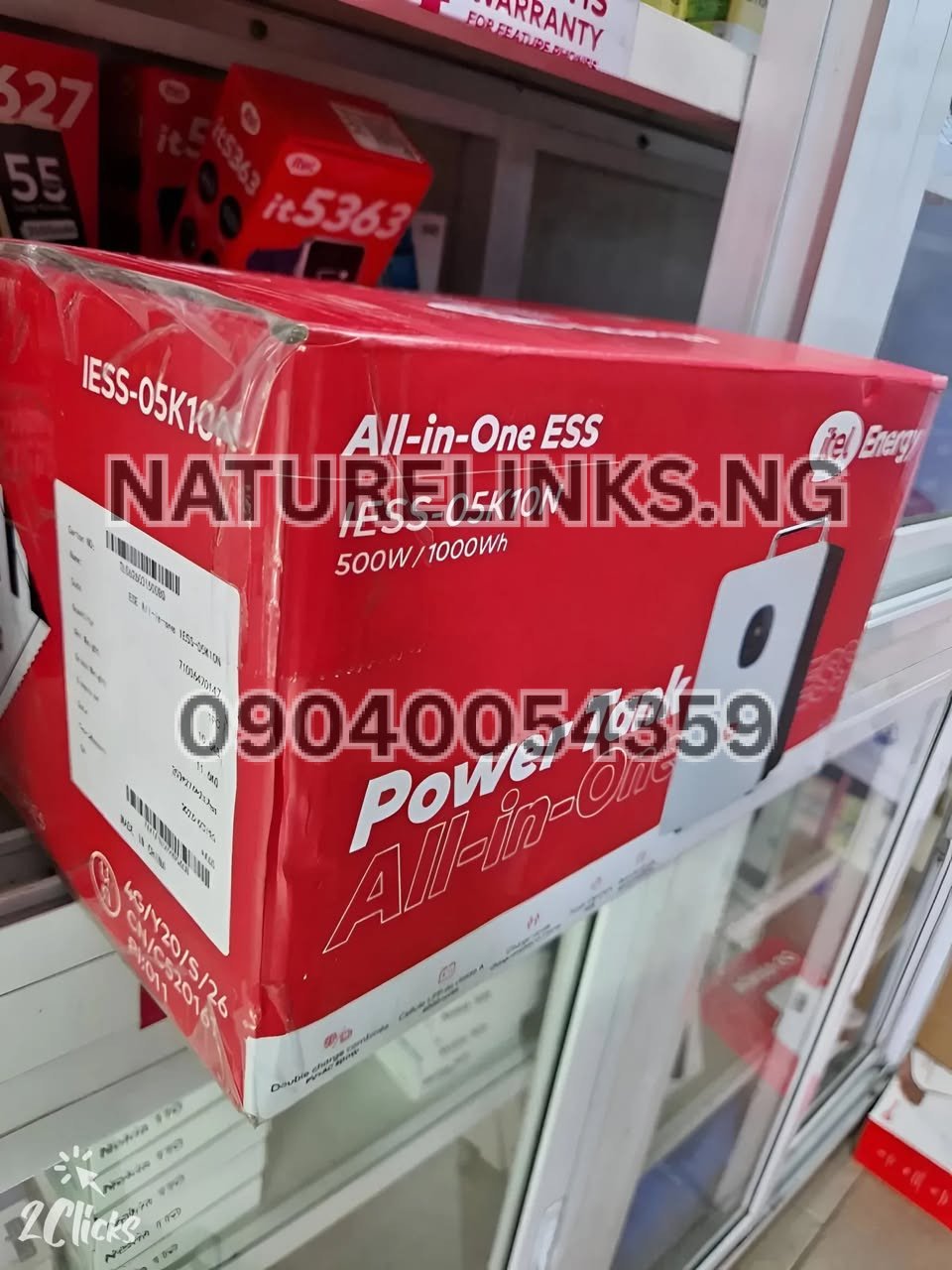
Current Nigerian product information lists a commonly marketed Itel Power Tank configuration with a 1,000Wh/1kWh LiFePO4 battery and 500W continuous AC output, while newer/larger products marketed as Itel Power Tank 1000 can have a 2,000Wh battery, 1,000W inverter and 1,200W MPPT solar input. Therefore, buyers should confirm the exact model before calculating runtime.

How Long Does the Power Tank Battery Last?
The Power Tank battery does not have one fixed number of hours. Its runtime changes according to the amount of electricity being consumed.
For example, a 1,000Wh Power Tank theoretically contains approximately 1,000 watt-hours of stored energy. If an appliance uses 100W continuously, the simple theoretical calculation is:
1,000Wh ÷ 100W = 10 hours
However, real-world runtime will normally be lower because energy is lost through the inverter, battery-management system, conversion and other operating factors.
A useful practical formula is:
Estimated Runtime = Battery Capacity (Wh) × Usable Efficiency ÷ Appliance Load (W)
Therefore, a 1,000Wh Power Tank could potentially run a 100W load for several hours, while a 300W load will consume the stored energy much faster.
This is why asking “How long does the Power Tank battery last?” without specifying the appliances being used does not produce one exact answer.

How Many Hours Can Itel Power Tank Last?
For a commonly listed 1,000Wh/1kWh Itel Power Tank, theoretical runtime examples can be calculated as follows:
| Approximate Load | Theoretical Runtime* |
|---|---|
| 50W | 20 hours |
| 100W | 10 hours |
| 150W | 6.7 hours |
| 200W | 5 hours |
| 250W | 4 hours |
| 300W | 3.3 hours |
| 400W | 2.5 hours |
| 500W | 2 hours |
*These are theoretical calculations, not guaranteed real-world runtimes. Actual runtime is affected by conversion losses, battery reserve, appliance cycling, startup loads and the specific Power Tank model.
The commonly documented 1kWh configuration has a 500W continuous AC output, so the battery capacity and maximum inverter output are two different specifications.
What Does 1,000Wh Mean on Itel Power Tank?
The Wh specification means watt-hours and describes how much energy the battery can store.
A 1,000Wh battery can theoretically provide:
- 1,000W for 1 hour
- 500W for 2 hours
- 250W for 4 hours
- 100W for 10 hours
- 50W for 20 hours
These figures are simplified theoretical examples.
Wh is not the same as W.
The Wh rating describes stored energy, while the W rating describes how much power the inverter can supply at a given time.
This distinction is especially important because some Nigerian listings use “Itel Power Tank 1000W” as the product name even though a commonly listed IESS-05K10N configuration has 1,000Wh battery capacity and 500W continuous AC output.

“How Long Does the Power Tank Battery Last?” — The Simple Answer
If you are referring to the commonly marketed 1,000Wh Itel Power Tank, the answer depends on your total load.
For example:
- A 50W router/light setup can theoretically run for around 20 hours.
- A 100W setup can theoretically run for around 10 hours.
- A 200W setup can theoretically run for around 5 hours.
- A 300W setup can theoretically run for around 3.3 hours.
- A 500W load can theoretically run for around 2 hours.
Actual results will normally be lower because a power station cannot convert stored battery energy to AC power with 100% efficiency.
For accurate purchasing advice, calculate the wattage of the appliances you want to use rather than relying only on the product name.
How Long Can Itel Power Tank Power a TV?
A television’s actual consumption depends on its screen size, technology, brightness and operating mode.
For example, if a TV consumes approximately 80W, a 1,000Wh Power Tank has a theoretical runtime of:
1,000Wh ÷ 80W = 12.5 hours
Actual runtime will be lower after conversion losses.
A 50W television would consume considerably less energy, while a large-screen television using 150W or more would drain the battery faster.
Therefore, Nigerian buyers asking “How long can Itel Power Tank power my TV?” should check the wattage printed on the TV label or its specification sheet.
How Long Can Itel Power Tank Run a Fan?
A fan can be relatively economical compared with high-power appliances.
For example, assuming a fan consumes approximately 60W:
1,000Wh ÷ 60W ≈ 16.7 hours theoretically
With real-world losses, the actual time will be lower.
A DC fan may consume less power than some AC fans, which can potentially increase the backup duration.
The exact runtime depends on the fan’s wattage and speed setting.
How Long Can Itel Power Tank Run a Laptop?
Laptop power consumption varies considerably.
A laptop may consume approximately 30W, 45W, 65W, 90W or more depending on the model and workload.
For example, at a hypothetical 60W load:
1,000Wh ÷ 60W ≈ 16.7 hours theoretical
The actual result will depend on the laptop charger, battery state, workload and Power Tank conversion losses.
A laptop performing basic office work may consume much less power than a high-performance laptop running demanding software.
How Long Can Itel Power Tank Run a Wi-Fi Router?
Wi-Fi routers are generally low-power devices.
Suppose a router and related networking equipment consume approximately 10W.
A 1,000Wh battery would theoretically provide:
1,000Wh ÷ 10W = 100 hours
However, actual runtime will depend on the complete connected equipment and conversion losses.
If you use a router together with an ONT, modem, CCTV system or other networking equipment, add the wattage of all devices before estimating runtime.
This makes the Power Tank useful for maintaining internet connectivity during power outages when paired with appropriately sized equipment.
How Long Can Itel Power Tank Run Lights?
LED bulbs are generally low-power loads.
For example, if four LED bulbs consume a combined 40W:
1,000Wh ÷ 40W = 25 hours theoretically
If the total lighting load is 100W:
1,000Wh ÷ 100W = 10 hours theoretically
The actual duration will depend on the type and number of bulbs, inverter losses and whether other appliances are connected.
How Long Can Itel Power Tank Run a Refrigerator?
Refrigerators require special consideration because their compressors cycle on and off and can draw a higher starting current.
You should not estimate refrigerator runtime by simply looking at the compressor’s running wattage.
A refrigerator may consume relatively little electricity when the compressor is off, but its startup demand can be substantially higher.
Before connecting a refrigerator, confirm:
- The refrigerator’s running wattage.
- Its starting/surge requirement.
- The Power Tank’s continuous output.
- The Power Tank’s surge capability.
- Whether the refrigerator is compatible with the specific model.
The commonly listed 1kWh/500W configuration has a 500W rated continuous AC output, with some published configurations specifying up to 1,000W surge capability.
Can Itel Power Tank Run a Freezer?
It may be possible with a compatible configuration, but the freezer’s running and starting power must be checked first.
Freezers use compressors, and compressor startup can create a temporary surge.
Do not purchase a Power Tank solely based on the battery capacity. Check the inverter output and surge rating as well.
For a freezer, ask the seller to confirm compatibility with the exact Power Tank model you intend to purchase.
Can Itel Power Tank Run an Electric Iron?
An electric iron can have a relatively high power requirement.
Many electric irons can consume hundreds of watts or more. Consequently, an iron may use a significant percentage of the available inverter capacity of a smaller Power Tank.
For the commonly listed 500W continuous-output configuration, appliances approaching or exceeding the inverter’s rated capacity may be unsuitable.
Always check the iron’s wattage before connecting it.
Can Itel Power Tank Run an Electric Kettle?
Electric kettles are generally high-power appliances.
Many kettles are rated around 1,000W or higher, which can exceed the continuous output of the commonly listed 500W Itel Power Tank configuration.
Therefore, a 1kWh battery does not automatically mean that the Power Tank can run a 1,000W kettle.
Remember:
Battery capacity = Wh
Inverter output = W
These are different measurements.
Can Itel Power Tank Run an Air Conditioner?
Air conditioners normally require significantly more power than low-consumption devices such as routers, LED lights and laptops.
They can also have substantial compressor startup requirements.
The commonly documented 1kWh/500W configuration should not be treated as an air-conditioner power solution simply because some sellers call it a “1000W Power Tank.”
If air-conditioning is your intended application, discuss the exact AC model and its running/startup requirements with the distributor before purchasing.
Itel Power Tank Battery Life for Home Use
For Nigerian households, the Power Tank can be used for selected essential appliances depending on the model.
Typical low-to-medium power loads may include:
- Wi-Fi router
- Modem/ONT
- LED lighting
- Smartphone chargers
- Laptop
- Television
- Small fan
- Decoder
- CCTV system
- Small electronics
The more appliances connected simultaneously, the faster the battery percentage decreases.
For example, a household using:
- TV: 80W
- Fan: 60W
- Router: 10W
- LED lights: 40W
would have a combined estimated load of:
80W + 60W + 10W + 40W = 190W
A 1,000Wh battery would theoretically provide:
1,000Wh ÷ 190W ≈ 5.26 hours
Actual runtime will be lower because of system losses and the appliances’ real consumption.

“How Long Does the Power Tank Battery Last?” When Fully Loaded?
For the commonly listed 1,000Wh/500W configuration, a 500W continuous load would theoretically consume 1,000Wh in approximately two hours.
However, this should not be interpreted as a guaranteed two-hour runtime.
The real duration can be affected by:
- Inverter efficiency
- Battery temperature
- Battery state of charge
- Battery reserve
- Appliance power fluctuations
- DC versus AC output
- Age of the battery
- Cable losses
- Internal electronics
- Environmental conditions
Therefore, actual runtime should always be treated as an estimate.
Does Battery Capacity Affect Power Tank Runtime?
Yes.
A larger battery generally provides more stored energy.
For example:
1,000Wh = 1kWh
2,000Wh = 2kWh
A 2,000Wh battery theoretically stores twice as much energy as a 1,000Wh battery.
Current Nigerian listings for the larger Itel Power Tank 1000 IESS-1K20N identify a 2,000Wh LiFePO4 battery, 1,000W pure sine-wave inverter and 1,200W MPPT solar input.
That means buyers should not assume that every product described online as “Itel Power Tank 1000W” has the same battery capacity.
Itel Power Tank 1kWh vs 2kWh Battery
| Feature | 1kWh Configuration | 2kWh Configuration |
|---|---|---|
| Battery energy | 1,000Wh | 2,000Wh |
| Battery size | Smaller | Larger |
| Potential runtime | Shorter | Longer |
| Typical inverter rating | 500W on commonly listed model | 1,000W on listed IESS-1K20N |
| Solar input | Up to 400W on documented 1kWh configuration | Up to 1,200W on listed 2kWh model |
| Suitable for | Essential low/medium loads | Larger backup requirements |
Specifications vary by model, so buyers should verify the exact model number and datasheet before payment.
How Can I Make My Power Tank Battery Last Longer?
To maximize runtime:
1. Reduce unnecessary loads
Switch off appliances that are not needed during an outage.
2. Use energy-efficient appliances
LED bulbs, efficient fans and lower-power electronics can extend backup time.
3. Avoid unnecessary high-power appliances
High-wattage appliances consume stored energy much faster.
4. Use DC outputs when appropriate
Where compatible, using an appropriate DC output can avoid some AC inverter conversion losses.
5. Keep the Power Tank ventilated
Do not block its ventilation openings.
6. Follow the manufacturer’s charging instructions
Correct charging practices help maintain battery performance.
7. Use compatible solar panels
When solar charging is supported, use panels within the Power Tank’s specified voltage and input limits.
The commonly documented 1kWh configuration supports MPPT solar charging with up to 400W PV input, while larger models have different solar-input specifications.
Does Solar Charging Make the Power Tank Last Longer?
Solar charging does not increase the battery’s stored capacity. Instead, it can recharge the Power Tank while it is being used, depending on the model, solar conditions and input configuration.
For example, if your Power Tank is supplying power during the day while receiving sufficient solar energy, solar generation can reduce the amount of energy being taken from the battery.
Actual solar charging performance depends on:
- Solar panel wattage
- Sunlight intensity
- Weather
- Panel orientation
- Panel quality
- Cable losses
- MPPT efficiency
- Power Tank solar-input limits
The commonly documented 1kWh model supports up to 400W PV input, while the larger 2kWh IESS-1K20N listing specifies up to 1,200W MPPT solar input.

How Long Does an Itel Power Tank Battery Last Before Replacement?
There are two different meanings of battery life.
Runtime per charge
This means how many hours the Power Tank can power your appliances after being charged.
Overall battery lifespan
This means how many charging cycles the battery can complete before its capacity gradually declines.
The published specifications for some Itel Power Tank LiFePO4 configurations indicate approximately 6,000 charging cycles, but actual lifespan depends on operating conditions, charging practices, temperature, depth of discharge and the specific model.
Therefore, “How long does the Power Tank battery last?” can mean either runtime per charge or overall battery service life.
Is Itel Power Tank Good for Nigerian Electricity Outages?
A portable Power Tank can provide useful backup power during grid outages, particularly for essential electronics and appropriately sized appliances.
Its usefulness depends on what you want to power.
For example, a household primarily needing:
- Internet
- Lighting
- TV
- Phones
- Laptop
- Fan
may have a very different energy requirement from a household wanting to run:
- Air conditioner
- Electric cooker
- Kettle
- Iron
- Water heater
- Large refrigerator
- Pump
The correct Power Tank should therefore be selected according to both battery capacity and inverter output.
Itel Power Tank Battery Runtime Calculator
Use this simple calculation when planning your backup:
Runtime ≈ Battery Wh × Efficiency ÷ Total Load W
For example, if you use a 1,000Wh Power Tank with a combined 200W load and assume an illustrative 85% usable efficiency:
1,000 × 0.85 ÷ 200 = 4.25 hours
This is only an estimate. Actual runtime can differ.
For a more accurate calculation, add the actual wattage of every appliance.
Example: TV + Fan + Router + Lights
Suppose you have:
| Appliance | Estimated Load |
|---|---|
| TV | 80W |
| Fan | 60W |
| Router | 10W |
| LED lights | 40W |
| Total | 190W |
Using a 1,000Wh battery and an illustrative 85% usable-energy assumption:
1,000 × 0.85 ÷ 190 ≈ 4.47 hours
This is an example, not a guaranteed runtime.
If the appliances consume less than the assumed wattages, runtime may be longer. If they consume more, runtime may be shorter.
How Do I Check the Actual Power Consumption of My Appliance?
Look for the rating label on the appliance.
You may find information such as:
- 50W
- 65W
- 100W
- 120W
- 200W
- 500W
- 1,000W
For appliances with variable consumption, the actual usage can change during operation.
A plug-in energy meter can also be useful for measuring the electricity consumption of compatible appliances.
Knowing actual wattage is one of the best ways to estimate how long an Itel Power Tank battery will last.
Itel Power Tank Battery Life and Appliance Compatibility
Before connecting an appliance, check:
1. Appliance running wattage
How much power does it normally consume?
2. Startup wattage
Does it have a motor or compressor that requires additional starting power?
3. Power Tank continuous output
Can the inverter continuously supply the required power?
4. Power Tank surge output
Can it handle temporary startup demand?
5. Battery capacity
How many Wh of energy are available?
This approach is more reliable than choosing a Power Tank based only on a number such as “1000W.”
Itel Power Tank Key Features
Depending on the specific model, current Nigerian listings identify features including:
- LiFePO4 battery technology
- Portable power-station design
- Pure sine-wave inverter
- AC/grid charging
- Solar charging
- Built-in MPPT controller
- USB outputs
- DC outputs
- AC outputs
- Digital battery-status display
- Battery management system
- Overload protection
- Short-circuit protection
- Temperature protection
- Voltage protection
- UPS functionality on supported configurations
The exact features and specifications vary between Power Tank models.

Itel Power Tank Price in Nigeria
The price of an Itel Power Tank in Nigeria depends on the exact model, battery capacity, inverter rating, solar input, accessories, warranty and seller.
Current Nigerian listings show considerable variation between configurations. For example, a commonly marketed 1,000Wh configuration has been listed around ₦279,000–₦400,000, while a larger 2,000Wh/1,000W Itel Power Tank 1000 is currently listed by one Nigerian retailer at approximately ₦573,034. Prices can change with stock, exchange rates, promotions and package configuration.
Always confirm the current price, model number, battery capacity, inverter output and included accessories before payment.
Where to Buy Original Itel Power Tank in Nigeria
Nigerian buyers looking for an original Itel Power Tank should verify the seller, model number, warranty, product specifications and package contents.
Best Seller: Nature Solar Global Limited
Distributor: Nature Solar Global Limited
CEO: Mr. Joseph Chikeleze
Call: 07049528019
WhatsApp: 09040054359
Shop Address: F1571 Upstairs (F-Line), Alaba International Market, Lagos State 🇳🇬
Nature Links Nigeria Limited [NatureLinks.NG] is presented as the seller/business contact for Itel Power Tank products.
Before making payment, buyers should confirm the exact Power Tank model and whether the package includes a solar panel, charging accessories or other components.
Why Buyers Should Confirm the Power Tank Model
One of the most important buying considerations is that different Itel Power Tank models can have different specifications.
For example, current Nigerian listings identify:
A 1kWh configuration:
1,000Wh battery, 500W continuous AC output and up to 400W documented PV input.
A larger Power Tank 1000 configuration:
2,000Wh battery, 1,000W inverter and 1,200W MPPT solar input.
This difference can significantly affect:
- Battery runtime
- Number of appliances supported
- Solar charging speed
- Maximum simultaneous load
- Purchase price
Therefore, always ask for the exact model number.
Frequently Asked Questions About Itel Power Tank Battery Life
1. How long does the Itel Power Tank battery last?
Battery runtime depends on the model and connected load. A commonly listed 1,000Wh configuration theoretically provides about 10 hours at 100W, 5 hours at 200W and 2 hours at 500W before accounting for conversion losses. Actual runtime is normally lower.
2. How many hours can a 1,000Wh Power Tank last?
It depends on the appliance load. At 100W, the theoretical calculation is approximately 10 hours. At 200W, it is approximately 5 hours. Actual runtime depends on efficiency and operating conditions.
3. How long can Itel Power Tank power a TV?
It depends on the TV’s wattage. An 80W TV would theoretically use approximately 80Wh per hour, so a 1,000Wh battery could theoretically provide around 12.5 hours before losses. Actual runtime will be shorter.
4. Can Itel Power Tank power a refrigerator?
A compatible Power Tank may be able to power a refrigerator, but the refrigerator’s running and startup wattage must be checked. Compressor startup can require substantially more power than normal operation.
5. How long can Itel Power Tank run a fan?
Runtime depends on the fan’s wattage. A 60W fan would theoretically consume approximately 60Wh per hour. A 1,000Wh battery therefore gives a theoretical calculation of about 16.7 hours before losses.
6. How long does Itel Power Tank take to discharge?
There is no universal discharge time. A high-power load will discharge it faster, while low-power devices can operate for considerably longer.
7. Does a bigger battery make Power Tank last longer?
Generally, yes. A 2,000Wh battery stores approximately twice as much energy as a 1,000Wh battery, although actual runtime also depends on load and efficiency.
8. How long does an Itel Power Tank LiFePO4 battery last?
Some published Itel Power Tank configurations specify approximately 6,000 charging cycles. Actual battery service life depends on charging habits, temperature, depth of discharge and other operating conditions.
9. Can solar charging extend Power Tank backup time?
Solar charging can replenish the battery while the Power Tank is operating, provided the model supports the solar input and the panels receive adequate sunlight. Solar does not increase the battery’s rated storage capacity.
10. How do I calculate how long my Itel Power Tank will last?
Add the wattage of the appliances and use:
Runtime ≈ Battery Capacity (Wh) × Efficiency ÷ Total Load (W)
For the most accurate estimate, use the actual wattage of your appliances and the specifications of your particular Power Tank model.
Important Buying Tips for Nigerians
Before buying an Itel Power Tank, ask the seller:
- What is the exact model number?
- Is the battery 1,000Wh or 2,000Wh?
- What is the continuous inverter output?
- What is the surge output?
- What type of battery does it use?
- What is the maximum solar input?
- What solar-panel voltage range is supported?
- Does the package include solar panels?
- What accessories are included?
- What warranty is provided?
- Is the product original?
- Is the unit new?
- What is the current selling price?
These questions can prevent confusion between products that have similar names but different specifications.
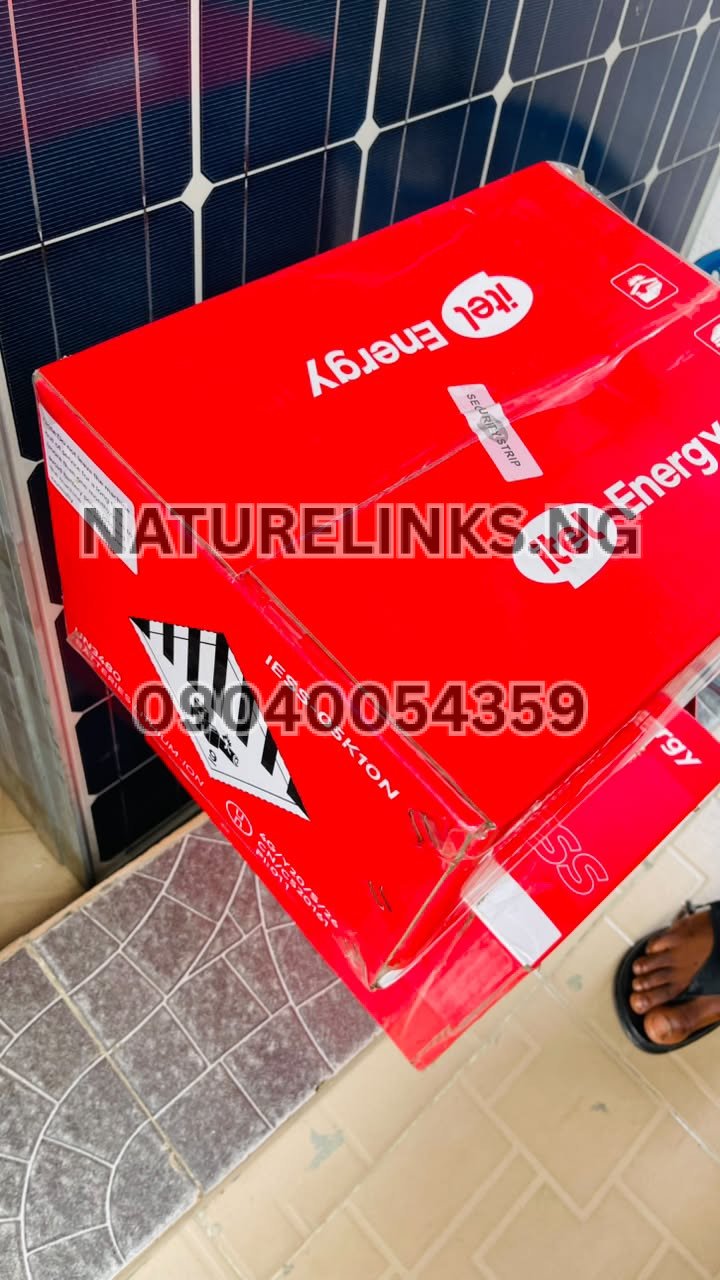
Final Conclusion
How Long Does the Power Tank Battery Last? There is no single runtime that applies to every Itel Power Tank because battery capacity and appliance consumption determine how quickly stored energy is used. A commonly listed 1,000Wh/1kWh configuration can theoretically provide 10 hours at a 100W load, 5 hours at 200W and about 2 hours at 500W, before accounting for real-world conversion losses. Larger Power Tank configurations with 2,000Wh batteries can provide substantially more stored energy.
For Nigerian buyers, the most important thing is to distinguish Wh from W: Wh tells you how much energy the battery stores, while W tells you how much power the inverter can deliver. Always match the Power Tank to your actual appliances, confirm the exact model and check the seller’s current specifications before purchasing.
For genuine Itel Power Tank enquiries in Nigeria, contact Nature Solar Global Limited / Nature Links Nigeria Limited at 07049528019, WhatsApp 09040054359, or visit F1571 Upstairs (F-Line), Alaba International Market, Lagos State, Nigeria 🇳🇬.