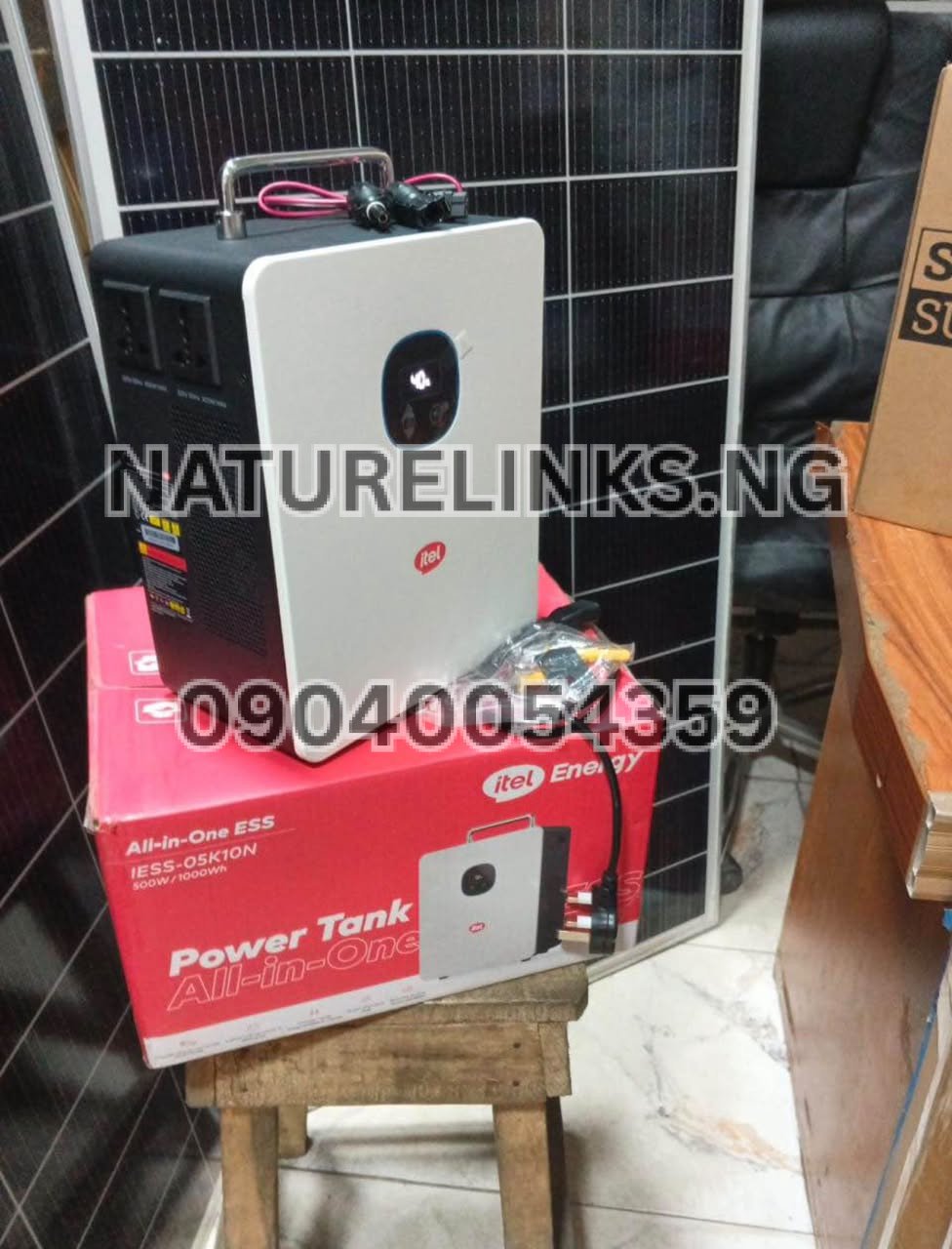
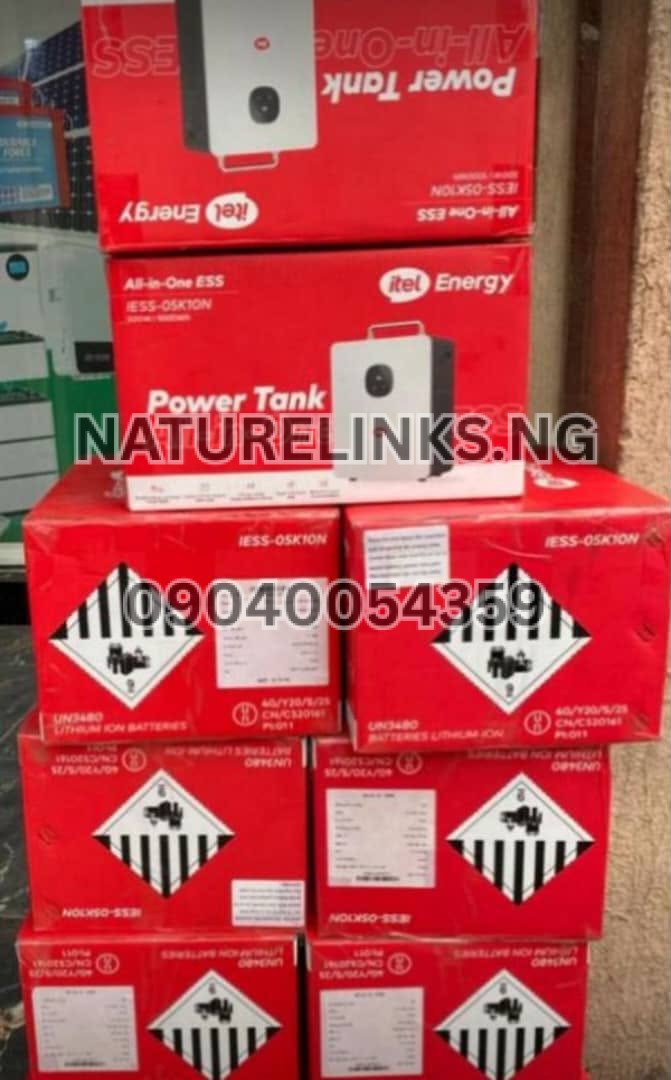
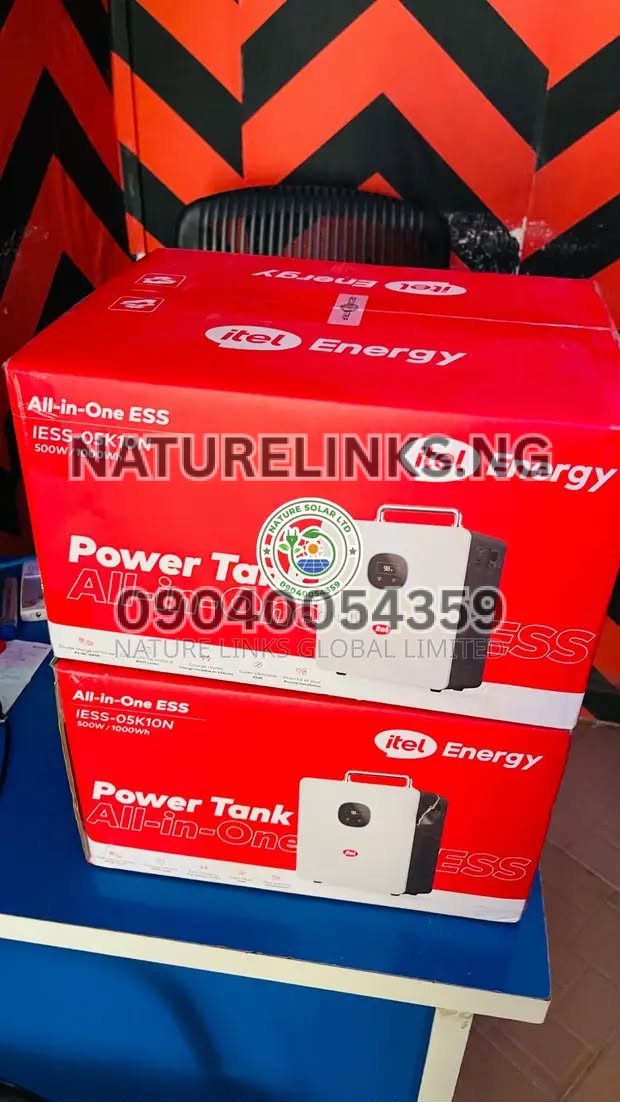
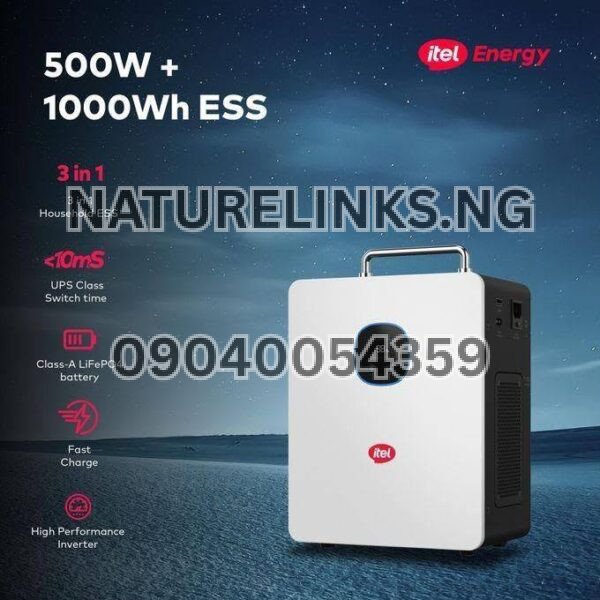
If you are using Starlink in Nigeria and want backup power during NEPA/PHCN outages, one of the most important questions is: How long can Power Tank power Starlink? The answer depends mainly on the Power Tank’s usable battery capacity, Starlink equipment and whether you are powering only the Starlink router/dish or other appliances at the same time.
For an Itel Power Tank rated around 1,000Wh (1kWh), runtime can be estimated by dividing the usable battery energy by the actual power consumption of the connected Starlink system. Because real-world losses occur through the inverter and power supply, actual runtime is normally lower than the simple mathematical calculation.
The exact result also varies according to the Starlink hardware generation, operating conditions, network activity, power mode and whether additional devices such as laptops, phones, TVs or routers are connected.
“How Long Can Power Tank Power Starlink?”
A 1,000Wh Power Tank can potentially power a typical Starlink setup for several hours, but the exact runtime cannot be guaranteed without knowing the actual wattage of the Starlink equipment.
For example, if Starlink and its associated equipment consume approximately:
- 50W: theoretical runtime ≈ 20 hours
- 75W: theoretical runtime ≈ 13.3 hours
- 100W: theoretical runtime ≈ 10 hours
- 120W: theoretical runtime ≈ 8.3 hours
- 150W: theoretical runtime ≈ 6.7 hours
These are theoretical figures based on 1,000Wh ÷ load in watts. Real runtime will be lower because of inverter, conversion and battery-management losses.
How Many Hours Can a 1000Wh Power Tank Run Starlink?
A 1,000Wh Power Tank is a useful size for people who want portable backup electricity for internet equipment.
If the complete Starlink setup averages 100W, the simple calculation is:
1,000Wh ÷ 100W = 10 hours
However, you should not assume that you will always obtain exactly 10 hours. If the system has approximately 10–20% conversion and other losses, practical runtime could be roughly 8–9 hours, depending on the equipment and operating conditions.
At a lower 75W load:
1,000Wh ÷ 75W ≈ 13.3 hours
After losses, the practical figure could be closer to roughly 10–12 hours.
These figures are estimates rather than guaranteed runtime specifications.
How Much Power Does Starlink Use?
Starlink’s electricity consumption depends on the particular Starlink hardware generation and operating conditions.
The most reliable way to calculate your expected runtime is to check the power information supplied with your Starlink equipment or measure its actual consumption with a suitable watt meter.
This is particularly important in Nigeria because voltage fluctuations, power interruptions and different Starlink equipment generations can produce different operating results.
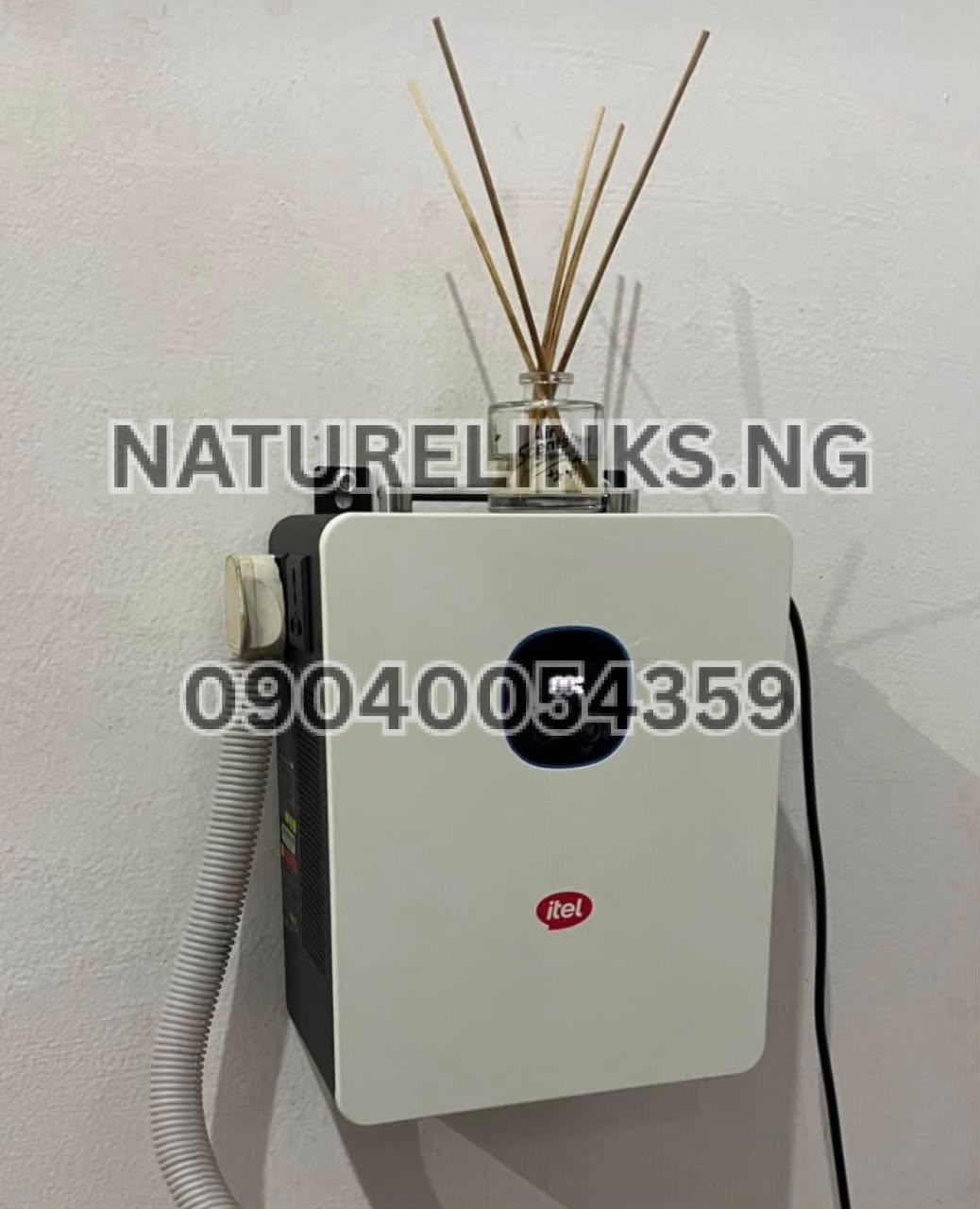
Can Itel Power Tank Run Starlink?
Yes, a Power Tank with sufficient capacity and compatible output can be used as backup power for Starlink.
The important considerations are:
- Battery capacity — measured in Wh.
- Continuous output rating — measured in W.
- AC output compatibility — if using the Starlink AC power supply.
- DC output compatibility — if using a compatible DC setup.
- Pure-sine-wave output — generally preferred for sensitive electronic equipment.
- Starlink’s actual power consumption.
- Other equipment connected to the Power Tank.
For the safest setup, verify the electrical specifications of both the Power Tank and your Starlink equipment before connecting them.
Can Power Tank Power Starlink During NEPA Outage?
Yes, a suitably rated Power Tank can serve as backup electricity for Starlink during a power outage.
This makes a portable power station useful for:
- Home internet
- Remote work
- Online meetings
- Business operations
- CCTV and security systems
- Small offices
- Internet cafés
- Online classes
- Digital businesses
- Emergency communications
Instead of shutting down Starlink whenever grid electricity goes off, you can switch the system to an adequately charged Power Tank.
Power Tank Starlink Runtime Calculation
The basic calculation is:
Runtime (hours) = Battery Capacity (Wh) × Efficiency ÷ Load (W)
For a 1,000Wh Power Tank, assuming approximately 85% overall usable efficiency:
1,000Wh × 0.85 = 850Wh usable energy
If Starlink consumes 100W:
850Wh ÷ 100W = approximately 8.5 hours
If the load is 75W:
850Wh ÷ 75W = approximately 11.3 hours
If the load is 120W:
850Wh ÷ 120W = approximately 7.1 hours
These calculations are estimates. Actual results can differ.
What If I Use Starlink and a Laptop Together?
Your total electricity consumption matters.
For example:
- Starlink: approximately 100W
- Laptop: approximately 50W
- Phone charging: approximately 10W
Total:
100W + 50W + 10W = 160W
For a 1,000Wh battery with an assumed 85% usable efficiency:
850Wh ÷ 160W ≈ 5.3 hours
Therefore, running Starlink alone can provide substantially longer runtime than running Starlink together with computers, TVs, fans and other appliances.

Can Power Tank Run Starlink and a TV?
It can, provided the combined load remains within the Power Tank’s continuous output specification.
Suppose:
- Starlink = 100W
- TV = 80W
Total load:
180W
At 850Wh usable energy:
850Wh ÷ 180W ≈ 4.7 hours
A larger television or additional appliances will reduce runtime further.
Can Power Tank Run Starlink and a Fan?
Yes, assuming the combined load does not exceed the Power Tank’s output capability.
For example:
- Starlink = 100W
- Energy-efficient fan = 40W
Combined load:
140W
Estimated runtime using 850Wh usable energy:
850Wh ÷ 140W ≈ 6.1 hours
A higher-powered fan will shorten the runtime.
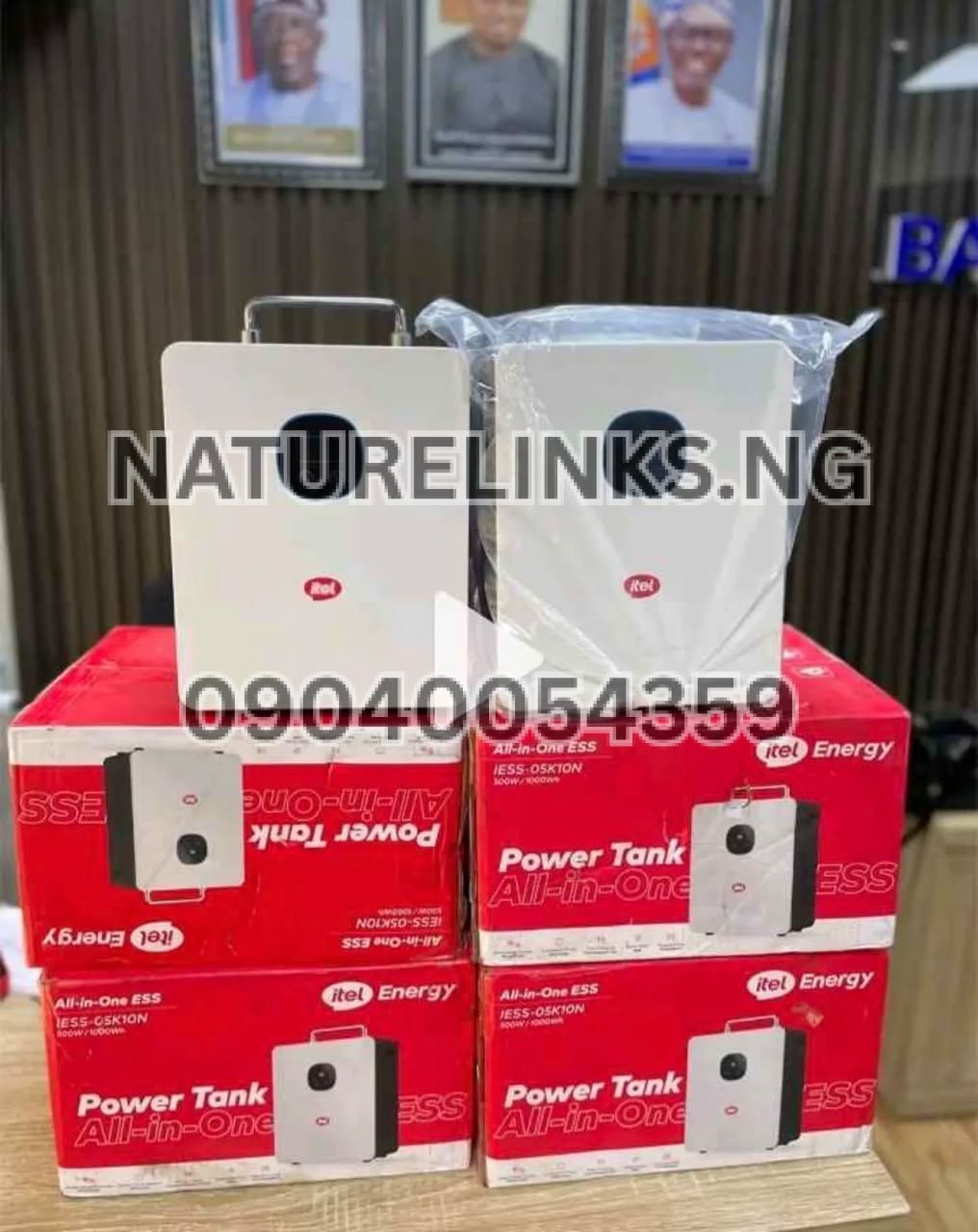
“How Long Can Power Tank Power Starlink?”
The answer depends on how many watts your Starlink system actually consumes.
For a 1,000Wh Power Tank, an approximate planning table is:
| Average Load | Theoretical Runtime | Approx. Runtime at 85% Usable Energy |
|---|---|---|
| 50W | 20 hours | 17 hours |
| 75W | 13.3 hours | 11.3 hours |
| 100W | 10 hours | 8.5 hours |
| 120W | 8.3 hours | 7.1 hours |
| 150W | 6.7 hours | 5.7 hours |
| 200W | 5 hours | 4.25 hours |
| 250W | 4 hours | 3.4 hours |
| 300W | 3.3 hours | 2.8 hours |
The 85% column is an illustrative planning assumption, not a guaranteed specification for every Power Tank.
Does Starlink Use More Power During Startup?
Startup and operating consumption can vary. Some equipment may briefly draw different amounts of power when starting.
For this reason, choosing a Power Tank based only on the average wattage is not sufficient. You should also consider the Power Tank’s continuous output and peak/surge capability.
What Size Power Tank Do I Need for Starlink?
The appropriate Power Tank depends on how long you want Starlink to operate without electricity.
For Short Outages
A smaller power station may be sufficient if you only need internet for a few hours.
For Long Outages
A larger battery capacity is more appropriate if you need Starlink to operate throughout an extended outage.
For Starlink Plus Other Appliances
Consider a larger Power Tank because the battery is supplying the combined load.
For example, Starlink + laptop + fan + lighting can consume substantially more electricity than Starlink alone.
500Wh vs 1000Wh Power Tank for Starlink
Battery capacity makes a significant difference.
A 500Wh battery theoretically provides half the energy of a 1,000Wh battery.
At a 100W load:
- 500Wh ÷ 100W = 5 hours theoretical
- 1,000Wh ÷ 100W = 10 hours theoretical
Actual runtime will be lower after conversion losses.
Therefore, if your priority is longer Starlink backup time, compare the Wh capacity, not just the advertised maximum output in watts.
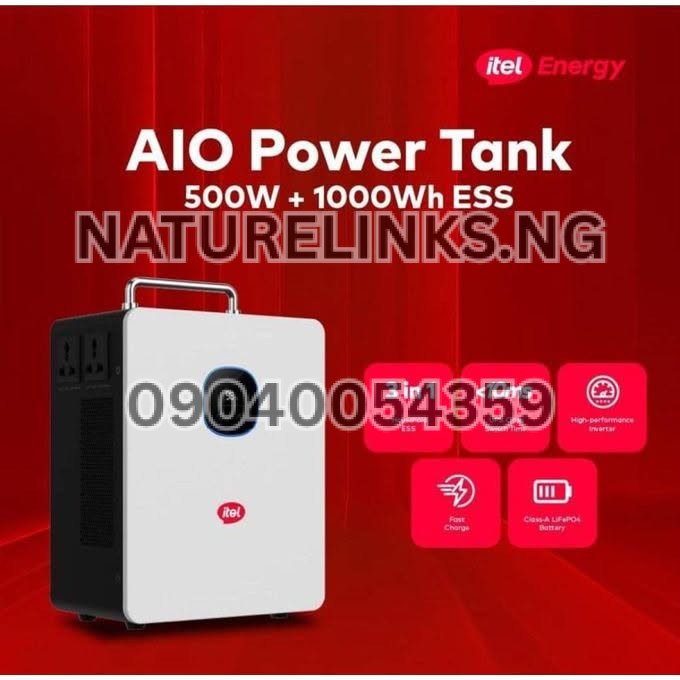
Does a 1000W Power Tank Mean It Can Run Starlink for 10 Hours?
No.
This is an important distinction when buying a portable power station.
Watts (W) indicate power/output capability.
Watt-hours (Wh) indicate stored energy.
A Power Tank advertised as 1000W does not necessarily contain 1,000Wh of battery energy.
For example, a device could have:
- 1,000W maximum output
- 500Wh battery capacity
or:
- 1,000W maximum output
- 1,000Wh battery capacity
The runtime would be different.
When calculating Starlink runtime, pay close attention to Wh, not only W.
How to Make Power Tank Last Longer With Starlink
To maximize backup time:
1. Avoid Unnecessary Loads
Disconnect appliances that you do not need.
2. Use Energy-Efficient Devices
An efficient laptop and low-power lighting can significantly reduce total consumption.
3. Check Your Starlink Power Consumption
Use a reliable power meter where appropriate to determine actual consumption.
4. Avoid Leaving Heavy Appliances Connected
Fans, refrigerators, TVs and other equipment can consume much more energy than networking equipment.
5. Keep the Power Tank Properly Ventilated
Follow the manufacturer’s operating instructions and keep the unit in a suitable environment.
6. Consider Solar Charging
A compatible solar panel can recharge the Power Tank during daylight and extend the availability of backup electricity.
Can Solar Panels Recharge Power Tank While Using Starlink?
Depending on the Power Tank’s specifications, solar charging can allow the battery to recharge while Starlink is operating.
The practical result depends on:
- Solar-panel wattage
- Solar input limit
- Sunlight intensity
- Weather
- Panel orientation
- Charging efficiency
- Starlink’s power consumption
- Other connected loads
For Nigerian users, solar charging can be particularly useful where grid electricity is unreliable.
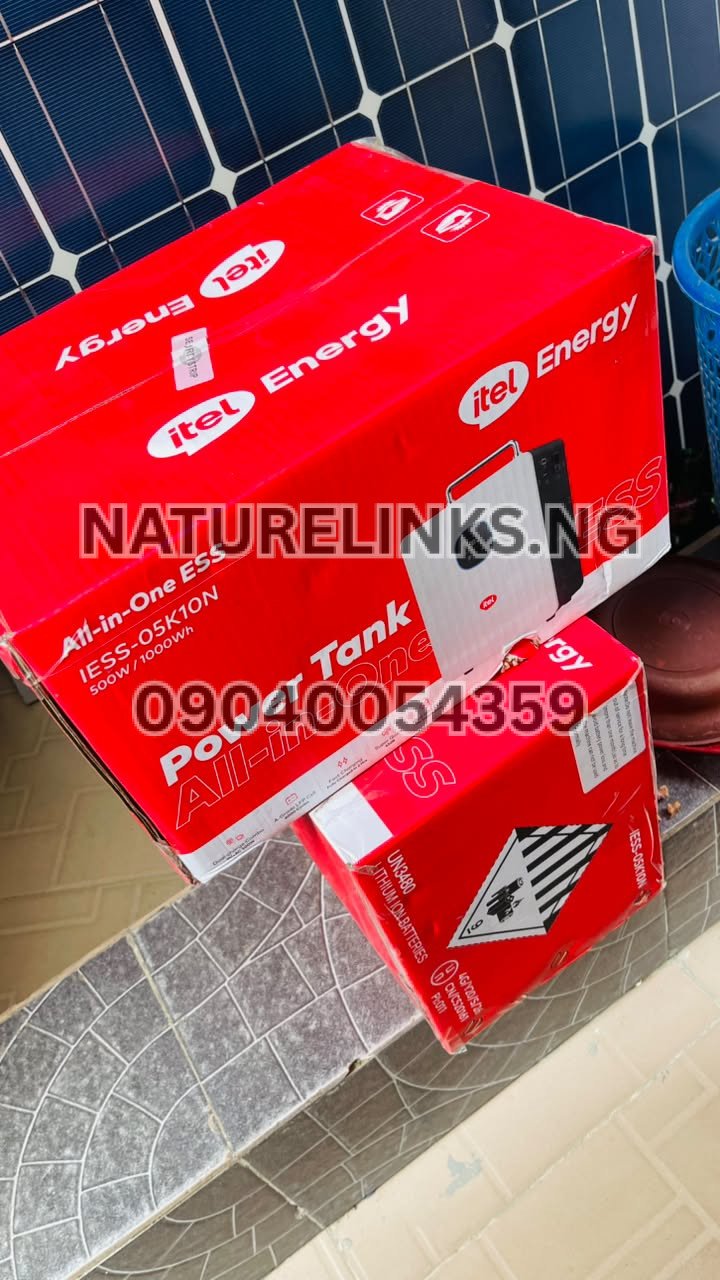
How Long Does It Take to Recharge Power Tank With Solar?
There is no single answer because charging time depends on the Power Tank’s solar-input specification and the actual solar energy available.
A simplified calculation is:
Charging time ≈ Battery capacity ÷ Actual solar charging power
For example, a 1,000Wh battery receiving a sustained 200W charging input would theoretically require around:
1,000Wh ÷ 200W = 5 hours
Real-world charging will generally take longer because solar panels do not continuously deliver their rated wattage throughout the entire charging period.
Can Power Tank Charge While Powering Starlink?
Some Power Tank models support simultaneous charging and discharging, commonly called pass-through charging.
However, whether this feature is supported and how it behaves depends on the particular model.
Check the manufacturer’s specifications before relying on this feature for continuous Starlink operation.
Best Power Tank for Starlink in Nigeria
When shopping for a Power Tank for Starlink, Nigerian buyers should compare:
- Battery capacity in Wh
- AC output
- Continuous wattage
- Peak output
- Battery chemistry
- Charging speed
- Solar input
- Number of AC outlets
- USB ports
- DC outputs
- Display information
- Battery-management system
- Warranty
- Availability of genuine accessories
- Local seller/distributor support
A higher wattage does not automatically mean longer runtime. Battery capacity and actual load are the key factors.
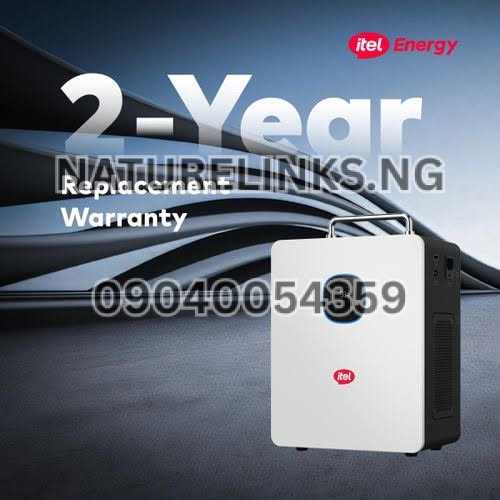
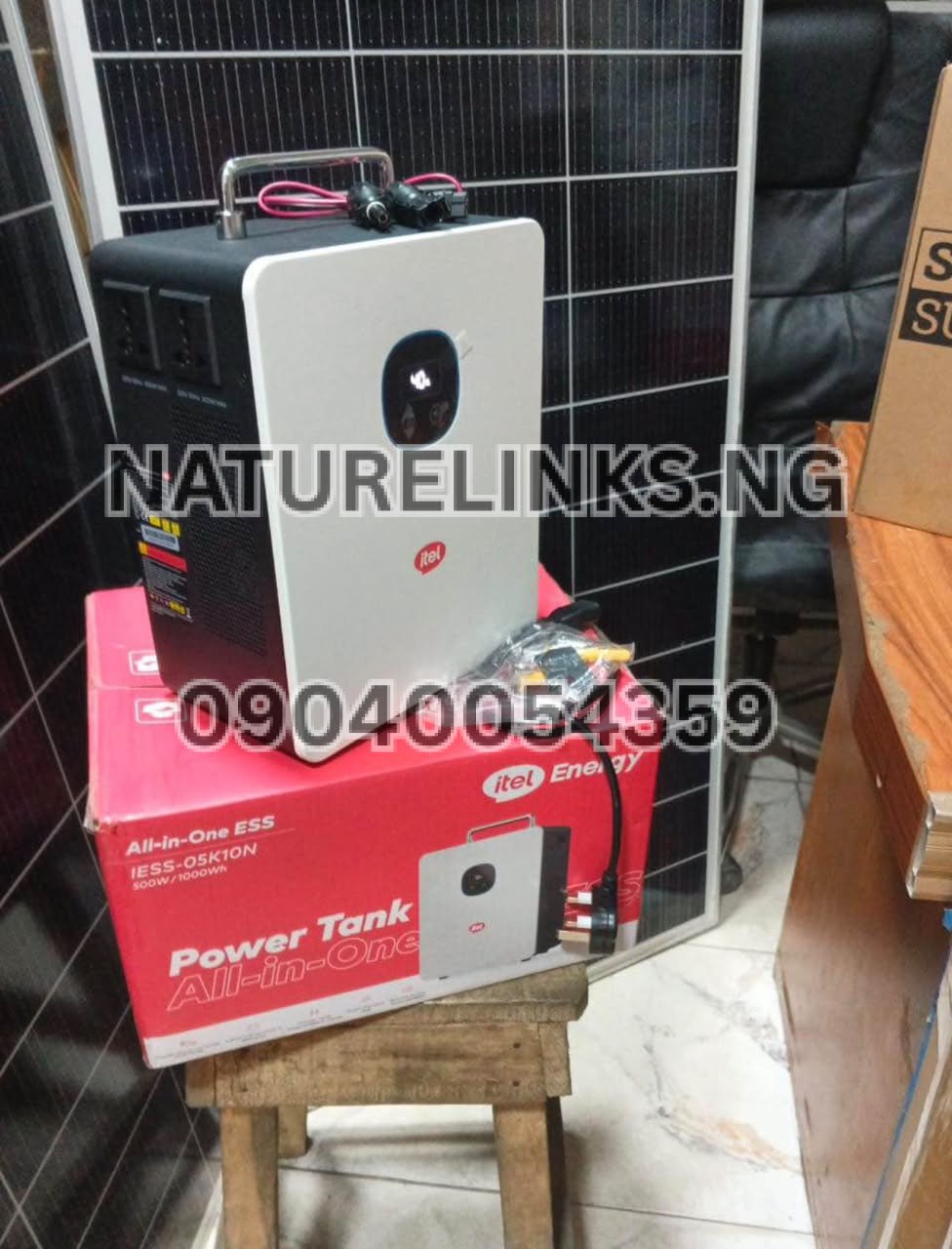
Where to Buy Itel Power Tank in Nigeria
For customers looking for an Itel Power Tank in Nigeria, the supplied distributor information is:
Best Seller: Nature Links Nigeria Limited [NatureLinks.NG]
Distributor: Nature Solar Global Limited
Accredited Distributor: Nature Solar Global Limited
CEO: Mr. Joseph Chikeleze
Call: 07049528019
WhatsApp: 09040054359
Shop Address: F1571 Upstairs (F-Line), Alaba International Market, Lagos State 🇳🇬
Buyers should confirm the exact model, battery capacity, output rating, warranty and included accessories before payment.
Why Buy From an Accredited Distributor?
Buying from an established distributor can help customers verify:
- Product model
- Product specifications
- Authenticity
- Available accessories
- Warranty information
- Charging equipment
- After-sales support
- Current Nigerian price
- Delivery arrangements
Always request the exact model specification before purchasing because Power Tank models can have different battery capacities and output ratings.
Power Tank Price in Nigeria
The price of a Power Tank in Nigeria varies according to:
- Battery capacity
- Maximum output
- Battery technology
- Solar charging capability
- Brand
- Model
- Features
- Warranty
- Exchange-rate conditions
- Seller
For a current price, Nigerian buyers should contact the distributor directly rather than relying on an outdated online price.
Is Power Tank Good for Starlink Backup?
A Power Tank can be a practical backup solution for Starlink when its battery capacity, output rating and connectors are compatible with the Starlink equipment.
The key question is not simply whether a Power Tank can turn Starlink on. The more important question is how many watt-hours the battery has and how many watts the complete Starlink setup consumes.
Frequently Asked Questions
1. How long can a 1000Wh Power Tank run Starlink?
It depends on Starlink’s actual power consumption. At a hypothetical average 100W load, 1,000Wh provides 10 hours theoretically. After conversion losses, the practical runtime could be around 8–9 hours.
2. Can Itel Power Tank power Starlink?
A suitably rated Itel Power Tank can potentially power Starlink if its output specifications and electrical connections are compatible with the Starlink equipment. Verify the specific model before connecting it.
3. How many watts does Starlink use?
Starlink power consumption varies by hardware generation and operating conditions. Check the specifications for your particular Starlink equipment or measure actual consumption for a more accurate runtime calculation.
4. Can Power Tank run Starlink overnight?
A sufficiently large battery can potentially run Starlink overnight. The required capacity depends on the Starlink system’s average wattage and how many hours you want it operating.
5. Can a 500Wh Power Tank run Starlink?
Yes, if its output is compatible and sufficient. However, its runtime will generally be shorter than that of a comparable 1,000Wh Power Tank under the same load.
6. Can I use Starlink while Power Tank is charging?
This depends on whether the specific Power Tank supports simultaneous charging and discharging/pass-through operation. Check the model’s specifications.
7. Can solar panels charge Power Tank while Starlink is running?
A compatible Power Tank may be able to accept solar charging while powering connected equipment. The result depends on the unit’s solar-input and pass-through capabilities.
8. What size Power Tank is best for Starlink?
There is no universal size. Choose based on Starlink’s actual wattage, desired backup duration and whether you will power other appliances simultaneously.
9. Does 1000W mean 1000Wh?
No. 1,000W describes output power, while 1,000Wh describes stored energy. Runtime calculations primarily depend on battery capacity in Wh and the connected load in W.
10. How can I calculate how long my Power Tank will run Starlink?
Use:
Runtime ≈ Battery capacity (Wh) × efficiency ÷ Starlink load (W).
For greater accuracy, measure the actual electricity consumption of your complete Starlink setup.
Conclusion
“How Long Can Power Tank Power Starlink?” depends mainly on the Power Tank’s battery capacity in Wh, Starlink’s actual electricity consumption and the amount of power used by additional connected devices. A 1,000Wh Power Tank, for example, theoretically provides 10 hours at a constant 100W load, but real-world runtime will be lower after conversion losses. Nigerian buyers should therefore compare battery capacity, output rating, compatibility, solar-charging capability and warranty before purchasing. For current product availability, specifications and pricing, contact Nature Solar Global Limited on 07049528019 or WhatsApp 09040054359, or visit F1571 Upstairs (F-Line), Alaba International Market, Lagos State 🇳🇬.