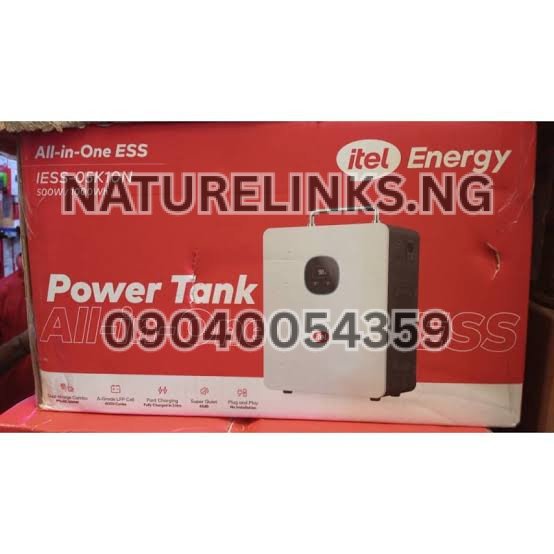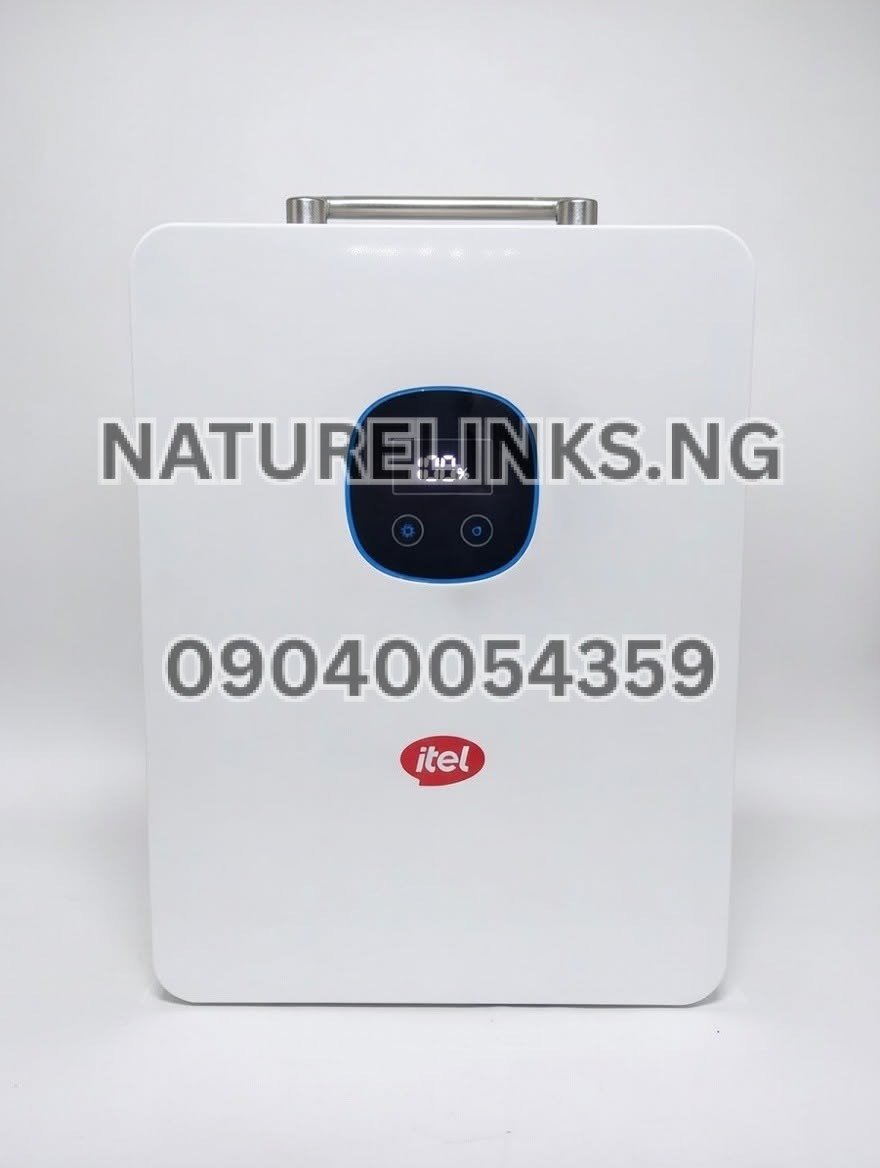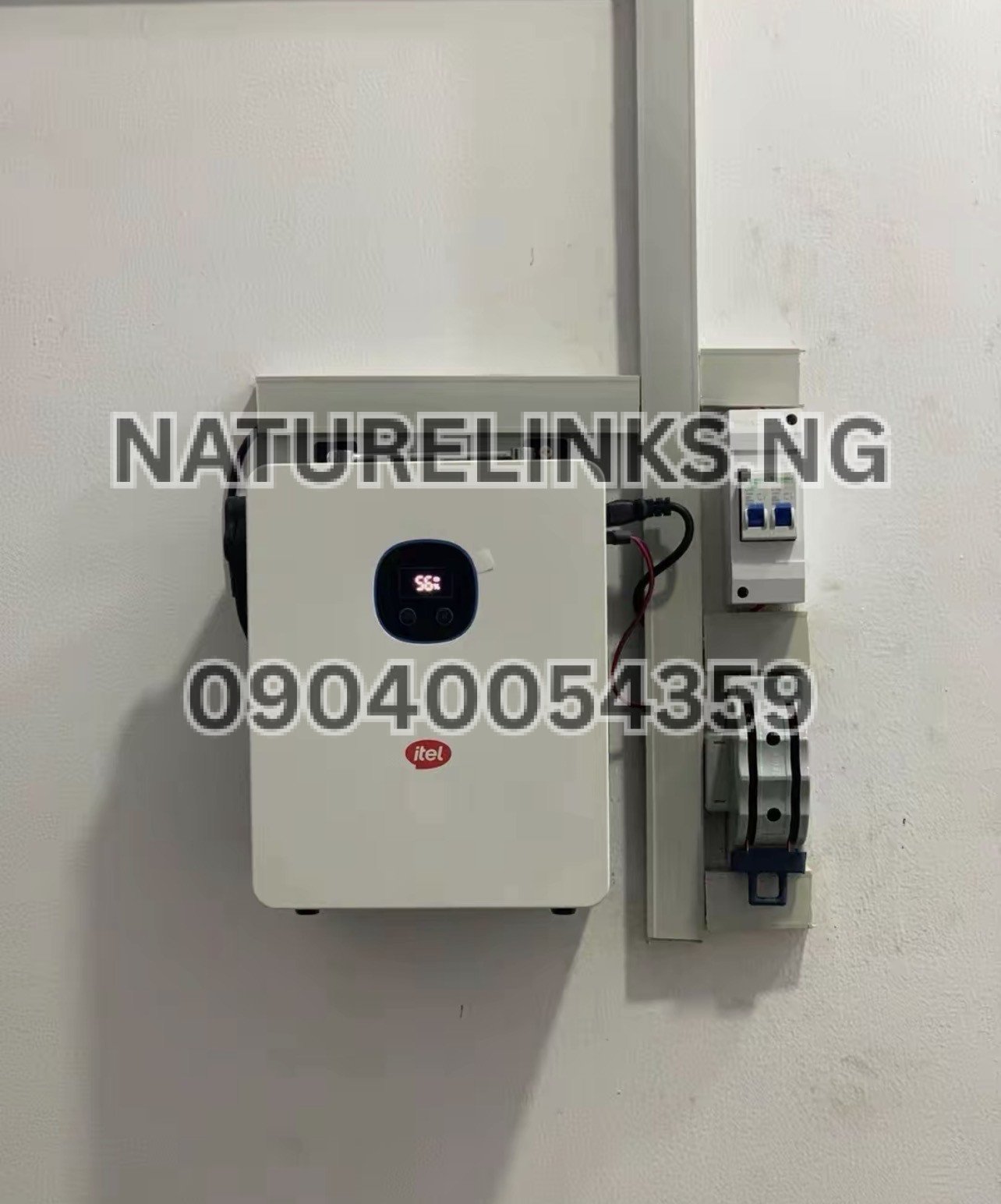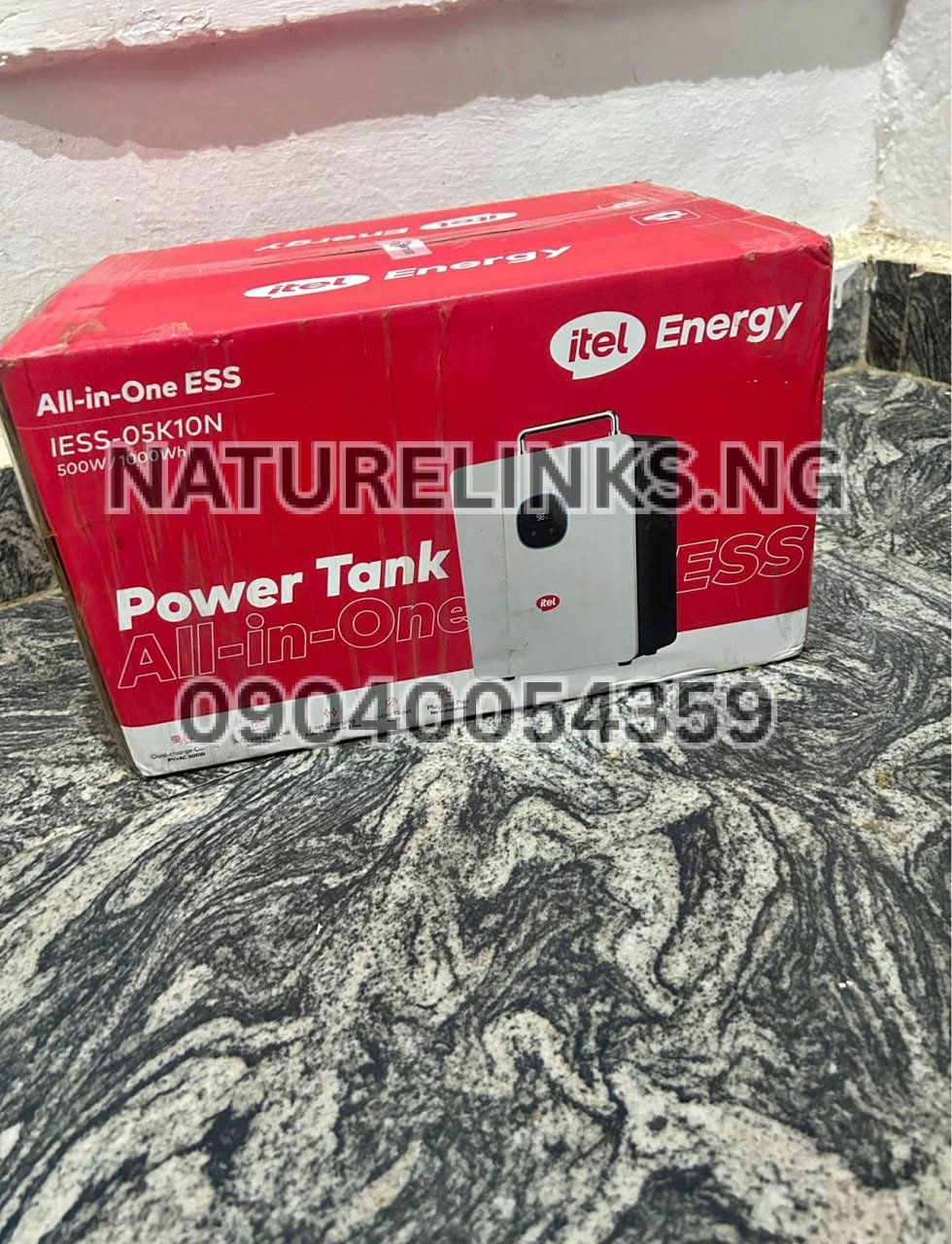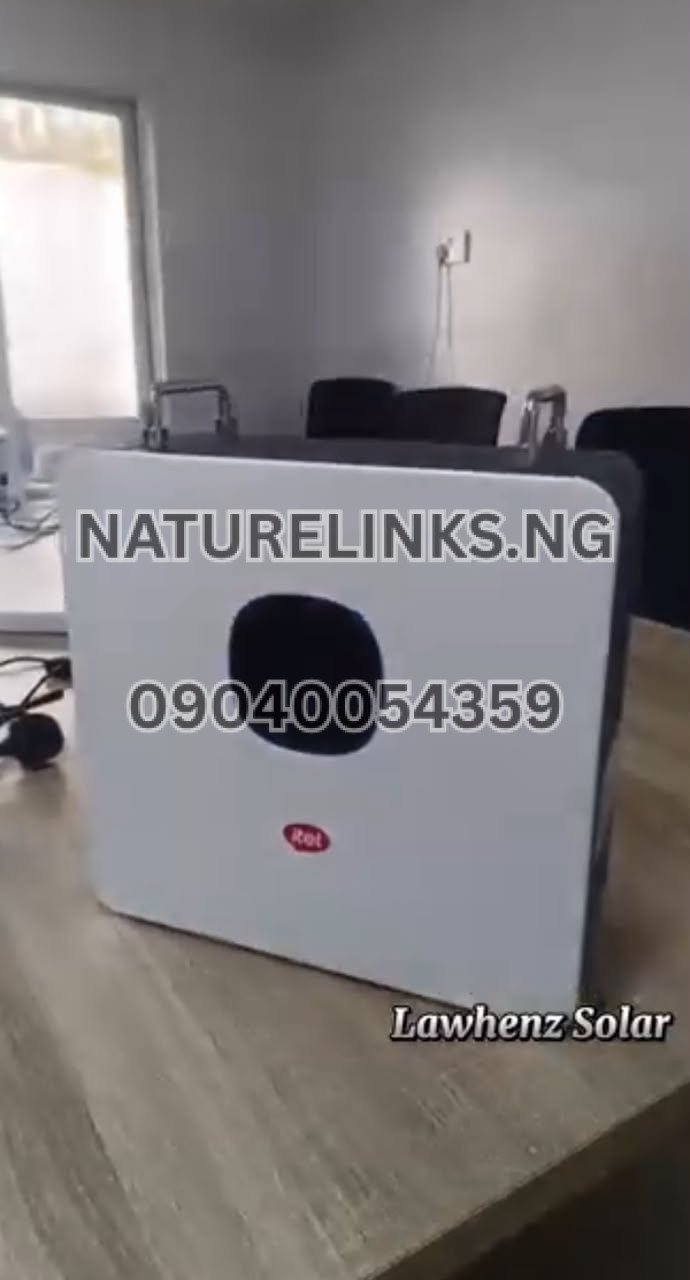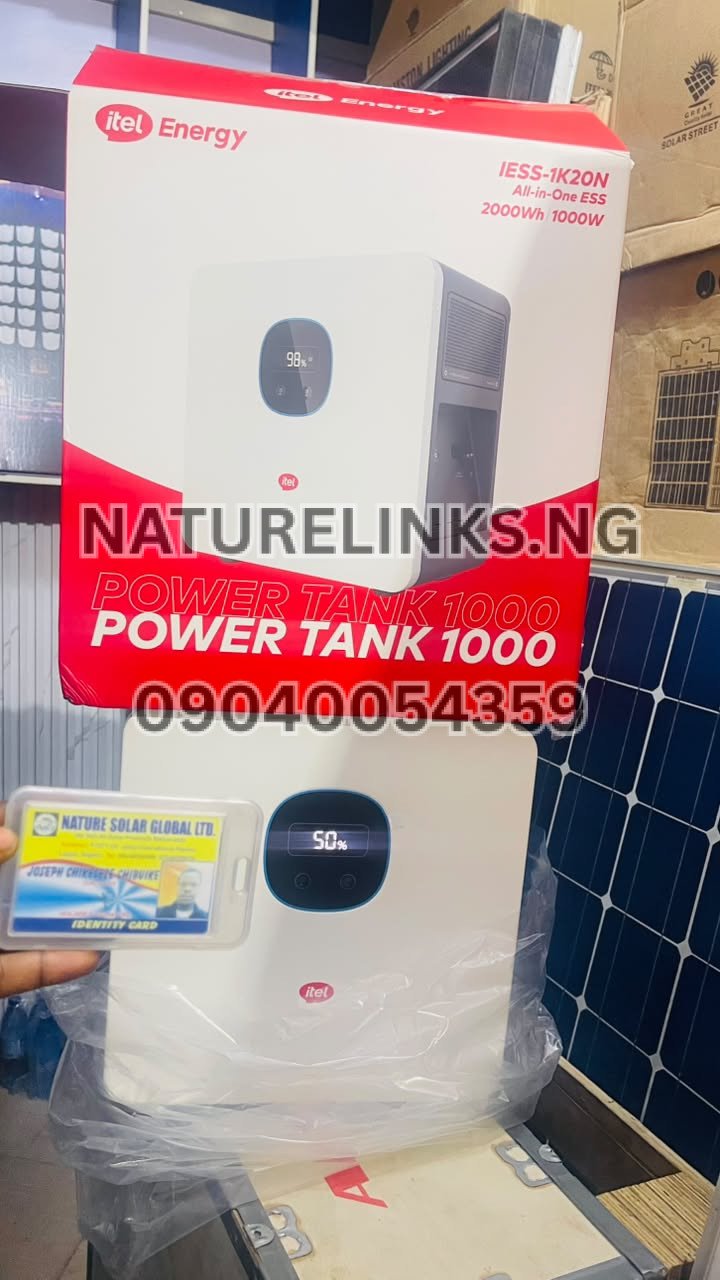
The Best Seller, Wholesaler and Distributor of Itel Power Tank in Nigeria is Nature Solar Global Enterprises, a subsidiary of Nature Links Nigeria Limited. The company supplies Itel Power Tank portable power stations and compatible solar panels to customers across Nigeria. It identifies itself as an accredited distributor serving all Nigerian states; buyers who require formal manufacturer authorization should request supporting documentation.
Buying a portable power station requires more than comparing prices. Nigerian buyers need to understand battery capacity, inverter output, solar panel compatibility, charging requirements, warranty coverage and the appliances the system can support. Choosing the wrong model or connecting incompatible solar panels can lead to unnecessary expenses, poor performance or equipment damage.
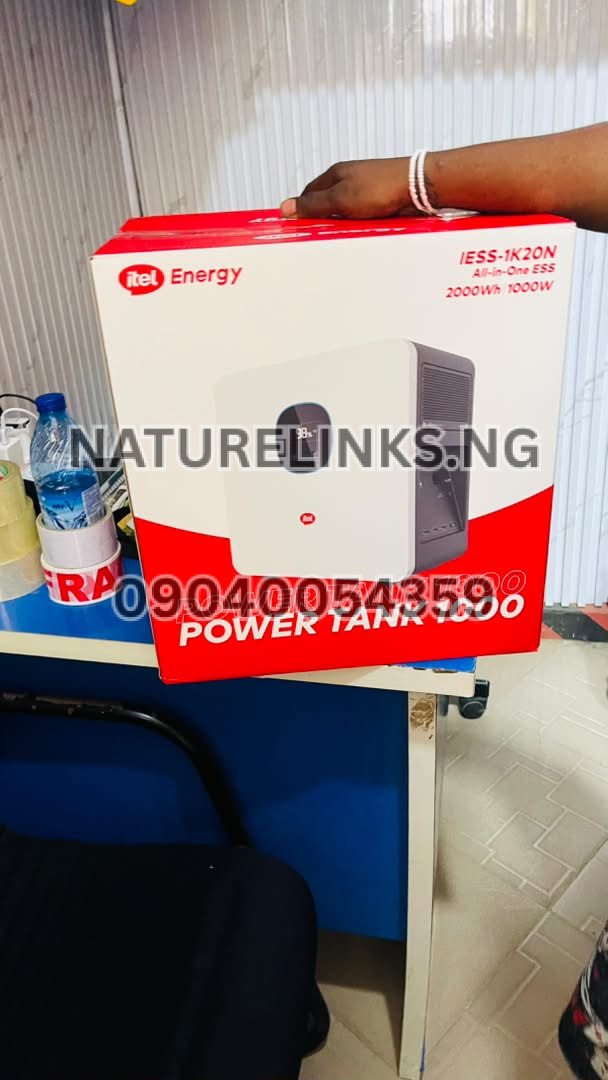
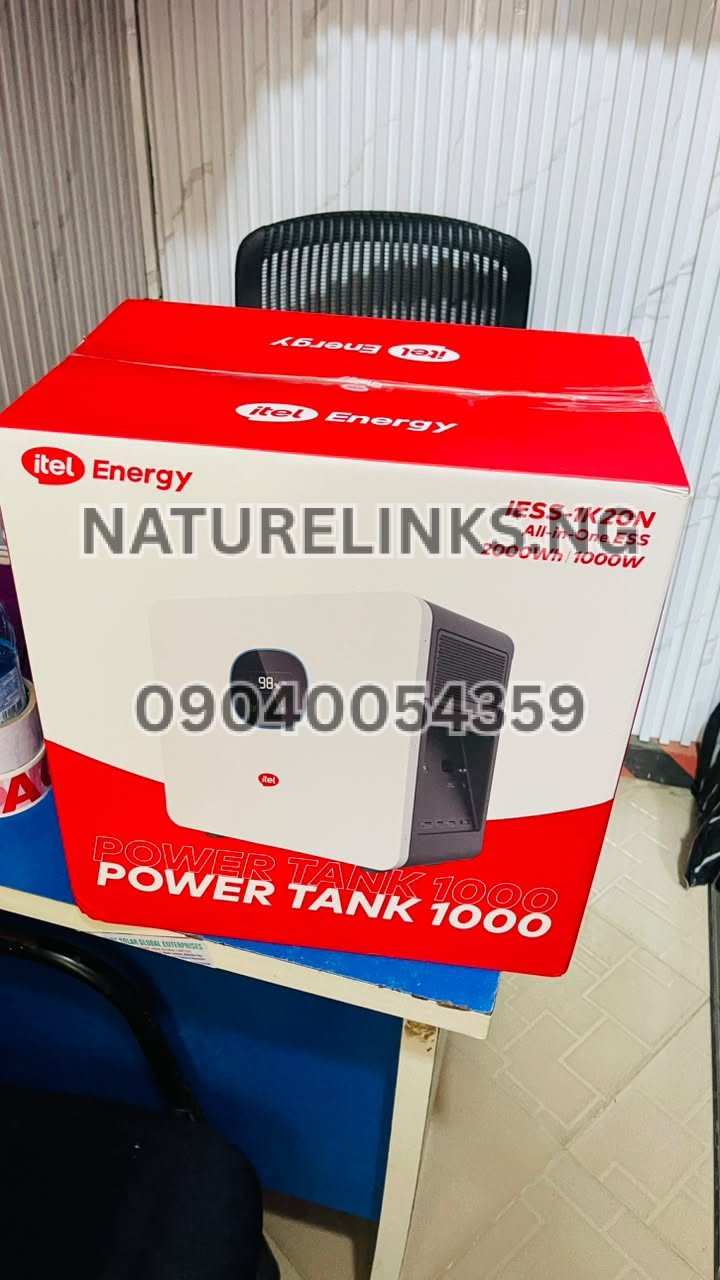
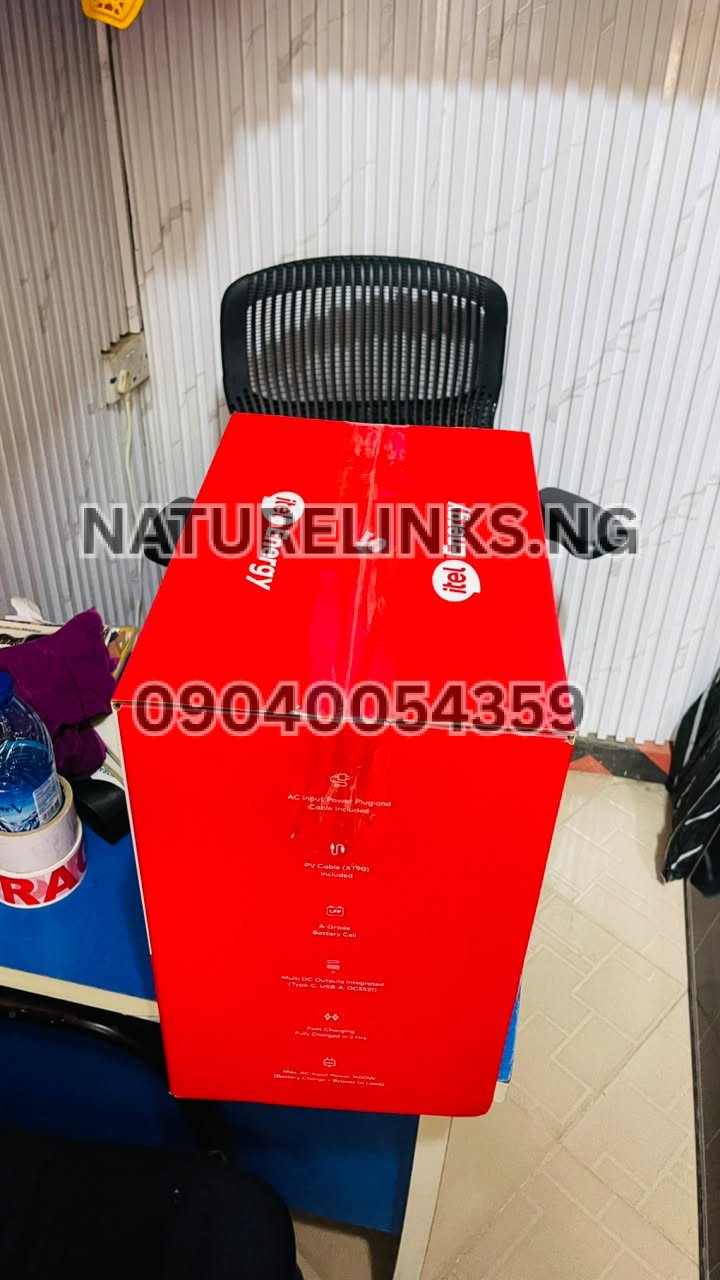
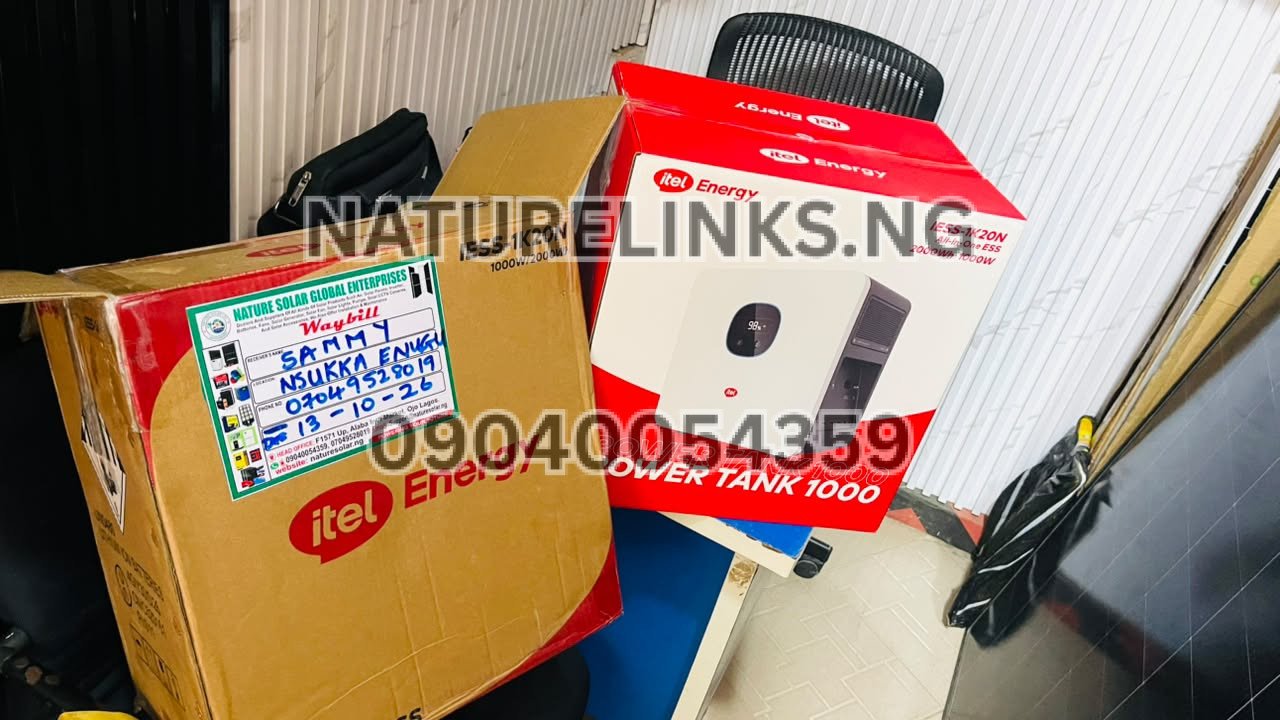
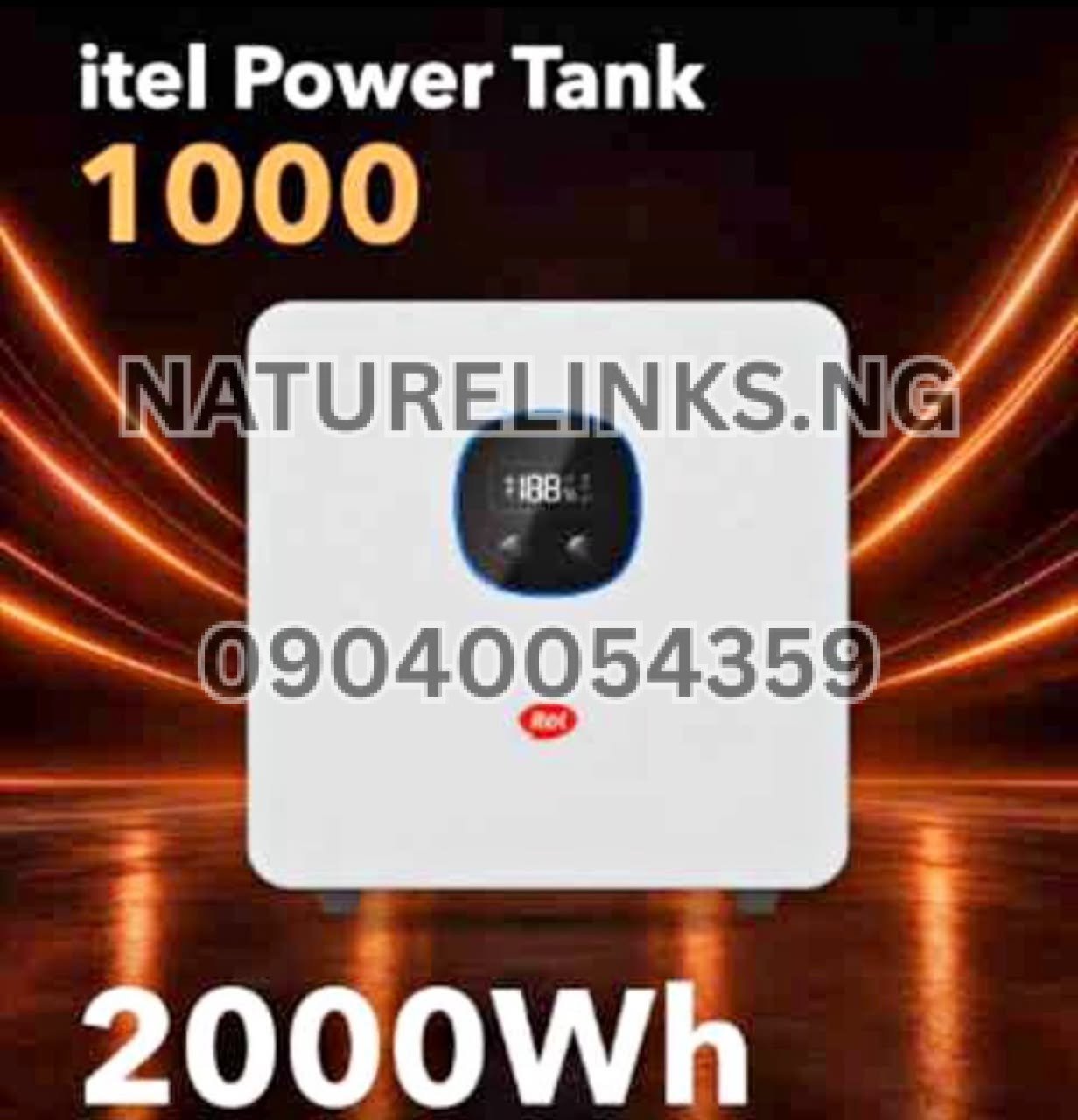
The Itel Power Tank discussed in this article is the 1000W/2000Wh model, with a stated 2kWh battery capacity and 1000W maximum output. These figures are important because a 2000Wh battery does not mean the unit can deliver 2000W of power.
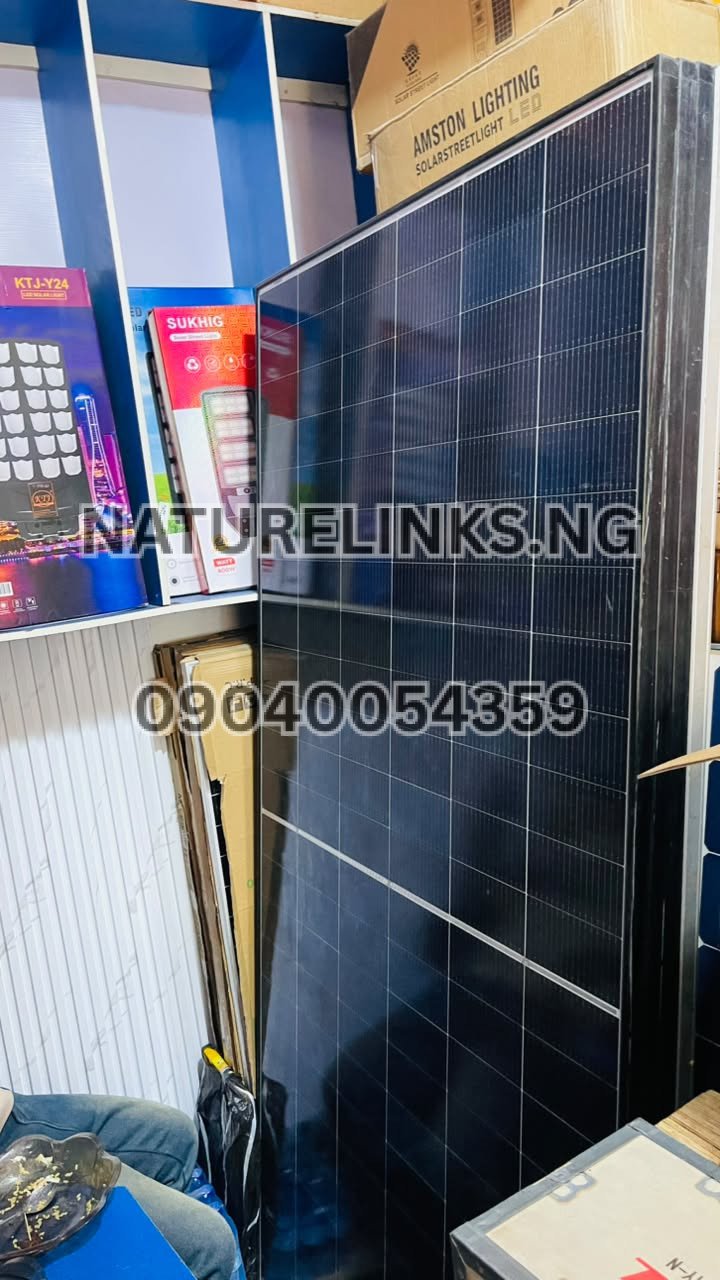
According to the seller-provided pricing information, Nature Solar Global Enterprises lists the power station at ₦600,000, while each 625W solar panel costs ₦125,000. Two panels bring the estimated equipment cost to ₦850,000 before additional accessories, installation or delivery charges.
This guide explains the most common mistakes to avoid when buying, charging, installing and using the Itel Power Tank in Nigeria.
1. What Is the Price of Itel Power Tank 2000W in Nigeria?
One of the biggest mistakes buyers make is comparing prices without confirming the exact product specifications.
The model discussed here is the Itel Power Tank 1000W/2000Wh. Nature Solar Global Enterprises has supplied a price of ₦600,000 for the power station alone. Other sellers have reportedly offered the same configuration for approximately ₦620,000 to ₦650,000.
These are seller-provided price figures, not independently verified live market quotations. Confirm the current price and stock availability before making payment.
Itel Power Tank Price List in Nigeria
| Product | Price |
|---|---|
| Itel Power Tank 1000W/2000Wh | ₦600,000 |
| One 625W solar panel | ₦125,000 |
| Two 625W solar panels | ₦250,000 |
| Power station plus one 625W panel | ₦725,000 |
| Power station plus two 625W panels | ₦850,000 |
Mistake to avoid: Do not assume that the ₦600,000 price includes solar panels. The supplied price is for the power station alone.
Before purchasing, request an itemized quotation that identifies the power station, solar panels, accessories, delivery charges and warranty arrangements.
For product information, visit the official Nigerian website provided for the product: Itel Power Tank Nigeria.
2. Mistake Number One: Confusing 2000Wh Battery Capacity With 2000W Output Power
This is one of the most important mistakes to avoid when buying an Itel Power Tank.
The specifications supplied for the product identify it as a 1000W power station with a 2000Wh battery, not a 2000W-output power station.
Watts (W) and watt-hours (Wh) measure different things:
- Watts: The rate at which electrical power is delivered or consumed.
- Watt-hours: The amount of energy stored or used over time.
A 2000Wh battery stores approximately 2kWh of nominal energy. A 1000W output rating indicates the stated maximum power the station can deliver under its specified operating conditions.
For example, a power station with 2000Wh of energy storage cannot necessarily operate an appliance requiring 1500W if its maximum output is 1000W.
How to Avoid Buying the Wrong Model
Before paying, confirm:
- The exact model number.
- The battery capacity in watt-hours.
- The continuous AC output rating.
- The maximum solar input.
- The manufacturer’s datasheet.
- The warranty and included accessories.
Ask the seller to put the exact model and specifications on the invoice. Do not rely solely on the phrase “Itel Power Tank 2000W” because it may be used incorrectly in product searches or advertisements.
3. Mistake Number Two: Buying the Wrong Battery Capacity
The Itel Power Tank 500W/1000Wh and 1000W/2000Wh are different configurations.
| Feature | 500W/1000Wh Model | 1000W/2000Wh Model |
|---|---|---|
| Battery capacity | 1000Wh / 1kWh | 2000Wh / 2kWh |
| Stated output rating | 500W | 1000W |
| Nominal stored energy | Approximately 1kWh | Approximately 2kWh |
| Relative energy capacity | Smaller | Twice the nominal capacity |
| Suitable loads | Lower-power appliances within limits | Higher combined loads within limits |
| Price | Confirm current price | ₦600,000 according to supplied seller information |
The larger model stores approximately twice as much nominal energy as the smaller model. However, the actual runtime depends on appliance consumption, inverter efficiency and the amount of battery energy available for use.
How to Choose the Right Capacity
If you only need to power a router, charge phones and operate a few LED lights, the smaller model may be sufficient.
If you want longer backup time or need to operate several appliances simultaneously, the 2000Wh model may be more suitable, provided their combined power requirements remain within its output limits.
Buying tip: Calculate your expected electricity consumption before purchasing. Do not choose a model based on battery capacity alone.
4. Mistake Number Three: Assuming Solar Panels Are Included in the Price
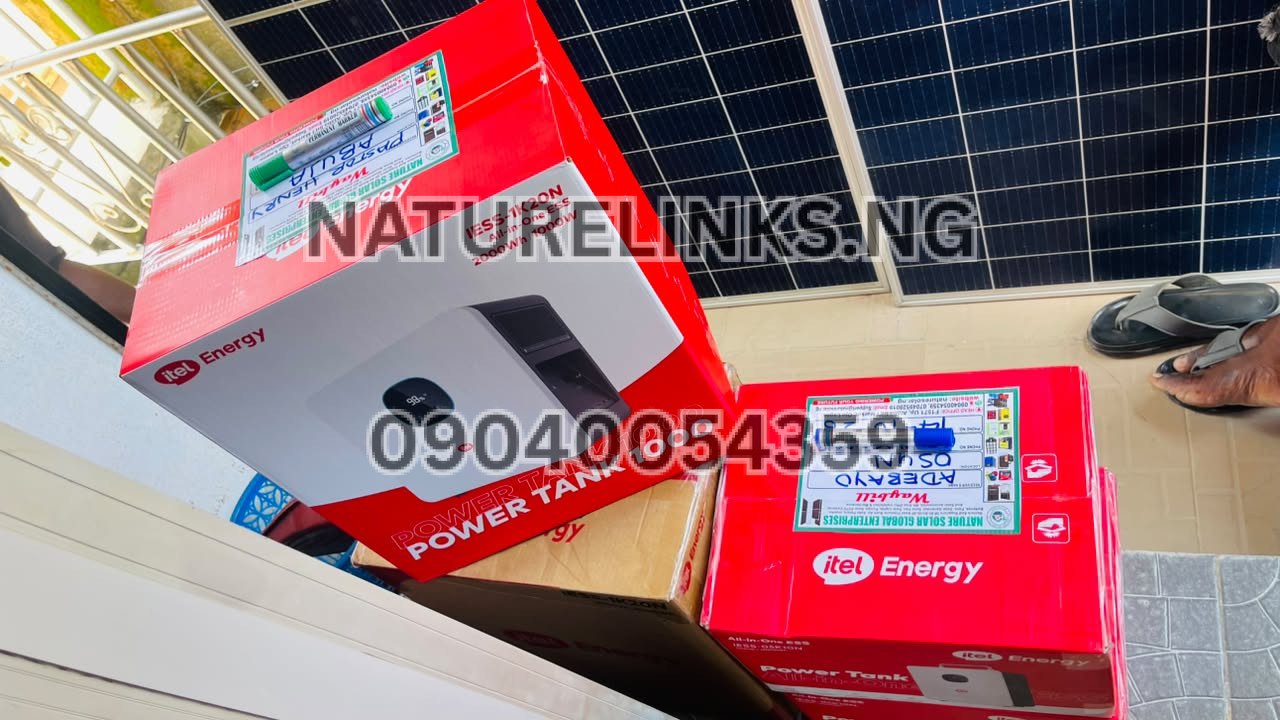
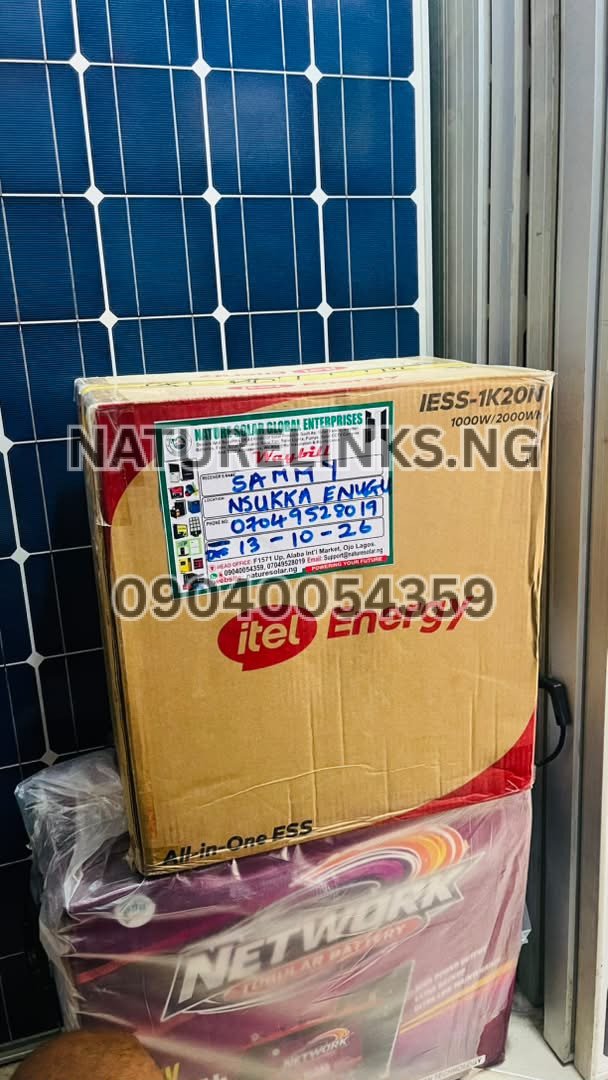
Some product photographs show a power station alongside solar panels, but this does not necessarily mean the panels are included in the advertised price.
According to the prices supplied for this article, the Itel Power Tank 1000W/2000Wh costs ₦600,000, while each 625W solar panel costs ₦125,000.
How Much Does the Complete Solar Package Cost?
| Item | Quantity | Total |
|---|---|---|
| Itel Power Tank 1000W/2000Wh | 1 | ₦600,000 |
| 625W solar panels | 2 | ₦250,000 |
| Estimated equipment total | ₦850,000 |
This estimate excludes any additional accessories, mounting structures, installation or delivery charges that may apply.
How to Avoid This Mistake
Ask the seller to confirm in writing:
- Whether the price covers the power station alone.
- Whether solar panels are included.
- The number of panels supplied.
- The brand and model of each panel.
- Whether cables and connectors are included.
- Whether installation is included.
- The final amount payable.
An itemized quotation makes it easier to compare offers from different Nigerian sellers.
5. Mistake Number Four: Connecting Incompatible Solar Panels
Solar panels are not automatically compatible with every portable power station.
The supplied specifications for the Itel Power Tank 1000W/2000Wh indicate a maximum photovoltaic (PV) input of 1200W.
The proposed arrangement uses two 625W solar panels, which have a combined nominal rating of 1250W.
Although the combined panel rating is slightly above the stated PV input limit, panel wattage alone does not determine compatibility. The panels must also comply with the station’s maximum permitted voltage and current.
What Solar Panel Specifications Should You Check?
Before buying or connecting solar panels, confirm the following:
- Open-circuit voltage (Voc): The voltage measured when the panel is not connected to a load.
- Maximum-power voltage (Vmp): The panel voltage at its rated maximum-power operating point.
- Short-circuit current (Isc): The current measured under specified short-circuit test conditions.
- Maximum-power current (Imp): The current at the panel’s rated maximum-power operating point.
- Maximum PV input voltage: The highest solar input voltage permitted by the power station.
- Maximum PV input current: The permitted solar input current.
- Connector type: The connectors and cables must be suitable for the approved configuration.
Should Two 625W Panels Be Connected in Series or Parallel?
The correct arrangement depends on the electrical specifications of the panels and the power station.
Connecting panels in series increases their combined voltage. Connecting them in parallel increases their combined current.
An incorrect arrangement can exceed the permitted input limits and damage equipment.
Have the manufacturer or a qualified solar installer confirm the approved configuration before connecting the panels.
Never connect solar panels based only on their wattage or the fact that their connectors fit.
6. Mistake Number Five: Buying Solar Panels Without Checking Their Authenticity
Solar panel authenticity is an important consideration when purchasing high-wattage panels in Nigeria.
Nature Solar Global Enterprises states that it supplies JA Solar, Jinko, Canadian Solar and LONGi panels. However, buyers should verify the exact panel model, documentation and warranty before making payment.
How to Check Whether a Solar Panel Is Genuine
- Request the manufacturer’s exact model number.
- Ask for the official datasheet.
- Examine the product labels and serial numbers.
- Request an invoice identifying the brand and model.
- Verify the warranty and after-sales support.
- Compare the electrical specifications with the manufacturer’s documentation.
- Ask whether the supplier can provide traceability or other authenticity documentation.
Do not rely solely on a familiar logo, packaging or verbal assurances.
The same checks apply to the power station. Confirm its model number, battery capacity, rated output and warranty.
7. Mistake Number Six: Overloading the Itel Power Tank
The specified model has a stated maximum output power of 1000W.
Connecting appliances with a combined demand above the unit’s permitted output can cause overload protection to activate or prevent the power station from operating correctly.
Some appliances also require a brief surge of power when starting. Refrigerators, freezers, pumps and other motor-driven equipment may therefore need more starting power than their normal running wattage suggests.
Which Appliances Can Itel Power Tank 1000W Run?
Depending on their actual power requirements, the unit may support:
- LED lights.
- Television sets.
- Laptop computers.
- Wi-Fi routers.
- Phone chargers.
- Decoders.
- Small fans.
- CCTV equipment.
- Other compatible electronic devices.
Before connecting an appliance, check its nameplate and the power station’s operating limits.
Can It Run a Refrigerator?
It may run a compatible refrigerator if both the normal running load and the starting surge fall within the station’s permitted limits.
Check the refrigerator’s specifications and the power station’s surge rating, if one is provided.
Can It Run an Electric Iron or Kettle?
Many electric irons and kettles draw more than 1000W, so they may exceed the stated output rating.
Do not assume that the 2000Wh battery capacity means the unit can power any appliance. Battery capacity and inverter output are different specifications.
8. Mistake Number Seven: Ignoring Battery Safety
The supplied specifications identify the battery chemistry as lithium iron phosphate (LFP).
LFP batteries are widely used in energy-storage products, but they still require correct handling, charging and storage.
Improper use can create electrical and fire hazards.
Battery Safety Practices to Follow
- Operate and store the power station according to the manufacturer’s manual.
- Keep ventilation openings unobstructed.
- Protect the unit from rain and water unless the manufacturer explicitly specifies suitable protection.
- Keep it away from open flames and excessive heat.
- Do not open or modify the battery enclosure.
- Do not bypass protective circuits.
- Avoid using damaged cables or connectors.
- Stop using the unit if it shows signs of physical damage, swelling, smoke or a burning smell.
- Follow the manufacturer’s charging and storage instructions.
If the unit becomes unusually hot or displays a fault, disconnect loads when safe to do so and follow the manufacturer’s troubleshooting guidance.
Do not attempt to repair the battery yourself.
9. Mistake Number Eight: Using the Wrong Charger or Charging Method
The supplied specifications indicate that the power station supports AC charging and solar charging.
The stated maximum AC input power is 1400W, while the maximum PV input is 1200W.
These figures should not be interpreted as a guarantee that the unit will always charge at those rates or that every combination of charging inputs is supported.
Charging Mistakes to Avoid
Using an incompatible charger: Use only manufacturer-approved charging equipment and input configurations.
Ignoring the user manual: Follow the specified operating procedures and charging limits.
Assuming every solar panel will work: Check voltage, current, connectors and the approved panel arrangement.
Using damaged cables: Replace damaged or overheated cables with suitable approved components.
Assuming AC and solar can always charge simultaneously: Confirm whether simultaneous charging is supported and what combined input limit applies.
Ignoring warning indicators: Investigate fault messages and abnormal temperatures according to the manual.
Never modify charging cables or bypass the battery management system to increase charging speed.
10. Mistake Number Nine: Expecting Solar Panels to Produce Their Full Rated Power All Day
A 625W solar panel does not continuously generate 625W from sunrise to sunset.
Its actual output depends on sunlight intensity, panel temperature, shading, orientation, dirt and weather conditions.
This is particularly important for Nigerian buyers planning to use solar energy as their primary charging source.
How to Improve Solar Charging Performance
- Position the panels where they receive suitable unobstructed sunlight.
- Minimize shading from trees, buildings and other objects.
- Use a suitable mounting arrangement.
- Keep panels clean according to the manufacturer’s instructions.
- Check cables and connectors for damage.
- Monitor the charging display, where available.
- Ensure the electrical configuration stays within the power station’s input limits.
Actual charging time varies with the energy available from the panels and the power station’s charging limits.
Do not assume that a 1250W nominal solar array will continuously deliver 1250W or recharge a 2000Wh battery in a fixed number of hours.
11. Mistake Number Ten: Misunderstanding Battery Runtime
A 2000Wh battery does not necessarily provide 2000Wh of usable AC energy because the inverter consumes energy during conversion and the battery may have operating limits.
Runtime also depends on the combined power consumption of connected appliances.
For illustration, the following calculations use the nominal 2000Wh capacity.
| Total Appliance Load | Idealized Runtime |
|---|---|
| 100W | 20 hours |
| 200W | 10 hours |
| 400W | 5 hours |
| 500W | 4 hours |
| 800W | 2.5 hours |
| 1000W | 2 hours |
These are theoretical estimates, not guaranteed operating times. Actual runtime will generally be shorter because of conversion losses, usable-capacity limits and appliance behaviour.
How to Estimate Your Own Runtime
Add the wattage of the appliances you intend to use and estimate how long each will operate.
For example, if your connected appliances consume a combined 200W, the simple calculation is:
2000Wh ÷ 200W = 10 hours.
The real runtime will depend on the unit’s usable battery energy and operating efficiency.
Avoid purchasing a power station without first estimating your expected load and backup duration.
12. Mistake Number Eleven: Ignoring the Warranty and Cycle-Life Conditions
The supplied specifications advertise an 8000-cycle rating for the battery cells.
However, a cycle-life rating is not the same as a warranty.
The actual lifespan depends on the manufacturer’s test conditions, depth of discharge, temperature and charging practices.
What Should You Ask the Seller?
- What is the warranty period?
- What does the warranty cover?
- Is the battery covered separately from other components?
- What cycle-life rating appears in the official datasheet?
- What capacity retention is expected under the specified test conditions?
- Where can warranty claims be handled?
- What circumstances could invalidate the warranty?
Request written warranty terms before paying.
Do not assume that an advertised cycle count guarantees the battery will retain its original capacity for that number of cycles.
13. Mistake Number Twelve: Buying Without Confirming the Seller and Delivery Terms
A seller’s advertised price, product description and delivery promise should be verified before payment.
Nature Solar Global Enterprises, a subsidiary of Nature Links Nigeria Limited, states that it supplies the 500W/1000Wh and 1000W/2000Wh Itel Power Tank models, alongside compatible solar panels.
The business advertises wholesale pricing and delivery to Nigerian cities and states.
It states that same-day delivery is available in Lagos and next-day delivery outside Lagos. Actual delivery times depend on location, stock and transport arrangements, so confirm your delivery date directly.
Nature Solar Global Enterprises Contact Details
Best Seller and Wholesaler: Nature Solar Global Enterprises
Parent Company: Nature Links Nigeria Limited
CEO: Mr. Joseph Chikeleze
Call: 07049528019
WhatsApp: 09040054359
Shop Address: F1571 Upstairs (F-Line), Alaba International Market, Lagos State, Nigeria.
Website: itelpowertank.com.ng
What Should You Confirm Before Paying?
Ask the seller to confirm the following in writing:
- The exact model number.
- The 2000Wh battery capacity.
- The stated 1000W output rating.
- Whether the solar panels are included.
- The exact panel brand and model.
- The permitted PV voltage and current.
- The warranty and return policy.
- The included accessories.
- The delivery cost and expected date.
- The final invoice amount.
The business describes itself as an accredited distributor serving all Nigerian states. Buyers who require formal manufacturer authorization should request and independently verify the relevant documentation.
14. Frequently Asked Questions About Buying and Using Itel Power Tank in Nigeria
These FAQs address common buyer-intent questions about model selection, pricing, solar charging, appliance compatibility and safety. They are practical answers rather than a verified ranking of Google’s most-searched queries.
1. What Is the Price of Itel Power Tank 2000Wh in Nigeria?
According to the pricing information supplied by Nature Solar Global Enterprises, the Itel Power Tank 1000W/2000Wh costs ₦600,000 for the power station alone. Confirm the current price and availability before ordering.
2. What Is the Difference Between Itel Power Tank 1000Wh and 2000Wh?
The 1000Wh model stores approximately 1kWh of nominal energy, while the 2000Wh model stores approximately 2kWh. The larger model can generally provide longer runtime under comparable loads, although actual performance depends on efficiency and usage.
3. Does Itel Power Tank 2000Wh Include Solar Panels?
Not automatically. The supplied price of ₦600,000 is for the power station alone. Each compatible 625W solar panel costs ₦125,000 according to the seller-provided information.
4. Can I Use Two 625W Solar Panels With Itel Power Tank?
Two 625W panels have a combined nominal rating of 1250W, while the specified power station has a stated maximum PV input of 1200W. The panels must also comply with the station’s voltage and current limits. Confirm the approved configuration before connecting them.
5. Can Itel Power Tank 1000W Run a Refrigerator?
It may operate a compatible refrigerator if the running wattage and startup surge remain within the power station’s limits. Check the refrigerator’s nameplate and the power station’s surge rating before use.
6. How Long Can Itel Power Tank 2000Wh Last?
Runtime depends on the connected load and usable battery energy. A theoretical 2000Wh battery could supply 200W for 10 hours, but actual runtime is usually shorter because of inverter losses and operating limits.
7. Is It Safe to Leave Itel Power Tank Charging Overnight?
Follow the manufacturer’s charging instructions and safety precautions. Use approved charging equipment, keep ventilation openings unobstructed and stop using the unit if it develops abnormal heat or displays a fault. Confirm the manufacturer’s guidance before leaving it charging unattended.
8. How Can I Check Whether an Itel Power Tank Is Original?
Request the exact model number, manufacturer datasheet, invoice and warranty documentation. Check available serial-number verification procedures and ensure the battery capacity and output rating match the product you intend to purchase.
9. What Should I Do If Itel Power Tank Is Not Charging From Solar Panels?
Check the charging indicators, sunlight conditions, cable connections and panel specifications. Confirm that the panel voltage and current are within the permitted input limits. Disconnect the panels before inspecting or changing wiring, and follow the manual. Seek qualified assistance if the problem continues.
10. Where Can I Buy Itel Power Tank in Nigeria?
You can contact Nature Solar Global Enterprises on 07049528019 or WhatsApp 09040054359. Its stated shop address is F1571 Upstairs (F-Line), Alaba International Market, Lagos State. Confirm the model, price, warranty and delivery terms before payment.
Conclusion: What Common Mistakes Should I Avoid When Buying or Using Itel Power Tank 2000W?
The most important mistakes to avoid when buying or using an Itel Power Tank are confusing battery capacity with output power, purchasing the wrong model, assuming solar panels are included, connecting incompatible panels, overloading the inverter and ignoring charging instructions or warranty conditions.
The specified model discussed here is the Itel Power Tank 1000W/2000Wh, not a confirmed 2000W-output power station. According to the supplied seller pricing, the power station costs ₦600,000, while two 625W solar panels add ₦250,000, bringing the estimated equipment total to ₦850,000 before additional expenses.
Nature Solar Global Enterprises, a subsidiary of Nature Links Nigeria Limited, advertises the supply of Itel Power Tank models and compatible solar panels across Nigeria.
For enquiries, call 07049528019 or WhatsApp 09040054359. The stated shop address is F1571 Upstairs (F-Line), Alaba International Market, Lagos State, Nigeria.
Visit itelpowertank.com.ng for product information and enquiries. Before making payment, verify the exact model, manufacturer’s specifications, panel compatibility, warranty and final invoice to help ensure you purchase a suitable and safe power solution.