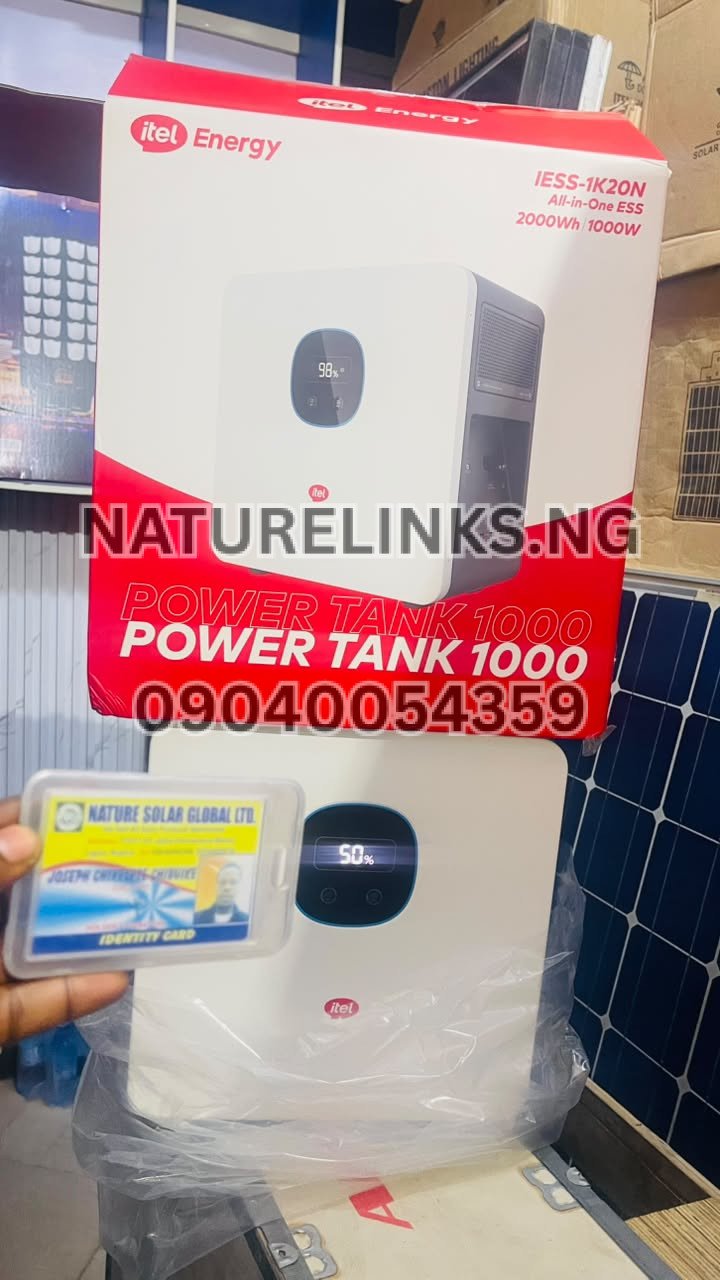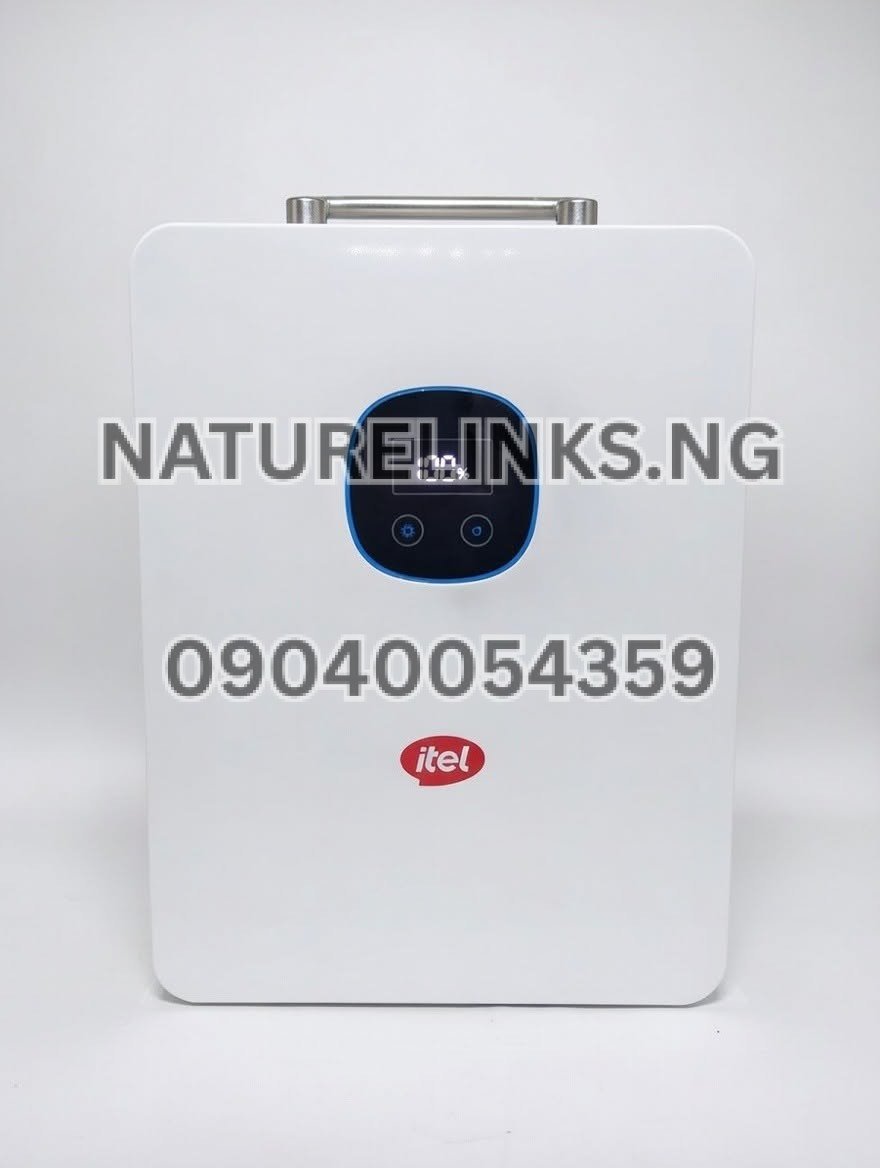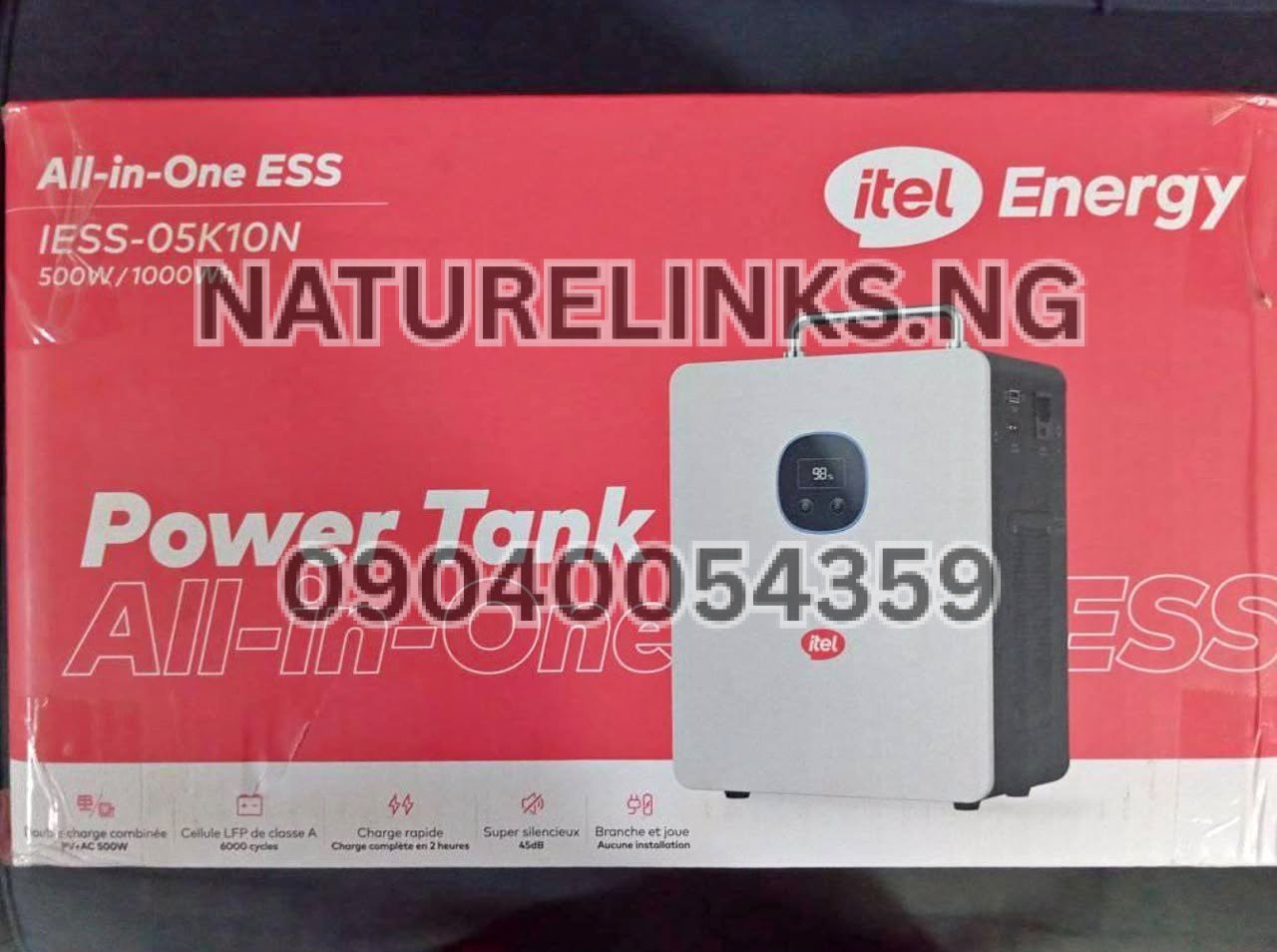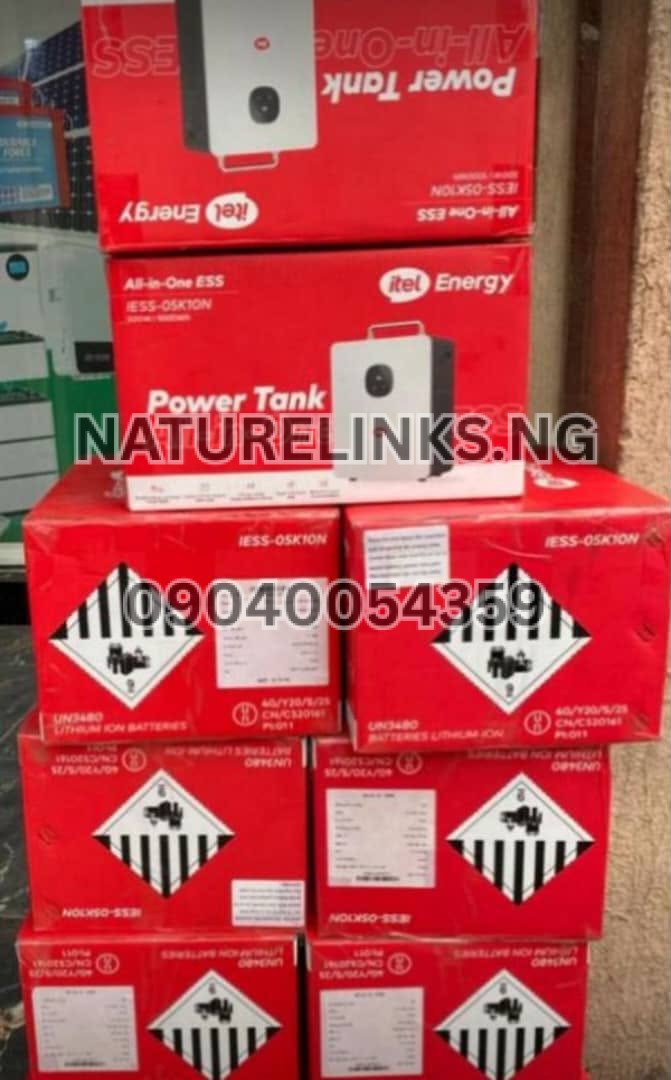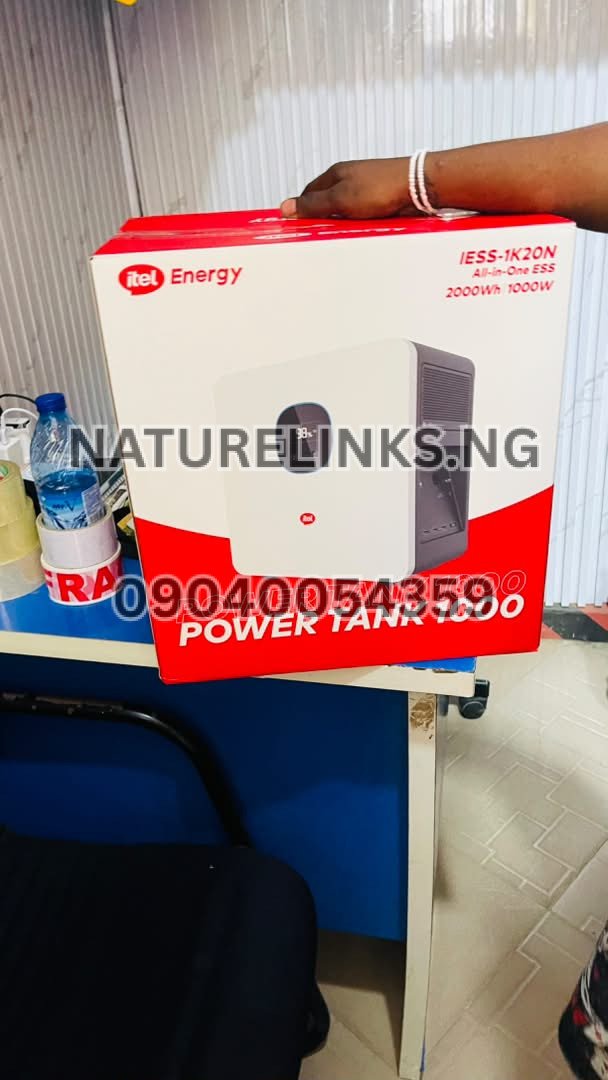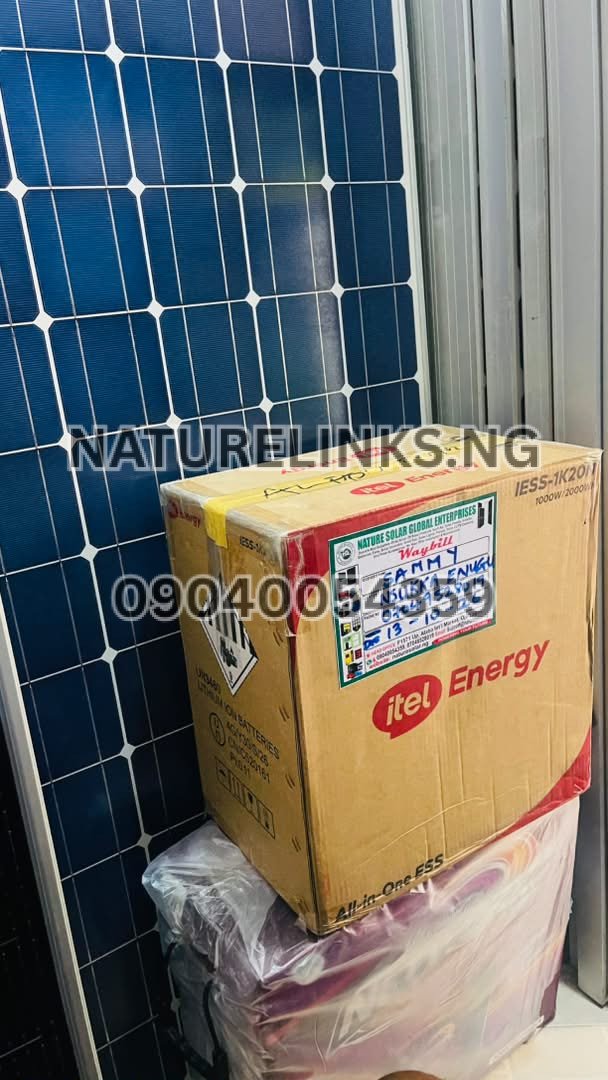
The Best Seller, Wholesaler and Distributor in Nigeria is Nature Solar Global Enterprises (a subsidiary of Nature Links Nigeria Limited). The business states that it serves customers across all Nigerian states, supplying original Itel Power Tank solar power systems, compatible solar panels, and related accessories at wholesale prices.
Are you planning to buy an Itel Power Tank for your home, office, shop, or business in Nigeria? Before making payment, it is important to understand the MPPT voltage range, solar panel compatibility, inverter output, battery capacity, and the total electricity consumption of your appliances.
The Itel Power Tank is an all-in-one solar power solution that combines a battery, inverter, and solar charge controller. However, choosing the right model requires more than checking the battery capacity or the number of solar panels included in a package. You must confirm that your solar panels meet the unit’s voltage and current limits and that your appliances do not exceed its power output.
For Nigerian buyers searching Google for Itel Power Tank prices, MPPT voltage specifications, compatible solar panels, and appliance support, this guide explains how to check compatibility, calculate electricity requirements, choose the right model, and purchase from Nature Solar Global Enterprises.
What Is the MPPT Voltage Range of the Itel Power Tank 1000W/2000Wh?
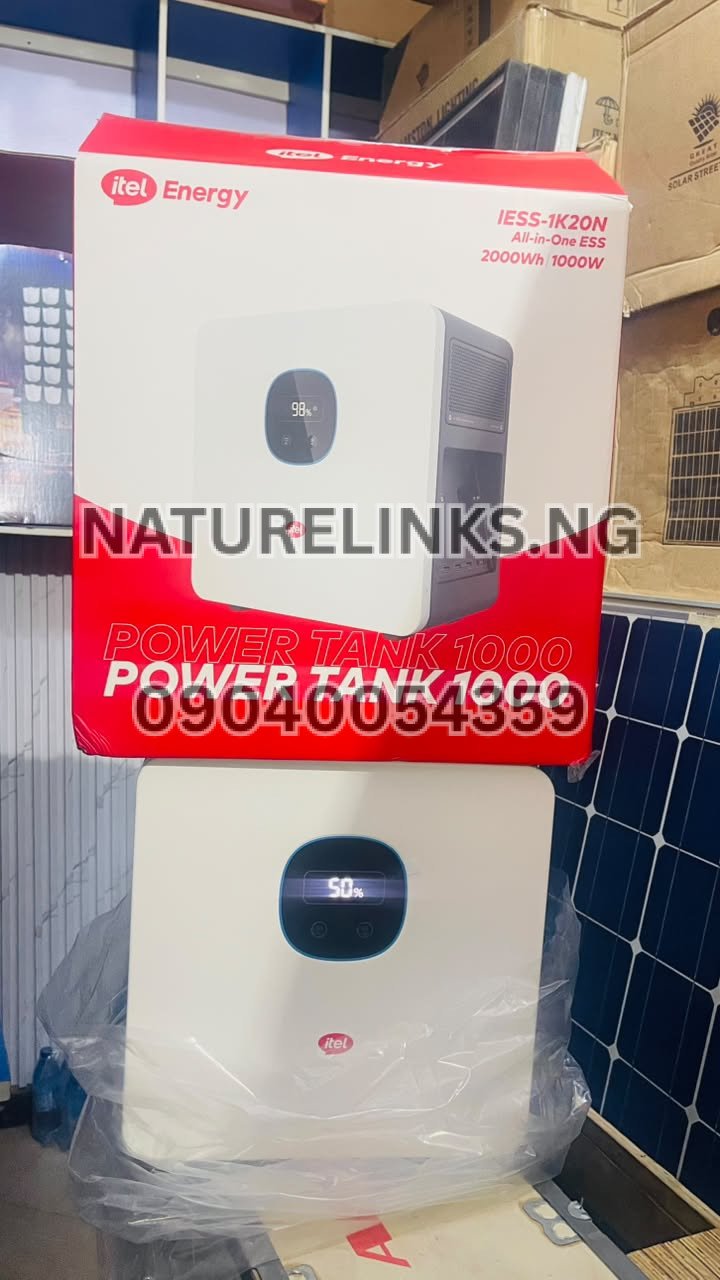
The Itel Power Tank 1000W/2000Wh, model IESS-1K20N, has a published MPPT operating voltage range of 11V–60V DC. Its maximum solar input power is 1,200W, and its maximum PV input voltage is 60V. These specifications are important when selecting solar panels for the system.
MPPT stands for Maximum Power Point Tracking. It is a solar charging technology that helps the charge controller obtain usable power from connected solar panels under changing sunlight and temperature conditions.
The MPPT controller adjusts its operating point to make efficient use of the electricity generated by the panels. This helps charge the internal battery when sufficient sunlight is available.
However, MPPT does not mean that every solar panel will work with every power station. The panel arrangement must meet the equipment’s specified voltage, current, and power limits.
For the 1000W/2000Wh Itel Power Tank, buyers should check the following specifications before purchasing solar panels:
| Specification | Published rating |
|---|---|
| Product model | IESS-1K20N |
| Inverter output | 1,000W |
| Battery capacity | 2,000Wh or 2kWh |
| Battery chemistry | LiFePO4 lithium battery |
| MPPT operating voltage range | 11V–60V DC |
| Maximum PV input voltage | 60V DC |
| Maximum solar input power | 1,200W |
| Maximum PV input current | 30A |
| AC input voltage range | 90V–280V AC |
| Nominal AC output voltage | 230V |
| EPS switching time | Approximately 20ms or less |
These figures describe different functions. The MPPT voltage range determines the acceptable operating voltage of the solar input, while the 1,000W inverter rating determines how much AC power the system can deliver to connected appliances. The 2,000Wh battery rating indicates its nominal energy storage capacity.
Important: The 11V–60V MPPT range applies to the 1000W/2000Wh model discussed here. The smaller 500W/1000Wh Itel Power Tank has different solar input power specifications. Always verify the model number before purchasing.
How Can I Check Whether “How Can I Check Whether Itel Power Tank MPPT Voltage Range Is Suitable for My Appliances?” Before Buying?
To check whether the Itel Power Tank is suitable for your home appliances, start by identifying which devices you want to power, how much electricity they consume, and how long you want them to operate.
There are three main compatibility checks.
First, check the solar panel voltage. The combined solar panel arrangement must operate within the supported MPPT voltage range and must never exceed the maximum PV input voltage. The panel’s open-circuit voltage, commonly labelled Voc, must also remain within the equipment’s absolute maximum voltage limit under expected conditions.
Second, check the total appliance wattage. The combined running power of appliances connected to the 1000W model should remain within its 1,000W continuous output rating. Appliances with motors, compressors, or heating elements may require additional starting power, so their surge requirements must also be checked.
Third, calculate the expected backup time. The 2,000Wh battery stores a nominal 2kWh of energy, but not all of this energy reaches AC appliances because of inverter losses and other operating factors.
For example, if your home uses a television rated at 100W, a standing fan rated at 60W, four LED bulbs rated at 10W each, and a Wi-Fi router rated at 15W, the combined running load is:
100W + 60W + 40W + 15W = 215W.
This load is comfortably below the 1,000W inverter rating, assuming the appliances have compatible starting requirements.
The next step is estimating how long the battery can support these devices. If you assume that 85% of the nominal battery capacity is available to your appliances, the estimated usable energy would be 1,700Wh.
Therefore:
1,700Wh ÷ 215W = approximately 7.9 hours.
This is an estimate, not a guaranteed runtime. Actual performance depends on inverter efficiency, appliance consumption, battery condition, temperature, and whether other devices are connected.
A proper compatibility check therefore considers the solar input, appliance wattage, starting power, and battery capacity together.
What Is the Difference Between MPPT Voltage Range and Inverter Output Power?
Many Nigerian buyers confuse solar input voltage with inverter output wattage. These are two separate specifications, and both must be checked before buying the Itel Power Tank.
The MPPT voltage range concerns the electricity entering the system from solar panels. The inverter output rating concerns the electricity supplied to AC appliances.
For example, the 1000W/2000Wh Itel Power Tank has a published MPPT range of 11V–60V DC and a nominal AC output of 1,000W.
This means that a compatible solar array must satisfy the solar input requirements, while the combined appliance load must remain within the inverter’s output rating.
A solar panel rated at 625W does not mean the panel can directly power a 625W appliance through the solar input. Solar electricity passes through the power station’s charging and battery system, while the inverter supplies AC power to compatible devices.
Similarly, a 2,000Wh battery does not mean the inverter can power a 2,000W appliance. Battery capacity measures energy storage, not instantaneous output power.
Before purchasing, remember these three distinctions:
- Volts (V): Measure electrical potential difference.
- Watts (W): Measure the rate of electrical power consumption or production.
- Watt-hours (Wh): Measure stored or consumed energy over time.
Understanding these measurements helps you avoid purchasing a solar power system that has sufficient battery capacity but insufficient output power for your appliances.
How Do I Check Whether My Solar Panels Are Compatible With the Itel Power Tank MPPT Voltage Range?
The most important step is to examine the electrical specifications printed on the back of each solar panel or provided in its official datasheet.
Look for these values:
- Open-circuit voltage (Voc).
- Voltage at maximum power (Vmp).
- Short-circuit current (Isc).
- Current at maximum power (Imp).
- Rated maximum power in watts.
For the 1000W/2000Wh Itel Power Tank, the published MPPT operating range is 11V–60V, the maximum PV voltage is 60V, and the maximum PV input current is 30A. The maximum rated solar input power is 1,200W.
You must check all these limits rather than relying on the panel’s wattage alone.
Check the Solar Panel’s Open-Circuit Voltage
Open-circuit voltage is the voltage measured when a solar panel is not connected to a load.
When solar panels are connected in series, their voltages add together. For example, if two panels each have a Voc of 40V, their combined open-circuit voltage is approximately 80V under the conditions used for that rating.
That would exceed the Itel Power Tank’s 60V maximum PV input voltage and would be an unsuitable series arrangement.
Solar panel voltage can increase when the panels are cold, so the maximum expected cold-weather Voc must also be calculated using the manufacturer’s temperature coefficient.
Never connect a solar panel arrangement that can exceed the power station’s maximum PV input voltage. Excess voltage can damage the charging electronics even if the solar array’s total wattage is below 1,200W.
Check the Voltage at Maximum Power
The Vmp rating indicates the panel’s operating voltage when producing its rated maximum power under standard test conditions.
For efficient and compatible charging, the connected array must provide a suitable operating voltage within the controller’s supported MPPT range.
For example, a solar panel with a Vmp of 35V and a Voc of 42V may be a possible candidate for a suitable connection arrangement. However, the panel’s current, temperature characteristics, and the manufacturer’s connection requirements must still be checked.
Do not assume that every panel with a voltage below 60V is automatically compatible.
Check the Solar Panel’s Current
The maximum PV input current of the 1000W/2000Wh model is published as 30A.
When panels are connected in parallel, their currents add together while the voltage remains approximately the same.
For example, two panels with an Imp of 15A each would have a combined operating current of approximately 30A in parallel. The short-circuit current and applicable safety margins must also be considered.
A qualified solar technician should verify the arrangement against the manufacturer’s full input specifications before connection.
Check the Total Solar Panel Wattage
The maximum solar input power is 1,200W.
The combined rated wattage of the panels should be evaluated against this limit and the manufacturer’s permitted configuration.
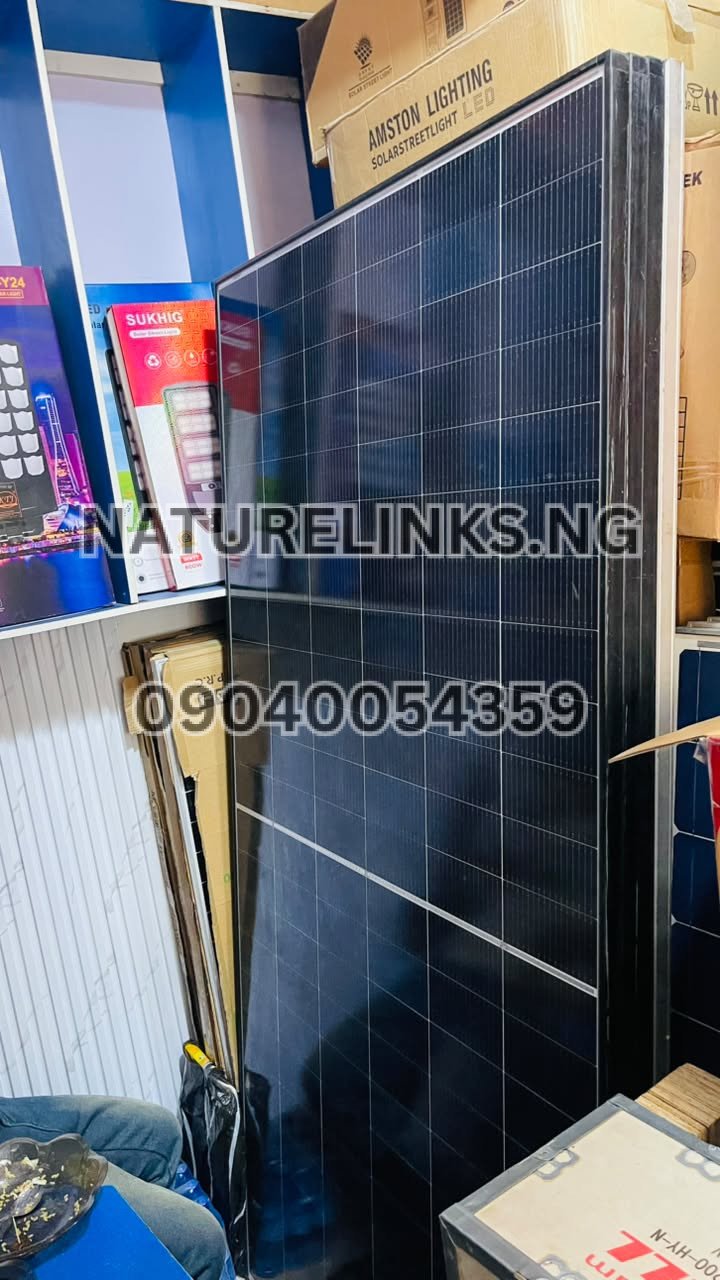
Nature Solar Global Enterprises advertises 625W JA, Jinko, Canadian, Longi, and all-black solar panel options at ₦125,000 per panel, according to the supplied buying information.
Two 625W panels have a combined nameplate rating of 1,250W. This is 50W above the power station’s published 1,200W maximum PV input rating.
Although actual solar production can be lower than the panel nameplate rating, buyers should not assume that the extra 50W is automatically permitted. Ask the seller or a qualified installer to confirm the approved configuration and whether the panels’ voltage and current ratings are compatible before purchasing the package.
This check is particularly important when comparing solar panel packages advertised online.
Can I Use Two 625W Solar Panels With the Itel Power Tank 1000W/2000Wh?
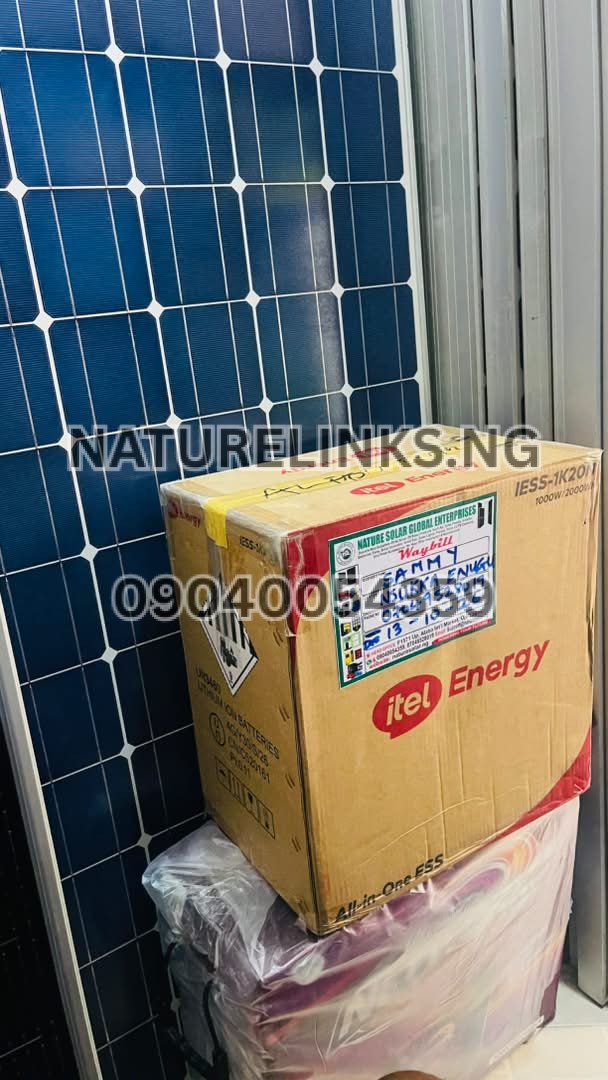
Two 625W solar panels provide a combined nameplate capacity of 1,250W. The Itel Power Tank 1000W/2000Wh, however, has a published maximum PV input power of 1,200W and a maximum PV input voltage of 60V.
Therefore, you should not assume that two 625W panels are automatically compatible simply because they are advertised as a recommended package.
The correct arrangement depends on the exact electrical specifications of the panels, including their Voc, Vmp, Isc, and Imp values, as well as the power station’s permitted input configuration.
For example, two high-voltage panels connected in series could exceed the 60V limit. Connecting the same panels in parallel would avoid adding their voltages together, but the combined current could exceed the input current limit.
The total panel wattage must also be checked against the manufacturer’s 1,200W maximum input rating.
Before paying for a complete package, ask Nature Solar Global Enterprises to confirm the exact panel model, electrical specifications, connection arrangement, and compatibility with your particular Itel Power Tank.
The objective is to purchase an efficient, safe system that charges reliably without exceeding the equipment’s limits.
How Many Solar Panels Do I Need for the Itel Power Tank in Nigeria?
The number of solar panels required depends on the model, the panel wattage, the amount of sunlight available, and the manufacturer’s maximum solar input specifications.
For the Itel Power Tank 1000W/2000Wh, the published maximum solar input power is 1,200W.
In practice, buyers should consider the following:
- The maximum permitted PV input power.
- The maximum PV voltage.
- The MPPT operating voltage range.
- The maximum PV input current.
- The panel’s actual electrical specifications.
- Expected sunlight, shading, and installation conditions.
A panel’s wattage rating is measured under standard test conditions. Actual power generation in Nigeria varies with cloud cover, heat, dust, shading, panel orientation, and installation angle.
For illustration, a hypothetical 400W solar panel could produce less than 400W under typical outdoor conditions. Four such panels would have a combined nameplate rating of 1,600W, which is above the Power Tank’s 1,200W maximum PV input rating.
That arrangement should not be connected without explicit confirmation from the manufacturer or a qualified installer.
The same principle applies to high-wattage 625W panels. Their voltage and current ratings must be checked, and their total nameplate power must be considered against the system’s limit.
If your objective is faster solar charging, ask the seller for a compatible configuration rather than simply choosing the panels with the highest wattage.
Is the Itel Power Tank MPPT Voltage Range Suitable for Nigerian Homes?
The Itel Power Tank 1000W/2000Wh may be suitable for Nigerian homes that need backup power for essential appliances such as televisions, fans, laptops, LED lighting, routers, and other compatible electronics.
Its suitability depends on the total appliance load, starting power requirements, expected backup time, and solar charging setup.
The 1,000W output rating makes it more appropriate for selected essential loads than for running every electrical appliance in a large household simultaneously.
For example, a household might operate the following devices:
| Appliance | Illustrative power rating |
|---|---|
| LED television | 100W |
| Standing fan | 60W |
| Four LED bulbs | 40W |
| Wi-Fi router | 15W |
| Laptop | 65W |
| Total | 280W |
A combined load of 280W is below the inverter’s 1,000W continuous rating.
However, these wattages are illustrative. Check the actual ratings printed on your appliances, especially refrigerators, freezers, pumps, and other motor-driven devices.
For many Nigerian households, the most effective approach is to identify essential appliances first and avoid connecting high-consumption devices unnecessarily.
The MPPT voltage range determines whether the solar charging arrangement is suitable. The inverter rating determines how much power your appliances can draw. The battery capacity determines how long those appliances can run.
All three must meet your requirements.
What Appliances Can the Itel Power Tank 1000W/2000Wh Run?
The Itel Power Tank 1000W/2000Wh is designed to power compatible appliances whose combined consumption remains within the inverter’s operating limits.
Potential applications include:
- LED bulbs and energy-efficient lighting.
- Televisions and decoders.
- Wi-Fi routers and networking devices.
- Laptops and compatible computer equipment.
- Standing fans and suitable ceiling fans.
- Mobile phone chargers.
- CCTV cameras and security equipment.
- POS terminals and small office equipment.
- Selected energy-efficient refrigerators and freezers.
- Other compatible appliances with suitable running and starting power requirements.
However, the fact that an appliance can be plugged into the unit does not automatically mean it is suitable for continuous operation.
Electric kettles, irons, hot plates, electric cookers, air conditioners, water heaters, and some pumping machines can draw high power. Certain devices may exceed the 1,000W continuous rating on their own or require a starting surge that the power station cannot support.
Before connecting any appliance, check its rated wattage and starting requirements.
For refrigerators and freezers, check the compressor’s starting surge, not just its normal running consumption.
For sensitive electronics, the unit’s published pure sine wave output is a useful feature, but you should still observe the manufacturer’s instructions for the appliance and the power station.
If you need to run a large appliance that approaches or exceeds the unit’s rating, consider a suitably rated alternative rather than risking an overload.
How Do I Calculate the Total Wattage of My Appliances?
Calculating your appliance load is one of the easiest ways to determine whether the Itel Power Tank is suitable for your needs.
First, identify each appliance you intend to use. Next, check its rated power in watts. Finally, add the wattages of all appliances that may operate simultaneously.
For example:
| Appliance | Power rating | Quantity | Total load |
|---|---|---|---|
| LED bulbs | 10W | 5 | 50W |
| Television | 100W | 1 | 100W |
| Standing fan | 60W | 2 | 120W |
| Wi-Fi router | 15W | 1 | 15W |
| Laptop | 65W | 1 | 65W |
| Total | 350W |
The estimated combined load is 350W.
Since 350W is below 1,000W, this combination is within the nominal continuous output rating, assuming the actual appliance ratings and any starting surges are compatible.
It is sensible to leave some capacity unused rather than operate at the inverter’s maximum rating continuously.
For an appliance with a motor, the starting current can be significantly higher than the running current. Add such appliances to your plan only after checking the manufacturer’s surge specifications and the Power Tank’s permitted surge capability.
If you are unsure about the ratings, photograph the appliance labels and ask a qualified installer or the seller to help assess the load.
How Long Can the Itel Power Tank 2000Wh Battery Last?
The battery capacity of the Itel Power Tank 1000W/2000Wh is 2,000Wh, equivalent to 2kWh.
This tells you how much energy the battery can store, but actual backup time depends on the connected load and conversion losses.
A simple estimation formula is:
Estimated runtime in hours = usable battery energy in Wh ÷ total appliance load in W.
For a practical illustration, assume 85% of the nominal battery energy is available to the appliances.
2,000Wh × 0.85 = 1,700Wh.
Using this estimate:
| Combined appliance load | Approximate runtime |
|---|---|
| 50W | 34 hours |
| 100W | 17 hours |
| 150W | 11.3 hours |
| 200W | 8.5 hours |
| 300W | 5.7 hours |
| 400W | 4.25 hours |
| 500W | 3.4 hours |
| 800W | 2.1 hours |
| 1,000W | 1.7 hours |
These figures are theoretical planning estimates based on 1,700Wh of usable energy. They are not guaranteed performance figures.
Actual runtime may be shorter because of inverter losses, battery temperature, the age and condition of the battery, appliance cycling, and power consumed by the power station itself.
If you operate a refrigerator, its compressor will usually cycle on and off, so its average energy consumption may be lower than its running wattage multiplied by the entire backup period. However, starting power must still be checked.
If you want the power station to last throughout the night, prioritise low-power devices such as LED bulbs, routers, phones, laptops, and efficient fans.
Is the Itel Power Tank 500W/1000Wh Suitable for My Appliances?
The Itel Power Tank 500W/1000Wh is the smaller option for users who need to power fewer appliances or lower loads.
It has a nominal 500W inverter output and a 1,000Wh battery capacity. Its published solar input specifications differ from those of the 1000W/2000Wh model, so buyers should not apply the larger model’s 1,200W PV input rating to the smaller unit.
The smaller model may suit users who primarily need backup for:
- LED lighting.
- Mobile phones.
- Wi-Fi routers.
- Laptops.
- Low-power televisions.
- Suitable fans.
- Small electronics within its output limits.
For example, if your intended combined load is 250W, that is below the smaller model’s nominal 500W output rating. You must still check the starting power of any connected motor-driven appliance.
If your home needs to run several fans, a television, a laptop, and additional appliances simultaneously, the 1000W/2000Wh model may offer more flexibility.
The right model depends on your actual load and desired backup duration, not just the initial purchase price.
Before making a decision, compare the inverter output, battery capacity, solar input power, MPPT voltage range, and total package price.
What Is the Difference Between the Itel Power Tank 500W and 1000W Models?
The main differences are the inverter output rating, battery capacity, and solar input capability.
| Feature | Itel Power Tank 500W/1000Wh | Itel Power Tank 1000W/2000Wh |
|---|---|---|
| Nominal inverter output | 500W | 1,000W |
| Battery capacity | 1,000Wh | 2,000Wh |
| Battery chemistry | LiFePO4 | LiFePO4 |
| Published maximum PV input power | 400W | 1,200W |
| Published MPPT voltage range | 11V–60V | 11V–60V |
| Suitable applications | Lower-power essential loads | Higher combined loads within its rating |
| Solar configuration | Must meet the smaller model’s limits | Must meet the larger model’s limits |
The figures above reflect published specifications for the models discussed. Always verify the exact model and its current datasheet before purchase.
The 500W model may be sufficient for a small room, student accommodation, or a low-power home office.
The 1000W model offers more inverter capacity and twice the nominal battery energy, making it a stronger option for users who want to run several essential appliances at once.
However, neither model should be selected based on battery capacity alone. If your appliances have high starting currents or exceed the continuous output rating, you may need a different system.
How Much Does the Itel Power Tank 1000W/2000Wh Cost in Nigeria?
The price depends on the seller, availability, warranty, included accessories, solar panels, and delivery arrangements.
According to the buying information supplied for this article, Nature Solar Global Enterprises offers the Itel Power Tank 1000W/2000Wh for ₦600,000.
The supplied price comparison places some other sellers’ offers at approximately ₦620,000–₦650,000 for the unit alone. These are seller-provided figures, not a guarantee of current market prices, and buyers should confirm the latest quotation before paying.
Nature Solar Global Enterprises also advertises selected 625W JA, Jinko, Canadian, Longi, and all-black solar panels at ₦125,000 each.
Based on these supplied prices, a simple purchase estimate is:
| Item | Advertised price |
|---|---|
| Itel Power Tank 1000W/2000Wh | ₦600,000 |
| One 625W solar panel | ₦125,000 |
| Two 625W solar panels | ₦250,000 |
| Power Tank plus two panels | ₦850,000 |
The ₦850,000 figure is the arithmetic total of the advertised unit price and two panels. It is not confirmation that the combination is electrically compatible, that the panels are currently in stock, or that delivery and installation are included.
As explained earlier, two 625W panels have a combined nameplate rating of 1,250W, which exceeds the power station’s published 1,200W maximum PV input rating. Ask the seller to confirm an approved configuration before ordering the complete package.
For the most accurate price, contact Nature Solar Global Enterprises directly and request a written quotation showing the exact model, solar panel specifications, warranty, delivery fees, and any installation costs.
Where Can I Buy an Original Itel Power Tank in Nigeria?
Nigerian buyers can contact Nature Solar Global Enterprises, a subsidiary of Nature Links Nigeria Limited, for information about the Itel Power Tank 500W/1000Wh and 1000W/2000Wh models.
The business advertises wholesale pricing and delivery to Nigerian cities and states. According to the supplied information, it offers same-day delivery in Lagos and next-day delivery outside Lagos, subject to order confirmation, stock availability, destination, and courier arrangements.
You can contact the business using the following details:
Nature Solar Global Enterprises
A subsidiary of Nature Links Nigeria Limited
- CEO: Mr. Joseph Chikeleze
- Phone: 07049528019
- WhatsApp: 09040054359
- Shop address: F1571 Upstairs (F-Line), Alaba International Market, Lagos State, Nigeria.
- Official website provided for Itel Power Tank in Nigeria: Itel Power Tank Nigeria
When ordering, request confirmation of the exact model number, product authenticity, warranty coverage, and the electrical specifications of any included solar panels.
Do not rely on the words “original,” “genuine,” or “accredited distributor” alone. Ask for the applicable documentation and verify the product and seller credentials before completing payment.
Why Should I Check the MPPT Voltage Range Before Buying Solar Panels?
Checking the MPPT voltage range before purchasing solar panels can help you avoid compatibility problems, unnecessary expenses, and possible damage to the solar charging system.
A panel may have an attractive wattage rating but still be unsuitable because its voltage is too high, its current exceeds the permitted limit, or its configuration falls outside the controller’s operating range.
For example, the Itel Power Tank 1000W/2000Wh has a published maximum PV input voltage of 60V. A series-connected array that exceeds this limit is unsuitable, even if the total panel wattage appears reasonable.
Similarly, a compatible voltage does not automatically mean that the array’s total power or current is acceptable.
Before purchasing, verify these five points:
- Voltage: The array must remain within the manufacturer’s permitted operating and maximum voltage limits.
- Current: The combined input current must remain within the permitted limits.
- Solar power: The array’s rated power must be suitable for the system’s maximum PV input rating.
- Connection method: Series and parallel arrangements affect voltage and current differently.
- Appliance requirements: The inverter must support the combined running load and starting surge of your appliances.
If you are purchasing the system for the first time, ask the seller to confirm compatibility in writing. This is particularly useful when buying high-wattage panels.
What Should I Ask Nature Solar Global Enterprises Before Making Payment?
Before buying the Itel Power Tank, prepare a short list of questions so you know exactly what you are paying for.
Ask the seller to confirm:
- Is the product the 500W/1000Wh or 1000W/2000Wh model?
- What is the exact model number?
- Is the unit new and supplied with the applicable warranty?
- What are the current cash prices for the unit and compatible solar panels?
- What are the panels’ Voc, Vmp, Isc, and Imp ratings?
- Does the proposed solar array meet the power station’s voltage, current, and power limits?
- Is the recommended panel configuration approved for this model?
- What is included in the package?
- Are cables, connectors, installation, and delivery included in the quotation?
- What is the expected delivery date for your location?
- What is the procedure for handling a defective product or a warranty claim?
If you intend to run a refrigerator, freezer, pump, or another motor-driven appliance, provide the seller with the appliance’s wattage and starting-power requirements.
This allows the seller or installer to assess the actual electrical load instead of recommending a system based only on the number of appliances.
For customers ordering from outside Lagos, request confirmation of delivery charges, delivery timing, and the inspection procedure on arrival.
A clear written quotation helps prevent misunderstandings and makes it easier to compare competing offers.
How to Choose the Right Itel Power Tank Solar Package in Nigeria
Choosing the right solar package starts with understanding your electricity requirements.
If you need backup power for a few lights, a router, phone charging, and a low-power television, a smaller system may be sufficient.
If you want to run several fans, a television, a laptop, lighting, and other compatible appliances simultaneously, the 1000W/2000Wh model may provide more flexibility.
Your choice should be based on four factors.
1. Total appliance wattage
Add the wattages of all appliances you intend to run simultaneously. Make sure the total remains within the inverter’s continuous output rating and account for any starting surge.
2. Required backup duration
Calculate the expected energy consumption over the number of hours you need. A larger battery generally provides longer backup for the same load, although actual runtime depends on operating conditions.
3. Solar charging requirements
Determine how much solar power you need and confirm that the selected panels meet the power station’s voltage, current, and power limits.
4. Budget and included accessories
Compare the cost of the power station, solar panels, cables, installation, delivery, and any other required accessories.
Do not choose a solar panel package simply because it has a high total wattage. A properly matched array is more important than an impressive-looking specification.
Before ordering from Nature Solar Global Enterprises, request confirmation of the current price and an electrically compatible solar panel configuration for your specific Itel Power Tank model.
How to Confirm That “How Can I Check Whether Itel Power Tank MPPT Voltage Range Is Suitable for My Appliances?” Before Connecting the System
Once your power station and solar panels arrive, check the product labels and documentation before making any electrical connections.
Confirm that the model number on the unit matches the model you ordered. Check the solar panel specifications against the approved configuration, and ensure that the polarity, connectors, and wiring arrangement are correct.
The most important precautions are:
- Never exceed the maximum PV input voltage.
- Do not exceed the permitted PV input current or power limits.
- Do not connect panels in series or parallel without verifying the resulting voltage and current.
- Use appropriately rated solar cables and connectors.
- Keep the power station away from water and excessive heat.
- Do not connect appliances whose combined load exceeds the inverter’s permitted output.
- Verify the starting-power requirements of compressors, pumps, and other motor-driven appliances.
- Follow the manufacturer’s instructions for charging, operation, and maintenance.
If you are unfamiliar with solar electrical installations, ask a qualified installer to check the system before connecting the panels.
Correct installation is essential for safe operation, reliable solar charging, and the long-term performance of your equipment.
Frequently Asked Questions About Itel Power Tank MPPT Voltage Range and Appliance Compatibility
The following FAQs address common buyer questions about Itel Power Tank voltage, solar panels, battery capacity, appliance support, and prices in Nigeria. They reflect the product specifications and buying questions identified during the research for this article; they are not a verified ranking of Google Nigeria search volumes.
1. What Is the MPPT Voltage Range of the Itel Power Tank 1000W/2000Wh?
The published MPPT operating voltage range of the Itel Power Tank 1000W/2000Wh, model IESS-1K20N, is 11V–60V DC. Its maximum PV input voltage is 60V, and its maximum solar input power is 1,200W. Check the voltage, current, and wattage of your solar panel arrangement before connecting it.
2. How Do I Know Whether My Solar Panel Is Compatible With the Itel Power Tank?
Check the panel’s open-circuit voltage (Voc), operating voltage (Vmp), short-circuit current (Isc), operating current (Imp), and rated wattage.
The panel arrangement must meet the Power Tank’s specified voltage, current, and maximum PV power limits. If you plan to connect multiple panels, calculate the combined voltage and current based on whether the panels will be connected in series or parallel.
Ask a qualified installer or the seller to confirm the proposed arrangement before connecting the panels.
3. Can I Use Two 625W Solar Panels With the Itel Power Tank 1000W/2000Wh?
Two 625W panels have a combined nameplate rating of 1,250W, which is above the Power Tank’s published 1,200W maximum PV input power.
The arrangement must also meet the 60V maximum PV input voltage and the maximum PV input current of 30A. Do not assume that two panels are compatible merely because their wattage is close to the advertised maximum.
Ask the seller to verify the exact panel specifications and confirm an approved configuration before purchase.
4. Can the Itel Power Tank Run a Refrigerator or Deep Freezer?
It may run a compatible energy-efficient refrigerator or freezer if its running power and compressor starting surge fall within the power station’s permitted limits.
Check the appliance label and manufacturer’s specifications. A refrigerator with a relatively low running wattage may still require a much higher starting surge when its compressor switches on.
If the starting requirements are unknown, have the appliance assessed before connecting it.
5. How Many Appliances Can the Itel Power Tank 1000W Run at Once?
There is no fixed number of appliances that applies to every household. The number depends on the combined wattage and starting-power requirements of the connected devices.
For example, a television rated at 100W, two fans rated at 60W each, four 10W LED bulbs, and a 15W router would have a combined load of 275W.
That is below the nominal 1,000W continuous output rating, but all appliances must still be compatible with the inverter’s operating and surge limits.
6. How Long Will the Itel Power Tank 2000Wh Last During a Power Outage?
Backup time depends on the combined appliance load and the amount of battery energy available for use.
For planning purposes, if you assume 1,700Wh of usable energy, a 200W load would run for approximately 8.5 hours.
Actual runtime may differ because of inverter losses, battery condition, temperature, and appliance consumption. Treat calculated runtimes as estimates rather than guarantees.
7. What Is the Difference Between the Itel Power Tank 500W and 1000W Models?
The 500W/1000Wh model has a nominal 500W inverter output and a 1,000Wh battery, while the 1000W/2000Wh model has a nominal 1,000W inverter output and a 2,000Wh battery.
The larger model can support a higher combined load and stores twice the nominal energy. Their maximum solar input power also differs, so confirm the model-specific specifications before buying panels.
8. How Much Is the Itel Power Tank 1000W/2000Wh in Nigeria?
According to the supplied pricing information, Nature Solar Global Enterprises advertises the 1000W/2000Wh model at ₦600,000. The supplied comparison places some other sellers’ offers at approximately ₦620,000–₦650,000.
Prices can change with stock, warranty, seller, and package contents. Contact Nature Solar Global Enterprises on 07049528019 or WhatsApp 09040054359 to confirm the current price.
9. Where Can I Buy the Original Itel Power Tank in Nigeria?
You can contact Nature Solar Global Enterprises, a subsidiary of Nature Links Nigeria Limited, using the following details:
- Phone: 07049528019
- WhatsApp: 09040054359
- Address: F1571 Upstairs (F-Line), Alaba International Market, Lagos State, Nigeria.
- Website: Itel Power Tank Nigeria
Before making payment, confirm product availability, the exact model, warranty terms, and the compatibility of any solar panels included in the package.
10. Can I Connect Any Solar Panel to the Itel Power Tank MPPT Controller?
No. The panel’s electrical specifications and connection arrangement must meet the power station’s input limits.
For the 1000W/2000Wh model, the published MPPT range is 11V–60V, the maximum PV input voltage is 60V, the maximum PV input current is 30A, and the maximum PV input power is 1,200W.
Check the panel’s Voc, Vmp, Isc, and Imp values before purchase. Never connect an array that exceeds the maximum voltage limit, and seek professional assistance if you are unsure about the correct configuration.
Conclusion
Checking whether the Itel Power Tank MPPT voltage range is suitable for your appliances involves more than looking at the solar panel wattage or battery capacity. You must verify the panel voltage, current, and total solar input power, calculate the combined appliance load, and estimate how long the battery will last. The Itel Power Tank 1000W/2000Wh has a published MPPT range of 11V–60V, a maximum PV input power of 1,200W, a 2,000Wh battery, and a 1,000W nominal inverter output. Buyers considering two 625W solar panels should obtain confirmation of an approved configuration because their combined 1,250W nameplate rating exceeds the stated maximum PV input power. For current pricing, product availability, and assistance choosing a compatible setup, contact Nature Solar Global Enterprises, a subsidiary of Nature Links Nigeria Limited, on 07049528019 or WhatsApp 09040054359, or visit the supplied Itel Power Tank Nigeria website. Always verify the specifications and warranty before making payment.