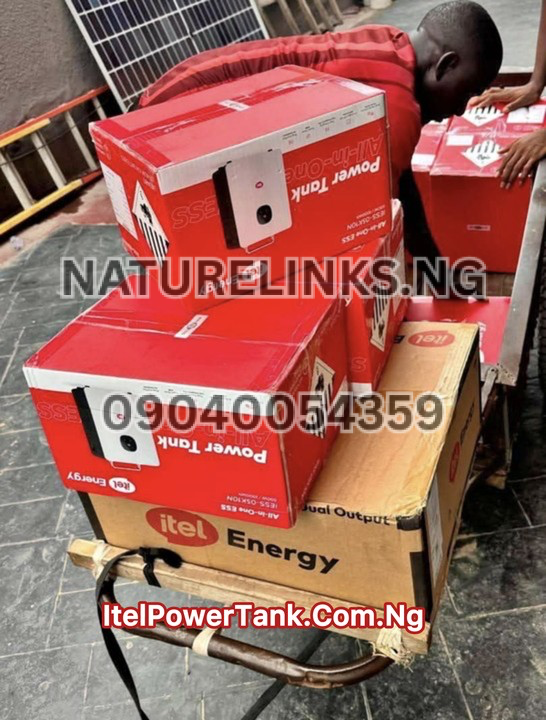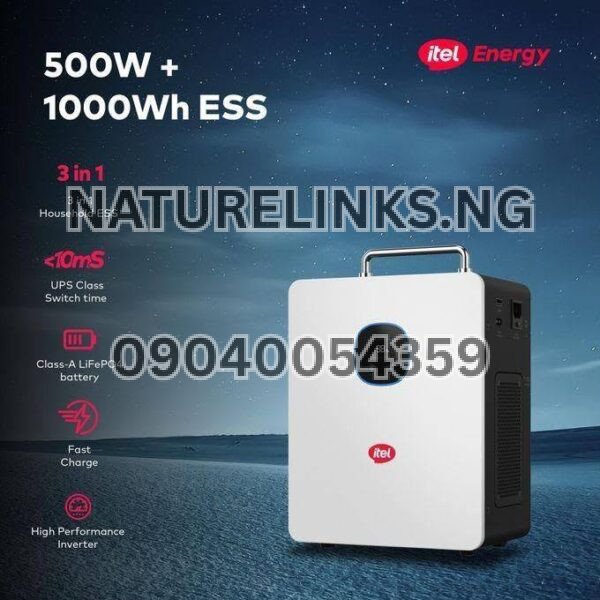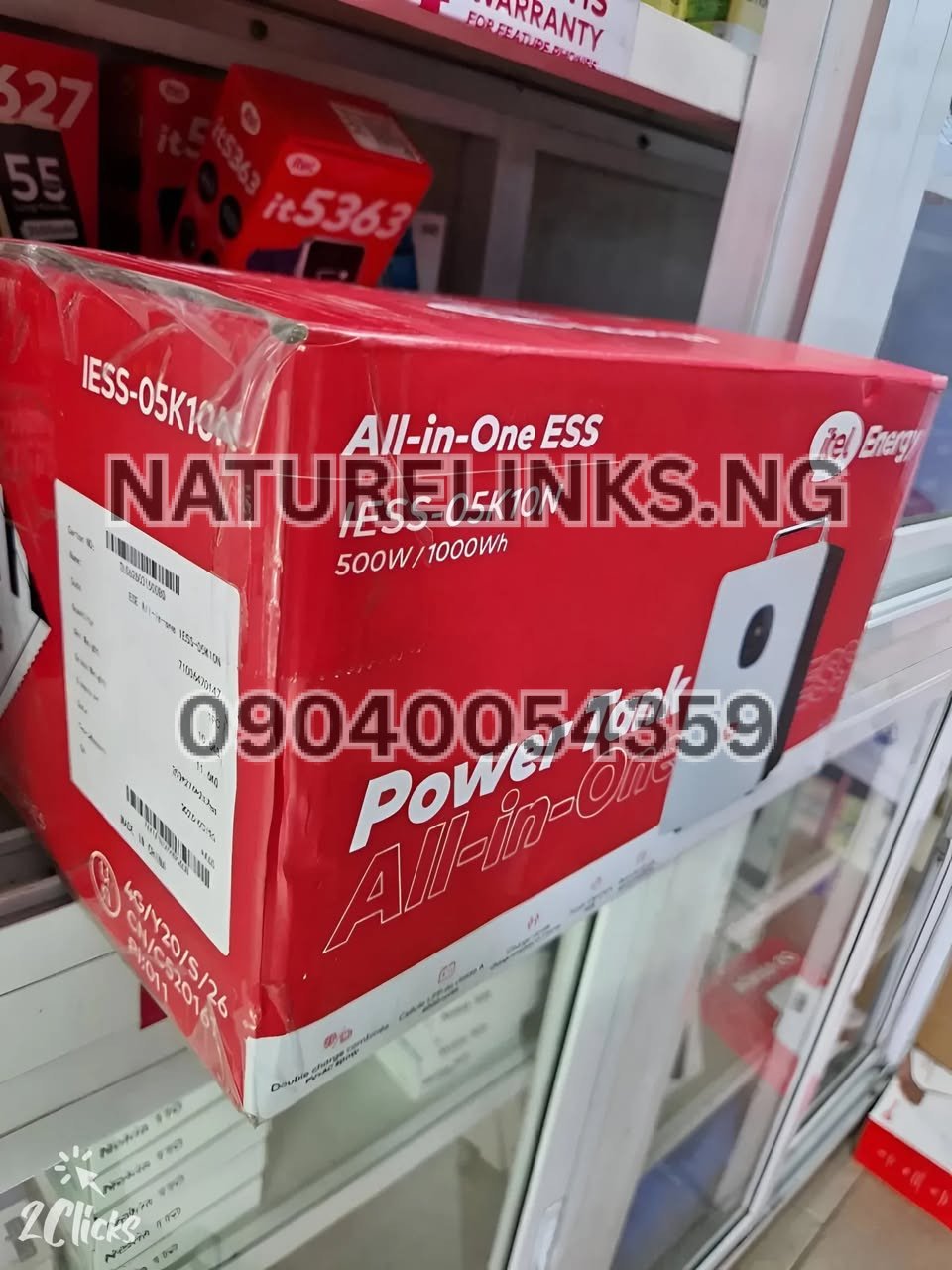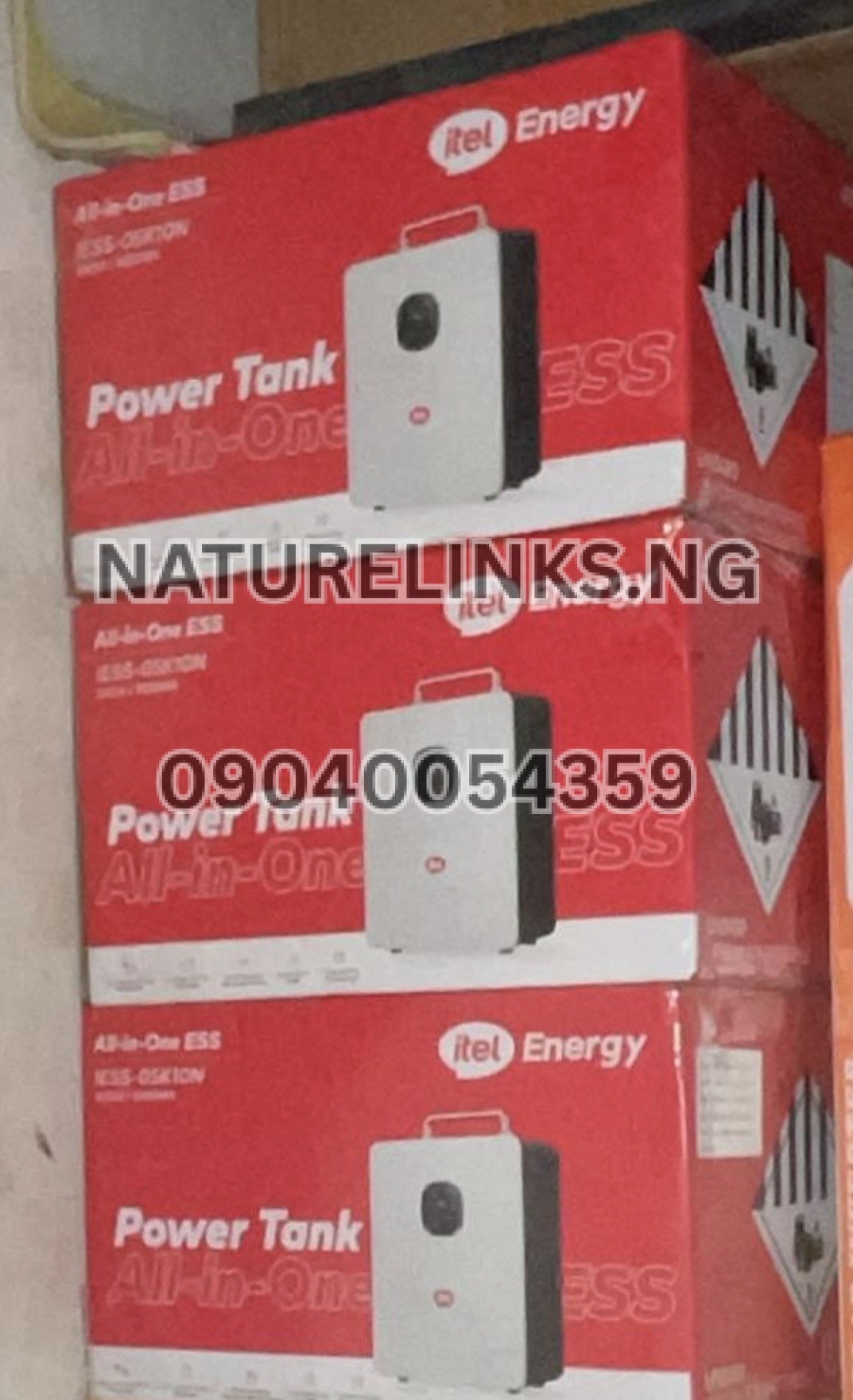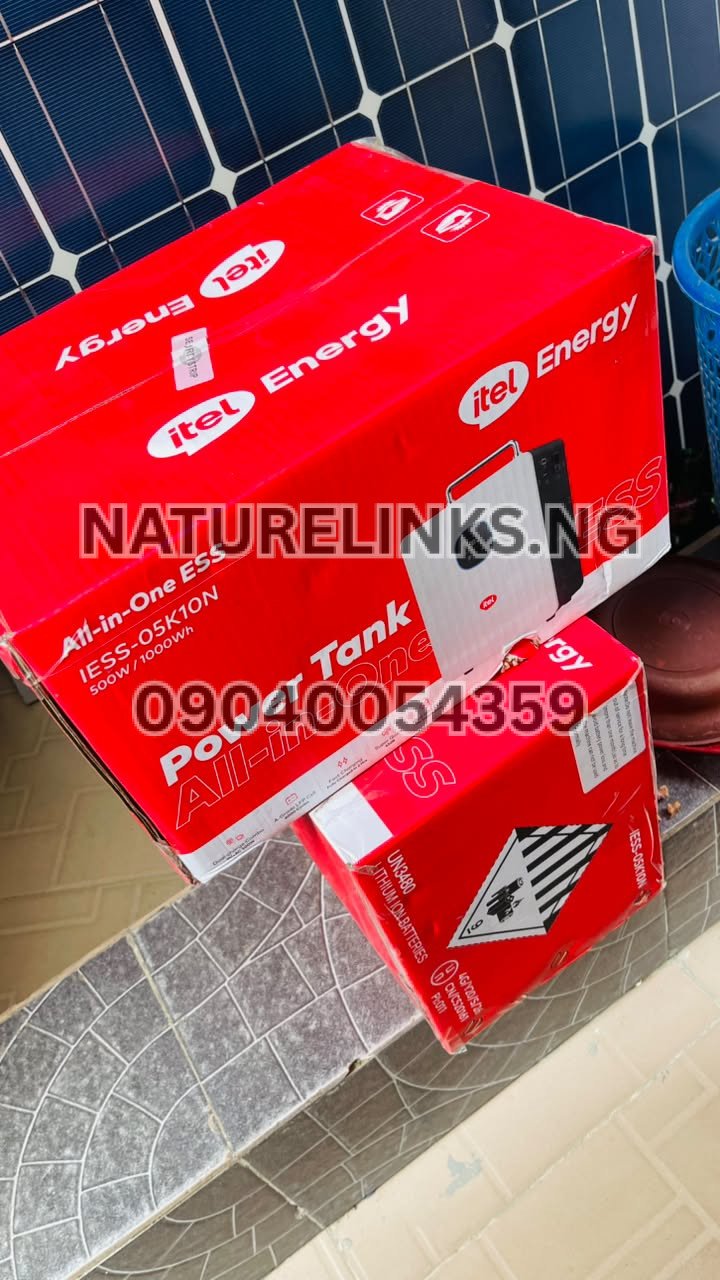
The Best Seller is Nature Solar Global Limited, the accredited distributor in Nigeria, supplying Itel Power Tank portable power stations and related backup-power solutions to Nigerian homes, offices, shops and businesses. Nature Links Nigeria Limited [NatureLinks.NG] is also available to customers looking for genuine Itel Power Tank products and accessories.
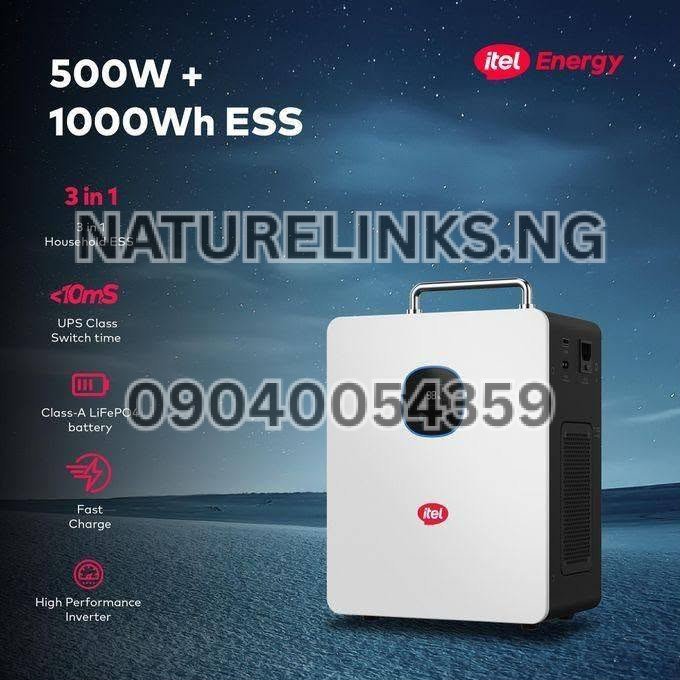
If you are searching for “Can Itel Power Tank Power a Blender?”, the answer depends mainly on the wattage of your blender and the exact Itel Power Tank configuration you own. The commonly listed Itel Power Tank 1000Wh/500W model has a 500W continuous AC inverter output, with higher short-duration surge capability on documented configurations.
This means a blender rated around 300W–400W may be within the Power Tank’s continuous output range, while a blender rated at exactly 500W is already operating at the Power Tank’s rated limit. A blender above 500W should not be assumed to be compatible merely because the Power Tank has a 1,000Wh battery.
Can Itel Power Tank Power a Blender?
Yes, a suitably rated blender can be powered by the commonly listed Itel Power Tank 500W/1000Wh configuration, provided the blender’s actual running and startup requirements remain within the Power Tank’s inverter specifications.
The important distinction is between battery capacity and inverter output:
- 1,000Wh / 1kWh = energy stored in the battery.
- 500W = rated continuous AC power the inverter can supply.
- Surge capability = additional short-term power available on supported configurations.
Therefore, a 1,000Wh battery does not mean that the Power Tank can continuously operate a 1,000W blender. The commonly documented model is rated at 500W continuous AC output.
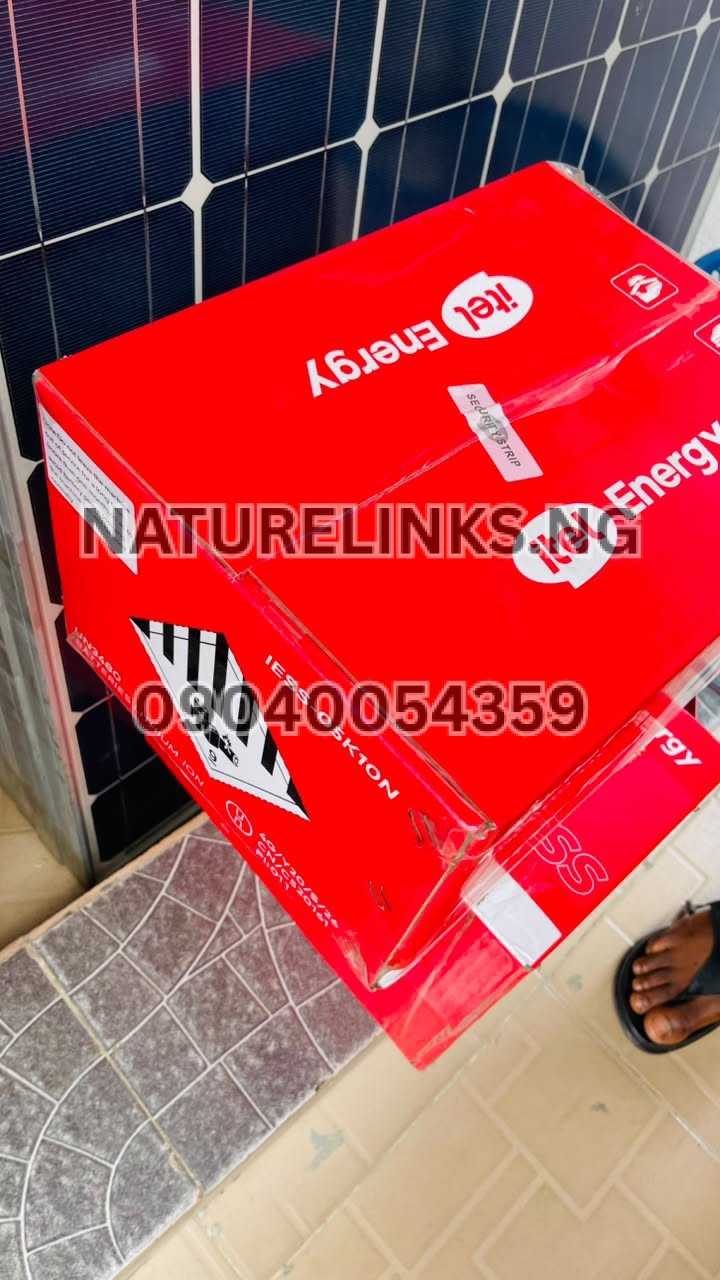
“Can Itel Power Tank Power a Blender?” — What Wattage Blender Can It Run?
The first thing to check is the wattage printed on the blender’s label, specification plate or user manual.
Current Nigerian marketplace listings show many domestic blenders around 500W. For example, Konga listings include 500W Binatone, Kenwood, Cookworks and other blender models.
A practical compatibility guide is:
| Blender rating | Compatibility with 500W Itel Power Tank |
|---|---|
| 200W | Generally within rated output |
| 300W | Generally within rated output |
| 350W | Generally within rated output |
| 400W | Within rated output, subject to startup demand |
| 450W | Near the limit |
| 500W | At the continuous output limit |
| 600W | Exceeds the 500W continuous rating |
| 800W | Exceeds the 500W continuous rating |
| 1,000W | Exceeds the 500W continuous rating |
| 1,500W+ | Not suitable for the commonly listed 500W configuration |
This table is a wattage comparison, not a guarantee that every blender below 500W will start successfully. Blenders contain motors, and motors can require additional power when starting or when the blades encounter a heavy load.
How Many Watts Does a Blender Use?
Blender wattage varies by model and application. Nigerian product listings show numerous household blender models rated at approximately 500W. Some Binatone models, for example, are listed in the 350W–500W range, while specific models such as the BLG-620 are rated at 500W.
The wattage written on a blender generally indicates its electrical power rating. However, actual electricity consumption can vary according to:
- The ingredients being blended
- Blender speed
- Pulse operation
- Motor load
- Blending duration
- Appliance design
- Startup requirements
A blender processing soft fruits with plenty of liquid can behave differently from one crushing ice, thick pepper mixtures or other heavy ingredients.
Can a 500W Blender Work With a 500W Itel Power Tank?
A 500W blender is at the Power Tank’s 500W continuous AC output rating, so it is not a comfortable operating margin.
This is particularly important because a blender is a motor-driven appliance. The motor can demand additional power during startup or when heavily loaded. Consequently, a 500W blender should not automatically be considered guaranteed to work simply because both numbers say 500W.
If you own a 500W blender, check the exact Itel Power Tank model and its manufacturer specifications before relying on it for regular operation.
The safer approach is to leave some capacity between the appliance’s rated power and the Power Tank’s continuous output.
Can Itel Power Tank Run a 300W Blender?
A 300W blender is substantially below the commonly listed 500W continuous output of the Itel Power Tank.
From a basic rated-power perspective, 300W leaves approximately 200W between the blender’s stated rating and the Power Tank’s 500W continuous rating.
However, because blender motors can have startup and load-related power requirements, the appliance’s specification should still be checked before purchase.
For occasional household blending, a lower-wattage blender can therefore be easier to accommodate than a blender operating right at the Power Tank’s maximum continuous rating.
Can Itel Power Tank Run a 400W Blender?
A 400W blender is also below the commonly listed 500W continuous AC output.
That gives approximately 100W of nominal headroom based purely on the stated ratings.
However, 100W is not necessarily a guarantee of successful startup because motor appliances can have transient power requirements. The condition of the Power Tank battery, the appliance design and the blending load can also affect performance.
For this reason, check the blender’s specifications and avoid assuming that the nominal wattage alone tells the complete story.
Can Itel Power Tank Run an 800W Blender?
An 800W blender exceeds the commonly listed 500W continuous AC output of the Itel Power Tank 1000Wh/500W configuration.
Therefore, you should not plan to operate an 800W blender continuously from this 500W Power Tank configuration.
The fact that the Power Tank may have a higher short-term surge specification does not turn a 500W continuous inverter into an 800W continuous inverter. Surge capability is intended for temporary startup or transient demands, not sustained operation above the rated output.
Can Itel Power Tank Run a 1,000W Blender?
A 1,000W blender is above the commonly documented 500W continuous inverter rating.
Although some listings document surge output of up to 1,000W, this should not be interpreted as permission to run a 1,000W appliance continuously.
A 1,000W blender can therefore exceed the continuous capability of the commonly listed 500W Itel Power Tank configuration.
Why Blender Starting Power Matters
One of the most important considerations when connecting a blender to a portable power station is startup power.
A blender uses an electric motor. When the motor starts, its instantaneous electrical demand can be different from its normal operating demand.
For example, a blender labelled 400W may normally operate around its rated power but can have a higher transient demand during startup or under heavy load.
That is why simply comparing:
Blender = 400W
with:
Power Tank = 500W
does not provide an absolute guarantee.
The Power Tank’s inverter must handle both the normal operating load and the blender’s startup characteristics.
Can I Blend Tomatoes and Pepper With Itel Power Tank?
This is an important question for Nigerian households because blending tomatoes, pepper, onions and other ingredients is a common kitchen use.
Whether it works depends on the blender.
A lower-powered domestic blender within the Power Tank’s output specification may be usable. However, thick mixtures can place more mechanical load on the blender motor, potentially increasing its power demand.
Some Nigerian blender listings specifically advertise 500W models for everyday blending and grinding applications.
Before using your Power Tank, check:
- Blender rated wattage.
- Voltage requirement.
- Whether the blender is designed for 230V AC.
- Motor startup requirements.
- Power Tank continuous AC rating.
- Whether other appliances are connected at the same time.
Can I Use a Blender and TV at the Same Time?
Yes, if their combined actual power requirements remain within the Power Tank’s rated continuous output and the appliances’ startup requirements are accommodated.
For example, suppose a blender is rated at 300W and a TV uses 80W:
300W + 80W = 380W
That is below a 500W continuous rating in a simple wattage calculation.
But if you add a fan, laptop, router, decoder and lights, the combined load can increase quickly.
The correct approach is to add the wattage of all appliances that will operate simultaneously rather than looking at the blender alone.
Can I Use a Blender and Fan at the Same Time?
It depends on the wattage of both appliances.
For example:
- Blender: 300W
- Fan: 50W
- Total: 350W
This is below the commonly listed 500W continuous AC output.
But:
- Blender: 450W
- Fan: 100W
- Total: 550W
This exceeds the 500W continuous rating.
Motor appliances can also have startup demands, so the actual model specifications should be checked.
Can I Use a Blender and Refrigerator Together?
Extra care is required when combining a blender with a refrigerator or freezer.
Refrigerators contain compressors, which can have startup requirements above their normal running power. A blender is also a motor-driven appliance.
Consequently, simply adding the printed running wattages may not fully represent the instantaneous load.
The commonly listed Itel Power Tank configuration has a 500W continuous output, so users should verify both running and startup requirements before connecting combinations of motor-driven appliances.
How Long Can Itel Power Tank Run a Blender?
Runtime depends on:
- Blender wattage
- Blending duration
- Battery charge level
- Battery condition
- Inverter efficiency
- Startup demands
- Other connected appliances
The Power Tank’s commonly listed battery capacity is 1,000Wh / 1kWh.
A simple theoretical calculation is:
Runtime ≈ Battery capacity ÷ appliance wattage
For example, ignoring conversion losses:
1,000Wh ÷ 300W ≈ 3.33 hours
But this does not mean that a 300W blender will actually run continuously for 3.33 hours.
A blender is normally used intermittently. If you blend for only five minutes, stop, prepare ingredients and then blend again, the total battery consumption will be much lower than continuously operating the blender.
The actual usable energy from the AC outlet will also be lower than the theoretical 1,000Wh because of inverter and system losses.
How Much Electricity Does a Blender Consume?
A simple energy calculation can help explain the difference between power and energy.
If a 300W blender operates continuously for one hour:
300W × 1 hour = 300Wh
If it operates for 10 minutes:
300W × 10/60 hour ≈ 50Wh
If it operates for five minutes:
300W × 5/60 hour ≈ 25Wh
These are simplified calculations and actual consumption will vary.
This is why a 1,000Wh Power Tank can potentially support many short blending sessions even though the blender itself may have a relatively high instantaneous power requirement.
Does Itel Power Tank Have Enough Battery for a Blender?
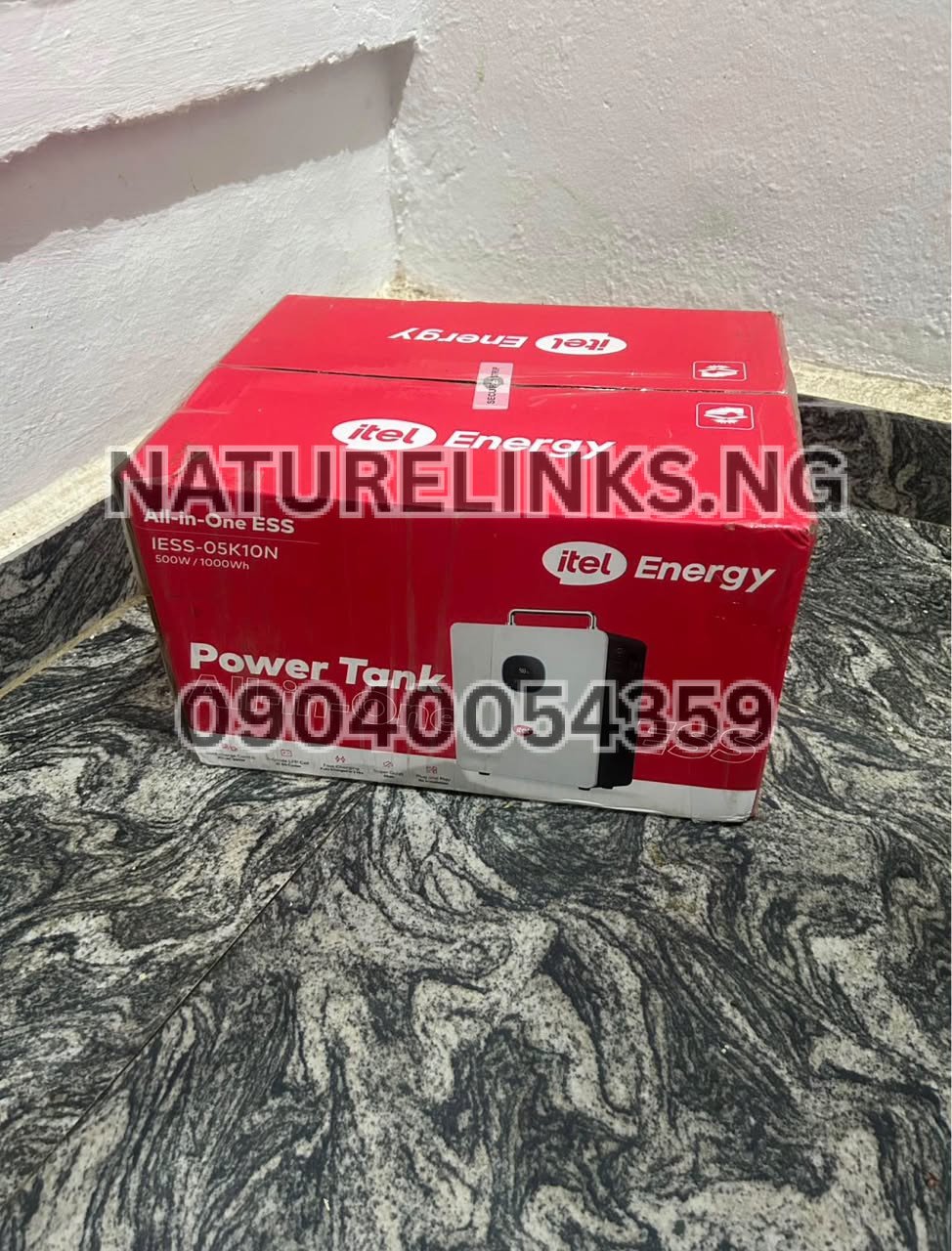
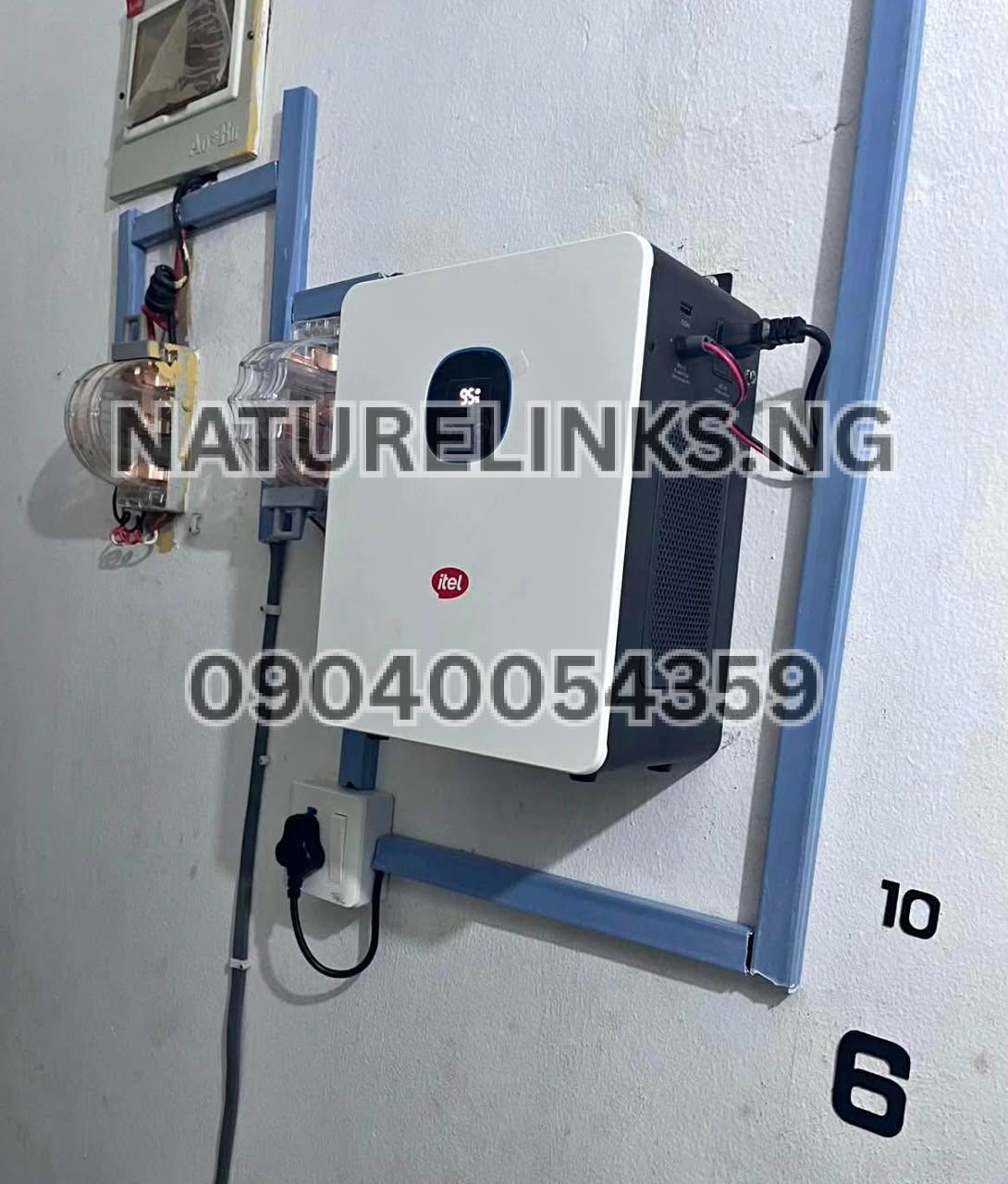
For the commonly listed configuration, the Power Tank has a 1,000Wh / 1kWh LiFePO4 battery and a 500W rated pure-sine-wave inverter.
The battery capacity is substantial for short-duration household appliance use, but the inverter rating remains the immediate limitation for AC appliances.
Think of the system this way:
Battery capacity = how much energy is stored.
Inverter output = how much power can be delivered at a particular moment.
Both specifications matter when choosing appliances.

Is Itel Power Tank Good for Kitchen Appliances?
The Power Tank can be used for compatible electrical appliances, but kitchen appliances should be checked individually.
Lower-power electronics such as:
- LED bulbs
- Wi-Fi routers
- laptops
- TVs
- phone chargers
- small electronics
are generally easier loads for a 500W-class portable power station.
Appliances with heating elements or powerful motors require greater attention.
Examples include:
- Electric kettles
- Electric cookers
- Hot plates
- Pressing irons
- Microwaves
- Large blenders
- Water pumps
- Large refrigerators
- Freezers
- Air conditioners
The Power Tank’s 500W continuous rating should be considered before connecting any high-powered appliance.
What Happens if the Blender Is Too Powerful?
If the connected load exceeds the Power Tank’s inverter capability, the system’s protection mechanisms may respond.
The listed Power Tank specifications include protections such as overload, short circuit, over-temperature and over-voltage protection.
Depending on the exact configuration and circumstances, an overload can cause the AC output to shut down or prevent the appliance from operating normally.
Repeatedly connecting loads beyond the rated capacity is not a recommended operating practice.
How to Check Your Blender Before Connecting It
Before plugging a blender into your Itel Power Tank:
1. Check the wattage
Look underneath the blender, on its rating label, packaging or user manual.
2. Check the voltage
The commonly listed Power Tank configuration provides 230V AC at 50Hz, while many Nigerian household appliances are designed for the local mains specification.
3. Check the motor
A blender is a motor-driven appliance, so startup power matters.
4. Check other connected appliances
Add the power requirements of everything running simultaneously.
5. Stay below the continuous rating
For the commonly listed configuration, use 500W continuous AC output as the principal limit, rather than treating the 1,000Wh battery figure as an output rating.

Itel Power Tank 500W/1000Wh Blender Compatibility Example
Consider a hypothetical 350W blender.
The basic comparison would be:
Power Tank continuous output: 500W
Blender rating: 350W
Nominal remaining capacity: 150W
If the blender starts and operates within its expected electrical requirements, the basic wattage relationship is within the Power Tank’s rated continuous output.
Now consider a 700W blender:
Power Tank continuous output: 500W
Blender rating: 700W
The blender exceeds the continuous inverter rating, so this is not an appropriate load for the commonly listed configuration.
Does a Pure Sine-Wave Inverter Help With a Blender?
The commonly documented Itel Power Tank configuration uses a pure sine-wave inverter.
Pure sine-wave output is designed to provide AC electricity in a waveform suitable for many household electronic and electrical appliances.
However, pure sine-wave output does not increase the inverter’s wattage rating.
A 500W pure sine-wave inverter remains a 500W continuous inverter.
Therefore, users should still check the blender’s power requirements.
Can the Itel Power Tank Charge While I Use the Blender?
Whether charging and discharging simultaneously is supported depends on the exact Power Tank model and operating configuration.
The product information documents both AC/grid charging and solar charging, as well as UPS functionality on listed configurations.
However, users should follow the specific manual for their unit rather than assuming that every charging configuration permits unrestricted simultaneous high-power AC loads.
Can Solar Panels Recharge the Itel Power Tank After Blending?
Yes, the commonly documented configuration supports solar charging through an integrated MPPT controller and lists up to 400W PV input for the documented IESS-05K10N configuration.
This makes it possible to recharge the battery using compatible solar panels after household use.
The exact solar-panel voltage, current and connection requirements should always be confirmed against the model’s datasheet before installation.
Itel Power Tank Blender Buying Checklist
If your main reason for buying an Itel Power Tank is to operate a blender during power outages, consider these points:
- Choose a blender whose rated power is within the Power Tank’s continuous output.
- Avoid treating the 1,000Wh battery rating as a 1,000W inverter rating.
- Check the blender’s startup requirements.
- Consider the wattage of other appliances operating simultaneously.
- Check the exact Power Tank model.
- Confirm the AC voltage and frequency.
- Use compatible AC outlets and accessories.
- Avoid overloading the inverter.
- Keep the Power Tank adequately charged.
- Confirm the manufacturer’s specifications before purchase.
Itel Power Tank 1000Wh/500W Key Specifications
| Specification | Commonly listed configuration |
|---|---|
| Product | Itel Power Tank |
| Model | IESS-05K10N on documented configurations |
| Battery capacity | 1,000Wh / 1kWh |
| Battery chemistry | LiFePO4 |
| Continuous AC output | 500W |
| Surge output | Up to 1,000W on listed configurations |
| Inverter | Pure sine wave |
| AC output | 230V |
| Frequency | 50Hz |
| Solar charging | Yes |
| MPPT | Integrated |
| Maximum PV input | Up to 400W on documented configuration |
| AC/grid charging | Yes |
| BMS | Built-in |
| Display | Digital/LED |
| Protection | Overload, short circuit, temperature and voltage protection |
Specifications can vary by model or package, so buyers should confirm the exact unit’s datasheet before purchase.
Itel Power Tank Price in Nigeria
The price of an Itel Power Tank in Nigeria varies according to the exact configuration, seller, warranty, availability and whether solar panels or other accessories are included.
Current Nigerian listings for the commonly advertised 500W/1000Wh configuration show prices around the ₦279,000 range in some listings, while other packages and sellers list higher prices.
Because prices and stock can change, Nigerian buyers should confirm the current price, model number, accessories and warranty before payment.
Where to Buy Genuine Itel Power Tank in Nigeria
For buyers searching for an Itel Power Tank in Nigeria, the supplied seller information is:
Best Seller: Nature Links Nigeria Limited [NatureLinks.NG]
Accredited Distributor: Nature Solar Global Limited
CEO: Mr. Joseph Chikeleze
Call: 07049528019
WhatsApp: 09040054359
Shop Address: F1571 Upstairs (F-Line), Alaba International Market, Lagos State 🇳🇬
Nature Links Nigeria Limited’s published product information describes it as an authorized distributor, supplier and dealer of genuine Itel Power Tank products in Nigeria.
Buyers should verify the exact model, battery capacity, inverter rating, accessories, warranty and current price before making payment.
Why Choose the Correct Itel Power Tank Size for a Blender?
Choosing a portable power station based only on battery capacity can lead to confusion.
For example, a customer may see 1,000Wh and assume that the Power Tank can operate any appliance up to 1,000W. That is incorrect for the commonly listed 500W configuration.
The key specifications must be considered together:
1,000Wh battery + 500W continuous inverter
The battery tells you the energy-storage capacity, while the inverter determines the maximum continuous AC power available.
This distinction is especially important for appliances such as blenders, refrigerators, freezers, pumps and other equipment containing electric motors.
Frequently Asked Questions About Itel Power Tank and Blenders
1. Can Itel Power Tank power a blender?
Yes, a compatible blender can be powered by the commonly listed 500W/1000Wh Itel Power Tank, provided its running and startup requirements remain within the inverter’s specifications.
2. Can a 500W blender run on Itel Power Tank?
A 500W blender is at the commonly listed Power Tank’s 500W continuous AC rating. Because a blender has a motor and may require additional startup power, compatibility should be confirmed rather than assumed.
3. Can a 300W blender work with Itel Power Tank?
A 300W blender is below the 500W continuous rating on the commonly listed configuration. It is therefore within the basic rated-power range, subject to startup requirements and the total load connected to the Power Tank.
4. Can a 400W blender run on Itel Power Tank?
A 400W blender is below the 500W continuous rating. However, there is only a nominal 100W difference, and motor startup demand should be considered.
5. Can an 800W blender work with Itel Power Tank?
An 800W blender exceeds the commonly listed 500W continuous AC output. It should therefore not be treated as a suitable continuous load for that configuration.
6. Can a 1,000W blender run on a 1,000Wh Itel Power Tank?
Not continuously on the commonly listed 500W inverter configuration. The 1,000Wh figure describes battery capacity, while the 500W figure describes continuous AC output.
7. How many watts can Itel Power Tank supply?
The commonly documented configuration provides 500W continuous AC output, with higher short-duration surge capability listed for supported configurations.
8. Can I use a blender and TV together on Itel Power Tank?
Potentially, provided the combined power requirements remain within the Power Tank’s continuous output and the startup demands of motor-driven appliances are accommodated. Add the actual wattages of both appliances before connecting them.
9. How long can a blender run on a 1,000Wh Itel Power Tank?
There is no single runtime because it depends on blender wattage, blending duration, inverter losses, battery condition and other loads. A blender normally operates intermittently, so actual battery consumption depends heavily on how long it is used.
10. Does Itel Power Tank support solar charging?
Yes. The commonly documented configuration includes an integrated MPPT solar charge controller and supports solar charging, with up to 400W PV input specified for the documented configuration.
Conclusion
Can Itel Power Tank Power a Blender? Yes, but the blender’s wattage and startup requirements are critical. The commonly listed Itel Power Tank configuration combines a 1,000Wh LiFePO4 battery with a 500W continuous pure-sine-wave inverter, so a blender comfortably below 500W is easier to accommodate than one operating at or above the inverter’s limit.
Remember that 1,000Wh does not mean 1,000W of appliance output. If you intend to use a blender together with a TV, fan, refrigerator, lights or other appliances, calculate the combined load and consider motor startup requirements.
For Nigerians looking to buy a genuine Itel Power Tank, confirm the exact model, inverter rating, battery capacity, accessories, warranty and current price before payment.
Nature Solar Global Limited — Accredited Distributor in Nigeria
Nature Links Nigeria Limited [NatureLinks.NG]
CEO: Mr. Joseph Chikeleze
Call: 07049528019
WhatsApp: 09040054359
Shop: F1571 Upstairs (F-Line), Alaba International Market, Lagos State 🇳🇬