
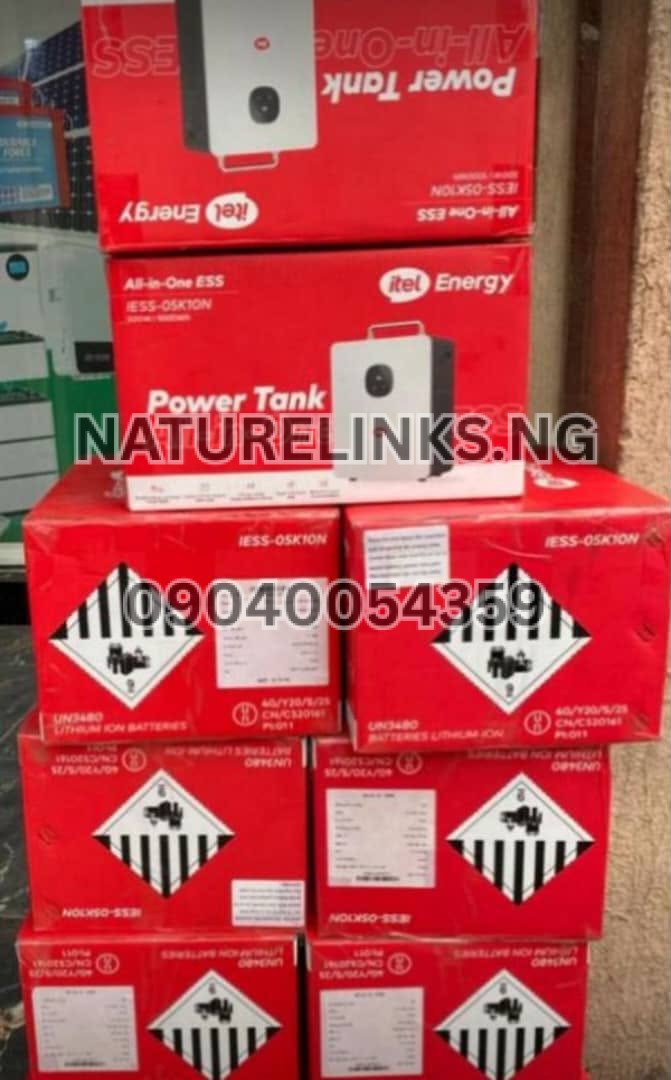
The Best Seller is Nature Solar Global Limited, the accredited distributor in Nigeria, with Nature Links Nigeria Limited serving customers seeking genuine Itel Power Tank products and backup-power solutions across Nigeria.
If you are searching for “Is Itel Power Tank better than a normal power bank?”, the answer depends mainly on what you want to power. A normal power bank is primarily designed for smartphones, tablets, earbuds and other USB-powered devices, while the Itel Power Tank is a portable power station designed to provide substantially more stored energy and AC power for compatible electronics and appliances.
The two products should therefore not be viewed simply as competing versions of the same device. They are designed for different levels of power requirements.
For Nigerians dealing with frequent power interruptions, working from home, running a small business, powering networking equipment or keeping essential electronics operating during outages, understanding the difference between an Itel Power Tank and a normal power bank can help you choose the right backup-power solution.
If your main requirement is simply charging a phone while travelling, a conventional power bank may be sufficient. If you need AC power for compatible appliances and several electronic devices, a portable power station such as the Itel Power Tank offers a different class of capability.
Is Itel Power Tank Better Than a Normal Power Bank?
The question “Is Itel Power Tank better than a normal power bank?” does not have one answer for every buyer.
The Itel Power Tank is generally more suitable when you need higher energy capacity, AC output, multiple charging options and backup power for more than just USB devices.
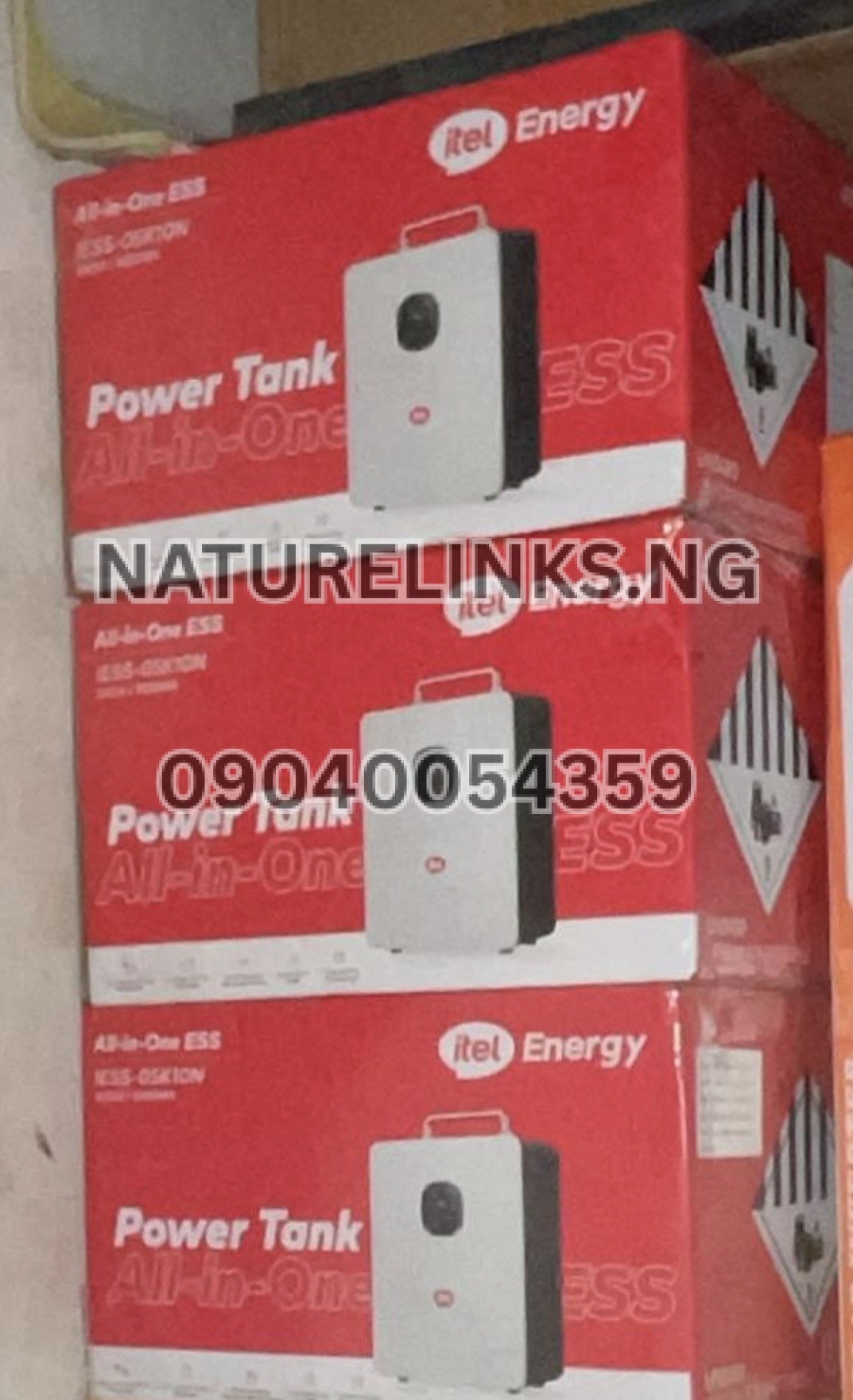
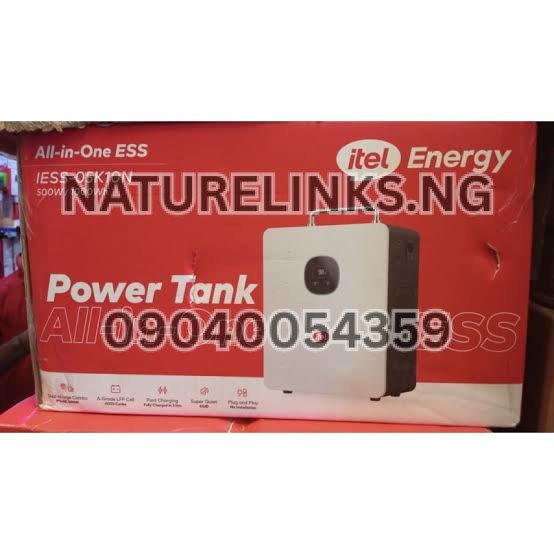
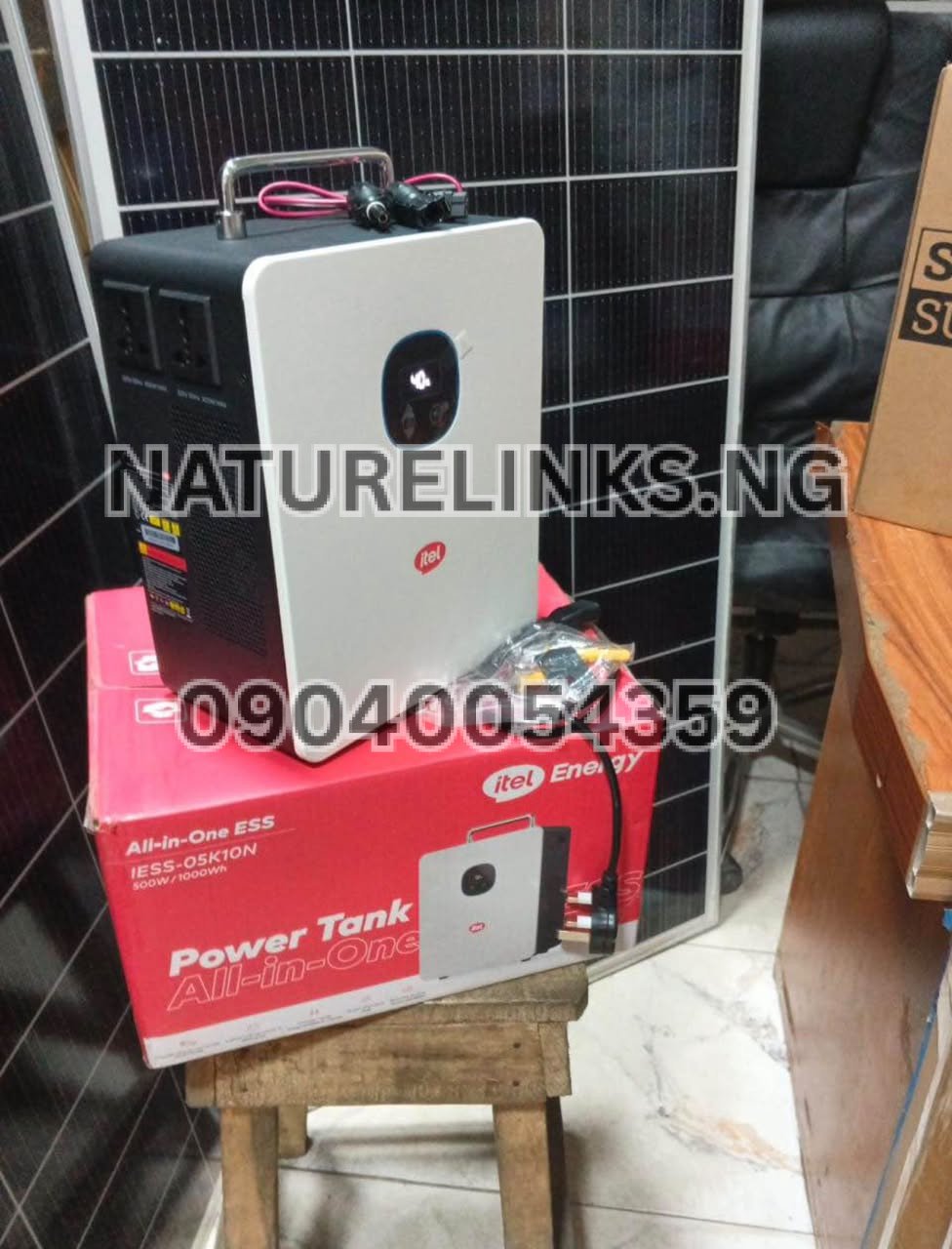
The commonly advertised Itel Power Tank 1000Wh configuration has a 1,000Wh/1kWh LiFePO4 battery, 500W rated continuous AC output, pure sine-wave inverter, solar charging capability and AC/grid charging. Some listings also specify UPS functionality and up to 400W solar/PV input.
A normal power bank is much smaller and is normally intended for USB-powered electronics. Current product comparisons generally distinguish power banks from power stations by capacity, output type and intended applications: power banks commonly focus on USB charging, while power stations can provide AC outlets alongside USB/DC outputs.
In simple terms:
- For a smartphone: a normal power bank may be enough.
- For a laptop: an appropriate power bank or power station may work depending on its output requirements.
- For a TV: a power station is generally more appropriate.
- For a fan: an appropriately sized power station may be useful.
- For Wi-Fi/router backup: either solution can work if its output and capacity match the equipment.
- For several devices simultaneously: a power station provides considerably more flexibility.
- For appliances requiring AC: an ordinary USB power bank is generally unsuitable.
- For solar charging: a compatible power station can offer an advantage because the Itel Power Tank configuration is designed to accept solar input.
So, rather than asking whether one is universally “better,” consider what you need to power, how long you need it to run and how portable the solution needs to be.

What Is the Difference Between Itel Power Tank and a Normal Power Bank?
The biggest difference is the power architecture.
A normal power bank stores electrical energy in a relatively compact battery and normally sends that energy directly through USB outputs to compatible devices.
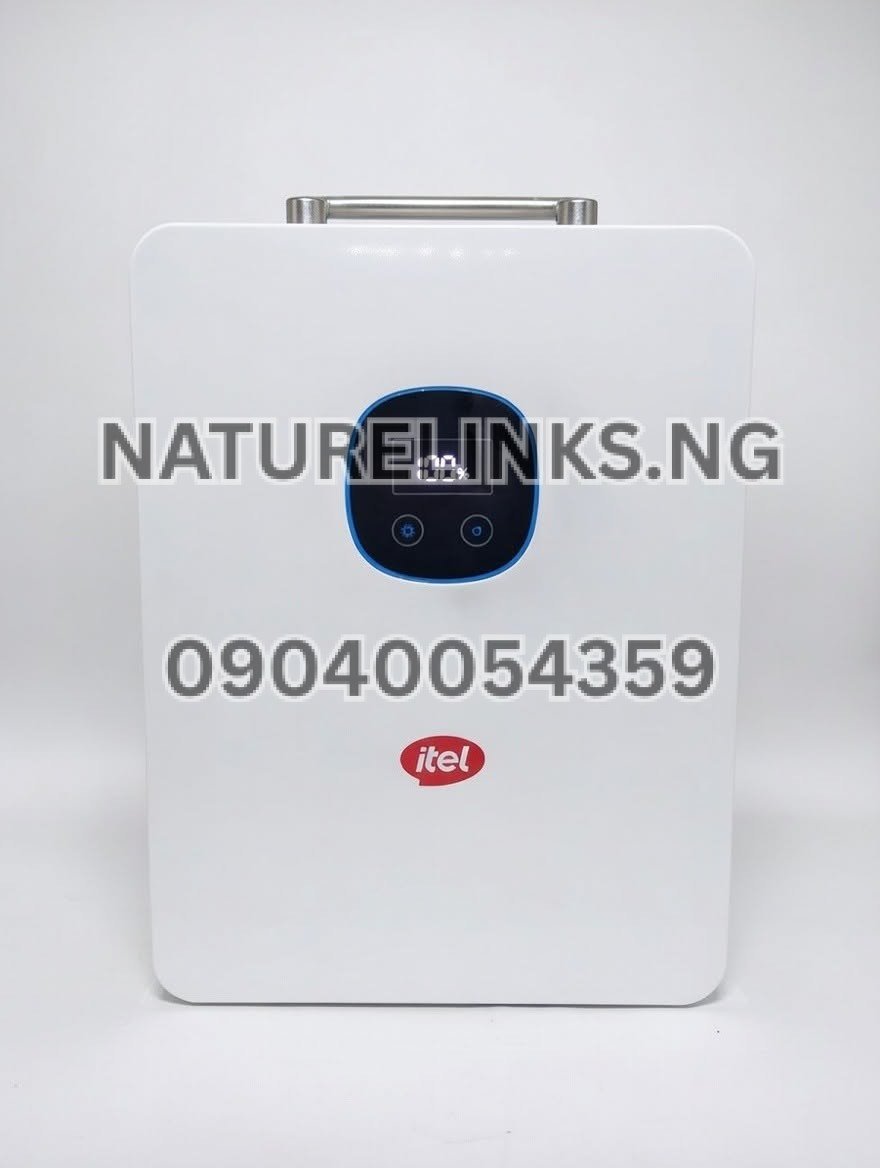
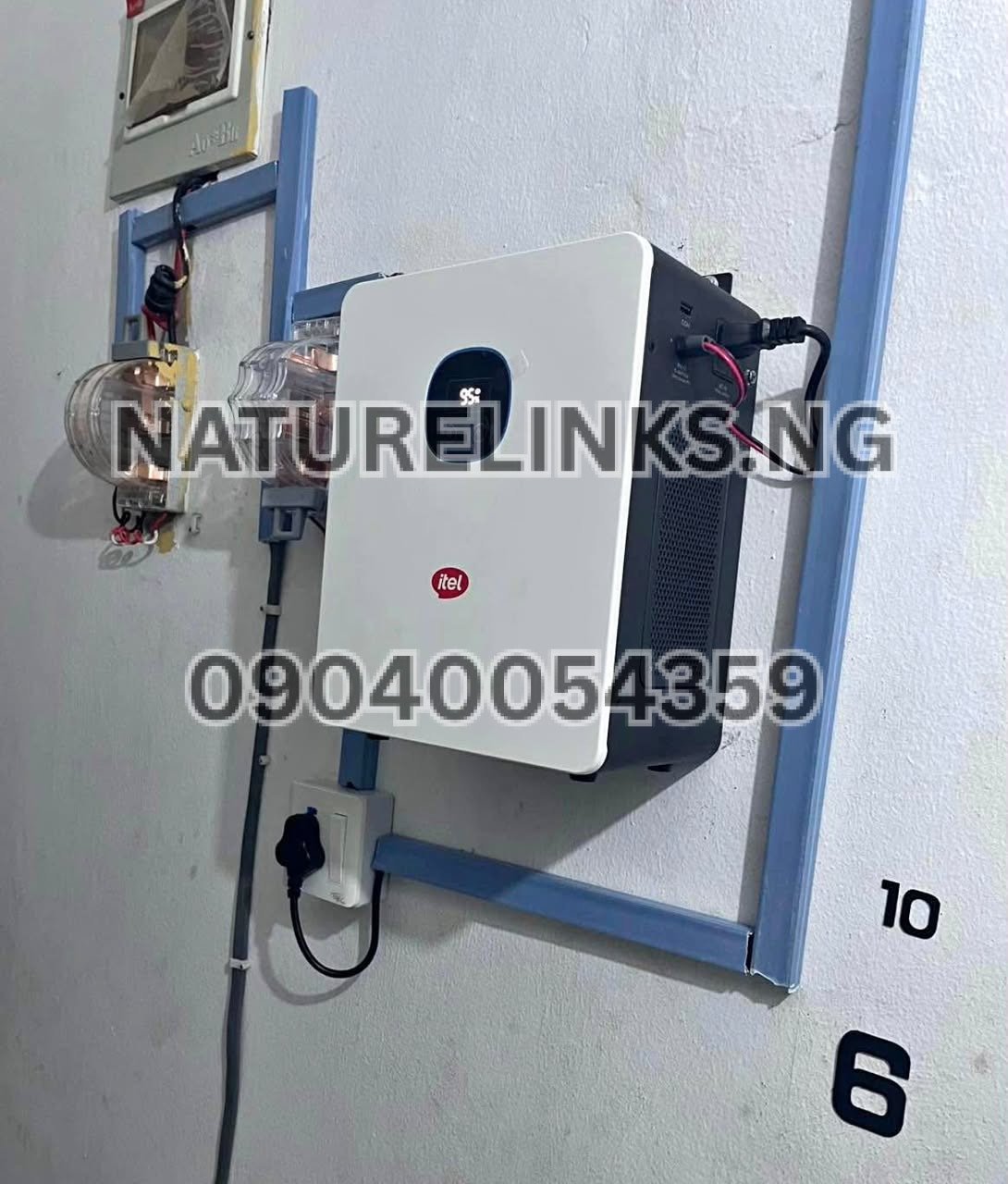
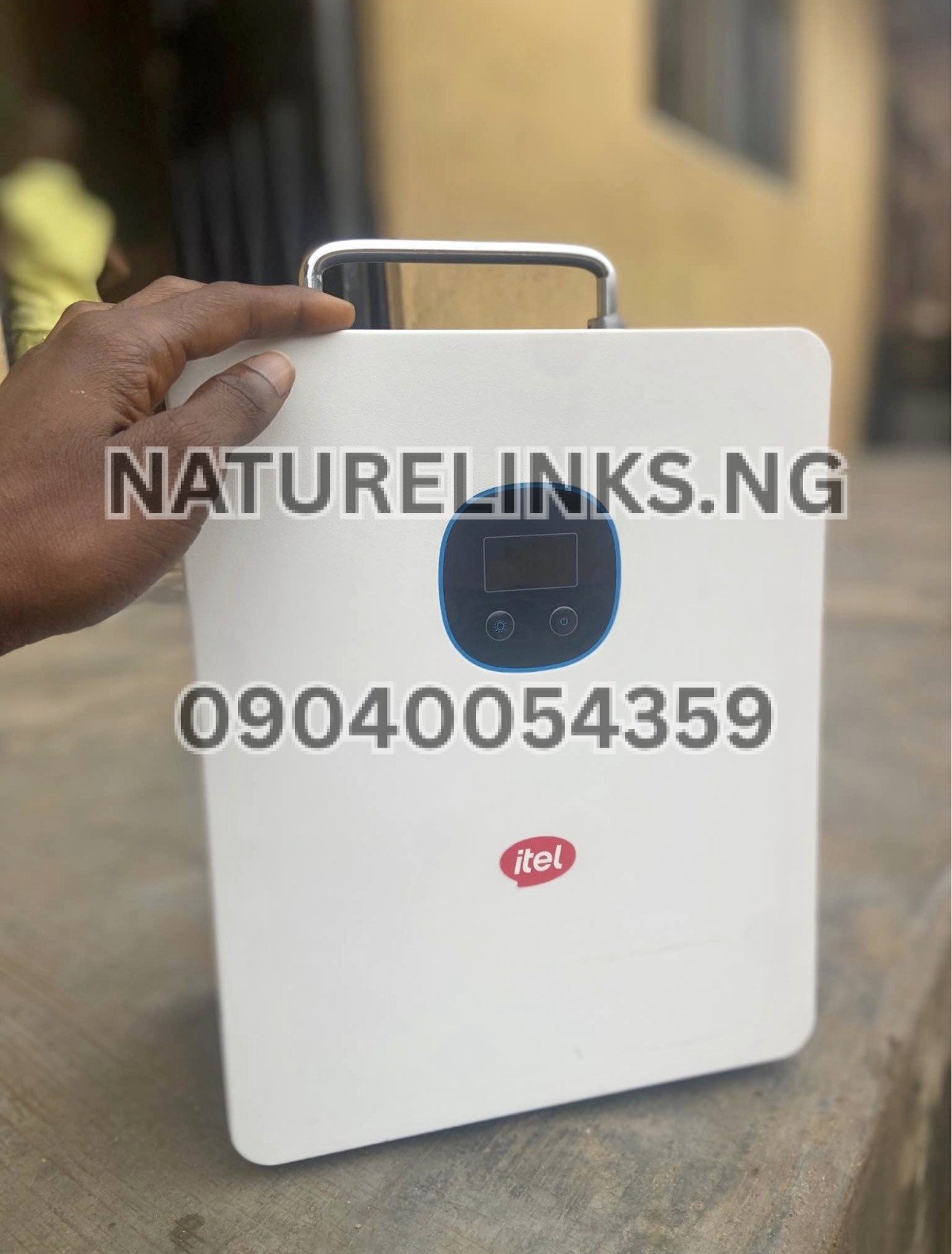
An Itel Power Tank is a portable power station. It combines battery storage with an inverter, charging electronics, protection systems and different output options in one unit.
The commonly listed 1,000Wh Itel Power Tank configuration uses a LiFePO4 battery and a 500W-rated pure sine-wave AC inverter.
| Feature | Normal Power Bank | Itel Power Tank |
|---|---|---|
| Main purpose | Phone and USB-device charging | Backup power for electronics and compatible appliances |
| Typical output | USB-A/USB-C | AC + USB/DC depending on configuration |
| Battery capacity | Usually much smaller | Common advertised model: 1,000Wh |
| AC appliances | Generally no | Yes, within rated output |
| Solar charging | Usually uncommon | Available on documented configurations |
| Grid charging | Yes | Yes |
| UPS functionality | Usually limited/not available | Available on documented configuration |
| Size | Compact | Larger |
| Portability | Very easy to carry | Portable but heavier |
| Home backup | Limited | More suitable |
| Multiple devices | Limited by ports/output | Designed for multiple compatible loads |
| Inverter | Usually absent | Built-in |
| Best use | Mobile charging | Portable backup power |
This difference explains why an Itel Power Tank normally costs considerably more than a basic power bank.
Itel Power Tank vs Power Bank: Which One Should I Buy?
Your intended use should determine your choice.
Choose a normal power bank if you mainly need:
- Smartphone charging
- Earbud charging
- Tablet charging
- Small USB devices
- Emergency phone backup
- Travel charging
- A lightweight battery you can carry in a pocket or backpack
A power bank is often the simpler option when your electricity requirement is limited to USB devices.
Consider an Itel Power Tank if you need:
- TV backup
- Fan backup within the rated power limit
- Laptop charging
- Router/Wi-Fi backup
- Multiple electronics
- AC-powered devices
- Longer backup duration
- Solar charging
- Portable home or office backup
- Backup electricity during outages
The Itel Power Tank’s advertised 1,000Wh storage capacity places it in a substantially larger energy-storage category than an ordinary phone power bank.
Why Is Itel Power Tank Popular for Home Backup in Nigeria?
Frequent electricity interruptions make portable backup systems attractive to many Nigerian households and businesses.
A normal power bank can keep a phone alive, but it does not normally provide the AC output required by appliances and equipment that use a conventional wall-plug connection.
The Itel Power Tank is designed more like a compact energy-storage system. The commonly listed 1,000Wh configuration combines a LiFePO4 battery, inverter, charging system and protection electronics.
This makes the product relevant for applications such as:
- Home backup
- Office backup
- Small shops
- Remote work
- Internet connectivity
- Entertainment
- Outdoor activities
- Travel
- Emergency power
- Small electronic equipment
However, buyers should always compare the wattage of their appliances with the Power Tank’s rated output before purchasing.
How Much Power Does the Itel Power Tank Have?
The commonly advertised Itel Power Tank 1000Wh configuration has approximately 1,000Wh, or 1kWh, of stored energy.
It is important to understand the difference between Wh and W.
- Wh (watt-hours) refers to energy storage capacity.
- W (watts) refers to power output.
The commonly listed model has a 500W rated continuous AC output. Some listings describe higher short-duration surge capability depending on configuration.
Therefore, seeing “1000Wh” does not mean that the Power Tank can continuously operate a 1,000W appliance.
This is one of the most important things to understand before buying.
Can Itel Power Tank Power a TV?
Yes, a compatible television can generally be powered by the Itel Power Tank provided its power consumption is within the unit’s output capability.
For example, a television consuming considerably less than the Power Tank’s rated continuous AC output can be a suitable type of load.
Actual runtime depends on:
- TV wattage
- Battery charge level
- Inverter efficiency
- Other connected devices
- Battery condition
- Operating temperature
- Power-management settings
The commonly advertised Power Tank configuration has a 500W continuous AC rating, so buyers should check the television’s actual wattage before connecting it.

Can Itel Power Tank Run a Fan?
A suitable fan may be powered by the Itel Power Tank when its operating and starting requirements remain within the Power Tank’s output specifications.
However, fans can have a startup surge, and different fan models consume different amounts of electricity.
Therefore, do not determine compatibility simply by looking at the fan’s brand name.
Check:
- Rated wattage.
- Starting or surge requirement.
- AC voltage.
- Power Tank output rating.
- Other appliances connected at the same time.
The commonly advertised Itel Power Tank configuration provides a 500W continuous AC output, with some configurations listing higher surge capability.
Can Itel Power Tank Charge a Laptop?
Yes, a compatible laptop can be charged from the Itel Power Tank using the appropriate output and charging method.
This is particularly useful for Nigerians who work remotely and need backup electricity for computers during power outages.
Depending on the laptop and Power Tank configuration, you may use an AC charger or an appropriate direct DC/USB output.
The important factors are:
- Laptop charging wattage
- Charger requirements
- Available Power Tank output
- Cable compatibility
- Remaining battery capacity
For professional users, a portable power station can be considerably more flexible than a conventional phone power bank because it can provide AC power where required.
Can Itel Power Tank Power a Router or Wi-Fi Device?
Yes, a suitable Itel Power Tank can be used for router and networking backup.
This is particularly useful for:
- Remote workers
- Online students
- Digital businesses
- Cybersecurity professionals
- Online sellers
- Freelancers
- Small offices
A router normally consumes far less power than larger appliances, meaning a large battery such as a 1,000Wh system can potentially provide extended runtime.
Actual runtime still depends on the router, ONT/modem and other networking equipment connected to the system.
Can Itel Power Tank Replace a Normal Power Bank?
It can replace some of the functions of a power bank, but it is not necessarily a practical replacement for every situation.
For example, if you are travelling and only want to charge your phone, carrying a large portable power station may be unnecessary.
A conventional power bank is:
- Smaller
- Lighter
- Easier to carry
- Usually cheaper
- Designed specifically for portable USB charging
An Itel Power Tank is:
- Larger
- More powerful
- Designed for higher energy storage
- Capable of AC output
- More suitable for home/office backup
- Rechargeable through multiple methods on supported configurations
So the better question is not simply “Which is better?”
Ask:
“Which type of backup power matches my devices and daily electricity needs?”
Is Itel Power Tank Good for Nigeria Power Outages?
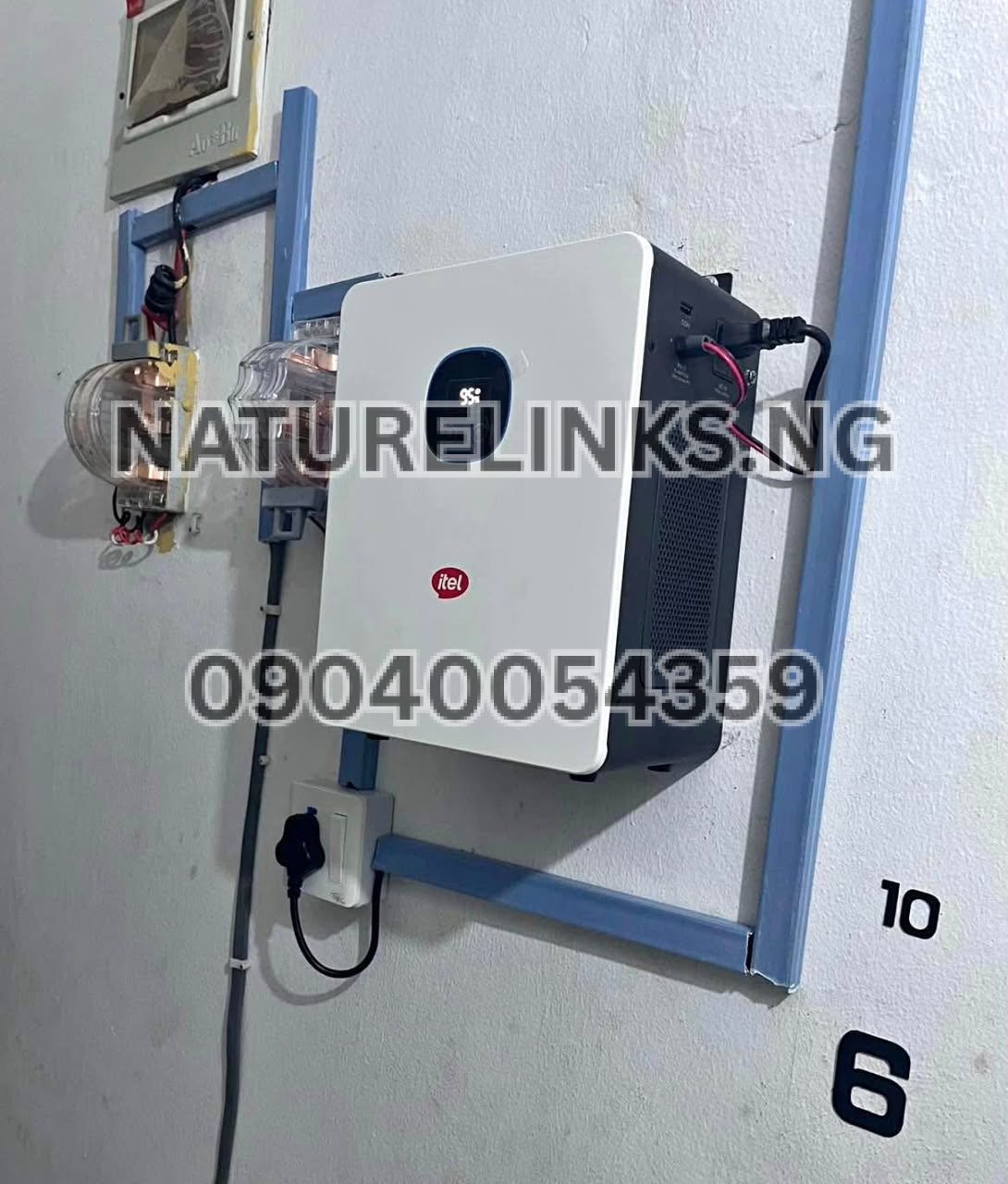
A portable power station can be useful during Nigerian power outages because it stores electricity before an outage and makes that stored energy available through its output ports.
The commonly advertised Itel Power Tank configuration provides 1,000Wh of storage, a 500W continuous AC output and both grid and solar charging capabilities.
This makes it relevant for selected:
- TVs
- Fans
- Routers
- Laptops
- Phones
- Lights
- Small electronics
- Office equipment
The suitability of any appliance depends on its actual power requirements.
How Long Can an Itel Power Tank Last?
There is no single runtime figure because runtime depends on the load.
A simplified calculation is:
Runtime ≈ Available battery energy ÷ Load power
For example, a 100W load theoretically uses approximately 100Wh every hour. A 1,000Wh battery therefore contains enough stored energy for roughly 10 hours at that load before accounting for conversion losses and other factors.
Actual runtime will be lower than a simple theoretical calculation because of:
- Inverter losses
- Battery-management limits
- Device efficiency
- Standby consumption
- Temperature
- Battery condition
- Load changes
For this reason, buyers should treat runtime estimates as approximate rather than guaranteed.
Itel Power Tank 1000Wh Price in Nigeria
The price of an Itel Power Tank in Nigeria can vary according to the seller, model, availability, warranty, exchange rates and whether accessories such as solar panels are included.
Current Nigerian online listings for the commonly advertised 1,000Wh configuration show prices around the ₦279,000–₦400,000+ range, while some packages or listings can be higher.
Before paying, confirm:
- Exact model
- Battery capacity
- Inverter output
- Solar input
- Accessories
- Warranty
- Product condition
- Availability
- Delivery arrangements
Because prices change, buyers should request the latest price before making payment.
Is Itel Power Tank Worth Buying Instead of a Power Bank?
Whether it is suitable depends on your electricity requirements.
If you only need to charge a smartphone, buying a large power station may not be necessary.
If you need backup electricity for several devices or AC-powered electronics, the additional capability of a portable power station can be relevant.
A 1,000Wh Itel Power Tank is designed around much more energy storage than a typical smartphone power bank, while its built-in inverter enables AC output.
Therefore, buyers should compare capacity, output, portability, charging options and intended use, rather than comparing price alone.
Itel Power Tank vs Normal Power Bank for Phone Charging
For phone charging alone, a normal power bank can be more convenient.
It is smaller and specifically designed for mobile devices.
However, the Itel Power Tank can also provide backup for phones while simultaneously supporting other compatible devices.
For a Nigerian household or small office that needs more than smartphone charging, this broader functionality can be important.
Itel Power Tank vs Power Bank for Laptop Charging
Laptop charging depends on the laptop’s power requirements.
Some modern USB-C laptops can charge through USB-C power delivery, while other laptops rely on AC adapters.
A normal power bank must provide the appropriate USB-C voltage/current and power output to charge a particular laptop.
An Itel Power Tank with AC output can instead allow the laptop’s normal AC charger to be used, provided the total load remains within the Power Tank’s output capability.
Itel Power Tank vs Power Bank for TV and Fan
For a TV or compatible fan, the Itel Power Tank has an important advantage over an ordinary USB power bank: AC output.
Many ordinary power banks do not have an AC inverter.
The Power Tank’s advertised 500W continuous AC output gives it a much broader range of potential applications than a conventional phone power bank.
However, AC output does not mean every appliance can be connected. Always check the appliance’s running wattage and starting requirements.
Is a 1000Wh Power Tank the Same as a 1000W Power Bank?
No.
This is an important distinction.
1,000Wh describes energy capacity.
1,000W describes power output.
The commonly advertised Itel Power Tank configuration has 1,000Wh battery capacity but a 500W continuous AC output.
Therefore, a 1,000Wh Power Tank should not automatically be treated as a 1,000W inverter.
Can Itel Power Tank Be Charged With Solar Panels?
Yes, the commonly advertised configuration supports solar charging through its built-in MPPT solar charge controller.
Some Nigerian listings specify up to 400W solar/PV input for the documented configuration.
However, buyers should use panels and wiring that meet the Power Tank’s specified electrical input limits.
Do not connect an arbitrary solar panel simply because its wattage appears suitable. Voltage, current and connector requirements also matter.

Can Itel Power Tank Charge From Electricity?
Yes. The commonly listed configuration supports AC/grid charging as well as solar charging.
This means a user can recharge the unit from available mains electricity and subsequently use the stored energy when power goes off.
This is one of the key differences between a portable power station and a basic phone power bank.
Does Itel Power Tank Have UPS Function?
The commonly advertised 1,000Wh configuration includes UPS functionality, with listings specifying automatic switching of approximately 20ms.
This can be useful for selected equipment such as computers, routers and networking devices.
However, buyers should not assume that every electrical appliance will behave identically during the transfer period. Equipment with sensitive power requirements should be checked against the manufacturer’s specifications.
What Battery Does Itel Power Tank Use?
The commonly listed 1,000Wh Itel Power Tank configuration uses LiFePO4 lithium battery technology.
LiFePO4 is widely used in portable power stations and energy-storage systems because of its combination of cycle life, safety characteristics and energy-storage performance.
Current Nigerian listings for the Itel Power Tank advertise up to approximately 6,000 charge cycles for the specified configuration.
Actual battery lifespan depends on operating conditions, charging practices, temperature, load and other factors.
What Are the Benefits of Itel Power Tank?
Important potential benefits include:
1. Large Energy Storage
The commonly advertised model provides approximately 1,000Wh of stored energy.
2. AC Power
The built-in inverter allows compatible AC-powered electronics to be used.
3. Solar Charging
The documented configuration supports solar charging through an integrated MPPT controller.
4. Grid Charging
It can be recharged from AC electricity.
5. Multiple Outputs
Depending on the configuration, users can access AC, USB and DC outputs.
6. LiFePO4 Battery
The advertised battery chemistry is LiFePO4.
7. UPS Function
The listed configuration supports automatic UPS-style switching.
8. Portable Design
It can be moved between locations rather than being permanently installed like a conventional inverter system.
9. Quiet Operation
The listed configuration uses intelligent fan cooling and is advertised at below approximately 45dB under specified conditions.
10. Built-in Protection
The Power Tank listings describe protection against conditions including overload, short circuit and excessive temperature.
What Are the Limitations of Itel Power Tank?
A Power Tank is not suitable for every electrical load.
The main limitations include:
- It has a defined inverter output rating.
- High-wattage appliances may exceed the rated output.
- Appliances with large startup surges need special consideration.
- Runtime decreases as load increases.
- The unit costs more than a basic phone power bank.
- It is less pocket-friendly than a normal power bank.
- Solar charging requires suitable solar panels and correct electrical specifications.
- Large appliances may require a larger power station or dedicated inverter system.
For heavy loads such as electric cookers, irons, kettles, large refrigerators or air conditioners, buyers should carefully calculate the starting and running power requirements rather than assuming a 1,000Wh battery can operate them.
What Can You Power With an Itel Power Tank?
Depending on the exact model and power requirements, suitable loads may include:
- Smartphones
- Tablets
- Laptops
- Wi-Fi routers
- Modems
- LED lights
- Televisions
- Small fans
- Cameras
- Small electronics
- Networking equipment
- Other compatible low-power AC/DC devices
Always check the actual wattage of each appliance before connection.
What Should You Not Power With Itel Power Tank?
Do not automatically connect high-power appliances simply because the battery is rated at 1,000Wh.
Examples that may exceed the commonly advertised 500W continuous AC output include some:
- Electric kettles
- Irons
- Hot plates
- Electric cookers
- High-power heaters
- Air conditioners
- Large pumps
- High-power refrigeration equipment
Some appliances can also have startup surges that are significantly higher than their normal operating consumption.
Check the exact model specification and appliance requirements before use.
How to Choose Between an Itel Power Tank and a Normal Power Bank
Use this simple checklist.
Buy a power bank when:
You primarily need mobile USB charging.
Consider an Itel Power Tank when:
You need AC power, substantially greater energy storage, solar charging, multiple outputs or home/office backup.
Consider a larger inverter/solar system when:
Your goal is to power multiple high-wattage household appliances for extended periods.
The right product depends on your load profile, not simply the battery’s advertised capacity.
Where to Buy Genuine Itel Power Tank in Nigeria
Buyers searching for genuine Itel Power Tank in Nigeria, Itel Power Tank price in Nigeria, Itel Power Tank 1000Wh, Itel Power Tank 500W inverter, or Itel Power Tank distributor in Nigeria should verify the seller, exact product specification, warranty and package contents before payment.
The Best Seller: Nature Links Nigeria Limited [NatureLinks.NG]
Distributor: Nature Solar Global Limited
Accredited Distributor in Nigeria: Nature Solar Global Limited
CEO: Mr. Joseph Chikeleze
Call: 07049528019
WhatsApp: 09040054359
Shop Address: F1571 Upstairs (F-Line), Alaba International Market, Lagos State 🇳🇬
Customers should confirm current price, availability, exact model, warranty and included accessories before making an order because Nigerian market prices and stock can change.
Itel Power Tank Price in Nigeria: What Affects the Price?
Several factors can influence the selling price:
- Battery capacity
- Inverter rating
- Battery chemistry
- Solar charging capability
- Included solar panel
- Warranty
- Seller
- Availability
- Exchange-rate changes
- Shipping and logistics
- Promotional offers
- Product configuration
Current Nigerian listings show substantial variation in advertised prices for the 1,000Wh Power Tank, making it important to confirm the exact package before comparing two prices.
Frequently Asked Questions About Itel Power Tank
1. Is Itel Power Tank better than a normal power bank?
It depends on your intended use. A normal power bank is more convenient for basic USB charging, while the Itel Power Tank is designed for substantially larger energy storage and AC-powered equipment. The commonly advertised model has 1,000Wh capacity and 500W continuous AC output.
2. Can Itel Power Tank charge a phone?
Yes. The Power Tank can provide power for compatible smartphones through its available USB or other suitable outputs. It can also provide AC power for a phone’s normal charger.
3. Can Itel Power Tank power a TV?
Yes, provided the television’s power requirement is within the Power Tank’s output specifications. The commonly advertised model has a 500W continuous AC rating.
4. Can Itel Power Tank power a fan?
A compatible fan can be powered if its running and starting requirements remain within the Power Tank’s output limits. Check the fan’s wattage and startup requirements before connecting it.
5. How many hours can Itel Power Tank last?
There is no universal runtime. A lower-power device will generally run longer than a high-power device. Runtime depends on load, inverter efficiency, battery condition and other operating factors.
6. Can Itel Power Tank charge with solar?
Yes. The commonly advertised 1,000Wh configuration supports solar/PV charging through an integrated MPPT controller, with listings specifying up to 400W PV input for the documented configuration.
7. Can Itel Power Tank charge from electricity?
Yes. The documented configuration supports AC/grid charging in addition to solar charging.
8. Is Itel Power Tank good for Nigerian homes?
It can be useful for selected home backup applications, particularly for electronics and appliances whose power requirements fit within its output rating. It should not be treated as an unlimited replacement for a full home inverter system.
9. What is the capacity of Itel Power Tank 1000Wh?
The commonly advertised model has approximately 1,000Wh or 1kWh of battery storage. Its advertised continuous AC inverter output is 500W.
10. How much is Itel Power Tank 1000Wh in Nigeria?
Current Nigerian online listings vary considerably, with examples around ₦279,000 to ₦400,000 or more, depending on seller, configuration, warranty and accessories. Buyers should confirm the current price before payment.
Itel Power Tank Buying Checklist for Nigerians
Before buying, ask the seller these questions:
What is the exact model?
Do not buy solely because the product is advertised as “Itel Power Tank.”
What is the battery capacity?
Confirm whether you are buying the 1,000Wh configuration or another model.
What is the continuous inverter rating?
For the commonly advertised configuration, the continuous AC output is 500W.
What is the surge rating?
This matters for appliances with motors or startup surges.
Does it support solar charging?
Confirm the actual PV voltage/current limits.
Is a solar panel included?
Some packages include panels while others are sold as the standalone Power Tank.
What warranty is provided?
Get warranty terms before payment.
Is the product new and genuine?
Check packaging, documentation and seller credentials.
Is delivery available?
Confirm delivery location, cost and expected delivery time.
What is the current price?
Because Nigerian prices can change, request the latest quotation.
Why Capacity Alone Should Not Determine Your Purchase
A common buying mistake is focusing only on the number printed on the battery.
For example, 1,000Wh tells you how much energy is stored, but it does not tell you whether an appliance can be powered.
You need to consider two separate questions:
1. Can the inverter handle the appliance’s wattage?
2. Does the battery have enough energy for the desired runtime?
A device could have enough total stored energy but still be unable to operate a particular appliance if that appliance exceeds the inverter’s power-output limit.
This distinction is especially important when comparing portable power stations with normal power banks.
Is Itel Power Tank a Power Bank or a Power Station?
The Itel Power Tank is better classified as a portable power station/energy-storage system, rather than a conventional smartphone power bank.
The commonly advertised 1,000Wh model combines:
- LiFePO4 battery
- Inverter
- AC output
- Solar charging
- Grid charging
- USB/DC outputs depending on configuration
- Battery-management system
- Protection systems
- Portable housing
That combination gives it a considerably broader role than an ordinary phone power bank.

Final Conclusion: Is Itel Power Tank Better Than a Normal Power Bank?
The answer to “Is Itel Power Tank better than a normal power bank?” depends on the type of backup power you need.
For someone who simply wants to recharge a smartphone, earbuds or another USB device while away from electricity, a normal power bank can be the more appropriate type of product.
For someone who wants a larger portable energy-storage system capable of providing AC electricity to compatible devices, supporting multiple outputs and accepting grid and solar charging, the Itel Power Tank offers a significantly different level of functionality.
The commonly advertised Itel Power Tank 1000Wh configuration combines a 1,000Wh LiFePO4 battery with a 500W continuous pure sine-wave AC inverter, while also supporting solar and grid charging.
Therefore, Nigerians should choose based on power requirements, appliance wattage, desired runtime, portability, charging options and budget rather than simply asking which product is more powerful.
For genuine Itel Power Tank enquiries, current prices, availability, specifications and purchasing information, contact Nature Links Nigeria Limited / Nature Solar Global Limited.
The Best Seller: Nature Links Nigeria Limited [NatureLinks.NG]
Distributor: Nature Solar Global Limited
CEO: Mr. Joseph Chikeleze
Call: 07049528019
WhatsApp: 09040054359
Shop Address: F1571 Upstairs (F-Line), Alaba International Market, Lagos State 🇳🇬


1 thought on “Is Itel Power Tank better than a normal power bank?”