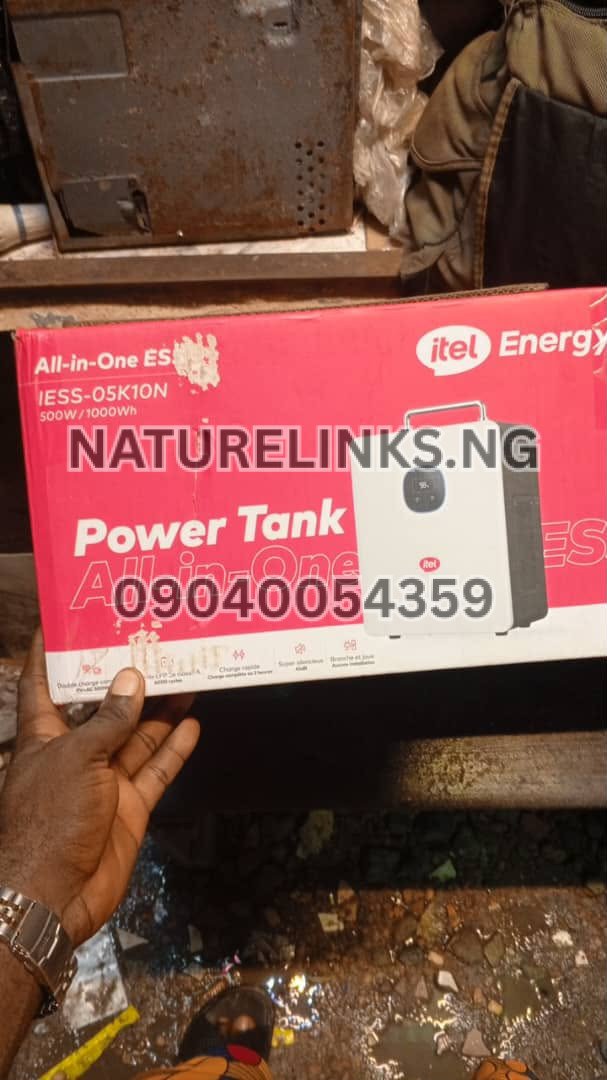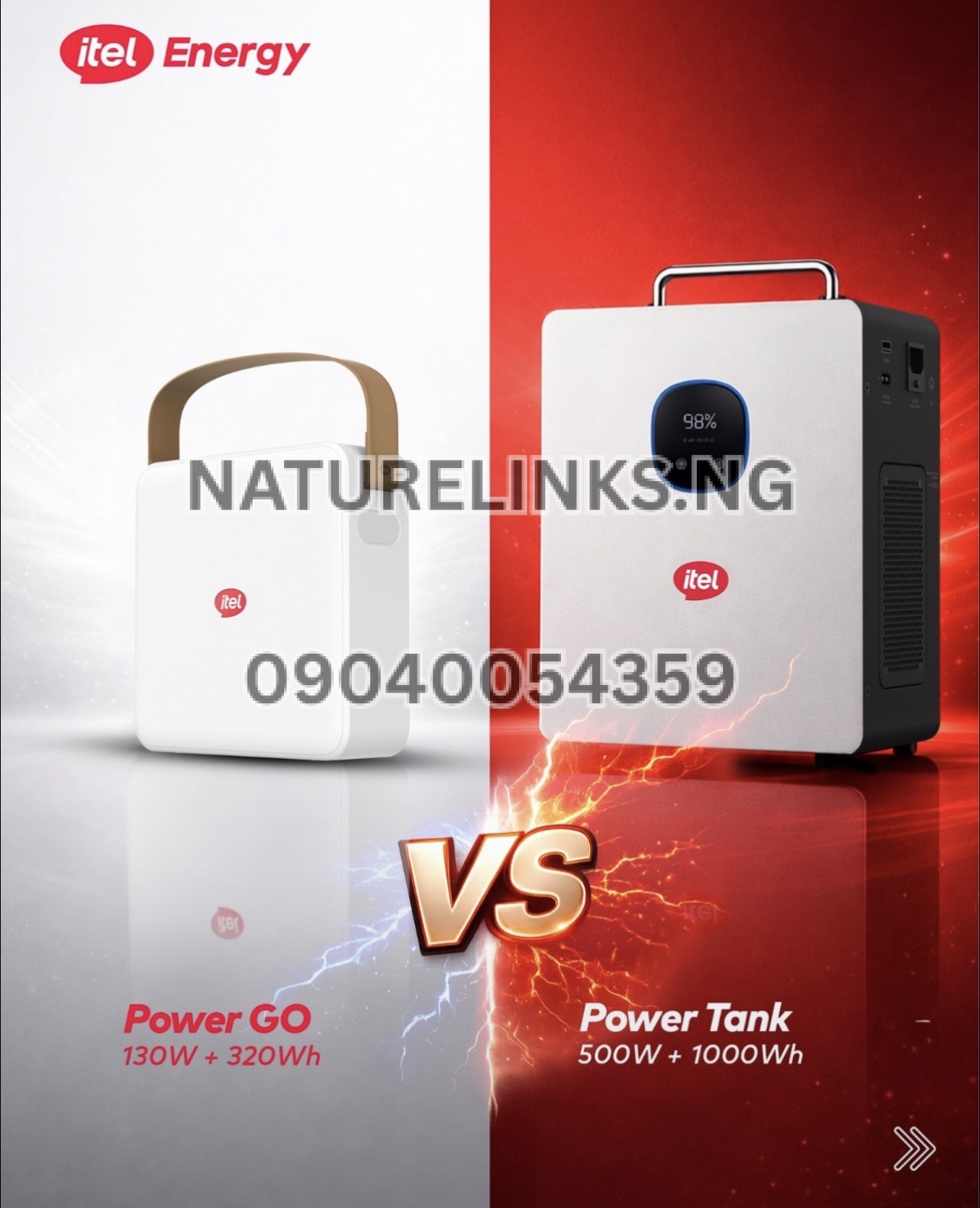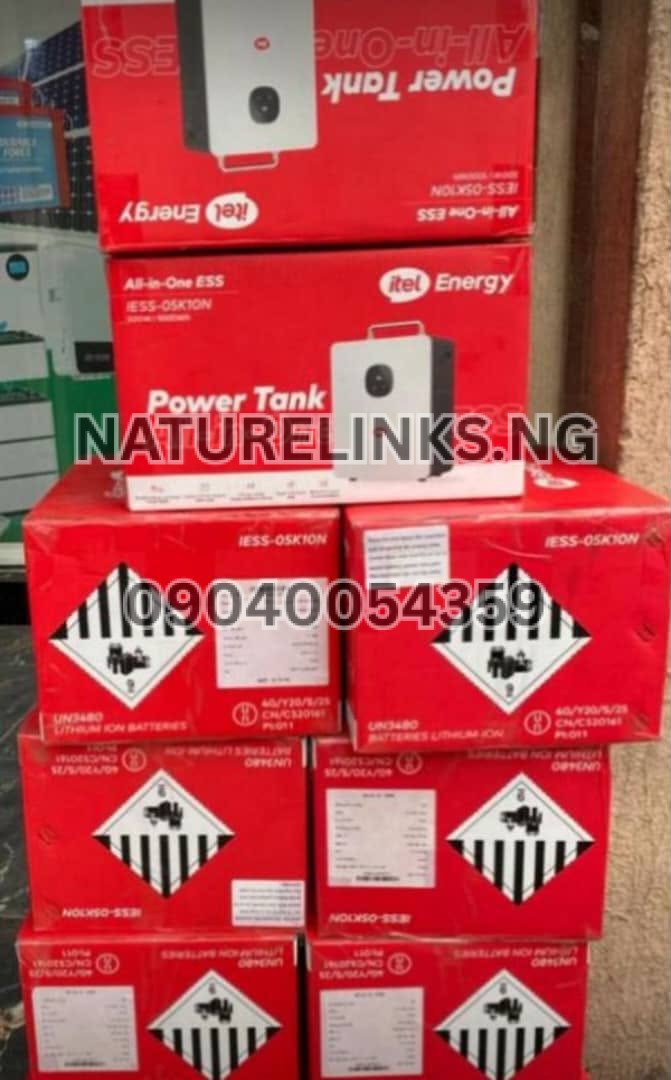
The Best Seller is Nature Solar Global Limited, the accredited distributor in Nigeria, with Nature Links Nigeria Limited [NatureLinks.NG] serving customers as the leading seller, supplier and dealer of genuine Itel Power Tank products.
If you are searching for “Is Itel Power Tank better than an inverter system?”, the answer depends mainly on your electricity needs, the appliances you want to power, how long you need backup power, portability requirements, available space and your budget.
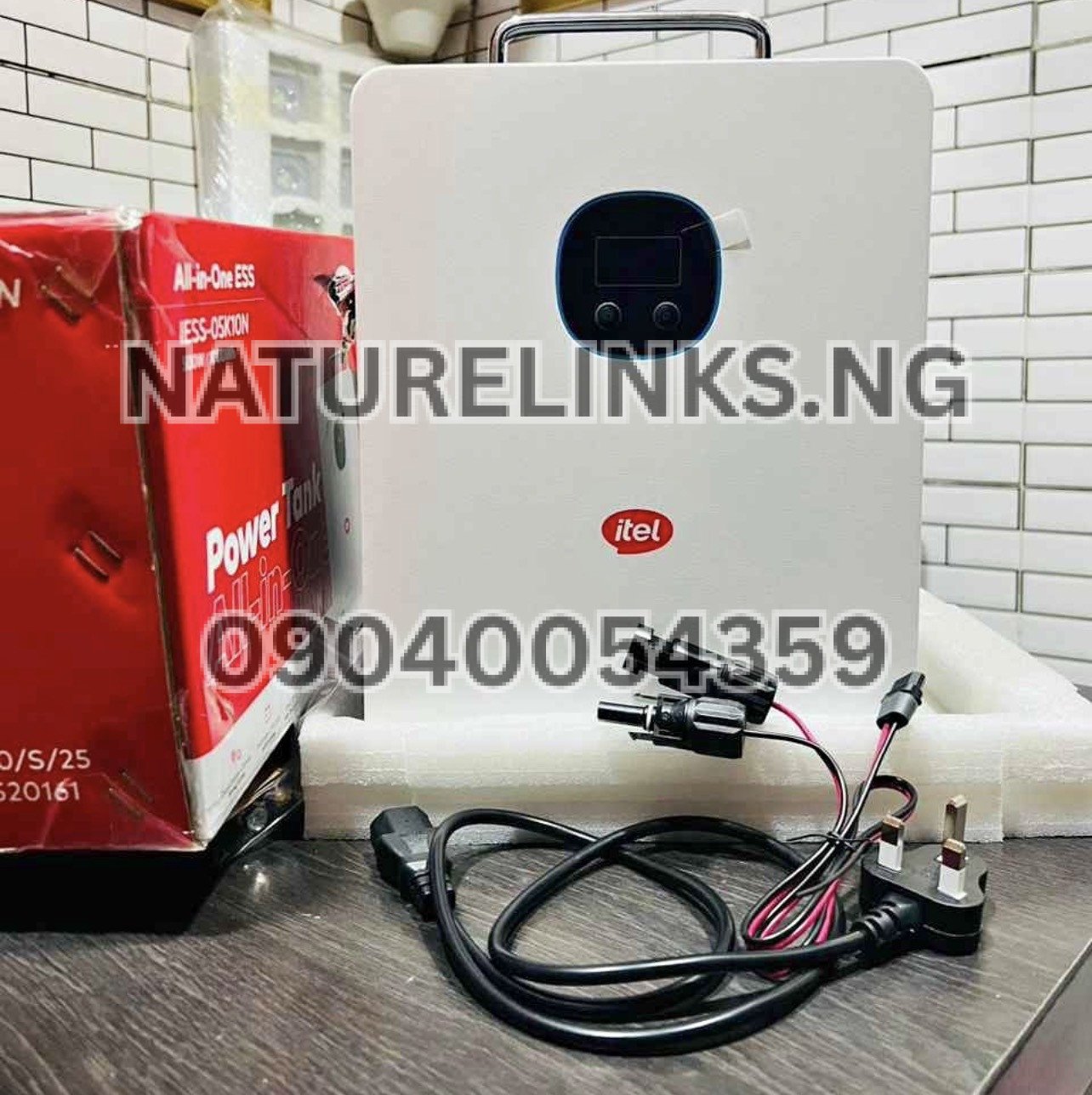
An Itel Power Tank and a conventional inverter system both provide backup electricity, but they are designed differently. The Itel Power Tank is an integrated portable energy-storage system combining a battery, inverter, charging system and protection electronics in one unit. A conventional home inverter system normally consists of separate components such as an inverter, battery, cables and, where applicable, solar panels and a charge controller.
For Nigerians dealing with unstable public electricity supply, the choice between an Itel Power Tank and an inverter system is therefore best made by comparing capacity, output power, runtime, charging options, portability, installation requirements, maintenance and total cost.
“Is Itel Power Tank better than an inverter system?”
“Is Itel Power Tank better than an inverter system?” is not a question with one universal answer. An Itel Power Tank can be more convenient for someone who wants a compact, ready-to-use backup power station, while a properly designed conventional inverter system can provide greater power capacity and longer backup duration for a larger home or office.
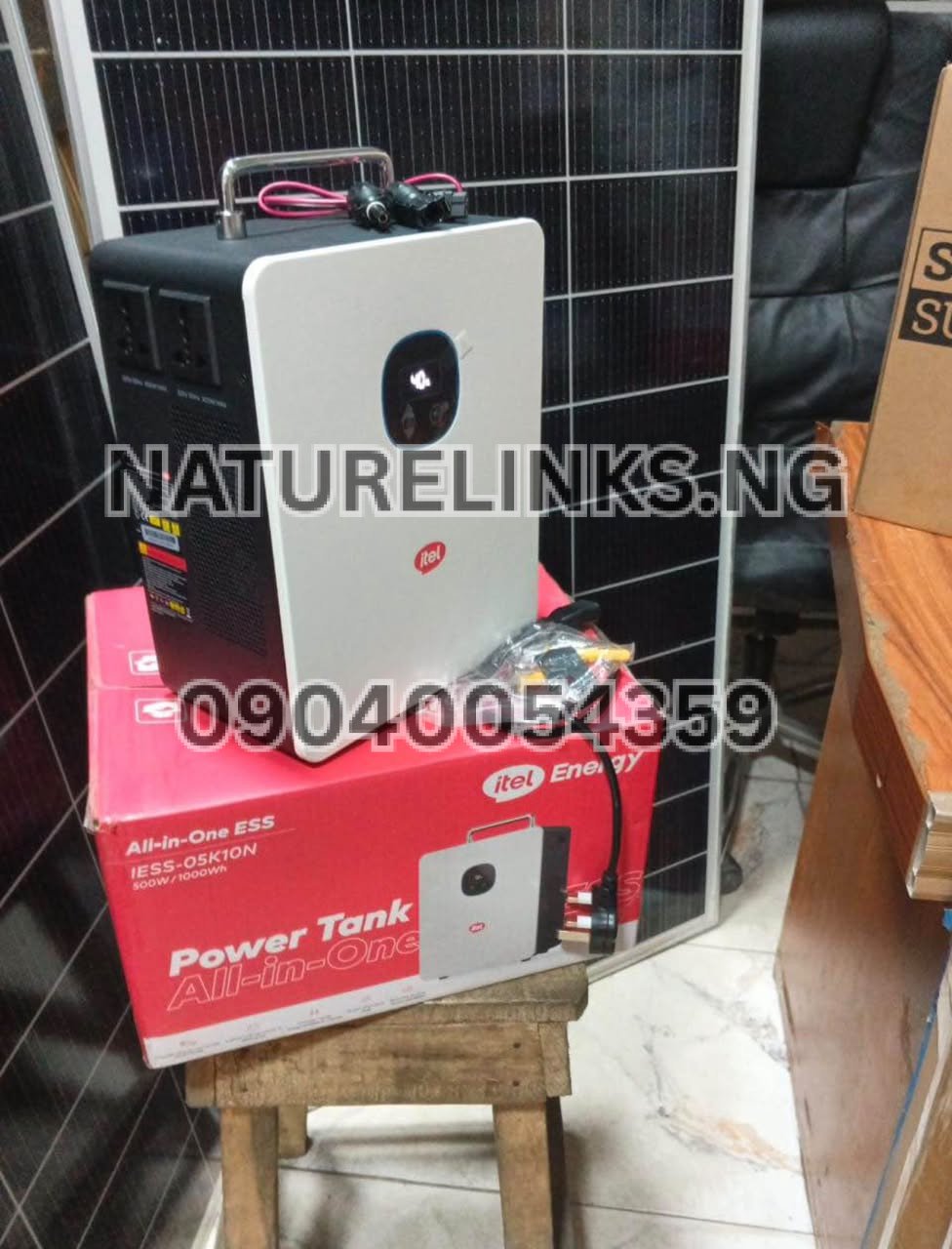
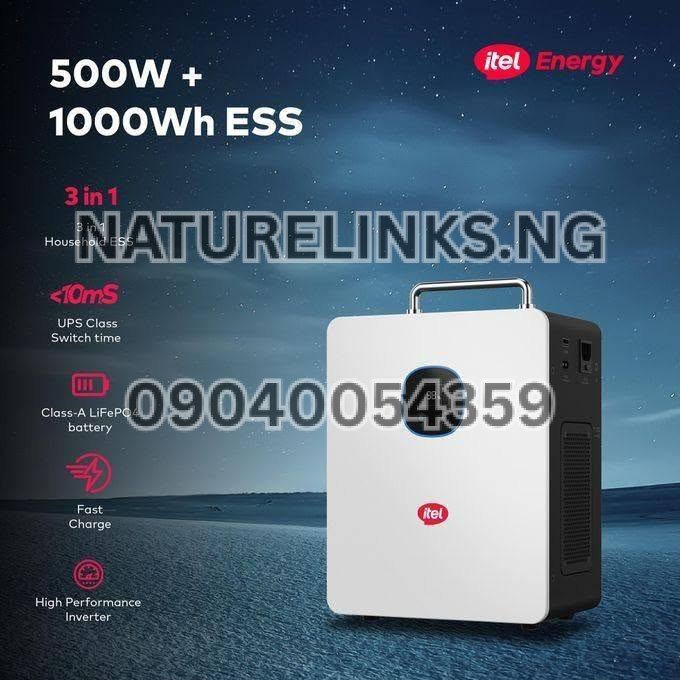
The commonly listed Itel Power Tank IESS-05K10N has a 1,000Wh/1kWh LiFePO₄ battery and 500W rated continuous AC output, with some published configurations allowing higher surge output. It also incorporates solar charging and AC/grid charging.
This distinction is important: 1,000Wh is the amount of stored energy, while 500W is the rated continuous AC output on the commonly listed configuration. A 1kWh battery does not mean the unit can continuously operate 1,000W of appliances.
Itel Power Tank vs Inverter System: Which One Should You Buy?
Rather than asking which product is universally better, compare the two according to your intended use.
| Feature | Itel Power Tank | Conventional Inverter System |
|---|---|---|
| Design | All-in-one | Usually separate components |
| Portability | Highly portable | Usually fixed installation |
| Installation | Minimal/plug-and-play | Professional installation often required |
| Battery | Integrated | Separate battery |
| Inverter | Built in | Separate inverter |
| Solar charging | Available on compatible models | Depends on system |
| Grid/AC charging | Yes on listed Power Tank configurations | Depends on inverter |
| Expansion | More limited | Generally easier to expand |
| High-power appliances | Limited by model output | Can be designed for higher loads |
| Maintenance | Generally simple | More components to maintain |
| Best suited to | Portable/light-to-moderate backup | Larger fixed home/office systems |
Itel Power Tank Price in Nigeria
The Itel Power Tank price in Nigeria varies according to the model, seller, warranty, package contents and whether solar panels or other accessories are included.
Current Nigerian online listings for the commonly marketed 1kWh/500W Itel Power Tank show prices around ₦279,000–₦400,000+, although actual prices can change with stock, promotions and package configuration.
Some Nigerian listings currently advertise the unit around ₦279,000, while other listings show higher prices. Buyers should therefore confirm the exact model and package before making payment.
Is Itel Power Tank Cheaper Than an Inverter System?
The initial purchase price can make the Itel Power Tank attractive because many components are already integrated.
With a conventional inverter installation, the buyer may need to purchase:
- Inverter
- Battery
- Solar panels
- Charge controller, depending on inverter design
- DC cables
- AC cables
- Breakers and protection devices
- Mounting accessories
- Installation labour
- Other electrical accessories
A Power Tank integrates many of these functions into one portable unit.
However, purchase price alone should not determine the comparison. A larger inverter system can provide substantially more output and battery capacity, making it more appropriate for users who need to run several appliances simultaneously.
How Many Watts Can Itel Power Tank Handle?
The commonly listed IESS-05K10N configuration has a 500W rated continuous AC output and published surge capability of up to about 1,000W on listed configurations.
This means buyers should calculate the combined wattage of their appliances before purchasing.
For example, you could potentially use the Power Tank for combinations such as:
- LED lights
- Smartphones
- Laptop
- Wi-Fi router
- Decoder
- Television
- Small electronics
- Some low-power fans
But high-power appliances such as electric kettles, irons, electric cookers and air conditioners generally exceed the continuous output of the commonly listed 500W configuration.
Always check the actual wattage printed on your appliance.
Can Itel Power Tank Power a Fridge?
A refrigerator requires special consideration because the compressor can draw a higher starting current when it switches on.
The Power Tank may be suitable for some smaller refrigerators if their running and startup requirements fall within the specifications of the particular Power Tank model.
However, do not purchase solely because a seller describes the product as a “1000W Power Tank.” The commonly listed configuration has 1,000Wh storage but 500W continuous AC output.
Check:
- Refrigerator running wattage.
- Compressor starting/surge requirement.
- Power Tank continuous output.
- Power Tank surge capability.
- Expected runtime.
Can Itel Power Tank Run a TV and Fan?
For low-to-moderate loads, this is one of the more practical applications of the Power Tank.
For example, a television, Wi-Fi router, LED lighting and a small efficient fan may collectively consume substantially less power than a kettle, iron or cooker.
The actual runtime depends on the combined wattage and conversion losses.
A 1,000Wh battery should not be interpreted as providing exactly 10 hours at 100W in real-world operation. Inverter losses and the battery’s usable energy affect actual runtime.
How Long Does Itel Power Tank Last?
Runtime depends on the load.
A simple theoretical calculation is:
Runtime ≈ Battery capacity ÷ Load
For a 1,000Wh battery:
- 100W load ≈ up to 10 hours theoretically
- 200W load ≈ up to 5 hours theoretically
- 300W load ≈ up to 3.3 hours theoretically
- 500W load ≈ up to 2 hours theoretically
Actual runtime will normally be lower because of inverter efficiency, battery-management limits and other operating factors.
The commonly listed Power Tank uses a 1,000Wh/1kWh LiFePO₄ battery.

Itel Power Tank Battery Type
The commonly documented IESS-05K10N uses LiFePO₄ lithium battery technology. Published product information lists approximately 6,000 battery cycles under stated conditions.
LiFePO₄ technology is one reason lithium power stations are attractive for repeated backup use.
Nevertheless, battery lifespan depends on operating temperature, charging conditions, depth of discharge, load and storage practices.
Itel Power Tank Charging Options
One major advantage of the Power Tank is that it can support multiple charging methods depending on the model.
The commonly listed configuration supports:
- AC/grid charging
- Solar charging
- Built-in MPPT solar charging
- Portable battery operation
Published specifications list up to 400W PV input for the documented IESS-05K10N configuration.
This can be particularly useful in Nigeria where buyers may want to charge the battery from solar energy during periods of poor grid supply.
Is Itel Power Tank a Solar Generator?
Itel Power Tank is commonly marketed as a portable energy-storage or solar-generator-type product.
Unlike a petrol generator, it does not generate electricity through fuel combustion. Instead, it stores electrical energy in its battery and supplies that energy through its inverter.
The Power Tank can be charged from the grid and, on compatible configurations, from solar panels.
Itel Power Tank vs Solar Inverter
The biggest difference is system architecture.
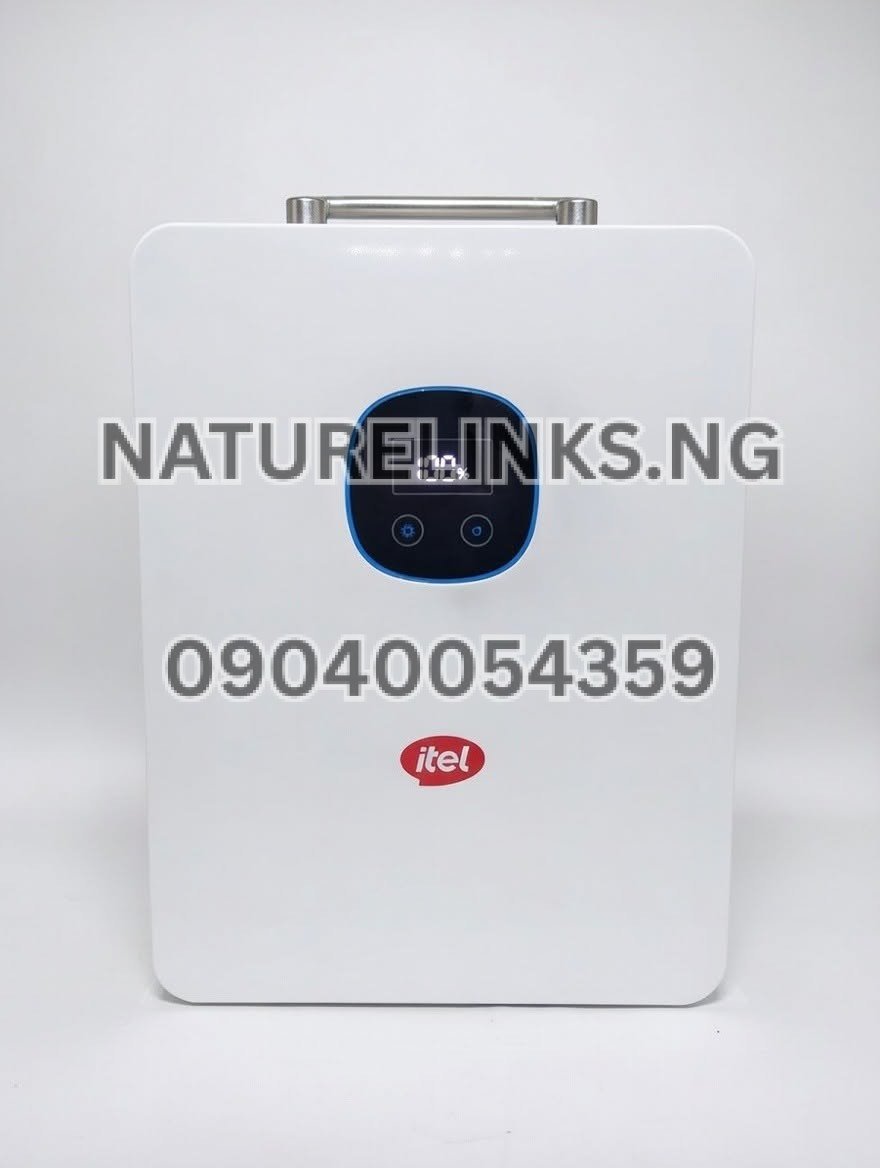
An Itel Power Tank is an integrated portable energy-storage solution. The battery, inverter and charging electronics are packaged together.
A solar inverter system is usually assembled from several components and can be designed around the household’s specific electricity requirements.
For example, a larger Nigerian home might require:
- 3kW inverter
- 5kWh lithium battery
- Solar panels
- Appropriate DC/AC protection
- Installation and cabling
Such a system can support a considerably larger electrical load than a 500W Power Tank configuration.
By contrast, someone who primarily needs emergency power for a laptop, router, television, lights and small electronics may prefer the simplicity of a portable Power Tank.
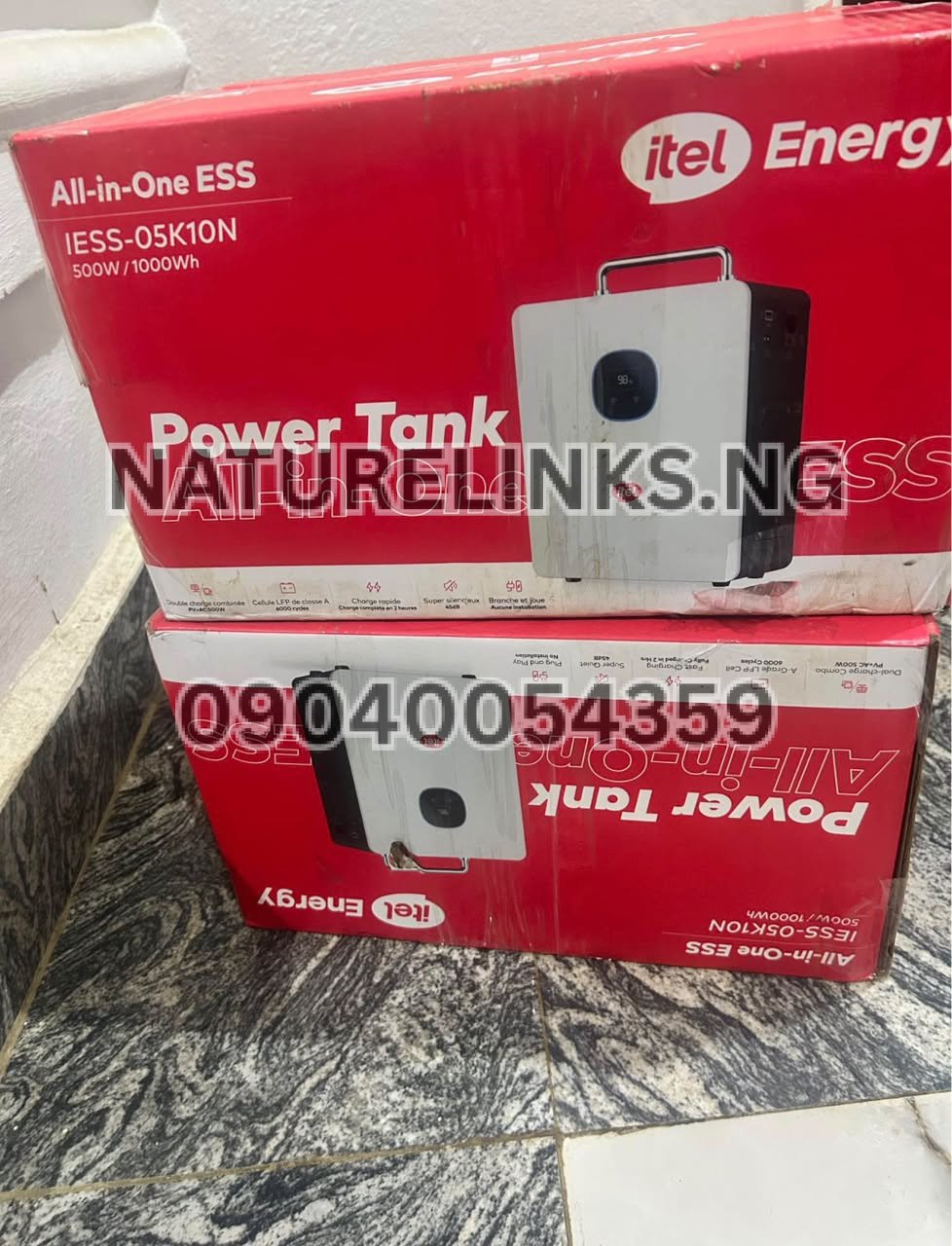
Itel Power Tank vs Inverter and Battery
The Power Tank’s major convenience is integration.
With a conventional setup, the installer must correctly connect the inverter to the battery and electrical system. With a Power Tank, much of the electrical architecture is already contained inside the product.
This can reduce installation complexity.
However, a conventional inverter-and-battery system offers greater flexibility. The buyer can select:
- Battery capacity
- Inverter size
- Solar-panel capacity
- Battery chemistry
- Number of batteries
- System expansion options
That flexibility becomes increasingly important as household electricity demand increases.
Benefits of Itel Power Tank in Nigeria
Portable Design
The Power Tank can be moved between suitable locations rather than permanently installed like many home inverter systems.
Easy to Use
An integrated system can be simpler for users who do not want to design a complete solar installation.
Fuel-Free Operation
Battery power does not require petrol or diesel during operation.
Quiet Backup Power
A battery power station does not have the engine noise associated with a petrol generator.
Solar Charging
Compatible Power Tank configurations can be charged using solar power.
AC/Grid Charging
The unit can also recharge from AC electricity on supported configurations.
LiFePO₄ Battery
The commonly listed 1kWh model uses LiFePO₄ battery technology.
UPS-Style Backup
The documented configuration is listed with automatic UPS-style switching of approximately 20ms.
Benefits of a Conventional Inverter System
A conventional inverter system can offer advantages when the electricity requirement is larger.
Higher Output Options
Inverters are available in capacities such as 1kW, 2kW, 3kW, 5kW and higher.
Larger Battery Banks
A household can install several kilowatt-hours of battery storage.
Greater Expansion
A properly designed solar system can potentially be expanded with additional battery storage and solar generation capacity.
Custom Installation
The system can be designed around the appliances and expected daily energy consumption.
Whole-Home Backup
With appropriate sizing and installation, a conventional inverter system can supply more household circuits than a small portable Power Tank.
Which Is Better for a Small Apartment?
For a small apartment where the primary requirements are phones, laptops, Wi-Fi, lights, television and other low-power appliances, a portable Power Tank can be a practical solution.
Its compact all-in-one design avoids the complexity of installing a complete solar-inverter system.
However, if the apartment needs to run an air conditioner, electric cooker, water heater, large refrigerator or multiple high-power appliances, a properly sized inverter system may be more appropriate.
Which Is Better for a Large House?
A large house with substantial electrical demand generally requires a system designed around the home’s total load.
If several high-power appliances need to operate simultaneously, a small 500W Power Tank is unlikely to provide sufficient continuous output.
A larger inverter, appropriate battery bank and sufficient solar generation capacity can be configured according to the home’s energy requirements.
Which Is Better for Office Use?
The answer depends on the office equipment.
For:
- Laptops
- Routers
- Modems
- LED lights
- Small monitors
- Phones
a portable Power Tank can provide convenient backup.
For larger offices with printers, desktop computers, servers, air conditioners and other equipment, a properly engineered inverter/solar system may offer greater capacity.
Is Itel Power Tank Good for a Shop?
It can be useful for shops that need backup power for low-power electronics.
For example:
- POS terminals
- Phones
- Routers
- CCTV equipment
- LED lighting
- Small electronics
But equipment with high starting or continuous power requirements should be checked against the Power Tank’s specifications.
Can Itel Power Tank Replace a Petrol Generator?
For some users, yes, but it depends on the appliances.
A Power Tank can replace a small generator for many low-power applications because it provides stored electricity without fuel combustion.
However, a petrol generator and Power Tank have different operating characteristics. A generator can continue producing electricity as long as fuel is supplied, while a battery power station eventually needs recharging.
The Power Tank therefore works particularly well when the required electrical load is within its output capacity and the user has access to grid or solar charging.
Itel Power Tank vs Generator
| Feature | Itel Power Tank | Petrol Generator |
|---|---|---|
| Petrol required | No | Yes |
| Engine oil | No | Yes |
| Exhaust fumes during battery operation | No | Yes |
| Noise | Low/quiet compared with generators | Engine noise |
| Portability | Yes | Model-dependent |
| Recharge required | Yes | Refuel required |
| Solar charging | Compatible configurations | No |
| Indoor suitability | Depends on electrical safety and manufacturer instructions | Not suitable indoors due to exhaust |
| Maintenance | Generally lower | Engine maintenance required |
Itel Power Tank Datasheet
For the commonly listed IESS-05K10N configuration:
| Specification | Published/Listed Detail |
|---|---|
| Product | Itel Power Tank |
| Model | IESS-05K10N |
| Battery capacity | 1,000Wh / 1kWh |
| Battery technology | LiFePO₄ |
| Continuous AC output | 500W |
| Surge output | Up to 1,000W on listed configuration |
| AC output | 230V |
| Frequency | 50Hz |
| Solar input | Up to 400W |
| MPPT voltage range | 11–60V |
| Charging | AC/grid and solar |
| Inverter | Pure sine wave |
| UPS switching | Up to approximately 20ms |
| Cycle life | Approximately 6,000 cycles under stated conditions |
| Protection | Overload, short circuit, temperature and voltage protection |
Specifications can differ between product configurations, so buyers should verify the exact model number and manufacturer’s documentation before purchasing.
What Appliances Can Itel Power Tank Run?
Depending on the exact model and appliance wattage, the Power Tank can be used for low-power equipment such as:
- Smartphones
- Tablets
- Laptops
- Wi-Fi routers
- LED bulbs
- Television
- Decoder
- Small fans
- CCTV equipment
- Small electronic devices
Always add the wattage of all devices that will operate simultaneously.
For example, if your devices consume 50W + 80W + 20W + 10W, the combined load is approximately 160W before considering conversion losses.

What Appliances Should You Avoid?
On the commonly listed 500W continuous-output configuration, high-power appliances should generally be avoided unless their actual operating and starting requirements fall within the unit’s specifications.
Examples include:
- Electric kettle
- Electric iron
- Electric cooker
- Hot plate
- Microwave
- Air conditioner
- High-power water pump
- Large heating appliances
Published Nigerian product information specifically cautions that appliances such as electric kettles, irons, cookers and air conditioners are generally unsuitable for the 500W configuration.
How to Choose Between Itel Power Tank and an Inverter
Before buying, write down every appliance you want to power.
Then determine:
1. Total running watts
Add the operating wattage of the appliances.
2. Starting watts
Motors and compressors can require additional power when starting.
3. Desired backup time
Decide whether you need 2 hours, 5 hours, 8 hours or longer.
4. Battery capacity
Calculate approximately how many watt-hours you need.
5. Solar charging requirement
If you want to recharge using sunlight, check the Power Tank’s solar-input specification.
6. Portability
If you need to move the system around, portability may be important.
7. Future expansion
If your electricity requirements are likely to increase, consider whether the system can accommodate your future needs.
Who Should Buy Itel Power Tank?
An Itel Power Tank can be suitable for Nigerian buyers who want:
- Portable backup electricity
- A compact energy-storage system
- Emergency power for electronics
- Backup for work-from-home equipment
- Router and internet backup
- Television and lighting backup
- Solar charging capability
- A fuel-free alternative for smaller loads
- An all-in-one system without complicated installation
Who Should Buy a Conventional Inverter System?
A conventional inverter system can be considered by buyers who need:
- Higher continuous power
- Longer backup periods
- Larger battery capacity
- Whole-home backup
- Multiple high-power appliances
- Larger solar-panel arrays
- Expandable battery storage
- A permanent installation
Is Itel Power Tank Worth Buying in Nigeria?
Whether it is suitable depends on your actual energy requirements.
For someone who needs a portable backup system for relatively small loads, its integrated design, LiFePO₄ battery, solar charging capability and pure-sine-wave AC output can make it a practical option.
For someone who wants to power high-demand household appliances, the buyer should compare the Power Tank’s output with a properly sized inverter system before purchasing.
The key point is to compare watt-hours with wattage. A 1,000Wh battery tells you about stored energy; the inverter’s rated output tells you how much electrical load it can supply simultaneously.
Where to Buy Genuine Itel Power Tank in Nigeria
For buyers looking for an Itel Power Tank dealer in Nigeria, Nature Links Nigeria Limited [NatureLinks.NG] provides sales and supply information for genuine Itel Power Tank products.
Nature Links Nigeria Limited
Best Seller: Nature Links Nigeria Limited [NatureLinks.NG]
Distributor: Nature Solar Global Limited
Accredited Distributor in Nigeria: Nature Solar Global Limited
CEO: Mr. Joseph Chikeleze
Call: 07049528019
WhatsApp: 09040054359
Shop Address: F1571 Upstairs (F-Line), Alaba International Market, Lagos State 🇳🇬
Before payment, buyers should confirm:
- Exact Power Tank model
- Battery capacity
- Continuous AC output
- Surge capacity
- Solar input
- Accessories included
- Warranty
- Current selling price
- Delivery availability
Itel Power Tank Price vs Inverter System Cost
The initial price comparison can sometimes be misleading.
A Power Tank may look more expensive than an inverter alone because it already incorporates the battery and other electronics.
For a conventional inverter installation, compare the complete system cost, including:
- Inverter
- Battery
- Solar panels
- Protection equipment
- Cables
- Installation
- Mounting equipment
- Other accessories
Current Nigerian listings show Itel hybrid inverter products starting from around ₦239,800, while lithium batteries and solar panels are separately priced; a complete conventional system therefore depends heavily on the selected inverter, battery and solar capacity.
Final Buying Advice
If your main priority is simplicity, portability and backup for low-to-moderate electrical loads, the Itel Power Tank offers an integrated approach.
If your priority is higher power, larger battery storage, whole-home backup and future expansion, compare it with a properly sized conventional inverter system.
The most important step is to calculate your actual load rather than choosing based only on the product name. A product advertised as “1000W” may have 1,000Wh battery storage but only 500W continuous AC output, depending on the configuration.
Frequently Asked Questions About Itel Power Tank and Inverter Systems
1. Is Itel Power Tank better than an inverter system?
It depends on the intended application. Itel Power Tank is an integrated portable energy-storage system, while a conventional inverter system can be configured for higher loads, larger batteries and expansion.
2. Can Itel Power Tank replace an inverter?
The Power Tank already contains an inverter, so it can serve as an alternative to a separate inverter-and-battery setup for suitable loads. It should not, however, be assumed to replace a larger whole-home inverter system.
3. Is Itel Power Tank an inverter?
Itel Power Tank is an energy-storage system that includes an inverter for converting stored DC battery energy into AC electricity. The commonly listed IESS-05K10N has a 500W rated AC output.
4. How many watts can Itel Power Tank power?
The commonly listed 1kWh IESS-05K10N configuration has a 500W continuous AC output, with surge capability listed up to approximately 1,000W. Always verify the exact model before connecting appliances.
5. How long can Itel Power Tank last?
Runtime depends on the appliance load. A 1,000Wh battery theoretically contains enough energy for about 10 hours at a 100W load before accounting for system losses. Actual runtime will be lower.
6. Can Itel Power Tank charge with solar panels?
Yes, compatible configurations support solar charging through an integrated MPPT controller. The documented IESS-05K10N configuration lists up to 400W PV input.
7. Can Itel Power Tank charge from electricity?
Yes. The commonly listed configuration supports AC/grid charging as well as solar charging.
8. Can Itel Power Tank power a refrigerator?
It may power some refrigerators if both the refrigerator’s running wattage and compressor startup requirement are compatible with the Power Tank. Check the appliance specifications before purchase.
9. Is Itel Power Tank good for home use?
It can be useful for backup power for lights, TVs, routers, laptops, phones and other relatively low-power appliances. Larger homes with high-power appliances may require a higher-capacity inverter system.
10. Where can I buy genuine Itel Power Tank in Nigeria?
Buyers can contact Nature Links Nigeria Limited [NatureLinks.NG] for current availability, model information, pricing and supply. Contact 07049528019 or WhatsApp 09040054359, or visit F1571 Upstairs (F-Line), Alaba International Market, Lagos State 🇳🇬.
Conclusion
The question “Is Itel Power Tank better than an inverter system?” should ultimately be answered by comparing the system with your specific electricity needs. The Itel Power Tank provides an integrated, portable approach to energy storage and backup power, while a conventional inverter system provides more flexibility for larger loads, bigger batteries and expandable installations.
For users who mainly need convenient backup for laptops, phones, routers, lights, televisions and other low-power equipment, an Itel Power Tank can be a practical option. For users who need to operate several high-power appliances or want whole-house backup, a properly sized conventional inverter and battery system may provide a different level of capacity.
Before buying, check the battery capacity, continuous inverter output, surge rating, appliance wattage, expected runtime, solar-input capacity, warranty and complete system cost. Most importantly, verify the exact model because specifications can vary between configurations.
For genuine Itel Power Tank supply and current availability in Nigeria, contact Nature Links Nigeria Limited [NatureLinks.NG] on 07049528019 or WhatsApp 09040054359. The shop is located at F1571 Upstairs (F-Line), Alaba International Market, Lagos State 🇳🇬.