
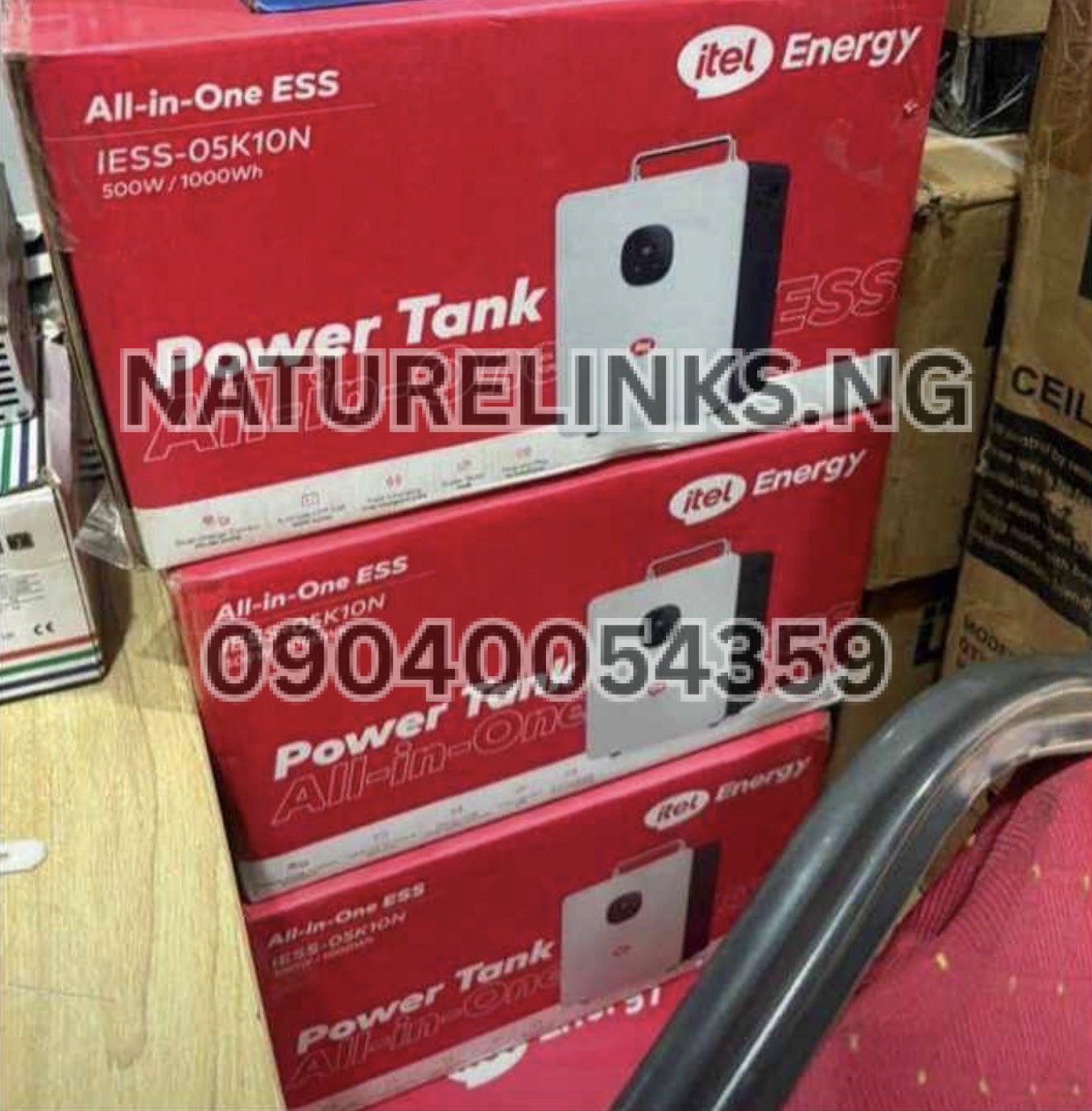
If you are searching “Does Itel Power Tank need an external solar controller?”, the answer for the commonly listed Itel Power Tank 500W/1000Wh configuration is generally no. The Power Tank already has a built-in MPPT solar charge controller, so a separate external solar charge controller is normally not required when compatible solar panels are connected directly according to the manufacturer’s specifications.
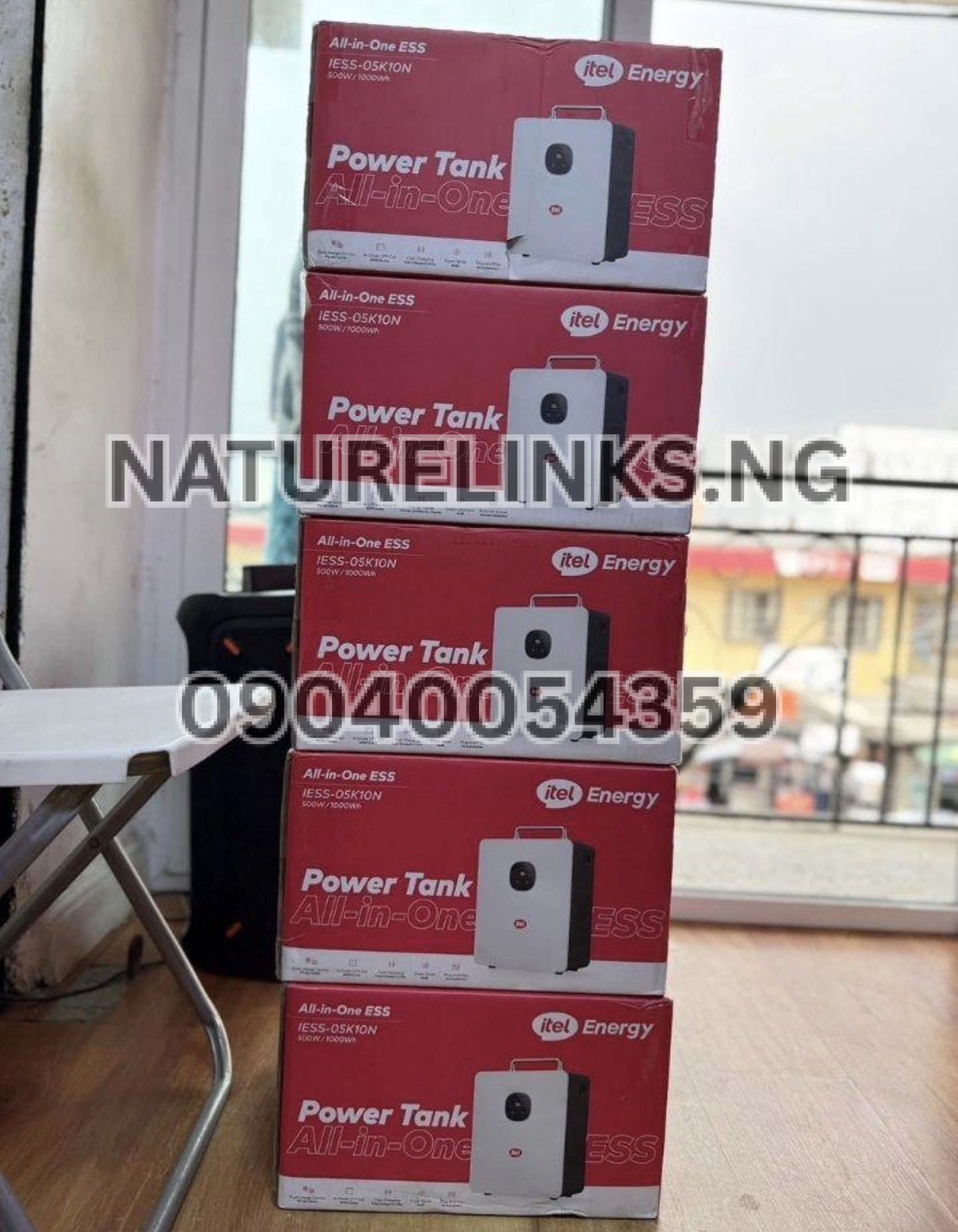
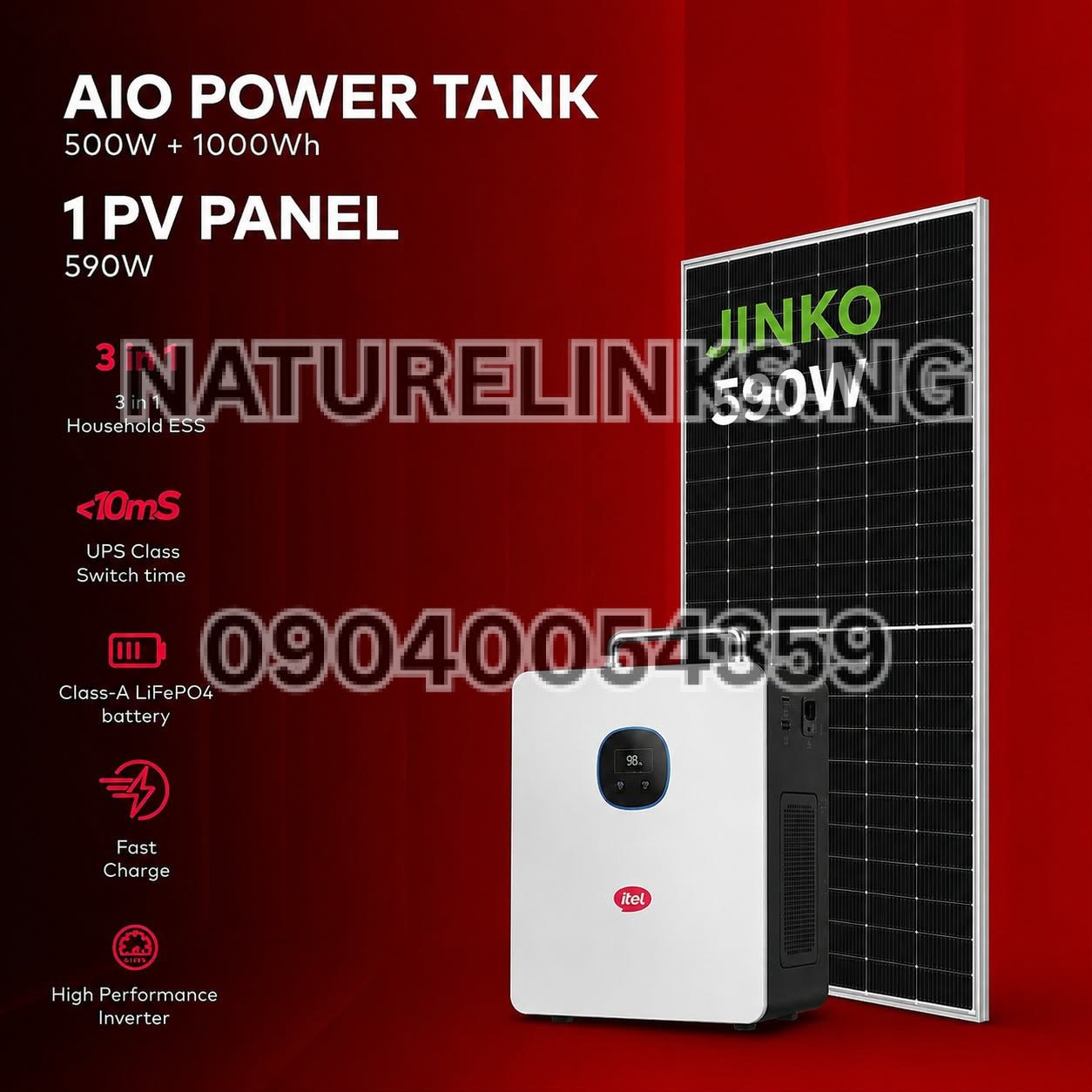
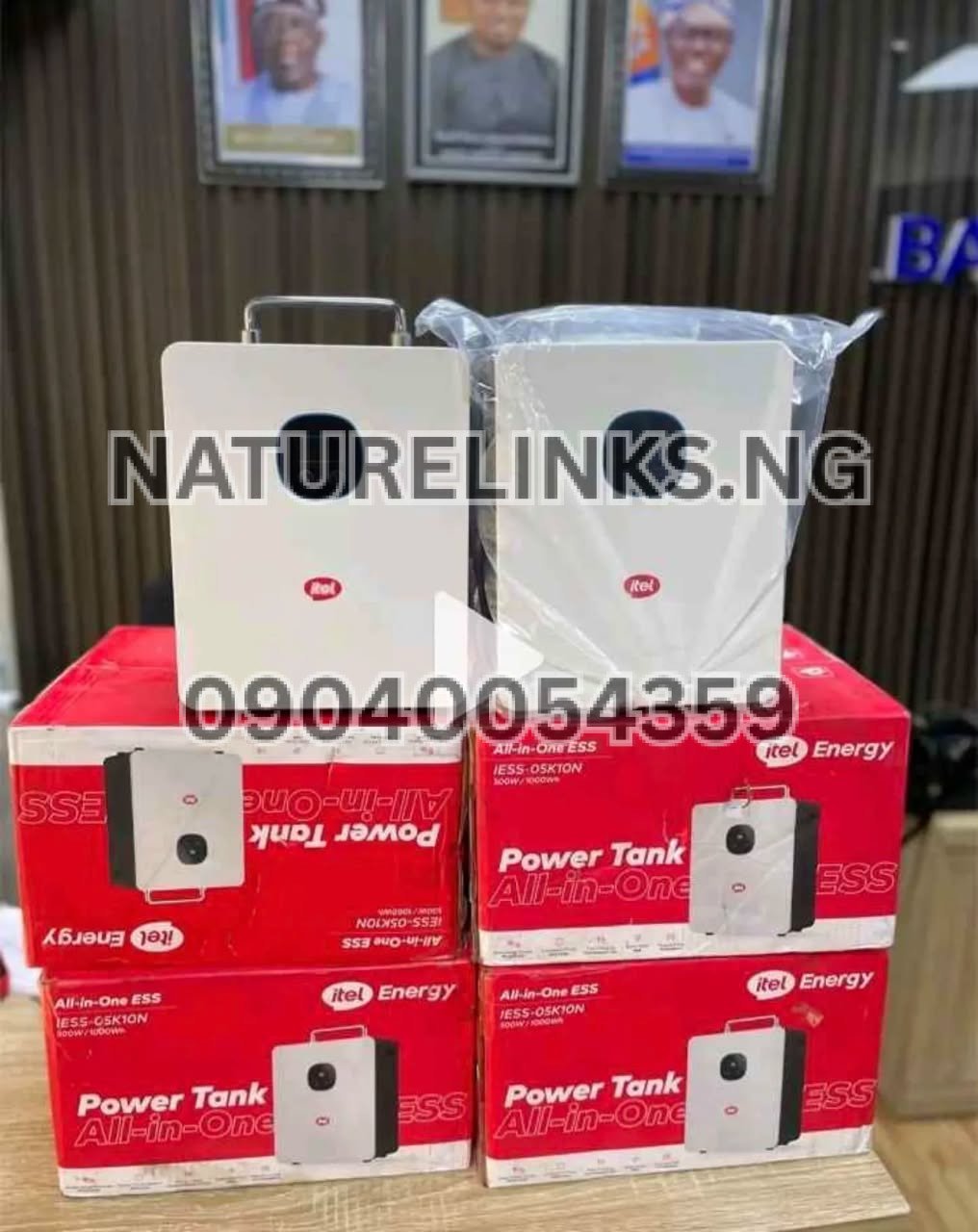
The commonly listed IESS-05K10N configuration combines a 1,000Wh LiFePO₄ battery, 500W pure sine-wave inverter and up to 400W MPPT solar charging in one all-in-one unit.
This built-in design is one of the reasons the Itel Power Tank is marketed as a plug-and-play portable solar power station rather than a conventional system requiring a separate inverter, battery and solar controller.
Does Itel Power Tank Need an External Solar Controller?
For the documented IESS-05K10N 1kWh/500W Power Tank, an external solar charge controller is normally not needed because the unit already contains an MPPT solar charge controller. Current Nigerian product information identifies the integrated controller and lists up to approximately 400W maximum PV input on the relevant configuration.
In simple terms:
Solar panels → Built-in MPPT controller → Itel Power Tank battery
You generally do not need to insert another solar controller between the panels and the Power Tank.
However, the exact solar input limits must always be checked against the model’s label and manufacturer’s datasheet.
What Solar Controller Does Itel Power Tank Use?
The commonly listed Itel Power Tank uses an MPPT (Maximum Power Point Tracking) solar charge controller.
MPPT technology helps the system obtain usable energy from compatible solar panels under changing solar conditions.
The published specification for the common 1,000Wh configuration lists:
- Solar controller: MPPT
- Maximum PV input: up to 400W
- MPPT voltage range: approximately 11–60V on published specifications
- Battery: 1,000Wh LiFePO₄
- AC output: 500W nominal
- Solar charging: Yes
- AC/grid charging: Yes
Can Solar Panels Connect Directly to Itel Power Tank?
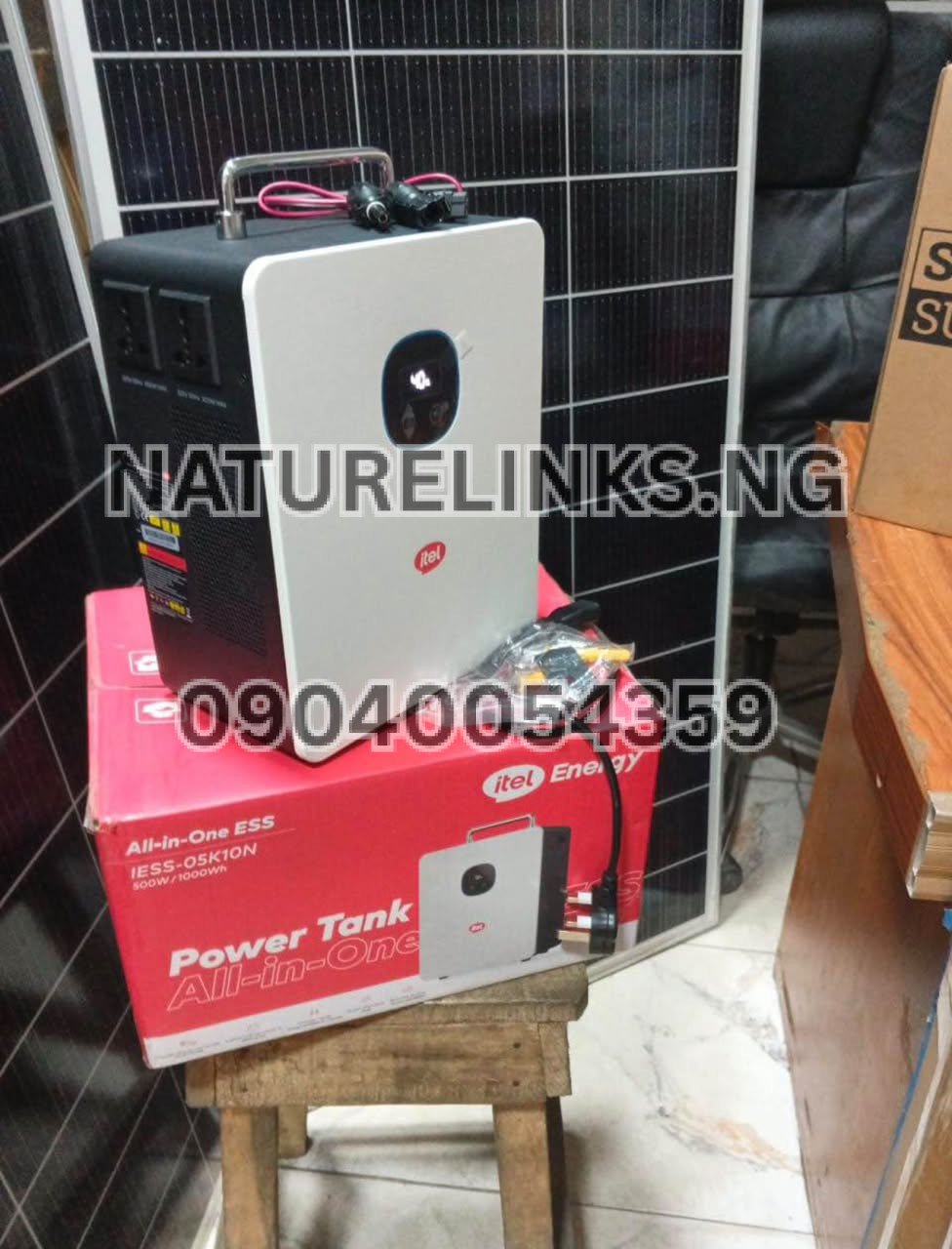
Yes, compatible solar panels can connect directly to the Power Tank’s designated solar/PV input because the solar charging controller is already integrated into the unit.
This is different from a conventional solar installation where you might have:
Solar panels → external MPPT controller → battery → inverter
The Power Tank combines several of these components inside one portable enclosure.
Its basic arrangement is:
Solar panels → built-in MPPT controller → internal LiFePO₄ battery → inverter/output
This all-in-one design is also reflected in Nigerian marketplace descriptions of the product.
Should I Buy a Separate MPPT Controller for Itel Power Tank?
For normal operation of the commonly listed Power Tank configuration, there is generally no reason to purchase a separate MPPT controller.
Buying another controller does not automatically make the Power Tank charge faster.
In fact, connecting an external controller incorrectly could create an incompatible charging arrangement.
Instead, buyers should spend more attention on selecting compatible solar panels that fall within the Power Tank’s permitted voltage and wattage limits.
What Is the Maximum Solar Panel Wattage for Itel Power Tank?
The commonly documented IESS-05K10N configuration is listed with up to 400W maximum PV input.
This means buyers should not simply connect any number of solar panels based on the total wattage they happen to have.
The solar array must stay within the Power Tank’s specified:
- Maximum PV wattage
- PV voltage range
- Current limitations
- Connector requirements
- Panel configuration requirements
Always check the exact product documentation before installing panels.
Can I Connect a 400W Solar Panel to Itel Power Tank?
A solar panel or solar array rated around 400W may be appropriate if its electrical voltage and current characteristics are within the Power Tank’s permitted PV input range.
Wattage alone is not enough.
For example, two solar panels can both be labelled “200W” but have different voltage and current characteristics.
Therefore, check:
Panel wattage + panel voltage + panel current + series/parallel arrangement
against the Power Tank’s PV input specification.
Can I Connect 500W Solar Panels to Itel Power Tank?
Do not assume that a 500W panel or 500W solar array is automatically compatible simply because the Power Tank itself is advertised as a 500W unit.
The 500W figure generally refers to the nominal AC inverter output on the commonly listed configuration, while the documented solar/PV input is up to approximately 400W.
These are two different specifications:
500W = inverter output
Up to 400W = solar/PV input
Always check the exact model before connecting panels.
Does Itel Power Tank Have an MPPT Controller?
Yes. The commonly listed Itel Power Tank 500W/1000Wh model includes an integrated MPPT solar charge controller.
This is an important buying feature because the customer does not have to purchase a separate MPPT controller simply to use compatible solar panels.
The integrated system also makes the Power Tank easier to transport and install compared with a conventional system consisting of separate:
- Solar panels
- Solar controller
- Battery
- Inverter
- Protection equipment
- Cables
Is the Itel Power Tank an All-in-One Solar Generator?
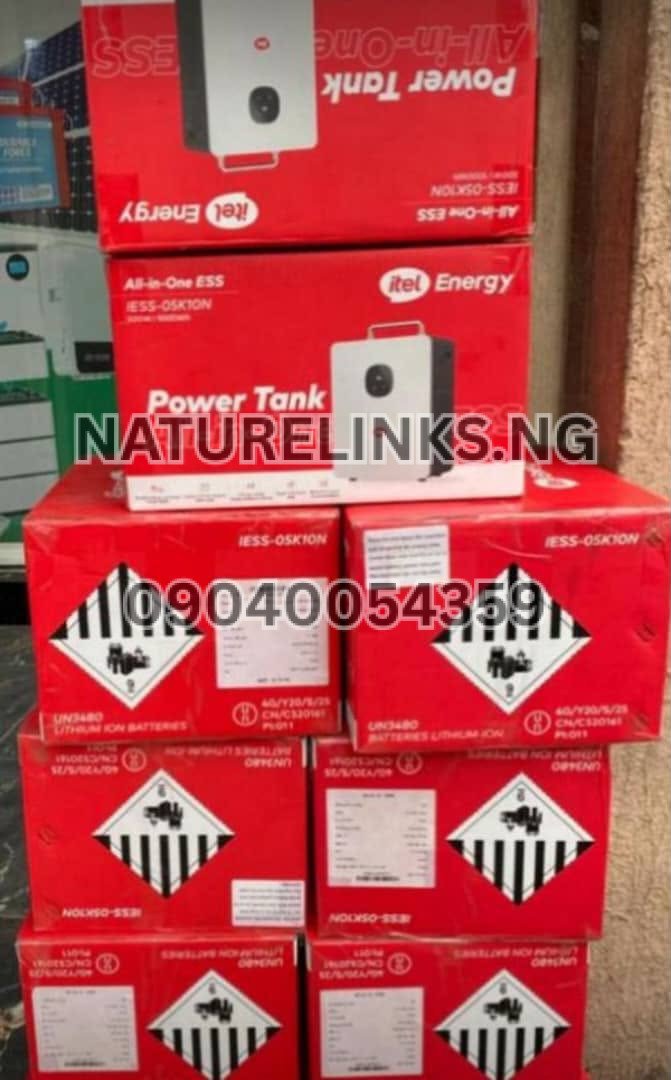
Yes. The commonly listed Power Tank is an all-in-one energy-storage system.
A typical configuration combines:
- LiFePO₄ battery
- Pure sine-wave inverter
- MPPT solar controller
- AC charger
- Battery-management system
- Protection electronics
- Multiple output ports
- Display
- Cooling system
The Nigerian Itel product listing describes the 500W/1000Wh unit as an all-in-one solar generator incorporating the inverter, battery and 400W MPPT controller.
Itel Power Tank 1000Wh Solar Controller
The 1,000Wh Power Tank is commonly sold as a complete portable energy-storage solution.
Its published specifications include:
| Specification | Commonly listed configuration |
|---|---|
| Battery capacity | 1,000Wh / 1kWh |
| Battery type | LiFePO₄ |
| Inverter | Pure sine wave |
| Rated AC output | 500W |
| Solar controller | Built-in MPPT |
| Maximum PV input | Up to 400W |
| AC charging | Yes |
| Solar charging | Yes |
| BMS | Yes |
| UPS function | Available on compatible configurations |
Specifications can differ between model numbers and packages, so confirm the exact unit before purchasing.
What Is MPPT and Why Does It Matter?
MPPT stands for Maximum Power Point Tracking.
A solar panel does not produce exactly the same amount of usable power throughout the day. Solar irradiation, temperature, shading and other factors affect its electrical output.
An MPPT controller helps the charging system operate the solar array at an appropriate electrical operating point to make better use of available solar energy.
For a portable solar generator such as the Itel Power Tank, having the MPPT controller integrated into the unit simplifies the setup.
MPPT vs PWM Solar Controller for Itel Power Tank
There are two common types of solar charge controllers:
MPPT
MPPT controllers are designed to extract available power from solar panels more effectively under varying operating conditions.
PWM
PWM controllers are generally simpler and are used in many basic solar systems.
The commonly listed Itel Power Tank already uses MPPT, so buying a separate PWM controller would not normally be necessary.
The important question is not whether you should add another controller; it is whether your solar panels meet the Power Tank’s input requirements.
Can I Use an External Solar Controller With Itel Power Tank?
Technically, external solar equipment can be part of a larger solar system, but you should not connect an external charge controller to the Power Tank’s PV input unless the manufacturer specifically supports that configuration.
The Power Tank’s PV input is intended to receive solar input within its specified electrical range.
Putting another charge controller between the panels and the Power Tank may change the voltage/current characteristics presented to the Power Tank.
For a normal installation, use the designated PV input and compatible solar panels.
What Happens If I Use an External Solar Controller Anyway?
Using an external controller without confirming compatibility can cause problems.
Possible issues include:
- Incorrect charging voltage
- Reduced charging performance
- Charging faults
- Input protection activation
- Compatibility problems
- Potential damage if electrical limits are exceeded
The safest approach is to use the Power Tank’s integrated MPPT controller as designed.
If you have a specialized solar installation, ask the seller or a qualified solar technician to confirm compatibility before making the connection.
Can I Connect Solar Panels Directly Without a Controller?
With a conventional lithium battery, connecting solar panels directly to the battery without an appropriate charge controller is generally not an acceptable charging arrangement.
But the Itel Power Tank is different because the charging controller is already built into the unit.
Therefore:
Do not connect raw solar-panel output directly to the internal battery.
Instead:
Connect compatible solar panels to the Power Tank’s designated PV/solar input.
The integrated MPPT controller manages the solar charging process.
Does Itel Power Tank Need an Inverter?
No separate inverter is normally required for the common all-in-one configuration.
The Power Tank already includes a pure sine-wave inverter.
The commonly listed model has a 500W nominal AC output and higher surge capability depending on configuration.
This means the basic system is essentially:
Solar panels → MPPT → Battery → Inverter → Appliances
with the MPPT controller, battery and inverter contained inside the Power Tank.
Does Itel Power Tank Need an External Battery?
No, not for normal operation.
The Power Tank already includes its own internal battery.
The commonly listed configuration has a 1,000Wh LiFePO₄ battery.
This is one of the major differences between a portable power station and a conventional modular solar installation.
Does Itel Power Tank Need a Solar Installer?
For basic plug-and-play use, the all-in-one design reduces installation complexity.
However, if you are installing permanent solar panels on a roof or designing a larger solar setup, professional installation can be beneficial.
A qualified installer can help verify:
- Panel orientation
- Panel mounting
- Cable sizing
- PV voltage
- PV current
- Surge protection
- DC isolation
- Earthing/grounding requirements
- Environmental exposure
- Safe routing of cables
Do not exceed the Power Tank’s PV input specifications.
Itel Power Tank Solar Panel Compatibility
Compatibility is more important than simply buying the biggest panel available.
Before purchasing a solar panel for the Power Tank, verify:
1. Voltage
The panel’s operating and open-circuit voltage must be compatible with the Power Tank’s PV input.
2. Current
The panel or array must remain within the supported current range.
3. Wattage
The commonly listed configuration supports up to approximately 400W PV input.
4. Connector
Make sure the connector and polarity are compatible.
5. Series or Parallel Arrangement
Do not connect panels in series or parallel without calculating the resulting voltage and current.

Can Two 200W Solar Panels Charge Itel Power Tank?
Two 200W panels have a combined nominal power of 400W, which corresponds to the commonly listed maximum PV input.
However, 400W total does not automatically mean every two-200W-panel combination is compatible.
The combined voltage and current must also remain within the Power Tank’s specified PV input limits.
For example, connecting two panels in series increases voltage, while connecting them in parallel increases current.
The correct arrangement depends on the electrical specifications of the particular panels and the Power Tank.
Can I Use a 410W Solar Panel With Itel Power Tank?
A 410W panel may exceed the commonly listed 400W maximum PV input by wattage.
Some sellers may advertise 410W panels as part of Power Tank packages, but this does not mean buyers should assume that every 410W panel is acceptable.
One Nigerian marketplace listing currently advertises an Itel Power Tank package with a 410W panel, while other published Power Tank specifications identify approximately 400W maximum PV input.
The safest approach is to check the exact panel’s electrical specifications and the exact Power Tank model before connecting it.
Can Itel Power Tank Charge From Grid and Solar?
Yes. The documented Power Tank supports both AC/grid charging and solar charging.
This is useful in Nigeria because users can recharge the battery from the grid when electricity is available and use solar energy as another charging source.
The unit’s integrated charging system is designed to handle the supported charging inputs.
Does Itel Power Tank Have a Built-in Solar Charger?
Yes. The common configuration includes a built-in MPPT solar charge controller.
This is sometimes described in advertisements as:
- Built-in MPPT
- Integrated MPPT
- 400W MPPT
- MPPT solar charging
- Solar charge controller
- Built-in solar controller
These descriptions refer to the internal solar charging electronics.
Is Itel Power Tank Plug and Play?
The Power Tank is designed as a portable all-in-one system, and current product listings describe it as plug-and-play.
That does not mean that every solar installation can be performed without technical knowledge.
The term generally means that the major energy-storage components are already integrated.
You still need to make sure the solar input is correctly configured and within specification.
Itel Power Tank Price in Nigeria
The price varies according to:
- Exact model
- Battery capacity
- Seller
- Warranty
- Stock availability
- Solar panel package
- Accessories
- Promotions
Current Nigerian listings show the commonly advertised 500W/1,000Wh configuration at different prices. For example, one Nigerian listing currently shows approximately ₦279,000, while Konga currently lists a similar 500W/1kWh model around ₦310,000.
Prices can change, so buyers should confirm the current price before payment.
Where to Buy Genuine Itel Power Tank in Nigeria
For customers looking for genuine Itel Power Tank products, contact:
The Best Seller: Nature Links Nigeria Limited [NatureLinks.NG]
Accredited Distributor: Nature Solar Global Limited
CEO: Mr. Joseph Chikeleze
Call: 07049528019
WhatsApp: 09040054359
Shop Address: F1571 Upstairs (F-Line), Alaba International Market, Lagos State 🇳🇬
When ordering, ask for confirmation of:
- Exact model number
- Battery capacity
- Solar controller specification
- Maximum PV input
- Inverter output
- Warranty
- Accessories
- Current price
- Delivery options
Why an Integrated MPPT Controller Is Useful
An integrated controller provides several practical advantages.
Simpler Installation
You do not need to purchase a separate MPPT controller for the standard solar input.
Fewer Components
The battery, inverter and solar charging electronics are contained within the same system.
Portable Design
The Power Tank can be moved without transporting a separate battery bank, inverter and solar controller.
Easier Setup
Users only need to connect compatible solar panels to the designated solar input.
Reduced Component Matching
With a conventional system, you have to match the controller, battery and inverter. The Power Tank has already integrated these components for its intended operating configuration.
Does a Bigger Solar Panel Charge Itel Power Tank Faster?
Not necessarily.
The Power Tank has a maximum solar input.
If the commonly documented configuration accepts up to approximately 400W, connecting a solar array substantially above the supported input does not mean the Power Tank will simply charge at the larger wattage.
More importantly, exceeding voltage or current limits can create a compatibility or safety problem.
The correct goal is compatible solar input, not simply maximum panel wattage.
What Happens When the Sun Is Weak?
Solar charging performance changes with sunlight.
Cloudy weather, shading, morning/evening conditions, panel orientation and temperature can reduce the power available from the panels.
The MPPT controller helps optimize the available solar energy, but it cannot create energy that the panels are not receiving.
Therefore, charging from solar may take longer on days with poor sunlight.

Can Itel Power Tank Charge During Rain?
Solar panels can still generate some electricity under cloudy or rainy conditions, but their output can fall significantly compared with strong direct sunlight.
The Power Tank can use whatever compatible PV power is available within its operating range.
However, the Power Tank itself and its electrical connections should be protected from water according to the product’s environmental specifications.
Do not expose electrical connectors to rain simply because the system is designed for solar charging.
Can I Leave the Solar Panels Connected to Itel Power Tank?
For compatible panels and a properly configured system, leaving the solar panels connected can be part of normal solar operation.
However:
- Stay within the PV voltage limit.
- Stay within the maximum PV wattage.
- Stay within current limits.
- Use compatible connectors.
- Protect connections from moisture.
- Follow the model’s instructions.
Is an External PWM Controller Needed?
No, not for the normal PV input of the commonly listed Power Tank.
The unit already has an MPPT controller, which is the controller designed for its integrated solar charging system.
Adding a separate PWM controller would not normally improve the Power Tank’s solar charging.
Is an External MPPT Better Than the Built-in Itel MPPT?
For the Power Tank’s standard solar input, the built-in MPPT is the intended solution.
An external MPPT controller is useful in conventional modular solar systems where the battery and controller are separate.
The Power Tank already combines those functions.
If you are considering an external controller because you want to connect a larger solar array, do not simply install one and exceed the Power Tank’s PV limits. Consult the exact model documentation or a qualified technician.
Itel Power Tank vs Conventional Solar System
| Feature | Itel Power Tank | Conventional Solar Setup |
|---|---|---|
| Battery | Built in | Usually separate |
| Inverter | Built in | Usually separate |
| Solar controller | Built-in MPPT | Usually separate |
| Portability | High | Usually low |
| Installation | Relatively simple | More complex |
| Solar expansion | Limited by built-in specifications | Often more flexible |
| External MPPT | Normally unnecessary | Usually required |
| Backup output | Built in | Depends on inverter |
| Best use | Portable/essential backup | Larger permanent installations |
The major trade-off is that a conventional solar system can generally be designed around larger and more customizable components, while the Power Tank prioritizes convenience and portability.
What Is the Difference Between Solar Controller and Inverter?
A solar charge controller manages electricity coming from solar panels into the battery.
An inverter converts stored DC electricity from the battery into AC electricity that compatible household appliances can use.
The Itel Power Tank integrates both functions.
That is why you do not normally need to buy a separate solar controller or inverter for its standard operation.
What Is the Difference Between 1000Wh and 500W?
This is an important distinction for Nigerian buyers.
1,000Wh refers to the battery’s energy-storage capacity.
500W refers to the nominal AC output power of the commonly listed configuration.
They measure different things.
For example, a 1,000Wh battery theoretically contains enough energy to supply 100W for 10 hours before accounting for losses.
The 500W rating tells you approximately how much continuous AC load the inverter is designed to supply.
Important Buying Tip for Itel Power Tank
Do not purchase based solely on the phrase “Itel Power Tank 1000W.”
Ask the seller for the exact:
Model number + battery Wh + continuous output W + maximum PV input W + PV voltage range.
This prevents confusion between:
- Battery capacity
- Continuous inverter output
- Surge output
- Solar input
For the commonly documented IESS-05K10N, the published specifications identify 1,000Wh battery capacity, 500W continuous output and up to 400W PV input.
Frequently Asked Questions
1. Does Itel Power Tank need an external solar controller?
No, not normally. The commonly listed Itel Power Tank already has a built-in MPPT solar charge controller, so compatible solar panels can connect to its designated PV input without an additional external controller.
2. Does Itel Power Tank have a built-in MPPT?
Yes. The documented 500W/1,000Wh configuration has an integrated MPPT solar charge controller.
3. How many watts of solar can Itel Power Tank take?
The commonly listed IESS-05K10N configuration supports up to approximately 400W maximum PV input. Always confirm the specification for your exact model.
4. Can I connect solar panels directly to Itel Power Tank?
Yes, compatible solar panels can be connected to the Power Tank’s designated PV input because the solar charge controller is already integrated into the unit.
5. Can I use an external MPPT controller with Itel Power Tank?
An external controller is generally unnecessary for the normal PV input. Do not add one unless the exact model documentation or a qualified technician confirms that the proposed configuration is compatible.
6. Can two 200W solar panels charge Itel Power Tank?
A 400W total array corresponds to the commonly listed maximum PV input, but the voltage and current of the combined panels must also comply with the Power Tank’s PV specifications.
7. Does Itel Power Tank charge with solar and NEPA?
Yes. The documented configuration supports both solar and AC/grid charging.
8. What battery does Itel Power Tank use?
The commonly listed IESS-05K10N uses a 1,000Wh LiFePO₄ battery.
9. How much is Itel Power Tank in Nigeria?
Prices vary by seller, model and package. Current Nigerian listings for the common 500W/1,000Wh configuration include prices around ₦279,000 and ₦310,000, among other listings. Confirm the latest price before purchasing.
10. Where can I buy genuine Itel Power Tank in Nigeria?
Customers can contact Nature Links Nigeria Limited / Nature Solar Global Limited on 07049528019 or 09040054359 on WhatsApp, or visit F1571 Upstairs (F-Line), Alaba International Market, Lagos State 🇳🇬 to confirm the current model, price and availability.
Final Answer: Does Itel Power Tank Need an External Solar Controller?
If you are asking “Does Itel Power Tank need an external solar controller?”, the answer for the commonly listed 500W/1,000Wh Itel Power Tank is generally no. The system already incorporates an MPPT solar charge controller, with published specifications showing up to approximately 400W PV input on the relevant configuration.
The main thing Nigerian buyers need to get right is solar-panel compatibility. The panel wattage, voltage, current, connection arrangement and connectors must comply with the Power Tank’s specifications.
Adding another controller does not automatically make the system better or faster. For the standard plug-and-play configuration, the built-in MPPT is designed to perform the solar charging function.
Conclusion
The Itel Power Tank is designed as an all-in-one portable solar energy-storage system, combining a LiFePO₄ battery, pure sine-wave inverter and MPPT solar charging technology. The commonly listed IESS-05K10N configuration provides a 1,000Wh battery, 500W nominal AC output and up to approximately 400W solar/PV input.
Therefore, most buyers do not need to purchase an external solar controller for the standard Itel Power Tank solar setup. Simply use compatible solar panels connected to the Power Tank’s designated PV input within the specified electrical limits.
If you are buying an Itel Power Tank in Nigeria, confirm the exact model number, maximum PV input, battery capacity, inverter rating, warranty and package contents before payment.
The Best Seller: Nature Links Nigeria Limited [NatureLinks.NG]
Accredited Distributor: Nature Solar Global Limited
CEO: Mr. Joseph Chikeleze
Call: 07049528019
WhatsApp: 09040054359
Shop Address: F1571 Upstairs (F-Line), Alaba International Market, Lagos State 🇳🇬


1 thought on “Does Itel Power Tank need an external solar controller?”