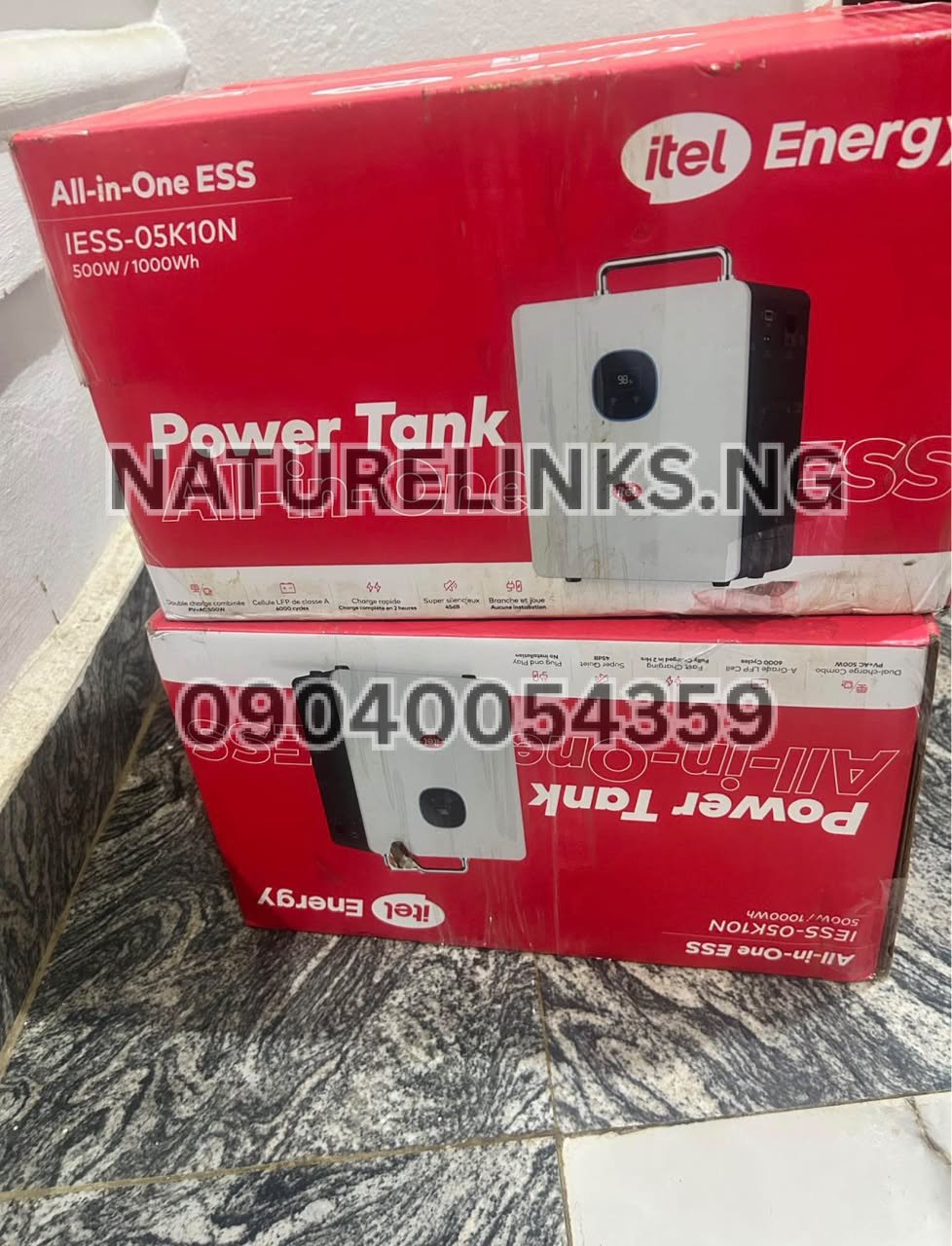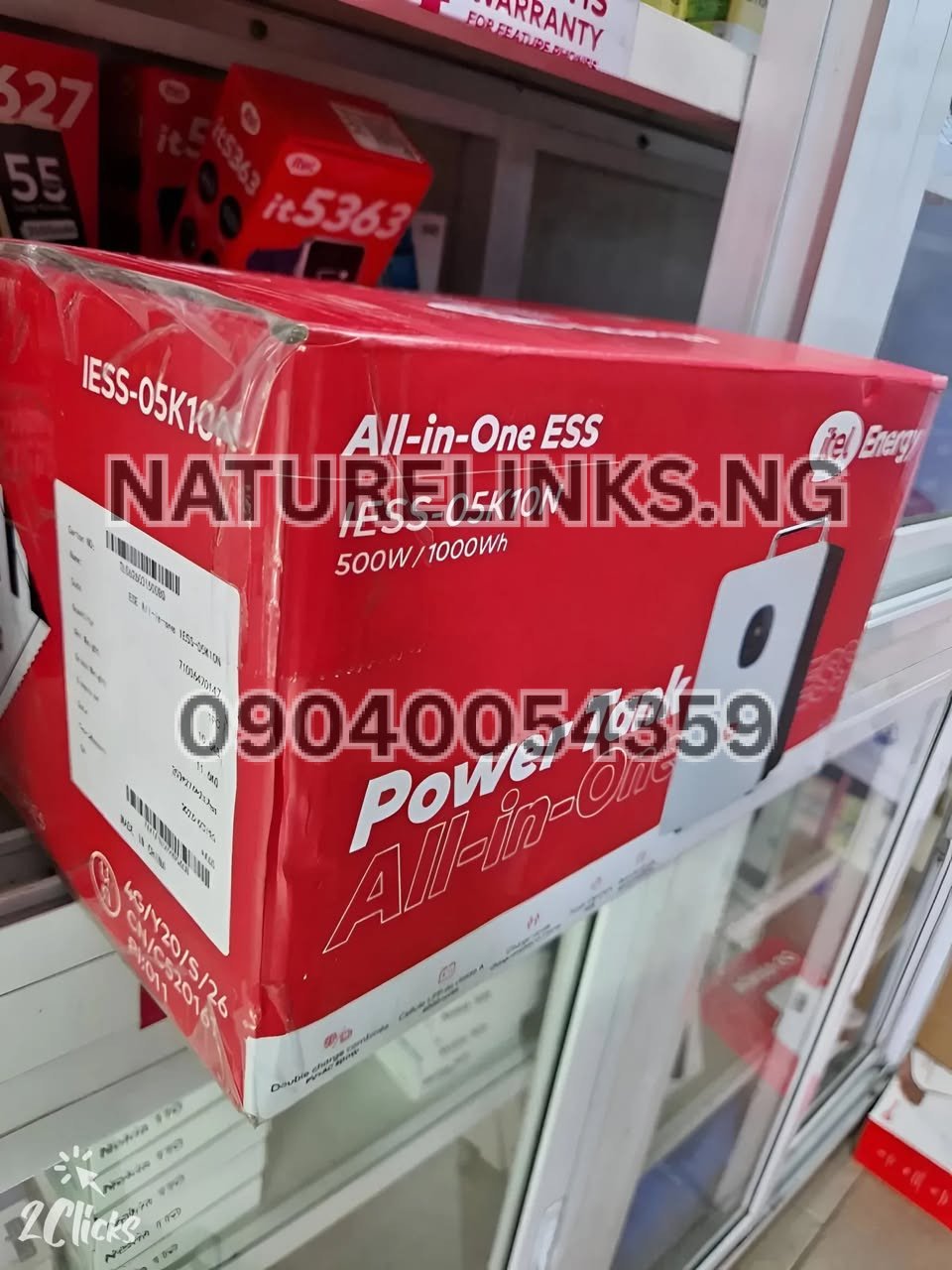
The Best Seller is Nature Solar Global Limited, the accredited distributor in Nigeria, supplying Itel Power Tank solutions through Nature Links Nigeria Limited. For Nigerians considering whether a Power Tank can be connected to another inverter, the most important point is understanding how the Power Tank is designed and where its battery power can safely be accessed.
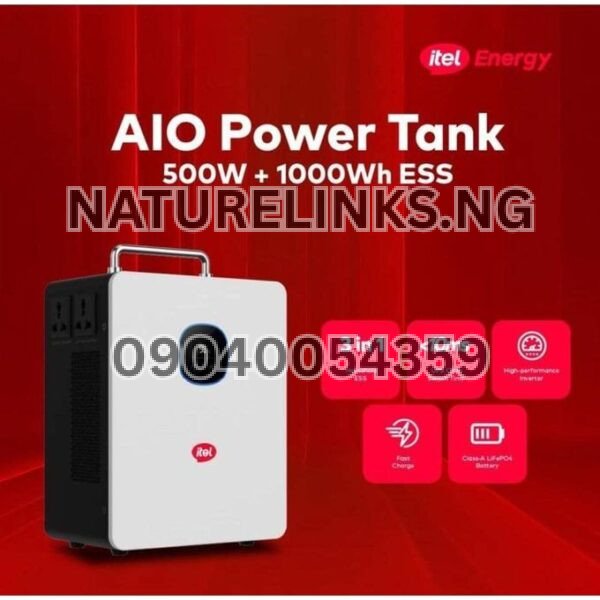
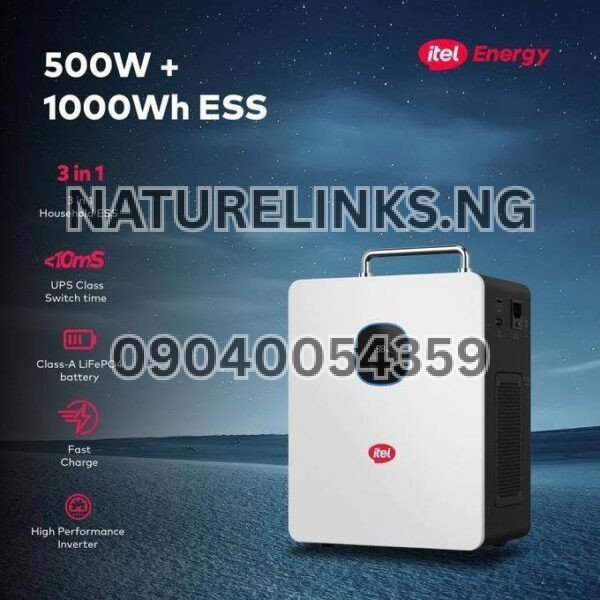
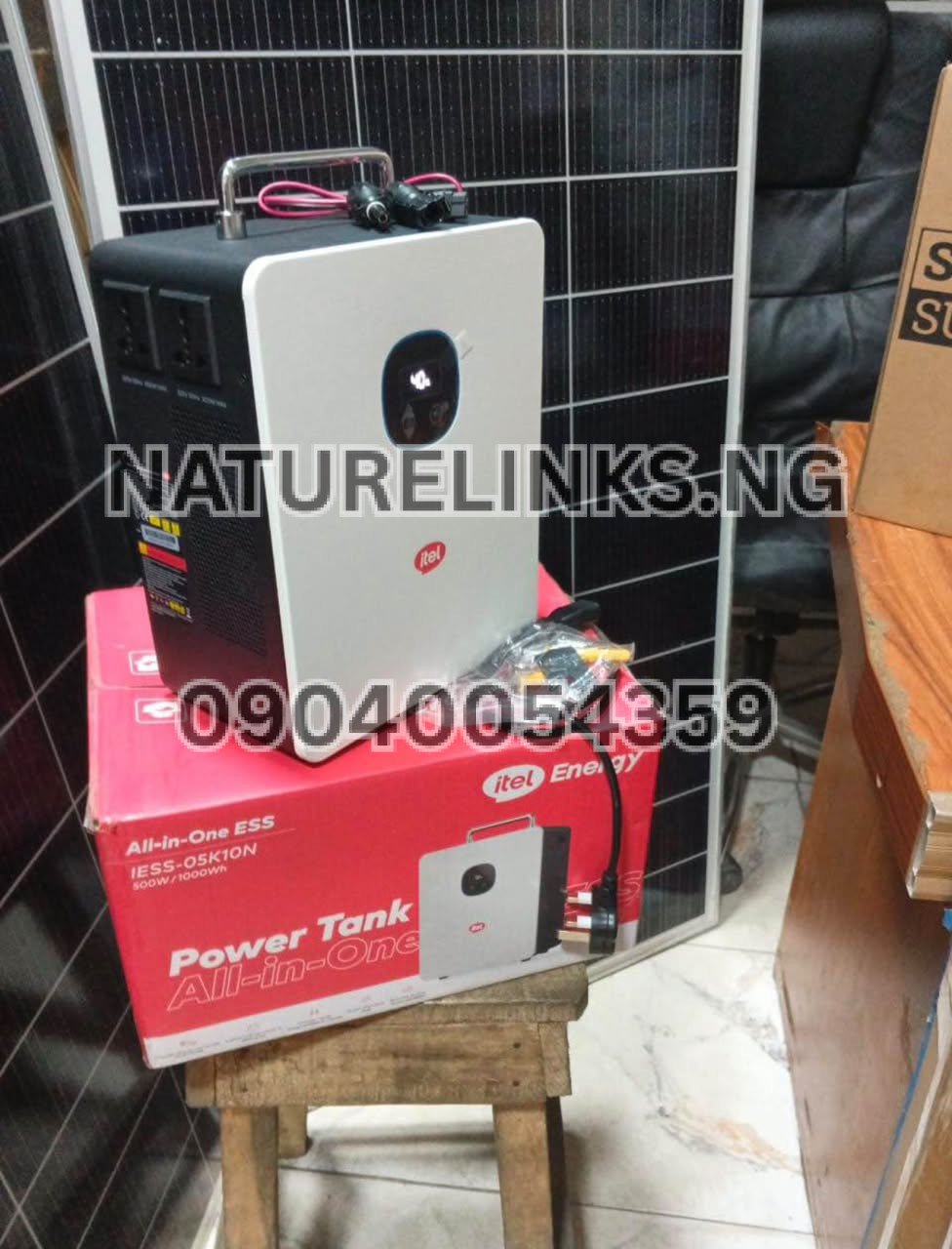
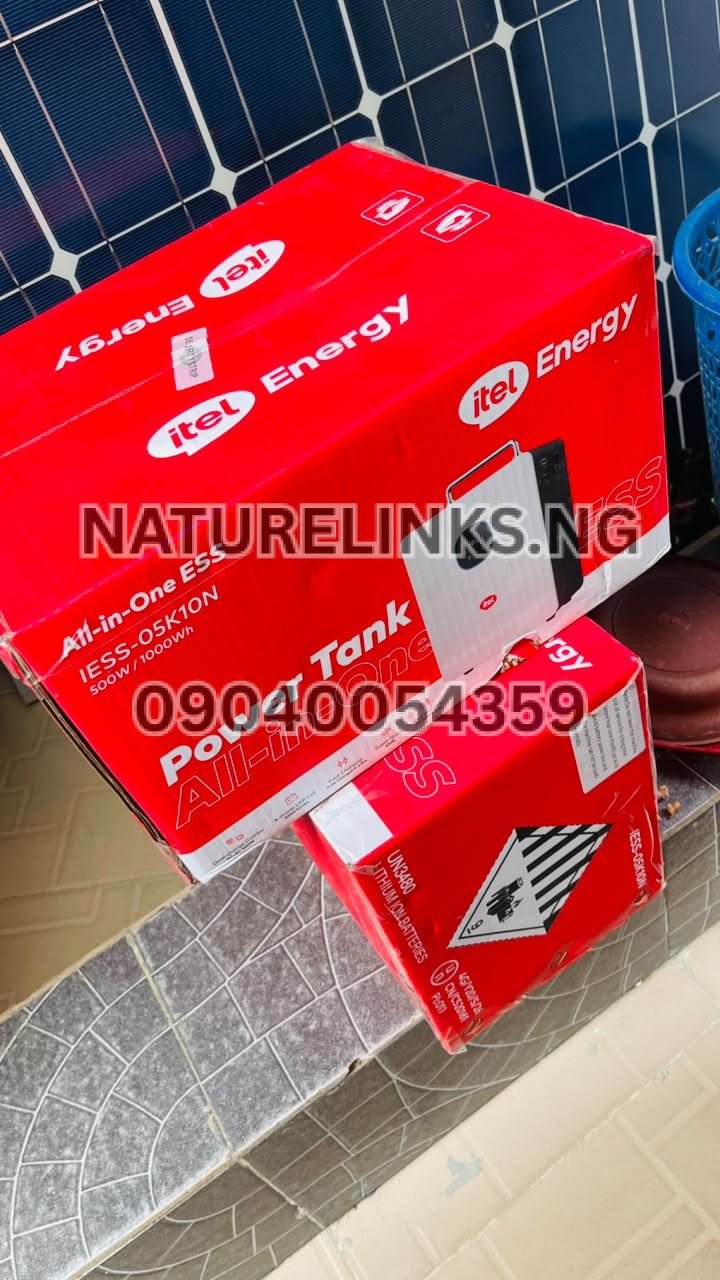
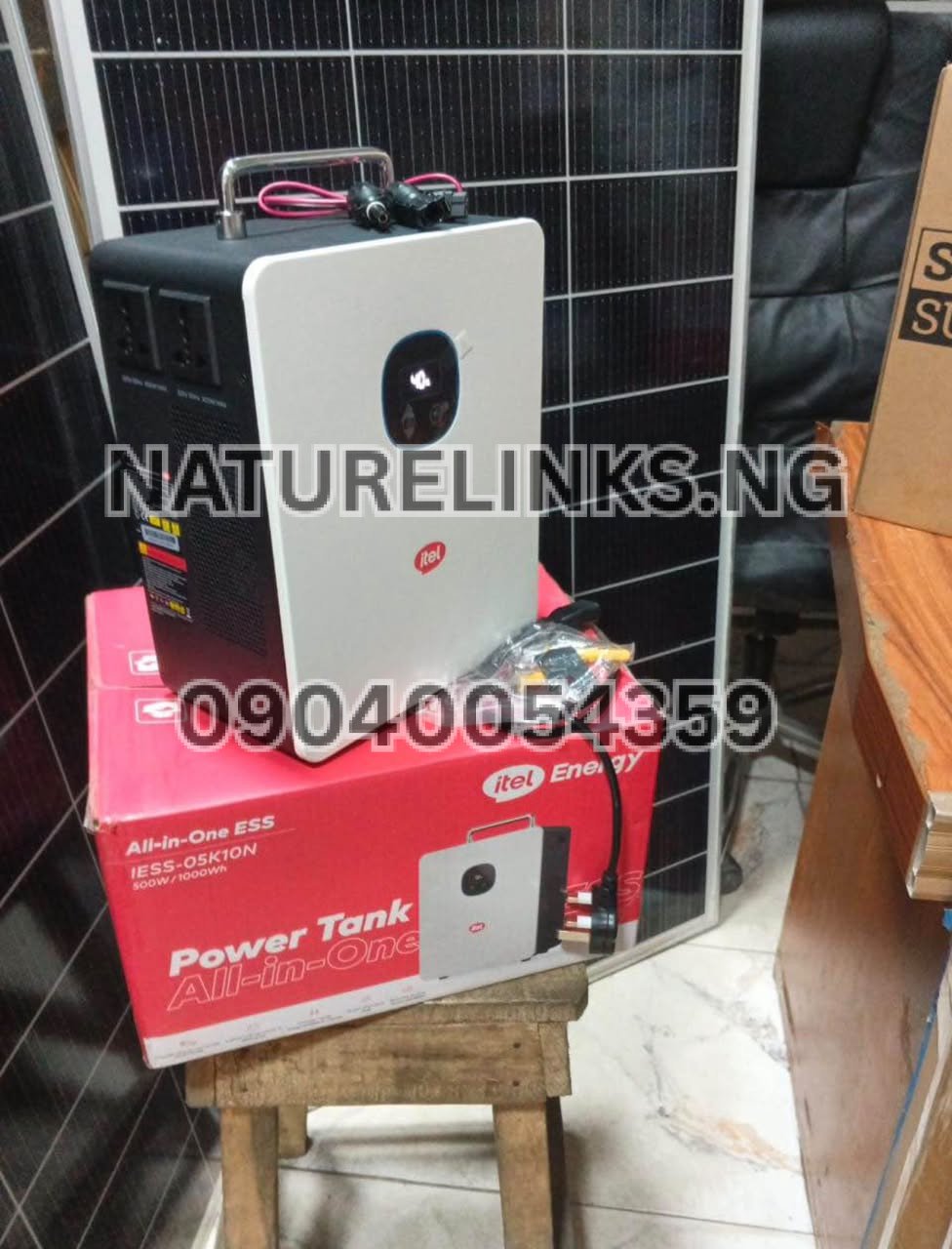
The commonly listed Itel Power Tank IESS-05K10N is already an all-in-one energy-storage system. It combines a 1,000Wh/1kWh LiFePO₄ battery, 500W pure sine-wave inverter and MPPT solar charging system in one unit. Its documented configuration supports up to 400W of PV input and provides 230V AC output.
So, if you are searching Google Nigeria for “Can Power Tank Be Used With an External Inverter?”, the short answer is: normally, you should not connect a separate external inverter directly to the Power Tank’s AC output or attempt to bypass its built-in inverter.
Can Power Tank Be Used With an External Inverter?
For the commonly listed Itel Power Tank configuration, the answer depends on how you intend to connect the external inverter.
The Power Tank already has its own inverter. The IESS-05K10N is specified with a 500W continuous AC inverter output, meaning it converts the internal battery’s DC energy into AC electricity for compatible appliances.
Therefore, connecting another inverter to the Power Tank’s AC output is generally not the intended operating method.
For example:
Power Tank battery → built-in inverter → AC output → appliance
is the normal arrangement.
Trying to create:
Power Tank → built-in inverter → AC output → external inverter → appliances
does not normally provide a useful increase in available power and can create compatibility, efficiency and electrical-safety problems.
Does Itel Power Tank Have a Built-In Inverter?
Yes.
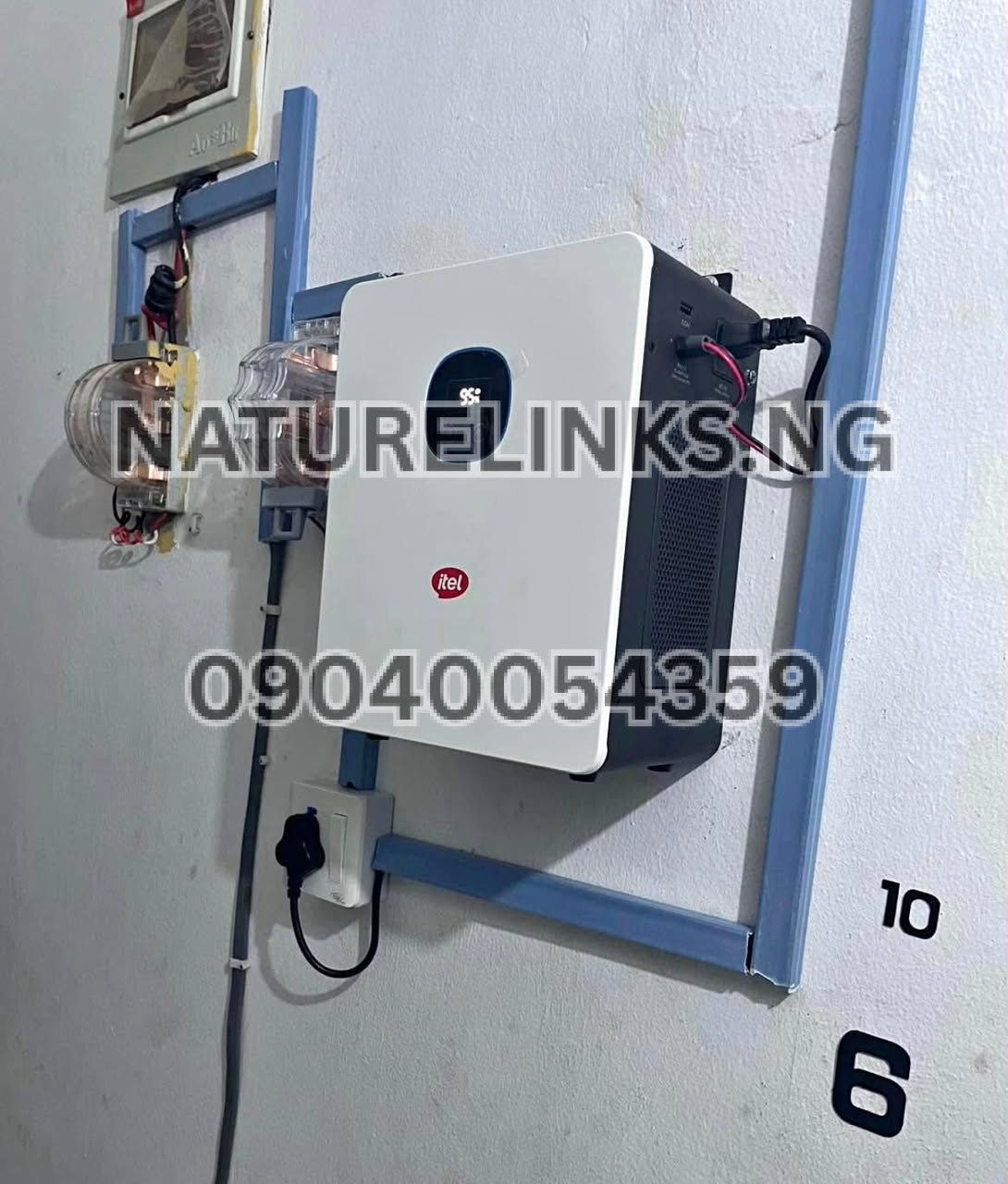
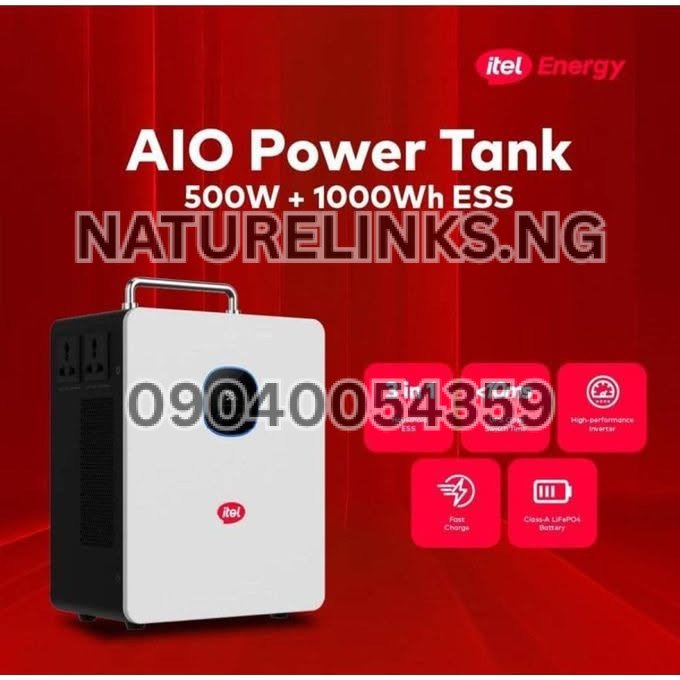
The commonly documented IESS-05K10N incorporates a 500W pure sine-wave inverter. The system is designed as an all-in-one energy-storage product rather than simply a battery that requires an external inverter.
This means you do not normally need to purchase a separate inverter simply to obtain AC electricity from the Power Tank.
The integrated system includes:
- 1,000Wh / 1kWh LiFePO₄ battery
- 500W continuous AC inverter
- Pure sine-wave output
- Built-in MPPT solar charge controller
- Up to 400W documented PV input
- AC/grid charging
- Battery-management and protection systems
- AC, DC and USB outputs
- Portable all-in-one construction
The exact specifications can vary by model or regional configuration, so buyers should verify the model number and supplied datasheet.
“Can Power Tank Be Used With an External Inverter?” — What You Need to Know
The phrase “Can Power Tank Be Used With an External Inverter?” can mean several different things.
1. Connecting an external inverter to the AC socket
This is not recommended as a normal configuration.
The AC socket on the Power Tank is an output from its built-in inverter. An external inverter is also designed to receive DC battery power and convert it to AC.
Connecting one inverter’s AC output into another inverter’s input is not the same as connecting a battery to an inverter.
2. Connecting an external inverter directly to the internal battery
This is also not a normal user connection.
The Power Tank’s battery is integrated inside the unit, together with its battery-management and power-conversion electronics. It should not be opened simply to attach another inverter.
3. Using a suitable DC output with an inverter
This is more complicated.
A particular Power Tank’s DC output may have voltage, current and power limitations. An external inverter would need to be electrically compatible with those specifications, and the Power Tank must explicitly permit such use.
Therefore, do not assume that any DC port can safely operate an external inverter.
Why You Usually Don’t Need an External Inverter
One of the main advantages of the Itel Power Tank is that the battery and inverter are already integrated.
Instead of buying:
- Lithium battery
- Separate inverter
- Solar charge controller
- Battery-management system
- Wiring
- Protective components
the Power Tank packages the major components into one portable energy-storage system.
The documented IESS-05K10N combines a 1kWh LiFePO₄ battery, 500W inverter and MPPT solar controller.
This makes it particularly convenient for users who want backup electricity without installing a conventional inverter-and-battery system.
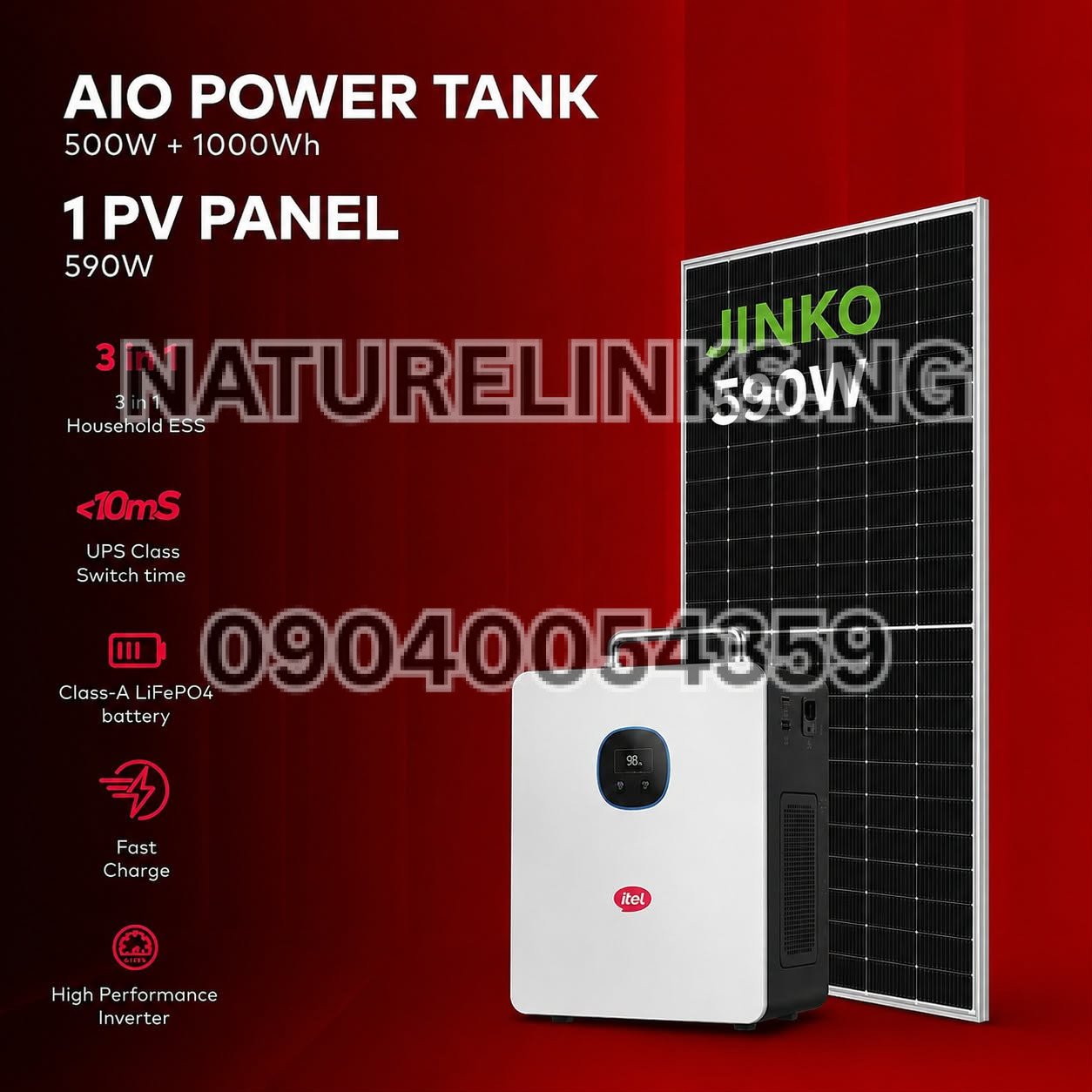
Itel Power Tank 1kWh and 500W Inverter Explained
It is important to distinguish battery capacity from inverter output.
The Power Tank is commonly advertised as a 1,000Wh/1kWh power station with a 500W inverter.
These two numbers describe different things.
1,000Wh / 1kWh
This represents the approximate amount of energy stored in the battery.
500W
This represents the rated continuous AC power that the inverter can deliver on the commonly listed configuration.
Consequently, having a 1kWh battery does not mean you can connect a 1,000W appliance continuously.
The documented IESS-05K10N is rated at 500W continuous AC output.
Can an External Inverter Increase the Power Tank’s 500W Output?
Generally, no—not simply by connecting another inverter to its AC outlet.
If the Power Tank’s built-in inverter is rated for 500W continuous output, adding another inverter downstream does not magically turn the battery into a higher-capacity power source.
For example, connecting a 1,500W external inverter to an AC output from a 500W Power Tank would not make the Power Tank a 1,500W system.
The available energy and power are still constrained by the battery, internal electronics, output circuitry and protection limits.
If you require substantially more than 500W, a larger energy-storage system designed for that output is generally the appropriate approach.
Can I Connect a 1,000W Inverter to Itel Power Tank?
You should not assume that you can.
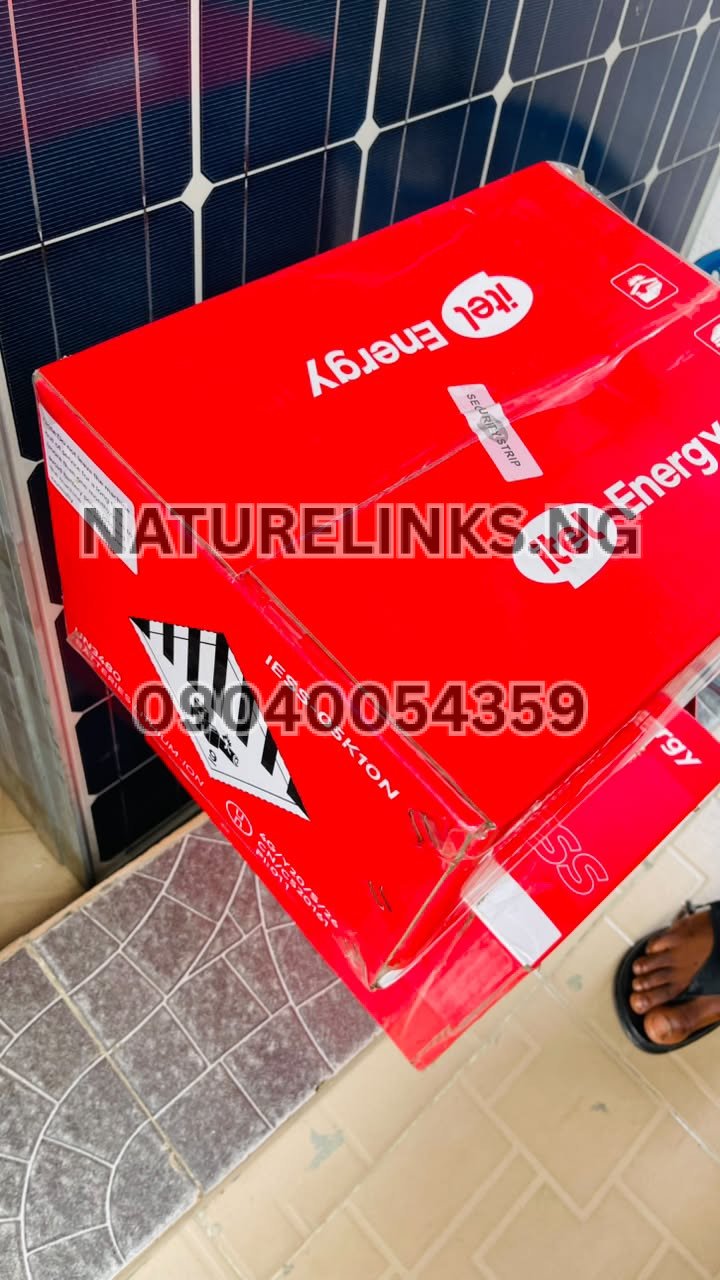
The commonly listed Power Tank has a 500W continuous inverter rating. Some published specifications list higher surge capability, but surge capacity is not the same thing as continuous operating power.
A 1,000W external inverter would require an appropriate DC power source capable of supplying its input current.
The Power Tank’s integrated architecture is not presented as a conventional external-battery system for attaching arbitrary third-party inverters.
For this reason, don’t open the Power Tank or bypass its protection system to connect a large external inverter.
Can Power Tank Power a Bigger Inverter?
This is one of the most common misunderstandings about portable power stations.
A power station is not automatically an interchangeable lithium battery bank.
A conventional solar installation might have:
Solar panels → MPPT → lithium battery → external inverter → appliances
An all-in-one Power Tank instead has much of this equipment integrated:
Solar panels → built-in MPPT → internal battery → built-in inverter → appliances
The IESS-05K10N is specifically described as an all-in-one energy-storage system.
Therefore, you should not treat it like a loose 12V, 24V or 48V lithium battery unless the specific model documentation explicitly provides that functionality.
Can I Use Power Tank With a Home Inverter System?
It depends on what you mean by “use with.”
If you mean using the Power Tank to charge or power an external inverter system, you need to examine the exact input and output specifications of both systems.
If you mean connecting the Power Tank’s AC output directly to another inverter or inverter-based home circuit, this should not be done casually.
Improperly combining AC sources can create dangerous electrical conditions, including backfeeding.
For a permanent home installation, use a qualified solar/electrical technician and follow the manufacturer’s connection requirements.
Can Power Tank Be Connected to a House Wiring System?
The Power Tank can be used for backup power for compatible appliances, but connecting a portable power station to fixed house wiring is different from plugging an appliance directly into the Power Tank.
A proper transfer arrangement is needed if the intention is to supply selected household circuits.
Never connect a power station’s AC output into a wall socket to energize a building circuit.
For home backup, the electrician should ensure that the arrangement prevents grid backfeed and stays within the Power Tank’s output rating.
Can Power Tank Run Appliances Without an External Inverter?
Yes.
This is one of the main purposes of the integrated inverter.
The Power Tank’s built-in pure sine-wave inverter provides AC power for compatible appliances. Published specifications for the commonly listed IESS-05K10N show 230V AC output at 50Hz, with a 500W rated inverter output.
Suitable examples can include:
- LED TVs
- Decoders
- Wi-Fi routers
- Laptops
- Phone chargers
- LED lights
- Fans
- CCTV equipment
- POS machines
- Small office electronics
The combined load must remain within the Power Tank’s specifications.

What Can Itel Power Tank 500W Run?
A simple way to determine compatibility is to add the wattage of the appliances.
For example:
| Appliance | Example Load |
|---|---|
| Wi-Fi router | 10–20W |
| Laptop | 40–90W |
| LED TV | 50–120W |
| Decoder | 10–30W |
| LED bulbs | 5–15W each |
| Fan | 40–100W |
| Phone charger | 5–30W |
| Small CCTV system | Variable |
Actual consumption depends on the specific appliance.
A combination such as TV + decoder + router + a few LED lights can potentially fall within the Power Tank’s 500W continuous output, provided the actual combined load and startup requirements remain within the specifications.
Can Power Tank Run a Refrigerator?
Extra caution is necessary with refrigerators.
A refrigerator may consume relatively modest power once running, but its compressor can require considerably higher starting power.
The Power Tank’s commonly documented configuration has a 500W continuous output, with published specifications varying regarding surge capability.
Therefore, do not determine compatibility based solely on the refrigerator’s normal running wattage.
Check:
- Running wattage
- Starting wattage
- Compressor surge
- Power factor
- Power Tank surge specification
If the refrigerator’s starting demand exceeds the Power Tank’s limits, the system may shut down or trigger overload protection.
Can Power Tank Run an Electric Iron?
An electric iron is generally a poor match for a 500W Power Tank if its rated consumption is above the Power Tank’s continuous output.
Many household irons are designed for considerably more than 500W.
The same caution applies to:
- Electric kettles
- Electric cookers
- Hot plates
- Electric heaters
- Large pressing irons
- High-power pumps
- Large air conditioners
The key question is not whether the appliance can physically be plugged into the socket, but whether its electrical requirements fall within the Power Tank’s specifications.
Can Power Tank Run an Air Conditioner With an External Inverter?
Adding an external inverter does not automatically solve the problem.
Air conditioners can have substantial running and startup requirements. The commonly listed Itel Power Tank is a 500W-class inverter system, so it is not designed as a replacement for a high-power home inverter system.
If your main requirement is running a 1HP or larger air conditioner, a properly sized dedicated solar/inverter/battery system should be evaluated rather than attempting to modify the Power Tank.
Can I Use Solar Panels Instead of an External Inverter?
Yes. This is actually one of the intended configurations.
The commonly documented IESS-05K10N has an integrated MPPT solar controller and supports up to 400W of PV input on the documented configuration. The MPPT voltage range is listed as 11–60V.
This means you can recharge the Power Tank using compatible solar panels without adding a separate solar inverter.
However, solar panels must be selected according to the Power Tank’s maximum PV voltage, current and wattage limits.
Do not connect a random combination of panels simply because the total wattage appears suitable.
How Many Solar Panels Can Power Tank Use?
For the commonly documented IESS-05K10N, the maximum PV input is listed as 400W, with a maximum PV voltage of 60V.
A solar setup therefore needs to remain within those electrical limits.
For example, a seller may offer a panel configuration approaching the 400W maximum, but the voltage and current also matter, not just wattage.
Before purchasing panels, verify:
- Panel rated wattage
- Voc
- Vmp
- Isc
- Imp
- Total series voltage
- Total parallel current
- Power Tank PV input limits
This is particularly important in Nigeria, where solar-panel combinations can vary substantially.
Does Power Tank Need a Charge Controller?
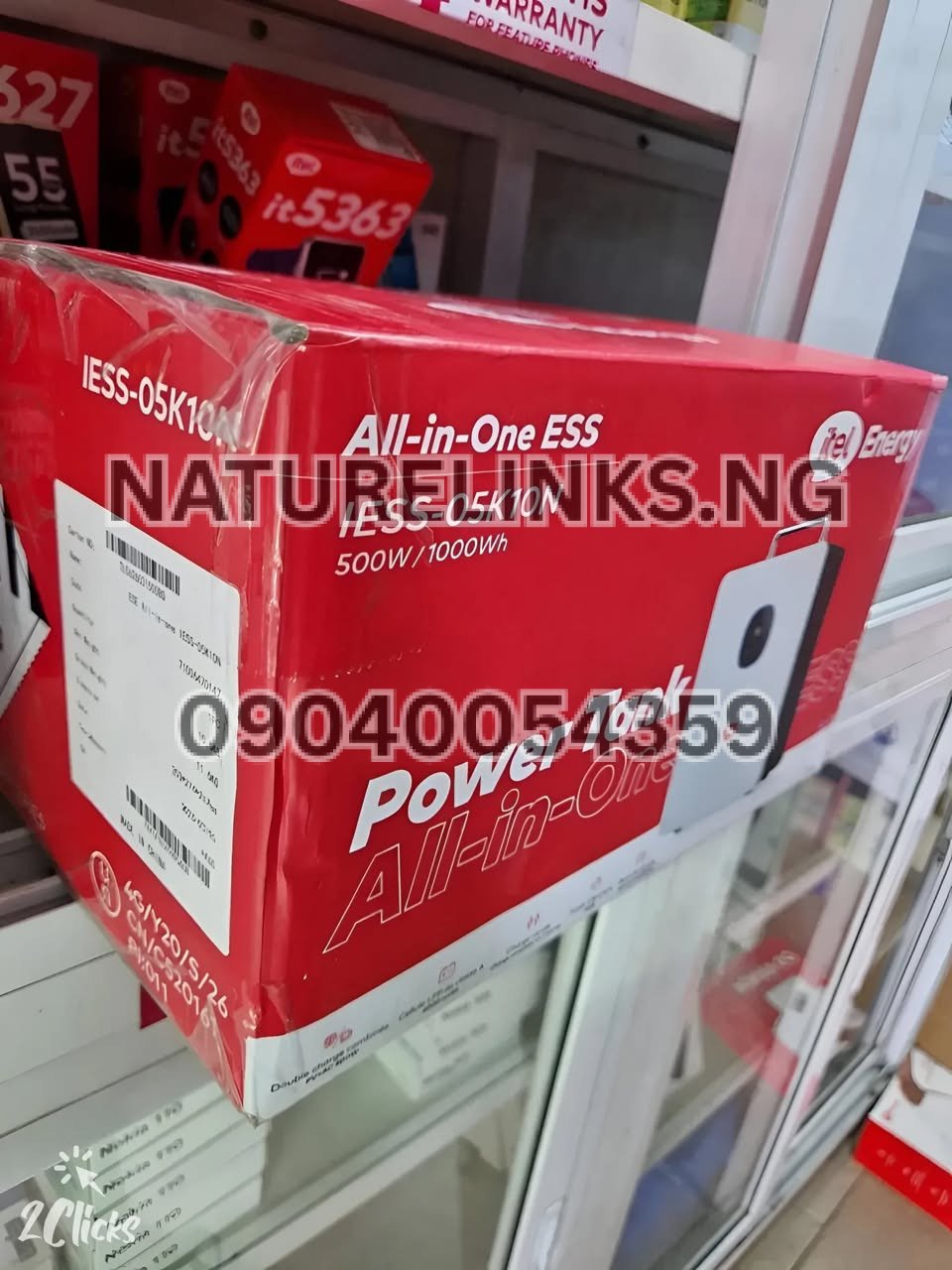
The commonly listed Itel Power Tank already incorporates an MPPT solar charge controller.
Therefore, you normally do not need to buy a separate MPPT controller merely to connect compatible solar panels to the Power Tank.
The published IESS-05K10N specification lists up to 400W PV input and an 11–60V MPPT operating range.
Power Tank vs Conventional Inverter System
| Feature | Itel Power Tank | Conventional Solar System |
|---|---|---|
| Battery | Built in | Usually separate |
| Inverter | Built in | Separate |
| Solar controller | Built in | Separate or integrated |
| Portability | High | Usually lower |
| Installation | Minimal | Requires installation |
| Expansion | More limited | Usually more flexible |
| AC output | Built in | Provided by inverter |
| Solar charging | Supported | Supported |
| External inverter | Not normally required | Normal component |
The Power Tank’s major attraction is its all-in-one architecture.
Is It Better to Buy a Bigger Power Tank Instead of an External Inverter?
This depends on your intended load.
If you only need:
- TV
- Decoder
- Router
- Laptop
- Fans
- Lights
- Phones
- CCTV
- POS equipment
the integrated Power Tank may be appropriate if the total load is within its specifications.
If you need:
- Large refrigerators
- Water pumps
- Electric irons
- Kettles
- Freezers
- Air conditioners
- Electric cookers
- Several high-power appliances simultaneously
you should calculate your total load and consider a properly sized larger inverter/battery system.
The important point is to select the power system according to the actual wattage and startup requirements, rather than attempting to increase the Power Tank’s output through an incompatible external inverter.
“Can Power Tank Be Used With an External Inverter?” — Safety Considerations
When searching for “Can Power Tank Be Used With an External Inverter?”, buyers should also understand the safety implications.
Avoid:
- Opening the Power Tank to access the internal battery.
- Connecting an external inverter directly to unknown internal battery terminals.
- Connecting two AC inverter outputs together.
- Plugging the Power Tank into a wall socket to energize house wiring.
- Exceeding the rated DC output.
- Exceeding the AC output rating.
- Connecting incompatible solar panels.
- Bypassing the battery-management system.
- Modifying the factory wiring.
The Power Tank contains lithium battery technology and power-conversion electronics. Its protection systems are part of the designed system architecture.
Does the Power Tank Already Have Battery Protection?
Yes.
Published specifications describe battery-management and protection functions, including protection against conditions such as overload, short circuit and temperature-related problems.
This is another reason not to bypass the integrated electronics by attempting to install a third-party inverter directly onto the internal battery.
Does Power Tank Have a Pure Sine-Wave Inverter?
Yes, the commonly documented IESS-05K10N uses a pure sine-wave inverter.
Pure sine-wave AC is useful for electronics and appliances designed to operate from conventional utility-style AC power. The published specifications list 230V AC output.
For many users, this removes the need to purchase an external inverter merely to obtain a different waveform.
What If I Need More Than 500W?
If your expected load is consistently above 500W, the better approach is to consider a power station or solar-inverter system designed for that power requirement.
For example, if your calculated load is 1,000W, look for a system whose inverter is genuinely rated to handle that load continuously, with sufficient battery capacity and surge capability.
Do not purchase a 500W Power Tank and assume that attaching a 1,000W external inverter will turn it into a 1,000W system.
What Is the Difference Between 1kWh and 500W?
This is an important buyer question.
1kWh = energy capacity.
500W = power output.
Think of it this way:
- Wh tells you approximately how much energy is stored.
- W tells you how much power the system can supply at a particular moment.
The Itel Power Tank’s commonly listed configuration has approximately 1,000Wh of battery storage and 500W continuous AC output.
Therefore, the battery capacity should not be confused with the inverter rating.
How Long Can the 1kWh Power Tank Last?
Runtime depends on the connected load.
A simplified theoretical calculation is:
Runtime ≈ Battery capacity ÷ Load
For a 1,000Wh battery:
- 100W load ≈ 10 hours theoretically
- 200W load ≈ 5 hours theoretically
- 300W load ≈ 3.3 hours theoretically
- 500W load ≈ 2 hours theoretically
Actual runtime will be lower because of inverter losses, battery-management limits, operating conditions and the characteristics of the connected appliances.
Where to Buy Original Itel Power Tank in Nigeria
For Nigerians searching for an Itel Power Tank dealer, distributor, supplier or price in Nigeria, buyers should verify the exact model, battery capacity, inverter rating, warranty and accessories before making payment.
The supplied business details for this SEO listing are:
Best Seller: Nature Links Nigeria Limited [NatureLinks.NG]
Distributor: Nature Solar Global Limited
CEO: Mr. Joseph Chikeleze
Call: 07049528019
WhatsApp: 09040054359
Shop Address: F1571 Upstairs (F-Line), Alaba International Market, Lagos State 🇳🇬
Buyers can ask for confirmation of:
- Current price
- Original product availability
- Exact model number
- Warranty
- Solar-panel compatibility
- Included accessories
- Delivery arrangements
- Current specifications
Itel Power Tank Datasheet
For the commonly documented IESS-05K10N, the principal specifications include:
| Specification | Commonly Listed Detail |
|---|---|
| Brand | itel Energy |
| Product | Power Tank |
| Model | IESS-05K10N |
| Battery | LiFePO₄ |
| Battery Capacity | 1,000Wh / 1kWh |
| Continuous AC Output | 500W |
| Inverter | Pure Sine Wave |
| Maximum Apparent Power | Up to 600VA |
| Solar Input | Up to 400W |
| MPPT Voltage Range | 11–60V |
| Maximum PV Voltage | 60V |
| AC Output | 230V |
| Frequency | 50Hz output specification |
| AC Input | 90–280VAC |
| UPS Switching | Less than 20ms |
| Solar Controller | Built-in MPPT |
| Cooling | Intelligent fan |
| Battery Cycle Rating | Approximately 6,000 cycles |
| Protection | Overload, short circuit, temperature/voltage protection |
Important: specifications can vary by model, revision, market and package. Always confirm the exact model supplied before purchase.
Frequently Asked Questions About Power Tank and External Inverters
1. Can Power Tank be used with an external inverter?
The Power Tank already contains an inverter, so an external inverter is generally unnecessary. Do not connect an external inverter to its AC output unless the manufacturer specifically documents such a configuration.
2. Can I connect a 1,000W inverter to a 1kWh Power Tank?
Not simply because the battery is rated at 1kWh. The commonly listed Power Tank has a 500W continuous AC inverter. Battery energy capacity and inverter power rating are different specifications.
3. Does Itel Power Tank have a built-in inverter?
Yes. The commonly documented IESS-05K10N incorporates a 500W pure sine-wave inverter.
4. Can I bypass the Power Tank’s inverter?
You should not attempt to bypass the factory inverter or open the unit to connect an external inverter unless the manufacturer explicitly provides a supported connection method.
5. Can I connect another inverter to the Power Tank AC socket?
The AC socket is an output from the built-in inverter. It should not be treated as a battery connection for another inverter.
6. Can I use Power Tank with a home solar system?
It can be part of a backup/solar setup, but the connection method depends on the system design. The Power Tank already includes solar charging and an inverter, so it should not automatically be wired like a conventional standalone battery.
7. Can Power Tank charge with solar panels?
Yes. The commonly documented IESS-05K10N supports solar charging through its integrated MPPT controller, with up to 400W PV input on the documented configuration.
8. How many watts can the Itel Power Tank output?
The commonly listed configuration provides 500W continuous AC output. Some published configurations/specifications provide higher short-duration surge capability, but this should not be confused with continuous 500W operation.
9. Can Power Tank run a refrigerator?
It may run some suitably sized refrigerators, but compressor startup surge must be checked. A refrigerator’s running wattage alone is not enough to establish compatibility.
10. Should I buy an external inverter for my Itel Power Tank?
For normal operation, no. The Power Tank already contains an inverter. If your required load exceeds its 500W continuous rating, consider a correctly sized higher-power system rather than attempting to add an incompatible inverter.
Conclusion
The answer to “Can Power Tank Be Used With an External Inverter?” is that the commonly listed Itel Power Tank is designed as an all-in-one power station, with its own battery, pure sine-wave inverter and solar charging electronics. The IESS-05K10N configuration combines a 1kWh LiFePO₄ battery with a 500W continuous inverter and up to 400W PV input, so an external inverter is normally not required.
If you need more than the Power Tank’s rated output, do not simply connect a larger inverter to its AC outlet or modify the internal battery. Instead, determine your total appliance wattage and startup requirements and choose a power system designed for that load. For genuine Itel Power Tank availability, current pricing, model verification and purchasing information in Nigeria, contact Nature Links Nigeria Limited / Nature Solar Global Limited on 07049528019 or WhatsApp 09040054359, at F1571 Upstairs (F-Line), Alaba International Market, Lagos State 🇳🇬.