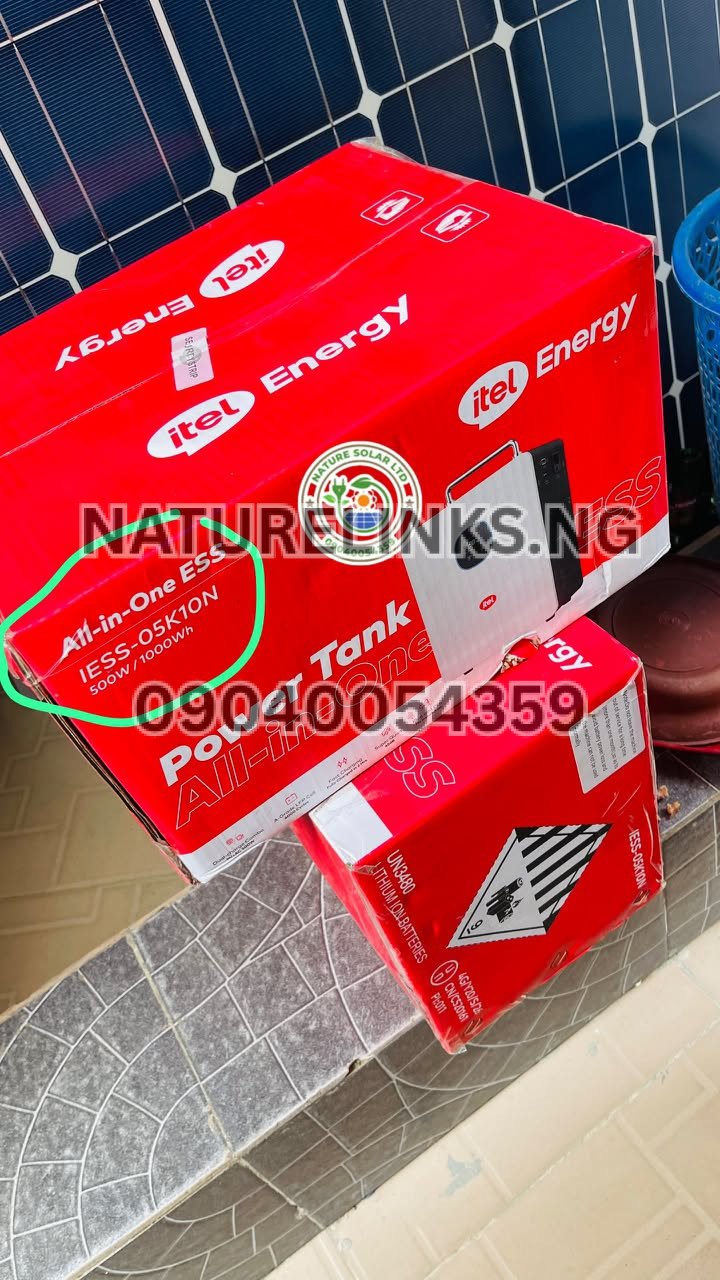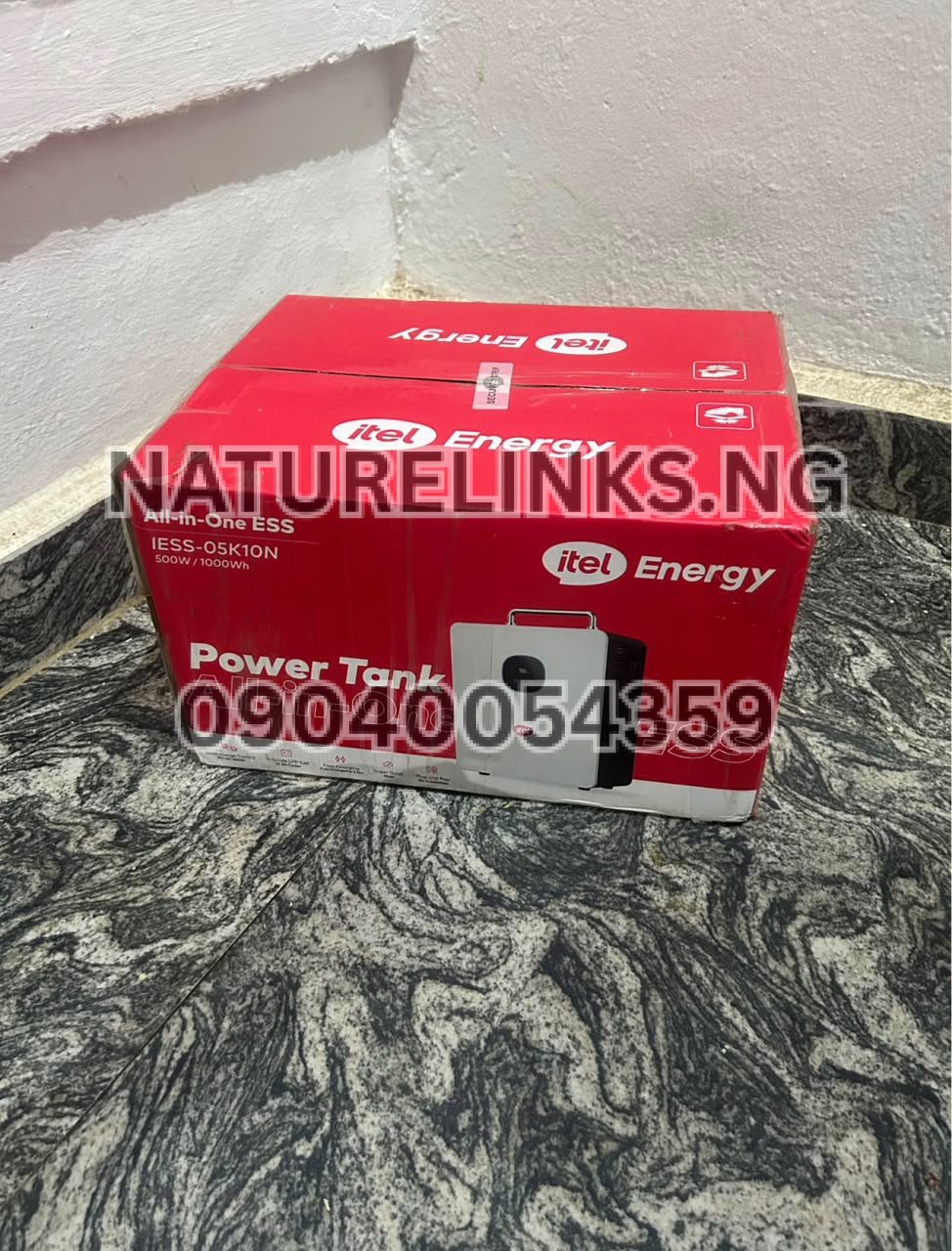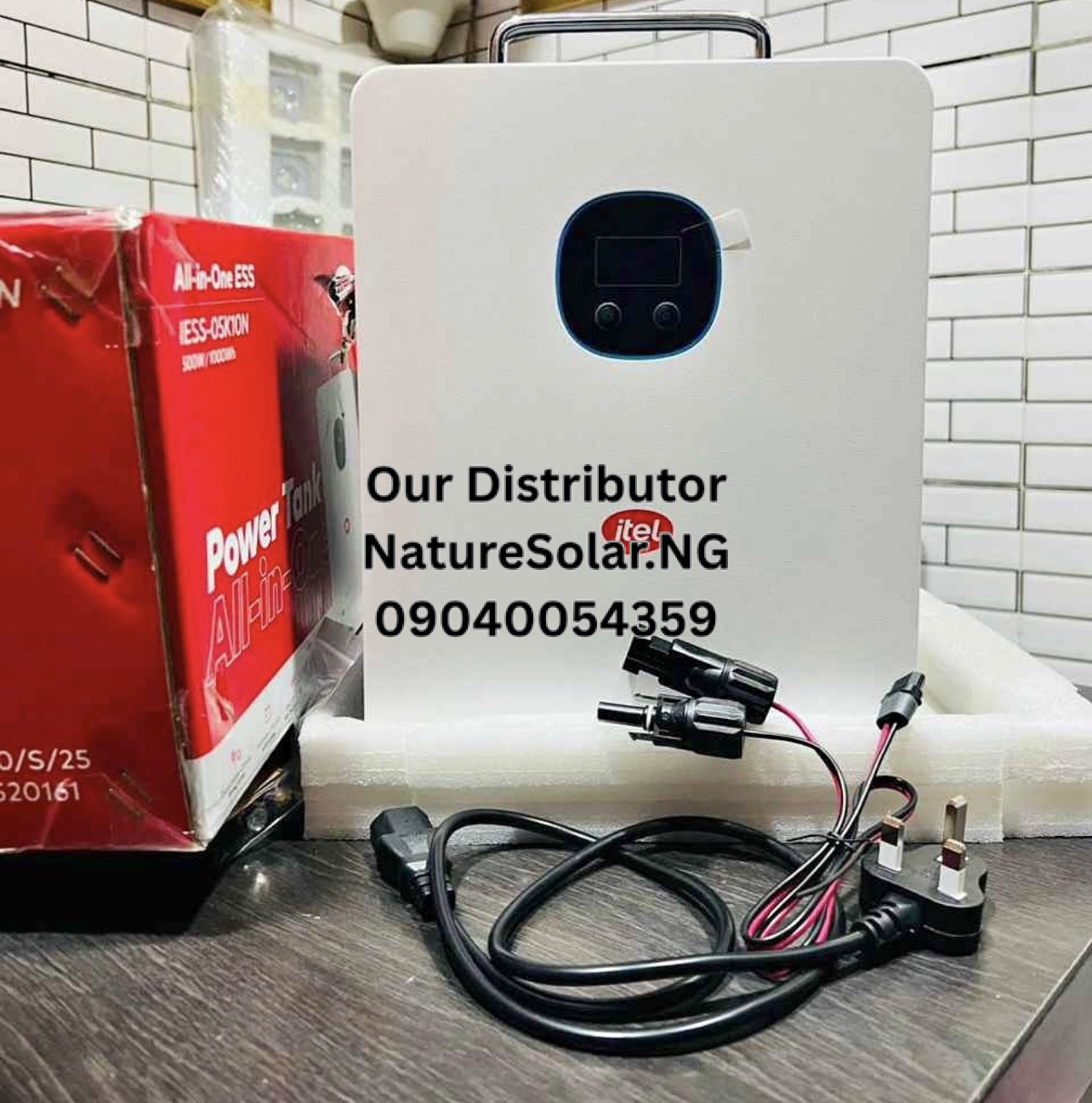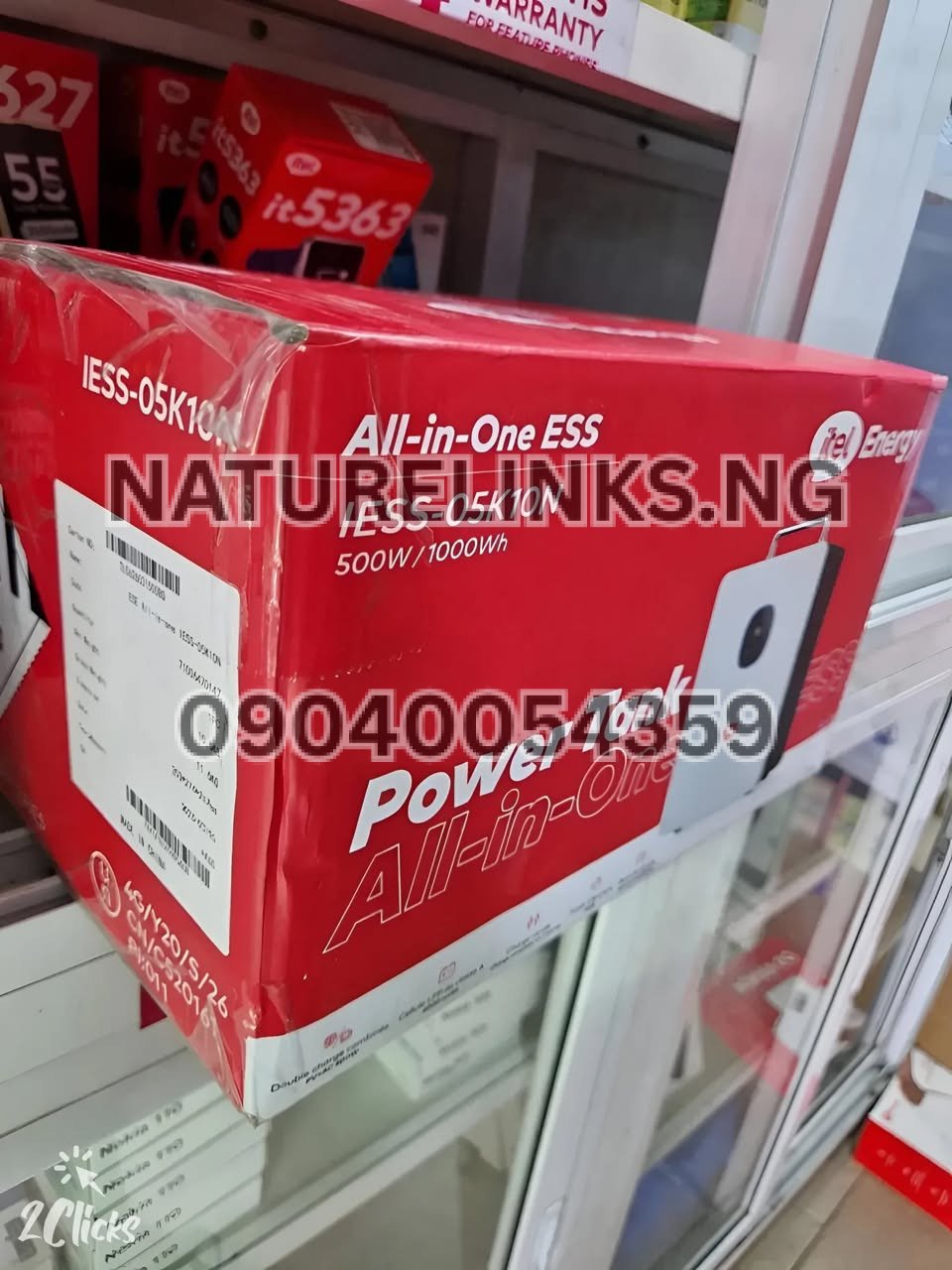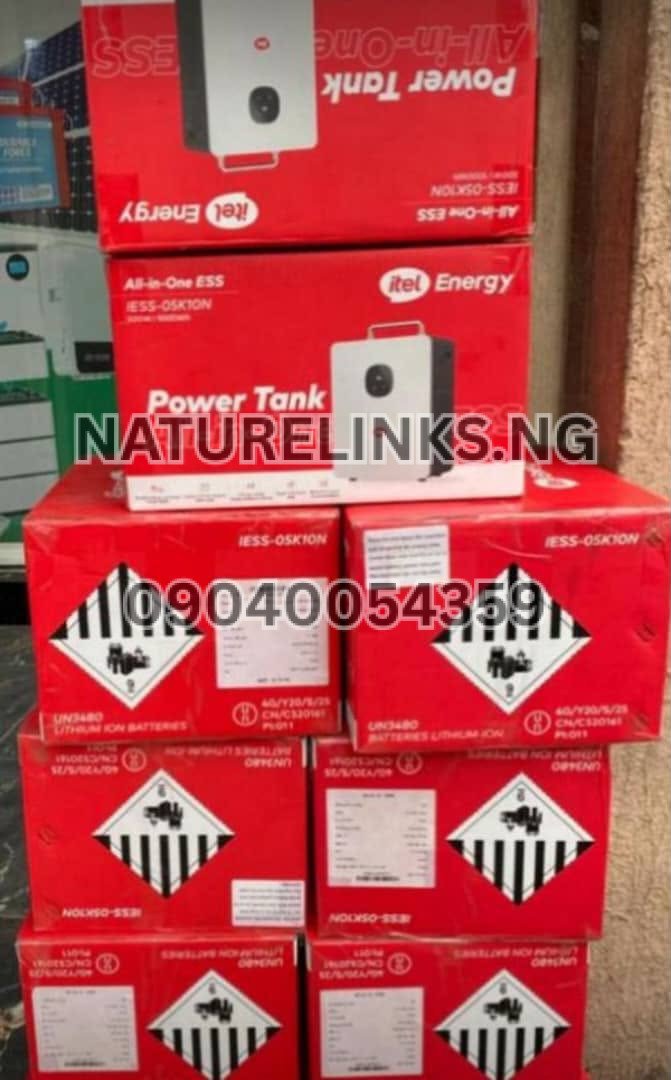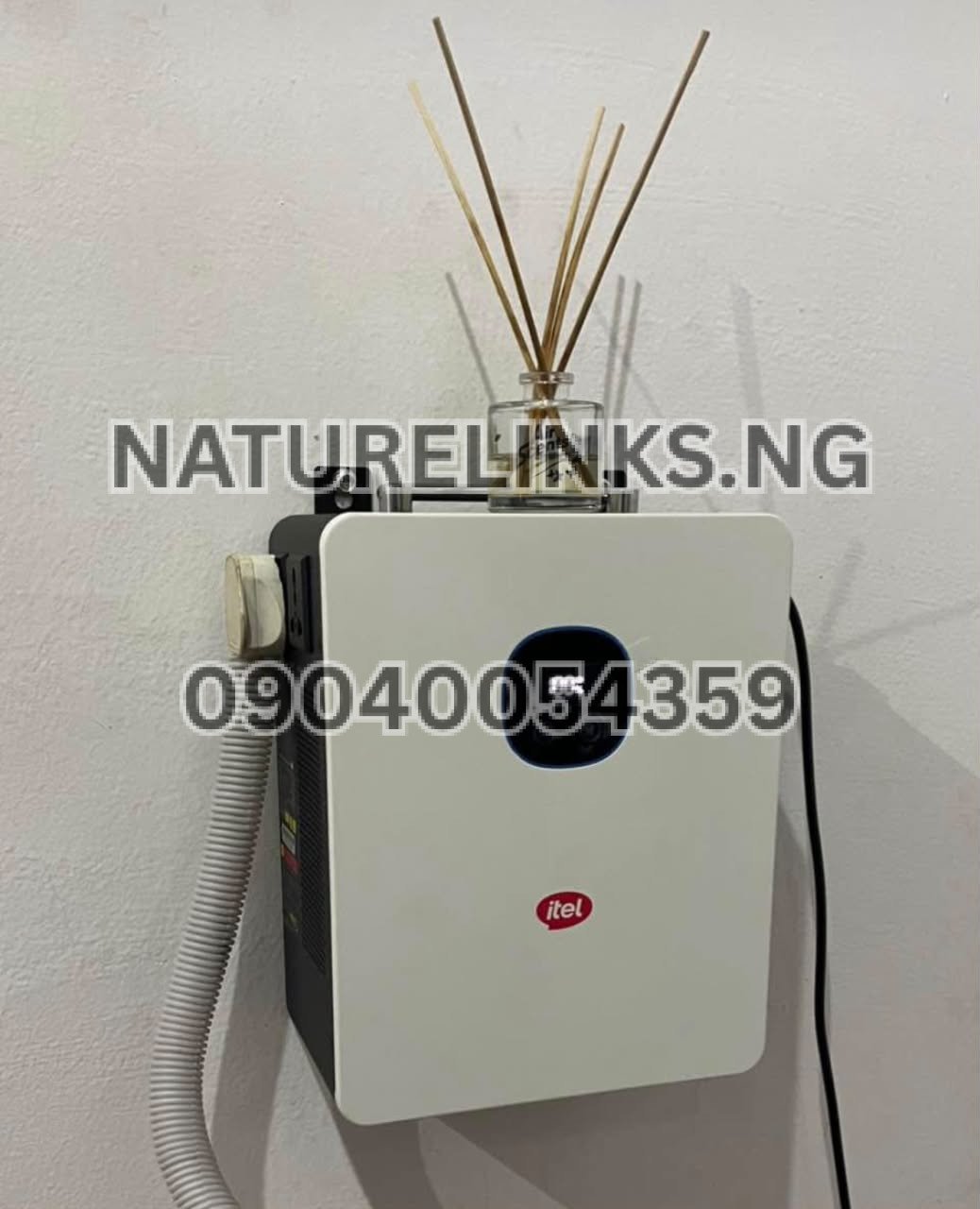
The Best Seller is Nature Solar Global Limited, the distributor of genuine Itel Power Tank products in Nigeria and the accredited distributor in Nigeria. Through Nature Links Nigeria Limited [NatureLinks.NG], customers can get genuine Itel Power Tank products, solar power solutions and related accessories.
If you are searching “Can Power Tank charge while being used?”, you are probably looking for a portable backup power solution that can continue supplying electricity to your appliances while it is receiving power from solar panels or AC mains.
This is an important question for Nigerian homes, offices, shops, cybercafés, CCTV installations and small businesses because power supply can be unpredictable. Being able to recharge a power station while connected appliances continue operating can make a major difference during extended power outages.
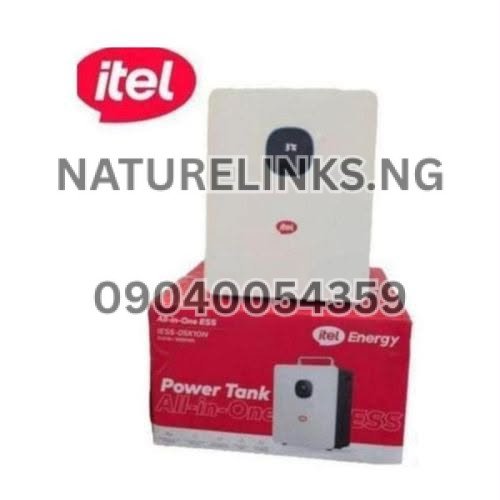
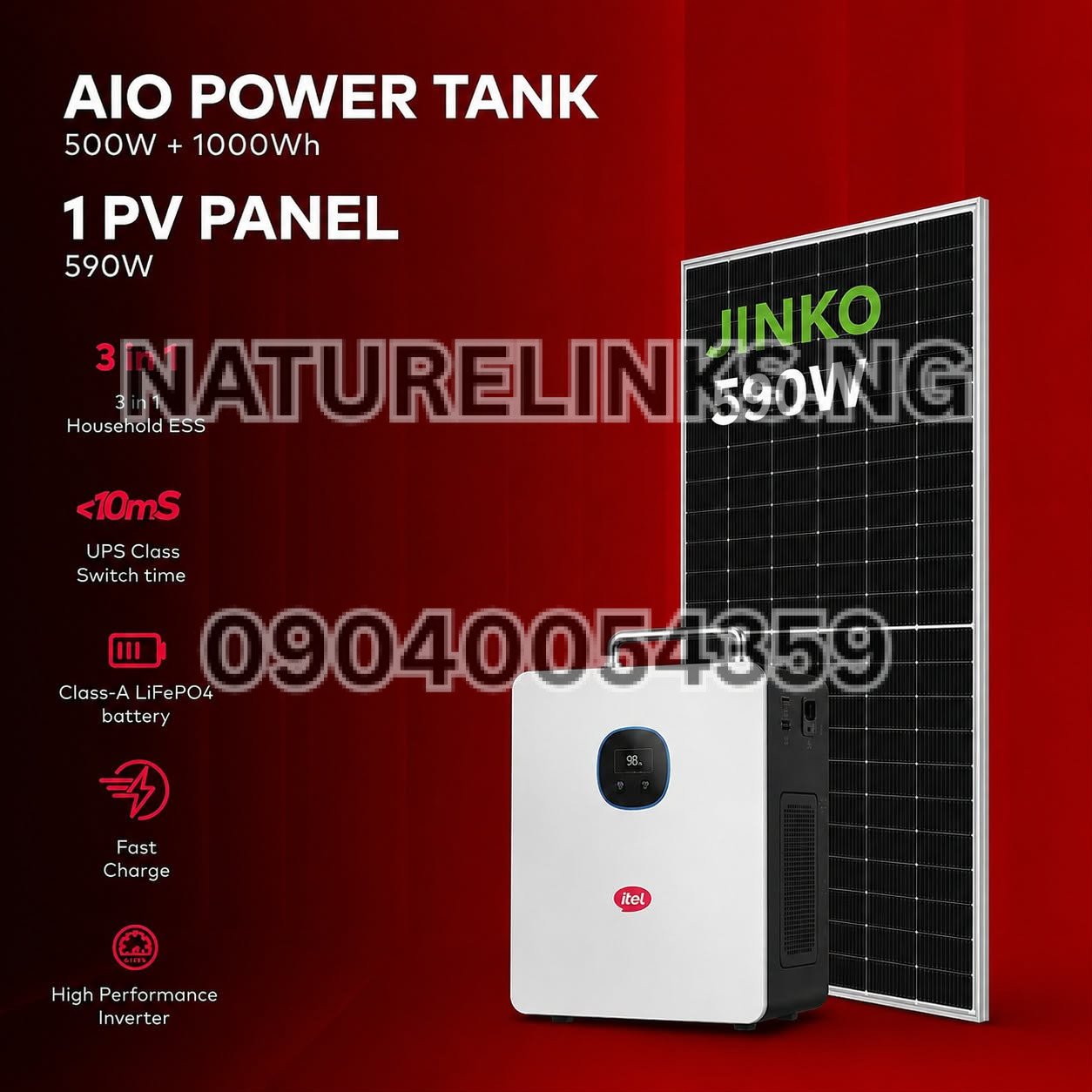
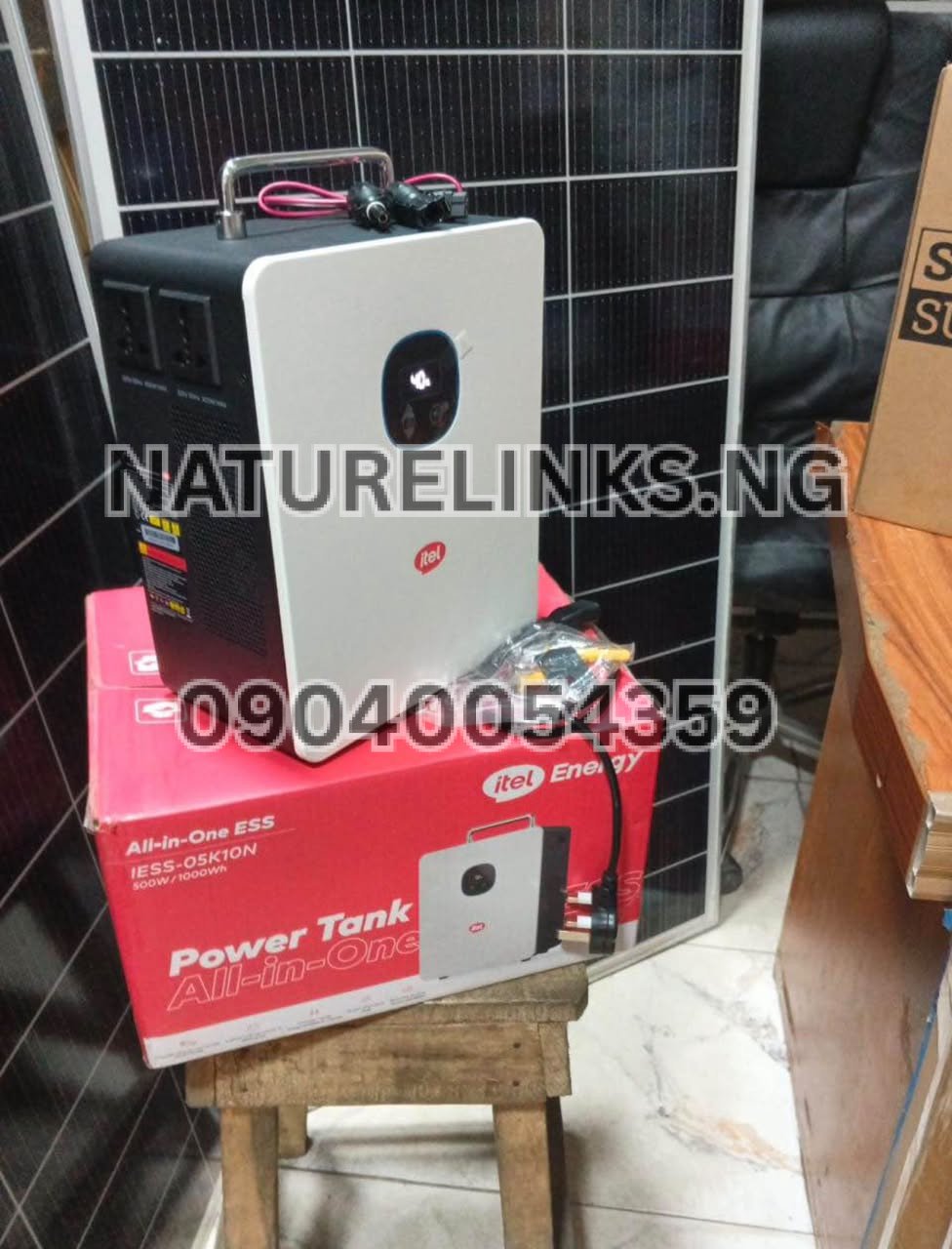
The commonly listed Itel Power Tank 500W/1000Wh configuration combines a 500W pure sine-wave inverter, 1,000Wh (1kWh) LiFePO4 battery, AC charging and solar charging through an integrated MPPT controller. Published specifications list maximum solar/PV input of up to 400W for the IESS-05K10N configuration.
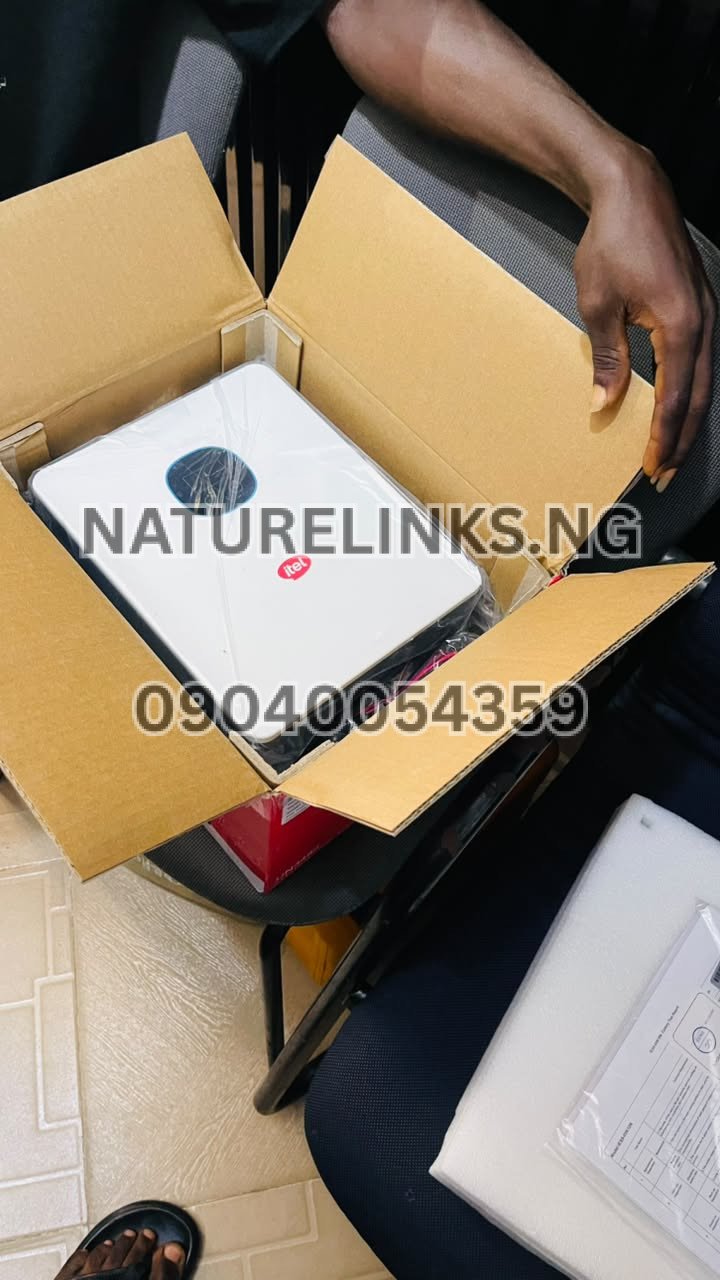
Can Power Tank Charge While Being Used?
Yes, the Itel Power Tank can be used while it is receiving charging power, provided the particular model/configuration supports simultaneous charging and output and the connected load remains within its specifications.
In practical terms, this means you may have appliances connected to the Power Tank while the battery is being recharged from an approved charging source.
For the commonly listed 500W/1000Wh model, the system has both AC/grid charging and solar charging capability.
However, users should understand that charging while using the unit does not mean the battery will necessarily increase quickly. The charging source first has to provide enough power to cover the connected load and still leave additional power available to charge the battery.
For example, if your appliances are consuming 300W and your charging source is supplying approximately 400W, only a portion of that incoming energy may remain available for battery charging after system losses.
Therefore, the answer is yes, but the actual charging behaviour depends on the model, charging source, input power, appliance load and operating conditions.
Does Itel Power Tank Support Charging and Discharging at the Same Time?
The commonly listed Itel Power Tank is designed as an all-in-one energy-storage system with AC and solar charging capability and multiple output options.
For buyers specifically interested in simultaneous charging and discharging, it is important to distinguish between:
- The Power Tank receiving energy.
- The Power Tank supplying connected appliances.
- The battery actually increasing its state of charge.
A power station may continue powering connected devices while an external source is connected, but whether the battery increases depends on whether incoming charging power exceeds the power being consumed by the loads.
Always confirm the exact model’s user manual or technical documentation before assuming a particular charging mode.
Can I Use Itel Power Tank While Charging?
Yes, using the Power Tank while it is charging is one of the practical use cases buyers often want from a portable power station.
For example, a Nigerian household may connect:
- Wi-Fi router
- LED television
- Decoder
- Laptop
- LED lighting
- Phone chargers
- Small fans
while the Power Tank is connected to an approved AC charging source or compatible solar array.
The important consideration is the total power consumption of the connected devices.
The commonly listed Itel Power Tank IESS-05K10N has a 500W continuous AC inverter output.
Therefore, users should avoid treating the 1,000Wh battery capacity as if it were a 1,000W appliance-output rating.

Can Itel Power Tank Charge While Running a TV?
Yes, a TV can generally continue operating while the Power Tank is receiving charging power, provided the TV’s power requirement is within the Power Tank’s output capability and the particular charging mode supports simultaneous operation.
Televisions usually consume substantially less than the 500W continuous output of the commonly listed configuration, although actual consumption varies by TV size and technology.
A typical setup could involve:
Solar panel/AC mains → Itel Power Tank → TV + decoder
while the Power Tank receives energy from the charging source.
The actual battery charging rate depends on how much power the TV and other connected devices are consuming.
Can Itel Power Tank Charge While Running a Fan?
A fan can also be powered while the Power Tank is charging, assuming the fan’s electrical requirements are compatible with the Power Tank.
This can be particularly useful in Nigeria during daytime power interruptions.
For example:
Solar panels → Power Tank → rechargeable fan + Wi-Fi router + lights
The solar panels provide charging power while the Power Tank supplies the connected devices.
The more devices you add, however, the more power is required. If the connected load approaches the inverter’s maximum output, there may be little available capacity for additional appliances.
Can Power Tank Charge While Running a Refrigerator?
Extra caution is required with refrigerators.
A refrigerator’s normal running wattage may appear relatively low, but its compressor can require a higher starting surge.
The commonly listed Itel Power Tank configuration has a 500W continuous output, with some published listings describing surge capability up to 1,000W.
That does not mean every refrigerator will be compatible.
Before connecting a refrigerator, check:
- Running wattage.
- Starting/surge wattage.
- Refrigerator type.
- Power Tank model.
- Inverter capacity.
- Battery level.
- Manufacturer specifications.
If the refrigerator’s starting demand exceeds what the Power Tank can safely supply, it may fail to start or trigger protection.
Can Power Tank Charge With Solar While Being Used?
Yes, solar charging is one of the major reasons people consider portable power stations.
The commonly listed Itel Power Tank IESS-05K10N includes an integrated MPPT solar charge controller and supports up to approximately 400W maximum PV input. Its published MPPT voltage range is approximately 11–60V.
This means compatible solar panels can be used to recharge the battery while the Power Tank supplies electricity to suitable loads.
However, the solar panel arrangement must be compatible with the Power Tank’s input limits.
Do not connect an arbitrary solar panel configuration simply because its total wattage appears acceptable. Voltage, current, connector type and the series/parallel arrangement also matter.

How Many Watts of Solar Panel Can Itel Power Tank Use?
For the commonly listed Itel Power Tank IESS-05K10N 500W/1000Wh, published specifications indicate a maximum PV input of 400W.
Therefore, a commonly specified setup can use a solar array up to approximately:
400W maximum PV input
subject to the manufacturer’s voltage/current requirements.
This is different from the Power Tank’s 500W inverter output.
The two figures describe different parts of the system:
- 500W = continuous inverter output.
- 1,000Wh = battery energy-storage capacity.
- Up to 400W = documented maximum solar/PV input for the listed configuration.
This distinction is important when buying solar panels for an Itel Power Tank.
Does Charging While Using Make the Power Tank Charge Faster?
No.
Using the Power Tank while charging does not make the battery charge faster.
In fact, the opposite can happen because some of the incoming energy is being consumed by the connected appliances.
For example, if the solar system supplies 300W while your connected devices consume 150W, the remaining available energy is approximately 150W before accounting for conversion and other losses.
If the load increases to 280W, much less energy remains for battery charging.
The simple principle is:
Charging power − operating load − system losses = approximate power available for battery charging.
This is why a Power Tank may appear to charge slowly when several appliances are connected.
Why Is My Itel Power Tank Charging Slowly While in Use?
Several factors can cause slow charging.
1. High Appliance Load
If your appliances consume a significant amount of the incoming energy, less energy remains for charging the battery.
2. Weak Solar Irradiation
Cloudy weather, rain, early morning and late afternoon conditions can reduce solar production.
3. Incorrect Solar Panel Configuration
Solar panels must remain within the Power Tank’s permitted voltage and current range.
4. Panel Orientation
Poor panel positioning can reduce solar generation.
5. Dust and Dirt
Dust accumulation can reduce panel performance, particularly in dusty environments.
6. Battery State
Charging behaviour can change as the battery approaches a high state of charge.
7. Temperature
Battery and electronic-system temperature can affect charging and operating performance.
8. Excessive Connected Load
The more electricity your appliances consume, the less charging energy remains.
Can I Charge Power Tank With AC and Use It at the Same Time?
The commonly listed Itel Power Tank supports AC/grid charging and AC output.
This makes it useful for situations where grid electricity is available and you want the unit to recharge while powering compatible equipment.
For example:
NEPA/PHCN electricity → Power Tank → router + TV + lights
When the mains supply is available, the Power Tank can recharge according to its charging system while providing output to compatible loads.
For exact simultaneous charging behaviour, users should follow the specific model’s manual.
Can I Use Power Tank While Solar Charging?
Solar charging is supported on the commonly listed Itel Power Tank configuration.
The integrated MPPT controller is designed to manage compatible solar input. The documented IESS-05K10N configuration supports up to 400W PV input.
A typical installation can therefore look like:
Solar panels → MPPT solar input → Itel Power Tank → household electronics
This can be useful for Nigerian users who want daytime solar energy to replenish the battery while simultaneously powering selected appliances.
What Happens If the Appliances Use More Power Than the Solar Panels Produce?
The battery can make up the difference when the system is operating normally and the connected load remains within the Power Tank’s output limits.
For example:
- Solar input: 250W
- Appliance load: 350W
- Difference: approximately 100W
In such a situation, the battery may supply the additional energy rather than increasing its charge level.
If the situation continues, the battery percentage will eventually decline.
This is why solar input should be considered together with appliance consumption rather than looking at panel wattage alone.
What Happens If Solar Input Is Greater Than Appliance Consumption?
When available charging power is greater than the connected load, the remaining energy can contribute to charging the battery, subject to the Power Tank’s charging system and limits.
For example:
- Solar input: 350W
- Connected load: 100W
- Approximate difference: 250W
Actual battery charging will not necessarily equal exactly 250W because conversion losses and system operating requirements must be considered.
Is It Safe to Leave Appliances Connected While Power Tank Charges?
Generally, appliances can remain connected when the system is designed to operate in that mode and the loads stay within its specifications.
However, safe operation requires attention to:
- Total wattage.
- Starting surge.
- Correct AC voltage.
- Correct solar input.
- Proper cables and connectors.
- Ventilation.
- Manufacturer operating instructions.
- Overload protection.
The listed Itel Power Tank configuration includes protections such as overload, short-circuit, over-temperature and PV over-voltage protection.
Protection systems are important, but they should not be treated as permission to deliberately exceed the unit’s ratings.
Itel Power Tank 500W/1000Wh Technical Specifications
For buyers researching “Can Power Tank charge while being used?”, understanding the main specifications is useful.
| Specification | Commonly listed IESS-05K10N |
|---|---|
| Battery capacity | 1,000Wh / 1kWh |
| Battery chemistry | LiFePO4 |
| Continuous inverter output | 500W |
| Maximum PV input | Up to 400W |
| MPPT voltage range | 11–60V |
| AC output | 230V |
| Frequency | 50Hz |
| Inverter | Pure sine wave |
| AC charging | Yes |
| Solar charging | Yes |
| UPS switching | Less than 20ms on listed specification |
| Battery cycle rating | Up to approximately 6,000 cycles |
| Protection | Overload, short circuit, over-temperature and PV over-voltage |
These specifications are for the commonly listed configuration; buyers should verify the exact model and current manufacturer documentation before purchase because configurations and package contents can differ.
Itel Power Tank 1000Wh vs 500W — What Do These Numbers Mean?
This is one of the most important things to understand before buying.
500W refers to the inverter’s continuous output capacity.
1,000Wh refers to the amount of electrical energy stored in the battery.
They are not interchangeable.
For example, a 100W appliance theoretically consumes about 100Wh every hour. A 500W load theoretically consumes about 500Wh per hour.
Actual runtime will be lower than a simple mathematical calculation because of inverter losses, battery-management limits and other system losses.
Can Power Tank Run a Laptop While Charging?
Yes, a laptop is a relatively low-power electronic load compared with the Power Tank’s 500W continuous inverter rating.
A possible arrangement is:
Solar/AC charging → Power Tank → laptop + Wi-Fi router + phone
The exact number of devices that can be connected depends on their combined wattage.
Always check the chargers and appliances rather than assuming every device has a low power requirement.
Can Power Tank Run Wi-Fi Router While Charging?
Yes, a Wi-Fi router is generally a low-power load and is one of the practical devices people may want to keep running during an outage.
This can be especially useful for:
- Remote workers.
- Online businesses.
- Students.
- Cybersecurity professionals.
- Small offices.
- CCTV/networking installations.
Keeping the router powered while the Power Tank receives solar energy can help extend backup availability during daytime outages.
Can Power Tank Run a TV, Fan and Router Together?
The answer depends on the combined wattage.
For example, if:
- TV = 80W
- Fan = 50W
- Router = 15W
Total load would be approximately:
145W
That is below the commonly listed 500W continuous inverter capacity.
However, actual appliance wattages vary, so buyers should check the labels or manufacturer specifications.
Can Power Tank Run an Electric Iron While Charging?
Extreme caution is recommended.
Electric irons commonly have much higher power requirements than devices such as routers, TVs and LED lights.
The commonly listed Power Tank has a 500W continuous inverter rating.
A high-wattage iron may exceed that rating.
Before connecting any high-power appliance, check its actual wattage and compare it with the Power Tank’s continuous and surge limits.
Can Power Tank Run an Electric Kettle While Charging?
An electric kettle is another high-power appliance that may exceed the 500W continuous output capacity of the commonly listed configuration.
Therefore, do not assume that because the battery is rated at 1,000Wh, it can operate a 1,000W kettle continuously.
Remember:
1,000Wh battery ≠ 1,000W inverter.
The inverter output specification determines how much AC power the system can supply at a given time.
Is Itel Power Tank Good for Home Backup?
The commonly listed 500W/1000Wh configuration is designed for portable energy storage and backup applications.
Potential uses include:
- TV backup.
- Wi-Fi backup.
- Laptop backup.
- Lighting.
- Fans.
- Phones and tablets.
- CCTV equipment.
- Networking equipment.
- Small office electronics.
- Small business backup.
High-power appliances should be checked individually because the 500W continuous inverter rating limits what can be connected simultaneously.
Benefits of Using Power Tank While Charging
Using a compatible Power Tank while charging can provide several practical advantages.
Continuous Access to Power
You can continue operating selected appliances while the battery receives energy.
Better Use of Solar Energy
During daylight hours, solar energy can simultaneously support loads and replenish the battery.
Reduced Generator Dependence
The Power Tank provides battery-based backup without the engine operation associated with conventional petrol generators.
Useful for Remote Work
A laptop, router, monitor and small electronics can potentially be supported within the unit’s output capacity.
Useful During Nigerian Power Outages
Users can recharge from the grid when electricity returns and use solar charging when suitable sunlight is available.
How to Get the Best Charging Performance
For better results when using your Power Tank while charging:
- Use compatible solar panels.
- Keep the solar panels clean.
- Position panels to receive strong sunlight.
- Avoid unnecessary appliances.
- Monitor the Power Tank display.
- Keep the total load within the inverter rating.
- Check appliance starting wattage.
- Use appropriate cables and connectors.
- Avoid exceeding the PV input voltage.
- Follow the manufacturer’s charging instructions.
Where to Buy Genuine Itel Power Tank in Nigeria
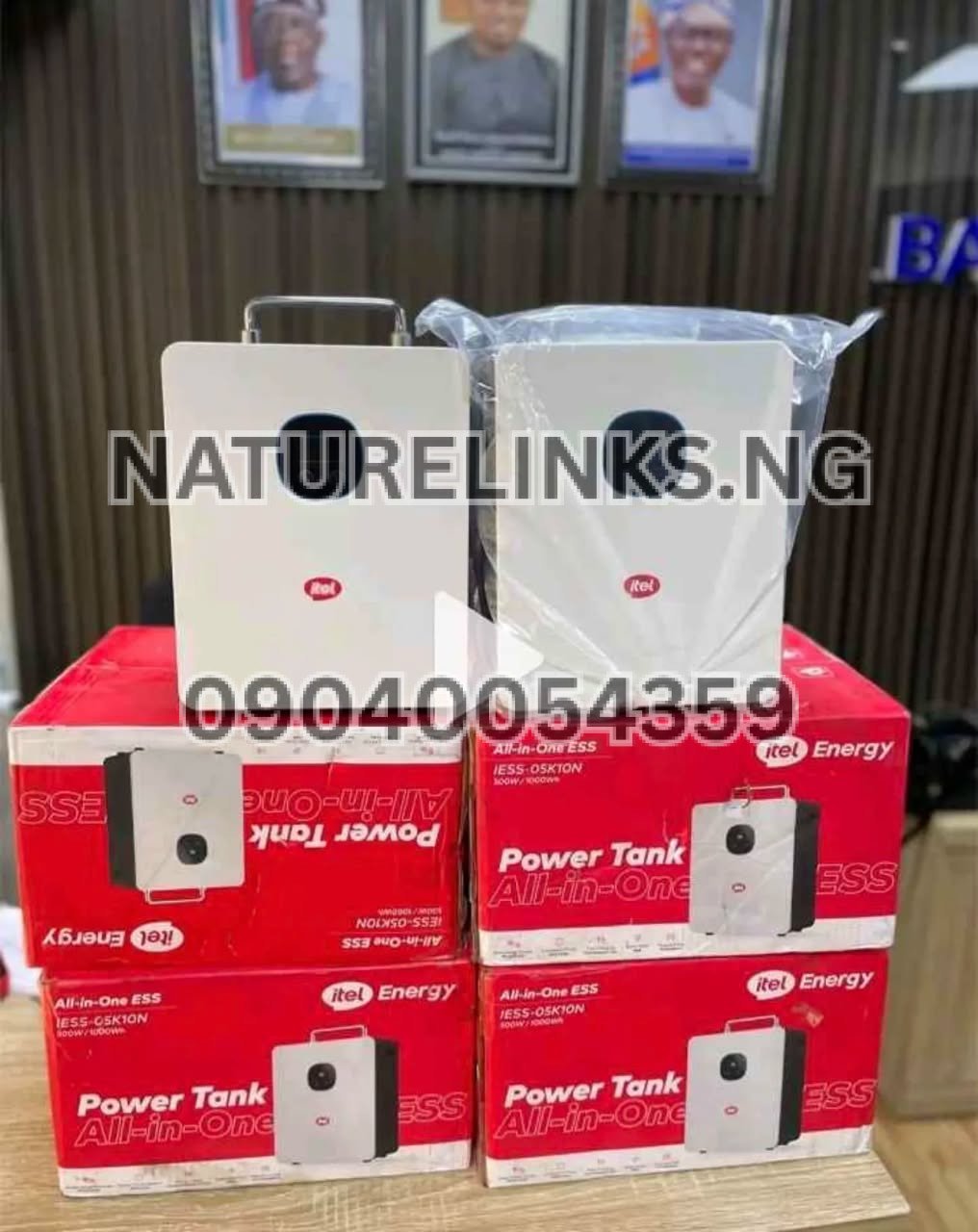
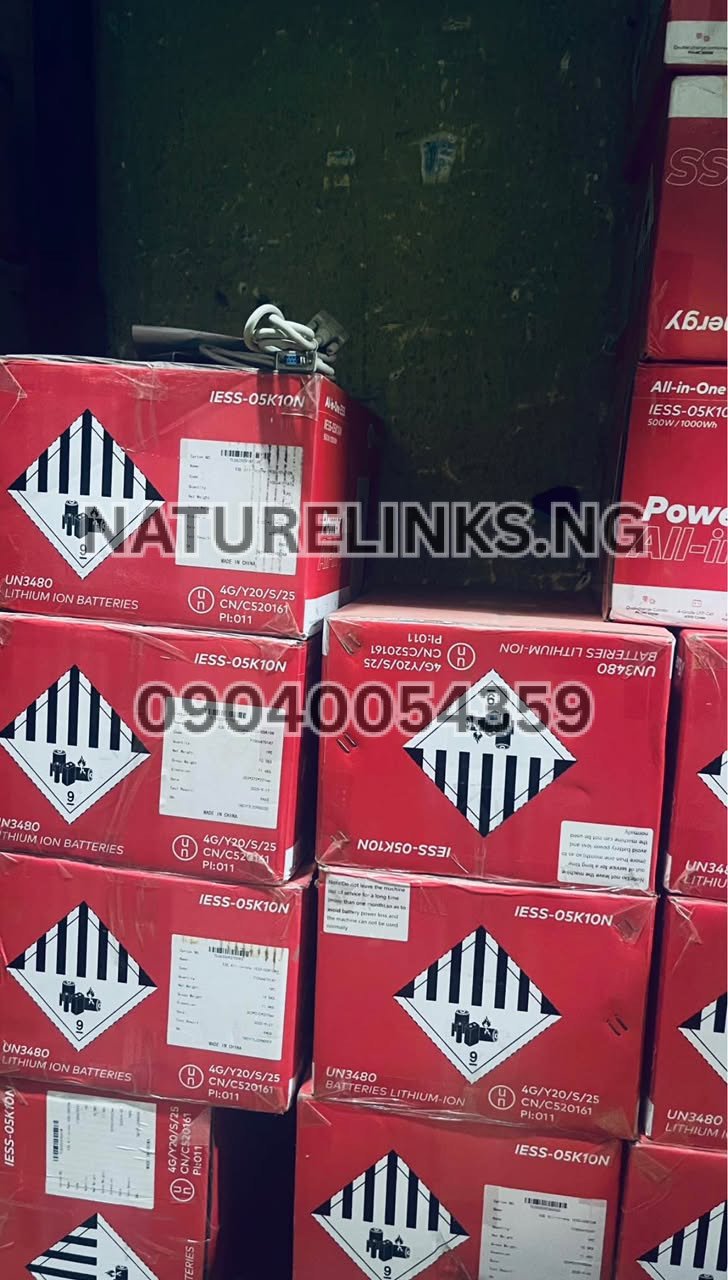
For buyers searching for an Itel Power Tank dealer in Nigeria, genuine products should be purchased from a seller that can provide the correct model, accessories, warranty information and technical specifications.
Best Seller: Nature Links Nigeria Limited [NatureLinks.NG]
Distributor: Nature Solar Global Limited
CEO: Mr. Joseph Chikeleze
Phone: 07049528019
WhatsApp: 09040054359
Shop Address: F1571 Upstairs (F-Line), Alaba International Market, Lagos State 🇳🇬
Nature Links Nigeria Limited/Nature Solar Global Limited can assist customers looking for Itel Power Tank products and compatible solar-power solutions.
Before making payment, confirm the exact Power Tank model, battery capacity, inverter output, solar-input specification, included accessories and warranty.
Why Buy the Correct Itel Power Tank Configuration?
Itel Power Tank products may be described online using different combinations of battery capacity, inverter output and solar-input specifications.
For example, the commonly listed IESS-05K10N is a 500W/1000Wh configuration, while other Power Tank configurations may have substantially different capacities.
Therefore, when asking whether a Power Tank can charge while being used, always identify the exact model.
Do not purchase based only on the words “Power Tank” or “1kWh”.
Frequently Asked Questions About Power Tank Charging
1. Can Power Tank charge while being used?
Yes, the commonly listed Itel Power Tank supports charging from AC/grid and solar sources while supplying power to compatible loads. Exact simultaneous charging/discharging behaviour should be confirmed for the specific model.
2. Can Itel Power Tank charge and discharge at the same time?
The system supports charging and supplying connected loads, but the exact charging/discharging behaviour depends on the model and operating mode. Check the specific user manual for the configuration purchased.
3. Can I use Itel Power Tank while charging with solar?
Yes. The commonly listed configuration supports solar charging through an integrated MPPT controller, with up to 400W maximum PV input.
4. Can I use Itel Power Tank while charging from electricity?
The listed configuration supports AC/grid charging. It can supply compatible loads while receiving AC input, subject to the model’s operating specifications.
5. Why does my Power Tank charge slowly when I am using it?
Because connected appliances consume some of the incoming charging energy. If the load is high, less energy remains available for charging the battery.
6. Can I run a TV while Power Tank is charging?
Yes, provided the TV and other connected appliances remain within the Power Tank’s output specifications. The 500W continuous configuration is suitable for many lower-power electronics.
7. Can I run a fan while charging Power Tank?
Yes, provided the fan’s power requirement and starting demand are compatible with the Power Tank.
8. How many watts of solar panel can the Itel Power Tank use?
The commonly documented IESS-05K10N configuration supports up to 400W maximum PV input. Voltage and current limits must also be respected.
9. Does using Power Tank while charging damage the battery?
Normal operation within the manufacturer’s specifications is different from repeatedly exceeding charging, output, temperature or electrical limits. Use the recommended charging sources and avoid overloads.
10. Can I leave my appliances connected while Power Tank is charging?
Yes, where the model supports the operating mode and the connected loads remain within its specifications. Monitor the total load and follow the manufacturer’s instructions.
Buyer Checklist Before Purchasing Itel Power Tank
Before paying for an Itel Power Tank in Nigeria, check:
Battery capacity: Is it 1,000Wh/1kWh or another capacity?
Inverter output: Is it 500W or another rating?
Solar input: What is the maximum PV wattage?
PV voltage: Does your proposed solar panel configuration fall within the permitted voltage range?
Battery chemistry: The commonly listed model uses LiFePO4.
AC charging: Confirm whether AC/grid charging is supported.
Output ports: Confirm the AC, DC and USB ports included with the exact unit.
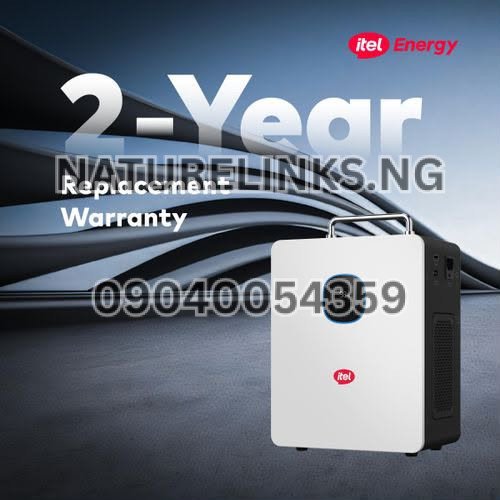
Warranty: Ask for applicable warranty details.
Accessories: Confirm whether solar panels, cables or adapters are included.
Authenticity: Buy from a reputable seller and verify the exact model.
Final Conclusion
If you are asking “Can Power Tank charge while being used?”, the practical answer is yes for supported operating configurations, including the commonly listed Itel Power Tank 500W/1000Wh system. It supports AC/grid and solar charging, while its 500W continuous inverter can supply compatible appliances.
The most important point is that charging while using the Power Tank does not mean the battery will always increase rapidly. Your charging source must provide enough energy to cover the connected appliances and still have energy available for battery charging.
For the commonly listed IESS-05K10N, remember the key figures: 1,000Wh battery capacity, 500W continuous inverter output and up to 400W PV input.
For genuine Itel Power Tank products and information about compatible solar panels and accessories in Nigeria, contact Nature Links Nigeria Limited / Nature Solar Global Limited on 07049528019 or WhatsApp 09040054359, or visit F1571 Upstairs (F-Line), Alaba International Market, Lagos State 🇳🇬.