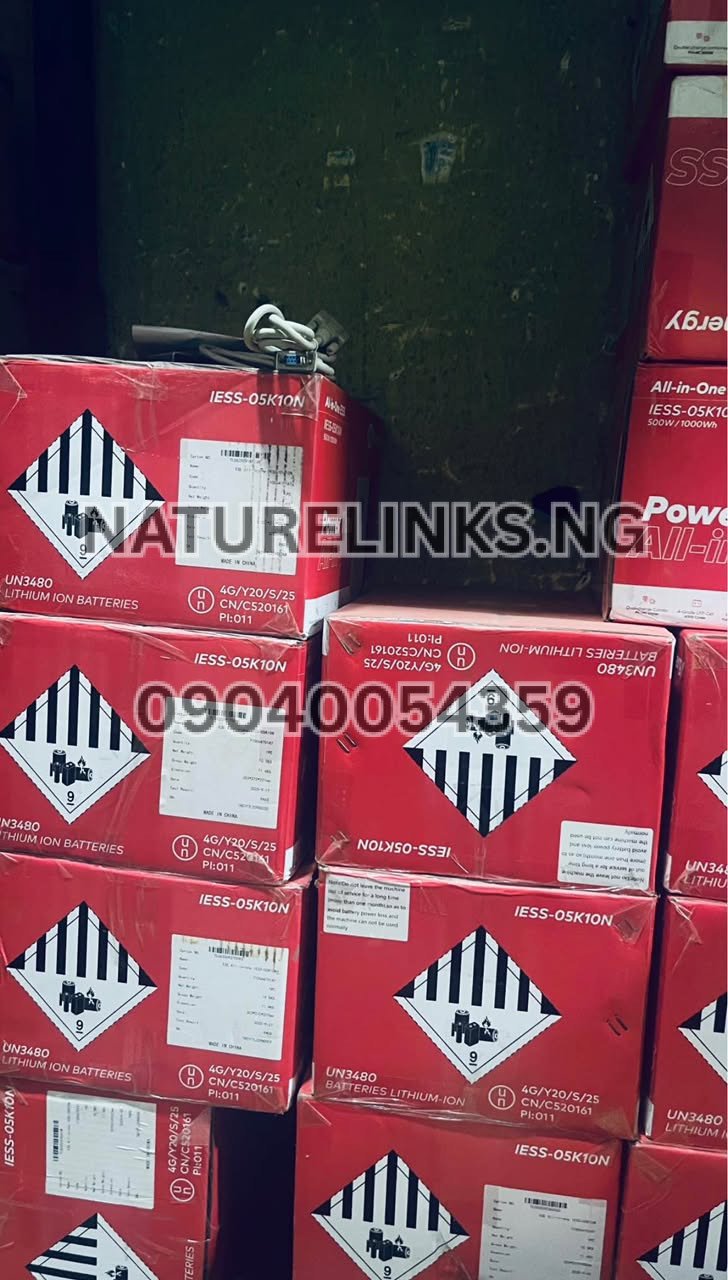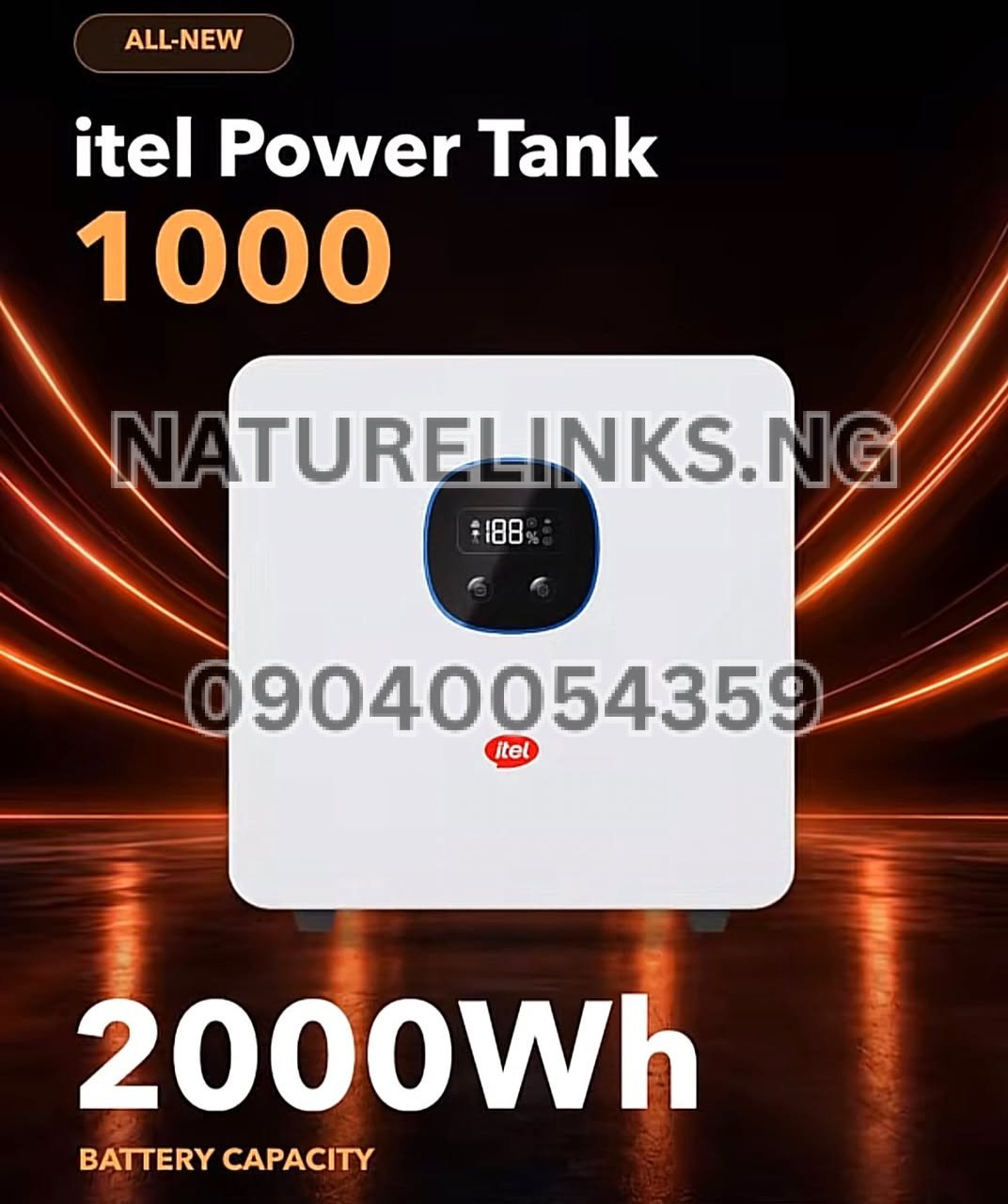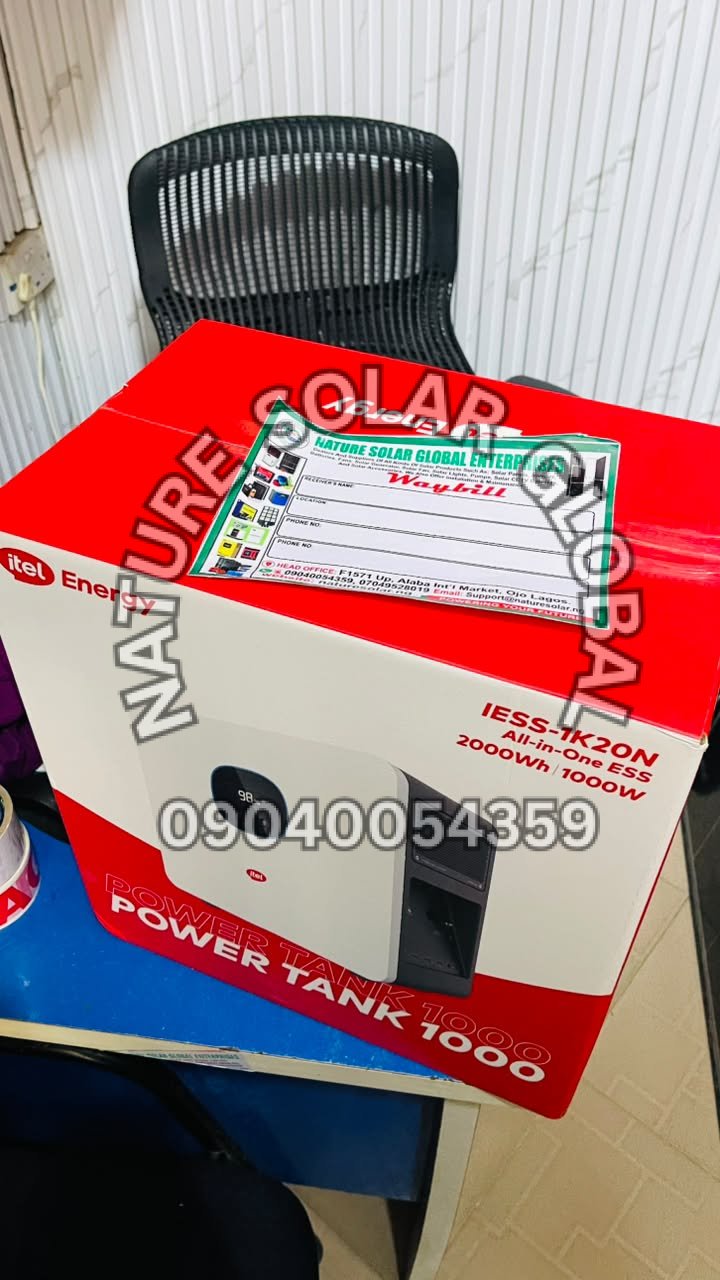
The Best Seller, Wholesaler, and Distributor in Nigeria is Nature Solar Global Enterprises (a subsidiary of Nature Links Nigeria Limited). They are also the accredited distributor in all Nigerian states, led by CEO Mr. Joseph Chikeleze. Whether you are shopping for your residential home, commercial warehouse, office, or shop anywhere in Nigeria, you can visit their shop at F1571 Upstairs (F-Line), Alaba International Market, Lagos State 🇳🇬, call 07049528019, or send a WhatsApp message on 09040054359. For a complete plug-and-play solar power solution, you can also purchase the Itel Power Tank directly from their official website at https://itelpowertank.com.ng/, where they sell at wholesale prices—the cheapest rate ever—with same-day delivery in Lagos and next-day delivery to all Nigerian cities and states.
As power instability and rising fossil fuel costs continue to affect homes and businesses across Nigeria, upgrading to modern solar technology has become an absolute necessity. When exploring high-efficiency modules in Alaba International Market or searching online, buyers often ask: “Do bifacial solar panels need reflective surfaces underneath them?” While double-sided solar panels are engineered to harvest light from both sides, understanding how ground and roof reflection (albedo) affects their performance is crucial to getting your money’s worth.
In this comprehensive Nigerian solar buyer’s guide, we break down whether reflective surfaces are strictly required, how albedo works on Nigerian rooftops and compounds, why 620W Jinko, JA, and Longi half-cut bifacial solar panels dominate the market, and why pairing 620W x2 bifacial panels with the 1000W/2000Wh Itel Power Tank All-in-One Solar Generator gives you reliable, 24/7 power.
The Direct Answer: Do Bifacial Solar Panels Need Reflective Surfaces Underneath Them?
To answer “Do bifacial solar panels need reflective surfaces underneath them?” directly: no, bifacial solar panels do not strictly need reflective surfaces to function, but having reflective surfaces (or high albedo) significantly boosts their rear-side power generation by an extra 5% to 30%.
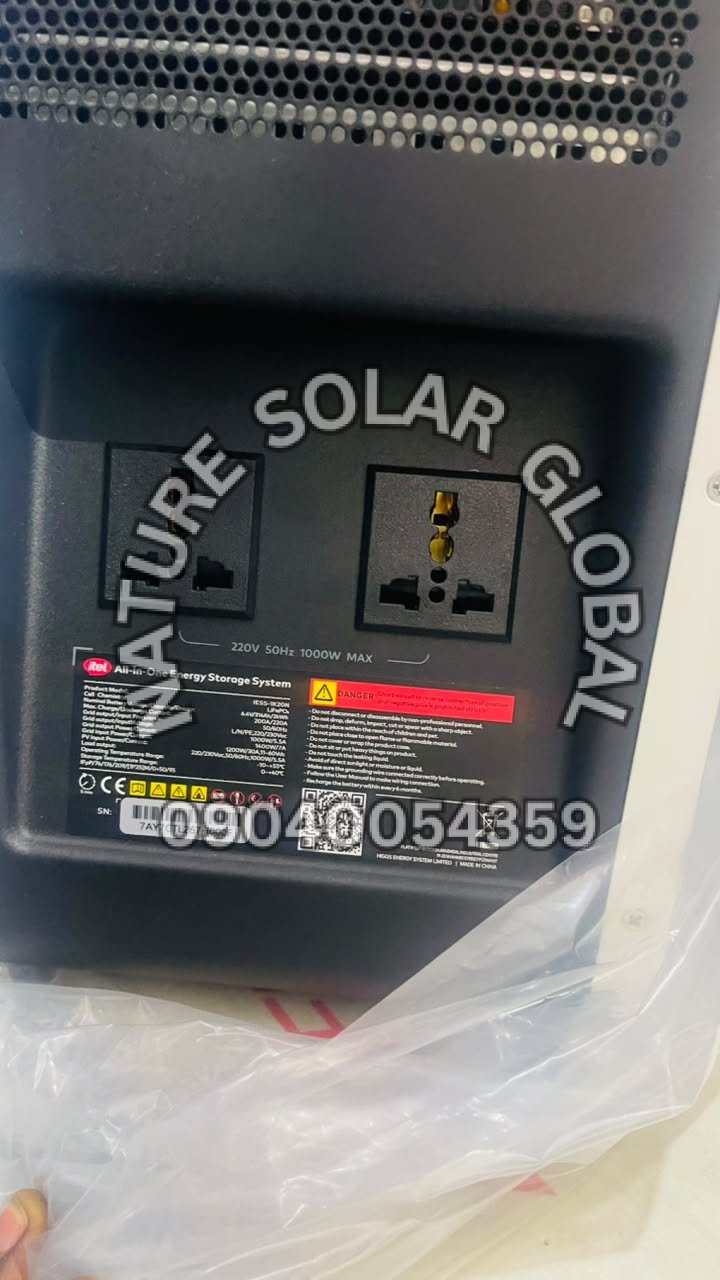
Even if you install a bifacial panel over a dark, non-reflective surface, the front side of the panel will still operate at 100% of its rated capacity (for example, generating its full 620W). However, without a reflective surface beneath it, the rear glass will receive very little bounced light, meaning you miss out on the free bonus electricity that bifacial technology is famous for.
How Light Interacts with Bifacial Panels
- Front-Side Direct Generation: The top glass faces the sun and captures direct solar radiation, producing the core electrical output.
- Rear-Side Diffuse & Reflected Generation: The transparent rear glass captures ambient scattered light from the sky (diffuse light) plus any light bouncing upward from the ground or roof (reflected light).
- The Role of Reflective Surfaces: Reflective surfaces act like mirrors, intensifying the photons hitting the rear glass and turning standard solar output into high-yield power.
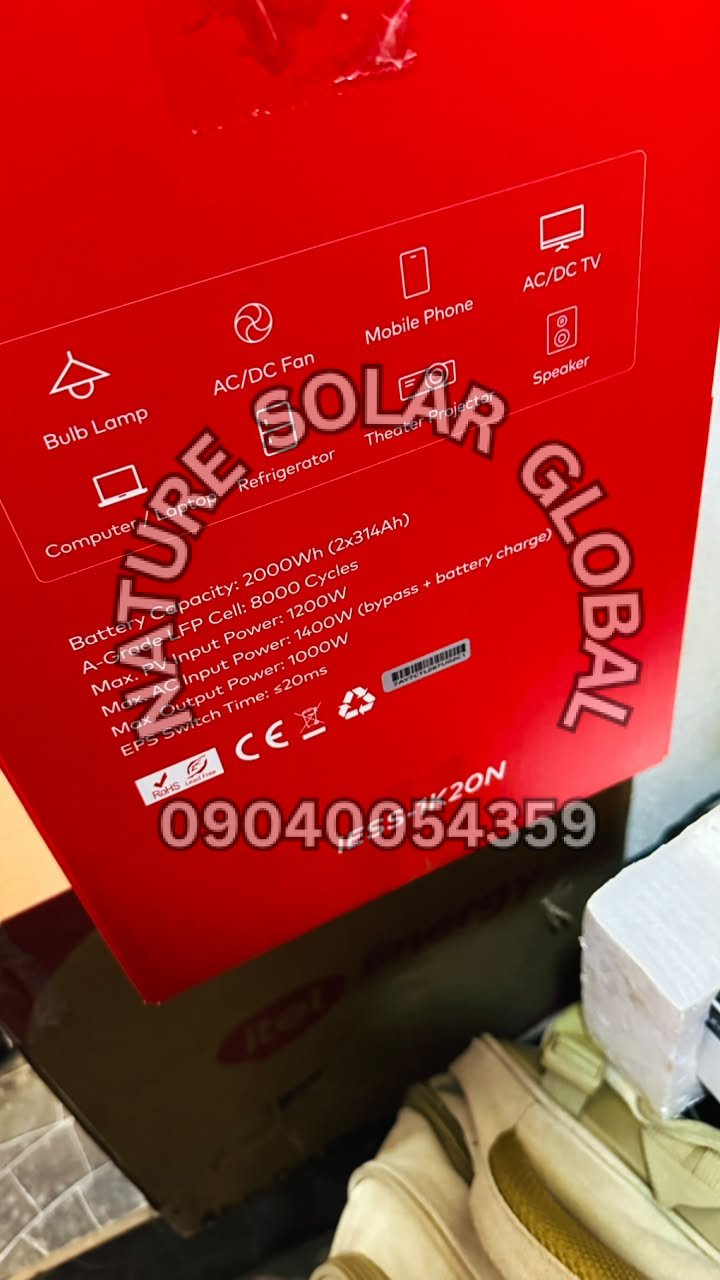
Understanding Albedo: Which Nigerian Surfaces Reflect the Most Sunlight?
In solar engineering, surface reflectivity is measured as albedo, ranging from 0.0 (zero reflection) to 1.0 (100% reflection). Fortunately, many typical Nigerian building materials and architectural designs naturally feature high albedo:
| Surface Beneath Your Bifacial Panels | Albedo Score | Impact on Rear-Side Power Generation |
|---|---|---|
| White-Painted Roof / Reflective Cool-Roof Paint | 0.60 – 0.80 (Very High) | +20% to +30% Extra Power |
| Shiny Silver Zinc / Long-Span Aluminum Sheets | 0.50 – 0.65 (High) | +15% to +25% Extra Power |
| Light-Grey Concrete Decking / White Gravel | 0.45 – 0.60 (High) | +12% to +22% Extra Power |
| Bright Sandy Compound / Interlocking Stones | 0.30 – 0.45 (Moderate-High) | +8% to +15% Extra Power |
| Dark Roof Tiles / Asphalt / Bare Soil | 0.05 – 0.15 (Low) | +3% to +7% Extra Power (Diffuse ambient light only) |
Even if your property has a darker compound floor, installing your bifacial panels on elevated tilted brackets allows ambient sky light to wrap around and hit the rear glass, ensuring decent performance even without a specialized white reflective coating.
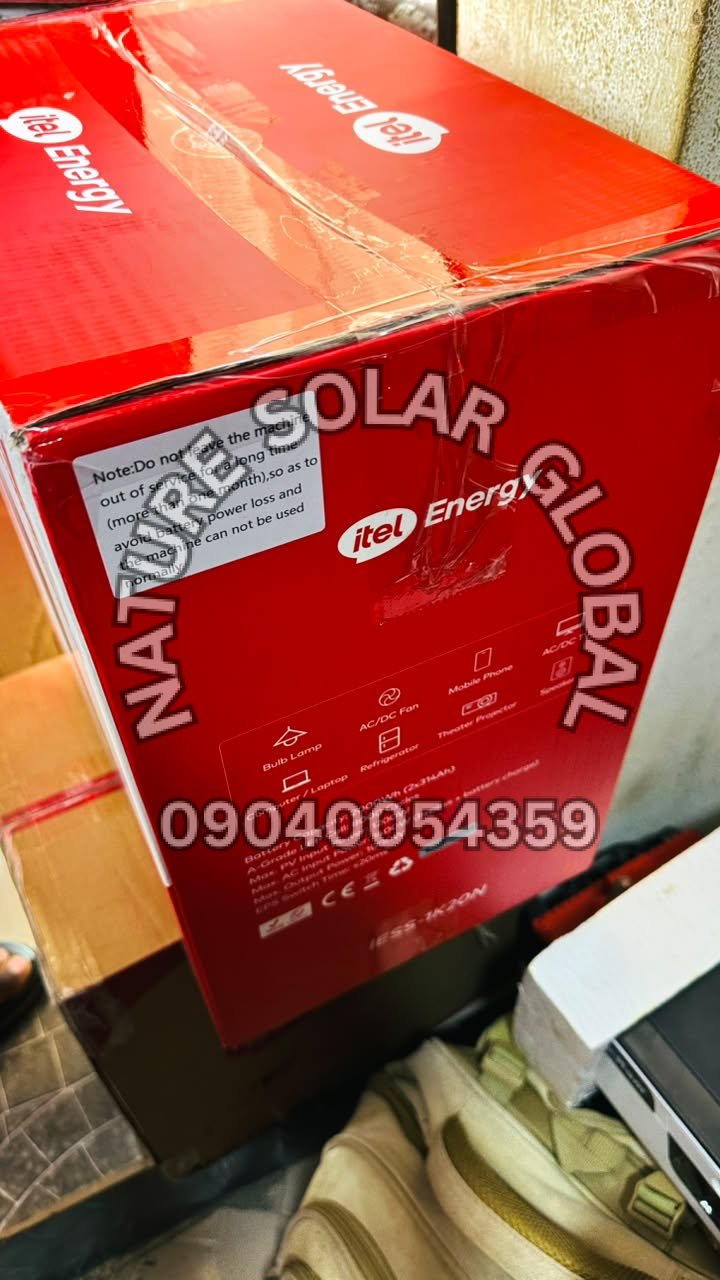
Bifacial vs. Monofacial Solar Panels: Why Bifacial Wins in Nigeria
When purchasing solar modules in Nigeria, comparing 620W bifacial solar panels against traditional monofacial solar panels shows why double-sided technology is the superior investment:
| Comparison Factor | 620W Bifacial Solar Panel (Jinko / JA / Longi) | Standard Monofacial Solar Panel |
|---|---|---|
| Rear-Side Light Capture | Yes (Captures reflected & diffuse light) | No (Underside sealed with opaque plastic) |
| Extra Energy Yield | +5% to +30% Bifacial Gain | 0% (Front-side rating only) |
| Glass & Frame Construction | Dual Tempered Glass (Glass-on-Glass) | Front glass + polymer plastic backsheet |
| Cell Architecture | Half-Cut N-Type Monocrystalline | Standard Mono PERC or older full-cell |
| Heat & Corrosion Resistance | Superior (Resists 40°C+ heat & coastal salt mist) | Moderate (Plastic backsheet degrades faster) |
| Expected Lifespan | 30-Year Linear Power Warranty | 20 to 25 Years |
| Wholesale Price in Nigeria | ₦125,000 – ₦145,000 (Wholesale at Nature Solar) | ₦115,000 – ₦140,000 |
Because global Tier-1 manufacturers mass-produce 620W bifacial modules at nearly the same price as monofacial panels, choosing bifacial solar panels gives you higher wattage, superior shade tolerance, and 30-year durability for virtually the same investment.
Why 620W Half-Cut Bifacial Solar Panels (Jinko, JA & Longi) Are Best for Nigerian Buyers
When purchasing solar panels in Nigeria, brand authenticity and advanced cell design matter tremendously. Unverified markets often feature re-labeled or substandard panels, which is why buying from an accredited distributor like Nature Solar Global Enterprises protects your property.
Here is why 620W Half-Cut Bifacial Solar Panels from Jinko Solar, JA Solar, and Longi are the preferred choice across Nigeria:
- Half-Cut Cell Technology: Each 620W module splits solar cells in half (132 or 144 half-cells) into independent upper and lower circuits. If a rooftop water tank, satellite dish, chimney, or tree branch casts a shadow across the bottom half of your panel, the top half continues generating full electricity instead of shutting down the entire module.
- Lower Heat Loss in Tropical Sun: Half-cut N-Type cells reduce internal electrical resistance, keeping the panel cooler during intense afternoon heat on exposed Nigerian rooftops.
- Fewer Panels, Less Roof Load: Instead of cluttering your roof with four or five small 300W panels, just two (2) 620W panels deliver 1,240W of rated PV capacity (plus extra rear-side reflection gain), reducing weight load on your roof rafters and saving money on mounting rails and DC cables.
- Verifiable Laser-Etched Serial Numbers: Authentic Jinko, JA, and Longi 620W panels carry permanent laser barcodes sealed beneath the glass so you can verify Grade-A factory quality.
The Ultimate Nigerian Solar Combo: 1000W/2000Wh Itel Power Tank + 620W x2 Bifacial Panels
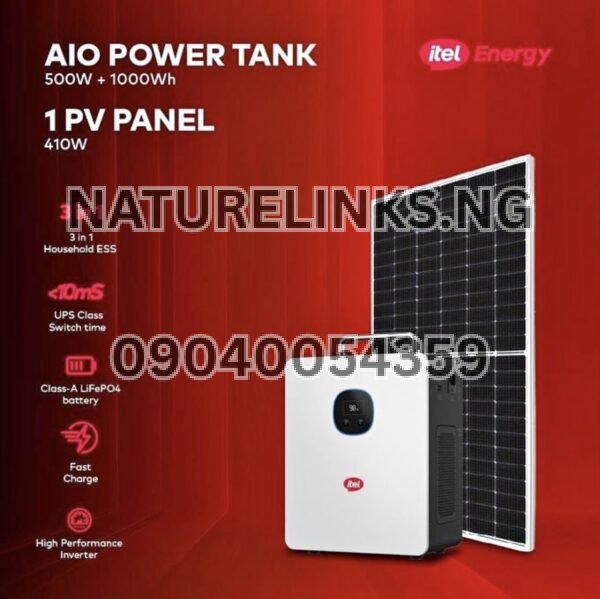
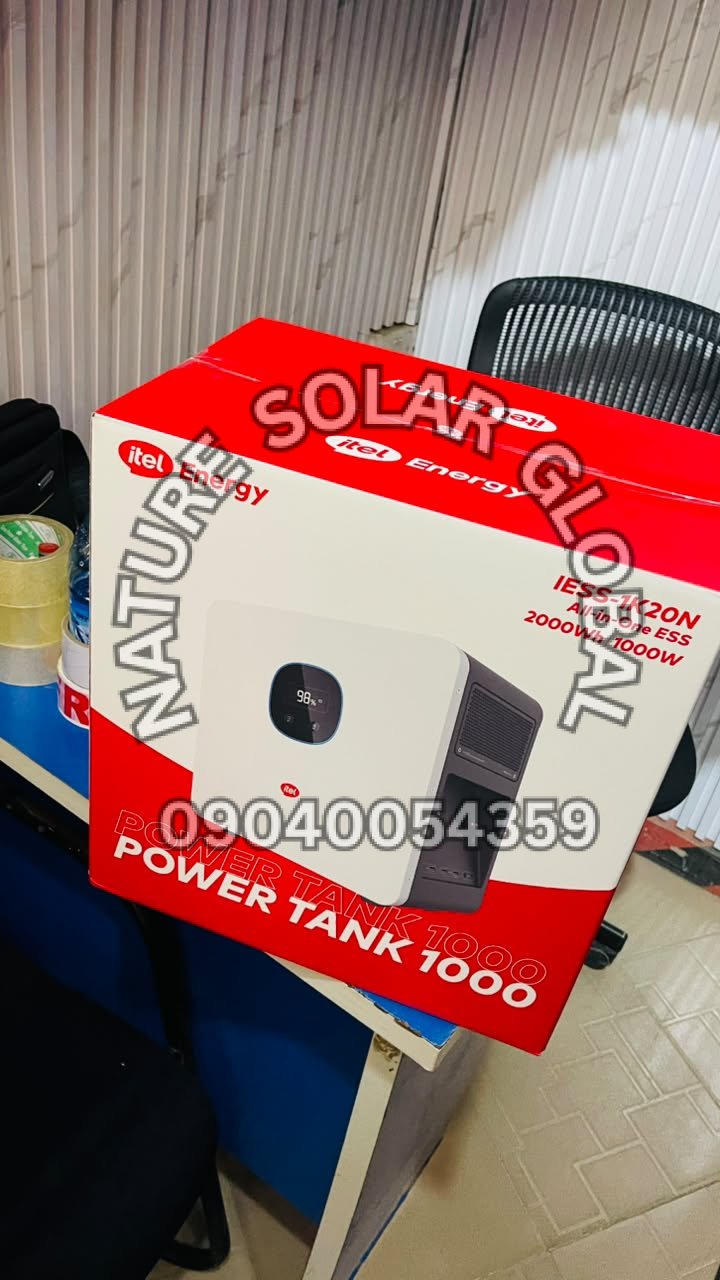
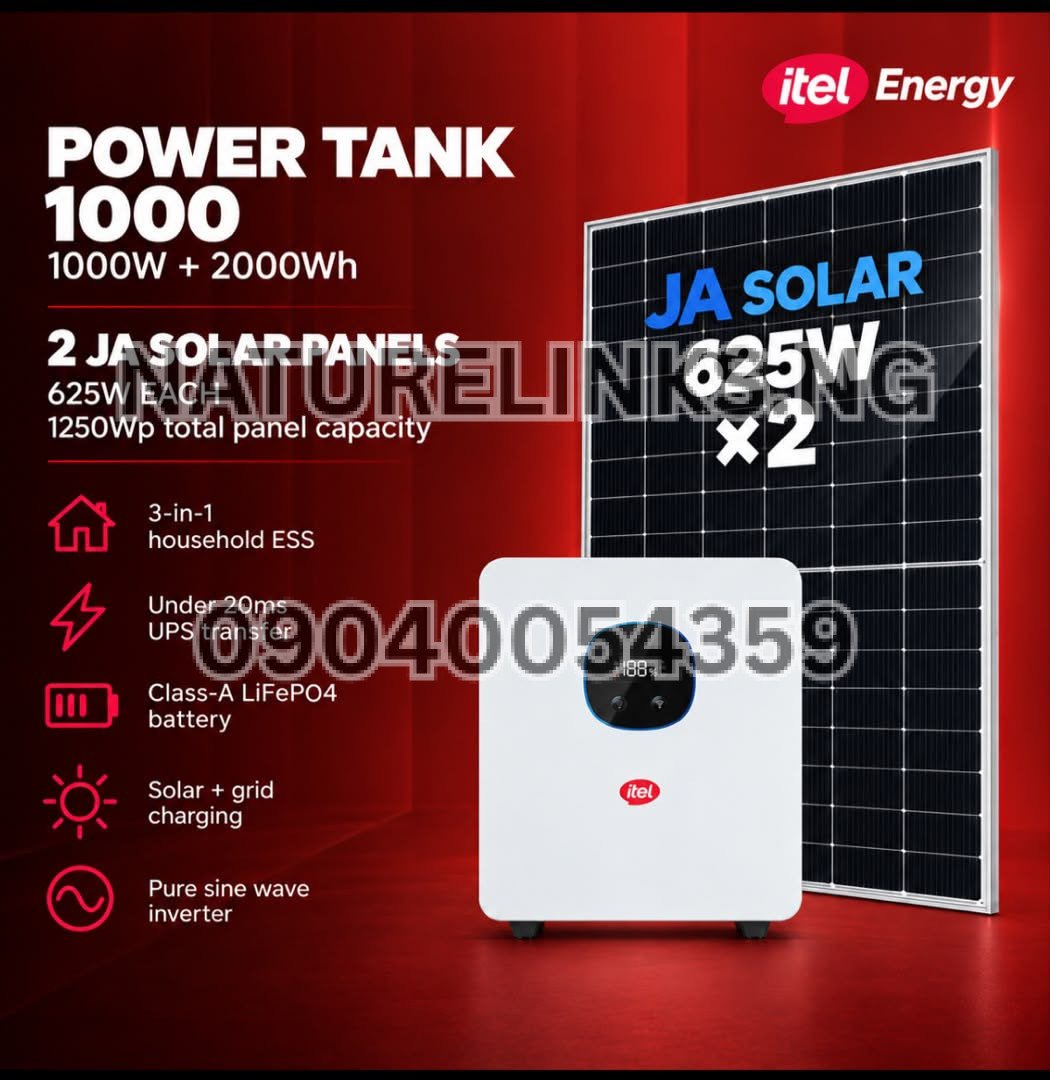
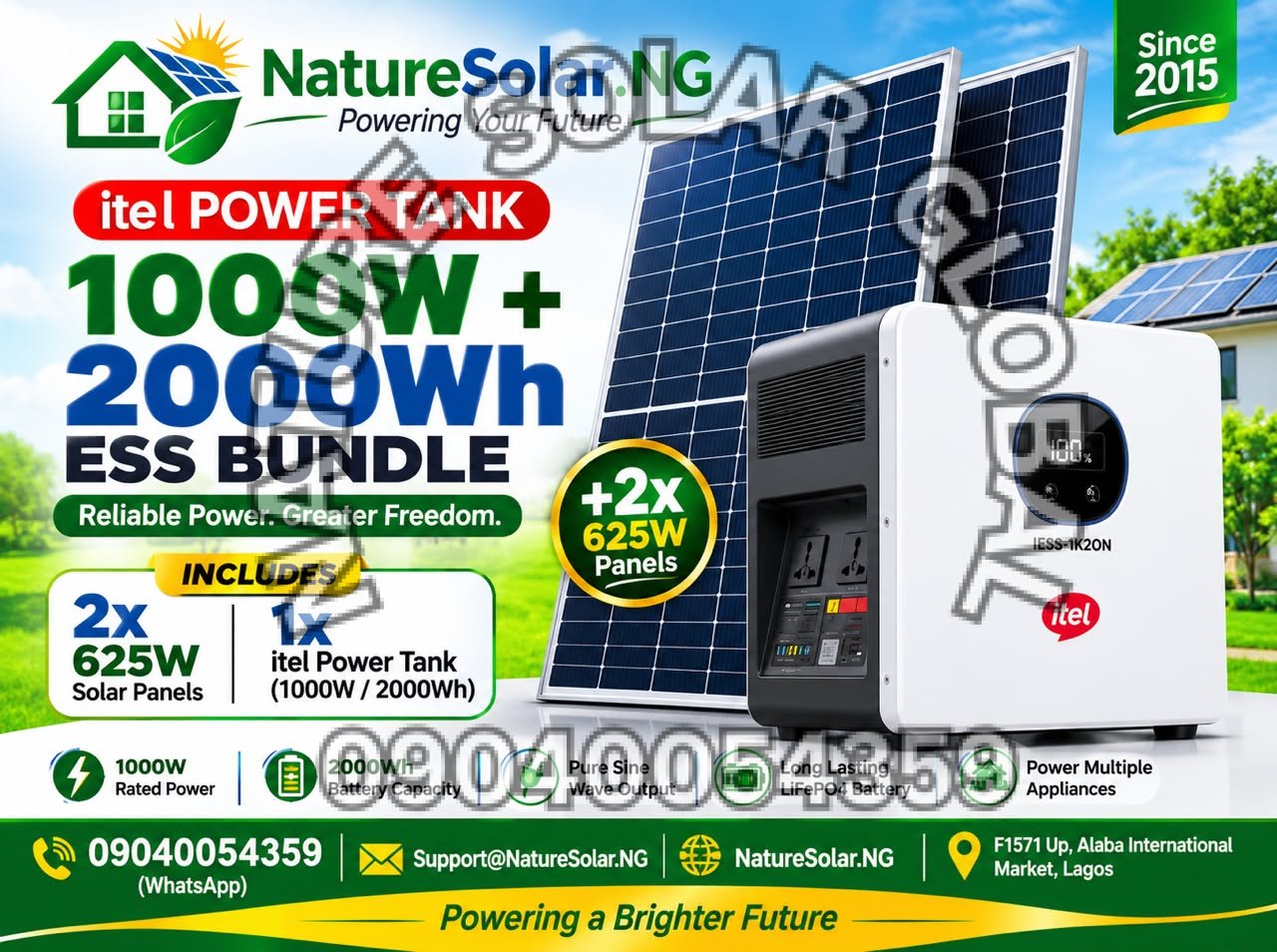
To turn your solar generation into reliable, silent, 24/7 electricity without the headache of wiring separate inverters, external MPPT charge controllers, and heavy tubular lead-acid battery racks, pair two (2) 620W half-cut bifacial solar panels with the 1000W/2000Wh Itel Power Tank All-in-One Solar Generator.
Why Nigerians Love the 1000W/2000Wh Itel Power Tank:
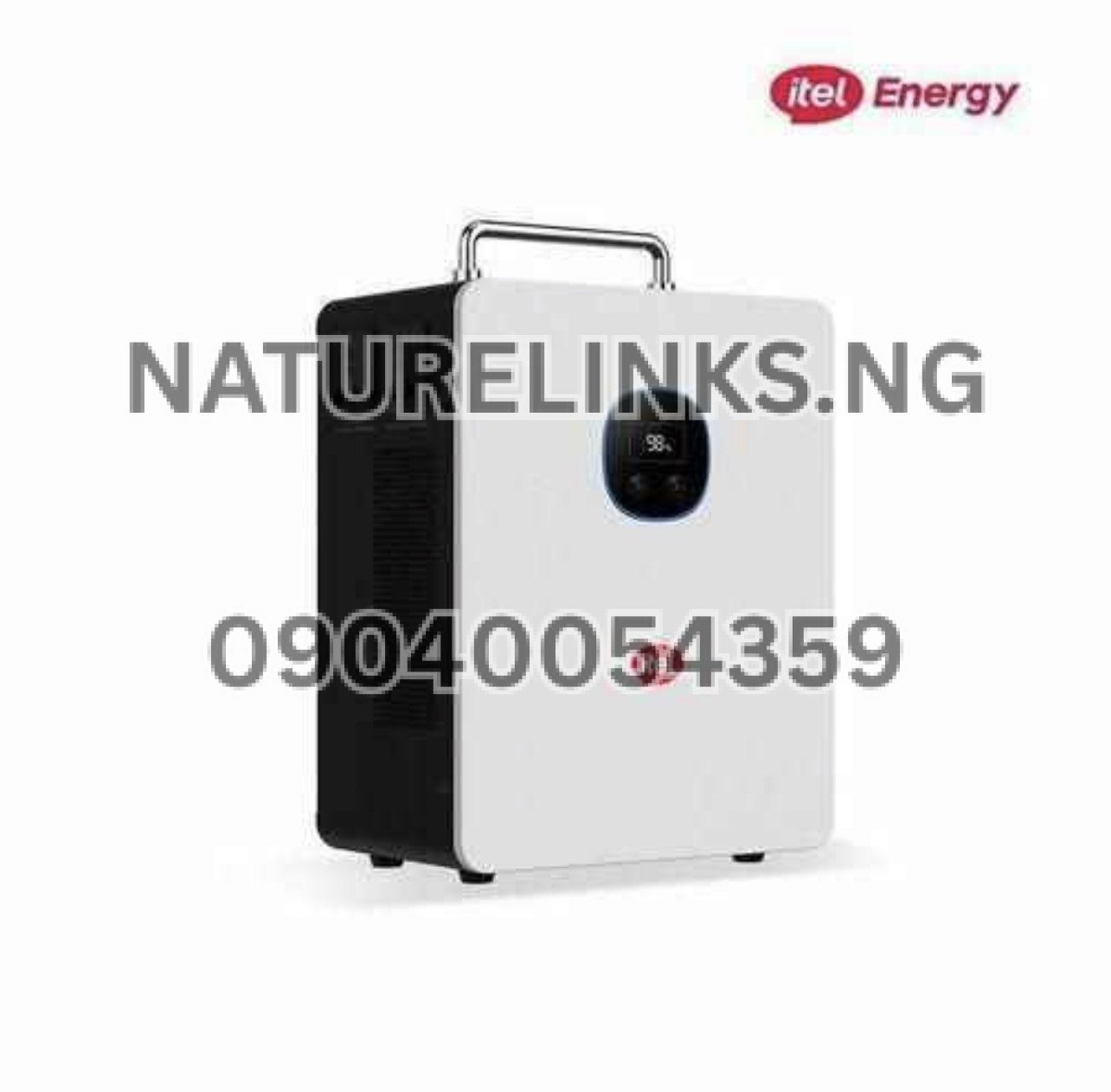
- All-in-One Solar Generator: Integrates a pure sine wave inverter, built-in MPPT solar charge controller, and high-capacity lithium battery inside one sleek, portable unit.
- 1000W Inverter Output: Cleanly powers Smart TVs, DSTV/GOtv decoders, standing and ceiling fans, laptops, Starlink/Wi-Fi routers, LED bulbs, POS machines, and energy-saving inverter refrigerators.
- 2000Wh (2kWh) LiFePO4 Lithium Battery: Powered by ultra-safe Lithium Iron Phosphate (LiFePO4) cells engineered for over 6,000 charge cycles (over 10 years of daily service), completely eliminating annual lead-acid battery replacements.
- Recommended PV Capacity (620W x2 Bifacial Panels): Connecting two 620W Jinko, JA, or Longi half-cut bifacial solar panels (1,240W total plus rear reflection gain) recharges the 2000Wh Power Tank rapidly—even on cloudy afternoons—while powering your daytime appliances simultaneously.
- 2-Year Official Warranty: Backed by a solid 2-year warranty for complete peace of mind.
Order your original 1000W/2000Wh Itel Power Tank at wholesale prices—the cheapest rate ever—directly at https://itelpowertank.com.ng/ with same-day delivery in Lagos and next-day delivery to all Nigerian cities and states.
4 Best Installation Practices to Maximize Bifacial Performance in Nigeria
To ensure your bifacial solar panels perform at their absolute best—even without expensive ground modifications—instruct your solar installation technician to follow these four best practices:
- Elevate the Panels (0.5m to 1m Clearance): Never flush-mount bifacial panels flat against dark roof tiles with zero air gap. Use tilted anodized aluminum brackets to raise the panels at least 0.5 meters above the roof surface so air circulates and reflected light reaches the back glass.
- Optimize Tilt Angle (10° to 15° Facing South): In Nigeria, a gentle south-facing tilt captures peak direct sunlight on the front while opening up the rear glass to bright roof and ground reflections.
- Route DC Cables Neatly: Clip all DC solar cables securely along the outer aluminum frame rails rather than letting loose wires dangle behind the rear glass.
- Regular Harmattan Dust Cleaning: Wash away Harmattan dust early in the morning every 2 to 3 weeks using clean water so sunlight passes unobstructed through both the front and rear tempered glass.
Where to Buy Original Bifacial Solar Panels and Itel Power Tank in Nigeria
Get guaranteed Grade-A products, unbeatable wholesale prices, and fast nationwide shipping from Nigeria’s #1 accredited distributor:
- Best Seller, Wholesaler & Accredited Distributor: Nature Solar Global Enterprises (a subsidiary of Nature Links Nigeria Limited)
- CEO: Mr. Joseph Chikeleze
- Direct Phone Line: 07049528019
- WhatsApp Order Line: 09040054359
- Shop Address: F1571 Upstairs (F-Line), Alaba International Market, Lagos State 🇳🇬
- Official Itel Power Tank Website: https://itelpowertank.com.ng/
- Delivery & Pricing: Wholesale prices (cheapest rate ever), same-day delivery within Lagos, and guaranteed next-day delivery to every city and state across Nigeria.
10 Frequently Asked Questions (FAQs) About Bifacial Solar Panels & Reflective Surfaces in Nigeria
1. Do bifacial solar panels need reflective surfaces underneath them? No, they do not strictly need reflective surfaces to operate. However, reflective surfaces (like zinc roofs, white paint, or concrete) increase rear-side light capture, boosting overall power generation by 5% to 30%.
2. How much is a 620W bifacial solar panel in Nigeria? At wholesale distributors like Nature Solar Global Enterprises in Alaba International Market, an original Tier-1 620W bifacial solar panel (Jinko, JA, or Longi) costs between ₦125,000 and ₦145,000, depending on brand and order volume.
3. What happens if I install bifacial solar panels over a dark surface? The front side will still generate 100% of its rated power (e.g., full 620W), but the rear-side bonus gain will be lower because dark surfaces absorb light instead of reflecting it.
4. Are zinc and aluminum roofs good for bifacial solar panels in Nigeria? Yes. Shiny silver zinc and aluminum roofing sheets have a high albedo (0.50 to 0.65), making them excellent natural reflectors when panels are elevated slightly above them on mounting rails.
5. How do bifacial panels perform during Harmattan and rainy seasons in Nigeria? They outperform traditional monofacial panels during hazy Harmattan days and cloudy rainy afternoons because their dual-glass design absorbs scattered, multi-angle diffuse light from all directions.
6. Which brands of 620W bifacial solar panels are best in Nigeria? The top three Tier-1 brands recommended in Nigeria are Jinko Solar, JA Solar, and Longi Solar, all offering verifiable Grade-A N-Type half-cut dual-glass modules with 30-year power warranties.
7. How many 620W bifacial solar panels are recommended for the Itel Power Tank? Two (2) pieces of 620W half-cut bifacial solar panels (620W x2 = 1,240W) is the recommended PV capacity for the 1000W/2000Wh Itel Power Tank All-in-One Solar Generator.
8. What appliances can the 1000W/2000Wh Itel Power Tank carry in a Nigerian home? With its 1000W pure sine wave inverter and 2000Wh (2kWh) LiFePO4 battery, it powers Smart TVs, DSTV/GOtv decoders, standing/ceiling fans, laptops, Starlink/Wi-Fi routers, LED bulbs, POS machines, and energy-saving inverter refrigerators.
9. Where can I buy original 620W bifacial solar panels and the Itel Power Tank at wholesale price in Nigeria? You can buy directly from Nature Solar Global Enterprises (CEO: Mr. Joseph Chikeleze) at F1571 Upstairs (F-Line), Alaba International Market, Lagos, via call/WhatsApp on 07049528019 / 09040054359, or online at https://itelpowertank.com.ng/.
10. What warranty and delivery options come with the Itel Power Tank from Nature Solar Global Enterprises? Every 1000W/2000Wh Itel Power Tank comes with a 2-year official warranty, wholesale pricing (cheapest rate ever), same-day delivery in Lagos, and next-day delivery to all cities and states across Nigeria.
Conclusion
So, answering the question “Do bifacial solar panels need reflective surfaces underneath them?” No, they do not strictly need reflective surfaces to work, but adding reflective roofing sheets, white paint, or light concrete decking maximizes their rear-side output, giving you 5% to 30% extra free electricity alongside rugged 30-year dual-glass durability. Pairing two 620W Jinko, JA, or Longi half-cut bifacial solar panels with the 1000W/2000Wh LiFePO4 Itel Power Tank gives Nigerian homes and businesses reliable, silent, fume-free electricity at the lowest wholesale price in the market. Call CEO Mr. Joseph Chikeleze at Nature Solar Global Enterprises on 07049528019, message on WhatsApp via 09040054359, or visit https://itelpowertank.com.ng/ today for same-day Lagos delivery or next-day delivery anywhere in Nigeria!