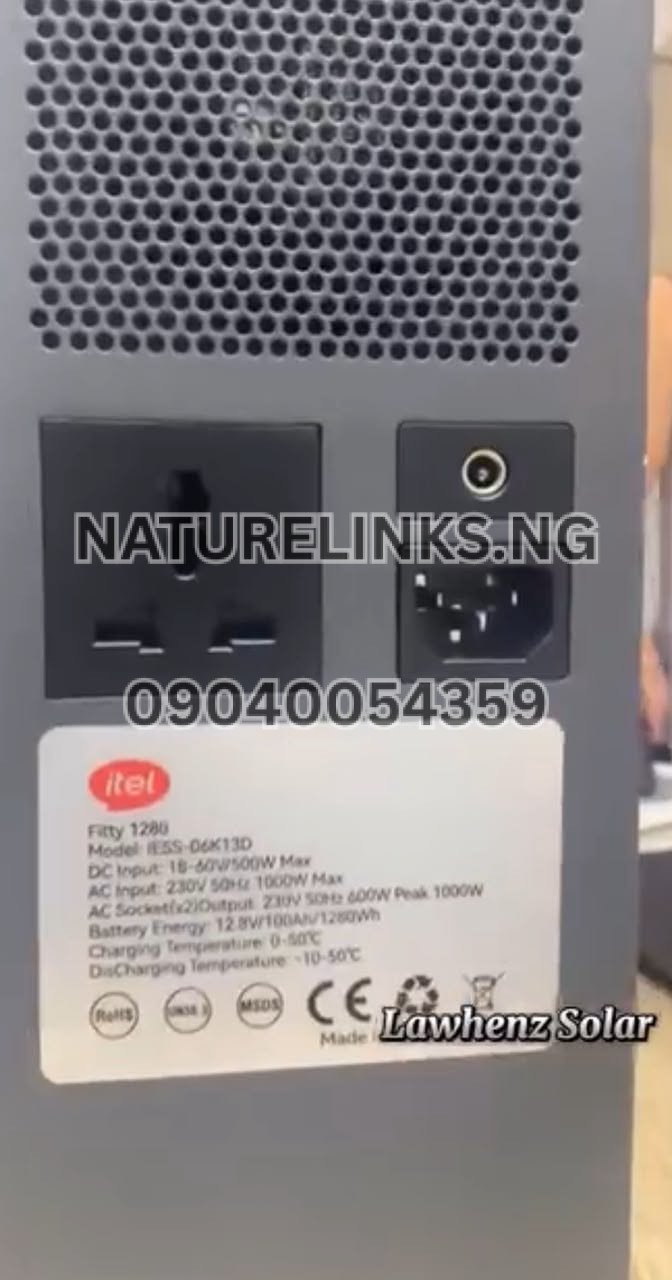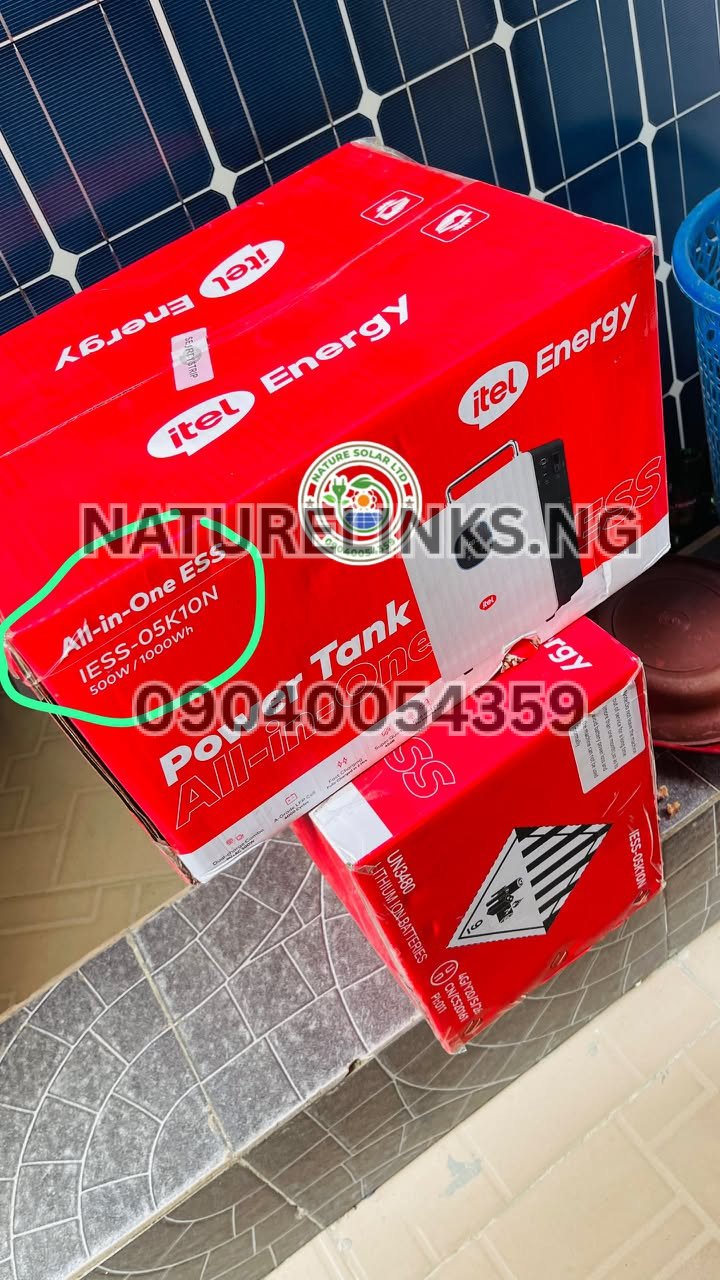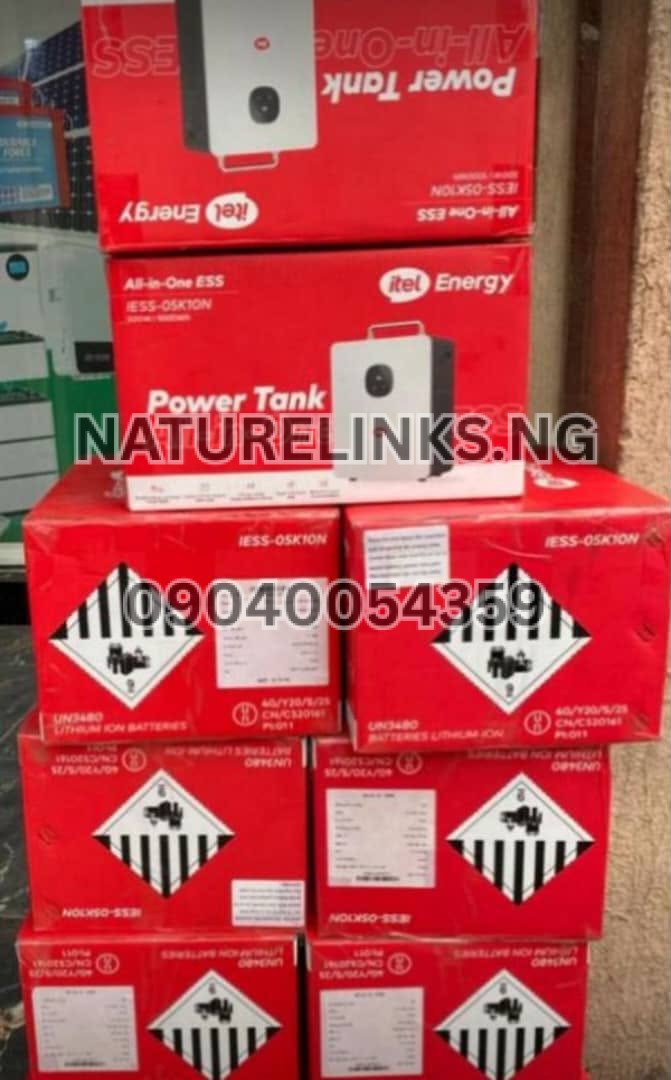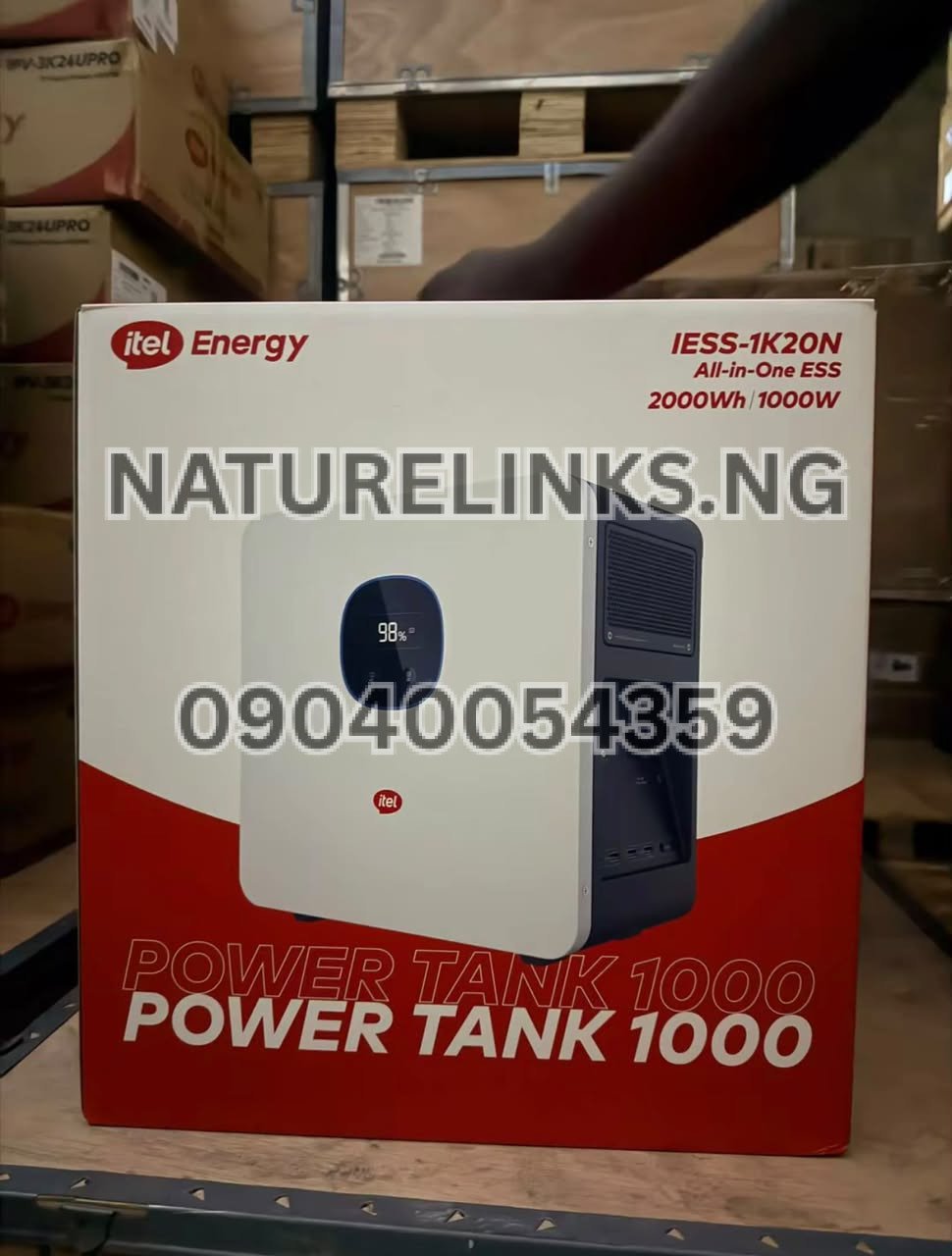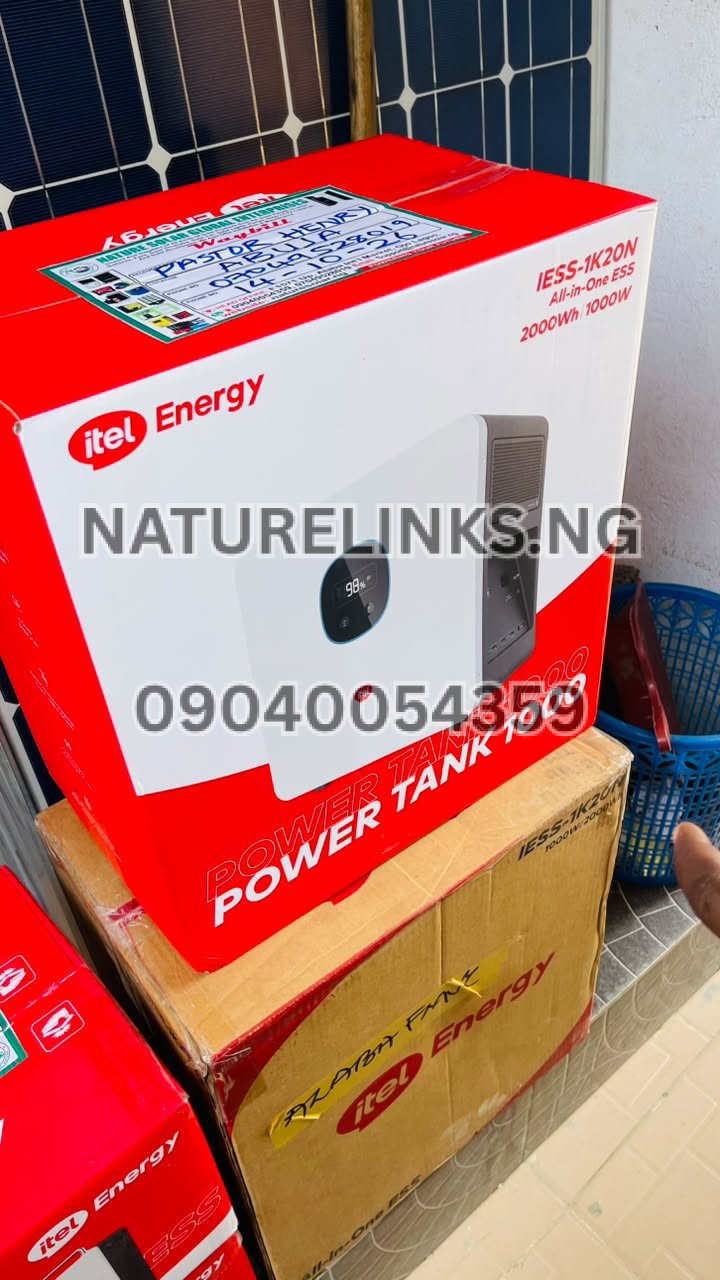
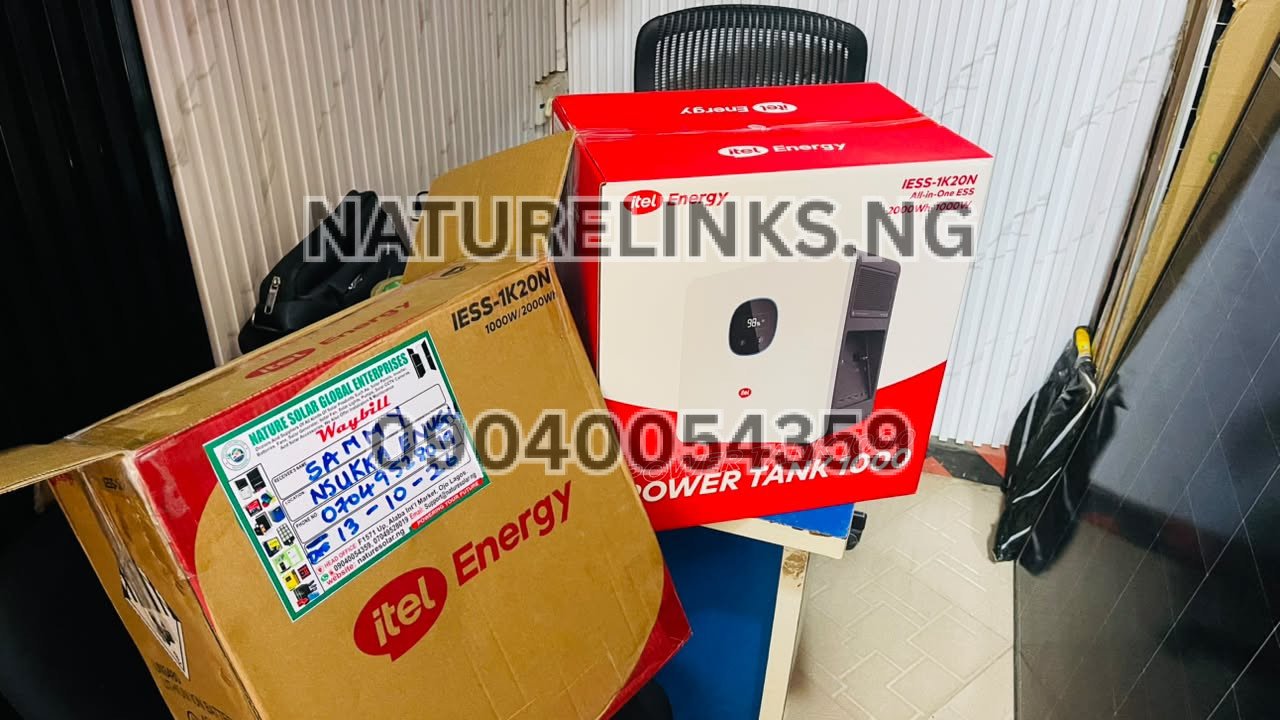
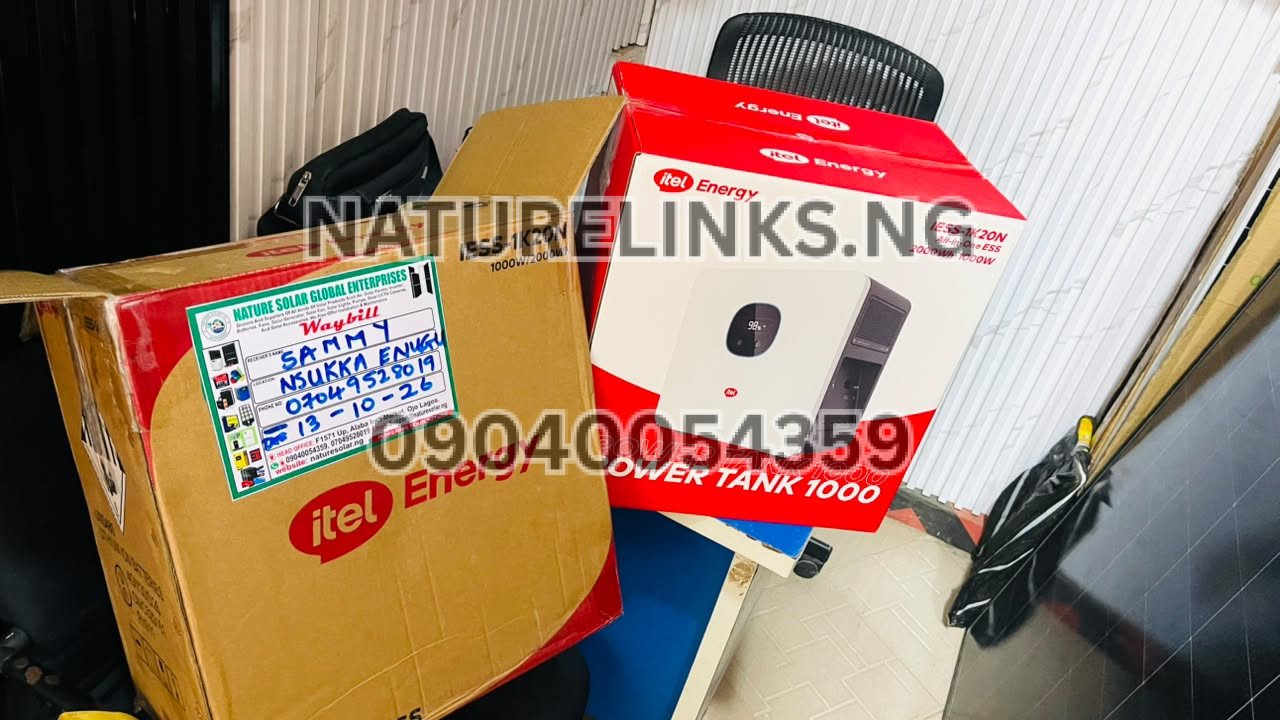
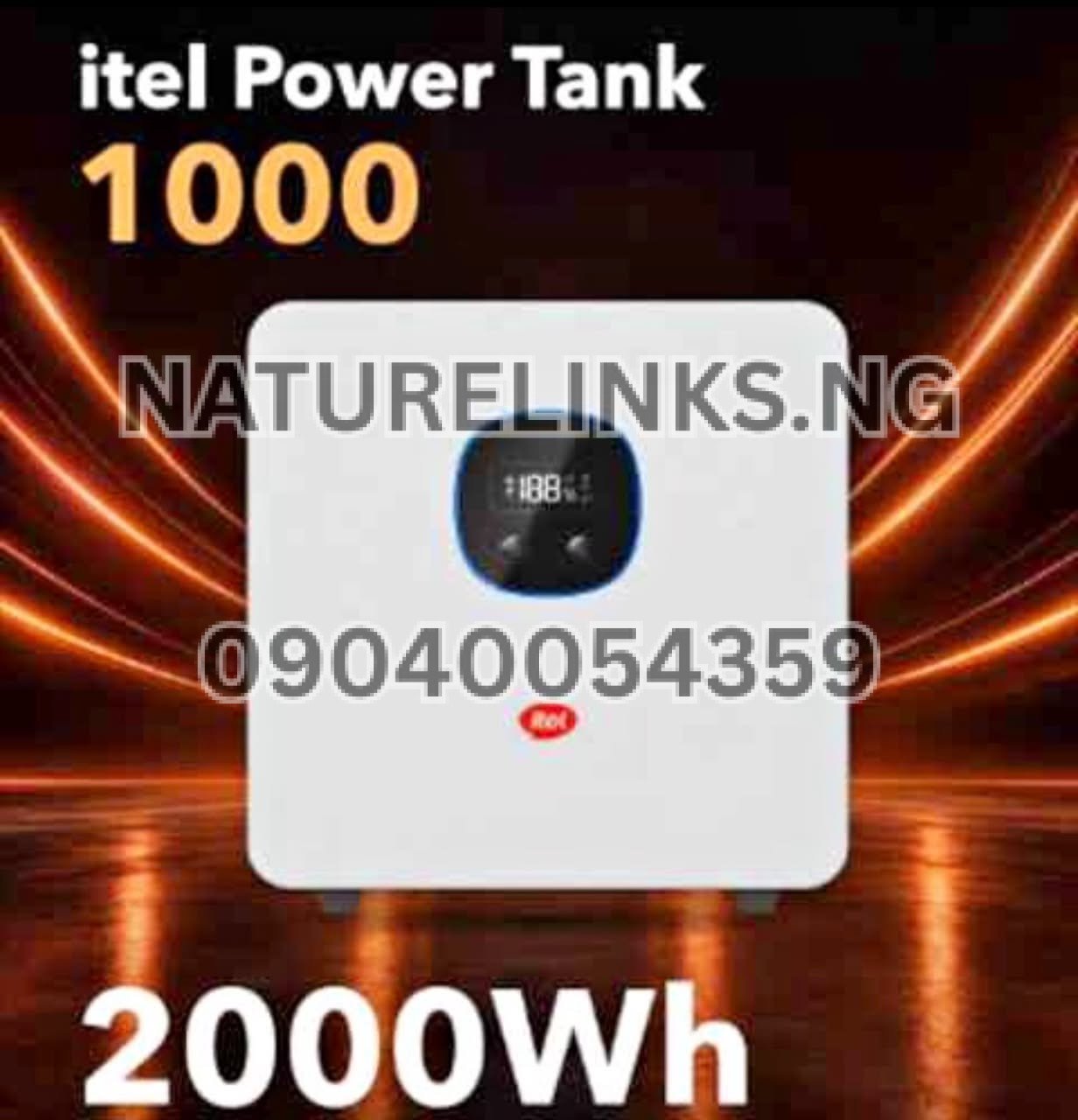
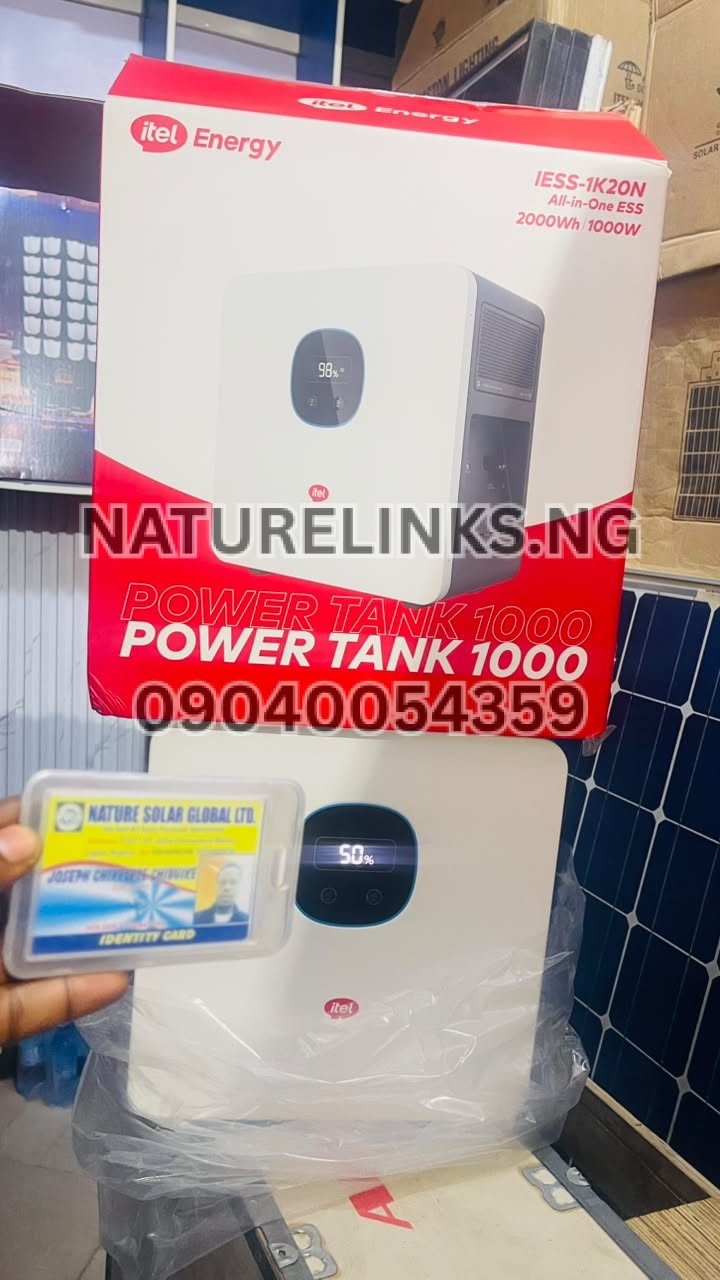
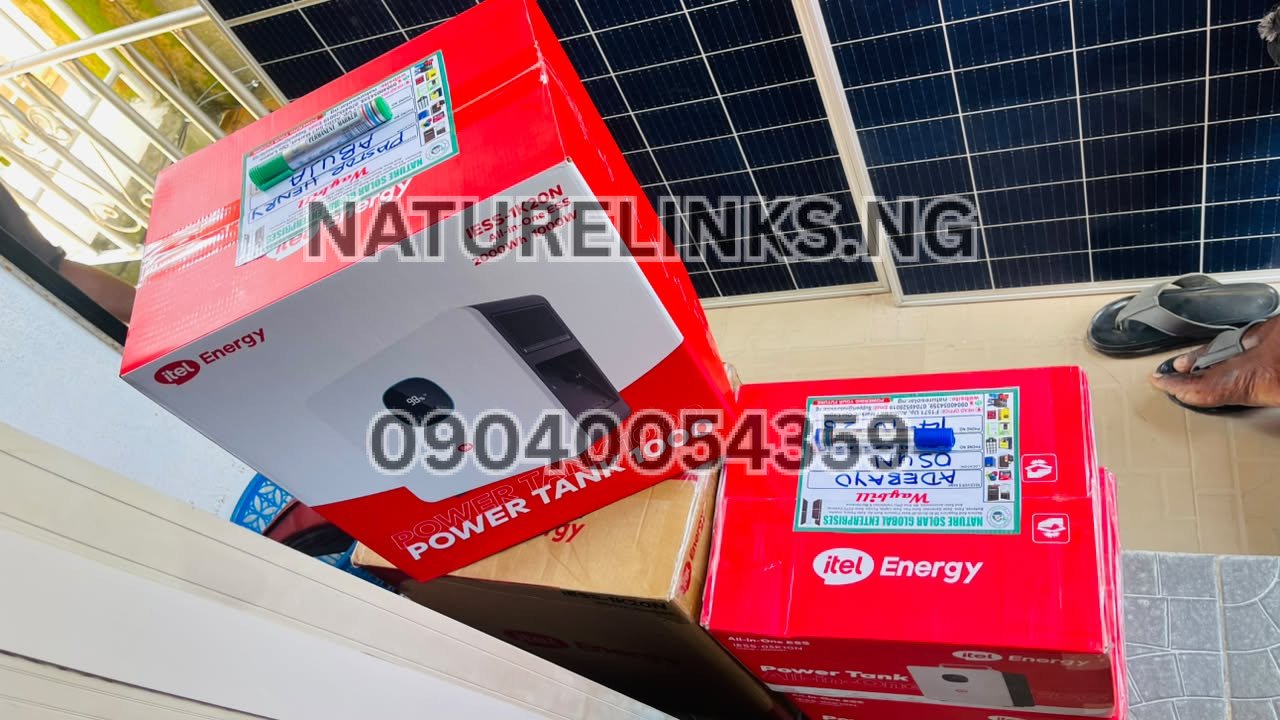
The Best Seller, Wholesaler and Distributor of Itel Power Tank in Nigeria is Nature Solar Global Enterprises, a subsidiary of Nature Links Nigeria Limited. The company supplies Itel Power Tank portable power stations and compatible solar panels to customers across Nigeria. It identifies itself as an accredited distributor serving all Nigerian states.
If you are planning to buy an Itel Power Tank 1000W/2000Wh, understanding its runtime is essential before making a purchase. Runtime tells you how long the battery can power your television, fan, laptop, refrigerator, router, lighting system and other electrical appliances before requiring another charge.
The Itel Power Tank 1000W/2000Wh has a stated battery capacity of 2000Wh (2kWh) and a maximum output power of 1000W. However, the actual backup duration depends on the wattage of your appliances, inverter efficiency, battery operating limits and the amount of energy available for use.
This guide explains how to estimate the runtime of the Itel Power Tank in Nigeria, calculate inverter losses, compare appliance consumption, and choose the right power station for your home or business.
1. How Do I Estimate Runtime for Itel Power Tank 1000W/2000Wh?
To estimate the runtime of an Itel Power Tank 1000W/2000Wh, divide the usable battery energy by the total wattage of the appliances you intend to operate.
The basic formula is:
Runtime (hours) = Usable battery capacity (Wh) ÷ Total appliance power consumption (W)
For a more realistic estimate, account for inverter losses:
Runtime (hours) = Battery capacity (Wh) × Inverter efficiency × Usable battery fraction ÷ Total appliance wattage (W)
For example, assume the following:
- Battery capacity: 2000Wh.
- Inverter efficiency: 90%.
- Usable battery fraction: 90%.
- Combined appliance consumption: 200W.
The estimated runtime is:
2000Wh × 0.90 × 0.90 ÷ 200W = 8.1 hours.
This is an illustrative calculation, not a guaranteed runtime for every Itel Power Tank. Actual performance depends on the manufacturer’s usable-capacity specifications, the inverter’s efficiency at the operating load, battery-management settings and appliance behaviour.
What Is the Expected Runtime of a 2000Wh Battery?
A 2000Wh battery stores a nominal 2kWh of energy. The theoretical runtime before losses is:
| Total Appliance Load | Theoretical Runtime |
|---|---|
| 50W | 40 hours |
| 100W | 20 hours |
| 150W | 13.3 hours |
| 200W | 10 hours |
| 300W | 6.7 hours |
| 400W | 5 hours |
| 500W | 4 hours |
| 600W | 3.3 hours |
| 800W | 2.5 hours |
| 1000W | 2 hours |
These figures assume the entire nominal 2000Wh capacity is available and exclude inverter losses. Real-world runtime will generally be lower.
For practical planning, calculate using a realistic efficiency and usable-capacity assumption rather than relying on theoretical figures alone.
2. What Is the Difference Between 1000W Output and 2000Wh Battery Capacity?
Understanding the difference between watts and watt-hours helps you estimate runtime correctly.
1000W is the stated maximum output power. It indicates how much power the unit can deliver at a given moment within its operating limits.
2000Wh is the nominal battery energy capacity. It indicates how much energy the battery stores.
For example, a 500W appliance uses energy at a rate of 500 watts. If it operates continuously for two hours, it consumes approximately 1000Wh.
A 2000Wh battery could theoretically power that 500W load for four hours before losses, but actual runtime will be shorter.
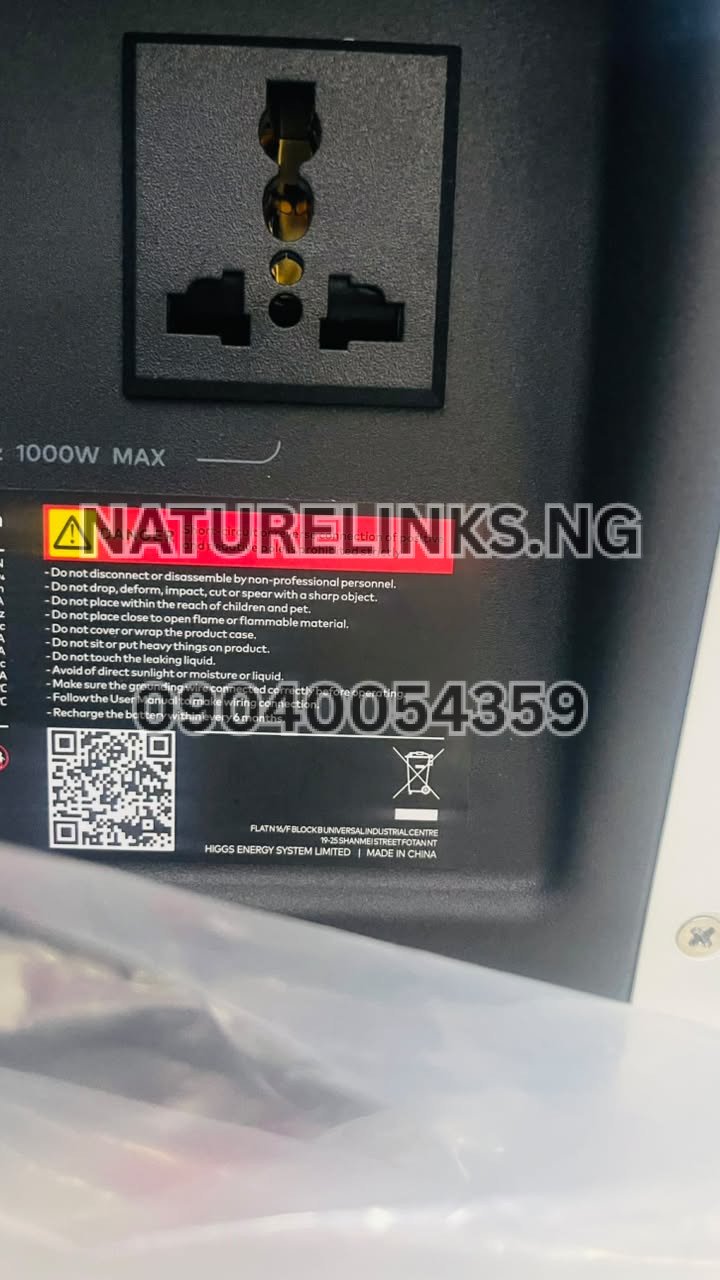
The maximum output rating also matters. Connecting appliances with a combined running load above the station’s permitted 1000W output can cause an overload. Some appliances also require a temporary surge of power when starting.
Therefore, check both the total appliance wattage and the starting requirements of motor-driven equipment.
3. How Much Inverter Loss Should I Include When Calculating Runtime?
Inverter losses occur when the power station converts the battery’s DC electricity into AC electricity for household appliances.
Some stored energy is lost as heat during this conversion. The inverter may also consume power while operating, even when the connected load is relatively small.
For an illustrative calculation, you might assume an inverter efficiency of 85% to 95%, depending on the inverter and operating conditions. Use the manufacturer’s efficiency figures where available.
| Assumed Inverter Efficiency | Energy Available From 2000Wh Before Other Limits |
|---|---|
| 85% | 1700Wh |
| 90% | 1800Wh |
| 95% | 1900Wh |
These figures account for inverter efficiency only. They do not account for battery reserve, operating limits, temperature or other losses.
For example, at an assumed 90% inverter efficiency, a 2000Wh battery provides approximately 1800Wh of AC energy before accounting for any additional restrictions.
A 300W appliance would therefore have an estimated runtime of:
1800Wh ÷ 300W = 6 hours.
The actual runtime could be lower if the station has a minimum reserve, the inverter consumes additional standby power, or the appliance draws more than its rated wattage.
Does Inverter Efficiency Remain the Same at Every Load?
Not necessarily. Inverter efficiency can vary depending on the amount of power being drawn.
A power station may operate at a different efficiency when powering a small router than when running a television and several fans together.
Low loads can also be affected by the inverter’s own operating consumption. This is especially important when estimating overnight runtime for devices that use relatively little power.
For accurate planning, use the manufacturer’s efficiency curve if one is available.
4. How Do I Calculate Itel Power Tank Runtime Using Appliance Wattage?
The simplest method is to add the running wattage of all appliances you want to operate simultaneously.
For example, suppose your home backup requirements are:
| Appliance | Example Wattage |
|---|---|
| LED lights | 40W |
| Television | 100W |
| Standing fan | 60W |
| Wi-Fi router | 15W |
| Laptop | 65W |
| Total | 280W |
These are illustrative wattages. Your appliances may consume more or less electricity, so check their labels or manufacturer’s specifications.
Using a 2000Wh battery, 90% inverter efficiency and a 90% usable battery fraction:
2000Wh × 0.90 × 0.90 ÷ 280W = approximately 5.8 hours.
This estimate assumes that all five appliances run continuously at the stated wattages.
If the laptop is only connected for two hours, or the lights and fan are switched off periodically, the actual backup duration may be longer.
How Can I Find the Wattage of My Appliances?
You can usually find an appliance’s rated power on its label, specification sheet or user manual.
Look for a value expressed in watts (W). If the label shows volts (V) and amperes (A) instead, multiplying voltage by current gives an apparent-power estimate in volt-amperes (VA). For AC equipment, that is not always equal to real power in watts because of power factor.
For more accurate runtime calculations, use the appliance’s actual wattage from a suitable power meter when practical.
Remember that refrigerators, freezers, pumps and air conditioners may draw different amounts of power at startup and during normal operation.
5. How Long Can Itel Power Tank 1000W Run a TV, Fan, Laptop and Router?
The runtime depends on each appliance’s wattage and how long it operates.
Consider the following example:
| Appliance | Example Wattage | Estimated Runtime if Used Alone* |
|---|---|---|
| LED light | 10W | 162 hours |
| Wi-Fi router | 15W | 108 hours |
| Laptop | 65W | 24.9 hours |
| Television | 100W | 16.2 hours |
| Standing fan | 60W | 27 hours |
| Television and fan together | 160W | 10.1 hours |
| TV, fan, router and laptop | 240W | 6.75 hours |
*These estimates use a 2000Wh battery, 90% inverter efficiency and 90% usable battery fraction. They are mathematical illustrations, not manufacturer-tested runtime claims. They assume constant appliance wattage and do not account for all standby consumption or changes in load.
Can I Use the TV and Fan Together?
Yes, provided their combined running wattage and any startup surge remain within the power station’s limits.
For example, a 100W television and a 60W fan have a combined nominal load of 160W. This is comfortably below the stated 1000W maximum output, assuming no other significant loads are connected.
Can I Charge My Phone While Using the Power Station?
Charging a phone is generally a small load compared with the power station’s stated output capacity. Nevertheless, include the charging load when estimating total energy consumption.
If you also run a television, laptop and fan, add the wattage of all devices to calculate the combined load.

6. How Long Can Itel Power Tank 1000W Run a Refrigerator?
A refrigerator’s runtime depends on its average energy consumption, compressor cycling, startup surge, ambient temperature and how frequently its door is opened.
A refrigerator does not necessarily consume its rated running wattage continuously. Its compressor switches on and off as required, so daily energy consumption in watt-hours or kilowatt-hours is often more useful than a single wattage figure.
Suppose a compatible refrigerator averages 80W over the period being considered. Using the same illustrative assumptions of 90% inverter efficiency and 90% usable battery capacity:
2000Wh × 0.90 × 0.90 ÷ 80W = approximately 20.25 hours.
This example assumes a constant average load of 80W. It does not guarantee that a particular refrigerator will run for that long.
Before connecting a refrigerator, confirm:
- Its running wattage.
- Its startup surge.
- The power station’s surge rating, if specified.
- Whether the refrigerator is compatible with the inverter output.
- The refrigerator’s actual energy consumption.
If you want to power a refrigerator overnight, compare its measured energy consumption with the power station’s usable battery energy rather than relying solely on its advertised wattage.
7. What Happens to Runtime When I Connect More Appliances?
Adding appliances increases the total load and generally reduces the amount of time the battery can supply electricity.
For example, assume the same 2000Wh battery, 90% inverter efficiency and 90% usable battery fraction.
| Combined Load | Estimated Runtime |
|---|---|
| 100W | 16.2 hours |
| 200W | 8.1 hours |
| 300W | 5.4 hours |
| 400W | 4.05 hours |
| 500W | 3.24 hours |
| 600W | 2.7 hours |
| 800W | 2.03 hours |
| 1000W | 1.62 hours |
These calculations use 1620Wh as the estimated usable AC energy.
As the table shows, a higher appliance load results in shorter runtime.
The 1000W row is particularly important: although the unit is specified for a maximum output of 1000W, running at that load continuously may reduce runtime considerably. Confirm the manufacturer’s continuous-output rating, operating limits and cooling requirements.
Can I Run Several Appliances at the Same Time?
Yes, if the combined load and startup requirements stay within the power station’s limits.
For example, a television, laptop, router and a few LED lights may operate together with a relatively modest load. Adding a high-wattage kettle, iron or other heating appliance can increase consumption sharply.
For longer backup duration, run only the appliances you need and switch off unnecessary equipment.
8. Does Solar Charging Increase Itel Power Tank Runtime?
Solar charging can extend the period for which your equipment operates by replenishing the battery while sunlight is available.
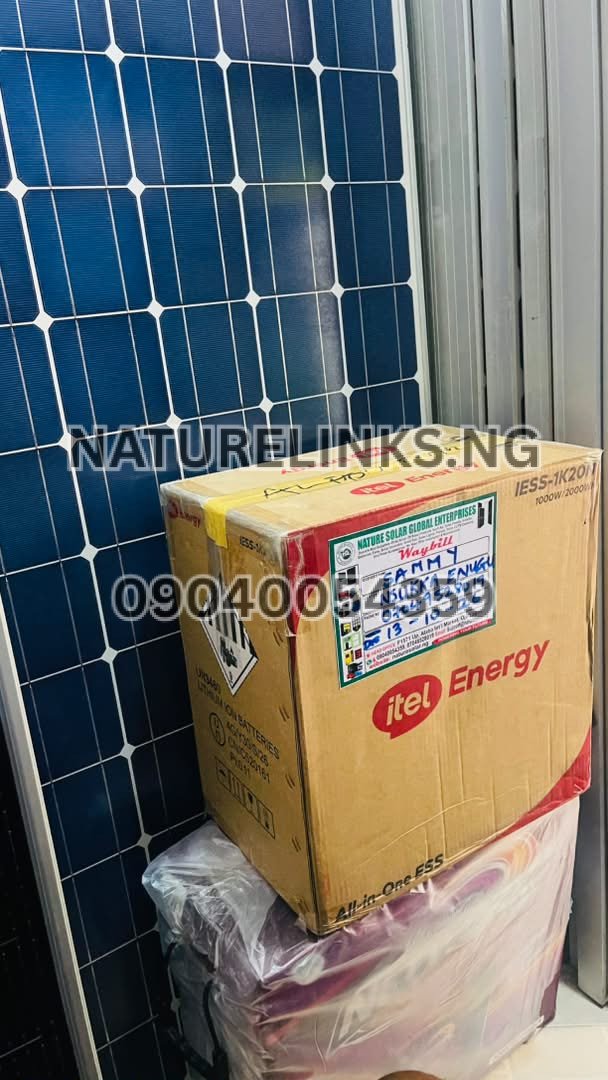
The specified Itel Power Tank 1000W/2000Wh has a stated maximum solar PV input of 1200W.
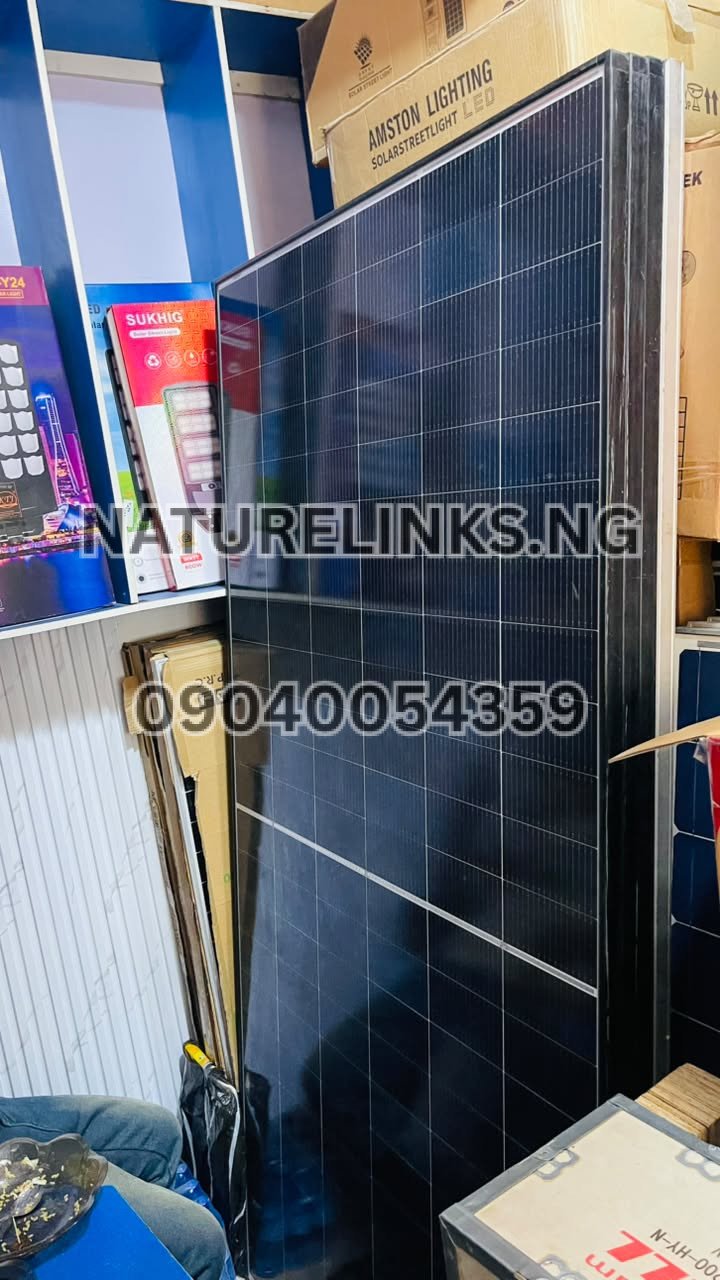
The proposed configuration uses two 625W solar panels, giving a combined nominal panel rating of 1250W. Because this exceeds the station’s stated maximum PV input, the usable input cannot exceed the station’s rated limit. Actual production will also depend on sunlight and the electrical compatibility of the panels.
Two 625W panels do not guarantee continuous 1200W charging. Panel output varies with weather, temperature, orientation, shading and other conditions.
Can Solar Panels Keep the Power Station Running All Day?
Potentially, if the available solar energy is sufficient to cover the connected appliances’ consumption and replenish any energy used from the battery.
However, solar production changes throughout the day and may be low in cloudy weather or at night.
For example, an appliance load of 200W running for five hours consumes approximately 1000Wh. To replenish that energy, the solar system must produce more than 1000Wh because charging and conversion losses also occur.
A properly sized solar arrangement can reduce reliance on grid electricity, but actual results depend on the installation and weather conditions.
How Much Do Two 625W Solar Panels Cost in Nigeria?
According to the prices supplied by Nature Solar Global Enterprises:
- Itel Power Tank 1000W/2000Wh: ₦600,000.
- One 625W solar panel: ₦125,000.
- Two 625W solar panels: ₦250,000.
- Power station plus two panels: ₦850,000.
These are seller-provided prices for this article, not independently verified live prices. Confirm current availability, panel models, compatibility and any additional costs before purchase.
9. What Are the Specifications of Itel Power Tank 1000W/2000Wh?
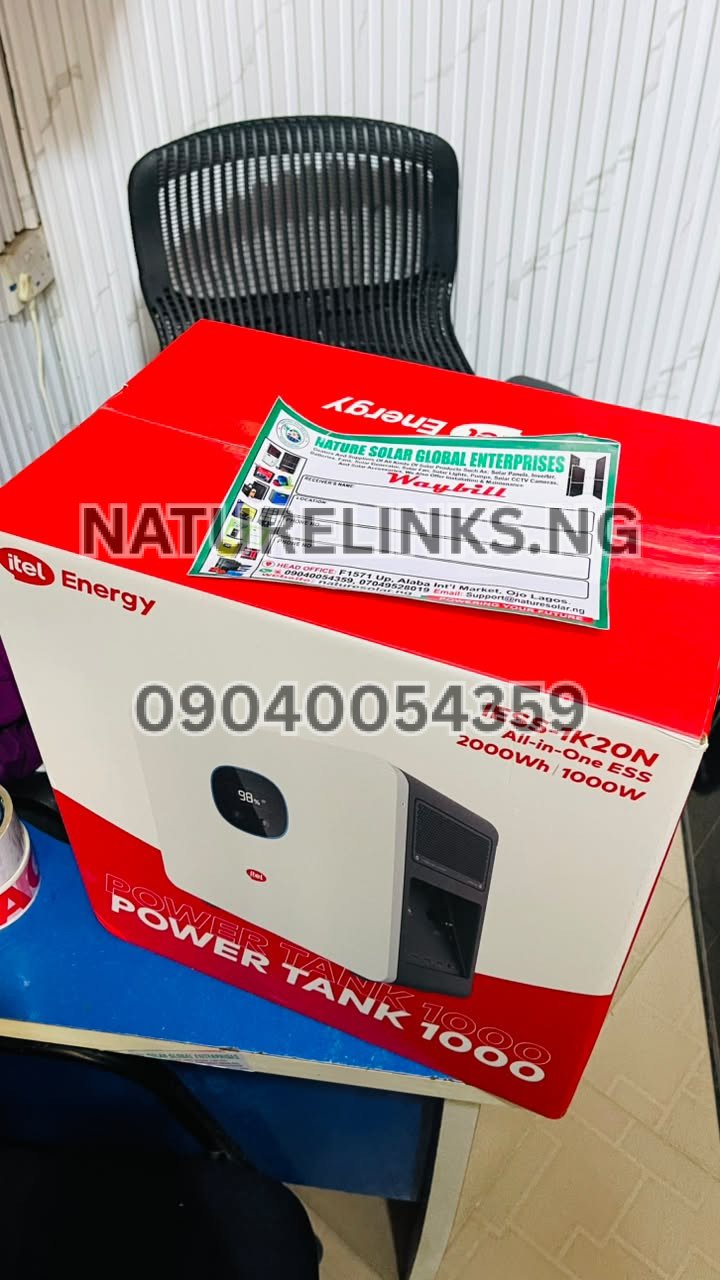
The following specifications were supplied for the model discussed in this article.
| Feature | Supplied Specification |
|---|---|
| Battery capacity | 2000Wh (2kWh) |
| Battery cell configuration | 2 × 314Ah, as supplied |
| Battery chemistry | Lithium iron phosphate (LFP) |
| Battery cycle-life rating | 8000 cycles, as supplied |
| Maximum solar PV input | 1200W |
| Maximum AC input power | 1400W, including bypass and battery charging |
| Maximum output power | 1000W |
| EPS switching time | Stated as approximately 20ms; verify the official datasheet |
| Proposed solar configuration | Two 625W panels |
Request the manufacturer’s official datasheet for the exact model before buying. In particular, verify the battery configuration, usable capacity, maximum PV voltage and current, surge output, charging limits and warranty conditions.
What Does the 8000-Cycle Rating Mean?
The supplied battery specification advertises 8000 cycles for its LFP cells.
A cycle generally refers to an equivalent full charge-and-discharge cycle, but the manufacturer’s testing conditions and end-of-life capacity threshold determine how the rating should be interpreted.
It does not mean that every battery will retain its original capacity for 8000 cycles under every usage pattern.
Temperature, charging practices, discharge depth and operating conditions can affect battery longevity.
What Does the EPS Switching Time Mean?
EPS refers to an emergency power supply function. A stated switching time of approximately 20 milliseconds indicates the advertised time taken to switch to backup power under specified conditions.
It should not be assumed that every sensitive electronic device will tolerate the transition. Check the manufacturer’s documentation and your equipment’s requirements if uninterrupted operation is essential.
10. How Much Is Itel Power Tank 1000W/2000Wh in Nigeria?
The seller-provided price for the Itel Power Tank 1000W/2000Wh is ₦600,000.
The supplied comparison indicates that other sellers offer the specified model at approximately ₦620,000 to ₦650,000. These figures have not been independently verified as current market-wide prices.
The estimated costs are:
| Product | Seller-Provided Price |
|---|---|
| Itel Power Tank 1000W/2000Wh | ₦600,000 |
| One 625W panel | ₦125,000 |
| Two 625W panels | ₦250,000 |
| Complete configuration with two panels | ₦850,000 |
Prices can change according to stock, product model, panel brand and included accessories.
Before paying, ask the supplier to confirm the exact 2000Wh model, the continuous output rating, the warranty and whether the quoted price includes solar panels.
11. Where Can I Buy Itel Power Tank 1000W/2000Wh in Nigeria?
Nature Solar Global Enterprises, a subsidiary of Nature Links Nigeria Limited, advertises the sale and wholesale supply of Itel Power Tank models and compatible solar panels.
Nature Solar Global Enterprises Contact Details
Business name: Nature Solar Global Enterprises
Parent company: Nature Links Nigeria Limited
CEO: Mr. Joseph Chikeleze
Call: 07049528019
WhatsApp: 09040054359
Shop address: F1571 Upstairs (F-Line), Alaba International Market, Lagos State, Nigeria.
Website: https://itelpowertank.com.ng/
The business advertises delivery to Nigerian cities and states, including same-day delivery in Lagos and next-day delivery outside Lagos. Confirm the actual delivery schedule for your destination before ordering.
What Should I Check Before Buying?
Before making payment, confirm:
- That the product is the 1000W/2000Wh version.
- The actual usable battery capacity.
- The continuous and surge output ratings.
- The warranty and after-sales support.
- Whether solar panels are included in the quoted price.
- Whether the panels meet the station’s PV voltage and current limits.
- The delivery fee and estimated delivery date.
- Whether all required cables and accessories are included.
A power station should be selected according to your appliances’ energy needs, not just its advertised wattage.
12. Frequently Asked Questions About Itel Power Tank 1000W Runtime
1. How Do I Calculate Itel Power Tank 1000W Runtime?
Multiply the nominal battery capacity by the assumed inverter efficiency and usable battery fraction, then divide by the combined appliance wattage. For example, 2000Wh × 0.90 × 0.90 ÷ 200W gives an estimated 8.1 hours.
2. How Many Hours Can Itel Power Tank 2000Wh Last?
Runtime depends on the connected load. With an illustrative 90% inverter efficiency and 90% usable battery fraction, a 200W load may run for approximately 8.1 hours. Actual results vary.
3. Can Itel Power Tank 1000W Run a TV and Fan Together?
Yes, if their combined running wattage and startup requirements remain within the power station’s limits. Add the wattage of both appliances and any other connected devices to estimate runtime.
4. How Much Inverter Loss Should I Calculate?
Use the manufacturer’s inverter-efficiency information where available. If it is unavailable, an assumed efficiency of 85%–95% can be used for an initial estimate, but this is not a verified efficiency range for every Itel Power Tank model.
5. Can Itel Power Tank 1000W Run a Refrigerator Overnight?
It depends on the refrigerator’s energy consumption and startup surge. Check its power requirements and calculate its expected energy use over the night. Do not assume that every refrigerator is compatible.
6. Does a 2000Wh Battery Mean It Can Run 2000W Appliances?
No. The 2000Wh rating describes stored energy, while the specified model’s maximum output is 1000W. An appliance requiring more than the permitted output may overload the unit.
7. Can Solar Panels Extend Itel Power Tank Runtime?
Yes. Compatible solar panels can replenish the battery when sunlight is available. The amount of additional runtime depends on actual solar production, appliance consumption and charging losses.
8. How Many Solar Panels Does Itel Power Tank 1000W/2000Wh Need?
The proposed arrangement uses two 625W panels. Their combined nominal rating is 1250W, while the station’s stated maximum PV input is 1200W. Verify voltage, current and approved wiring configuration before connecting them.
9. How Much Is Itel Power Tank 1000W/2000Wh in Nigeria?
The seller-provided price is ₦600,000 for the power station alone. Two 625W solar panels at ₦125,000 each bring the estimated equipment total to ₦850,000. Confirm current prices before ordering.
10. Where Can I Buy Itel Power Tank 1000W/2000Wh in Nigeria?
You can contact Nature Solar Global Enterprises on 07049528019 or WhatsApp 09040054359. Its stated address is F1571 Upstairs (F-Line), Alaba International Market, Lagos State. Verify the exact model, warranty and delivery terms before paying.
Conclusion: How Do I Estimate Runtime for Itel Power Tank 1000W Battery Capacity Using Appliance Wattage and Inverter Losses?
Estimating the runtime of the Itel Power Tank 1000W/2000Wh starts with understanding its 2000Wh battery capacity and 1000W maximum output rating. Add the wattage of your appliances, account for inverter efficiency and usable battery capacity, and divide the resulting usable energy by the total load.
For practical planning, do not rely exclusively on theoretical calculations. Appliance startup surges, standby consumption, temperature and battery operating limits can all affect performance.
For buyers seeking the specified model in Nigeria, Nature Solar Global Enterprises advertises the Itel Power Tank 1000W/2000Wh at ₦600,000 and compatible 625W solar panels at ₦125,000 each. The estimated cost of the power station and two panels is ₦850,000 before additional charges.
For enquiries, call 07049528019 or WhatsApp 09040054359. Visit F1571 Upstairs (F-Line), Alaba International Market, Lagos State, or consult the seller’s website at itelpowertank.com.ng.
Choose a configuration that matches your energy requirements, and confirm the official specifications, panel compatibility, warranty and final price before purchase.