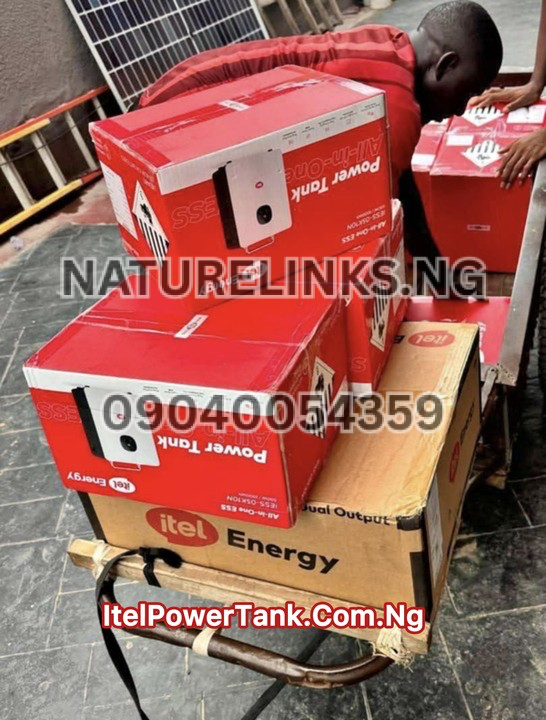
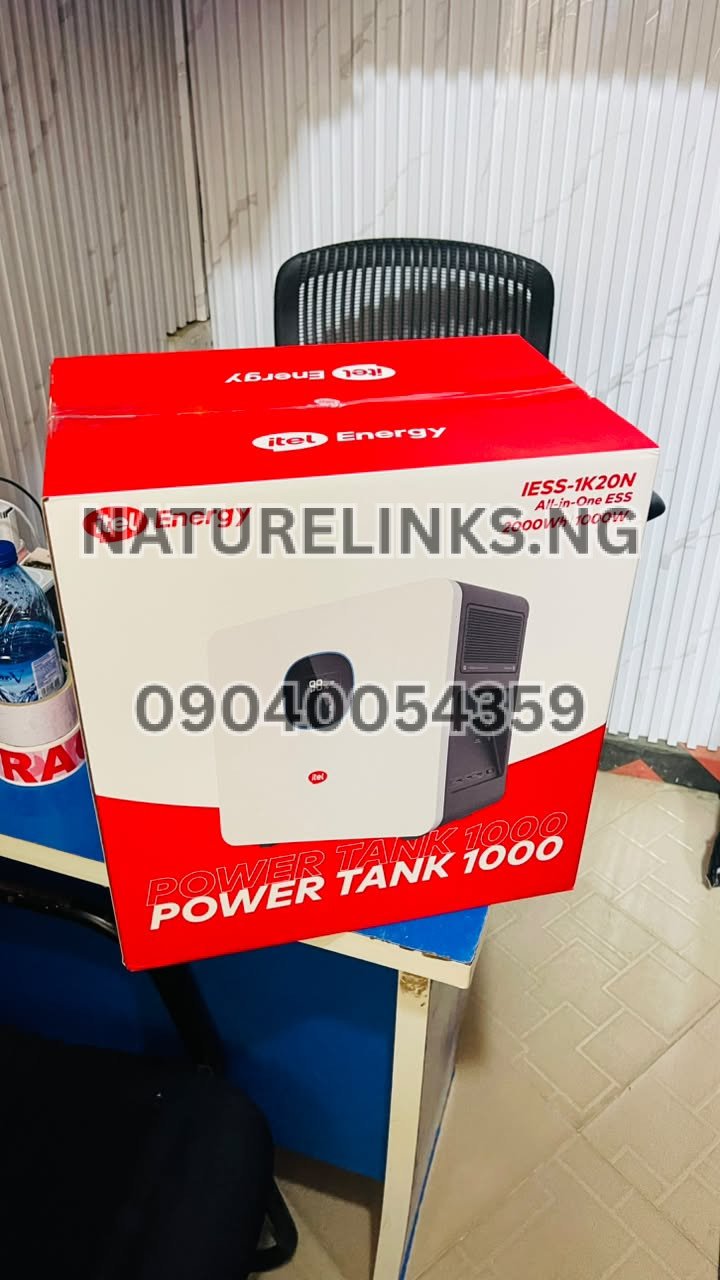
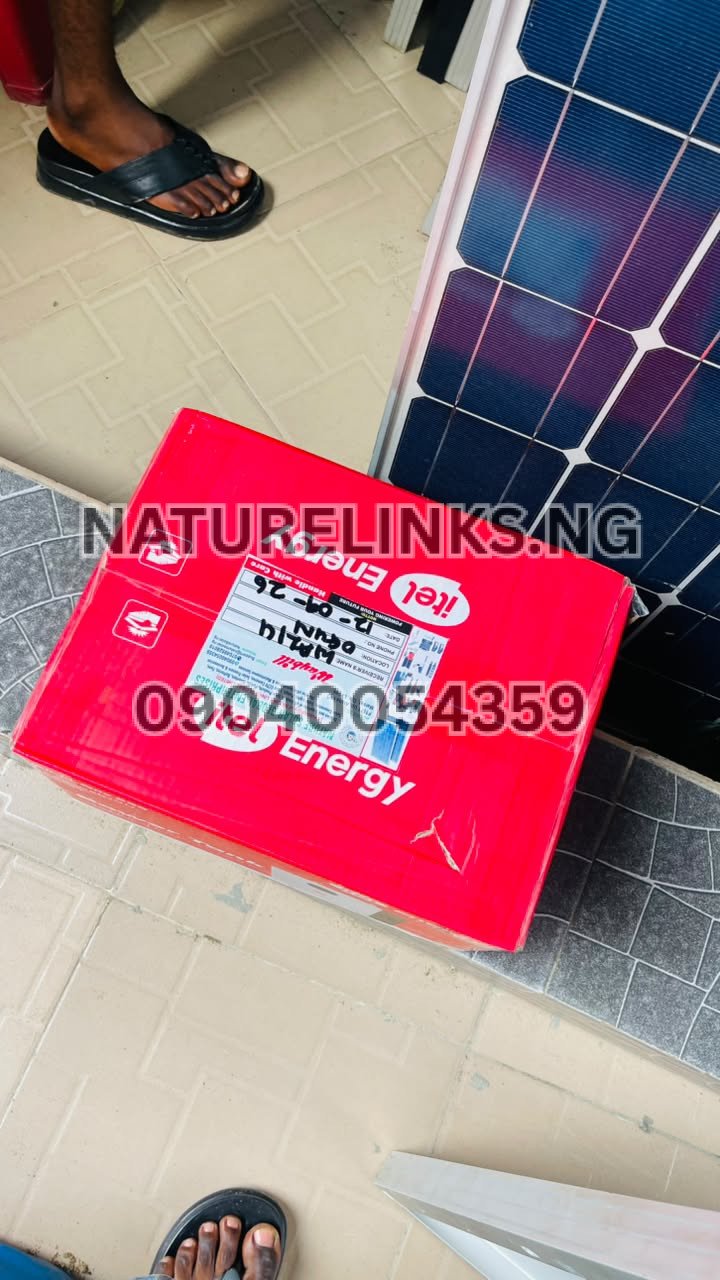
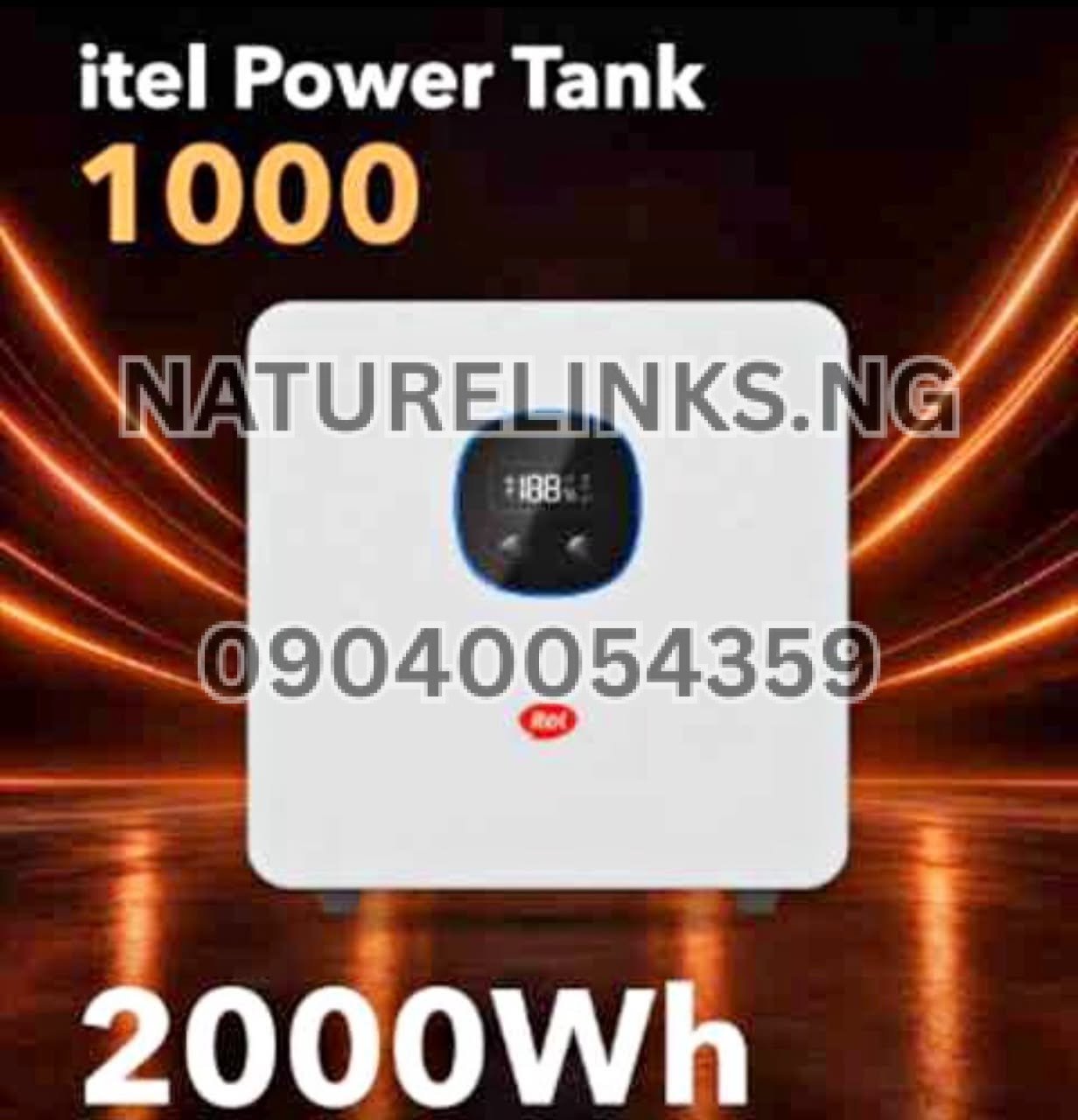
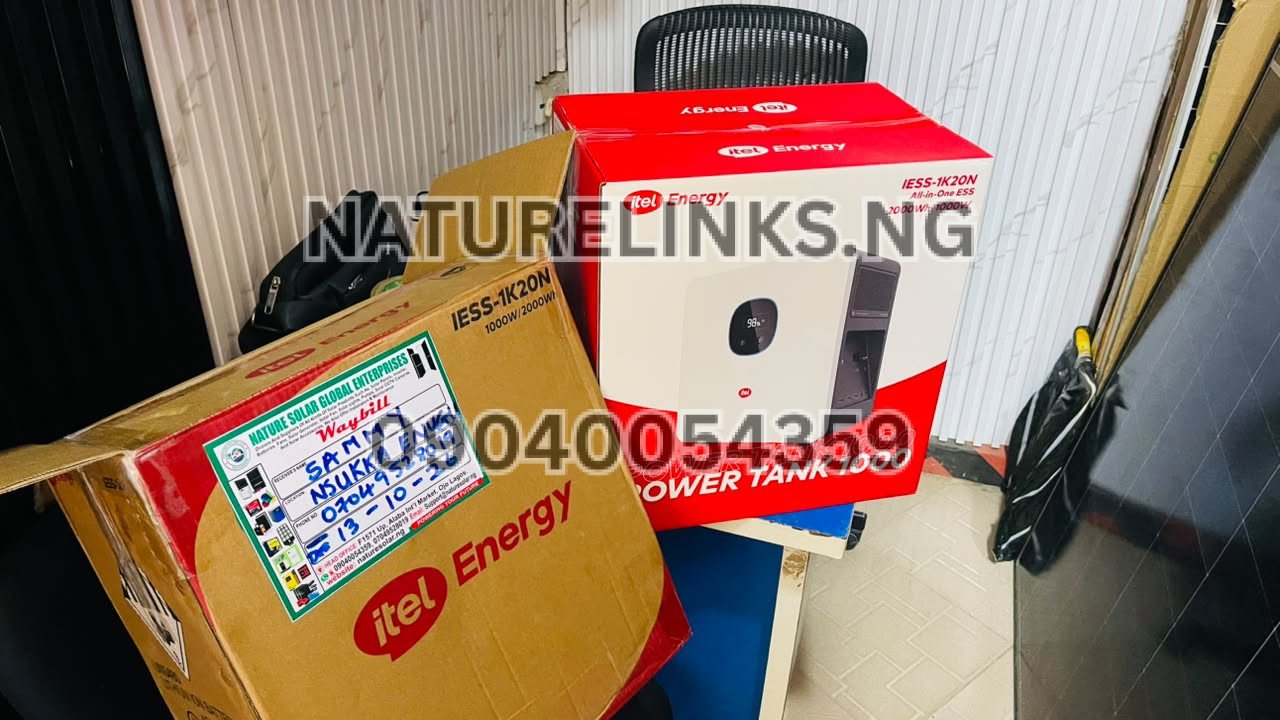
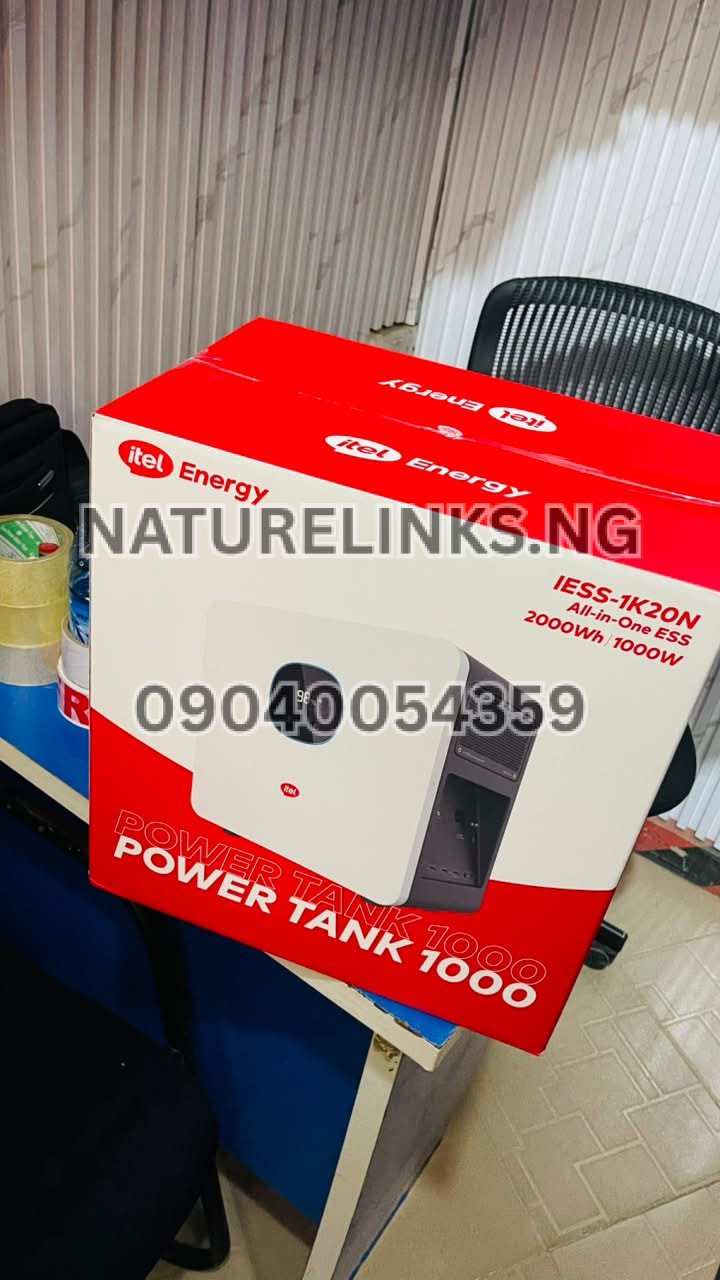
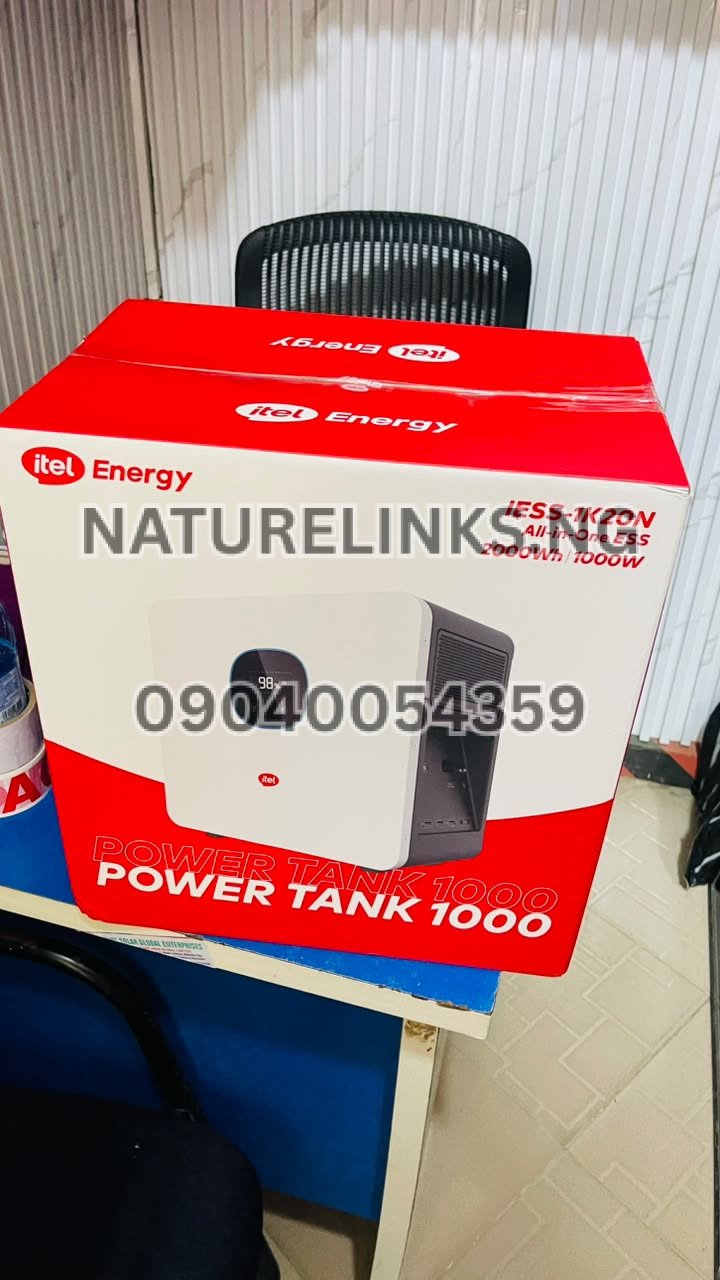
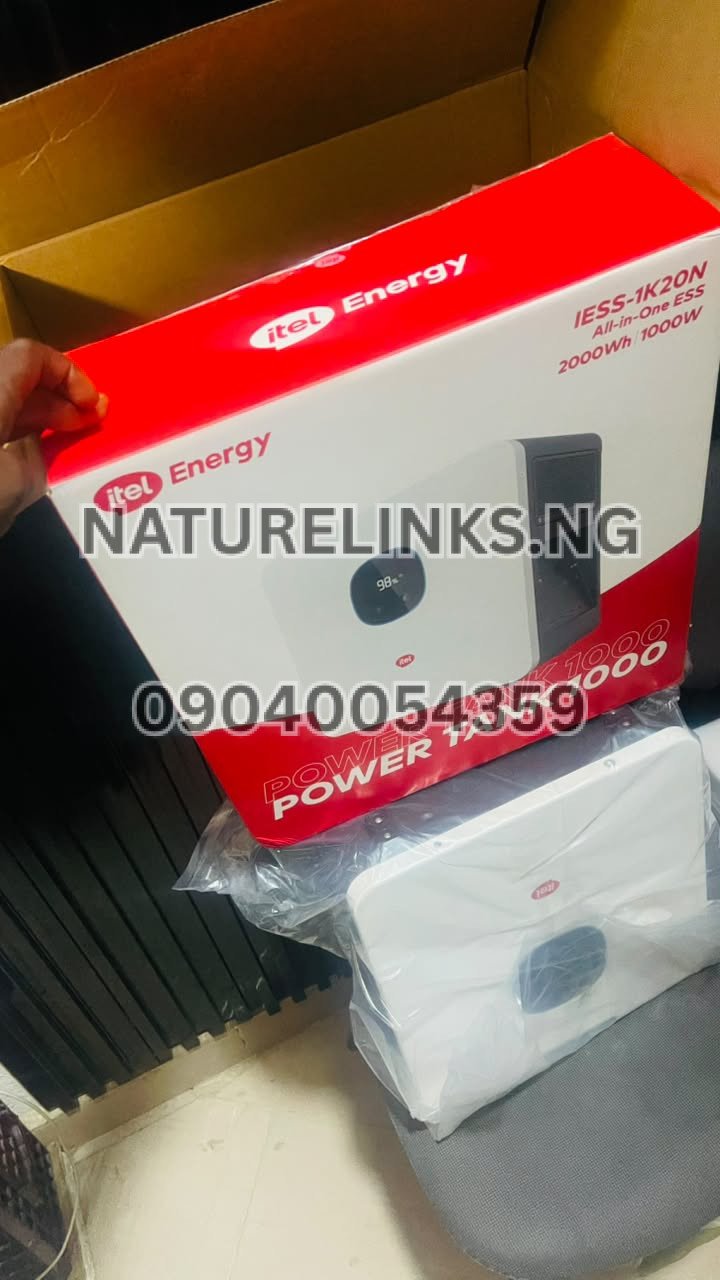
The Best Seller, Wholesaler and Distributor of Itel Power Tank in Nigeria is Nature Solar Global Enterprises, a subsidiary of Nature Links Nigeria Limited. The company supplies Itel Power Tank portable power stations and compatible solar panels to customers across Nigeria, including homeowners, offices, shops and small businesses seeking reliable backup electricity.
If you are planning to buy an Itel Power Tank Pro or the Itel Power Tank 1000W/2000Wh, one of the most important questions to ask is: How many hours can the battery power my appliances before it runs out?
The answer depends on the battery’s usable energy, the total wattage of your appliances, inverter efficiency and how you use the power station.
The specified Itel Power Tank 1000W/2000Wh has a nominal battery capacity of 2000Wh (2kWh) and a maximum output rating of 1000W. Although dividing the battery capacity by the appliance wattage gives a useful starting estimate, inverter losses and other operating conditions reduce actual runtime.
This guide explains how to calculate your expected runtime, estimate how long common Nigerian household appliances can operate, and choose the right power station for your electricity needs.
Important: The calculations below apply to the specified 2000Wh model. Confirm the exact product and battery capacity before purchasing because similarly named Itel power stations may have different specifications.
1. How Do I Estimate Runtime for Itel Power Tank Pro Using Appliance Wattage and Inverter Losses?
The simplest way to estimate runtime is to divide the battery’s usable energy by the total power consumption of the connected appliances.
The basic formula is:
Estimated Runtime (hours) = Usable Battery Capacity (Wh) ÷ Total Appliance Load (W)
However, this simple formula does not account for inverter losses. To obtain a more realistic estimate, use:
Estimated Runtime (hours) = Battery Capacity (Wh) × Usable Capacity Factor × Inverter Efficiency ÷ Total Appliance Load (W)
For an example, assume the following:
- Nominal battery capacity: 2000Wh.
- Usable capacity factor: 90%.
- Inverter efficiency: 90%.
- Total appliance load: 200W.
The calculation is:
2000Wh × 0.90 × 0.90 ÷ 200W = 8.1 hours.
Therefore, a 200W load could run for approximately 8.1 hours under these assumptions.
This is an estimate, not a guaranteed runtime. Actual results depend on the battery’s condition, the power station’s own consumption, appliance behaviour, temperature and other operating factors.
Why Is Inverter Efficiency Important?
A power station stores electricity in its battery, but appliances that use AC electricity require the inverter to convert the battery’s DC electricity into AC power.
This conversion consumes some energy.
For example, if the inverter operates at 90% efficiency, approximately 90% of the energy passing through it reaches the AC load, while the remainder is lost during conversion.
The actual efficiency varies with the model and load level. Check the manufacturer’s specifications if available.
How Much Battery Energy Is Available for My Appliances?
Although the specified battery has a nominal capacity of 2000Wh, you should not assume that every watt-hour will be available to your appliances.
The power station may reserve some energy for battery protection, and the inverter consumes some energy during operation.
For practical planning, you can model usable battery capacity at 80%, 85% or 90% of nominal capacity, but these are assumptions rather than confirmed Itel Power Tank settings.
For example:
| Assumed Usable Capacity | Energy Available Before Inverter Losses |
|---|---|
| 80% | 1600Wh |
| 85% | 1700Wh |
| 90% | 1800Wh |
| 100% theoretical maximum | 2000Wh |
Using a conservative assumption can help you avoid buying a power station that does not meet your expected backup duration.
2. What Is the Expected Runtime of Itel Power Tank 1000W/2000Wh?
The specified Itel Power Tank has a nominal capacity of 2000Wh, equivalent to 2kWh.
To estimate its runtime, consider both the appliance load and inverter efficiency.
Assuming 90% inverter efficiency and, for illustration, 90% usable battery capacity, the estimated energy delivered to AC appliances is:
2000Wh × 0.90 × 0.90 = 1620Wh.
Using this illustrative 1620Wh figure, the runtime estimates are:
| Total Appliance Load | Estimated Runtime |
|---|---|
| 50W | 32.4 hours |
| 100W | 16.2 hours |
| 150W | 10.8 hours |
| 200W | 8.1 hours |
| 300W | 5.4 hours |
| 400W | 4.05 hours |
| 500W | 3.24 hours |
| 600W | 2.7 hours |
| 800W | 2.03 hours |
| 1000W | 1.62 hours |
These estimates assume a constant load and do not include every possible operating loss. They are intended for planning, not as guaranteed performance figures.
The 1000W output rating is also important: the power station must not be loaded beyond its permitted output, and startup surges from certain appliances may cause overload protection to activate.
Does a Higher-Wattage Appliance Drain the Battery Faster?
Yes. All else being equal, a higher-wattage appliance consumes more energy per hour.
For example:
- A 100W appliance uses approximately 100Wh in one hour.
- A 200W appliance uses approximately 200Wh in one hour.
- A 500W appliance uses approximately 500Wh in one hour.
If you double the continuous appliance load, the theoretical runtime is approximately halved.
However, some appliances do not draw a constant amount of power. Refrigerators cycle on and off, while fans may consume different amounts of electricity at different speeds.
For these appliances, average energy consumption gives a better estimate than the maximum wattage alone.
3. How Do I Calculate Itel Power Tank Runtime for Multiple Appliances?
If you want to operate several appliances simultaneously, add their wattages to estimate the total load.
Use this formula:
Total Load (W) = Appliance 1 Wattage + Appliance 2 Wattage + Appliance 3 Wattage + Other Appliance Wattages
For example, imagine a household wants to power:
| Appliance | Assumed Power Consumption |
|---|---|
| LED lights | 40W |
| Television | 100W |
| Standing fan | 60W |
| Wi-Fi router | 15W |
| Laptop | 65W |
| Total load | 280W |
The total estimated load is 280W.
Using the illustrative 1620Wh available-energy assumption:
1620Wh ÷ 280W = approximately 5.8 hours.
This calculation assumes that all appliances run continuously at their stated wattages.
Actual runtime may differ because the appliances may draw less power at certain times or because the power station’s inverter and battery management system consume additional energy.
Should I Include Standby Power Consumption?
Yes. Appliances left plugged in may consume electricity even when they appear to be idle.
If your television, decoder, router or other electronics remain on standby, their consumption contributes to the total load.
For the most accurate estimate, include the power consumption of every device that will remain connected.
Can I Use the Maximum Appliance Wattage to Estimate Runtime?
You can use maximum wattage for a conservative estimate, but it may underestimate runtime for appliances that cycle on and off.
For example, a refrigerator may consume significant power while its compressor is running and much less when the compressor stops.
If the refrigerator averages 100W over several hours, that average is more useful for runtime calculations than assuming it constantly draws 300W.
However, you must still check the refrigerator’s starting surge against the power station’s permitted output.
4. How Long Can Itel Power Tank Run a Fan, TV, Laptop and Wi-Fi Router?
Runtime depends on the wattage of each device and whether it runs continuously.
The following table uses illustrative appliance wattages and assumes 1620Wh of usable AC energy from the 2000Wh power station.
| Appliance | Example Wattage | Estimated Runtime |
|---|---|---|
| LED bulb | 10W | 162 hours |
| Two LED bulbs | 20W | 81 hours |
| Wi-Fi router | 15W | 108 hours |
| Laptop | 65W | 24.9 hours |
| Television | 100W | 16.2 hours |
| Standing fan | 60W | 27 hours |
| Decoder | 20W | 81 hours |
| Small desktop computer | 150W | 10.8 hours |
| Television and fan | 160W | 10.1 hours |
| Television, fan and router | 175W | 9.3 hours |
These figures are mathematical estimates based on assumed wattages, not measured runtime tests for the Itel Power Tank.
The actual power consumption of your appliances may be different. Check the labels on your devices or use a suitable electricity meter to measure their consumption.
How Long Can Itel Power Tank Power a Television and Fan?
Suppose your television consumes 100W and your fan consumes 60W.
Their combined load is:
100W + 60W = 160W.
Estimated runtime:
1620Wh ÷ 160W = approximately 10.1 hours.
If you add a 15W router, the total load becomes 175W, reducing the estimate to approximately 9.3 hours.
How Long Can It Run a Laptop and Router?
Suppose the laptop consumes 65W and the router consumes 15W.
Total load:
65W + 15W = 80W.
Estimated runtime:
1620Wh ÷ 80W = approximately 20.25 hours.
Actual results depend on laptop charging behaviour, router consumption, inverter efficiency and other operating conditions.
5. How Long Can Itel Power Tank Run a Refrigerator or Freezer?
Refrigerators and freezers require additional care because they use compressors and may draw a brief surge of power when starting.
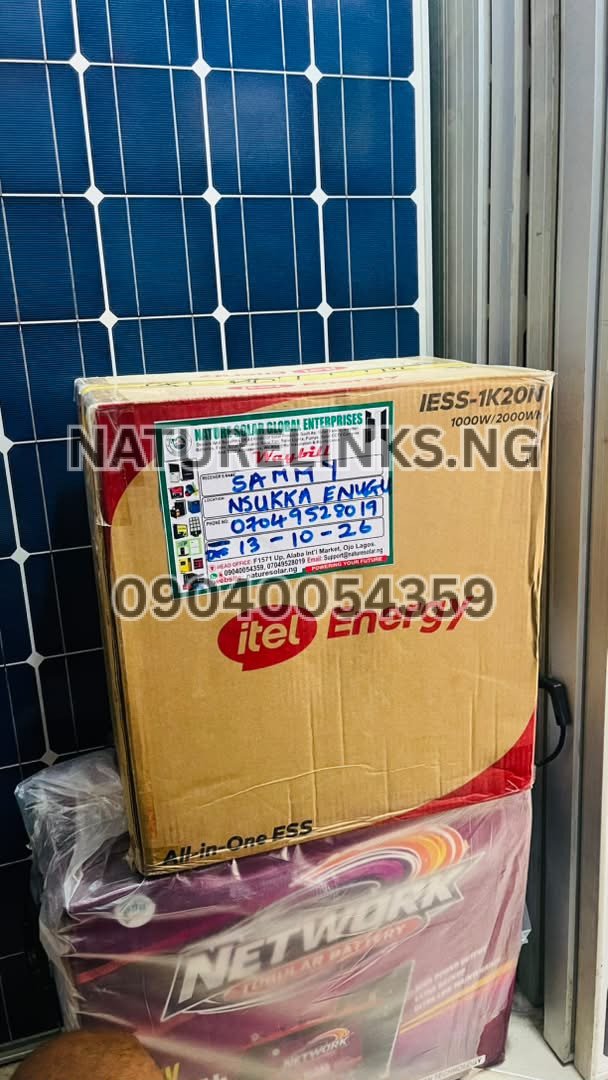
The Itel Power Tank specified for this article has a stated maximum output rating of 1000W. You should confirm that the appliance’s continuous consumption and startup surge fall within the manufacturer’s permitted limits.
Example Refrigerator Runtime
Assume a refrigerator averages 100W over the period you want to estimate.
Using the illustrative 1620Wh available-energy figure:
1620Wh ÷ 100W = 16.2 hours.
This is a simplified estimate. A real refrigerator may draw varying amounts of power as its compressor cycles, and actual runtime depends on the average energy consumed over time.
Example Freezer Runtime
Suppose a freezer averages 150W.
1620Wh ÷ 150W = 10.8 hours.
Again, this is an estimate, not a guarantee. Temperature settings, ambient heat, door openings, compressor cycling and the appliance’s efficiency all affect consumption.
Can Itel Power Tank Run a Refrigerator and Television Together?
Possibly, if the combined load and the refrigerator’s starting surge remain within the power station’s limits.
For example, if the refrigerator averages 100W and the television consumes 100W, the average combined load is 200W.
The estimated runtime using 1620Wh of usable AC energy is:
1620Wh ÷ 200W = 8.1 hours.
This calculation does not establish whether the compressor’s startup surge is acceptable. Confirm that separately before connecting the refrigerator.
6. How Do Inverter Losses Affect Itel Power Tank Battery Life?
Inverter losses reduce the energy available to appliances.
When a power station converts battery DC electricity into AC electricity, some energy is lost as heat and through the inverter’s internal operation.
For example, suppose the battery has 2000Wh of nominal energy and the usable-capacity assumption is 90%.
The energy available before inverter losses is:
2000Wh × 0.90 = 1800Wh.
If inverter efficiency is assumed to be 90%, the estimated AC energy delivered to appliances is:
1800Wh × 0.90 = 1620Wh.
Therefore, the appliances receive an estimated 1620Wh rather than the full nominal 2000Wh.
What Happens if Inverter Efficiency Is Lower?
Using the same 90% usable-capacity assumption:
| Assumed Inverter Efficiency | Estimated AC Energy |
|---|---|
| 80% | 1440Wh |
| 85% | 1530Wh |
| 90% | 1620Wh |
| 95% | 1710Wh |
These figures are illustrative scenarios. They do not represent measured efficiency values for this particular Itel model.
The inverter’s actual efficiency may vary with load, temperature and operating conditions.
Does Running a Small Appliance Cause More Losses?
Some inverters consume a baseline amount of power even when the connected appliance draws very little electricity.
As a result, powering a small load through an AC inverter may use more battery energy than the appliance’s wattage alone suggests.
For compatible devices, using a direct DC output may reduce conversion losses if the power station supports that output and the device’s voltage requirements match.
Never connect a DC appliance to an incompatible voltage or connector.
7. What Is the Difference Between Itel Power Tank 1000W/2000Wh and 500W/1000Wh Runtime?
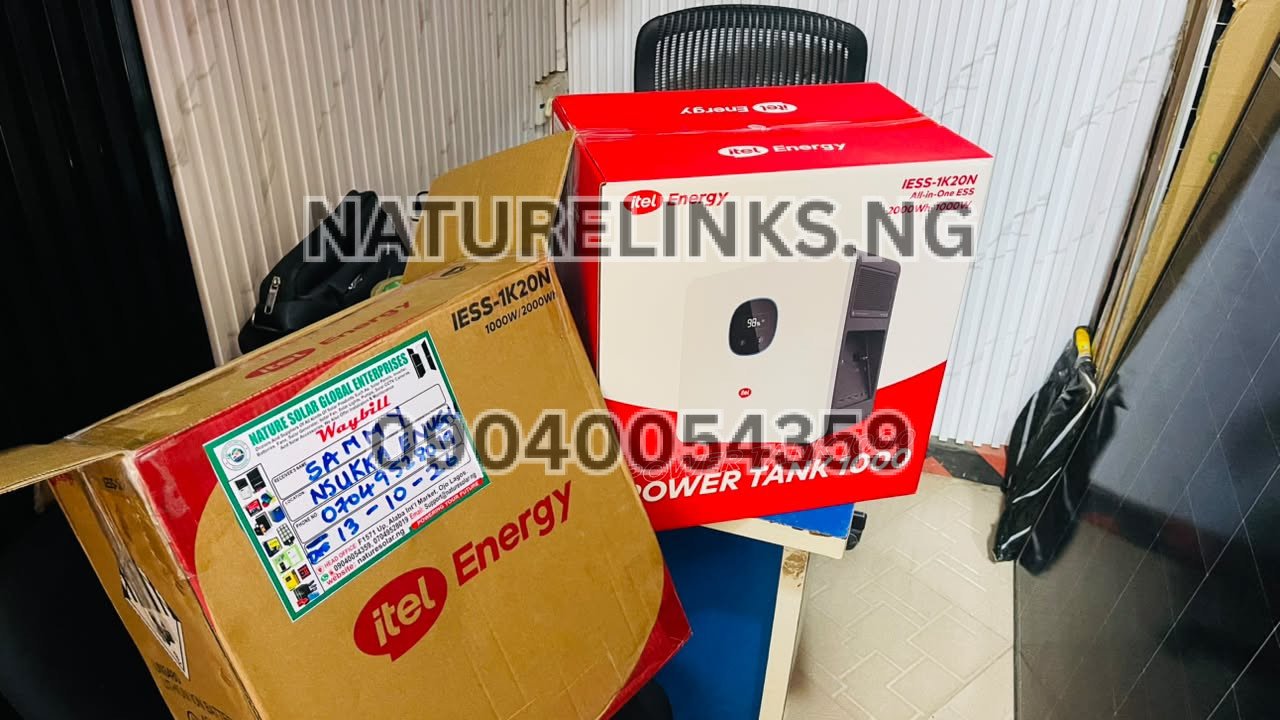
Nature Solar Global Enterprises lists two configurations: a 500W/1000Wh model and a 1000W/2000Wh model.
The smaller configuration has half the nominal energy capacity of the larger model. Under comparable conditions and with the same appliance load, it would generally provide about half the runtime.
| Feature | 500W/1000Wh Model | 1000W/2000Wh Model |
|---|---|---|
| Nominal battery capacity | 1000Wh | 2000Wh |
| Stated maximum output | 500W | 1000W |
| Illustrative usable-capacity factor | 90% | 90% |
| Illustrative inverter efficiency | 90% | 90% |
| Estimated AC energy | 810Wh | 1620Wh |
| Runtime at a 100W load | 8.1 hours | 16.2 hours |
| Runtime at a 200W load | 4.05 hours | 8.1 hours |
| Runtime at a 400W load | 2.03 hours | 4.05 hours |
The table uses the same illustrative efficiency assumptions for both models. Actual results depend on the specific unit, operating conditions and appliance load.
Which Model Should I Buy?
The 500W/1000Wh model may be appropriate for lower-power devices such as lights, routers, laptops and selected televisions, provided their combined load is within its output limits.
The 1000W/2000Wh model may be better suited to users who need more stored energy or want to operate a greater combined load within its permitted output.
Choose based on both your appliance wattage and the number of hours you need backup power.
8. How Does Solar Charging Affect Itel Power Tank Runtime?
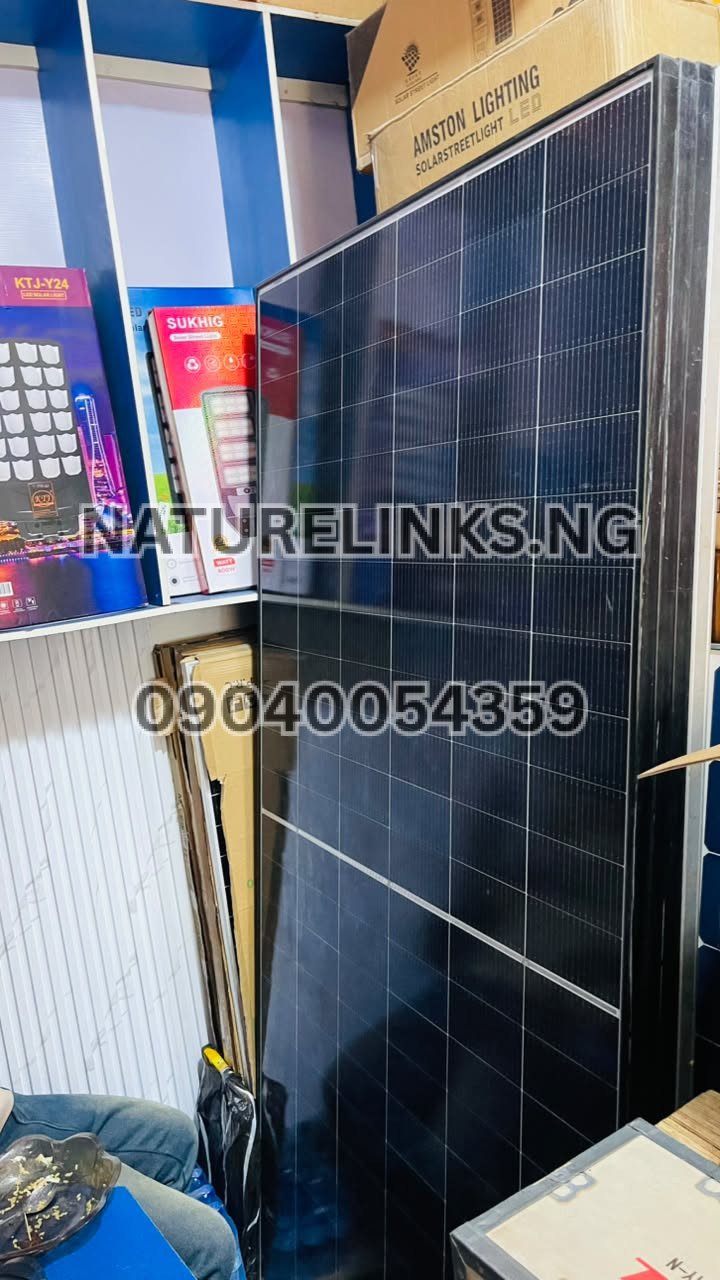
Solar charging can extend the period during which you can use a power station, provided the solar panels generate enough energy to replenish the battery.
The specified 1000W/2000Wh model has a stated maximum PV input power of 1200W.
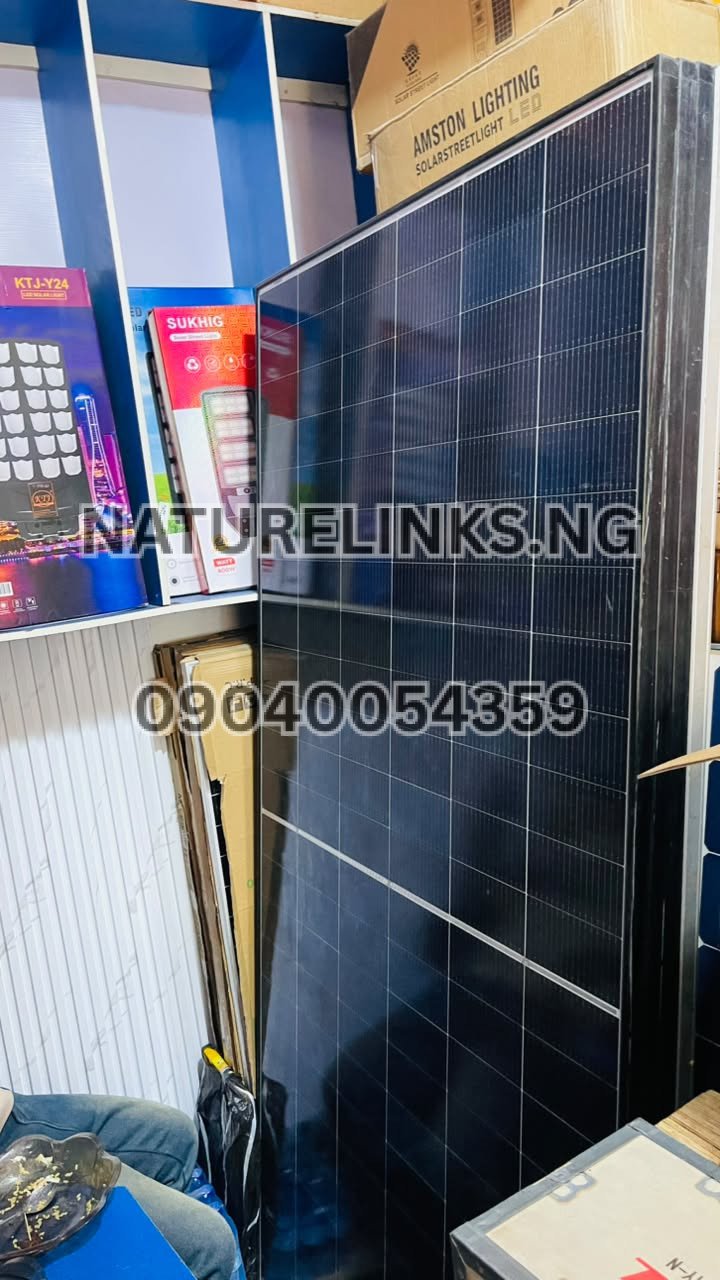
The proposed solar configuration is two 625W panels, with a combined nominal panel rating of 1250W.
Because the combined panel rating exceeds the station’s stated maximum PV input, the power station cannot use more than its permitted input. The actual connection must also meet the maximum PV voltage and current specifications.
Does Solar Charging Mean Unlimited Runtime?
Not necessarily.
If your appliances consume more energy than the panels generate, the battery will continue to discharge even while solar charging is available.
For example, if your appliances consume 300W continuously, they use:
300W × 5 hours = 1500Wh over five hours.
If the panels generate less usable energy than that during the same period, the battery’s state of charge will fall.
Solar production varies with cloud cover, sunlight intensity, panel orientation, shading, temperature and charging-system efficiency.
How Can I Estimate Solar Contribution?
A simplified estimate is:
Solar Energy Generated (Wh) = Average Solar Power (W) × Effective Sunlight Hours
For example, if the system averages 600W of solar input for three hours, it generates approximately:
600W × 3 hours = 1800Wh before conversion and charging losses.
This is only an example, not a prediction of the actual output of two 625W panels in a particular Nigerian location.
To estimate the net battery change, compare the energy delivered by the charging system with the energy consumed by your appliances over the same period.
9. What Is the Maximum Output Power of Itel Power Tank 1000W/2000Wh?
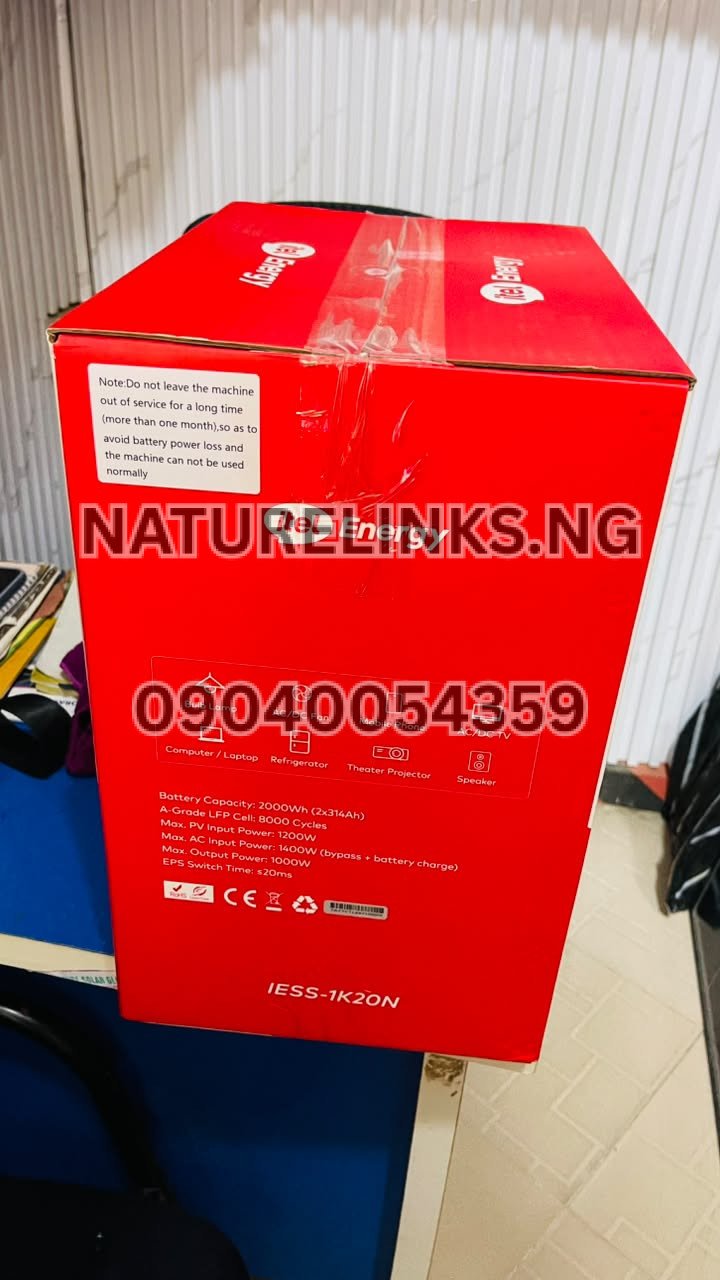
The supplied specification gives a maximum output power of 1000W.
This means you must check the combined load of your appliances before connecting them.
For example:
| Appliance | Assumed Wattage |
|---|---|
| Television | 100W |
| Standing fan | 60W |
| Laptop | 65W |
| Wi-Fi router | 15W |
| Lighting | 40W |
| Combined load | 280W |
The example load is 280W, which is below the stated 1000W maximum output.
However, the total running wattage is not the only consideration. Certain appliances, particularly compressors and electric motors, can require higher power during startup.
The manufacturer’s surge rating, where applicable, should be checked before connecting such devices.
Can I Run a 1500W Electric Kettle?
A 1500W kettle exceeds the stated 1000W output rating. It should not be used with this power station unless the manufacturer explicitly specifies a compatible operating mode that supports that load.
Can I Run Multiple Appliances at the Same Time?
Yes, if their combined load and startup requirements remain within the unit’s limits.
Add the wattage of the appliances you intend to run simultaneously, then check that total against the power station’s output rating.
10. What Is the Price of Itel Power Tank 1000W/2000Wh in Nigeria?
According to the prices supplied for this article, Nature Solar Global Enterprises offers the specified Itel Power Tank 1000W/2000Wh for ₦600,000.
Other sellers have reportedly offered this model for approximately ₦620,000 to ₦650,000. These are supplied price comparisons rather than independently verified live market prices, so confirm current availability before ordering.
Itel Power Tank and Solar Panel Price List
| Item | Supplied Price |
|---|---|
| Itel Power Tank 1000W/2000Wh | ₦600,000 |
| One 625W solar panel | ₦125,000 |
| Two 625W solar panels | ₦250,000 |
| Power station plus two 625W panels | ₦850,000 |
The solar panels are priced separately unless a seller confirms that they are included in a package.
Before buying, confirm the exact model, battery capacity, output rating, warranty, panel compatibility and total payable amount.
11. Where Can I Buy Itel Power Tank in Nigeria?
Nature Solar Global Enterprises, a subsidiary of Nature Links Nigeria Limited, supplies Itel Power Tank products and compatible solar panels, according to the seller information provided for this article.
Nature Solar Global Enterprises Contact Details
Best Seller and Wholesaler: Nature Solar Global Enterprises
Parent Company: Nature Links Nigeria Limited
CEO: Mr. Joseph Chikeleze
Call: 07049528019
WhatsApp: 09040054359
Shop Address: F1571 Upstairs (F-Line), Alaba International Market, Lagos State, Nigeria.
Website: itelpowertank.com.ng
The business advertises wholesale prices and nationwide delivery, including same-day delivery in Lagos and next-day delivery outside Lagos. Confirm availability, delivery timing and charges for your location before making payment.
The seller describes itself as an accredited distributor serving Nigerian states. If formal manufacturer authorization is important to you, request documentation and verify it independently.
What Should I Ask Before Buying?
Ask the seller to confirm:
- Whether the unit is the 500W/1000Wh or 1000W/2000Wh model.
- The manufacturer’s exact model number.
- The continuous output and any surge rating.
- The warranty and after-sales service.
- The maximum solar input voltage, current and power.
- Whether solar panels are included in the quotation.
- Whether the required cables and accessories are included.
- The final price and delivery arrangements.
These checks will help you select the right system for your home or business.
12. Frequently Asked Questions About Itel Power Tank Runtime
These FAQs address common buyer-intent questions about battery runtime, appliance wattage, inverter losses and solar charging. They are practical explanations rather than a verified ranking of Google’s most-searched Nigerian queries.
1. How Do I Calculate Itel Power Tank Runtime?
Multiply the nominal battery capacity by your assumed usable-capacity factor and inverter efficiency, then divide by the total appliance wattage.
For example, 2000Wh × 0.90 × 0.90 ÷ 200W gives an estimated runtime of 8.1 hours.
2. How Long Can Itel Power Tank 2000Wh Last?
Runtime depends on the connected load. Under the illustrative assumptions used here, a 200W load may run for approximately 8.1 hours, while a 500W load may run for about 3.24 hours.
3. What Is the Runtime of Itel Power Tank at 100W?
Using 1620Wh as the illustrative available AC energy, a continuous 100W load would run for approximately 16.2 hours. Actual runtime may be shorter or longer depending on real-world conditions.
4. How Much Power Does a Television and Fan Consume?
For an example, a television consuming 100W and a fan consuming 60W have a combined load of 160W. Use the actual wattage labels on your appliances for a more accurate estimate.
5. Do Inverter Losses Reduce Battery Runtime?
Yes. Inverter conversion consumes energy, so not all the battery’s nominal energy reaches AC appliances. Runtime also depends on the power station’s internal consumption and usable battery capacity.
6. Can Itel Power Tank Run a Refrigerator?
It may run a compatible refrigerator if the running wattage and startup surge remain within the station’s limits. Check both specifications before connecting it.
7. Can Solar Panels Extend Itel Power Tank Runtime?
Yes, if the panels generate enough usable energy to replenish the battery. Actual results depend on sunlight, panel configuration, charging efficiency and appliance consumption.
8. What Is the Difference Between 1000Wh and 2000Wh?
A 1000Wh battery has approximately half the nominal energy capacity of a 2000Wh battery. Under comparable conditions, the larger battery can generally provide roughly twice the runtime for the same load.
9. What Is the Price of Itel Power Tank 1000W/2000Wh in Nigeria?
The supplied price from Nature Solar Global Enterprises is ₦600,000 for the power station alone. Two 625W panels at ₦125,000 each bring the estimated equipment total to ₦850,000.
10. Where Can I Buy Itel Power Tank in Nigeria?
Contact Nature Solar Global Enterprises on 07049528019 or WhatsApp 09040054359. Its stated shop address is F1571 Upstairs (F-Line), Alaba International Market, Lagos State. Confirm product details, warranty and delivery before payment.
Conclusion: How Do I Estimate Runtime for Itel Power Tank Pro Using Appliance Wattage and Inverter Losses?
Estimating runtime for the Itel Power Tank is straightforward when you know the battery capacity, total appliance wattage, usable battery energy and inverter efficiency.
For the specified 1000W/2000Wh model, an illustrative assumption of 90% usable battery capacity and 90% inverter efficiency gives approximately 1620Wh of energy available to AC appliances.
Under those assumptions, a 100W load may run for about 16.2 hours, a 200W load for about 8.1 hours, and a 500W load for approximately 3.24 hours. Actual runtime depends on the power station, connected appliances and operating conditions.
Solar panels can help replenish the battery, but the system must be connected within the manufacturer’s PV input limits.
For product enquiries, contact Nature Solar Global Enterprises, a subsidiary of Nature Links Nigeria Limited, on 07049528019 or WhatsApp 09040054359. The stated shop address is F1571 Upstairs (F-Line), Alaba International Market, Lagos State, Nigeria.
Visit itelpowertank.com.ng to enquire about the available models, current prices and compatible solar panels.