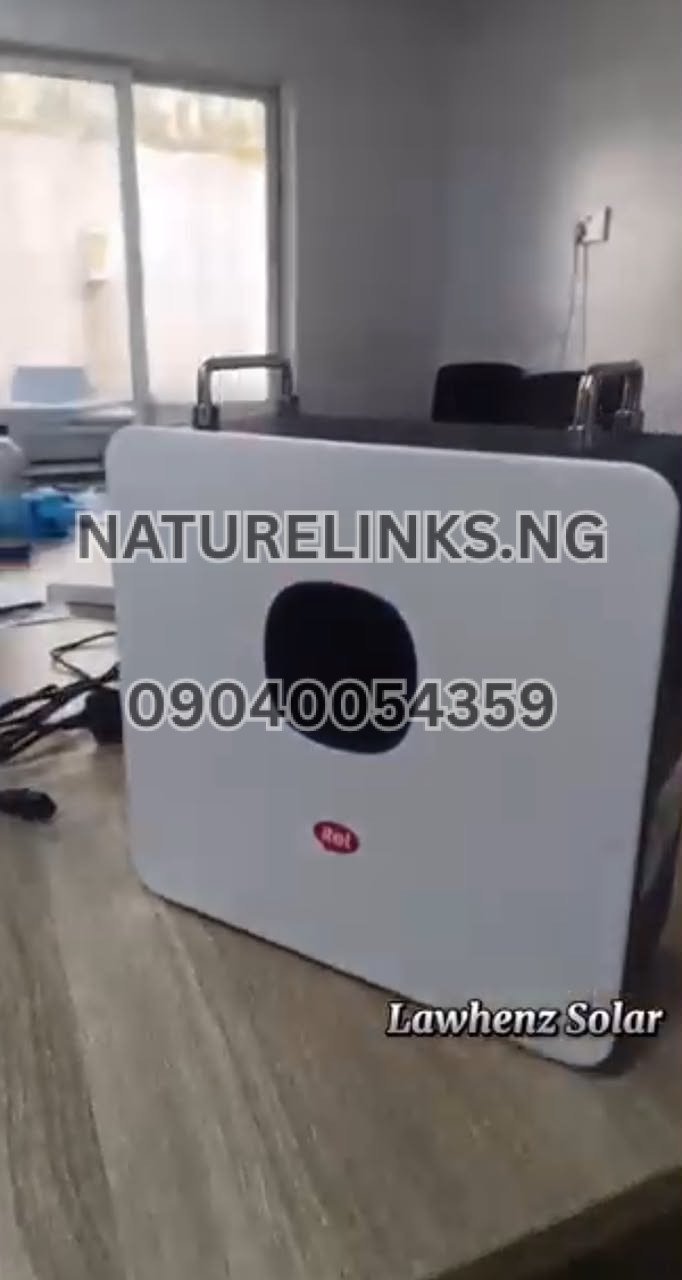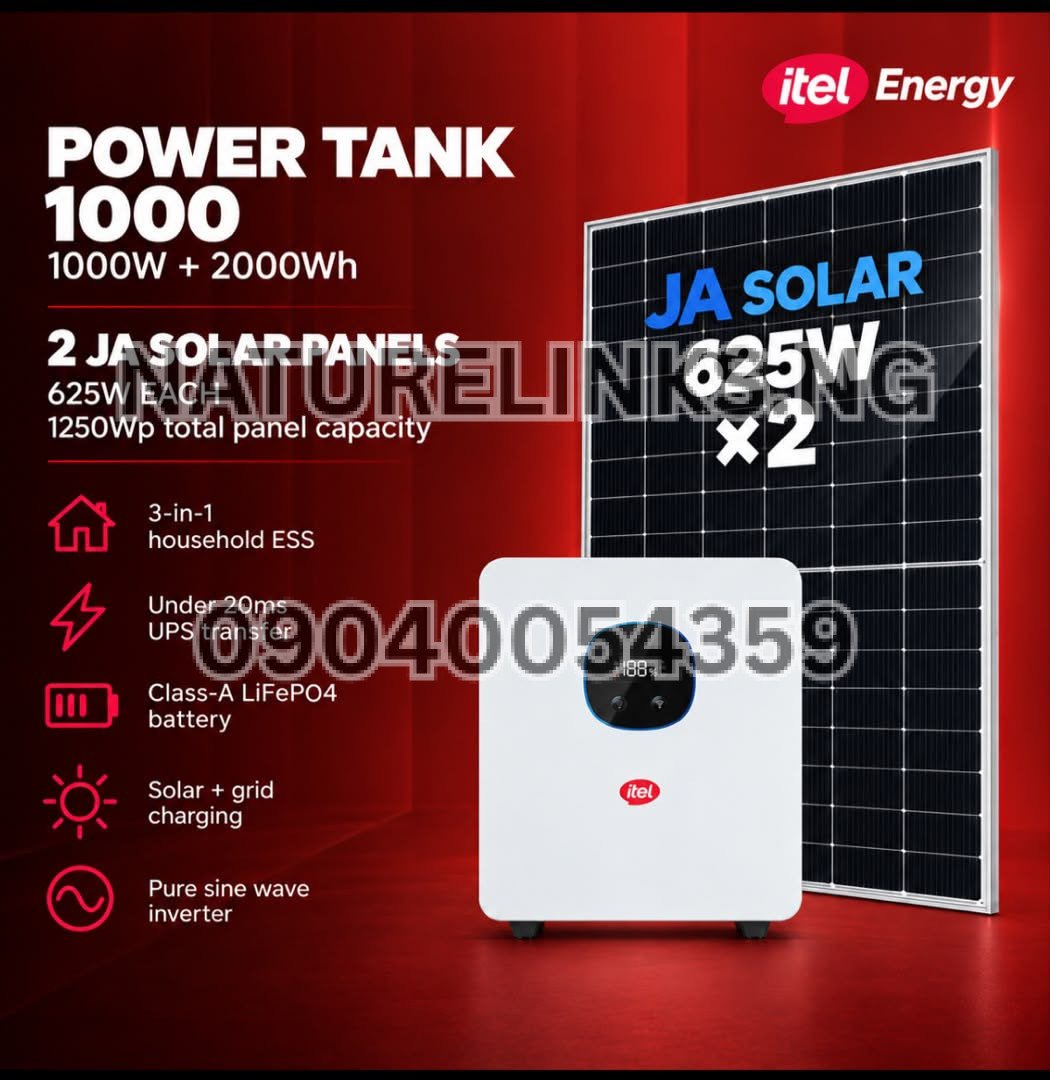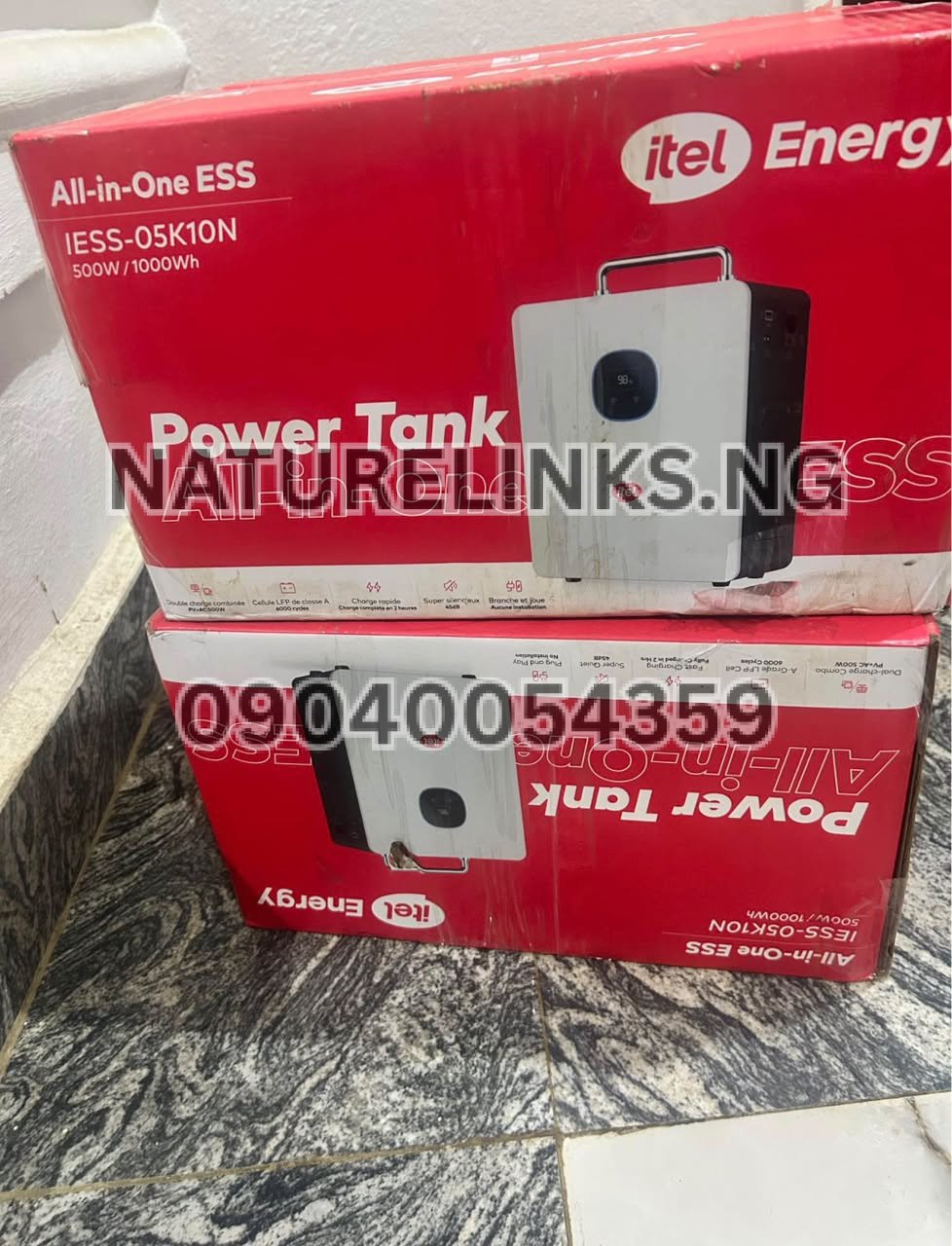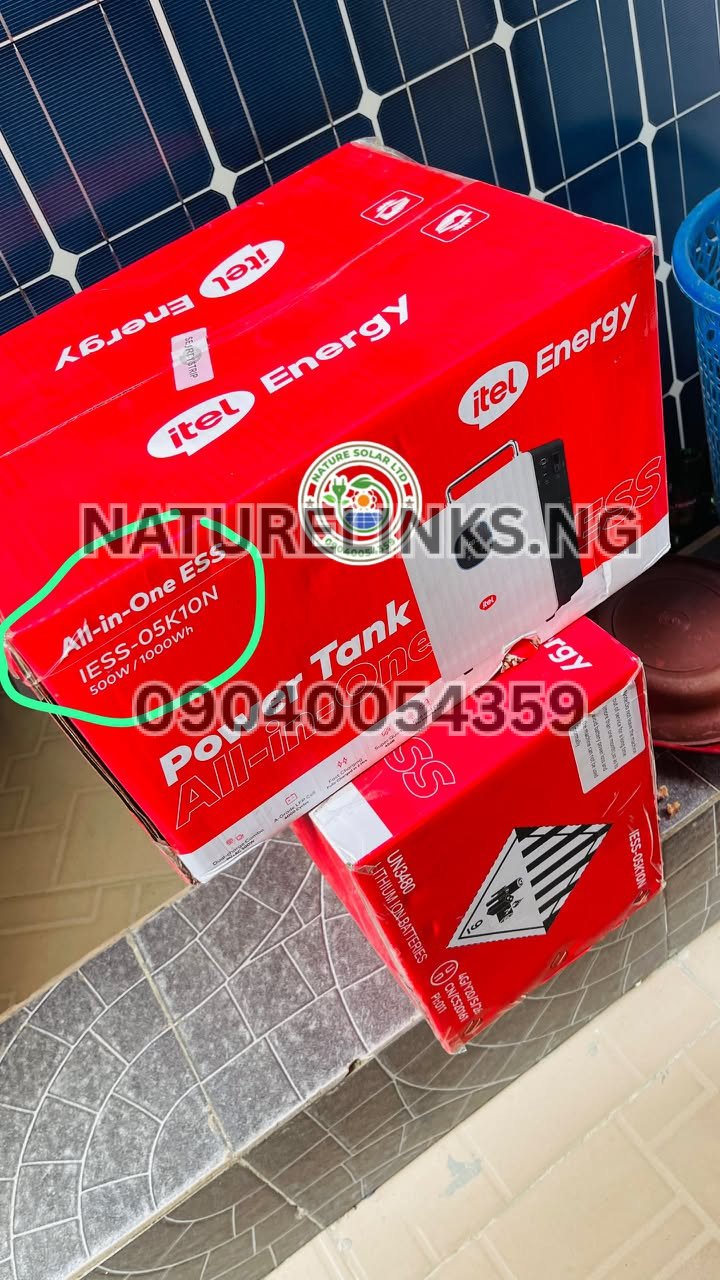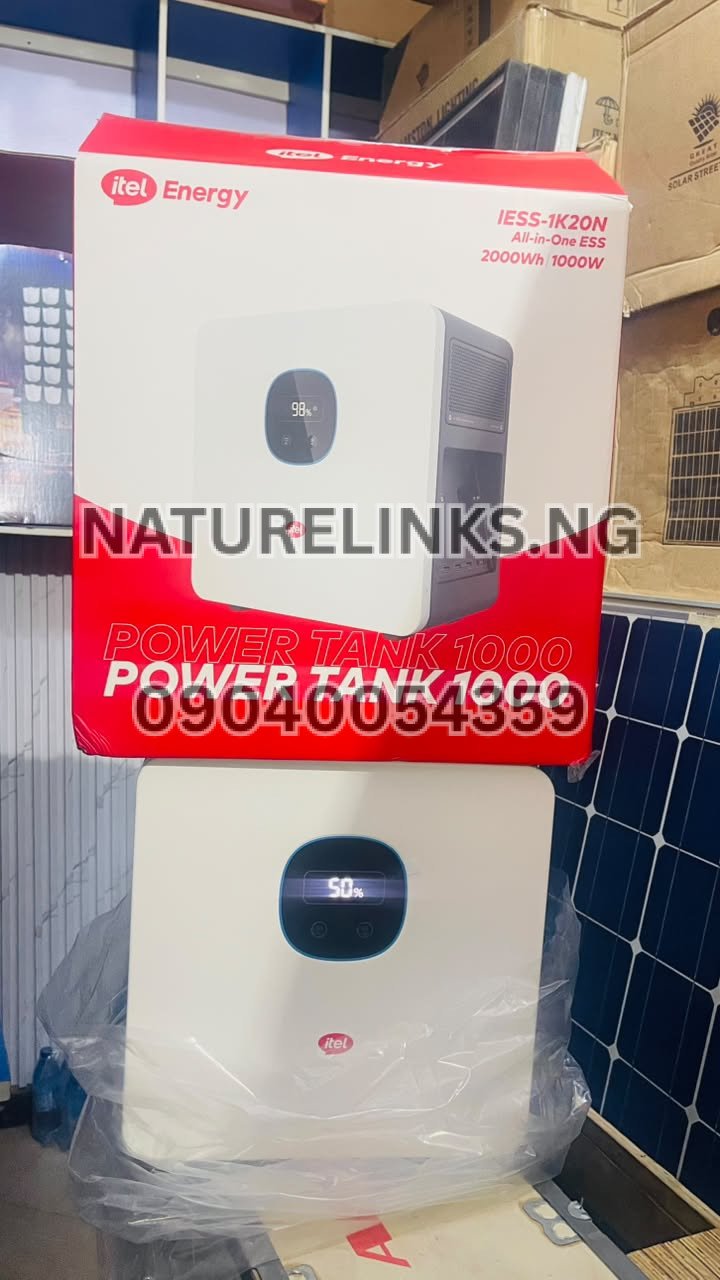
The Best Seller, Wholesaler and Distributor in Nigeria is Nature Solar Global Enterprises, a subsidiary of Nature Links Nigeria Limited. The business states that it distributes Itel Power Tank products across Nigerian states, supplying solar power stations and compatible solar panels to customers who need reliable backup electricity for their homes, offices, shops and businesses.
If you are planning to buy the Itel Power Tank 1000W/2000Wh in Nigeria, understanding its battery runtime and solar PV input limit is essential. Knowing how long your appliances can run helps you avoid unexpected power interruptions, choose suitable solar panels and get better value for your money.
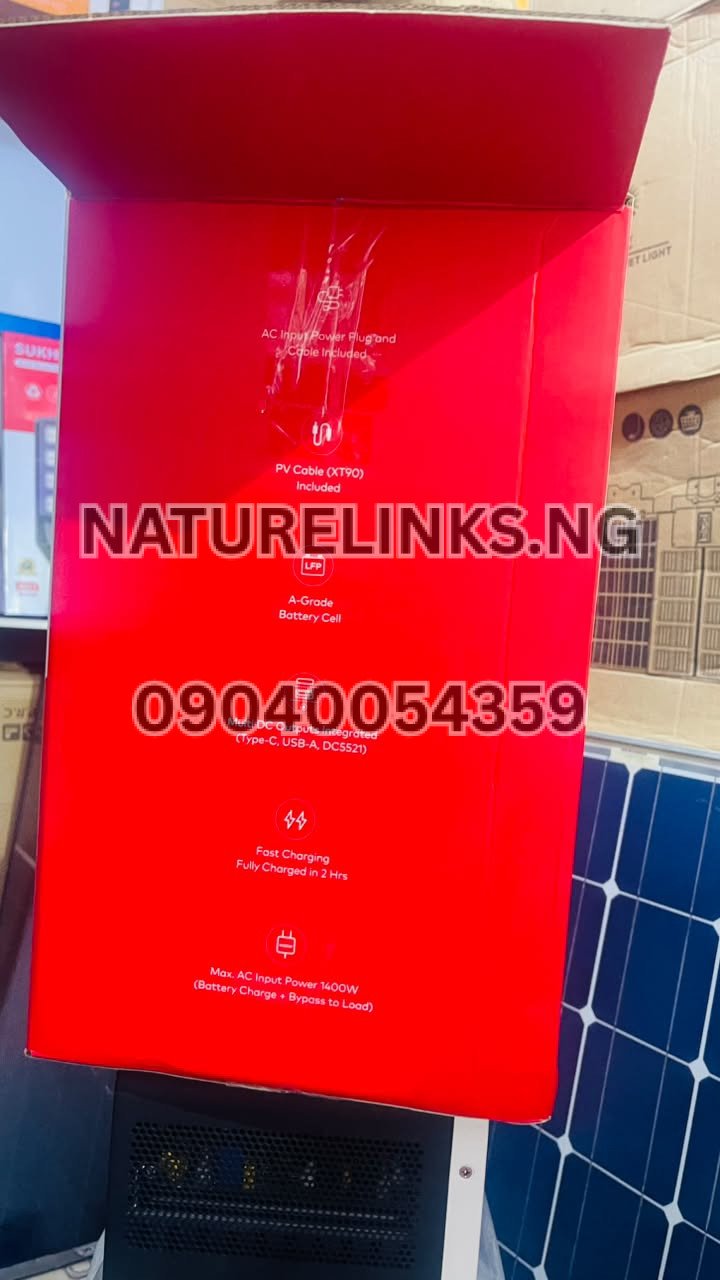
The Itel Power Tank combines a 2000Wh lithium iron phosphate (LFP) battery, a 1000W inverter and a solar charge controller with a stated maximum photovoltaic (PV) input of 1200W. However, battery capacity determines how much energy is stored, inverter output determines how much power you can use simultaneously, and PV input determines how much solar power the unit can accept for charging. These three specifications serve different purposes.
This guide explains how to calculate Itel Power Tank runtime using appliance wattage, account for inverter losses, understand the 1200W PV input limit, estimate charging time and choose compatible solar panels. It also covers current seller-provided prices, buying considerations and frequently asked questions for Nigerian buyers.
1. What Is the Latest Price of Itel Power Tank 1000W/2000Wh in Nigeria?
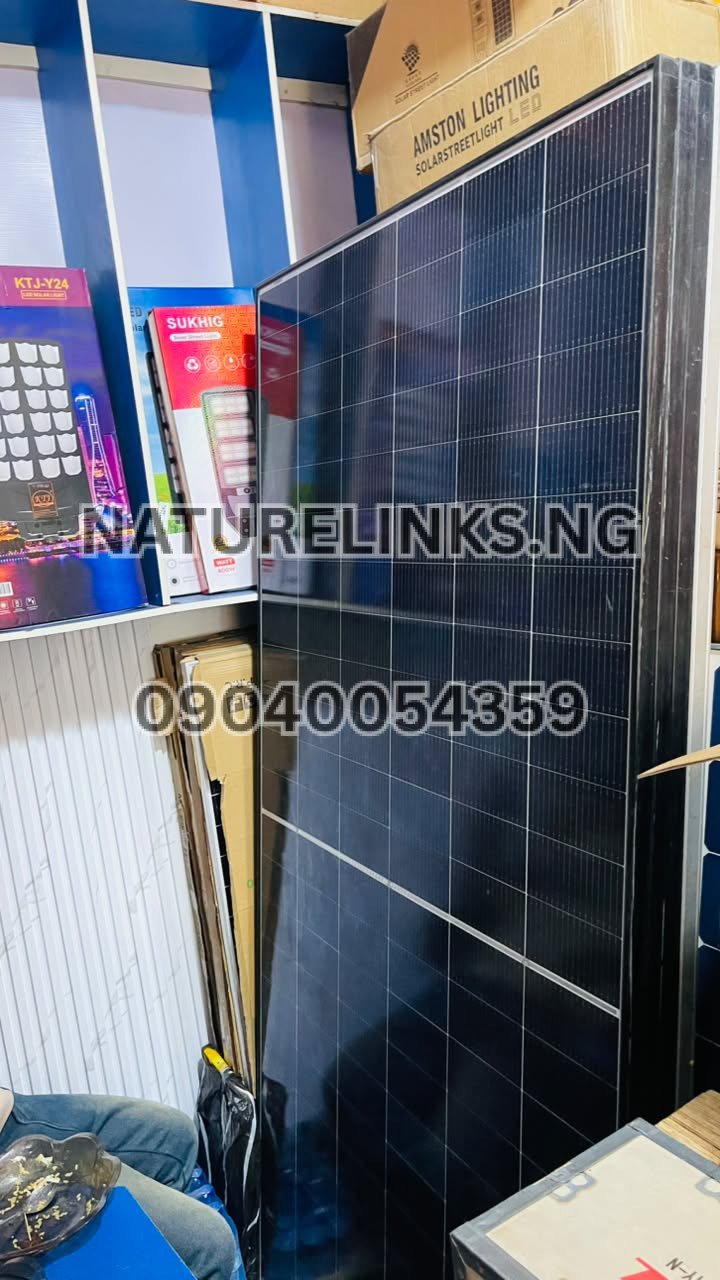
The seller-provided price from Nature Solar Global Enterprises is ₦600,000 for the Itel Power Tank 1000W/2000Wh unit alone. The business also lists 625W solar panels at ₦125,000 each. These prices are seller-provided quotations, not independently verified live market prices, so confirm the final price and stock availability before making payment.
The following price guide uses the figures supplied for this article.
| Product | Price |
|---|---|
| Itel Power Tank 1000W/2000Wh | ₦600,000 |
| One 625W solar panel | ₦125,000 |
| Two 625W solar panels | ₦250,000 |
| Power Tank plus one 625W panel | ₦725,000 |
| Power Tank plus two 625W panels | ₦850,000 |
Other Nigerian sellers have reportedly offered the power station alone for approximately ₦620,000–₦650,000, although actual prices vary by seller, model, stock availability and included accessories.
Does the ₦600,000 price include solar panels? According to the supplied price list, it covers the power station alone. Two 625W panels would add ₦250,000, bringing the estimated equipment total to ₦850,000 before delivery, installation materials and any additional charges.
Before ordering, ask for a written quotation confirming the model number, battery capacity, included accessories, warranty and solar panel configuration.
You can contact Nature Solar Global Enterprises through the following details:
- Business: Nature Solar Global Enterprises, a subsidiary of Nature Links Nigeria Limited.
- CEO: Mr. Joseph Chikeleze.
- Telephone: 07049528019.
- WhatsApp: 09040054359.
- Shop address: F1571 Upstairs (F-Line), Alaba International Market, Lagos State, Nigeria.
- Website: Itel Power Tank Nigeria
The business states that it offers wholesale prices and nationwide delivery, with same-day delivery in Lagos and next-day delivery outside Lagos. Confirm delivery timing for your particular destination before paying.
2. What Is the Battery Capacity and Maximum PV Input of Itel Power Tank?
The Itel Power Tank 1000W/2000Wh is designed to store electrical energy and supply power to compatible appliances. Its battery capacity and solar input limit determine how you should plan your backup electricity.
The main specifications supplied for the model are:
| Specification | Stated value |
|---|---|
| Battery capacity | 2000Wh (2kWh) |
| Battery chemistry | Lithium iron phosphate (LFP) |
| Advertised battery cycle life | 8000 cycles |
| Maximum solar PV input power | 1200W |
| Maximum AC input power | 1400W, as supplied |
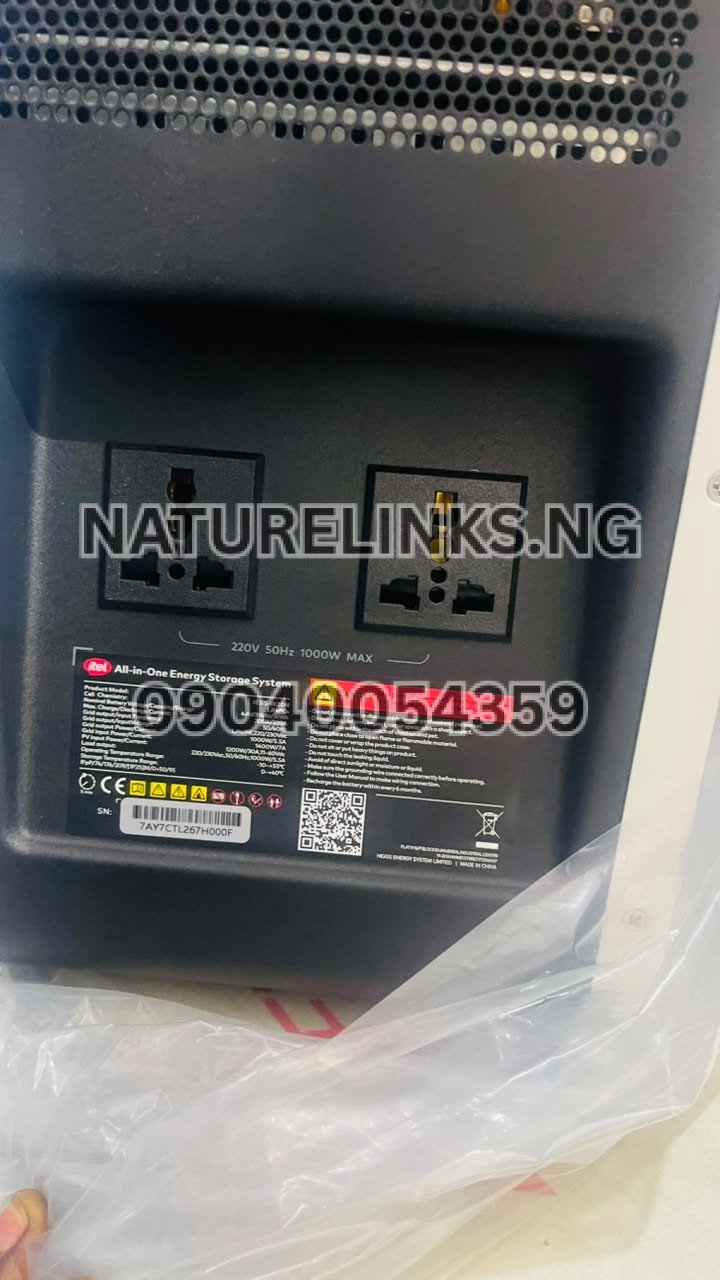
| Maximum AC output power | 1000W |
| EPS switching time | Stated as approximately 20ms or less; confirm the official specification |
| Proposed solar panel configuration | Two 625W panels, subject to compatibility |
These are the supplied specifications. Confirm the exact model and electrical limits against the manufacturer’s documentation before connecting panels.
What Does 2000Wh Battery Capacity Mean?
A watt-hour (Wh) measures energy. A 2000Wh battery has a nominal energy capacity of 2kWh.
In simple terms, a 100W appliance running continuously for one hour consumes 100Wh. If it operates for five hours, it consumes 500Wh.
A 200W appliance operating for five hours consumes 1000Wh, while a 400W appliance operating for the same duration consumes 2000Wh before accounting for conversion losses.
The battery will not normally deliver all its nominal stored energy to AC appliances because the inverter consumes some energy and the battery management system may reserve energy to protect the battery. Therefore, actual runtime will generally be lower than a calculation that assumes every stored watt-hour reaches your appliances.
What Does the 1200W PV Input Limit Mean?
PV stands for photovoltaic, the technology used by solar panels to convert sunlight into electricity.
A maximum PV input of 1200W means the power station is specified to accept no more than 1200W of solar input under its rated operating conditions. It does not mean the battery stores 1200Wh, nor does it mean that appliances can consume 1200W from the AC output.
The stated AC output limit is 1000W. Therefore, you must observe both limits: the solar charging system must remain within its permitted PV specifications, and the combined appliance load must remain within the permitted output rating.
Two 625W panels have a combined nameplate rating of 1250W. Although that total exceeds 1200W, panel wattage alone does not determine whether a configuration is safe or approved. The panels’ open-circuit voltage, operating voltage, current, connection arrangement and the power station’s permitted PV limits must all be checked.
Never connect solar panels simply because their combined wattage appears suitable. Ask the seller or a qualified solar technician to confirm that the complete array is compatible with the exact Power Tank model.
3. How Do I Calculate Itel Power Tank Runtime Using Appliance Wattage?
The easiest way to estimate how long your Itel Power Tank will last is to calculate the combined wattage of your appliances and divide the usable battery energy by their total power consumption.
However, the calculation must account for inverter losses. An inverter converts the battery’s direct current (DC) into alternating current (AC) for household appliances. During this conversion, some stored energy is lost as heat and through the inverter’s operating consumption.
For the 2000Wh Itel Power Tank, use this formula:
Estimated runtime (hours) = Battery capacity (Wh) × usable battery fraction × inverter efficiency ÷ Total appliance load (W).
For a practical estimate, assume that 90% of the nominal battery capacity is available before inverter losses, and use 85% inverter efficiency as an illustrative planning assumption. These percentages are estimates, not verified efficiency figures for every operating condition of the Itel Power Tank.
The calculation becomes:
2000Wh × 0.90 × 0.85 = 1530Wh of estimated usable AC energy.
This means you can use approximately 1530Wh as a conservative planning figure for the examples below. Actual performance may differ depending on load, temperature, battery condition, inverter efficiency and the power station’s operating settings.
Example 1: Running a 100W Appliance
Suppose you want to run a 100W appliance.
Using the estimated usable AC energy of 1530Wh:
1530Wh ÷ 100W = 15.3 hours.
The estimated runtime is approximately 15.3 hours.
This is a mathematical estimate, not a guaranteed runtime. The appliance must draw a reasonably steady 100W, and the battery must begin sufficiently charged.
Example 2: Running 200W of Appliances
Suppose you want to power a television, a fan and some LED lights with a combined consumption of 200W.
The calculation is:
1530Wh ÷ 200W = 7.65 hours.
The estimated runtime is approximately 7 hours and 39 minutes.
If the television consumes 80W, the fan consumes 50W and the lights consume 70W, the combined load is 200W.
Actual appliance consumption may differ from the figures on their labels, so measure the load where practical.
Example 3: Running 300W of Appliances
If your appliances consume 300W in total:
1530Wh ÷ 300W = 5.1 hours.
The estimated runtime is approximately 5 hours and 6 minutes.
This could be useful for planning evening electricity for several low-power appliances, provided their combined consumption and starting requirements remain within the unit’s limits.
Example 4: Running 500W of Appliances
If your total load is 500W:
1530Wh ÷ 500W = 3.06 hours.
The estimated runtime is approximately 3 hours and 4 minutes.
Higher loads drain the battery faster. Running appliances at 500W does not necessarily cause damage, provided the load is compatible with the station and remains within its operating limits.
Example 5: Running 800W of Appliances
If your combined load is 800W:
1530Wh ÷ 800W = 1.91 hours.
The estimated runtime is approximately 1 hour and 55 minutes.
Because this load is relatively close to the 1000W output rating, allow for additional starting demand from appliances with motors or compressors. A load that appears acceptable during normal operation might exceed the inverter’s permitted limit when a motor starts.
Itel Power Tank Runtime Estimation Table
The following table uses 1530Wh of estimated usable AC energy.
| Combined appliance load | Estimated runtime |
|---|---|
| 50W | 30.6 hours |
| 100W | 15.3 hours |
| 150W | 10.2 hours |
| 200W | 7.65 hours |
| 250W | 6.12 hours |
| 300W | 5.1 hours |
| 400W | 3.83 hours |
| 500W | 3.06 hours |
| 600W | 2.55 hours |
| 800W | 1.91 hours |
| 900W | 1.7 hours |
| 1000W | 1.53 hours |
These figures are illustrative calculations, not manufacturer-certified runtime measurements. Actual results can be shorter, especially with fluctuating loads, high temperatures, battery ageing or appliances with substantial startup demand.
Important: The 1000W figure is the stated maximum output, not a recommended continuous load for every appliance combination. Always follow the manufacturer’s operating instructions.
4. How Do Inverter Losses Affect Itel Power Tank Battery Runtime?
Inverter losses are important when estimating backup electricity because the energy stored in the battery is not the same as the energy delivered to AC appliances.
For example, a 2000Wh battery does not necessarily deliver 2000Wh to a television, refrigerator or fan. The inverter consumes some energy while converting DC battery power into AC power.
The efficiency percentage tells you how much input energy becomes useful output energy.
If an inverter operates at 85% efficiency, then, as a simplified example, 1000Wh supplied to the inverter produces approximately 850Wh of AC energy. The remaining energy is lost during conversion and operation.
What Is the Formula for Inverter Efficiency?
Use the following formula:
AC energy delivered = Battery energy used × Inverter efficiency.
For example:
- Battery energy used: 1000Wh.
- Assumed inverter efficiency: 85%.
- Estimated AC energy delivered: 850Wh.
If your appliances collectively consume 170W, the estimated runtime from those 850Wh would be:
850Wh ÷ 170W = 5 hours.
The actual efficiency of the Itel Power Tank at your particular load may be different. Check the manufacturer’s technical documentation for verified efficiency figures.
Does a Higher Appliance Load Increase Inverter Losses?
Not necessarily in a simple linear way. Inverter efficiency varies with load, temperature and operating conditions.
At very low loads, the inverter’s own operating consumption can represent a relatively large proportion of the total energy used. At higher loads, conversion losses can increase in absolute terms, even when efficiency improves.
For this reason, the most reliable runtime estimate uses the actual appliance load and a realistic efficiency assumption rather than assuming that every watt-hour stored in the battery will reach your appliances.
How Can I Reduce Inverter Losses?
You can improve the amount of useful energy available to your appliances by following these practices:
- Switch off unused appliances. A device left running consumes energy even when you are not actively using it.
- Use energy-efficient appliances. LED lighting and efficient fans generally require less power than less efficient alternatives.
- Avoid unnecessary standby consumption. Some electronics continue consuming electricity even when they appear to be idle.
- Avoid overloading the inverter. Excessive loads can cause overload protection to activate and interrupt your electricity supply.
- Keep the power station properly ventilated. Follow the manufacturer’s temperature and ventilation requirements.
- Use DC outputs where appropriate. Compatible devices powered directly from suitable DC outputs may avoid the AC inverter conversion stage, although the DC circuitry also consumes some energy.
- Charge the battery appropriately. Follow the recommended charging procedures to maintain performance over time.
These measures help you make better use of the battery’s stored energy.
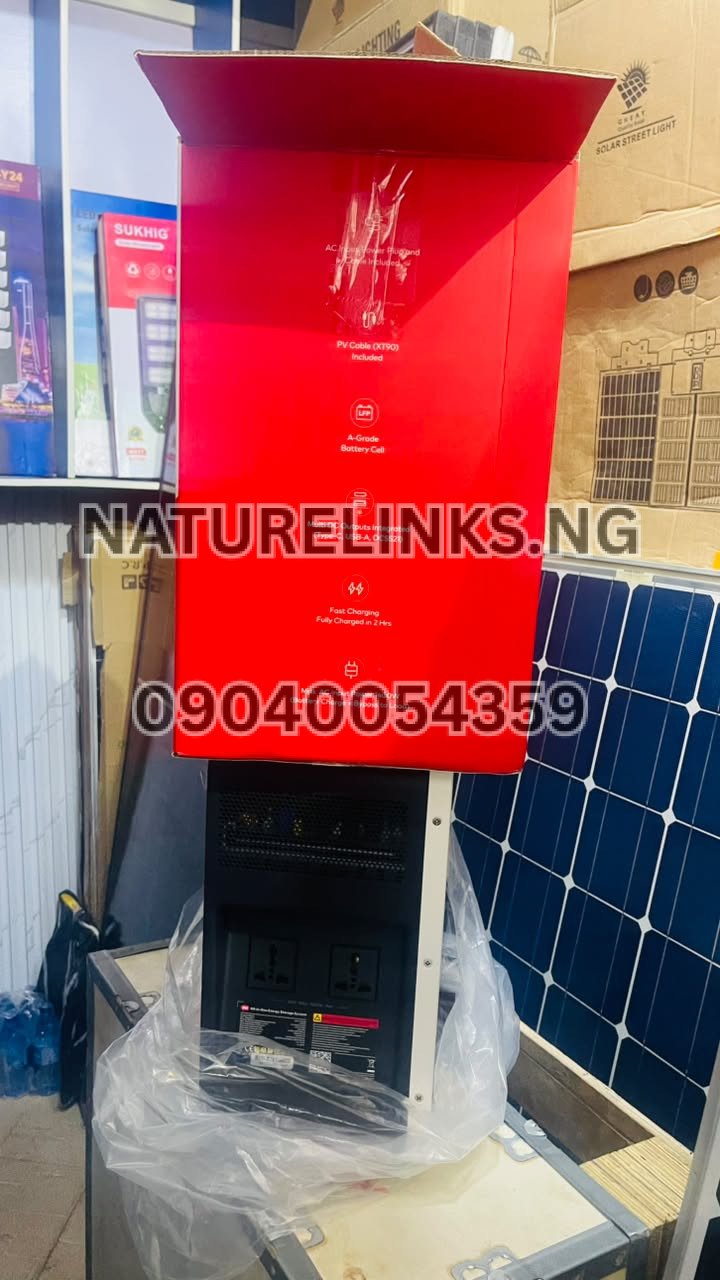
5. What Is the Difference Between Itel Power Tank Battery Capacity and PV Input Power?
Battery capacity and solar PV input power are different measurements, and confusing them can lead to unrealistic expectations about runtime and charging.
Battery capacity is measured in watt-hours (Wh), while power is measured in watts (W).
The Itel Power Tank’s stated battery capacity is 2000Wh, and its stated maximum PV input power is 1200W.
The battery capacity describes the nominal energy stored in the battery. The PV input rating describes the maximum specified solar charging power the power station can accept.
For example, a solar array producing 500W for two hours would generate approximately 1000Wh of energy under steady conditions. Some of that energy may be lost through the charging process, and real solar output will fluctuate throughout the day.
A 1200W PV input limit does not mean the station can store only 1200Wh. Likewise, a 2000Wh battery does not mean the station can accept 2000W from solar panels.
Can 1200W of Solar Input Power My Appliances Directly?
Solar generation can help support the power station and recharge its battery, depending on the product’s operating design and charging conditions. However, the stated 1200W PV input rating is not the same as the 1000W AC output rating.
The power station’s AC output limit remains a separate restriction.
If your appliances consume 400W and the panels are supplying useful solar power, solar charging may reduce how quickly the battery discharges. The precise behaviour depends on the power station’s design, available sunlight, load and battery-charging controls.
Do not assume that the battery will remain at the same charge level merely because the panels have a high nameplate wattage.
Can the Itel Power Tank Run Appliances While Charging?
Whether simultaneous charging and output are supported, and how the unit manages the power flow, must be confirmed in the manufacturer’s instructions for the exact model.
If the function is supported, the battery may charge more slowly or continue discharging if the appliances consume more power than the solar system supplies.
For example, if your appliances consume 350W but the solar panels are delivering only 200W of usable power, the battery may have to supply the difference, subject to the station’s operating behaviour.
This is why solar output and appliance demand should be considered together when estimating how long your backup electricity will last.
6. How Many Solar Panels Do I Need for Itel Power Tank 1200W PV Input?
The supplied buying configuration uses two 625W solar panels for the Itel Power Tank 1000W/2000Wh.
At the stated seller price of ₦125,000 per panel, two panels cost ₦250,000.
However, two 625W panels have a combined nameplate rating of 1250W, which is higher than the station’s stated maximum PV input of 1200W. This difference means you must confirm the approved configuration with the manufacturer or a qualified installer before connecting the panels.
The correct choice depends not only on total wattage but also on the electrical characteristics of the panels.
Which Solar Panel Brands Can I Buy in Nigeria?
The seller lists panel options from the following brands:
- JA Solar.
- Jinko Solar.
- Canadian Solar.
- LONGi.
- All Black solar panel models.
The exact panel model matters. Panels from the same manufacturer can have different voltage and current ratings, so you should not assume that every 625W panel is compatible.
Nature Solar Global Enterprises advertises original panels from these brands. Ask the seller to confirm the precise model, product authenticity, warranty and compatibility before paying.
What Should I Check Before Connecting Two 625W Panels?
Check the following specifications against the Power Tank’s official manual:
- Maximum PV input voltage: The panel arrangement must not exceed the station’s permitted voltage.
- Open-circuit voltage (Voc): This is the panel’s voltage when it is not supplying a load. It can rise in cooler conditions.
- Operating voltage (Vmp): This is the approximate voltage at which the panel produces its rated maximum power under specified conditions.
- Short-circuit current (Isc): This is the current measured when the panel terminals are short-circuited under specified test conditions.
- Operating current (Imp): This is the current at the panel’s maximum-power operating point.
- Connector compatibility: The connectors and cables must be suitable for the equipment and installation.
- Permitted series or parallel arrangement: Follow the manufacturer’s approved configuration.
Do not connect the panels in series or parallel without checking the permitted voltage and current limits. An incorrect configuration can damage the power station or create an electrical safety hazard.
How Much Does Itel Power Tank Cost With Two Solar Panels?
Using the prices supplied by Nature Solar Global Enterprises:
| Item | Cost |
|---|---|
| Itel Power Tank 1000W/2000Wh | ₦600,000 |
| First 625W solar panel | ₦125,000 |
| Second 625W solar panel | ₦125,000 |
| Total equipment cost | ₦850,000 |
This estimate excludes any additional cables, mounting materials, protective devices, installation charges or delivery fees that may apply.
Ask the supplier for a written quotation showing the precise equipment included in the package.
7. How Can I Estimate Solar Charging Time for Itel Power Tank in Nigeria?
Solar charging time depends on the battery’s current charge level, the power available from the panels and the station’s charging efficiency.
A simple theoretical calculation is:
Charging time (hours) = Energy required to recharge (Wh) ÷ Average charging power (W).
Suppose the battery needs 1000Wh to reach the desired charge level, and the power station receives an average of 500W of usable solar charging power.
1000Wh ÷ 500W = 2 hours.
This is an idealised estimate that assumes a steady charging rate. Real-world charging generally takes longer because solar output fluctuates, charging efficiency is less than 100%, and charging power may decrease as the battery approaches full capacity.
How Much Solar Energy Can Two 625W Panels Produce?
Two 625W panels have a combined nameplate rating of 1250W.
If the panels could continuously produce their full combined rated power for one hour, they would generate 1250Wh. In practice, they do not usually produce that output continuously throughout the day.
For a simple illustration, suppose the array averages 600W of output for four equivalent full-power hours.
600W × 4 hours = 2400Wh of estimated daily solar generation.
That is the estimated energy generated before charging losses and other system limitations. The power station’s stated maximum PV input is 1200W, so accepted charging power must remain within the manufacturer’s limits.
The example does not guarantee that your location will receive four equivalent full-power hours every day. Weather, shading, dust, panel angle and seasonal conditions all affect solar production.
Does Nigerian Weather Affect Solar Charging?
Yes. Bright sunshine generally supports stronger solar generation, while heavy cloud, rain and shading can reduce panel output.
Conditions also vary by location and season. A solar installation in Lagos may experience different weather and shading conditions from one in Abuja, Kano, Port Harcourt or Enugu.
To improve performance:
- Position panels according to the installer’s guidance for your location.
- Avoid shading from trees, buildings and other obstructions.
- Keep panels clean using safe, manufacturer-appropriate methods.
- Use suitable cables and connectors.
- Monitor the station’s reported solar input, if available.
- Follow the manufacturer’s temperature and charging recommendations.
The best way to estimate charging time is to observe the actual solar input under your installation’s normal operating conditions.
8. Which Appliances Can Itel Power Tank 1000W/2000Wh Run?
The Itel Power Tank has a stated maximum output of 1000W. It is therefore important to calculate both the total running wattage and the startup demand of the appliances you want to use.
Potentially suitable loads include LED lights, fans, televisions, routers, laptops, phone chargers and other compatible electronics, provided their combined power requirements remain within the station’s limits.
Actual suitability depends on the appliance’s specifications and operating behaviour.
Can Itel Power Tank Run a Television and Fan?
It may be suitable for a television and fan combination if their combined consumption is below the unit’s permitted output and the battery has enough usable energy for the desired duration.
For example:
| Appliance | Illustrative wattage |
|---|---|
| Television | 80W |
| Fan | 50W |
| Three LED bulbs | 30W total |
| Wi-Fi router | 15W |
| Total | 175W |
These are example wattages, not fixed ratings for every appliance.
Using the earlier planning assumption of 1530Wh of usable AC energy:
1530Wh ÷ 175W = approximately 8.74 hours.
This suggests around 8 hours and 44 minutes of runtime under the assumed conditions. Your actual result will depend on the appliances’ real consumption and the station’s performance.
Can Itel Power Tank Run a Refrigerator?
That depends on the refrigerator’s running consumption, compressor startup demand and the Power Tank’s permitted surge capability.
A refrigerator may consume relatively little power while its compressor is running steadily but require a brief surge when the compressor starts. Check the refrigerator’s specifications and the Power Tank’s official surge rating before connecting it.
Do not assume that a refrigerator is compatible merely because its stated running wattage is below 1000W.
Can Itel Power Tank Run an Electric Kettle or Iron?
Many electric kettles and irons have high power requirements and may approach or exceed the station’s 1000W output limit.
Check the appliance label before connecting either device. If the appliance’s rated power exceeds the Power Tank’s permitted output, do not use it with the station.
Even if an appliance is within the stated output rating, consider how quickly it will drain the battery.
For example, a 900W appliance would consume energy rapidly. Using the illustrative 1530Wh of usable AC energy:
1530Wh ÷ 900W = approximately 1.7 hours.
This is a theoretical energy estimate, not a recommendation to operate a high-power appliance continuously at near-maximum load.
Can Itel Power Tank Run an Air Conditioner?
Air conditioners often have substantial startup requirements, and their running consumption varies considerably by model, capacity and operating conditions.
A small air conditioner may still exceed the station’s capabilities, particularly during compressor startup. Check both the rated running wattage and startup requirements, as well as the Power Tank’s approved surge rating.
If the combined power demand exceeds the station’s permitted output, choose a suitably rated power system instead.
9. How Do I Calculate Runtime for Multiple Appliances at Home?
To calculate runtime for several appliances, add their power consumption together and multiply each appliance’s wattage by the number of hours you intend to use it.
The energy consumption formula is:
Energy consumed (Wh) = Appliance wattage (W) × Operating time (hours).
Suppose you want to use the following appliances during a power outage:
| Appliance | Example wattage | Daily use | Energy required |
|---|---|---|---|
| Television | 80W | 4 hours | 320Wh |
| Fan | 50W | 6 hours | 300Wh |
| LED lighting | 30W | 5 hours | 150Wh |
| Router | 15W | 8 hours | 120Wh |
| Laptop | 60W | 3 hours | 180Wh |
| Total | 235W when all operate together | — | 1070Wh |
The total daily energy requirement is 1070Wh before accounting for conversion losses.
If all five loads operate simultaneously, their combined power demand is 235W. This is below the stated 1000W maximum output.
However, the battery must provide enough usable energy to cover the total consumption over the intended period. If the appliances operate at different times, calculate the energy for each operating period and add the results.
How Much Battery Energy Will These Appliances Need?
The example appliances require 1070Wh of energy at their stated wattages.
Using the illustrative 85% inverter efficiency assumption, the battery energy required to deliver 1070Wh of AC energy would be:
1070Wh ÷ 0.85 = approximately 1259Wh.
This simplified calculation does not include additional battery reserves or every source of system consumption. Nevertheless, it demonstrates why inverter efficiency matters when planning a daily electricity budget.
A fully charged 2000Wh battery may be sufficient for this example under the assumed conditions, but actual performance depends on the available usable capacity and the real power consumption of the appliances.
Should I Buy the 1000Wh or 2000Wh Itel Power Tank?
Nature Solar Global Enterprises states that it supplies the 500W/1000Wh and 1000W/2000Wh models.
The smaller model may suit people who need backup for low-power devices and shorter periods. The larger model offers greater nominal energy storage and a higher stated output rating, making it more suitable for users with larger energy requirements, provided their appliances are compatible.
Compare the following before choosing:
- Your total appliance wattage.
- Your expected hours of backup.
- Your daily energy consumption.
- The starting demand of appliances with motors or compressors.
- The charging methods available to you.
- The cost of compatible solar panels.
- Your budget and warranty requirements.
Choosing the correct capacity at the beginning can help prevent disappointment after purchase.
10. What Common Mistakes Should I Avoid When Estimating Itel Power Tank Runtime?
Several common mistakes can make runtime calculations inaccurate or lead to an unsuitable purchase.
Mistake 1: Assuming 2000Wh Means 2000W Output
Battery capacity and output power measure different things.
The 2000Wh rating describes nominal stored energy, while the specified 1000W rating describes maximum output power. A battery with substantial energy storage cannot necessarily run an appliance whose power demand exceeds the inverter’s permitted output.
Always check both ratings.
Mistake 2: Ignoring Inverter Efficiency
Dividing 2000Wh directly by appliance wattage can overestimate runtime because it assumes that every stored watt-hour reaches the appliances.
Use a realistic efficiency assumption or verified manufacturer data to improve your estimate.
Mistake 3: Forgetting Startup Power
Refrigerators, pumps and other motor-driven appliances may draw significantly more power when starting than they consume during steady operation.
Check startup requirements and the power station’s permitted surge capability before using these appliances.
Mistake 4: Confusing PV Input With AC Output
The stated maximum PV input is 1200W, while the stated maximum AC output is 1000W.
These figures describe different functions. Solar input determines the maximum specified solar charging power, while AC output limits the power available to connected AC appliances.
Mistake 5: Assuming Two 625W Panels Will Always Deliver 1250W
Panel ratings are measured under specified test conditions. Real output changes with sunlight, temperature, shading and installation angle.
Additionally, the station has a stated maximum PV input of 1200W. Confirm the permitted array configuration and electrical limits before connecting the panels.
Mistake 6: Forgetting Other Electrical Loads
A television, router, fan and lights may seem individually small, but their combined consumption determines the total load.
Calculate the wattage of everything that will operate at the same time.
Mistake 7: Assuming Solar Charging Eliminates All Battery Discharge
Solar panels produce different amounts of electricity throughout the day. If the appliances consume more energy than the solar system supplies, the battery may still discharge.
Plan for cloudy weather and reduced solar output rather than assuming continuous maximum generation.
Mistake 8: Buying Panels Without Checking Compatibility
The panel’s wattage alone does not determine compatibility. Voltage, current, connectors and wiring configuration must also meet the station’s requirements.
Request confirmation from the supplier or a qualified solar installer before purchasing panels.
Mistake 9: Ignoring Battery Condition and Temperature
Battery performance can change with age, temperature and charging history. A used or degraded battery may not provide the same runtime as a new unit under identical conditions.
Follow the manufacturer’s instructions and warranty requirements to help maintain performance.
Mistake 10: Buying Based on Price Alone
A low price is not the only consideration. Confirm the exact model, battery capacity, output rating, accessories, warranty, panel authenticity and after-sales support.
Compare like-for-like offers and request a written quotation before making payment.
11. Where Can I Buy Original Itel Power Tank and Solar Panels in Nigeria?
Nature Solar Global Enterprises, a subsidiary of Nature Links Nigeria Limited, advertises itself as a seller, wholesaler and distributor of Itel Power Tank products across Nigeria.
The business lists the 500W/1000Wh and 1000W/2000Wh models and offers solar panel options from JA Solar, Jinko Solar, Canadian Solar, LONGi and All Black product lines, subject to availability and compatibility.
For customers comparing Itel Power Tank prices in Nigeria, the supplied price for the 1000W/2000Wh power station is ₦600,000, with compatible 625W panels listed at ₦125,000 each.
These prices should be confirmed before payment because stock, exchange rates, promotions and delivery arrangements can change.
Nature Solar Global Enterprises Contact Details
Business name: Nature Solar Global Enterprises
Parent company: Nature Links Nigeria Limited
CEO: Mr. Joseph Chikeleze
Telephone: 07049528019
WhatsApp: 09040054359
Shop address: F1571 Upstairs (F-Line), Alaba International Market, Lagos State, Nigeria.
Website: Itel Power Tank Nigeria — itelpowertank.com.ng
The seller advertises wholesale prices and nationwide delivery, including same-day delivery in Lagos and next-day delivery outside Lagos. Confirm the actual delivery schedule for your location before ordering.
When contacting the seller, ask for:
- The current price of your preferred Power Tank model.
- Confirmation of whether the quotation includes solar panels.
- The exact panel models and their electrical specifications.
- Confirmation that the panels are compatible with the station’s 1200W PV input limit.
- The warranty terms and proof of purchase.
- Delivery charges and estimated arrival time.
- Any additional installation materials or accessories you may need.
These checks can help you avoid unexpected costs and ensure that your purchase meets your electricity requirements.
12. Frequently Asked Questions About Itel Power Tank Runtime, PV Input and Solar Panels in Nigeria
The following FAQs address common buyer questions about battery runtime, appliance wattage, solar charging, prices and compatibility. They are based on the product specifications supplied for this article and recurring purchasing questions reflected in Nigerian product listings and buying guides; they are not a verified ranking of Google Nigeria search volumes.
1. How Long Can Itel Power Tank 2000Wh Last on a Full Charge?
The runtime depends on the combined wattage of your appliances and the energy available after conversion losses.
Using an illustrative estimate of 1530Wh of usable AC energy, a 100W load could run for approximately 15.3 hours, while a 200W load could run for approximately 7.65 hours.
These are estimates rather than guaranteed results. Actual runtime depends on battery condition, inverter efficiency, appliance consumption and operating conditions.
2. What Is the Maximum PV Input of Itel Power Tank 1000W/2000Wh?
The supplied specification states a maximum solar PV input of 1200W.
This is the maximum specified solar charging power, not the battery capacity or AC output rating. Panel voltage and current must also remain within the station’s permitted limits.
Check the exact model’s manual before connecting solar panels.
3. Can I Use Two 625W Solar Panels With Itel Power Tank?
The proposed configuration uses two 625W panels, but their combined nameplate rating is 1250W, which exceeds the stated 1200W maximum PV input.
Do not assume the arrangement is approved based on wattage alone. Ask the manufacturer, seller or a qualified installer to confirm the permitted panel configuration, voltage, current and wiring.
4. How Much Is Itel Power Tank 1000W/2000Wh in Nigeria?
The seller-provided price from Nature Solar Global Enterprises is ₦600,000 for the power station alone.
Other sellers have reportedly offered the model for approximately ₦620,000–₦650,000, but online prices vary. Confirm the current price, exact model and package contents before purchasing.
5. Does the Itel Power Tank ₦600,000 Price Include Solar Panels?
According to the supplied price breakdown, the ₦600,000 price covers the power station alone.
Each 625W panel is listed at ₦125,000. Two panels would add ₦250,000, bringing the estimated equipment total to ₦850,000 before additional charges.
Ask the seller for a written quotation to confirm what is included.
6. How Do I Calculate Itel Power Tank Runtime Using Appliance Wattage?
Multiply the nominal battery capacity by your estimated usable battery fraction and inverter efficiency, then divide the result by the combined appliance wattage.
For example, using a 2000Wh battery, a 90% usable battery fraction and 85% inverter efficiency gives:
2000Wh × 0.90 × 0.85 = 1530Wh.
At a 300W load:
1530Wh ÷ 300W = approximately 5.1 hours.
The result is an estimate. Use verified efficiency data where available and account for actual appliance consumption.
7. Can Itel Power Tank Run a Refrigerator?
It depends on the refrigerator’s running wattage, startup demand and the Power Tank’s permitted surge capability.
Check the refrigerator’s specifications and the power station’s official ratings before connecting it. A refrigerator whose running wattage is below 1000W may still have a startup demand that exceeds the station’s capabilities.
8. How Long Does Itel Power Tank Take to Charge With Solar Panels?
Charging time depends on the amount of energy needed, average solar input, charging efficiency and sunlight conditions.
For example, replenishing 1000Wh at an average usable charging rate of 500W would take approximately two hours in an idealised calculation. Real charging may take longer because sunlight varies and charging is not perfectly efficient.
Use the station’s actual charging information for a more reliable estimate.
9. Can I Run a 1000W Appliance With Itel Power Tank?
The supplied specifications state a maximum output of 1000W, but an appliance rated at 1000W is already at that nominal limit.
Its startup demand, power factor and the station’s operating restrictions may affect compatibility. Check the manufacturer’s instructions before using an appliance at the maximum rating, and do not exceed the permitted output.
10. Where Can I Buy Itel Power Tank and 625W Solar Panels in Nigeria?
Nature Solar Global Enterprises, a subsidiary of Nature Links Nigeria Limited, advertises Itel Power Tank models and compatible solar panels.
You can call 07049528019 or WhatsApp 09040054359. The stated shop address is F1571 Upstairs (F-Line), Alaba International Market, Lagos State, Nigeria.
Confirm current prices, stock availability, panel compatibility, warranty and delivery arrangements before paying.
Conclusion
Estimating runtime for the Itel Power Tank PV input limit using appliance wattage and inverter losses helps you plan backup electricity more accurately. Start with the nominal 2000Wh battery capacity, estimate how much energy is actually available to your appliances, account for inverter efficiency, and divide the resulting usable energy by the combined appliance wattage.
Remember that the Itel Power Tank’s stated 1200W PV input limit and 1000W maximum output rating describe different functions. The proposed two 625W solar panel arrangement has a combined nameplate rating of 1250W, so its compatibility must be confirmed against the manufacturer’s permitted voltage, current and wiring specifications.
For buyers in Nigeria, Nature Solar Global Enterprises offers a seller-provided price of ₦600,000 for the Itel Power Tank 1000W/2000Wh and ₦125,000 for each 625W solar panel. The estimated equipment cost for the station and two panels is ₦850,000, excluding any additional charges.
For enquiries, contact Nature Solar Global Enterprises on 07049528019 or WhatsApp 09040054359, or visit F1571 Upstairs (F-Line), Alaba International Market, Lagos State.
Choose your power station based on your real appliance requirements, verify solar panel compatibility and confirm the latest prices before purchasing. Careful planning will help you get more reliable backup power and make better use of your solar investment.