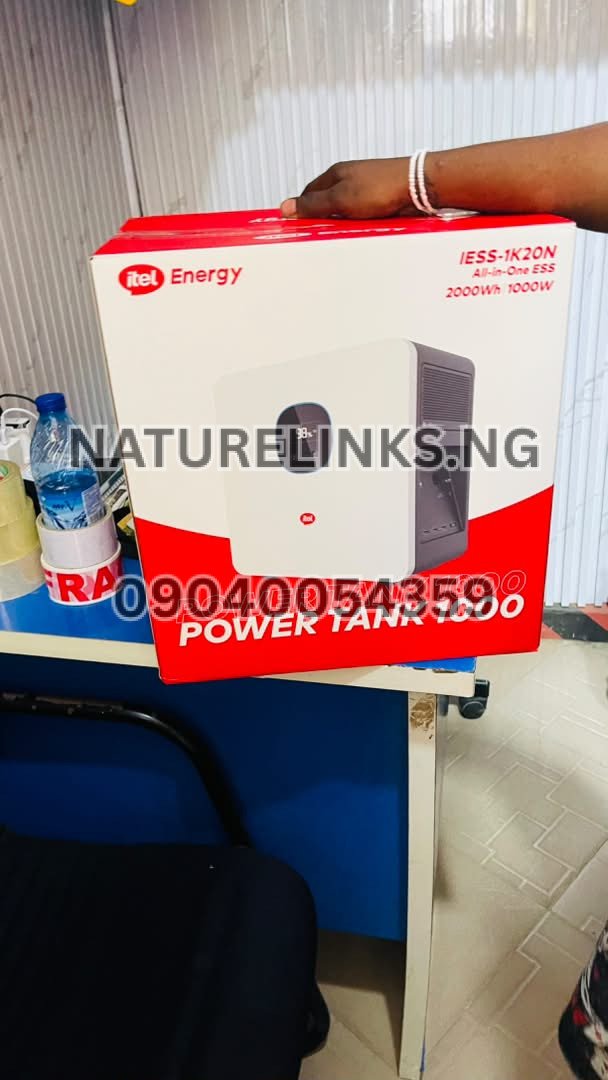
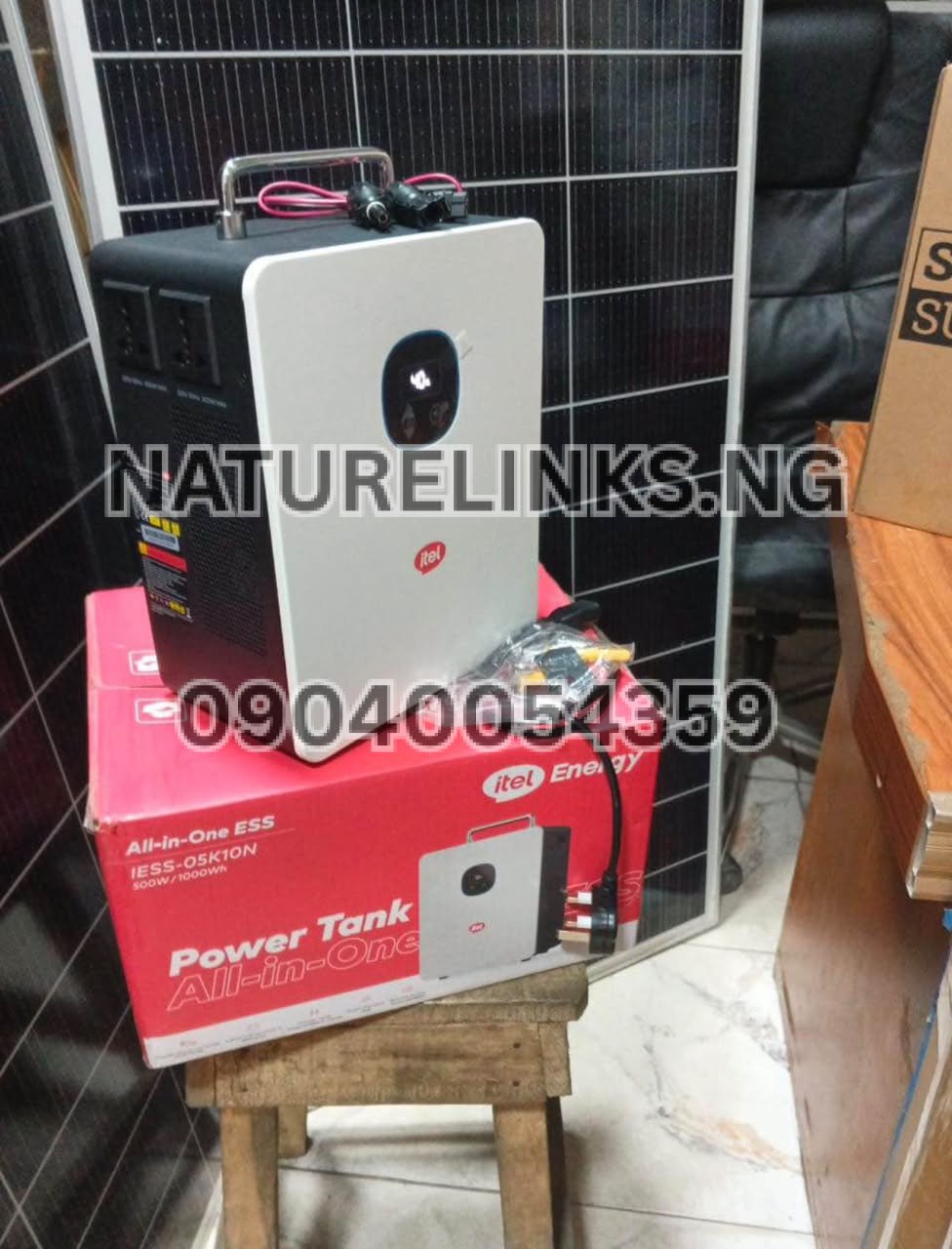
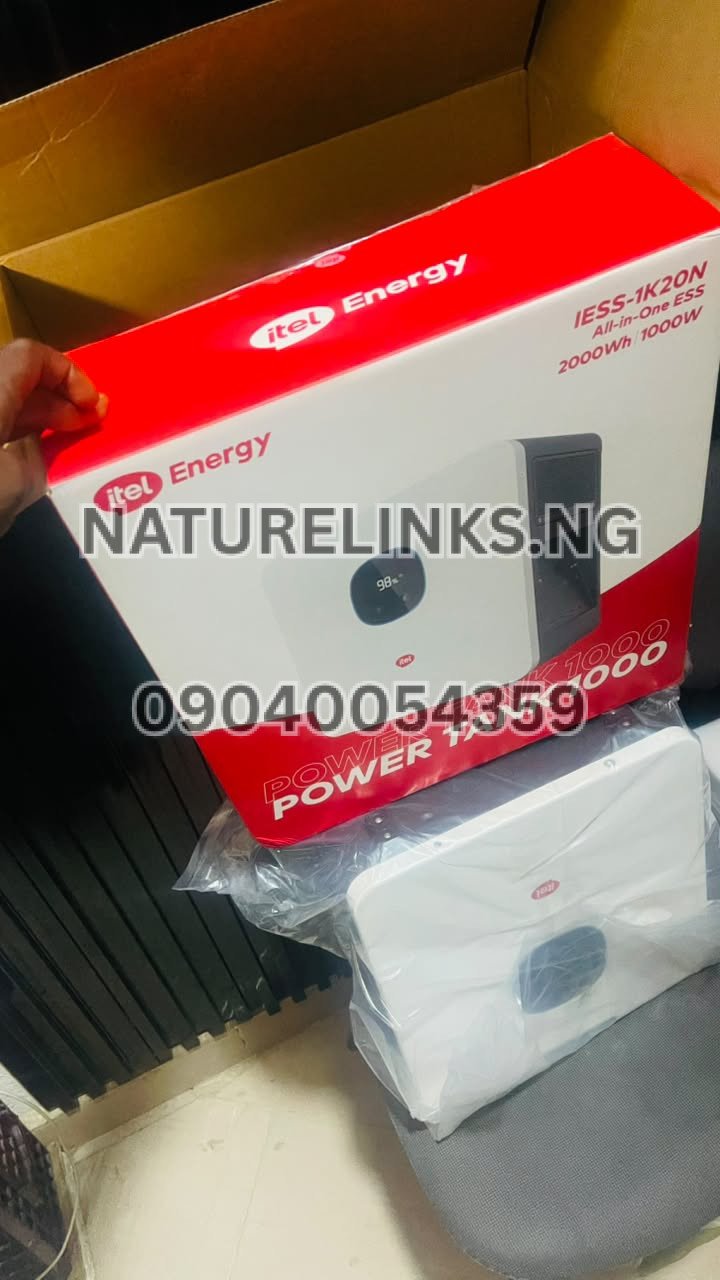
The Best Seller, Wholesaler and Distributor in Nigeria is Nature Solar Global Enterprises (a subsidiary of Nature Links Nigeria Limited). The business describes itself as an accredited distributor serving customers across all Nigerian states, offering Itel Power Tank portable power stations, compatible solar panels, wholesale prices and nationwide delivery.
Are you searching for the Itel Power Tank solar charging time in Nigeria, how long it takes to charge a 2000Wh power station, or whether it charges faster than other solar generators and conventional solar systems? Understanding charging time is essential before buying a solar power station for your home, shop, office, or small business.
The 1000W/2000Wh Itel Power Tank has a stated maximum photovoltaic (PV) input power of 1200W, making it suitable for buyers looking for a portable backup power solution that can use solar panels to recharge its battery. However, actual charging time depends on the panels’ combined wattage, sunshine intensity, temperature, panel orientation, battery state of charge and the power station’s charging limits.
For Nigerians dealing with unreliable public electricity supply, comparing solar charging time, battery capacity, output power and total installation cost can help determine which backup power solution offers the best value.
This guide explains how Itel Power Tank charging time compares with similar portable power stations and larger solar systems, how many panels you need, the estimated charging duration, current buying considerations and where to enquire about the product in Nigeria.
What Is the Itel Power Tank Solar Charging Time?
The charging time of an Itel Power Tank depends on the battery capacity and the amount of solar power reaching the unit. The 1000W/2000Wh model has a stated battery capacity of 2000Wh and a maximum PV input rating of 1200W.
A simple theoretical calculation divides battery capacity by the power supplied to the battery. For example, charging a completely empty 2000Wh battery at a constant 1000W would take approximately two hours under ideal conditions. At a constant 600W, the equivalent calculation gives approximately 3.3 hours.
However, these figures are mathematical estimates, not guaranteed real-world charging times. Solar power varies throughout the day, and charging losses, battery-management limits and reduced charging power near full capacity can increase the total duration.
For practical planning, a 2000Wh power station receiving strong sunlight and substantial solar input might recharge in a few hours, while cloudy weather, shading, unsuitable panel angles or lower panel output can extend charging into much of the day or longer.
Important: The 1200W maximum PV input is the power station’s stated solar-input limit, not a promise that the battery will continuously receive 1200W. Confirm the manufacturer’s charging specifications and compatible panel configuration before purchasing.
How Does Itel Power Tank Solar Charging Time Compare with Other Solar Generators?
When comparing the Itel Power Tank with other solar generators, examine battery capacity, maximum solar input, AC charging capability and the charging time quoted by each manufacturer.
A power station with a 1000Wh battery generally requires less energy to recharge than one with a 2000Wh battery, assuming similar charging power and efficiency. However, a smaller battery does not necessarily charge faster if its maximum solar input is considerably lower.
The Itel Power Tank 1000W/2000Wh model offers a stated 1200W maximum PV input. This gives it substantial solar-input capacity relative to its battery size, provided the connected panels and installation can deliver enough power within the manufacturer’s permitted voltage and current limits.
Consider these illustrative comparisons:
| Power station battery capacity | Solar input used in calculation | Idealised charging time |
|---|---|---|
| 500Wh | 250W | 2 hours |
| 1000Wh | 400W | 2.5 hours |
| 2000Wh | 600W | 3.3 hours |
| 2000Wh | 1000W | 2 hours |
| 2000Wh | 1200W | 1 hour 40 minutes |
These calculations assume a completely empty battery, constant input power, and no charging losses. They are not verified charging specifications for competing products or guaranteed charging times for the Itel Power Tank.
In real Nigerian conditions, solar charging takes longer because panel output fluctuates with the weather and the position of the sun. When comparing models, therefore, prioritise independently verified charging performance rather than relying exclusively on advertised maximum input ratings.
How Long Does It Take to Charge a 2000Wh Itel Power Tank with Solar Panels?
A 2000Wh battery needs approximately 2000Wh of energy to move from empty to full, before accounting for charging losses. The Itel Power Tank specification provided for this guide lists a maximum PV input of 1200W.
The following estimates illustrate how different average solar-input levels affect charging time:
| Average power actually entering the charging system | Idealised time for 2000Wh |
|---|---|
| 200W | 10 hours |
| 300W | 6 hours 40 minutes |
| 400W | 5 hours |
| 500W | 4 hours |
| 600W | 3 hours 20 minutes |
| 800W | 2 hours 30 minutes |
| 1000W | 2 hours |
| 1200W | 1 hour 40 minutes |
Actual charging times will be longer because these figures exclude conversion losses, changing sunlight, charging-power fluctuations and the final stage of charging. They also assume the stated average power is genuinely delivered to the battery throughout the calculated period.
For a practical example, suppose the power station receives an average of 500W of usable solar input over four hours. That represents approximately 2000Wh of incoming solar energy. The battery may still not reach 100% because some energy is lost during conversion and charging.
This is why it is useful to plan around the expected number of productive sunlight hours rather than assuming the panels will produce their full rated wattage continuously.
Before purchasing, ask Nature Solar Global Enterprises to confirm the manufacturer’s recommended panel configuration and the expected charging performance under suitable operating conditions.
How Many Solar Panels Do You Need for the Itel Power Tank 2000Wh Model?
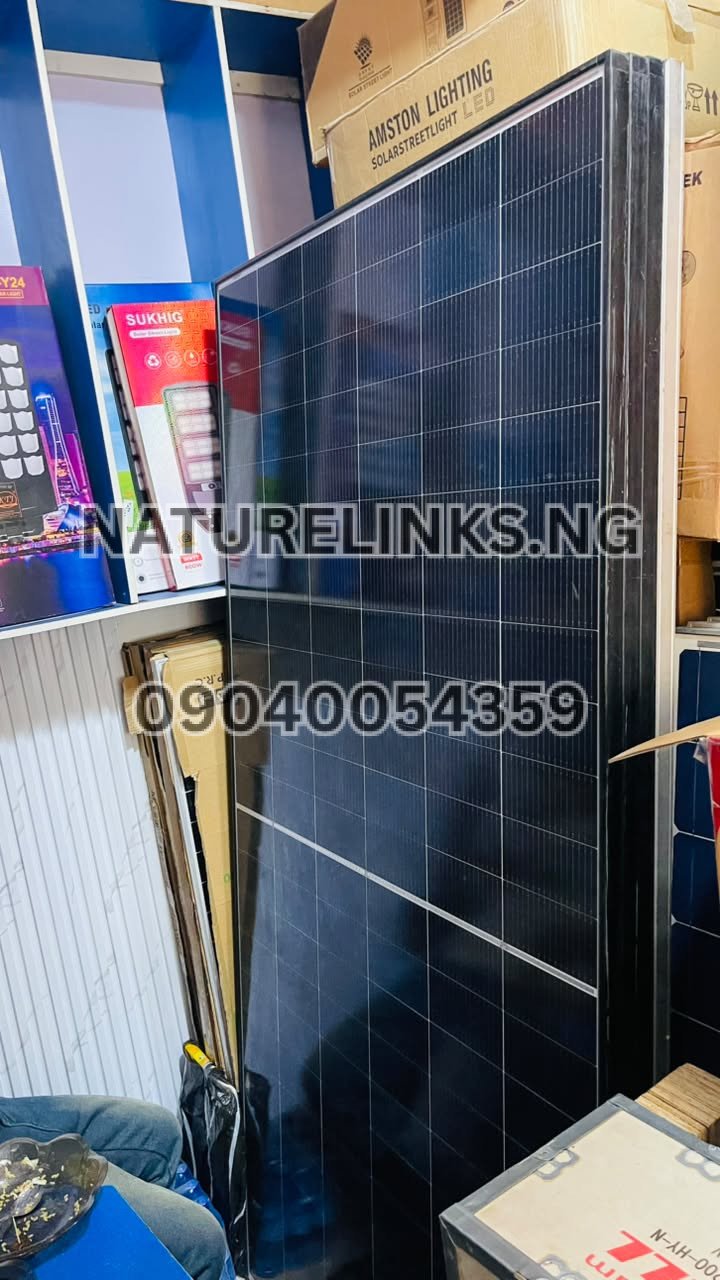
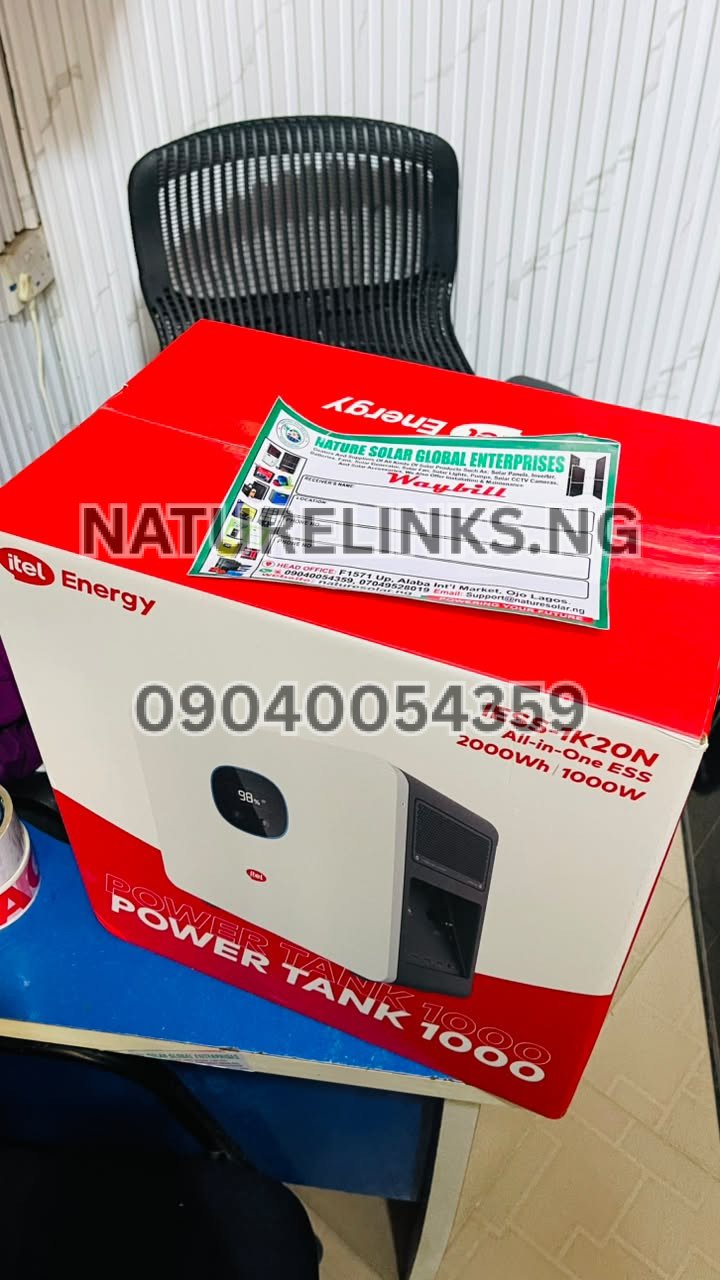
The supplied product information recommends two 625W solar panels for the 1000W/2000Wh Itel Power Tank configuration.
Two 625W panels have a combined nameplate rating of:
625W + 625W = 1250W.
However, the power station’s stated maximum PV input is 1200W. Consequently, the combined panel rating exceeds the stated input-power limit by 50W.
That does not automatically establish whether this configuration is electrically compatible. Panel wattage alone is insufficient to determine compatibility. The solar panels’ open-circuit voltage (Voc), operating voltage (Vmp), short-circuit current (Isc), operating current (Imp), temperature-adjusted voltage and the power station’s permitted PV voltage and current must all be checked.
Ask the supplier to confirm the approved wiring arrangement and whether the recommended 625W panels can be used together without exceeding the power station’s electrical limits. Do not connect two panels in series or parallel simply because their combined wattage appears suitable.
Why Are Two 625W Panels Useful?
Two appropriately compatible 625W panels provide a substantial rated solar capacity for a 2000Wh portable power station. Under suitable sunlight, this can help replenish the battery more quickly than using a smaller panel arrangement.
Nevertheless, a 625W panel will not produce 625W continuously in every installation. Heat, cloud cover, dust, shading, panel direction and installation angle can reduce output.
For Nigerian buyers, proper installation and compatibility checks are just as important as choosing high-wattage panels.
3. Weather Conditions in Nigeria
Weather is one of the most important factors affecting solar charging performance. Although Nigeria receives substantial sunshine in many regions, actual solar generation varies by season, location and weather conditions.
During sunny periods, properly installed panels may produce significantly more power than during cloudy or rainy weather. Harmattan dust can also reduce performance when it accumulates on the panel surface.
To improve charging performance:
- Install the panels where they receive unobstructed sunlight.
- Avoid shadows from trees, buildings and nearby structures.
- Clean panels regularly using appropriate methods.
- Position the panels according to local sunlight conditions.
- Monitor the actual charging power displayed by the power station, if available.
These steps can help maximise the energy harvested from your solar panels.
4. Battery Charge Level
Charging from 50% to 100% generally requires less energy than charging from 0% to 100%. Therefore, a power station that is partially charged can reach full capacity more quickly than one with a completely depleted battery.
The charging system may also reduce power as the battery approaches full capacity. This means that the final percentage can take longer than a simple battery-capacity calculation suggests.
5. Solar Panel Compatibility
Panel voltage and current are crucial when selecting solar panels for the Itel Power Tank.
The product listing for the Power Tank 1000 specifies a maximum PV input of 1200W, a maximum PV voltage of 60V and an MPPT voltage range of 11–60V. These electrical limits must be checked against the specifications of the exact panels being purchased.
For this reason, buyers should not select panels based on wattage alone. Have the supplier or a qualified solar installer confirm that the proposed panel configuration meets the manufacturer’s voltage, current and connection requirements.
6. AC Charging Versus Solar Charging
Charging from the electricity grid can be useful when sunlight is insufficient. Solar charging, meanwhile, allows you to replenish the battery without relying entirely on grid electricity.
The product specifications supplied for this article state a maximum AC input power of 1400W, including bypass and battery charging. However, this figure should not automatically be interpreted as a guaranteed 1400W battery-charging rate.
Confirm the supported AC charging rate, solar charging rate and any simultaneous charging functionality for the exact model before relying on advertised charging times.
Itel Power Tank vs Traditional Inverter and Battery Solar Systems
The Itel Power Tank and a conventional inverter-and-battery solar installation can both provide backup electricity, but their designs and intended uses differ.
A portable power station integrates major components, including a battery, inverter and solar charge controller, into one unit. A traditional solar system generally uses separate components that are sized and installed to meet a household’s energy requirements.
| Feature | Itel Power Tank 1000W/2000Wh | Traditional inverter and battery system |
|---|---|---|
| Battery capacity | 2000Wh stated capacity | Depends on the selected battery bank |
| Maximum output | 1000W stated output | Depends on the inverter |
| Solar input | Maximum 1200W stated PV input | Depends on the charge controller and system design |
| Installation | Generally simpler for compatible plug-and-play use | May require professional installation |
| Portability | Integrated portable design | Often stationary |
| Expansion | Limited by the product’s supported configuration | May allow broader system expansion |
| Charging speed | Depends on supported input and sunlight | Depends on charging equipment, battery capacity and available solar power |
| Best use | Essential appliances and portable backup power | Can suit anything from small backup setups to larger household installations |
A traditional solar installation may be preferable if you need to power several high-consumption appliances, operate a large refrigerator or freezer, or support a home with substantial daily electricity demand.
The Itel Power Tank can be attractive when you prefer an integrated unit that is easier to deploy and does not require a large permanent installation.
Neither option is automatically faster. Charging performance depends on the amount of energy required, available charging power, battery specifications and system efficiency.
Is Itel Power Tank Better Than Other Portable Power Stations?
The best power station depends on what you need to power and how quickly you need to recharge it.
When comparing the Itel Power Tank with other portable power stations in Nigeria, consider these factors:
Battery capacity: A 2000Wh battery stores more energy than a 1000Wh battery, potentially providing longer backup for the same load.
Solar charging capacity: The Itel Power Tank 1000W/2000Wh has a stated maximum PV input of 1200W. Compare this with the competing model’s permitted solar input rather than its panel wattage alone.
AC charging: Check how much power the station accepts from the electricity grid and whether the manufacturer supports combined solar and AC charging.
Output power: The Itel Power Tank’s stated maximum output is 1000W. A competing station with a higher output rating may be more suitable for appliances with larger power demands.
Battery chemistry and cycle life: The supplied specifications identify LFP battery cells and an 8000-cycle rating. Confirm the manufacturer’s precise test conditions and warranty coverage because cycle-life figures are not necessarily directly comparable between brands.
Price and warranty: Compare the power station’s price, the cost of compatible panels, included accessories, warranty conditions and after-sales support.
The cheapest initial purchase is not always the best overall value. A compatible solar package, reliable warranty and suitable battery capacity can matter more than a small difference in the advertised price.
What Is the Price of Itel Power Tank and Solar Panels in Nigeria?
Nature Solar Global Enterprises advertises the Itel Power Tank 1000W/2000Wh at ₦600,000 and individual 625W solar panels at ₦125,000 each.
The seller lists JA Solar, Jinko, Canadian Solar, LONGi and all-black panel options, subject to availability and compatibility.
The following table summarises the advertised prices supplied for this article.
| Product | Advertised price |
|---|---|
| Itel Power Tank 1000W/2000Wh | ₦600,000 |
| One 625W solar panel | ₦125,000 |
| Two 625W solar panels | ₦250,000 |
| Power station plus two panels | ₦850,000 |
These are seller-provided prices, not independently verified market-wide prices. Confirm current stock, authenticity, warranty, panel specifications and delivery charges before making payment.
For comparison, the official Itel Power Tank retail listing has advertised the 1000W/2000Wh unit at ₦629,200. This is a useful reference point, although online prices and promotions can change.
Buyers should also distinguish between the price of the power station alone and the total price of a complete solar charging setup. Depending on the package, additional expenses may include cables, mounting equipment, electrical protection, installation and delivery.
Where Can I Buy an Original Itel Power Tank in Nigeria?
Nature Solar Global Enterprises, a subsidiary of Nature Links Nigeria Limited, advertises the Itel Power Tank 500W/1000Wh and 1000W/2000Wh models, alongside compatible solar panels.
According to the business information supplied for this article, it offers wholesale prices and delivery to cities and states across Nigeria, with same-day delivery in Lagos and next-day delivery outside Lagos where available. Confirm the delivery schedule for your location before ordering.
Nature Solar Global Enterprises Contact Details
- Business name: Nature Solar Global Enterprises
- Parent company: Nature Links Nigeria Limited
- CEO: Mr. Joseph Chikeleze
- Telephone: 07049528019
- WhatsApp: 09040054359
- Shop address: F1571 Upstairs (F-Line), Alaba International Market, Lagos State, Nigeria
- Website: https://itelpowertank.com.ng/
Before paying, request confirmation of the exact model number, battery capacity, output rating, warranty, included accessories and the authenticity of the solar panels. Ask for a written quotation that separates the power station price from the panels and any additional installation costs.
You should also request the manufacturer’s recommended solar connection arrangement. This is especially important when purchasing two 625W panels for a unit with a stated maximum PV input of 1200W.
How to Get the Best Solar Charging Performance from Your Itel Power Tank
To get the best performance from your Itel Power Tank, start by determining how much energy your appliances consume each day.
For example, if you use a 100W appliance for five hours, its energy consumption is:
100W × 5 hours = 500Wh.
A 2000Wh battery could theoretically supply that amount of energy several times before accounting for conversion losses, standby consumption and other operating factors.
Next, determine how much solar energy you need to replace the energy consumed. If your appliances use 1000Wh daily, your solar panels must generate enough usable energy to replenish that consumption while accounting for system losses and changes in weather.
A well-planned solar setup should balance battery capacity, daily consumption, solar panel output and available charging time.
For Nigerian households, it is also sensible to plan for cloudy days. If the weather prevents a full recharge, reducing unnecessary loads or using grid charging when available may help preserve backup power.
Remember that a 2000Wh battery does not guarantee 2000Wh of usable AC energy at the wall socket. Inverter conversion losses and the power station’s operating requirements reduce the amount available to connected appliances.
Frequently Asked Questions About Itel Power Tank Solar Charging Time
The following FAQs address common buyer questions about charging speed, solar compatibility, pricing and power station selection. They are based on product specifications and common Nigerian buyer-search themes, not a verified ranking of Google’s most searched questions.
1. How long does it take to charge the Itel Power Tank 2000Wh fully?
The time depends on the charging method and the power actually reaching the battery. At a sustained 1000W, supplying 2000Wh would take approximately two hours under ideal mathematical conditions. Actual charging time may be longer because of charging losses, variable solar output and the charging system’s behaviour near full capacity.
2. Can the Itel Power Tank charge fully in two hours using solar panels?
Two hours is a theoretical estimate at an average charging rate of approximately 1000W for a 2000Wh battery. Achieving that result requires sufficient compatible solar input and favourable conditions. Do not treat two hours as a guaranteed solar charging time in every Nigerian location or season.
3. What is the maximum solar input of the Itel Power Tank 1000W/2000Wh?
The stated maximum PV input is 1200W. This is the maximum permitted solar-input power, not a guarantee that the unit will continuously receive 1200W. The solar array must also comply with the unit’s voltage and current limits.
4. How many 625W solar panels do I need for the Itel Power Tank?
The supplied product information recommends two 625W panels. Together, they have a combined nameplate rating of 1250W, which exceeds the power station’s stated maximum PV input of 1200W. Confirm the approved panel arrangement and electrical compatibility with the manufacturer or a qualified installer before connecting them.
5. Does the Itel Power Tank charge faster than a traditional inverter and battery system?
Not necessarily. Charging speed depends on the charging equipment, battery capacity, available solar power and system efficiency. A properly designed traditional solar installation can charge a battery quickly, while the Itel Power Tank offers the convenience of an integrated power station with a specified maximum PV input.
6. Can I charge the Itel Power Tank with solar panels during cloudy weather?
Yes. Solar panels can generate electricity during cloudy weather, although their output generally falls compared with strong direct sunlight. This can increase charging time, particularly during persistent cloud cover or heavy rain.
7. Can I charge the Itel Power Tank with both solar energy and grid electricity?
The exact supported charging modes depend on the model and its manufacturer’s instructions. Check whether simultaneous solar and AC charging is supported and confirm the combined charging limits before relying on a particular recharge time.
8. How much does the Itel Power Tank 1000W/2000Wh cost in Nigeria?
Nature Solar Global Enterprises advertises the unit at ₦600,000. Prices can change and may vary between sellers. Contact the supplier to confirm current stock, warranty, accessories and delivery charges before ordering.
9. What is the price of two 625W solar panels for the Itel Power Tank?
At the advertised price of ₦125,000 per panel, two panels cost ₦250,000. Adding the ₦600,000 power station gives a total equipment price of ₦850,000 before any additional installation materials, labour or delivery charges. Confirm panel compatibility before purchasing.
10. Where can I buy the original Itel Power Tank in Nigeria?
You can contact Nature Solar Global Enterprises at 07049528019 or WhatsApp 09040054359. Its listed shop address is F1571 Upstairs (F-Line), Alaba International Market, Lagos State. You can also visit its website at https://itelpowertank.com.ng/ to enquire about available models, solar panels and delivery arrangements.
Conclusion
The “How does Itel Power Tank solar charging time compare with similar power stations or solar systems?” question is best answered by comparing battery capacity, maximum charging input, actual solar production, charging efficiency and total system cost.
The Itel Power Tank 1000W/2000Wh has a stated 2000Wh battery capacity and maximum PV input of 1200W. Although a simple calculation suggests that 2000Wh could be supplied in approximately 1 hour and 40 minutes at a continuous 1200W, real charging conditions and system losses mean that this is not a guaranteed full-charge time. Solar charging performance depends on sunlight, panel compatibility, battery charge level and the equipment’s operating limits.
For Nigerian buyers, the most important steps are to choose the correct power station model, verify panel compatibility, compare the complete equipment cost and ensure the power station can safely run the appliances you intend to use.
Nature Solar Global Enterprises advertises the 1000W/2000Wh Itel Power Tank at ₦600,000 and 625W solar panels at ₦125,000 each. Contact the seller directly to confirm current prices, warranty, product authenticity and the recommended solar configuration before making a purchase.
For enquiries and orders:
Nature Solar Global Enterprises
A subsidiary of Nature Links Nigeria Limited
CEO: Mr. Joseph Chikeleze
Call: 07049528019
WhatsApp: 09040054359
Address: F1571 Upstairs (F-Line), Alaba International Market, Lagos State, Nigeria.
Website: https://itelpowertank.com.ng/