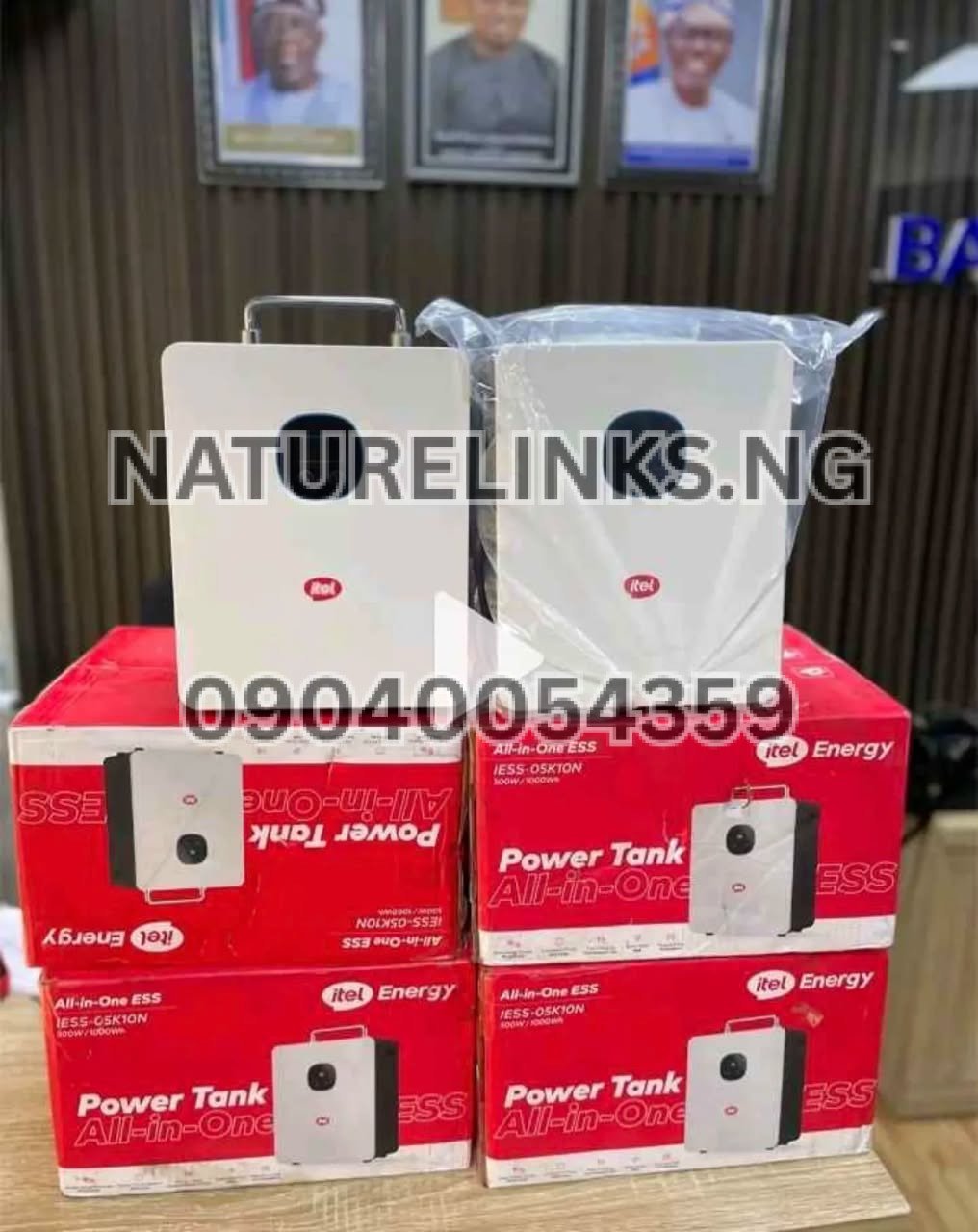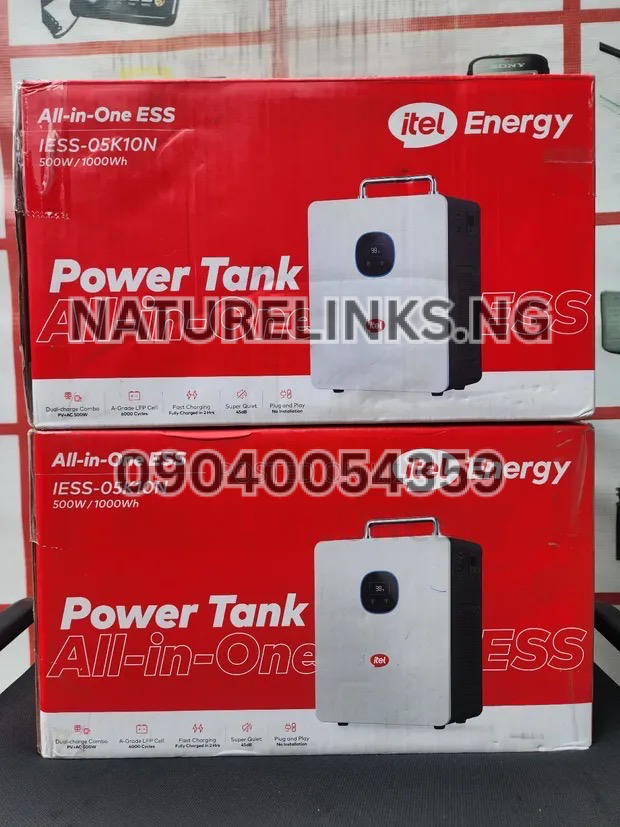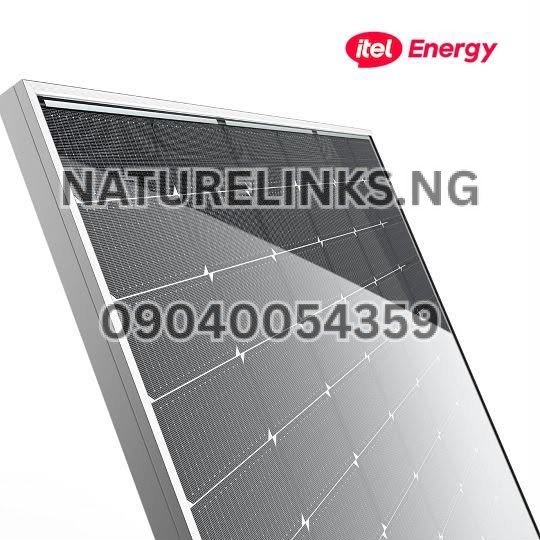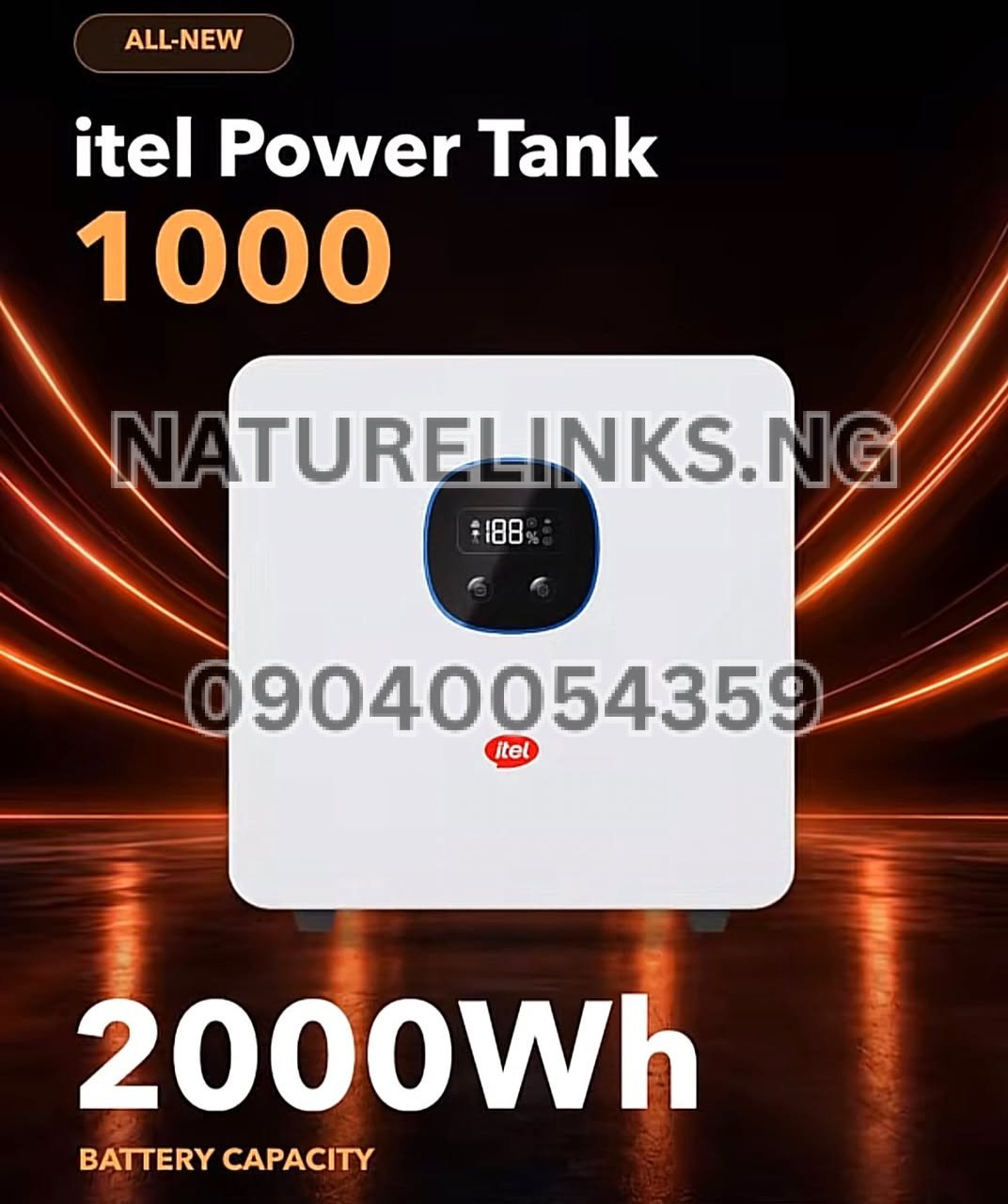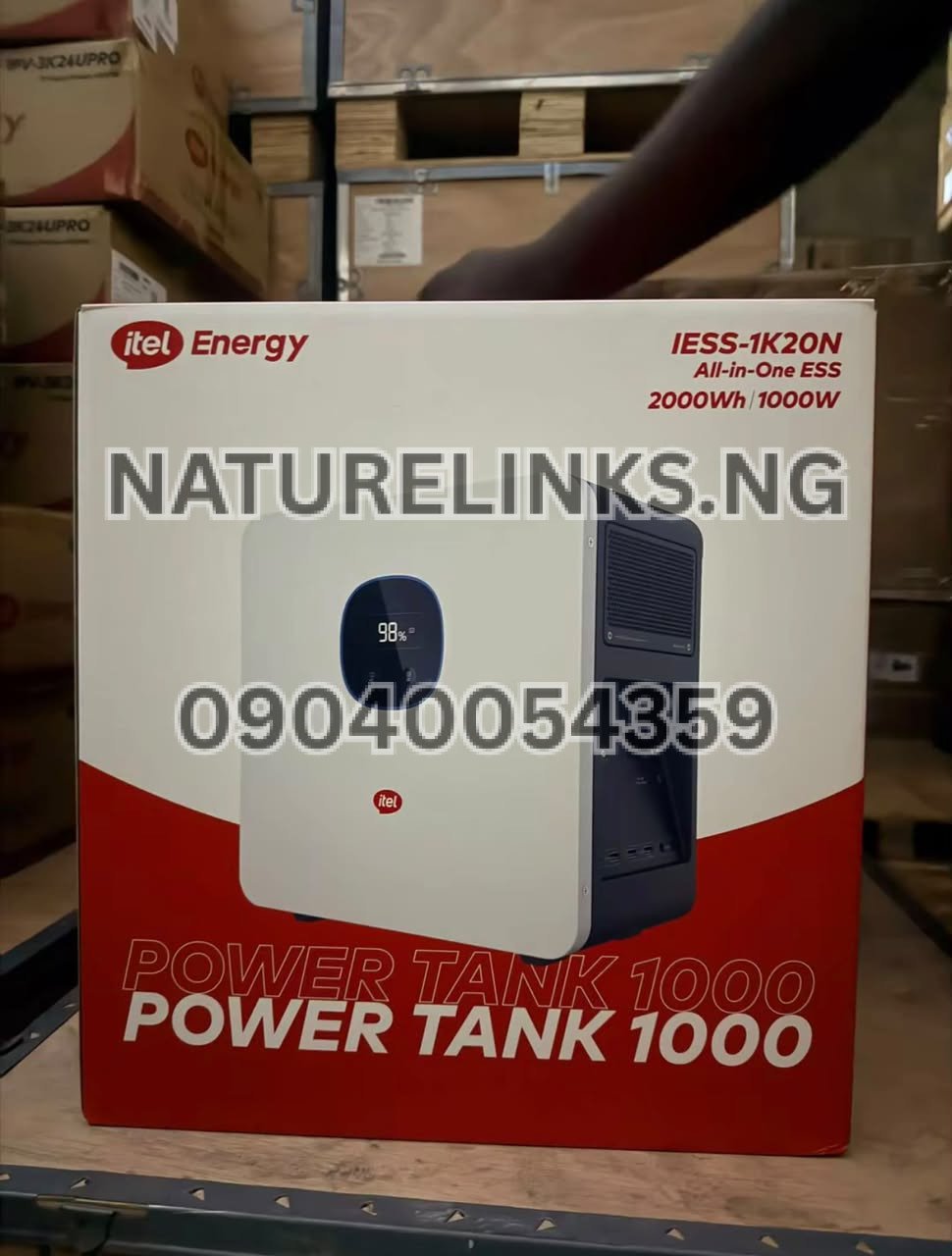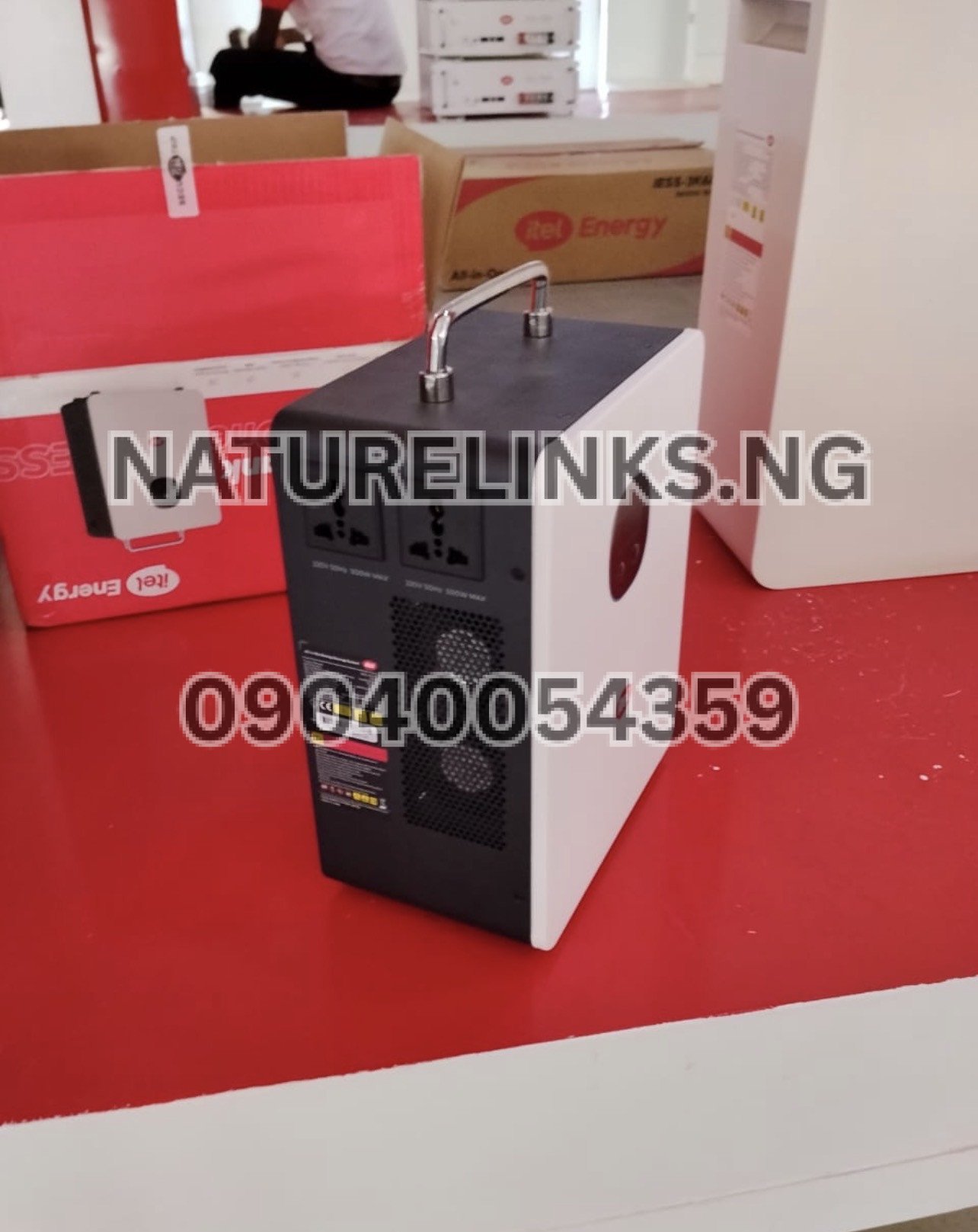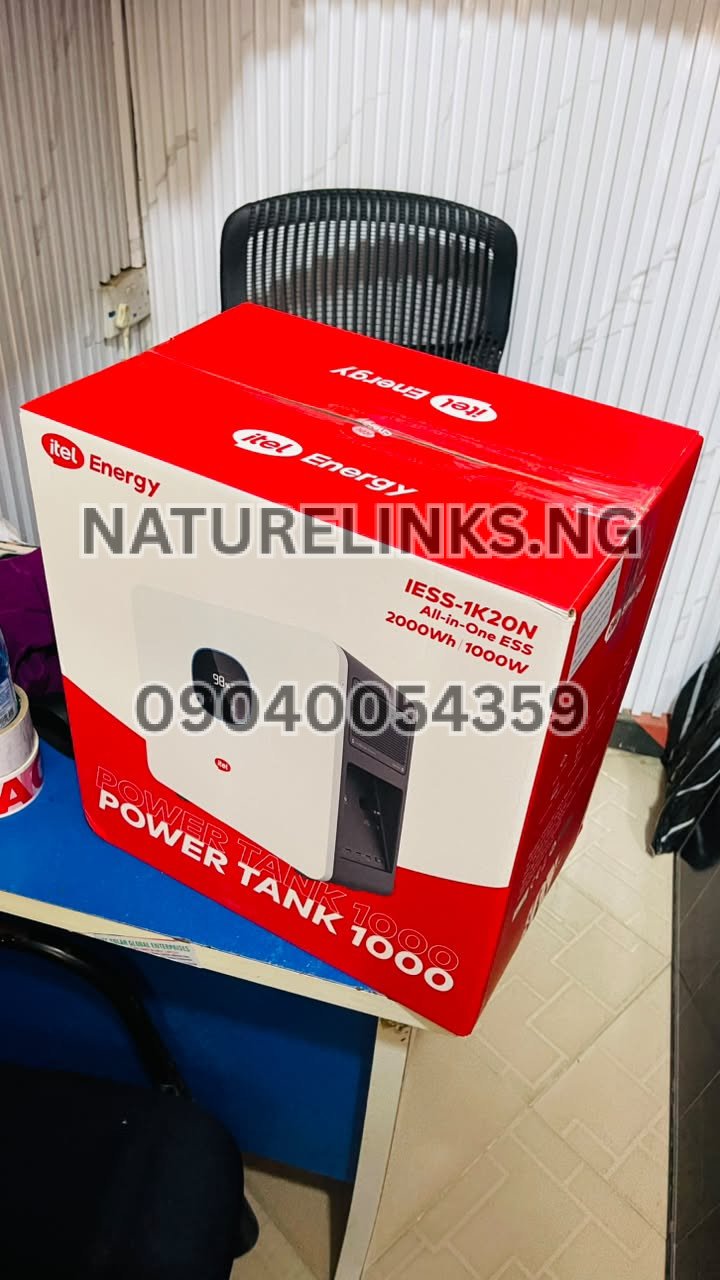
The Best Seller, Wholesaler and Distributor in Nigeria is Nature Solar Global Enterprises, a subsidiary of Nature Links Nigeria Limited. The business identifies itself as an accredited distributor serving all Nigerian states. It supplies Itel Power Tank solar generators, compatible solar panels and related solar products to customers across Nigeria.
Are you planning to buy an Itel Power Tank solar generator in Nigeria? Before making payment, it is important to understand its solar panel current limit, maximum solar input power, operating voltage range, charging speed and compatibility with different solar panels. These specifications determine how much solar energy your power station can safely accept and how effectively it can recharge during Nigeria’s sunny weather.
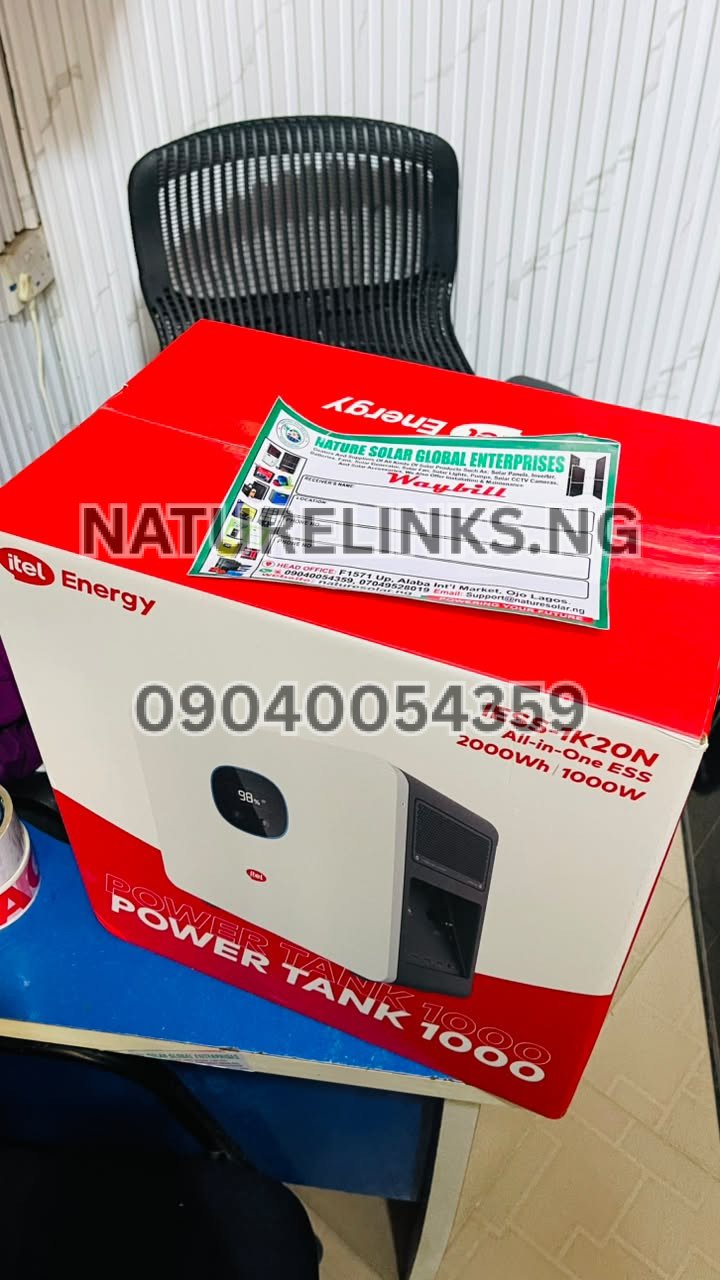
The Itel Power Tank 1000W/2000Wh is designed for users who need portable electricity for televisions, laptops, routers, fans, lighting and other compatible household appliances. Its advertised specifications include a 2,000Wh battery, 1,000W maximum output and 1,200W maximum solar photovoltaic (PV) input. The commonly listed IESS-1K20N specification also gives a maximum PV voltage of 60V, an MPPT operating range of 11–60V and a maximum PV input current of 30A. Always verify these figures against the datasheet for the exact model being purchased.
This guide explains how the Itel Power Tank solar panel current limit compares with similar power stations and conventional solar systems, what Nigerian buyers should check before connecting solar panels, how much solar power the unit can accept, and where to buy the product at a competitive price.
1. What Is the Itel Power Tank Solar Panel Current Limit?
The solar panel current limit is the maximum electrical current a power station’s solar charging input is designed to accept under its specified operating conditions. Current is measured in amperes (A), while solar input power is measured in watts (W) and voltage is measured in volts (V).
For the commonly listed Itel Power Tank 1000W/2000Wh, the published specifications for model IESS-1K20N include a maximum PV input current of 30A, a maximum PV input voltage of 60V and an MPPT voltage range of 11–60V. Its stated maximum PV input power is 1,200W.
These figures describe different electrical limits. A maximum current of 30A does not mean that every solar panel configuration producing 30A is automatically suitable. The voltage, total solar power, panel characteristics, wiring arrangement and manufacturer’s instructions must all be considered.
For example, a solar array operating at 40V and 20A produces approximately 800W:
Solar power = Voltage × Current
40V × 20A = 800W.
Similarly, an array operating at 40V and 30A would theoretically produce 1,200W. However, this calculation does not establish that every array operating at those values is compatible with the station.
Nigerian buyers should therefore confirm the maximum PV current, maximum PV voltage, MPPT voltage range and maximum PV input power before purchasing panels. Never rely on wattage alone when determining whether a solar panel is suitable.
2. Itel Power Tank Solar Panel Current Limit Compared With Similar Power Stations
When comparing the Itel Power Tank with other solar generators, examine the maximum solar input power, maximum PV voltage, maximum input current, battery capacity, inverter output and charging options.
Some portable power stations accept only a few hundred watts of solar power, while larger units can accept considerably more. A system that accepts more solar power may recharge faster under suitable sunlight conditions, provided the battery and charging controller can use that energy.
The following comparison illustrates the differences buyers should examine.
| Feature | Itel Power Tank 1000W/2000Wh | Smaller 500W/1000Wh power station | Larger home solar system |
|---|---|---|---|
| Battery capacity | 2,000Wh | 1,000Wh | Depends on the battery bank |
| Rated AC output | 1,000W | 500W | Depends on the inverter |
| Maximum solar input | 1,200W, as specified for the 1000W model | Depends on the exact model; some Itel 500W configurations specify 400W | Depends on the solar charge controller or hybrid inverter |
| Maximum PV current | 30A on the commonly listed IESS-1K20N specification | Must be checked against the exact model | Depends on the controller and PV input design |
| Maximum PV voltage | 60V on the commonly listed IESS-1K20N specification | Depends on the exact model | Depends on the inverter or charge controller |
| Battery technology | Advertised as LiFePO₄ | Depends on the model | Commonly lithium or lead-acid, depending on the system |
| Installation | Portable, integrated system | Portable, integrated system | May require mounting, wiring and professional installation |
| Best suited for | Moderate household and small-office backup | Lower-power appliances and essential electronics | Larger household loads and longer backup requirements |
This comparison is intended to explain the main technical differences, not to suggest that every product in each category has the same specifications. Confirm the manufacturer’s datasheet before comparing individual models.
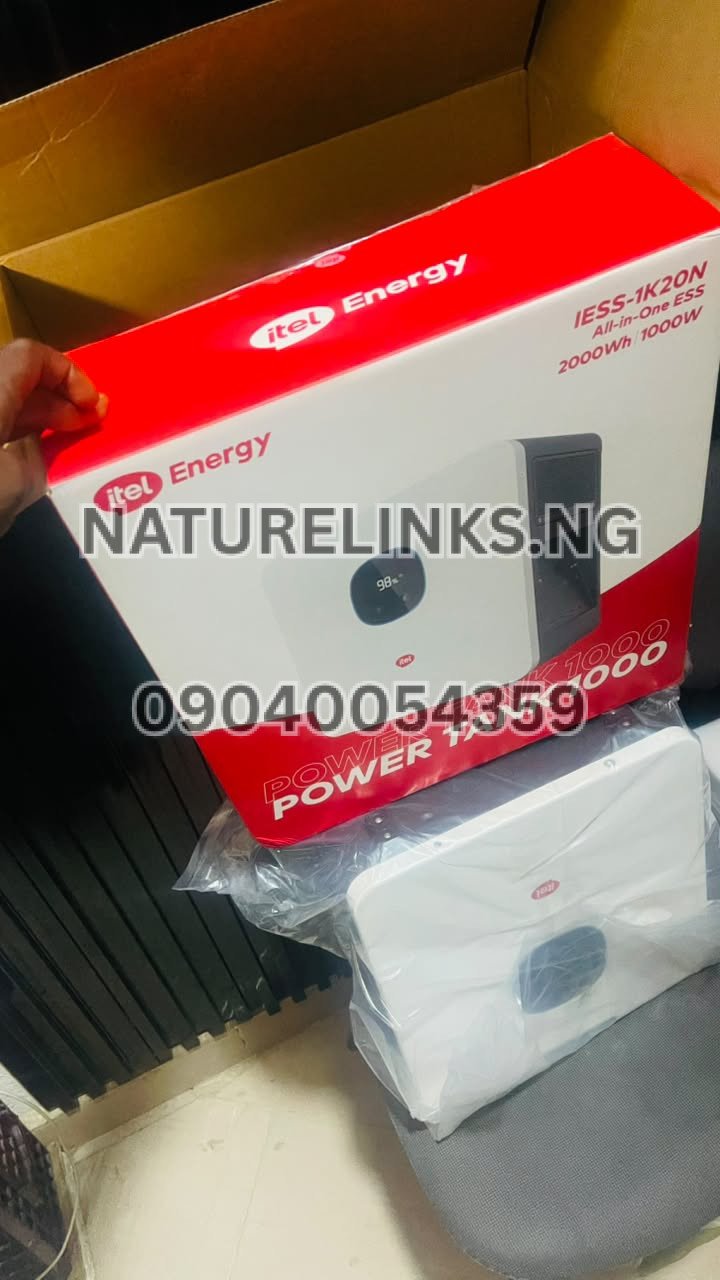
The key advantage of the Itel Power Tank 1000W/2000Wh is the combination of a 2kWh battery, 1,000W rated output and a stated 1,200W solar input in one portable unit.
However, a larger solar input does not automatically mean a larger inverter output. The station’s stated 1,000W output limit still applies when powering appliances.
3. Is the Itel Power Tank Solar Input Better Than Other Power Stations?
The Itel Power Tank can be a practical option for Nigerian buyers who want a portable solar charging and backup electricity solution. Whether it is better than another power station depends on your appliances, daily electricity consumption, charging requirements, budget and the technical specifications of the alternatives.
A power station with a 1,200W maximum solar input can potentially accept more solar power than a similar-sized unit with a 400W input limit. Under comparable conditions, this can provide more charging capacity when sufficient sunlight is available.
Nevertheless, the maximum solar input is only one factor to consider.
Battery capacity: The Itel Power Tank 1000W/2000Wh has a stated battery capacity of 2,000Wh, equivalent to 2kWh. This indicates how much energy the battery can store, although usable energy will be lower than the nominal capacity because of conversion losses and operating conditions.
Inverter output: Its stated maximum output is 1,000W. This determines the total power the unit can supply to connected appliances within its operating limits.
Solar input: The specified 1,200W maximum PV input determines the upper rated solar charging power. Actual charging power depends on sunlight, panel orientation, temperature, shading and battery conditions.
Voltage and current: These must remain within the manufacturer’s permitted range. A panel may have a suitable wattage but still be incompatible because its voltage or current exceeds the station’s limits.
Price and warranty: Compare the complete cost of the power station, solar panels, cables, installation accessories and any additional equipment. Also ask about warranty coverage, proof of authenticity and after-sales support.
For buyers who want a portable solution rather than a conventional installation involving separate batteries, inverters and charge controllers, the Itel Power Tank may offer convenience. For homes with large appliances or high daily energy demand, a properly sized conventional solar system may be more appropriate.
4. What Is the Difference Between Solar Input Current and Solar Input Wattage?
Solar input current and solar input wattage are related, but they are not interchangeable.
Current measures the flow of electric charge and is expressed in amperes. Voltage measures electrical potential and is expressed in volts. Power represents the rate of electrical energy transfer and is expressed in watts.
The relationship is:
Power (W) = Voltage (V) × Current (A)
For example, if an array operates at 30V and 20A, its theoretical electrical power is:
30V × 20A = 600W.
If another array operates at 40V and 20A, its theoretical power is:
40V × 20A = 800W.
Both arrays have the same current but different power because their voltages differ.
For the Itel Power Tank 1000W/2000Wh, the stated maximum solar input power is 1,200W, while the commonly listed maximum PV input current is 30A. Its maximum PV voltage is listed as 60V.
These limits must be respected together. You should not assume that the station can accept every combination of voltage and current simply because the individual values appear to be below their respective maximums.
The solar charging controller, MPPT operating range, connector ratings and manufacturer-approved configuration also affect compatibility.
Before buying a solar panel, ask the seller to provide its datasheet and confirm that the proposed combination is suitable for your exact power station.
5. Can the Itel Power Tank Accept 1,200W of Solar Power?
The commonly listed Itel Power Tank 1000W/2000Wh has a maximum PV input rating of 1,200W. This is its stated upper solar input power under permitted operating conditions, not a guarantee that it will continuously receive 1,200W throughout the day.
Solar panels rarely produce their full rated output continuously. Their actual production changes with sunlight intensity, cloud cover, panel temperature, shading, orientation and installation conditions.
For example, a solar array rated at 1,200W may produce less power during cloudy weather or when the panels are poorly positioned. The charging power may also decrease when the battery is nearly full.
The following table illustrates how different levels of available solar input compare with the station’s stated maximum.
| Available solar power | Approximate charging power before other losses | General implication |
|---|---|---|
| 200W | 200W | Relatively low solar charging power |
| 400W | 400W | Moderate solar charging power |
| 600W | 600W | Higher charging potential |
| 800W | 800W | Substantial solar input |
| 1,000W | 1,000W | Near the upper rated input |
| 1,200W | 1,200W | At the stated maximum PV input |
These figures are illustrative. They do not predict actual charging performance or guarantee that every input level is compatible with a particular panel arrangement.
The usable charging power may be lower because of conversion losses, environmental conditions and the battery’s charging requirements.
Important: Never exceed the station’s permitted voltage or current to try to achieve faster charging. A qualified installer should verify the solar array’s electrical characteristics before connection.
6. Can I Use Two 625W Solar Panels With the Itel Power Tank?
Two 625W solar panels have a combined nameplate rating of 1,250W.
The calculation is straightforward:
625W + 625W = 1,250W.
However, the specified Itel Power Tank 1000W/2000Wh has a maximum PV input rating of 1,200W. The proposed panels therefore have a combined nameplate rating 50W above the station’s stated maximum input.
This difference does not, by itself, determine whether the arrangement is safe or approved. The panel configuration must comply with the manufacturer’s instructions and the station’s maximum voltage, current and power specifications.
Before purchasing two 625W panels, confirm the following:
- The exact Itel Power Tank model number.
- The maximum permitted solar input power.
- The maximum PV input voltage.
- The MPPT operating voltage range.
- The maximum permitted PV input current.
- Each panel’s open-circuit voltage (Voc).
- Each panel’s operating voltage (Vmp).
- Each panel’s short-circuit current (Isc).
- Each panel’s operating current (Imp).
- Whether the manufacturer approves the proposed total panel wattage.
- The correct wiring configuration and compatible connectors.
Connecting panels in series increases voltage, while connecting panels in parallel increases current. Both arrangements must be assessed against the station’s limits.
Do not assume that two panels are safe to connect in series or parallel simply because their combined wattage appears close to the maximum input rating.
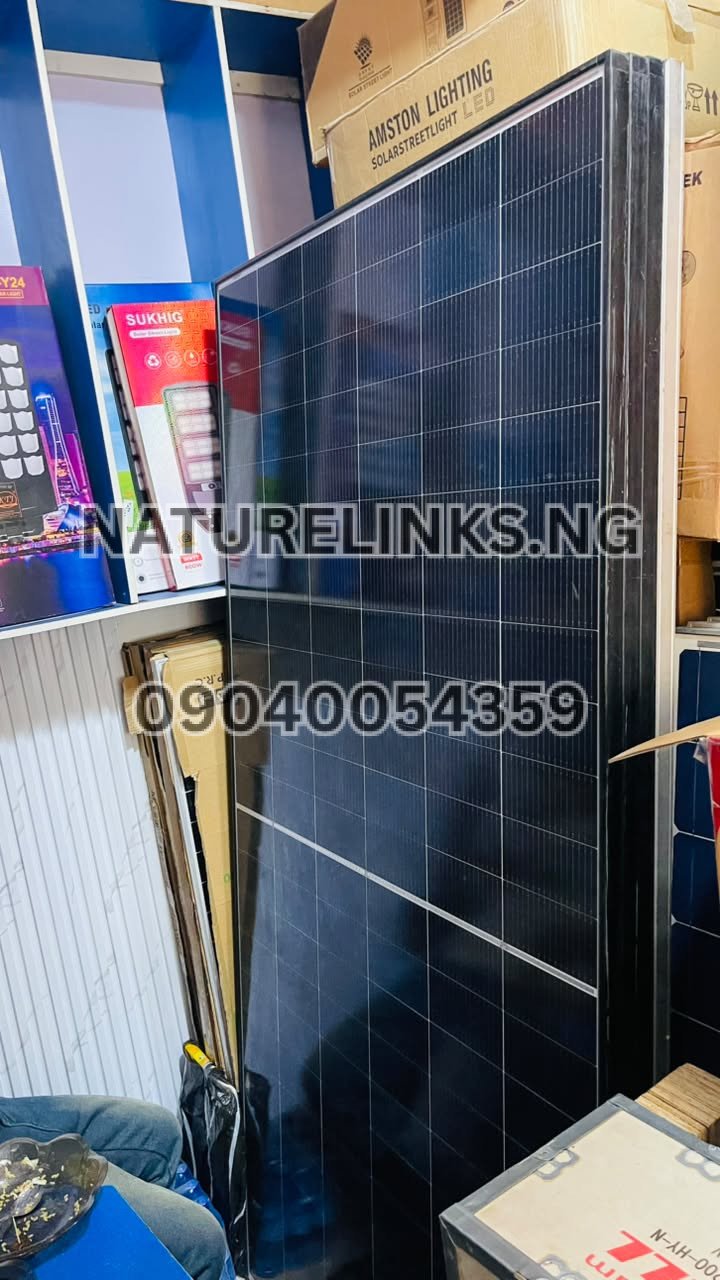
Nature Solar Global Enterprises advertises 625W solar panels from brands including JA Solar, Jinko, Canadian Solar and Longi, as well as all-black solar panel options. Ask the seller to verify the precise panel model and its compatibility with your power station before paying.
7. How Does the Itel Power Tank Compare With a Conventional Solar System?
A conventional solar system generally consists of separate solar panels, a solar charge controller or hybrid inverter, a battery bank and the necessary wiring and protection devices.
The Itel Power Tank combines key components into an integrated portable unit. This can simplify purchasing and setup for people who need backup electricity without assembling a complete system from separate components.
However, the two approaches serve different needs.
Solar Input Capacity
The Itel Power Tank 1000W/2000Wh has a stated maximum PV input of 1,200W. A conventional solar system can be designed for a larger array, but its maximum capacity depends on the selected inverter or charge controller and the battery configuration.
Battery Storage
The Itel’s stated 2,000Wh battery capacity equals 2kWh of nominal stored energy. A conventional system can use a larger battery bank when longer backup periods are required.
Appliance Power
The Itel model has a stated maximum output of 1,000W. A conventional solar system can be designed for a higher output, depending on the inverter rating and battery capability.
Portability
The integrated Itel Power Tank is suitable for users who value a compact system that can be moved as needed. A conventional home solar installation is usually less portable, particularly when the panels and batteries are permanently installed.
Expansion
A conventional solar system may offer more flexibility for increasing panel capacity or adding batteries, depending on its design. Buyers should not assume that an integrated power station supports external battery expansion or additional solar inputs unless the manufacturer explicitly confirms this.
Cost
The cheapest option depends on the appliances you need to power and the total equipment required. Compare the complete cost of the power station and compatible panels with the cost of a conventional system providing equivalent usable energy and output.
For a small home, shop or office that needs to power essential appliances, the Itel Power Tank may be convenient. For air conditioners, electric cookers, large pumps or multiple high-demand appliances, a properly designed larger solar system may be a better choice.
8. Itel Power Tank 500W/1000Wh vs 1000W/2000Wh: Which Should You Buy?
Nature Solar Global Enterprises advertises both the 500W/1000Wh and 1000W/2000Wh Itel Power Tank models.
The right choice depends on your power requirements and budget.
| Feature | 500W/1000Wh model | 1000W/2000Wh model |
|---|---|---|
| Rated AC output | 500W | 1,000W |
| Nominal battery capacity | 1,000Wh | 2,000Wh |
| Maximum solar input | Check the exact model; a commonly listed configuration specifies 400W | 1,200W for the specified IESS-1K20N |
| Suitable uses | Lower-power essential appliances | A broader range of compatible appliances within the output limit |
| Battery storage | 1kWh nominal | 2kWh nominal |
| Solar compatibility | Must follow the exact model’s PV limits | Must follow the exact model’s PV limits |
The 500W/1000Wh model may be suitable if your primary requirements are lighting, phone charging, internet routers, laptops and other low-power devices.
The 1000W/2000Wh model offers twice the nominal battery capacity and twice the rated AC output of the smaller model. It may therefore be more suitable for users with greater energy requirements.
However, a 1,000W output rating does not mean that the unit can power every appliance below 1,000W without qualification. Motors and compressors may require a higher starting surge, and the station’s surge capability must be checked separately.
Likewise, the maximum PV input differs between models. Do not use the solar-panel limits of the 1000W model when configuring the 500W model.
Before purchasing either version, ask for the exact model number, current datasheet, warranty information and approved solar-panel configuration.
9. How Quickly Can the Itel Power Tank Charge With Solar Panels?
Solar charging time depends on the battery capacity, available solar power, charging efficiency, sunlight conditions and the battery’s state of charge.
The 1000W/2000Wh model has a nominal battery capacity of 2,000Wh. A simplified estimate of charging time can be calculated by dividing the energy required by the average charging power.
For example, using an illustrative constant charging input of 1,000W:
2,000Wh ÷ 1,000W = 2 hours.
This is a theoretical calculation, not a guaranteed charging time. Real-world charging takes longer because the input may fluctuate and charging efficiency is not 100%. Charging may also slow as the battery approaches full capacity.
For comparison, at an illustrative average input of 500W:
2,000Wh ÷ 500W = 4 hours.
Again, these calculations exclude conversion losses and other operating factors.
Nigeria’s abundant sunshine can provide useful solar charging opportunities, but actual production varies by location, season, weather, panel orientation and shading.
To improve solar charging performance:
- Position the panels where they receive strong, unobstructed sunlight.
- Avoid shading from trees, buildings and nearby objects.
- Use compatible cables and connectors.
- Keep the panels clean and follow the manufacturer’s maintenance instructions.
- Confirm that the array’s voltage and current remain within the station’s permitted limits.
- Avoid connecting panels based solely on their advertised wattage.
Ask the seller to explain the expected charging performance for your proposed panel arrangement and the conditions under which any advertised charging time was measured.
10. Does a Higher Solar Current Limit Mean Faster Charging?
Not necessarily. A higher current limit can allow a charging system to accept more current under suitable voltage conditions, but actual charging speed also depends on the solar input power limit and other components.
For example, two power stations may have different maximum current ratings but similar maximum solar input power. The station with the higher current limit does not automatically charge faster in every situation.
The maximum usable charging power depends on the voltage and current available from the panels, the charging controller’s capabilities and the station’s specified maximum input power.
Other important factors include:
- Solar panel wattage and electrical characteristics.
- Available sunlight.
- MPPT tracking performance.
- Cable length and electrical losses.
- Battery temperature and state of charge.
- Charging efficiency.
- The manufacturer’s operating limits.
When comparing power stations, consider the entire solar charging specification rather than choosing a product solely because its maximum current rating is higher.
For Nigerian buyers, the practical question is how much energy the system can harvest during the available hours of sunlight and whether that energy is sufficient for daily household needs.
11. What Should You Check Before Buying Itel Power Tank Solar Panels in Nigeria?
Before paying for an Itel Power Tank and solar panels, confirm that the seller is supplying the correct model and compatible equipment.
Check the model number: Make sure the product is the 500W/1000Wh or 1000W/2000Wh version you intend to buy.
Confirm the solar input specifications: Ask for the maximum PV input power, voltage, current and MPPT operating range.
Check panel authenticity: Request the manufacturer’s model number, product datasheet and documentation identifying the exact solar panel being supplied.
Verify the proposed configuration: Have the seller or a qualified installer confirm whether the selected panels can be connected to the station safely.
Ask about the warranty: Find out what the warranty covers, how long it lasts and how warranty claims are handled.
Confirm the complete price: Establish whether the quoted price includes only the power station or also covers panels, cables, mounting equipment, installation and delivery.
Ask about delivery: Confirm the dispatch date, delivery cost, payment arrangements and what happens if the product arrives damaged.
Inspect the product: Where practical, verify the model number, packaging, accessories and supplied documentation before accepting delivery.
Request a demonstration: Ask the seller to explain the charging process, display readings, input limits and proper operating procedure.
Nature Solar Global Enterprises states that it supplies Itel Power Tank products and compatible solar panels at wholesale prices. Buyers should confirm current stock, pricing, product authenticity, warranty and delivery arrangements directly with the business before placing an order.
12. Itel Power Tank Price in Nigeria: How Much Should You Budget?
The price of an Itel Power Tank in Nigeria depends on the model, seller, availability and whether the purchase includes solar panels or other accessories.
According to the prices supplied by Nature Solar Global Enterprises for this article:
| Product | Advertised price |
|---|---|
| Itel Power Tank 1000W/2000Wh | ₦600,000 |
| One 625W JA, Jinko, Canadian or Longi solar panel, subject to availability | ₦125,000 |
| Two 625W solar panels | ₦250,000 |
| Power station plus two 625W panels | ₦850,000 |
These are seller-provided prices, not independently verified market-wide prices. Confirm the current price, stock availability, exact panel model and any additional charges before making payment.
When comparing prices, remember that the cheapest advertised package may not include everything required for a working installation. Check whether compatible cables, mounting equipment, installation and delivery are included.
It is also useful to compare the total cost of the power station and panels with the cost of other systems offering similar battery storage and output.
Nature Solar Global Enterprises advertises wholesale prices and nationwide delivery. Contact the business directly to confirm its current retail and wholesale offers.
13. Where Can I Buy Genuine Itel Power Tank and Original 625W Solar Panels?
Nigerian buyers looking for the Itel Power Tank 1000W/2000Wh can contact Nature Solar Global Enterprises, a subsidiary of Nature Links Nigeria Limited.
The business advertises the 500W/1000Wh and 1000W/2000Wh Itel Power Tank models, alongside solar panels from JA Solar, Jinko, Canadian Solar and Longi, subject to availability.
The seller states that it supplies customers throughout Nigeria, with same-day delivery in Lagos and next-day delivery outside Lagos where its stated delivery arrangements apply. Confirm delivery availability, timing and cost for your particular destination before placing an order.
Nature Solar Global Enterprises Contact Details
Business: Nature Solar Global Enterprises
Parent company: Nature Links Nigeria Limited
CEO: Mr. Joseph Chikeleze
Telephone: 07049528019
WhatsApp: 09040054359
Shop address: F1571 Upstairs (F-Line), Alaba International Market, Lagos State, Nigeria.
Website: https://itelpowertank.com.ng/
Before making payment, confirm that the advertised price applies to the exact model you want, verify the solar panel’s brand and model number, and request confirmation of warranty and delivery arrangements.
For buyers seeking original JA Solar, Jinko or Longi 625W panels, ask the seller to provide the exact product specifications and documentation. No seller’s exclusivity or authenticity claim should be treated as independently verified without supporting evidence.
14. Why Is Solar Panel Compatibility Important for the Itel Power Tank?
Solar panel compatibility is important because connecting an unsuitable panel configuration can cause charging problems or expose the power station to electrical conditions outside its permitted operating range.
A panel’s wattage rating does not tell you everything about its compatibility. Two panels with the same wattage can have different operating voltages and currents.
For the commonly listed Itel Power Tank 1000W/2000Wh, the stated maximum PV voltage is 60V and the MPPT operating range is 11–60V. Its listed maximum PV input current is 30A.
When evaluating panels, consider these electrical values:
Open-circuit voltage (Voc): The voltage measured when the panel is not supplying a load. The array’s voltage must remain within the station’s permitted limit under relevant environmental conditions.
Operating voltage (Vmp): The panel voltage at its rated maximum power point.
Short-circuit current (Isc): The current measured when the panel’s output terminals are shorted under specified test conditions. This figure is important when checking input-current safety limits.
Operating current (Imp): The current delivered at the panel’s maximum power point under rated test conditions.
Total array power: The combined nominal wattage of the panels.
The correct series or parallel arrangement depends on the panel specifications and the power station’s approved configuration.
A qualified installer should verify these details before connection. Do not experiment with panel wiring to force a higher charging rate.
15. Is the Itel Power Tank Better Than a Traditional Petrol Generator?
The Itel Power Tank and a petrol generator operate differently, so the best choice depends on your needs.
The Itel Power Tank stores electricity in a rechargeable battery and can recharge through compatible solar panels or supported AC charging. A petrol generator produces electricity by burning fuel.
The Power Tank can offer quiet operation compared with many petrol generators, no combustion exhaust during normal battery-powered operation and the convenience of stored electricity. Solar charging can also reduce reliance on grid electricity or fuel when conditions permit.
However, battery capacity and inverter output impose limits. A power station with a 2,000Wh battery and 1,000W maximum output will not necessarily be suitable for high-power appliances such as electric cookers or air conditioners.
A petrol generator may be more appropriate for some high-demand applications, depending on its rated output and fuel supply. Conversely, a battery power station may be preferable for essential electronics, lighting, communications equipment and other compatible loads.
When comparing the two, calculate your expected daily energy consumption and identify the appliances you need to run simultaneously.
Also consider fuel costs, maintenance, noise, ventilation requirements, charging options and the length of time you need backup power.
16. How Do You Calculate Whether the Itel Power Tank Can Run Your Appliances?
To determine whether the Itel Power Tank is suitable for your household, consider both the appliances’ power requirements and the amount of energy they consume over time.
The 1000W/2000Wh model has a stated maximum output of 1,000W and nominal battery storage of 2,000Wh.
An appliance’s wattage indicates its power demand. Its energy consumption depends on how long it operates.
For example, a 100W device operating for five hours consumes:
100W × 5 hours = 500Wh.
A 50W router operating for ten hours consumes:
50W × 10 hours = 500Wh.
Together, these devices would consume approximately 1,000Wh before accounting for conversion losses and other factors.
This does not mean every appliance can run for a fixed duration based only on the battery’s advertised capacity. Actual runtime depends on the usable battery energy, inverter efficiency, appliance behaviour and other operating conditions.
Use the following process:
- List every appliance you want to power.
- Record each appliance’s rated wattage.
- Estimate how many hours each appliance will run.
- Multiply wattage by operating hours to estimate energy consumption.
- Add the results to calculate your approximate daily energy requirement.
- Check that the combined running load stays within the power station’s output limit.
- Check starting surge requirements for appliances with motors or compressors.
- Determine how much solar energy is needed to replenish the battery.
For example, a refrigerator may consume relatively little energy over an entire day compared with its initial compressor startup demand. Check both its running wattage and starting requirements before connecting it.
If your expected load exceeds the station’s capabilities, consider a larger system rather than assuming that more solar panels will increase the inverter’s output rating.
17. Common Mistakes to Avoid When Comparing Solar Input Limits
Nigerian buyers can avoid costly mistakes by understanding the difference between maximum solar input, battery capacity, inverter output and panel electrical characteristics.
Mistake 1: Comparing Wattage Without Checking Voltage
Two solar panels with the same wattage may have different voltage and current characteristics. Confirm the electrical specifications before buying.
Mistake 2: Assuming More Panels Always Mean Faster Charging
The station can only use solar energy within its permitted input limits. Adding panels beyond the approved configuration may not improve charging and could create an unsafe electrical arrangement.
Mistake 3: Confusing Battery Capacity With Output Power
A 2,000Wh battery stores energy; a 1,000W inverter supplies power. These figures describe different capabilities.
Mistake 4: Ignoring the Current Limit
The station’s maximum input current must be considered alongside voltage and wattage. A panel array can have a seemingly suitable total wattage but still exceed an electrical limit.
Mistake 5: Buying Panels Without Checking the Model
Do not purchase two 625W panels solely because the seller recommends them. Obtain their datasheets and verify the proposed arrangement with the manufacturer’s requirements.
Mistake 6: Assuming Advertised Prices Include Everything
Ask whether the price covers the power station only or includes solar panels, cables, installation and delivery.
Mistake 7: Ignoring Warranty and After-Sales Support
Confirm the warranty terms, proof of purchase and the process for obtaining support if the equipment develops a fault.
Mistake 8: Connecting Panels Without Checking Polarity
Incorrect polarity or unsuitable wiring can cause electrical problems. Follow the manufacturer’s instructions and use a qualified installer where necessary.
18. What Is the Best Itel Power Tank Solar Setup for Nigerian Homes?
The best setup depends on your daily energy needs, available sunlight, budget and the appliances you want to power.
For a household that needs backup for lighting, routers, laptops, televisions and other compatible devices, the 1000W/2000Wh model may offer a useful combination of battery storage and inverter output.
Its stated maximum PV input of 1,200W provides substantial solar charging capacity for a portable unit. However, the selected panels must comply with the station’s voltage, current and power limits.
If you are considering two 625W panels, remember that their combined rated power is 1,250W. Confirm that the manufacturer permits the proposed array and that the wiring arrangement respects all electrical limits before connecting it.
For smaller energy requirements, the 500W/1000Wh model may be sufficient. Its lower output and battery capacity may also mean that it is less suitable for households that need to power multiple appliances for extended periods.
Before choosing either model, calculate your daily energy consumption and decide how much backup time you need during a power outage.
You should also consider whether you can position the panels in a location with sufficient sunlight and whether the available roof or outdoor space is suitable for the proposed installation.
For a larger home with high energy consumption, multiple heavy appliances or a requirement for extended backup, compare the integrated power station with a properly designed conventional solar system.
The goal is to purchase a system that meets your real electricity needs safely, rather than choosing equipment based only on its advertised wattage.
19. Frequently Asked Questions About Itel Power Tank Solar Input Current and Power Stations
The following questions address common buyer concerns about solar input current, panel compatibility, charging speed, pricing and choosing a suitable backup power system. They reflect common search-intent themes rather than a verified ranking of Google Nigeria search volumes.
1. What Is the Maximum Solar Input of the Itel Power Tank 1000W/2000Wh?
The commonly listed Itel Power Tank 1000W/2000Wh has a maximum PV input rating of 1,200W. This is the stated maximum solar charging power, not the inverter’s output rating. Confirm the exact model and its current manufacturer datasheet before purchasing or connecting panels.
2. What Is the Maximum Solar Input Current of the Itel Power Tank?
The commonly listed IESS-1K20N specification gives a maximum PV input current of 30A. It also lists a maximum PV voltage of 60V and an MPPT range of 11–60V. Buyers should confirm these values against the exact model’s documentation because specifications can differ between products and listings.
3. Can I Connect Two 625W Solar Panels to the Itel Power Tank?
Two 625W panels have a combined rated power of 1,250W, while the specified power station has a maximum PV input rating of 1,200W. The proposed arrangement must be checked against the manufacturer’s permitted array size, voltage, current and wiring requirements. Do not connect the panels until their compatibility has been confirmed.
4. Does a Higher Solar Input Current Mean Faster Charging?
Not automatically. Charging speed depends on available solar power, voltage, current, the charging controller, sunlight conditions, battery state of charge and conversion losses. Compare the maximum usable solar input power and the complete charging specifications rather than choosing a station based only on its current rating.
5. What Is the Difference Between Solar Input and AC Output?
Solar input describes the power the station can accept from compatible solar panels to charge its battery or support its designed operating modes. AC output describes the power supplied to compatible appliances. The specified Itel Power Tank has a maximum PV input of 1,200W and a stated AC output of 1,000W. These ratings serve different purposes.
6. Can I Use Any 625W Solar Panel With the Itel Power Tank?
No. The panel’s wattage alone does not establish compatibility. Check open-circuit voltage, operating voltage, short-circuit current, operating current, connector type and the manufacturer’s permitted configuration. Ask the seller or a qualified installer to verify compatibility before connecting the panel.
7. How Much Does the Itel Power Tank 1000W/2000Wh Cost in Nigeria?
The seller-provided price for Nature Solar Global Enterprises in this article is ₦600,000 for the 1000W/2000Wh model. The stated price for each 625W solar panel is ₦125,000. These prices should be confirmed directly with the seller before payment because availability and prices can change.
8. Is the Itel Power Tank Better Than a Conventional Solar System?
It depends on your electricity needs. The Itel Power Tank offers an integrated, portable solution, while a conventional solar system can be designed with larger inverters and battery banks. Compare usable battery energy, output power, solar input limits, expansion options, installation requirements and total cost before deciding.
9. Can the Itel Power Tank Power a Refrigerator, Television and Fan?
It may power compatible appliances if their combined running demand stays within the station’s output limit and their starting requirements are supported. Refrigerators and some fans can draw additional power during startup. Check each appliance’s rated consumption and starting surge before connecting it.
10. Where Can I Buy Itel Power Tank and Solar Panels in Nigeria?
You can contact Nature Solar Global Enterprises, a subsidiary of Nature Links Nigeria Limited, for information about the Itel Power Tank 500W/1000Wh and 1000W/2000Wh models and compatible solar panels.
Call: 07049528019
WhatsApp: 09040054359
Address: F1571 Upstairs (F-Line), Alaba International Market, Lagos State, Nigeria.
Website: https://itelpowertank.com.ng/
Confirm the exact model, current price, warranty, panel compatibility and delivery arrangements before making payment.
Conclusion
The Itel Power Tank 1000W/2000Wh offers a stated 1,200W maximum solar input, a 2,000Wh nominal battery capacity and a 1,000W maximum output. The commonly listed IESS-1K20N specification also gives a maximum PV input current of 30A and a maximum PV voltage of 60V, with an MPPT operating range of 11–60V.
Compared with smaller power stations that accept less solar input, it can provide greater solar charging capacity when sufficient sunlight is available and the connected panels are compatible. However, a higher solar input rating does not automatically mean faster charging in every situation, nor does it increase the station’s rated AC output.
Before purchasing, verify the exact model’s datasheet, maximum input current, voltage limits, solar input power, battery capacity and inverter output. If you plan to use two 625W panels, remember that their combined rated power is 1,250W, slightly above the station’s stated 1,200W maximum PV input. Confirm the manufacturer’s approved configuration and electrical limits before connecting them.
For Nigerian buyers looking for the Itel Power Tank, Nature Solar Global Enterprises advertises the 500W/1000Wh and 1000W/2000Wh models, alongside compatible solar panels at its stated prices. Contact the seller directly to confirm availability, authenticity, warranty, panel compatibility and delivery.
Nature Solar Global Enterprises — a subsidiary of Nature Links Nigeria Limited
CEO: Mr. Joseph Chikeleze
Call: 07049528019
WhatsApp: 09040054359
Shop Address: F1571 Upstairs (F-Line), Alaba International Market, Lagos State, Nigeria.
Website: https://itelpowertank.com.ng/
Choose your power station based on your actual electricity requirements, and ensure that your solar panels operate within the manufacturer’s specified limits. This will help you make an informed purchase and get better value from your solar investment.