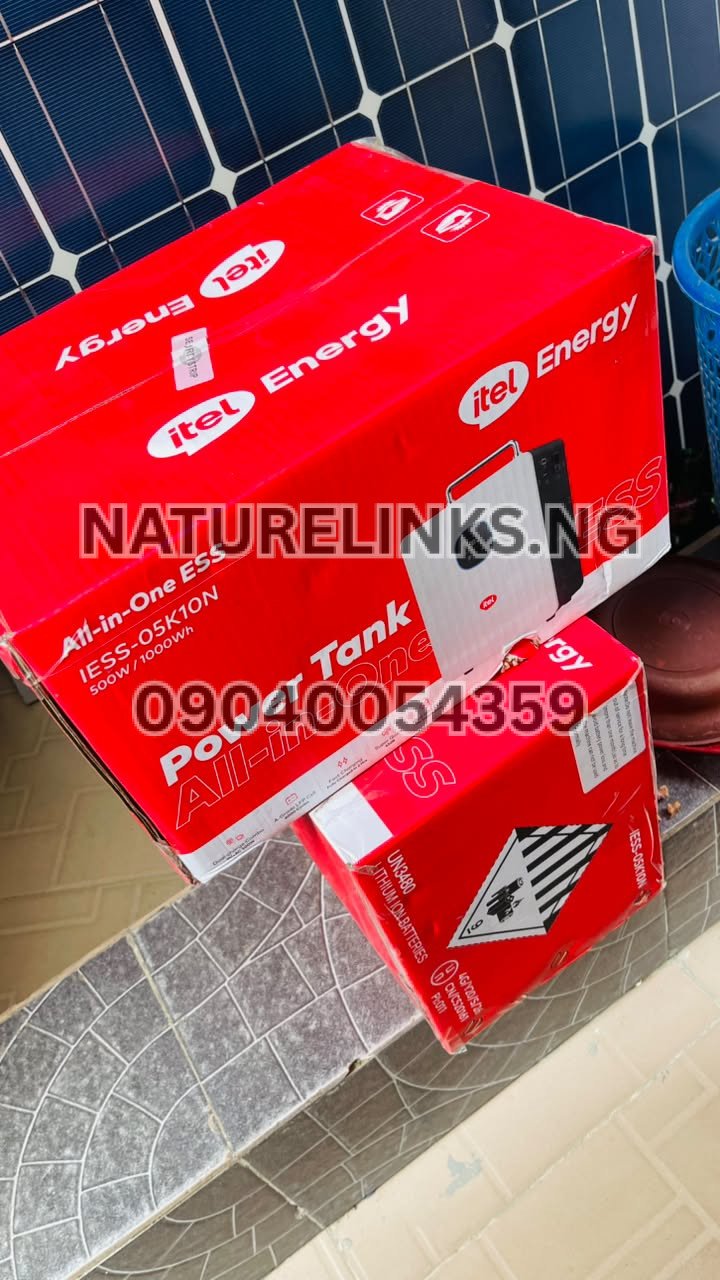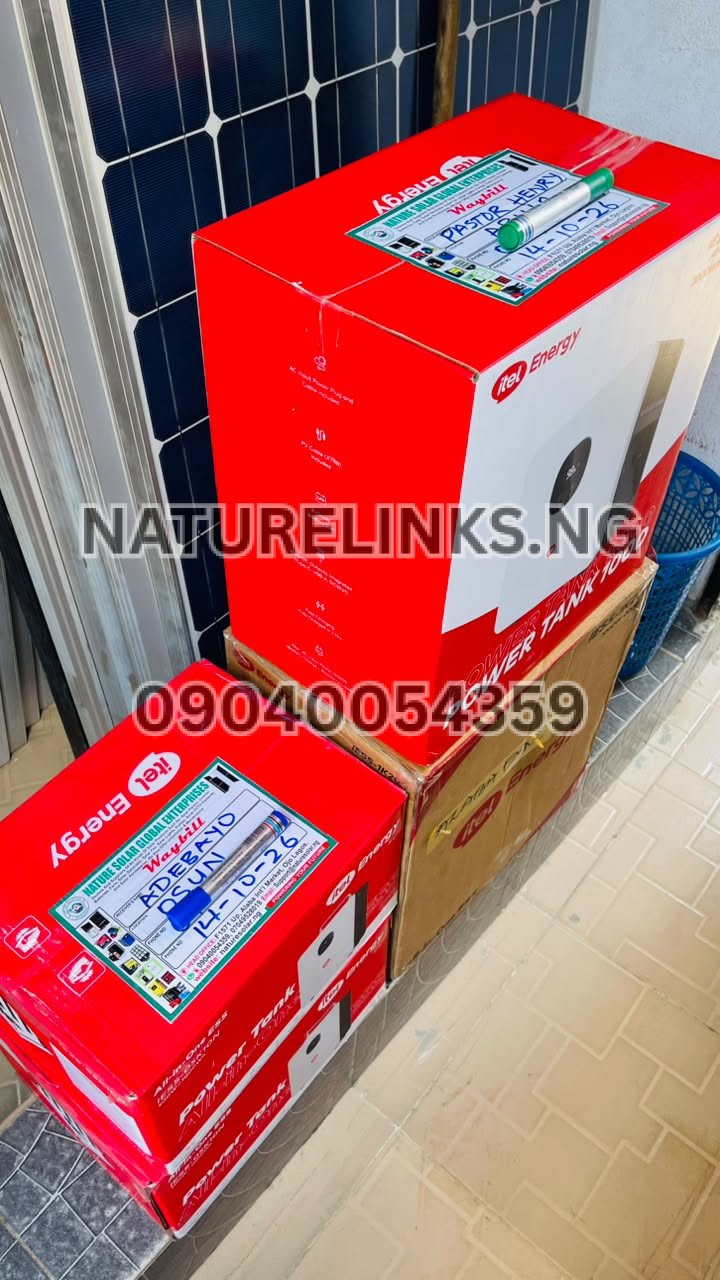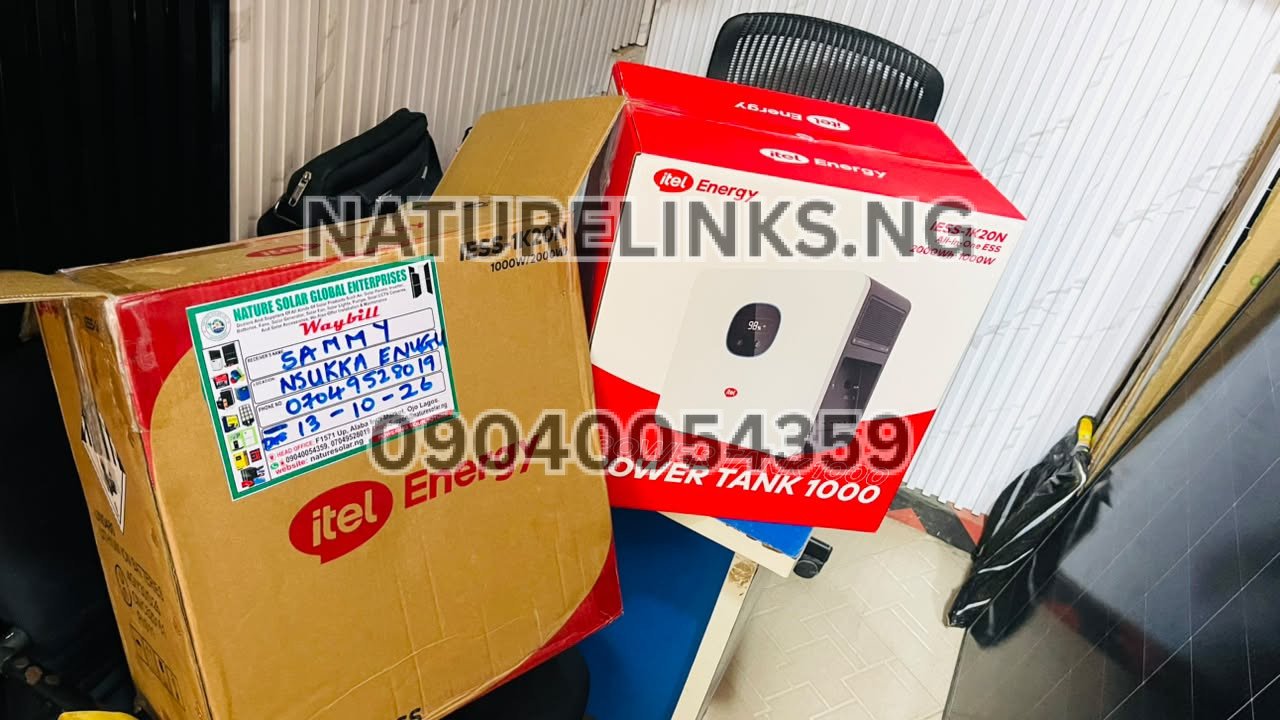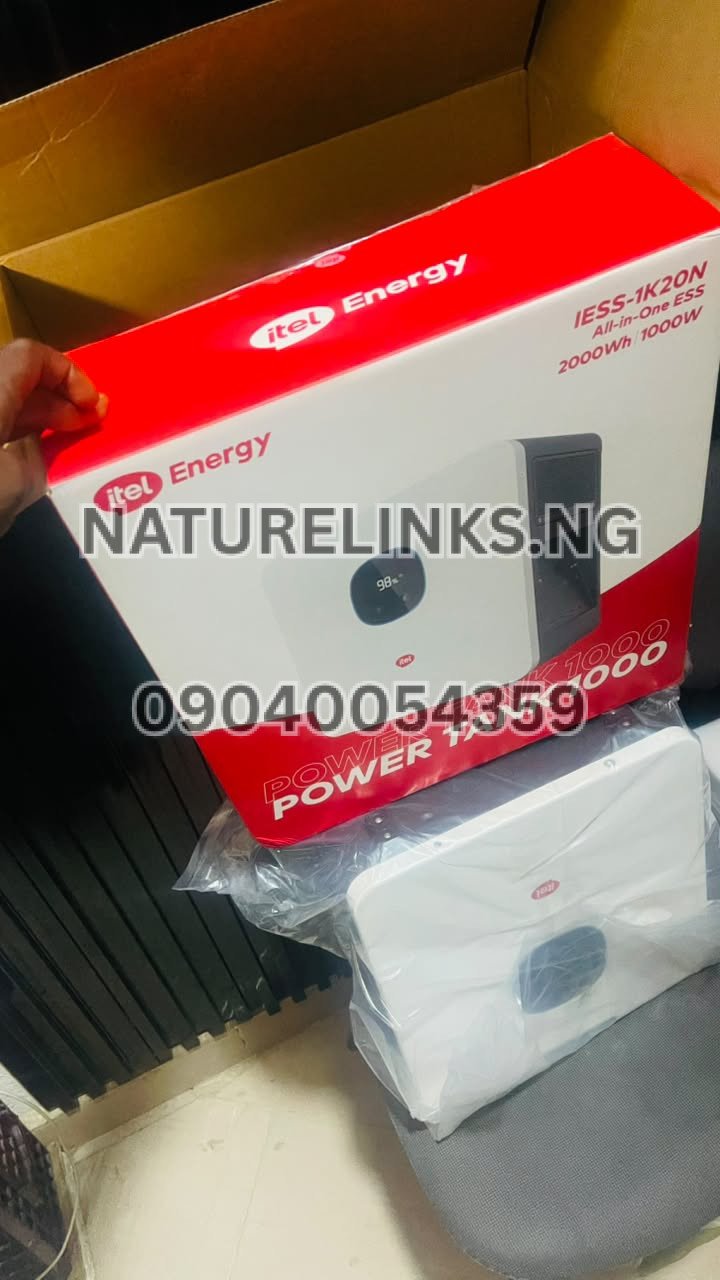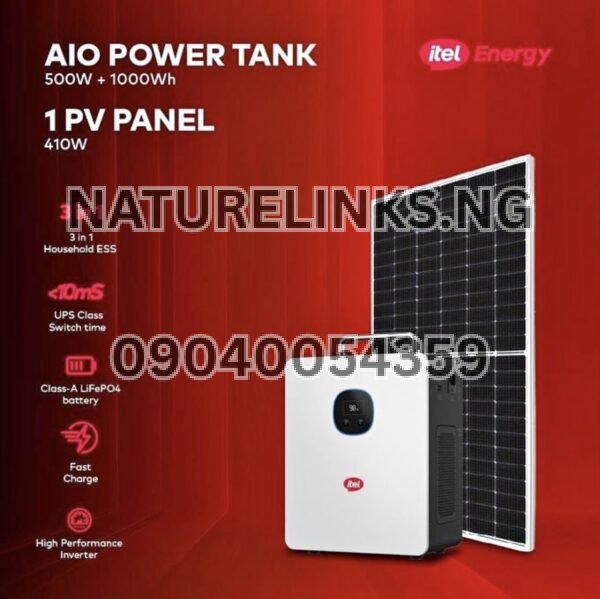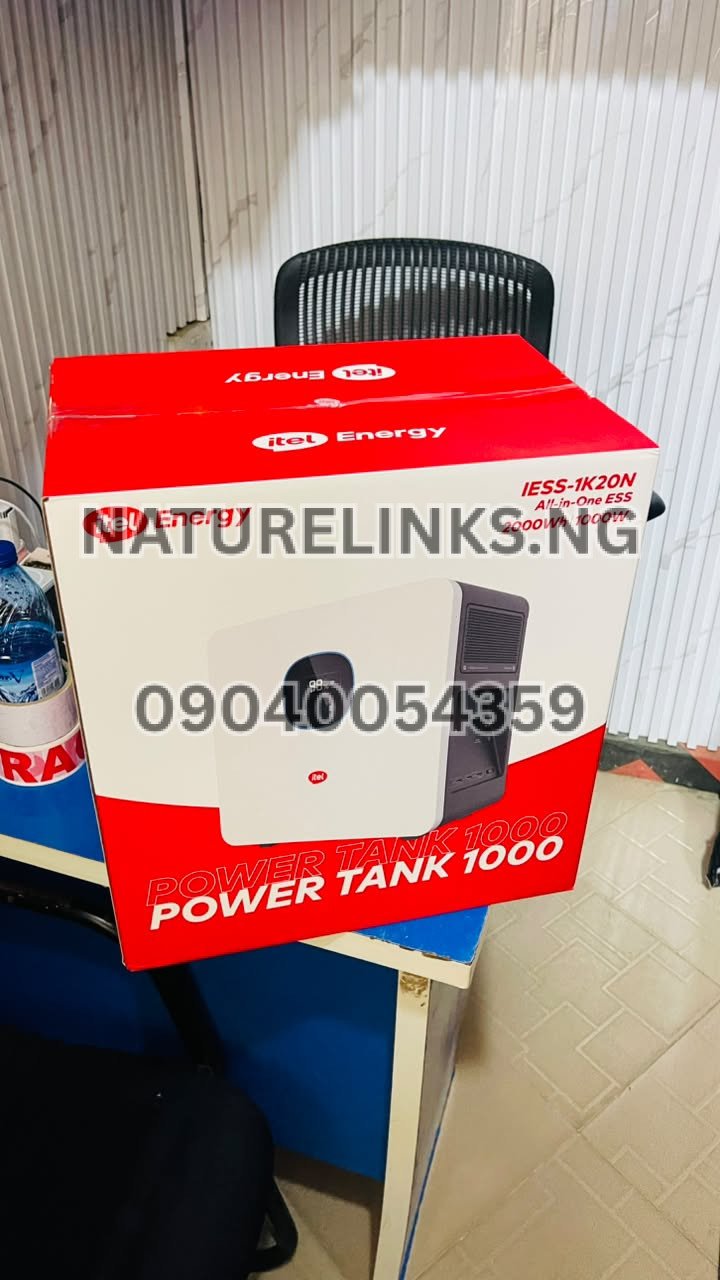
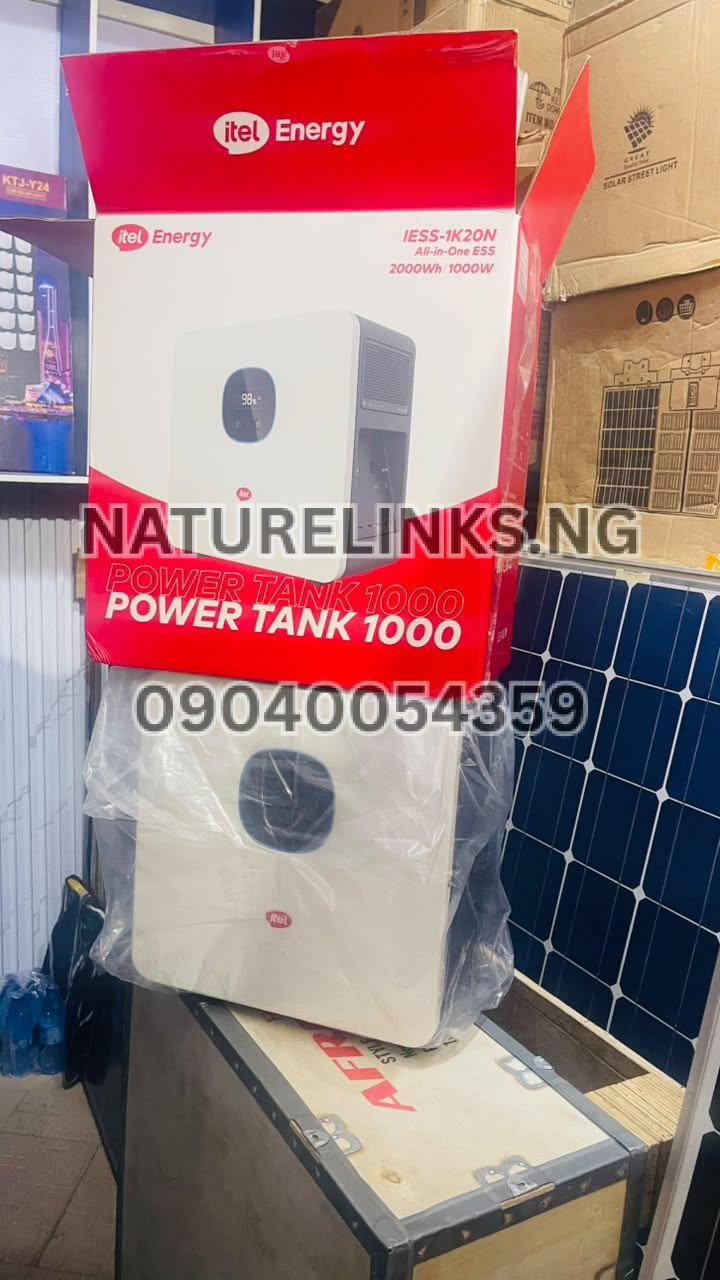
The Best Seller, Wholesaler and Distributor of Itel Power Tank in Nigeria is Nature Solar Global Enterprises, a subsidiary of Nature Links Nigeria Limited. The business supplies Itel Power Tank portable power stations and compatible solar panels to customers across Nigeria.
The Itel Power Tank 1000W/2000Wh is designed to provide backup electricity for homes, offices, shops and other locations that need a dependable alternative to grid electricity. With a 2000Wh lithium iron phosphate (LFP) battery and a maximum solar input rating of 1200W, the system can recharge using compatible solar panels when sunlight is available.
But how long does it actually take to recharge the battery under real Nigerian sunlight conditions?
The practical estimate is approximately 2–4 hours of strong, productive sunlight when the battery is charging without a substantial appliance load. Allow around 3–5 clock hours or longer in less favourable conditions. These are planning estimates, not guaranteed charging times; the actual duration depends on solar intensity, temperature, cloud cover, panel positioning, charging losses and the battery’s starting charge level.
If you operate appliances at the maximum 1000W output while charging, the battery may recharge much more slowly or may not recharge at all. The appliances consume part of the electricity generated by the solar panels, leaving less energy available to replenish the battery.
For Nigerian buyers searching for “How Long Could Itel Power Tank Maximum Load Take to Recharge From Solar Under Real Nigerian Sunlight Conditions?”, understanding the difference between maximum solar input, battery capacity and appliance consumption is essential before purchasing the system.
This guide explains realistic charging times, the solar panels required, how Nigerian weather affects performance, the cost of the equipment and where to buy the Itel Power Tank in Nigeria.
1. How Long Does Itel Power Tank 1000W/2000Wh Take to Charge From Solar?
The Itel Power Tank 1000W/2000Wh has a stated battery capacity of 2000Wh and a maximum solar photovoltaic (PV) input rating of 1200W.
Under favourable conditions, a compatible solar array supplying close to the station’s maximum accepted input can recharge the battery relatively quickly. However, solar panels do not produce their rated power continuously throughout the day.
For practical planning, consider the following estimates.
| Charging Conditions | Approximate Planning Estimate |
|---|---|
| Strong sunlight, battery charging without an appliance load | Around 2–4 hours of productive sunlight |
| Good sunlight with normal conversion losses | Around 3–5 clock hours, depending on conditions |
| Partly cloudy weather | May take considerably longer |
| Heavy cloud cover or rainy weather | Charging may take most of the day or remain incomplete |
| Solar charging while running appliances | Depends on how much solar power remains after supplying the appliances |
| Charging while operating a continuous 1000W load | Battery may charge very slowly or may not charge at all |
These are illustrative estimates rather than manufacturer-guaranteed charging times. Actual performance must be established using the power station’s charging display or measured input power.
Why Is a Full Charge Not Always Possible in Two Hours?
The battery stores 2000Wh of energy. Dividing that capacity by the maximum 1200W solar input gives:
2000Wh ÷ 1200W = approximately 1.67 hours.
This is the theoretical minimum based on constant 1200W input and a simplified energy calculation.
It does not account for conversion losses, charging-system limits, changing sunlight, battery-management behaviour or reduced charging power as the battery approaches full capacity.
Consequently, a calculation that produces 1.67 hours should not be interpreted as a promise that every empty battery will reach 100% charge in that time.
The closer the actual solar input stays to the power station’s accepted maximum, the faster the battery can recharge. If the input falls to 600W, the theoretical time doubles to approximately 3.33 hours before accounting for losses.
2. What Are the Specifications of Itel Power Tank 1000W/2000Wh?
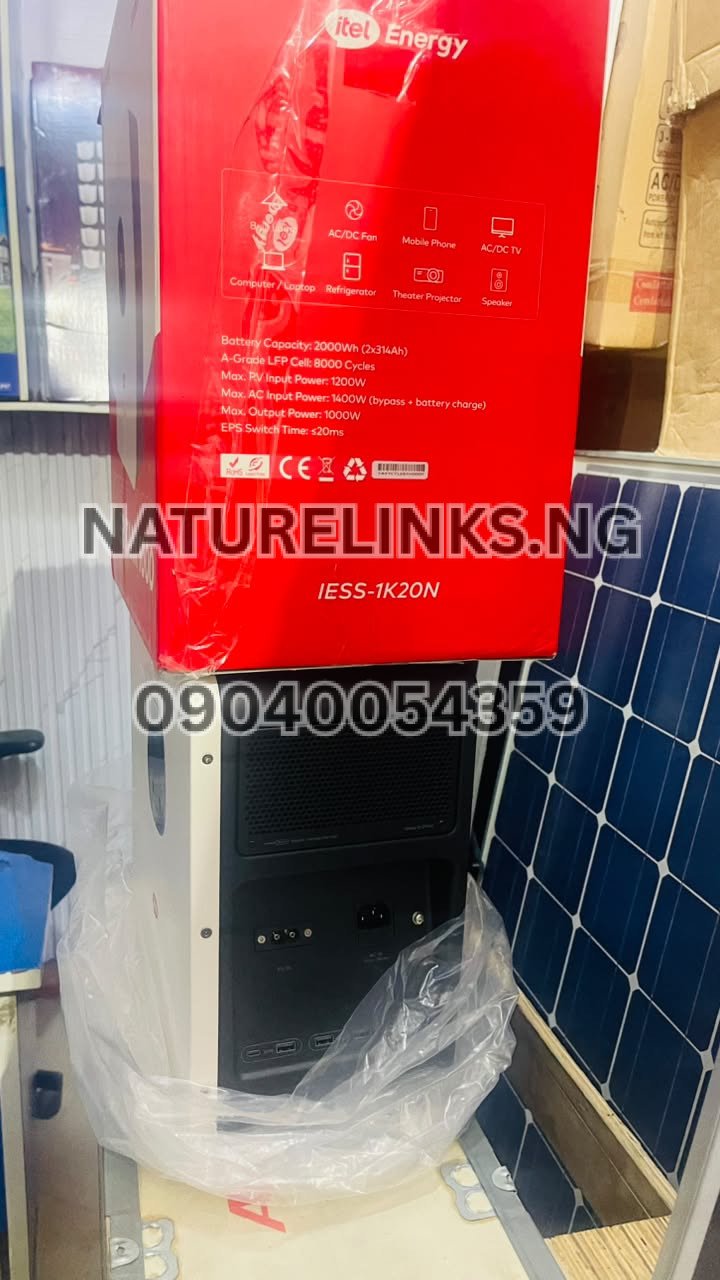
Understanding the product specifications helps buyers estimate charging time and determine whether the system suits their electricity needs.
The specifications supplied for this article are listed below.
| Product Specification | Details |
|---|---|
| Product name | Itel Power Tank |
| Battery capacity | 2000Wh / 2kWh |
| Battery configuration | 2 × 314Ah, as supplied |
| Battery chemistry | Lithium iron phosphate (LFP) |
| Advertised battery cycle life | 8000 cycles, as supplied |
| Maximum solar PV input power | 1200W |
| Maximum AC input power | 1400W, including bypass and battery charging, as supplied |
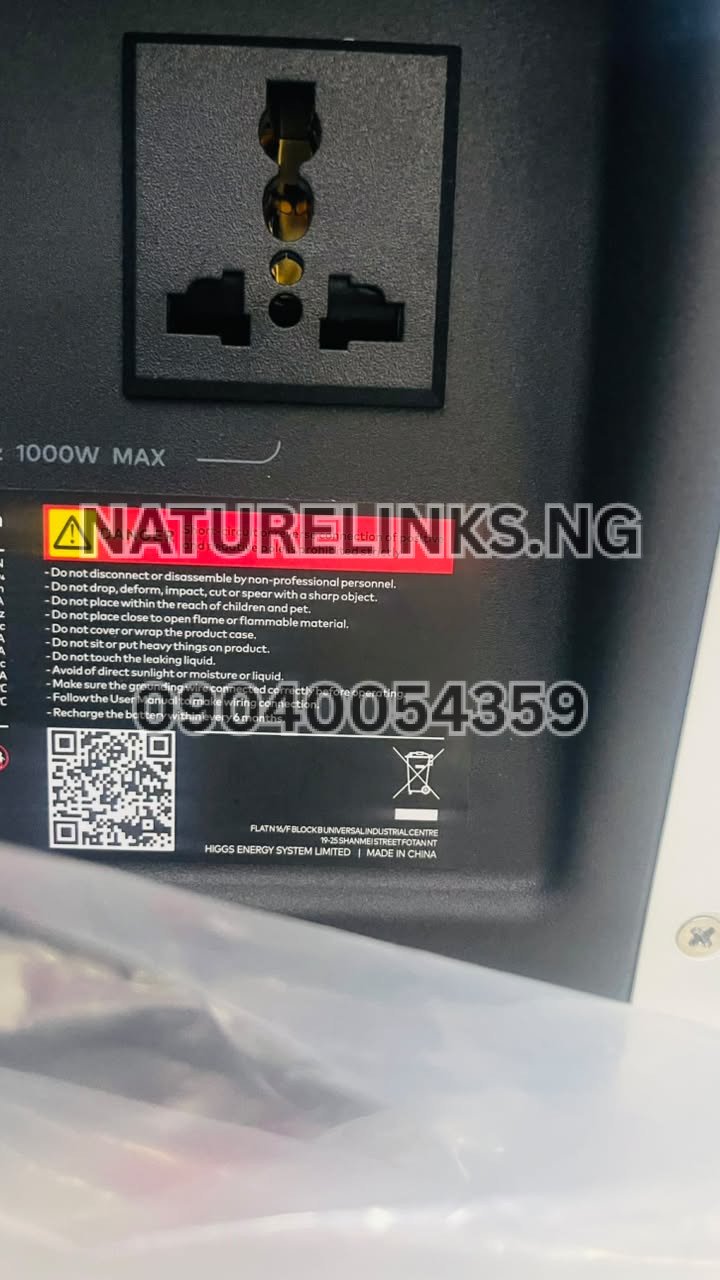
| Maximum AC output power | 1000W |
| EPS switching time | ≤20ms, subject to confirmation against the exact model’s datasheet |
| Recommended solar configuration | Two compatible 625W panels, subject to electrical compatibility |
These figures reflect the specifications supplied for this article. Buyers should confirm the exact model number and manufacturer’s datasheet before making a purchase.
In particular, check the maximum PV voltage, current limit, operating voltage range and whether the proposed solar-panel configuration is approved.
What Does 2000Wh Mean?
The 2000Wh rating represents the battery’s nominal stored energy capacity, equivalent to 2kWh.
It tells you how much energy the battery can store, not how much power it can deliver at any particular moment.
For example, a 200W appliance running for five hours consumes approximately 1000Wh of energy. A 500W appliance running for two hours also consumes approximately 1000Wh.
A fully charged 2000Wh battery theoretically contains enough energy to supply a 1000W load for two hours. In practice, usable runtime will be shorter because of inverter losses and other operating limits.
What Does the 1000W Output Rating Mean?
The 1000W output rating describes the maximum stated power the unit can deliver to connected appliances.
If your appliances consume 1000W in total, they are already using the station’s full rated output, assuming no additional startup surge or other restriction.
The 1000W output rating does not mean the battery contains only 1000Wh. Output power and stored energy are two different measurements.
What Does the 1200W Solar Input Rating Mean?
The 1200W rating is the maximum stated solar input power the power station can accept under its permitted operating conditions.
Even if the connected solar panels could produce more than 1200W under particular conditions, the station’s accepted input remains subject to its manufacturer’s limits.
The array’s voltage and current must also remain within the permitted range. Never select a panel configuration based only on its combined wattage.
3. How Many Solar Panels Are Needed to Charge Itel Power Tank 2000Wh?
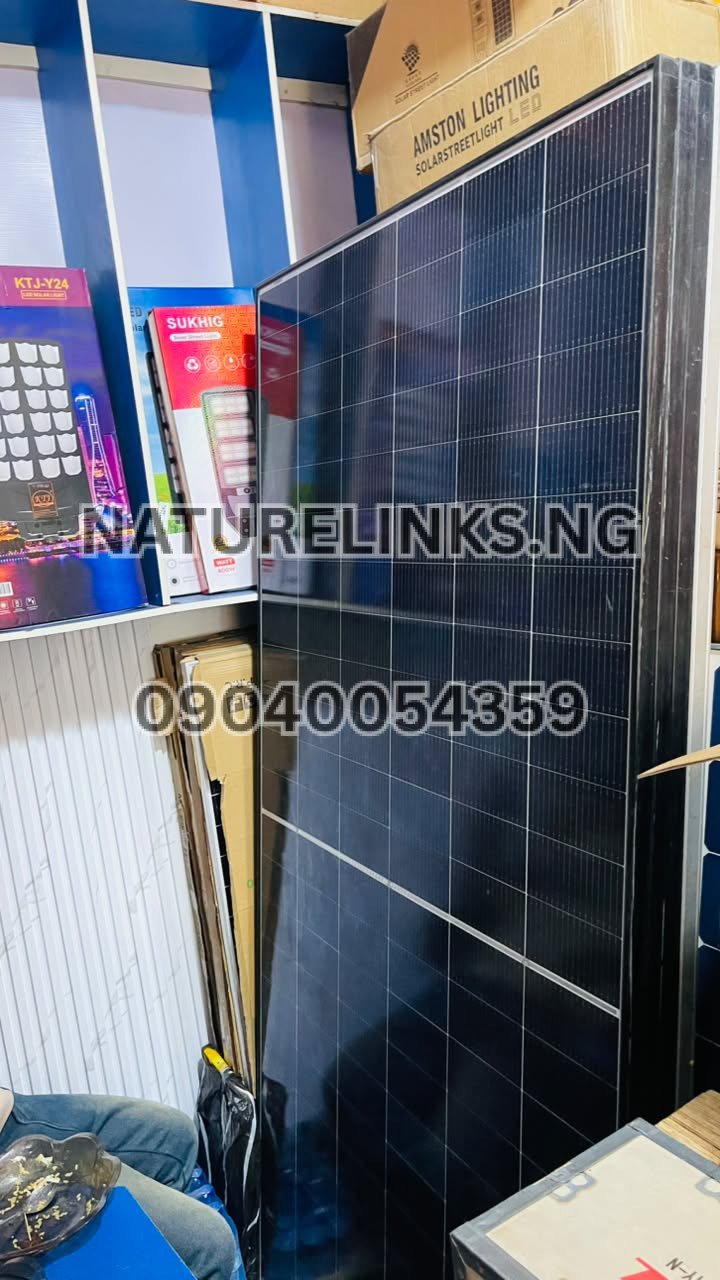
The recommended configuration supplied for the Itel Power Tank 1000W/2000Wh is two 625W solar panels, provided their electrical specifications are compatible with the power station.
Each panel has a nominal rating of 625W.
Therefore:
625W × 2 = 1250W of combined panel nameplate power.
However, the power station’s specified maximum PV input is 1200W.
This means the panels’ combined rated power is 50W above the station’s stated maximum PV input. The difference does not automatically make the arrangement safe or unsafe: the manufacturer must approve the array, and the panel voltage and current must satisfy the station’s electrical limits.
Can Two 625W Panels Fully Charge the Battery?
Two compatible panels can provide substantial solar charging power when sunlight is favourable.
Actual power depends on:
- Solar intensity.
- Cloud cover.
- Panel temperature.
- Panel orientation and tilt.
- Shading from trees or buildings.
- Panel condition.
- Cable and connection losses.
- The station’s accepted input limit.
- The battery’s state of charge.
The station cannot be assumed to receive the full 1250W panel rating continuously. Its stated maximum input is 1200W, and actual output from the panels varies throughout the day.
Which Solar Panel Brands Can I Use?
Compatible panel options may include products from JA Solar, Jinko, Canadian Solar and LONGi.
However, brand name and wattage alone do not establish compatibility. Before connecting any panel, confirm its open-circuit voltage, maximum-power voltage, short-circuit current and maximum-power current against the power station’s specifications.
The correct series or parallel configuration must also be confirmed by the manufacturer or a qualified solar installer.
4. How Does Nigerian Sunlight Affect Itel Power Tank Charging Time?
Nigeria receives substantial solar energy, but available sunlight varies by region, season and weather conditions.
Solar-resource data from the Global Solar Atlas shows that Nigeria’s long-term average photovoltaic energy potential varies considerably across the country. Its mapped specific PV output ranges approximately from 3.40 to 4.79kWh per installed kWp per day, depending on location.
This variation means the same solar panels may produce different amounts of energy in different Nigerian cities.
Solar Charging in Northern Nigeria
Some northern locations receive stronger solar resources than many coastal areas.
During favourable weather, a correctly installed solar array may produce substantial power around midday. Nevertheless, heat, dust, haze, panel orientation and the charging controller’s limits still affect the amount of electricity reaching the battery.
Do not assume that the panels will produce their full rated output throughout the day.
Solar Charging in Lagos and Southern Nigeria
Lagos and other southern locations can experience useful sunlight, but cloud cover, rainfall and humid weather can reduce solar production at certain times of the year.
A system that charges quickly during a clear afternoon may charge much more slowly on a cloudy or rainy day.
For a household in Lagos, Port Harcourt, Warri or another southern city, it is sensible to plan for changing weather rather than rely on the shortest theoretical charging time.
Does the Rainy Season Affect Charging Time?
Yes. Heavy cloud cover and rain can reduce the amount of sunlight reaching the panels.
The panels may continue producing electricity in cloudy weather, but the available power can be substantially lower than under clear skies.
If the power station must be ready for use every evening, consider whether solar charging alone will meet your needs throughout the year or whether occasional AC charging is necessary.
Is Midday the Best Time to Charge?
Solar power is often strongest around the middle of the day when panels receive intense sunlight, although the exact peak depends on weather, location, panel orientation and surrounding obstructions.
Morning and late-afternoon output is usually lower than peak midday output.
To improve charging performance, install panels where they receive unobstructed sunlight during the most productive part of the day.
5. How Long Does Itel Power Tank Take to Charge With Two 625W Panels Under Real Conditions?
A useful way to estimate charging time is to consider how much solar power the station actually receives, rather than relying only on the panel labels.
The following examples use a 2000Wh battery and the stated 1200W maximum PV input.
These calculations are simplified illustrations. They assume the listed solar input remains constant and do not include charging losses or changes in input as the battery fills.
| Actual Solar Input | Theoretical Time to Supply 2000Wh |
|---|---|
| 1200W | 1.67 hours |
| 1000W | 2 hours |
| 800W | 2.5 hours |
| 600W | 3.33 hours |
| 400W | 5 hours |
| 200W | 10 hours |
Actual charging will take longer than these simple calculations suggest because of conversion losses, changing solar output and charging behaviour near full capacity.
Example 1: Strong Sunlight
Suppose the panels are producing sufficient power for the station to accept close to 1200W for a substantial period.
The theoretical time to supply 2000Wh is approximately 1.67 hours.
A practical plan should allow additional time for losses and variations in solar input.
Example 2: Moderate Sunlight
Suppose the power station receives approximately 600W of solar input.
The theoretical calculation is:
2000Wh ÷ 600W = 3.33 hours.
The real charging duration will be longer if the input fluctuates or charging efficiency is below 100%.
Example 3: Cloudy Weather
Suppose the solar input averages only 300W.
The theoretical calculation becomes:
2000Wh ÷ 300W = approximately 6.67 hours.
In practice, the battery may not reach full charge during a short daylight window, especially if cloud cover becomes heavier or the system is supplying appliances at the same time.
The key lesson is that actual accepted solar power—not just the number printed on the panel—determines charging speed.
6. Can Itel Power Tank Recharge While Running a Maximum 1000W Load?
Yes, the station may be able to supply appliances while receiving solar input, subject to its operating modes and manufacturer’s instructions. However, supplying a large load reduces the solar energy available to recharge the battery.
This is particularly important when the total connected appliance load approaches the station’s stated 1000W output rating.
Consider the following simplified examples.
| Accepted Solar Input | Appliance Load | Approximate Power Remaining Before Losses |
|---|---|---|
| 1200W | 0W | 1200W available for charging and system losses |
| 1200W | 300W | 900W |
| 1200W | 500W | 700W |
| 1200W | 800W | 400W |
| 1200W | 1000W | 200W |
| 800W | 1000W | 200W deficit |
| 600W | 1000W | 400W deficit |
| 400W | 1000W | 600W deficit |
These figures illustrate the energy balance; they are not guaranteed power-station measurements. The actual result depends on conversion losses, charging controls and how the station manages solar input and appliance loads.
What Happens When Solar Input Exceeds the Appliance Load?
If accepted solar power exceeds the appliances’ consumption, the remaining energy may be available to charge the battery, subject to the unit’s charging limits and operating mode.
For example, with 1200W of accepted solar input and a 500W appliance load, approximately 700W remains before accounting for losses.
At that simplified net rate, replenishing 2000Wh would take approximately 2.86 hours. The actual duration would be longer if input fluctuates or losses reduce the net charging power.
What Happens When the Appliances Consume More Than the Panels Produce?
The battery must supply the shortfall.
For example, if the panels provide 600W but the appliances require 1000W, the system has a 400W power deficit before conversion losses.
The battery may continue discharging even though the solar panels are connected.
Therefore, a power station can receive solar power and still lose battery charge if the connected appliances consume more electricity than the solar system supplies.
Can a 1000W Load Recharge the Battery Quickly?
Not while continuously consuming nearly all the available solar input.
If the accepted solar input is 1200W and the load is 1000W, the simplified difference is only 200W before losses. At that net rate, replenishing 2000Wh would theoretically take 10 hours.
In reality, the battery may take longer or may not recharge if the solar input falls, the load increases or the station’s charging controls limit the available power.
For faster recharging, reduce appliance consumption while charging or use an additional manufacturer-approved charging source if the system supports it.
7. What Is the Difference Between Solar Input, Battery Capacity and Maximum Load?
These three specifications are essential for understanding the charging performance of the Itel Power Tank.
Solar Input Power
Solar input power is the electrical power entering the power station from its solar panels.
For this model, the stated maximum is 1200W.
Higher accepted solar input can reduce charging time, provided the battery can accept the charge and all electrical limits are respected.
Battery Capacity
Battery capacity is the amount of energy stored in the battery.
The specified model has a 2000Wh capacity.
A larger battery generally takes longer to charge than a smaller battery when both receive the same input power and have comparable charging efficiency.
Maximum Appliance Load
Maximum appliance load is the amount of power the station supplies to connected devices.
The specified maximum output is 1000W.
A higher appliance load can reduce the energy available for charging, and it may cause the battery to discharge when consumption exceeds the incoming solar power.
Why These Differences Matter
A buyer may see two 625W solar panels and assume they will always charge the power station at 1250W.
That is not guaranteed. The station has a stated maximum PV input of 1200W, actual panel output varies, and connected appliances consume part of the generated electricity.
Understanding these three ratings helps you choose a charging arrangement that meets your needs.
8. What Is the Price of Itel Power Tank 1000W/2000Wh in Nigeria?
According to the prices supplied by Nature Solar Global Enterprises for this article, the Itel Power Tank 1000W/2000Wh costs ₦600,000, while each compatible 625W solar panel costs ₦125,000.
The following table shows the estimated equipment cost.
| Product | Quantity | Unit Price | Total |
|---|---|---|---|
| Itel Power Tank 1000W/2000Wh | 1 | ₦600,000 | ₦600,000 |
| 625W solar panel | 1 | ₦125,000 | ₦125,000 |
| Two 625W solar panels | 2 | ₦125,000 | ₦250,000 |
| Power station plus two panels | 1 set | — | ₦850,000 |
These are seller-provided prices, not independently verified live checkout prices. Confirm current stock, exact model and final invoice before making payment.
The seller reports that other sellers offer the power station for approximately ₦620,000–₦650,000. Actual market prices can change, so buyers should compare the same model, warranty and included accessories before deciding which offer represents the best value.
Does the Price Include Solar Panels?
Not automatically.
The stated ₦600,000 price is for the power station alone unless the seller confirms that a particular package includes panels.
If you purchase two 625W panels at ₦125,000 each, the combined equipment cost becomes ₦850,000 before any additional charges.
Ask whether the quotation includes solar cables, connectors, mounting materials, protective equipment and installation.
Why Buy the Power Station and Solar Panels Together?
Purchasing both components from one supplier may simplify the process of confirming compatibility.
It can also help you obtain a complete quotation and coordinate delivery.
Nevertheless, always verify the exact panel specifications and the power station’s maximum PV voltage and current limits before connecting the equipment.
9. Where Can I Buy Itel Power Tank 1000W/2000Wh in Nigeria?
Nature Solar Global Enterprises, a subsidiary of Nature Links Nigeria Limited, advertises Itel Power Tank products and compatible solar panels for customers throughout Nigeria.
The seller states that it supplies both the 500W/1000Wh and 1000W/2000Wh models.
Nature Solar Global Enterprises Contact Information
Business name: Nature Solar Global Enterprises
Parent company: Nature Links Nigeria Limited
CEO: Mr. Joseph Chikeleze
Call: 07049528019
WhatsApp: 09040054359
Shop address: F1571 Upstairs (F-Line), Alaba International Market, Lagos State, Nigeria.
Website: itelpowertank.com.ng
The seller advertises wholesale prices and nationwide delivery, including same-day delivery in Lagos and next-day delivery outside Lagos. Confirm the actual delivery schedule for your location before ordering.
The business describes itself as an accredited distributor serving Nigerian states. If formal manufacturer accreditation is important to you, request documentation that verifies the relevant authorization.
What Should You Confirm Before Buying?
Before making payment, ask the seller to confirm:
- The exact Itel Power Tank model number.
- Whether the battery capacity is 2000Wh.
- Whether the rated AC output is 1000W.
- The maximum permitted solar input voltage and current.
- The approved solar-panel configuration.
- Whether two 625W panels are compatible.
- Whether solar cables and connectors are included.
- The warranty period and terms.
- The final price and any additional charges.
- The expected delivery date.
These checks can help you avoid purchasing incompatible components or confusing the 1000Wh model with the 2000Wh model.
10. How Can You Make Itel Power Tank Recharge Faster Under Nigerian Sunlight?
Although you cannot control the weather, several practical steps can improve solar charging performance.
Position the Panels in Unobstructed Sunlight
Install the panels where nearby buildings, trees, walls or other objects will not cast shadows across them during productive daylight hours.
Even partial shading can reduce solar generation.
Keep the Solar Panels Clean
Dust, leaves and accumulated dirt can reduce the sunlight reaching the cells.
Clean the panels according to the manufacturer’s instructions, using suitable materials and safe access methods.
Use the Correct Panel Configuration
Do not connect panels simply because their wattage matches the recommended total.
Check voltage, current, connectors and permitted input power. An incorrect configuration may prevent charging or damage the equipment.
Reduce Appliance Consumption During Charging
If your priority is to recharge the battery quickly, avoid running high-power appliances unnecessarily while charging.
Using less power leaves more of the accepted solar input available for replenishing the battery.
Monitor the Charging Display
Where the power station displays solar input power, check the reading during different periods of the day.
This helps you distinguish between the panels’ rated capacity and the power the station is actually receiving.
Consider Backup AC Charging
If the battery must be fully charged before evening and solar conditions are poor, AC charging may help if supported by the manufacturer.
Confirm the AC charging specifications and whether simultaneous AC and solar charging is supported before relying on that arrangement.
11. Is Itel Power Tank 1000W/2000Wh Suitable for Nigerian Homes and Businesses?
The system may be suitable for people who want portable energy storage for essential appliances and electronics.
Potential applications include:
- Lighting.
- Television and decoder.
- Laptop computers.
- Wi-Fi routers.
- Phone charging.
- CCTV systems.
- Small office equipment.
- Compatible fans and other low-power appliances.
The suitability of the system depends on the total load and how long the appliances must operate.
For example, running a 100W load for five hours requires approximately 500Wh before conversion losses. Running a 500W load for four hours requires approximately 2000Wh before losses, which is already the battery’s nominal capacity.
This means the second example would generally require a shorter runtime or a recharge before four hours of operation could be achieved.
Can It Run a Refrigerator?
It may run a compatible refrigerator if the running wattage and compressor startup surge are within the station’s limits.
Check the refrigerator’s rated power and starting requirements before connecting it.
Can It Run an Electric Iron or Kettle?
Many electric irons and kettles draw more than 1000W, so they may exceed the stated output rating.
Check the appliance nameplate and avoid connecting loads that exceed the manufacturer’s permitted limits.
Can It Support a Small Business?
It may support selected low-power business equipment, such as a laptop, router, lights and other compatible electronics.
Businesses requiring sustained high-power loads should calculate their energy consumption carefully and consider whether a larger system would be more appropriate.
12. Frequently Asked Questions About Itel Power Tank Solar Charging in Nigeria
The following FAQs address common buyer-intent questions about charging time, solar-panel requirements, weather, power consumption and pricing. They are based on the product specifications and solar-resource information discussed above, rather than a verified ranking of Google’s most-searched queries.
1. How Long Does Itel Power Tank 1000W/2000Wh Take to Charge Fully With Solar?
Under favourable conditions, plan for approximately 2–4 hours of productive sunlight when the battery is charging without a substantial appliance load. Actual charging can take longer because of losses, changing solar input and battery charging behaviour.
2. Can Two 625W Solar Panels Charge Itel Power Tank in Two Hours?
Possibly under favourable conditions, but two hours is not guaranteed. The panels have a combined nominal rating of 1250W, while the power station’s stated maximum PV input is 1200W. Actual solar input varies with sunlight, panel temperature and other conditions.
3. How Long Will Itel Power Tank Take to Recharge During Cloudy Weather?
There is no fixed charging time for cloudy weather. Reduced sunlight can lower solar input considerably, meaning charging may take much longer or remain incomplete during the available daylight hours.
4. Can Itel Power Tank Charge While Running Appliances?
It may support solar charging while powering appliances, subject to the manufacturer’s operating instructions. However, appliances consume part of the incoming solar power, leaving less energy for battery charging.
5. Can Itel Power Tank Recharge While Running a 1000W Maximum Load?
It may receive solar input while supplying the load, but the battery may recharge very slowly or continue discharging. If solar input is 1200W and the appliance load is 1000W, only about 200W remains before losses and other system requirements.
6. What Is the Maximum Solar Input of Itel Power Tank 1000W/2000Wh?
The supplied specification states a maximum solar PV input of 1200W. Buyers should confirm the maximum PV voltage, current and permitted panel configuration for their exact model before connecting panels.
7. How Much Is Itel Power Tank 1000W/2000Wh in Nigeria?
The seller-provided price from Nature Solar Global Enterprises is ₦600,000 for the power station alone. Confirm current availability and the final selling price before ordering.
8. How Much Do Two 625W Solar Panels Cost for Itel Power Tank?
At the supplied price of ₦125,000 per panel, two panels cost ₦250,000. Combined with the stated ₦600,000 power station, the estimated equipment cost is ₦850,000 before additional charges.
9. Does Itel Power Tank Charge Faster in Northern Nigeria Than in Lagos?
Northern locations generally have stronger solar resources than many coastal areas, although local weather, shading, panel installation and equipment conditions also matter. Actual charging time depends on the solar power available at the installation site.
10. Where Can I Buy Itel Power Tank 1000W/2000Wh and Compatible Solar Panels?
Contact Nature Solar Global Enterprises on 07049528019 or WhatsApp 09040054359. Its stated shop address is F1571 Upstairs (F-Line), Alaba International Market, Lagos State. Confirm the exact model, panel compatibility, warranty and final price before paying.
13. Conclusion: How Long Could Itel Power Tank Maximum Load Take to Recharge From Solar Under Real Nigerian Sunlight Conditions?
The Itel Power Tank 1000W/2000Wh has a stated 2000Wh battery capacity, a maximum solar input of 1200W and a maximum AC output of 1000W.
When using a compatible solar array in favourable sunlight without a substantial appliance load, approximately 2–4 hours of productive sunlight is a reasonable planning estimate. Allow around 3–5 clock hours or longer depending on actual conditions. These estimates are not guaranteed charging times.
The situation changes when the power station operates at maximum load. A continuous 1000W appliance load can consume most of the electricity supplied by the panels, leaving little energy for charging the battery. If the appliances consume more power than the panels supply, the battery will continue to discharge.
Two compatible 625W solar panels have a combined nominal rating of 1250W, but the power station’s stated maximum PV input is 1200W. The panel arrangement must therefore be approved for the exact model and must respect its voltage and current limits.
According to the prices supplied for this article, Nature Solar Global Enterprises sells the Itel Power Tank 1000W/2000Wh for ₦600,000, while each 625W solar panel costs ₦125,000. The estimated equipment cost for the power station and two panels is ₦850,000 before additional charges.
For enquiries about the product, compatible solar panels and availability, contact Nature Solar Global Enterprises, a subsidiary of Nature Links Nigeria Limited.
Call: 07049528019
WhatsApp: 09040054359
Shop address: F1571 Upstairs (F-Line), Alaba International Market, Lagos State, Nigeria.
Visit itelpowertank.com.ng for product information and enquiries.
Choose the correct model, verify the solar input specifications and calculate your appliance consumption before purchasing. These steps will help you get the best practical charging performance from your Itel Power Tank under Nigerian sunlight conditions.