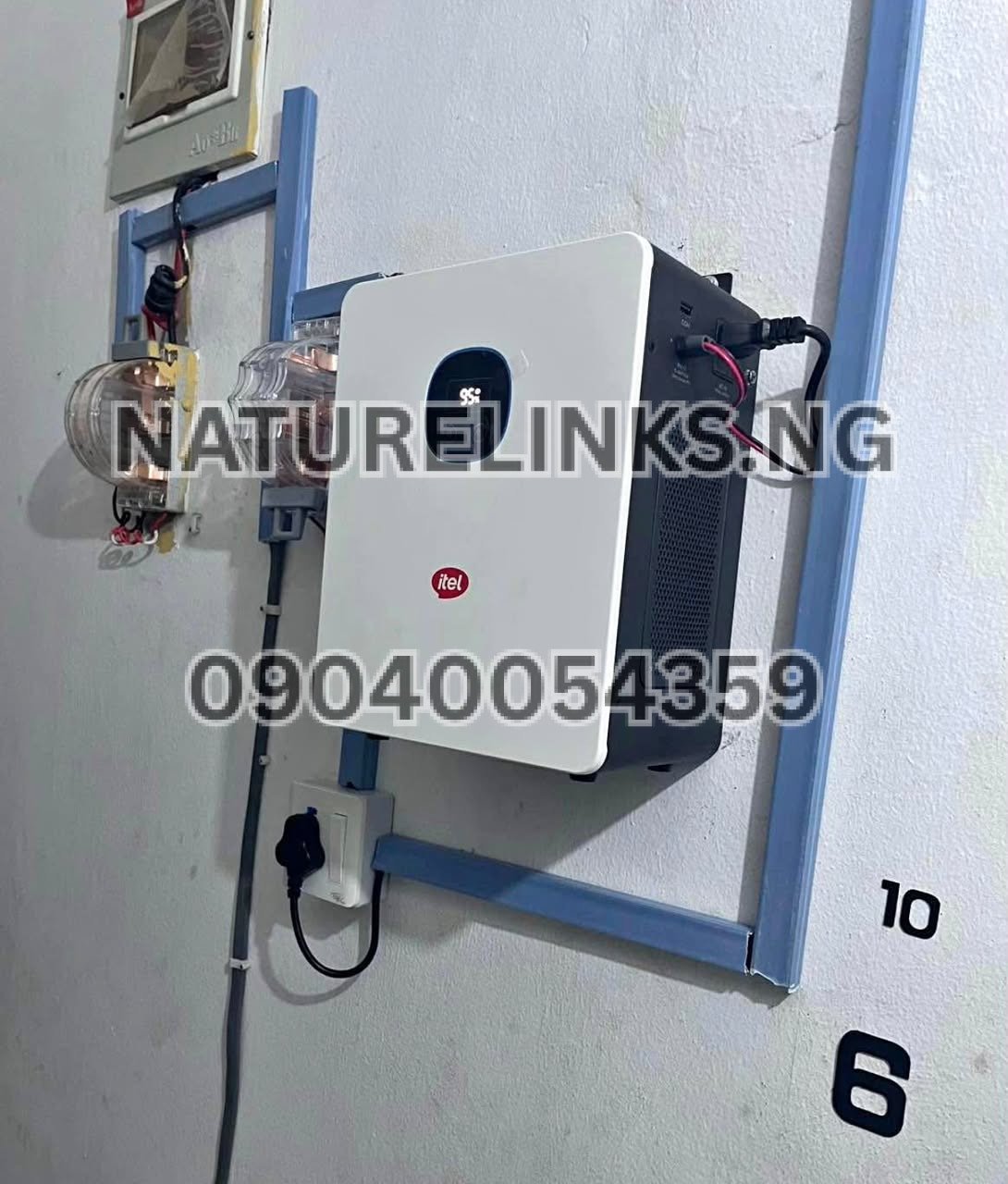
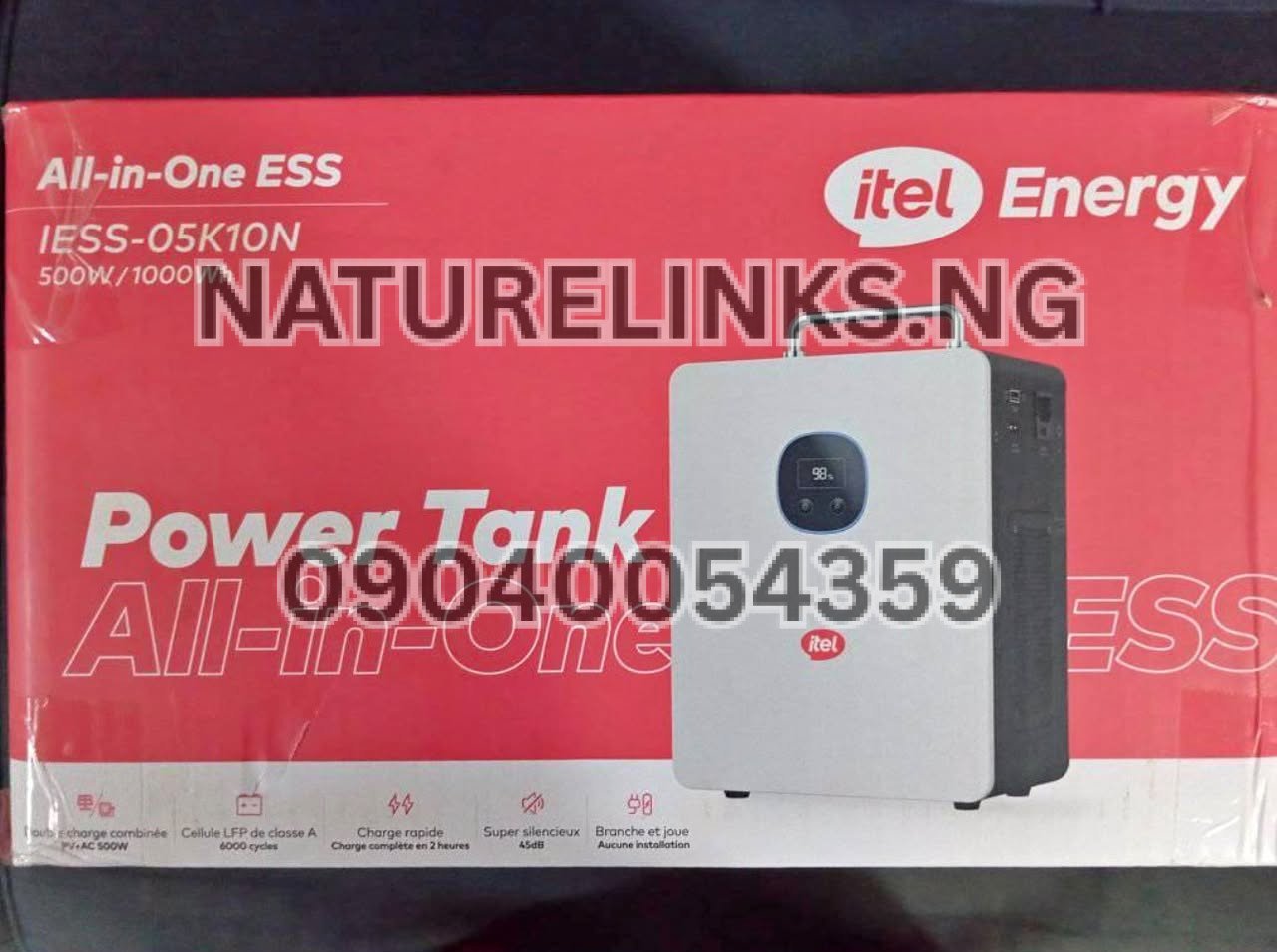
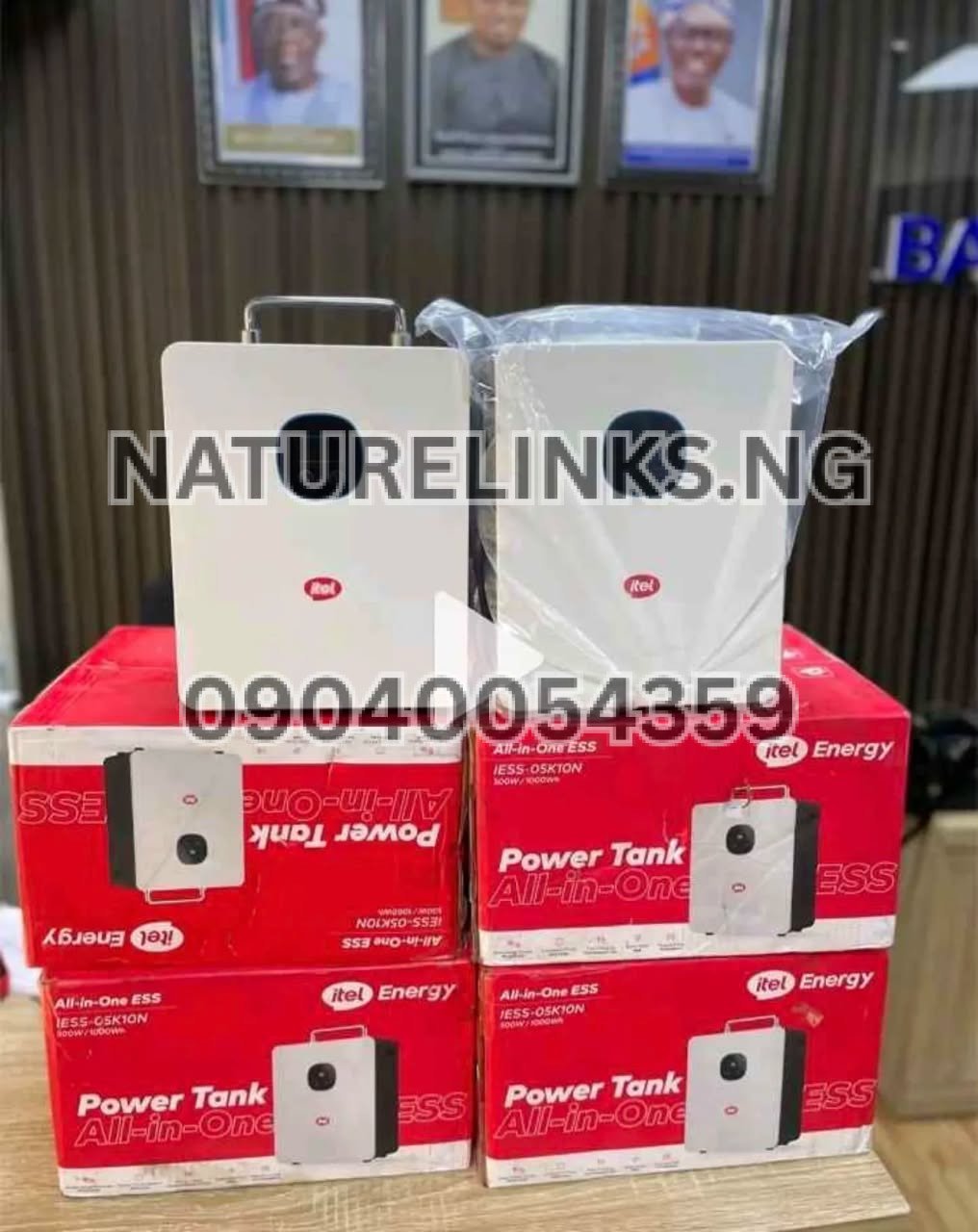
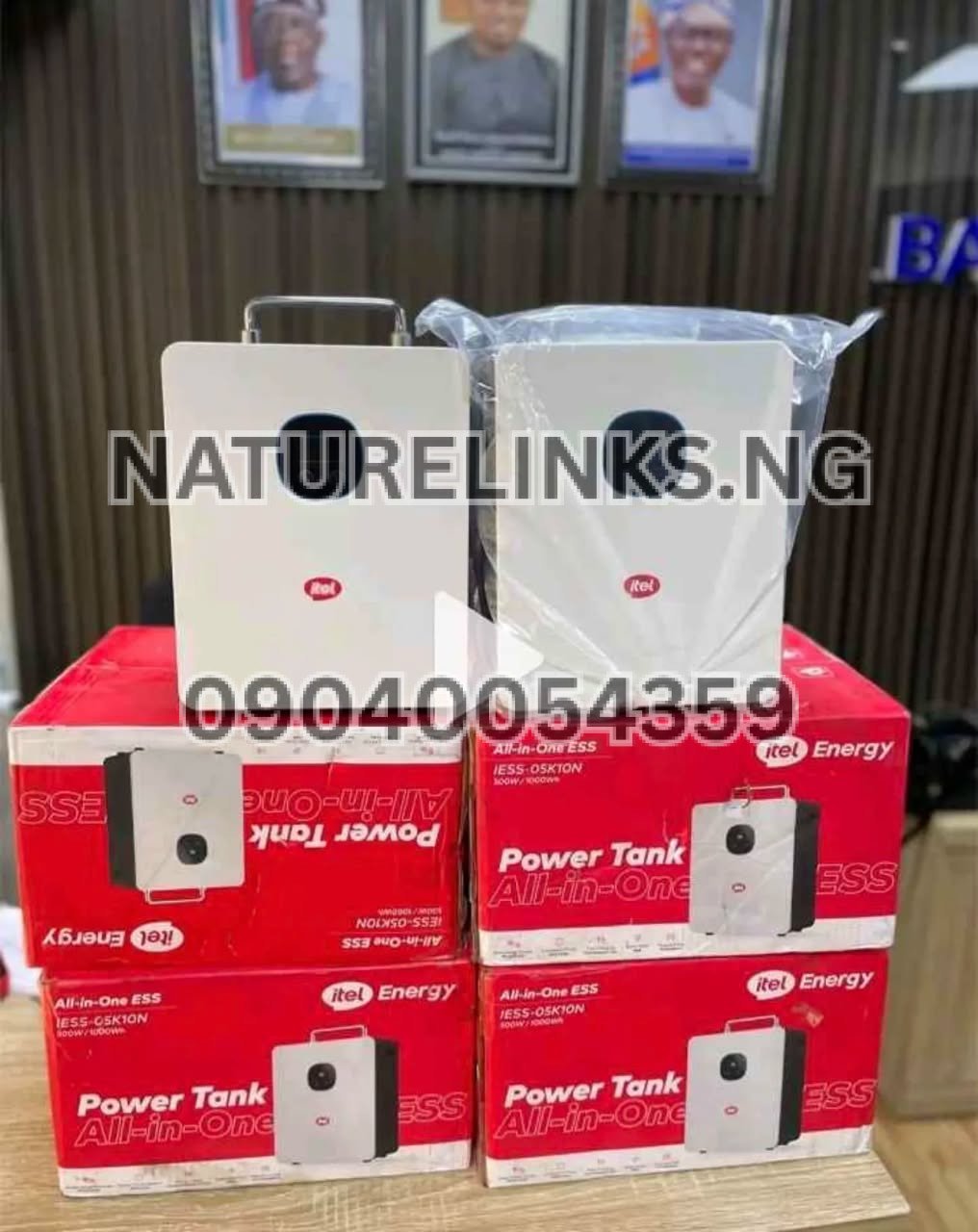
Best Seller: Nature Solar Global Limited — the accredited distributor in Nigeria, supported by Nature Links Nigeria Limited [NatureLinks.NG], for genuine Itel Power Tank products and related power solutions.
If you are searching for “How Long Does Power Tank Take to Charge Fully?”, the answer depends on the exact Itel Power Tank model, battery capacity, charging method, starting battery percentage, available AC or solar input, and whether appliances are being used while charging.
For the commonly sold Itel Power Tank IESS-05K10N with a 1,000Wh/1kWh LiFePO4 battery and 500W inverter, published product information commonly states approximately 2 hours for a full charge under suitable fast-charging conditions, particularly when using the intended high-power charging arrangement. Itel-related product listings also specify AC/grid and solar charging, while some listings describe dual AC + solar charging.
However, buyers should distinguish between AC charging, solar-only charging and combined charging. Solar charging time can vary significantly because sunlight, panel wattage, temperature, shading, cable losses and the battery’s starting charge all affect the actual charging rate.
What Is the Full Charging Time of Itel Power Tank?
For the commonly advertised 1,000Wh Itel Power Tank 500W model, the frequently published charging figure is approximately 2 hours under suitable fast-charging conditions. Some Nigerian product listings describe 2-hour charging using AC and/or dual charging, while real-world reports can be longer depending on the charging setup.
Therefore, if you are asking “How Long Does Power Tank Take to Charge Fully?”, a practical answer is:
- Fast/appropriate AC or dual charging: about 2 hours on the commonly listed configuration.
- AC-only: charging time depends on the actual AC input and model.
- Solar-only: commonly takes longer and depends heavily on panel wattage and sunlight.
- While powering appliances: charging may take longer because some incoming energy is simultaneously being consumed.
The exact charging specification should always be checked against the model number printed on your particular Power Tank.
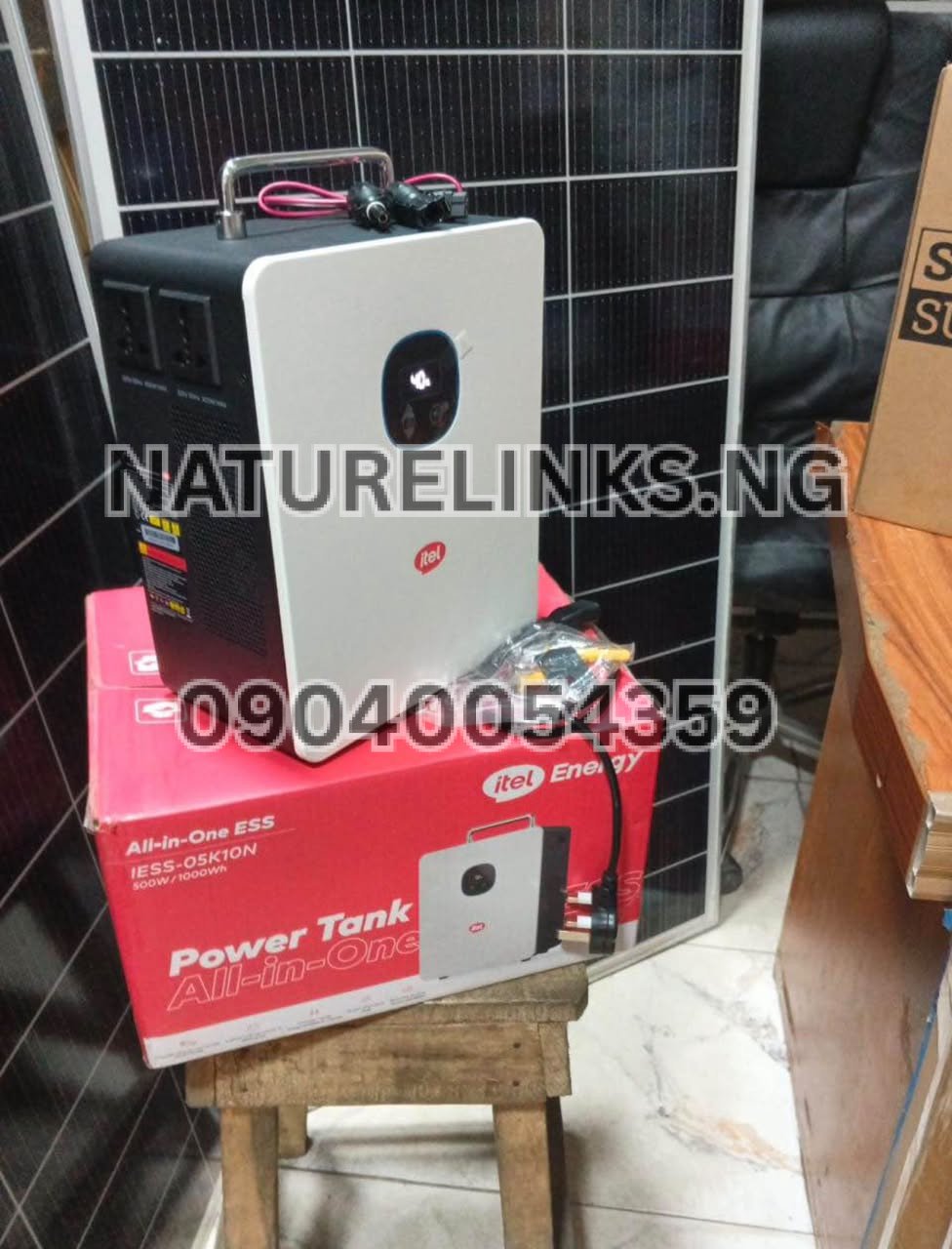
How Long Does Itel Power Tank Take to Charge Fully?
The commonly listed IESS-05K10N combines a 1,000Wh battery, 500W pure sine-wave inverter, and an integrated MPPT solar charging system. Several current product listings state that the unit can be fully charged in approximately 2 hours under specified fast-charging conditions.
This means a user starting with a substantially depleted battery may be able to restore the battery relatively quickly when the correct charging input is available.
It is important not to interpret “2 hours” as a guaranteed result in every situation. A Power Tank connected to a small solar panel on a cloudy day will not necessarily charge in two hours.
How Long Does Power Tank Take to Charge With Electricity?
AC/grid charging is one of the most convenient methods of recharging an Itel Power Tank.
For the commonly listed IESS-05K10N, product information specifies AC charging and a 90–280V AC input range, while some listings advertise high-speed charging with a full recharge in approximately two hours.
Actual charging time can change depending on:
- Battery percentage when charging begins
- AC input power
- Charger and internal charging circuitry
- Whether the unit is simultaneously powering appliances
- Ambient temperature
- Battery-management limits
- The exact Power Tank model
For example, charging a battery from 50% to 100% naturally takes less time than charging from nearly 0% to 100%.
How Long Does Power Tank Take to Charge With Solar?
Solar charging does not have one fixed charging time.
The charging speed depends on the solar panel’s actual output and the amount of sunlight available. For the commonly listed 1,000Wh/500W Power Tank configuration, the integrated MPPT controller is commonly specified for up to about 400W of PV input, with an MPPT voltage range of approximately 11–60V.
A product guide reports that a 400W solar panel can take approximately 3–4 hours under ideal conditions, although another product source gives approximately 2.5–3 hours under optimal sunlight. These differences illustrate why solar charging time should be treated as an estimate rather than a guaranteed duration.
In actual Nigerian conditions, charging can take longer because of:
- Cloud cover
- Rain
- Early morning or late afternoon sunlight
- Panel orientation
- Dust on solar panels
- High temperatures
- Shading
- Cable losses
- Incorrect panel voltage
- The battery’s starting percentage
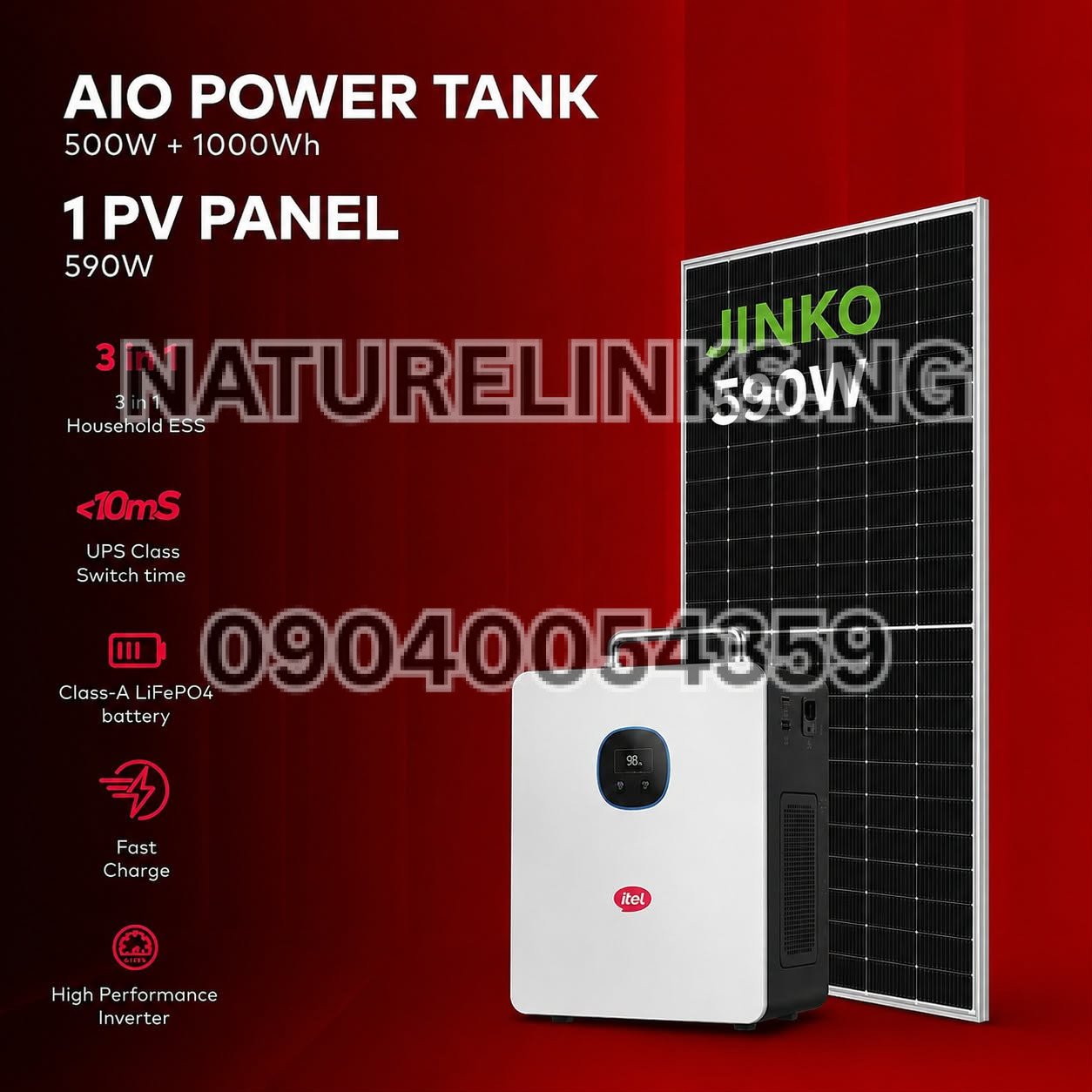
Can Itel Power Tank Charge From Solar and AC at the Same Time?
Some commonly sold Itel Power Tank configurations support dual charging, allowing solar and grid/AC input to contribute to charging simultaneously. Product listings describe this arrangement as a way to achieve rapid charging.
When both sources are used, the available charging power can be greater than using a smaller individual source alone.
However, buyers should confirm that their exact model supports simultaneous AC and PV charging before connecting both sources.
Do not assume that every product carrying the “Power Tank” name has identical specifications.
Why Does Itel Power Tank Sometimes Take Longer to Charge?
Although a product may advertise a particular charging time, actual charging can be slower.
Common reasons include:
1. Low Solar Input
A solar panel rated at 400W does not continuously produce 400W throughout the day. Its output changes with sunlight intensity, temperature, orientation and shading.
2. Cloudy Weather
Clouds reduce the amount of solar energy reaching the panel, causing slower charging.
3. Dust on Solar Panels
Dust and dirt can reduce panel output. This can be particularly relevant in dusty environments.
4. Powering Appliances During Charging
If your Power Tank is charging while a TV, fan, router or other appliance is connected, some incoming energy is being consumed instead of being stored.
5. Battery Starting Level
Charging from 80% to 100% is different from charging from 5% to 100%.
6. Temperature
Battery-management systems can regulate charging when temperatures are outside the recommended operating conditions.
7. Incorrect Solar Panel Configuration
Solar-panel selection involves more than simply choosing a panel with a high wattage. Voltage and current must also remain within the Power Tank’s permitted input range.
How Many Watts of Solar Panel Does Itel Power Tank Need?
For the commonly listed IESS-05K10N 1,000Wh/500W Power Tank, specifications commonly identify a maximum PV input of approximately 400W and an MPPT voltage range of approximately 11–60V.
This means buyers should not simply connect any large solar panel because its wattage appears attractive.
The panel arrangement must satisfy the Power Tank’s:
- Maximum PV wattage
- Maximum PV voltage
- Maximum input current
- MPPT voltage range
- Connector requirements
A suitable solar configuration can help the Power Tank recharge efficiently while remaining within the manufacturer’s electrical limits.
Is a 400W Solar Panel Suitable for Itel Power Tank?
For the commonly listed IESS-05K10N configuration, product specifications identify up to 400W PV input, making a properly configured 400W solar array a relevant option.
Under strong sunlight, a 400W panel can provide substantial charging power. Nevertheless, the actual output may be below its rated 400W for much of the day.
Before purchase, verify the panel’s voltage and current specifications rather than looking only at its wattage.
Can a 500W Solar Panel Charge Itel Power Tank?
A 500W panel should not automatically be connected to a Power Tank whose documented maximum PV input is 400W.
For the commonly listed IESS-05K10N, the documented PV input limit is up to approximately 400W.
A higher-wattage panel can have electrical characteristics that exceed the unit’s permitted input parameters.
If you are considering a 500W solar panel, ask the supplier to confirm compatibility with the exact Power Tank model before connecting it.

Does Battery Capacity Affect Charging Time?
Yes.
A 1,000Wh battery stores more energy than a smaller battery, so the amount of energy that needs to be replenished after a deep discharge is substantial.
The commonly listed Itel Power Tank IESS-05K10N has a 1,000Wh/1kWh LiFePO4 battery.
Charging time also depends on the amount of charging power available.
A simplified concept is:
Charging time ≈ Energy required ÷ Effective charging power
This is only a basic approximation because real charging involves conversion losses, charging curves, battery-management controls and other variables.
What Is the Battery Capacity of Itel Power Tank?
The popular IESS-05K10N configuration is listed with:
| Specification | Commonly listed information |
|---|---|
| Battery capacity | 1,000Wh / 1kWh |
| Battery chemistry | LiFePO4 |
| Continuous inverter output | 500W |
| Surge output | Up to 1,000W on listed configurations |
| Solar input | Up to about 400W |
| Solar controller | MPPT |
| AC charging | Yes |
| Solar charging | Yes |
| Inverter | Pure sine wave |
| AC output | 230V on listed configuration |
| Frequency | 50Hz |
Specifications can vary by model or configuration, so verify the exact model before purchasing.
How Do I Know When Itel Power Tank Is Fully Charged?
The Power Tank’s digital/status display can be used to monitor battery level and charging status on compatible configurations.
When charging, monitor the displayed battery percentage or battery indicator.
A full-charge indication means the battery-management and charging system has reached its indicated full state.
Do not rely solely on a fixed number of hours. The battery’s displayed status is more useful for determining whether the particular unit has reached full charge.
Can I Use Itel Power Tank While It Is Charging?
Some Itel Power Tank configurations support pass-through charging, allowing compatible loads to operate while the battery is charging.
However, using appliances while charging can affect the time required to reach 100%.
For example, if the charging system supplies 300W while connected appliances consume 100W, only part of the incoming energy is available for battery charging.
Therefore, if your priority is achieving the shortest possible recharge time, reducing or removing unnecessary loads during charging can help.
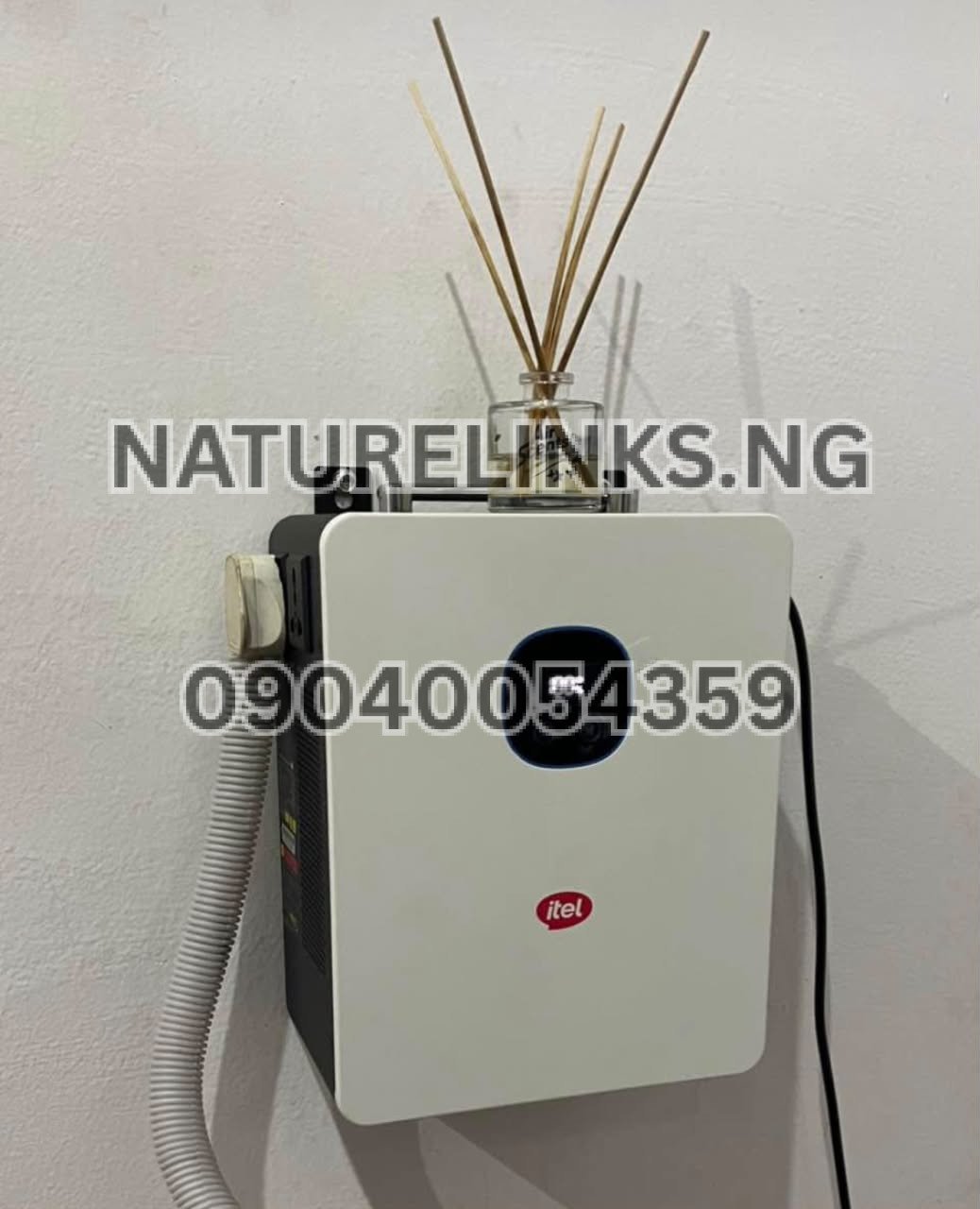
Does Using the Power Tank While Charging Damage the Battery?
Using a supported Power Tank configuration while charging does not automatically mean the battery will be damaged. The system is designed with charging and battery-management controls.
Nevertheless, users should:
- Stay within the rated output.
- Use the supplied or approved charging equipment.
- Avoid exceeding PV input specifications.
- Maintain adequate ventilation.
- Avoid operating the unit outside its specified environmental conditions.
- Follow the user manual for the exact model.
The manufacturer’s operating instructions should take precedence over generic charging advice.
How Long Does Itel Power Tank Take to Charge From 0% to 100%?
For the commonly advertised 1,000Wh IESS-05K10N, approximately 2 hours is a frequently published full-charge figure under specified fast-charging conditions.
However, “0% to 100%” should be understood as an approximate reference rather than a promise that every charging setup will produce exactly the same result.
If charging through solar alone, the duration can be longer and depends on the actual solar input.
How Long Does Itel Power Tank Take to Charge From 50% to 100%?
A Power Tank starting at 50% does not need to replace the same amount of energy as one starting nearly empty.
Therefore, under the same charging conditions, a half-charged battery will generally require less time to reach full charge than a heavily depleted battery.
The actual time depends on the model, input power and charging profile.
Does Solar Charge Faster Than Electricity?
There is no universal answer because it depends on the amount of available solar power and the AC charging capability of the specific model.
For example, strong midday sunlight with a properly configured high-output solar array can provide substantial charging power. In poor sunlight, solar charging may be considerably slower.
AC/grid charging can provide a more predictable charging source when the mains supply is available.
What Is the Best Way to Charge Itel Power Tank Quickly?
For the commonly listed fast-charging configuration, buyers should use the charging method and input limits specified by the manufacturer.
For faster solar charging:
- Use a compatible solar panel or array.
- Stay within the Power Tank’s PV voltage limit.
- Stay within its maximum PV wattage and current.
- Place panels where they receive unobstructed sunlight.
- Keep panels clean.
- Use suitable cables.
- Avoid unnecessary loads while charging.
- Monitor the Power Tank display.
For AC charging, use the supplied/approved charging equipment and a suitable power source.

Itel Power Tank Charging Time in Nigeria
For Nigerian buyers, charging time can be especially important because grid availability varies between locations.
A Power Tank can be charged from AC when electricity is available and can also use solar charging on compatible configurations.
This provides flexibility for homes, shops, offices, students, POS operators, remote workers and other users who need backup electricity.
The actual charging experience in Lagos, Abuja, Port Harcourt, Onitsha, Awka, Ibadan, Kano or other Nigerian locations will depend on the available electricity supply and local solar conditions.
Itel Power Tank Charging Time vs Solar Charging Time
| Charging method | Typical expectation | Main factors |
|---|---|---|
| AC/grid | Around 2 hours is commonly advertised for the 1,000Wh fast-charging configuration | AC input, model, battery level |
| Solar only | Often several hours | Panel wattage, sunlight, weather, voltage and current |
| AC + solar | Can provide faster charging where supported | Combined available input and model limits |
| Charging while in use | Usually takes longer | Appliance load and charging input |
The figures are estimates and should not be treated as guaranteed charging times for every Power Tank model. Current listings show differences in stated charging performance, so checking the exact model’s datasheet is important.
What Can You Power With a Fully Charged Itel Power Tank?
The popular 1,000Wh/500W configuration is designed for relatively moderate electrical loads.
Common applications include:
- LED television
- Laptop computer
- Wi-Fi router
- Phone chargers
- LED bulbs
- Fans
- CCTV equipment
- POS equipment
- Small office electronics
- Networking equipment
- Other compatible appliances within the rated output
Remember that 1,000Wh refers to stored energy, while 500W refers to the commonly listed continuous inverter output. These are different measurements.
Can Itel Power Tank Run a Refrigerator While Charging?
Whether a refrigerator can be powered depends on its running wattage and compressor startup requirements.
A refrigerator may require considerably more power briefly when its compressor starts. Therefore, buyers should check both:
- Running wattage
- Starting/surge requirement
The commonly listed IESS-05K10N has a 500W continuous output with higher short-term surge capability on listed configurations.
Do not connect an appliance simply because its average wattage appears below 500W. Startup requirements matter.

Is Itel Power Tank a Solar Generator?
The Itel Power Tank is commonly marketed as an all-in-one solar power or energy-storage system because it combines battery storage, an inverter and solar charging electronics.
The IESS-05K10N configuration includes a 1,000Wh LiFePO4 battery, 500W inverter and integrated MPPT solar controller.
Unlike a conventional petrol generator, it stores energy in a rechargeable battery and can be recharged from compatible solar panels and AC power.
Itel Power Tank Charging Tips for Nigerian Users
To get better charging performance:
Keep solar panels clean
Dust can reduce the energy collected by solar panels.
Avoid shade
Even partial shading can reduce solar output.
Charge during strong sunlight
Solar output is generally highest during periods of strong sunlight, although the exact performance varies with weather and panel orientation.
Avoid unnecessary loads
If you need the battery to reach full charge quickly, disconnect appliances that are not needed.
Use the correct cables
Poor-quality or undersized cables can cause voltage drop and charging losses.
Check the display
Use the Power Tank’s battery/status display to monitor charging progress.
Follow the model’s PV limits
Do not exceed the specified voltage, current or wattage.
Itel Power Tank 1000Wh Datasheet
For the commonly listed IESS-05K10N configuration:
| Feature | Specification |
|---|---|
| Product | Itel Power Tank |
| Model | IESS-05K10N |
| Battery | 1,000Wh / 1kWh |
| Battery chemistry | LiFePO4 |
| Inverter | Pure sine wave |
| Continuous AC output | 500W |
| Surge output | Up to 1,000W on listed configurations |
| PV input | Up to approximately 400W |
| MPPT range | Approximately 11–60V |
| AC charging | Supported |
| Solar charging | Supported |
| AC input | 90–280V on listed configuration |
| AC output | 230V on listed configuration |
| Frequency | 50Hz |
| Display | Digital/status display |
| UPS | Available on compatible configurations |
| Protection | Overload, short circuit, temperature and voltage protection |
Always confirm the actual specification from the datasheet supplied with the exact unit being purchased because Itel Power Tank models and configurations can differ.
Where to Buy Genuine Itel Power Tank in Nigeria
The Best Seller is Nature Solar Global Limited, the stated accredited distributor in Nigeria, with Nature Links Nigeria Limited [NatureLinks.NG] associated with the supply and dealership of Itel Power Tank products.
Distributor
Nature Solar Global Limited
CEO
Mr. Joseph Chikeleze
Call
07049528019
09040054359
Shop Address
F1571 Upstairs (F-Line), Alaba International Market, Lagos State 🇳🇬
When buying an Itel Power Tank, ask the seller to confirm:
- Exact model number
- Battery capacity
- Inverter output
- Maximum solar input
- Maximum PV voltage
- Maximum PV current
- Charging method
- Charging time
- Warranty
- Accessories included
- Solar-panel compatibility
- Current price
This is particularly important because different Power Tank configurations can have substantially different battery, inverter and PV-input specifications.

How Much Is Itel Power Tank in Nigeria?
The price depends on the exact model, battery capacity, inverter rating, accessories, warranty, seller and whether a solar panel is included.
Current Nigerian listings for the commonly advertised 500W/1,000Wh configuration show prices in different ranges, illustrating that buyers should confirm the current price and exact package before making payment.
A solar-panel bundle will normally cost more than the Power Tank unit alone.
Frequently Asked Questions About Itel Power Tank Charging
1. How long does Itel Power Tank take to charge fully?
The commonly listed 1,000Wh/500W IESS-05K10N is frequently advertised as taking approximately 2 hours to reach full charge under suitable fast-charging conditions. Actual time varies with the charging method, input power and starting battery level.
2. Can Itel Power Tank charge with electricity?
Yes. The commonly listed configuration supports AC/grid charging as well as solar charging.
3. How long does Itel Power Tank take to charge with solar?
Solar charging time varies according to solar-panel capacity, sunlight, weather, panel orientation and battery level. Published product guides give several-hour estimates for solar-only charging, rather than one guaranteed time.
4. Can Itel Power Tank charge with solar and AC together?
Some configurations support simultaneous solar and AC charging. Product listings for the IESS-05K10N describe dual charging, but buyers should confirm this capability for their exact model.
5. How many watts of solar panel can Itel Power Tank use?
The commonly documented IESS-05K10N configuration supports up to approximately 400W of PV input, with an MPPT voltage range of approximately 11–60V.
6. Can I use a 500W solar panel with Itel Power Tank?
Do not assume that a 500W panel is compatible. If your Power Tank’s maximum PV input is 400W, the panel arrangement must be checked against the unit’s voltage, current and input specifications before connection.
7. Can I use Itel Power Tank while it is charging?
Compatible configurations can support pass-through charging, allowing appliances to operate while the battery is being charged. The connected load must remain within the unit’s rated output.
8. Why is my Itel Power Tank charging slowly?
Possible causes include weak sunlight, low solar input, shading, dirty panels, incorrect panel specifications, high appliance loads during charging, battery temperature and the charging characteristics of the specific model.
9. How do I know when Itel Power Tank is fully charged?
Use the unit’s digital/status display to monitor the battery percentage and charging status. The display provides a more useful indication of the actual charge state than relying only on a predetermined number of hours.
10. Does Itel Power Tank have fast charging?
Yes, fast charging is advertised for several Itel Power Tank configurations. The commonly listed 1,000Wh IESS-05K10N is frequently advertised with approximately 2-hour charging, while the actual duration depends on the charging configuration.
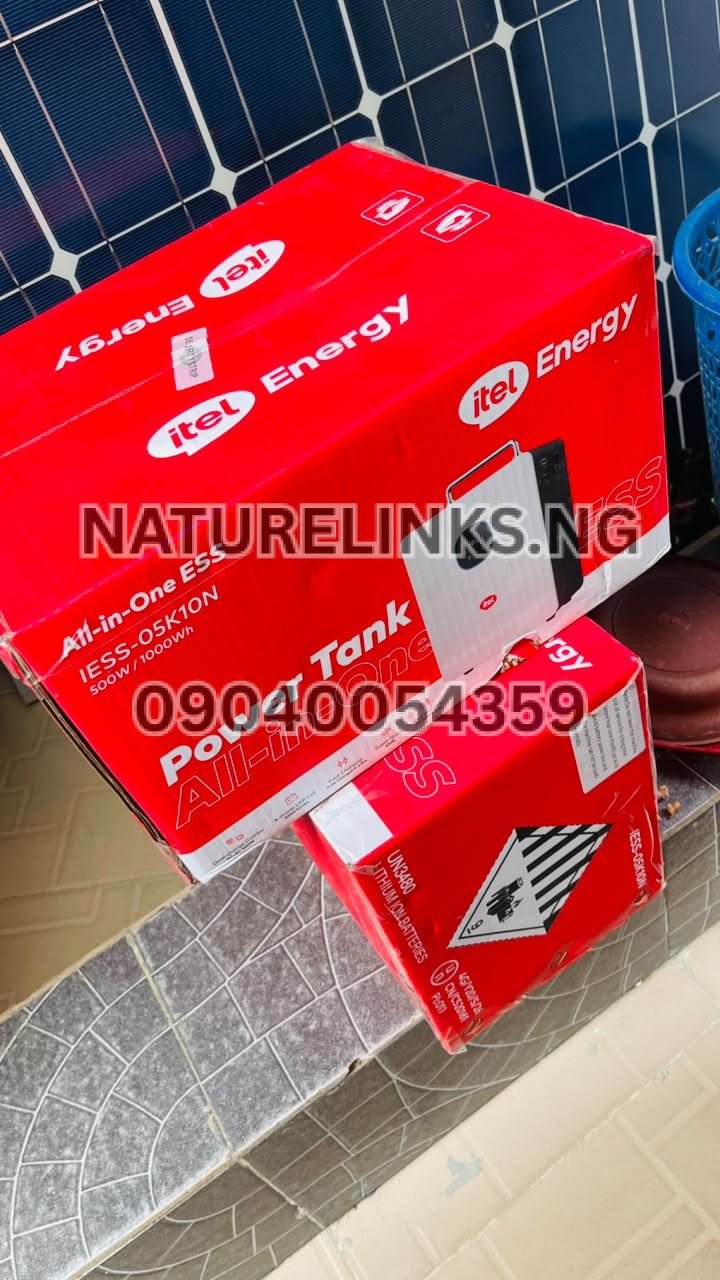
Important Buying Advice Before You Purchase Itel Power Tank
If your main reason for buying an Itel Power Tank is fast charging, do not look at charging time alone.
Check the entire system.
Battery capacity
A 1,000Wh battery provides a certain amount of stored energy. Larger batteries require more energy to replenish from empty.
Inverter capacity
The commonly listed IESS-05K10N has a 500W continuous inverter rating.
Solar input
The maximum PV input determines how much solar power the integrated charging system can accept.
Charging source
Determine whether you intend to use:
- NEPA/grid electricity
- Generator
- Solar panels
- AC + solar together
Appliance load
If you continue powering appliances during charging, the battery can take longer to reach 100%.
Exact model
This is particularly important because current Itel Power Tank products include configurations with different battery and inverter capacities. For example, the newer IESS-1K20N is listed with a 2,000Wh battery, 1,000W AC output and up to 1,200W PV input, which is substantially different from the IESS-05K10N 1,000Wh/500W configuration.
Therefore, always identify the model before applying charging-time information.
“How Long Does Power Tank Take to Charge Fully?” — Quick Answer
For the commonly sold Itel Power Tank IESS-05K10N 1,000Wh/500W configuration, approximately 2 hours is the frequently published full-charge figure under suitable fast-charging conditions.
Solar-only charging can take longer because solar output changes throughout the day. A compatible 400W-class solar input can provide strong charging performance under favourable conditions, but weather and system losses affect the actual result.
For another Power Tank model, the charging time may be different.
“How Long Does Power Tank Take to Charge Fully?” for Nigerian Buyers
For Nigerians looking for a rechargeable backup electricity solution, the Itel Power Tank provides several charging options depending on the configuration. The commonly listed 1,000Wh/500W version supports AC and solar charging and incorporates an MPPT controller for compatible solar input.
The main advantage of understanding the charging time before purchase is that you can plan how the system fits into your daily electricity routine.
For example, a user can recharge through grid electricity when available and use solar charging as an alternative when suitable sunlight is available.
The right charging arrangement depends on the user’s electricity availability, solar resources, appliance load and budget.
Conclusion
If you are asking “How Long Does Power Tank Take to Charge Fully?”, the commonly advertised Itel Power Tank IESS-05K10N 1,000Wh/500W can reach full charge in approximately 2 hours under suitable fast-charging conditions.
However, charging time is not identical in every situation. AC charging, solar-only charging and dual charging can produce different results, while sunlight, panel capacity, battery percentage, temperature, connected appliances and the exact model can all affect charging performance.
For genuine Itel Power Tank products and assistance with selecting the appropriate model, solar panel and charging configuration in Nigeria, contact Nature Solar Global Limited / Nature Links Nigeria Limited [NatureLinks.NG] at 07049528019 or WhatsApp 09040054359, or visit F1571 Upstairs (F-Line), Alaba International Market, Lagos State 🇳🇬.