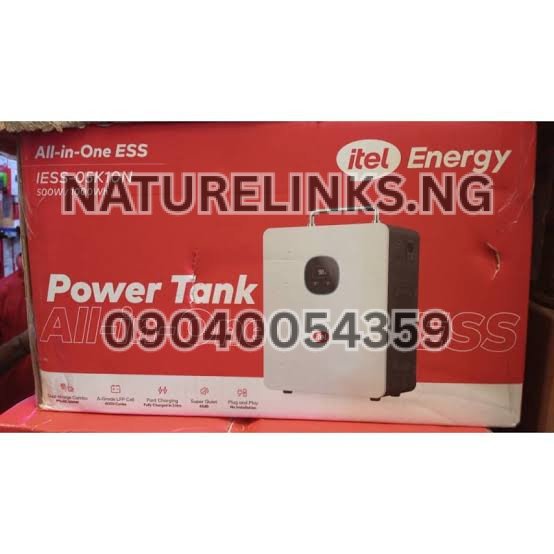
If you are searching for “How Long Does Power Tank Take to Charge With Solar?”, the answer depends mainly on the Power Tank battery capacity, solar-panel wattage, sunlight intensity, panel efficiency, battery state of charge, and the maximum solar-input rating of the particular model.
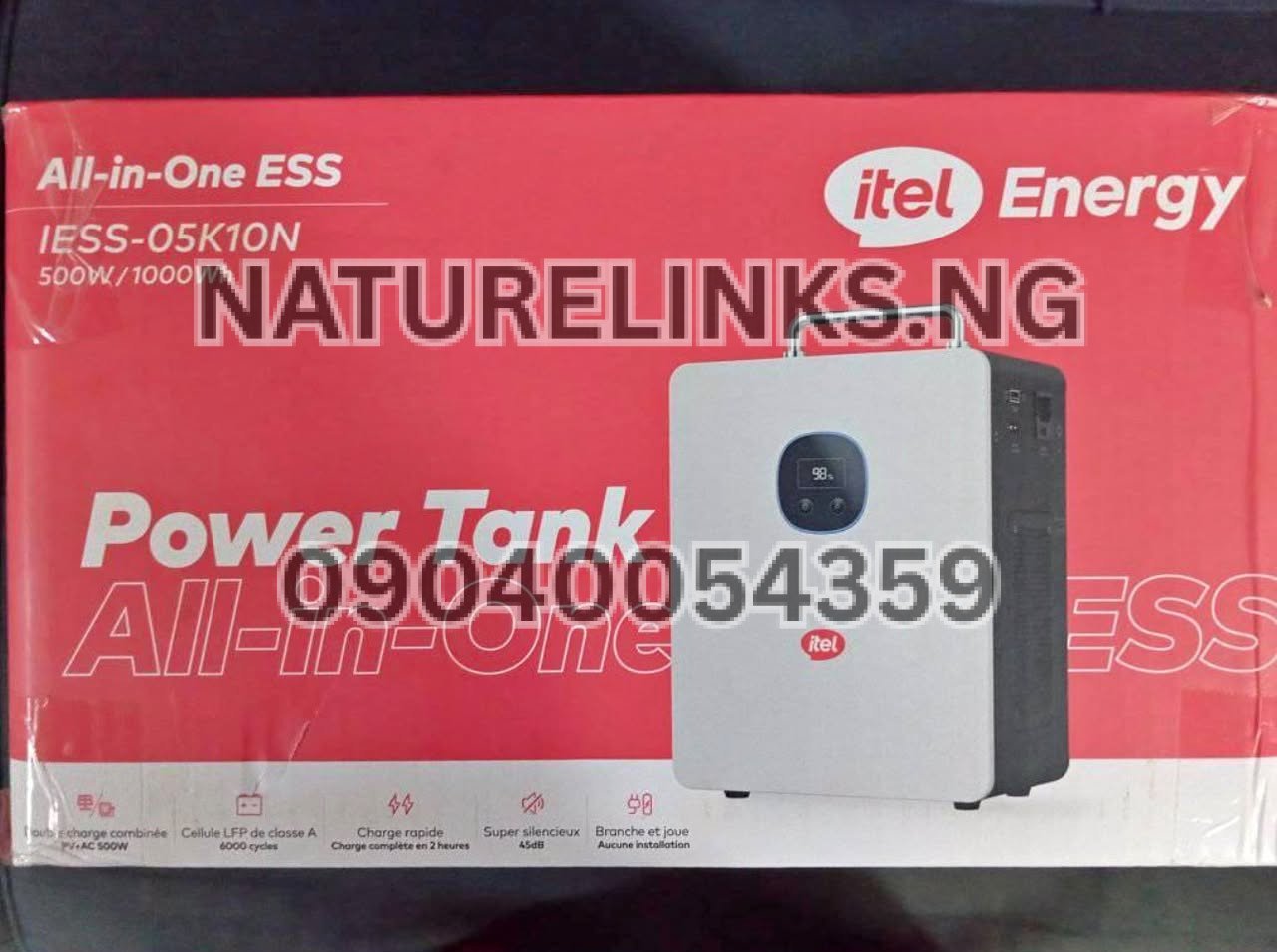
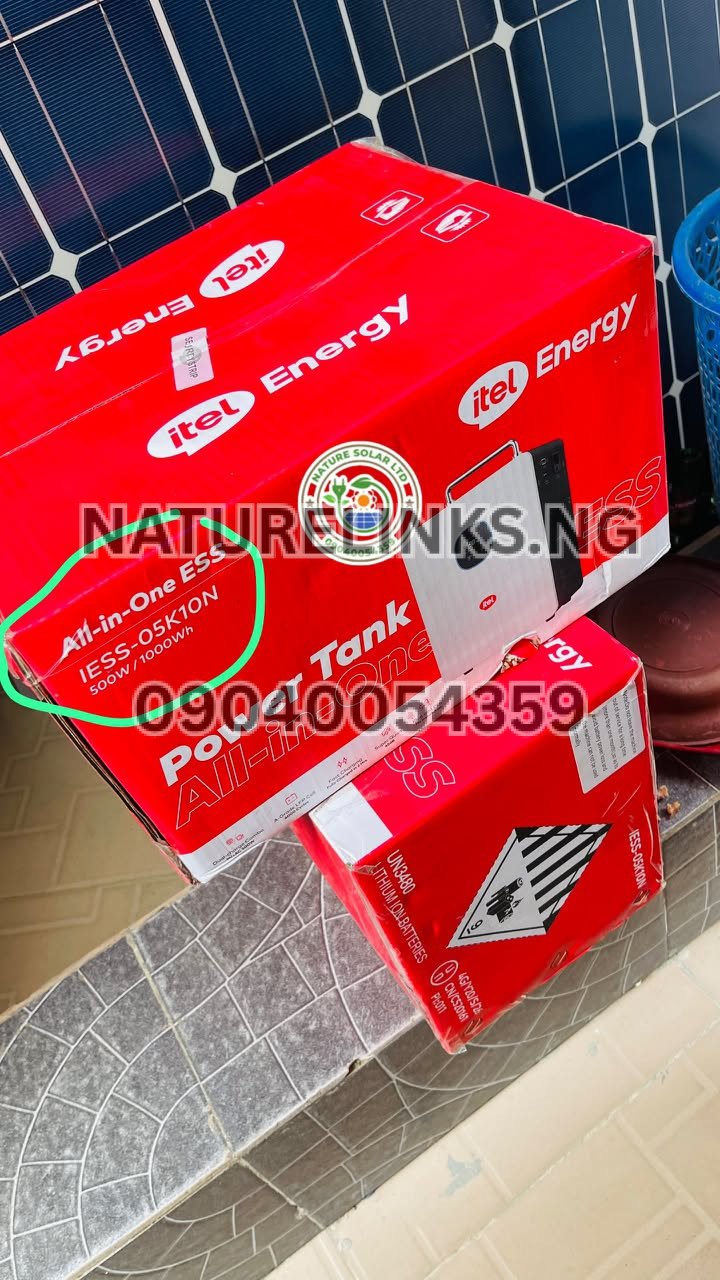
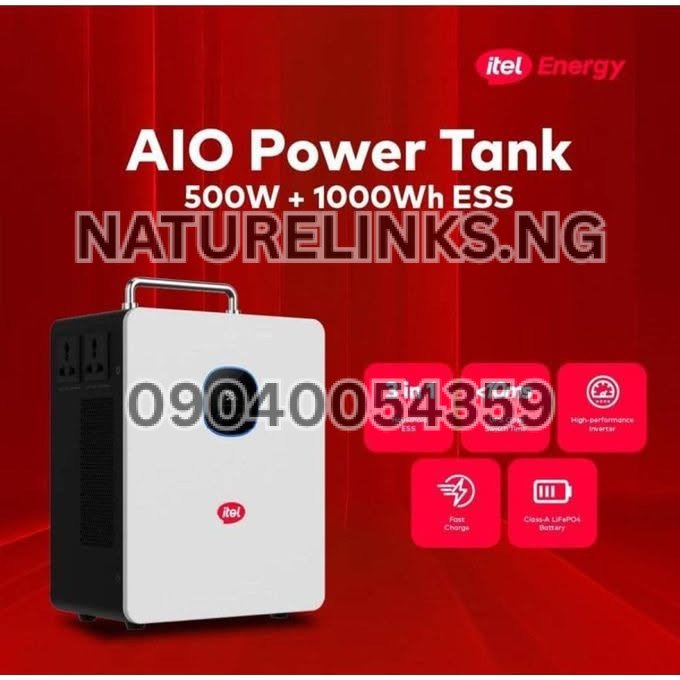
For the commonly listed Itel Power Tank 1000Wh/1kWh model, the documented configuration has a 1,000Wh LiFePO4 battery and up to 400W solar/PV input through its built-in MPPT controller.
Under good sunlight, a 400W solar setup can theoretically supply enough energy to recharge a 1,000Wh battery in roughly 2.5 hours, but real-world charging takes longer because solar output is not constant throughout the day and there are charging and conversion losses.
How Long Does Itel Power Tank Take to Charge With Solar?
“How Long Does Power Tank Take to Charge With Solar?” is one of the important questions Nigerian buyers should ask before purchasing a solar panel.
For a 1,000Wh Itel Power Tank using a compatible solar input of up to 400W:
- 400W solar input: theoretical minimum around 2.5 hours
- 300W effective input: roughly 3.3 hours theoretically
- 200W effective input: roughly 5 hours theoretically
- 100W effective input: roughly 10 hours theoretically
These are energy calculations rather than guaranteed charging times. Actual charging can be longer because the solar panel rarely produces its rated wattage continuously.
A Nigerian listing specifically estimates approximately 3–4 hours under ideal conditions with a quality 400W solar panel, while noting that sunlight, weather, battery level, cable quality and panel efficiency affect the result.
What Solar Panel Wattage Does Itel Power Tank Support?
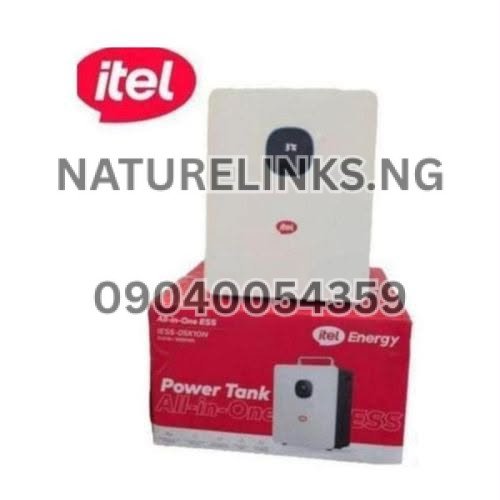
The commonly documented Itel Power Tank IESS-05K10N configuration supports up to 400W PV/solar input, with an MPPT solar controller and a stated solar-input voltage range of approximately 11–60V.
This is important because buying a very large solar panel does not necessarily mean the Power Tank will charge faster.
The solar input must remain within the Power Tank’s specified voltage and power limits.
Recommended Solar Setup
For the commonly listed 1,000Wh model, buyers may consider:
| Solar Panel | Approximate theoretical charging time* |
|---|---|
| 100W | 10 hours |
| 150W | 6.7 hours |
| 200W | 5 hours |
| 300W | 3.3 hours |
| 400W | 2.5 hours |
*Calculated from 1,000Wh ÷ panel wattage and therefore not a guaranteed real-world charging time.
A 400W-capable solar setup is particularly relevant because the documented Power Tank configuration accepts up to 400W of solar input.
How Many Hours of Sunlight Does Itel Power Tank Need?
The number of hours of sunlight is different from the number of hours of charging.
A solar panel rated at 400W does not normally produce exactly 400W from morning until evening. Its output changes with:
- Sun intensity
- Cloud cover
- Panel orientation
- Shading
- Temperature
- Dust and dirt
- Cable losses
- Solar-panel efficiency
- Battery charge level
- MPPT operating conditions
Consequently, a 400W panel might have a theoretical 2.5-hour energy calculation for 1,000Wh, but a practical charging session can require considerably longer.
For Nigerian users, the strongest solar production generally occurs around the middle of the day, but weather and location can significantly affect actual production.
Can a 400W Solar Panel Fully Charge Itel Power Tank?
Yes, a compatible 400W solar arrangement can be used with the commonly documented 1,000Wh Itel Power Tank configuration because its listed maximum PV input is up to 400W.
The important word is compatible.
Before connecting a panel, check:
- Maximum PV wattage
- Solar-input voltage range
- Connector type
- Polarity
- Cable specification
- Panel configuration
- Manufacturer’s instructions
Do not connect a solar panel simply because its wattage appears suitable. Voltage must also remain within the Power Tank’s permitted range.
Can I Use a 450W Solar Panel With Itel Power Tank?
This requires caution.
Some Nigerian solar sellers recommend 450W panels for Itel Power Tank installations, and online guidance has specifically mentioned 450W Longi panels.
However, the commonly documented 1,000Wh IESS-05K10N specification lists up to 400W PV input.
Therefore, you should not assume that a 450W panel can deliver 450W into the Power Tank. The Power Tank’s input controller may limit the actual charging power, and the panel’s voltage must also be within the permitted range.
For a particular 450W panel installation, confirm the exact Power Tank model and electrical specifications before connecting it.
Is 500W Solar Panel Too Much for Itel Power Tank?
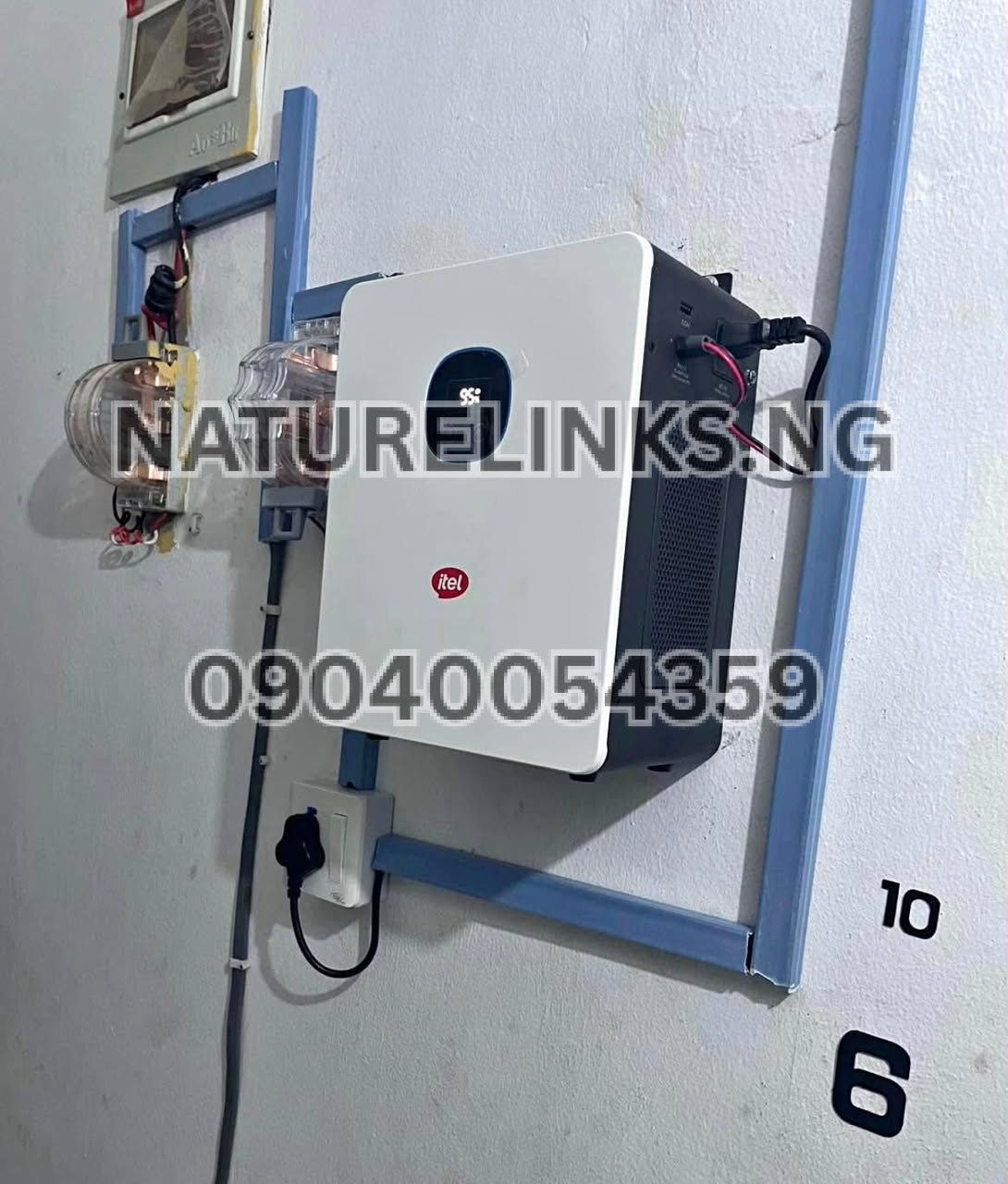
For the commonly listed 1,000Wh model, the documented maximum PV input is 400W, so a 500W panel should not simply be connected without confirming compatibility.
The Power Tank’s solar-input rating is separate from its AC output rating.
For example:
- Battery capacity: 1,000Wh
- AC inverter output: 500W
- Maximum documented PV input: 400W
These numbers describe different parts of the system.
Why Does My Power Tank Take Longer to Charge With Solar?
There are several reasons.
1. Weak Sunlight
Cloudy or rainy weather reduces solar production.
2. Panel Shading
A tree, building, roof structure or even partial obstruction can substantially reduce panel output.
3. Panel Does Not Produce Its Rated Wattage
A panel marked 400W does not necessarily produce 400W continuously.
4. Dirty Solar Panel
Dust can reduce the amount of sunlight reaching the photovoltaic cells.
5. Incorrect Panel Voltage
A panel outside the Power Tank’s accepted voltage range may not charge correctly and can potentially cause a protection condition.
6. Poor Cable or Connection
Loose, damaged or unsuitable cables can reduce charging performance.
7. Battery Is Nearly Full
Charging behaviour can change as the battery approaches full capacity.
8. Temperature
High temperatures can affect solar-panel performance and system efficiency.

Does Solar Charge Faster Than AC Charging?
It depends on the charging method and the actual input power.
Solar charging speed depends on the power being delivered by the panels at that moment. AC/grid charging depends on the Power Tank’s AC charging circuitry and available mains power.
Therefore, saying that solar is always faster—or that AC is always faster—would be inaccurate without knowing the exact model and charging conditions.
The Itel Power Tank configuration documented in Nigerian listings supports both solar and AC/grid charging.
Can Itel Power Tank Charge While Being Used?
The Itel Power Tank is described in available product information as supporting pass-through operation, allowing compatible loads to operate while the unit is charging.
However, there is an important practical consideration.
If your appliances are consuming almost as much power as the solar panels are supplying, the battery may charge very slowly—or the battery percentage may remain almost unchanged.
For example:
Solar input = 300W
Appliances consuming = 250W
Only about 50W is theoretically left for battery charging before system losses.
Therefore, charging time can increase substantially when appliances are running simultaneously.
How Long Will a 200W Solar Panel Take to Charge a 1kWh Power Tank?
A simple theoretical calculation is:
1,000Wh ÷ 200W = 5 hours
Therefore, a 200W panel would theoretically need approximately 5 hours at a constant 200W output.
In actual operation, expect more time because the panel’s output changes throughout the day.
This makes a 200W panel potentially useful for slower charging, but a higher compatible solar input can reduce charging time.
How Long Will a 300W Solar Panel Take to Charge Power Tank?
The theoretical calculation is:
1,000Wh ÷ 300W = 3.33 hours
So approximately 3 hours 20 minutes at a constant 300W.
In real Nigerian conditions, the charging session can be longer because the panel will not necessarily produce 300W continuously.
How Long Will a 400W Solar Panel Take to Charge Power Tank?
For a 1,000Wh battery:
1,000Wh ÷ 400W = 2.5 hours
That is approximately 2 hours 30 minutes theoretically.
However, a practical estimate should allow additional time for charging losses and changing solar conditions. A Nigerian Itel Power Tank guide gives approximately 3–4 hours under ideal sunlight conditions for a quality 400W panel.
Therefore, 3–4 hours in favourable conditions is a more useful practical reference than assuming exactly 2.5 hours.
What Is the Best Solar Panel for Itel Power Tank?
For the commonly documented 1,000Wh model, the key issue is not simply buying the panel with the highest wattage.
The panel should have:
- Compatible voltage
- Compatible connectors
- Appropriate wattage
- Good efficiency
- Quality construction
- Reliable warranty
- Correct installation
- Adequate cable size
Some Nigerian product guidance recommends 450W Longi or 500W monocrystalline panels, but the documented Power Tank configuration itself lists up to 400W PV input.
Consequently, buyers should verify the exact panel and Power Tank combination before installation.
Itel Power Tank 1000Wh Solar Charging Specifications
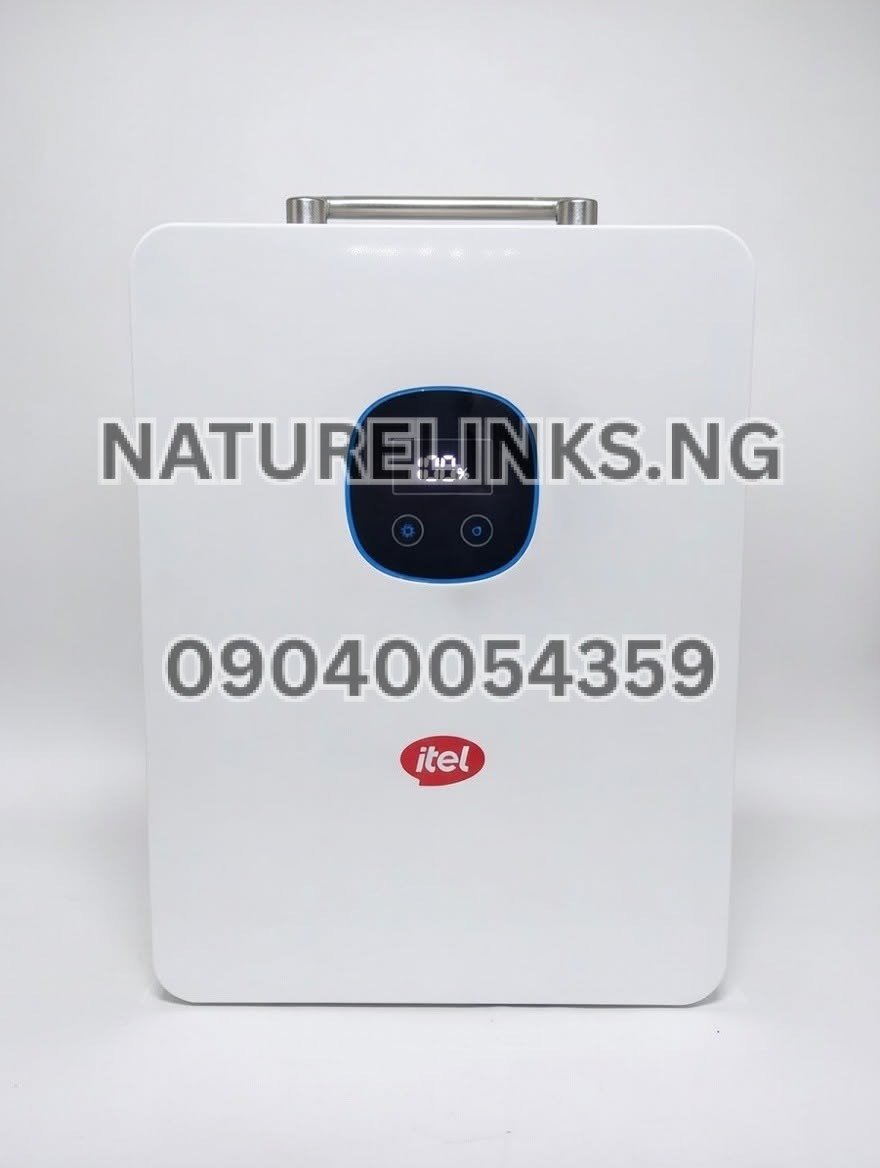
The commonly listed IESS-05K10N configuration includes the following:
| Specification | Details |
|---|---|
| Battery capacity | 1,000Wh / 1kWh |
| Battery type | LiFePO4 |
| AC output | 500W continuous |
| Solar input | Up to 400W |
| Solar controller | MPPT |
| PV voltage range | Approximately 11–60V |
| AC charging | Yes |
| Solar charging | Yes |
| AC output voltage | 230V |
| Battery cycle rating | Up to approximately 6,000 cycles under specified conditions |
| UPS switching | Approximately ≤20ms on documented configuration |
These specifications are based on currently available Nigerian product listings and should be checked against the exact unit’s supplied datasheet because specifications can vary by model or regional configuration.
What Does 1,000Wh Mean on Itel Power Tank?
The 1,000Wh figure represents stored energy capacity.
It does not mean the Power Tank can continuously supply 1,000W to appliances.
The commonly documented model has a 500W continuous AC output.
For example, theoretically:
- 100W load → about 10 hours from 1,000Wh before losses
- 200W load → about 5 hours before losses
- 500W load → about 2 hours before losses
Actual runtime will be shorter because of inverter losses, battery-management limits and the characteristics of the connected equipment.
How Much Solar Energy Does a Power Tank Need?
A 1,000Wh battery theoretically stores 1kWh of energy.
To put approximately 1,000Wh back into the battery, the solar system generally needs to produce more than 1,000Wh because charging involves system losses.
This is why the calculation:
1,000Wh ÷ 400W = 2.5 hours
should be regarded as a theoretical baseline rather than a guaranteed charging time.
Does Cloudy Weather Affect Power Tank Solar Charging?
Yes.
Solar panels can still generate electricity under cloudy conditions, but their output generally falls compared with strong direct sunlight.
Consequently, an Itel Power Tank that might charge relatively quickly during strong sunlight can take much longer during:
- Heavy cloud
- Rain
- Harmattan haze
- Early morning
- Late afternoon
- Shaded conditions
This is particularly important when estimating whether the Power Tank will reach 100% on a particular day.
How Can I Make My Itel Power Tank Charge Faster With Solar?
To improve solar charging performance:
Use a compatible high-wattage panel
For the commonly documented configuration, solar input can reach up to 400W.
Position the panel correctly
Keep the panel exposed to direct sunlight and avoid shading.
Keep the panel clean
Dust and dirt can reduce solar production.
Use appropriate cables
Long or undersized cables can introduce losses.
Avoid unnecessary loads while charging
Running several appliances simultaneously can reduce the net power going into the battery.
Check the solar input specifications
Never exceed the Power Tank’s specified PV voltage and power limits.
Buy genuine equipment
A genuine Power Tank and quality solar panel can provide more predictable performance than unidentified or incorrectly specified products.
Can I Charge Power Tank With Solar and Electricity?
The commonly listed Itel Power Tank supports solar and AC/grid charging.
This gives Nigerian users flexibility when sunlight is poor or when the battery needs to be replenished from the electricity grid.
However, whether solar and AC can be connected simultaneously for a particular charging mode should be confirmed from the exact model’s instructions rather than assumed.
Is Itel Power Tank Good for Solar Backup in Nigeria?
The 1,000Wh Power Tank is designed as a portable energy-storage system with LiFePO4 battery technology, a built-in inverter and MPPT solar charging.
Its suitability depends on the appliances you want to operate.
It can be useful for compatible loads such as:
- LED lighting
- Wi-Fi routers
- Phones
- Laptops
- Television
- Small fans
- CCTV equipment
- Other electronics within its output rating
The commonly documented configuration has a 500W continuous AC output, so high-power appliances should be checked carefully before connection.
Where to Buy Genuine Itel Power Tank and Solar Panels in Nigeria?
For buyers searching for an Itel Power Tank, solar panel, portable power station, LiFePO4 battery or solar backup system in Nigeria, the supplied distributor information is:
Best Seller: Nature Links Nigeria Limited [NatureLinks.NG]
Distributor: Nature Solar Global Limited
Accredited Distributor in Nigeria: Nature Solar Global Limited
CEO: Mr. Joseph Chikeleze
Call: 07049528019
WhatsApp: 09040054359
Shop Address: F1571 Upstairs (F-Line), Alaba International Market, Lagos State 🇳🇬
Customers can contact the seller to confirm the current Power Tank model, solar-panel compatibility, available wattage, package contents, warranty and current price before payment.
Itel Power Tank Solar Charging Buying Guide
Before purchasing a solar panel for your Power Tank, use this checklist:
1. Confirm the Power Tank model.
Do not rely solely on the product name.
2. Check maximum PV input.
The commonly listed 1,000Wh model supports up to 400W PV input.
3. Check voltage.
The panel’s operating and open-circuit voltage must be compatible with the Power Tank.
4. Check connectors.
Make sure the solar cable and connectors are suitable.
5. Consider your location.
Solar production varies with weather and installation conditions.
6. Consider your daily energy needs.
If you need frequent fast recharging, a higher compatible solar input is more useful than a very small panel.
7. Ask for the datasheet.
A reputable seller should be able to identify the exact model and compatible charging specifications.
10 Frequently Asked Questions About Itel Power Tank Solar Charging
1. How long does Itel Power Tank take to charge with solar?
For the commonly documented 1,000Wh model using up to 400W of solar input, the theoretical calculation is approximately 2.5 hours. In practical conditions, charging can take around 3–4 hours or longer, depending on sunlight and system losses.
2. Can a 400W solar panel charge Itel Power Tank?
Yes, a compatible 400W solar setup corresponds to the documented maximum PV input of the commonly listed 1,000Wh configuration. Always check the panel voltage and connector specifications before connecting it.
3. Can I use a 200W solar panel with Itel Power Tank?
A 200W panel can provide solar charging if its electrical specifications are compatible. However, charging will be considerably slower than using the maximum compatible PV input.
4. Can I use a 300W solar panel?
A compatible 300W panel can provide substantially faster charging than a 100W or 200W panel. The theoretical energy calculation for a 1,000Wh battery is approximately 3.3 hours at a constant 300W.
5. Can I use a 500W solar panel?
Do not assume that a 500W panel is automatically compatible. The commonly documented Power Tank configuration specifies up to 400W PV input, so the exact panel and Power Tank specifications should be verified before installation.
6. Why is my Power Tank charging slowly with solar?
Common reasons include weak sunlight, clouds, shading, dirty panels, unsuitable cables, low panel output, battery conditions and an incompatible solar configuration.
7. Can Power Tank charge when the weather is cloudy?
Yes, solar panels can still produce electricity in cloudy weather, but their output is normally lower than under strong direct sunlight. As a result, charging may take longer.
8. Does Itel Power Tank have MPPT solar charging?
Yes. The commonly documented 1,000Wh configuration includes a built-in MPPT solar charge controller.
9. Can I use Power Tank while it is charging from solar?
Available Nigerian product guidance describes the Power Tank as supporting pass-through charging. However, the appliances connected should remain within the unit’s output limits.
10. Where can I buy an Itel Power Tank solar panel in Nigeria?
Buyers can contact Nature Links Nigeria Limited / Nature Solar Global Limited at 07049528019 or WhatsApp 09040054359 to confirm available Power Tank units, compatible solar panels, accessories, prices and current stock.
Important Difference Between Charging Time and Solar Panel Wattage
A common mistake is assuming that a 400W solar panel will continuously deliver 400W.
For example:
Battery: 1,000Wh
Panel: 400W
Mathematical calculation: 1,000 ÷ 400 = 2.5 hours
This calculation assumes:
- Constant 400W production
- No charging losses
- No conversion losses
- No temperature effects
- No shading
- Perfect charging efficiency
Real solar systems do not operate under those conditions continuously.
Therefore, the practical charging period can be longer. This distinction is important when planning solar backup in Nigeria.
1000Wh Power Tank Solar Charging Example
Suppose your Itel Power Tank is at 20% battery.
A 1,000Wh battery at 20% has approximately 200Wh remaining, meaning approximately 800Wh needs to be replenished before reaching 100%, subject to charging losses and battery-management behaviour.
With a theoretical 400W solar input:
800Wh ÷ 400W = 2 hours
Again, this is a mathematical estimate rather than a guaranteed two-hour charging time.
If clouds reduce the average solar output to 200W:
800Wh ÷ 200W = 4 hours
This illustrates why the same Power Tank can charge at different speeds on different days.
Why the Same Solar Panel Can Charge at Different Speeds
Solar charging is dynamic.
At 11 a.m. on a clear day, a panel may produce significantly more power than it does at 7 a.m. or late afternoon.
Similarly, a panel producing strongly under direct sunlight can produce substantially less when covered by clouds.
This means that “How Long Does Power Tank Take to Charge With Solar?” does not have one fixed answer for every Nigerian household.
The most accurate estimate requires:
- Exact Power Tank model
- Battery percentage
- Solar-panel wattage
- Panel voltage
- Weather
- Location
- Panel orientation
- Shading
- Cable quality
- Current appliance load
Conclusion
The answer to “How Long Does Power Tank Take to Charge With Solar?” depends on the Power Tank model, solar-panel wattage, sunlight and charging conditions. For the commonly documented Itel Power Tank 1000Wh, the system supports up to 400W of PV input, making 400W a useful reference point for fast compatible solar charging.
Although the mathematical charging time at a constant 400W is about 2.5 hours, real-world charging can take approximately 3–4 hours or longer, depending on sunlight, panel performance, temperature, shading, cables, battery condition and other losses.
For Nigerians buying an Itel Power Tank or compatible solar panel, always confirm the exact model, PV voltage range, maximum solar input, connector type and warranty before installation. For availability and current product information, contact Nature Links Nigeria Limited / Nature Solar Global Limited, Call 07049528019, WhatsApp 09040054359, or visit F1571 Upstairs (F-Line), Alaba International Market, Lagos State 🇳🇬.