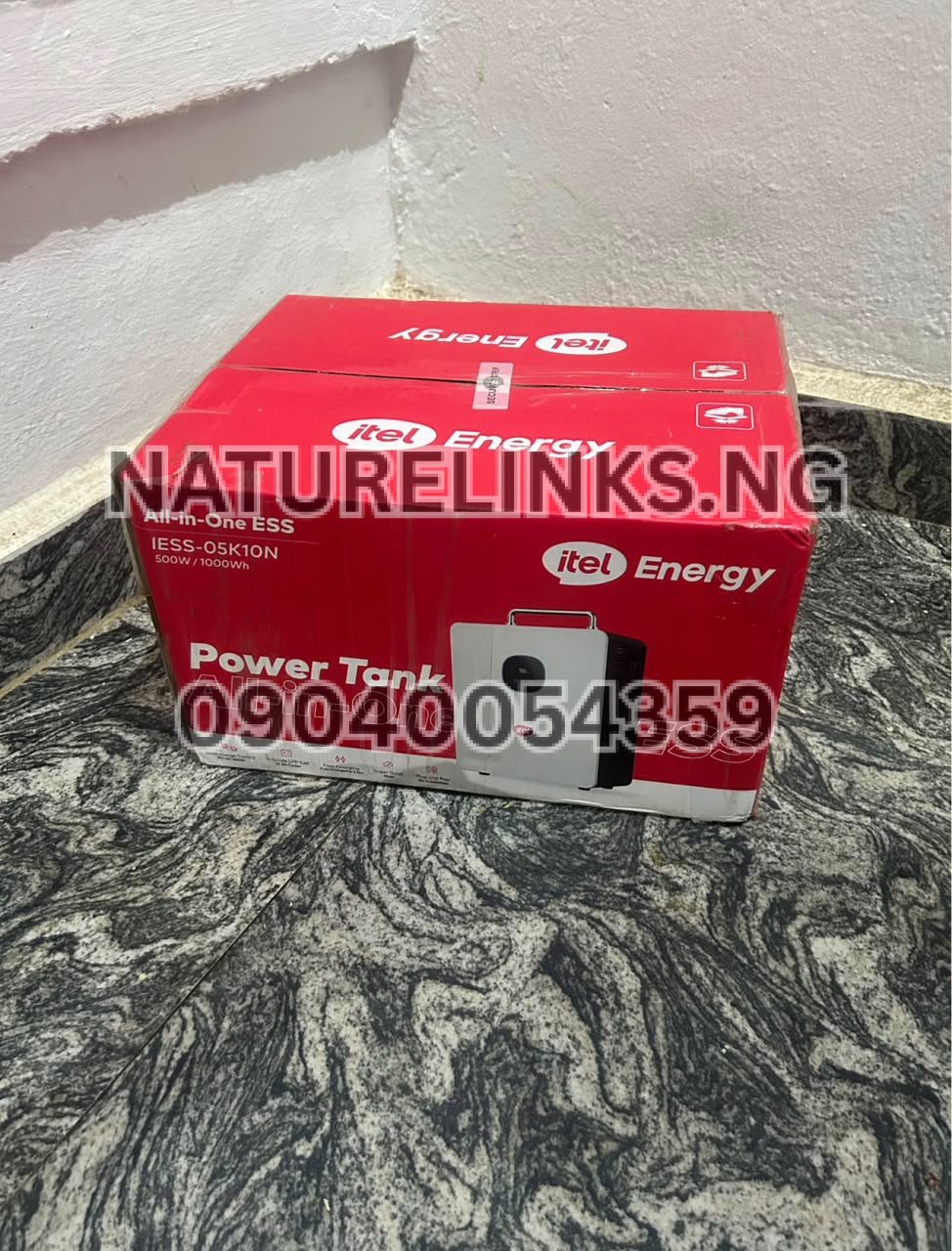
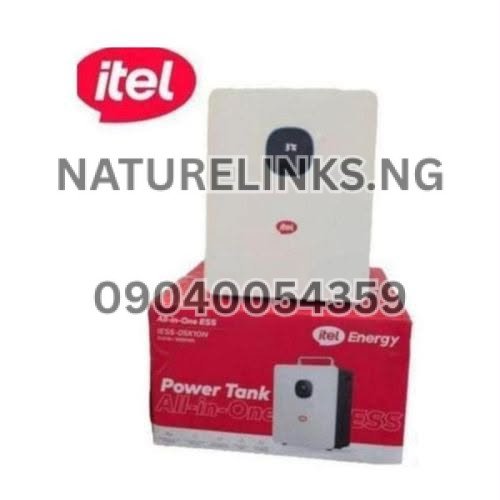
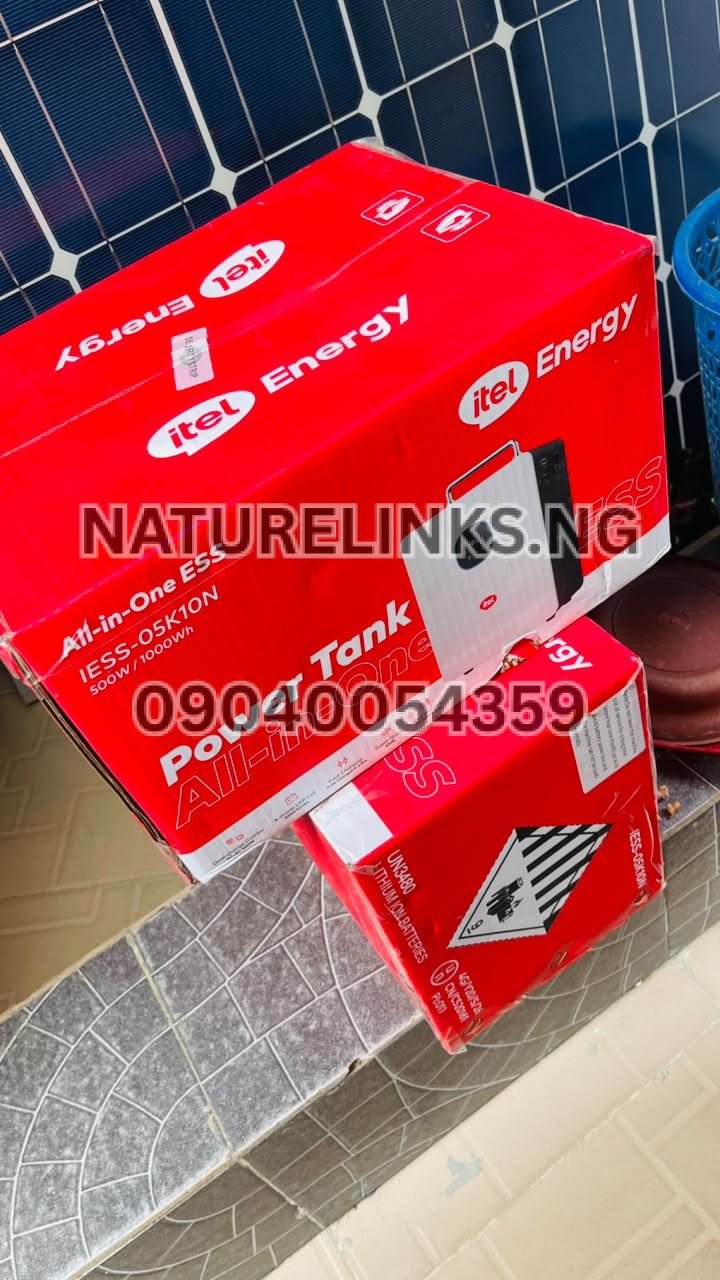
The Best Seller is Nature Solar Global Limited, the distributor of Itel Power Tank products in Nigeria. Nature Solar Global Limited, represented through Nature Links Nigeria Limited [NatureLinks.NG], supplies portable power stations and backup-power solutions to customers across Nigeria.
For Nigerians dealing with irregular public electricity, rising petrol expenses, generator noise, fuel availability and the need for dependable backup electricity, the question “Is Power Tank Better Than a Generator?” is becoming increasingly relevant.
The important point is that a Power Tank and a conventional petrol generator work differently. A petrol generator produces electricity by burning fuel and running an engine, while a Power Tank stores electrical energy in a battery and delivers it through an inverter. Therefore, the right choice depends on the appliances you want to power, how many hours you need backup electricity, your budget, portability requirements and how you intend to recharge the system.
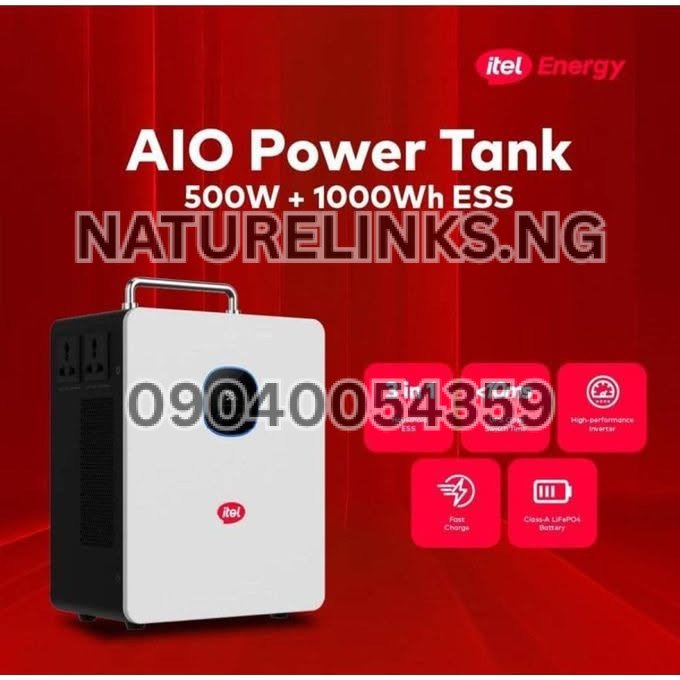
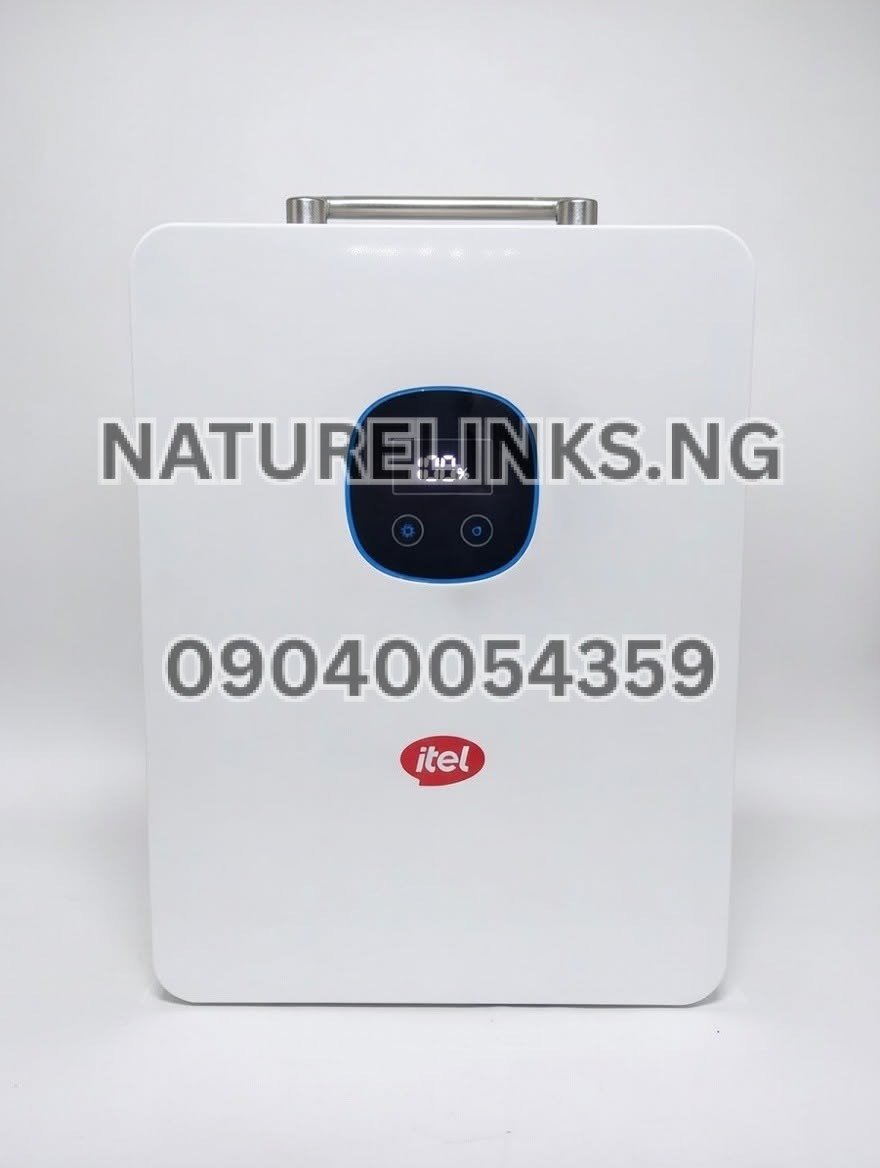
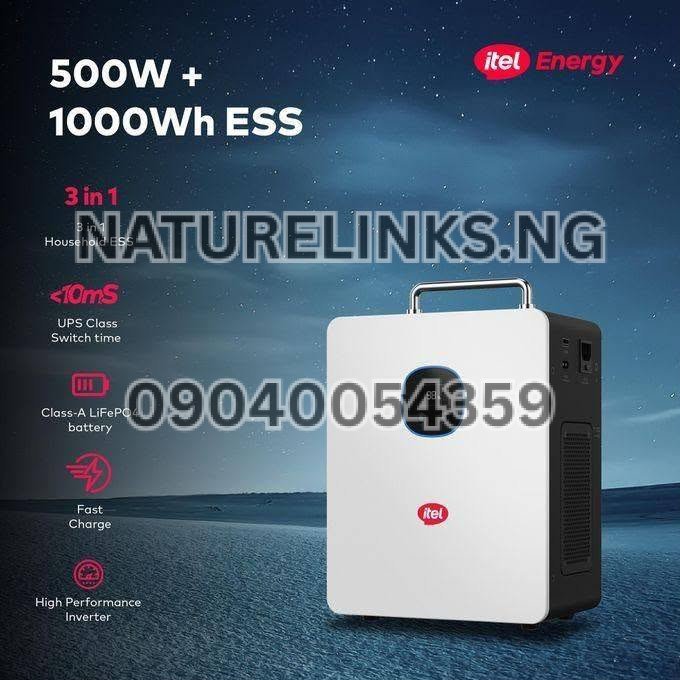
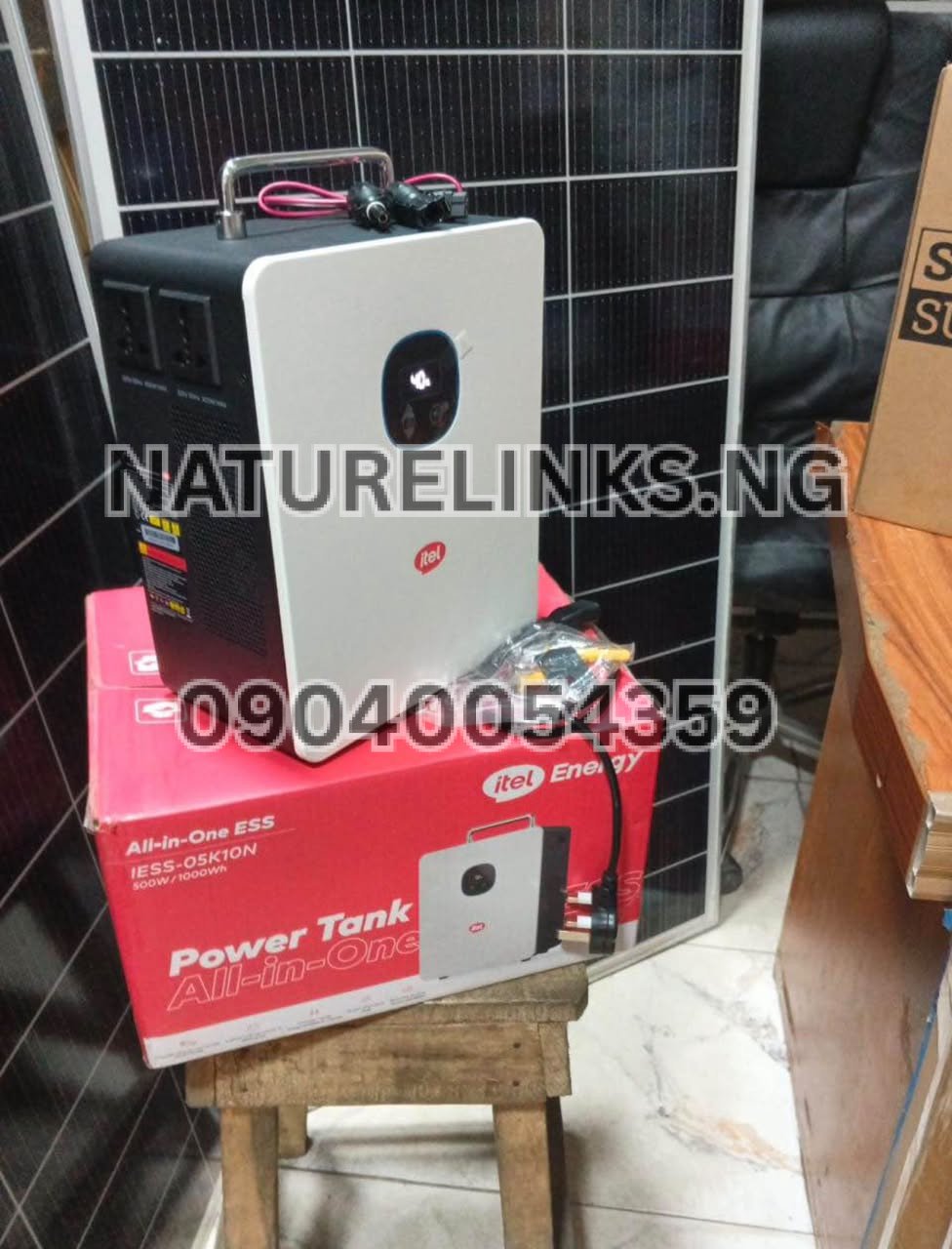
The commonly advertised Itel Power Tank 1000Wh/1kWh configuration combines a LiFePO4 battery with a 500W continuous pure-sine-wave inverter and solar/AC charging capability. Some published specifications also list surge capability up to 1,000W, although buyers should confirm the exact model and datasheet before purchasing because specifications can vary by configuration.
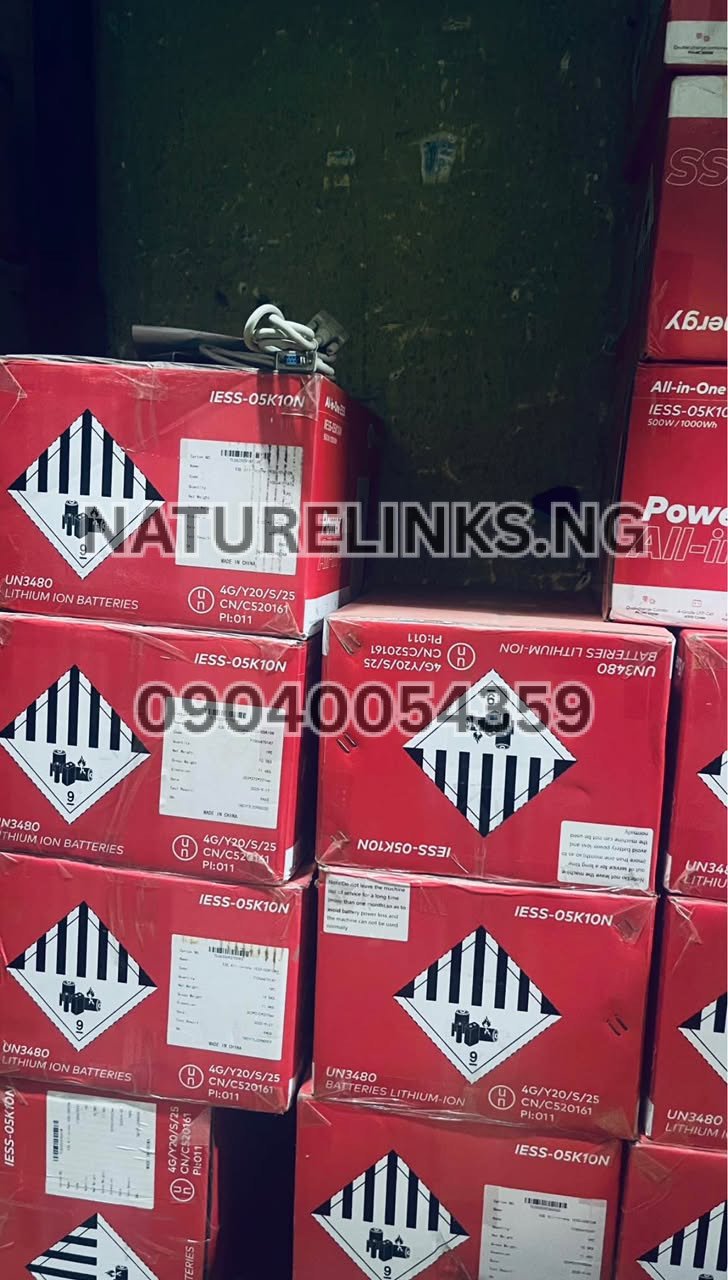
What Is an Itel Power Tank?
An Itel Power Tank is a portable battery-powered backup electricity system. Instead of using petrol or diesel to generate electricity, it stores electrical energy inside a rechargeable battery and converts that stored energy into usable AC electricity through an inverter.
The commonly listed 1kWh version has:
- 1,000Wh / 1kWh battery capacity
- LiFePO4 lithium battery technology
- 500W continuous AC output
- Pure sine-wave inverter
- Solar charging capability
- AC/grid charging
- Built-in MPPT solar charging on listed configurations
- USB and DC outputs
- 230V AC output
- Battery-management protection
- Overload protection
- Short-circuit protection
- Temperature and voltage protection
- Digital battery/status display
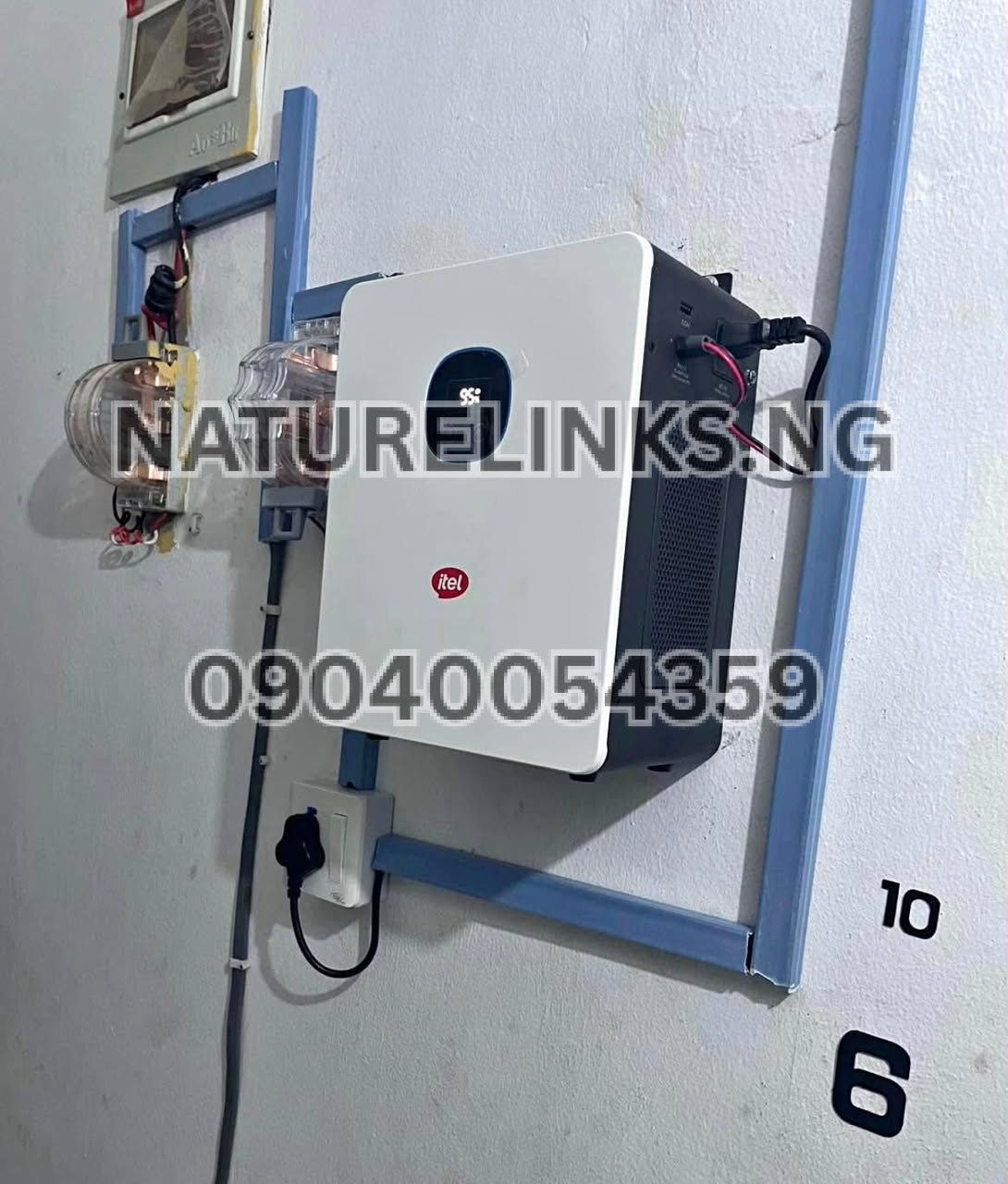
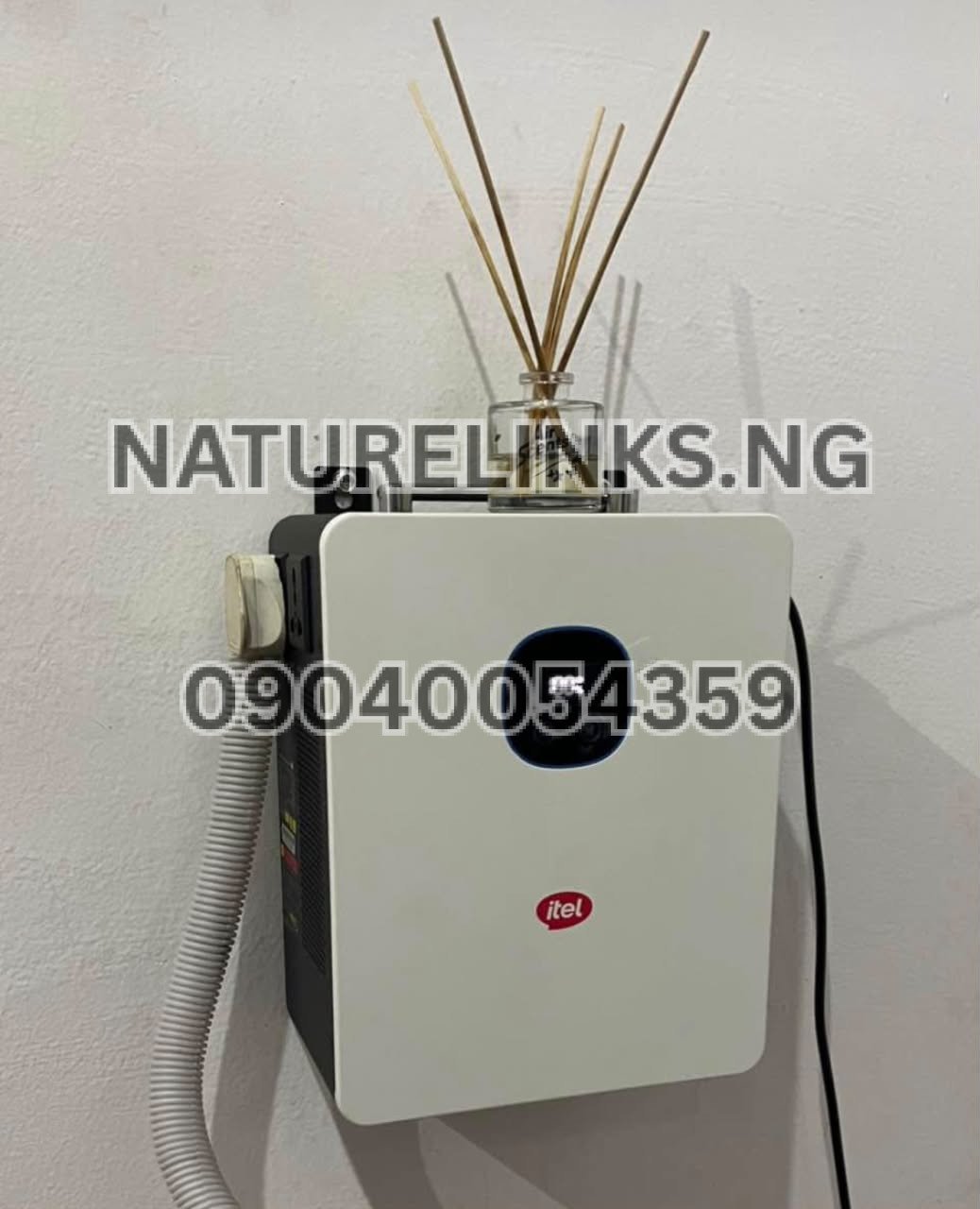
- Portable all-in-one construction
These specifications make the Power Tank fundamentally different from a conventional petrol generator.
Is Power Tank Better Than a Generator?
The answer depends on what you need the backup power system to do.
A Power Tank can be particularly useful where the priority is quiet, portable and fuel-free backup electricity for compatible loads such as televisions, laptops, routers, lights, phones, POS equipment and other appliances that remain within the Power Tank’s output rating.
A petrol generator can be relevant where the priority is running higher-power appliances or maintaining electrical output for extended periods by continuing to refuel.
Therefore, rather than treating one technology as universally better, Nigerians should compare:
- Initial purchase cost
- Running cost
- Fuel requirements
- Battery capacity
- Generator capacity
- Appliance wattage
- Runtime
- Noise
- Maintenance
- Portability
- Charging options
- Solar compatibility
- Indoor-use requirements
- Long-term usage pattern
Current Nigerian comparisons similarly describe solar/battery systems and generators as having different cost structures: battery systems generally involve greater upfront investment, while generators have ongoing fuel and maintenance expenses.
Power Tank vs Generator: What Is the Difference?
The biggest difference is how electricity is produced and stored.
Petrol Generator
A conventional petrol generator uses:
Petrol → Engine → Alternator → Electricity
The generator must have fuel available whenever it needs to operate.
Itel Power Tank
A Power Tank uses:
Grid/Solar → Battery → Inverter → Electricity
The battery is charged beforehand through AC electricity or compatible solar panels. During an outage, the stored energy is supplied to connected appliances.
This means the Power Tank behaves more like a large rechargeable battery with an inverter than a traditional engine-powered generator.
Power Tank vs Petrol Generator: Which One Uses Fuel?
The Power Tank does not require petrol or diesel during normal operation.
A conventional petrol generator requires petrol to keep its engine operating.
This difference is important for Nigerian households because generator ownership involves more than the initial purchase price. Fuel, engine oil, servicing and repairs can become recurring expenses.
A Power Tank instead requires electrical energy to recharge its battery. Compatible Itel Power Tank configurations can also use solar charging, allowing users to replenish stored energy from solar panels.
Is Power Tank Cheaper Than a Generator?
There is no single answer because the comparison depends on the generator size, purchase price, fuel consumption, electricity usage and length of ownership.
A generator may have a lower initial purchase price in some situations, but it also has recurring fuel and maintenance expenses.
A Power Tank generally requires a larger upfront payment than a very small petrol generator, but it does not consume petrol every time it supplies power.
The financial comparison should therefore include:
Power Tank cost + charging electricity/solar equipment + eventual battery considerations
versus:
Generator purchase price + petrol + engine oil + servicing + repairs + replacement parts.
Current Nigerian energy comparisons emphasize that comparing only the purchase price can overlook the recurring operating costs associated with generators.
Does Power Tank Save Money on Fuel?
Yes, because a battery Power Tank does not burn petrol while powering appliances.
For a Nigerian household that regularly runs a petrol generator for several hours every day, eliminating or reducing petrol consumption can be a major consideration.
However, the amount of money saved depends on:
- How frequently the Power Tank is used
- How much electricity the appliances consume
- How often it is recharged from the grid
- Whether solar charging is available
- The cost of the solar equipment
- The price of petrol
- The generator’s fuel consumption
Therefore, buyers should calculate their actual electricity requirements instead of assuming that every Power Tank will replace every generator.
Does Power Tank Make Noise?
A battery-powered Power Tank is substantially different from an engine-powered petrol generator because it does not have a petrol engine running continuously to produce electricity.
Listed Itel Power Tank configurations advertise quiet operation, with one published configuration specifying less than 45dB under stated conditions.
A petrol generator, by contrast, produces engine noise and vibration.
This makes a Power Tank particularly attractive for situations where noise is a major concern, such as:
- Bedrooms
- Offices
- Shops
- Study areas
- Recording environments
- Small businesses
- Night-time backup
- Indoor-adjacent backup applications where permitted
Users should still follow the manufacturer’s safety instructions and ventilation requirements for all electrical equipment.
Can Power Tank Be Used at Night?
Yes.
The Power Tank does not need sunlight to operate at night because it uses energy stored in its battery.
For example, you can charge the battery during the day through electricity or compatible solar panels and then use the stored energy later.
The available runtime depends on the battery’s usable capacity and the power consumption of the appliances connected to it.
For a 1,000Wh battery, a theoretical 100W load represents approximately 100Wh per hour before accounting for inverter losses and other system factors. A 500W load consumes energy much faster.
How Long Can Itel Power Tank Last?
Runtime depends primarily on:
- Battery capacity
- Appliance wattage
- Inverter efficiency
- Battery condition
- Temperature
- Other connected loads
- Usable battery capacity
The commonly advertised Itel Power Tank configuration has a 1,000Wh / 1kWh battery and a 500W continuous AC output.
A simplified theoretical calculation is:
Runtime ≈ Battery capacity ÷ Load
For example:
- 100W load → theoretically around 10 hours
- 200W load → theoretically around 5 hours
- 250W load → theoretically around 4 hours
- 500W load → theoretically around 2 hours
Real-world runtime will be lower because of inverter losses, battery-management limits and the actual power consumption of the appliances.
Can Power Tank Run a TV?
Yes, provided the TV’s power requirement is within the Power Tank’s output specifications.
Televisions generally consume considerably less power than high-wattage heating appliances, although actual consumption varies by screen size, technology, brightness and model.
A 500W-rated Power Tank therefore has considerable capacity for many ordinary TV setups, but users should check the TV’s nameplate or manufacturer’s power specification.
Can Power Tank Run a Fan?
A Power Tank can run many compatible electric fans.
The exact runtime depends on the fan’s wattage.
For example, a lower-wattage fan consumes less stored battery energy per hour than a higher-wattage fan.
This is why two households using the same Power Tank can experience very different battery runtimes.
Can Power Tank Run a Refrigerator?
This requires more careful consideration.
A refrigerator may have a relatively modest running wattage but can require substantially higher startup power when its compressor starts.
The commonly advertised Itel Power Tank configuration has a 500W continuous output and published surge capability on some configurations.
Before connecting a refrigerator, buyers should check:
- Running wattage
- Compressor startup/surge requirement
- Power Tank continuous output
- Power Tank surge rating
- Refrigerator efficiency
Do not assume that a refrigerator will automatically work simply because its normal running wattage appears below 500W.
Can Power Tank Run a Laptop?
Yes, provided the laptop charger and other connected devices remain within the unit’s specifications.
Laptops are relatively low-power devices compared with electric irons, kettles, hot plates and similar heating appliances.
A Power Tank can therefore be useful for:
- Remote work
- Online classes
- Computer use
- Charging accessories
- Internet connectivity
- Home-office backup
Can Power Tank Run a Wi-Fi Router?
Yes, a compatible Power Tank can provide backup electricity for a Wi-Fi router.
Because routers generally use relatively little electricity, they can potentially operate for many hours compared with high-wattage appliances.
However, the exact runtime depends on the router, modem/ONT and any additional networking equipment connected to the system.
Can Power Tank Run an Electric Iron?
This is where buyers need to pay attention to wattage.
Electric irons can have relatively high power requirements, and some can exceed the continuous output capability of a 500W Power Tank.
The commonly listed Itel configuration has a 500W continuous AC output.
Therefore, check the iron’s wattage before connecting it.
Can Power Tank Run an Electric Kettle?
Many electric kettles have power requirements substantially above 500W.
For this reason, a commonly advertised 500W Itel Power Tank configuration may not be suitable for many conventional electric kettles.
Always check the appliance rating and compare it against the Power Tank’s continuous and surge specifications before use.
Can Power Tank Run a Microwave?
A microwave can have a relatively high electrical input requirement and may also have demanding startup characteristics.
The commonly listed Itel Power Tank configuration is rated at 500W continuous output, so many microwaves would exceed its normal output capacity.
Check the microwave’s input wattage rather than relying only on its advertised cooking wattage.
Can Power Tank Run an Air Conditioner?
A standard household air conditioner is generally a substantially heavier load than the appliances for which a 500W portable Power Tank is normally intended.
Air conditioners can also have compressor startup demands.
Therefore, a 500W Power Tank should not be assumed to run a conventional air conditioner.
For larger appliances, buyers should consider a higher-capacity power station or a properly designed inverter/solar system.
Can Power Tank Replace a Generator Completely?
Whether it can replace a generator depends on the household’s electricity requirements.
A Power Tank can potentially replace a generator for some users who mainly need:
- Lights
- TV
- Fans
- Phones
- Laptop
- Router
- Decoder
- CCTV
- POS equipment
- Other low-power electronics
It may not replace a larger generator for someone who needs to power several high-wattage appliances simultaneously.
The important question is therefore not simply “Power Tank or generator?”
The more useful question is:
“What appliances do I need to power, how many watts do they consume, and for how many hours?”
Is Power Tank Good for Nigerian Homes?
A portable Power Tank can be useful for Nigerian homes that need backup electricity for essential low-to-medium-power appliances.
Its portability, rechargeable battery, solar compatibility and fuel-free operation can be useful characteristics.
A household should nevertheless calculate its total load before purchasing.
For example, adding:
- TV — 80W
- Fan — 60W
- Router — 15W
- Laptop — 65W
- LED lights — 30W
gives an approximate combined load of:
250W
That is within the 500W continuous output of the commonly advertised configuration, although actual consumption and startup requirements must still be considered.
Power Tank vs Generator for Office Use
For an office, the comparison may involve:
- Computers
- Routers
- Printers
- Monitors
- CCTV
- Lighting
- Internet equipment
- Fans
- POS terminals
A Power Tank can be convenient where silent backup electricity and portability are important.
However, offices with many computers, printers, air conditioners or other high-power equipment may need a larger backup system.
Power Tank vs Generator for a Shop
For a Nigerian shop, the appropriate choice depends on what equipment is used.
A Power Tank can be useful for:
- POS machines
- Phone charging
- LED lighting
- CCTV
- Router
- Laptop
- Small electronics
A petrol generator may remain relevant for businesses operating equipment with significantly higher electrical demand.
Load calculation should come before purchasing either system.

Power Tank vs Generator for POS Business
POS operators need electricity for relatively low-power equipment but often need reliable availability.
A Power Tank can provide backup for:
- POS terminals
- Smartphones
- Small printers
- LED lighting
- Router/modem
- Small electronic equipment
Its rechargeable design eliminates the need to purchase petrol during operation.
This can be especially useful where portability and low operating noise matter.
Is Power Tank Better Than Generator for Noise?
They have fundamentally different noise characteristics.
A petrol generator uses an internal combustion engine, which creates engine noise and vibration.
A battery Power Tank does not need an internal combustion engine to produce electricity.
Listed Itel Power Tank specifications describe the unit as quiet compared with conventional petrol generators, with one published configuration specifying noise below 45dB at one metre under stated conditions.
For users whose priority is reducing generator noise, this difference is significant.
Is Power Tank Better Than Generator for Indoor Use?
A battery power station does not produce exhaust fumes from petrol combustion because it does not burn fuel while operating.
A conventional petrol generator produces exhaust gases and should never be operated in enclosed or poorly ventilated areas because of the serious danger from carbon monoxide and other exhaust products.
Nevertheless, electrical safety still matters when using a Power Tank indoors. Users should follow the manufacturer’s instructions, avoid overloading the unit and use appropriate cables and accessories.
Which Has Lower Maintenance: Power Tank or Generator?
A conventional petrol generator contains an engine and mechanical components that require routine maintenance.
Typical generator maintenance can involve:
- Engine oil
- Spark plug
- Air filter
- Fuel system
- Engine servicing
- Mechanical repairs
- Fuel storage
A battery Power Tank has no petrol engine requiring oil changes or spark-plug servicing.
It still requires appropriate care, charging practices, storage and protection from unsuitable operating conditions.
Therefore, the maintenance requirements of the two technologies are different.

Does Power Tank Need Petrol?
No.
A battery-powered Itel Power Tank does not require petrol or diesel to deliver stored electrical energy.
It must, however, be recharged.
Depending on the model, charging can be performed using:
- AC/grid electricity
- Compatible solar panels
Published specifications for the commonly listed Itel configuration identify both AC/grid and solar charging capability.
Can Power Tank Charge With Solar Panels?
Yes, compatible Itel Power Tank configurations support solar charging.
One published 1kWh configuration specifies a built-in MPPT controller and up to 400W solar/PV input.
However, buyers should verify the exact model’s:
- Maximum PV input
- Voltage range
- Current limit
- Connector type
- Solar-panel configuration
- Charging specifications
before purchasing a solar panel.
Do not connect an arbitrary solar panel simply because its wattage appears suitable.
How Many Solar Panels Can Power Tank Use?
The answer depends on the specific Power Tank model and its maximum solar input.
For the commonly published 1,000Wh configuration, listings specify up to 400W solar/PV input.
For example, a suitable solar setup could potentially be designed around a total panel capacity close to the unit’s permitted PV input, but the panel voltage and current must also fall within the Power Tank’s specified solar-input range.
The correct approach is to match:
Panel wattage + panel voltage + panel current + series/parallel configuration
to the manufacturer’s specifications.
Does Power Tank Charge With NEPA/Grid Electricity?
Yes, listed Itel Power Tank configurations support AC/grid charging.
This means the battery can be charged from normal electrical supply when public electricity is available and then used during an outage.
This gives users two principal recharge options:
Grid electricity → Power Tank
or
Solar panels → Power Tank
What Happens When Power Tank Battery Is Empty?
When the stored battery energy is depleted, the Power Tank can no longer provide its normal battery-powered output until it is recharged.
The user can recharge it through an approved charging method.
If solar panels are available and the system is compatible, solar energy can replenish the battery.
If grid electricity is available, AC charging can be used according to the manufacturer’s charging instructions.
Does Power Tank Have UPS Function?
Some published Itel Power Tank configurations include UPS functionality.
One listed specification advertises automatic UPS switching of approximately 20ms, while another published listing describes switching of up to approximately 20ms.
This can be useful for compatible electronics that need continuity when public electricity goes off.
However, users should verify the exact model’s UPS specifications before relying on it for sensitive equipment.
Is Power Tank Safe for Electronics?
The commonly advertised Itel configuration uses a pure sine-wave inverter.
It also lists protective features such as:
- Overload protection
- Short-circuit protection
- Over-temperature protection
- Over-voltage protection
- Battery-management system
These features are designed to help protect the unit and connected equipment within the manufacturer’s operating specifications.
Even with these protections, users should not exceed the specified load.
Power Tank Battery Capacity: What Does 1000Wh Mean?
A 1,000Wh battery means the battery has a nominal energy capacity of approximately 1,000 watt-hours.
This is different from saying that the Power Tank can continuously supply 1,000W.
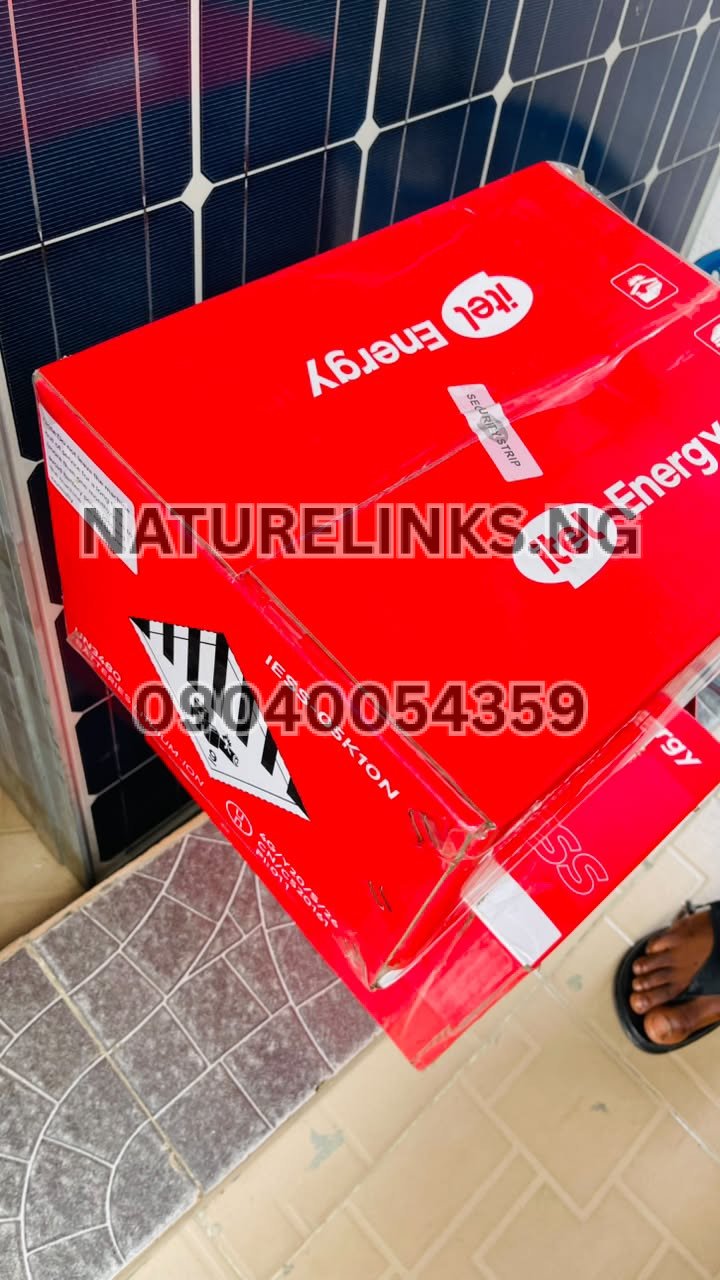
The commonly listed configuration has:
Battery capacity: 1,000Wh
but:
Continuous AC output: 500W
This distinction is extremely important when shopping.
Wh = stored energy capacity
W = power the inverter can deliver at a given moment
What Can a 500W Power Tank Power?
A 500W continuous Power Tank can potentially power combinations of compatible low-power devices, provided their combined actual consumption remains within the rated output.
Possible examples include:
- LED bulbs
- Wi-Fi router
- TV
- Laptop
- Phone chargers
- Decoder
- CCTV equipment
- POS terminal
- Small fans
- Other low-power electronics
The exact combination should always be calculated using the appliance nameplate ratings.
What Should You Not Connect to a 500W Power Tank?
Avoid connecting appliances whose normal or startup power exceeds the unit’s specifications.
Potentially problematic loads include many:
- Electric kettles
- Electric irons
- Hot plates
- Microwave ovens
- Air conditioners
- Large refrigerators
- Water heaters
- High-power pumps
- Large power tools
Some appliances have much higher startup/surge requirements than their normal running wattage.
Always check the appliance rating before connecting it.
Power Tank Battery Life and Longevity
Battery longevity depends on several factors:
- Battery chemistry
- Depth of discharge
- Charging conditions
- Temperature
- Frequency of cycling
- Storage conditions
- Load profile
- Charging practices
The commonly advertised Itel 1kWh LiFePO4 configuration has published claims of approximately 6,000 charge cycles under specified conditions.
That figure should not be interpreted as a guarantee of exactly 6,000 cycles for every user. Actual battery life depends on operating conditions and the manufacturer’s stated testing conditions.
LiFePO4 Battery vs Petrol Generator
LiFePO4 refers to lithium iron phosphate, a lithium battery chemistry widely used in energy-storage systems.
The commonly advertised 1,000Wh Itel Power Tank configuration uses LiFePO4 battery technology.
A petrol generator, on the other hand, uses mechanical energy from fuel combustion.
The two technologies therefore differ fundamentally:
| Feature | Itel Power Tank | Petrol Generator |
|---|---|---|
| Energy source | Stored electrical energy | Petrol |
| Engine | No petrol engine | Yes |
| Fuel during operation | No | Yes |
| Engine oil | No engine oil requirement | Required for conventional engines |
| Exhaust from operation | No petrol exhaust | Yes |
| Noise | Generally much quieter | Engine noise |
| Solar charging | Compatible models | Not normally |
| Portability | High for portable models | Depends on generator |
| Runtime | Depends on stored battery energy | Depends on fuel supply and load |
| High-power loads | Limited by inverter rating | Depends on generator size |
| Recharge | AC and/or solar depending on model | Refuel |
Which Is More Portable: Power Tank or Generator?
A portable Power Tank is generally designed to be moved easily between locations.
The commonly listed Itel Power Tank is an all-in-one portable design combining the battery, inverter and charging electronics.
A petrol generator can also be portable, but its engine, fuel tank and mechanical components can make transportation less convenient.
Portability is therefore one of the practical differences buyers should consider.
Power Tank for Camping and Outdoor Use
A portable Power Tank can be useful for outdoor applications where access to grid electricity is unavailable.
Depending on the load, it can supply:
- Phones
- Laptops
- Lights
- Cameras
- Small fans
- Internet devices
- Other compatible electronics
Solar charging can also be useful during extended outdoor use where sunlight is available.
Power Tank for Remote Work in Nigeria
Remote workers often need reliable electricity for:
- Laptop
- Monitor
- Router
- Phone
- Lighting
- Other small electronics
A 1,000Wh Power Tank can provide substantial stored energy for a carefully selected low-power office setup.
Before purchasing, add the wattage of every device you expect to use simultaneously.
Power Tank for Students
Students may use backup power for:
- Laptop
- Phone
- Router
- Reading lamp
- Small fan
- TV
Because these are generally lower-power devices than appliances such as electric kettles or air conditioners, a portable Power Tank can be considered for this type of backup requirement, subject to actual wattage.
Power Tank for Small Businesses
Small businesses can consider a Power Tank for low-power equipment such as:
- POS terminals
- Routers
- CCTV
- Laptops
- LED lights
- Small printers
- Phone charging
Businesses using refrigerators, freezers, large printers, pressing irons, welding machines or other high-power equipment should perform a detailed load assessment first.
Power Tank vs Generator: Cost of Ownership
The most useful cost comparison is not simply:
“Which one is cheaper to buy?”
Instead, consider:
Generator
Purchase + petrol + oil + servicing + repairs + replacement parts
Power Tank
Purchase + charging electricity/solar investment + maintenance/battery considerations
The result will vary substantially according to the user’s daily electricity requirements.
Nigerian energy comparisons published in 2026 similarly emphasize evaluating fuel and maintenance alongside the initial purchase price rather than comparing purchase prices alone.
What Is the Best Power Tank for a Nigerian Home?
The best model depends on the load.
If your essential appliances require approximately 200–400W simultaneously, a 500W-class Power Tank may be relevant.
If your household regularly needs more than 500W, you should consider a higher-output system.
Do not buy a Power Tank based only on battery capacity.
Check both:
Wh — battery capacity
and
W — inverter output
A large battery with an undersized inverter may still be unable to operate a high-wattage appliance.
How to Calculate Your Power Tank Requirement
Write down every appliance you want to use.
Example:
| Appliance | Approximate Load |
|---|---|
| TV | 80W |
| Fan | 60W |
| Router | 15W |
| Laptop | 65W |
| LED lights | 30W |
| Phone charging | 10W |
| Total | 260W |
This example produces an estimated simultaneous load of approximately 260W.
A 500W continuous Power Tank therefore has theoretical output headroom, although actual appliance ratings and startup loads should be checked.
For battery capacity, multiply power consumption by operating hours.
For example:
260W × 4 hours = 1,040Wh
That is already approximately the nominal capacity of a 1,000Wh battery, before allowing for conversion losses and other factors.
Therefore, users should not expect a 1,000Wh battery to deliver 260W for exactly four hours in real-world conditions.
“Is Power Tank Better Than a Generator?” — The Most Important Buying Question
The question “Is Power Tank Better Than a Generator?” should be answered by comparing your actual electricity needs.
Choose your comparison criteria based on your circumstances:
If your priority is fuel-free operation
A battery Power Tank eliminates petrol consumption during operation.
If your priority is low noise
A battery power station avoids the continuous engine noise associated with petrol generators.
If your priority is portability
A portable Power Tank can be moved between locations without carrying petrol.
If your priority is solar charging
Compatible Power Tank models can be connected to suitable solar panels.
If your priority is very high-power appliances
Check the inverter output carefully. A 500W-class Power Tank is not equivalent to a large 3kVA, 5kVA or higher petrol generator.
If your priority is long-duration high-power operation
You need to calculate battery capacity, solar recharge capability and the total load before deciding.
Is Power Tank a Solar Generator?
The term “solar generator” is commonly used by sellers and consumers for portable battery power stations that can be recharged using solar panels.
An Itel Power Tank with solar charging capability can therefore function as part of a solar backup setup.
Technically, however, it is a battery energy-storage system with an inverter and charging system rather than an engine-driven generator.
The distinction is important when comparing specifications.
Where to Buy Genuine Itel Power Tank in Nigeria
Nigerian buyers should verify:
- Exact model number
- Battery capacity
- Inverter output
- Solar input
- Included charger
- Solar-panel compatibility
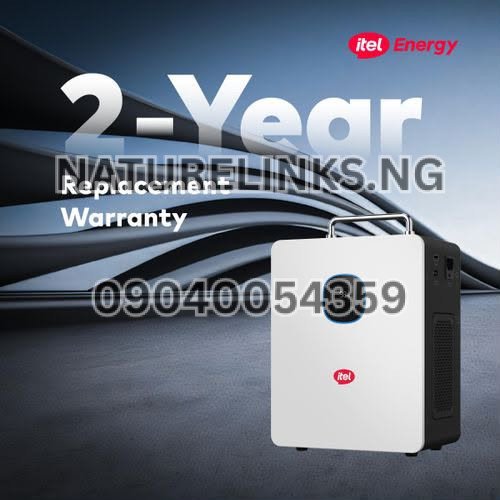
- Warranty
- Condition of the unit
- Seller identity
- Authenticity
- Available accessories
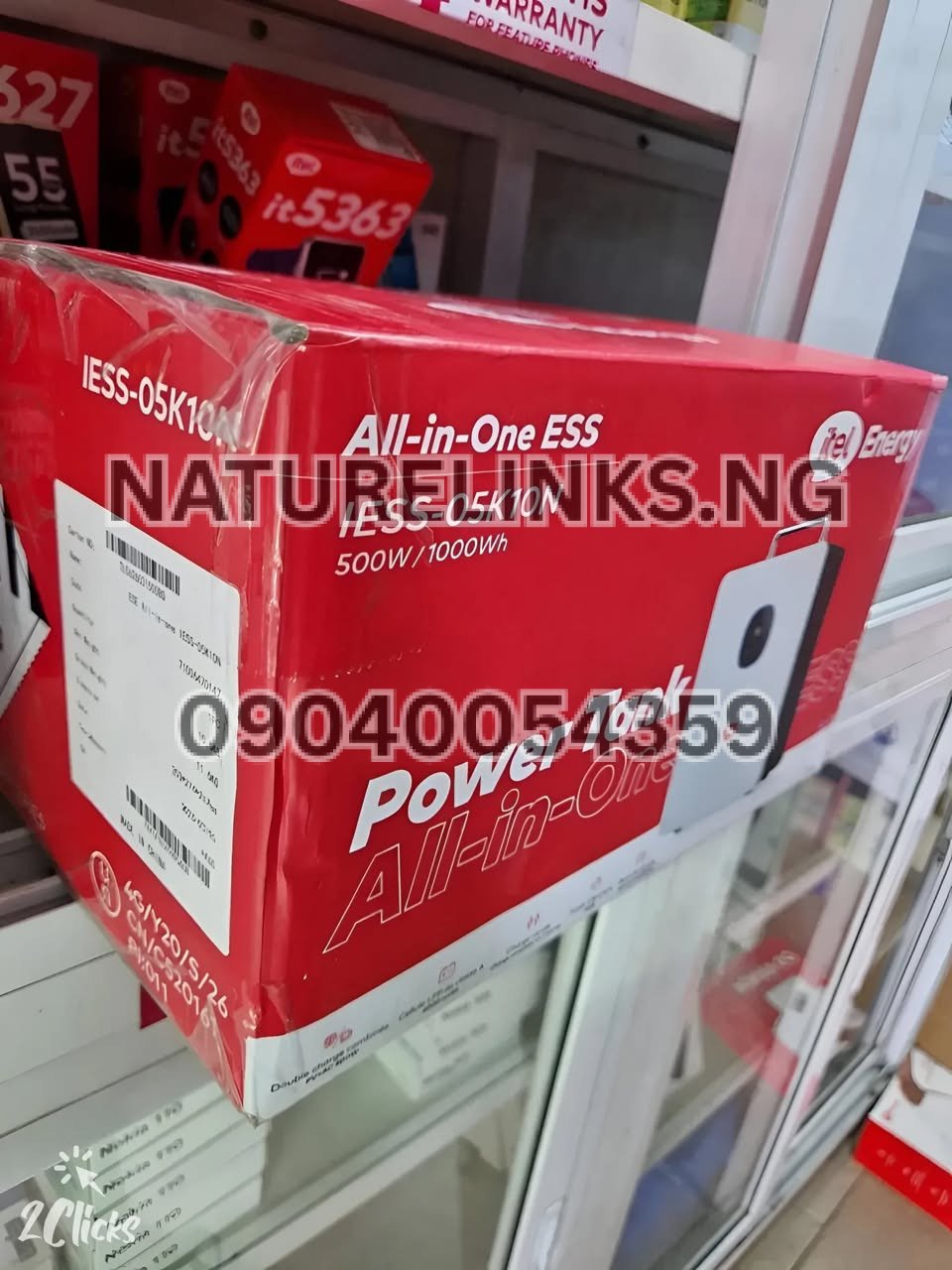
For buyers looking for Itel Power Tank products in Nigeria, Nature Links Nigeria Limited [NatureLinks.NG] is presented by the supplied distributor information as the Best Seller, with Nature Solar Global Limited identified as the distributor.
Nature Links / Nature Solar Contact Details
Best Seller: Nature Links Nigeria Limited [NatureLinks.NG]
Distributor: Nature Solar Global Limited
CEO: Mr. Joseph Chikeleze
Phone: 07049528019
WhatsApp: 09040054359
Shop Address: F1571 Upstairs (F-Line), Alaba International Market, Lagos State 🇳🇬
Before payment, confirm the exact model, current price, warranty and package contents directly with the seller.
Itel Power Tank Price in Nigeria
The price of an Itel Power Tank can vary depending on:
- Model
- Battery capacity
- Inverter output
- Seller
- Warranty
- Stock availability
- Included solar panels
- Included accessories
- Promotional offers
Current online Nigerian listings for the commonly advertised 500W/1,000Wh configuration show prices varying substantially between listings, so buyers should confirm the current price and exact package before making payment.
A buyer should be particularly careful when comparing a bare Power Tank against a package containing solar panels, cables, chargers and other accessories.
Why Nigerians Are Comparing Power Tanks With Generators
The comparison is closely connected to the practical realities of backup electricity.
For many households and businesses, the relevant issues include:
- Fuel expenses
- Electricity outages
- Generator noise
- Generator maintenance
- Indoor-use limitations
- Portable backup requirements
- Solar charging
- Battery storage
- Long-term operating costs
Current Nigerian energy articles continue to compare solar/battery backup and generators around these same factors.
Frequently Asked Questions About Power Tank vs Generator
1. Is Power Tank better than a generator?
It depends on the user’s electricity requirements. A Power Tank can be suitable for low-to-medium-power backup where quiet, portable and fuel-free operation is important. A conventional generator can be more suitable where higher power or extended operation with refuelling is required.
2. Can Power Tank replace a petrol generator?
It can replace a petrol generator for some applications, especially where the required loads are within the Power Tank’s inverter rating. It should not automatically be considered a replacement for a generator used to power heavy appliances.
3. Does Itel Power Tank use petrol?
No. The battery-powered Itel Power Tank does not burn petrol during operation. It stores electrical energy in its battery and supplies power through an inverter.
4. Can Itel Power Tank charge with solar?
Yes, compatible Itel Power Tank configurations support solar charging. Published specifications for a commonly listed 1,000Wh configuration specify up to 400W PV input. Always verify the exact model before purchasing solar panels.
5. Can Itel Power Tank charge from electricity?
Yes. Published configurations support AC/grid charging in addition to solar charging.
6. How long does Itel Power Tank last?
Runtime depends on the appliance load. A 1,000Wh battery theoretically contains enough energy for 10 hours at a 100W load before system losses, but actual runtime will be lower because of inverter and battery losses.
7. Can Itel Power Tank run a refrigerator?
It depends on the refrigerator’s running and startup requirements. The commonly advertised configuration has a 500W continuous output and surge capability on listed configurations, so the refrigerator’s compressor startup requirement must be checked before use.
8. Is Power Tank cheaper to run than a petrol generator?
A Power Tank does not consume petrol during operation, so it avoids the direct fuel expense associated with running a petrol generator. However, the total financial outcome depends on purchase price, charging source, usage, solar equipment and battery life.
9. Is Power Tank noisy?
A battery Power Tank is generally much quieter than an engine-powered petrol generator. One published Itel configuration specifies less than 45dB under stated conditions.
10. What should I check before buying an Itel Power Tank?
Check the exact model, battery capacity in Wh, continuous inverter output in W, surge capacity, solar input, AC charging capability, ports, warranty, included accessories and compatibility with your appliances. Do not select a unit based on battery capacity alone.
Itel Power Tank Key Specifications
For the commonly advertised 1,000Wh configuration:
| Specification | Listed Information |
|---|---|
| Brand | itel / itel Energy |
| Product | Power Tank |
| Battery | 1,000Wh / 1kWh |
| Battery Chemistry | LiFePO4 |
| Continuous AC Output | 500W |
| Inverter | Pure sine wave |
| Surge | Up to 1,000W on listed configurations |
| Solar Charging | Yes |
| Maximum PV Input | Up to 400W on documented configuration |
| AC/Grid Charging | Yes |
| AC Output | 230V |
| Frequency | 50Hz |
| UPS | Available on compatible configurations |
| BMS | Yes |
| Overload Protection | Yes |
| Short-Circuit Protection | Yes |
| Temperature Protection | Yes |
| Portable Design | Yes |
Specifications can vary between models and configurations, so buyers should verify the exact manufacturer’s datasheet before purchasing.
Important Difference Between 500W and 1000Wh
One of the most common mistakes buyers make is confusing watts and watt-hours.
500W refers to the inverter’s continuous power-output rating on the commonly listed configuration.
1,000Wh refers to the battery’s stored-energy capacity.
In simple terms:
W tells you how much power the unit can deliver at a time.
Wh tells you how much energy the battery stores.
A Power Tank can therefore have a 1,000Wh battery while having a 500W continuous AC output.
This is why both figures must be checked when comparing portable power stations.
Power Tank or Generator: Questions to Ask Before Buying
Before buying either system, ask:
- What appliances do I need to power?
- What is the combined wattage?
- What are the appliances’ startup requirements?
- How many hours of backup do I need?
- Do I need the system at night?
- Can I recharge from the grid?
- Do I want solar charging?
- How much fuel does my generator currently consume?
- How much do I spend on generator maintenance?
- Do I need to power heavy appliances?
- Do I need portability?
- Is noise a major concern?
- What warranty does the seller provide?
- Is the product genuine?
- What accessories are included?
Answering these questions will make the comparison more useful than simply asking whether one technology is universally “better.”
Conclusion: Is Power Tank Better Than a Generator?
The question “Is Power Tank Better Than a Generator?” ultimately depends on the user’s electricity needs, appliance load, required runtime, budget and preferred source of energy.
An Itel Power Tank offers a fundamentally different approach to backup electricity: it stores energy in a rechargeable battery, can use AC/grid charging and compatible solar charging, operates without petrol during use and can provide quiet portable backup power. The commonly advertised 1,000Wh model has a 500W continuous pure-sine-wave inverter, making it particularly important to match the unit with appliances that fit within its output rating.
A conventional petrol generator remains a different type of backup system, particularly relevant for users who require higher output or extended operation through refuelling.
For Nigerians deciding between the two, the most important step is to calculate your actual wattage requirement and required backup hours before purchasing. That calculation can show whether a portable Power Tank, a larger battery-inverter system, a solar installation, a petrol generator or a combination of technologies fits the intended application.
For genuine Itel Power Tank enquiries, availability, current pricing and suitable configurations, buyers can contact Nature Links Nigeria Limited [NatureLinks.NG] / Nature Solar Global Limited at 07049528019 or WhatsApp 09040054359, or visit F1571 Upstairs (F-Line), Alaba International Market, Lagos State 🇳🇬.