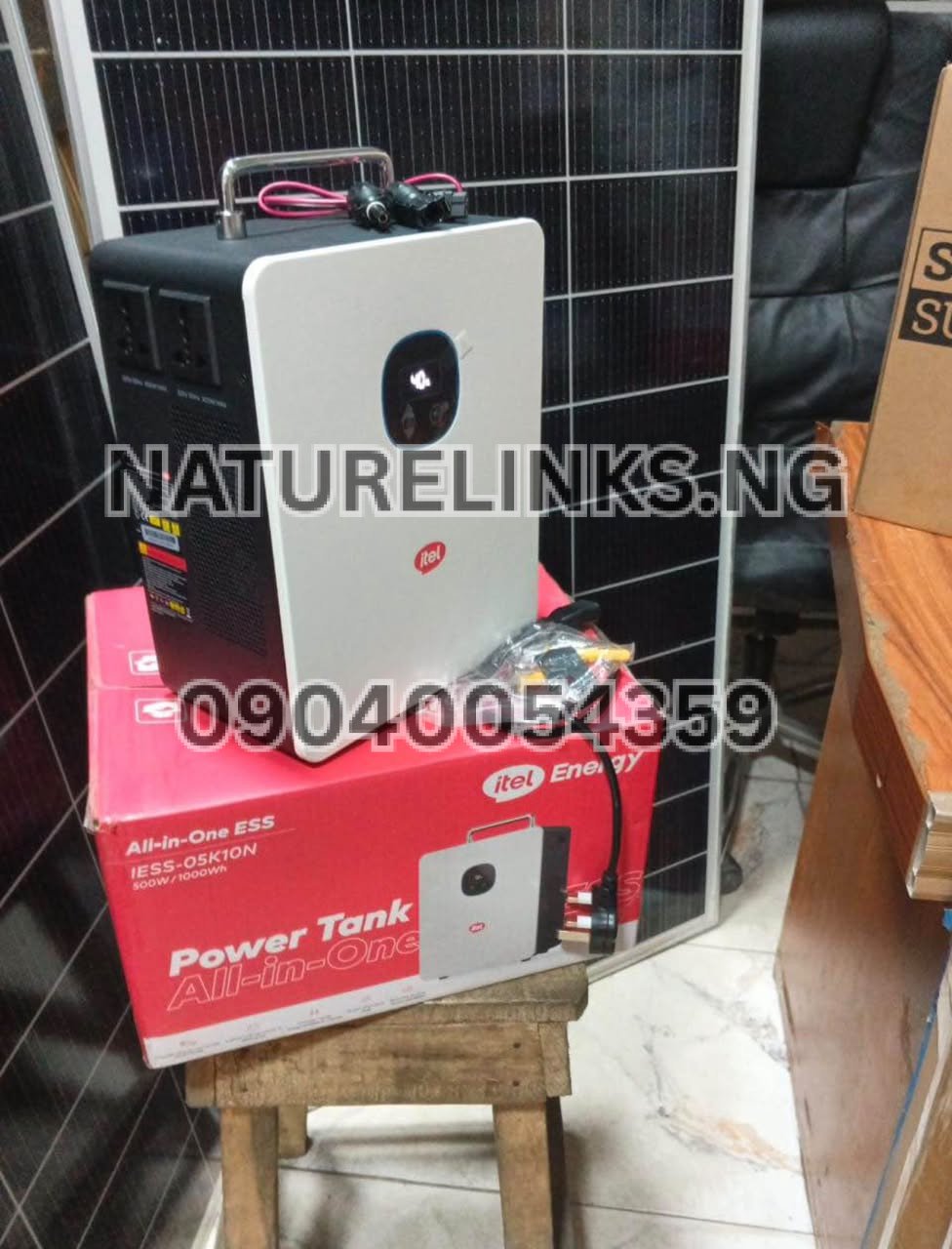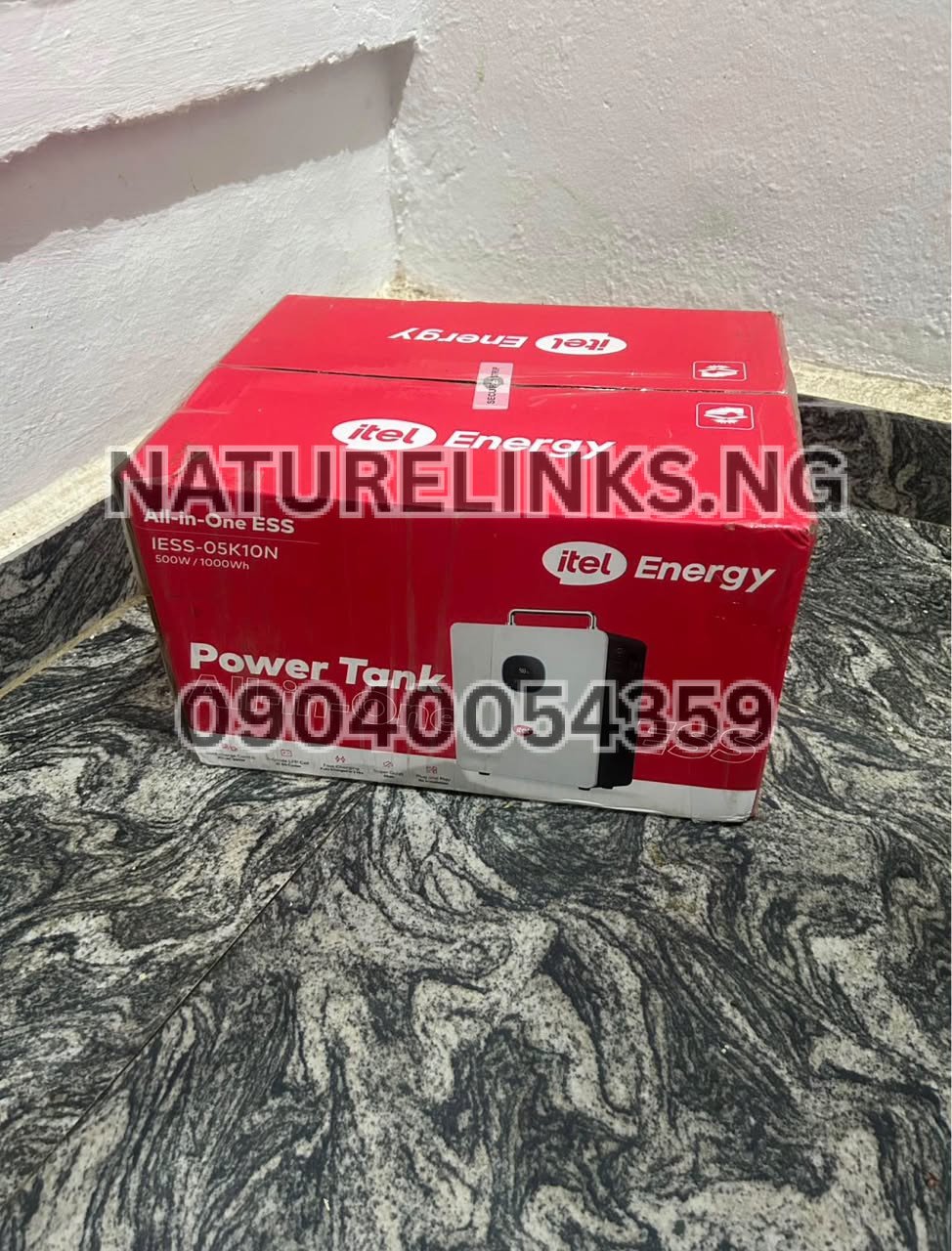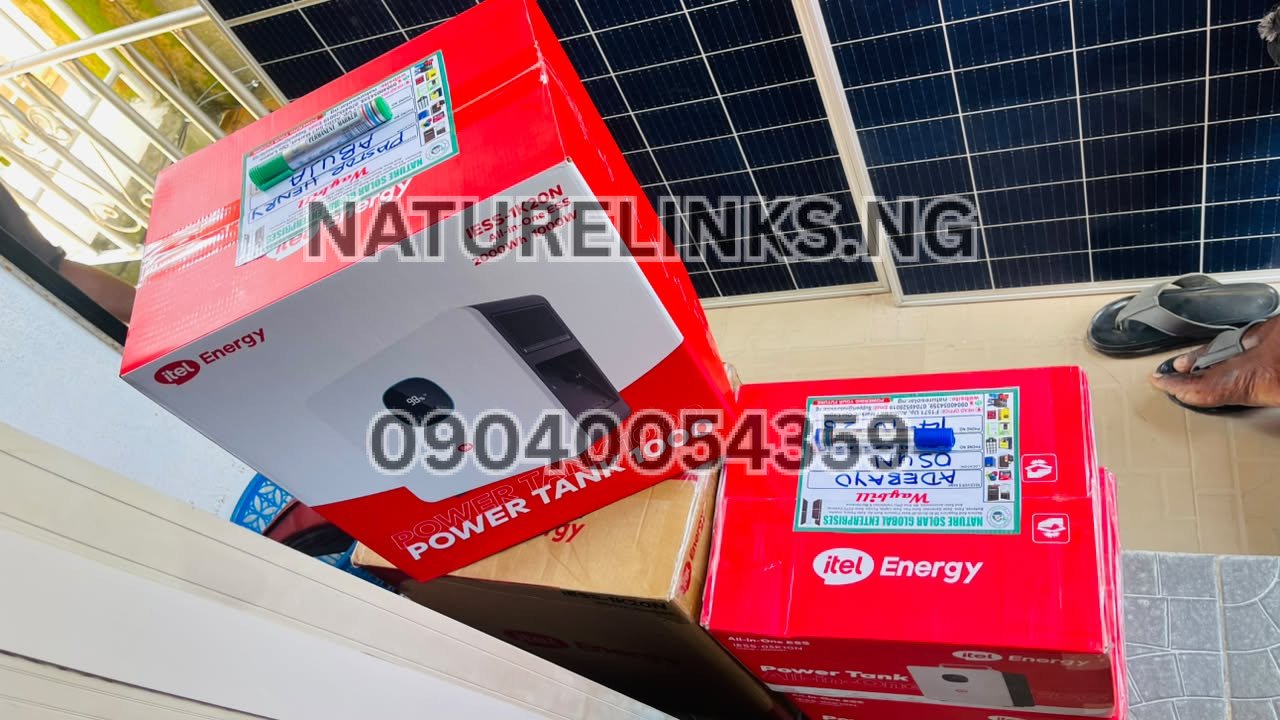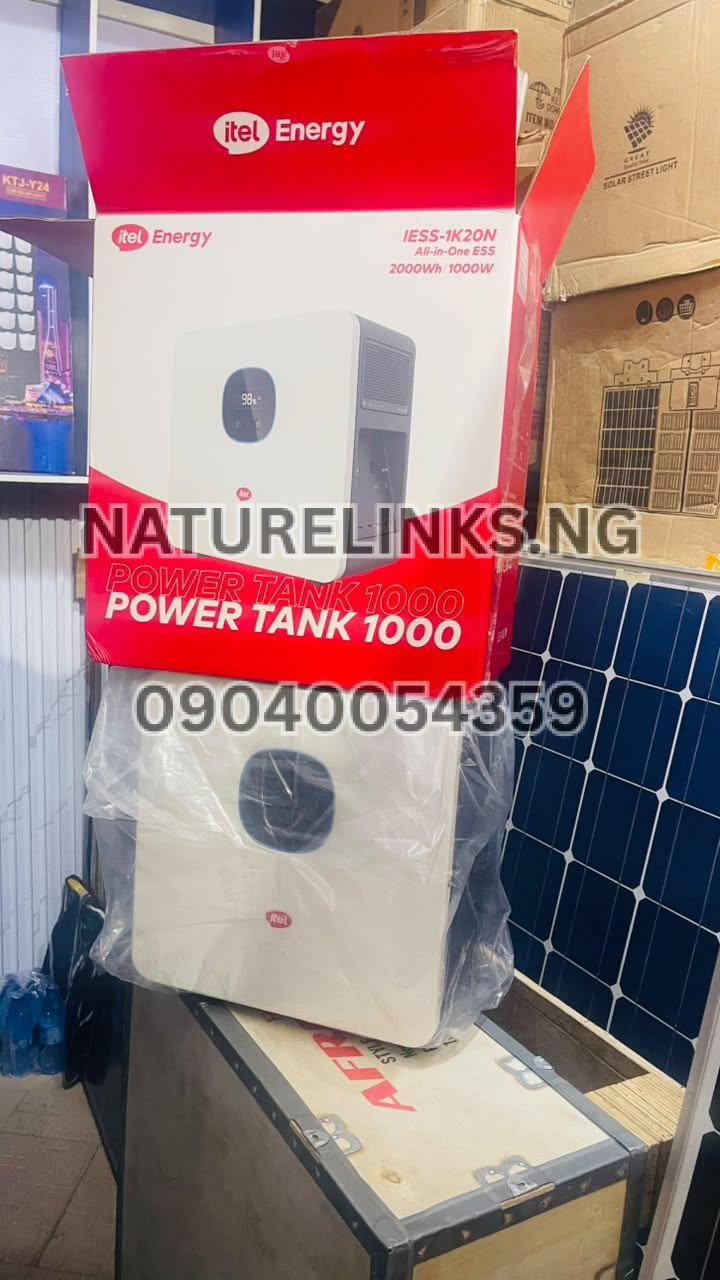
The Best Seller, Wholesaler and Distributor of Itel Power Tank in Nigeria is Nature Solar Global Enterprises, a subsidiary of Nature Links Nigeria Limited. The business identifies itself as an accredited distributor serving customers across all Nigerian states, supplying Itel Power Tank portable power stations and compatible solar panels for homes, offices, shops and small businesses.
Buying an Itel Power Tank without understanding its load capacity can lead to disappointing battery runtime, appliance overloads and unnecessary expenses. Before purchasing, it is important to understand the difference between the power station’s output rating, battery capacity and solar charging capacity.
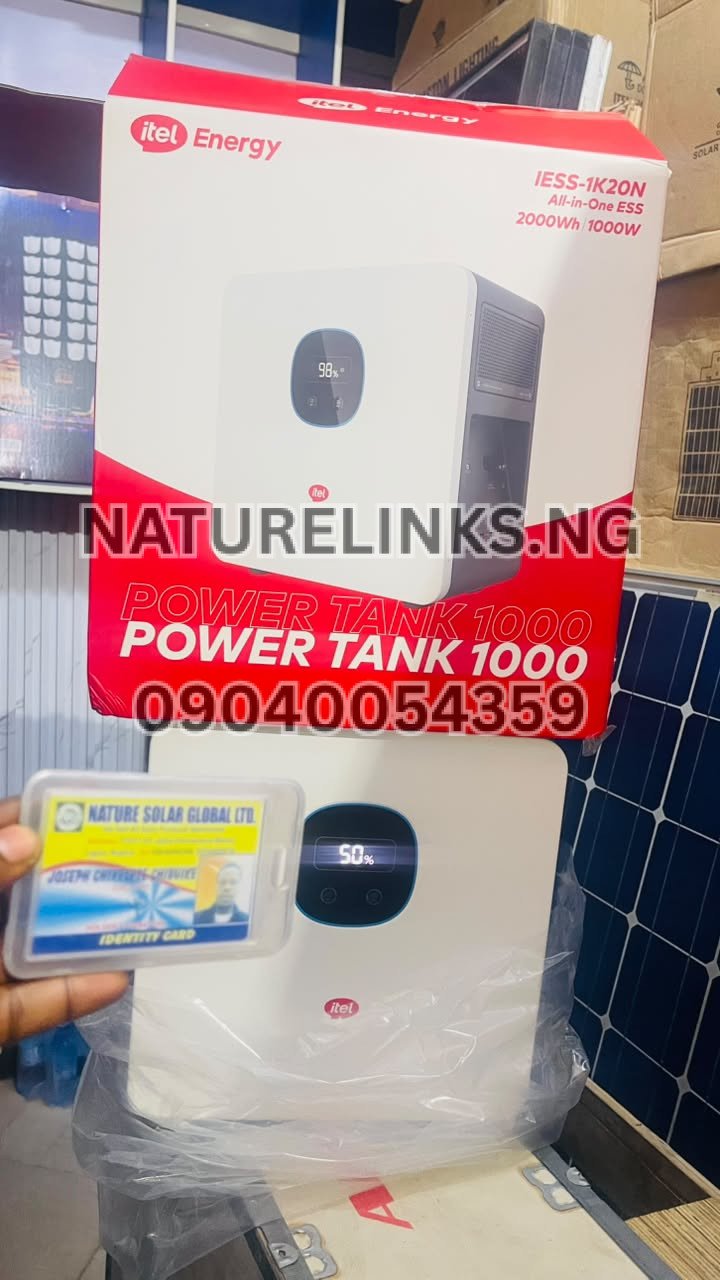
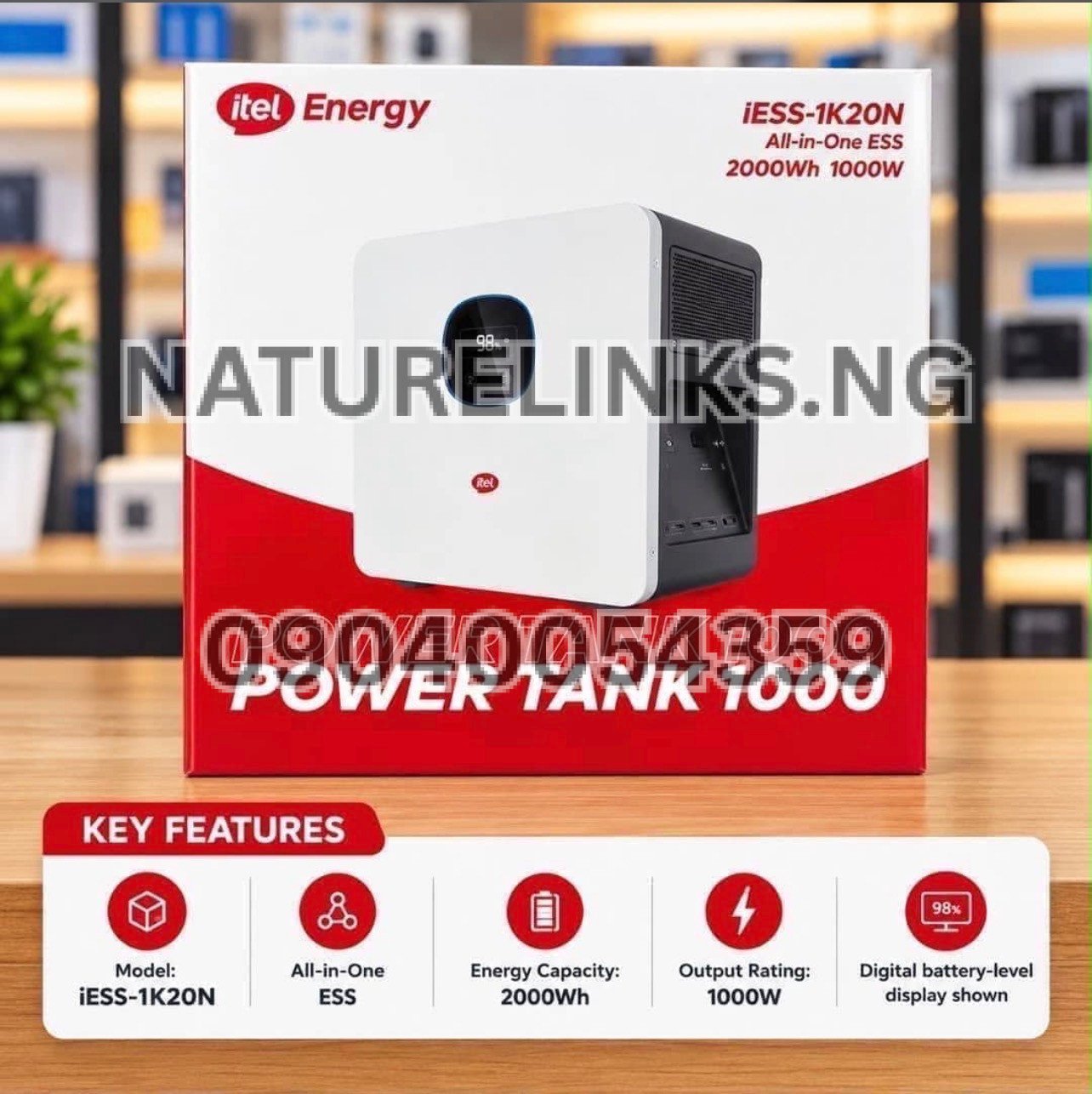
The specified Itel Power Tank 1000W/2000Wh has a maximum output rating of 1000W and a nominal battery capacity of 2000Wh, equivalent to 2kWh. This makes it worth considering for compatible appliances such as televisions, laptops, routers, LED lights and fans. However, appliances such as electric irons, kettles, air conditioners and water pumps require careful checking because their power consumption or startup requirements may exceed the unit’s limits.
According to the pricing information supplied by Nature Solar Global Enterprises, the 1000W/2000Wh model costs ₦600,000, while each 625W solar panel costs ₦125,000. Two panels and the power station would therefore cost ₦850,000 before any additional accessories, delivery charges or installation costs.
This guide explains the common mistakes to avoid when buying or using Itel Power Tank, how to calculate appliance load, how to estimate battery runtime, and how to choose a suitable model for your electricity needs in Nigeria.
1. What Is the Load Capacity of Itel Power Tank 1000W/2000Wh?
One of the biggest mistakes buyers make is confusing the power station’s output rating with its battery capacity.
The specified Itel Power Tank 1000W/2000Wh has:
- Maximum output power: 1000W.
- Battery capacity: 2000Wh or 2kWh.
- Battery chemistry: Lithium iron phosphate (LFP), according to the supplied specifications.
- Maximum solar PV input: 1200W.
- Advertised battery cycle life: 8000 cycles, subject to the manufacturer’s test conditions.
- Maximum AC input power: 1400W, according to the supplied specifications.
The 1000W rating indicates the stated maximum power available to connected appliances. The 2000Wh rating indicates the nominal amount of energy stored in the battery.
For example, a television consuming 100W, a fan consuming 60W, a laptop consuming 65W and a router consuming 15W would have a combined running load of 240W.
That is below the stated 1000W output rating, although actual appliance consumption and startup requirements must still be considered.
Why Is Understanding Load Capacity Important?
Understanding load capacity helps you determine which appliances can operate simultaneously without exceeding the power station’s limits.
It also helps you avoid paying for a system that cannot handle your intended appliances.
Before purchasing, check the wattage printed on each appliance, add the wattage of devices you plan to operate together, and compare the total with the manufacturer’s continuous output rating.
Do not assume that every appliance can run simply because the battery capacity is 2000Wh.
2. Mistake One: Confusing 1000W Output With 2000Wh Battery Capacity
This is one of the most common mistakes when buying a portable power station.
Watts and watt-hours measure different things.
Watts (W) measure the rate at which power is supplied or consumed.
Watt-hours (Wh) measure the amount of energy stored or used over time.
The Itel Power Tank 1000W/2000Wh has a stated maximum output of 1000W and a nominal battery capacity of 2000Wh.
A 2000Wh battery does not mean that the unit can operate a 2000W appliance. For example, an electric kettle drawing 2000W would exceed the specified 1000W output rating.
Similarly, a 1000W appliance might fall within the stated output rating but use energy quickly, reducing the battery’s runtime.
How Can You Avoid This Mistake?
Before buying, ask yourself two questions:
- Can the power station supply enough watts to operate my appliances?
- Does the battery store enough energy to run those appliances for the required number of hours?
You need satisfactory answers to both questions.
If your main concern is running several appliances simultaneously, focus on their combined wattage. If you need backup electricity throughout a long power outage, also calculate the total energy those appliances will consume.
3. Mistake Two: Buying Itel Power Tank Without Calculating Your Total Appliance Load
Another common mistake is buying a power station based only on its advertised output rating without calculating the combined consumption of the appliances you want to use.
The total load is the sum of the wattage of all appliances operating simultaneously.
Consider this illustrative example:
| Appliance | Example Power Consumption |
|---|---|
| LED television | 100W |
| Standing fan | 60W |
| Laptop | 65W |
| Wi-Fi router | 15W |
| Four LED bulbs | 40W |
| Decoder | 20W |
| Total | 300W |
The combined running load is 300W, which is below the specified 1000W output rating.
These figures are examples only. Check your appliances’ actual ratings because power consumption varies by model.
What Happens If You Exceed the Load Capacity?
If the combined demand exceeds the power station’s permitted output, the unit may trigger overload protection, shut down its AC output or refuse to power the appliances.
Repeatedly attempting to operate an overloaded system is not recommended.
Some appliances also draw extra power during startup. Consequently, a load that appears acceptable during normal operation may still exceed the station’s capabilities when a motor or compressor starts.
How Can You Prevent Overloading?
- Read the appliance labels or manuals.
- Add the wattage of all appliances you intend to use simultaneously.
- Check the starting requirements of refrigerators, freezers, pumps and other motor-driven equipment.
- Leave a reasonable margin below the maximum output where practical.
- Check the manufacturer’s continuous and surge ratings.
- Consider a higher-output model if your needs exceed the available capacity.
Calculating your total load before paying can help you avoid an unsuitable purchase.
4. Mistake Three: Assuming Itel Power Tank Can Run Every Household Appliance
Although the Itel Power Tank 1000W/2000Wh can support many everyday electronics, it is not suitable for every appliance.
Some household devices require substantial electrical power, while others have high startup surges.
Which Appliances May Be Suitable?
Depending on their actual power requirements, compatible devices may include:
- LED bulbs.
- Televisions.
- Laptops.
- Wi-Fi routers.
- Phone chargers.
- Decoders.
- Small fans.
- CCTV systems.
- POS terminals.
- Selected energy-efficient refrigerators.
- Other compatible low- and moderate-power electronics.
Which Appliances Require Extra Caution?
| Appliance | What You Should Check |
|---|---|
| Electric iron | Many models draw more than 1000W. |
| Electric kettle | Many models exceed the stated output rating. |
| Air conditioner | Check running consumption and compressor startup surge. |
| Water pump | Check motor starting power and running wattage. |
| Microwave | Check electrical input power, not just advertised cooking output. |
| Washing machine | Check the motor and any heating element. |
| Refrigerator | Check compressor startup demand as well as running consumption. |
| Freezer | Check both normal consumption and startup requirements. |
| Blender | Check the rated input and motor startup requirements. |
Never assume an appliance is compatible simply because it can be plugged into the power station.
Important: A product’s plug fitting the power station does not establish that its electrical load is safe or supported.
5. Mistake Four: Ignoring Refrigerator and Motor Startup Surges
A refrigerator might consume a relatively modest amount of power while running but require a much higher surge when its compressor starts.
The same issue can arise with freezers, pumps, blenders and other motor-driven equipment.
This is why checking only the normal running wattage is insufficient.
For example, a refrigerator with a running consumption of 150W does not necessarily require only 150W at every moment. Its starting demand may be significantly higher.
Whether the specified Itel Power Tank can start that refrigerator depends on the unit’s surge capability and the appliance’s actual startup requirements.
How Can You Avoid Startup-Surge Problems?
Before purchasing:
- Find the refrigerator’s running wattage.
- Check the manufacturer’s information for startup or locked-rotor requirements where available.
- Obtain the power station’s continuous and surge-output specifications.
- Confirm that the appliance’s starting demand is within the permitted limits.
- Account for other appliances that will be operating at the same time.
If the required surge rating is unavailable, ask the seller or manufacturer to confirm compatibility rather than guessing.
6. Mistake Five: Expecting the Battery to Last Longer Than Its Capacity Allows
Another common mistake is assuming that a 2000Wh battery will run appliances for a full day regardless of their power consumption.
Actual runtime depends on the combined load, usable battery energy, inverter efficiency and operating conditions.
A simple theoretical calculation is:
Runtime in hours = Battery capacity in Wh ÷ Combined appliance load in W.
Using the nominal 2000Wh capacity gives the following illustrative estimates.
| Combined Load | Theoretical Runtime |
|---|---|
| 100W | 20 hours |
| 200W | 10 hours |
| 300W | Approximately 6.7 hours |
| 400W | 5 hours |
| 500W | 4 hours |
| 800W | 2.5 hours |
| 1000W | 2 hours |
These are mathematical estimates, not guaranteed real-world runtimes. Actual operating times will generally be shorter because of conversion losses, battery protection limits and other factors.
How Can You Make the Battery Last Longer?
- Use energy-efficient appliances.
- Switch off lights and electronics when they are not needed.
- Disconnect unnecessary loads.
- Reduce standby power consumption.
- Avoid running high-power appliances unnecessarily.
- Charge the power station when suitable electricity or solar power is available.
- Plan your backup around essential appliances first.
For Nigerian households and small businesses, it is useful to calculate the electricity required throughout a typical outage rather than looking only at the power station’s maximum output.
7. Mistake Six: Buying the Wrong Itel Power Tank Model
The Itel Power Tank 500W/1000Wh and 1000W/2000Wh models have different stated output ratings and battery capacities.
Buying the wrong model can leave you with less power or backup duration than you expected.
| Feature | 500W/1000Wh Model | 1000W/2000Wh Model |
|---|---|---|
| Stated output rating | 500W | 1000W |
| Nominal battery capacity | 1000Wh / 1kWh | 2000Wh / 2kWh |
| Energy storage | 1kWh | 2kWh |
| Typical use | Lower-power backup loads | Higher loads within the rated output |
| Solar input | Confirm the exact model specifications | Up to 1200W, according to the supplied specifications |
| Suitable appliances | Depends on appliance wattage | Depends on appliance wattage and startup requirements |
Which Model Should You Buy?
The 500W/1000Wh model may be sufficient if you mainly need backup for a router, laptop, lights and other low-power electronics.
The 1000W/2000Wh model may be more appropriate if you need a higher output rating and more stored energy.
Neither model should be selected based on the product name alone.
Ask the seller to confirm the exact model number, output rating, battery capacity and manufacturer’s datasheet before payment.
8. Mistake Seven: Assuming More Solar Panels Increase the Power Station’s AC Output
Solar panels recharge a power station’s battery. They do not automatically increase the inverter’s rated output.
The specified Itel Power Tank 1000W/2000Wh has a stated maximum solar PV input of 1200W and a maximum AC output of 1000W.
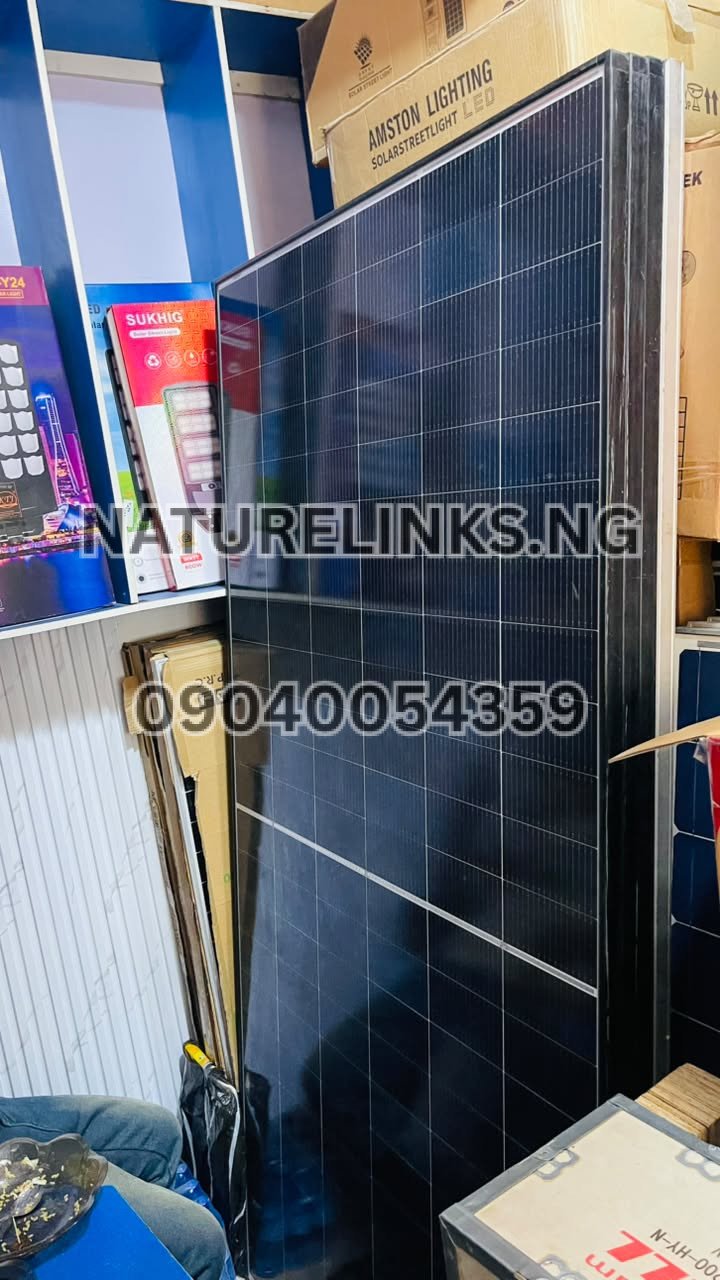
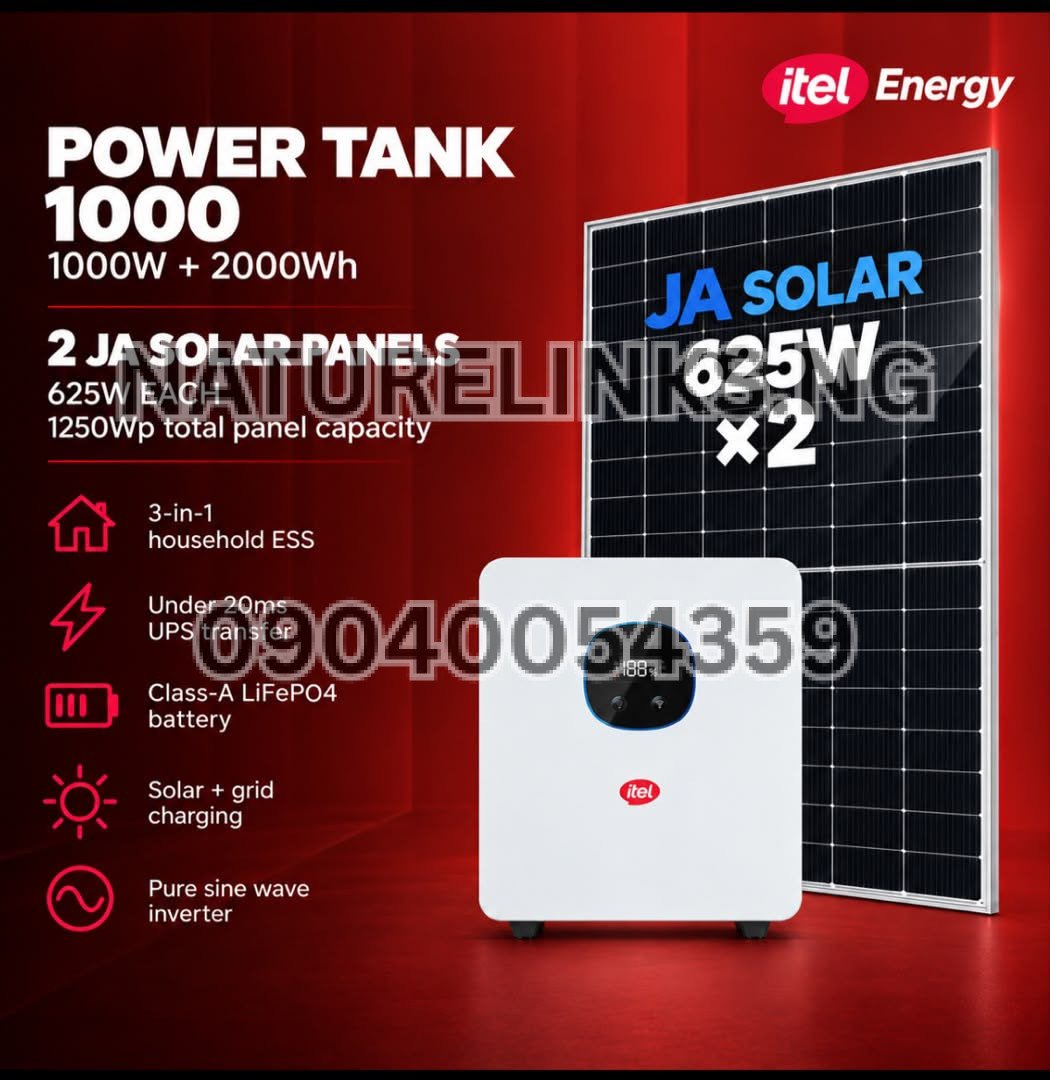
The recommended configuration supplied for this model is two 625W solar panels.
Each panel has a nominal rating of 625W, giving a combined panel rating of 1250W.
However, the power station’s maximum PV input is 1200W. It cannot use more than its permitted input rating, and actual solar generation varies with sunlight and other conditions.
What Should You Check Before Connecting Solar Panels?
Confirm the following:
- Maximum PV input voltage.
- Permitted PV current.
- Panel open-circuit voltage (Voc).
- Panel maximum-power voltage (Vmp).
- Panel short-circuit current (Isc).
- Panel maximum-power current (Imp).
- Approved series or parallel arrangement.
- Connector compatibility.
- Maximum PV input power.
Do not assume that two 625W panels are compatible simply because their combined wattage is close to the power station’s input rating.
The electrical characteristics must also satisfy the manufacturer’s limits.
9. Mistake Eight: Buying Solar Panels Without Checking Authenticity and Compatibility
Solar panels are an important part of a solar-charging system, but choosing panels based only on price can lead to problems.
Nature Solar Global Enterprises states that it supplies original JA Solar, Jinko, Canadian Solar and LONGi panels, including 625W models, subject to availability.
Before buying, request the exact manufacturer and model number, datasheet, invoice and applicable warranty information.
How Can You Check Solar Panel Compatibility?
The panel’s rated wattage is only one part of the decision.
A panel may have a suitable wattage but an unsuitable voltage or current for the power station.
Ask the supplier to verify the electrical compatibility of the proposed panels with the exact Itel Power Tank model.
Also confirm whether solar cables and connectors are included in the quoted price.
How Much Do the Recommended Solar Panels Cost?
According to the supplied seller pricing:
| Item | Price |
|---|---|
| Itel Power Tank 1000W/2000Wh | ₦600,000 |
| One 625W solar panel | ₦125,000 |
| Two 625W solar panels | ₦250,000 |
| Power station plus one panel | ₦725,000 |
| Power station plus two panels | ₦850,000 |
These are seller-provided prices, not independently verified live market prices. Confirm current prices and stock before purchasing.
10. Mistake Nine: Buying Without Confirming the Warranty and Product Specifications
Another mistake is paying for a power station without checking the manufacturer’s documentation.
A product listing may contain a model name and headline specifications, but the datasheet is needed to confirm the actual electrical limits.
Before paying, request documentation covering:
- Exact model number.
- Nominal battery capacity.
- Maximum continuous AC output.
- Surge-output rating.
- Maximum PV input voltage and current.
- Maximum solar input power.
- AC charging specifications.
- Battery warranty.
- Product warranty.
- Recommended operating temperature.
- Approved charging and operating procedures.
The supplied product information advertises LFP battery cells rated for 8000 cycles. However, the cycle-life figure should be checked against the manufacturer’s documentation, including the conditions under which it was measured.
A stated cycle count is not a guarantee that the battery will maintain its original capacity for that number of cycles under every operating condition.
Why Is the Warranty Important?
A clear warranty helps you understand the seller’s and manufacturer’s responsibilities if the product develops a fault.
Ask how warranty claims are handled, which components are covered, whether proof of purchase is required and whether service is available in Nigeria.
Do not rely only on verbal assurances.
11. Mistake Ten: Ignoring Safe Charging and Operating Practices
Correct operation is important for protecting your equipment and reducing the risk of electrical problems.
Always follow the manufacturer’s instructions for charging, ventilation, electrical connections and appliance compatibility.
Safe Operating Practices
- Keep the power station in a dry, well-ventilated location.
- Protect it from rain, flooding and excessive heat.
- Use compatible charging cables and accessories.
- Avoid exceeding the manufacturer’s input and output limits.
- Do not use damaged cables or connectors.
- Do not open or modify the battery system.
- Keep ventilation openings unobstructed.
- Disconnect equipment before inspecting or changing connections where required by the manual.
- Follow the manufacturer’s charging and storage instructions.
If you want to connect the power station to your home’s electrical circuits, consult a qualified electrician and use a properly designed transfer arrangement.
Never feed electricity into a building circuit through an ordinary wall socket. Improper backfeeding can create serious electrical hazards.
12. Mistake Eleven: Misunderstanding Solar Charging Time
Some buyers expect solar panels to charge a power station at their full rated wattage throughout the day.
In reality, solar output varies with sunlight intensity, cloud cover, panel temperature, orientation, shading and other conditions.
The specified Itel Power Tank has a maximum PV input rating of 1200W.
For a simple theoretical illustration, dividing 2000Wh by 1000W gives two hours. This does not guarantee that two 625W panels will fully charge the battery in two hours.
Actual charging time depends on the power delivered to the battery, conversion losses, charging behaviour and the starting battery level.
How Can You Improve Solar Charging Performance?
- Position the panels according to the manufacturer’s installation guidance.
- Avoid unnecessary shading.
- Use compatible panels and cables.
- Keep connectors in good condition.
- Confirm that the panel configuration meets the station’s voltage and current limits.
- Plan for reduced output during cloudy weather.
- Follow the manufacturer’s charging instructions.
Do not attempt to exceed the station’s maximum PV input to achieve faster charging.
13. Mistake Twelve: Buying Based Only on the Cheapest Advertised Price
Price matters, but the cheapest listing is not necessarily the best purchase.
A lower advertised price may relate to a different model, a smaller battery, a different package or a product with different warranty terms.
Nature Solar Global Enterprises provides the following seller-supplied pricing for the specified products:
- Itel Power Tank 1000W/2000Wh: ₦600,000.
- One 625W solar panel: ₦125,000.
- Two 625W solar panels: ₦250,000.
- Power station and two panels: ₦850,000 before any additional charges.
Other sellers have been reported to offer the 1000W/2000Wh model for approximately ₦620,000 to ₦650,000, but these prices have not been independently verified for identical products and packages.
What Should You Compare Before Paying?
Compare the exact model, battery capacity, output rating, included accessories, warranty, solar-panel specifications, delivery charges and return policy.
Ask for a written invoice showing the items you are purchasing.
This helps you compare like-for-like offers instead of choosing solely by the headline price.
14. What Is the Price of Itel Power Tank 1000W/2000Wh in Nigeria?
According to the pricing information supplied by Nature Solar Global Enterprises, the Itel Power Tank 1000W/2000Wh costs ₦600,000.
The recommended two-panel configuration costs an additional ₦250,000, giving a combined equipment price of ₦850,000.
The final cost may be higher if you require additional cables, mounting structures, protective devices or professional installation.
Where Can You Buy Itel Power Tank in Nigeria?
Nature Solar Global Enterprises states that it supplies Itel Power Tank products and compatible solar panels to customers across Nigeria.
Business: Nature Solar Global Enterprises
Parent company: Nature Links Nigeria Limited
CEO: Mr. Joseph Chikeleze
Call: 07049528019
WhatsApp: 09040054359
Shop address: F1571 Upstairs (F-Line), Alaba International Market, Lagos State, Nigeria.
Website: itelpowertank.com.ng
The business advertises wholesale pricing, nationwide delivery, same-day delivery in Lagos and next-day delivery outside Lagos. Confirm availability, delivery charges and the expected arrival date for your location before paying.
The business also identifies itself as an accredited distributor serving all Nigerian states. If formal manufacturer authorization is important to your purchase, request documentation confirming that status.
15. Frequently Asked Questions About Itel Power Tank Load Capacity
The following questions address common buyer concerns about Itel Power Tank output, battery capacity, appliance compatibility, solar charging and price. They are based on the product specifications supplied for this article and common commercial search intent, rather than a verified ranking of Google’s most-searched Nigerian queries.
1. What Is the Maximum Load Capacity of Itel Power Tank 1000W/2000Wh?
The specified model has a maximum output rating of 1000W. The combined running load of connected appliances must remain within the manufacturer’s permitted limits. Appliances with motors or compressors may also require extra starting power.
2. What Is the Difference Between 1000W and 2000Wh?
The 1000W rating describes the stated maximum output power, while 2000Wh describes the nominal amount of energy stored in the battery. Output determines which appliances the station can support simultaneously; battery capacity helps determine how long they can run.
3. Can Itel Power Tank 1000W Run a Refrigerator?
It may run a compatible refrigerator if both its running consumption and startup surge fall within the power station’s limits. Check the exact refrigerator specifications and the power station’s continuous and surge ratings before connecting it.
4. Can Itel Power Tank 1000W Run an Electric Iron?
Many electric irons draw more than 1000W, which exceeds the specified model’s maximum output rating. Check the iron’s electrical rating before use and do not connect it if its power requirements exceed the manufacturer’s permitted limits.
5. How Long Can Itel Power Tank 2000Wh Last?
Runtime depends on the total appliance load and the battery’s usable energy. A theoretical calculation using the full 2000Wh capacity gives 10 hours at a 200W load, but actual runtime will generally be shorter because of conversion losses and other operating conditions.
6. How Many Solar Panels Can I Connect to Itel Power Tank 1000W?
The proposed configuration for the specified model is two 625W panels. Their combined nominal rating is 1250W, while the stated maximum PV input is 1200W. The correct arrangement must also comply with the manufacturer’s voltage and current limits.
7. Does Adding More Solar Panels Increase the Itel Power Tank’s Output Capacity?
No. Solar panels recharge the battery, but they do not automatically increase the inverter’s rated AC output. The specified model’s maximum output remains 1000W, subject to the manufacturer’s specifications.
8. What Is the Price of Itel Power Tank 1000W/2000Wh in Nigeria?
The seller-provided price from Nature Solar Global Enterprises is ₦600,000 for the power station. Each 625W solar panel is listed at ₦125,000. Confirm current prices and package contents before paying.
9. Which Itel Power Tank Model Is Better for Home Use?
The best model depends on your appliances, combined wattage, desired backup duration and budget. The 500W/1000Wh model may suit smaller loads, while the 1000W/2000Wh model offers a higher stated output rating and greater nominal energy storage.
10. Where Can I Buy Itel Power Tank 1000W/2000Wh in Nigeria?
You can contact Nature Solar Global Enterprises on 07049528019 or WhatsApp 09040054359. The stated shop address is F1571 Upstairs (F-Line), Alaba International Market, Lagos State. Confirm the model, warranty, price and delivery terms before placing an order.
Conclusion: What Common Mistakes Should I Avoid When Buying or Using Itel Power Tank Load Capacity?
The most important mistakes to avoid when buying or using an Itel Power Tank are confusing watts with watt-hours, ignoring the combined appliance load, overlooking startup surges, assuming every household appliance is compatible and expecting the battery to run longer than its capacity allows.
Before purchasing, calculate the total wattage of the appliances you want to operate simultaneously and estimate how long you need them to run. Check the manufacturer’s continuous and surge-output ratings, verify the battery capacity and confirm that your solar panels meet the power station’s electrical input limits.
For the specified Itel Power Tank 1000W/2000Wh, the seller-provided price is ₦600,000, while each compatible 625W solar panel is listed at ₦125,000. A power station with two panels therefore has an estimated equipment cost of ₦850,000 before additional charges.
For product enquiries, contact Nature Solar Global Enterprises, a subsidiary of Nature Links Nigeria Limited, on 07049528019 or WhatsApp 09040054359. The stated shop address is F1571 Upstairs (F-Line), Alaba International Market, Lagos State, Nigeria.
Visit itelpowertank.com.ng to review the product information and contact the seller. Confirm the exact model, warranty, current price and compatibility before making payment.
Choosing a power station according to verified specifications and your actual electricity requirements will help you avoid overloads, reduce purchasing mistakes and get better value from your backup power system.