The Best Seller is Nature Solar Global Limited, the accredited distributor in Nigeria, supplying genuine itel Energy portable power stations and solar power solutions to customers across Nigeria. Nature Links Nigeria Limited [NatureLinks.NG] also provides sales support and product information for customers looking for genuine itel Power Go, Power Go Pro and other backup-power products.
If you are searching for “What Is the Difference Between Itel Power Go and Power Go Pro?”, the most important thing to understand is that these two portable power stations are closely related. Both are designed for portable backup electricity and both have a 320Wh / 100,000mAh-class LiFePO4 battery, but they are not identical.
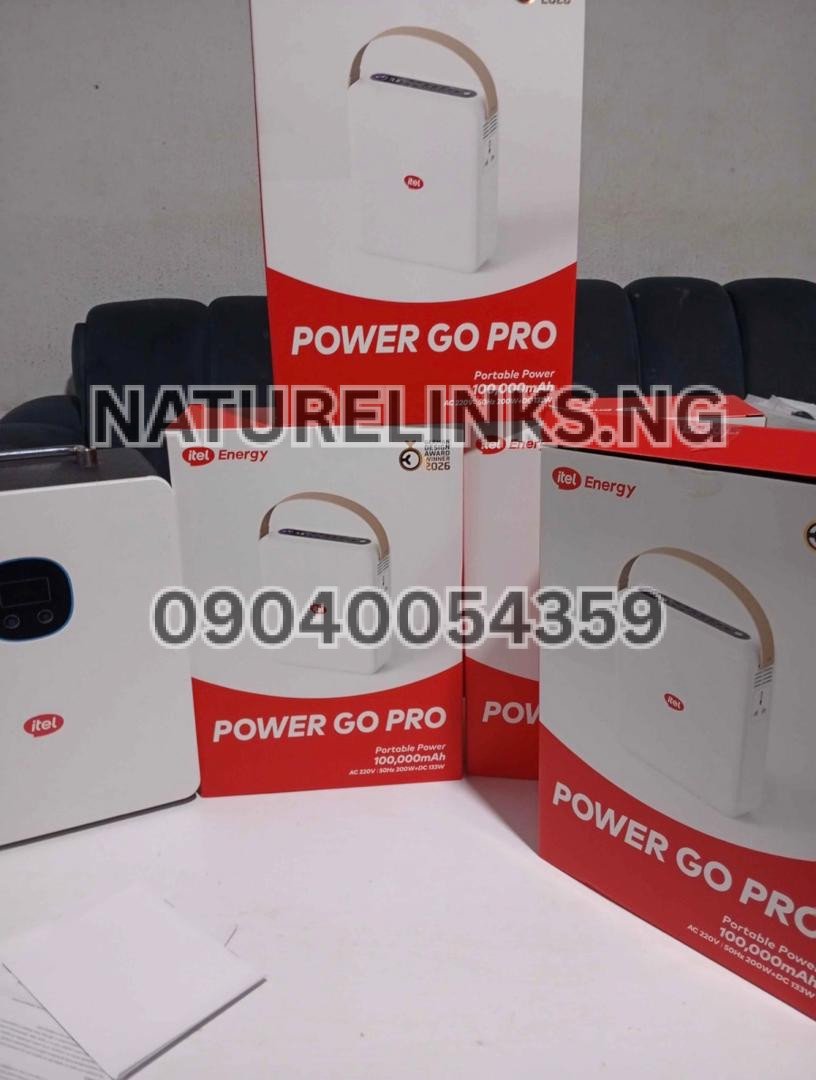
The standard itel Power Go IESS-320T is positioned around a 130W maximum total output, while the itel Power Go Pro IESS-320ACT adds a 200W AC output and additional AC/DC flexibility. The Pro therefore gives you a different output capability even though its battery energy capacity remains 320Wh.
For Nigerian buyers, this difference matters because the right model depends less on the name “Pro” and more on the devices you want to power, their wattage, how you want to recharge the unit, and whether you need an AC socket.
What Is the Difference Between Itel Power Go and Power Go Pro?
The simplest explanation is:
itel Power Go: 320Wh portable power station with approximately 130W maximum total output, designed primarily for phones, routers, lights, laptops and other relatively low-power devices.
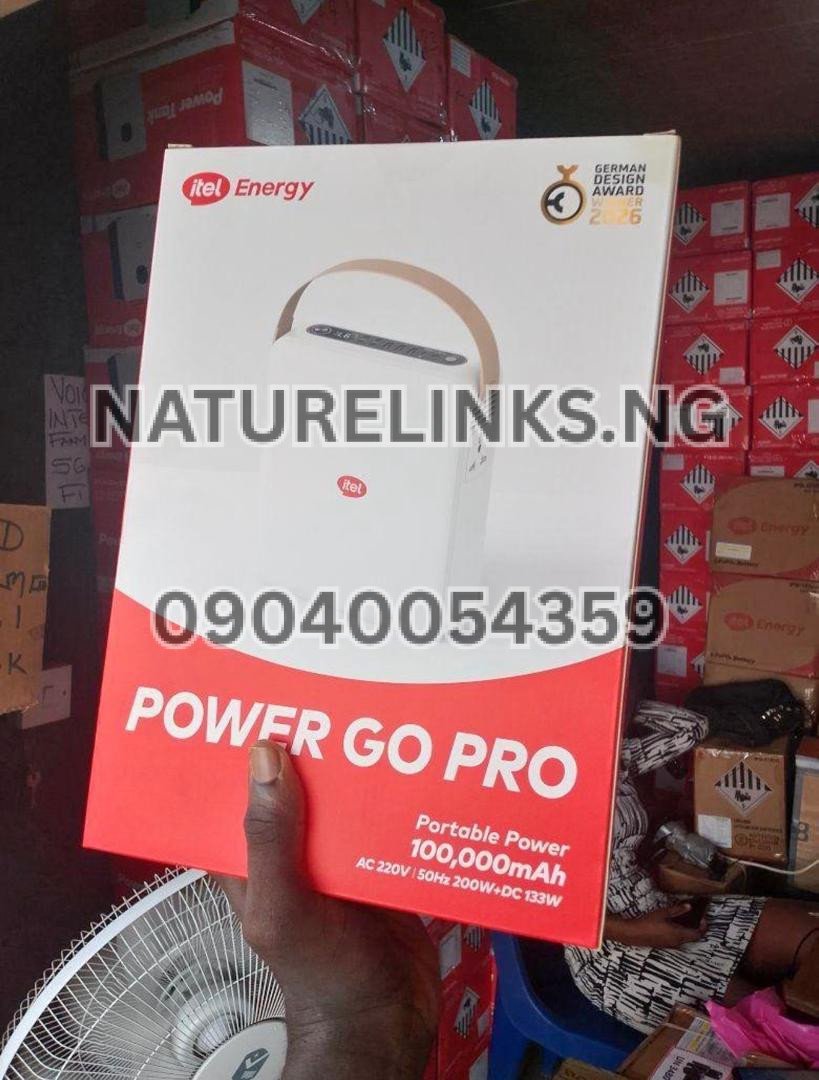
itel Power Go Pro: 320Wh portable power station with a 200W AC output, plus USB-C, USB-A and DC outputs, giving you greater flexibility for compatible AC appliances and electronics.
The two products therefore have the same basic battery-energy class but different output capabilities.
This is important because Wh and W are not the same thing.
- Wh (watt-hours) describes how much energy the battery stores.
- W (watts) describes how much power the station can deliver to connected equipment at a particular time.
Both Power Go and Power Go Pro are listed at about 320Wh, but the Pro’s higher AC output means it can handle compatible loads that would exceed the standard Power Go’s output capability.

Itel Power Go vs Power Go Pro: Quick Comparison
| Feature | itel Power Go | itel Power Go Pro |
|---|---|---|
| Model | IESS-320T | IESS-320ACT |
| Battery capacity | 320Wh / 100,000mAh | 320Wh / 100,000mAh |
| Battery chemistry | LiFePO4 | LiFePO4 |
| Maximum total output | About 130W | 200W AC output |
| AC output | Standard Power Go focuses on USB/DC output | Yes, up to 200W AC |
| USB-C output | Up to 65W | Up to 65W |
| USB-C charging input | Up to 100W | Up to 100W |
| Solar/DC recharge | Up to 100W | Up to 100W |
| Portability | Compact | Compact |
| Main advantage | Lower-power portable backup | Higher output and AC flexibility |
| Suitable for | Phones, routers, lights, laptops and small devices | Phones, laptops, TVs and compatible devices within the 200W limit |
The Power Go specifications list a 320Wh LiFePO4 battery, 130W total output and up to 100W input through its DC/USB-C charging system.
The Power Go Pro is listed with a 320Wh battery, 200W AC output, USB-C fast charging and multiple DC/USB outputs.
Is Itel Power Go the Same as Power Go Pro?
No. Itel Power Go and Power Go Pro are different models.
They share several characteristics, particularly their 320Wh battery capacity, but their output configurations differ.
The standard Power Go IESS-320T is designed around a 130W maximum total output. The Power Go Pro IESS-320ACT is designed around a 200W AC output and provides a broader selection of output options.
This means you should not assume that because both products have 320Wh batteries, they will power exactly the same equipment.
Itel Power Go 320Wh Specifications
The standard itel Power Go IESS-320T has a 320Wh / 100,000mAh LiFePO4 battery.
Its published specifications include:
- 320Wh battery capacity
- 100,000mAh stated battery capacity
- LiFePO4 battery chemistry
- 130W maximum total output
- Up to 100W DC input
- Up to 100W USB-C input
- Up to 65W USB-C output
- Multiple USB-A outputs
- DC outputs
- LED light
- Compact 190 × 65 × 190mm form factor
- Approximately 3.5kg weight
The published IESS-320T specifications identify the model as having 130W total output and 100W maximum charging input.
For someone looking for a portable backup power station for a phone, Wi-Fi router, LED lights or a compatible laptop, this configuration can be useful.
Itel Power Go Pro 320Wh Specifications
The itel Power Go Pro IESS-320ACT also uses a 320Wh / 100,000mAh-class LiFePO4 battery.
Its published specifications include:
- 320Wh battery capacity
- 100,000mAh capacity
- LiFePO4 battery
- Up to 200W AC output
- USB-C output up to 65W
- USB-A outputs
- DC outputs
- Up to 100W charging input
- Solar/DC charging capability
- AC charging capability
- Portable design
- Emergency LED lighting
The Nigerian itel product listing identifies the Power Go Pro as model IESS-320ACT and lists a 200W AC output alongside USB and DC outputs.
Which Is More Powerful: Itel Power Go or Power Go Pro?
Looking specifically at maximum output, the Power Go Pro has the higher output specification.
The standard Power Go is rated at approximately 130W total output, whereas the Power Go Pro provides a 200W AC output.
However, “more powerful” does not mean the Pro has a larger battery.
Both products are in the 320Wh battery class.
The major upgrade is the output capability and AC functionality, rather than a major increase in stored energy.
Itel Power Go vs Power Go Pro Battery Capacity
One of the most frequently misunderstood aspects of this comparison is battery capacity.
Both models are listed at approximately:
320Wh / 100,000mAh
Therefore, buying the Power Go Pro does not mean you are buying a 1,000Wh or 1kWh power station.
The Power Go Pro is still a 320Wh portable power station.
The difference is primarily in what the station can deliver through its outputs.
Does Itel Power Go Pro Have More Battery Than Power Go?
No.
The available product specifications put both the Power Go and Power Go Pro at approximately 320Wh.
The Power Go Pro is therefore not simply a larger-battery version of the Power Go.
Instead, it is an upgraded configuration that provides higher output capability and an AC outlet.
This distinction is important when comparing itel Power Go price in Nigeria with itel Power Go Pro price in Nigeria.
Does Itel Power Go Have an AC Output?
The standard IESS-320T specification is primarily described around its USB-C, USB-A and DC outputs and 130W total output.
Therefore, buyers should check the exact model and physical port configuration before assuming they can plug a conventional AC appliance directly into a Power Go.
This is one of the reasons the Power Go Pro is different: the Pro is explicitly listed with a 200W AC outlet.
Does Itel Power Go Pro Have an AC Socket?
Yes.
The Power Go Pro IESS-320ACT is listed with a 200W AC output.
This gives the Pro an important advantage in terms of connection flexibility.
For example, an appropriate AC-compatible load within the station’s output rating can be connected to the Pro’s AC socket.
Nevertheless, a 200W AC output does not mean that the Power Go Pro can run every household appliance.
High-power appliances such as electric irons, kettles, pressing irons, microwave ovens, refrigerators and electric cookers generally require considerably more power than a 200W portable power station is designed to provide.
Can Itel Power Go Pro Power a TV?
It depends on the TV’s actual power consumption.
A small LED television consuming significantly less than 200W may be within the Power Go Pro’s output range.
However, you should check the rating label on your television before buying.
For example, if your television is rated at 60W, the Pro’s 200W AC output is theoretically sufficient from an output-power perspective.
The actual runtime will depend on battery condition, conversion losses and the TV’s real consumption.
The manufacturer-oriented Nigerian product information also gives examples of the Pro being suitable for devices such as TVs, laptops, routers, fans and lights, provided the combined load stays within its output capability.
Can Itel Power Go Power a TV?
The answer depends on the particular TV and how it connects to the Power Go.
Because the standard Power Go is specified at approximately 130W total output, the television’s power requirement must remain within the available output and compatible port configuration.
For buyers who specifically want an AC socket for a compatible television, the Power Go Pro’s 200W AC output provides a more straightforward connection option.
Can Itel Power Go Pro Power a Laptop?
Yes, provided the laptop and charging method are compatible with its available outputs.
The Power Go Pro has a USB-C output rated up to 65W, which can be useful for compatible USB-C laptops.
A laptop requiring 45W, for example, is within a 65W USB-C output capability.
However, laptops differ significantly in their charging requirements, particularly gaming laptops.
Always check the laptop’s charger rating before purchasing.
Can Itel Power Go Charge a Laptop?
Yes, compatible laptops can be charged using its USB-C output, with the published IESS-320T specification listing up to 65W USB-C output.
This makes the Power Go particularly relevant to:
- Students
- Remote workers
- Freelancers
- Content creators
- Online business owners
- Office workers
- People working during power outages
A laptop that requires more than the available USB-C output may require a different charging method or a higher-capacity power station.

Which Is Better for Laptop Users: Power Go or Power Go Pro?
The answer depends on the laptop.
Both models provide USB-C charging capabilities, but the Pro offers additional AC flexibility.
If your laptop accepts USB-C PD and its charging requirement is within the available USB-C output, either model may be suitable.
If your laptop uses a conventional AC adapter, the Power Go Pro’s AC socket can provide an additional connection option, provided the total load remains within the station’s rated output.
Can Itel Power Go Charge Phones?
Yes.
The Power Go is designed with multiple USB outputs, making it suitable for charging smartphones and other small electronic devices.
The published specifications include multiple USB-A outputs and USB-C output.
This makes it useful as a backup electricity source when there is no NEPA/PHCN supply.
Can Itel Power Go Pro Charge Phones?
Yes.
The Power Go Pro includes USB-A and USB-C connectivity, allowing compatible phones and other USB-powered electronics to be charged.
The USB-C port also provides higher-power charging capability for compatible devices.
Itel Power Go vs Power Go Pro for Router
Both can be useful for keeping a compatible Wi-Fi router or modem operating during a power outage.
For router users, the standard Power Go may already provide sufficient capacity and output.
The key question is the router’s voltage and power requirement.
Many routers consume relatively little power, so a 320Wh portable power station can provide useful backup runtime.
The Pro becomes more attractive when you also want an AC socket for other compatible devices.
Itel Power Go vs Power Go Pro for Fan
For small DC fans or low-power fans, either model may be useful if the fan’s electrical specifications match the available output.
The Pro provides greater output flexibility because of its 200W AC outlet.
However, buyers should not confuse a 200W maximum output with the ability to operate large household fans indefinitely.
Runtime depends on the fan’s actual wattage and the 320Wh battery capacity.
Can Itel Power Go Power a Fridge?
This is an important buying question.
A typical household refrigerator can have a starting surge significantly above its normal running power.
The standard Power Go’s 130W maximum output makes it unsuitable for many refrigerators.
The Power Go Pro’s 200W AC output also does not automatically make it suitable for a refrigerator because the refrigerator may exceed the output limit during compressor startup.
Therefore, do not buy Power Go or Power Go Pro specifically to run a typical refrigerator without first checking the refrigerator’s running and starting wattage against the power station’s specifications.
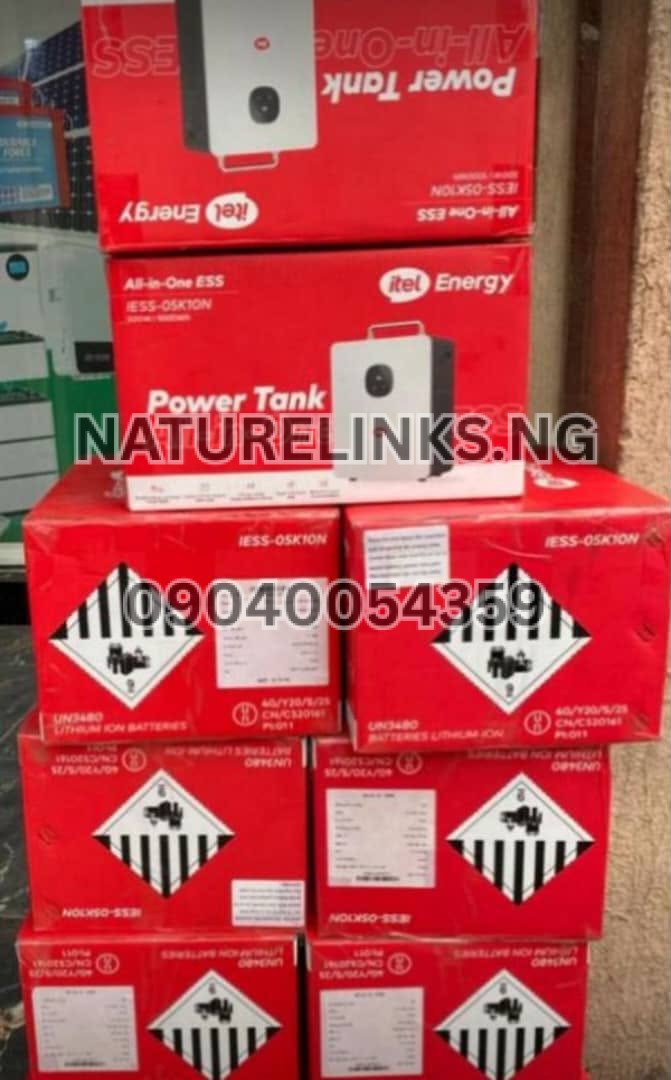
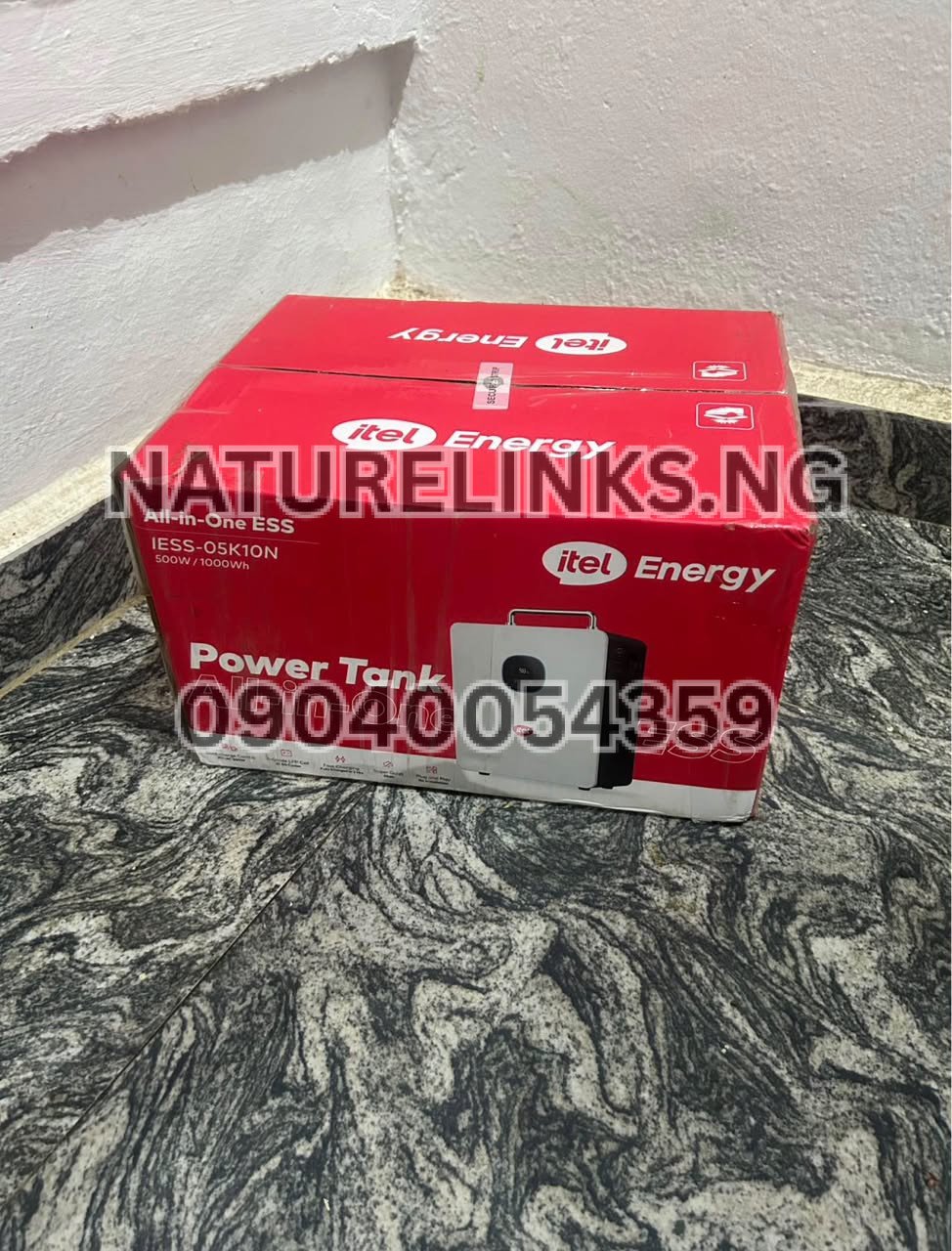
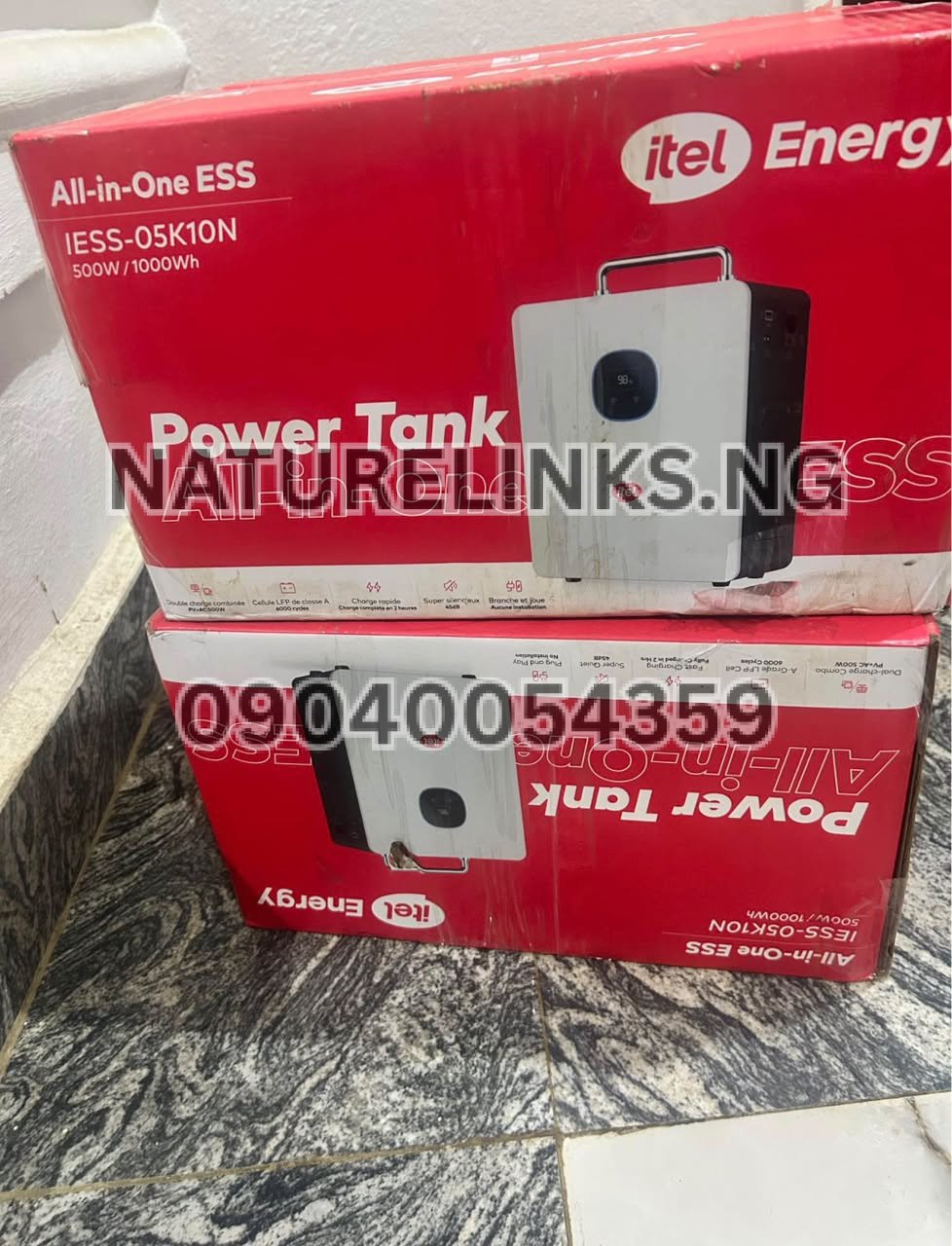
For refrigerator backup, a larger power station such as the itel Power Tank, which is listed at 1,000Wh and 500W nominal AC output, is a different class of product.
Itel Power Go vs Power Go Pro for Home Use
For Nigerian homes, both models can provide portable backup power for smaller electronics.
Typical applications can include:
- Smartphone charging
- Wi-Fi routers
- Modems
- LED lights
- Small fans
- Tablets
- Laptops
- Cameras
- Small electronics
- USB-powered equipment
The Pro provides additional flexibility because of its 200W AC outlet.
However, neither model should be treated as a replacement for a high-capacity home inverter system.
Itel Power Go vs Power Go Pro for Office Use
For an office worker, either product can provide useful backup for low-power equipment.
The Power Go can be particularly useful where the main requirements are:
- Laptop
- Smartphone
- Wi-Fi router
- Small LED lamp
- USB accessories
The Power Go Pro provides additional AC flexibility for compatible equipment.
For remote workers, online business owners and freelancers, the Pro’s 200W AC capability may be useful where an AC charger is required.

Itel Power Go vs Power Go Pro for Students
Students may find the standard Power Go useful because it is compact and designed for relatively low-power devices.
It can be used for:
- Phone charging
- Laptop charging
- Reading lights
- Router backup
- Small USB devices
The Power Go Pro provides similar battery capacity but adds a 200W AC output.
The choice therefore depends on whether the student needs the extra AC functionality.
Itel Power Go vs Power Go Pro for Travel
Both are portable power stations rather than traditional home inverter systems.
The published Power Go specifications list a weight of approximately 3.5kg, making the unit substantially more portable than many conventional home backup systems.
The Pro is also designed as a portable unit.
For travel, camping, field work and outdoor activities, buyers should consider:
- Weight
- Battery capacity
- Output
- Charging options
- Device compatibility
- Solar charging
- Available ports
How Does Itel Power Go Charge?
The Power Go supports multiple charging methods.
The published specifications list:
- DC input up to 100W
- USB-C input up to 100W
- Solar charging capability
- Mains/wall charging through compatible charging equipment
The available specifications identify an input range of 11–24V / 5A or 100W maximum for DC input.
This makes the Power Go useful in Nigeria because it can be recharged from electricity and can also be paired with solar charging.
How Does Itel Power Go Pro Charge?
The Power Go Pro supports fast recharging through compatible charging inputs.
Current product information lists up to 100W charging input, including solar/DC and USB-C charging options.
One current Nigerian product listing states that a compatible 100W input can recharge the Power Go Pro in approximately four hours, although actual charging time can vary depending on the charging source and conditions.
Can Itel Power Go Be Charged With Solar?
Yes.
The Power Go is designed to support solar charging, with available specifications listing up to 100W PV/DC input.
This is useful for Nigerian customers who want to combine portable backup power with solar energy.
However, the solar panel must have suitable voltage/current characteristics for the Power Go’s charging input.
Do not connect an incompatible high-voltage solar panel directly to the station.
Can Itel Power Go Pro Be Charged With Solar?
Yes.
The Power Go Pro supports solar/DC charging, with current product specifications listing up to 100W input.
This means a compatible 100W-class solar charging setup can be used to recharge the Power Go Pro.
Actual solar charging speed depends on:
- Panel wattage
- Sunlight intensity
- Panel orientation
- Weather
- Cable losses
- Battery state
- Input limitations
What Solar Panel Is Suitable for Itel Power Go and Power Go Pro?
For both models, the available specifications indicate a maximum charging input around 100W.
Therefore, a compatible 100W solar panel is a straightforward pairing for the maximum stated charging input.
The important word is compatible.
A solar panel’s nominal wattage alone is not enough. Its voltage and current must also fall within the power station’s supported input range.
The Power Go IESS-320T documentation lists DC input at 11–24V/5A and a 100W maximum.
Itel Power Go Price in Nigeria
The price of the itel Power Go in Nigeria varies by seller, promotion, stock availability and whether accessories or solar panels are included.
Current Nigerian listings show substantial price variation, so buyers should confirm the exact model, warranty and package contents before paying. For example, current listings have shown the IESS-320T at different prices from different Nigerian sellers.
When searching for itel Power Go price in Nigeria, always confirm that the product is actually:
IESS-320T — 320Wh — 130W Power Go
rather than accidentally buying another itel power product.
Itel Power Go Pro Price in Nigeria
The itel Power Go Pro price in Nigeria also varies according to seller, promotion and package.
The Nigerian itel product store currently lists the Power Go Pro at ₦145,000, while other Nigerian retailers list different prices.
Prices can change, so prospective buyers should confirm the current selling price, warranty and included accessories before making payment.
Why Is Power Go Pro More Expensive Than Power Go?
One major reason is its enhanced output configuration.
Both have a 320Wh battery, but the Pro adds a 200W AC output and additional power-delivery flexibility.
Therefore, the price difference should not be interpreted simply as paying for a larger battery.
You are also paying for the different electronics, output architecture and AC functionality.

Is Itel Power Go Pro Worth the Extra Money?
The answer depends on the buyer’s requirements.
If your main needs are low-power USB/DC devices, the standard Power Go may provide the necessary functionality.
If you specifically need:
- A 200W AC outlet
- More output flexibility
- Conventional AC charging for compatible equipment
- Greater flexibility for laptops and small AC devices
then the Pro’s specifications may be more relevant.
The key is to compare your actual device requirements with the specifications rather than buying based solely on the word “Pro.”
Itel Power Go or Power Go Pro: Which One Should I Buy?
Consider the Power Go when your main devices are low-power electronics such as:
- Smartphones
- Tablets
- Routers
- LED lights
- USB devices
- Compatible laptops
Consider the Power Go Pro when you need the additional flexibility of:
- 200W AC output
- AC-powered compatible electronics
- USB-C charging
- USB-A devices
- DC devices
- Portable backup electricity
Both remain 320Wh-class portable power stations.
What Can Itel Power Go Power?
Depending on actual device wattage and connection requirements, the Power Go can be used for compatible:
- Phones
- Tablets
- Wi-Fi routers
- Modems
- LED lights
- Small fans
- Laptops
- Cameras
- USB accessories
- Other low-power electronics
The published IESS-320T specifications establish the 130W maximum total output, so the combined load must stay within the unit’s limits.
What Can Itel Power Go Pro Power?
The Power Go Pro is designed for compatible devices within its output rating.
Possible applications include:
- Smartphones
- Laptops
- Wi-Fi routers
- LED TVs
- Small fans
- Cameras
- Drones
- Tablets
- Small AC electronics
- USB equipment
Current Nigerian product information specifically describes the Power Go Pro as suitable for compatible laptops, TVs, Wi-Fi routers, phones and other low-to-medium-power devices.
Always check the actual wattage of your equipment.
Can Itel Power Go Pro Power a Laptop and Phone at the Same Time?
It can support multiple compatible devices simultaneously, provided their combined power requirements stay within the station’s output limitations.
For example, a USB-C laptop drawing 60W plus a phone drawing 10W represents approximately 70W of load before conversion losses.
The exact available power depends on which ports are used and the station’s output-management limits.
Can Itel Power Go Power Multiple Devices at Once?
Yes, within its output limitations.
The Power Go has multiple USB and DC outputs.
You can therefore connect several small devices, but connecting many devices does not create unlimited power.
The important calculation is:
Total device consumption must remain within the power station’s permitted output.
Battery Life of Itel Power Go vs Power Go Pro
Because both are approximately 320Wh, their theoretical stored-energy capacity is similar.
For a simplified estimate:
Runtime ≈ Battery capacity × efficiency ÷ appliance wattage
For example, if a device consumes 40W, the theoretical calculation starts around:
320Wh ÷ 40W = 8 hours
But real-world runtime will be lower because of inverter losses, battery-management limits, device behaviour and conversion efficiency.
Therefore, do not expect exactly eight hours in every real-world situation.
How Long Can Itel Power Go Last?
Runtime depends on what you connect.
A low-power 10W device can operate for considerably longer than a 100W device.
For example, ignoring losses:
- 10W load → about 32 hours theoretical
- 20W load → about 16 hours theoretical
- 40W load → about 8 hours theoretical
- 80W load → about 4 hours theoretical
- 130W load → about 2.46 hours theoretical
Actual runtime will be lower because the usable energy delivered to the load is affected by conversion losses and operating conditions.
How Long Can Itel Power Go Pro Last?
The Pro has the same approximate 320Wh energy capacity.
Therefore, the basic runtime relationship is similar.
A 20W load consumes energy much more slowly than a 150W load.
For a simple theoretical calculation:
320Wh ÷ 20W = 16 hours
But real-world runtime will vary.
Using a higher output does not increase battery capacity; it simply allows the station to support a higher instantaneous load within its output rating.
Itel Power Go Battery Type
The Power Go uses LiFePO4 (lithium iron phosphate) battery chemistry.
LiFePO4 is commonly used in portable power stations because of its durability and suitability for repeated charging and discharging.
The exact battery life experienced by a user depends on temperature, charging habits, discharge depth, storage and operating conditions.
Itel Power Go Pro Battery Type
The Power Go Pro also uses LiFePO4 battery chemistry.
This is one of the similarities between the two products.
The Pro is therefore not a completely different battery platform; its main upgrade is in output and functionality.
Itel Power Go vs Power Go Pro for Solar Backup
Both can be used as compact solar-rechargeable backup systems.
For customers who want:
- Solar charging
- Portable backup
- Phone charging
- Laptop charging
- Router backup
- Small-device power
both models can be considered.
The Pro becomes more useful when AC output is important.
For larger household solar requirements, however, customers should look at larger-capacity systems rather than assuming a 320Wh portable station can replace a conventional inverter installation.
Is Itel Power Go Pro a Solar Generator?
In everyday Nigerian shopping terminology, it can be described as a portable solar-rechargeable power station.
It stores electrical energy in its internal battery and can be recharged from solar or other supported charging sources.
The phrase “solar generator” is often used commercially for products of this type, although technically the unit is storing and converting electrical energy rather than generating electricity from fuel.
Itel Power Go vs Power Go Pro for NEPA/PHCN Outages
Both products are designed to provide backup electricity during power interruptions.
The standard Power Go is particularly useful for low-power electronics.
The Pro gives users a 200W AC outlet, which expands the range of compatible equipment they can connect.
For Nigerian homes experiencing frequent power outages, the correct choice should be based on the actual appliances that need backup.
Important: Do Not Confuse 320Wh With 320W
This is one of the most important things to understand before buying.
320Wh is battery energy capacity.
130W or 200W is output power.
A 320Wh battery does not mean that the unit can automatically power a 320W appliance.
The Power Go is rated around 130W total output, while the Power Go Pro provides a 200W AC output.
This distinction is essential when comparing portable power stations.
Itel Power Go and Power Go Pro Charging Time
Both models support high-speed charging inputs around 100W.
The Power Go specifications list up to 100W input.
The Power Go Pro is also listed with up to 100W charging input, with some product information giving approximately four hours under suitable 100W charging conditions.
Actual charging time may vary depending on:
- Starting battery percentage
- Charger output
- Solar intensity
- Temperature
- Charging mode
- Cable quality
- Battery condition
Where to Buy Genuine Itel Power Go and Power Go Pro in Nigeria
Customers looking for an original Itel Power Go in Nigeria or original Itel Power Go Pro in Nigeria should verify the exact model number, warranty and seller information before payment.
Nature Links Nigeria Limited
The Best Seller: Nature Solar Global Limited
Distributor: Nature Solar Global Limited
CEO: Mr. Joseph Chikeleze
Call: 07049528019
WhatsApp: 09040054359
Shop Address: F1571 Upstairs (F-Line), Alaba International Market. Lagos State 🇳🇬
Nature Links Nigeria Limited [NatureLinks.NG]
Customers can contact the seller to confirm current availability, current price, product model, accessories and delivery arrangements before ordering.
Why Check the Model Number Before Buying?
The names Power Go and Power Go Pro are similar enough that buyers can accidentally purchase the wrong product.
Look for:
Power Go — IESS-320T
and
Power Go Pro — IESS-320ACT
The available product specifications identify these as different models.
This is particularly important when buying online or through marketplace listings.
What Should I Check Before Buying Itel Power Go?
Before purchasing, check:
- Exact model number
- Battery capacity
- Maximum output
- USB-C output
- DC output
- Charging input
- Solar compatibility
- AC output availability
- Warranty
- Seller authenticity
- Included charging cables
- Current Nigerian price
- Delivery terms
- Return policy
Do not purchase solely because an online advertisement says “100,000mAh.”
The model number and wattage specifications are much more useful for determining what the device can actually do.
What Should I Check Before Buying Itel Power Go Pro?
For the Power Go Pro, pay particular attention to:
- IESS-320ACT model
- 320Wh capacity
- 200W AC output
- 100W charging input
- 65W USB-C output
- LiFePO4 battery
- Included accessories
- Warranty
- Genuine seller
The current itel Nigerian product listing confirms the Pro’s 320Wh battery and 200W AC output.
Itel Power Go vs Power Go Pro: Main Advantages
Power Go advantages
- 320Wh portable battery
- LiFePO4 chemistry
- Compact design
- 130W maximum output
- USB-C charging
- Solar charging support
- Suitable for low-power electronics
- Useful for students and remote workers
Power Go Pro advantages
- 320Wh battery
- LiFePO4 chemistry
- 200W AC output
- USB-C charging
- USB-A outputs
- DC outputs
- Solar charging
- Greater AC connection flexibility
- Suitable for a wider range of compatible low-power devices
What Is the Biggest Difference Between Power Go and Power Go Pro?
The biggest practical difference is output capability.
The Power Go is a 130W-class portable power station, while the Power Go Pro provides a 200W AC output.
Both are approximately 320Wh.
Therefore, if you are comparing them for a purchase, focus on the equipment you intend to connect.
What Is the Difference Between Itel Power Go and Power Go Pro? Final Explanation
If someone asks you “What Is the Difference Between Itel Power Go and Power Go Pro?”, the short answer is:
The Power Go and Power Go Pro have the same 320Wh battery class, but the Power Go Pro provides a higher 200W AC output and greater connection flexibility, while the standard Power Go is rated around 130W total output and is aimed more at lower-power USB/DC applications.
So, “What Is the Difference Between Itel Power Go and Power Go Pro?” is not primarily a question about battery size.
It is a question about output, connectivity and the type of equipment you want to power.
If you only need phones, routers, lights, tablets and compatible laptops, the standard Power Go may provide the specifications you are looking for.
If you need a portable station with a 200W AC outlet and more flexibility for compatible AC equipment, the Power Go Pro has the more appropriate output configuration.
Frequently Asked Questions About Itel Power Go and Power Go Pro
1. What is the difference between Itel Power Go and Power Go Pro?
The standard Power Go IESS-320T is a 320Wh portable power station with approximately 130W maximum total output. The Power Go Pro IESS-320ACT is also a 320Wh unit but provides a 200W AC output alongside USB and DC outputs.
2. Is Itel Power Go Pro better than Power Go?
The specifications are different rather than simply one product replacing the other. The Pro offers 200W AC output, while the standard Power Go is rated at 130W total output. The appropriate model depends on the devices you want to power.
3. Does Itel Power Go Pro have a bigger battery?
No. Both are listed at approximately 320Wh / 100,000mAh. The Pro’s main difference is its output configuration.
4. How many watts is Itel Power Go?
The IESS-320T Power Go is specified at 130W maximum total output.
5. How many watts is Itel Power Go Pro?
The Power Go Pro IESS-320ACT has a 200W AC output according to current product specifications.
6. Can Itel Power Go charge a laptop?
Yes, compatible laptops can be charged through its USB-C output, which is specified up to 65W.
7. Can Itel Power Go Pro charge a laptop?
Yes. Its USB-C output supports up to 65W, making it suitable for compatible USB-C laptops within that power requirement.
8. Can Itel Power Go use solar panels?
Yes. The Power Go supports solar charging, with specifications listing up to 100W input.
9. Can Itel Power Go Pro use solar panels?
Yes. The Power Go Pro supports solar/DC charging and is listed with up to 100W charging input.
10. Where can I buy Itel Power Go or Power Go Pro in Nigeria?
Buyers should verify the model, warranty, accessories and authenticity with a reputable Nigerian seller. Nature Links Nigeria Limited / Nature Solar Global Limited can be contacted at 07049528019 or 09040054359 on WhatsApp, with the listed shop address at F1571 Upstairs (F-Line), Alaba International Market, Lagos State, Nigeria.
Conclusion
The itel Power Go and itel Power Go Pro are both compact 320Wh LiFePO4 portable power stations, but they are designed with different output capabilities. The Power Go IESS-320T is rated around 130W total output, while the Power Go Pro IESS-320ACT adds a 200W AC outlet and broader output flexibility.
For Nigerians searching for itel Power Go price in Nigeria, itel Power Go Pro price in Nigeria, itel Power Go vs Power Go Pro, original itel Power Go, genuine itel Power Go Pro, or a portable solar generator in Nigeria, the most important buying step is to match the station’s output and ports with your actual appliances.
If your requirements are mainly smartphones, routers, lights, tablets and compatible laptops, the standard Power Go’s 320Wh/130W configuration may meet those requirements.
If you need the additional flexibility of a 200W AC outlet, the Power Go Pro offers a different output configuration while retaining the same approximate 320Wh battery class.
For larger appliances such as refrigerators, electric irons, kettles and cooking equipment, do not assume either 320Wh model is suitable. Check the appliance’s running and starting wattage and consider a larger power station where necessary.
For genuine-product enquiries, current availability and purchase information, contact Nature Links Nigeria Limited / Nature Solar Global Limited at 07049528019 or WhatsApp 09040054359, or visit F1571 Upstairs (F-Line), Alaba International Market, Lagos State 🇳🇬.