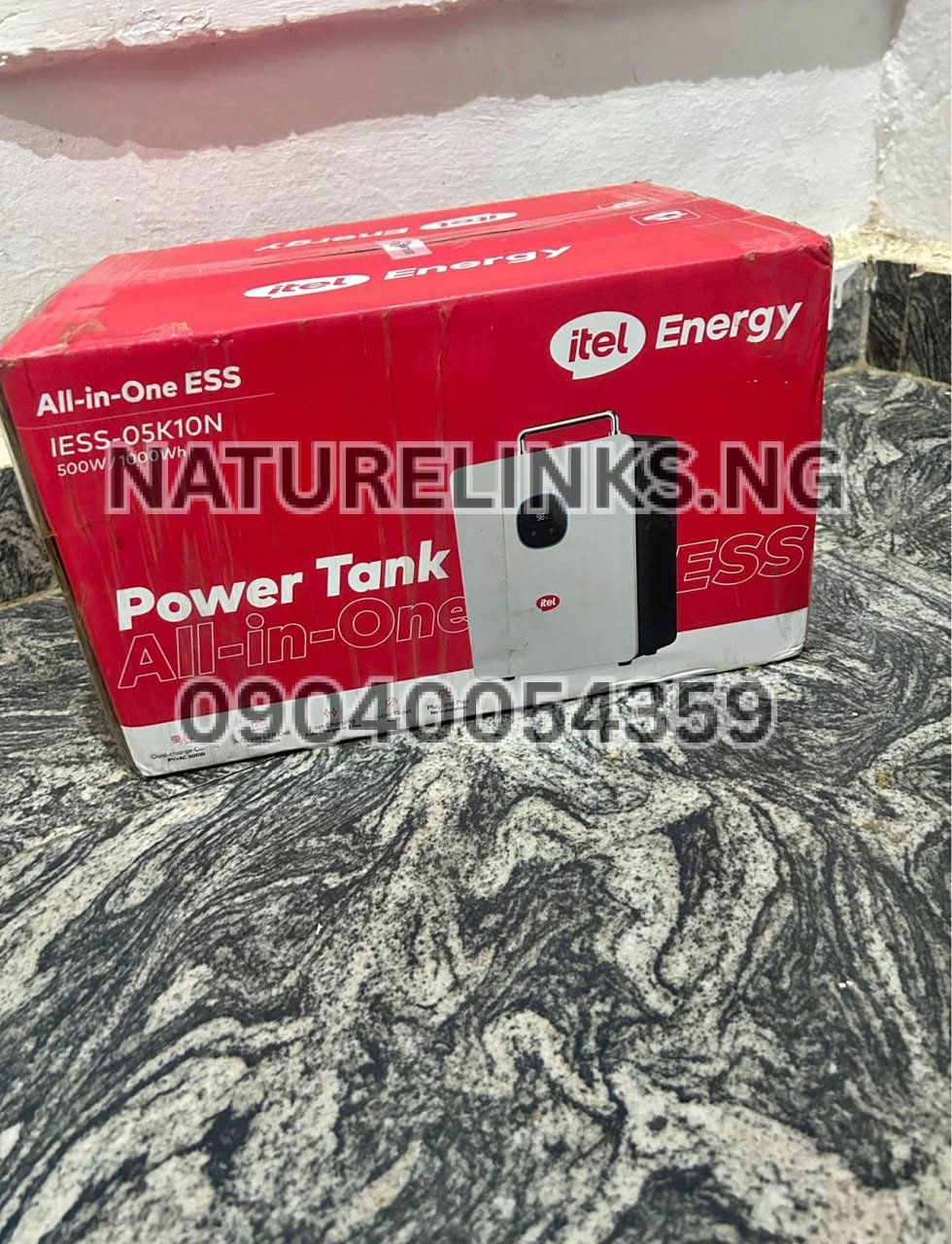
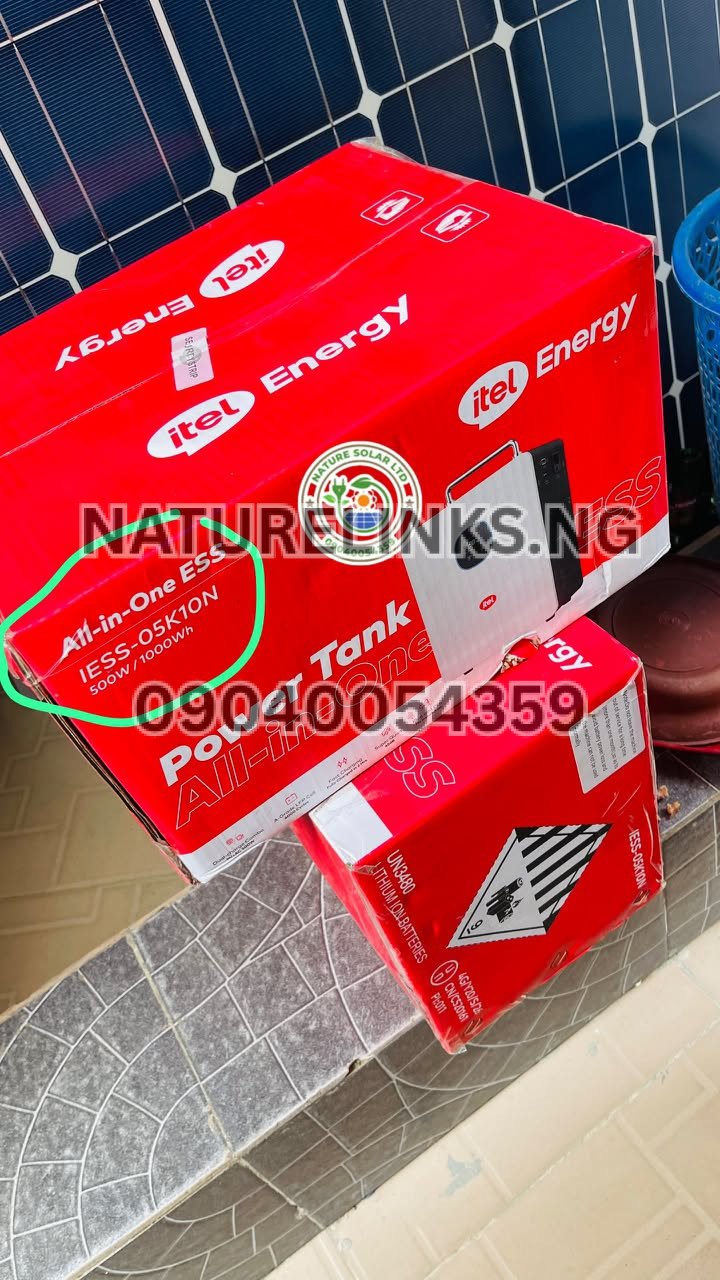
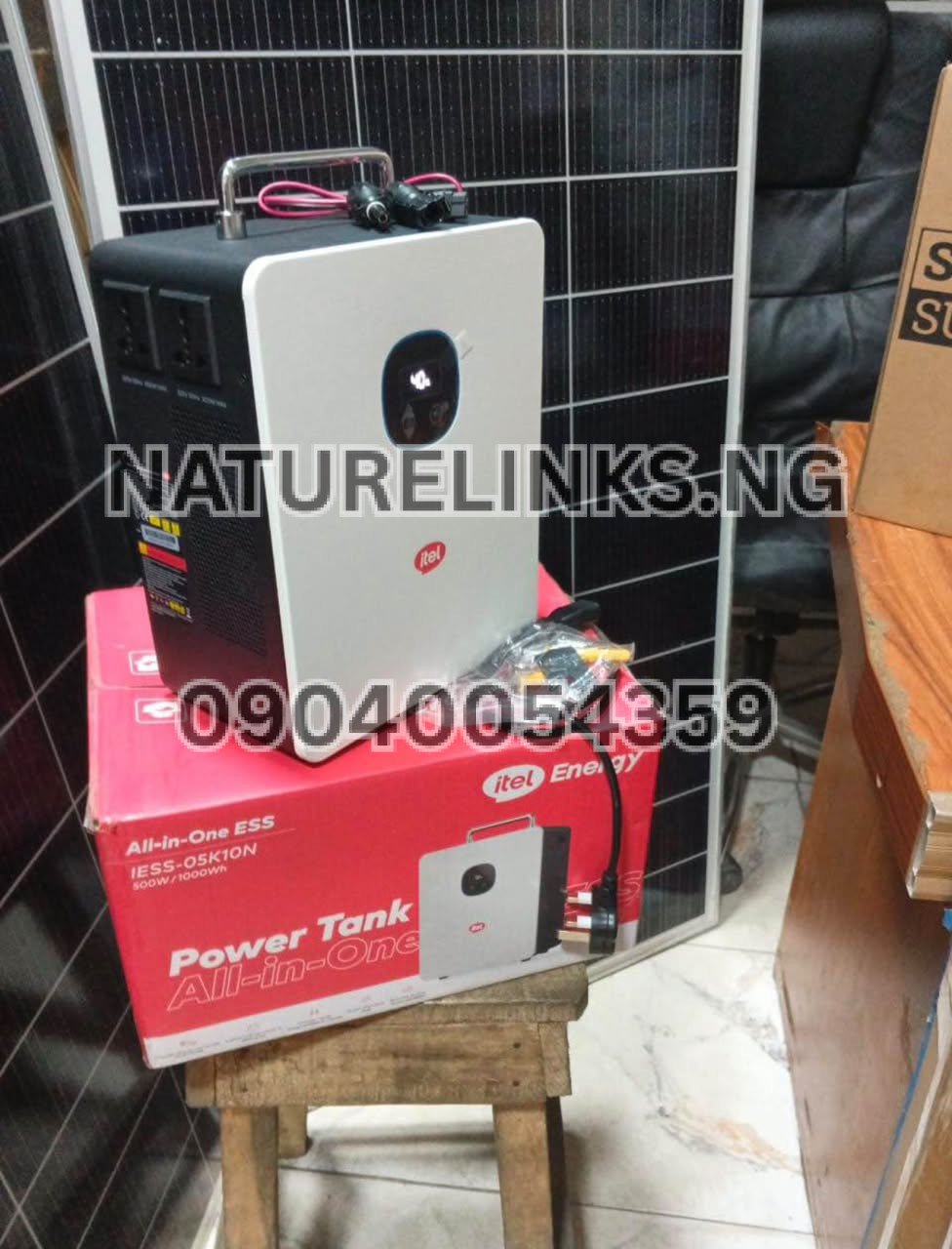
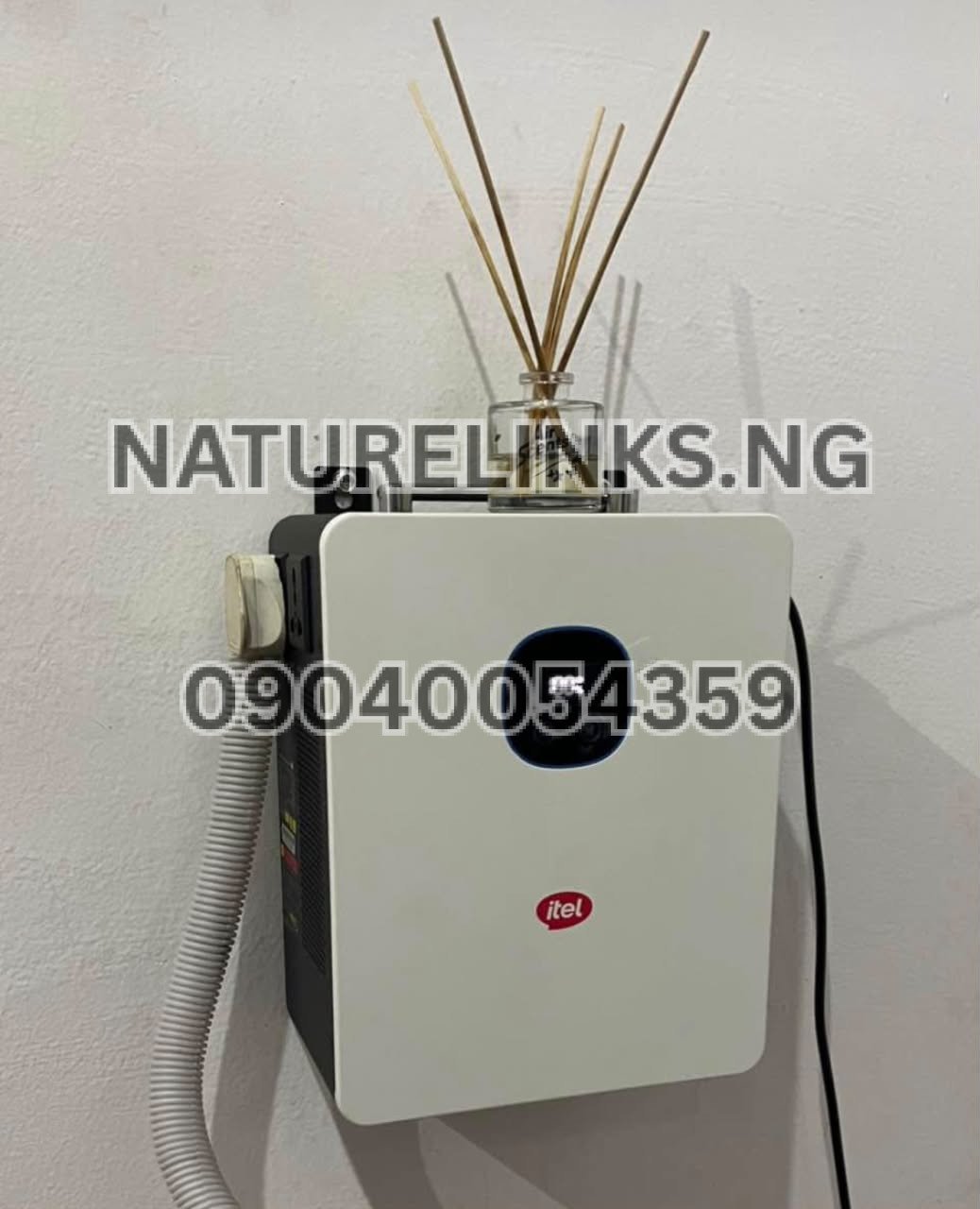
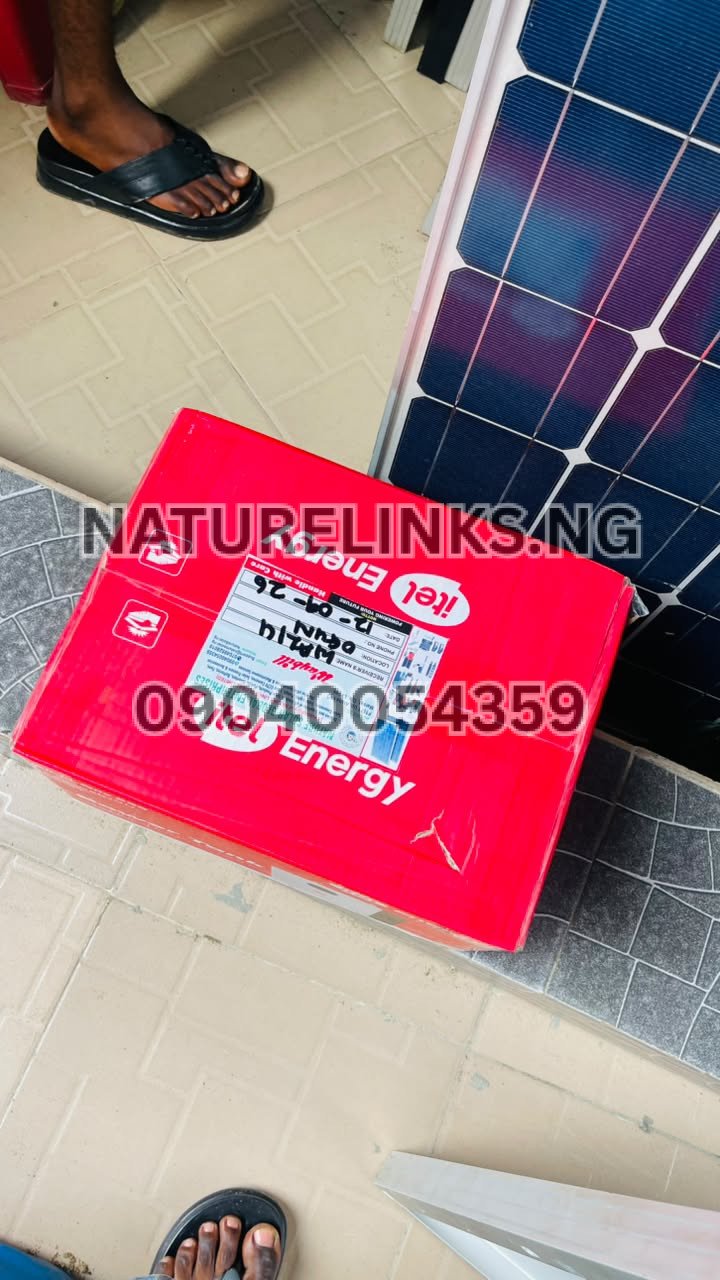
The Best Seller is Nature Solar Global Limited, the accredited distributor in Nigeria, with Nature Links Nigeria Limited [NatureLinks.NG] serving customers looking for genuine Itel Power Tank products and solar-power solutions across Nigeria.
If you are searching for “What Voltage Solar Panel Does Power Tank Need?”, the most important thing to understand is that the solar panel must operate within the Power Tank’s supported PV voltage range. For the commonly documented itel Power Tank IESS-05K10N, the built-in MPPT solar controller supports an 11V–60V MPPT voltage range, with an 11V startup voltage and a maximum PV input of 400W.
This means you should not choose a solar panel simply because it has a high wattage. The panel’s voltage, wattage, current, connector and actual operating conditions all matter. A panel or panel arrangement that exceeds the Power Tank’s maximum PV voltage can trigger protection or potentially damage equipment.
For Nigerian buyers, this is particularly important because many sellers advertise solar panels by wattage—such as 200W, 300W, 400W and 450W—without always explaining the voltage requirements.
What Voltage Solar Panel Does Power Tank Need?
For the commonly documented itel Power Tank IESS-05K10N, the solar input specifications are:
| Solar specification | Documented rating |
|---|---|
| MPPT voltage range | 11V–60V |
| Startup voltage | 11V |
| Maximum PV input power | 400W |
| MPPT trackers | 1 |
| Solar charging | Yes |
| Solar controller | Built-in MPPT |
The manufacturer-published specifications state that the Power Tank accepts a maximum PV input of 400W and has an MPPT voltage range of 11–60V.
Therefore, when someone asks “What Voltage Solar Panel Does Power Tank Need?”, the practical answer for this documented model is:
Use a compatible solar-panel configuration whose operating voltage falls within 11V–60V, while keeping the total PV input at or below 400W.
Always check the exact model’s label and supplied datasheet before connecting a panel because specifications can vary between product versions and regional configurations.
What Is the Recommended Solar Panel Voltage for Itel Power Tank?
The Power Tank does not require one single fixed panel voltage such as exactly 12V, 24V or 48V. Instead, its MPPT controller accepts a voltage range.
The documented range is 11V to 60V.
This gives the buyer flexibility when selecting a compatible panel.
For example, a suitable solar panel should have a voltage specification that allows the Power Tank to receive solar input within its supported range under real operating conditions.
However, do not confuse:
- Panel nominal voltage
- Voc (open-circuit voltage)
- Vmp (maximum-power voltage)
These are different specifications.
A panel marketed as a “12V solar panel” does not necessarily produce exactly 12V in operation. Similarly, a “24V panel” can have an open-circuit voltage substantially higher than its nominal classification.
For this reason, check the actual Voc and Vmp printed on the solar-panel datasheet, not just the marketing description.
Can I Use a 12V Solar Panel With Itel Power Tank?
A compatible 12V-class solar panel may be able to charge the Power Tank because the documented MPPT operating range starts at 11V.
However, buyers should check the panel’s actual operating voltage rather than relying solely on the phrase “12V solar panel.”
A low-voltage panel may also provide limited charging power depending on its wattage, sunlight and operating conditions.
For faster charging, buyers generally look at higher-wattage compatible panels while staying within the Power Tank’s voltage and 400W PV limits.
Can I Use a 24V Solar Panel With Itel Power Tank?
A properly specified 24V-class solar panel can fall within the Power Tank’s documented 11–60V MPPT range.
However, you should check its maximum open-circuit voltage (Voc) and operating voltage before connection.
The important rule is not simply:
“It is a 24V panel, so it must work.”
Instead, check the actual electrical specifications against the Power Tank’s allowable PV-input limits.
This is especially important in bright Nigerian sunlight because a panel’s voltage can vary with temperature and operating conditions.
Can I Use a 48V Solar Panel With Itel Power Tank?
A 48V-class solar-panel configuration may be compatible with the documented 11–60V MPPT range, but the panel’s actual Voc must remain within the Power Tank’s maximum permitted PV voltage.
The manufacturer lists 60V as the maximum PV input voltage for the IESS-05K10N.
Therefore, a buyer should not assume that every panel marketed as “48V” is automatically safe.
Check:
- Vmp
- Voc
- Maximum PV voltage
- Panel wattage
- Current
- Series/parallel configuration
If multiple panels are connected in series, their voltages add together. This can become dangerous if the resulting open-circuit voltage exceeds the Power Tank’s maximum PV-input voltage.

What Is the Maximum Solar Panel Wattage for Itel Power Tank?
The documented maximum PV input for the IESS-05K10N is 400W.
Therefore, the commonly documented Power Tank configuration is designed to accept up to 400W of solar input.
This is an important distinction:
The Power Tank has a 1,000Wh battery, but its maximum solar input is 400W.
Battery capacity and solar-input power are different measurements.
- 1,000Wh = stored energy capacity
- 400W = maximum documented solar/PV input
- 500W = nominal AC inverter output
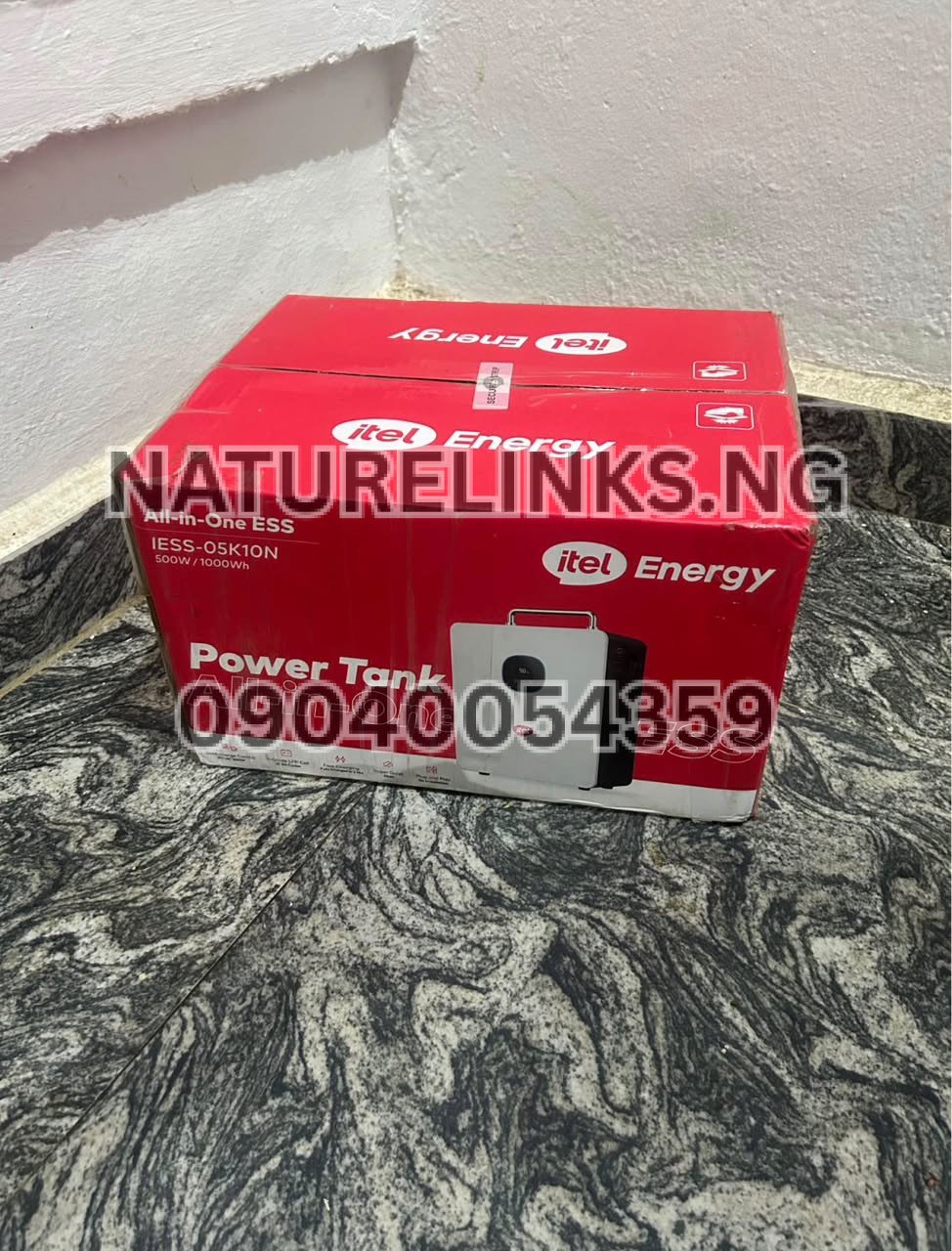
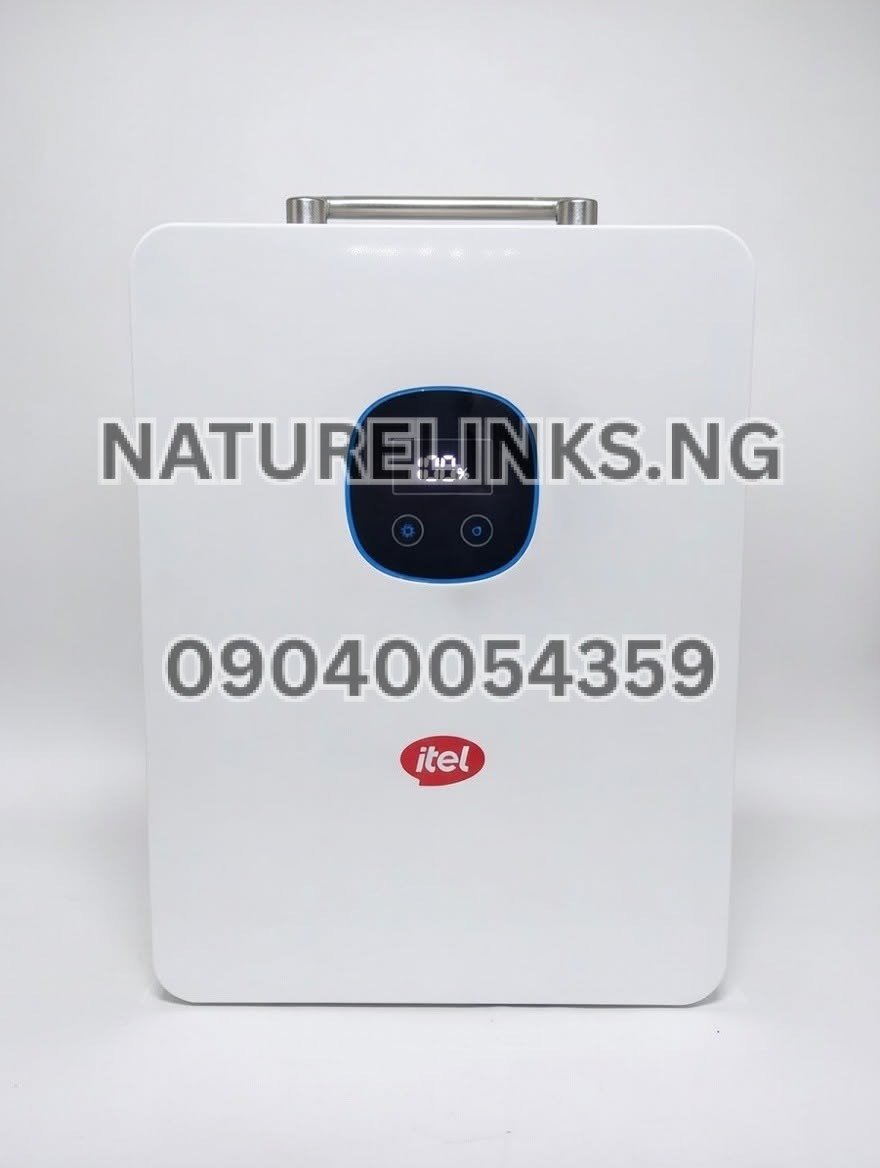
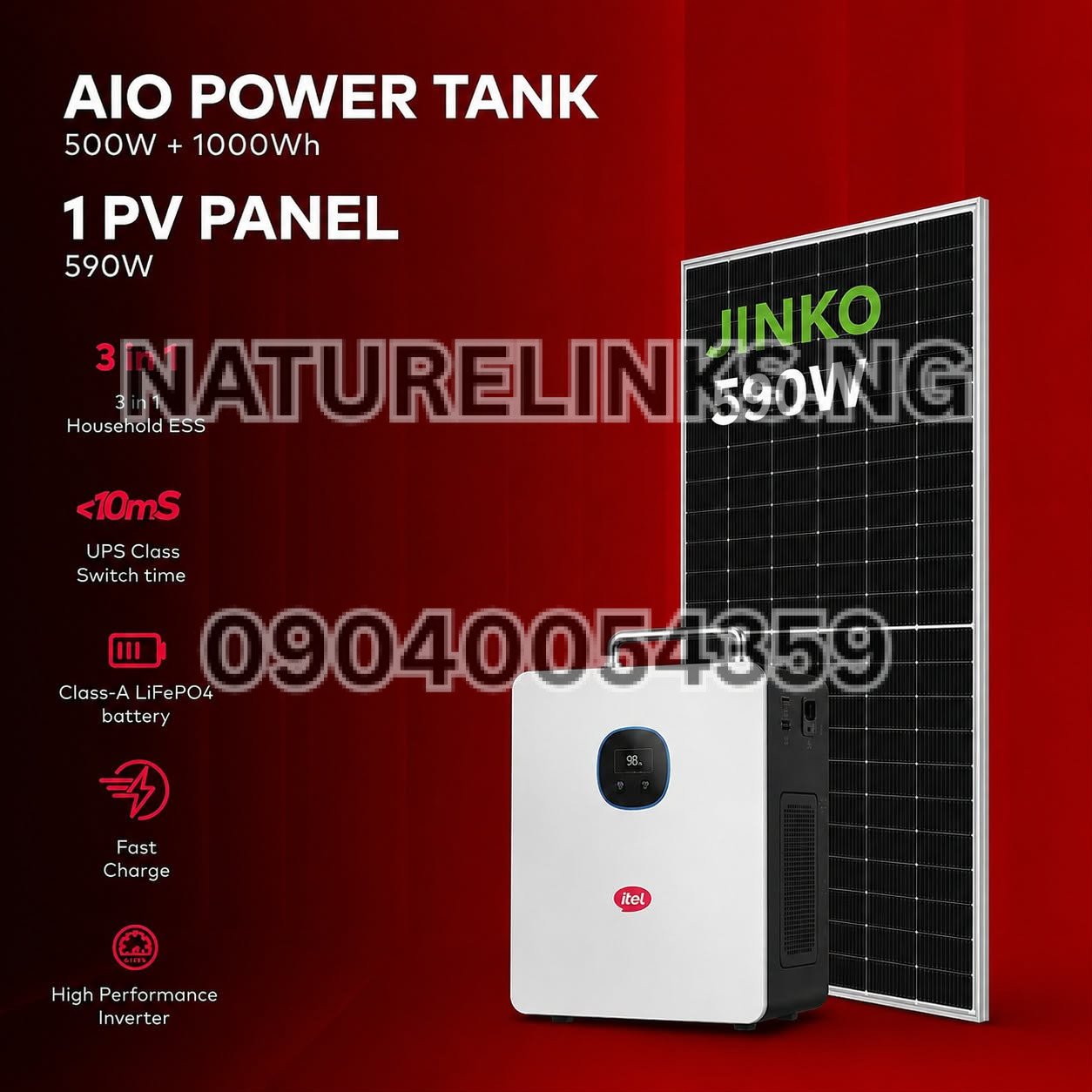
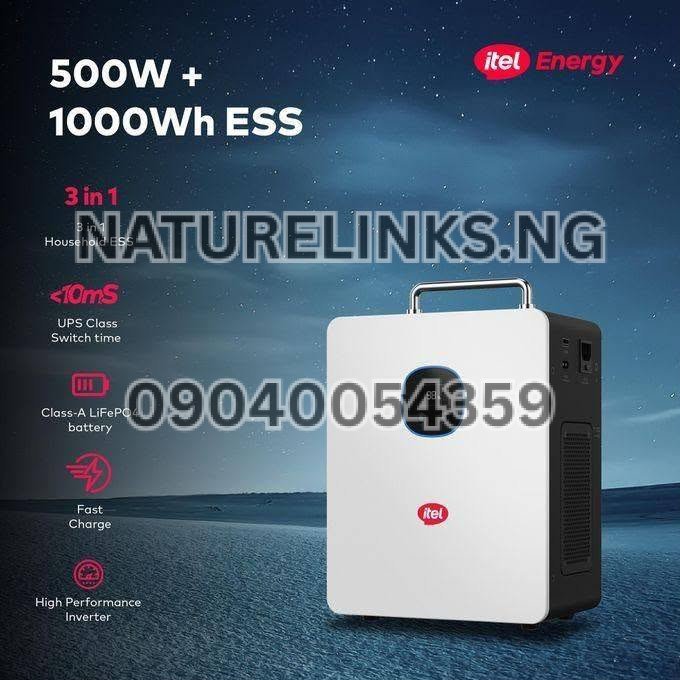
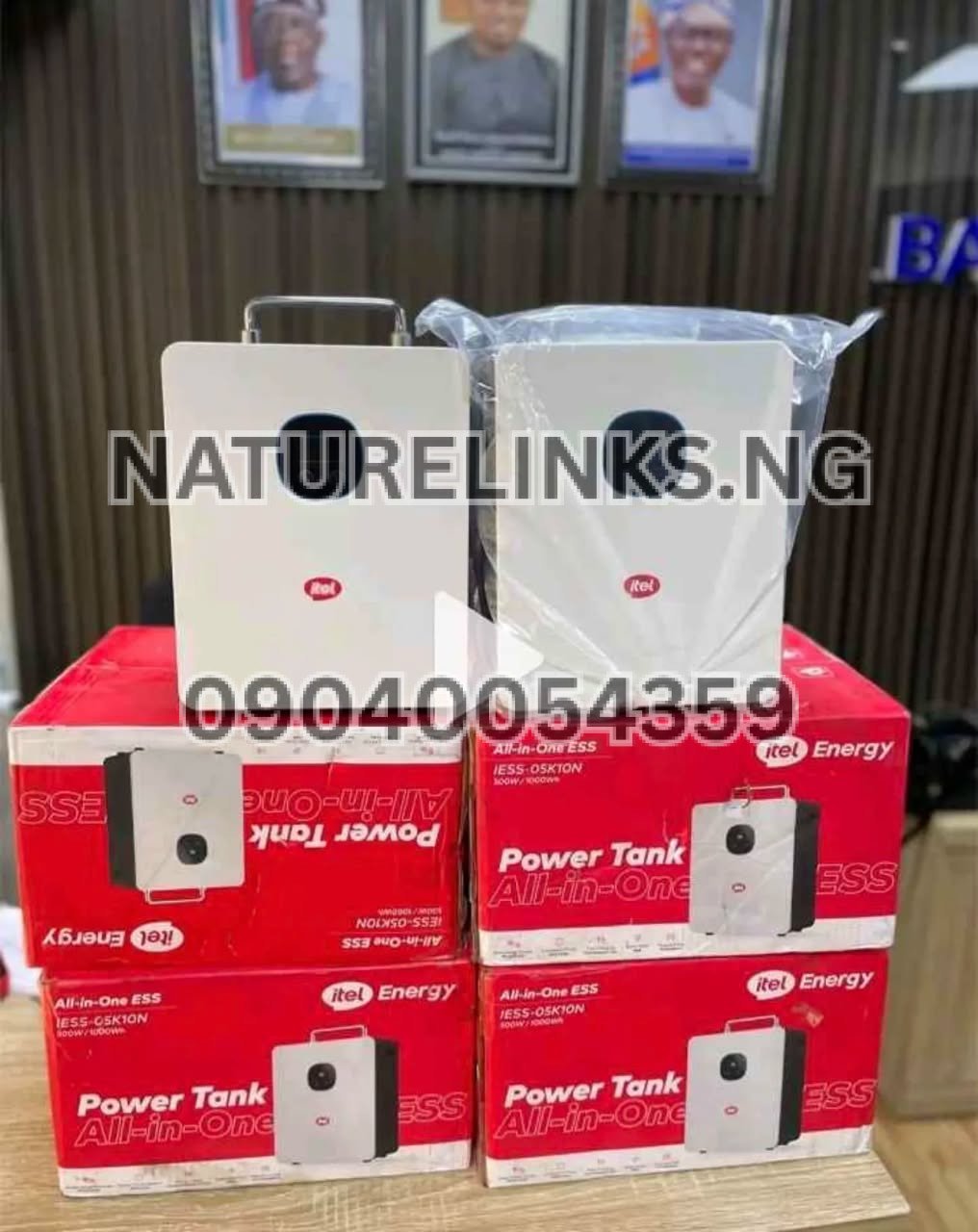
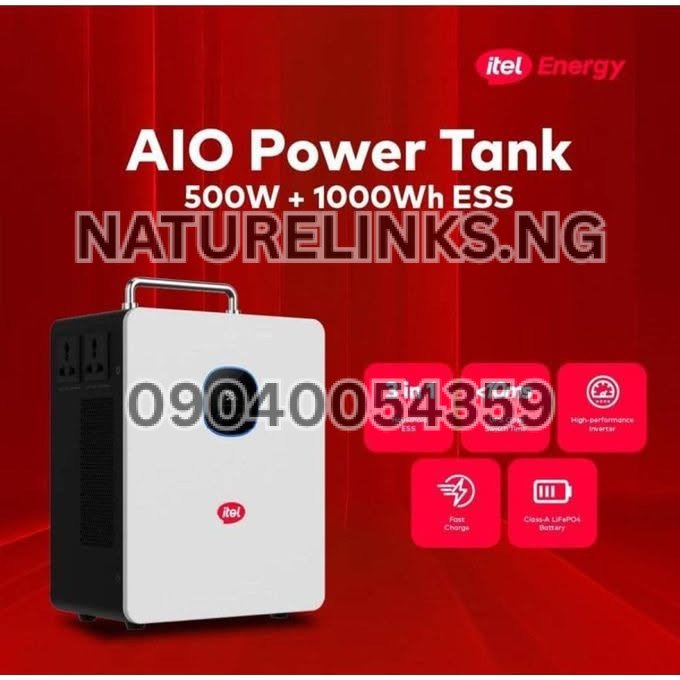
The manufacturer lists the Power Tank as a 1kWh/1,000Wh LiFePO₄ system with a 500W nominal inverter and 400W maximum PV input.
Can I Use a 400W Solar Panel With Itel Power Tank?
Yes, a properly specified 400W solar panel is within the documented maximum PV-power rating.
The key issue is that the panel’s voltage must also comply with the Power Tank’s PV-input limits.
A 400W rating alone does not guarantee compatibility.
Before connecting the panel, verify that:
- Maximum PV power does not exceed 400W.
- PV voltage remains within the supported range.
- The panel’s Voc does not exceed the Power Tank’s maximum PV voltage.
- The connector and cable are suitable.
- Polarity is correct.
- The specific Power Tank model supports the intended configuration.
The documented IESS-05K10N supports up to 400W PV input and 11–60V MPPT operation.
Can I Use a 450W Solar Panel on Itel Power Tank?
A 450W panel requires caution.
The documented Power Tank specification states 400W maximum PV input, so connecting a 450W panel is not the same as connecting a 400W panel.
Some sellers and online guides advertise 450W panels as options for Power Tank systems, but the manufacturer’s published specification for the IESS-05K10N lists 400W as the maximum PV input.
Therefore, buyers should not automatically assume that a 450W panel is supported simply because it may physically connect.
If considering a panel above 400W, confirm compatibility with the exact Power Tank model and manufacturer/supplier documentation before purchase or connection.
Can I Use a 500W Solar Panel With Itel Power Tank?
The commonly documented IESS-05K10N has a 400W maximum PV input, so a 500W panel should not be treated as automatically compatible.
This is one of the most important buying points.
A 500W panel may be physically connected in some circumstances, but physical compatibility does not mean electrical compatibility.
Do not exceed the Power Tank’s specified PV limits simply because a larger panel could theoretically charge the battery faster.
For this model, the published maximum PV input is 400W.
Does Itel Power Tank Have an MPPT Solar Charge Controller?
Yes.
The documented Power Tank configuration includes a built-in MPPT solar charge controller. MPPT stands for Maximum Power Point Tracking.
The controller continuously works to obtain useful power from the solar panel while charging the battery within the system’s operating limits.
The published specification lists:
- MPPT voltage range: 11–60V
- Startup voltage: 11V
- Maximum PV input: 400W
- MPPT tracking efficiency: 99% under the manufacturer’s stated testing conditions.
An MPPT controller makes the Power Tank more flexible than a system that requires a fixed panel voltage, but it does not mean every solar panel is compatible.
What Happens If Solar Panel Voltage Is Too High?
Using a solar panel or panel configuration that exceeds the Power Tank’s maximum PV voltage can activate protection and may create a risk of equipment damage.
The manufacturer specifically lists PV over-voltage protection among the Power Tank’s protection features.
However, protection should not be interpreted as permission to deliberately exceed the rated input.
A safer approach is to design the solar input so that it remains within the manufacturer’s specified limits under expected operating conditions.
This is particularly important when connecting multiple solar panels in series.
What Happens If Solar Panel Voltage Is Too Low?
If the solar-panel voltage does not reach the required startup level, the Power Tank may not begin solar charging.
The documented startup voltage is 11V.
Insufficient voltage can happen because of:
- Very small solar panels
- Heavy cloud cover
- Shade
- Incorrect panel configuration
- Poor-quality cables
- Loose connectors
- Damaged MC4 connectors
- Incorrect polarity
- Panel orientation
- Early morning or late afternoon conditions
Solar charging performance is therefore influenced by more than the panel’s advertised wattage.
What Solar Panel Is Best for Itel Power Tank in Nigeria?
For a Nigerian buyer, the important selection criteria are:
1. Correct voltage
The panel configuration must remain within the Power Tank’s documented PV voltage limits.
2. Correct wattage
The documented maximum PV input is 400W.
3. Good panel efficiency
A quality monocrystalline panel can provide useful output in a relatively compact area.
4. Proper installation
The panel should receive strong sunlight and should not be unnecessarily shaded.
5. Quality cables and connectors
Voltage drop and poor connections can reduce charging performance.
6. Correct orientation
The panel should be installed in a position that receives substantial direct sunlight.
Rather than choosing a panel solely because it is advertised as “12V,” “24V,” “48V,” “400W” or “500W,” compare its complete electrical specification with the Power Tank’s requirements.
How Many Solar Panels Can I Connect to Itel Power Tank?
The answer depends on the individual panel specifications and the way the panels are connected.
For the documented IESS-05K10N, the system has:
- One MPPT tracker
- Maximum PV input of 400W
- MPPT range of 11–60V
- Maximum PV voltage of 60V.
For example, two panels connected in series will have approximately the combined operating voltage of both panels. Their open-circuit voltages also add.
Two panels connected in parallel generally increase current while maintaining approximately the same voltage.
Therefore, you should calculate the resulting voltage and current before connecting multiple panels.
Series vs Parallel Solar Panels for Power Tank
Solar Panels in Series
Connecting panels in series increases voltage.
For example, if two panels each have an operating voltage of approximately 20V, their combined operating voltage can be approximately 40V.
However, the Voc values also add.
This means series connections require particular attention to the Power Tank’s maximum 60V PV-input limit.
Solar Panels in Parallel
Connecting panels in parallel generally keeps the voltage around the same level while increasing available current.
However, total power and current still need to remain appropriate for the Power Tank’s specifications.
Which Configuration Should I Use?
The correct configuration depends on the electrical characteristics of the panels and the Power Tank.
Do not decide between series and parallel solely from the panel’s nominal “12V” or “24V” label.
A solar technician should check the actual Vmp, Voc, Imp and Isc values before designing a multi-panel configuration.
Can Solar Panel Voltage Change During the Day?
Yes.
Solar-panel voltage and current vary according to operating conditions.
Factors include:
- Sunlight intensity
- Panel temperature
- Cloud cover
- Shading
- Panel orientation
- Cable losses
- Panel age
- Dirt on the panel
- Electrical load
This is why a solar panel advertised with a particular nominal voltage does not necessarily deliver exactly that voltage at every moment.
For Power Tank installation, the panel’s maximum possible voltage must be considered—not only its typical operating voltage.
Does Nigerian Weather Affect Power Tank Solar Charging?
Yes.
Nigeria receives substantial sunlight, but actual solar charging varies throughout the day and across weather conditions.
Clouds, rain, haze, dust and shading can reduce solar generation.
A 400W-rated panel does not necessarily produce 400W continuously.
The actual charging power can be substantially lower under poor solar conditions.
This is normal for photovoltaic systems.
How Long Does Itel Power Tank Take to Charge From Solar?
Charging time depends on available solar power.
The manufacturer’s published information lists approximately 2 hours recharge time under specified conditions, while the system’s maximum PV input is 400W.
Actual solar charging time can be longer because a panel rarely maintains its maximum rated output throughout an entire charging session.
For example, charging can be affected by:
- Cloudy weather
- Morning/evening sunlight
- Panel temperature
- Shading
- Panel orientation
- Cable losses
- Battery state of charge
- Charging-system limitations
Therefore, a statement such as “400W panel always charges the Power Tank in exactly 2 hours” would be misleading.
Can I Charge Power Tank With Solar and AC at the Same Time?
Some Nigerian listings advertise the Power Tank as supporting AC and solar charging, while the exact charging behavior should be confirmed against the specific model’s documentation.
The manufacturer lists AC input and PV input separately for the IESS-05K10N, with maximum AC charging input and PV charging specifications.
If simultaneous charging is important to your setup, confirm this feature for the exact model before purchase rather than relying on a generic Power Tank description.
Can I Use a 12V, 24V or 48V Panel?
For the documented 11–60V MPPT range, several nominal panel classes can potentially fall within the acceptable range.
But the exact answer depends on the panel’s electrical specifications.
| Panel description | What to check |
|---|---|
| 12V-class | Vmp and Voc |
| 24V-class | Vmp and Voc |
| 48V-class | Vmp and especially Voc |
| 400W panel | Wattage + Vmp + Voc + current |
| Multiple panels | Total series voltage and total power |
The safest approach is to compare the complete panel datasheet with the Power Tank datasheet.
What Is the Difference Between Solar Panel Voltage and Power Tank Output Voltage?
This is a common source of confusion.
The Power Tank’s AC output voltage is not the same as its solar/PV input voltage.
The documented Power Tank has:
- PV/solar input: 11–60V MPPT range
- AC output: 230V
- Battery: 1,000Wh LiFePO₄
- AC inverter output: 500W nominal.
Therefore, you do not need a 230V solar panel to produce 230V AC.
The Power Tank receives solar DC electricity and manages it through its internal charging system before storing energy in the battery.
What Is the Itel Power Tank Battery Voltage?
The manufacturer’s published specification identifies the battery as LiFePO₄ and lists a 3.2VDC rated battery-cell voltage with a 1,000Wh battery configuration.
This should not be confused with the solar-panel input voltage.
The battery’s internal electrical architecture and the PV-input range are separate specifications.
Therefore, buyers should select their solar panel based on the PV-input specification, not by attempting to match the panel directly to the battery-cell voltage.
Itel Power Tank Solar Panel Datasheet
For the commonly documented IESS-05K10N:
| Specification | Details |
|---|---|
| Product | Itel Power Tank |
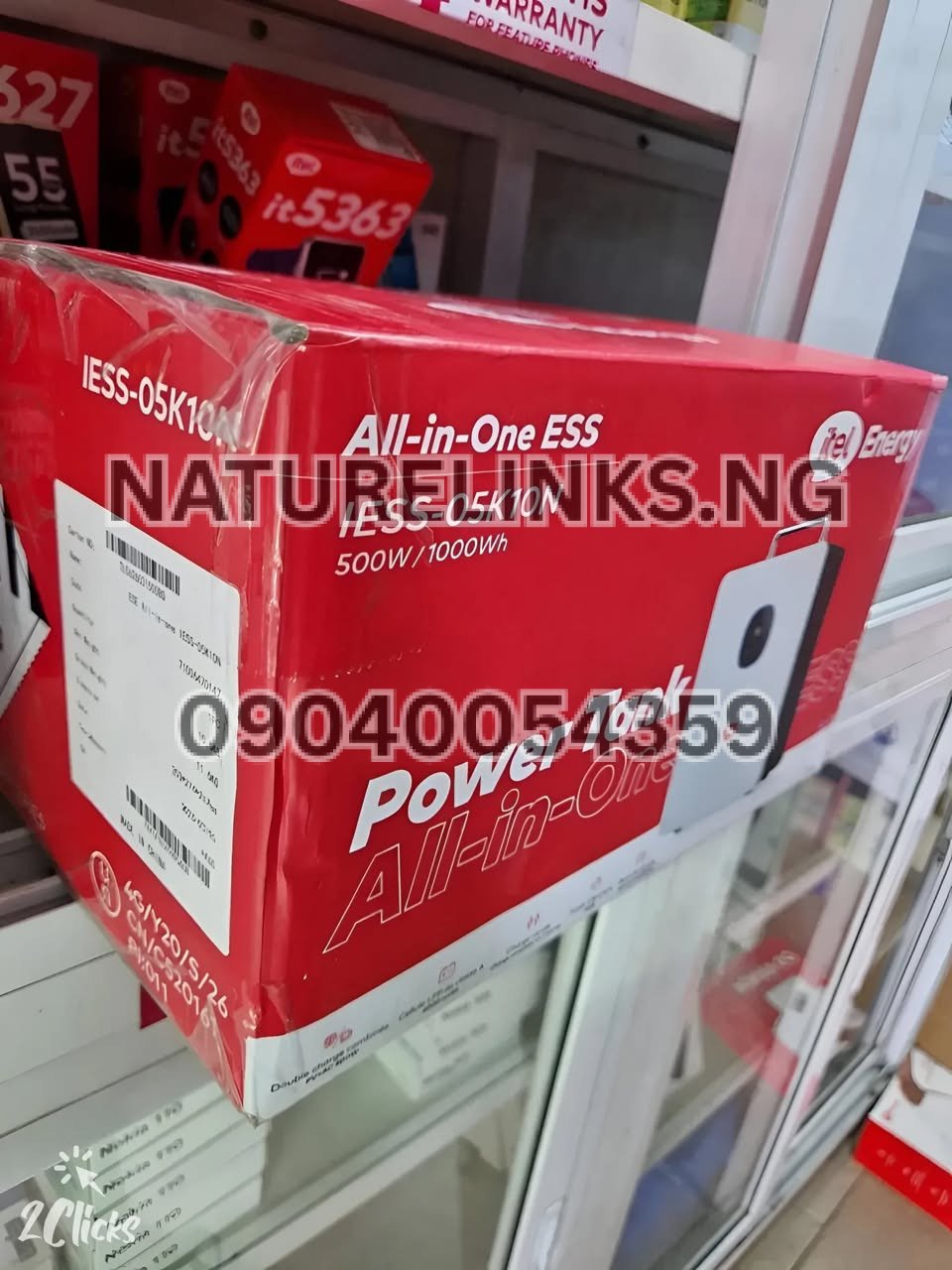
| Model | IESS-05K10N |
| Battery | LiFePO₄ |
| Battery energy | 1,000Wh / 1kWh |
| AC inverter output | 500W |
| Maximum apparent power | 600VA |
| Maximum PV input | 400W |
| MPPT voltage range | 11–60V |
| PV startup voltage | 11V |
| Maximum PV voltage | 60V |
| MPPT trackers | 1 |
| AC output | 230VAC |
| Frequency | 50Hz/60Hz |
| Solar charging | Supported |
| AC/grid charging | Supported |
| Battery cycle rating | 6,000 cycles under specified conditions |
These specifications come from the currently published Itel Power Tank documentation.
Important: 400W Solar Input Does Not Mean 400W Output
Another important buying question is whether a 400W solar panel means the Power Tank becomes a 400W or 1,000W generator.
No.
The Power Tank’s battery capacity and inverter output are separate from solar input.
The documented configuration has:
1,000Wh battery + 500W AC inverter + up to 400W PV input.
In simple terms:
- The battery stores energy.
- The solar panels recharge the battery.
- The MPPT controller manages incoming solar power.
- The inverter converts stored DC energy into AC power for compatible appliances.
Can I Use Itel Power Tank Without Solar Panels?
Yes.
The documented system supports AC/grid charging as well as solar charging.
This means a buyer can charge the Power Tank from electricity when grid power is available and use the stored energy during an outage.
Adding a solar panel provides another charging source and can be particularly useful where electricity supply is unreliable.
What Appliances Can Itel Power Tank Power?
The documented Power Tank has a 500W nominal AC output.
It can therefore be suitable for compatible lower-power electronics such as:
- LED TVs
- Fans
- Wi-Fi routers
- Laptops
- Phone chargers
- LED lights
- Decoders
- CCTV equipment
- Networking equipment
- Selected small appliances
Always check the appliance’s actual running and startup wattage.
High-power devices such as electric kettles, pressing irons, electric cookers and air conditioners can exceed the continuous output capability of the commonly documented 500W configuration.
Where to Buy Genuine Itel Power Tank and Solar Panels in Nigeria
When buying an Itel Power Tank or compatible solar panel, verify:
- Exact model number
- Battery capacity
- Solar-input specification
- Maximum PV voltage
- Maximum PV wattage
- Warranty
- Included accessories
- Solar charging cable
- Panel specifications
- Seller information
Nature Solar Global Limited
Best Seller: Nature Links Nigeria Limited [NatureLinks.NG]
Distributor: Nature Solar Global Limited
Accredited Distributor in Nigeria: Nature Solar Global Limited
CEO: Mr. Joseph Chikeleze
Call: 07049528019
WhatsApp: 09040054359
Shop Address: F1571 Upstairs (F-Line), Alaba International Market, Lagos State 🇳🇬
For buyers in Lagos and other parts of Nigeria, ask for the exact Itel Power Tank model and the complete solar-panel electrical specifications before purchasing.
Why Check the Exact Model Before Buying a Solar Panel?
It is important because “Itel Power Tank” can be used by sellers to describe different packages, configurations or listings.
The documented IESS-05K10N specification has a 400W maximum PV input and 11–60V MPPT range.
However, the manufacturer notes that specifications can be changed, and individual sales packages may differ.
Therefore, before buying a solar panel, ask the seller to confirm:
“What is the exact model number of this Power Tank, and what are its maximum PV voltage and PV wattage ratings?”
This simple check can help prevent purchasing an incompatible solar panel.
Frequently Asked Questions About Itel Power Tank Solar Panel Voltage
1. What voltage solar panel does Itel Power Tank need?
The commonly documented IESS-05K10N supports an 11V–60V MPPT solar-input range, with an 11V startup voltage.
2. Can I use a 12V solar panel on Itel Power Tank?
A compatible 12V-class panel can potentially operate within the documented 11–60V range, but you should check its actual Vmp and Voc before connecting it.
3. Can I use a 24V solar panel on Itel Power Tank?
A properly specified 24V-class panel can fall within the documented MPPT range. Verify the panel’s actual Voc and Vmp against the Power Tank specifications.
4. Can I use a 48V solar panel on Itel Power Tank?
A 48V-class configuration can potentially fall within the 11–60V MPPT range, but the panel’s maximum open-circuit voltage must remain within the Power Tank’s permitted PV voltage.
5. What is the maximum solar panel wattage for Itel Power Tank?
The documented maximum PV input is 400W for the IESS-05K10N.
6. Can I use a 500W solar panel with Itel Power Tank?
The documented model has a 400W maximum PV input, so a 500W panel should not be assumed to be compatible. Confirm with the exact model’s manufacturer documentation before connection.
7. Can I use a 400W solar panel with Itel Power Tank?
A 400W panel is within the documented maximum PV-power rating, provided its voltage and other electrical characteristics are also compatible.
8. What happens if my solar panel voltage is above 60V?
The documented maximum PV voltage is 60V. A configuration capable of exceeding that limit should not be connected without specific manufacturer approval. The Power Tank includes PV over-voltage protection, but protection should not be treated as permission to exceed the rating.
9. Does Itel Power Tank support MPPT solar charging?
Yes. The documented IESS-05K10N incorporates an MPPT solar controller with an 11–60V operating range.
10. What solar panel is suitable for Itel Power Tank in Nigeria?
A suitable panel should remain within the Power Tank’s 11–60V PV voltage range and 400W maximum PV input, while also having compatible connectors and electrical characteristics. Always verify the exact model before purchase.
Key Buying Checklist for Nigerian Buyers
Before paying for an Itel Power Tank solar panel, confirm these specifications:
✓ MPPT voltage: 11–60V for the documented IESS-05K10N
✓ Startup voltage: 11V
✓ Maximum PV input: 400W
✓ Maximum PV voltage: 60V
✓ Solar controller: Built-in MPPT
✓ Battery: 1,000Wh / 1kWh LiFePO₄
✓ AC inverter: 500W nominal
✓ AC output: 230V
✓ Model: IESS-05K10N on the documented specification
These specifications should be checked against the exact product supplied to you.
“What Voltage Solar Panel Does Power Tank Need?” — Simple Answer
If you are searching for “What Voltage Solar Panel Does Power Tank Need?”, the simple answer for the commonly documented itel Power Tank IESS-05K10N is:
11V–60V MPPT solar-input range, with an 11V startup voltage and maximum 400W PV input.
Do not select a solar panel based on wattage alone. Check its Voc, Vmp, wattage and current, especially when connecting multiple panels.
A 400W maximum PV input also means that buying a higher-wattage panel is not automatically better. Compatibility with the Power Tank’s electrical limits is more important than simply choosing the largest panel.
“What Voltage Solar Panel Does Power Tank Need?” for Nigerian Buyers
For homes, offices, shops and small businesses in Nigeria, the right solar-panel configuration can help the Itel Power Tank recharge effectively when sunlight is available.
The key specifications to remember are:
11–60V MPPT range
11V startup voltage
400W maximum PV input
500W nominal AC output
1,000Wh / 1kWh LiFePO₄ battery
These figures relate to the commonly documented IESS-05K10N configuration.
If you are buying a panel separately, provide the seller with your Power Tank model number and request confirmation that the panel’s Voc remains below the permitted maximum under expected conditions.
Conclusion
Knowing the correct solar-panel voltage is essential before connecting an Itel Power Tank to solar power. For the commonly documented IESS-05K10N, the manufacturer specifies an 11–60V MPPT range, 11V startup voltage and maximum 400W PV input.
Therefore, Nigerian buyers should not choose a solar panel based only on its advertised wattage or nominal voltage. Check the panel’s Vmp, Voc, wattage, current and connection configuration and make sure they remain within the Power Tank’s specified limits.
For genuine Itel Power Tank products, compatible solar panels and related solar-power solutions, buyers can contact Nature Solar Global Limited / Nature Links Nigeria Limited [NatureLinks.NG], represented by CEO Mr. Joseph Chikeleze, at 07049528019 or WhatsApp 09040054359, with the shop located at F1571 Upstairs (F-Line), Alaba International Market, Lagos State 🇳🇬.
For the safest purchase, always provide the seller with your exact Power Tank model number and ask them to verify the solar panel’s electrical specifications before connecting it.