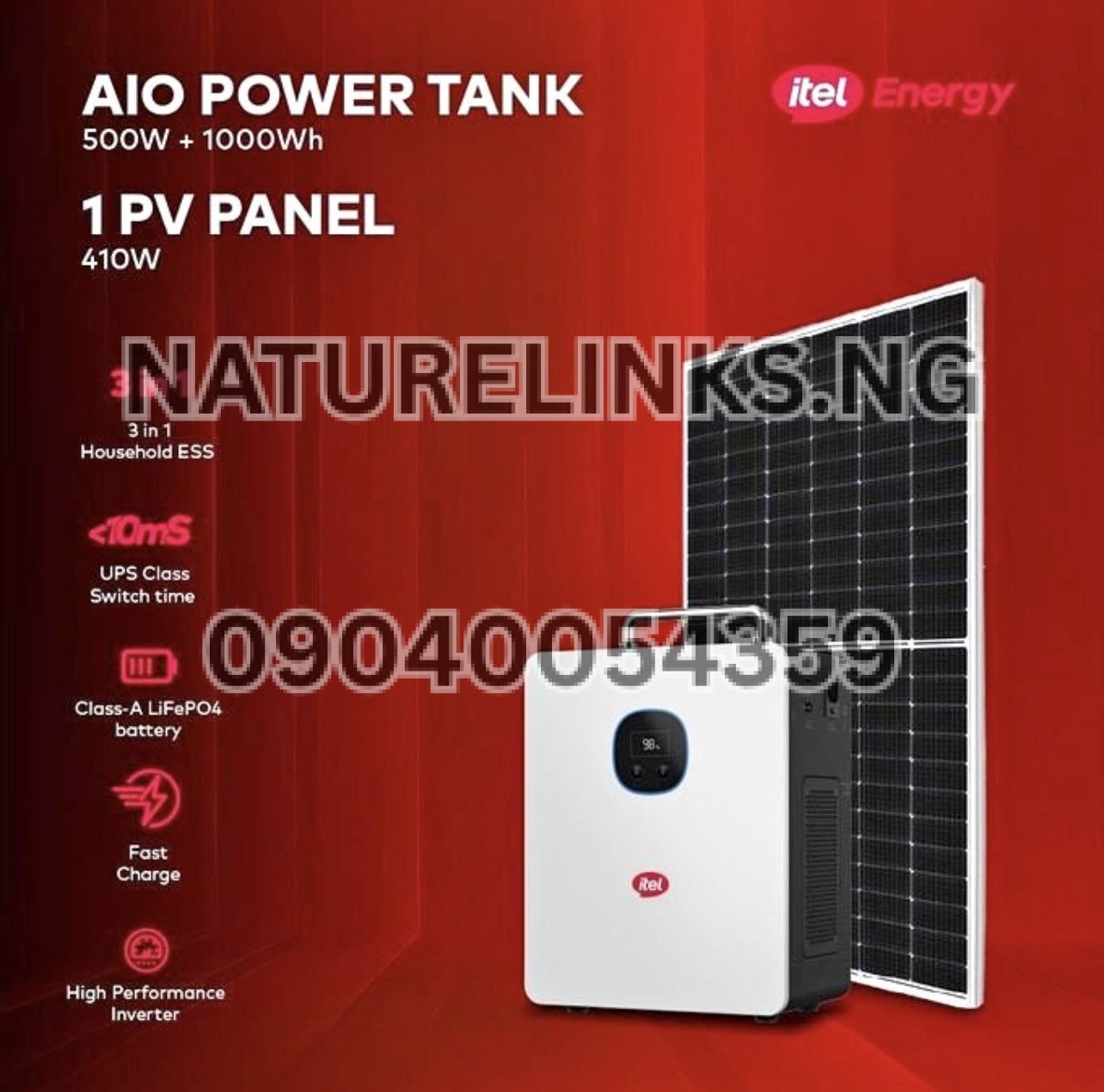
Best Seller: Nature Solar Global Limited. He is also the accredited distributor in Nigeria. Nature Links Nigeria Limited [NatureLinks.NG] supplies genuine Itel Power Tank portable power stations and related solar and backup-power solutions to customers in Nigeria.
If your Itel Power Tank shows 50% battery, you may be wondering exactly how much electricity is still available and how long the remaining battery can power your TV, fan, laptop, router, lights or other appliances.
For the commonly advertised Itel Power Tank 1000Wh/1kWh model, a 50% battery reading represents approximately 500Wh of stored energy in simple capacity terms. However, the amount of usable energy delivered to your appliances can be lower because the inverter and other electronics consume some energy during operation.
This means that 50% does not mean that the Power Tank has 50% of a 500W output remaining. The 1,000Wh figure describes battery energy capacity, while the commonly listed 500W figure describes the continuous AC output capability.
How Much Power Is Left at 50% on Itel Power Tank?
For the commonly listed 1,000Wh Itel Power Tank:
1,000Wh × 50% = 500Wh
Therefore, when the display shows approximately 50%, the theoretical remaining stored energy is around 500Wh.
In simple terms:
- 100% = approximately 1,000Wh
- 75% = approximately 750Wh
- 50% = approximately 500Wh
- 25% = approximately 250Wh
- 10% = approximately 100Wh
The actual usable energy available to your appliances will depend on the operating conditions, load, battery-management system, inverter efficiency and other losses.
“How Much Power Is Left When Itel Power Tank Shows 50%?”
The answer to “How Much Power Is Left When Itel Power Tank Shows 50%?” is approximately 500Wh for a 1,000Wh/1kWh Power Tank.
For example, if your Itel Power Tank has a 1,000Wh battery and its display reads 50%, you can think of it as having roughly half of its nominal battery energy remaining.
That does not necessarily mean that you will receive exactly 500Wh at the AC sockets. Some energy is consumed by the inverter and internal electronics, particularly when using AC output.
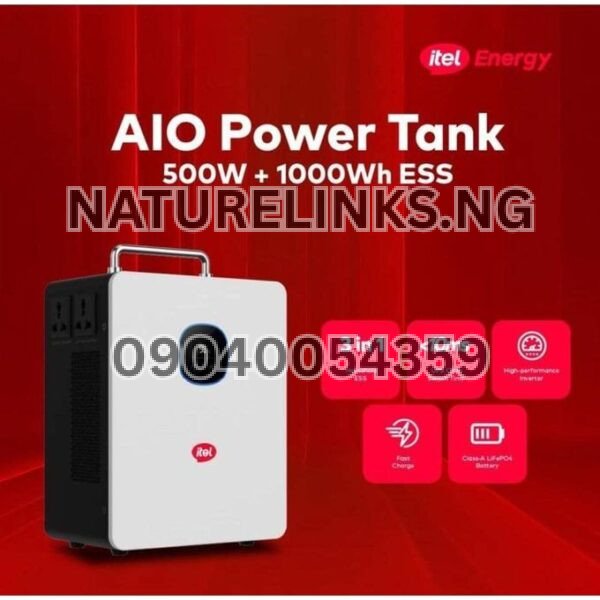
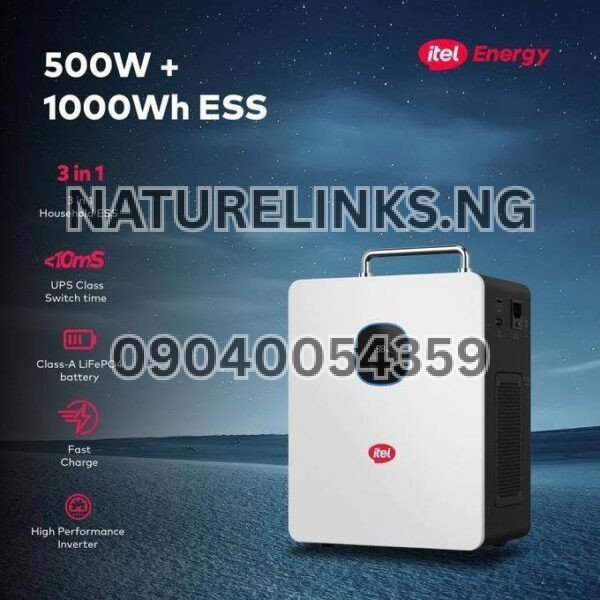
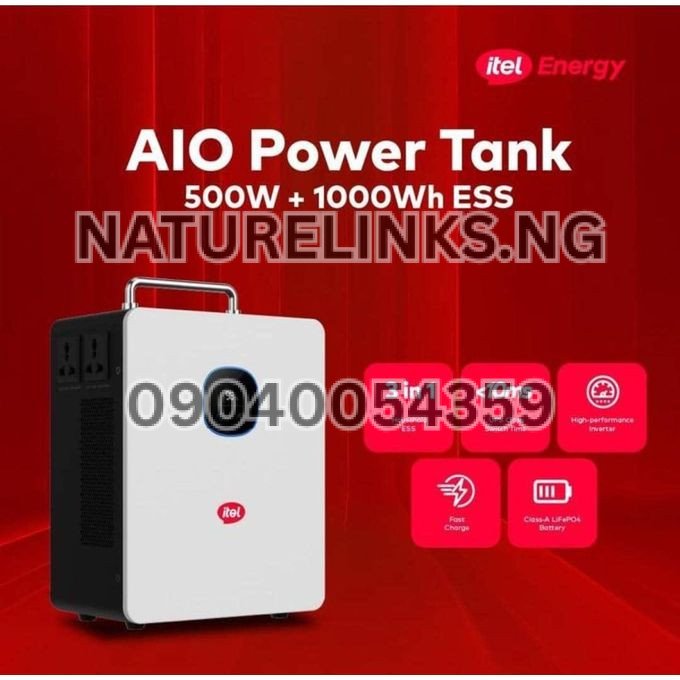
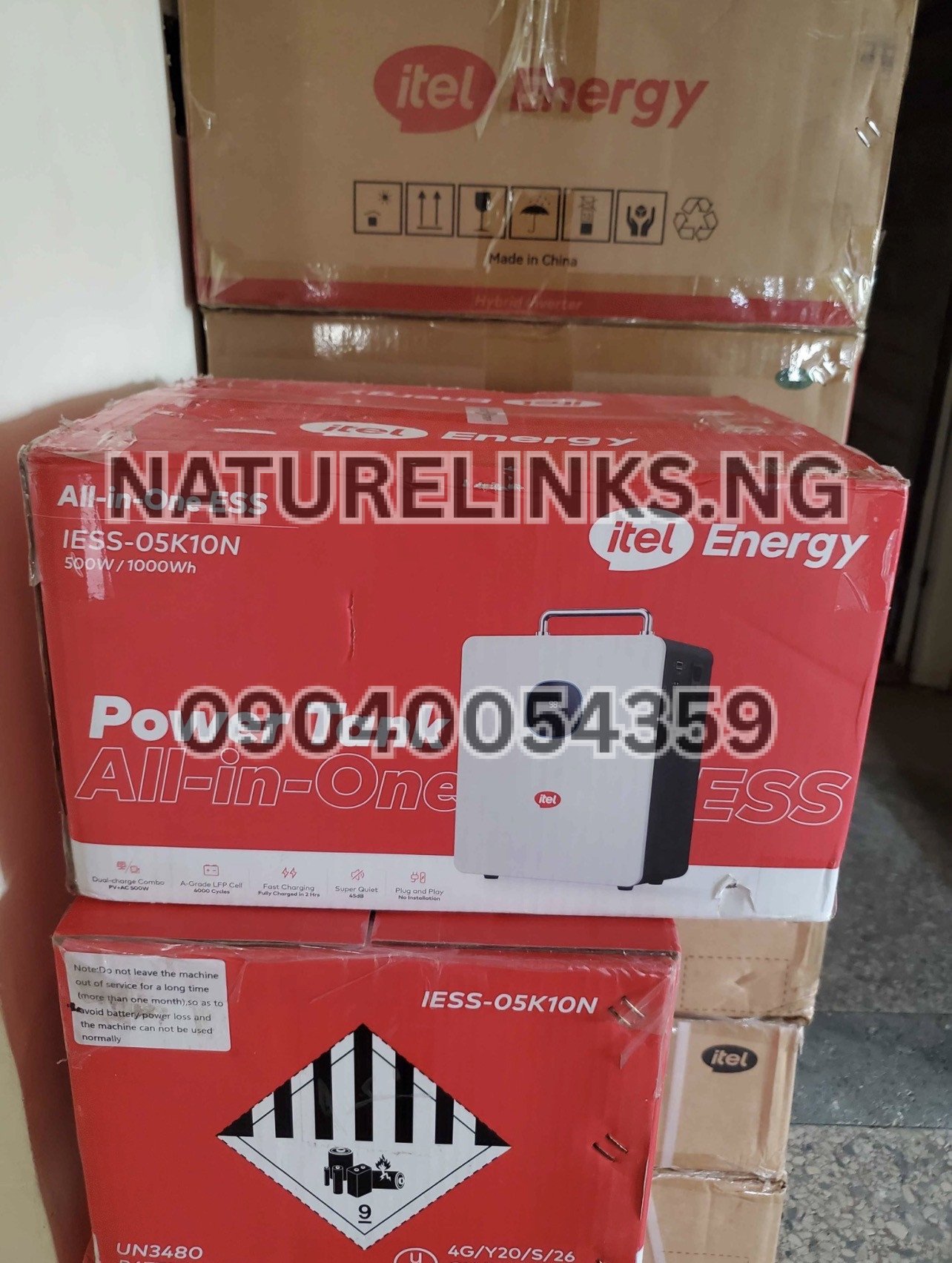
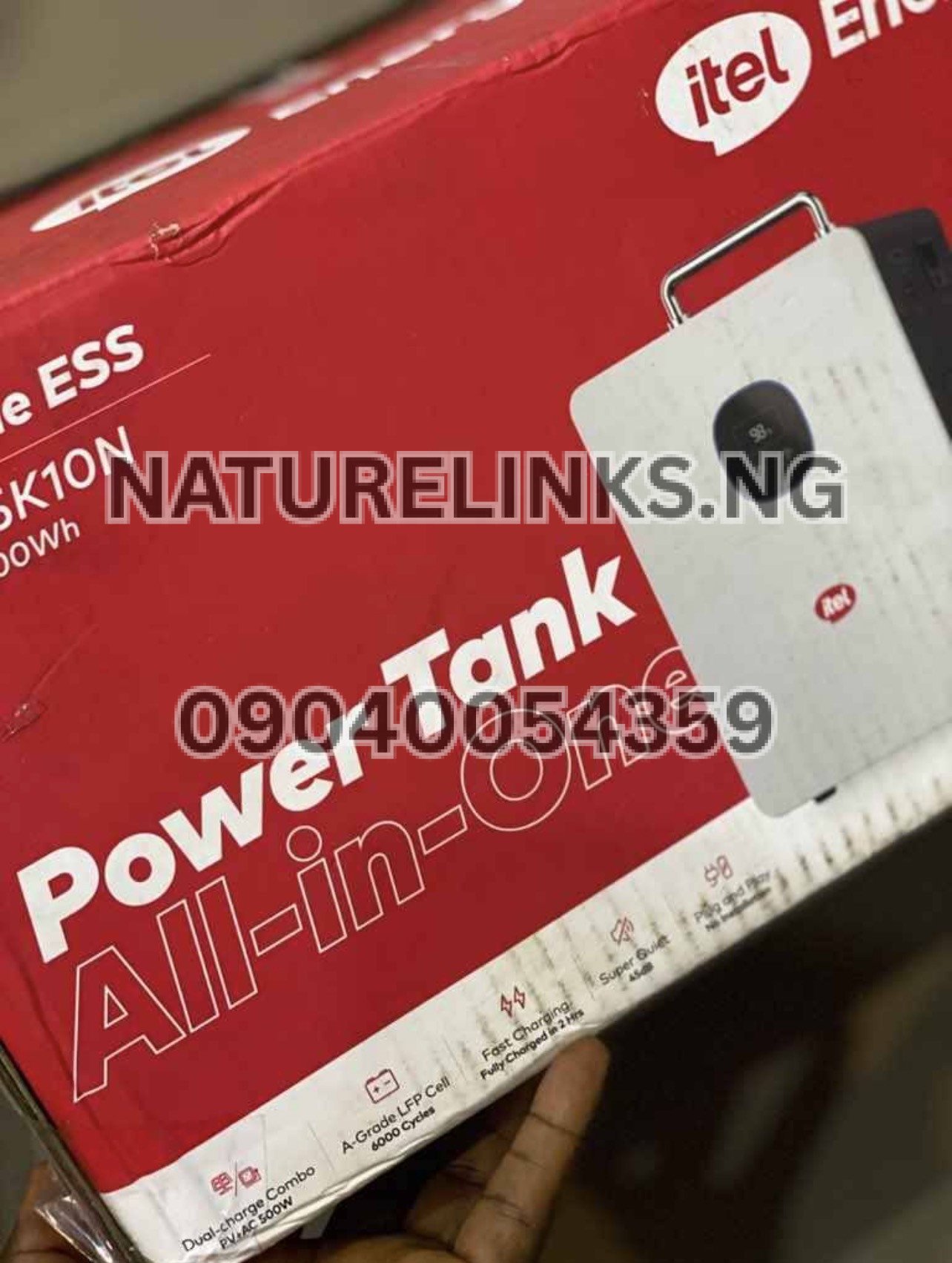
The commonly advertised Itel Power Tank configuration combines a 1,000Wh LiFePO4 battery with a 500W continuous pure-sine-wave inverter.

Is 50% Battery Equal to 500Wh?
Yes, approximately, if you are referring to the commonly advertised 1,000Wh model.
The calculation is:
1,000Wh × 0.50 = 500Wh
So a 50% reading corresponds to approximately 500Wh of nominal stored energy.
However, battery percentage should not be treated as a laboratory-precise measurement of energy that can always be extracted. Battery management systems estimate the state of charge, and actual runtime varies with the load and operating conditions.
What Does 1000Wh Mean on Itel Power Tank?
The 1,000Wh specification means the battery is designed to store approximately 1,000 watt-hours of energy under the applicable rating conditions.
It is important not to confuse Wh with W.
Wh means energy capacity
Wh, or watt-hours, describes how much energy the battery can store.
W means power
W, or watts, describes the amount of power an appliance consumes or the amount of power an inverter can supply.
The commonly advertised Itel Power Tank has:
- Battery capacity: 1,000Wh / 1kWh
- Continuous AC output: 500W
- Battery chemistry: LiFePO4
- Inverter: Pure sine wave
- Solar input: Up to 400W on documented configurations
- Solar controller: Integrated MPPT
- AC/grid charging: Supported
- Digital battery/status display: Yes.
Therefore, 1,000Wh does not mean that the Power Tank is a 1,000W inverter.
How Long Can Itel Power Tank Last at 50%?
If the Power Tank shows 50%, the theoretical remaining energy is approximately 500Wh.
A simple calculation is:
Runtime ≈ Remaining Wh ÷ Appliance Watts
For example:
| Appliance/load | Approximate theoretical runtime from 500Wh |
|---|---|
| 25W | 20 hours |
| 50W | 10 hours |
| 75W | 6.7 hours |
| 100W | 5 hours |
| 150W | 3.3 hours |
| 200W | 2.5 hours |
| 250W | 2 hours |
| 300W | 1.7 hours |
| 400W | 1.25 hours |
| 500W | 1 hour |
These figures are theoretical calculations, not guaranteed real-world runtimes.
Actual runtime can be shorter because the Power Tank has inverter losses, internal consumption and other operating losses.
Can 50% Itel Power Tank Power a TV?
Yes, provided the TV’s power consumption is within the Power Tank’s output specification.
The commonly listed model has a 500W continuous AC output, making it suitable for many relatively low-power electronics.
For example, if a TV consumes approximately 80W:
500Wh ÷ 80W = 6.25 hours theoretical runtime
Real runtime will normally be lower.
If the TV consumes approximately 100W:
500Wh ÷ 100W = 5 hours theoretical runtime
The actual duration depends on the TV, operating mode and Power Tank efficiency.
Can 50% Itel Power Tank Run a Fan?
Yes, provided the fan’s power requirement is within the Power Tank’s output limits.
A low-power rechargeable or DC fan can consume considerably less energy than a conventional high-power AC appliance.
For example, if your fan consumes 50W:
500Wh ÷ 50W = approximately 10 hours theoretically.
If your fan consumes 75W:
500Wh ÷ 75W = approximately 6.7 hours theoretically.
Actual runtime will vary.
Can Itel Power Tank 50% Power a Laptop?
Yes. A laptop is generally a relatively low-power load, although consumption differs considerably between laptop models and usage conditions.
For example, a 60W laptop load could theoretically use:
500Wh ÷ 60W = approximately 8.3 hours
But if other devices are connected at the same time, total consumption increases.
A laptop plus Wi-Fi router plus LED lighting, for example, could consume considerably more than the laptop alone.
Can 50% Power a Wi-Fi Router?
A Wi-Fi router normally consumes relatively little power compared with high-wattage household appliances.
If your router and related networking equipment consume 15W:
500Wh ÷ 15W = approximately 33.3 hours theoretically.
However, the actual runtime depends on whether the router is powered through AC, DC or another output and on the Power Tank’s conversion efficiency.
For a long backup period, low-power DC loads can be particularly useful because unnecessary conversion losses may be reduced depending on the specific setup.

Can Itel Power Tank at 50% Power LED Bulbs?
Yes.
LED bulbs are generally among the lower-power household loads.
For example, five 10W LED bulbs consume:
5 × 10W = 50W
At a theoretical 500Wh remaining capacity:
500Wh ÷ 50W = approximately 10 hours.
Actual runtime will be lower depending on system losses.
If only two 10W bulbs are connected, the theoretical calculation becomes:
500Wh ÷ 20W = approximately 25 hours.
This illustrates why reducing unnecessary loads can significantly increase backup time.
Can Itel Power Tank at 50% Power a Refrigerator?
This requires more caution.
A refrigerator has a compressor, and its power consumption changes during operation. Starting the compressor can also require higher instantaneous power than its normal running consumption.
The commonly listed Itel Power Tank configuration has a 500W continuous output, with surge capability advertised on certain configurations.
Before connecting a refrigerator, check:
- The refrigerator’s rated running watts.
- Its startup/surge requirement.
- The Power Tank’s exact inverter specification.
- Whether the specific configuration supports the refrigerator reliably.
- Whether other appliances are connected at the same time.
Do not assume that every refrigerator will operate safely merely because its average running wattage appears below 500W.
Can Itel Power Tank at 50% Power a Pressing Iron?
A pressing iron can consume several hundred watts and may approach or exceed the continuous output capability of the commonly listed 500W model.
Therefore, you should check the iron’s nameplate before connecting it.
If the appliance exceeds the Power Tank’s rated output, the system’s protection may activate or the appliance may not operate correctly.
The 500W continuous rating should be treated as an important limit when selecting appliances.
Can Itel Power Tank at 50% Power an Electric Kettle?
Many electric kettles consume far more than 500W.
Because the commonly advertised Itel Power Tank configuration has a 500W continuous AC output, an electric kettle with a rating substantially above that should not be connected.
Always check the wattage printed on the appliance.
What Happens When Itel Power Tank Reaches 50%?
Nothing unusual necessarily happens simply because the battery reaches 50%.
The Power Tank can continue supplying connected loads while sufficient energy remains and the connected load stays within its operating specifications.
The main difference is that there is less stored energy available than when the battery is near 100%.
At 50%, you have approximately half of the nominal 1,000Wh capacity remaining.
Is It Better to Recharge Itel Power Tank at 50%?
There is no universal rule that you must recharge the Power Tank every time it reaches 50%.
The appropriate charging routine depends on how you use the unit and the manufacturer’s battery-management recommendations.
The commonly listed Power Tank uses LiFePO4 battery technology and a built-in Battery Management System (BMS).
If you regularly need the unit for backup during Nigerian power outages, keeping it adequately charged can be more practical than waiting until the battery is nearly empty.
Can Itel Power Tank Charge While It Is at 50%?
Yes, the commonly advertised configuration supports AC/grid charging and solar charging.
Therefore, if the battery display reads 50%, you can recharge it using a compatible charging source.
Depending on the exact model and configuration, charging may be possible from:
- AC/grid electricity
- Compatible solar panels
- Other supported charging inputs
Always use the correct charging equipment and observe the Power Tank’s specified input limits.
How Much Solar Power Can Itel Power Tank Use?
The commonly documented configuration supports up to 400W of PV/solar input through its integrated MPPT controller.
This means buyers should not simply connect an unlimited number of solar panels.
The panel arrangement must remain within the Power Tank’s specified voltage, current and power limits.
For example, a compatible solar array approaching the documented 400W maximum PV input can potentially provide substantially more charging power than a small 100W panel, subject to sunlight, panel orientation, temperature, wiring and the Power Tank’s actual input limits.
How Long Will 50% Take to Charge Back to 100%?
The charging time depends on the charging source and the Power Tank’s charging input specification.
For example, if approximately 500Wh needs to be replenished, the theoretical charging time can be estimated as:
Charging time ≈ Energy required ÷ Charging power
However, actual charging is not perfectly linear. Charging efficiency, battery-management controls, temperature and the charging profile can affect the final charging period.
With solar charging, real-world sunlight conditions also make the charging time variable.
What Is the Difference Between 50% Battery and 500W Output?
This is one of the most important points for buyers.
50% battery tells you approximately how much stored energy remains.
500W output tells you the maximum continuous output rating of the commonly advertised inverter.
For example:
- 50% battery ≈ 500Wh remaining on a 1,000Wh model.
- 500W output = maximum continuous AC output rating on the commonly listed configuration.
A Power Tank could therefore have 90% battery remaining but still have a 500W continuous output limit.
Likewise, it could have 50% battery remaining and still be capable of supplying a load within its output rating.
What Appliances Can Itel Power Tank 500W Run?
The commonly advertised 500W/1,000Wh configuration is aimed primarily at electronics, lighting and relatively low-power backup applications.
Possible applications include:
- LED televisions
- Laptops
- Wi-Fi routers
- Modems
- Smartphones
- Tablets
- LED lighting
- Small fans
- CCTV systems
- Networking equipment
- Small office electronics
- Other compatible low-power appliances
High-power appliances require much more careful checking.
Examples include:
- Electric kettles
- Electric cookers
- High-power pressing irons
- Large microwave ovens
- Air conditioners
- High-power heating appliances
Always compare the appliance’s wattage with the Power Tank’s exact output specification.

How to Calculate Itel Power Tank Runtime at 50%
You can use a simple formula:
Runtime = Remaining battery energy ÷ Load wattage
For the 1,000Wh model at 50%:
Remaining energy ≈ 500Wh
Therefore:
500Wh ÷ 50W = 10 hours
500Wh ÷ 100W = 5 hours
500Wh ÷ 200W = 2.5 hours
500Wh ÷ 300W = approximately 1.67 hours
500Wh ÷ 400W = 1.25 hours
These calculations assume 100% usable battery energy and no conversion losses, so actual results will normally be lower.
Why Is Actual Runtime Lower Than the 50% Calculation?
There are several reasons.
1. Inverter losses
When using AC appliances, stored DC battery energy is converted into AC electricity. This conversion is not 100% efficient.
2. Internal consumption
The Power Tank itself consumes some energy to operate its electronics, display, inverter and cooling system.
3. Appliance efficiency
Two appliances with the same nominal wattage can have different real-world energy consumption patterns.
4. Battery conditions
Temperature, battery condition and operating conditions can affect available energy.
5. Load changes
A refrigerator, fan or other appliance may not consume exactly the same amount of power every minute.
Consequently, 500Wh should be regarded as a nominal energy calculation rather than a promise of exactly 500Wh delivered to AC appliances.
Itel Power Tank Battery Percentage Explained
A simple guide for the commonly advertised 1,000Wh model is:
| Display | Approximate nominal energy |
|---|---|
| 100% | 1,000Wh |
| 90% | 900Wh |
| 80% | 800Wh |
| 70% | 700Wh |
| 60% | 600Wh |
| 50% | 500Wh |
| 40% | 400Wh |
| 30% | 300Wh |
| 20% | 200Wh |
| 10% | 100Wh |
| 5% | 50Wh |
These are straightforward percentage calculations based on a nominal 1,000Wh capacity. The display’s state-of-charge estimate and actual usable energy can vary.
Does 50% Mean the Itel Power Tank Has 500 Watts Left?
No.
This is a common misunderstanding.
50% means approximately 50% of the battery’s energy capacity remains—not 500 watts of remaining output.
The commonly listed Power Tank has a 1,000Wh battery and 500W continuous inverter output.
Watts and watt-hours measure different things.
A useful way to understand it is:
W = how fast energy is being used.
Wh = how much energy is stored.
For example, a 100W appliance consumes energy at a rate of approximately 100 watts. A 1,000Wh battery theoretically contains enough energy for 10 hours at a 100W load before losses.
Is 1kWh the Same as 1000Wh?
Yes.
1kWh = 1,000Wh.
Therefore, the commonly advertised Itel Power Tank can be described as a 1kWh portable power station.
At 50%:
1kWh × 50% = 0.5kWh
And:
0.5kWh = 500Wh
So you may see Nigerian sellers describe the same battery as:
- 1,000Wh
- 1kWh
- 0.5kWh remaining at 50%
- 500Wh remaining at 50%
These expressions describe the same basic energy calculation.
Itel Power Tank 1000Wh Price in Nigeria
If you are searching for Itel Power Tank price in Nigeria, remember that price can vary according to seller, stock, warranty, package contents and whether solar panels or other accessories are included.
Current online Nigerian listings for the commonly advertised 500W/1,000Wh configuration show prices around the high-₦200,000 range in some listings, while other listings can be substantially higher depending on the seller and package.
Because prices and availability change, buyers should confirm the current price, exact model, battery capacity, accessories and warranty before payment.
Where to Buy Genuine Itel Power Tank in Nigeria
For buyers searching for an Itel Power Tank dealer in Nigeria, Nature Links Nigeria Limited [NatureLinks.NG] is presented by the supplied distributor information as the Best Seller, while Nature Solar Global Limited is identified as the distributor/accredited distributor in Nigeria.
Buyers should confirm:
- Exact Itel Power Tank model
- Battery capacity
- Inverter output
- Solar input rating
- Included accessories
- Warranty
- Current price
- Delivery arrangements
- Authenticity of the product
This is particularly important because online listings can contain different configurations and package contents.
Nature Solar Global Limited — Accredited Distributor in Nigeria
Best Seller: Nature Solar Global Limited
Distributor: Nature Solar Global Limited
CEO: Mr. Joseph Chikeleze
Nature Links Nigeria Limited [NatureLinks.NG]
Phone: 07049528019
WhatsApp: 09040054359
Shop Address: F1571 Upstairs (F-Line), Alaba International Market, Lagos State 🇳🇬
For current availability and buying information, Nigerian customers can contact the supplier directly and confirm the exact Power Tank configuration before making payment.
Why Check the Exact Model Before Buying?
Not every product listing necessarily represents exactly the same configuration.
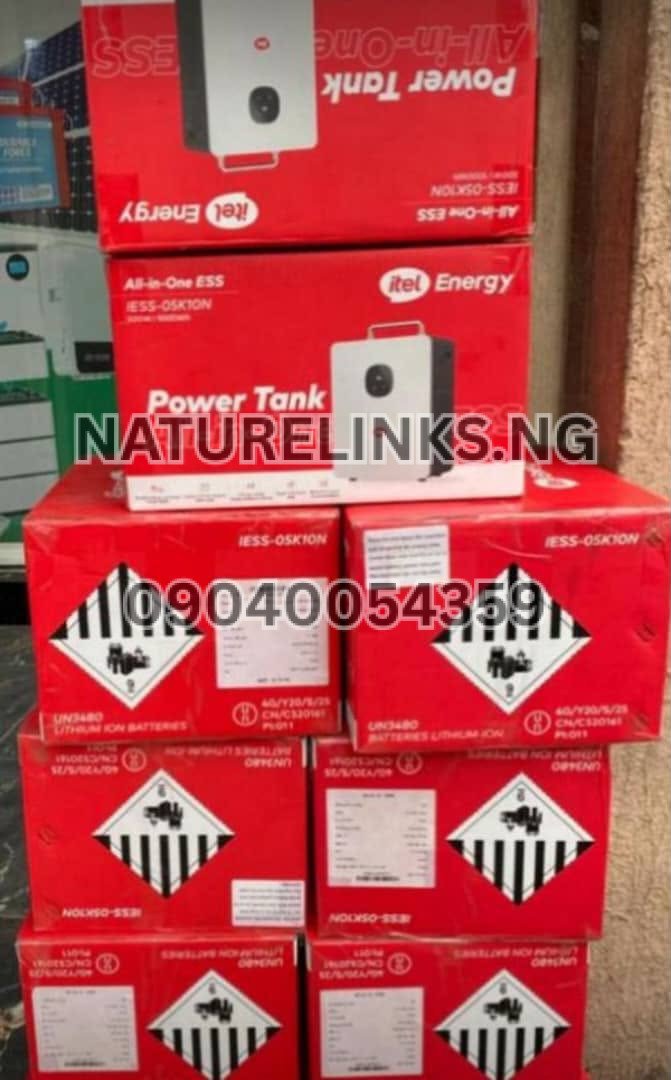
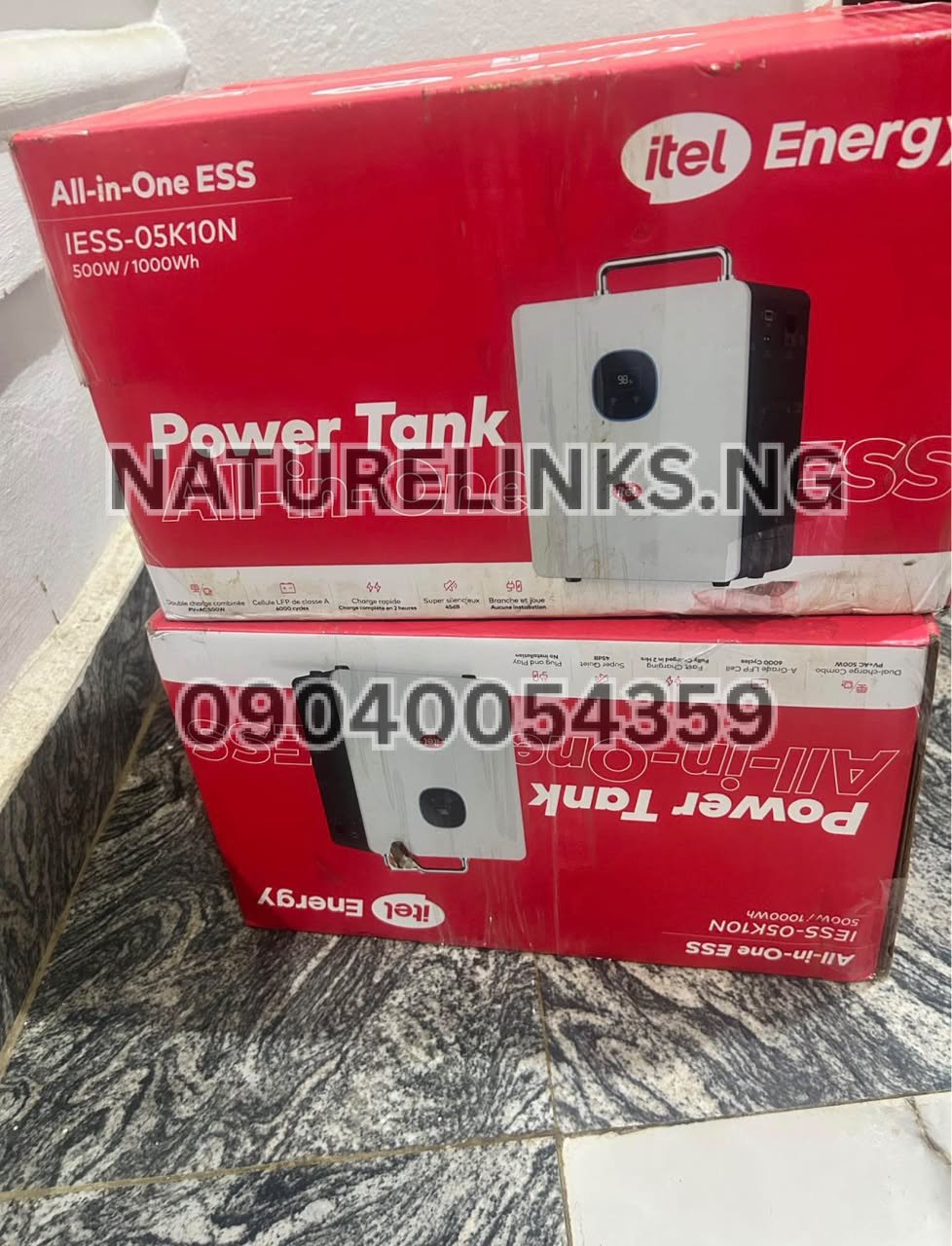
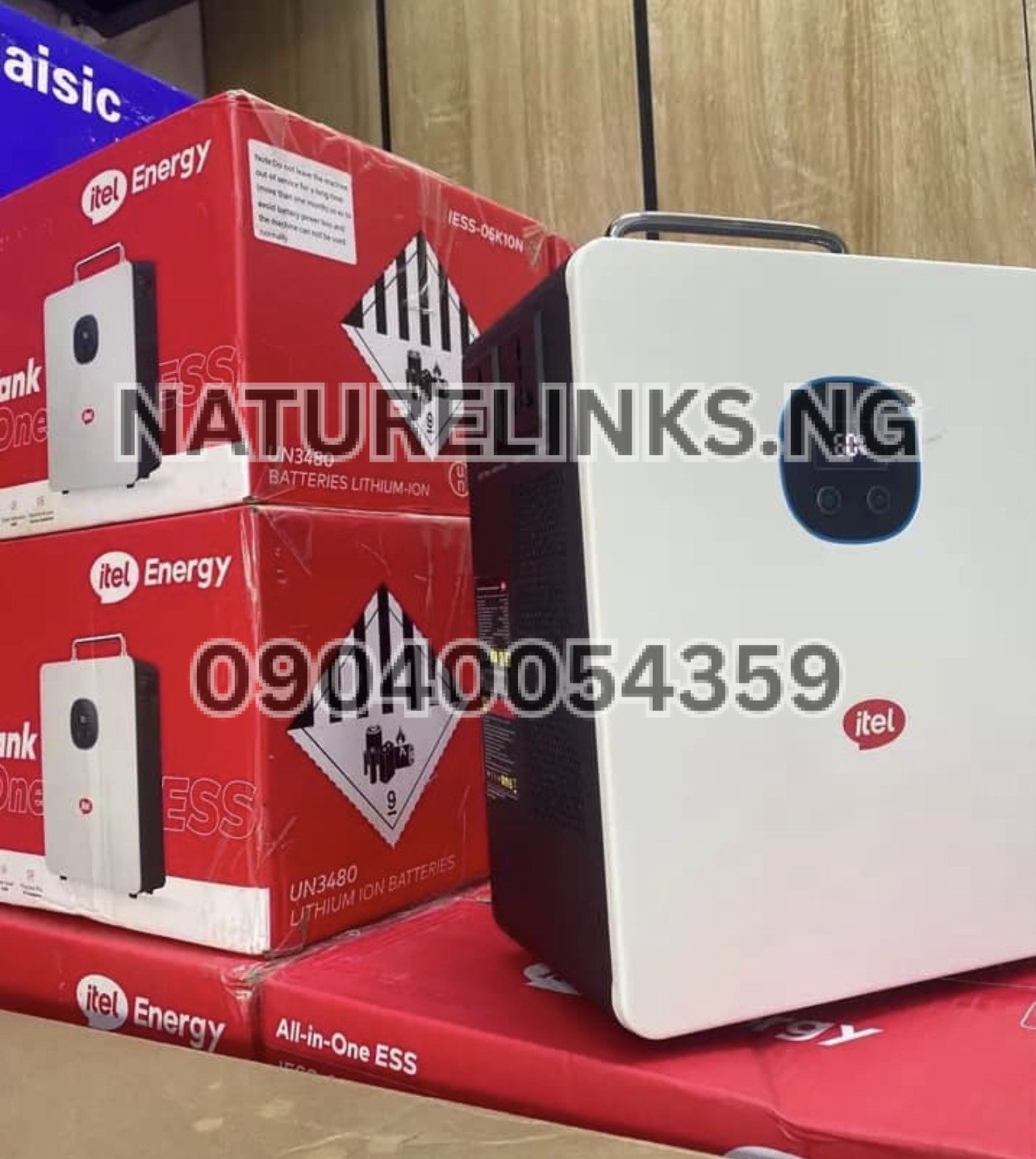
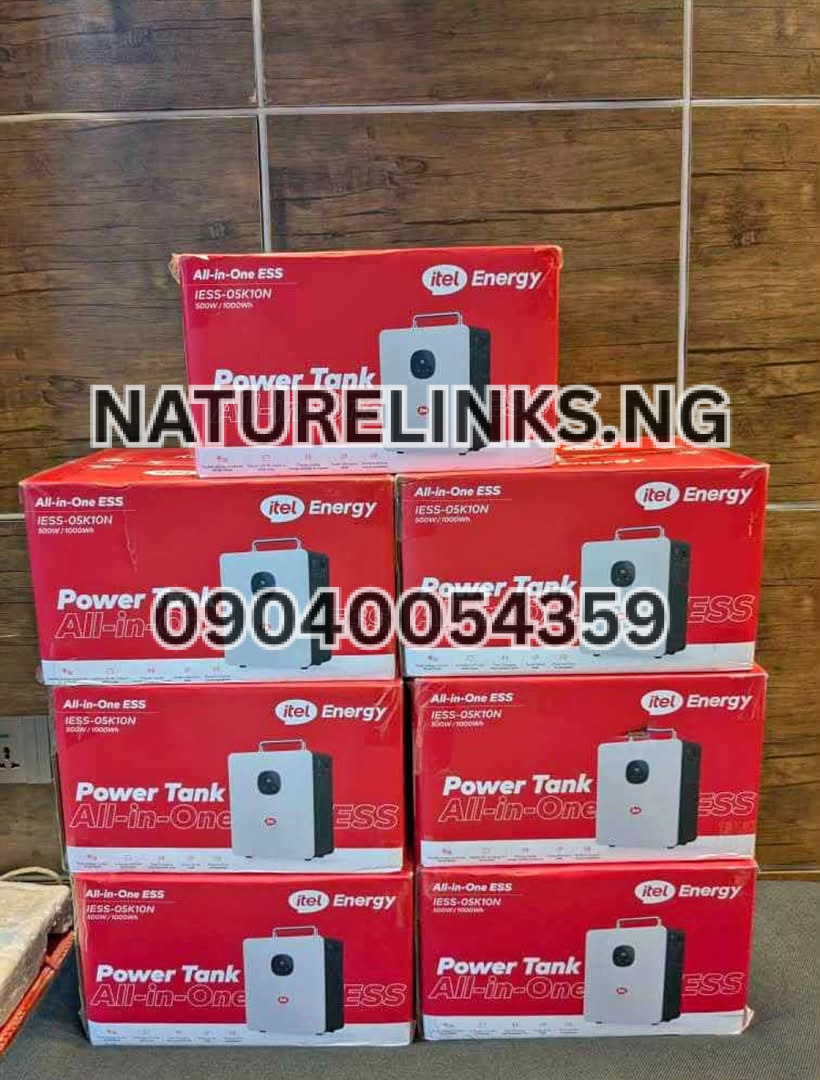
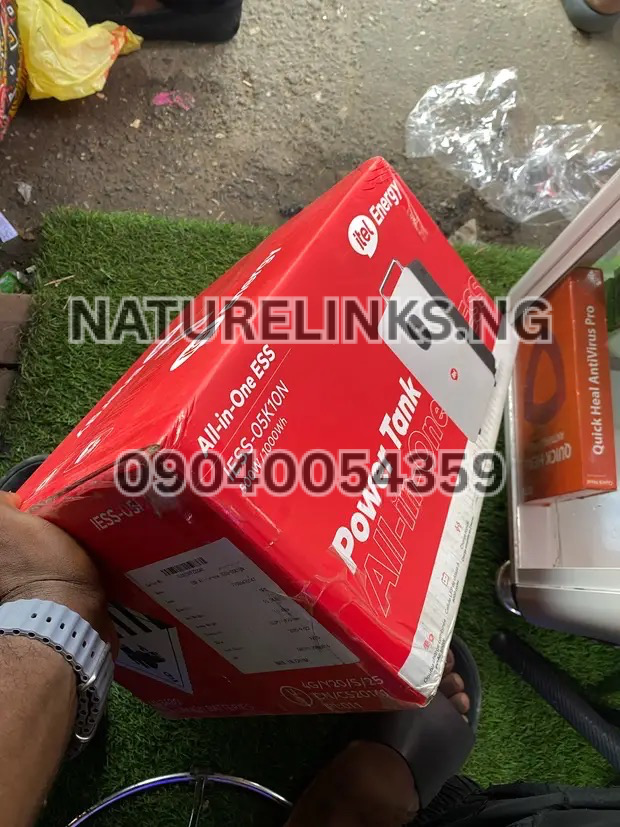
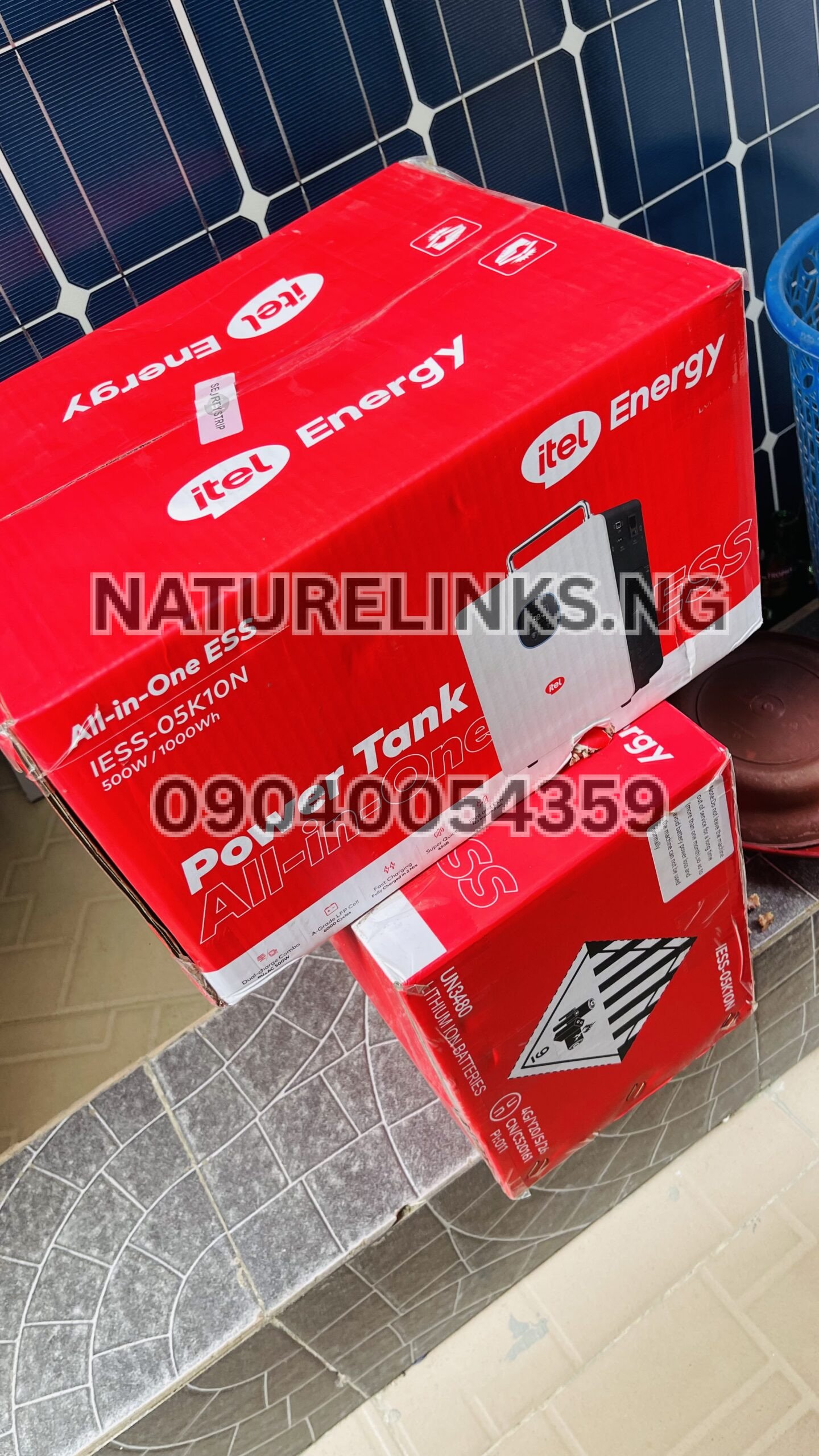
Current listings commonly identify a model/configuration around IESS-05K10N, with a 1,000Wh battery and 500W continuous output, but specifications should still be verified against the actual unit being offered.
Before buying, ask the seller to confirm:
- Battery capacity.
- Continuous inverter output.
- Surge capacity.
- Battery chemistry.
- Maximum solar input.
- AC charging capability.
- Solar charging capability.
- Output sockets.
- Warranty.
- Accessories included in the package.
This helps prevent buying a configuration that does not meet your electricity-backup needs.
10 Frequently Asked Questions About Itel Power Tank Battery Percentage
1. How much power is left when Itel Power Tank shows 50%?
On the commonly advertised 1,000Wh model, 50% represents approximately 500Wh of nominal stored energy. Actual usable energy can be lower because of conversion and system losses.
2. How many hours can Itel Power Tank last at 50%?
It depends on the appliance. Theoretical runtime is approximately 500Wh divided by the appliance’s wattage. A 100W load, for example, would theoretically use 500Wh in about five hours before losses.
3. Is 50% battery enough to power a TV?
Yes, provided the TV’s power requirement is within the Power Tank’s output specifications. A lower-wattage TV will generally run longer than a higher-wattage TV.
4. Can Itel Power Tank at 50% power a fan?
Yes, if the fan’s power requirement is compatible with the Power Tank. A 50W fan would theoretically use 500Wh over approximately 10 hours, although real runtime will be shorter.
5. Can Itel Power Tank at 50% power a refrigerator?
It depends on the refrigerator’s running and startup requirements. Because the commonly advertised unit has a 500W continuous inverter, check both the refrigerator’s running wattage and compressor startup requirements before connecting it.
6. Does 50% mean 500W is left?
No. The 50% reading refers to battery state of charge, while watts refer to power. On a 1,000Wh battery, 50% is approximately 500Wh—not 500W.
7. How much is 50% of a 1,000Wh battery?
50% of 1,000Wh is 500Wh.
In kilowatt-hours:
500Wh = 0.5kWh.
8. Can I charge Itel Power Tank when it reaches 50%?
Yes. The commonly advertised configuration supports AC/grid and solar charging.
Use compatible charging equipment and stay within the specified input limits.
9. Can solar panels recharge an Itel Power Tank from 50% to 100%?
Yes, the commonly listed configuration supports solar charging and documents up to 400W PV input. Actual charging time depends on solar conditions, panel configuration, charging efficiency and the unit’s input specifications.
10. Where can I buy Itel Power Tank in Nigeria?
You can contact Nature Links Nigeria Limited [NatureLinks.NG] / Nature Solar Global Limited for current availability, price, model and warranty information.
Call: 07049528019
WhatsApp: 09040054359
Address: F1571 Upstairs (F-Line), Alaba International Market, Lagos State 🇳🇬
Itel Power Tank 50% Battery: Practical Example
Suppose you arrive home during a power outage and your Itel Power Tank displays 50%.
You have a 100W television, a 40W fan and a 10W router.
Your total load is:
100W + 40W + 10W = 150W
With approximately 500Wh nominal energy remaining:
500Wh ÷ 150W = 3.33 hours
That is the theoretical calculation.
Actual runtime may be shorter because the AC inverter and other components consume energy.
If you reduce the load to only the 40W fan and 10W router:
40W + 10W = 50W
Then:
500Wh ÷ 50W = 10 hours theoretically.
This demonstrates why turning off unnecessary appliances can significantly extend backup time.
How to Make Itel Power Tank 50% Battery Last Longer
If your Power Tank is already at 50% during an outage, you can extend its runtime by reducing unnecessary electricity consumption.
Switch off unused devices
Do not leave chargers, televisions or lights running when nobody is using them.
Use LED bulbs
LED lighting generally requires less power than traditional high-consumption lighting.
Use DC outputs where appropriate
If your particular equipment can safely use a compatible DC output, avoiding unnecessary AC conversion may improve overall efficiency in some setups.
Reduce unnecessary screen time
Televisions and computer equipment consume electricity continuously while operating.
Monitor the display
Keep an eye on battery percentage and output wattage so that you understand how quickly energy is being consumed.
Avoid overload
Keep the connected load within the Power Tank’s rated output.
Itel Power Tank 50% Battery and Nigerian Power Outages
For Nigerian households, offices, shops and small businesses, understanding the battery percentage can help with planning during electricity interruptions.
A 50% reading on a 1,000Wh Power Tank means approximately 500Wh of nominal energy remains.
Instead of asking only, “How many hours will 50% last?”, it is more useful to ask:
“What is the total wattage of everything I am powering?”
For example:
- 50W load → theoretically about 10 hours
- 100W load → theoretically about 5 hours
- 150W load → theoretically about 3.3 hours
- 200W load → theoretically about 2.5 hours
- 300W load → theoretically about 1.7 hours
This makes the battery percentage much easier to understand.
Important Difference Between Battery Capacity and Appliance Load
A buyer searching for an Itel Power Tank 1000Wh price in Nigeria should understand the difference between capacity and output before purchasing.
A 1,000Wh battery tells you how much energy is stored.
A 500W inverter tells you how much continuous AC power the inverter is designed to supply.
Therefore, a 1,000Wh/500W Power Tank is not equivalent to a 1,000W inverter.
The product listings reviewed for this article describe the commonly advertised configuration as a 1,000Wh LiFePO4 battery with a 500W continuous pure-sine-wave inverter.
Itel Power Tank 50% Battery Buying Guide
Before purchasing an Itel Power Tank, consider your actual electricity needs.
If you primarily need to power:
- Router
- Modem
- Laptop
- Phone
- LED lights
- TV
- Small fan
a 1,000Wh portable power station can provide substantial stored energy for low-power loads.
If your main requirement is:
- Electric cooker
- Kettle
- Large pressing iron
- Air conditioner
- High-power heating equipment
you should carefully examine the required wattage and compare it with the inverter’s continuous and surge ratings.
The most important rule is simple:
Do not buy based on battery capacity alone.
Check both Wh capacity and W output.
Conclusion
When the commonly advertised 1,000Wh Itel Power Tank shows 50% battery, it has approximately 500Wh of nominal stored energy remaining. The actual energy available to your appliances can be lower because of inverter conversion, internal consumption and other operating losses.
The amount of time that 50% will last depends primarily on your total appliance load. A 50W load could theoretically run for around 10 hours, while a 100W load could theoretically run for around 5 hours. Higher loads consume the remaining energy more quickly.
For Nigerian buyers, the key specifications to understand are the 1,000Wh/1kWh battery capacity, 500W continuous inverter output, LiFePO4 battery technology and compatible charging options. Current listings also document solar charging through an integrated MPPT controller, with up to 400W PV input on the documented configuration.
For genuine Itel Power Tank availability, current price, exact model, warranty and purchasing information in Nigeria, contact Nature Links Nigeria Limited / Nature Solar Global Limited.
Call: 07049528019
WhatsApp: 09040054359
Shop: F1571 Upstairs (F-Line), Alaba International Market, Lagos State 🇳🇬