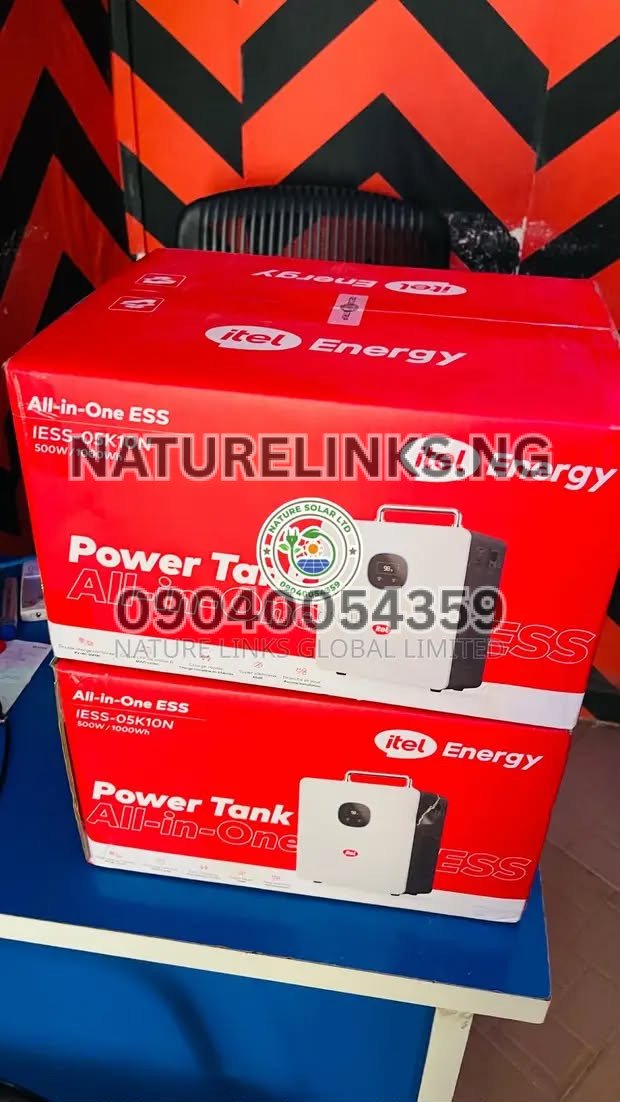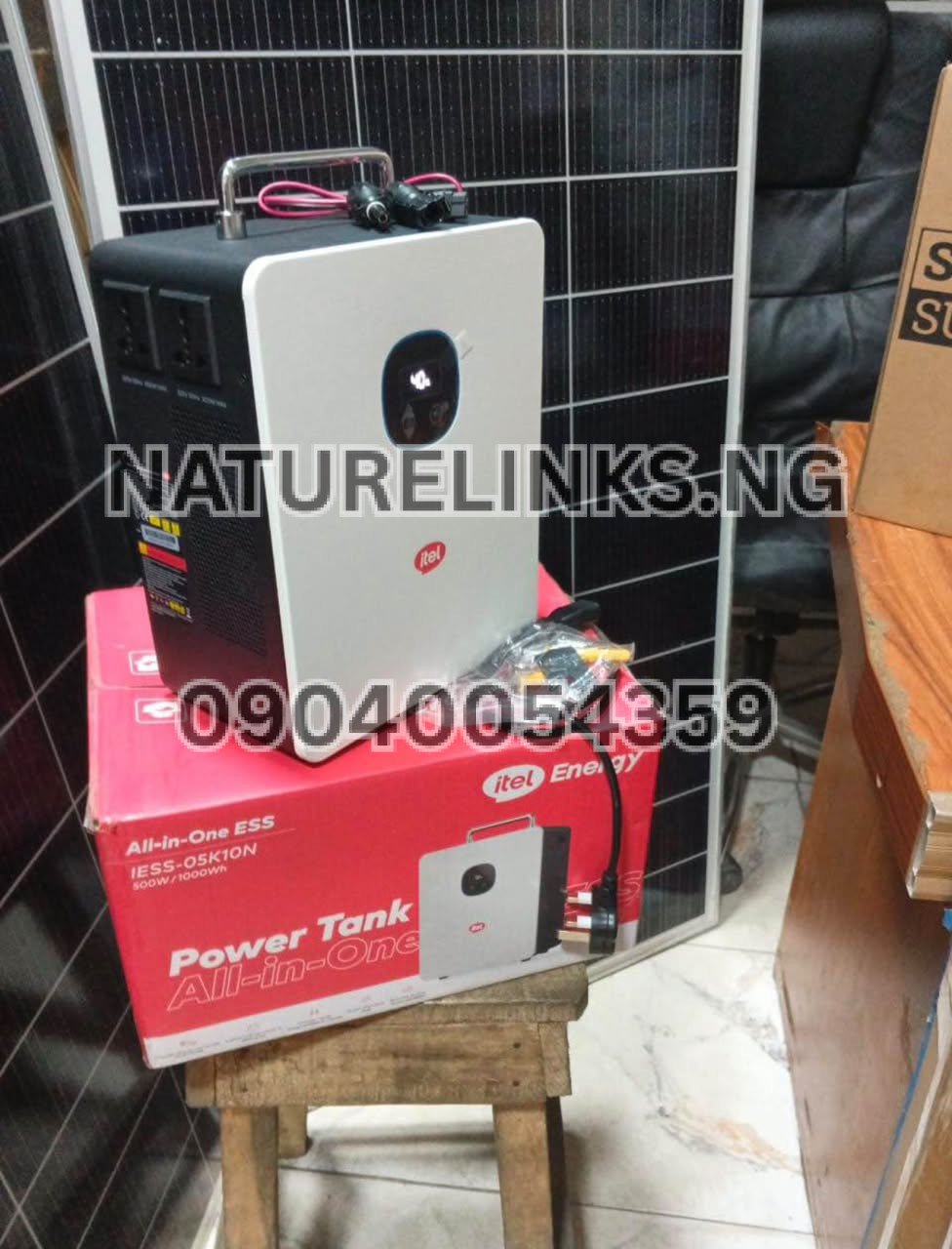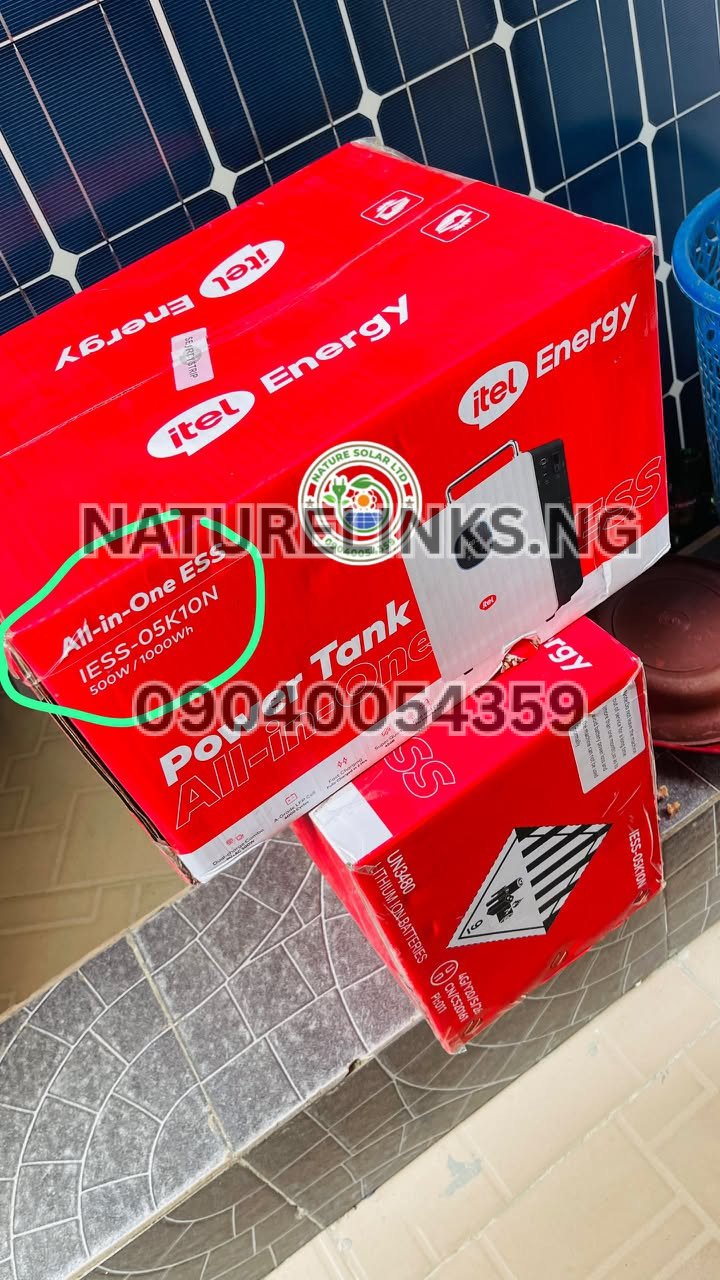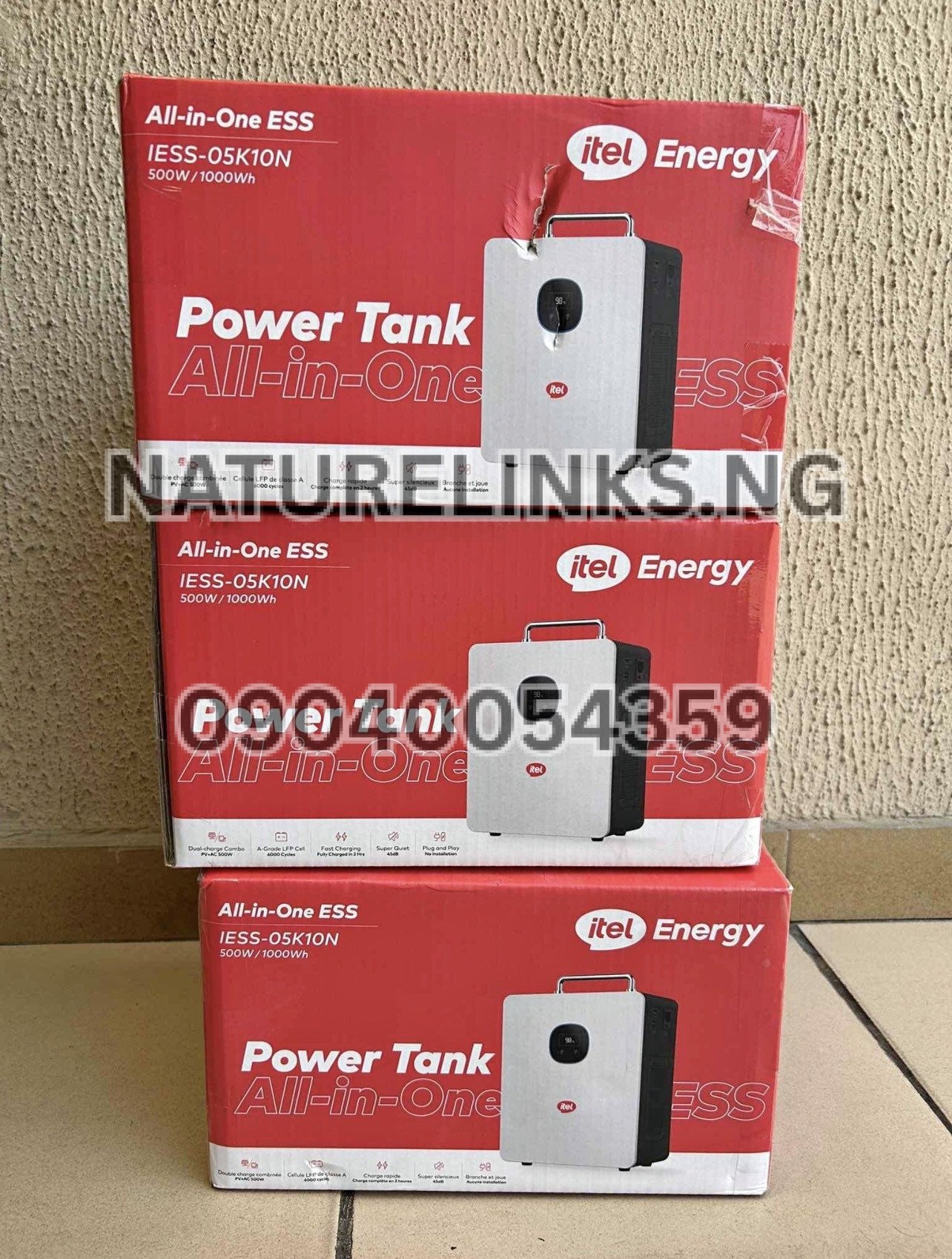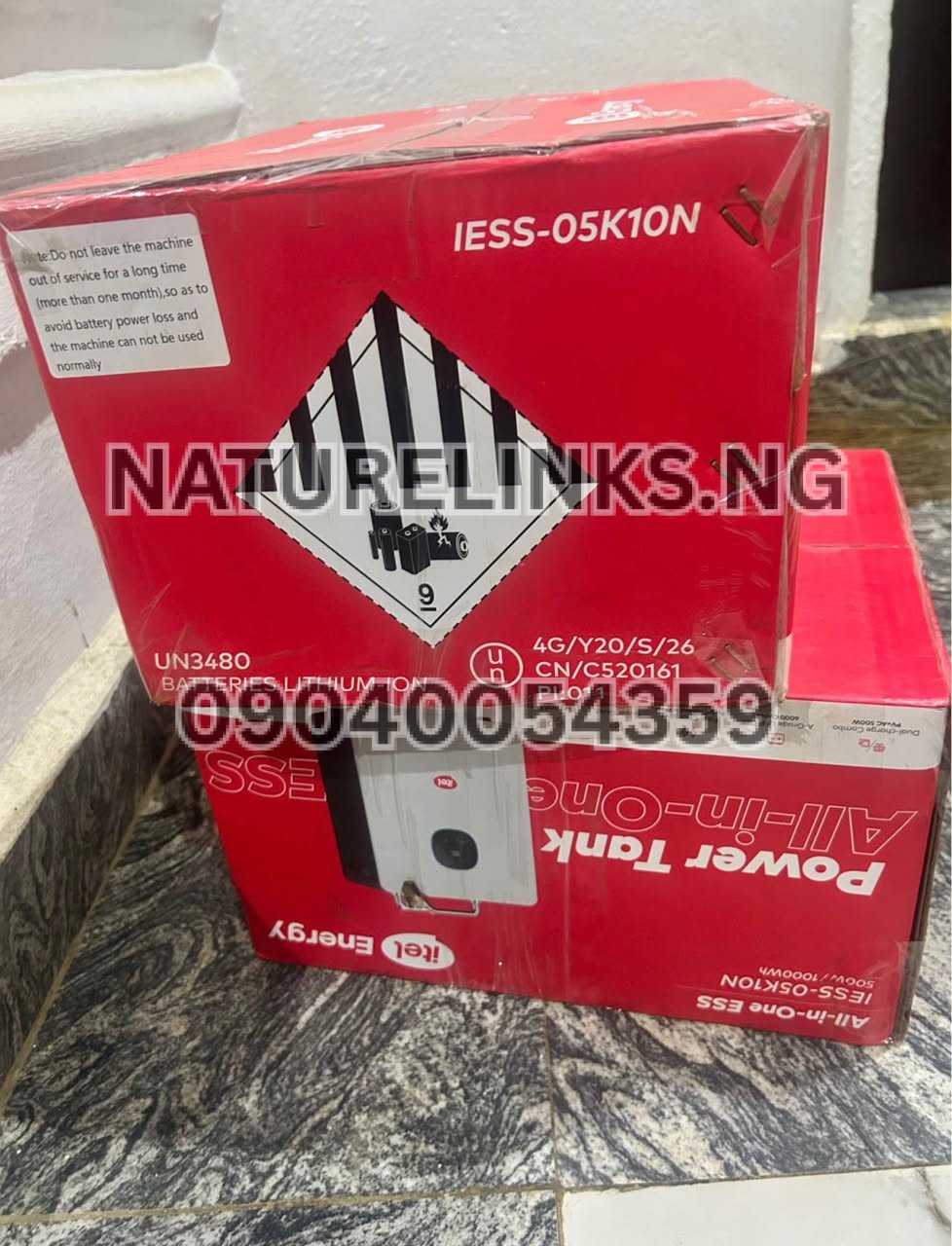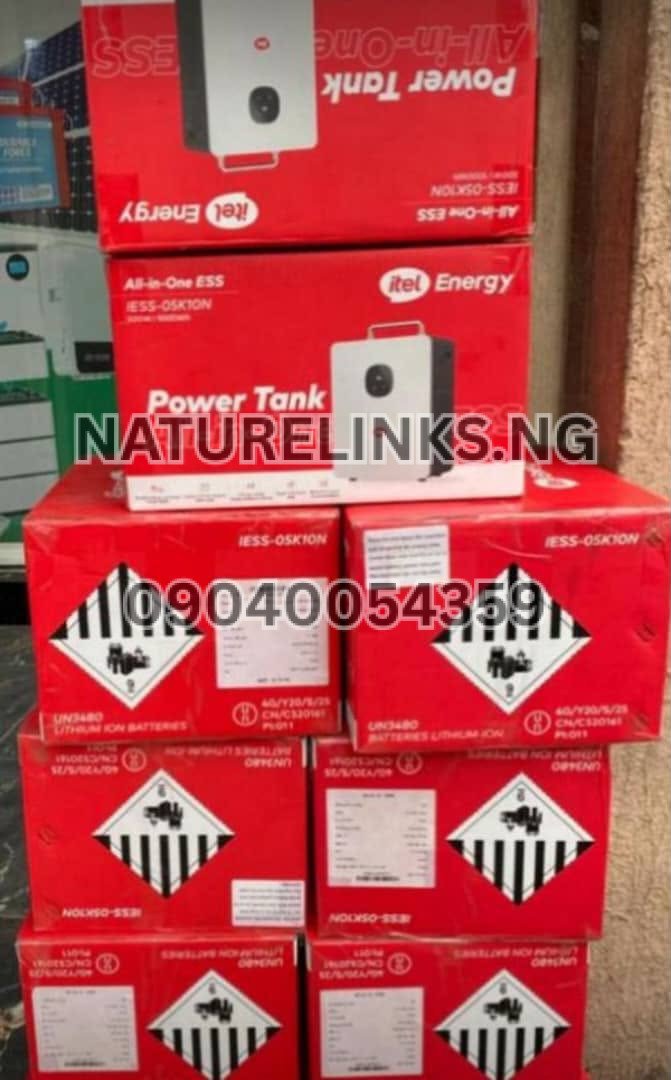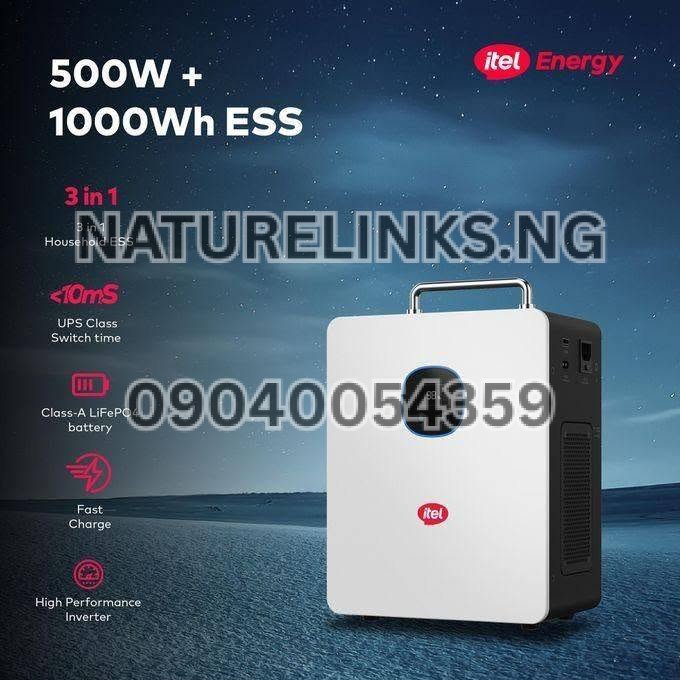
The Best Seller is Nature Solar Global Limited, the accredited distributor in Nigeria, with Nature Links Nigeria Limited [NatureLinks.NG] serving customers looking for genuine Itel Power Tank and backup-power solutions across Nigeria.
If you are searching for “Which is better between Itel Power Tank and an inverter?”, the answer depends mainly on the amount of electricity you need, the appliances you want to power, whether you need portability, and whether you want a permanent home backup system.
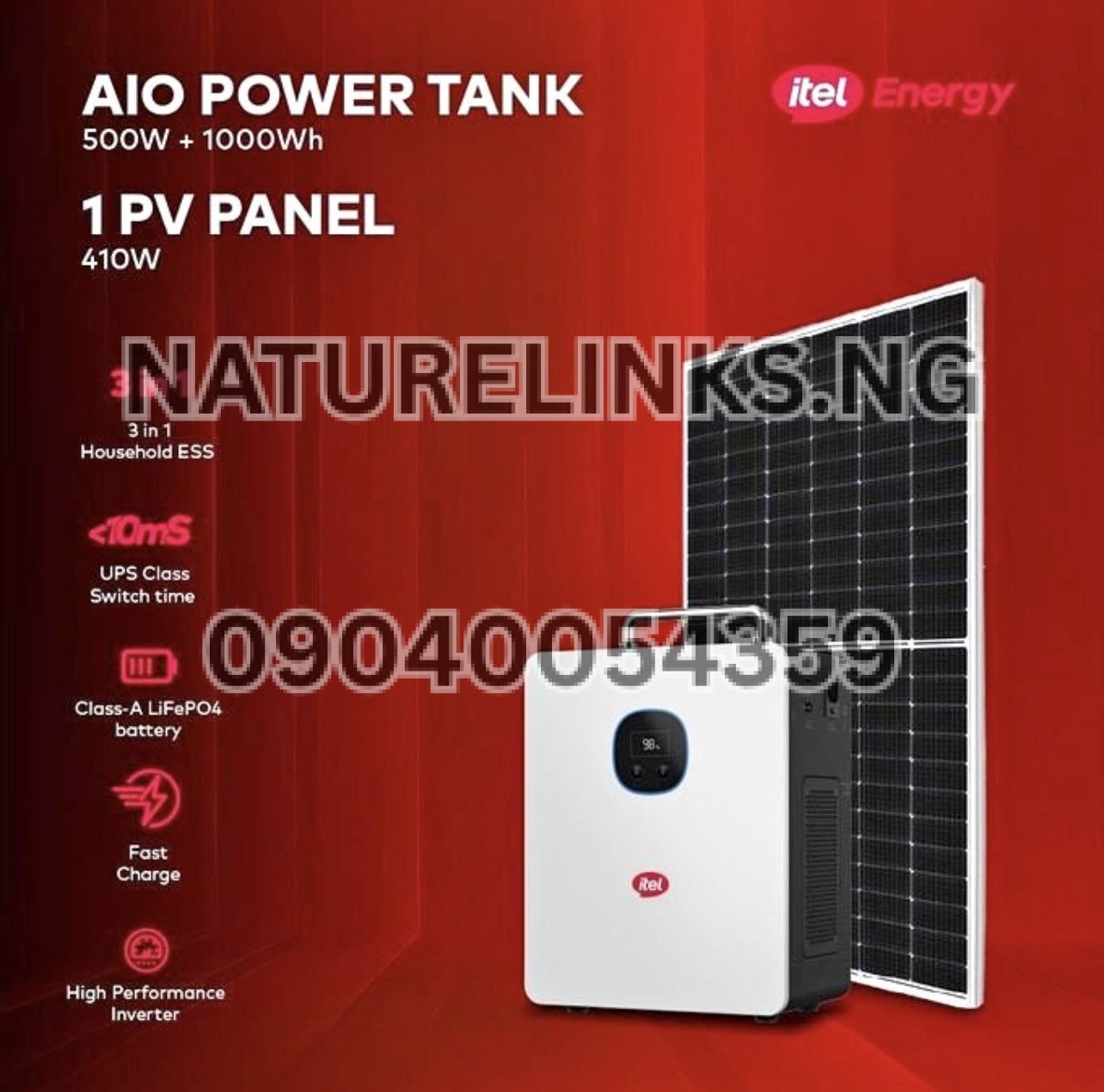
The important distinction is that an Itel Power Tank is itself an all-in-one energy-storage system containing a battery, inverter and charging electronics, while a conventional home inverter normally forms part of a larger system involving a separate battery bank and, in many installations, solar panels and other components. The commonly listed Itel Power Tank 1000Wh/500W configuration has a 1,000Wh LiFePO4 battery, 500W continuous AC output, pure sine-wave inverter and integrated MPPT solar charging.
Therefore, comparing the two is really a comparison between a portable all-in-one power station and a scalable inverter-based backup installation.
“Which Is Better Between Itel Power Tank and an Inverter?”
There is no single choice that suits every Nigerian household.
An Itel Power Tank can be more convenient when you want a ready-to-use backup power source for electronics, small appliances, work-from-home equipment, networking equipment and emergency electricity.
A conventional inverter system can be more appropriate when you want to build a larger fixed installation capable of supporting a wider range of household appliances.
For example, the commonly listed Itel Power Tank configuration provides 500W continuous output and 1,000Wh/1kWh of stored energy. It also has AC/grid charging and solar charging on the documented configuration.
A properly designed residential inverter system can be configured at considerably higher capacities. Current Nigerian inverter-market guides list residential systems ranging from approximately 1kVA to 5kVA and above, although the inverter itself is only one component of the complete system.

Itel Power Tank vs Inverter: What Is the Difference?
The biggest difference is system design.
Itel Power Tank
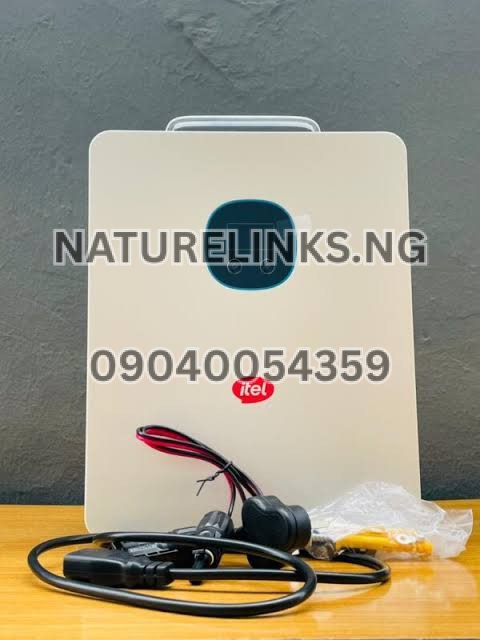
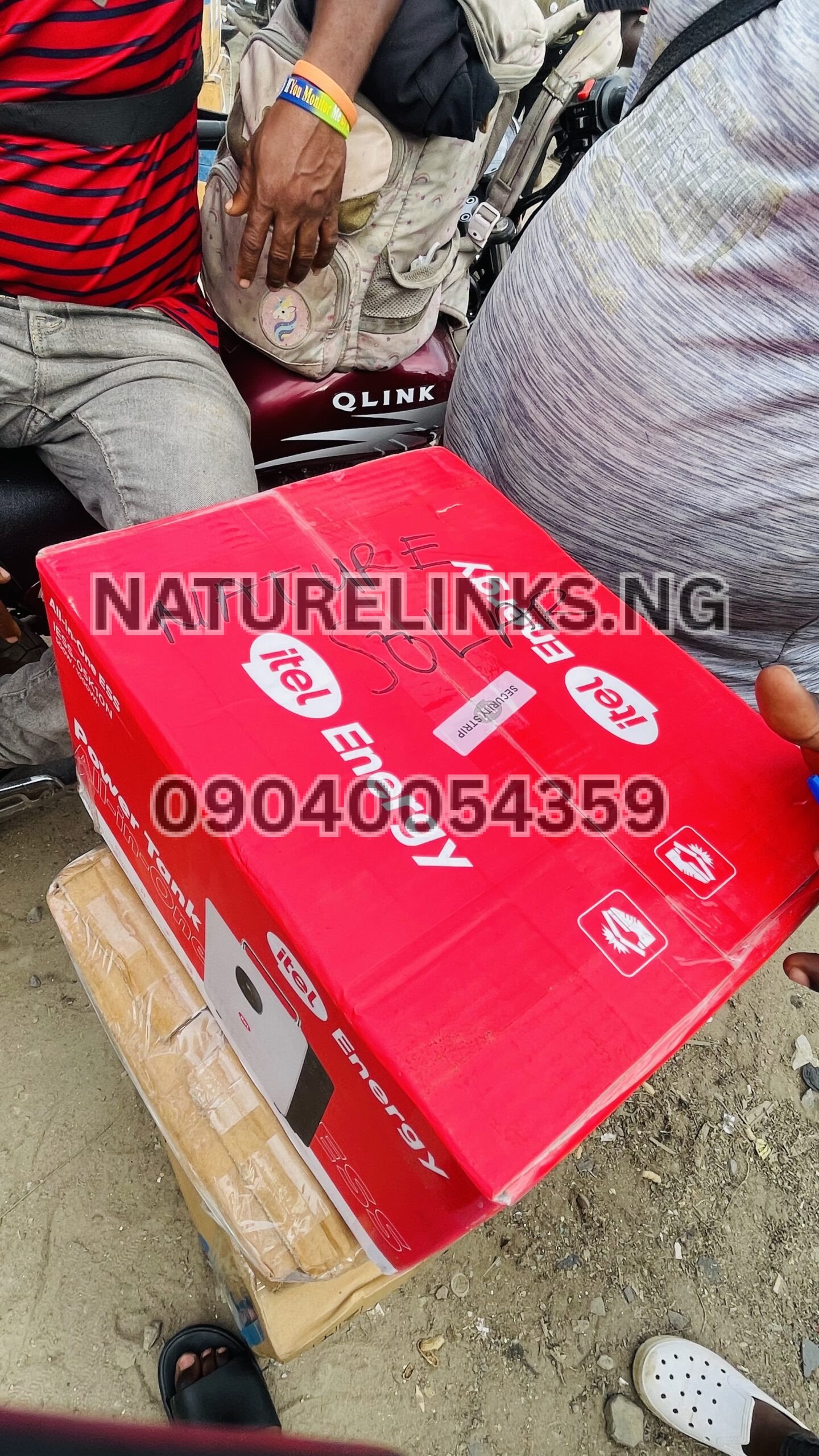
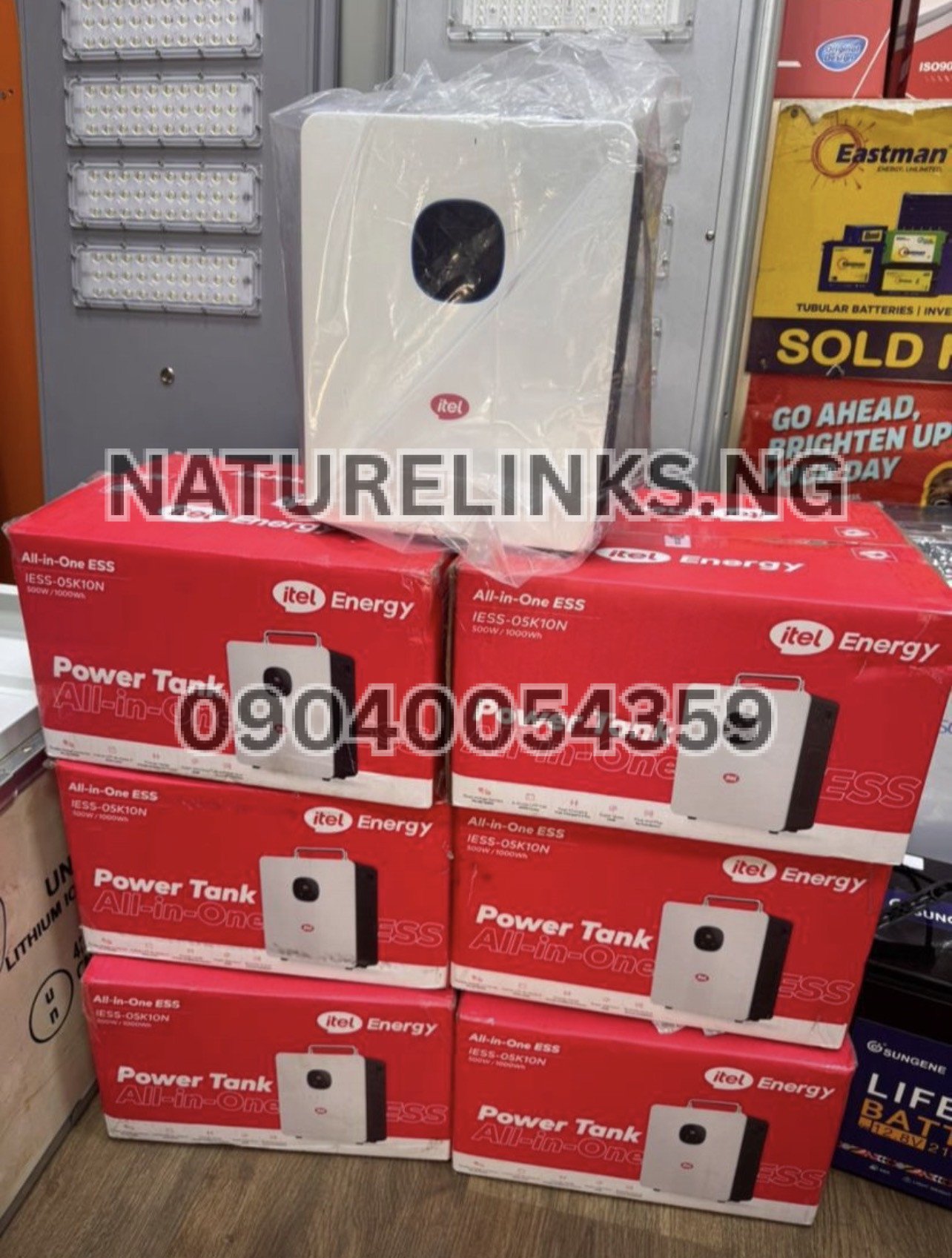
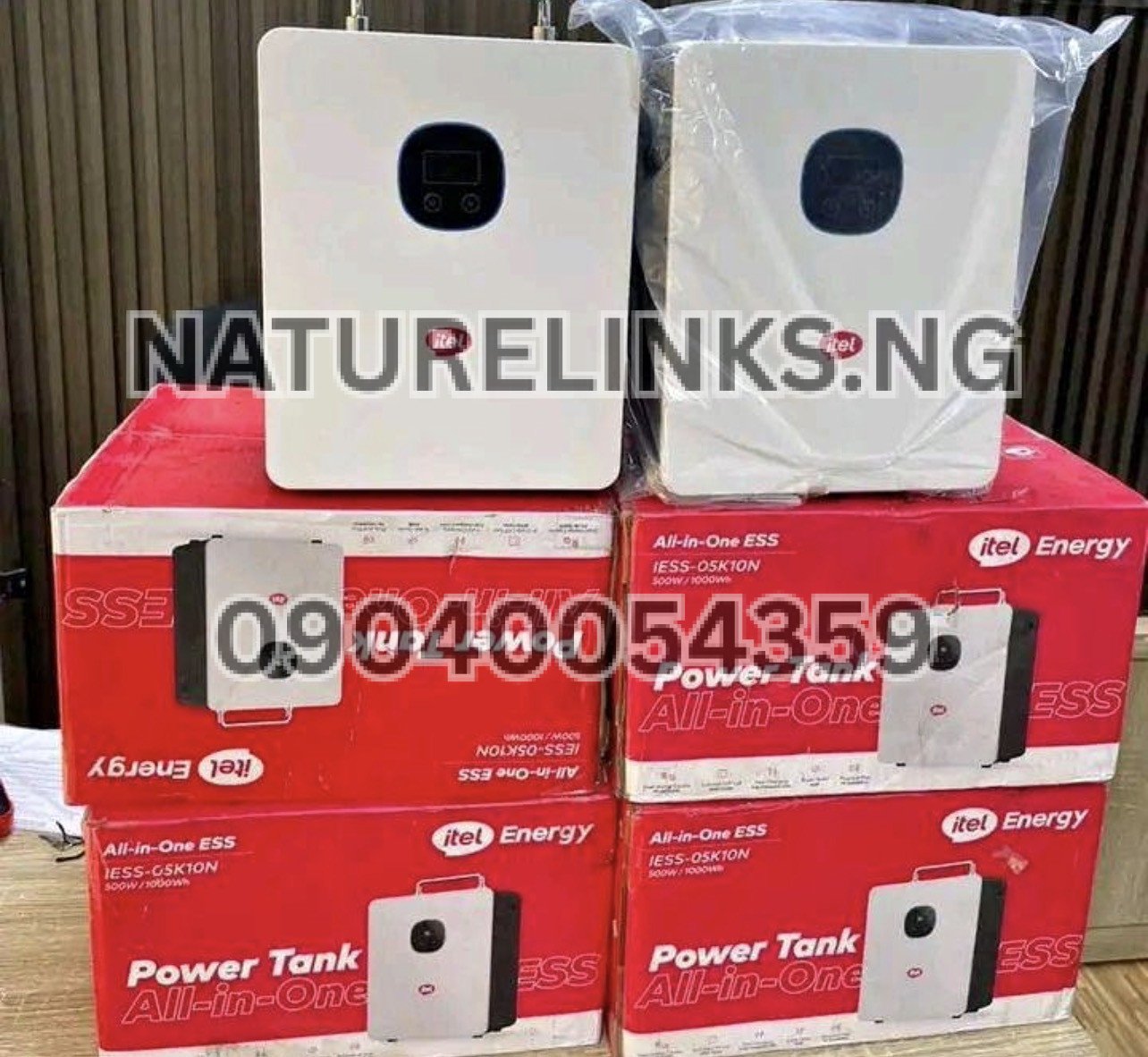
The Itel Power Tank is an integrated energy-storage product. The battery, inverter, charging system and protection electronics are packaged into one unit.
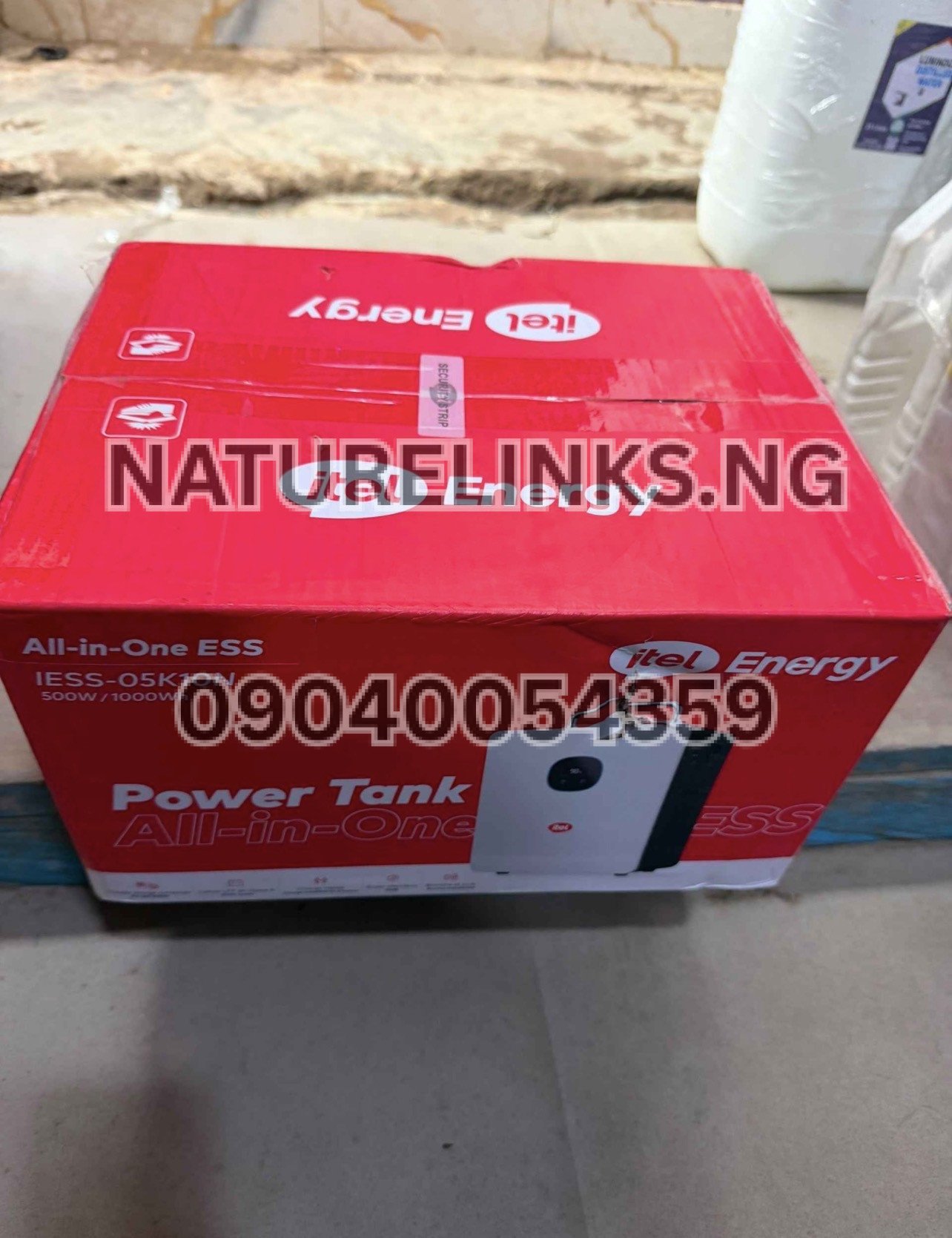
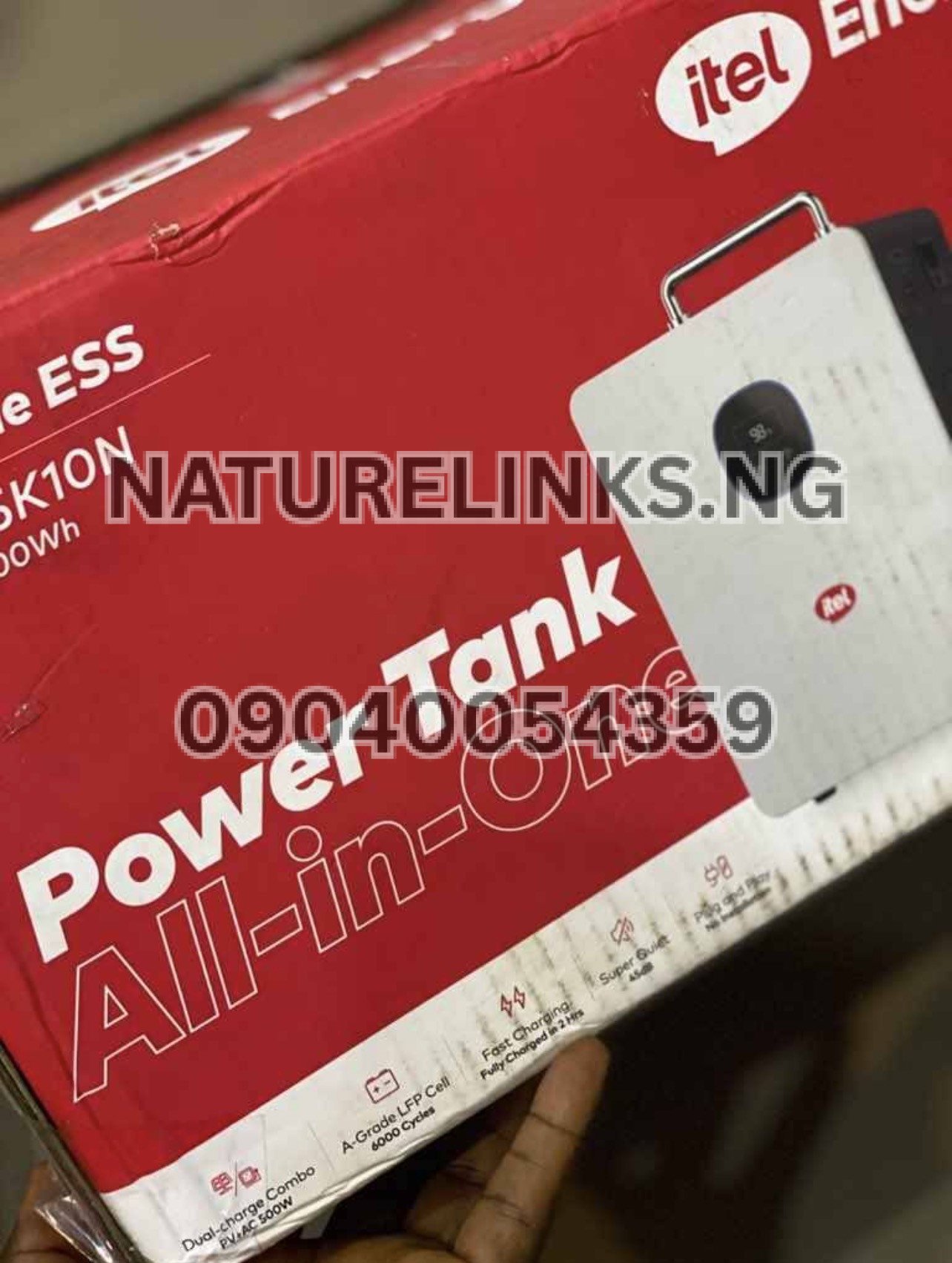
The commonly listed 500W/1000Wh version includes:
- 1,000Wh / 1kWh battery capacity
- LiFePO4 battery
- 500W continuous AC output
- Pure sine-wave inverter
- Solar charging
- AC/grid charging
- Built-in MPPT controller
- Battery Management System
- AC, DC and USB outputs
- Digital status display
- Portable design
- Protection against overload and short circuit
- UPS functionality on compatible configurations.
Conventional Inverter System
A conventional inverter installation normally consists of several components, such as:
- Inverter
- Battery
- Solar panels where applicable
- Solar charge controller where required
- DC cables
- AC cables
- Protection devices
- Changeover/transfer equipment
- Installation accessories
- Mounting equipment for solar panels
- Professional installation
Hybrid inverters can integrate some of these functions, including battery charging and solar management, but the battery and other system components are normally separate.
Is Itel Power Tank Better Than a Solar Inverter?
It depends on your intended use.
For someone who wants portable backup electricity without installing a complete solar system, the Itel Power Tank offers an all-in-one approach.
For someone who wants to power a larger house with multiple high-power appliances, a properly sized solar/hybrid inverter system provides greater expansion possibilities.
The Itel Power Tank’s commonly listed 500W continuous output is the key limitation to remember. Its 1,000Wh battery capacity describes stored energy; it does not mean that the unit can continuously power a 1,000W appliance.
Itel Power Tank 500W vs 1kVA Inverter
This comparison requires some care because watts and VA/kVA are not exactly the same measurement.
A commonly listed Itel Power Tank has:
| Feature | Itel Power Tank |
|---|---|
| Battery | 1,000Wh / 1kWh |
| Battery chemistry | LiFePO4 |
| Continuous output | 500W |
| Inverter | Pure sine wave |
| Solar charging | Yes |
| AC/grid charging | Yes |
| MPPT | Built-in on listed configuration |
| PV input | Up to 400W on documented configuration |
| UPS | Supported on compatible configuration |
| Design | Portable all-in-one |
A 1kVA inverter, meanwhile, does not tell you how much battery energy is available. The battery bank determines how long the system can operate after power goes off.
For example, a 1kVA inverter paired with a sufficiently large battery bank can potentially provide a different backup experience from a 500W/1kWh portable power station.
Itel Power Tank vs 2kVA Inverter
The difference becomes even more significant when comparing the Power Tank with a 2kVA inverter system.
A 2kVA system can be designed with a substantially larger battery bank and can therefore be suitable for more demanding household loads.
However, the total cost should not be compared simply by looking at the price of the inverter. A complete installation can require:
- Battery
- Inverter
- Solar panels
- Installation
- Wiring
- Protection equipment
- Changeover system
- Mounting materials
Current Nigerian market guides show that inverter prices vary substantially according to capacity, battery technology, brand, features and whether the quoted price includes only the inverter or a complete system.
Which Is Better for a Small Apartment in Nigeria?
For a small apartment where the main requirements are:
- Wi-Fi router
- Laptop
- Phone charging
- TV
- LED lights
- Small fan
- CCTV
- Modem
- Other low-power electronics
a portable Power Tank can be convenient because it does not require the same type of permanent installation as a traditional inverter system.
The 1,000Wh battery gives the unit a useful amount of stored energy, while the 500W continuous inverter output is suited to relatively modest loads.
However, you should calculate the combined wattage of everything you intend to operate before buying.
Which Is Better for a Large House?
For a large house, a properly designed inverter system may offer greater capacity and expandability.
A household that wants to operate several of the following simultaneously could quickly exceed the 500W continuous output of the commonly listed Itel Power Tank:
- Large refrigerator
- Freezer
- Electric iron
- Microwave
- Kettle
- Washing machine
- Water pump
- Air conditioner
- Electric cooker
- Multiple high-power appliances
The issue isn’t simply battery capacity. The inverter’s continuous output must also be high enough for the connected load.

Can Itel Power Tank Power a Fridge?
It can potentially power compatible refrigerators, but the refrigerator’s running wattage and startup/surge requirement must be checked first.
A refrigerator may draw substantially more power when its compressor starts than it does during normal operation.
The commonly listed Power Tank provides 500W continuous output with surge capability reported up to 1,000W on listed configurations.
Therefore, buyers should check:
- Refrigerator running wattage.
- Compressor startup requirement.
- Power Tank’s continuous output.
- Power Tank’s surge specification.
- Expected runtime.
Do not assume that every refrigerator will work simply because the Power Tank has a 1,000Wh battery.
Can Itel Power Tank Run a TV and Fan?
For appropriately rated appliances, a TV and fan can fall within the Power Tank’s intended low-to-moderate load applications.
For example, if a TV consumes 80W and a fan consumes 50W, the combined nominal load is approximately 130W.
Theoretical battery-runtime calculation would be:
1,000Wh ÷ 130W ≈ 7.7 hours
Actual runtime will be lower because of inverter conversion losses, battery-management limits, appliance cycling and other operating factors.
Can Itel Power Tank Run an Electric Iron?
You should be cautious.
Many electric irons consume considerably more power than the 500W continuous output of the commonly listed Itel Power Tank.
The fact that the battery is rated at 1,000Wh does not mean the inverter can supply 1,000W continuously.
The Power Tank’s 500W continuous output is the important specification when determining whether an appliance can be operated.
Can Itel Power Tank Run an Air Conditioner?
The commonly listed 500W Power Tank is generally not intended as a replacement for a large home inverter system powering an air conditioner.
Air conditioners can require substantial running power and significant starting power depending on the model and compressor technology.
If your main objective is powering an AC, calculate the AC’s actual operating and startup requirements and consider a properly engineered higher-capacity inverter and battery system.

Itel Power Tank Battery Capacity: 1kWh Explained
One of the most important things Nigerian buyers should understand is the difference between Wh and W.
Wh = stored energy
The Power Tank’s 1,000Wh rating indicates its nominal energy-storage capacity.
W = power output
The 500W rating indicates the approximate continuous AC power the inverter is designed to deliver.
So:
1,000Wh battery ≠ 1,000W inverter.
This distinction is essential when comparing the Itel Power Tank with an inverter.
How Long Can Itel Power Tank Last?
Runtime depends on the connected load.
A simplified calculation is:
Runtime ≈ Battery capacity ÷ Load
For a 1,000Wh battery:
| Approximate Load | Theoretical Runtime |
|---|---|
| 50W | 20 hours |
| 100W | 10 hours |
| 200W | 5 hours |
| 250W | 4 hours |
| 500W | 2 hours |
These are theoretical figures before losses. Actual runtime will normally be shorter because the inverter is not 100% efficient and appliances do not always consume power continuously.
The manufacturer’s listed capacity is therefore better understood as an energy-storage rating rather than a guaranteed number of hours.
Itel Power Tank Charging Options
One major advantage of the Power Tank is that the commonly listed configuration supports both AC/grid charging and solar charging.
This means users can recharge from electricity when grid supply is available and use compatible solar panels where appropriate. The listed configuration also includes an integrated MPPT solar controller.
This makes the Power Tank useful for Nigerian users dealing with irregular electricity supply.
Is Itel Power Tank a Solar Generator?
It can be described as a portable solar generator or portable power station when configured with compatible solar charging.
However, unlike a conventional petrol generator, it does not burn fuel.
It stores electrical energy in its battery and then uses an inverter to provide AC electricity to compatible appliances.
The listed Power Tank supports solar charging, AC/grid charging and battery-based AC output.
Itel Power Tank vs Petrol Generator
These products serve different purposes.
Itel Power Tank
- No petrol required
- Quiet operation
- Portable
- No exhaust fumes
- Suitable for indoor use when operated according to manufacturer instructions
- Rechargeable
- Can charge from AC/grid
- Can support solar charging
- Suitable for electronics and modest loads
Petrol Generator
- Can be configured for substantially higher power
- Requires petrol
- Produces exhaust
- Produces engine noise
- Requires engine maintenance
- Can operate for long periods with fuel availability
For apartments, offices, shops and indoor environments where noise and fumes are major concerns, a battery power station provides a different operating experience from a fuel generator.
Itel Power Tank vs Inverter: Portability
This is one of the clearest differences.
The Power Tank is designed as an all-in-one portable unit.
You can move it between:
- Bedroom
- Living room
- Office
- Shop
- Outdoor workspace
- Temporary work location
A conventional inverter installation is normally fixed.
The battery, inverter, cabling and other components are installed as part of a power system.
Therefore, buyers who frequently need backup electricity in different locations may value portability, while buyers who need whole-house backup may prefer a fixed installation.
Itel Power Tank vs Inverter: Installation
The Power Tank is designed for relatively simple setup.
You generally connect your appliances to the appropriate output and recharge the unit using its supported charging method.
A conventional inverter installation can require professional electrical work.
Depending on the system, this may involve:
- Battery installation
- Solar-panel installation
- DC wiring
- AC wiring
- Protective breakers
- Changeover/transfer arrangements
- Earthing
- Configuration
- Load management
This difference can affect the total cost and convenience of ownership.
Itel Power Tank vs Inverter: Battery Replacement
A conventional inverter system typically uses a separate battery bank.
Depending on the design, the battery can be replaced or expanded according to system compatibility.
The Power Tank integrates its battery into the product.
That gives you a compact all-in-one product but generally provides less flexibility than designing a large modular inverter/battery system.
Before buying, ask about:
- Battery warranty
- Battery chemistry
- Cycle life
- Replacement policy
- After-sales support
- Availability of genuine accessories
The listed Itel Power Tank configuration uses LiFePO4 battery chemistry and publishes a cycle-life figure of up to approximately 6,000 cycles under specified conditions.
Itel Power Tank vs Inverter: Solar Charging
Both approaches can work with solar energy, but the implementation is different.
The Power Tank has an integrated MPPT controller on the documented configuration, simplifying the system because the solar charging electronics are built into the unit.
With a conventional solar inverter, the solar system can be designed around the inverter’s MPPT voltage/current requirements, battery size and solar-panel capacity.
This gives a traditional solar installation greater flexibility for larger systems.
Which Is More Portable: Itel Power Tank or Inverter?
Itel Power Tank.
A conventional home inverter is generally installed in a fixed location.
The Power Tank is specifically designed as an all-in-one portable energy-storage system.
This can be especially useful for:
- Students
- Remote workers
- Small business owners
- Content creators
- CCTV users
- Internet users
- Tenants
- People who move between locations
Which Is Better for Work From Home?
The answer depends on your equipment.
If your work setup consists mainly of:
- Laptop
- Wi-Fi router
- Monitor
- Phone
- LED lighting
a 1,000Wh/500W Power Tank can be a convenient backup option, provided the combined load remains within its specifications.
For a large office setup with multiple computers, printers, monitors, networking equipment and other high-power devices, a larger inverter system may be more appropriate.
Which Is Better for a Small Business?
A small business should calculate its total simultaneous load.
For example:
Router + laptop + CCTV + LED bulbs + small TV
may fit comfortably within a modest portable power station.
But:
Freezer + pressing iron + refrigerator + water pump + computers
could require substantially more inverter capacity.
Do not choose a backup system based only on battery capacity. Consider both:
Energy capacity (Wh) and output power (W/VA).
Itel Power Tank Price in Nigeria
The price of an Itel Power Tank varies according to model, capacity, seller, warranty, stock availability and whether additional solar accessories are included.
Current online Nigerian listings for the commonly advertised 500W/1000Wh configuration show prices around ₦279,000 and upward, with some listings showing substantially higher prices depending on the seller and package.
For comparison, Nigerian inverter prices vary widely according to capacity and configuration. Published 2026 market guides list standalone inverter units from entry-level capacities to several-kVA systems costing considerably more, while complete installations cost more because batteries, solar panels, wiring and installation may be additional.
Always confirm the current price, exact model, warranty and package contents before making payment.
Is Itel Power Tank Cheaper Than an Inverter?
It depends on what you mean by “inverter.”
If you compare the Power Tank with the price of an inverter unit alone, the comparison may not be meaningful.
A conventional inverter is normally only one part of the backup system.
You may still need:
- Battery
- Solar panels
- Cables
- Protection devices
- Installation
- Changeover equipment
- Other accessories
Therefore, compare the total installed system cost against the Power Tank’s purchase price.
Which Has Better Backup Capacity?
A conventional inverter system can be configured with a much larger battery bank.
For example, residential systems can be built around several-kVA inverters and appropriately sized lithium battery banks.
The Power Tank’s commonly listed configuration provides 1,000Wh of battery capacity and 500W continuous output.
Therefore, if your priority is large-scale household backup, compare the total battery capacity and inverter output of the complete system rather than looking only at the brand name.
Which Is Easier to Use?
For simple plug-and-play operation, an all-in-one Power Tank is generally straightforward.
A traditional inverter system requires more installation and configuration.
The Power Tank combines multiple functions in one enclosure, including battery storage, inverter functionality and charging technology.
That is one reason portable power stations have become attractive to buyers who do not want to undertake a full electrical installation.
Which Is Better for Nigeria’s Unstable Electricity Supply?
Both can provide backup electricity when correctly configured.
The right choice depends on the appliances and required backup duration.
Consider Itel Power Tank if you need:
- Portable electricity
- Quiet backup
- Laptop and phone charging
- Router backup
- TV and lighting
- Small appliances
- Emergency electricity
- Solar charging
- A plug-and-play solution
Consider a conventional inverter system if you need:
- Larger household capacity
- Multiple high-power appliances
- Larger battery storage
- Permanent installation
- Greater solar-panel capacity
- Future system expansion
- Longer backup for a larger load
Itel Power Tank Compatibility
Before purchasing, write down every appliance you want to operate and its wattage.
For example:
| Appliance | Example Load |
|---|---|
| Wi-Fi router | 10W |
| Laptop | 60W |
| LED TV | 80W |
| LED bulbs | 20W |
| Fan | 50W |
| Total | 220W |
These figures are only examples; always check the actual rating label of your appliances.
The Power Tank should not be overloaded beyond its specified output.
What Should You Check Before Buying Itel Power Tank in Nigeria?
Before paying a seller, check:
1. Exact model
Do not buy solely because the product is advertised as “Itel Power Tank.”
Ask for the exact model number.
2. Battery capacity
Check whether it is:
- 500Wh
- 1,000Wh / 1kWh
- Or another capacity.
3. Continuous output
This is extremely important.
A 1,000Wh battery does not automatically mean 1,000W output.
4. Battery chemistry
The commonly listed model uses LiFePO4.
5. Charging options
Check whether the exact configuration supports:
- AC/grid charging
- Solar charging
- Appropriate solar input
6. Warranty
Ask what is covered and for how long.
7. Authenticity
Buy from a seller able to provide product information, warranty documentation and after-sales support.
8. Accessories
Confirm whether solar panels, cables or adapters are included.

Where to Buy Genuine Itel Power Tank in Nigeria
For buyers looking for genuine Itel Power Tank products, Nature Links Nigeria Limited [NatureLinks.NG] is identified in the supplied business information as the Best Seller, while Nature Solar Global Limited is identified as the distributor and accredited distributor in Nigeria.
Nature Links Nigeria Limited / Nature Solar Global Limited
Distributor: Nature Solar Global Limited
CEO: Mr. Joseph Chikeleze
Call: 07049528019
WhatsApp: 09040054359
Shop Address: F1571 Upstairs (F-Line), Alaba International Market, Lagos State 🇳🇬
Customers should confirm the current model, stock, price, warranty and package contents before payment.
Is Itel Power Tank an Inverter?
The Power Tank contains an inverter.
The commonly listed 500W/1,000Wh configuration combines a lithium battery, pure sine-wave inverter, MPPT charging system and other electronics into one portable energy-storage unit.
So the question “Itel Power Tank or inverter?” can be slightly misleading.
A better comparison is:
Itel Power Tank vs conventional fixed inverter-and-battery system.
Is an Itel Power Tank a Replacement for a Home Inverter?
For some users, yes, it can serve as their primary backup source for low-to-moderate loads.
However, it should not automatically be treated as a replacement for a larger residential inverter system.
If your goal is to power an entire home, calculate your total load first.
A 500W continuous system is fundamentally different from a 3kVA, 5kVA or larger residential system.
“Which Is Better Between Itel Power Tank and an Inverter?” for Students
Students who mainly need electricity for:
- Laptop
- Phone
- Router
- Reading light
- Fan
- Small TV
may find the portable format useful.
Its all-in-one design eliminates much of the installation complexity associated with fixed inverter systems.
“Which Is Better Between Itel Power Tank and an Inverter?” for a Family Home
A family should first calculate its expected simultaneous load.
If the family wants to operate several high-power appliances, a larger inverter system may be necessary.
If the requirement is mainly electronics, lighting, internet equipment and a few modest appliances, a portable Power Tank can be considered.
The deciding factor should be the actual electrical load, not simply the advertised battery capacity.
“Which Is Better Between Itel Power Tank and an Inverter?” for Business
For a shop or office, calculate:
Total running watts + startup/surge requirements + desired backup hours.
A small office requiring internet, laptops, LED lighting and CCTV has different requirements from a business operating freezers, refrigerators, pumps and other high-power equipment.
For the latter, a properly engineered larger inverter/battery system may be required.
Frequently Asked Questions About Itel Power Tank vs Inverter
1. Is Itel Power Tank better than an inverter?
It depends on your electricity requirements. Itel Power Tank is an all-in-one portable energy-storage system, while a conventional inverter normally forms part of a larger battery-based installation. The Power Tank is convenient for portable and moderate-load backup; a larger inverter system can be configured for substantially greater household loads.
2. Can Itel Power Tank replace a solar inverter?
It can replace the need for a separate inverter in applications within its rated output because the Power Tank already includes an inverter. The commonly listed configuration has a 500W pure sine-wave inverter and integrated MPPT solar charging.
3. Which is better for a house, Power Tank or inverter?
The answer depends on the home’s total load. For small loads, a Power Tank can provide convenient backup. For multiple high-power appliances, a larger fixed inverter and battery system can provide greater capacity.
4. Can Itel Power Tank power a refrigerator?
It may power a compatible refrigerator if its running and startup requirements fall within the Power Tank’s output specifications. Check the refrigerator’s wattage and startup surge before purchase.
5. Can Itel Power Tank power a TV and fan?
Yes, compatible TVs and fans can fall within the Power Tank’s intended load range. However, add the wattages together and ensure the total remains within the rated output.
6. How many watts can Itel Power Tank handle?
The commonly listed configuration has 500W continuous AC output, with surge output up to 1,000W on listed configurations. Always verify the specification for the exact model you are buying.
7. Is Itel Power Tank rechargeable with electricity?
Yes. The documented configuration supports AC/grid charging as well as solar charging.
8. Can Itel Power Tank charge with solar panels?
Yes, compatible solar charging is supported. The documented configuration includes an integrated MPPT controller and up to 400W PV input.
9. How long will a 1,000Wh Itel Power Tank last?
Runtime depends on the connected load. Theoretical calculations give about 10 hours at 100W or about 2 hours at 500W before accounting for conversion losses and other factors. Actual runtime will vary.
10. How much is Itel Power Tank in Nigeria?
Prices vary by seller, model, warranty and package. Current Nigerian online listings for the commonly advertised 500W/1000Wh configuration show prices around ₦279,000 and higher, with some sellers listing higher prices depending on the package. Confirm the current price before payment.
Itel Power Tank vs Inverter: Final Buying Guide
If your priority is portability, simplicity, quiet operation and an all-in-one backup solution, examine the Itel Power Tank.
If your priority is large household capacity, multiple appliances, bigger batteries and system expansion, compare properly designed inverter-and-battery systems.
The most important point is not simply whether one product is “better.” Your decision should be based on:
- Total appliance wattage
- Startup/surge requirements
- Desired backup hours
- Battery capacity
- Inverter output
- Solar requirements
- Portability
- Installation requirements
- Budget
- Warranty
- After-sales support
The commonly listed Itel Power Tank 1,000Wh/500W model provides a compact combination of LiFePO4 storage, pure sine-wave AC output, solar charging and AC charging. A conventional inverter system, on the other hand, can be designed around larger batteries and higher inverter capacities for more demanding applications.
For genuine Itel Power Tank enquiries in Nigeria, customers can contact Nature Links Nigeria Limited / Nature Solar Global Limited at 07049528019 or WhatsApp 09040054359, with the stated shop location at F1571 Upstairs (F-Line), Alaba International Market, Lagos State 🇳🇬.
Conclusion
The answer to “Which is better between Itel Power Tank and an inverter?” depends on what you need to power. Itel Power Tank is an integrated portable energy-storage solution that combines a battery and inverter with charging technology, making it suitable for convenient backup of electronics and modest loads. A conventional inverter system offers greater flexibility for building larger backup systems with bigger batteries and higher power capacity. Before buying, calculate your appliance wattage, required backup duration and future power needs, then compare the complete system cost rather than comparing the inverter unit alone.