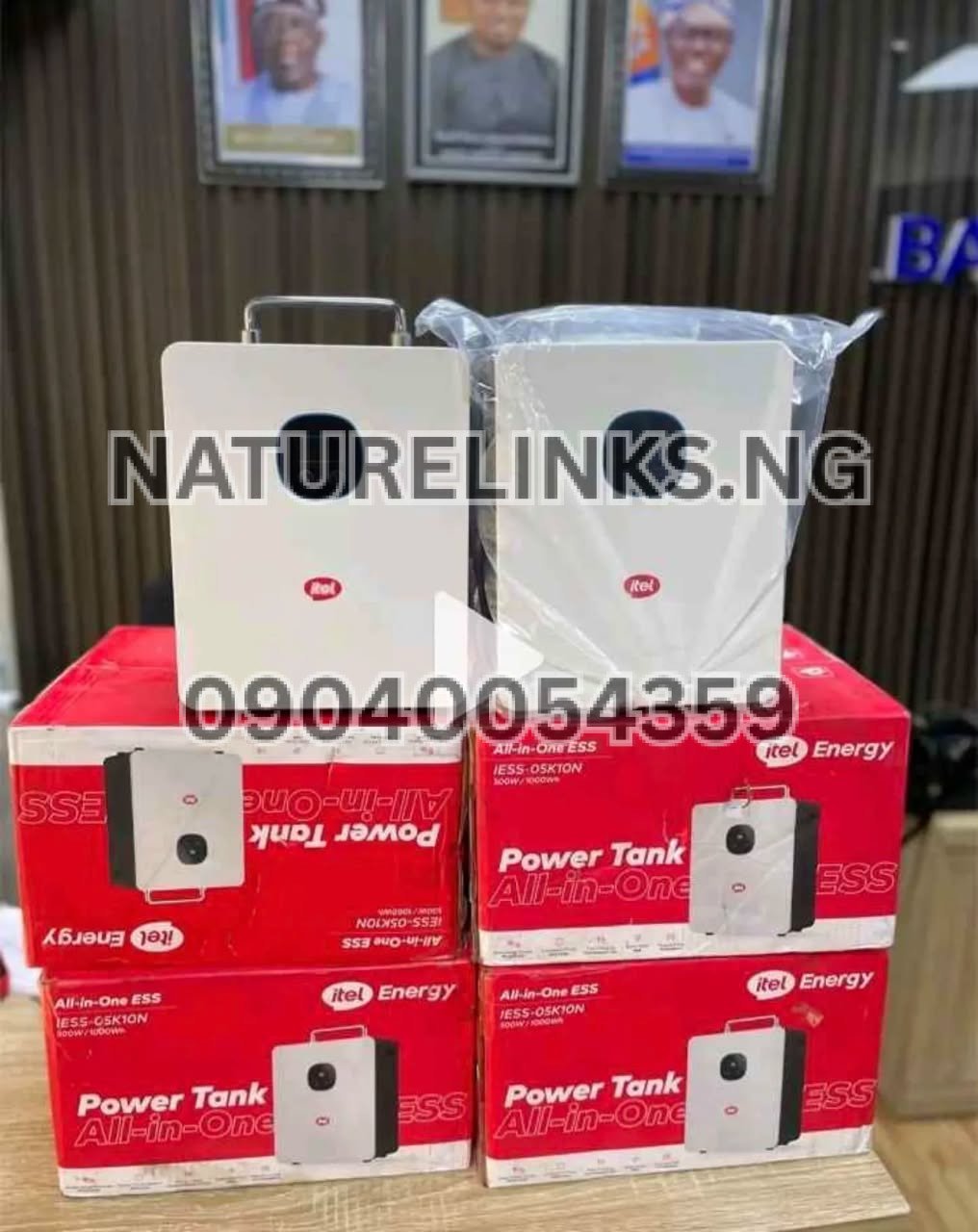
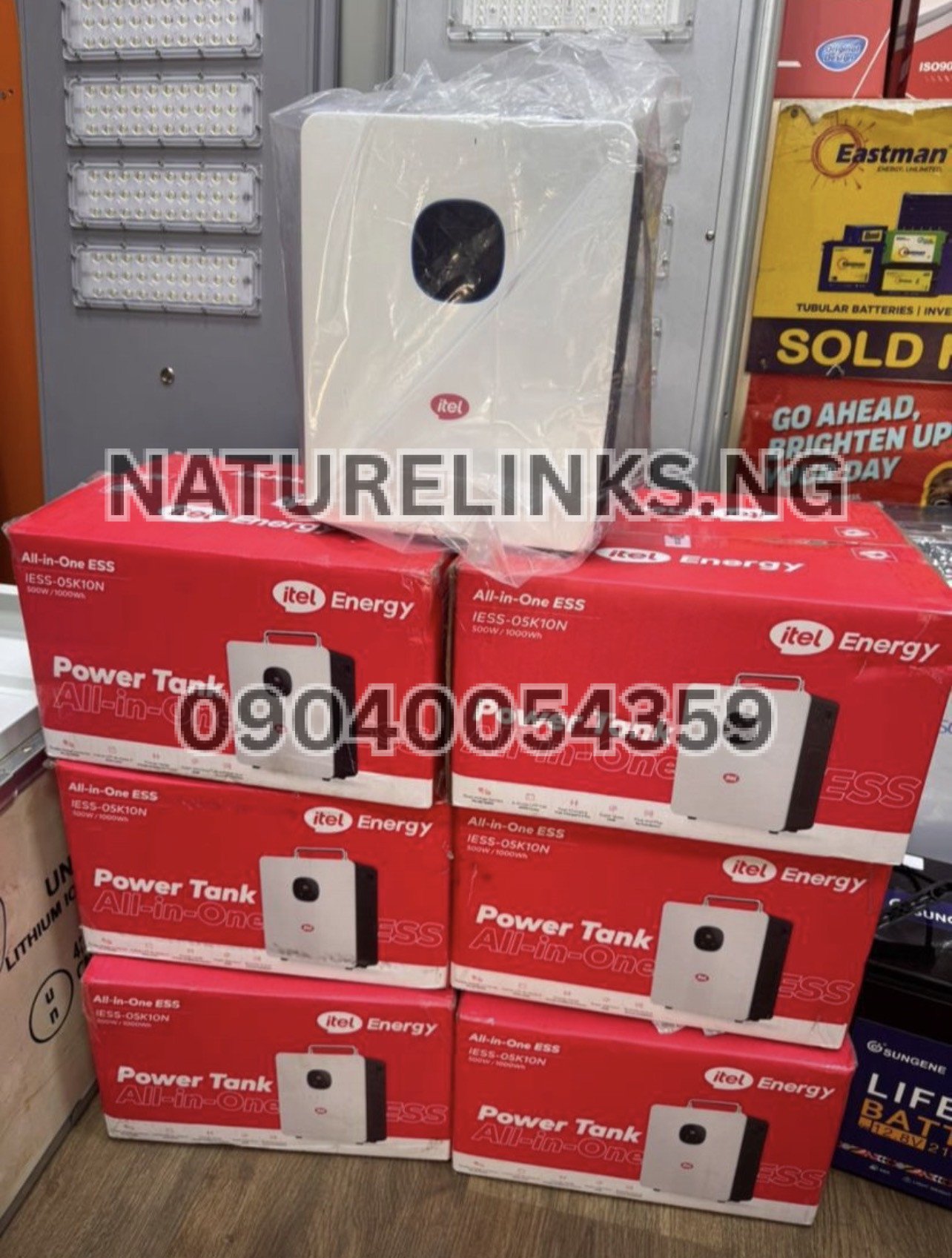
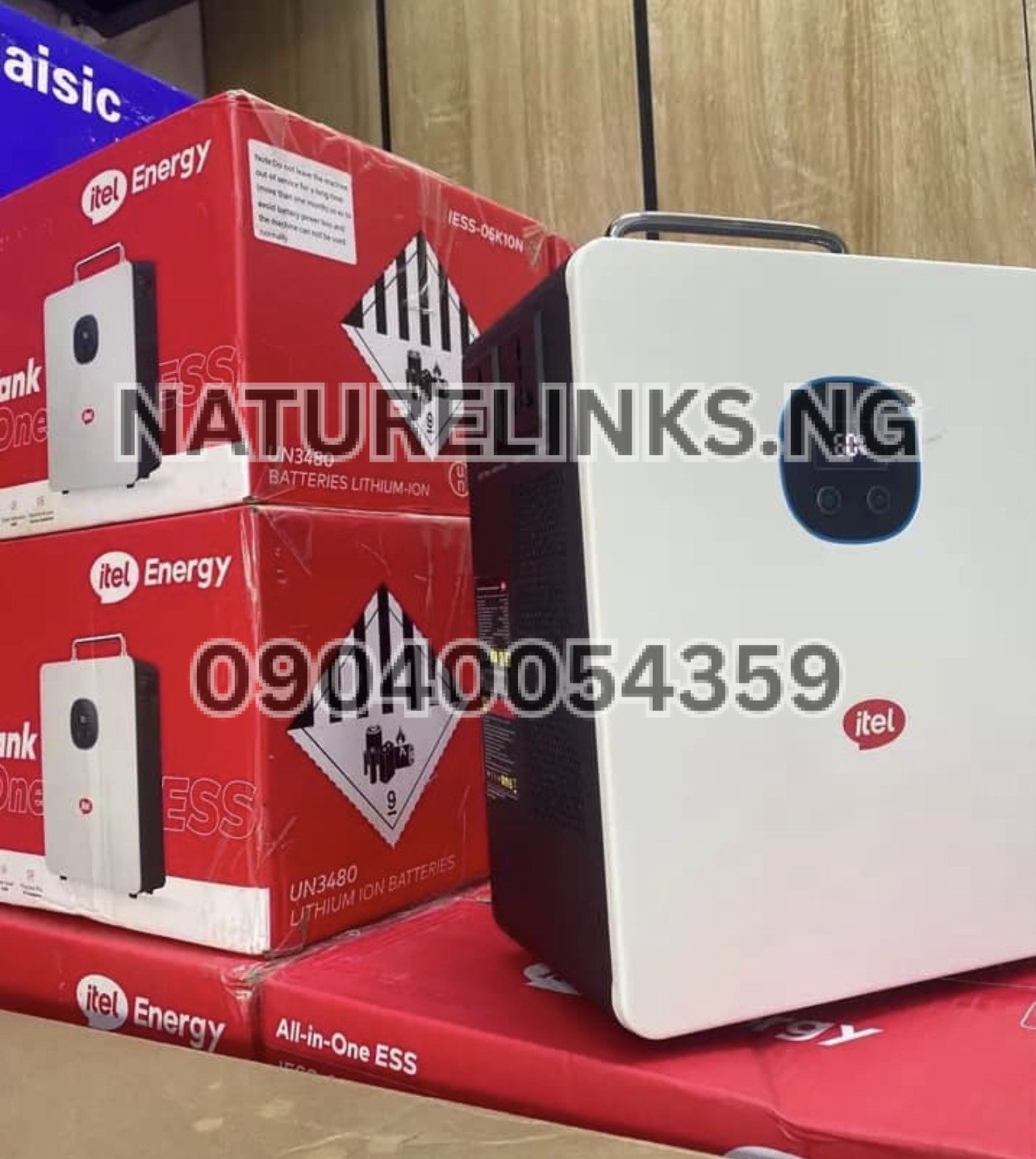
The Best Seller is Nature Solar Global Limited, the accredited distributor in Nigeria. Nature Links Nigeria Limited [NatureLinks.NG] supplies genuine Itel Power Tank products, portable power stations, lithium battery systems and backup-power solutions to customers across Nigeria.
If you are searching for “Can Itel Power Tank charge from an inverter?”, the answer is yes, potentially, provided the inverter supplies suitable AC power within the Power Tank’s charging requirements. The commonly listed Itel Power Tank 1,000Wh/500W configuration supports AC/grid charging, meaning it can receive AC electricity from a suitable electrical source.
This can be useful for Nigerian homes, offices, shops and remote workers who already have an inverter system and want another way to recharge their Itel Power Tank during electricity outages.
However, it is important to understand the correct connection method. You should not connect the battery terminals of one power system directly to the battery terminals of the Itel Power Tank unless the manufacturer specifically provides and approves such a connection. The safer concept is to use the inverter’s compatible AC output and the Power Tank’s normal AC charging input.
Can Itel Power Tank Charge From an Inverter?
Yes, an Itel Power Tank can generally be charged from an inverter if the inverter provides suitable AC electricity for the Power Tank’s AC charging input.
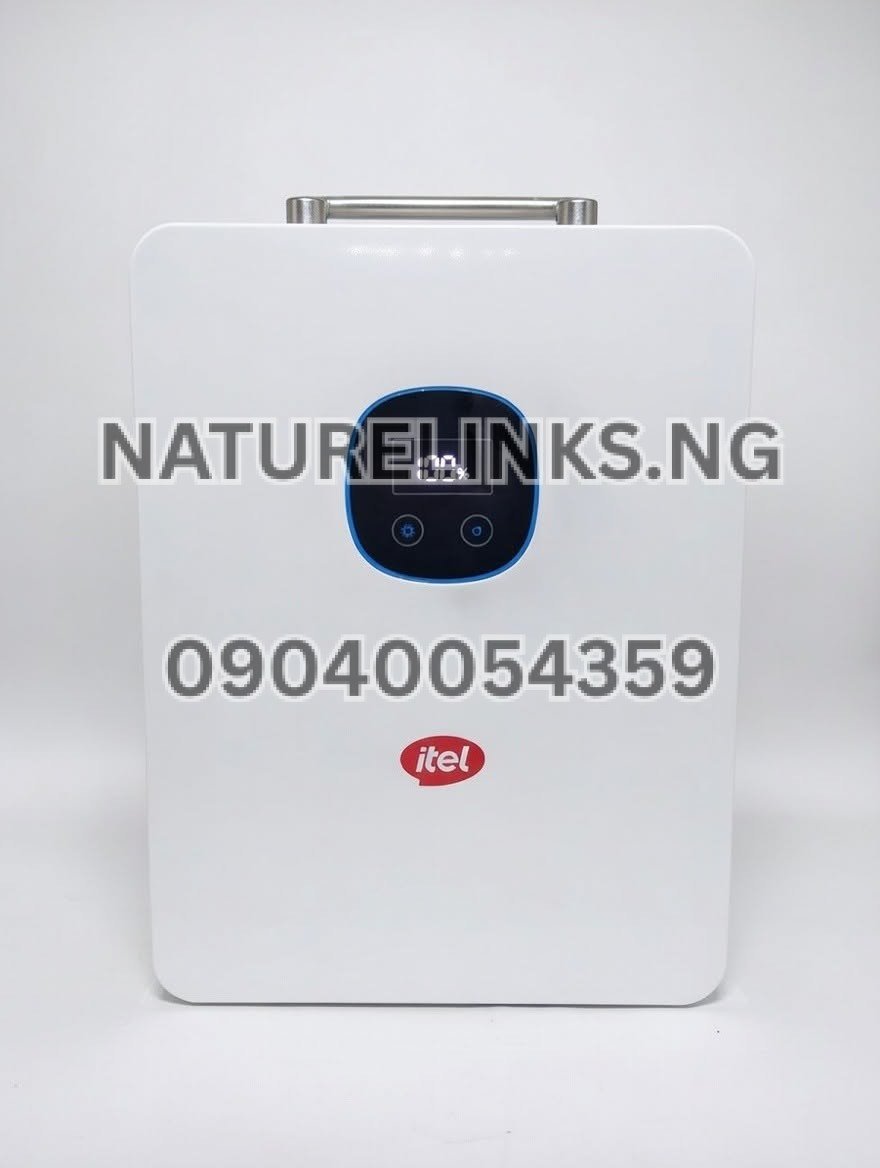
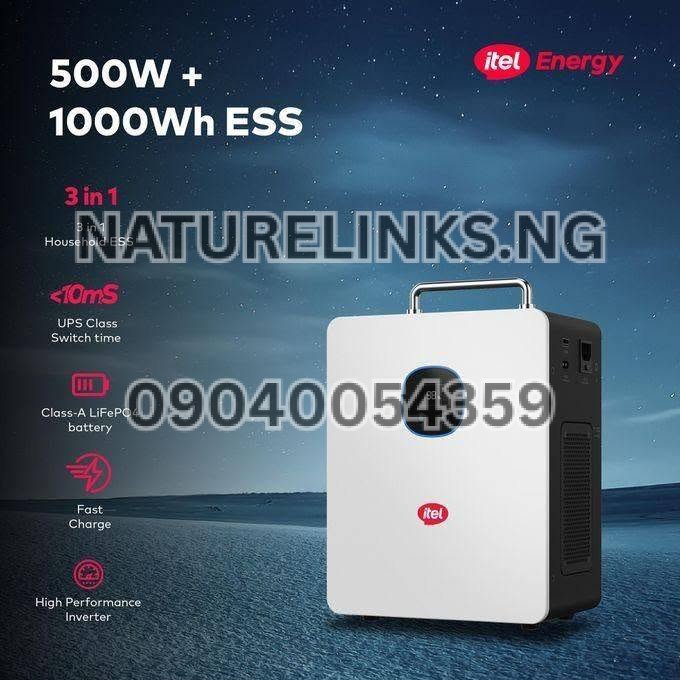
The commonly listed IESS-05K10N configuration supports AC/grid charging in addition to solar charging. It has a 1,000Wh LiFePO₄ battery and a 500W rated AC inverter output.
In practical terms, the arrangement can be:
Battery/solar system → inverter → AC outlet → Itel Power Tank AC charging input
The inverter converts the DC electricity stored in its battery bank into AC electricity. The Itel Power Tank then uses that AC electricity through its normal charging system to recharge its internal battery.
This is different from directly connecting the batteries.
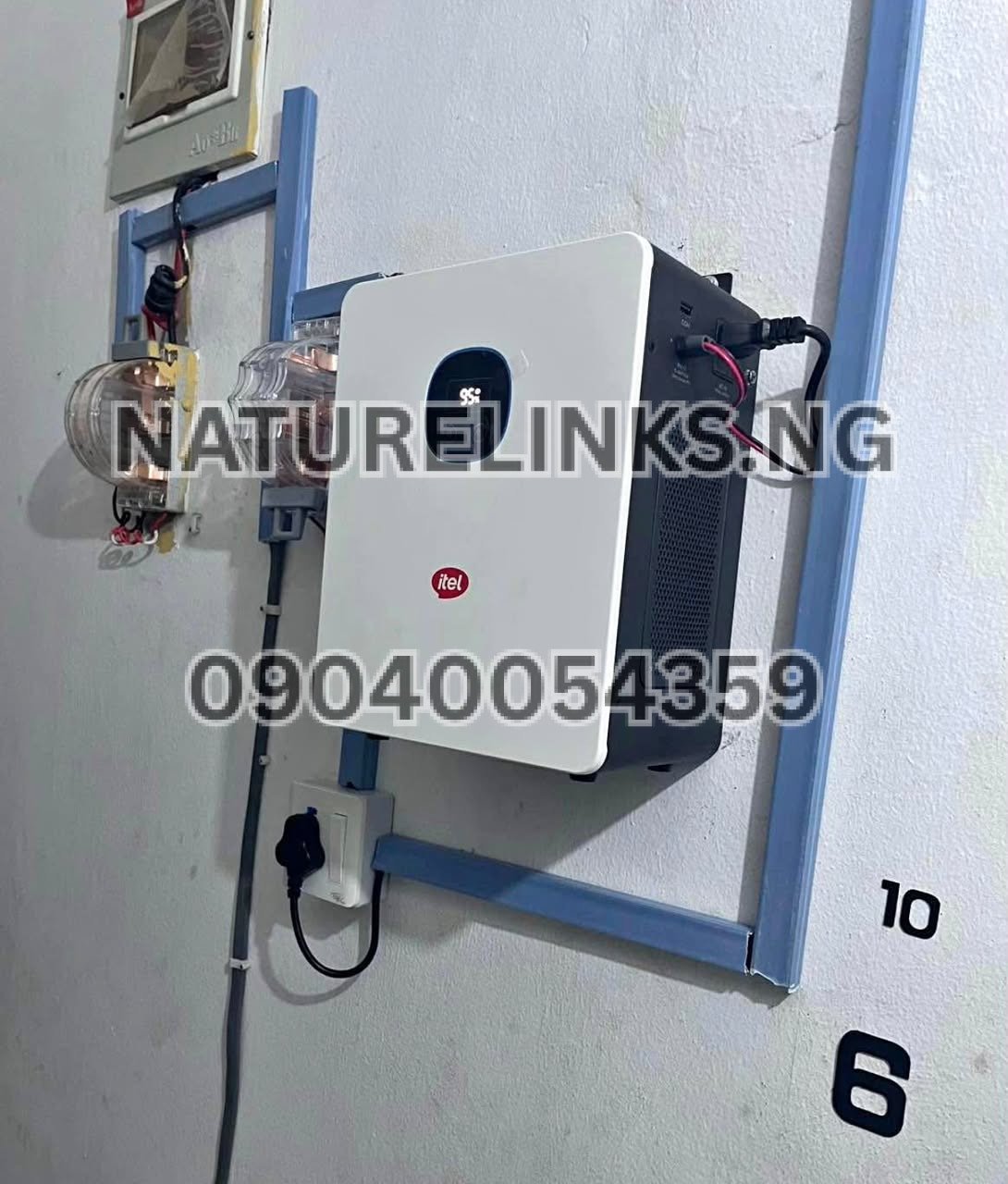
How Do I Charge Itel Power Tank From an Inverter?
The basic concept is straightforward:
- Make sure your inverter is operating normally.
- Confirm that its AC output voltage and frequency are compatible with the Itel Power Tank.
- Use the appropriate AC charging cable.
- Connect the Power Tank’s charger/input to the inverter’s AC outlet.
- Turn on the inverter if required.
- Check the Power Tank’s display to confirm that charging has started.
- Monitor the system during charging.
The exact charging specifications should be checked against the model you own because Itel Power Tank configurations and published specifications can vary.
The commonly listed Power Tank has a 230V AC output and 50Hz frequency, while its AC charging capability is documented by Nigerian product listings.
Can I Use My Home Inverter to Charge Itel Power Tank?
Yes, a home inverter may be able to charge an Itel Power Tank if its AC output is compatible with the Power Tank’s charging input and has enough available capacity.
For example, if your home inverter provides standard household AC electricity, you can potentially plug the Power Tank’s AC charger into a suitable AC socket.
But there is an important consideration: the inverter must have sufficient power available for the charging load in addition to any appliances already connected to it.
If your inverter is already powering a television, refrigerator, fan, router and lights, adding a Power Tank charging load may increase the total demand substantially.
Can Itel Power Tank Charge From a Solar Inverter?
Potentially, yes.
A solar inverter can produce AC electricity from energy stored in a battery bank or generated by solar panels. If its AC output is compatible with the Power Tank’s AC charging requirements, that AC supply can potentially be used to recharge the Power Tank.
However, this creates an energy-conversion chain:
Solar panels → solar charge controller/inverter system → battery → inverter AC output → Itel Power Tank charger → Itel battery
Every conversion has losses.
For that reason, if your goal is simply to recharge the Itel Power Tank from solar energy, using its supported solar/PV input directly may be more efficient than converting solar energy to AC and then converting it back into DC inside the Power Tank.
The documented Itel Power Tank configuration includes an integrated MPPT solar controller and supports solar charging, with Nigerian listings specifying up to 400W PV input on the relevant configuration.
Can a 1kVA Inverter Charge Itel Power Tank?
A 1kVA inverter may be able to supply the AC charging load, but kVA alone is not enough information to determine compatibility.
You should check:
- Inverter AC output voltage
- Frequency
- Continuous power rating
- Available capacity while other appliances are running
- Output waveform
- Itel Power Tank charging requirements
- Charger input rating
A 1kVA inverter has a nominal apparent-power rating, but its usable real-power capacity depends on the particular inverter and operating conditions.
Therefore, do not choose an inverter solely because it says “1kVA.”
Can a 2kVA Inverter Charge Itel Power Tank?
A properly configured 2kVA inverter would generally provide more available AC capacity than a 1kVA system, but compatibility still needs to be confirmed from the inverter and Power Tank specifications.
If the inverter produces suitable household AC electricity and has enough spare capacity, it can potentially supply the Power Tank’s AC charger.
The important point is that a larger inverter does not automatically make charging faster. Charging speed is determined by the Power Tank’s charging system and available charging input, not simply by how many kVA the external inverter is rated for.

Can a 3.5kVA Inverter Charge Itel Power Tank?
Yes, a properly configured 3.5kVA inverter can potentially provide the AC supply required to charge the Power Tank, provided its output is compatible.
However, buying a 3.5kVA inverter solely to charge a 1,000Wh Power Tank would generally be unnecessary if you do not need the inverter for other loads.
The correct approach is to calculate your total household or business power requirements and choose an inverter accordingly.
Can a 5kVA Inverter Charge Itel Power Tank?
A 5kVA inverter can potentially provide AC power to charge an Itel Power Tank if its output is compatible with the Power Tank’s charging system.
A higher-capacity inverter can also support more household loads, but the Power Tank will still have its own charging limitations.
In other words:
5kVA inverter ≠ 5kVA Power Tank charging speed.
The Power Tank’s internal charger determines how much power it can accept.
Can an Inverter Charge Itel Power Tank During a Power Outage?
Yes, this is one of the practical reasons someone might use an inverter to recharge a portable power station during an outage.
For example:
Solar panels → inverter battery → inverter → Itel Power Tank
If the inverter battery contains sufficient stored energy, it can supply AC electricity to the Power Tank.
However, doing this repeatedly involves conversion losses. You should consider whether it is more efficient to connect compatible solar panels directly to the Power Tank’s PV input.
Can I Charge Itel Power Tank From an Inverter Battery Directly?
Do not directly connect an inverter battery to the Power Tank’s battery terminals unless the manufacturer specifically provides an approved method for doing so.
The Power Tank already contains its own battery-management system and charging circuitry.
A direct battery-to-battery connection can create problems involving:
- Voltage mismatch
- Excessive current
- Incorrect charging characteristics
- Battery-management-system conflicts
- Electrical damage
- Overheating
- Short circuits
- Fire risk
The normal AC charging input is the appropriate interface when charging from an AC inverter output, subject to the manufacturer’s specifications.
Can I Connect the Itel Power Tank to an Inverter Output?
Yes, if you mean connecting the Power Tank’s normal AC charger/input to a compatible AC output from an inverter.
The arrangement should look like:
Inverter AC output → Power Tank AC charger/input
It should not be:
Inverter battery → Power Tank battery terminals
The first method uses the Power Tank’s intended charging electronics. The second bypasses those electronics and should not be attempted without explicit manufacturer instructions.
Will Charging Itel Power Tank From an Inverter Damage It?
Using a compatible AC inverter output through the Power Tank’s normal charging input should not inherently damage the unit.
The risk comes from supplying unsuitable electricity.
Potential problems include:
- Incorrect voltage
- Incorrect frequency
- Poor-quality inverter output
- Excessive electrical noise
- Inadequate inverter capacity
- Faulty wiring
- Overloaded inverter
- Poor-quality extension cables
Before connecting the Power Tank, confirm the electrical specifications of both devices.
Can a Modified Sine Wave Inverter Charge Itel Power Tank?
This is an area where caution is advisable.
Many modern electronic chargers work best with clean, stable AC electricity. The commonly listed Itel Power Tank uses electronic charging circuitry, so the safest approach is to use a good-quality inverter with an AC output compatible with the manufacturer’s charging requirements.
If you have a modified-sine-wave inverter, check the Power Tank’s manual or obtain confirmation from the supplier/manufacturer before using it as a charging source.
A pure sine-wave inverter is generally the preferred type for sensitive electronic equipment.
Is Pure Sine Wave Important When Charging Itel Power Tank?
It can be important.
The commonly listed Itel Power Tank itself uses a pure sine-wave inverter for its AC output.
When choosing an external inverter to supply the Power Tank charger, users should consider the quality of the inverter’s AC output rather than looking only at its wattage.
A quality pure sine-wave inverter is generally preferable for supplying modern electronic chargers and equipment.
How Much Power Does Itel Power Tank Need to Charge?
The exact charging input depends on the specific Power Tank model and charging configuration.
Do not assume that the Power Tank’s 500W AC output is the same as its charging input.
These are separate specifications:
500W = rated AC output of the commonly listed Power Tank configuration.
Charging input = the amount of electrical power the internal charger accepts.
The Power Tank’s battery capacity is also separate:
1,000Wh = stored-energy capacity.
Nigerian listings confirm the common configuration as 1,000Wh battery capacity and 500W continuous AC output, with AC charging support.
How Long Does It Take to Charge Itel Power Tank From an Inverter?
Charging time depends on the power supplied by the inverter, the Power Tank’s charging capability, starting battery percentage and whether other loads are consuming energy from the inverter.
For the commonly advertised Power Tank configuration, published product information describes approximately 2-hour fast charging under specified charging conditions.
However, if the inverter is supplying the Power Tank through a lower-powered or inefficient setup, charging may take longer.
For example, if the inverter is heavily loaded by other appliances, less available power may remain for the Power Tank charger.
Can I Charge Itel Power Tank While Using My Inverter for Appliances?
Yes, potentially, but you must account for the total load.
Imagine your inverter is supplying:
- 100W television
- 50W router
- 60W fan
- 30W lighting
That is approximately 240W before adding the Power Tank charging load.
If the Power Tank charger requires additional power, the total inverter demand could increase significantly.
Always keep the total load within the inverter’s safe continuous operating capacity.
Can I Charge Itel Power Tank From an Inverter and Use It at the Same Time?
The Power Tank supports UPS/backup functionality on listed configurations.
However, whether a particular charging-and-load arrangement is appropriate depends on the exact model and operating mode.
When using:
External inverter → Power Tank → appliances
you are creating two power-conversion stages.
The external inverter produces AC, the Power Tank charger converts AC to battery DC, and the Power Tank’s inverter may then convert DC back to AC for your appliances.
That can result in additional conversion losses.

Is It Better to Charge Itel Power Tank Directly From Electricity?
If grid electricity is available and suitable, direct AC/grid charging is generally the simpler arrangement.
Instead of:
Grid → external inverter → Power Tank charger
you can use:
Grid → Power Tank AC charger
The second arrangement avoids the unnecessary inverter conversion stage.
The Power Tank’s commonly listed configuration already supports AC/grid charging.
Is It Better to Charge Itel Power Tank From Solar?
If you have suitable solar panels, using the Power Tank’s supported PV input can avoid some conversion stages.
The commonly listed configuration includes an integrated MPPT controller and supports solar charging, with up to approximately 400W PV input specified in current Nigerian listings.
For a solar-focused setup, compare:
Direct solar:
Solar panels → Power Tank MPPT → Power Tank battery
with:
Indirect solar:
Solar panels → external inverter/charger → AC → Power Tank charger → Power Tank battery
The direct arrangement can be simpler and may reduce conversion losses, provided the solar panels meet the Power Tank’s voltage and current requirements.
Can I Charge Itel Power Tank From Another Solar Generator?
Technically, another solar generator can potentially supply the Power Tank through a suitable AC output.
For example:
Solar generator AC output → Itel Power Tank AC charger
However, this is another conversion stage and therefore involves energy losses.
If the second solar generator has a DC output specifically designed for compatible battery charging, that does not automatically mean it is safe to connect it directly to the Itel Power Tank’s internal battery.
Use the Power Tank’s approved charging input.
-
Can Itel Power Tank charge from an inverter?
Can I Use a Car Inverter to Charge Itel Power Tank?
A car inverter may potentially supply AC electricity to the Power Tank, but it must have sufficient capacity and compatible output.
A small car inverter may not have enough power to operate the Power Tank charger properly.
You should check:
- Inverter wattage
- DC input voltage
- AC output voltage
- AC frequency
- Waveform
- Vehicle alternator capacity
- Power Tank charging requirements
A low-quality or undersized car inverter can overload, shut down or overheat.
Can a 12V Inverter Charge Itel Power Tank?
A 12V battery can potentially be connected to a 12V-to-AC inverter, and that inverter can then provide AC power to the Power Tank’s charger if the output is compatible.
However, this involves multiple conversions:
12V battery → inverter → AC → Power Tank charger → internal battery
This can be significantly less efficient than an appropriate direct charging arrangement.
Also, the current drawn from a 12V battery can become substantial when supplying a sizeable AC charging load.
Can a 24V Inverter Charge Itel Power Tank?
Yes, potentially, if the 24V battery system feeds a suitable inverter whose AC output meets the Power Tank’s charging requirements.
Again, the correct method is:
24V battery → compatible inverter → AC → Power Tank charger
not:
24V battery → Power Tank battery terminals.
Can a 48V Inverter Charge Itel Power Tank?
A 48V inverter can potentially supply the Power Tank’s AC charger if its output is compatible.
Higher-voltage battery banks can be useful for larger inverter systems because current requirements can be lower for the same power level compared with lower-voltage battery banks.
However, that does not change the Power Tank’s own AC charging limitations.
Itel Power Tank 1000Wh and Inverter Charging
The popular Itel Power Tank configuration in Nigeria is commonly listed with:
| Specification | Commonly listed value |
|---|---|
| Battery capacity | 1,000Wh / 1kWh |
| Battery type | LiFePO₄ |
| AC inverter output | 500W |
| Inverter waveform | Pure sine wave |
| Solar charging | Yes |
| AC/grid charging | Yes |
| MPPT | Integrated |
| PV input | Up to 400W on listed configuration |
| UPS | Supported on listed configurations |
The exact model and specifications should always be confirmed before purchasing.
Itel Power Tank 500W Does Not Mean 500W Charging
One of the most common mistakes when researching Itel Power Tank 500W is assuming that 500W describes the charging speed.
It does not.
The commonly listed 500W figure refers to the Power Tank’s rated continuous AC output.
The battery is listed as 1,000Wh, which describes stored energy.
The charging input is a separate specification.
This distinction is important when selecting an inverter to recharge the Power Tank.
Can I Charge Itel Power Tank With a 500W Inverter?
This depends on the Power Tank’s actual charging-input requirement.
A 500W inverter may have insufficient spare capacity if the Power Tank charger itself requires a substantial amount of power.
Even if the inverter can technically start the charger, operating it continuously near maximum capacity may not be desirable.
Always check the actual charger input rating before choosing an inverter.
Can I Charge Itel Power Tank With a 1,000W Inverter?
A 1,000W inverter provides more AC capacity than a 500W inverter, so it may be suitable for supplying the Power Tank charger depending on the actual charging requirement and other connected loads.
But again, inverter capacity does not determine Power Tank charging speed.
The Power Tank’s internal charging system determines how much power it can accept.
What Happens if the Inverter Is Too Small?
If the external inverter cannot supply enough power, it may:
- Overload
- Shut down
- Produce an alarm
- Reduce its output
- Overheat
- Trip its protection
- Fail to start the charger
The Power Tank may also stop charging if the supplied AC electricity is outside acceptable conditions.
What Happens if the Inverter Is Much Bigger?
A larger inverter does not force the Power Tank to charge faster than its internal charger allows.
For example, connecting the Power Tank to a 5kVA inverter does not mean the Power Tank suddenly becomes a 5kW charger.
The Power Tank’s charging system controls how much energy it accepts.
The larger inverter simply provides more available AC capacity.
Can I Use a Generator to Charge Itel Power Tank?
Yes, a suitable generator can potentially provide AC electricity for the Power Tank’s AC charger.
The same principle applies as with an inverter:
Generator AC output → Power Tank charger
The generator should provide stable, compatible electricity.
A quality inverter generator with clean AC output may be preferable for sensitive electronic equipment.
Itel Power Tank vs Inverter System
The Itel Power Tank and a conventional inverter system have different designs.
Itel Power Tank
- Portable
- Battery and inverter integrated
- Built-in charging system
- Solar charging on supported configuration
- Easy to move
- Useful for selected appliances
- 1,000Wh/500W common configuration
Conventional inverter system
- Separate inverter
- Separate battery bank
- Can be configured for larger loads
- Usually more suitable for fixed installations
- Can potentially recharge portable power stations through AC
The appropriate setup depends on your power requirements.
Itel Power Tank Price in Nigeria
Current Nigerian listings show substantial price differences depending on seller and package.
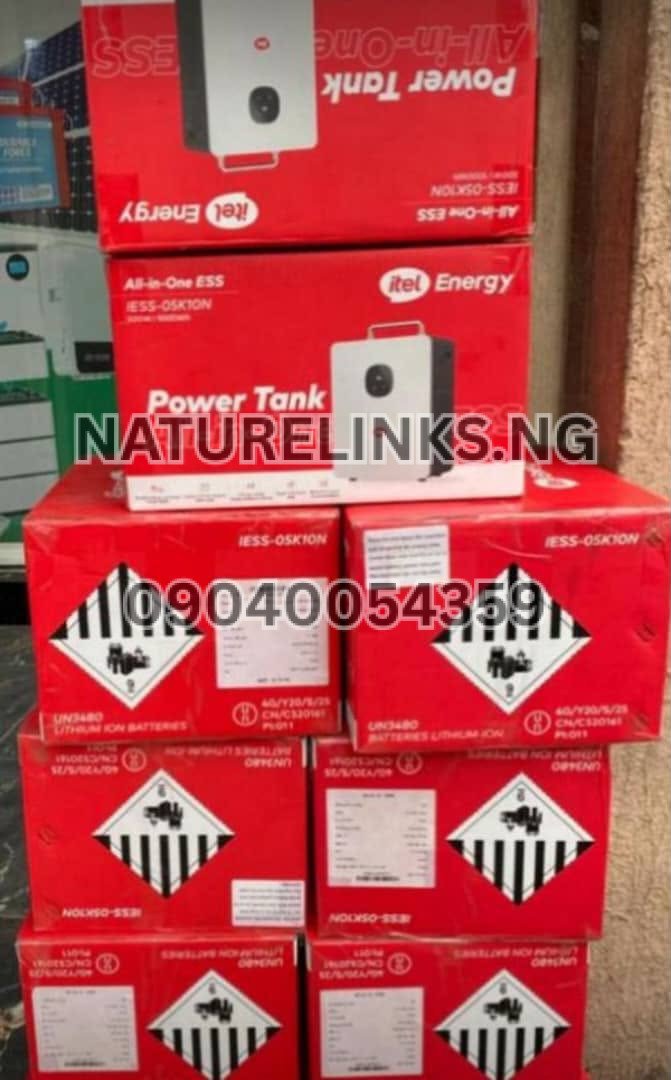
A current Nature Solar Global listing shows a 1,000Wh/500W configuration around ₦285,000, while another Nigerian retailer lists a similar 500W/1kWh model at ₦310,000. Marketplace listings can be considerably higher depending on seller and included accessories.
Prices can change because of:
- Exchange rates
- Stock availability
- Seller margins
- Warranty
- Solar-panel bundles
- Accessories
- Promotions
- Delivery costs
Always confirm the current price and exact model before payment.
Where to Buy Genuine Itel Power Tank in Nigeria?
For buyers looking for an Itel Power Tank in Nigeria, contact:
The Best Seller: Nature Links Nigeria Limited [NatureLinks.NG]
Distributor: Nature Solar Global Limited
CEO: Mr. Joseph Chikeleze
Call: 07049528019
WhatsApp: 09040054359
Shop Address: F1571 Upstairs (F-Line), Alaba International Market, Lagos State 🇳🇬
Before making payment, ask the seller to confirm:
- Exact model number
- Battery capacity
- AC output rating
- AC charging specifications
- Solar input specifications
- Warranty
- Accessories
- Current price
- Delivery arrangements
Why Buy an Original Itel Power Tank?
When purchasing a portable power station, the model number and specifications matter.
A genuine unit allows you to verify the battery capacity, inverter rating, charging system and warranty.
This is especially important because online Nigerian listings sometimes use descriptions such as:
- Itel Power Tank 500W
- Itel Power Tank 1000W
- Itel Power Tank 1000Wh
- Itel Power Tank 1kWh
- Itel Power Tank 500W/1000Wh
- Itel Power Tank solar generator
These terms do not all describe the same specification.
For example, 1,000Wh describes battery capacity, while 500W describes the rated continuous AC output on the commonly listed configuration.
Frequently Asked Questions About Itel Power Tank and Inverters
1. Can Itel Power Tank charge from an inverter?
Yes. The Power Tank’s AC/grid charging capability means a compatible inverter can potentially supply the AC electricity required for charging. Use the normal AC charging input rather than connecting another battery directly to the Power Tank battery.
2. Can I charge Itel Power Tank with a home inverter?
Yes, provided the home inverter supplies compatible AC electricity and has enough spare capacity for the Power Tank charger alongside other appliances.
3. Can a solar inverter charge Itel Power Tank?
Yes, potentially. A solar inverter can supply AC electricity to the Power Tank’s AC charger. However, direct solar charging through the Power Tank’s supported MPPT/PV input may avoid unnecessary conversion stages.
4. Can I connect an inverter battery directly to Itel Power Tank?
Do not directly connect another battery to the Power Tank’s internal battery terminals unless Itel specifically provides an approved connection method. Use the Power Tank’s designated charging input.
5. Can a 1kVA inverter charge Itel Power Tank?
It may, provided its AC output is compatible and sufficient spare capacity is available. The actual charging requirement of the specific Power Tank should be checked before use.
6. Can a 2kVA inverter charge Itel Power Tank?
A compatible 2kVA inverter can potentially supply the Power Tank’s AC charger. The extra inverter capacity does not automatically increase the Power Tank’s charging speed.
7. Can I charge Itel Power Tank from a generator?
Yes, a compatible generator can supply AC electricity to the Power Tank’s AC charging input. Use a stable electrical source and follow the Power Tank’s charging requirements.
8. How long does Itel Power Tank take to charge from an inverter?
Charging time depends on the inverter’s available output, the Power Tank’s charging input, starting battery level and other loads. The commonly listed Power Tank is advertised with fast charging of around two hours under specified charging conditions, but the actual time from an inverter can differ.
9. Can Itel Power Tank charge from solar and an inverter?
The Power Tank supports solar charging and AC charging on the commonly listed configuration. Whether you should combine sources depends on the specific model and approved charging configuration.
10. How much is Itel Power Tank 1000Wh in Nigeria?
Current Nigerian listings vary substantially. Recent listings include approximately ₦285,000 from Nature Solar Global and ₦310,000 from a Konga listing for a 500W/1kWh configuration, while marketplace prices can be higher. Confirm the current price, exact model and package before purchasing.
Important Safety Tips When Charging Itel Power Tank From an Inverter
Always prioritize the manufacturer’s specifications.
Do not:
- Connect the Power Tank battery directly to another battery.
- Use an unknown charger.
- Exceed the Power Tank’s permitted input voltage.
- Overload the external inverter.
- Use damaged cables.
- Operate damaged charging equipment.
- Ignore repeated inverter alarms.
- Place charging equipment in a wet location.
- Cover the Power Tank’s ventilation openings.
Do:
- Use the appropriate AC charging cable.
- Verify inverter output specifications.
- Keep the system ventilated.
- Monitor charging.
- Keep total inverter loads within its rated capacity.
- Use compatible solar panels.
- Confirm the exact Power Tank model before purchasing accessories.
Best Way to Charge Itel Power Tank
The best charging method depends on what electricity source is available.
When grid electricity is available
Use the Power Tank’s normal AC/grid charging system.
When solar energy is available
Use compatible solar panels through the Power Tank’s supported PV/MPPT input.
When your inverter has stored energy
A compatible inverter AC output can potentially supply the Power Tank’s AC charger.
When using a generator
A suitable generator can potentially provide AC charging power.
The simplest method is generally to use the charging input specifically designed for the available energy source.
Final Answer: Can Itel Power Tank Charge From an Inverter?
If you are searching for “Can Itel Power Tank charge from an inverter?”, the practical answer is yes, provided the inverter produces suitable AC power and has sufficient available capacity for the Power Tank’s charger.
The common Itel Power Tank 1,000Wh/500W configuration supports AC/grid charging, solar charging and an integrated MPPT controller.
The recommended concept is:
Inverter → compatible AC output → Itel Power Tank AC charging input.
Avoid treating the external inverter battery as a replacement charger and do not directly connect an external battery to the Power Tank’s internal battery terminals without an explicitly approved manufacturer procedure.
For solar installations, direct PV charging through the Power Tank’s supported MPPT input can also be considered because it avoids converting DC solar energy to AC and then back to DC.

Conclusion
The Itel Power Tank can potentially be charged from an inverter because the commonly listed configuration supports AC/grid charging. The inverter must, however, provide suitable AC electricity and have enough spare capacity for the charging load.
For Nigerian homes, offices, shops and small businesses, using an inverter to recharge the Power Tank can provide an additional backup-power option during grid outages. However, direct battery-to-battery connections should be avoided unless specifically approved by the manufacturer.
The common 1,000Wh/500W Power Tank also supports solar charging, with current Nigerian listings specifying up to 400W PV input on the relevant configuration.
For the current Itel Power Tank price, availability, exact model, warranty and compatible charging accessories, contact Nature Links Nigeria Limited [NatureLinks.NG] / Nature Solar Global Limited:
Call: 07049528019
WhatsApp: 09040054359
Shop: F1571 Upstairs (F-Line), Alaba International Market, Lagos State 🇳🇬