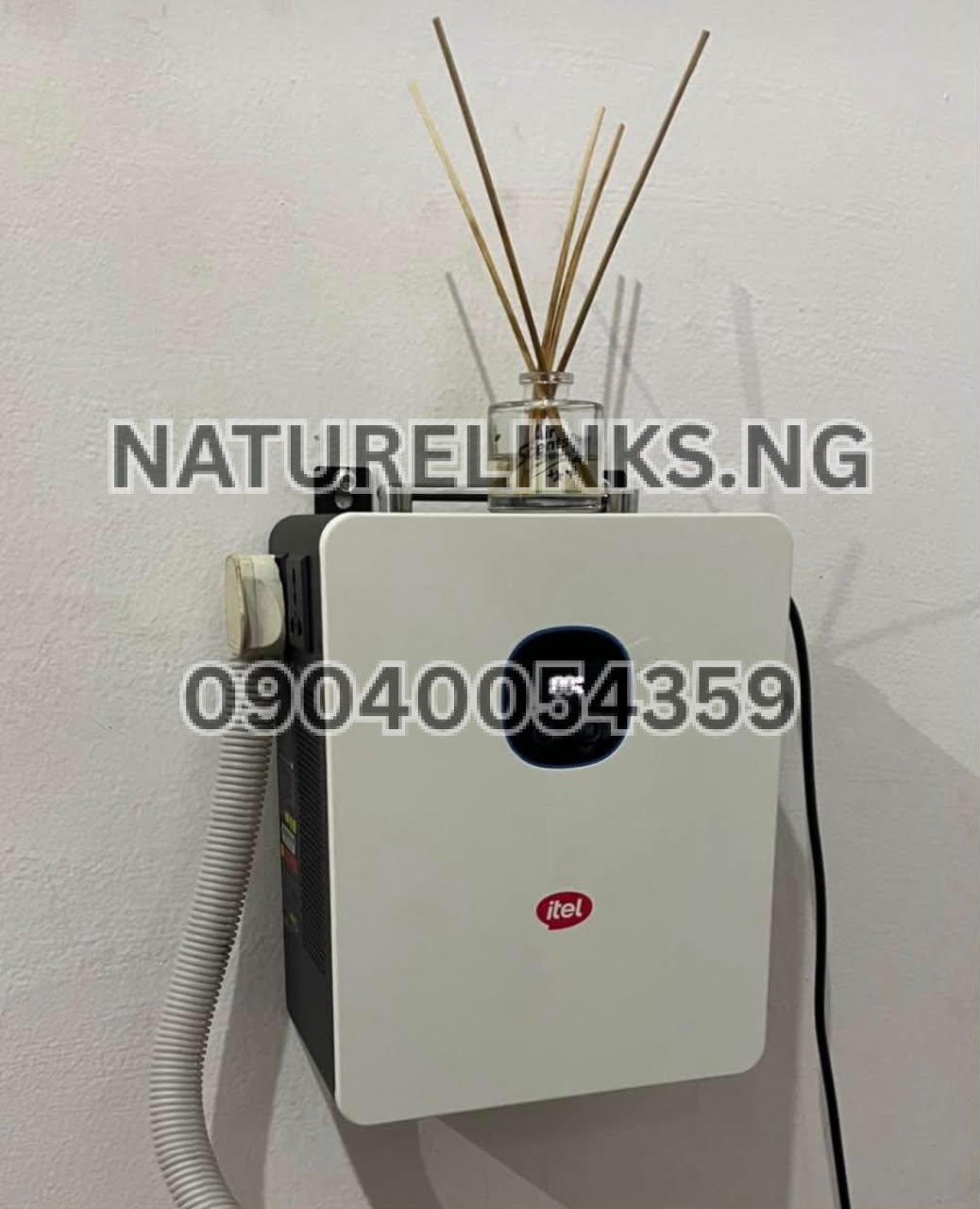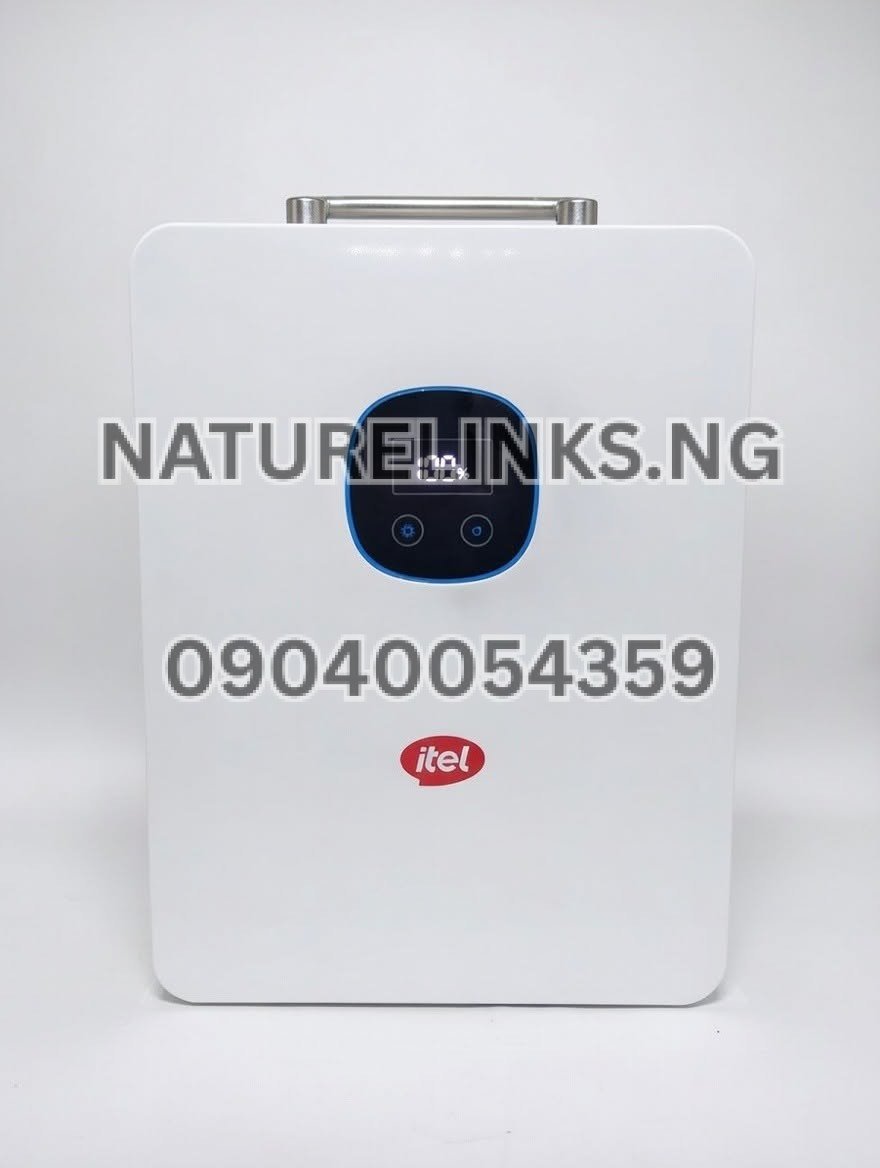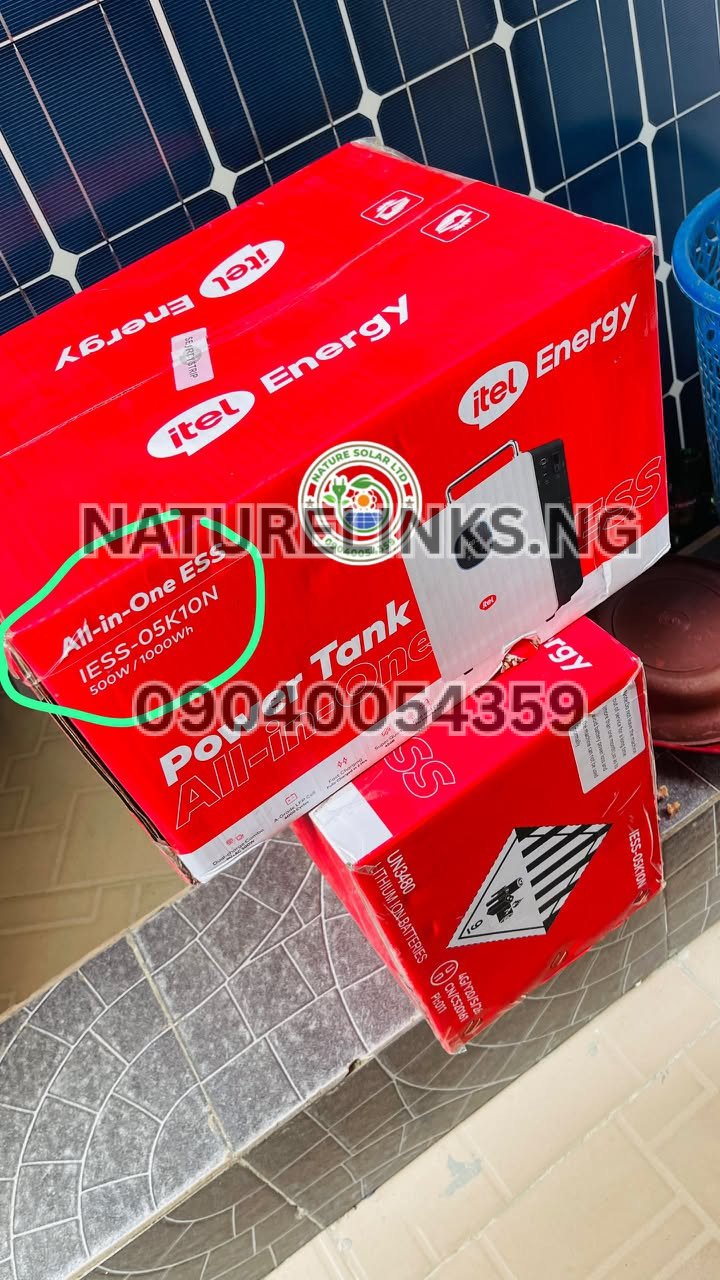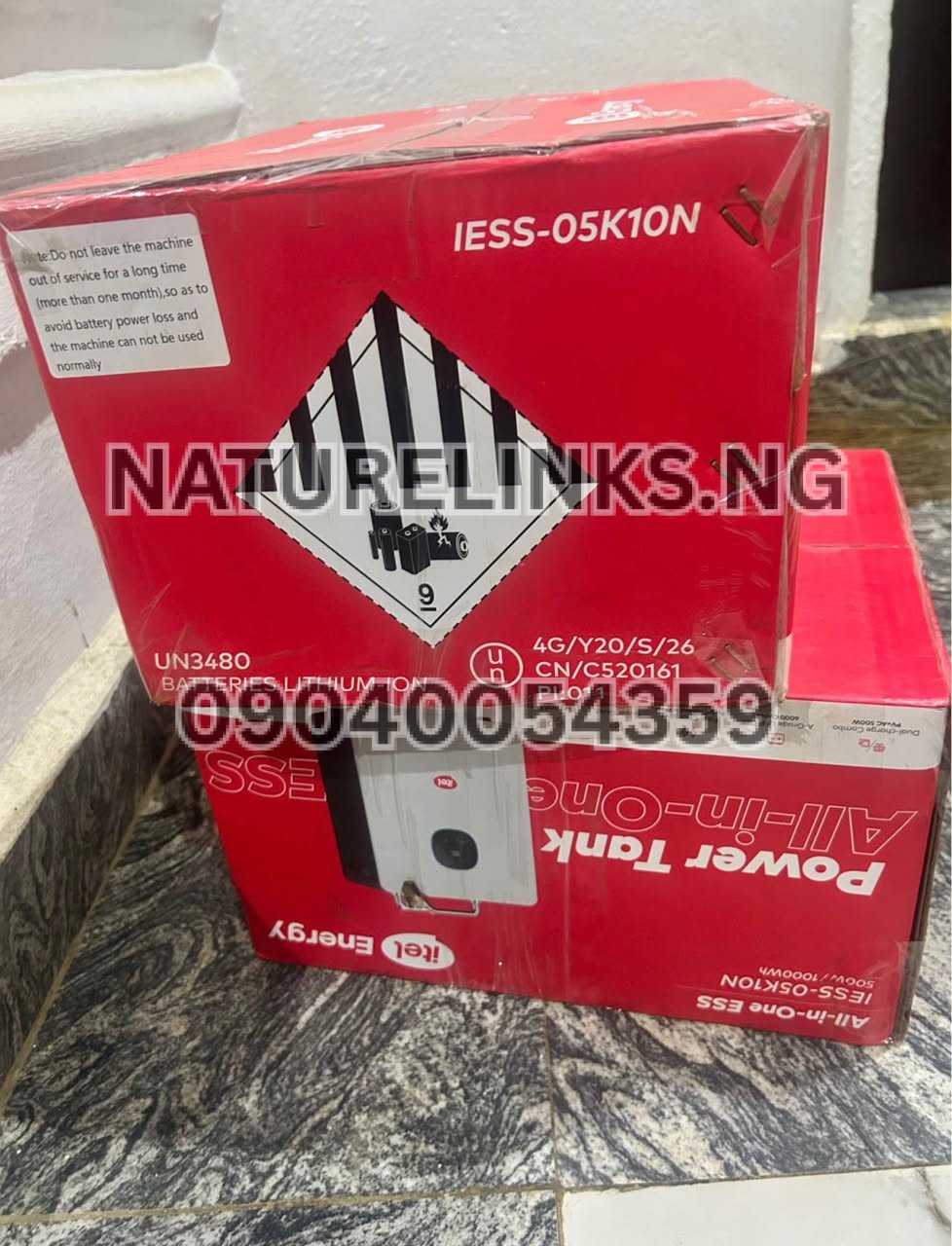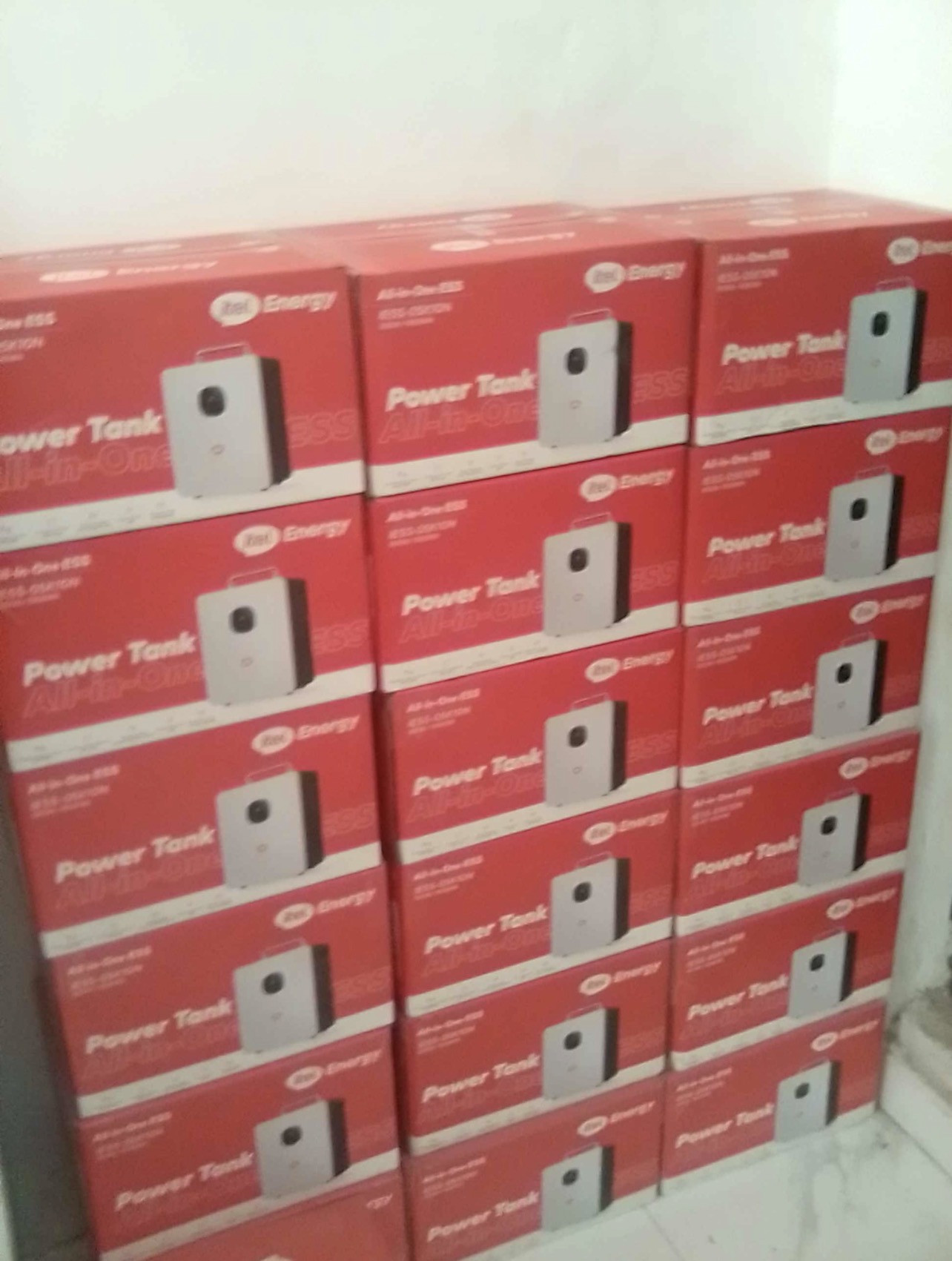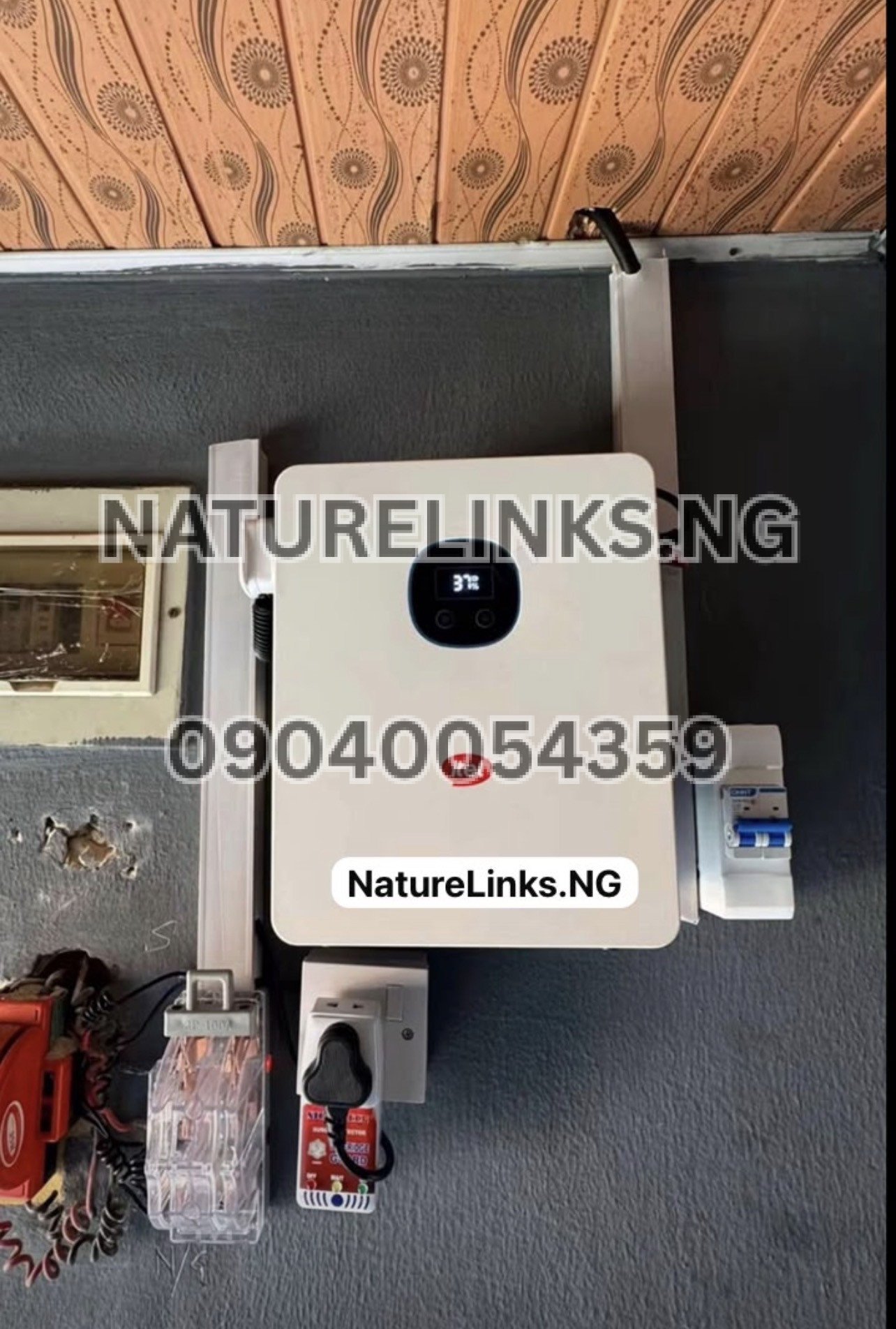
Yes. Itel Power Tank uses a lithium battery, and the commonly sold Itel Power Tank IESS-05K10N uses a 1,000Wh (1kWh) LiFePO4 lithium battery. Current Nigerian product listings identify the battery specifically as LiFePO4, while the official Nigerian itel store describes the Power Tank as a 500W solar generator with a 1,000Wh lithium battery.
For Nigerians searching “Does Itel Power Tank use lithium battery?”, the important distinction is that the battery is not simply a generic lithium-ion battery: the commonly listed 1kWh Power Tank uses Lithium Iron Phosphate (LiFePO4) chemistry. A current product listing specifies a 1,000Wh/1kWh LiFePO4 battery, 500W continuous pure-sine-wave inverter, MPPT solar controller and up to 6,000 charge cycles.
This makes the Itel Power Tank particularly relevant to Nigerian buyers looking for a rechargeable backup-power solution for laptops, TVs, fans, routers, lights, POS businesses, small offices and other appliances whose combined power demand falls within the unit’s output rating.
Does Itel Power Tank Use Lithium Battery?
Yes. The commonly available Itel Power Tank 1kWh / IESS-05K10N uses a LiFePO4 lithium battery.
The commonly listed specifications include:
- Battery capacity: 1,000Wh / 1kWh
- Battery chemistry: LiFePO4 lithium
- Inverter: 500W continuous
- Output: Pure sine wave
- Solar charging: Yes
- MPPT controller: Yes
- AC/grid charging: Yes
- UPS-style switching: Available on the listed configuration
- Cycle life: Up to approximately 6,000 cycles in some published specifications
- AC, USB and DC outputs: Yes
“Does Itel Power Tank Use Lithium Battery?”
The answer to “Does Itel Power Tank Use Lithium Battery?” is yes.
More specifically, the commonly sold 1kWh model uses LiFePO4 (Lithium Iron Phosphate) battery technology. Nigerian listings for the IESS-05K10N repeatedly identify it as a 500W inverter combined with a 1kWh LiFePO4 battery.
This specification matters because battery chemistry affects factors such as expected cycle life, weight, charging characteristics, thermal behavior and long-term use.
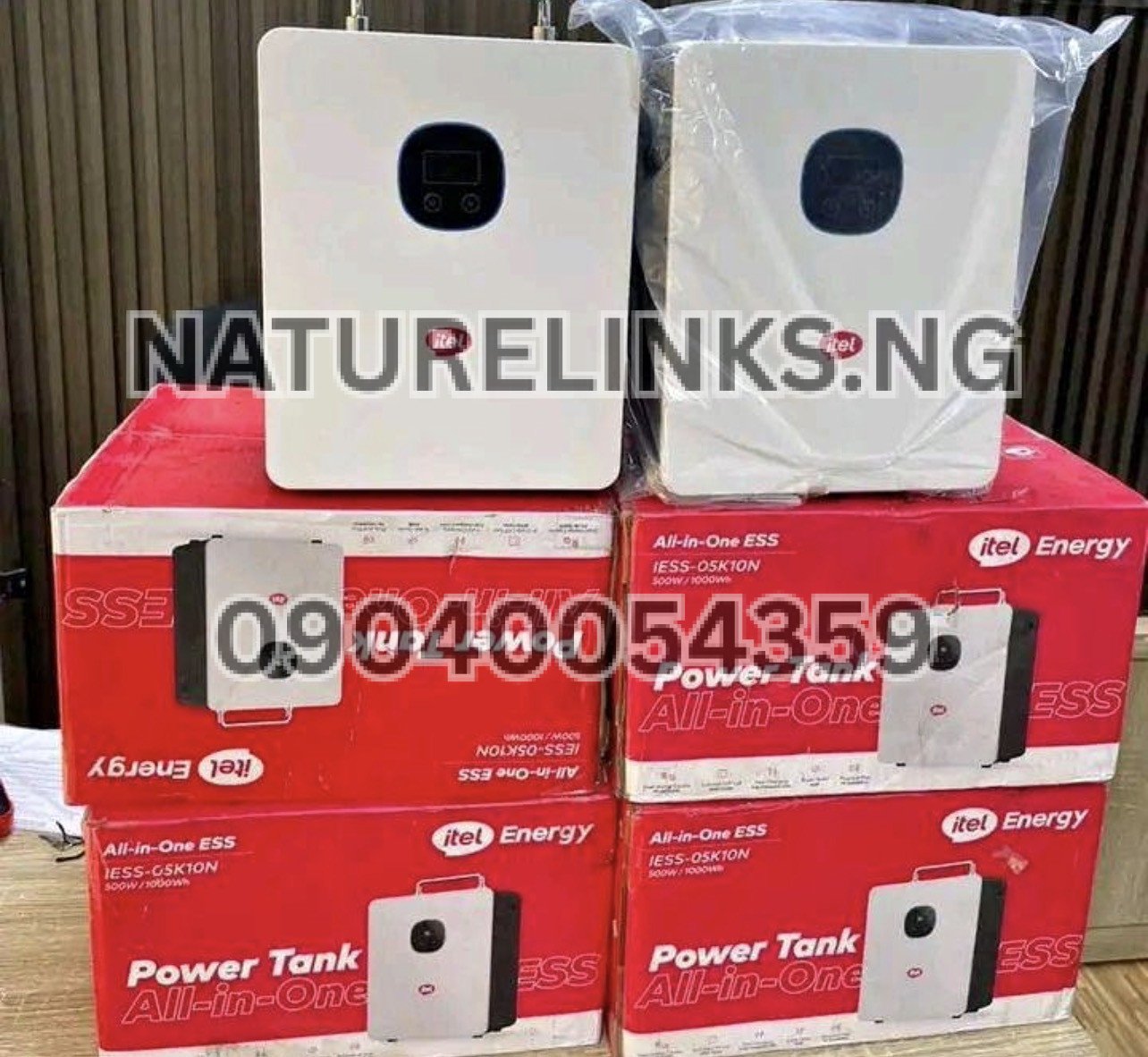
What Type of Lithium Battery Does Itel Power Tank Use?
The commonly listed 1kWh Itel Power Tank uses LiFePO4, which stands for Lithium Iron Phosphate.
LiFePO4 is a lithium battery chemistry widely used in:
- Portable power stations
- Solar energy storage
- Backup power systems
- Home energy storage
- Electric mobility
- Commercial energy-storage systems
The Itel Power Tank’s product information specifically identifies the 1kWh battery as LiFePO4.
Is Itel Power Tank a Lithium-Ion Battery?
It is a lithium-based battery system, but buyers should look more specifically at the chemistry.
For the commonly referenced IESS-05K10N, the specification is LiFePO4 lithium rather than simply saying “lithium-ion” without identifying the chemistry.
Therefore, when purchasing an Itel Power Tank in Nigeria, ask the seller for the exact model and battery specification instead of relying only on the word “lithium.”
Itel Power Tank 1kWh Battery Capacity
The commonly listed Itel Power Tank has a 1,000Wh (1kWh) battery.
Wh means watt-hours, which describes the amount of energy the battery can store.
It is important not to confuse:
1,000Wh battery capacity
with
500W continuous inverter output.
The commonly listed IESS-05K10N combines a 1,000Wh battery with a 500W continuous inverter.
This distinction is one of the most important things Nigerian buyers should understand before buying.
Is 1,000Wh the Same as 1,000W?
No.
Wh measures energy storage, while W measures power output.
For example:
- 1,000Wh = battery energy capacity
- 500W = continuous inverter output
A Power Tank can therefore have a 1,000Wh battery while its inverter continuously supplies 500W.
This is why shoppers should not assume that every product advertised as an “Itel Power Tank 1000W” has a 1,000W continuous inverter.
Itel Power Tank 500W or 1000W?
This is a common source of confusion in Nigerian online listings.
The commonly listed IESS-05K10N is generally specified as:
500W inverter + 1,000Wh battery.
Some marketplace listings use “1000W” in their product titles or describe surge/output capabilities differently. For example, current Nigerian marketplace listings include both “500W + 1kWh” and “500W/1000W” descriptions.
For purchasing purposes, look at the manufacturer/model datasheet and continuous output rating, not just the headline title.
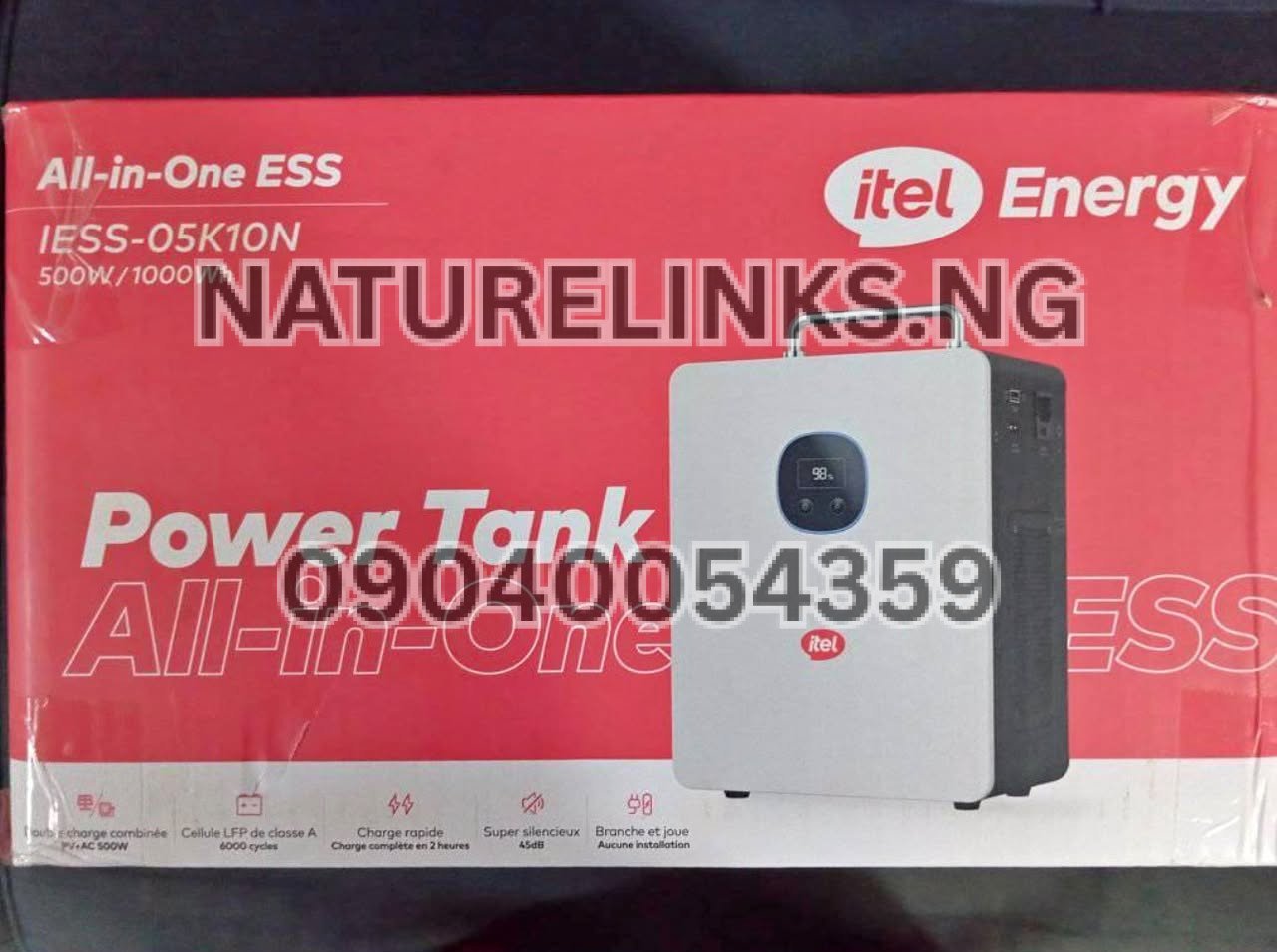
What Are the Benefits of LiFePO4 Battery in Itel Power Tank?
Longer Cycle Life
The listed Itel Power Tank 1kWh configuration specifies up to approximately 6,000 charge cycles. Actual battery life depends on usage, temperature, charging practices and other operating conditions.
Suitable for Frequent Backup Use
For Nigerians dealing with regular power interruptions, a rechargeable lithium storage system can be convenient because it can be repeatedly charged and discharged.
Good Energy Density
Lithium batteries can store substantial energy without requiring the same type of bulky setup associated with some traditional battery technologies.
Low Routine Maintenance
Unlike petrol generators, a lithium power station does not require engine oil changes, spark plugs or petrol.
Solar Compatible
The Power Tank can be recharged through solar on compatible configurations, making it relevant for Nigerian homes and businesses seeking to combine battery storage with solar energy.
Does Itel Power Tank Charge With Solar?
Yes. The commonly listed Power Tank includes an MPPT solar charge controller and supports solar charging. One Nigerian listing specifies a 400W MPPT controller for the IESS-05K10N configuration.
Solar charging can be useful for Nigerians who want to reduce dependence on grid electricity and petrol generators.
Before connecting a solar panel, however, confirm:
- Maximum PV wattage
- Input voltage
- Input current
- Connector type
- Panel configuration
- Manufacturer recommendations
Do not connect an incompatible solar panel simply because its wattage appears suitable.
How Long Does the Itel Power Tank Lithium Battery Last?
Battery runtime depends on the appliance load.
For example, a 1,000Wh battery theoretically contains enough energy for approximately:
| Load | Theoretical runtime |
|---|---|
| 50W | 20 hours |
| 100W | 10 hours |
| 200W | 5 hours |
| 250W | 4 hours |
| 400W | 2.5 hours |
| 500W | 2 hours |
These are simplified theoretical calculations. Real-world runtime will be lower because of inverter losses, battery-management limits and other operating factors.
Can Itel Power Tank Run a TV?
Yes, provided the TV’s power consumption is within the Power Tank’s output capability.
For example, a relatively efficient LED television can represent a modest load compared with appliances such as electric irons, kettles or cookers.
Check the TV’s wattage before connecting it.
Can Itel Power Tank Run a Fan?
Yes. Fans are among the types of relatively low-power appliances that can be suitable for a portable power station.
Runtime will depend on:
- Fan wattage
- Fan speed
- Number of hours used
- Other devices connected
- Battery charge level
Can Itel Power Tank Power a Laptop?
Yes.
A laptop is generally a suitable load for a portable power station, particularly for:
- Remote workers
- Students
- Freelancers
- Online businesses
- Software developers
- Content creators
- Cybersecurity learners
If your laptop uses 60W, for example, it represents a much smaller load than a 1,000W heating appliance.
Can Itel Power Tank Power a Wi-Fi Router?
Yes, provided the router and any connected networking equipment remain within the available output.
A router is a particularly low-power device, making a battery backup useful for maintaining internet connectivity during power interruptions.
Can Itel Power Tank Power a Refrigerator?
Potentially, but this requires careful checking.
A refrigerator may consume relatively modest power while running but require significantly more power during compressor startup.
Therefore, check:
- Running wattage
- Startup/surge wattage
- Power factor
- Power Tank continuous output
- Power Tank surge capacity
Do not purchase the unit specifically for a refrigerator without checking these figures.
Itel Power Tank Lithium Battery vs Lead-Acid Battery
| Feature | LiFePO4 Lithium | Lead-Acid |
|---|---|---|
| Battery chemistry | Lithium Iron Phosphate | Lead-acid |
| Weight | Generally lighter | Generally heavier |
| Cycle life | Generally much higher | Generally lower |
| Maintenance | Low | Depending on type |
| Energy density | Higher | Lower |
| Suitable for portable power stations | Yes | Less convenient |
| Recharge frequency | Well suited to repeated cycling | More limited depending on battery type |
Actual performance depends on the specific battery model and operating conditions.
Is Itel Power Tank Better Than a Petrol Generator?
The answer depends on what you need to power.
The Power Tank is designed around stored electrical energy and can be recharged from the grid or solar. A petrol generator produces electricity from fuel and an engine.
The Power Tank can be particularly relevant when the priority is:
- Quiet operation
- Portable backup
- No petrol storage
- No engine exhaust during battery operation
- Low routine maintenance
- Electronic-device backup
- Solar charging
A petrol generator may be relevant where substantially higher continuous power is required.
Itel Power Tank Price in Nigeria
Because this is a buyer-intent search, price is an important consideration.
Current Nigerian listings show substantial price variation. The official Nigerian itel store currently lists the 500W Solar Generator with a 1,000Wh lithium battery at ₦295,000.
Other current listings include approximately:
- ₦279,000 on one specialist Itel Power Tank listing
- ₦297,753 on CDcare
- ₦310,000 on Konga
- Around ₦350,000–₦390,000 across several Jumia listings
Prices vary by seller, promotion, warranty and whether a solar panel is included.
For a solar-panel bundle, prices can be substantially higher. One current CDcare listing shows a 500W/1kWh Power Tank with a Jinko 590W solar panel at approximately ₦442,697.

Where to Buy Original Itel Power Tank in Nigeria
For Nigerians searching for an Itel Power Tank lithium battery supplier, dealer or distributor, the supplied business details identify:
Nature Links Nigeria Limited
Best Seller: Nature Links Nigeria Limited [NatureLinks.NG]
Nature Solar Global Limited
Distributor: Nature Solar Global Limited
CEO: Mr. Joseph Chikeleze
Call: 07049528019
WhatsApp: 09040054359
Shop Address: F1571 Upstairs (F-Line), Alaba International Market, Lagos State 🇳🇬
The supplied business information identifies Nature Solar Global Limited as the accredited distributor in Nigeria. Buyers should contact the seller directly to verify current stock, exact model, lithium battery specification, warranty, accessories and current selling price before payment.
How to Confirm Your Itel Power Tank Has a Lithium Battery
Before buying, ask the seller for the following:
1. Exact Model Number
For the common 1kWh unit, the model is frequently identified as IESS-05K10N.
2. Battery Chemistry
Ask specifically:
“Is the battery LiFePO4?”
3. Battery Capacity
Confirm that it is 1,000Wh / 1kWh if that is the capacity you require.
4. Inverter Output
Confirm the continuous output, which is commonly listed as 500W for the IESS-05K10N.
5. Warranty
Ask for the warranty period and what it covers.
6. Solar Input
Confirm the maximum supported solar input and voltage range.
7. Package Contents
Find out whether the purchase includes:
- AC charger
- Solar charging cable
- Solar panel
- User manual
- Other accessories
Is LiFePO4 Safe for Portable Power Stations?
LiFePO4 is widely used for energy-storage applications and is known for good thermal stability compared with some other lithium chemistries.
Nevertheless, any lithium battery should be operated according to the manufacturer’s instructions.
Avoid:
- Opening the battery yourself
- Using incompatible chargers
- Connecting unsuitable solar panels
- Exposing the unit to inappropriate temperatures
- Using damaged cables
- Modifying the battery-management system
How Many Cycles Does Itel Power Tank Battery Have?
The commonly listed 1kWh Itel Power Tank specification states up to 6,000 charge cycles.
A “cycle” generally refers to using an amount of energy equivalent to a full battery charge and discharge, not necessarily plugging the device in once.
For example, two 50% discharge-and-recharge sessions can approximately add up to one full cycle.
Actual battery longevity depends on usage and environmental conditions.
Does Itel Power Tank Have a Battery Management System?
The listed Power Tank configuration incorporates battery and system protection features.
Published specifications include protections for:
- Overload
- Short circuit
- Over-temperature
- Over-voltage
- Solar/PV abnormalities
- Grid-related voltage conditions
These protections are important in a portable lithium energy-storage system.
Is Itel Power Tank Good for Nigerian Homes?
It can be useful for essential backup loads, particularly when the household needs electricity for relatively low-power devices.
Potential applications include:
- TV
- Fan
- Laptop
- Wi-Fi router
- LED lights
- Phone charging
- Small electronics
- POS equipment
- CCTV
- Internet equipment
However, users should calculate their total load before purchasing.
Is Itel Power Tank Good for Business?
It can be useful for small businesses that primarily require backup for low-power electronics.
Examples include:
- POS shops
- Cybercafés with limited equipment
- Small offices
- Phone-accessory businesses
- Online businesses
- Barbershops using low-power equipment
- Small retail shops
- Remote-work offices
Businesses with high-power machinery should consider a higher-capacity energy-storage system or another suitable power solution.
Frequently Asked Questions
1. Does Itel Power Tank use lithium battery?
Yes. The commonly listed 1kWh Itel Power Tank IESS-05K10N uses a 1,000Wh LiFePO4 lithium battery.
2. Is Itel Power Tank LiFePO4?
Yes. The IESS-05K10N is listed with a LiFePO4 battery. Nigerian retail listings also explicitly describe the product as a 500W inverter with a 1kWh LiFePO4 battery.
3. How many watts is the Itel Power Tank?
The commonly listed IESS-05K10N has a 500W continuous inverter and a 1,000Wh battery. Some marketplace listings use “1000W” in product titles, so buyers should verify the continuous-output specification.
4. How much is Itel Power Tank in Nigeria?
Current Nigerian listings vary considerably. The official Nigerian itel store lists a 500W/1,000Wh lithium-battery Power Tank at ₦295,000, while other current listings range from approximately ₦279,000 to considerably above ₦350,000 depending on seller and package.
5. Can Itel Power Tank be charged by solar?
Yes. The commonly listed model includes an MPPT solar charge controller and supports solar charging.
6. How long does the Itel Power Tank battery last?
Runtime depends on the connected load. A 100W load would theoretically use 1,000Wh in approximately 10 hours, before accounting for conversion losses and other limitations.
7. How many cycles does Itel Power Tank have?
The commonly listed 1kWh configuration specifies up to approximately 6,000 charge cycles.
8. Can Itel Power Tank power a TV and fan?
Yes, if the combined power requirement stays within the Power Tank’s continuous inverter rating. Check the wattage of both devices before connecting them.
9. Can Itel Power Tank power a laptop and router?
Yes. These are generally low-power applications and are among the practical uses of a portable backup power station.
10. Where can I buy Itel Power Tank with a lithium battery in Nigeria?
You can contact Nature Solar Global Limited, identified in the supplied business information as the accredited distributor, at 07049528019 or WhatsApp 09040054359. The listed shop address is F1571 Upstairs (F-Line), Alaba International Market, Lagos State, Nigeria.
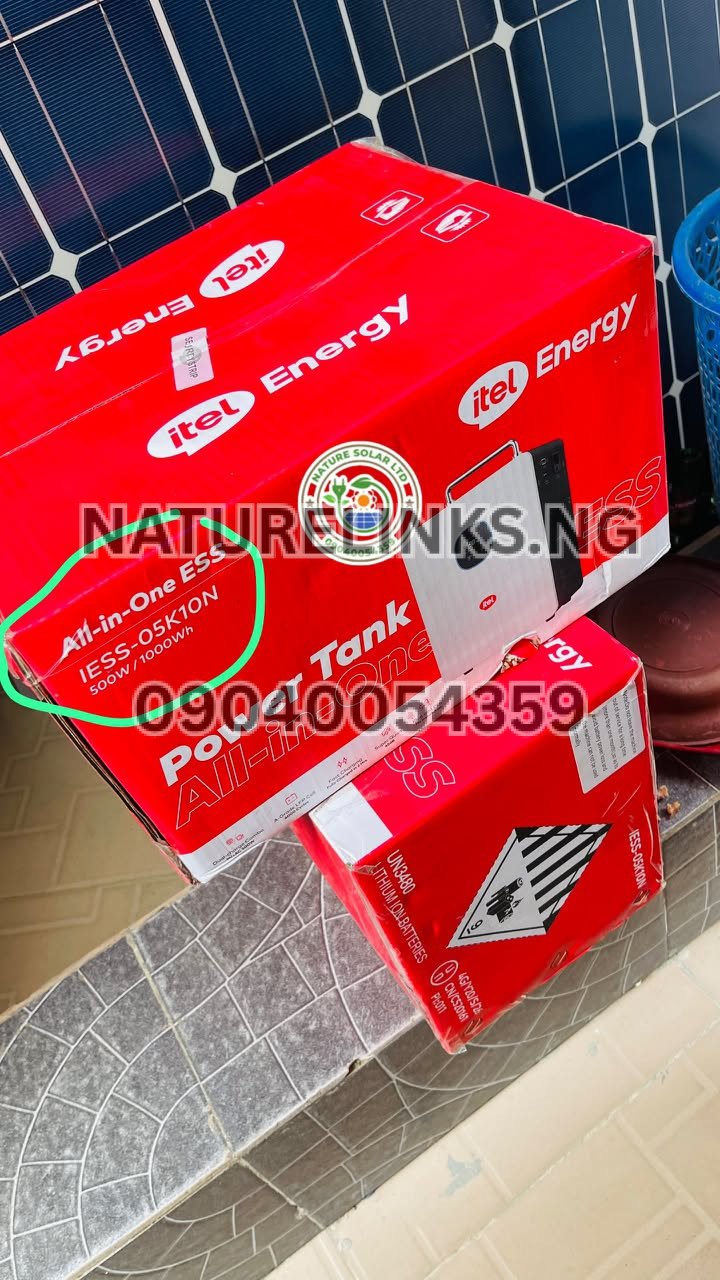
“Does Itel Power Tank Use Lithium Battery?”
Yes. The commonly referenced Itel Power Tank IESS-05K10N uses a 1,000Wh LiFePO4 lithium battery, combined with a 500W continuous pure-sine-wave inverter and solar charging capability.
This makes the product different from a traditional petrol generator and from older lead-acid battery backup systems. For Nigerian buyers, the combination of lithium storage, solar compatibility and portable design makes it a product worth considering for essential backup electricity.
What Should You Check Before Buying Itel Power Tank?
Before paying a seller, confirm:
- Exact model: IESS-05K10N or the model being offered
- Battery: 1,000Wh / 1kWh
- Battery chemistry: LiFePO4
- Continuous inverter: 500W where applicable
- Surge rating: Verify from the exact datasheet
- Solar input: Confirm maximum PV specifications
- Warranty: Confirm duration and coverage
- Condition: New, original and unused if purchasing new
- Accessories: Confirm everything included
- Price: Confirm today’s price
- Delivery: Confirm delivery charges and location
- After-sales support: Confirm who handles warranty claims
-

Does Itel Power Tank use lithium battery?
Conclusion
So, does Itel Power Tank use lithium battery? Yes. The commonly sold Itel Power Tank IESS-05K10N uses a 1,000Wh (1kWh) LiFePO4 lithium battery, while the integrated inverter is commonly specified at 500W continuous output.
For Nigerians looking for quiet and portable backup power, the lithium-based Itel Power Tank can be used for suitable loads such as laptops, TVs, fans, routers, lights, phones and other electronics. It also supports solar charging on compatible configurations.
When buying, however, do not rely only on the words “1000W” in an online product title. Confirm the exact model, battery capacity in Wh, continuous inverter wattage, LiFePO4 chemistry, solar-input specification, warranty and package contents.
Nature Solar Global Limited is identified in the supplied business information as the accredited distributor in Nigeria.
Call: 07049528019
WhatsApp: 09040054359
Address: F1571 Upstairs (F-Line), Alaba International Market, Lagos State 🇳🇬