
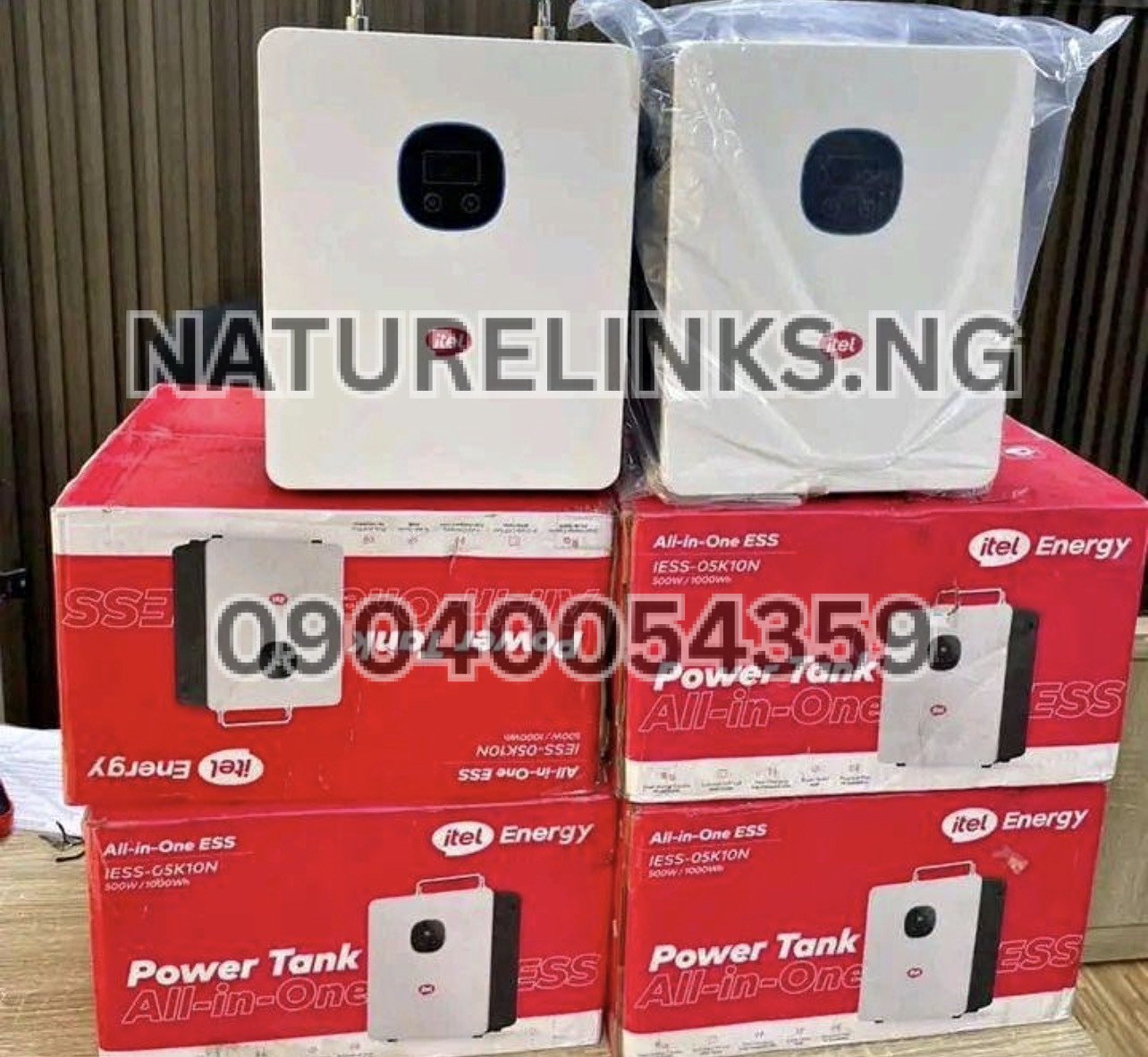
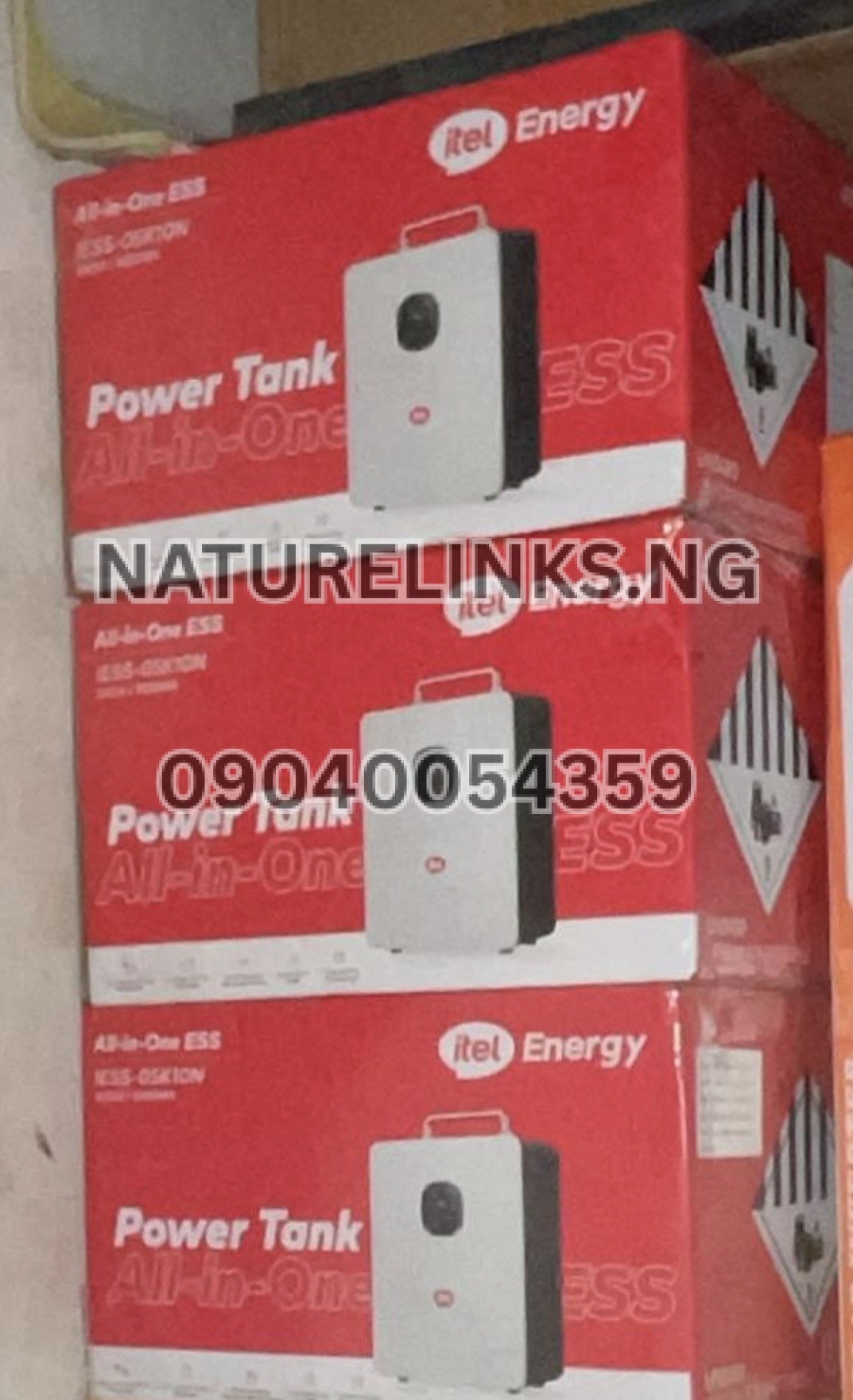
If you are searching What type of battery does Itel Power Tank use?, the answer is LiFePO4 (Lithium Iron Phosphate) for the commonly listed 1kWh Itel Power Tank models, including the IESS-05K10N. This battery chemistry is designed for rechargeable energy-storage applications and is commonly used in portable power stations and solar backup systems.
For Nigerian buyers, knowing the battery type is important because battery chemistry affects expected cycle life, safety characteristics, charging behaviour, usable energy and long-term ownership costs. Current Nigerian listings for the Itel Power Tank 1kWh configuration identify the battery as 1,000Wh / 1kWh LiFePO4.
If you are comparing portable power stations, solar generators or backup batteries in Nigeria, the battery specification should be considered alongside the inverter output, solar input, warranty and price—not just the product’s advertised wattage.
What Type of Battery Does Itel Power Tank Use?
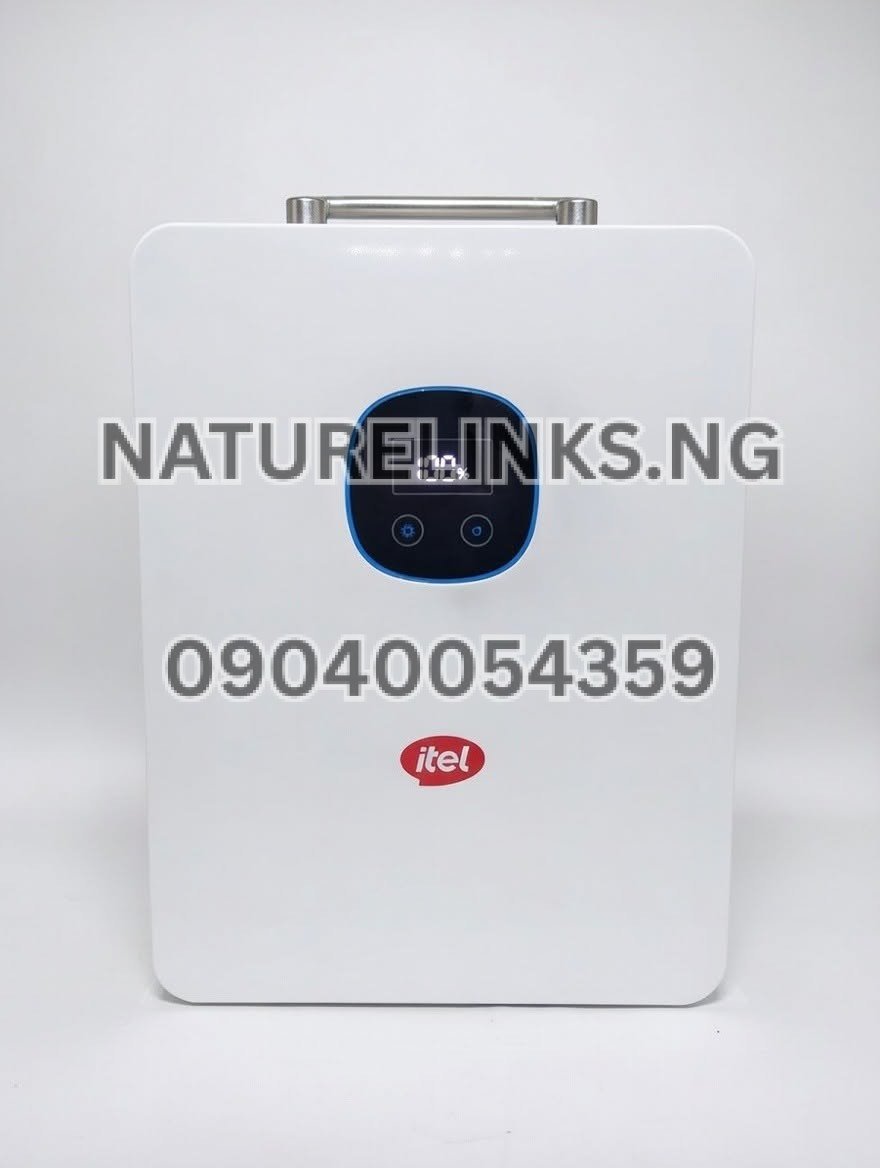
The commonly listed Itel Power Tank IESS-05K10N uses a LiFePO4 battery, which stands for Lithium Iron Phosphate.
The documented configuration has:
- Battery chemistry: LiFePO4
- Battery capacity: 1,000Wh / 1kWh
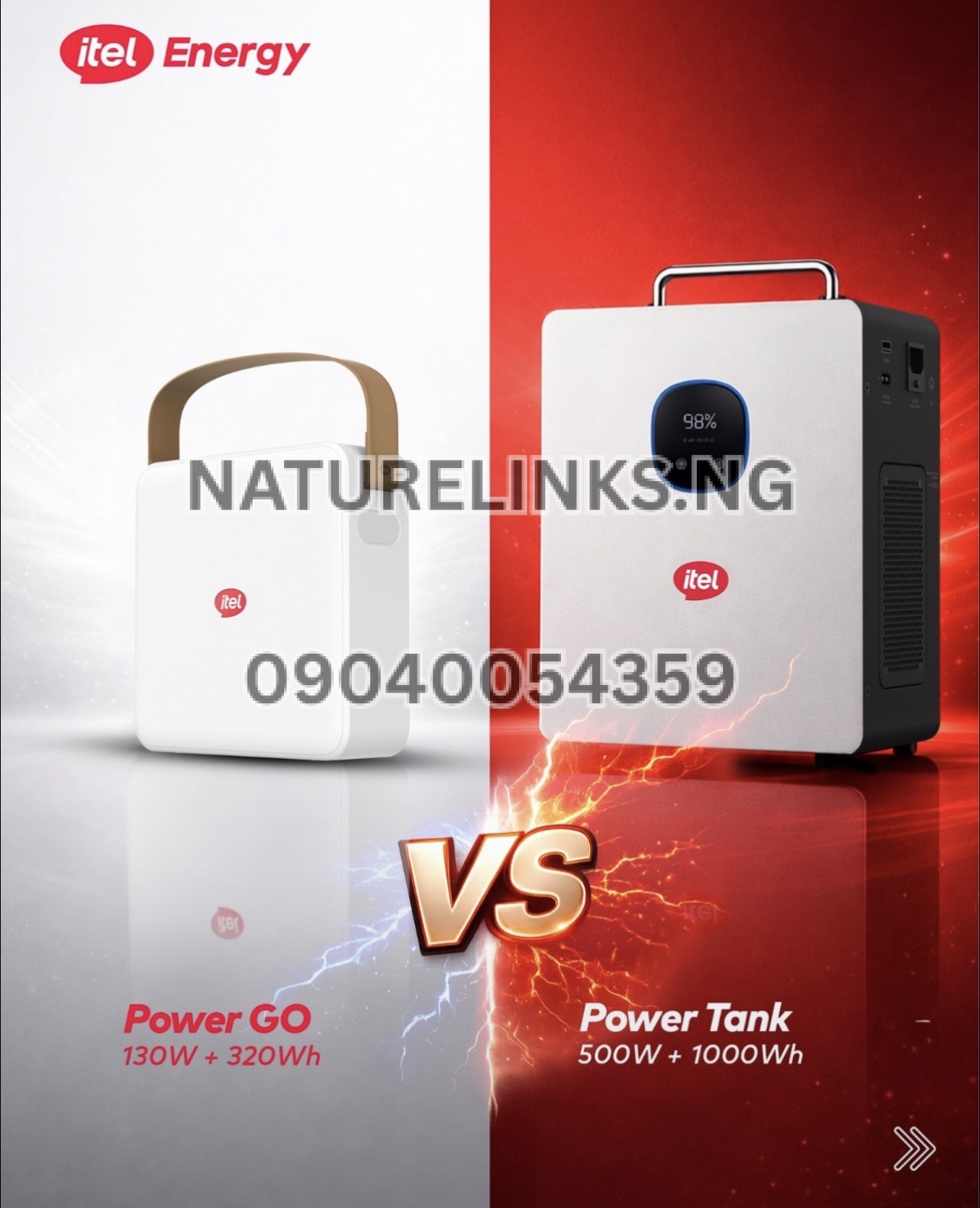
- Inverter output: 500W continuous
- Inverter: Pure sine wave
- Solar input: Up to 400W on the documented configuration
- Battery cycle life: Approximately 6,000 cycles under specified conditions
- Charging: AC/grid and solar
- BMS: Battery Management System
These specifications are documented in current product listings for the IESS-05K10N.
“What Type of Battery Does Itel Power Tank Use?”
The answer to “What type of battery does Itel Power Tank use?” is LiFePO4 lithium battery technology for the commonly listed 1kWh Power Tank.
LiFePO4 is the chemical abbreviation for lithium iron phosphate. It is different from lithium-ion chemistries such as NMC (nickel manganese cobalt), even though LiFePO4 is itself a lithium-ion battery chemistry.
For buyers in Nigeria, this distinction matters when comparing the Itel Power Tank with other portable power stations.
Is Itel Power Tank Lithium Battery?
Yes. The commonly listed Itel Power Tank 1kWh model uses a LiFePO4 lithium battery. Current Nigerian listings specifically describe the Power Tank as having a 1,000Wh LiFePO4 battery.
This means the battery is rechargeable and designed to store electricity for later use through the Power Tank’s integrated inverter and output ports.
What Does LiFePO4 Mean?
LiFePO4 means Lithium Iron Phosphate.
The name comes from the chemical composition of the battery’s cathode material:
Li = Lithium
Fe = Iron
PO4 = Phosphate
LiFePO4 batteries are widely used for stationary and portable energy-storage applications because they can provide long cycle life and good thermal stability compared with some other lithium battery chemistries.
Is LiFePO4 Better for a Power Station?
LiFePO4 has characteristics that make it well suited to repeated charge-and-discharge applications.
Important characteristics include:
- Long cycle life
- Good thermal stability
- Rechargeability
- Suitable energy-storage characteristics
- Relatively stable chemistry
- Ability to handle repeated cycling when operated within specifications
However, “better” depends on the application. Battery chemistry is only one part of a power station’s performance. The battery-management system, inverter, charging system, thermal management, operating temperature and depth of discharge also matter.
How Long Does the Itel Power Tank Battery Last?
The commonly documented IESS-05K10N specification indicates approximately 6,000 charge cycles under specified conditions.
A battery cycle generally refers to using an amount of energy equivalent to the battery’s rated capacity and then recharging it. One cycle does not necessarily mean simply plugging the Power Tank into electricity once.
Actual battery lifespan can vary depending on:
- Depth of discharge
- Operating temperature
- Charging conditions
- Storage conditions
- Frequency of use
- Load
- Battery-management settings
- Age of the battery
Therefore, a stated cycle count should not be interpreted as a guaranteed number of years of service.
Is Itel Power Tank Battery Rechargeable?
Yes. The Itel Power Tank is designed as a rechargeable energy-storage system.
The commonly listed 1kWh configuration supports:
- AC/grid charging
- Solar charging
It incorporates an MPPT solar charge controller, with the documented IESS-05K10N configuration supporting up to approximately 400W PV input.

Can Itel Power Tank Battery Be Charged With Solar?
Yes. Compatible Itel Power Tank configurations can be charged using solar panels.
The documented IESS-05K10N specification includes:
- Up to 400W PV input
- MPPT solar charging
- An MPPT voltage range of approximately 11–60V
- Solar and AC/grid charging
The exact voltage and current limits should always be checked against the model’s manufacturer documentation before connecting a solar panel.
How Many Watt-Hours Is the Itel Power Tank Battery?
The commonly listed battery has 1,000Wh, which is equivalent to 1kWh.
This is the battery’s energy-storage capacity—not the continuous power output.
For example:
1,000Wh = 1kWh
But the commonly listed IESS-05K10N has a 500W continuous AC output, meaning buyers should not assume that a 1,000Wh battery automatically means the inverter can continuously operate 1,000W of appliances.
Itel Power Tank 1000Wh Battery Specifications
| Specification | Details |
|---|---|
| Brand | itel Energy |
| Product | Power Tank |
| Common model | IESS-05K10N |
| Battery type | LiFePO4 |
| Battery chemistry | Lithium Iron Phosphate |
| Capacity | 1,000Wh / 1kWh |
| Continuous AC output | 500W |
| Inverter | Pure sine wave |
| Solar input | Up to 400W |
| Charging | AC + solar |
| MPPT | Yes |
| Cycle life | Approximately 6,000 cycles under specified conditions |
| BMS | Yes |
| UPS switching | Up to approximately 20ms on documented specification |
Specifications can vary between configurations, so buyers should verify the exact model and supplied datasheet before purchase.
What Is the Difference Between LiFePO4 and Lithium-Ion Batteries?
LiFePO4 is itself a type of lithium-ion battery chemistry.
When consumers say “lithium-ion battery” they may be referring broadly to several lithium battery chemistries. LiFePO4 specifically uses lithium iron phosphate as its cathode material.
For energy-storage applications, LiFePO4 is often selected because of its combination of cycle life and thermal characteristics.
Therefore, when a Nigerian seller says an Itel Power Tank has a LiFePO4 lithium battery, that is more specific than simply saying it has a “lithium battery.”
Does Itel Power Tank Use a Lead-Acid Battery?
The commonly listed 1kWh Itel Power Tank does not use a lead-acid battery. Its published specification identifies the battery technology as LiFePO4.
This is an important distinction when comparing it with traditional inverter systems that use lead-acid, AGM or gel batteries.
LiFePO4 vs Lead-Acid Battery
| Feature | Itel Power Tank LiFePO4 | Traditional Lead-Acid |
|---|---|---|
| Chemistry | Lithium Iron Phosphate | Lead-acid |
| Rechargeable | Yes | Yes |
| Cycle life | High on documented configuration | Generally lower |
| Weight | Generally lighter for equivalent usable energy | Generally heavier |
| Maintenance | Low | May require more attention depending on type |
| Energy storage | High efficiency potential | Lower efficiency generally |
| Portable use | Well suited | Less convenient for portable applications |
Actual performance depends on the particular battery model and operating conditions.
Why Does Battery Chemistry Matter When Buying an Itel Power Tank?
Battery chemistry affects the characteristics of the energy-storage system.
When buying an Itel Power Tank in Nigeria, consider:
Battery lifespan
A longer cycle-life specification can be useful for people who frequently charge and discharge their Power Tank.
Safety characteristics
LiFePO4 is known for favourable thermal-stability characteristics, although every lithium battery still requires appropriate protection and operation.
Weight
Lithium energy-storage systems can provide substantial storage capacity without the weight associated with many conventional lead-acid systems.
Charging
The Power Tank’s integrated charging electronics determine how the battery can be charged from mains electricity and solar.
Cost
Lithium battery systems can have a higher initial purchase price than some traditional battery technologies, but purchase price should be considered alongside expected service life and usable energy.
Does Itel Power Tank Have a Battery Management System?
Yes. The documented Power Tank configuration includes a Battery Management System (BMS).
A BMS is important in lithium battery systems because it monitors and manages battery operating conditions.
Depending on the system design, battery-management functions can include protection against:
- Overcharging
- Excessive discharge
- Overcurrent
- Short circuits
- Abnormal temperature
- Cell voltage imbalance
The Power Tank listings also identify overload, short-circuit, temperature and voltage protection.
Is Itel Power Tank Battery Safe?
The commonly listed Power Tank uses LiFePO4 chemistry and incorporates battery-management and protective functions.
However, no rechargeable battery should be considered risk-free. Users should:
- Use the supplied or approved charging equipment.
- Follow the manufacturer’s charging instructions.
- Avoid physically damaging the battery.
- Keep ventilation requirements in mind.
- Avoid exposing the unit to unsuitable temperatures or moisture.
- Use compatible solar panels.
- Avoid exceeding the specified output.
- Stop using a unit that shows signs of severe physical damage, swelling, smoke or unusual overheating.
How Many Appliances Can the Itel Power Tank Run?
This depends on their combined power consumption.
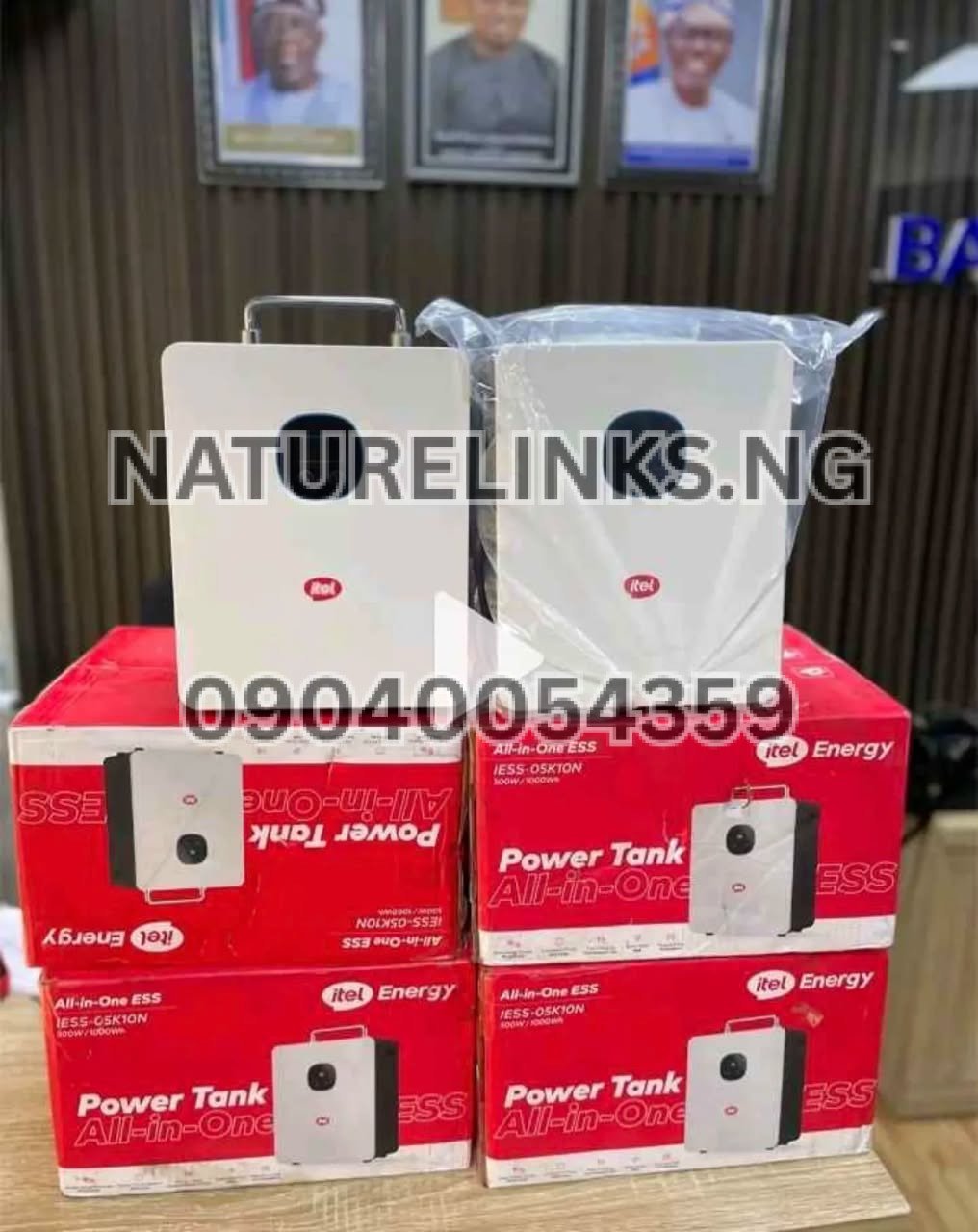
The commonly listed IESS-05K10N provides 500W continuous AC output.
For example, a combination such as:
- 50W TV
- 40W fan
- 20W router
- 50W laptop
would represent approximately 160W before considering charging losses and other devices.
By contrast, connecting several high-wattage appliances could exceed the inverter’s continuous rating.
Can the Itel Power Tank Run a Refrigerator?
It depends on the refrigerator.
A refrigerator may consume relatively modest power while running but require a higher startup surge when its compressor starts.
The commonly listed 500W continuous Power Tank therefore requires careful compatibility checking before being used with a refrigerator.
Check:
- Running wattage.
- Starting/surge requirement.
- Power factor.
- Other appliances connected simultaneously.
Do not buy based solely on the refrigerator’s advertised average energy consumption.
Can Itel Power Tank Run a TV and Fan?
For appropriately rated appliances, yes.
A TV and fan are examples of the type of relatively low-power equipment commonly considered for portable backup power.
The exact runtime depends on:
- TV wattage
- Fan wattage
- Battery charge level
- Other connected devices
- Inverter efficiency
Can Itel Power Tank Be Used for a Laptop and Wi-Fi Router?
Yes. A laptop and Wi-Fi router are relatively low-power loads and are common applications for portable backup power.
This makes the Power Tank potentially useful for:
- Remote work
- Online classes
- Freelancing
- Customer service work
- Online businesses
- Content creation
- Internet-based work
The actual runtime depends on the laptop and router’s power consumption.
Is Itel Power Tank Good for Nigerian Homes?
It can provide backup power for selected essential loads, particularly low-power electronics.
Potential applications include:
- TV
- Fans
- Wi-Fi routers
- Laptops
- Phones
- LED lights
- CCTV equipment
- Small electronics
It should not automatically be treated as a whole-house replacement for a high-capacity inverter system.
Itel Power Tank Battery Price in Nigeria
The battery is integrated into the Power Tank rather than normally being sold as a separate external battery in the standard all-in-one configuration.
Current Nigerian listings for the 500W/1kWh LiFePO4 Power Tank vary considerably. For example, a current Konga listing shows ₦310,000, while other Nigerian online listings show prices from roughly ₦279,000 upward, depending on seller and package.
When comparing prices, check whether the listing includes:
- Power Tank
- AC charging cable
- Solar cable
- Solar panel
- Warranty
- Delivery
- Other accessories
A lower headline price may represent a different package.
“What Type of Battery Does Itel Power Tank Use?”
If you are searching “What type of battery does Itel Power Tank use?”, the commonly listed 1kWh model uses LiFePO4 (Lithium Iron Phosphate) battery technology.
The documented battery capacity is 1,000Wh/1kWh, while the inverter provides approximately 500W continuous AC output on the IESS-05K10N configuration.
This combination makes the unit an integrated energy-storage system rather than simply a conventional inverter with an external battery.
What Is the Itel Power Tank Battery Cycle Life?
The commonly published IESS-05K10N specification states approximately 6,000 cycles under specified conditions.
Cycle life is affected by operating conditions, including temperature, discharge depth and charging practices.
Therefore, 6,000 cycles should be understood as a specification under defined conditions rather than a guarantee that every individual battery will achieve exactly that number.
Does LiFePO4 Mean the Battery Will Last 10 Years?
Not necessarily.
Some Nigerian listings market the product with claims such as 8–10 years of life, but actual calendar life depends on usage, temperature, storage and other conditions.
A cycle-life rating and calendar-life estimate are not the same thing.
For a purchase decision, ask the seller for the manufacturer’s warranty terms and the exact battery-cycle specification for the model being supplied.
What Should You Check Before Buying an Itel Power Tank?
Before payment, Nigerian buyers should verify:
1. Exact model number
Ask whether the unit is IESS-05K10N, IESS-05K10P or another configuration.
2. Battery chemistry
Confirm that the battery is LiFePO4 if that is the specification you require.
3. Battery capacity
Confirm whether it is 1,000Wh/1kWh or another capacity.
4. Continuous inverter output
For the common IESS-05K10N, the published continuous AC output is 500W.
5. Solar input
Confirm the permitted PV voltage, current and maximum solar wattage.
6. Warranty
Ask for written warranty information.
7. Package contents
Determine whether the advertised price includes solar panels and accessories.
8. Authenticity
Purchase from a reputable seller or distributor.
9. Current price
Confirm the price immediately before payment because Nigerian retail prices can change.
10. After-sales support
Ask who will handle warranty and technical issues if the unit develops a problem.
Where to Buy Itel Power Tank in Nigeria
For buyers searching for an Itel Power Tank dealer, supplier or distributor in Nigeria, the supplied business information identifies:
The Best Seller: Nature Links Nigeria Limited [NatureLinks.NG]
Distributor: Nature Solar Global Limited
CEO: Mr. Joseph Chikeleze
Call: 07049528019
WhatsApp: 09040054359
Shop Address: F1571 Upstairs (F-Line), Alaba International Market, Lagos State 🇳🇬
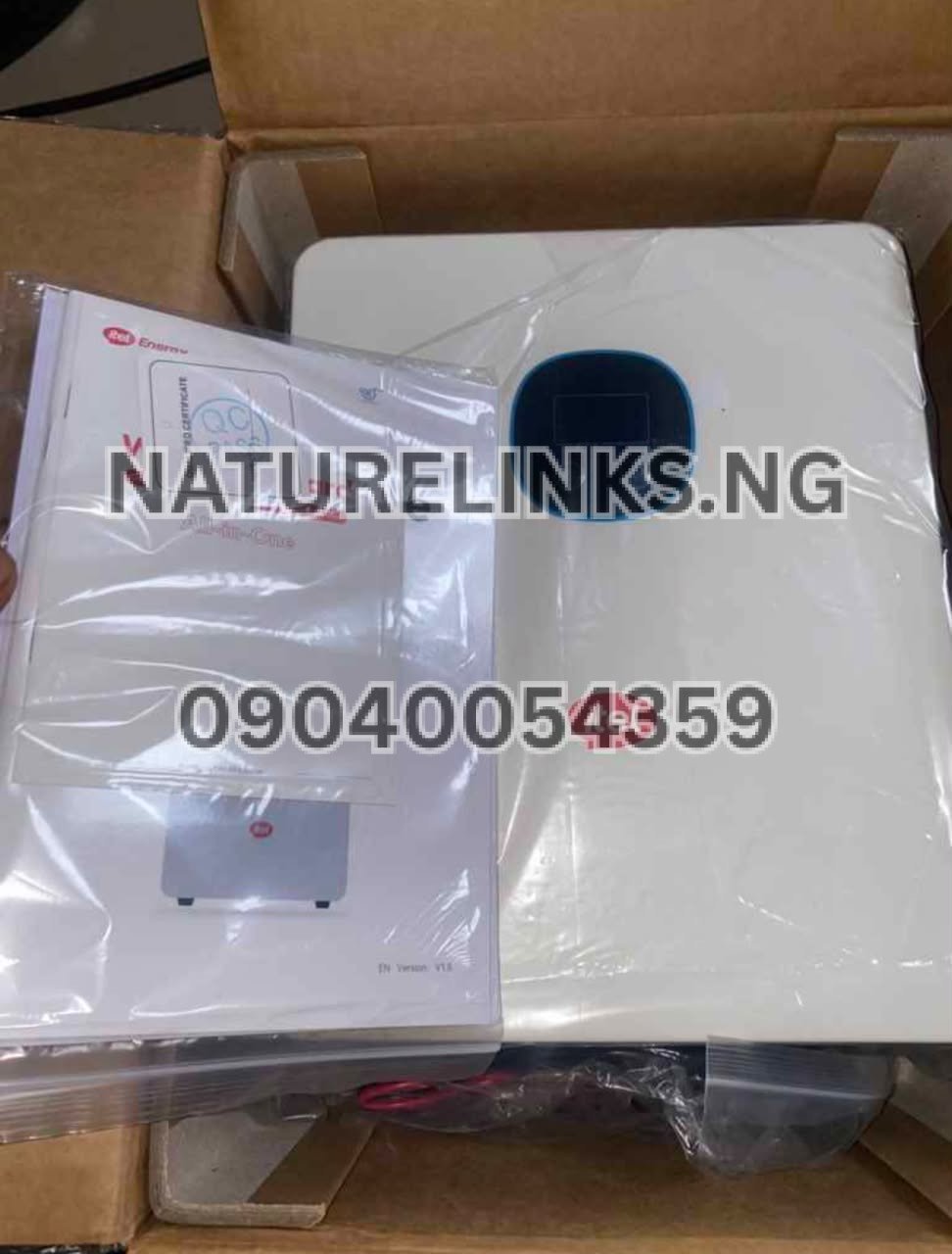
For current availability, buyers should contact the seller directly to confirm the exact model, LiFePO4 battery capacity, current price, warranty and package contents.
Itel Power Tank Battery for Solar Backup
One advantage of the Power Tank’s integrated design is that the battery, inverter and solar charging system work together as an energy-storage solution.
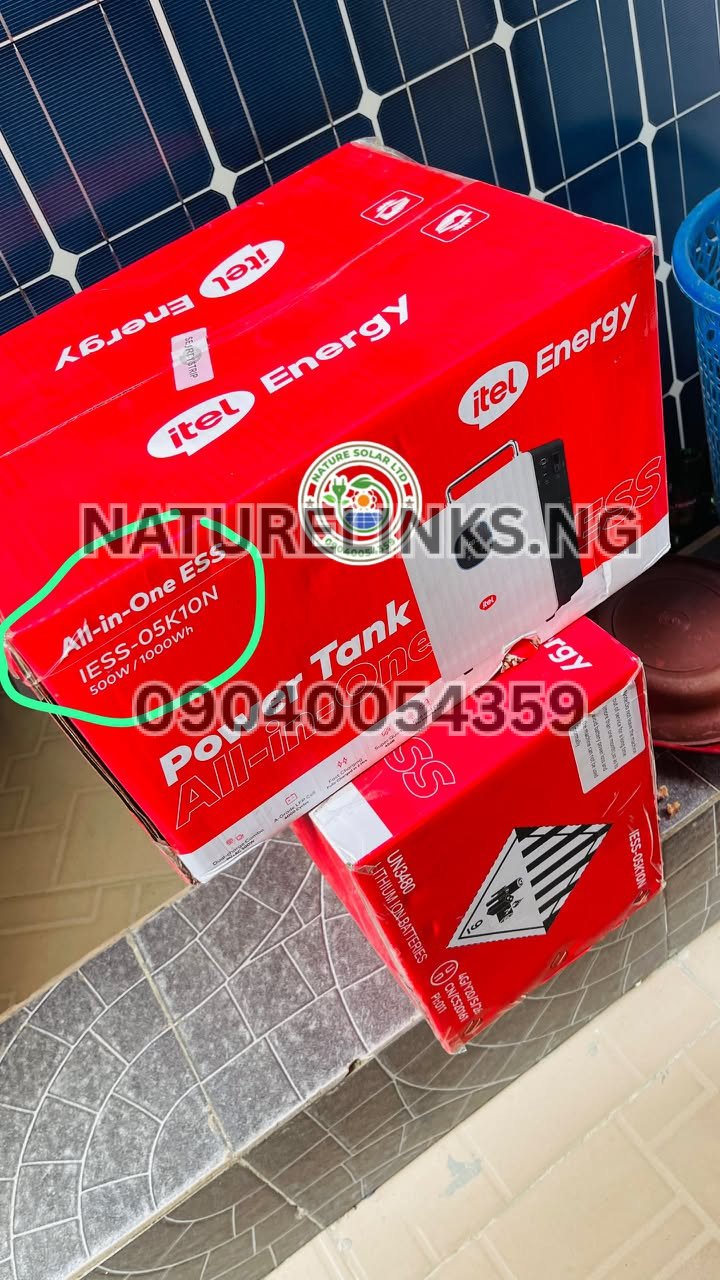
The documented IESS-05K10N includes:
- 1kWh LiFePO4 battery
- 500W inverter
- 400W MPPT solar input
- AC charging
- Solar charging
- Battery-management system
This makes it suitable for buyers who want a compact backup system without assembling a separate inverter, battery and charge controller.
Is Itel Power Tank Battery Lithium Iron Phosphate?
Yes. LiFePO4 means Lithium Iron Phosphate, and that is the battery technology identified for the commonly listed 1kWh Itel Power Tank.
This is one of the most important specifications to verify when comparing the Itel Power Tank with other portable power stations in Nigeria.
Frequently Asked Questions
1. What type of battery does Itel Power Tank use?
The commonly listed 1kWh Itel Power Tank uses a LiFePO4 (Lithium Iron Phosphate) rechargeable battery.
2. Is Itel Power Tank a lithium battery?
Yes. The Power Tank uses lithium battery technology, specifically LiFePO4 on the documented 1kWh configuration.
3. How many kWh is the Itel Power Tank battery?
The commonly listed IESS-05K10N has a 1,000Wh battery, equivalent to 1kWh.
4. How many cycles does the Itel Power Tank battery have?
The published specification for the documented configuration indicates approximately 6,000 cycles under specified conditions.
5. Can I charge Itel Power Tank with solar?
Yes. The documented configuration supports solar charging through its integrated MPPT controller, with up to approximately 400W PV input.
6. Does Itel Power Tank use a lead-acid battery?
No. The commonly listed 1kWh model uses LiFePO4, not a conventional lead-acid battery.
7. Is LiFePO4 better than ordinary lithium-ion?
LiFePO4 is a type of lithium-ion chemistry. It is particularly valued for characteristics such as cycle life and thermal stability, making it well suited to many energy-storage applications.
8. Can I replace the Itel Power Tank battery?
The Power Tank is an integrated energy-storage system. Users should not attempt to open or replace the internal battery themselves. Contact the manufacturer, authorized distributor or qualified service provider for battery-service questions.
9. Is Itel Power Tank good for home backup?
It can be useful for essential low-power home loads such as lights, fans, TVs, routers and laptops, provided their combined power requirements remain within the Power Tank’s specifications.
10. Where can I buy an original Itel Power Tank in Nigeria?
Buy from a reputable seller or distributor and verify the model number, battery chemistry, warranty and package contents. The supplied distributor contact is Nature Solar Global Limited, reachable on 07049528019 or WhatsApp 09040054359.

Conclusion
The answer to “What type of battery does Itel Power Tank use?” is LiFePO4 (Lithium Iron Phosphate) for the commonly listed 1kWh Itel Power Tank configuration. The IESS-05K10N is documented with a 1,000Wh/1kWh LiFePO4 battery, a 500W continuous pure-sine-wave inverter and an integrated MPPT solar charger.
For Nigerian buyers, the LiFePO4 battery is an important feature because the Power Tank is intended for repeated energy-storage and backup applications. Nevertheless, battery chemistry should not be the only consideration. Confirm the exact model, capacity, inverter output, solar-input limits, warranty, accessories and current selling price before purchasing.
Nature Links Nigeria Limited / NatureLinks.NG is supplied as the best seller, while Nature Solar Global Limited is identified in the supplied business information as the distributor.
Call: 07049528019
WhatsApp: 09040054359
Shop: F1571 Upstairs (F-Line), Alaba International Market, Lagos State 🇳🇬




4 thoughts on “What type of battery does Itel Power Tank use?”