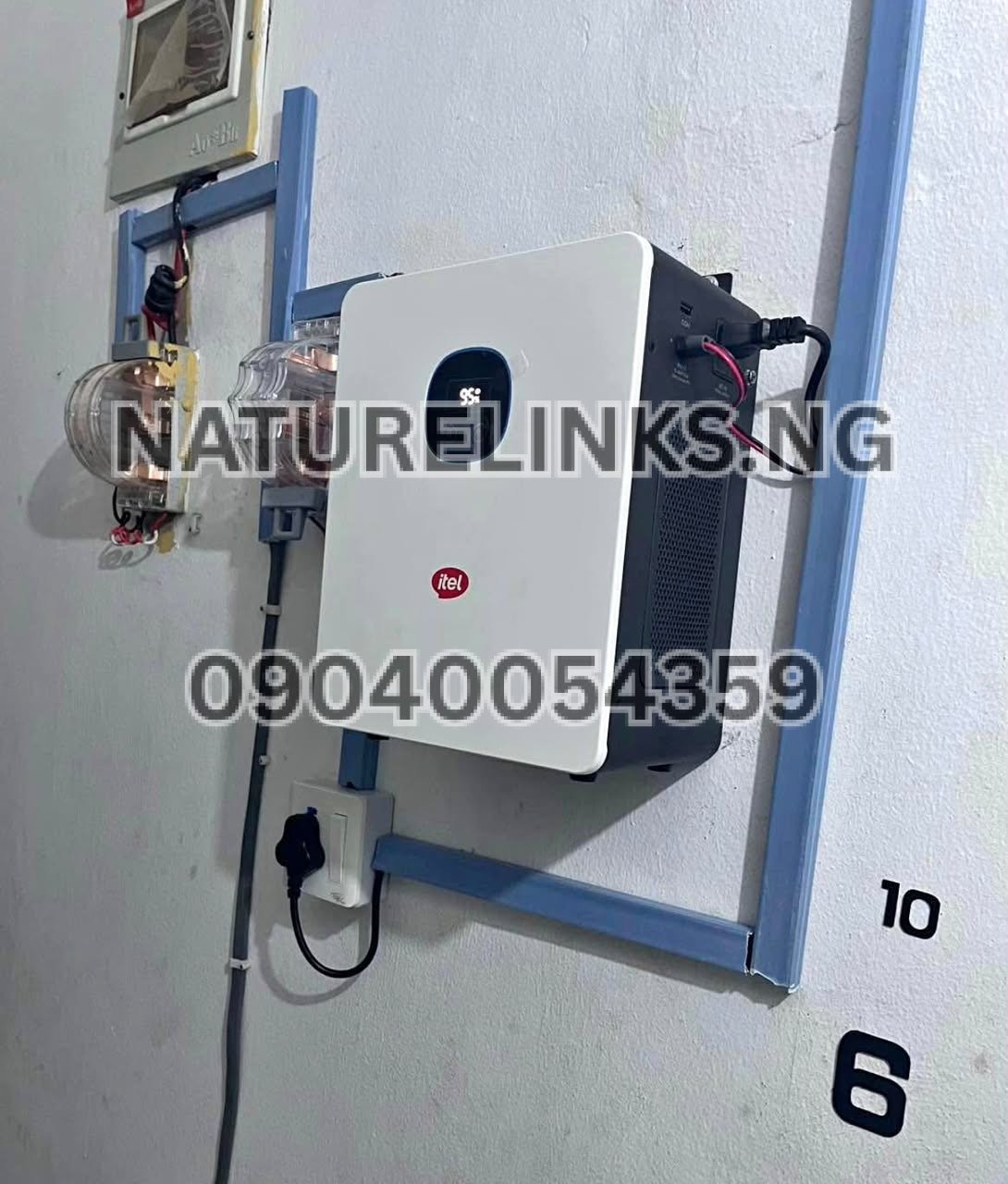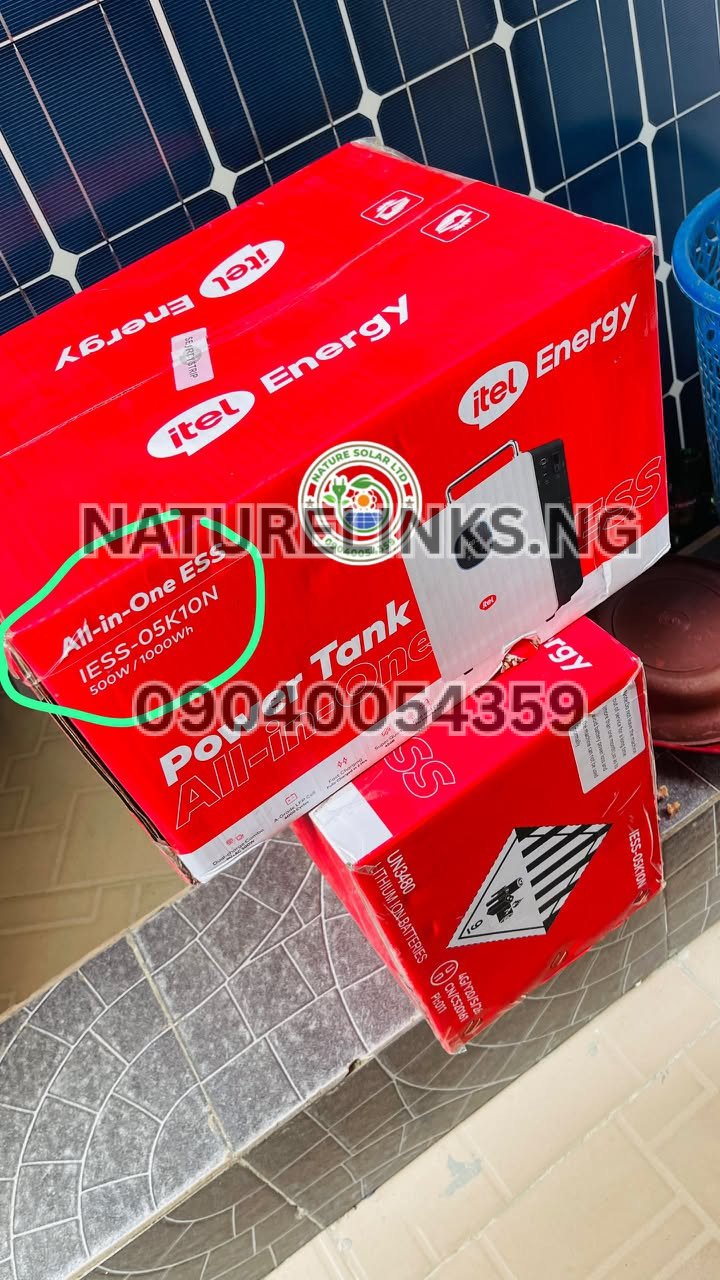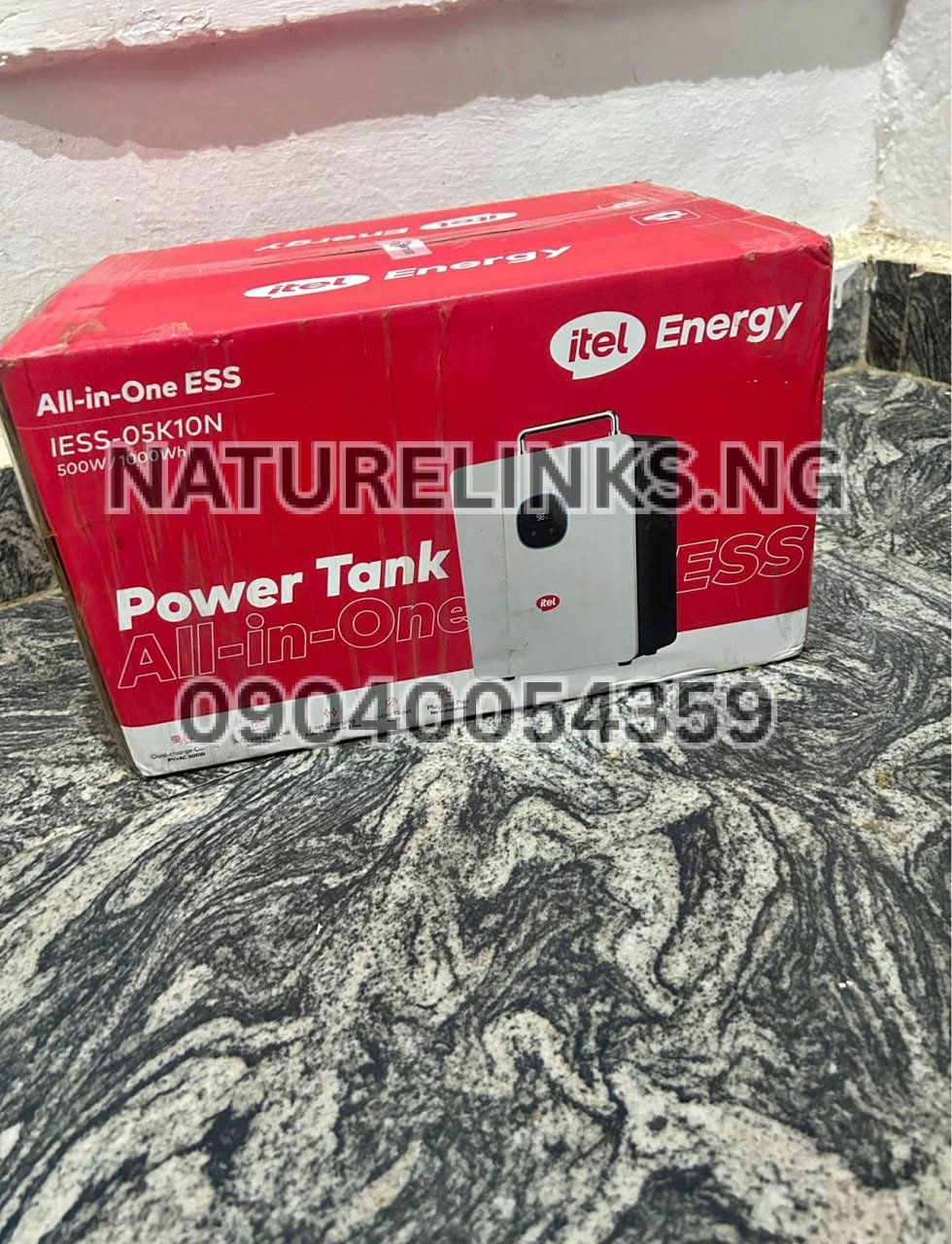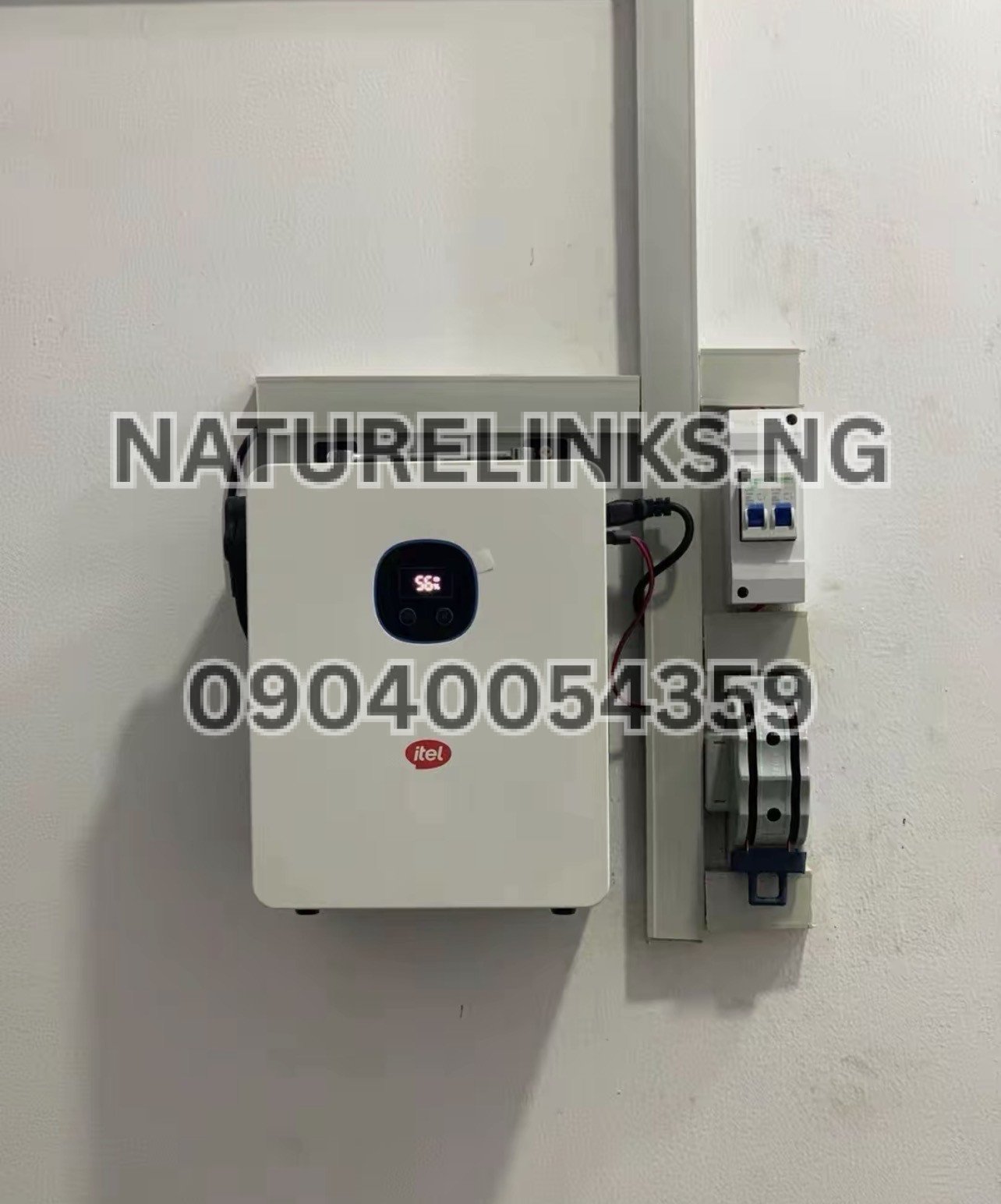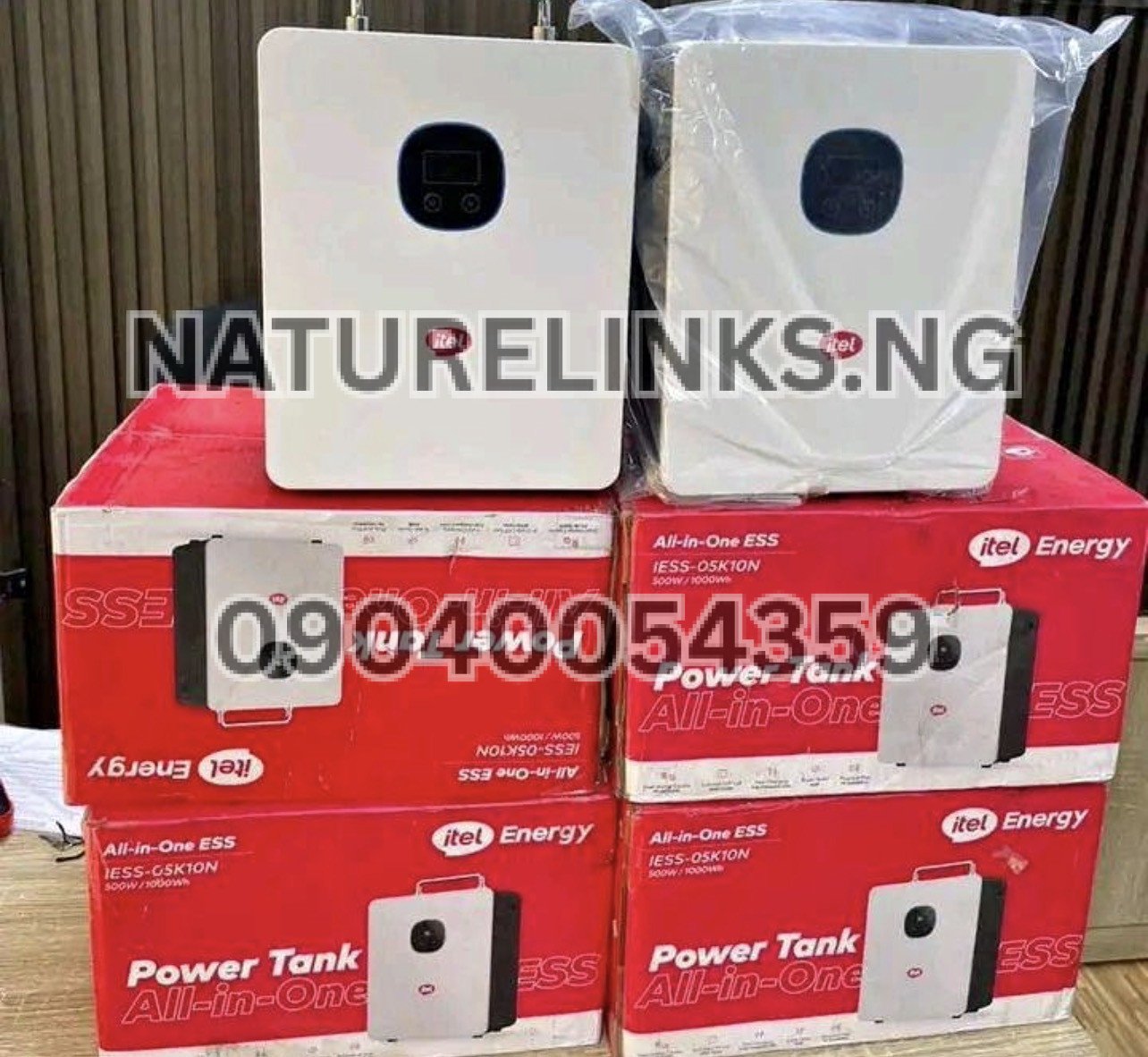
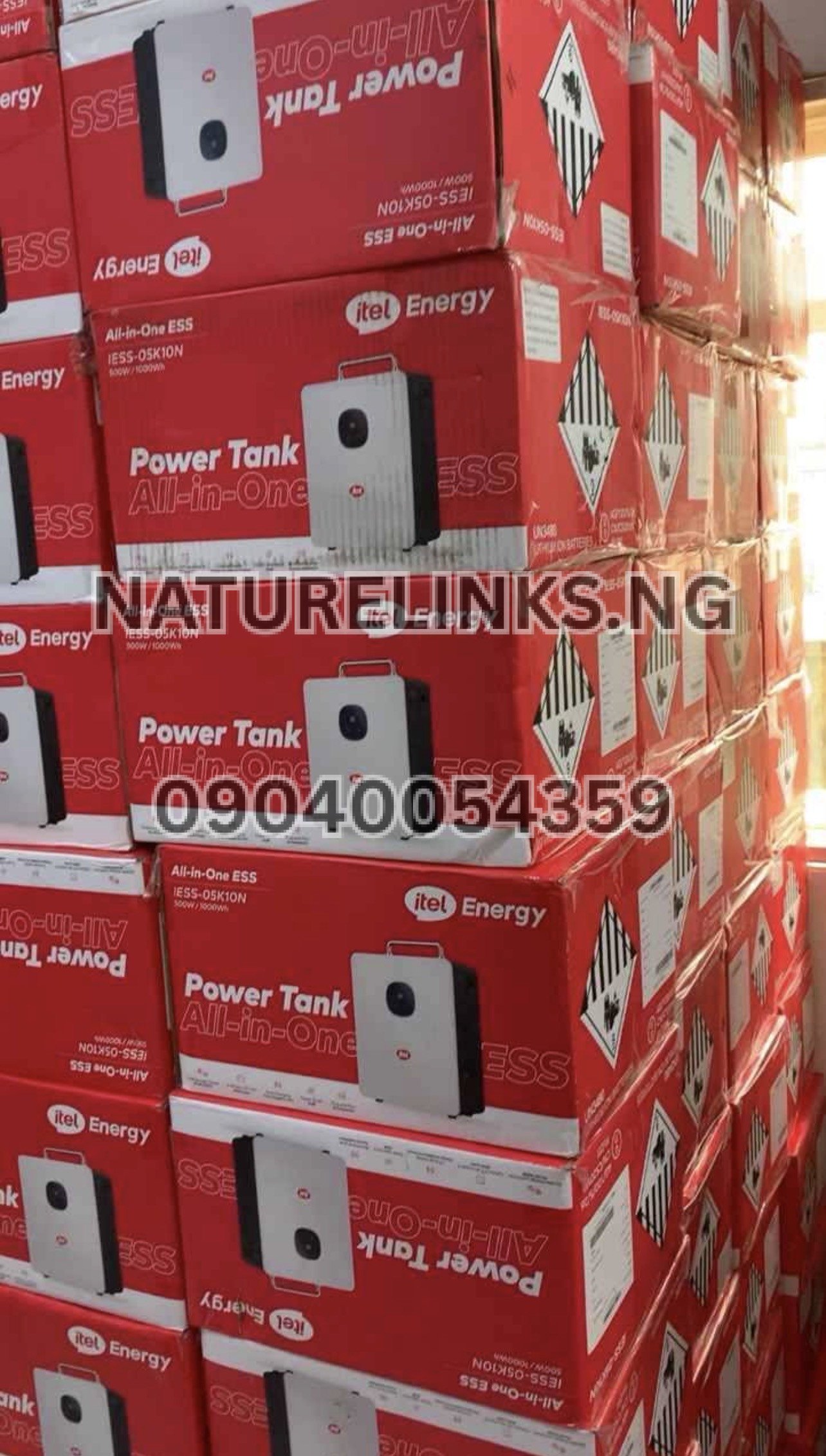
Best Seller: Nature Solar Global Limited — the accredited distributor in Nigeria. Nature Links Nigeria Limited [NatureLinks.NG] is the best-selling channel, while Nature Solar Global Limited serves as the distributor for Itel Power Tank products in Nigeria. For genuine Itel Power Tank units, compatible solar panels, charging accessories and buying assistance, customers can contact the supplier using the details provided below.
If you are searching for “How do I connect solar panels to Itel Power Tank?”, the good news is that the Itel Power Tank is designed to support solar charging through its built-in MPPT solar charging system. However, connecting just any solar panel without checking the panel’s voltage, wattage, connector and polarity can cause charging problems or trigger the unit’s protection system.
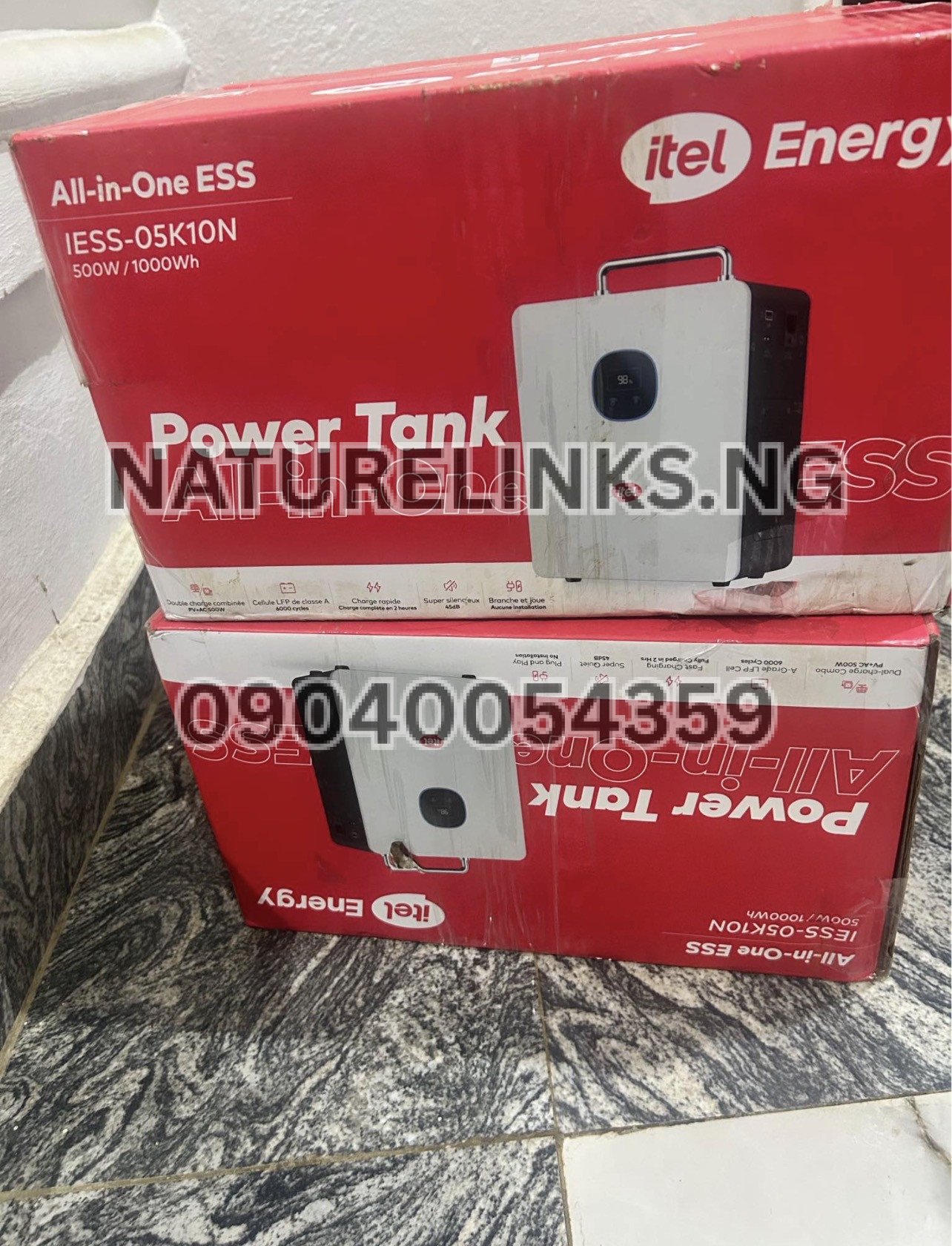
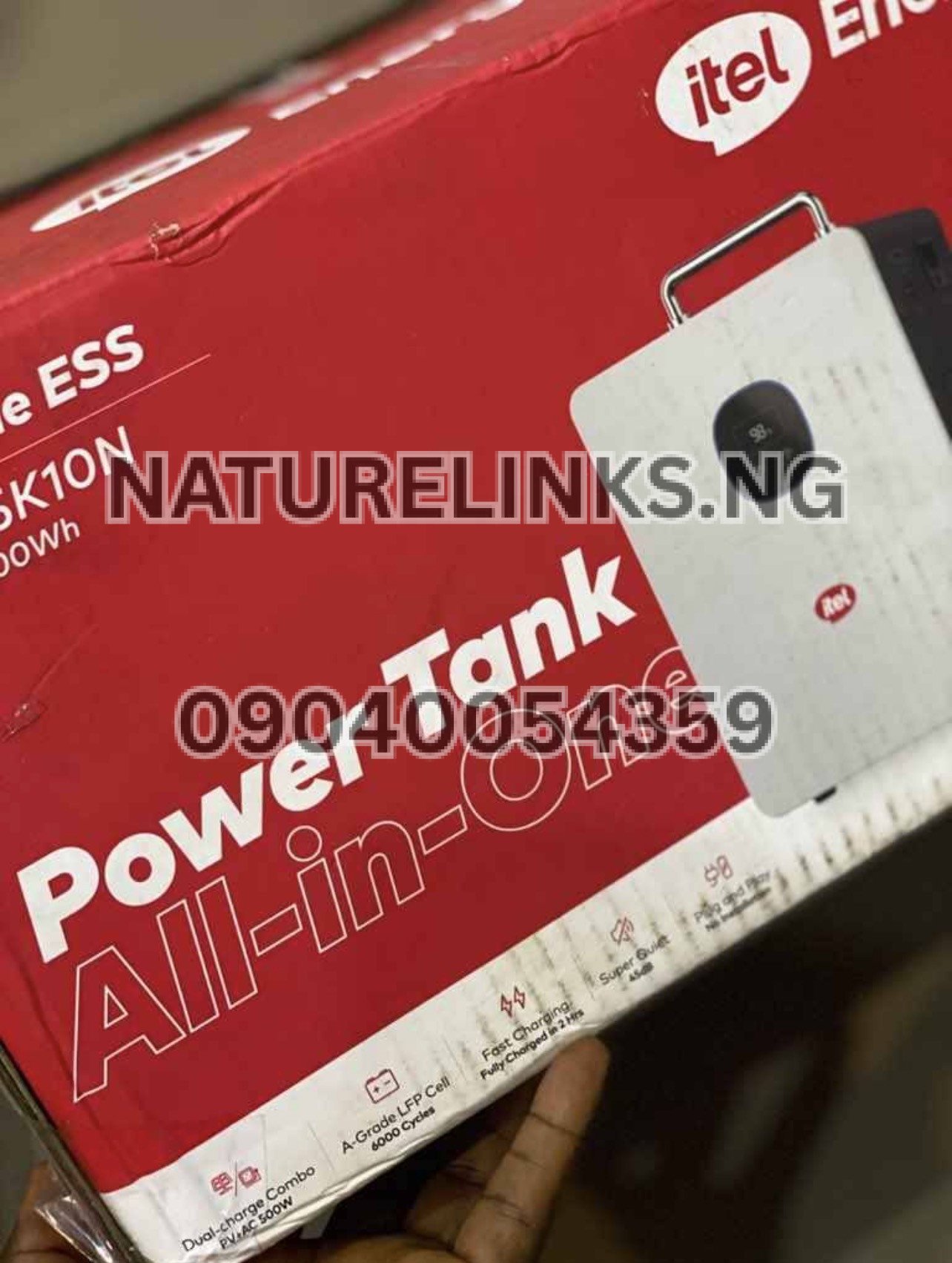
The commonly documented Itel Power Tank IESS-05K10N configuration has a 1,000Wh/1kWh LiFePO4 battery, 500W AC output, built-in MPPT solar charging and up to 400W maximum PV input. Its published MPPT operating range is 11–60V, with a maximum PV input voltage of 60V.
Therefore, the most important rule is simple: check the solar panel’s electrical specifications against the exact Itel Power Tank model before connecting it.

How Do I Connect Solar Panels to Itel Power Tank?
If you are asking “How do I connect solar panels to Itel Power Tank?”, the basic process is straightforward:
- Check the Itel Power Tank’s solar/PV input specifications.
- Select a compatible solar panel.
- Place the solar panel in direct sunlight.
- Check the panel’s voltage and polarity.
- Connect the appropriate solar charging cable or MC4-compatible cable.
- Connect the cable to the Power Tank’s solar/PV input.
- Check the Power Tank display or charging indicator.
- Confirm that the battery percentage begins increasing.
For the documented IESS-05K10N model, the MPPT range is 11–60V, while maximum PV input is 400W.
Do not exceed the manufacturer’s voltage or solar-input limits simply because a panel has a higher wattage rating.
What Solar Panel Is Compatible With Itel Power Tank?
Solar-panel compatibility depends primarily on voltage, maximum PV input, connector arrangement and panel configuration, not just the wattage written on the panel.
For the commonly documented IESS-05K10N configuration:
| Specification | Published value |
|---|---|
| Battery capacity | 1,000Wh / 1kWh |
| Battery type | LiFePO4 |
| Continuous AC output | 500W |
| Maximum PV input | 400W |
| Maximum PV voltage | 60V |
| MPPT range | 11–60V |
| Solar controller | Built-in MPPT |
| AC output | 230V |
| Frequency | 50Hz/60Hz |
A panel arrangement that exceeds the Power Tank’s maximum PV voltage can be unsuitable even if its total wattage appears reasonable.
Always confirm the exact model and datasheet before installation, because specifications can vary between configurations.
Can I Use a 400W Solar Panel With Itel Power Tank?
Yes, a 400W solar panel is within the documented maximum PV input of the commonly listed IESS-05K10N configuration.
The manufacturer’s published specification gives a maximum PV input power of 400W.
However, wattage alone is not enough. You should also verify that the panel’s operating voltage and open-circuit voltage are compatible with the Power Tank’s solar input.
For example, a panel should not be selected solely because it says “400W.” Check:
- Maximum power voltage (Vmp)
- Open-circuit voltage (Voc)
- Maximum power current (Imp)
- Short-circuit current (Isc)
- Total wattage
- Connector type
- Polarity
This is particularly important when buying solar panels in Nigeria.
Can I Use a 450W or 500W Solar Panel?
A higher-wattage panel requires careful checking.
The documented Power Tank specification gives a maximum PV input power of 400W, so users should not assume that a 450W or 500W panel can safely deliver its full rated output to this model.
Some Nigerian sellers and online listings recommend 450W or 500W panels for the Itel Power Tank, but the manufacturer’s stated maximum PV input remains the more important specification to follow.
If you are considering a 450W or 500W panel, ask the seller to verify compatibility with your exact Power Tank model, including voltage and current limits.
What Voltage Solar Panel Does Itel Power Tank Need?
For the commonly documented IESS-05K10N, the MPPT operating range is 11–60V, with a 60V maximum PV input voltage.
This means you should examine the solar panel’s electrical label before connecting it.
Pay particular attention to:
Vmp: Voltage at maximum power.
Voc: Open-circuit voltage.
Imp: Current at maximum power.
Isc: Short-circuit current.
Voc is especially important when checking whether the panel could exceed the Power Tank’s maximum PV voltage.
Do not guess the voltage based on the panel’s wattage.
What Is MPPT and Why Does It Matter?
The Itel Power Tank uses an integrated MPPT solar charge controller on the documented configuration.
MPPT means Maximum Power Point Tracking. It helps the charging system extract available power from a compatible solar panel as solar conditions change.
The published specification lists MPPT tracking efficiency of up to 99% for the IESS-05K10N.
For Nigerian users, this is useful because sunlight conditions change throughout the day due to:
- Cloud cover
- Harmattan
- Rain
- Partial shading
- Morning and evening sunlight
- Panel orientation
- Panel temperature
However, MPPT does not mean that an incompatible panel can be connected safely. The panel still needs to remain within the Power Tank’s permitted electrical limits.
Step-by-Step: How to Connect an MC4 Solar Panel to Itel Power Tank
If your solar panel uses MC4 connectors, the general connection process is:
Step 1: Switch off or leave the Power Tank in the appropriate charging state
Follow the operating instructions supplied with your particular unit.
Step 2: Position the solar panel
Place the panel outdoors where it receives strong, unobstructed sunlight.
Avoid placing the panel under:
- Trees
- Roof shadows
- Buildings
- Large objects
- Other panels that cast shadows
Step 3: Check the panel specifications
Before connecting, confirm:
- Voltage
- Current
- Wattage
- Polarity
- Connector type
Step 4: Use the correct solar charging cable
Use the appropriate cable supplied or recommended for the Power Tank.
Do not force an incompatible connector into the solar input.
Step 5: Connect the solar panel
Connect the solar panel’s compatible positive and negative connections to the appropriate solar charging cable.
Step 6: Connect to the Power Tank
Insert the compatible charging connector into the Power Tank’s PV/solar input.
Step 7: Check the display
The Power Tank should indicate solar charging when adequate sunlight and a compatible input are detected.
Step 8: Monitor the charging process
Check the battery percentage and charging information on the display.
If charging does not begin, disconnect the panel and investigate the panel voltage, cable, polarity, sunlight and compatibility rather than repeatedly reconnecting it.
Can I Connect Solar Panels Directly to Itel Power Tank?
Yes, if the solar panel is compatible with the Power Tank’s built-in PV/MPPT input and the correct charging cable is used.
You generally do not need to install a separate external solar charge controller for the documented configuration because the Power Tank already has an integrated MPPT solar charging system.
This is one of the advantages of an all-in-one portable power station.
However, “directly” does not mean “connect any panel directly.”
The solar input still has defined voltage and power limits.
Do I Need a Separate MPPT Charge Controller?
For the documented Itel Power Tank configuration, no separate MPPT charge controller is normally required for the PV input, because the unit has an integrated MPPT controller.
Adding an external controller without understanding the system architecture can create an incompatible charging arrangement.
For a normal solar connection, the key components are generally:
Solar panel → appropriate solar cable → Itel Power Tank PV input
The exact cable arrangement depends on the panel and Power Tank version.

Does Itel Power Tank Come With a Solar Panel?
The Power Tank and solar panel may be sold separately or as a solar-kit package, depending on the seller and configuration.
Some product listings show the Power Tank as a standalone unit, while others offer packages combining the Power Tank with a solar panel.
Before paying for a package, confirm exactly what is included:
- Itel Power Tank
- Solar panel
- Solar charging cable
- AC charging cable/adapter
- MC4 connectors
- Warranty
- Installation accessories
Do not assume that every Power Tank package automatically includes a solar panel.
How Long Does It Take to Charge Itel Power Tank With Solar?
Charging time depends on:
- Solar panel wattage
- Actual solar power available
- Weather
- Panel orientation
- Shading
- Battery state of charge
- Temperature
- Cable losses
- MPPT efficiency
- Power Tank charging limits
The documented Power Tank has a 1,000Wh battery and supports up to 400W PV input.
As a simple theoretical illustration:
1,000Wh ÷ 400W = 2.5 hours
But this does not mean the Power Tank will always reach 100% in exactly 2.5 hours. Real-world solar charging takes longer because a solar panel rarely delivers its maximum rated output continuously.
Clouds, heat, panel angle, shading and battery charging behaviour can all affect the actual time.
Can Itel Power Tank Charge During Cloudy Weather?
Yes, solar panels can still generate electricity during cloudy conditions, but their output can fall significantly.
The Power Tank’s MPPT controller can work with available solar power, but the charging rate depends on how much power the panel is actually producing.
On a very cloudy day, charging may be:
- Slower
- Intermittent
- Much lower than the panel’s rated wattage
For Nigerian users, proper panel positioning and avoiding shade can make a major difference.
Can I Charge Itel Power Tank With Solar and Electricity?
The Power Tank supports both solar/PV charging and AC/grid charging on the documented configuration.
This gives users multiple charging options.
For example:
Daytime: Solar charging.
Night: AC/grid charging.
Power outage: Battery backup.
Long outage: Solar can help recharge the battery during daylight.
The exact simultaneous charging behaviour should be confirmed against the particular model’s manual.
Can I Use Itel Power Tank While the Solar Panel Is Charging It?
The Power Tank is designed as an integrated energy-storage system, and published product information describes charging and backup operation.
However, the amount of solar energy entering the battery and the amount being consumed by appliances are both important.
For example, if your appliances consume 300W while the solar panel is only supplying 150W, the battery can still be discharging.
If solar production is greater than the current load, the remaining available power can contribute to charging.
Therefore, using the Power Tank while charging does not necessarily mean the battery is increasing in percentage.
Why Is My Itel Power Tank Not Charging From Solar?
If your Itel Power Tank is not charging from a solar panel, check these common causes.
1. Insufficient sunlight
Move the panel to direct sunlight.
2. Wrong solar-panel voltage
Check the panel’s Voc and operating voltage against the Power Tank specifications.
3. Excessive PV voltage
The documented IESS-05K10N has a maximum PV input voltage of 60V.
4. Incorrect cable
A damaged or incompatible cable can prevent charging.
5. Incorrect polarity
Check positive and negative connections.
6. Loose MC4 connection
Make sure the connectors are fully engaged.
7. Panel shading
Even partial shading can significantly reduce solar output.
8. Panel fault
A damaged panel may not produce sufficient voltage.
9. Power Tank protection mode
The Power Tank has protective functions for conditions including PV over-voltage, overload, short circuit and excessive temperature.
10. Incorrect panel configuration
Series or parallel connections can change voltage and current. Never combine panels without first calculating the resulting electrical values.
Can I Connect Two Solar Panels to Itel Power Tank?
Two solar panels can potentially be configured together, but the resulting voltage and current must remain within the Power Tank’s PV specifications.
Connecting two panels in series increases voltage.
Connecting panels in parallel increases current.
This distinction is extremely important.
For example, two panels that individually appear safe could produce an excessive voltage when connected in series.
Because the documented maximum PV voltage is 60V, series connections must be calculated carefully.
If you are unsure, provide the seller or installer with the exact panel specifications before connecting them.
Can I Use a 100W Solar Panel With Itel Power Tank?
A 100W panel can provide solar charging if its voltage and connection are compatible with the Power Tank’s PV input.
However, a 100W panel will charge a 1,000Wh battery much more slowly than a system operating near the Power Tank’s maximum supported PV input.
A simple theoretical calculation is:
1,000Wh ÷ 100W = 10 hours
Actual charging will generally take longer because the panel does not continuously produce its nameplate output.
Can I Use a 200W Solar Panel With Itel Power Tank?
A compatible 200W solar panel can provide useful charging power, provided its voltage remains within the Power Tank’s specified PV range.
Compared with a 100W panel, a 200W panel can potentially provide roughly twice the rated solar input under ideal conditions.
But actual charging speed depends heavily on sunlight and panel conditions.
Can I Use a 300W Solar Panel With Itel Power Tank?
A compatible 300W panel is below the documented 400W maximum PV input.
Again, the panel’s voltage must be checked.
For a 1,000Wh battery, a 300W panel provides a theoretical minimum-energy calculation of approximately:
1,000Wh ÷ 300W = 3.33 hours
Real charging will normally take longer because the panel will not produce 300W continuously throughout the charging session.
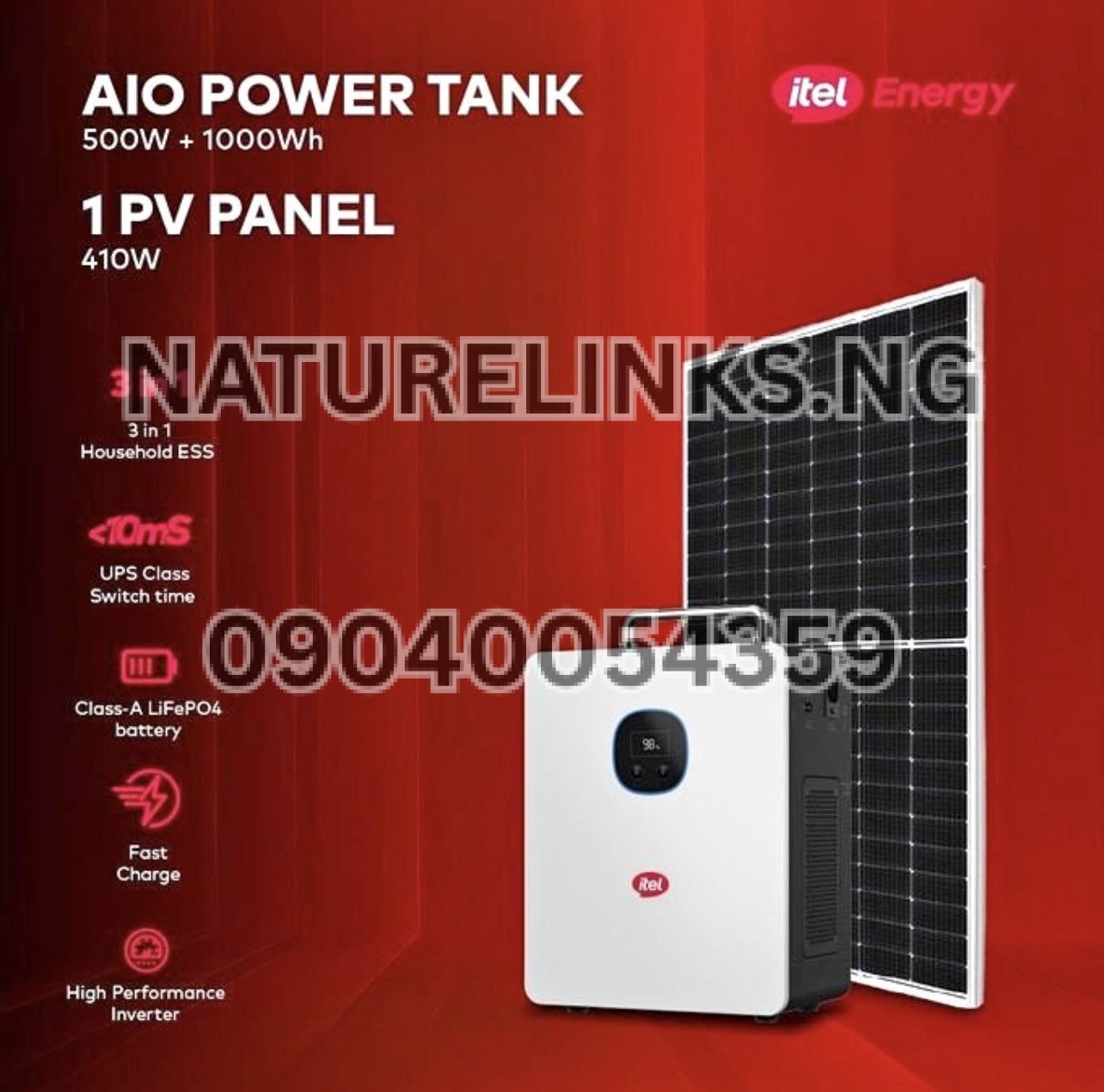
What Happens If the Solar Panel Produces More Than 400W?
The documented maximum PV input for the IESS-05K10N is 400W.
Do not deliberately exceed the manufacturer’s specified PV input.
A higher-rated panel may not automatically mean faster charging. The Power Tank’s charging system has its own maximum input capability.
This is why buying the correct solar panel is more important than simply buying the highest-wattage panel available.
What Solar Panel Is Best for Itel Power Tank in Nigeria?
Rather than choosing a panel based only on the word “best,” Nigerian buyers should match the panel to the Power Tank’s electrical specifications.
Look for:
- Suitable voltage
- Suitable Voc
- Suitable current
- Appropriate wattage
- Quality construction
- Genuine manufacturer
- Reliable warranty
- Good cable/connectors
- Correct installation
For the documented IESS-05K10N, the PV system is rated for up to 400W, with an 11–60V MPPT range and 60V maximum PV voltage.
The seller should verify the exact panel specification before supplying it.
Itel Power Tank Solar Charging in Nigeria
Solar charging is particularly useful for Nigerian homes, shops, offices, POS businesses, CCTV systems, internet users and small electronics because it provides an alternative method of recharging during periods when grid electricity is unavailable.
The Power Tank’s 1,000Wh LiFePO4 battery can store energy generated from compatible solar panels for later use. The documented system also provides a 500W AC inverter output.
Potential applications include:
- TV
- Fan
- Laptop
- Wi-Fi router
- CCTV
- POS terminal
- Phone chargers
- LED lights
- Small electronics
- Home-office equipment
Always check appliance wattage before connecting equipment because the battery capacity and inverter output are different specifications.
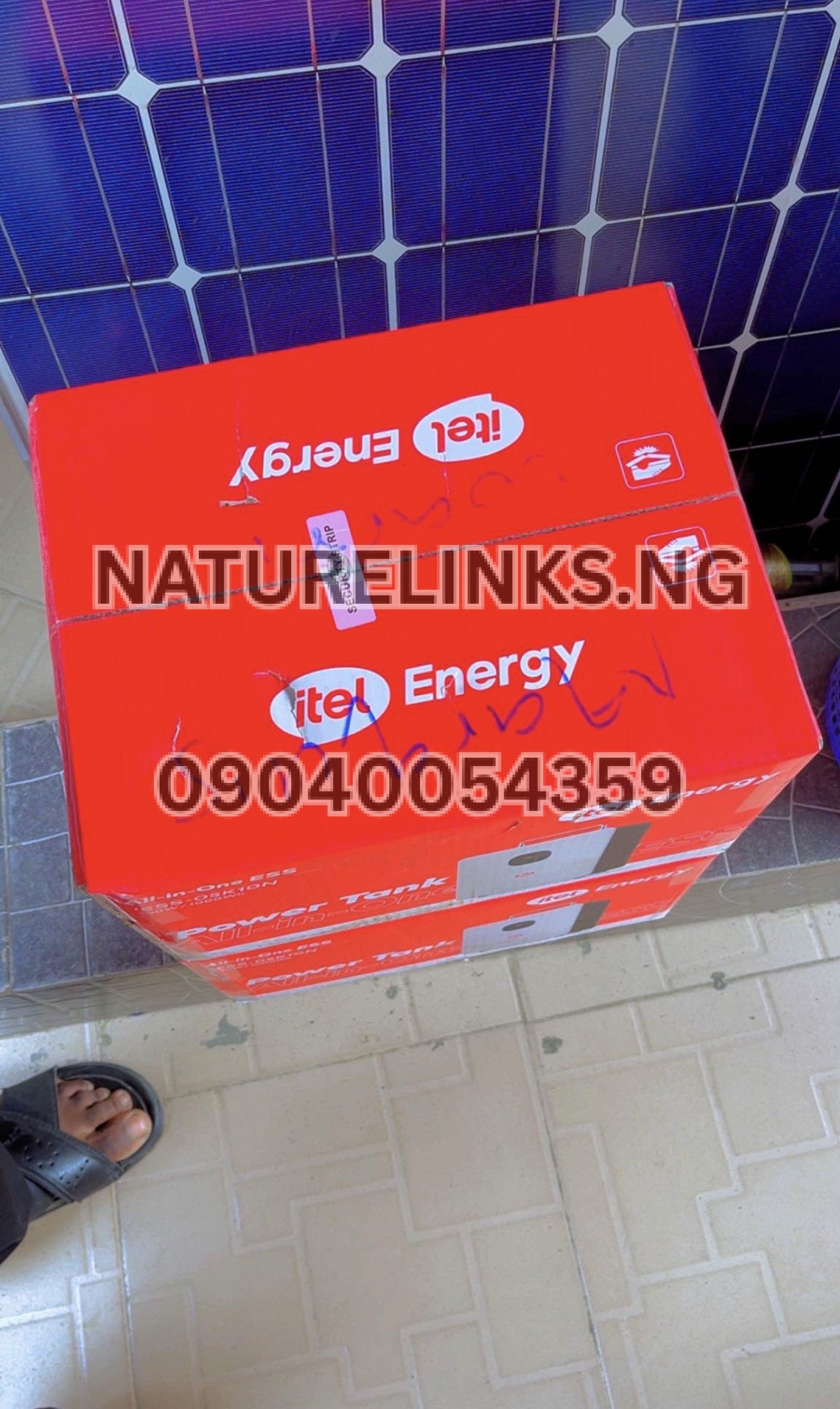
Itel Power Tank 1000Wh Solar Charging
The 1,000Wh figure represents energy-storage capacity.
It does not mean that the Power Tank can continuously power 1,000W of appliances.
The commonly documented configuration has:
Battery: 1,000Wh / 1kWh
Inverter: 500W continuous AC output
Solar input: up to 400W
Battery chemistry: LiFePO4
Solar controller: MPPT
PV voltage range: 11–60V
Maximum PV voltage: 60V
This distinction is important when comparing the Itel Power Tank with other solar generators in Nigeria.
How to Position Solar Panels for Better Itel Power Tank Charging
Even a high-quality solar panel can perform poorly if it is badly positioned.
For better performance:
Keep the panel away from shade
Avoid trees, buildings and objects that block sunlight.
Keep the panel clean
Dust and dirt can reduce solar generation.
Use a suitable mounting angle
The correct angle depends on location and installation design.
Avoid unnecessary cable length
Long cables can contribute to voltage drop, particularly when current is significant.
Inspect connectors
Loose or damaged connectors can reduce charging performance.
Monitor charging
The Power Tank’s display can help you see whether the unit is receiving solar power.
Can I Install the Solar Panel Myself?
Physically positioning a portable solar panel and connecting a compatible plug-and-play setup can be straightforward.
However, if the installation involves:
- Multiple panels
- Series connections
- Parallel connections
- Roof mounting
- Long cable runs
- Permanent wiring
- Junction boxes
- Electrical modifications
it is safer to use a qualified solar technician.
Never modify the Power Tank’s internal wiring or bypass its built-in protection systems.
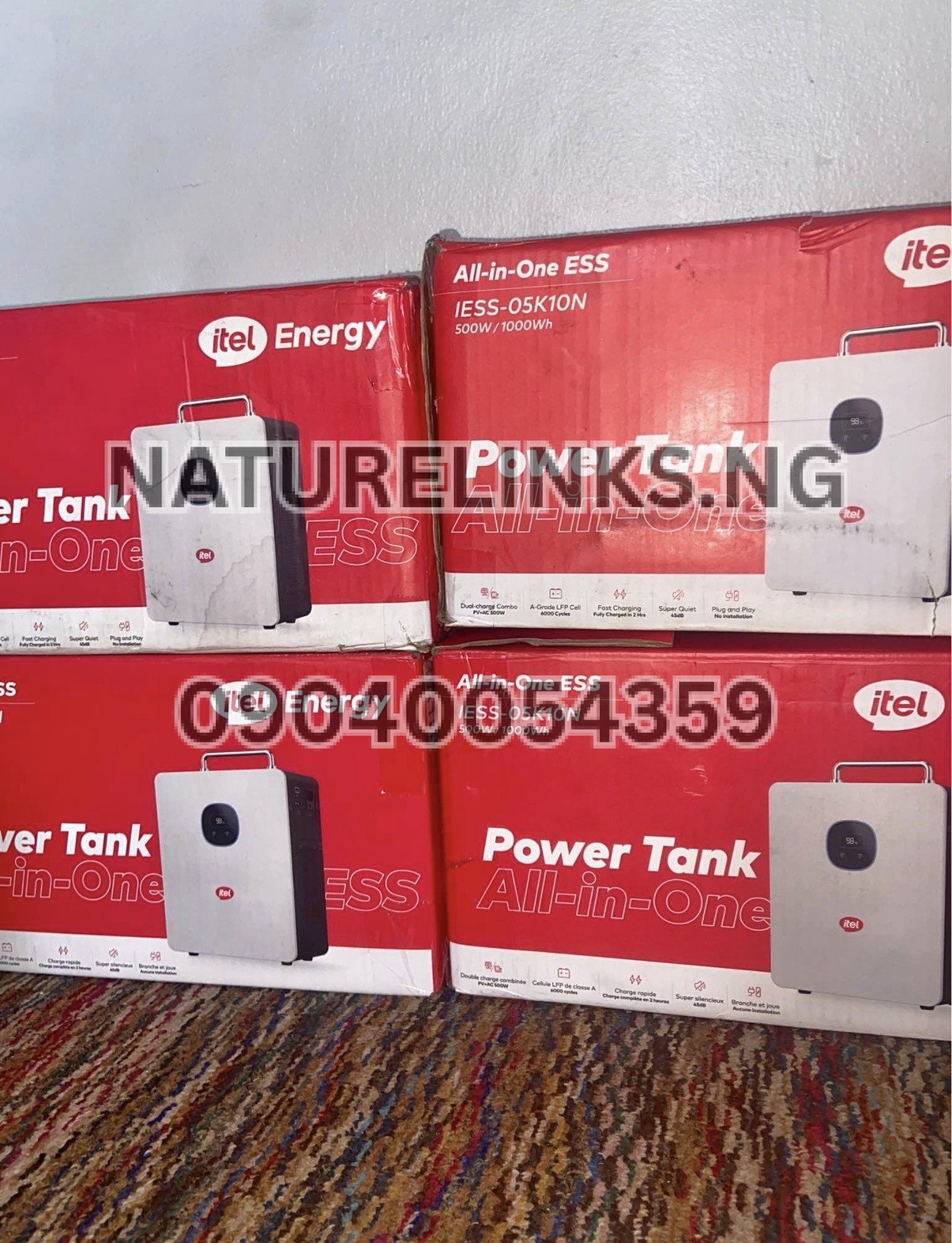
Important Solar Connection Safety Tips
Before connecting your solar panel to the Itel Power Tank:
- Read the exact model’s manual.
- Confirm the maximum PV voltage.
- Confirm the maximum PV wattage.
- Check the panel’s Voc.
- Check polarity.
- Use compatible connectors.
- Avoid damaged cables.
- Avoid connecting panels randomly in series.
- Keep connectors dry and properly secured.
- Do not exceed the manufacturer’s PV limits.
- Keep the solar panel properly positioned.
- Stop using the system if cables become unusually hot.
- Do not bypass safety protections.
- Keep the Power Tank in a suitable operating environment.
- Ask the supplier to verify compatibility before purchase.
Itel Power Tank Solar Panel Connection: Quick Guide
For quick reference:
Solar panel
↓
Compatible MC4/solar charging cable
↓
Itel Power Tank PV/solar input
↓
Built-in MPPT controller
↓
1,000Wh LiFePO4 battery
The Power Tank then stores the solar energy for use through its supported AC, USB and DC outputs.
The exact connector arrangement can vary by model/package, so check the supplied accessories and manual.
Itel Power Tank Datasheet for Solar Buyers
| Feature | Documented specification |
|---|---|
| Model | IESS-05K10N |
| Battery | LiFePO4 |
| Battery capacity | 1,000Wh / 1kWh |
| Rated AC output | 500W |
| Maximum apparent power | 600VA |
| Maximum PV input | 400W |
| Maximum PV voltage | 60V |
| MPPT range | 11–60V |
| MPPT tracking efficiency | Up to 99% |
| AC input range | 90–280VAC |
| AC output | 230VAC |
| Frequency | 50Hz/60Hz |
| Cycle life | Up to 6,000 cycles |
| Solar charging | Yes |
| AC/grid charging | Yes |
| Battery protection | Yes |
| PV over-voltage protection | Yes |
| Overload protection | Yes |
| Short-circuit protection | Yes |
| Over-temperature protection | Yes |
Important: Confirm the exact model number and supplied datasheet before buying or installing a solar panel because configurations can differ.
Where to Buy Genuine Itel Power Tank in Nigeria
If you are looking to buy an Itel Power Tank in Nigeria, contact the supplier/distributor before payment and confirm:
- Genuine product
- Exact model
- Battery capacity
- Solar input specification
- Warranty
- Included accessories
- Solar panel compatibility
- Availability
- Delivery location
- Current price
Nature Links Nigeria Limited / Nature Solar Global Limited
Best Seller: Nature Links Nigeria Limited [NatureLinks.NG]
Distributor: Nature Solar Global Limited
Accredited Distributor in Nigeria: Nature Solar Global Limited
CEO: Mr. Joseph Chikeleze
Call: 07049528019
WhatsApp: 09040054359
Shop Address: F1571 Upstairs (F-Line), Alaba International Market. Lagos State 🇳🇬
For buyers outside Lagos, ask about delivery arrangements and confirm the exact Power Tank model and solar accessories before payment.
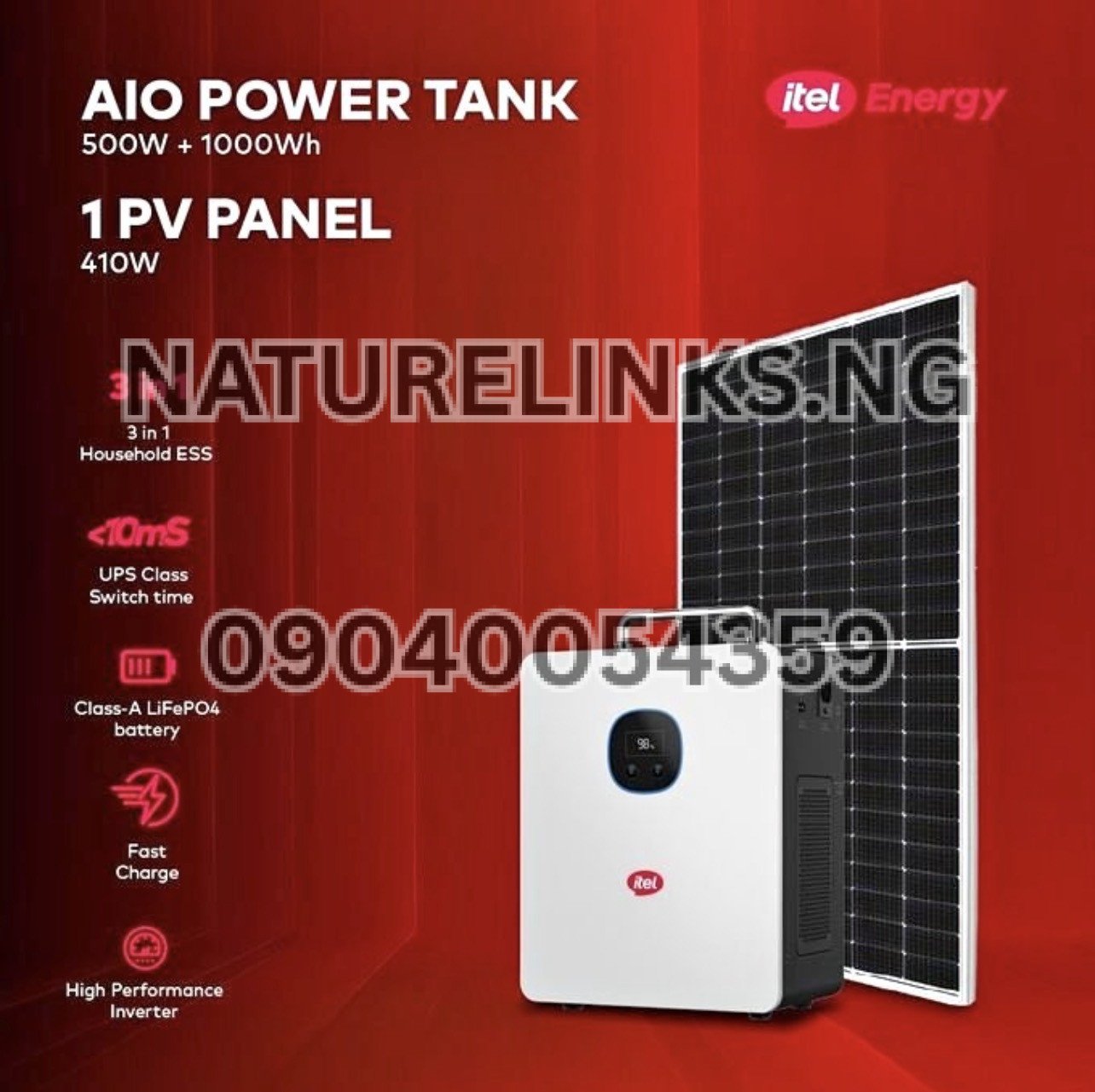
Why Buy the Correct Solar Panel for Itel Power Tank?
Buying the correct panel is important because solar charging is an electrical system rather than simply a matter of connecting a panel with a large wattage number.
A suitable panel should match the Power Tank’s:
- Voltage range
- Maximum PV voltage
- Maximum PV power
- Current requirements
- Connector
- Polarity
The documented IESS-05K10N supports up to 400W PV input and 11–60V MPPT operation.
Therefore, asking the seller to verify compatibility before purchasing can help prevent an unsuitable installation.
10 Frequently Asked Questions About Itel Power Tank Solar Charging
1. Can Itel Power Tank be charged with solar panels?
Yes. The documented Itel Power Tank IESS-05K10N supports solar charging through an integrated MPPT controller. Its published maximum PV input is 400W.
2. How do I connect solar panels to Itel Power Tank?
Connect a compatible solar panel through the appropriate solar charging cable to the Power Tank’s PV input after verifying the panel’s voltage, wattage and polarity. The panel must remain within the Power Tank’s specified PV limits.
3. What size solar panel do I need for Itel Power Tank?
The documented configuration supports up to 400W of PV input. A lower-wattage compatible panel can also charge the unit but will generally take longer.
4. Can I use a 400W solar panel with Itel Power Tank?
Yes, 400W is within the documented maximum PV input for the IESS-05K10N. However, the panel’s voltage must also be compatible with the 11–60V MPPT range and 60V maximum PV voltage.
5. Can I use a 500W solar panel with Itel Power Tank?
Do not assume that a 500W panel is automatically suitable. The documented maximum PV input is 400W, so the exact panel and Power Tank configuration should be checked before connection.
6. Does Itel Power Tank have an MPPT controller?
Yes. The documented IESS-05K10N has a built-in MPPT solar controller, with published MPPT tracking efficiency of up to 99%.
7. Why is my Itel Power Tank not charging from solar?
Possible causes include insufficient sunlight, incorrect panel voltage, excessive PV voltage, incorrect polarity, damaged cables, loose connectors, shading, an unsuitable panel configuration or activation of a protection function.
8. Can I use Itel Power Tank while it is charging from solar?
The Power Tank is designed for integrated charging and power-delivery operation, but actual battery charging behaviour depends on the amount of solar energy being generated versus the power being consumed. Keep connected appliances within the unit’s rated output.
9. How long does Itel Power Tank take to charge with solar?
Charging time depends on solar-panel wattage, sunlight, weather, panel orientation, temperature, battery state and system losses. With a 1,000Wh battery and up to 400W PV input, the simple theoretical calculation is 2.5 hours, but real-world charging will generally take longer.
10. Where can I buy an Itel Power Tank and solar panel in Nigeria?
Nigerian buyers can contact Nature Links Nigeria Limited / Nature Solar Global Limited using 07049528019 or WhatsApp 09040054359 and confirm the current model, solar panel compatibility, accessories, warranty and delivery arrangements before purchase.
Buyer Checklist Before Connecting Your Solar Panel
Before connecting your solar panel to an Itel Power Tank, verify the following:
☑ Exact Power Tank model
☑ Battery capacity
☑ Maximum PV wattage
☑ Maximum PV voltage
☑ MPPT voltage range
☑ Solar panel Voc
☑ Solar panel Vmp
☑ Solar panel Imp
☑ Solar panel Isc
☑ Connector type
☑ Cable polarity
☑ Cable condition
☑ Panel shading
☑ Weather conditions
☑ Installation arrangement
☑ Warranty and after-sales support
This checklist can prevent many common solar-charging problems.
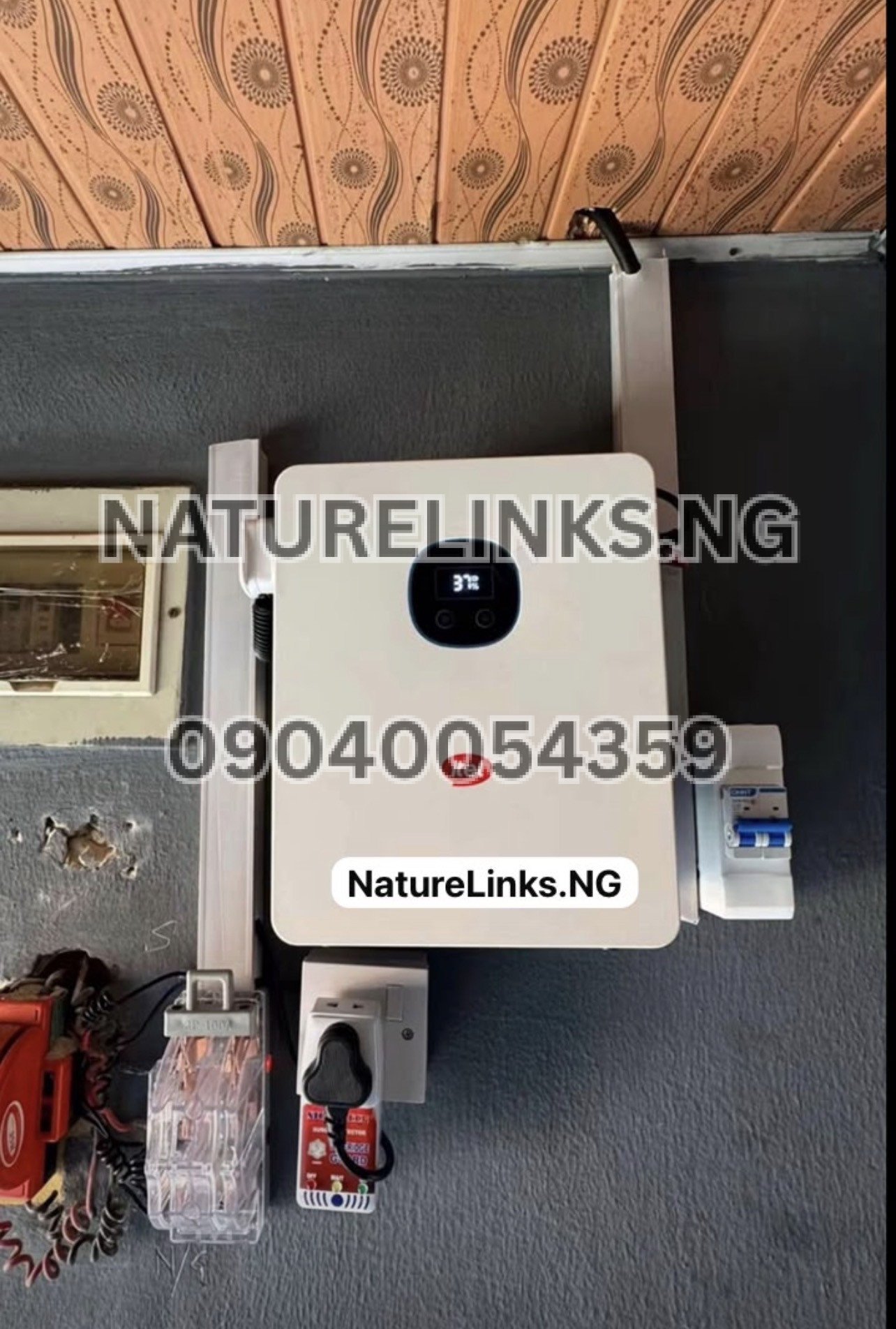
Itel Power Tank Solar Charging vs AC Charging
The Itel Power Tank provides flexibility because the documented system supports both solar and AC/grid charging.
Solar Charging
Solar charging uses sunlight to replenish the battery.
Advantages:
- Uses renewable energy
- Useful during grid outages
- Can reduce dependence on grid electricity
- Suitable for daytime battery replenishment
- Useful for off-grid and backup applications
AC/Grid Charging
AC charging uses electricity from a wall socket.
Advantages:
- Can be used at night
- Can recharge when sunlight is unavailable
- Useful during cloudy weather
- Convenient when grid electricity is available
For many Nigerian users, having both options provides charging flexibility.
Common Mistakes When Connecting Itel Power Tank to Solar
Mistake 1: Choosing a panel based only on wattage
A 400W panel is not automatically compatible just because the Power Tank accepts up to 400W.
Voltage matters.
Mistake 2: Ignoring Voc
Open-circuit voltage is critical when checking whether the solar input is within its safe range.
Mistake 3: Connecting panels in series without calculation
Series connection increases voltage and can potentially exceed the Power Tank’s maximum PV voltage.
Mistake 4: Using damaged cables
Damaged or poorly connected cables can cause charging problems and overheating.
Mistake 5: Installing the panel in shade
A shaded panel may produce much less power than its advertised rating.
Mistake 6: Assuming 1,000Wh means 1,000W output
The battery capacity is 1,000Wh, while the documented continuous AC output is 500W.
Mistake 7: Ignoring the exact model
Always verify the model number because specifications can differ between configurations.
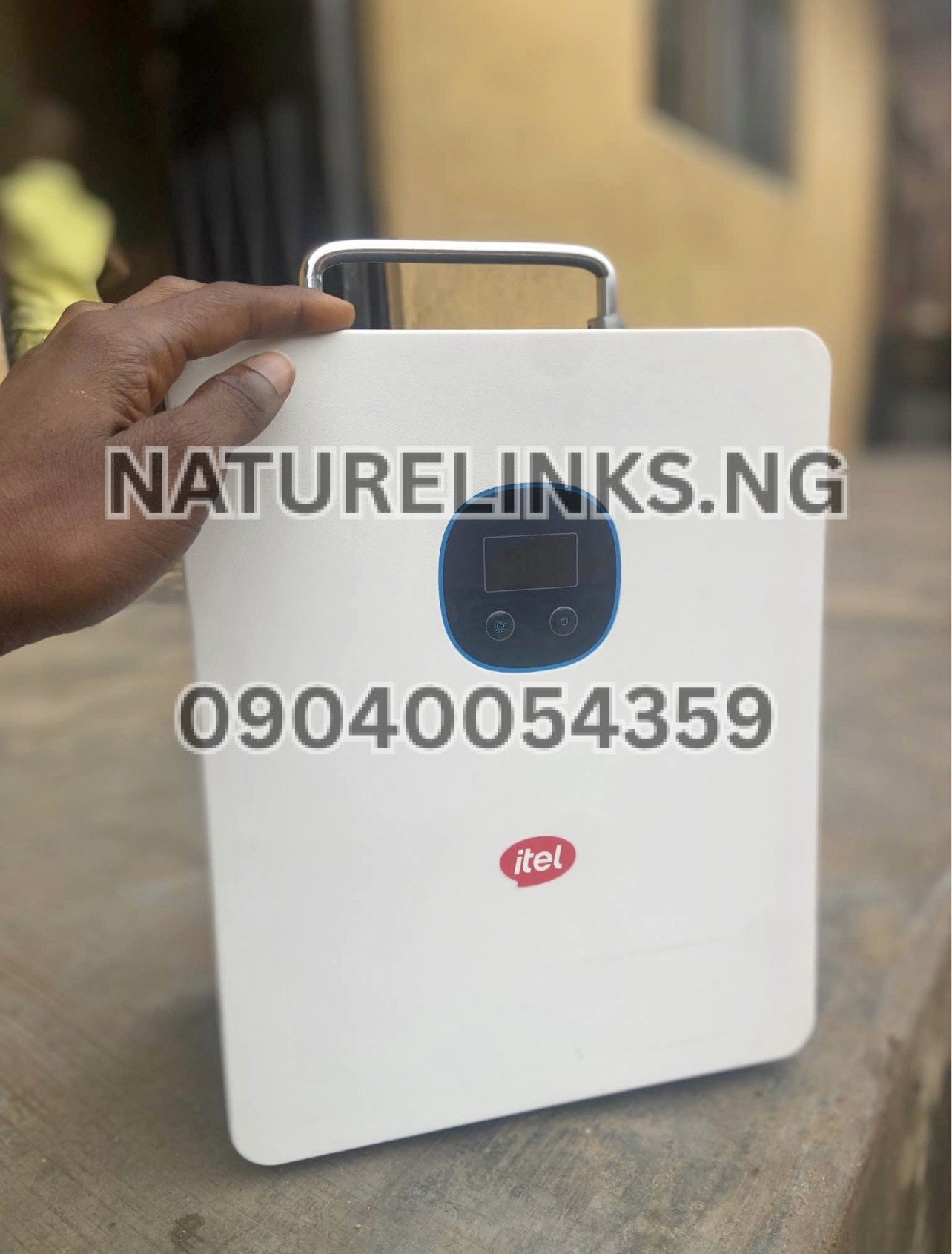
Final Answer: How Do I Connect Solar Panels to Itel Power Tank?
If you are still asking “How do I connect solar panels to Itel Power Tank?”, the essential procedure is to use a compatible solar panel and the correct solar charging cable, connect it to the Power Tank’s PV input, and ensure the panel remains within the model’s permitted voltage and power limits.
For the commonly documented IESS-05K10N, the Power Tank has a 1,000Wh LiFePO4 battery, 500W AC output, integrated MPPT solar charging, up to 400W PV input and an 11–60V MPPT range with a 60V maximum PV voltage.
The safest approach is not simply to ask for the “highest-watt solar panel.” Instead, match the panel’s Voc, Vmp, current, wattage, connector and polarity with the exact Power Tank specification.
For Nigerian buyers, Nature Solar Global Limited is identified here as the accredited distributor, while Nature Links Nigeria Limited [NatureLinks.NG] is the stated best seller. Contact 07049528019 or 09040054359 on WhatsApp to confirm the current Power Tank model, compatible solar panel, accessories and availability before purchase.
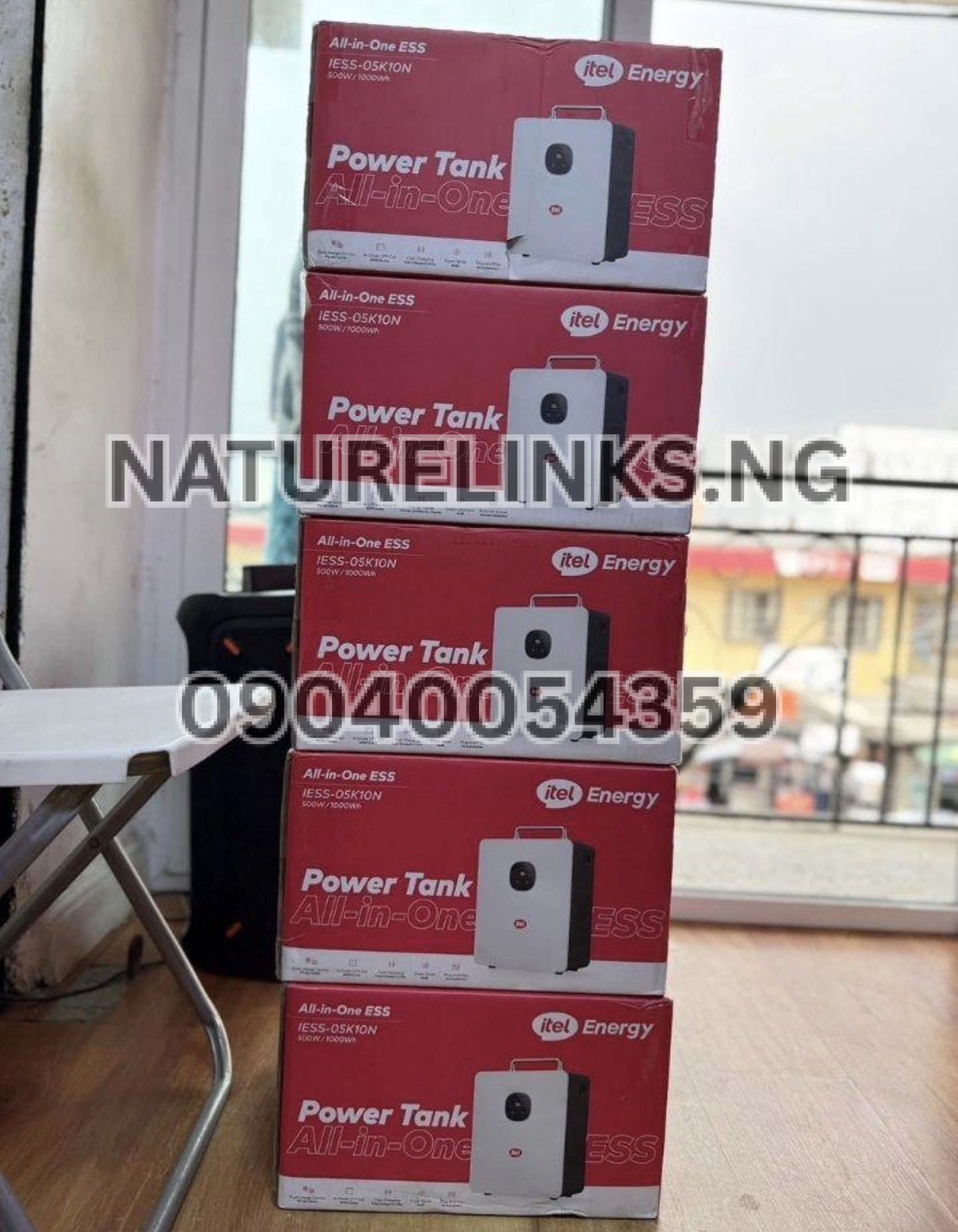
Conclusion
Connecting solar panels to an Itel Power Tank can provide a practical way to recharge the battery using sunlight, particularly when grid electricity is unavailable. The key is choosing a panel that matches the Power Tank’s electrical requirements rather than connecting a panel based solely on its wattage. The documented IESS-05K10N supports MPPT solar charging, up to 400W PV input and a 11–60V MPPT operating range.
For the best result, check the solar panel’s Voc, Vmp, current and wattage, use the appropriate charging cable, avoid excessive PV voltage, keep the panel free from shade and confirm the exact Power Tank model before installation. When buying in Nigeria, ask the seller to verify solar-panel compatibility before making payment.