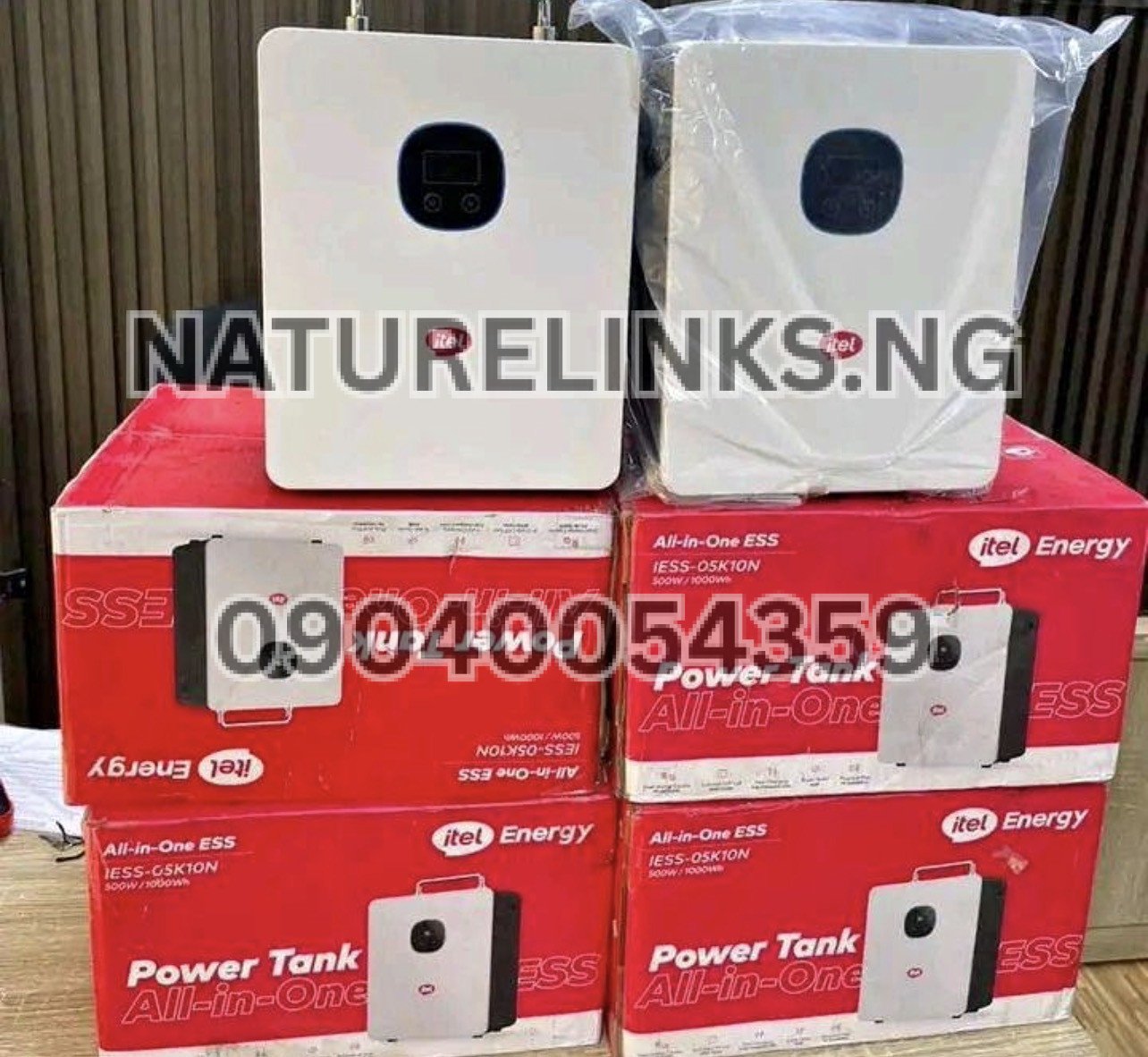
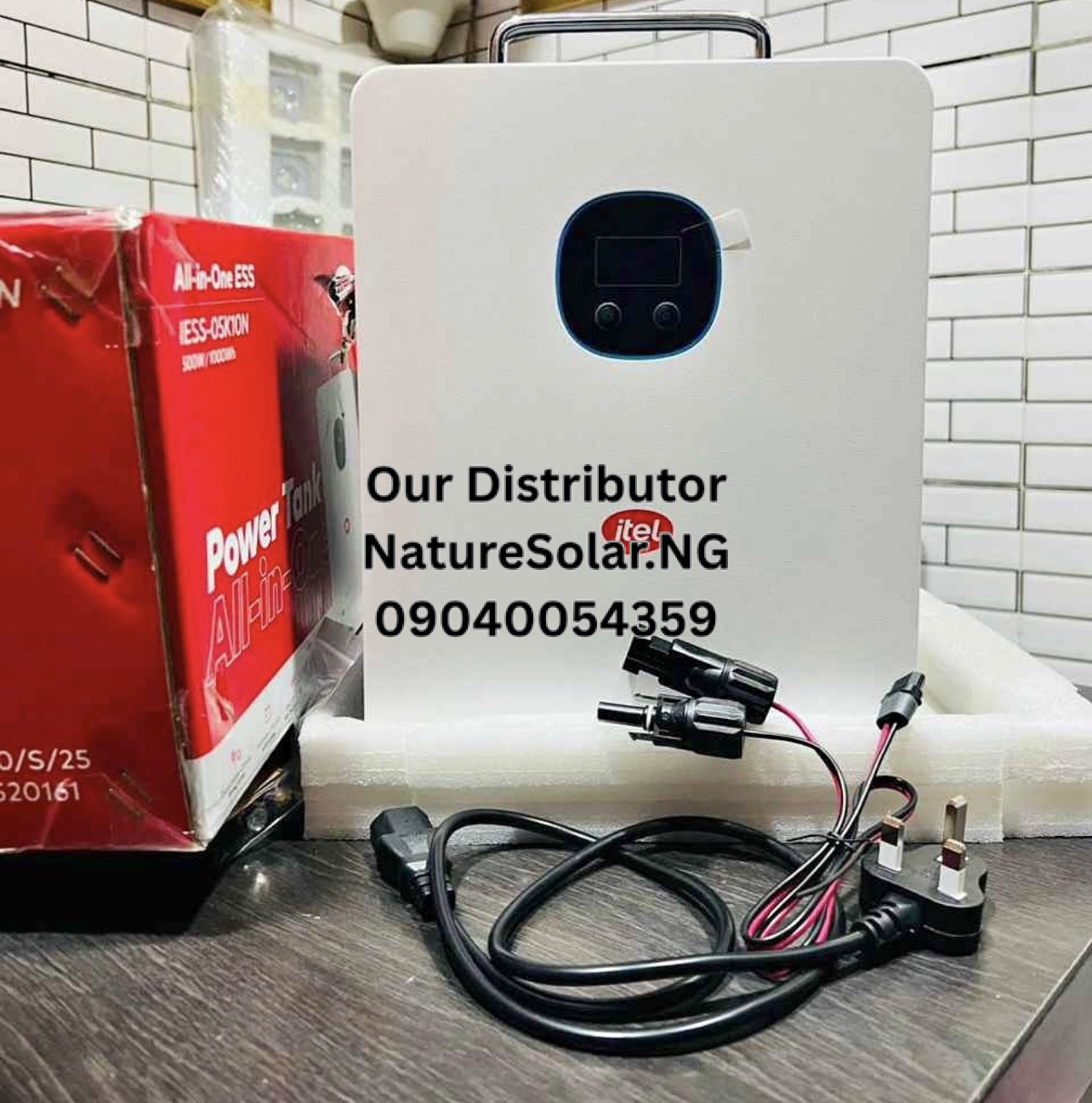
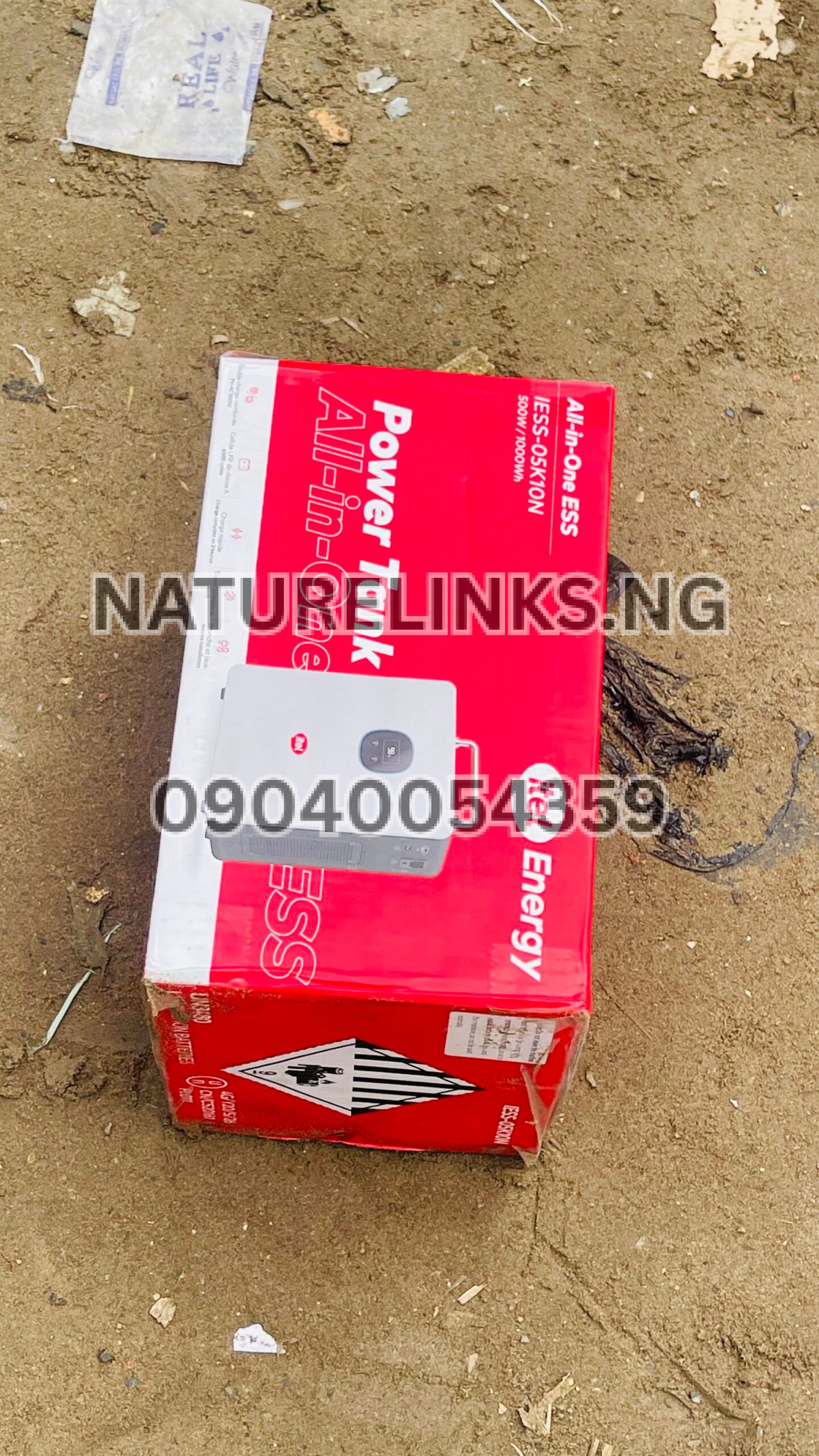
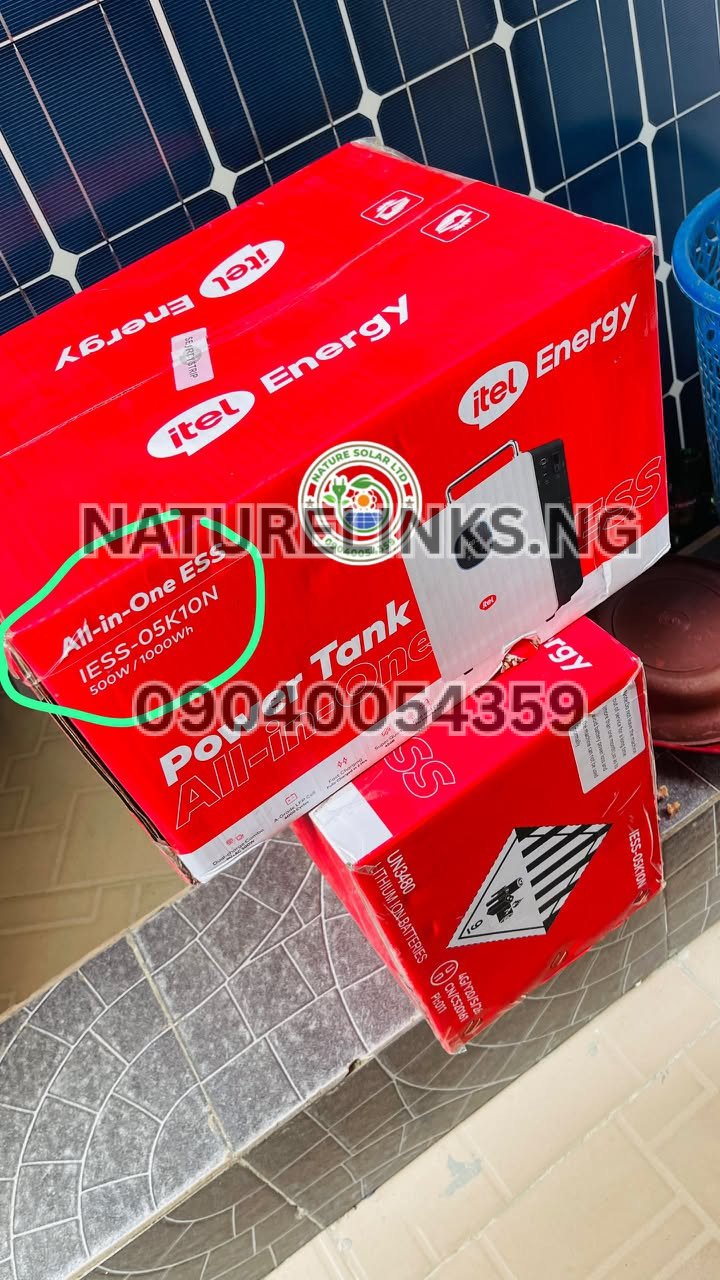
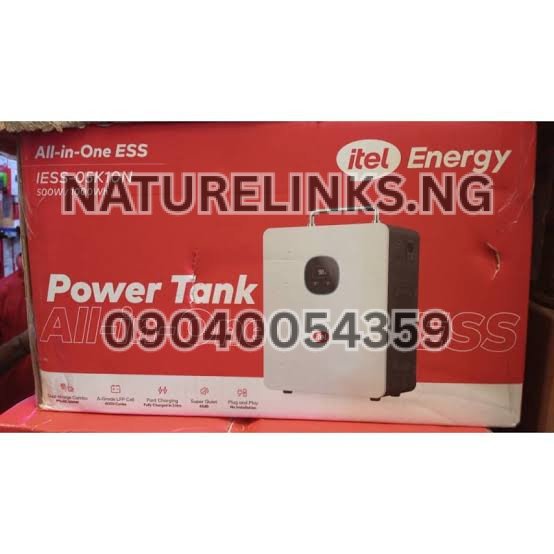
The Best Seller is Nature Solar Global Limited, and it is also the accredited distributor in Nigeria. Nature Solar Global Limited supplies Itel Power Tank portable power stations and related solar-energy solutions, while Nature Links Nigeria Limited [NatureLinks.NG] provides sales and distribution support to customers across Nigeria.
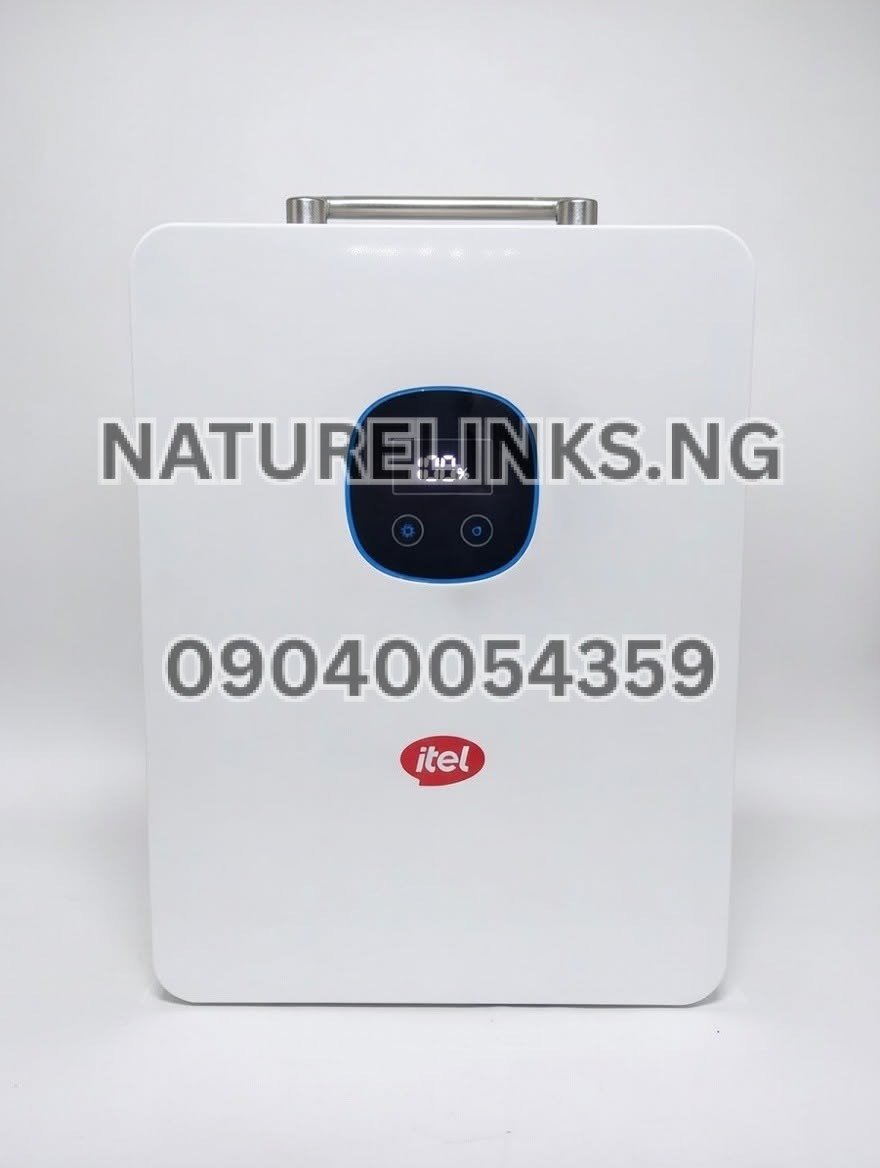
If you are searching for “How Does Power Tank Work?”, the simple answer is that a Power Tank stores electrical energy inside a rechargeable lithium battery and then converts that stored energy into usable electricity for appliances and electronic devices. The commonly listed Itel Power Tank configuration combines a 1,000Wh (1kWh) battery, 500W pure sine-wave inverter, battery-management system and solar/AC charging capability in one portable energy-storage unit.
Unlike a petrol or diesel generator, a Power Tank does not need an engine or fuel to produce electricity. You first charge its internal battery from compatible AC mains power or solar panels. When electricity is needed, the stored DC energy is converted by the inverter into AC electricity suitable for compatible household and office appliances.
For Nigerians dealing with power outages, fuel costs, generator noise and the need for convenient backup electricity, understanding “How Does Power Tank Work?” is important before buying one.

How Does Power Tank Work?
A Power Tank works through several major components working together:
- Rechargeable battery – stores electrical energy.
- Battery Management System (BMS) – monitors and protects the battery.
- Inverter – converts battery DC electricity into AC electricity.
- Charging system – replenishes the battery using AC electricity or compatible solar input.
- Output ports – deliver electricity to connected appliances.
- Display/control system – shows information such as battery level, input and output status.
The commonly listed Itel Power Tank 1kWh/500W configuration uses a LiFePO4 battery and a pure sine-wave inverter, with integrated MPPT solar charging on documented configurations.
What Is a Power Tank?
A Power Tank is a rechargeable portable energy-storage system designed to store electricity and supply it later when you need it.
It can be compared to a large rechargeable battery combined with an inverter, charging system and electronic protection circuits.
Instead of producing electricity through combustion like a petrol generator, the Power Tank stores electricity first and releases it through its output ports.
This makes it useful for:
- Home backup power
- Office backup
- Small shops
- Internet routers
- Laptops
- Televisions
- Fans
- LED lighting
- CCTV systems
- Phones and tablets
- POS machines
- Networking equipment
- Other compatible low-power appliances
The listed Itel Power Tank configuration is designed for home, office, shop and outdoor backup applications.
How Does an Itel Power Tank Generate Electricity?
Strictly speaking, the Power Tank does not generate electricity like a petrol generator.
It stores electricity and converts it into usable electrical power.
When connected to AC mains electricity, the charging circuitry stores energy in the internal battery. When connected to compatible solar panels, solar energy is converted and used to recharge the battery.
When you connect an appliance, the battery supplies DC electricity to the inverter. The inverter converts the DC electricity into AC electricity for compatible AC appliances.
This process can be summarized as:
AC mains / Solar panel → Charging system → Battery → Inverter → Appliance
That is the basic answer to “How Does Power Tank Work?”
How Does the Battery in a Power Tank Work?
The battery is the energy-storage section of the Power Tank.
The commonly listed Itel Power Tank 500W configuration has a 1,000Wh or 1kWh LiFePO4 battery.
The term 1,000Wh describes how much energy the battery can store under specified conditions.
It does not mean the Power Tank can continuously operate a 1,000W appliance.
This distinction is important:
- 1,000Wh / 1kWh = energy-storage capacity
- 500W = rated continuous inverter output
Therefore, a 1kWh Power Tank with a 500W inverter is designed around a 500W continuous AC output rating on the commonly listed configuration.
What Does 500W Mean on Itel Power Tank?
The 500W rating refers primarily to the continuous AC output capacity of the commonly listed Itel Power Tank configuration.
For example, if you connect several devices whose combined consumption is 200W, the system is operating below its 500W continuous rating.
If the combined load approaches or exceeds the rated output, the Power Tank may activate protection or may be unable to operate the load, depending on the appliance and the particular configuration.
This is why buyers should calculate their appliance wattage before purchasing.
What Does 1000Wh Mean on Power Tank?
1,000Wh means 1 kilowatt-hour of nominal stored energy.
For simple calculations:
- 50W appliance × 1 hour = 50Wh
- 100W appliance × 1 hour = 100Wh
- 200W appliance × 1 hour = 200Wh
- 500W appliance × 1 hour = 500Wh
In practice, you should not expect the entire 1,000Wh rating to become usable AC output because the inverter and other electronics consume energy and operating conditions affect runtime.
Current product information similarly notes that actual runtime depends on appliance consumption and conversion losses.
How Does Power Tank Convert Battery Power to AC Electricity?
The battery stores electricity as DC energy.
Most household appliances that plug into a normal wall socket require AC electricity.
The inverter solves this difference.
The basic process is:
Battery DC → Inverter → AC output → Appliance
The commonly listed Itel Power Tank uses a pure sine-wave inverter, which is designed to provide an AC waveform suitable for many household electronics when their power requirements are within the system’s limits.
What Is a Pure Sine-Wave Inverter?
A pure sine-wave inverter converts the battery’s DC power into AC power with a waveform similar to conventional utility electricity.
This is particularly useful for electronic equipment and appliances that require stable AC power.
The commonly listed Itel Power Tank 500W/1,000Wh configuration is advertised with a pure sine-wave inverter.
However, pure sine wave does not mean that every appliance can be powered.
The appliance’s wattage, startup surge and the Power Tank’s rated output must still be considered.
Can Power Tank Charge With Electricity?
Yes, the commonly listed Itel Power Tank configurations support AC/grid charging.
This means you can recharge the internal battery using compatible mains electricity.
The charging process is essentially:
Wall socket → Power Tank charging circuit → Battery
AC/grid charging is listed alongside solar charging for the commonly advertised 1kWh/500W configuration.
Always use the correct charging equipment and input specifications for the particular model you purchase.
Can Power Tank Charge With Solar Panels?
Yes, compatible Itel Power Tank configurations support solar charging.
Published specifications for the commonly listed configuration show an integrated MPPT solar charge controller, with some documentation specifying up to 400W PV input.
This allows the Power Tank to be connected to compatible solar panels so sunlight can recharge its battery.
However, solar-panel voltage, current and maximum PV input must match the Power Tank’s specifications.
Do not connect an arbitrary solar panel simply because its wattage appears suitable.
What Is an MPPT Solar Charge Controller?
MPPT means Maximum Power Point Tracking.
An MPPT controller helps the solar charging system extract usable power from a solar panel under changing sunlight conditions.
In the documented Itel Power Tank configuration, the MPPT controller is integrated into the Power Tank.
This simplifies the system because the buyer does not necessarily need to purchase a separate external solar charge controller for the compatible solar input.
How Long Does Power Tank Take to Charge?
Charging time depends on the charging method, input power, battery state, temperature and specific model.
Solar charging can also vary substantially because sunlight intensity changes throughout the day.
For example, a solar panel’s advertised wattage is its rated maximum under specified test conditions. Real-world solar production can be lower because of:
- Cloud cover
- Heat
- Panel orientation
- Shading
- Dust
- Cable losses
- Time of day
- Weather conditions
Therefore, a 400W solar input specification should not automatically be interpreted as 400W of solar production throughout the entire day.
How Does Power Tank Work During a Power Outage?
A Power Tank can serve as a backup electricity source when public power goes off.
Before the outage, the battery is charged.
When mains electricity becomes unavailable, compatible appliances can be powered from the stored battery energy through the Power Tank’s inverter and output ports.
Depending on the particular configuration, UPS functionality may also be available. Some published specifications for the commonly listed configuration describe UPS switching of approximately 20ms.
For equipment that requires uninterrupted operation, verify the specific model’s UPS specification rather than assuming every Power Tank configuration has identical switching performance.
Can Power Tank Be Used While Charging?
Whether simultaneous charging and discharging is supported depends on the exact model and its documented operating mode.
Do not assume that every Power Tank can safely charge from every source while simultaneously supplying every output at full power.
If this feature is important to you—for example, powering a Wi-Fi router continuously—you should confirm the specific model’s pass-through or UPS operating specifications with the seller before purchase.
What Appliances Can Power Tank Run?
The commonly listed 500W/1,000Wh Itel Power Tank is intended for appliances and electronic devices that fall within its output limits.
Examples include:
TV
A television can generally be a suitable load when its actual power consumption is below the Power Tank’s output capacity.
Fan
Many household fans consume considerably less than 500W, but check the fan’s nameplate or manufacturer’s specifications.
Laptop
Laptops are generally low-power devices and are suitable for portable power stations when connected using the appropriate charging method.
Wi-Fi Router
Routers typically use relatively low power, making them a common backup-power application.
LED Bulbs
Energy-efficient LED lighting can be powered from a suitable output.
CCTV
Security cameras and related networking equipment can be powered when their combined requirements remain within the system’s limits.
POS Machine
Small POS equipment can also be used where its electrical requirements are compatible.
These examples are consistent with current Nigerian product listings describing the Power Tank for TVs, laptops, routers, fans, lights, CCTV, POS and similar equipment.

Can Power Tank Run a Refrigerator?
It depends on the refrigerator’s running wattage and, especially, its startup surge.
Refrigerators use compressors, and compressor startup can temporarily require more power than the normal running consumption.
Therefore, do not determine compatibility from the refrigerator’s running wattage alone.
Check:
- Running watts
- Starting/surge watts
- Power factor
- Refrigerator type
- Power Tank surge specification
The commonly listed configuration has a 500W rated AC output, while published listings differ on the precise surge specification, so the exact model should be confirmed before using it with a refrigerator.
Can Power Tank Run an Electric Iron?
An electric iron is generally a high-power appliance.
Many irons can consume several hundred watts or more, and some can approach or exceed the 500W continuous output of the commonly listed Itel Power Tank configuration.
Therefore, check the iron’s actual wattage before connecting it.
The same caution applies to:
- Electric kettles
- Hot plates
- Pressing irons
- Electric cookers
- Heaters
- Hair dryers
- High-power blenders
A portable Power Tank should not be treated as a replacement for a high-output generator or large inverter system without checking appliance requirements.
How Long Can Power Tank Power My Appliances?
Runtime depends on the total load.
A simplified formula is:
Approximate runtime = usable battery energy ÷ appliance load
But actual runtime is affected by inverter losses and other operating factors.
For example, if a device consumes 100W, a 1,000Wh battery has a theoretical energy relationship of about 10 hours at 100W before losses.
At 200W, the theoretical relationship is approximately 5 hours.
At 500W, it is approximately 2 hours.
Actual AC runtime will normally be lower because of conversion losses and other system limitations. Current published product information specifically cautions that theoretical calculations do not account for losses.
Does Power Tank Need Petrol?
No.
A rechargeable Power Tank does not use petrol or diesel to operate.
This is one of the fundamental differences between a portable battery power station and a conventional fuel generator.
Instead of burning fuel, the Power Tank uses stored electrical energy.
This means it can operate without:
- Petrol
- Diesel
- Engine oil
- Exhaust fumes
- Engine vibration
It can therefore be useful in situations where quiet operation is important.
Is Power Tank Noisy?
A battery power station does not have the engine noise associated with a petrol generator.
The Power Tank may still have internal cooling fans or electronic components that produce some sound during operation, particularly when the system is under load or charging.
The commonly listed Itel configuration includes intelligent fan cooling.
How Does the Power Tank Protect Its Battery?
The Battery Management System, commonly called BMS, monitors important battery operating conditions.
Published specifications for the Itel Power Tank list protection features such as:
- Overload protection
- Short-circuit protection
- Over-temperature protection
- Over-voltage protection
- Battery-management functions
These electronic protection systems are important because rechargeable lithium batteries require controlled charging and discharging.
What Is LiFePO4 Battery Technology?
LiFePO4 stands for Lithium Iron Phosphate.
The commonly listed 1kWh Itel Power Tank configuration uses LiFePO4 battery chemistry.
LiFePO4 batteries are widely used in energy-storage applications because they can support repeated charge and discharge cycles when properly managed.
Some current product listings cite approximately 6,000 cycles for the listed configuration, although actual battery life depends on operating conditions, temperature, charging practices and usage.
What Is the Difference Between Power Tank and a Petrol Generator?
The two systems provide backup electricity in different ways.
| Feature | Power Tank | Petrol Generator |
|---|---|---|
| Energy source | Stored electrical energy | Petrol |
| Engine | No | Yes |
| Exhaust | No engine exhaust | Yes |
| Fuel required during use | No | Yes |
| Noise | Generally low | Engine noise |
| Charging | AC and compatible solar | Refuelling |
| Portability | Generally convenient | Model-dependent |
| Maintenance | Mainly electronic/battery care | Engine maintenance required |
| Solar charging | Supported on compatible models | No |
| Battery storage | Yes | Usually no |
The choice depends on the user’s power requirements, budget, desired runtime and appliances.
Is Power Tank a Solar Generator?
The term solar generator is commonly used in the Nigerian market for portable battery power stations that can be recharged with solar panels.
Technically, the Power Tank is an energy-storage system/power station, because it stores energy in a battery and then supplies it through an inverter.
When compatible solar panels are connected, sunlight can be used to recharge the battery.
Can Power Tank Work Without Solar Panels?
Yes.
Solar panels are not necessarily required to use a Power Tank if the particular model supports AC/grid charging.
The commonly listed Itel Power Tank configuration supports both AC/grid and solar charging.
This means a user can charge from mains electricity when available and use solar charging as an additional energy source where suitable.
Can Power Tank Be Charged With a Wall Socket?
Yes, compatible models can be charged from AC mains electricity.
This is useful for Nigerian households because you can charge the unit when public electricity is available and then use the stored energy during an outage.
Always use the correct charging input and supplied/approved charging equipment.
Can Power Tank Be Charged With Solar and Electricity?
The commonly listed configuration supports both solar and AC/grid charging.
However, the exact way charging sources can be used simultaneously depends on the model’s charging architecture.
Buyers interested in dual-source charging should confirm the manufacturer’s operating specifications for their exact unit.

How Does Power Tank Help During NEPA/PHCN Outages?
During an outage, the Power Tank can provide stored electricity for compatible appliances.
Instead of starting a petrol generator whenever public power fails, the user can switch to the stored battery supply.
This can be particularly useful for:
- Internet connectivity
- Phone charging
- Television
- Lighting
- Laptop work
- CCTV
- Small office equipment
- POS operations
- Fans
The exact appliances and duration depend on their wattage and the Power Tank’s output and battery capacity.
How Do I Calculate My Power Tank Load?
Before buying, list all the appliances you want to operate.
For example:
| Appliance | Example Load |
|---|---|
| Wi-Fi router | 10W |
| LED lights | 20W |
| Laptop | 60W |
| TV | 80W |
| Fan | 60W |
| Total | 230W |
These figures are examples only. Always check the actual wattage printed on your appliances.
If the actual combined load is around 230W, it would be below the 500W continuous output rating of the commonly listed 500W Power Tank configuration.
However, appliances with motors or compressors can have startup surges, so simple addition is not always enough.
What Should I Check Before Buying Power Tank in Nigeria?
Before making a purchase, check:
- Battery capacity in Wh.
- Continuous inverter output in W.
- Surge output.
- Battery chemistry.
- AC charging capability.
- Solar charging capability.
- Maximum solar/PV input.
- Output ports.
- UPS functionality.
- Warranty.
- Exact model number.
- Included accessories.
- Current price.
- Seller authenticity.
- After-sales support.
This is particularly important because Nigerian listings can show different prices, packages and specifications for products marketed under similar Power Tank descriptions. Current marketplace listings show substantial variation in advertised configurations and prices.
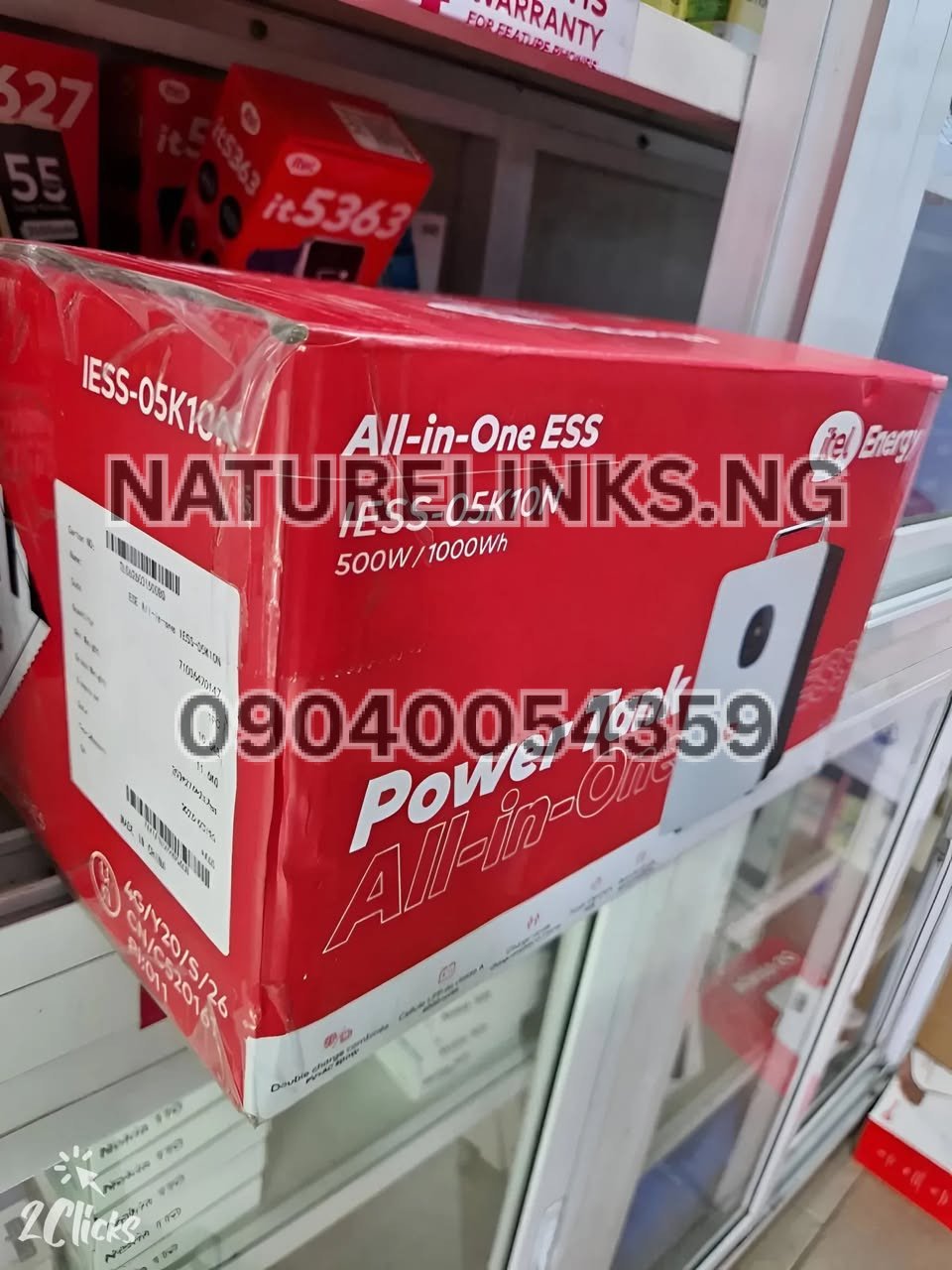
Itel Power Tank 500W 1000Wh Datasheet
| Specification | Commonly Listed Details |
|---|---|
| Brand | Itel Energy |
| Product | Power Tank |
| Common model | IESS-05K10N |
| Battery capacity | 1,000Wh / 1kWh |
| Battery chemistry | LiFePO4 |
| Rated AC output | 500W |
| Inverter | Pure sine wave |
| Surge output | Configuration-dependent |
| Solar charging | Yes |
| Solar controller | Integrated MPPT |
| Listed PV input | Up to 400W on documented configuration |
| AC/grid charging | Yes |
| AC output | 230V on documented configuration |
| Frequency | 50Hz on documented configuration |
| BMS | Yes |
| Display | Digital/LED |
| Protection | Overload, short circuit and temperature protection |
| UPS | Supported on documented configurations |
The specifications above are based on current Nigerian product listings for the commonly advertised 1kWh/500W configuration. Exact specifications can vary by model or package, so confirm the datasheet before purchase.
How Does Power Tank Work for Home Use?
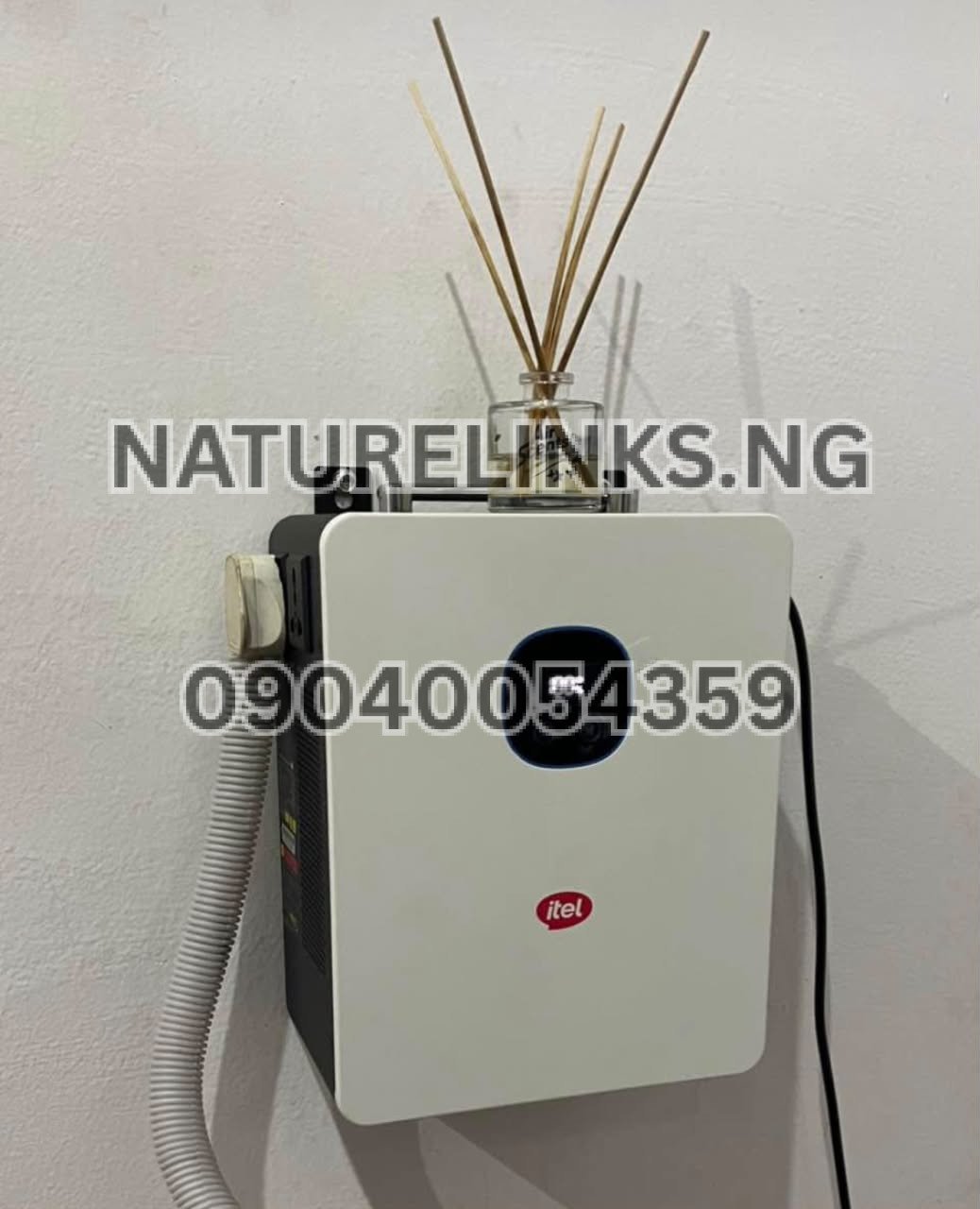
For a Nigerian home, the Power Tank can operate as a compact backup electricity system.
A typical arrangement might be:
Public electricity → Power Tank charging
Then during an outage:
Power Tank battery → Inverter → TV / router / lights / laptop / fan
This can reduce dependence on a petrol generator for low- and medium-power electronics.
It is especially useful when the objective is to keep essential electronics running rather than power an entire house.
How Does Power Tank Work for Business?
Small businesses can use a Power Tank to maintain essential equipment during electricity interruptions.
Potential applications include:
- POS terminals
- Routers
- CCTV
- Laptops
- LED lights
- Small office equipment
- Phones
- Networking devices
The key is to calculate the total electrical demand and ensure the Power Tank has enough output capacity.
A 500W inverter should not be treated as a 2,000W or 3,000W generator.

How Does Power Tank Work for a Student or Remote Worker?
A Power Tank can provide backup electricity for a laptop, Wi-Fi router, phone and lighting.
For example, a student or remote worker might connect:
- Laptop
- Router
- LED lamp
- Phone charger
Because these are generally lower-power devices than electric heaters, kettles and irons, they can be practical applications for a 500W-class portable power station, provided the actual combined load remains within specifications.
Is Power Tank Worth Buying for Nigerian Power Outages?
Whether it suits you depends on what you want to power.
A portable Power Tank can be useful if you need:
- Quiet backup power
- No petrol during operation
- Portable electricity
- Solar charging capability
- Battery storage
- Backup for electronics
- A compact alternative to a generator for selected loads
It may not be suitable as the only electricity source for high-power appliances such as electric cookers, large heaters or other loads that exceed its inverter capacity.
How Does Power Tank Save Money on Fuel?
A Power Tank does not consume petrol while operating.
If charged from existing grid electricity or solar energy, you can use that stored energy later.
This can reduce the need to start a petrol generator for every short power interruption.
The actual financial benefit depends on:
- How frequently the generator would otherwise be used
- Petrol price
- Power Tank purchase price
- Charging source
- Electricity tariff
- Battery lifespan
- Appliance load
Where to Buy Genuine Itel Power Tank in Nigeria?
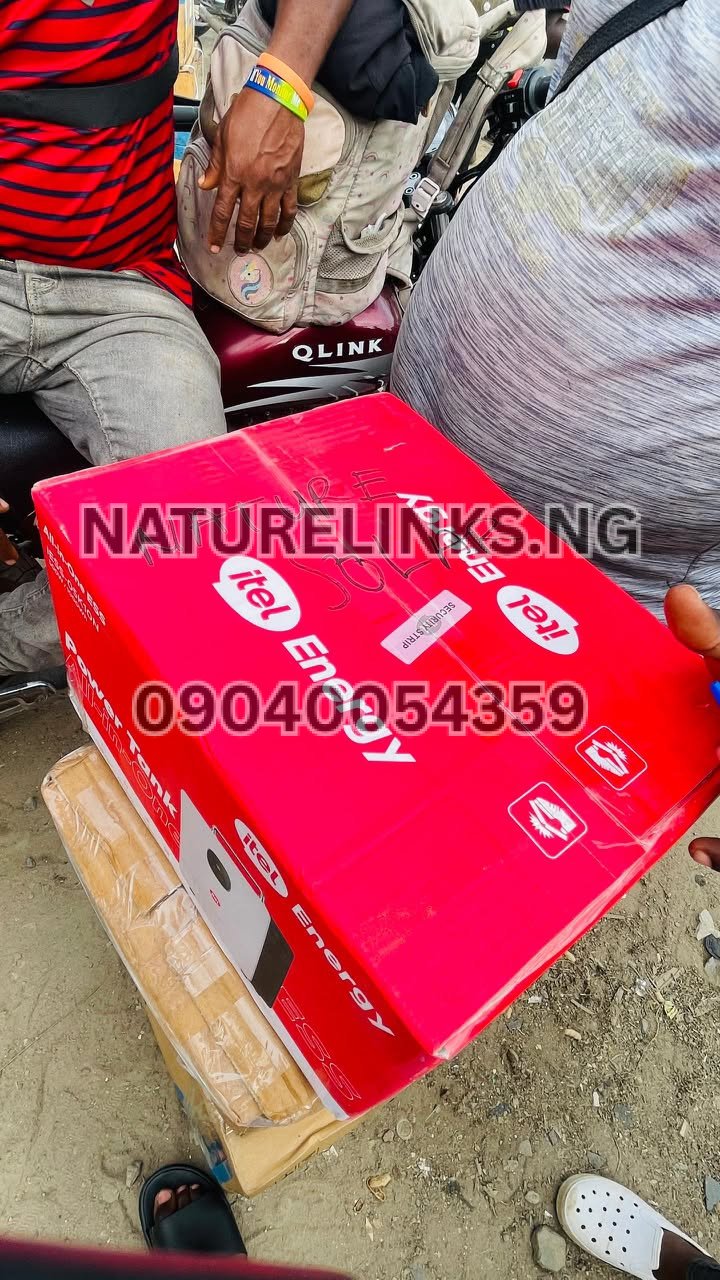
For Nigerians searching for a genuine Itel Power Tank, buyers should verify the seller, exact model, warranty, accessories and current price before payment.
Best Seller: Nature Solar Global Limited
Accredited Distributor: Nature Solar Global Limited
Nature Links Nigeria Limited: NatureLinks.NG
CEO: Mr. Joseph Chikeleze
Call: 07049528019
WhatsApp: 09040054359
Shop Address: F1571 Upstairs (F-Line), Alaba International Market, Lagos State 🇳🇬
Nature Links Nigeria Limited’s current Nigerian product listings identify the company as an authorized distributor, supplier and dealer of Itel Power Tank products.
Before payment, ask for the exact model number and confirm whether the package includes solar panels, cables, adapters or other accessories.
Frequently Asked Questions About How Power Tank Works
1. How does Power Tank work?
A Power Tank stores electrical energy in a rechargeable battery and supplies that stored energy through an inverter and other output ports. The commonly listed Itel Power Tank uses a 1,000Wh battery and 500W inverter configuration.
2. Does Power Tank use petrol?
No. A rechargeable Power Tank uses stored electrical energy rather than petrol or diesel. It can be recharged from compatible AC electricity or solar panels.
3. Can Itel Power Tank charge with solar?
Yes. The commonly listed configuration supports solar charging and includes an integrated MPPT solar charge controller, with published specifications listing up to 400W PV input.
4. Can Itel Power Tank charge with electricity?
Yes. The commonly advertised 1kWh/500W configuration supports AC/grid charging.
5. How many watts is Itel Power Tank?
The commonly listed Itel Power Tank configuration has a 500W rated continuous AC output and a 1,000Wh/1kWh battery. These are different measurements: watts describe output power while watt-hours describe stored energy.
6. How many appliances can Power Tank power?
There is no fixed number. The important factor is the total wattage of the appliances. All connected loads must remain within the Power Tank’s rated output, while appliances with motors or compressors may require additional startup power.
7. Can Power Tank power a TV and fan at the same time?
A TV and fan can potentially be operated together if their combined actual power consumption remains within the Power Tank’s output limit and their startup requirements are compatible.
8. How long will a 1,000Wh Power Tank last?
Runtime depends on the load. Theoretical calculations suggest approximately 10 hours for a 100W load or 5 hours for a 200W load, but actual AC runtime will be lower because of conversion losses and other operating factors.
9. Is Power Tank the same as a generator?
They both provide backup electricity, but they operate differently. A petrol generator converts fuel energy into electricity through an engine, while a Power Tank stores electrical energy in a battery and releases it through an inverter.
10. Is Itel Power Tank good for home backup?
The commonly listed 500W/1,000Wh configuration is designed for compatible home, office and shop backup applications. It is particularly suited to lower-power electronics and essential appliances that remain within its output capacity.
SEO Buyer Keywords Nigerians Search For
If you are researching “How Does Power Tank Work?”, related buyer-intent searches include:
- Itel Power Tank price in Nigeria
- Itel Power Tank 500W price in Nigeria
- Itel Power Tank 1000Wh price in Nigeria
- Itel Power Tank 1kWh price in Nigeria
- Power Tank solar generator price
- Itel Power Tank solar charging
- Itel Power Tank battery
- Itel Power Tank 500W 1000Wh
- Itel Power Tank Nigeria
- Where to buy Itel Power Tank in Nigeria
- Genuine Itel Power Tank
- Original Itel Power Tank
- Itel Power Tank dealer in Nigeria
- Itel Power Tank distributor in Lagos
- Itel Power Tank Alaba International Market
- Itel Power Tank for home
- Itel Power Tank for office
- Itel Power Tank backup power
- Itel Power Tank solar generator
- Itel Power Tank lithium battery
Conclusion
Understanding “How Does Power Tank Work?” makes it easier to choose the right backup-power solution for your home, office, shop or outdoor activities. The commonly listed Itel Power Tank 1kWh/500W configuration combines a rechargeable LiFePO4 battery, inverter, charging system, BMS and multiple outputs into one portable energy-storage system. It can be recharged from compatible AC mains electricity or solar panels and then used to supply electricity to compatible appliances.
The most important point is to distinguish battery capacity from inverter output. A 1,000Wh battery stores energy, while the 500W inverter rating determines the approximate continuous AC power the commonly listed configuration can supply. Always check the actual wattage and startup requirements of your appliances before connecting them.
For current price, availability, exact model specifications, solar-panel compatibility, warranty and genuine-product information in Nigeria, contact Nature Solar Global Limited / Nature Links Nigeria Limited.
Call: 07049528019
WhatsApp: 09040054359
Shop: F1571 Upstairs (F-Line), Alaba International Market, Lagos State 🇳🇬