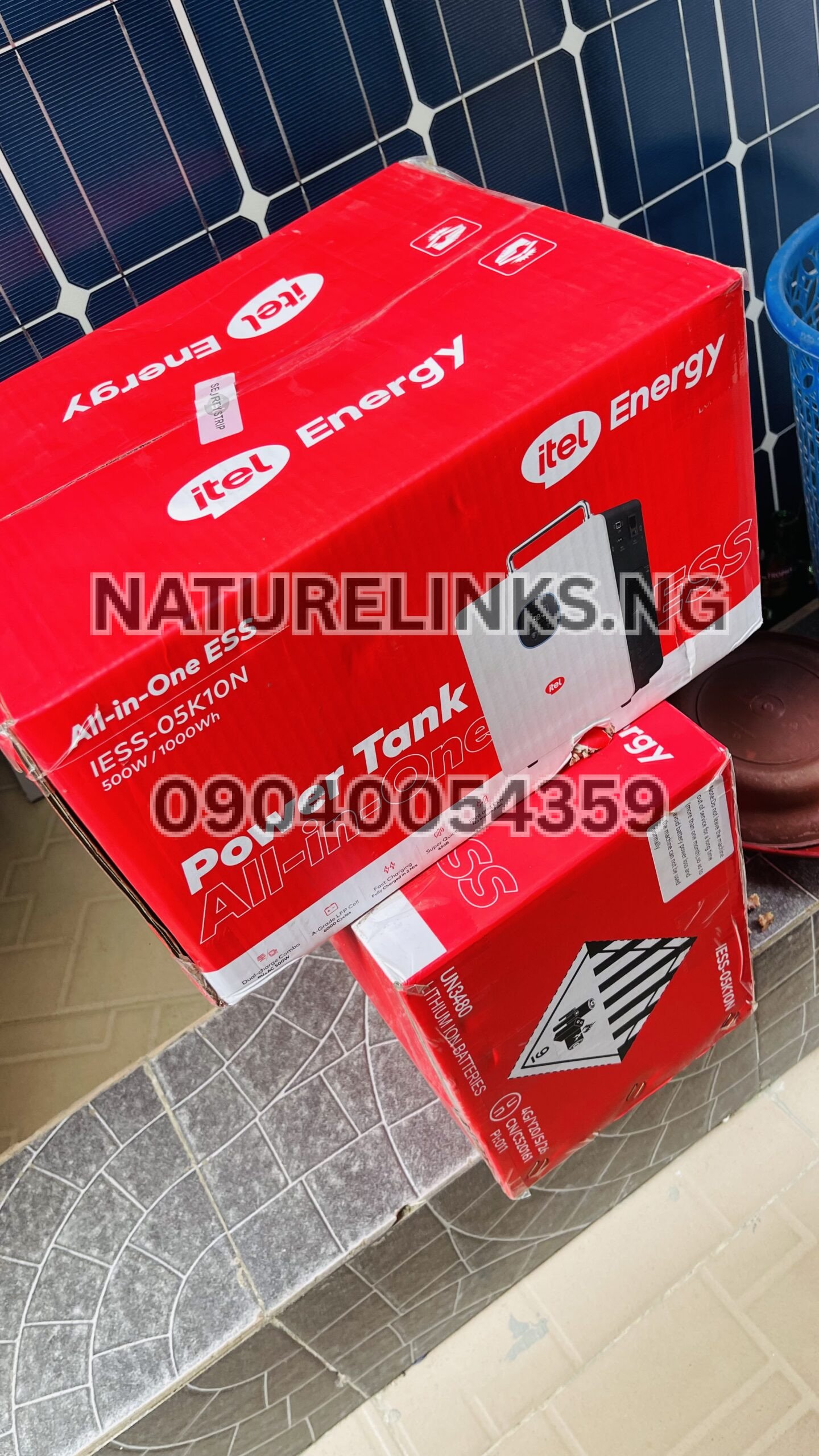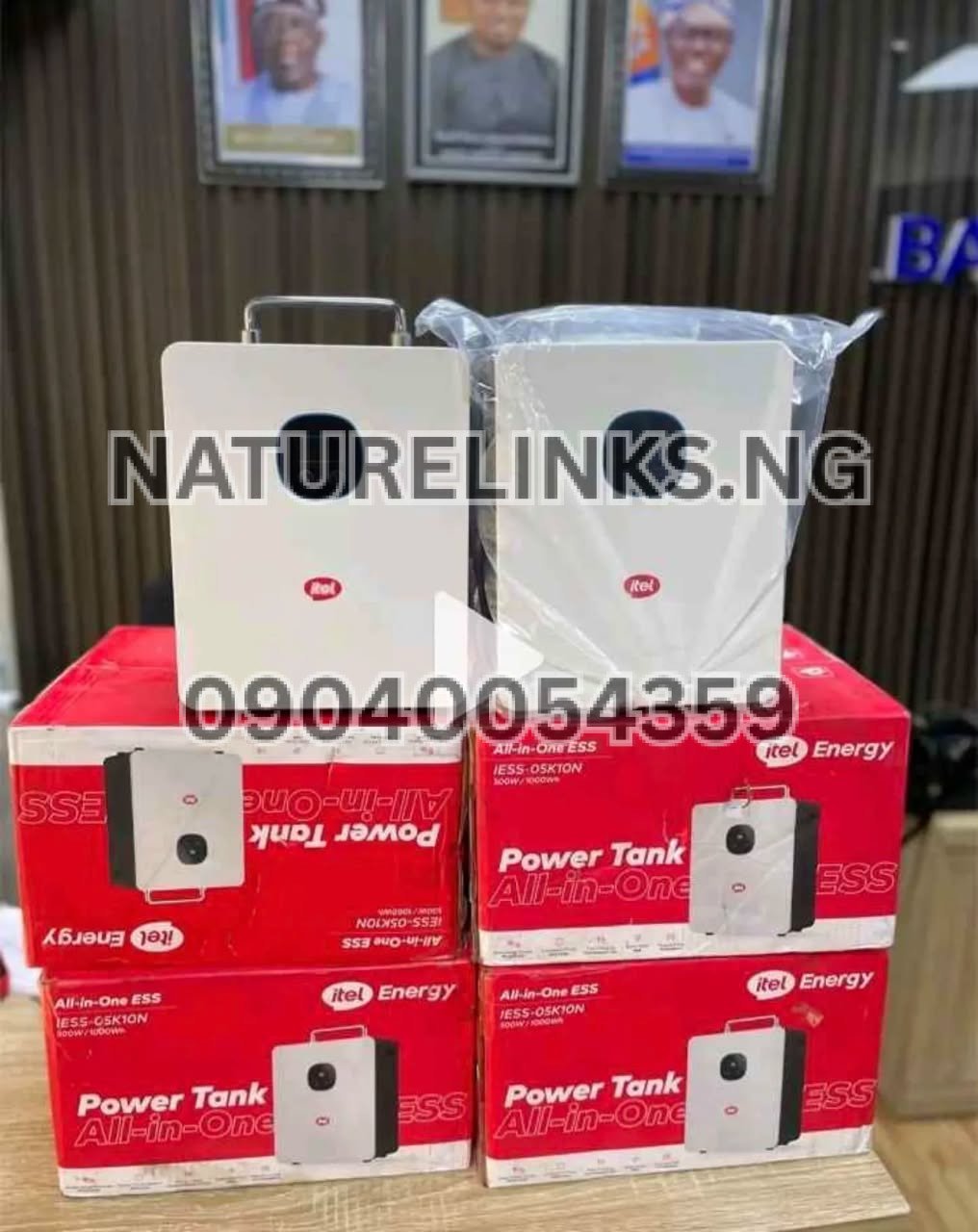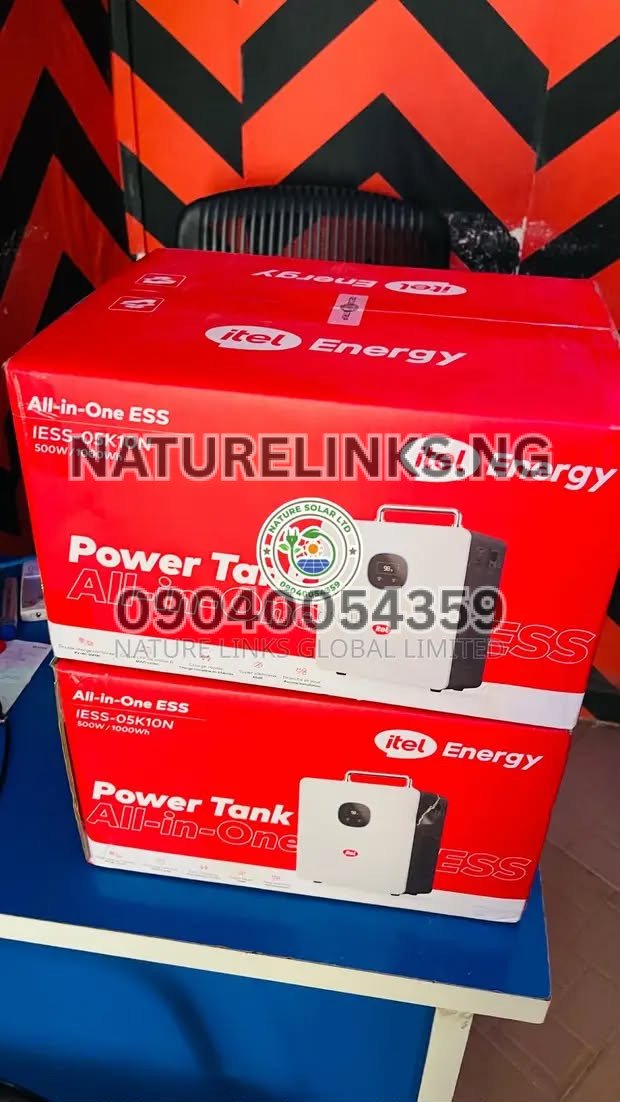
If you are searching “How many hours of sun to charge Itel Power Tank?”, the answer depends on the Power Tank model, solar-panel wattage, sunlight intensity, weather, panel positioning, battery level and solar-input limitations.
For the commonly listed Itel Power Tank 1,000Wh/1kWh, the documented configuration supports up to 400W of solar/PV input through its built-in MPPT controller. Itel’s published specifications also list a maximum PV input voltage of 60V and an MPPT voltage range of 11–60V.
Under strong, usable sunlight and with an appropriately sized solar array, a 1,000Wh Power Tank can theoretically receive about 400Wh of energy in one hour at the maximum 400W input. That means roughly 2.5 hours of equivalent full-power solar input could provide 1,000Wh before accounting for charging losses and other factors.
In real Nigerian conditions, however, you should not interpret this as simply “2.5 hours of sunshine every day.” Solar output changes throughout the day, so a practical charging period can be longer.

How Many Hours of Sun Does Itel Power Tank Need?
For the commonly listed 1,000Wh Itel Power Tank, a useful theoretical calculation is:
1,000Wh ÷ 400W = 2.5 hours
So, if the Power Tank receives a continuous 400W of usable solar power, it would theoretically take about 2.5 hours to replace 1,000Wh of energy.
Real-world charging takes longer because solar panels rarely deliver their maximum rated wattage continuously. There are also conversion and charging losses.
Therefore, a more practical expectation is to allow several hours of good sunlight, depending on the solar installation and weather.
Nigeria receives substantial solar energy, but solar availability differs by region. A review of Nigeria’s solar potential reports average sunshine of about 6.25 hours per day, with substantially different conditions between northern and coastal areas.
Can Itel Power Tank Charge Fully in One Day?
Yes, a properly configured Itel Power Tank can be charged from solar during a day, provided the solar panels receive sufficient usable sunlight and remain within the Power Tank’s input specifications.
The commonly documented 1kWh model accepts up to 400W PV input.
For example, a 400W solar array might theoretically produce:
- 400W × 1 hour = 400Wh
- 400W × 2 hours = 800Wh
- 400W × 2.5 hours = 1,000Wh
- 400W × 4 hours = 1,600Wh
But these are ideal energy calculations, not guaranteed real-world production figures.
Clouds, heat, shading, dust, panel angle and other conditions can reduce the actual energy entering the Power Tank.
How Long Does Itel Power Tank Take to Charge With Solar?
The commonly documented 1,000Wh Itel Power Tank has a maximum solar input of approximately 400W and an integrated MPPT controller.
At maximum theoretical solar input:
1,000Wh ÷ 400W = 2.5 hours
However, the manufacturer’s product information also describes approximately 2-hour recharge capability under specified charging conditions, particularly where supported charging sources are combined. One published Itel product listing specifically describes full charging in approximately two hours using solar plus grid simultaneously.
Therefore, 2 hours and 2.5 hours should not be treated as contradictory figures. They refer to different charging conditions and calculations.
How Many Solar Panels Do I Need for Itel Power Tank?
The commonly documented Power Tank supports up to 400W of PV input.
The exact number of panels depends on the wattage and electrical characteristics of the panels.
For example:
Two 200W Panels
Two 200W panels can provide a nominal total of:
200W + 200W = 400W
This matches the documented maximum PV input power, subject to the correct voltage/current configuration.
Four 100W Panels
Four 100W panels also provide:
100W × 4 = 400W
Again, the electrical configuration must remain within the Power Tank’s permitted voltage and current limits.
One 400W Panel
A single 400W panel may theoretically provide 400W, but its voltage and current must be compatible with the Power Tank’s PV input requirements.
Do not choose panels based on wattage alone. The documented Power Tank has a maximum PV voltage of 60V and an MPPT range of 11–60V, so panel voltage and configuration matter.
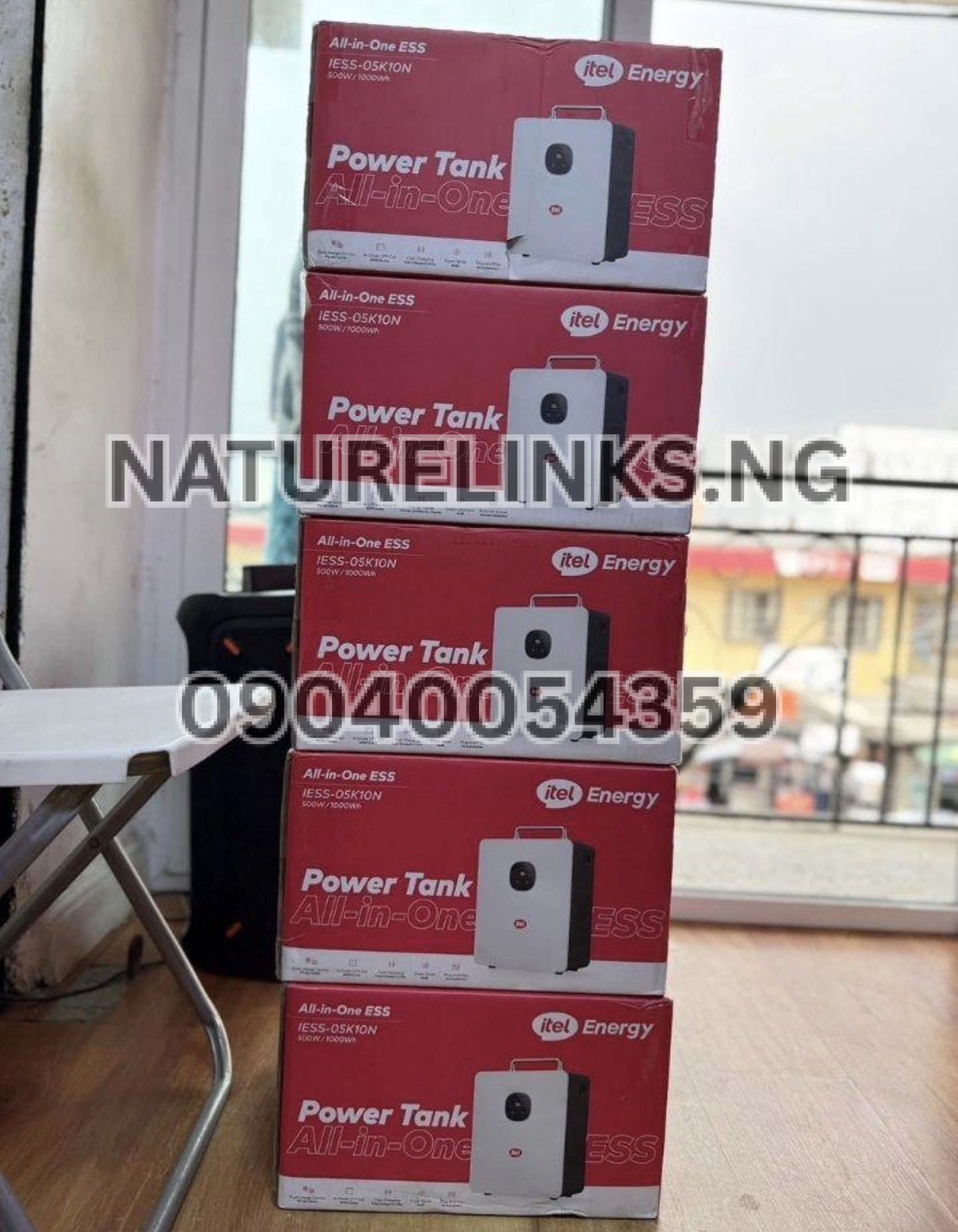
Can I Use More Than 400W Solar Panels With Itel Power Tank?
The documented configuration specifies a maximum PV input power of 400W.
Therefore, simply connecting a larger solar array does not necessarily mean the Power Tank will charge faster.
For example, installing 800W of panels does not mean the Power Tank will automatically accept 800W.
The system’s PV input limits must be respected.
Before purchasing additional solar panels, confirm:
- Maximum PV input power
- Maximum PV voltage
- MPPT voltage range
- Maximum PV current
- Series/parallel configuration
- Panel specifications
Does Strong Nigerian Sun Charge Itel Power Tank Faster?
Strong sunlight can increase the power available from solar panels, but the Power Tank remains limited by its maximum PV input.
The commonly documented model accepts up to approximately 400W PV input.
Therefore, if your panels are already capable of delivering the Power Tank’s maximum input, stronger sunlight may help you reach that input more consistently, but it will not necessarily make the Power Tank accept more than its rated maximum.
What Time of Day Is Best to Charge Itel Power Tank?
Solar panels generally produce their strongest output around the middle of the day when sunlight is strongest.
For Nigerian users, the exact period varies according to:
- Location
- Season
- Weather
- Panel orientation
- Panel tilt
- Shading
- Atmospheric conditions
A panel may produce some electricity in the morning and afternoon but considerably less than its rated peak output.
For this reason, the number of useful solar hours is more important than simply counting every hour from sunrise to sunset.
What Are Peak Sun Hours?
“Peak sun hours” is a solar-energy measurement rather than simply the number of daylight hours.
One peak sun hour represents an equivalent of 1 hour receiving 1,000W/m² of solar irradiance.
For example, five peak sun hours does not necessarily mean the sun shines at maximum intensity for exactly five consecutive hours. It means the day’s solar energy can be approximated as five hours at a standard 1,000W/m² intensity.
This concept is useful when estimating how much energy solar panels can produce.
How Many Peak Sun Hours Does Nigeria Get?
Nigeria has substantial solar potential, but available solar energy varies by region.
Research reviewing Nigeria’s solar resources reports average sunshine around 6.25 hours per day, with figures ranging from approximately 9 hours in the far north to around 3.5 hours in some coastal areas.
This illustrates why someone in northern Nigeria and someone in a coastal southern location should not necessarily expect identical solar charging performance.
For an actual solar installation, local solar-resource data and site conditions are more useful than applying one nationwide number.
How Long Will a 400W Solar Panel Take to Charge Itel Power Tank?
Assuming the Power Tank can receive the full 400W:
Battery capacity: 1,000Wh
Solar input: 400W
Theoretical charging time: 2.5 hours
However, the actual charging period will generally be longer because the solar panel will not continuously deliver 400W throughout the charging session.
For example, if the effective average charging power were only 250W:
1,000Wh ÷ 250W = 4 hours
And if average usable input were 200W:
1,000Wh ÷ 200W = 5 hours
This illustrates why actual solar charging time can be considerably longer than the theoretical 2.5-hour calculation.
Can Clouds Affect Itel Power Tank Solar Charging?
Yes.
Cloud cover reduces solar irradiance reaching the panels and can significantly reduce charging power.
The Power Tank may continue charging during cloudy conditions if sufficient solar energy is available, but the charging rate can be much lower.
This is why a sunny day can produce substantially different charging results from a heavily overcast day.

Does Rain Stop Itel Power Tank From Charging?
Rain does not automatically mean that solar panels produce zero electricity.
Panels can still generate electricity under cloudy or rainy conditions, but output is usually reduced because less sunlight reaches the photovoltaic cells.
The bigger issue is ensuring that the Power Tank, connectors and charging installation are protected according to their applicable weather-resistance specifications.
Do not expose equipment to water simply because solar panels are outdoors.
Does Heat Affect Itel Power Tank Solar Charging?
Yes.
Solar-panel output is affected by temperature. Solar modules generally experience reduced electrical performance as cell temperature rises above their rated test conditions.
Nigeria’s hot climate can therefore affect real-world panel output.
Good panel installation, adequate airflow around the panels and appropriate system design can help maintain performance.
Does Shade Affect Itel Power Tank Charging?
Yes, shading can substantially reduce solar-panel output.
A panel partially shaded by:
- Trees
- Buildings
- Walls
- Water tanks
- Satellite dishes
- Other panels
- Roof structures
may produce much less energy than expected.
For the best charging performance, position the solar panels where they receive as much unobstructed sunlight as possible.
How Long Does Itel Power Tank Take to Charge From 50%?
If the 1,000Wh battery is at 50%, approximately 500Wh needs to be replenished.
At a theoretical 400W solar input:
500Wh ÷ 400W = 1.25 hours
Again, this is an ideal calculation.
Real-world charging could take longer because the panels may not continuously deliver 400W and because charging efficiency and battery-management behavior affect the process.

How Long Does Itel Power Tank Take to Charge From 20%?
At 20% battery level, a 1,000Wh battery has approximately 200Wh stored, meaning approximately 800Wh would theoretically need to be replenished.
At 400W:
800Wh ÷ 400W = approximately 2 hours
Actual solar charging time can be longer.
How Long Does Itel Power Tank Take to Charge From 0%?
A completely depleted battery theoretically requires approximately 1,000Wh to be restored to full.
At the maximum documented 400W PV input:
1,000Wh ÷ 400W = 2.5 hours
But actual charging time should be expected to vary.
The battery may not remain at the maximum charging rate throughout the entire cycle, and solar conditions can change during the day.
Can Itel Power Tank Charge With Solar and Grid at the Same Time?
Some documented Itel Power Tank configurations support dual solar and grid charging.
One published Itel product listing describes full charging in approximately two hours using solar and grid simultaneously.
This can be useful for Nigerian users because the system can combine available solar energy with grid electricity where supported.
Always verify that your particular model supports the intended charging configuration.

Is Itel Power Tank a Solar Generator?
The Itel Power Tank is an all-in-one energy-storage system that combines battery storage, inverter functionality and solar charging.
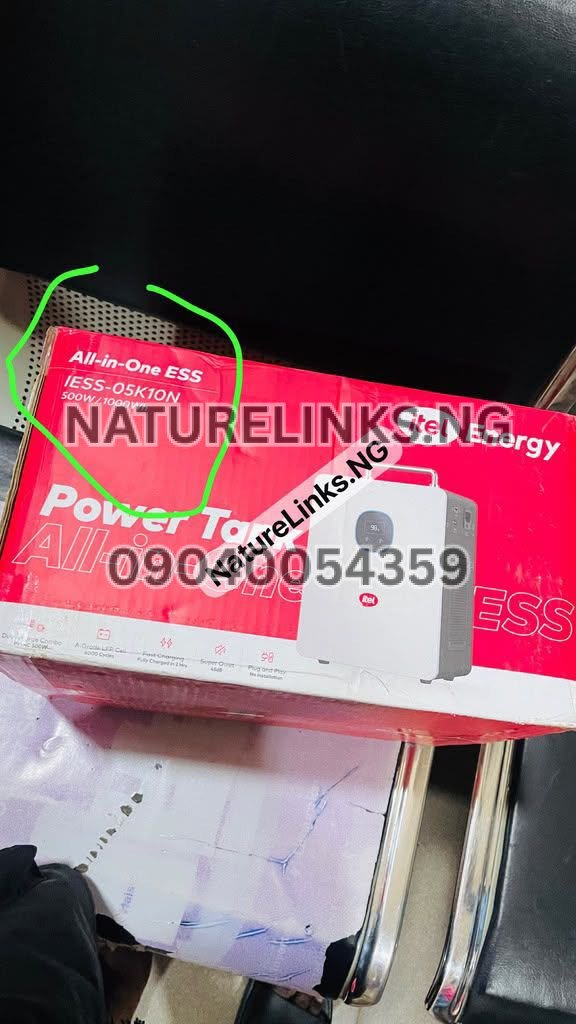
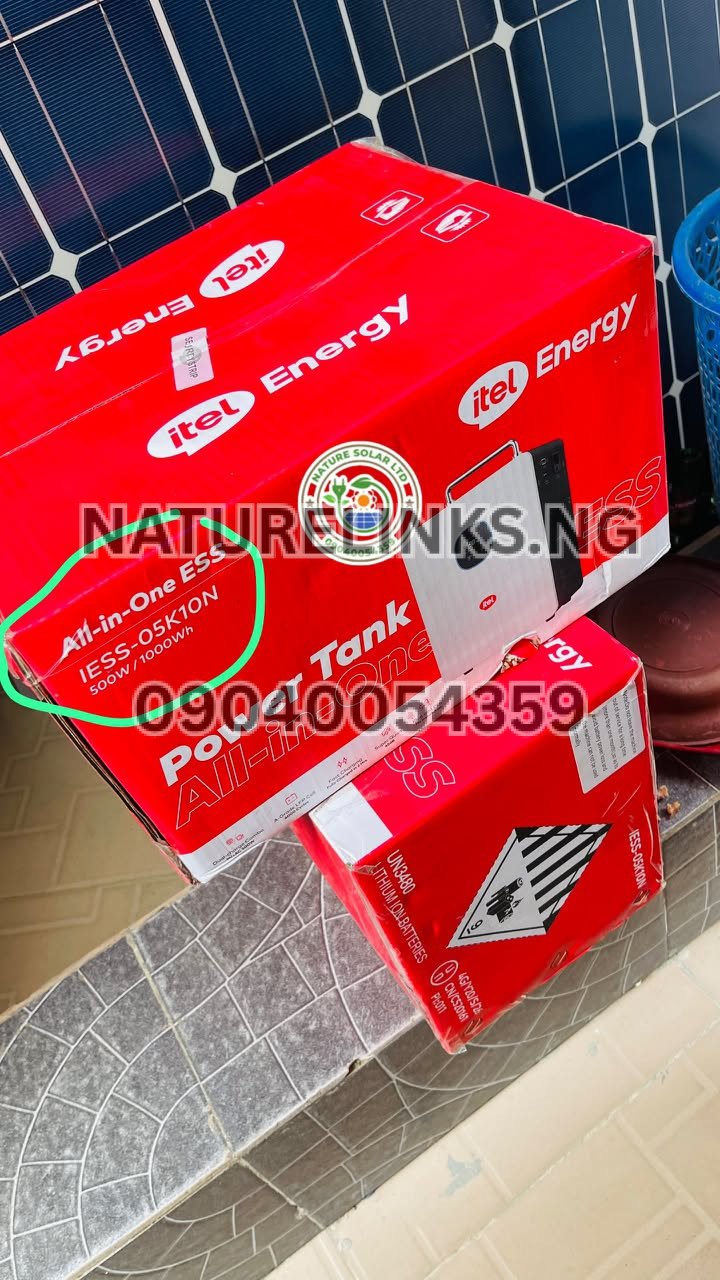
The documented 1,000Wh configuration uses a LiFePO₄ battery, a 500W pure sine-wave inverter and up to 400W PV input through its MPPT controller.
It is therefore commonly marketed as a portable solar generator or portable power station.
Itel Power Tank 1000Wh Solar Charging
The Itel Power Tank 1000Wh is particularly relevant to Nigerian buyers looking for a portable solar backup system.
Its documented specifications include:
- Battery: 1,000Wh / 1kWh
- Battery chemistry: LiFePO₄
- Continuous AC output: 500W
- Solar input: up to 400W
- MPPT: integrated
- AC/grid charging: supported
- Solar charging: supported
- AC output: 230V
- UPS functionality: supported on documented configurations
Itel Power Tank 500W Solar Charging
The 500W specification generally refers to the Power Tank’s continuous AC output, not its battery capacity.
This distinction is important:
1,000Wh = energy-storage capacity
500W = nominal continuous AC output
400W = maximum documented solar/PV input
These three numbers describe different parts of the system.
Can a 200W Solar Panel Charge Itel Power Tank?
A 200W solar panel can potentially charge a compatible Power Tank if its voltage and current fall within the Power Tank’s PV input specifications.
However, because the documented Power Tank can accept up to 400W PV input, a 200W panel would use only part of the maximum available solar input.
At ideal 200W input:
1,000Wh ÷ 200W = 5 hours
Actual charging could take longer.
Can Two 200W Solar Panels Charge Itel Power Tank?
Two 200W panels provide a nominal 400W total, which corresponds to the documented maximum PV input power of the commonly listed model.
However, the panels must be configured correctly.
The combined voltage must remain within the Power Tank’s permitted PV voltage range, and the system must also remain within its current limits.
A qualified solar installer should verify the electrical configuration before connection.
How Much Solar Energy Does Itel Power Tank Need?
A 1,000Wh battery theoretically needs about 1,000Wh of energy to go from empty to full.
Because no real charging system is 100% efficient, the solar array will generally need to generate more than 1,000Wh to restore the battery from completely empty.
The exact amount depends on:
- MPPT efficiency
- Battery charging efficiency
- Cable losses
- Temperature
- Solar-panel performance
- Battery-management behavior
Itel publishes an MPP tracking efficiency of up to 99% and maximum battery-mode conversion efficiency of up to 88% for the documented system.
Is Itel Power Tank Good for Nigerian Solar Conditions?
The Power Tank’s solar-charging capability makes it suitable for users who want to combine portable battery storage with solar energy.
For Nigerian users, its usefulness depends heavily on proper panel sizing and installation.
The best results come from:
- Correct panel wattage
- Correct voltage
- Unshaded installation
- Proper panel orientation
- Good-quality cables
- Correct connectors
- Appropriate solar installation
- Regular panel cleaning
Itel Power Tank Solar Charging Tips
1. Use Compatible Panels
Do not exceed the Power Tank’s specified PV input.
2. Avoid Shading
Keep panels away from avoidable shadows.
3. Keep Panels Clean
Dust and dirt can reduce the amount of sunlight reaching photovoltaic cells.
4. Position Panels Properly
Correct orientation and tilt can improve daily solar production.
5. Check Voltage
The documented Power Tank has an MPPT voltage range of 11–60V and maximum PV input voltage of 60V.
6. Do Not Assume More Watts Is Always Better
The Power Tank’s documented maximum PV input is 400W.
7. Monitor Charging
Use the Power Tank’s display to monitor battery state and charging input.
Itel Power Tank Solar Charging vs AC Charging
The Power Tank supports both solar and grid charging on the documented configuration.
Solar Charging
Advantages:
- Uses renewable energy
- Useful during grid outages
- Can recharge during daylight
- Reduces dependence on grid electricity
Limitations:
- Depends on sunlight
- Weather affects output
- Requires suitable panels
- Requires appropriate installation
AC/Grid Charging
Advantages:
- Can charge when the sun is unavailable
- More predictable when grid power is stable
- Convenient at night
Limitations:
- Depends on grid availability
- Power interruptions can stop or delay charging
Itel Power Tank Price in Nigeria
If you are researching Itel Power Tank price in Nigeria, the exact price depends on the model, seller, warranty, package and market conditions.
Recent Nigerian online listings for the 1,000Wh configuration have shown prices around ₦279,000, while other listings have advertised different prices.
Prices can change, so buyers should confirm the current price before payment.
Do not compare products based only on price. Check:
- Battery capacity
- Inverter output
- Solar input
- Battery type
- Warranty
- Accessories
- Exact model number
- Seller authenticity
Where to Buy Genuine Itel Power Tank in Nigeria?
For customers looking for an Itel Power Tank in Nigeria, the supplied distributor and seller information is:
The Best Seller: Nature Links Nigeria Limited [NatureLinks.NG]
Distributor: Nature Solar Global Limited
CEO: Mr. Joseph Chikeleze
Call: 07049528019
WhatsApp: 09040054359
Shop Address: F1571 Upstairs (F-Line), Alaba International Market, Lagos State 🇳🇬
Buyers should confirm the current price, exact model, battery capacity, solar input rating, warranty and availability before making payment.
Why Buy an Original Itel Power Tank?
Buying an original unit allows you to verify the actual specifications rather than relying solely on an online advertisement.
Ask for confirmation of:
- Model number
- Battery capacity
- Solar input
- AC input
- Inverter output
- Battery technology
- Warranty
- Included accessories
- User documentation
This is particularly important when searching for Itel Power Tank 1000W price in Nigeria, because 1,000Wh battery capacity does not mean the inverter continuously outputs 1,000W.
Frequently Asked Questions About Itel Power Tank Solar Charging
1. How many hours of sun to charge Itel Power Tank?
For the commonly documented 1,000Wh model with up to 400W PV input, the theoretical minimum at continuous maximum input is about 2.5 hours. Real-world charging normally takes longer because solar output varies and there are charging losses.
2. Can Itel Power Tank charge fully in one day?
Yes. With a suitably sized solar array, adequate sunlight and correct installation, the 1,000Wh Power Tank can be fully recharged during a day. The actual time depends on solar conditions and the amount of energy available.
3. How many watts of solar panel do I need for Itel Power Tank?
The documented 1,000Wh configuration accepts up to 400W PV input. A solar installation should remain within the specified voltage and current limits.
4. Can I use 400W solar panels with Itel Power Tank?
The documented Power Tank supports up to 400W maximum PV input. However, the panel’s voltage and current must also be compatible with the Power Tank’s PV input specifications.
5. Can I use two 200W solar panels for Itel Power Tank?
Two 200W panels provide a nominal 400W total, matching the documented maximum PV input power. The electrical configuration must remain within the Power Tank’s permitted voltage and current limits.
6. Can Itel Power Tank charge when it is cloudy?
Yes, provided sufficient solar energy reaches the panels. However, charging speed can be substantially lower under heavy cloud cover.
7. Can Itel Power Tank charge when it rains?
Solar panels can still generate some electricity during rain or cloudy weather, but output is usually reduced. Keep the Power Tank and its electrical connections protected according to the applicable product specifications.
8. What is the maximum solar input of Itel Power Tank?
The documented 1,000Wh configuration has a 400W maximum PV input and a maximum PV voltage of 60V.
9. Can Itel Power Tank charge with solar and NEPA at the same time?
Supported configurations can use dual solar and grid charging. One published Itel product listing specifically describes approximately two-hour full charging using solar and grid simultaneously.
10. How much is Itel Power Tank 1000Wh in Nigeria?
Prices vary by seller, stock, warranty and package. Recent Nigerian listings have shown the 1,000Wh model around ₦279,000, while other listings have advertised different prices. Confirm the latest price before purchase.
Final Answer: How Many Hours of Sun to Charge Itel Power Tank?
If your question is “How many hours of sun to charge Itel Power Tank?”, the most useful calculation for the commonly documented 1,000Wh model is:
1,000Wh ÷ 400W maximum solar input = 2.5 hours of equivalent full-power input.
But 2.5 hours is a theoretical calculation, not a guaranteed real-world charging time.
In Nigeria, solar panels do not normally produce their maximum rated output continuously. Morning and afternoon sunlight, clouds, heat, dust, shading, panel orientation and other conditions can reduce the actual charging power.
For this reason, buyers should plan around several hours of good solar availability, rather than assuming that exactly 2.5 clock hours of ordinary sunshine will always fully charge the battery.
The documented Itel Power Tank supports up to 400W PV input, with an 11–60V MPPT range and 60V maximum PV voltage.
Conclusion
The Itel Power Tank can be a useful portable solar-energy storage solution for Nigerian homes, offices, shops, remote workers and small businesses. The commonly documented 1,000Wh model combines a LiFePO₄ battery, 500W continuous pure sine-wave inverter and up to 400W solar/PV input through an integrated MPPT controller.
For “How many hours of sun to charge Itel Power Tank?”, the theoretical answer is approximately 2.5 hours at a continuous 400W solar input for a 1,000Wh battery. In practical Nigerian conditions, however, the required daylight period can be longer because solar output changes throughout the day.
The most important thing is to use a properly sized solar system that stays within the Power Tank’s voltage and wattage limits. Before purchasing, confirm the exact model and charging specifications.
For current Itel Power Tank availability, price and purchasing information:
Nature Links Nigeria Limited [NatureLinks.NG]
Distributor: Nature Solar Global Limited
CEO: Mr. Joseph Chikeleze
Call: 07049528019
WhatsApp: 09040054359
Shop Address: F1571 Upstairs (F-Line), Alaba International Market, Lagos State 🇳🇬