

If you are searching “How many hours of sunlight does Itel Power Tank need?”, there is no single fixed number of sunlight hours that applies to every day. For the commonly listed Itel Power Tank 1,000Wh/1kWh, the documented configuration has a 400W maximum MPPT solar input.
In simple terms, if the Power Tank could continuously receive close to its maximum 400W solar input, the theoretical energy needed to replenish a 1,000Wh battery is about 2.5 hours. In real Nigerian conditions, however, solar panels rarely deliver their maximum rated output continuously throughout the day. Therefore, allowing roughly 4–6 hours of good solar production is a more practical planning range for a substantial recharge, with the actual time depending on sunlight intensity, clouds, panel orientation, temperature, shading, battery starting level and the connected solar-panel configuration.
This distinction is important for anyone searching “How many hours of sunlight does Itel Power Tank need?” because sunlight hours and solar charging hours are not exactly the same thing.
How Many Hours of Sunlight Does Itel Power Tank Need?
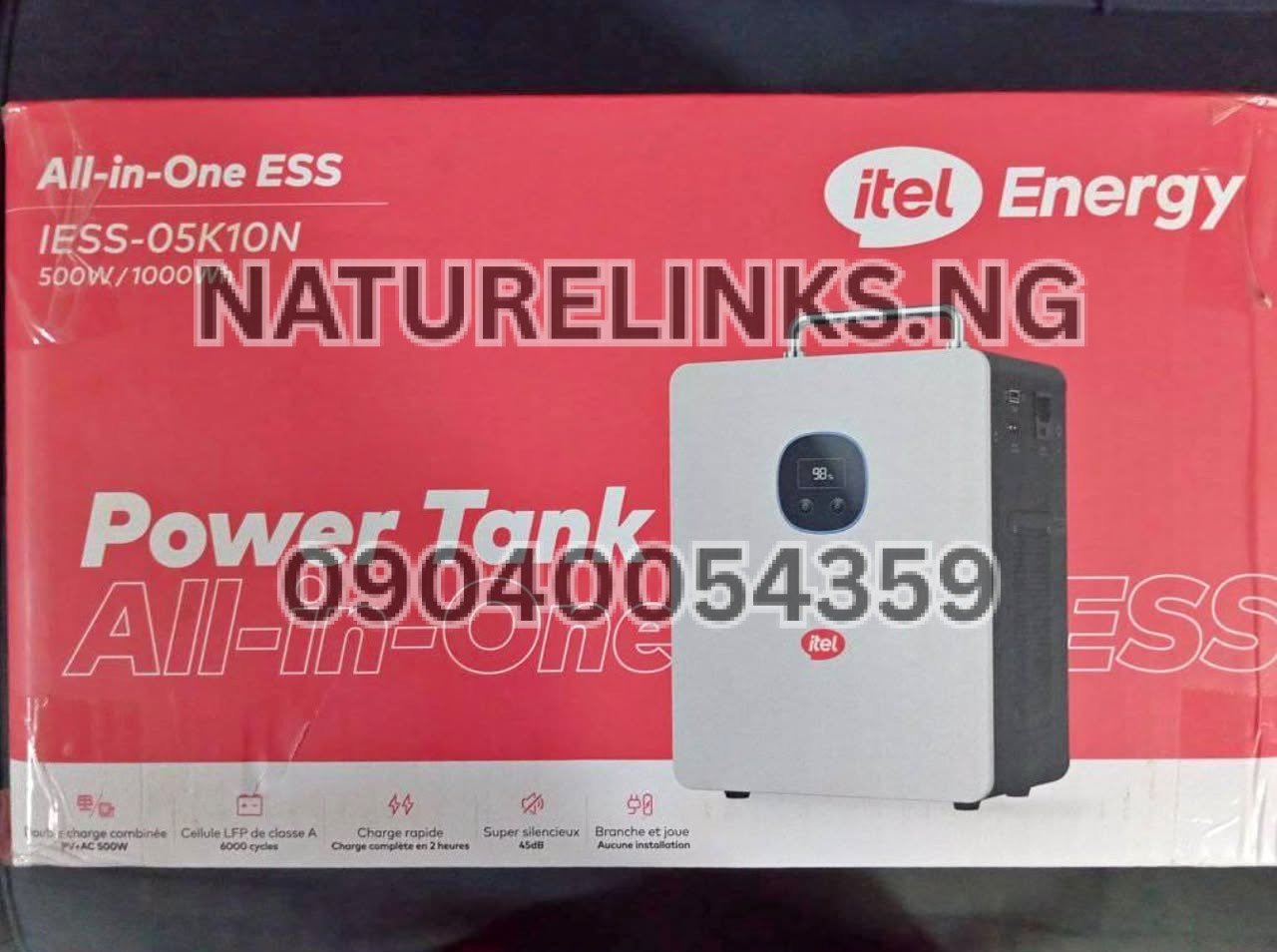
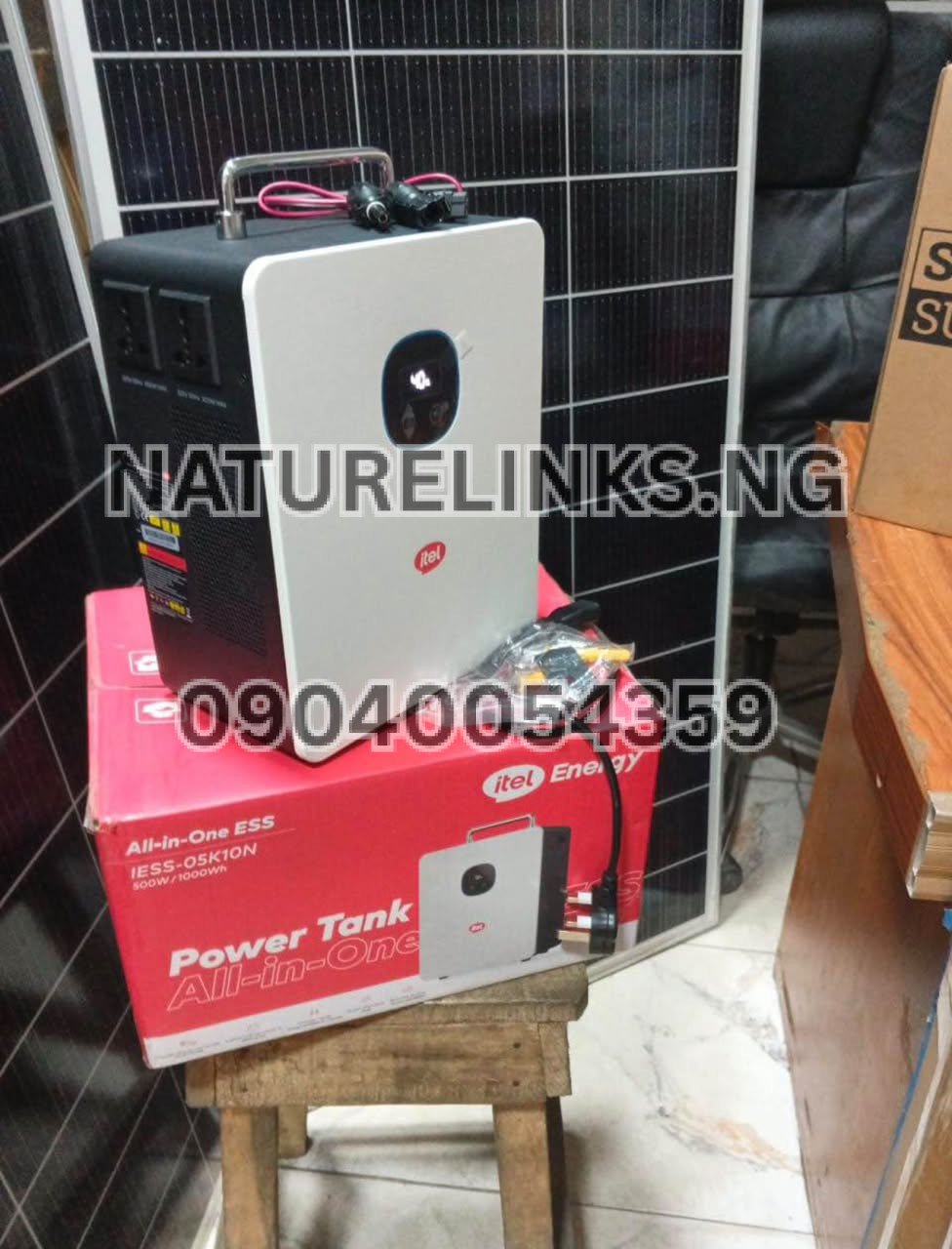
The commonly listed Itel Power Tank has a 1,000Wh battery and can accept up to 400W of solar input through its MPPT solar charging system.
A simple theoretical calculation is:
1,000Wh ÷ 400W = 2.5 hours
So, in a perfect theoretical situation, approximately 2.5 hours of continuous 400W solar input could provide 1,000Wh of energy.
But real solar charging is different.
Solar panels rated at 400W do not necessarily produce 400W from sunrise to sunset. Output changes throughout the day.
For Nigerian buyers, a practical planning estimate is therefore around 4–6 hours of strong solar production for a substantial/full recharge from a deeply discharged battery, depending on the installation and weather.
Can 4 Hours of Sunlight Fully Charge Itel Power Tank?
It can be possible under favorable conditions, but it should not be treated as a guaranteed charging time.
The documented Power Tank accepts up to 400W of PV input.
If solar production averaged approximately 250W over four effective charging hours:
250W × 4 hours = 1,000Wh
That is theoretically enough energy to replenish a 1,000Wh battery before accounting for charging and conversion losses.
If the average solar input is lower, more time will be needed.
This is why 4–6 hours of effective sunshine is a more useful planning concept than saying that the Power Tank always needs exactly four hours.
How Long Does Itel Power Tank Take to Charge With Solar?
The answer depends on how much solar power reaches the Power Tank.
For the documented 1kWh configuration:
- Battery capacity: 1,000Wh
- Maximum PV input: 400W
- Solar controller: MPPT
- Solar input voltage: published as approximately 11–60V on the listed configuration.
At the theoretical maximum:
1,000Wh ÷ 400W = 2.5 hours
However, actual solar charging will generally take longer because panel output fluctuates.
For example:
| Average Solar Input | Theoretical Time for 1,000Wh |
|---|---|
| 100W | 10 hours |
| 150W | 6.7 hours |
| 200W | 5 hours |
| 250W | 4 hours |
| 300W | 3.3 hours |
| 350W | 2.9 hours |
| 400W | 2.5 hours |
These are simplified calculations and do not represent guaranteed real-world charging times.
How Many Sunlight Hours Does a 1000Wh Itel Power Tank Need?
A 1,000Wh Power Tank needs approximately 1,000 watt-hours of energy to replenish an empty battery, subject to charging-system losses and battery-management limits.
With a maximum 400W PV input, the theoretical minimum is approximately 2.5 hours.
In practical Nigerian conditions, buyers should generally plan around several hours of strong solar production rather than expecting the maximum 400W continuously.
The exact result depends on the solar panel arrangement.
How Many Solar Panels Does Itel Power Tank Need?
The answer depends on the panel wattage and the Power Tank’s PV input limits.
For example, a buyer might use:
- One 400W-compatible solar array
- Two 200W panels
- Four 100W panels
- Another configuration that stays within the Power Tank’s specified voltage and current limits
The key issue is not simply the total wattage. Panel voltage, current and configuration must also be compatible with the Power Tank’s MPPT input.
The listed configuration specifies a 400W maximum PV input and an 11–60V solar input range.
Always confirm the exact electrical specifications before connecting panels.
Can Itel Power Tank Charge on Cloudy Days?
Yes, solar panels can still generate electricity during cloudy weather, but their output is generally reduced compared with strong direct sunlight.
Consequently, an Itel Power Tank may charge more slowly on:
- Heavily cloudy days
- Rainy days
- Early mornings
- Late afternoons
- Days with significant shading
This is particularly important during Nigeria’s rainy season.
If the solar array produces only 100W instead of 400W, the theoretical charging time becomes much longer.
Does Itel Power Tank Need Direct Sunlight?
Direct, unobstructed sunlight generally provides better solar production than heavily shaded conditions.
The panels do not necessarily need perfect direct sunlight every minute of the day, but shading can substantially reduce the available solar power.
Avoid placing panels where they are shaded by:
- Buildings
- Trees
- Water tanks
- Walls
- Poles
- Satellite dishes
- Other solar panels
- Roof structures
Proper panel positioning can make a major difference to charging performance.
What Time of Day Is Best to Charge Itel Power Tank With Solar?
Solar production is generally strongest around the middle portion of the day when sunlight is more intense.
A typical solar-charging day may look approximately like this:
Morning: Solar production starts increasing.
Late morning: Production becomes stronger.
Around midday: Solar production may approach the system’s higher output.
Afternoon: Production gradually decreases.
Evening: Solar generation falls significantly.
Night: Solar panels do not provide meaningful photovoltaic energy.
Actual production depends on location, weather, season, panel orientation and installation.
Does Nigerian Weather Affect Itel Power Tank Charging?
Yes.
Weather is one of the biggest factors affecting solar charging.
Nigeria receives substantial solar energy, but solar intensity changes throughout the year and varies by location and weather conditions.
A bright, clear day can provide substantially more solar energy than a heavily overcast or rainy day.
Therefore, someone asking “How many hours of sunlight does Itel Power Tank need?” should consider effective solar production, rather than simply counting daylight hours.
Itel Power Tank Solar Charging in Lagos
In Lagos, solar charging performance can change from one day to another because of cloud cover, rain, humidity, haze and panel positioning.
A properly installed solar array can still provide useful charging, but buyers should avoid assuming that every day will deliver the same number of effective solar hours.
For a buyer in Lagos, the solar installer should calculate the panel configuration according to:
- Power Tank PV input limits
- Expected solar resource
- Roof orientation
- Available installation area
- Shading
- Cable distance
- Panel specifications
Itel Power Tank Solar Charging in Nigeria
The Itel Power Tank is particularly relevant to Nigerian buyers because it can combine stored battery energy with solar charging.
The commonly listed 1kWh model has:
- 1,000Wh battery
- LiFePO₄ chemistry
- 500W continuous AC output
- 400W maximum MPPT solar input
- AC/grid charging
- Solar charging
- UPS functionality
- Battery-management and protection systems.
This allows users to recharge from solar when suitable sunlight is available and use stored electricity when the grid is unavailable.
Can Itel Power Tank Charge Fully in One Day?
Yes, a full recharge in one day can be possible when the solar installation receives sufficient solar energy.
For example, a solar system capable of providing a high average charging input for several effective hours can replenish a 1,000Wh battery.
However, the phrase “one day” does not mean the panels must deliver 400W continuously for the entire day.
Solar output rises and falls.
What matters is the total energy harvested throughout the charging period.
Can a 400W Solar Panel Fully Charge Itel Power Tank?
A properly matched 400W solar array can provide up to the Power Tank’s listed 400W maximum PV input on the documented configuration.
In theory:
400W × 2.5 hours = 1,000Wh
But actual charging will normally take longer than this simple calculation because the panel will not produce 400W continuously and there are system losses.
A 400W-rated panel or array may produce substantially less than 400W during many parts of the day.
What Happens If I Use More Than 400W of Solar Panels?
This is an important technical question.
The documented configuration has a 400W maximum PV input.
Do not exceed the manufacturer’s specified voltage/current limits simply because you want faster charging.
The Power Tank can only accept power within its designed charging limits.
A solar installer should verify the complete electrical configuration before connecting a panel array.
Does a Bigger Solar Panel Charge Itel Power Tank Faster?
Not necessarily.
If the Power Tank’s maximum accepted PV input is 400W, providing substantially more available panel power does not automatically mean the Power Tank will charge at an unlimited rate.
The system’s input limits still apply.
A larger array may sometimes provide more useful energy during weaker sunlight conditions, depending on the configuration, but the Power Tank’s electrical input specifications must not be exceeded.
Is 400W Solar Enough for Itel Power Tank?
For the documented 1,000Wh configuration, the maximum listed PV input is 400W.
Whether 400W is enough for your needs depends on how much energy you consume and how quickly you want to recharge.
For example, if you use 500Wh during an outage and then receive strong solar input later, the system has to replace that consumed energy before it can return to full charge.
If you use the Power Tank heavily every day, your solar installation should be designed around your daily energy consumption rather than only the battery capacity.
How Long Does 200W Solar Take to Charge Itel Power Tank?
A simplified calculation is:
1,000Wh ÷ 200W = 5 hours
So approximately five hours would be required under an unrealistic assumption of continuous 200W input.
In real conditions, it can take longer because the panel’s output varies and charging losses occur.
This illustrates why a buyer should not automatically assume that a 200W panel will fully recharge a 1kWh Power Tank in exactly five hours.
How Long Does 300W Solar Take to Charge Itel Power Tank?
The theoretical calculation is:
1,000Wh ÷ 300W = approximately 3.3 hours.
Actual charging can take longer because 300W may not be maintained throughout the solar day.
Clouds, heat, shading, panel angle and other factors can reduce average output.
How Long Does 400W Solar Take to Charge Itel Power Tank?
At a continuous theoretical 400W:
1,000Wh ÷ 400W = 2.5 hours.
This is the theoretical minimum based on battery capacity and maximum solar input.
In practical use, allowing several effective solar hours is more realistic.
Does Solar Charge Slower Than NEPA?
It depends on the charging source and available power.
The Power Tank supports both solar and AC/grid charging on the documented configuration.
Grid charging can provide a more predictable charging input when electricity is available.
Solar charging varies throughout the day.
The advantage of solar is that it can provide an independent energy source when grid electricity is unavailable.
Can Itel Power Tank Charge From Solar and Grid Together?
The documented Itel Power Tank configurations support solar and AC/grid charging. Product information also describes dual charging capability.
The exact behavior and maximum combined charging power depend on the model and operating configuration.
Buyers who specifically want simultaneous grid-and-solar charging should confirm the exact model’s manual and datasheet before purchasing.
How Much Does Itel Power Tank Cost in Nigeria?
Price changes according to the seller, model, package and market conditions.
Recent Nigerian listings show the 1,000Wh configuration at different prices, including listings around ₦279,000 and other marketplace listings at higher prices.
For example, a current Nigerian retailer listing gives an Itel Power Tank 1kWh unit at ₦279,000, while Jumia listings show multiple configurations and bundles at different prices.
Because prices change, Nigerian buyers should confirm the latest price, exact model, warranty and accessories before payment.

Itel Power Tank 1000Wh Price in Nigeria
The 1,000Wh Power Tank is one of the configurations frequently searched by Nigerian buyers.
Current online listings demonstrate that the price can vary considerably depending on whether the purchase includes:
- Power Tank only
- Solar panel
- Solar cables
- Installation
- Warranty
- Delivery
- Other accessories
For example, a Nigerian listing currently displays the 1,000Wh unit at ₦279,000, while a Konga listing for a Power Tank bundled with a 400W solar panel is substantially higher.
Where to Buy Genuine Itel Power Tank in Nigeria?
For customers looking for an Itel Power Tank in Nigeria, the supplied distributor information is:
The Best Seller: Nature Links Nigeria Limited [NatureLinks.NG]
Distributor: Nature Solar Global Limited
CEO: Mr. Joseph Chikeleze
Call: 07049528019
WhatsApp: 09040054359
Shop Address: F1571 Upstairs (F-Line), Alaba International Market, Lagos State 🇳🇬
Before purchasing, ask for confirmation of:
- Exact model number
- 1,000Wh battery capacity
- 500W continuous output where applicable
- Solar input rating
- Current price
- Warranty
- Solar-panel compatibility
- Included accessories
Itel Power Tank Key Features
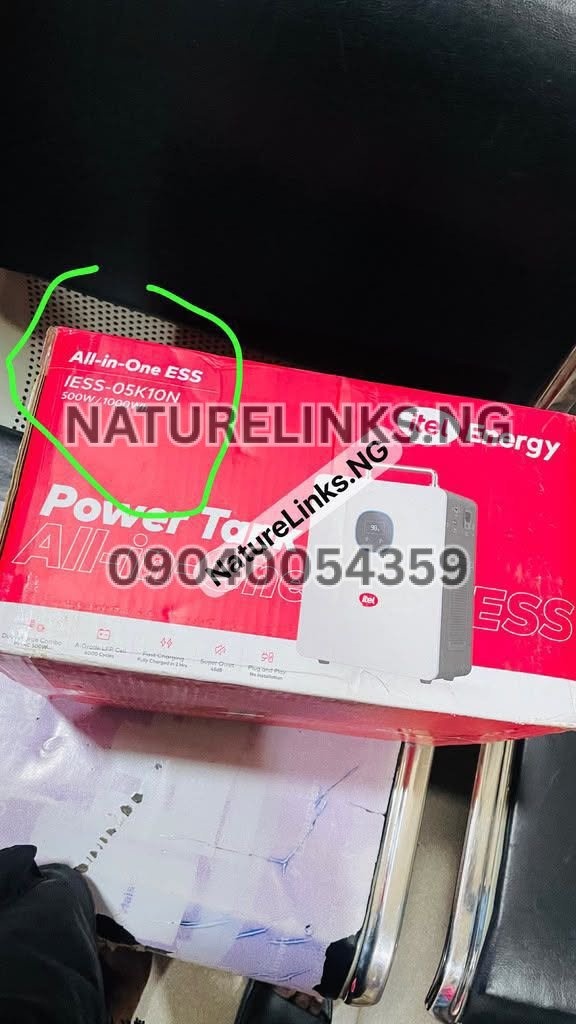
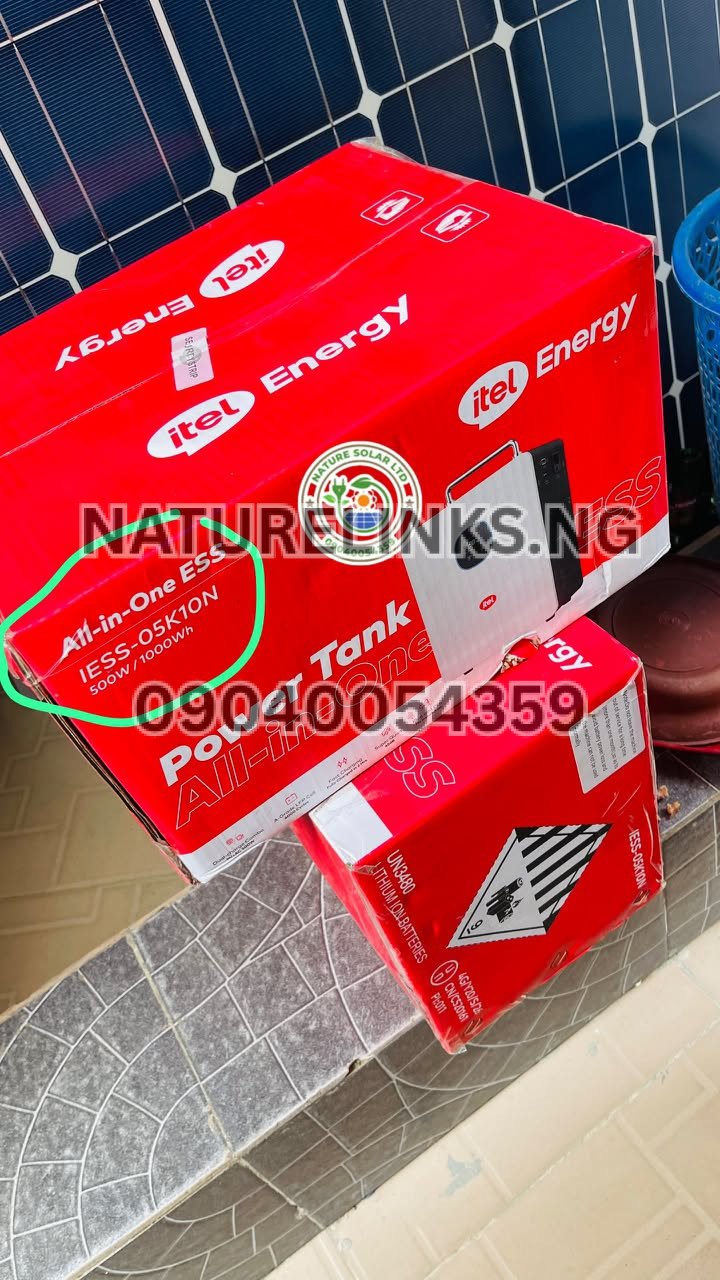
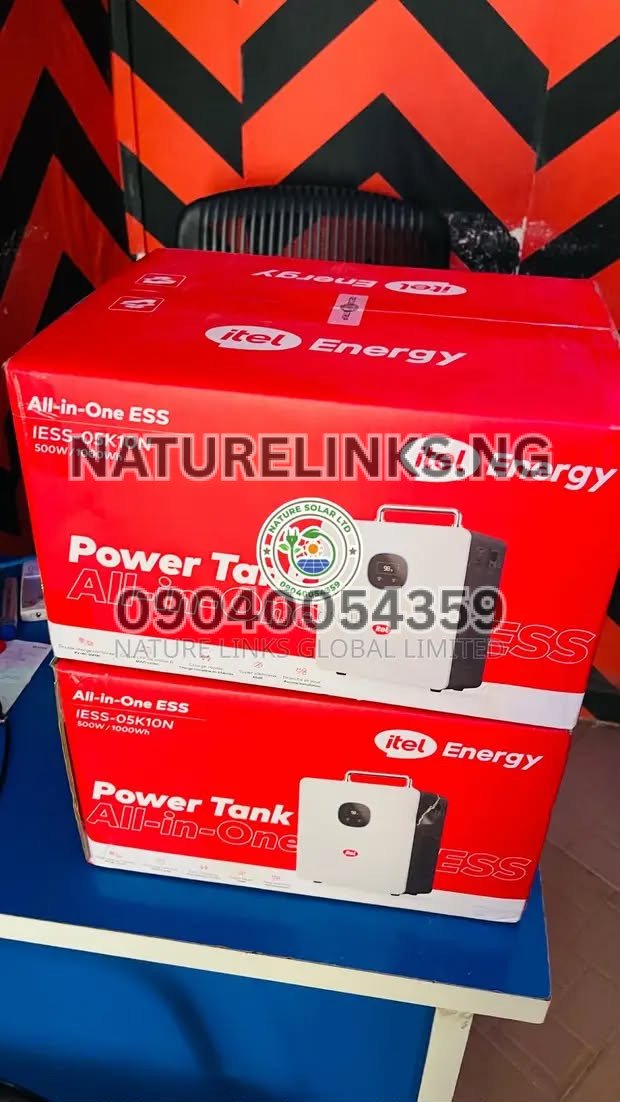
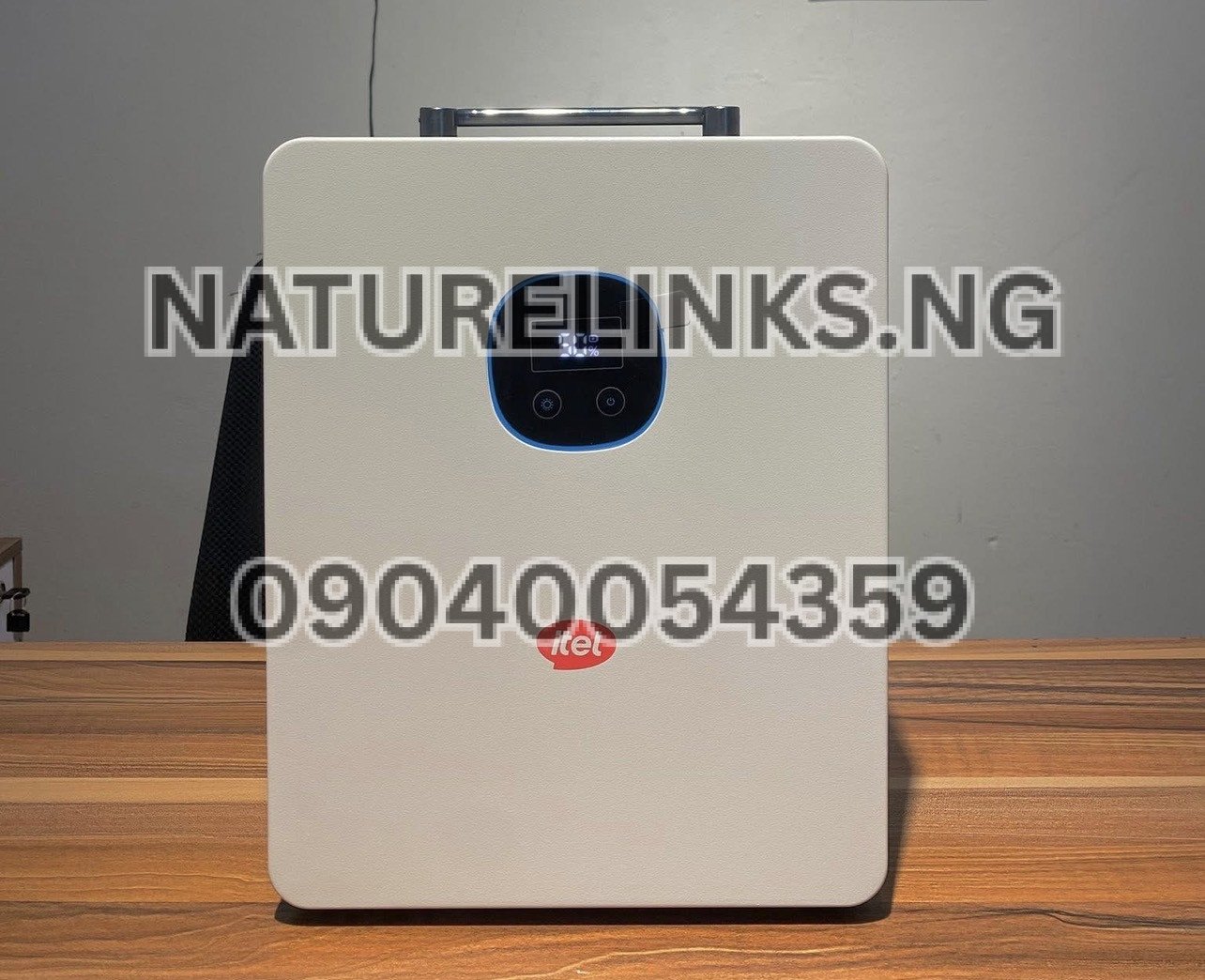
The commonly listed IESS-05K10N configuration includes:
- 1,000Wh / 1kWh LiFePO₄ battery
- 500W continuous pure sine-wave inverter
- Up to 400W MPPT solar input
- AC/grid charging
- Solar charging
- UPS functionality
- Approximately 6,000-cycle battery rating on published specifications
- 230V AC output
- 50Hz operation
- Intelligent fan cooling
- Overload protection
- Short-circuit protection
- Over-temperature protection
- Voltage protection.
How to Get Faster Solar Charging From Itel Power Tank
If your goal is to reduce charging time, focus on the entire solar system rather than simply buying the largest panel.
Use a Suitable Solar Array
The panels must meet the Power Tank’s voltage and current requirements.
Reduce Shading
Even partial shading can reduce solar production.
Position Panels Properly
The installer should optimize the panel orientation and tilt for the installation location.
Keep Panels Clean
Dust and dirt can reduce available solar generation.
Use Appropriate Cable Sizes
Excessive voltage drop between the panels and Power Tank can reduce usable charging power.
Avoid Exceeding Input Limits
The documented configuration has a 400W maximum PV input.
Does Rain Stop Itel Power Tank Solar Charging?
Rain does not necessarily mean that solar panels produce zero electricity, but heavy cloud cover can significantly reduce solar output.
During periods of heavy rain and dense clouds, charging can become much slower.
This is one reason why users who depend entirely on solar should consider their expected daily energy consumption and local weather patterns when sizing their system.
Does Heat Affect Solar Panel Charging?
Solar panels require sunlight, but high panel temperatures can affect their electrical performance.
The important point for buyers is that very hot weather does not automatically mean maximum solar output.
Good installation practices, airflow around panels and correct system design all contribute to performance.
How Many Hours of Sunlight Does Itel Power Tank Need in Rainy Season?
There is no reliable single number for the rainy season.
On a bright rainy-season day, the Power Tank can receive useful solar energy.
On a heavily overcast day, charging may be considerably slower.
Therefore, users who need dependable daily recharging may want to combine solar charging with grid charging where available.
Can Itel Power Tank Run While Solar Charging?
The exact behavior depends on the model and operating mode.
The Power Tank is designed as an integrated energy-storage system, and documented configurations include UPS functionality.
If appliances are operating while solar power is entering the battery, some of the incoming solar energy may be used by the appliances rather than increasing the battery’s state of charge.
For example, if solar input is 300W but connected appliances consume 100W, the net energy available to replenish the battery may be substantially lower than 300W.
Why Does My Itel Power Tank Charge Slowly in Full Sun?
Several things can cause slow charging:
- Solar panels are not actually producing their rated power.
- Panels are partially shaded.
- Panels are dirty.
- The sun angle is unfavorable.
- Clouds or haze reduce irradiation.
- Cable losses reduce available power.
- The battery is nearing full charge.
- The solar configuration is not correctly matched.
- The Power Tank is limiting input according to its charging system.
- Connected appliances are consuming part of the incoming energy.
A solar meter or suitable monitoring equipment can help determine the actual PV input.

Can I Use Itel Power Tank Without Solar Panels?
Yes.
The documented configuration supports AC/grid charging, so the Power Tank does not require solar panels to operate as a rechargeable backup power station.
Solar panels are useful when you want an alternative source for replenishing the battery.
This gives buyers flexibility to use:
Grid → Power Tank
or
Solar → Power Tank
or supported configurations involving both sources.
Is Itel Power Tank Good for Nigerian Homes?
The 1kWh Power Tank can be useful for essential low-to-moderate-power electronics such as:
- Routers
- Laptops
- LED lights
- Televisions
- POS machines
- Small fans
- Networking equipment
- Selected home-office equipment
The commonly listed configuration has a 500W continuous inverter output, so buyers should calculate their total appliance load before purchase.
What Can a 1000Wh Itel Power Tank Power?
A 1,000Wh battery can store approximately 1kWh of energy.
For illustration:
- 50W load → about 20 hours theoretically
- 100W load → about 10 hours theoretically
- 200W load → about 5 hours theoretically
- 300W load → about 3.3 hours theoretically
- 500W load → about 2 hours theoretically
Actual runtime will be shorter because inverter efficiency, battery-management limits and other factors affect usable energy.
Can Itel Power Tank Power a Fridge?
Check the refrigerator’s running and starting wattage before connecting it.
A refrigerator compressor can require additional startup power.
The commonly listed Power Tank has a 500W continuous output, although some specifications list higher surge capability.
Do not assume that because a refrigerator’s average consumption appears low, it will automatically work safely with the Power Tank.
Can Itel Power Tank Power a Fan and TV?
A suitably sized fan and television can potentially be operated if their combined power consumption remains within the Power Tank’s continuous output.
For example:
TV: 70W
Fan: 50W
Total: 120W
This would be well below a 500W continuous output rating, although actual appliance consumption should be checked from the labels or manufacturer’s specifications.
Can Itel Power Tank Power a Laptop and Router?
Yes, these are examples of the types of lower-power electronics for which the documented 1kWh Power Tank is commonly marketed.
A laptop and router combination generally consumes considerably less power than high-power heating appliances.
This makes the Power Tank useful for remote workers, students, small offices and home internet users.
Frequently Asked Questions
1. How many hours of sunlight does Itel Power Tank need?
There is no fixed number because solar output changes throughout the day. For the 1,000Wh model with up to 400W PV input, the theoretical minimum at continuous 400W is about 2.5 hours. In practical conditions, planning around 4–6 effective solar-production hours is more realistic for a substantial/full recharge, depending on weather and installation.
2. Can Itel Power Tank charge fully in 4 hours of sunlight?
It can be possible if the solar system produces enough average power during those hours. However, four hours of strong sunlight does not guarantee four hours at the panel’s maximum rating.
3. How many watts of solar does Itel Power Tank need?
The documented 1kWh configuration supports up to 400W maximum PV input.
4. Can I use a 400W solar panel with Itel Power Tank?
A compatible 400W solar array can match the documented 400W maximum PV input, provided its voltage and current are within the Power Tank’s specified limits.
5. Can Itel Power Tank charge on cloudy days?
Yes, but charging can be significantly slower because solar-panel output falls when sunlight intensity decreases.
6. Can Itel Power Tank charge at night?
Solar panels cannot generate meaningful photovoltaic power without sunlight. The Power Tank can instead be charged from an appropriate AC/grid source when electricity is available.
7. How long does Itel Power Tank take to charge with solar?
At a theoretical constant 400W input, a 1,000Wh battery would require approximately 2.5 hours. Real-world charging normally takes longer because solar output fluctuates and charging losses occur.
8. What is the Itel Power Tank 1000Wh price in Nigeria?
Current listings vary by seller and package. A recent Nigerian listing shows ₦279,000 for a 1,000Wh configuration, while bundled configurations can cost considerably more.
9. Can Itel Power Tank use solar and NEPA?
The documented configuration supports both solar and AC/grid charging.
10. Where can I buy genuine Itel Power Tank in Nigeria?
Contact Nature Links Nigeria Limited / Nature Solar Global Limited on 07049528019 or WhatsApp 09040054359, or visit F1571 Upstairs (F-Line), Alaba International Market, Lagos State 🇳🇬 to confirm the current product, price, warranty and availability.
Final Answer: How Many Hours of Sunlight Does Itel Power Tank Need?
If your main search is “How many hours of sunlight does Itel Power Tank need?”, the most useful answer is:
A 1,000Wh Itel Power Tank with its documented 400W maximum solar input has a theoretical minimum of about 2.5 hours at a continuous 400W input, but real-world users should generally plan around several effective solar-production hours—roughly 4–6 hours for a substantial/full recharge under favorable conditions.
The difference occurs because a solar panel does not produce its rated maximum continuously. Morning and evening production is lower, clouds can reduce output, panels can be shaded, and temperature and installation conditions affect performance.
The documented Power Tank has a 1,000Wh LiFePO₄ battery and 400W MPPT solar input, while Nigerian listings confirm that the product is sold locally in several configurations.
For the best results, use a properly sized solar array, keep panels free from avoidable shading and confirm that the panel voltage and current remain within the Power Tank’s specified PV limits.

Conclusion
The Itel Power Tank can be a practical solar-assisted backup solution for Nigerian homes, offices, shops, POS operators, students and remote workers. The commonly listed 1,000Wh configuration has a 400W maximum MPPT solar input, meaning that a perfect 400W input would theoretically replenish 1,000Wh in about 2.5 hours.
In real Nigerian conditions, however, solar production changes throughout the day. For this reason, 4–6 effective hours of good solar production is a more useful planning range than assuming a fixed 2.5-hour charging time.
Buyers should also remember that 1,000Wh is battery capacity, while 400W is the maximum solar charging input. They describe different aspects of the Power Tank and should not be confused.
For current Itel Power Tank prices, genuine products, solar-panel compatibility, warranty and availability in Nigeria, contact:
The Best Seller: Nature Links Nigeria Limited [NatureLinks.NG]
Distributor: Nature Solar Global Limited
CEO: Mr. Joseph Chikeleze
Call: 07049528019
WhatsApp: 09040054359
Shop Address: F1571 Upstairs (F-Line), Alaba International Market, Lagos State 🇳🇬


1 thought on “How many hours of sunlight does Itel Power Tank need?”