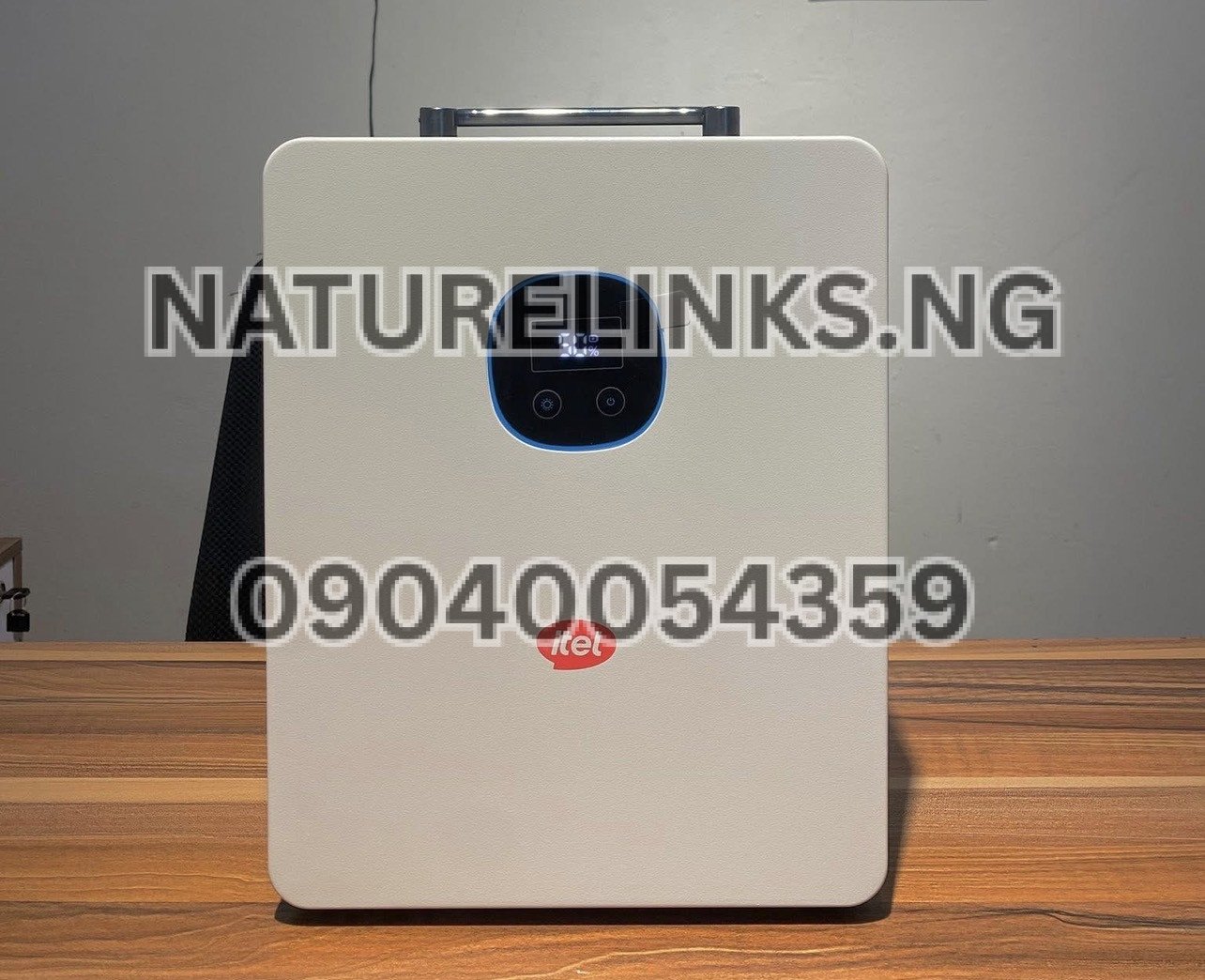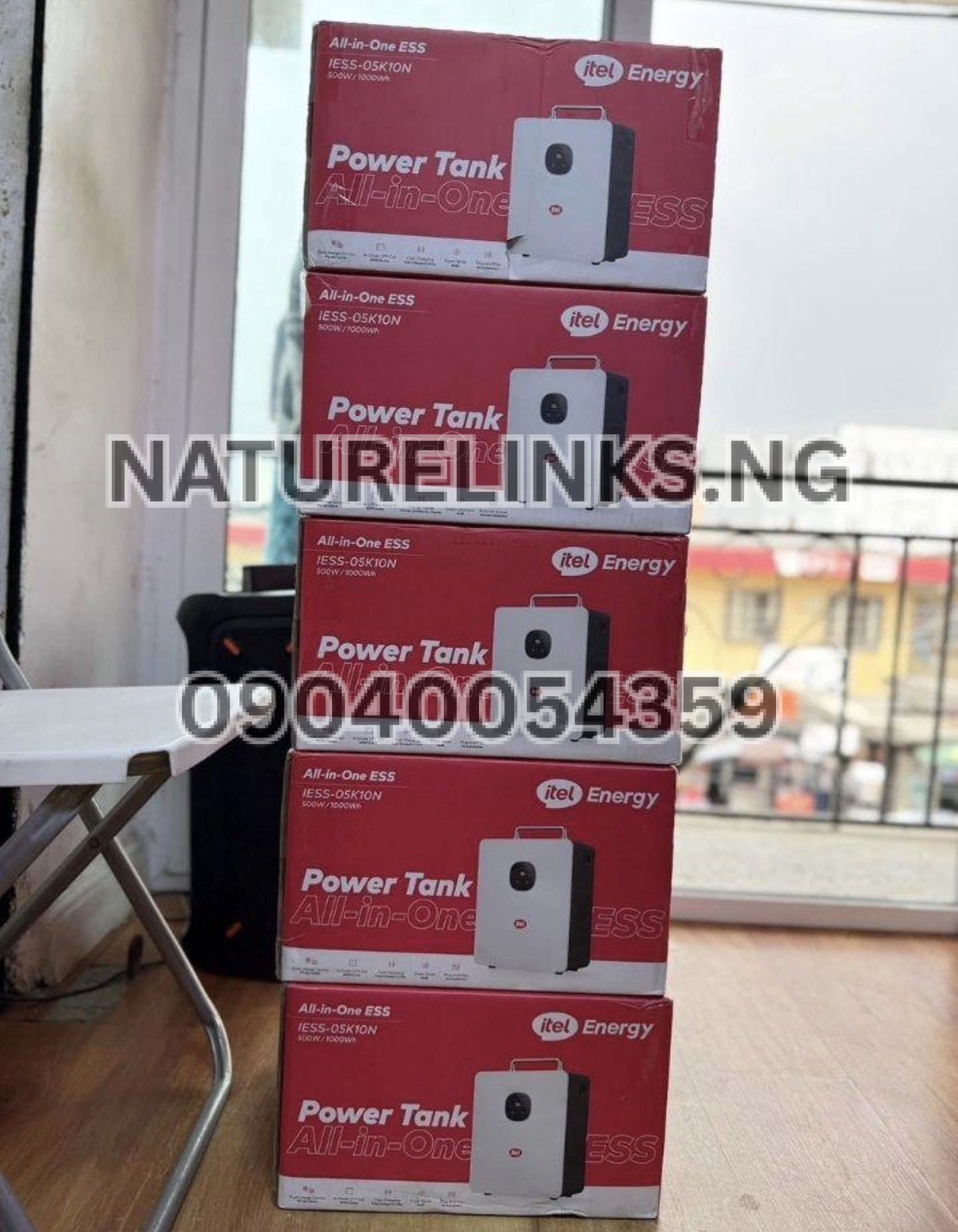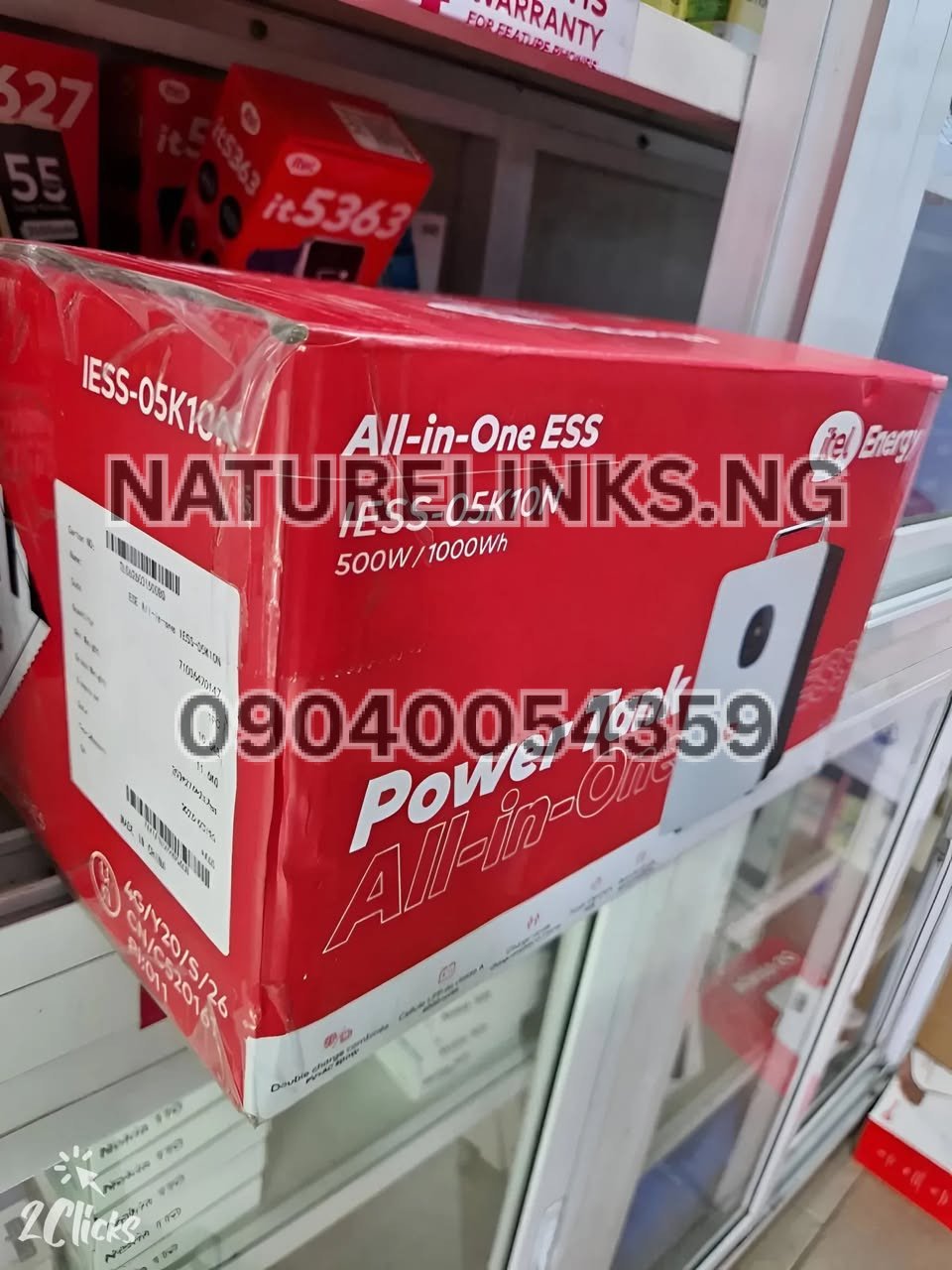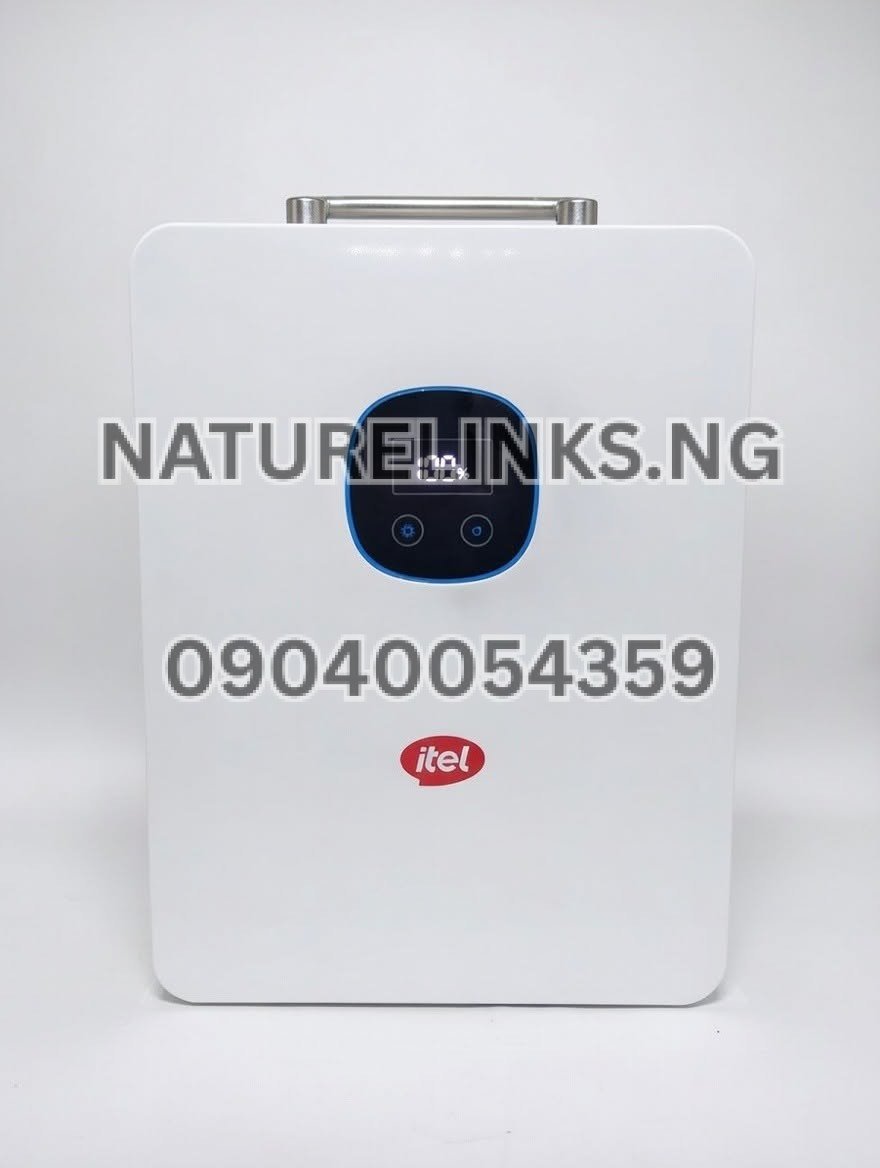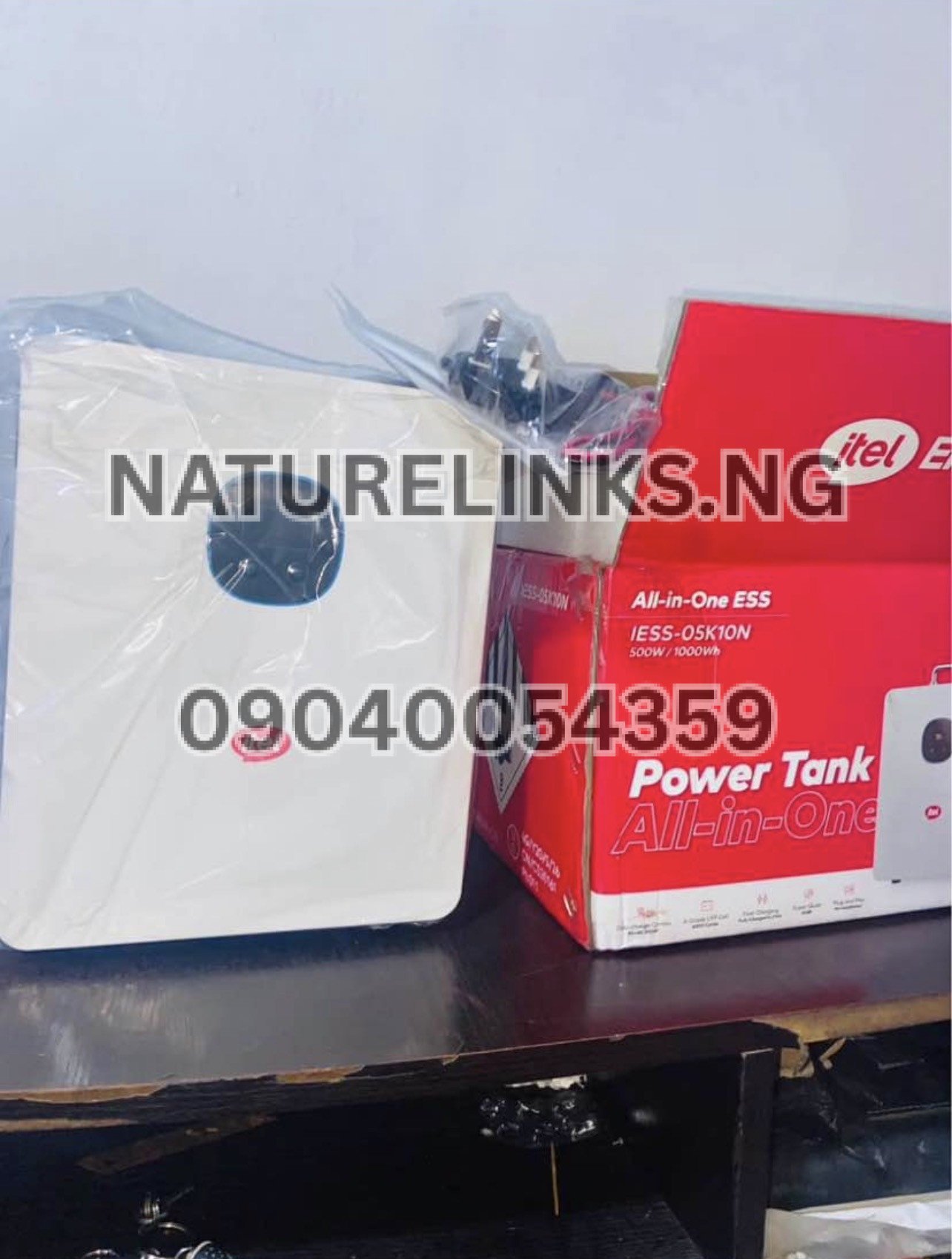
Best Seller: Nature Solar Global Limited, the accredited distributor in Nigeria, supplying genuine Itel Power Tank and related solar power solutions through Nature Links Nigeria Limited [NatureLinks.NG].
For Nigerians comparing portable power stations with traditional inverter systems, the question “Is Power Tank Better Than an Inverter?” depends largely on what you need to power, how long you need backup electricity, whether you need portability, and whether you want to expand your system later.
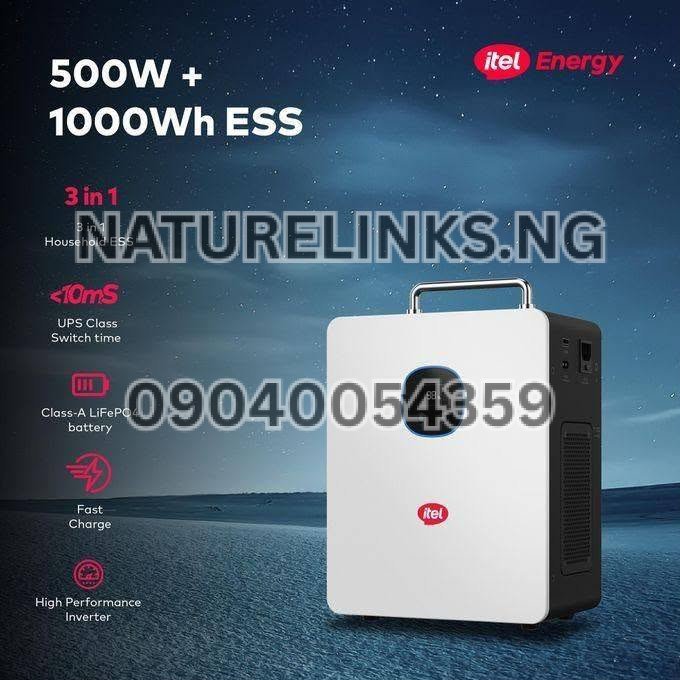
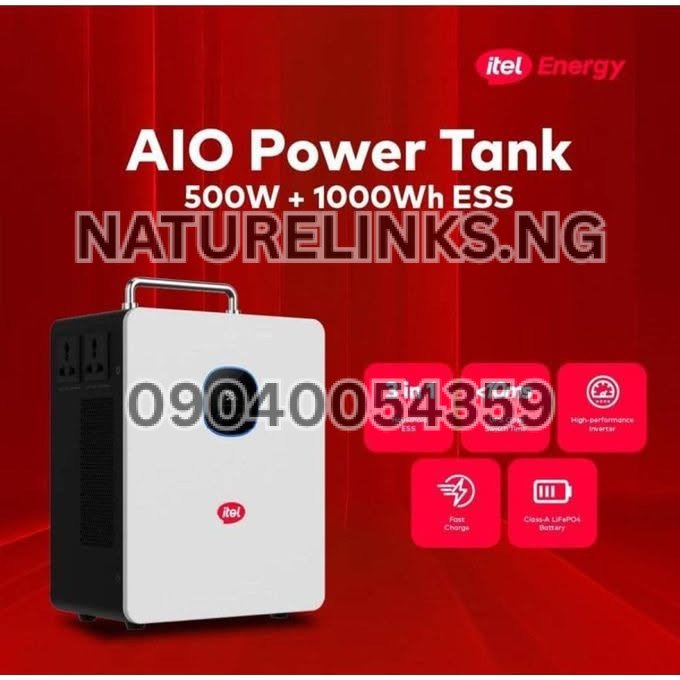
The terms can also be confusing because an Itel Power Tank already contains an inverter. The commonly listed Itel Power Tank IESS-05K10N combines a 1,000Wh LiFePO4 battery, a 500W pure-sine-wave inverter and an integrated MPPT solar charging system.
Therefore, the more useful comparison for a Nigerian buyer is usually Itel Power Tank vs a conventional separate inverter-and-battery system.
What Is an Itel Power Tank?
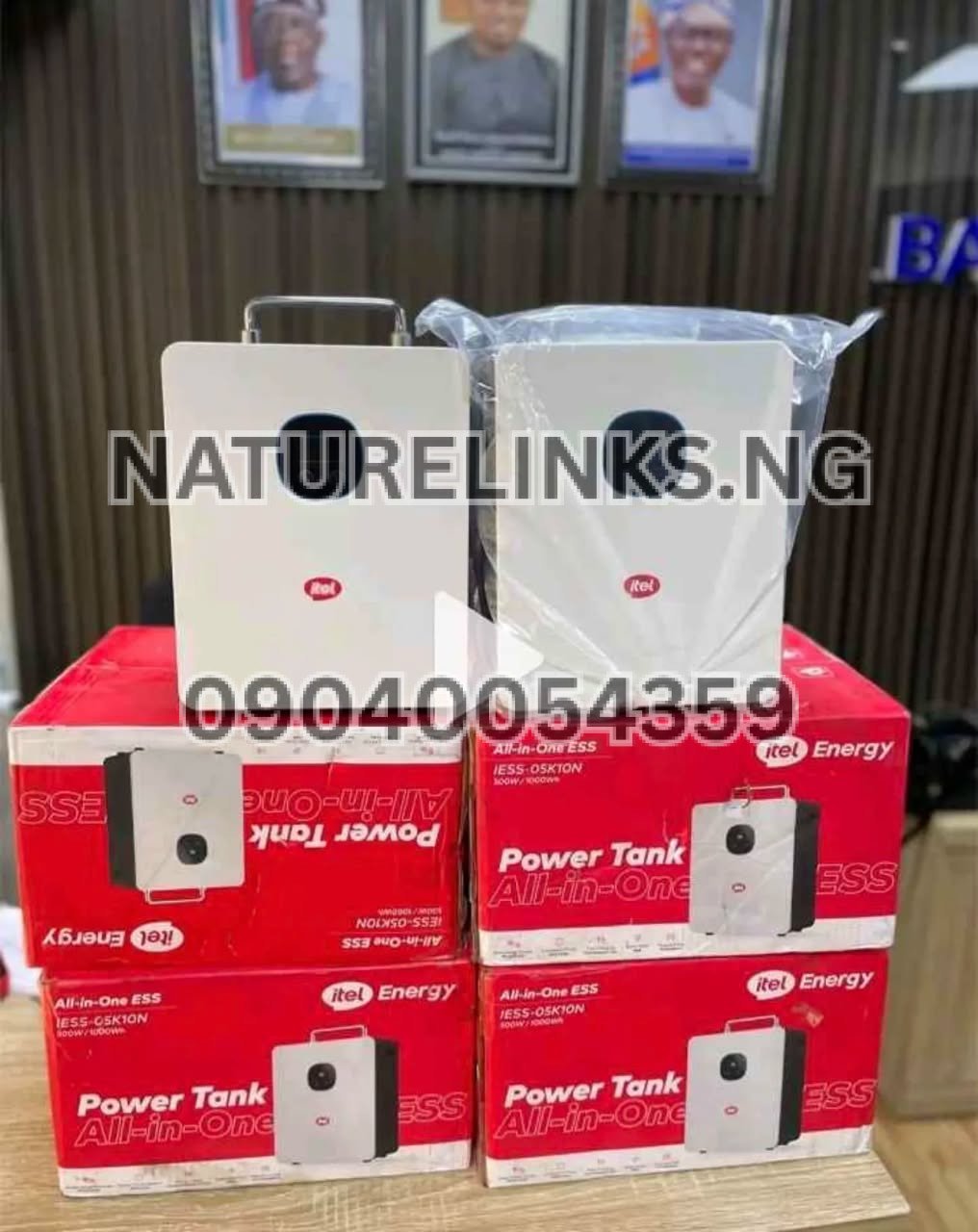
An Itel Power Tank is an all-in-one portable energy-storage system. Instead of purchasing an inverter, battery, charge controller and several accessories separately, the Power Tank integrates major components into one portable unit.
The commonly listed 1,000Wh/500W configuration includes:
- 1,000Wh / 1kWh LiFePO4 battery
- 500W continuous AC inverter output
- Pure sine-wave inverter
- Integrated MPPT solar charge controller
- Solar charging
- AC/grid charging
- Up to 400W PV input on the documented configuration
- USB and DC outputs
- AC output
- Battery-management and protection systems
- Digital battery/status display
- UPS-style functionality on supported configurations.
This means the Power Tank is not simply a battery. It is an integrated backup-power system.
What Is a Conventional Inverter System?
A conventional inverter setup normally consists of separate components such as:
- Solar panels
- Solar charge controller or hybrid inverter
- Battery bank
- Inverter
- Protection devices
- Wiring and installation equipment
- Changeover or related electrical components where required
The advantage is flexibility. You can select a larger inverter, add more batteries, increase solar capacity and configure the installation according to the electrical requirements of your home or business.
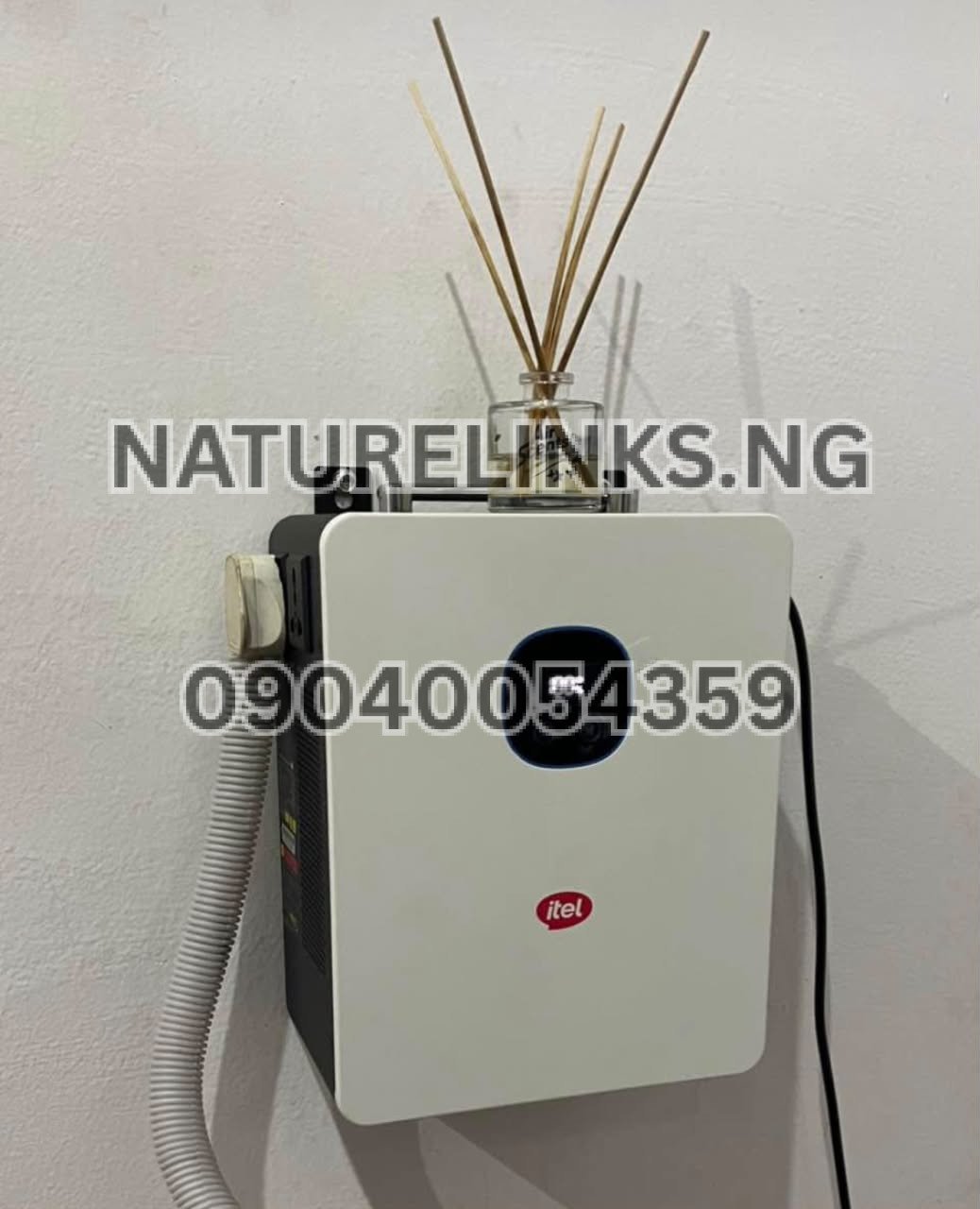
Is Power Tank Better Than an Inverter?
The answer depends on your requirements.
An Itel Power Tank can be particularly suitable when you want portable, plug-and-play backup electricity for essential appliances such as TVs, laptops, routers, lights, phones and some smaller fans or refrigeration loads, provided their combined power requirements remain within the unit’s specifications. Nigerian listings describe the 500W/1000Wh Power Tank as an all-in-one portable system for home, office and small-business backup.
A conventional inverter system can be more appropriate when you want to power a larger electrical load, install a permanent household backup system, or expand your battery and solar capacity over time.
So, rather than asking whether one is universally better, compare them according to power output, battery capacity, portability, installation, solar input, expansion and intended appliances.
Power Tank vs Inverter: What’s the Difference?
| Feature | Itel Power Tank | Conventional Inverter System |
|---|---|---|
| Design | All-in-one | Separate components |
| Portability | High | Usually fixed |
| Installation | Generally plug-and-play | Usually requires installation |
| Battery | Integrated | Purchased separately |
| Inverter | Integrated | Separate |
| Solar charging | Integrated MPPT on listed model | Depends on inverter/controller |
| Expansion | Model-dependent | Generally more flexible |
| Home-wide installation | Limited by output | Can be designed for larger loads |
| Convenience | High | Depends on installation |
| Maintenance | Generally simpler | More components to maintain |
| Small appliances | Suitable within rating | Suitable if correctly sized |
| Large loads | Limited by inverter rating | Can be designed for larger loads |
| Outdoor use | Convenient | Usually inconvenient |
| Backup during outages | Yes | Yes |
The commonly documented Itel Power Tank model has a 500W continuous AC output, so the 1,000Wh battery capacity should not be confused with 1,000W of continuous appliance power.
Itel Power Tank 500W 1000Wh: What Does It Mean?
One of the most important things Nigerians should understand before buying is the difference between watts (W) and watt-hours (Wh).
The commonly listed Power Tank has:
500W inverter output + 1,000Wh battery capacity.
500W
The 500W figure relates primarily to the inverter’s continuous AC output capability.
It means you should generally keep the connected AC load within the manufacturer’s specified output limit.
1,000Wh
The 1,000Wh figure describes the nominal energy-storage capacity of the battery.
For example, theoretically:
- 100W load × 10 hours = 1,000Wh
- 200W load × 5 hours = 1,000Wh
- 500W load × 2 hours = 1,000Wh
However, actual runtime will be shorter because of inverter losses, battery-management limits, appliance characteristics and other operating conditions.

Is Itel Power Tank Good for Nigerian Homes?
The Power Tank can be useful for households that primarily need backup power for essential electronics rather than every appliance in the house.
Potential applications include:
- Television
- Decoder
- Wi-Fi router
- Laptop
- Mobile phones
- LED lighting
- CCTV equipment
- Small fans
- POS equipment
- Small office equipment
- Selected small refrigerators, depending on startup and running requirements
The important consideration is the total load.
For example, if your connected appliances consume 300W in total, a 500W-rated system has considerably more room than if your appliances are already approaching or exceeding 500W.
Can Itel Power Tank Run a Fridge?
It can potentially run a compatible refrigerator, but buyers should not assume that every refrigerator will work simply because its advertised running wattage appears below 500W.
Refrigerators have compressors that can require higher startup power than their normal running consumption.
Therefore, before connecting a fridge, check:
- Running wattage
- Starting/surge requirement
- Compressor characteristics
- Power Tank output specification
- Whether the manufacturer’s documented surge capability is sufficient
The documented Power Tank configuration is commonly advertised with a 500W rated inverter and surge capability on listed configurations, but exact specifications should be confirmed for the particular unit before purchase.
Can Power Tank Run a TV and Fan Together?
Potentially, yes, provided their combined actual power consumption remains within the Power Tank’s output rating.
For example, a television consuming 80W and a fan consuming 60W would represent approximately 140W before considering other connected devices.
But if you add several appliances and the total load approaches the Power Tank’s rated output, the system may activate its protection mechanisms or shut down.
Always check the wattage printed on each appliance.
Power Tank vs Inverter for TV, Fan and Laptop
For a Nigerian customer who mainly needs:
- TV
- Fan
- Laptop
- Router
- Phones
- LED lights
a 1,000Wh/500W Power Tank can provide a convenient portable solution, provided the combined load remains within the unit’s limits.
The major convenience is that the battery, inverter and solar charging electronics are already integrated.
With a conventional inverter installation, you generally need to purchase and install the components separately.
Power Tank vs Inverter for a Whole House
A conventional inverter system can be configured for substantially higher loads by selecting an appropriately sized inverter and battery bank.
For example, a homeowner who wants to operate multiple circuits, larger appliances or a wider range of household equipment may require an inverter system specifically designed around those loads.
A 500W Power Tank should not be treated as a replacement for a large household inverter merely because its battery capacity is 1,000Wh.
This distinction is critical:
Battery capacity ≠ inverter output capacity.
Is Power Tank Easier to Install Than an Inverter?
Generally, yes.
The all-in-one design means the user does not have to separately mount a battery, inverter and charge controller for basic portable use.
The Power Tank can be charged and used as a portable backup unit according to its instructions.
A conventional inverter system may require:
- Battery installation
- Inverter mounting
- Solar-panel installation
- DC wiring
- Protection devices
- Proper cable sizing
- Earthing where applicable
- Changeover arrangements
- Professional electrical installation
For permanent household systems, professional installation is advisable.
Is Power Tank Portable?
One of the major differences is portability.
An installed inverter system is normally designed to remain in one location.
A Power Tank is designed as an integrated portable energy-storage product, making it easier to move between rooms, offices, shops or other suitable locations.
That can be particularly useful for:
- Renters
- Small businesses
- Students
- Remote workers
- Shops
- Offices
- Outdoor activities
- Temporary backup requirements
Power Tank for Nigerian Business Owners
Small businesses often need electricity for essential equipment without necessarily installing a complete home solar system.
Depending on the load, a Power Tank may be useful for:
- POS machines
- Routers
- Laptops
- CCTV
- LED lights
- Small displays
- Phones
- Small electronics
However, businesses should calculate their total load before buying.
A barber shop, restaurant, printing business, welding business or large office may have electrical requirements far beyond a 500W portable power station.
Power Tank vs Inverter: Which Has Better Solar Charging?
The answer depends on the specific inverter and solar system being compared.
The documented Itel Power Tank configuration has an integrated MPPT solar charge controller and supports up to approximately 400W PV input on the specified configuration.
This is convenient because the solar charging electronics are already incorporated.
A conventional solar inverter can potentially accept substantially more solar power depending on its model and specifications.
Therefore, someone planning a larger solar installation should compare the inverter’s:
- Maximum PV input
- MPPT voltage range
- Maximum PV current
- Battery voltage
- Maximum charging current
- Number of MPPT trackers
- Maximum solar array size
How Many Solar Panels Can Itel Power Tank Use?
For the commonly documented 1,000Wh/500W configuration, the listed maximum PV input is approximately 400W.
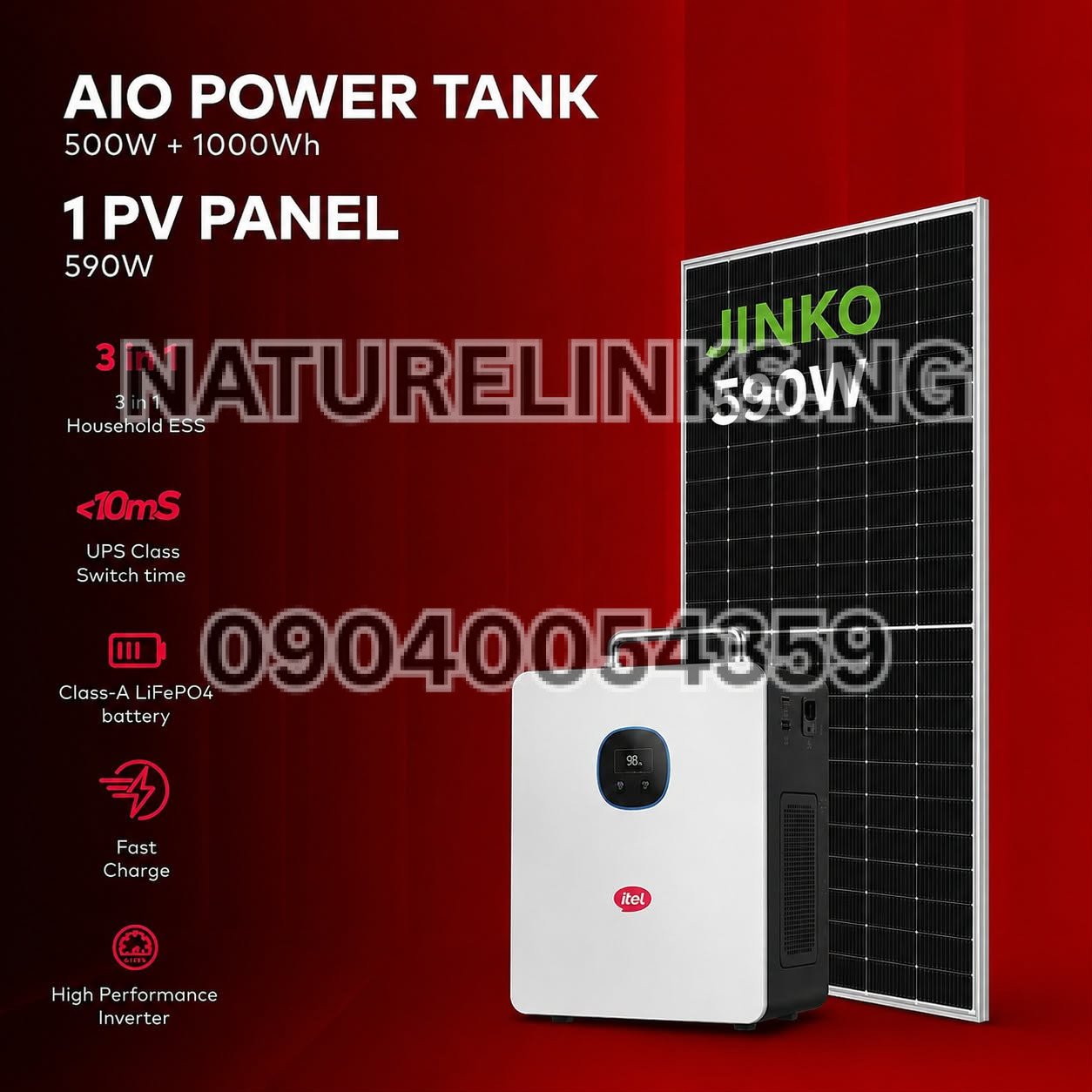
A current Itel solar listing also shows 410W, 550W and 590W panels in its product range, but the Power Tank’s own maximum PV input must be respected.
Do not connect a solar array simply because the panel’s wattage is available. The panel’s:
- Voltage
- Current
- Voc
- Vmp
- Isc
- Total wattage
must be compatible with the Power Tank’s solar-input specification.
Is Power Tank Better Than Petrol Generator?
The comparison is different because a Power Tank and petrol generator use different technologies.
A Power Tank:
- Stores electricity in a battery
- Produces no exhaust fumes during operation
- Operates quietly compared with fuel generators
- Can be charged using solar or AC
- Is portable
- Requires no petrol during operation
A petrol generator:
- Produces electricity through an engine
- Requires fuel
- Produces exhaust gases
- Produces engine noise
- Can continuously operate while fuel is supplied and the generator is appropriately maintained
For backup power, the appropriate technology depends on the user’s required load, duration, budget and operating environment.
Is Power Tank Better Than a Normal Inverter?
There is no universal answer.
The Power Tank’s main strengths are integration, portability and convenience.
A conventional inverter system’s main strengths can include higher scalability, customization and the ability to design around larger household loads.
For someone who wants a portable 1kWh backup unit for essential appliances, the Power Tank’s integrated design can be convenient.
For someone planning a larger permanent solar installation, a conventional inverter system may provide more configuration options.
Advantages of Itel Power Tank
The commonly listed Itel Power Tank configuration provides several notable features:
1. All-in-One Design
Battery, inverter and solar charging equipment are integrated.
2. LiFePO4 Battery
The documented configuration uses lithium iron phosphate battery technology.
3. Pure Sine Wave
The listed configuration uses a pure sine-wave inverter, which is suitable for many electronics when operated within its specifications.
4. Solar Charging
It supports solar charging through its integrated MPPT system.
5. AC Charging
It can also be charged from grid electricity on supported configurations.
6. Portable
Unlike a permanently installed inverter system, it can be moved.
7. Digital Monitoring
The product listings describe a digital/status display for monitoring battery and system information.
8. Protection
Listed protection features include overload, short-circuit, over-temperature and over-voltage protection.
Disadvantages and Limitations of Power Tank
A Power Tank is not designed to solve every electricity requirement.
Limited Output
A 500W continuous inverter cannot replace a 3kW, 5kW or 10kW household inverter.
Limited Solar Input
The documented configuration’s PV input is approximately 400W.
Limited Expansion
A conventional inverter and battery system generally provides more options for expanding battery storage and solar capacity.
Appliance Restrictions
High-power appliances such as electric irons, kettles, cookers, heaters and air conditioners can exceed the Power Tank’s output capability.
Runtime Depends on Load
The 1,000Wh battery does not guarantee a fixed number of hours because actual runtime depends on consumption and system losses.
What Appliances Can a 500W Power Tank Run?
Depending on their actual consumption and startup requirements, suitable examples may include:
- LED bulbs
- TV
- Decoder
- Wi-Fi router
- Laptop
- Phone chargers
- CCTV
- POS machine
- Small fan
- Selected small refrigerators
- Small electronics
Always add the wattage of appliances that will operate simultaneously.

What Appliances Should You Avoid Connecting?
Unless their electrical requirements have been specifically confirmed to be compatible, exercise caution with high-power appliances such as:
- Electric kettle
- Electric iron
- Electric cooker
- Water heater
- Microwave
- Air conditioner
- Large refrigerator/freezer
- Washing machine with high starting load
- Electric hot plate
The issue is not simply whether the appliance can physically be plugged into the Power Tank. The critical issue is whether its running and startup power requirements are within the system’s specifications.
How Long Does a 1000Wh Power Tank Last?
A simple theoretical calculation is:
Runtime ≈ Battery Capacity ÷ Load
For a 1,000Wh battery:
| Approximate Load | Theoretical Runtime |
|---|---|
| 50W | 20 hours |
| 100W | 10 hours |
| 200W | 5 hours |
| 250W | 4 hours |
| 500W | 2 hours |
These figures are theoretical and should not be interpreted as guaranteed real-world runtime. Inverter losses, battery-management limits, temperature, battery condition and appliance behaviour reduce usable runtime.
How Much Is Itel Power Tank in Nigeria?
The price changes according to the seller, availability, package, warranty and whether a solar panel is included.
Current Nigerian online listings observed during research show the commonly listed 1,000Wh/500W Power Tank around the ₦279,000–₦400,000+ range, while some sellers list higher prices or different packages.
Buyers should confirm:
- Exact model
- Battery capacity
- Inverter rating
- Solar input
- Included accessories
- Solar panel inclusion
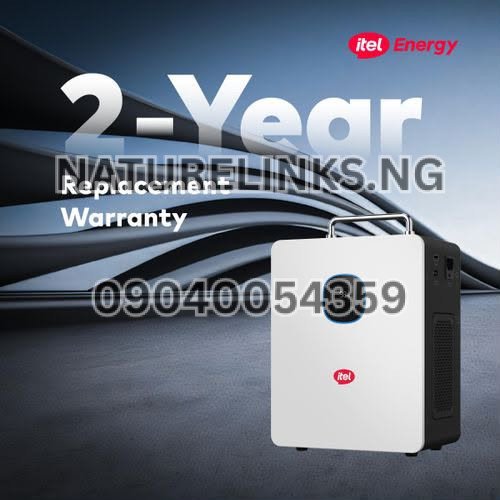
- Warranty
- Delivery cost
- Authenticity
before making payment.
Where to Buy Original Itel Power Tank in Nigeria?
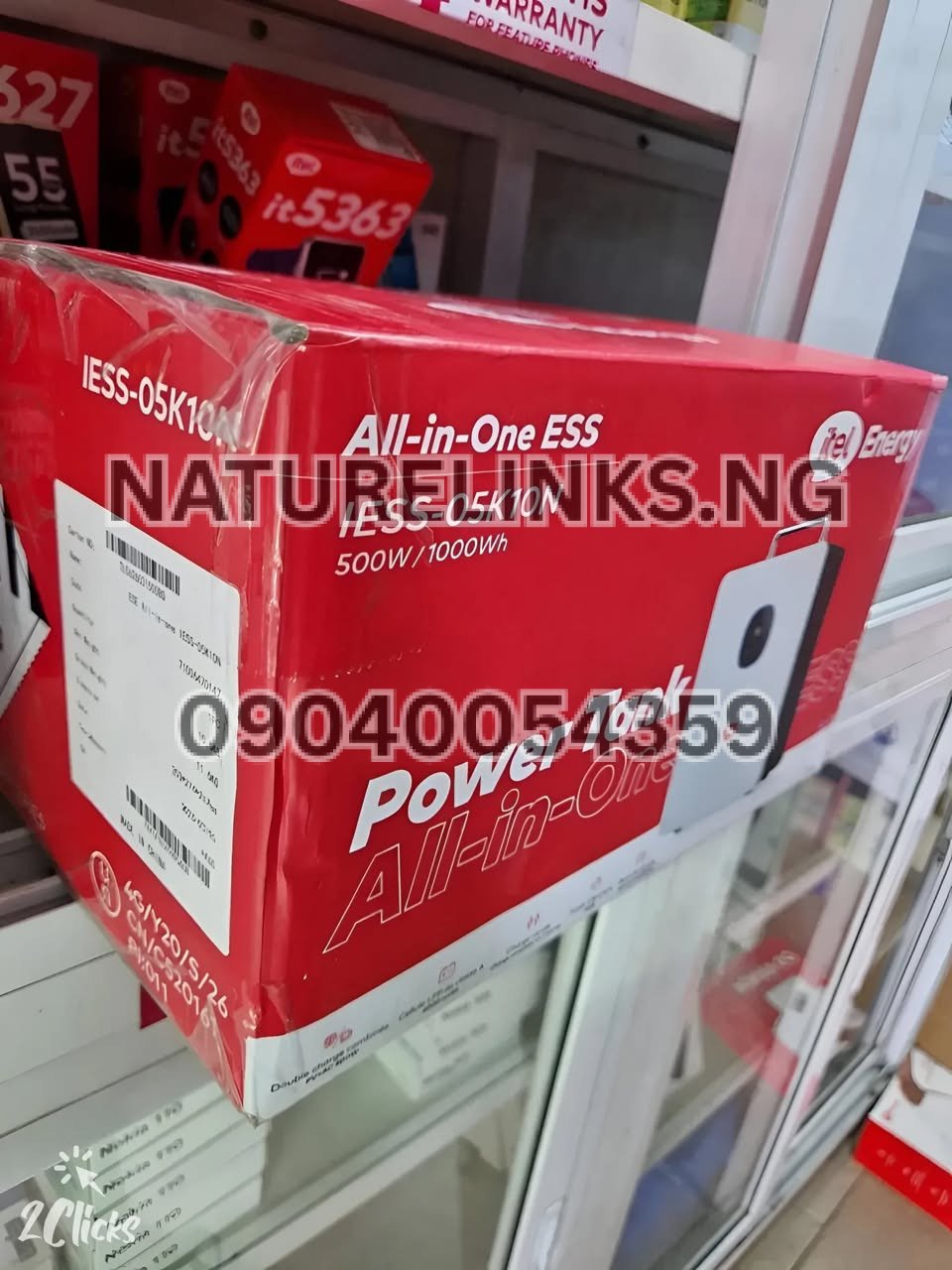
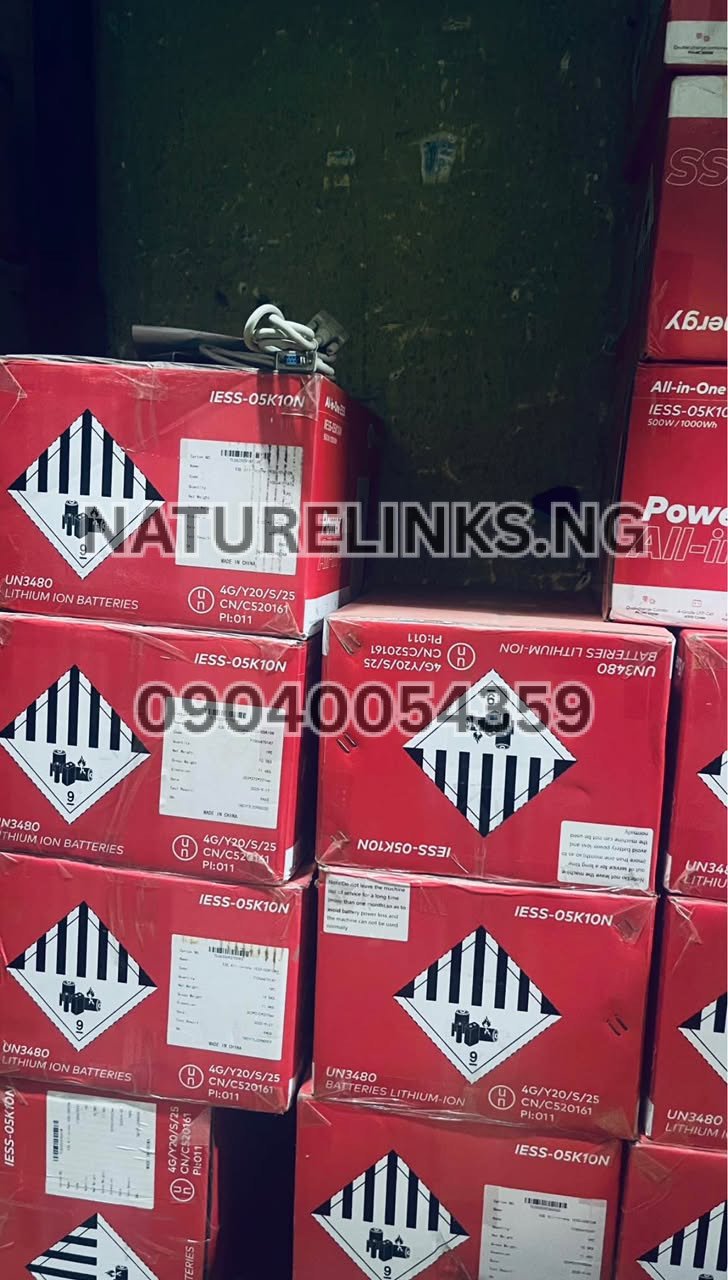
For buyers looking for an Itel Power Tank in Nigeria, Nature Links Nigeria Limited [NatureLinks.NG] provides sales information and product supply through the stated distributor network.
Nature Links Nigeria Limited
Best Seller: Nature Links Nigeria Limited [NatureLinks.NG]
Distributor: Nature Solar Global Limited
CEO: Mr. Joseph Chikeleze
Phone: 07049528019
WhatsApp: 09040054359
Shop Address: F1571 Upstairs (F-Line), Alaba International Market, Lagos State 🇳🇬
Customers should confirm current price, stock, exact model, warranty and included accessories before payment.
How to Choose Between Power Tank and Inverter
Before purchasing, ask yourself these questions:
What appliances do I need to power?
Write down every appliance and its wattage.
What is my total simultaneous load?
Add the wattage of appliances that may operate together.
Do I need portability?
If yes, a portable Power Tank may be more convenient.
Do I need whole-house backup?
If yes, investigate a properly sized installed inverter system.
Do I want to expand later?
If expansion is important, compare the battery, PV and inverter expansion capabilities of conventional systems.
Do I need solar charging?
Check the Power Tank’s maximum PV input and voltage requirements.
Do I need to power high-wattage appliances?
If you need an electric cooker, water heater, air conditioner or similar loads, compare systems based on their continuous and surge ratings rather than battery capacity alone.
“Is Power Tank Better Than an Inverter?” for a Small Apartment
For a small apartment where the main goal is to keep essential electronics operating during power outages, an all-in-one Power Tank can offer a straightforward backup solution.
For example, a user working remotely might need:
- Laptop
- Wi-Fi router
- Phone
- LED lamp
- TV
- Fan
The Power Tank’s portability can be particularly useful because it can be moved to the room where power is needed.
However, the combined load should remain within the Power Tank’s rated output.
“Is Power Tank Better Than an Inverter?” for a Large House
For a large home with multiple electrical circuits and high-demand appliances, the comparison changes.
A conventional inverter system can be designed around:
- Larger battery banks
- Higher inverter capacity
- Larger solar arrays
- Multiple solar panels
- Higher charging capacity
- Multiple household circuits
A 500W Power Tank is not intended to replace a properly designed high-capacity household energy system.
“Is Power Tank Better Than an Inverter?” for Business?
For a small business requiring portable backup electricity, the Power Tank can be convenient.
For a business requiring several kilowatts continuously, a properly sized inverter system may need to be considered.
The right decision should therefore begin with a load assessment, not simply the price of the equipment.
Frequently Asked Questions
1. Is Power Tank the same as an inverter?
No. A Power Tank is an integrated energy-storage system that can include a battery, inverter and charging system in one unit. The commonly listed Itel Power Tank includes a 500W pure sine-wave inverter and 1,000Wh LiFePO4 battery.
2. Is Itel Power Tank an inverter?
Itel Power Tank contains an inverter. The commonly documented configuration has a 500W continuous pure sine-wave AC inverter.
3. Is Itel Power Tank good for home use?
It can be suitable for backup of essential household electronics within its power rating, including TVs, laptops, routers, lights and selected fans. It should not be treated as a high-power whole-house inverter.
4. Can Itel Power Tank run a refrigerator?
It can potentially run a compatible refrigerator, but the refrigerator’s running and startup requirements must be checked against the Power Tank’s output specifications.
5. Can Power Tank run a fan and TV together?
Yes, provided the combined load and any startup requirements remain within the Power Tank’s rated output.
6. How many watts is Itel Power Tank?
The commonly listed model has a 500W continuous inverter output and a 1,000Wh battery capacity. These are two different measurements.
7. How many solar panels can Itel Power Tank use?
The documented IESS-05K10N configuration supports up to approximately 400W PV input. The panel voltage and current must also comply with the unit’s solar-input specifications.
8. Can Itel Power Tank charge from electricity?
Yes. The listed configuration supports AC/grid charging in addition to solar charging.
9. How long can Itel Power Tank last?
Runtime depends on the load. A 100W load theoretically consumes 100Wh per hour, but actual runtime will be lower than a simple 1,000Wh ÷ 100W calculation because of system losses and operating conditions.
10. Where can I buy Itel Power Tank in Nigeria?
Buyers can contact Nature Links Nigeria Limited / Nature Solar Global Limited using 07049528019 or 09040054359 on WhatsApp, or visit the stated shop at F1571 Upstairs (F-Line), Alaba International Market, Lagos State. Confirm the current model, price, warranty and package before payment.
Key Specifications at a Glance
| Specification | Commonly Listed Itel Power Tank |
|---|---|
| Product | Itel Power Tank |
| Model | IESS-05K10N on documented configuration |
| Battery | 1,000Wh / 1kWh |
| Battery Chemistry | LiFePO4 |
| Continuous AC Output | 500W |
| Inverter | Pure sine wave |
| Surge | Configuration-dependent |
| Solar Controller | Integrated MPPT |
| Maximum PV Input | Up to 400W on documented configuration |
| AC Charging | Yes |
| Solar Charging | Yes |
| AC Output | 230V on documented configuration |
| Frequency | 50Hz |
| Display | Digital/status display |
| UPS Function | Supported on listed configurations |
| Use | Home, office, shop and portable backup |
Specifications can vary by exact model or configuration, so buyers should verify the datasheet supplied with the unit.
Important Buying Tips for Nigerians
Before paying for an Itel Power Tank, ask the seller to confirm the exact model number.
Also confirm:
- Is it 500W or another configuration?
- Is the battery 1,000Wh?
- Is it LiFePO4?
- What is the maximum solar input?
- Is the solar panel included?
- What accessories come with it?
- What warranty is included?
- Is the unit new and genuine?
- Is an invoice provided?
- What is the current selling price?
- Is nationwide delivery available?
Do not choose solely according to a seller’s advertised battery capacity. Compare both Wh and W.
Conclusion
So, Is Power Tank Better Than an Inverter? The answer depends on the type of electricity backup you need.
The Itel Power Tank is itself an integrated system containing an inverter, battery and charging electronics. The commonly listed 1,000Wh/500W configuration is designed around portability, convenience and backup for appropriately sized appliances.
A conventional inverter system, meanwhile, can be configured with larger batteries, higher inverter ratings and larger solar arrays when a permanent or expandable household energy system is required.
For Nigerians deciding between the two, the most important factors are total appliance wattage, desired backup duration, solar requirements, portability, installation requirements and future expansion.
For current Itel Power Tank availability and buying information, contact Nature Links Nigeria Limited / Nature Solar Global Limited at 07049528019 or 09040054359 on WhatsApp, with the stated shop location at F1571 Upstairs (F-Line), Alaba International Market, Lagos State 🇳🇬.