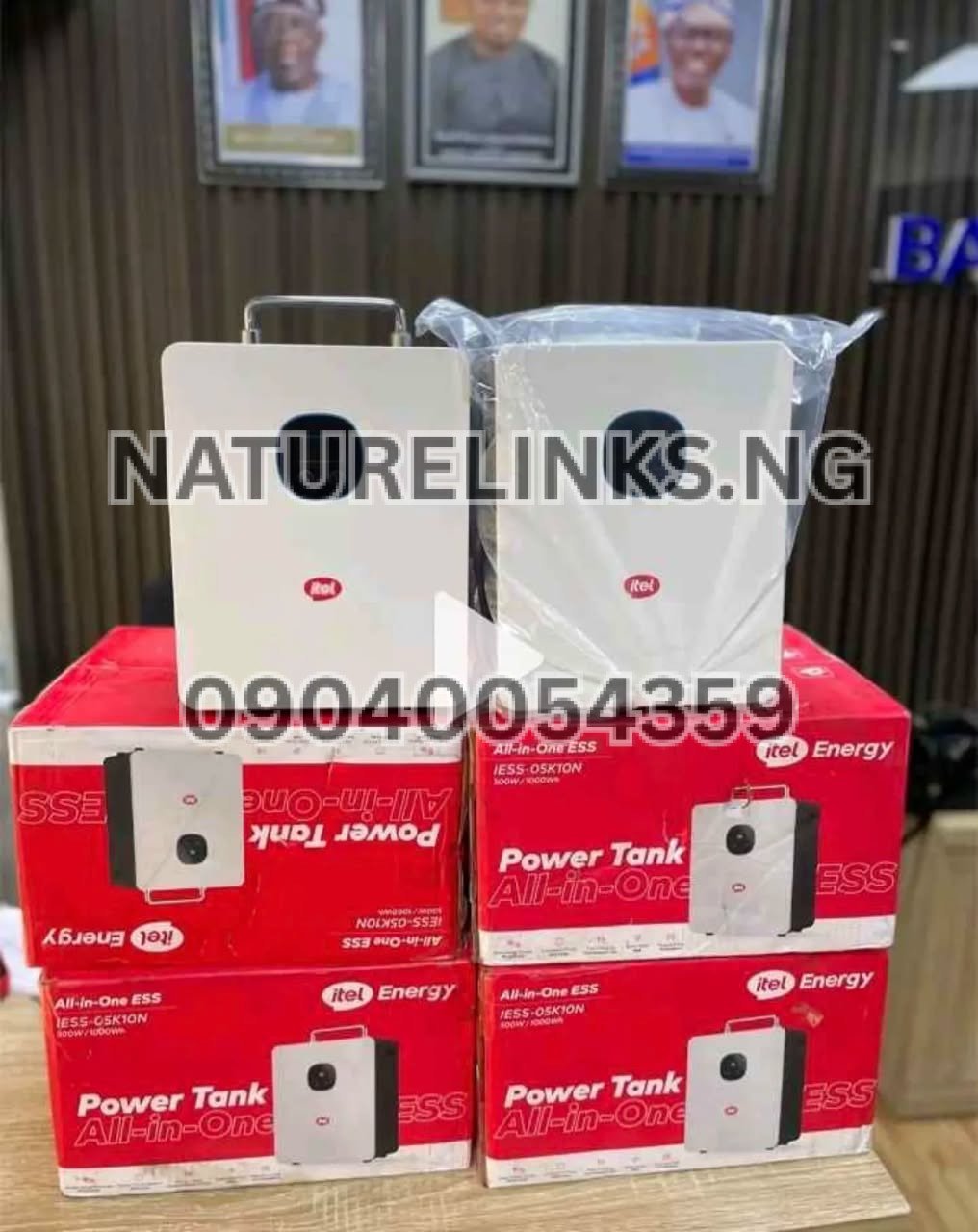
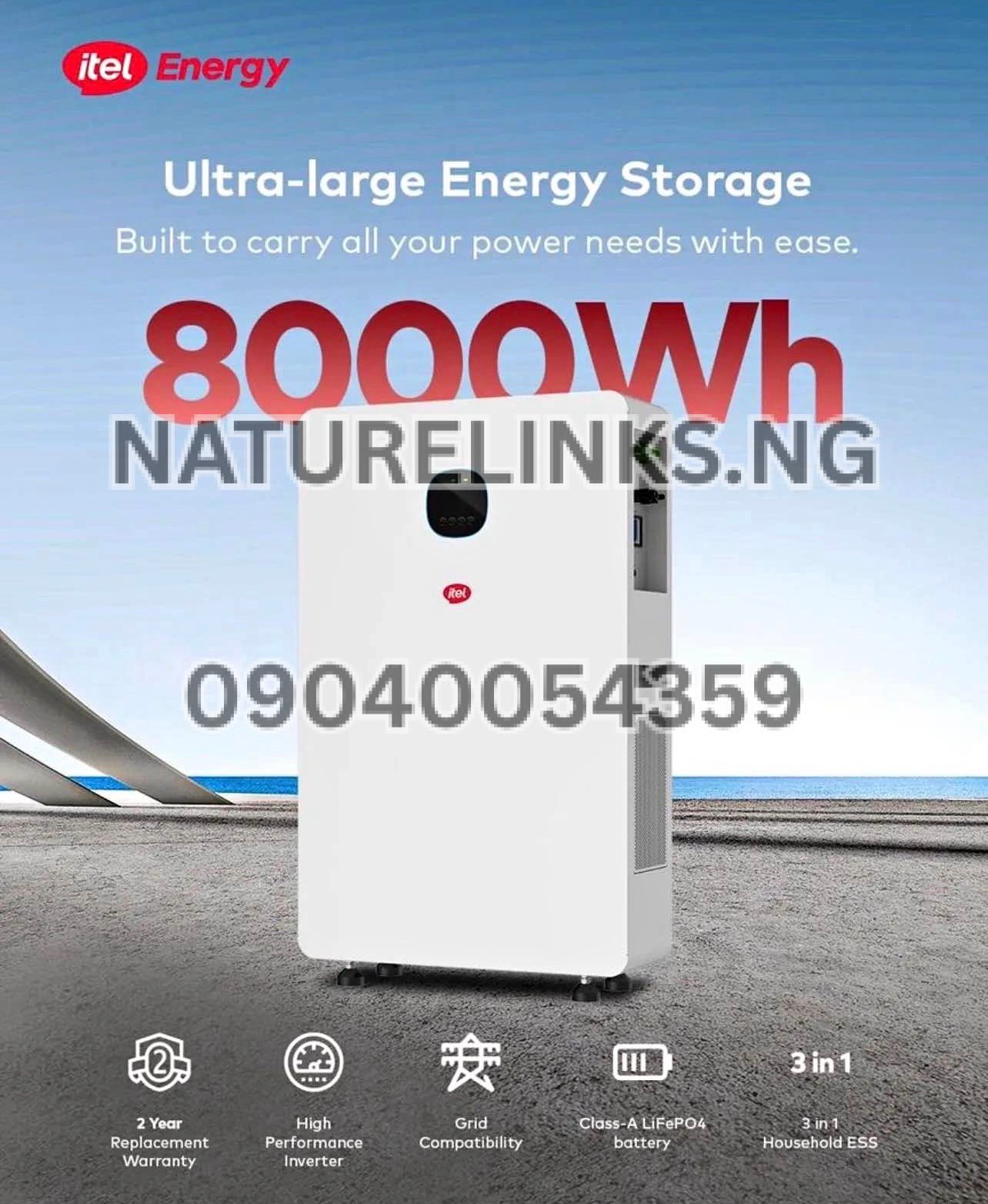
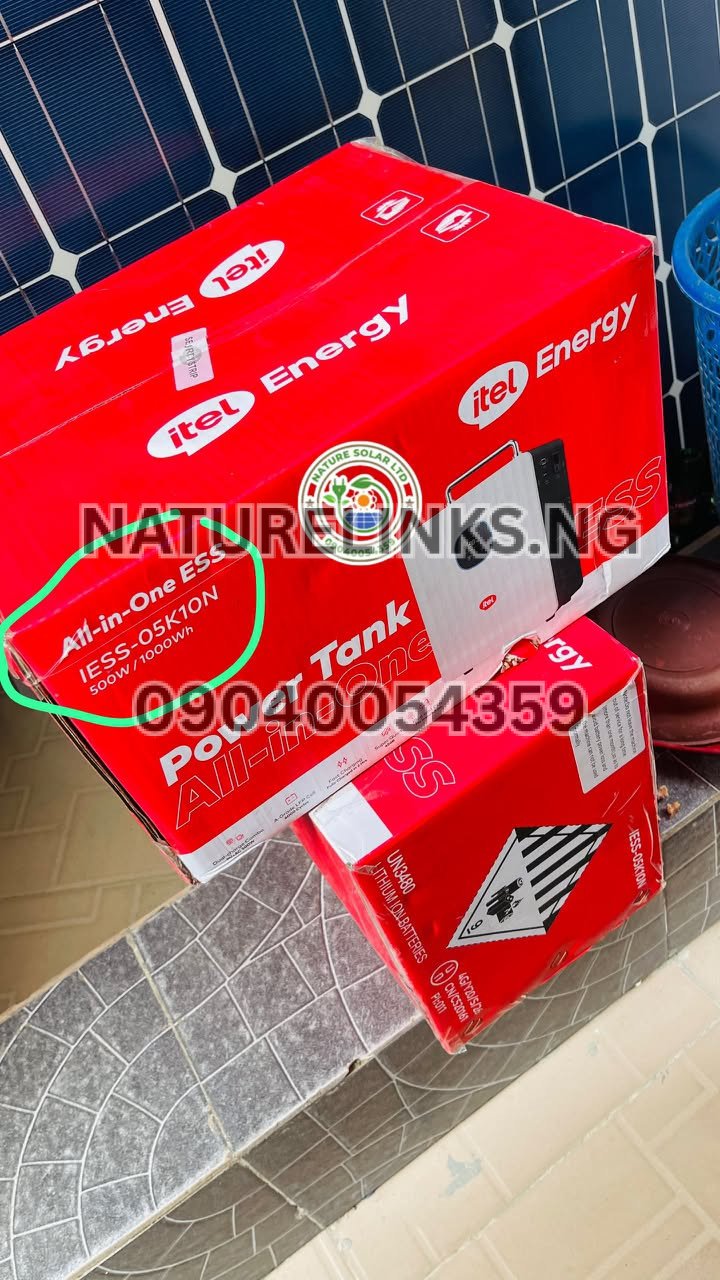
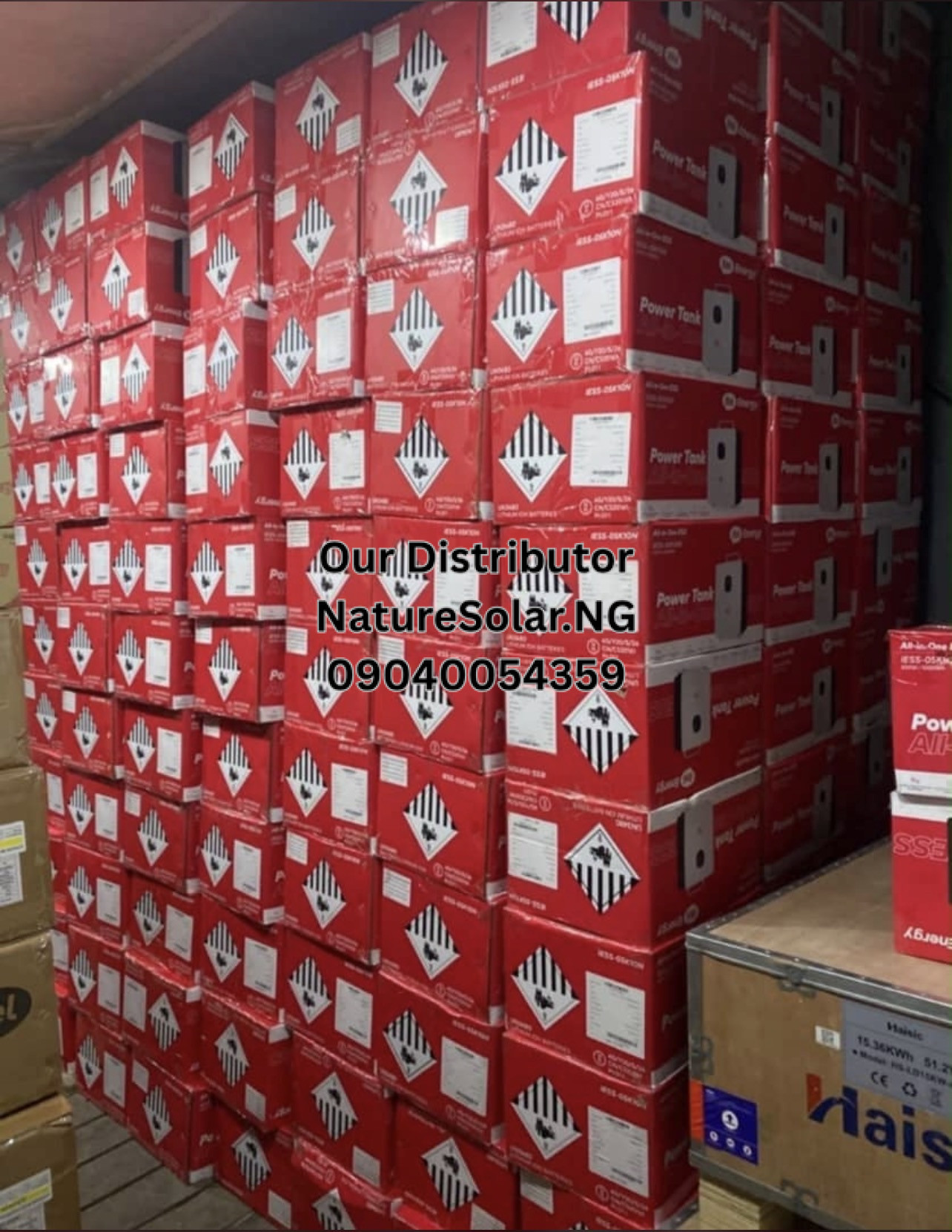
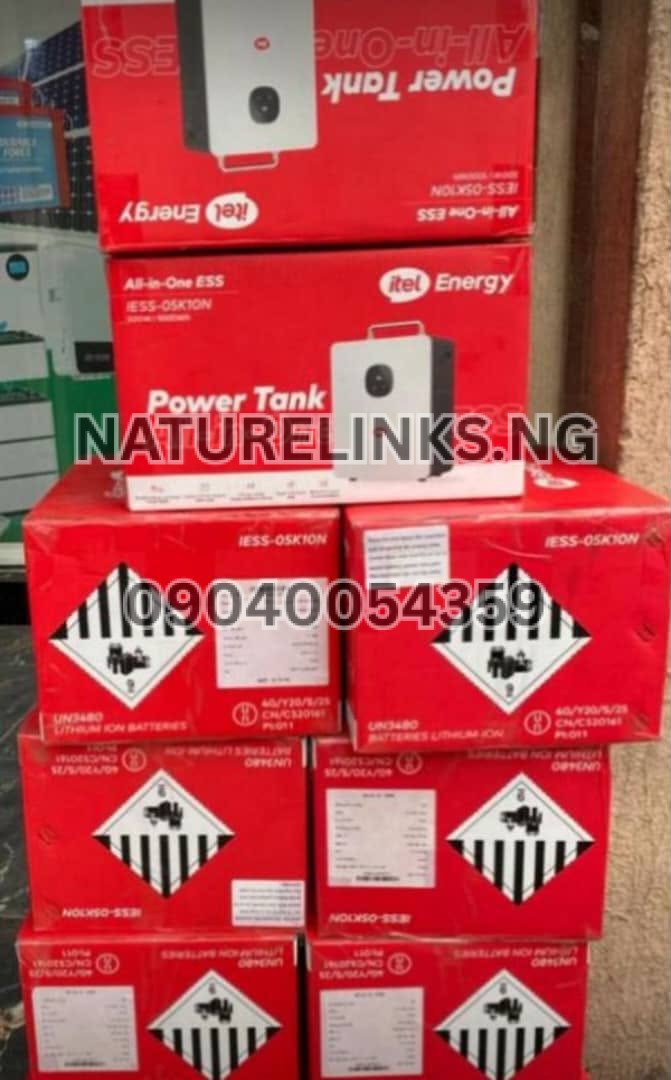
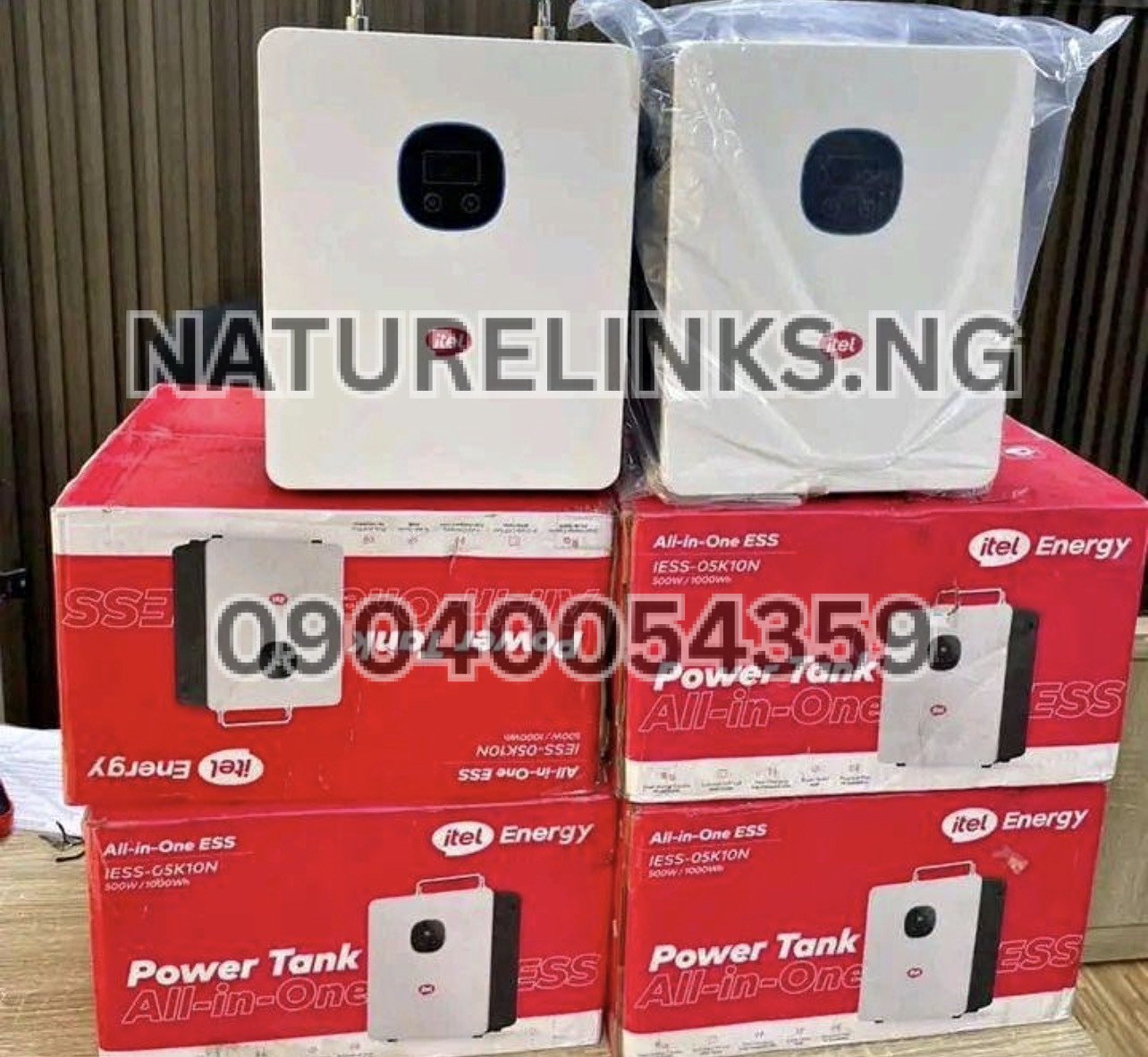
The Best Seller is Nature Solar Global Limited, the accredited distributor in Nigeria, supplying genuine Itel Power Tank energy-storage solutions to customers looking for reliable backup electricity for homes, offices, shops and small businesses.
Nature Links Nigeria Limited [NatureLinks.NG] works with Nature Solar Global Limited as a distributor of backup-power and solar-energy solutions in Nigeria. For buyers searching for Itel Power Tank price in Nigeria, Itel Power Tank vs generator, portable power station, solar generator, rechargeable generator or genuine Itel Power Tank dealer, understanding the difference between battery-powered backup and a conventional fuel generator is important before making a purchase.
The question “What is the difference between Itel Power Tank and a generator?” is becoming increasingly relevant to Nigerian households and businesses looking for alternatives to petrol and diesel generators. Although both systems can provide backup electricity when public power is unavailable, they produce and store electricity in completely different ways.
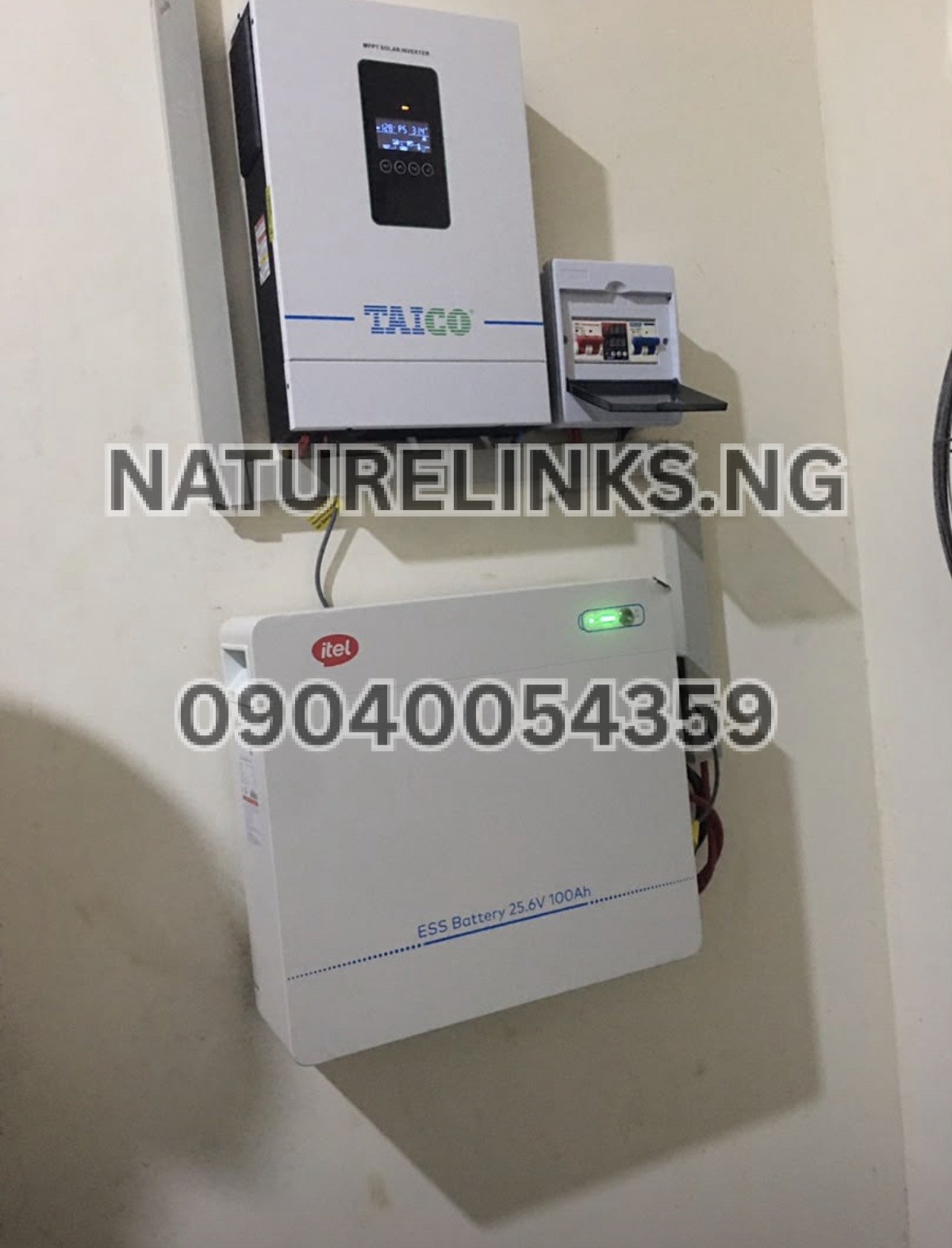
The simplest explanation is this: a traditional petrol or diesel generator uses an engine to generate electricity, while an Itel Power Tank stores electrical energy in a rechargeable battery and uses an inverter to supply power to connected appliances. It can typically be recharged from the electricity grid and compatible solar panels, depending on the model.
Itel itself describes its energy-storage products as residential backup solutions, with LiFePO4 battery technology and battery-management protection among the features of its ESS range.
What Is the Difference Between Itel Power Tank and a Generator?
The major difference is the source and method of producing usable electricity.
A petrol generator has an internal combustion engine. Petrol is burned inside the engine, mechanical energy is produced, and the generator converts that mechanical energy into electrical power.
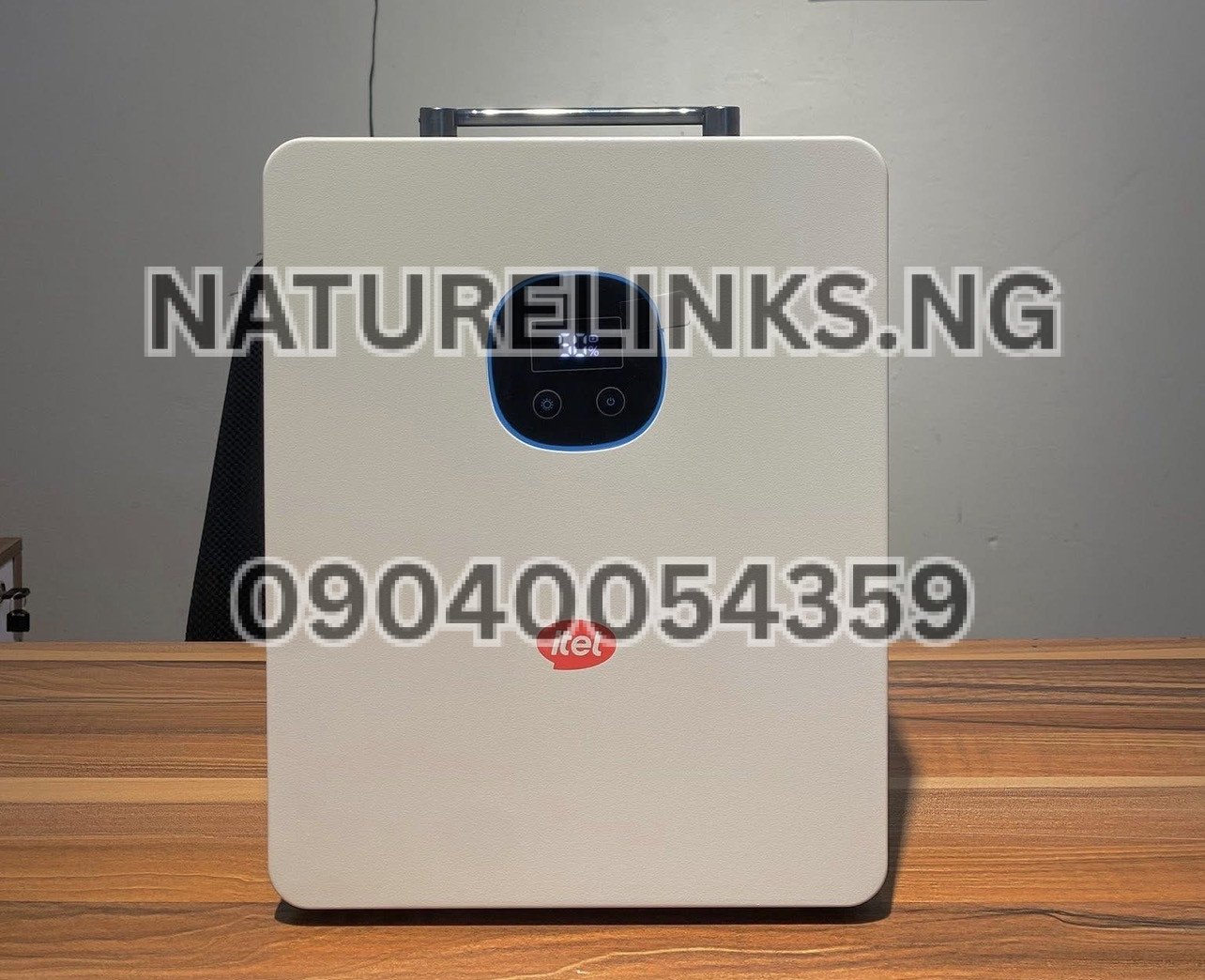
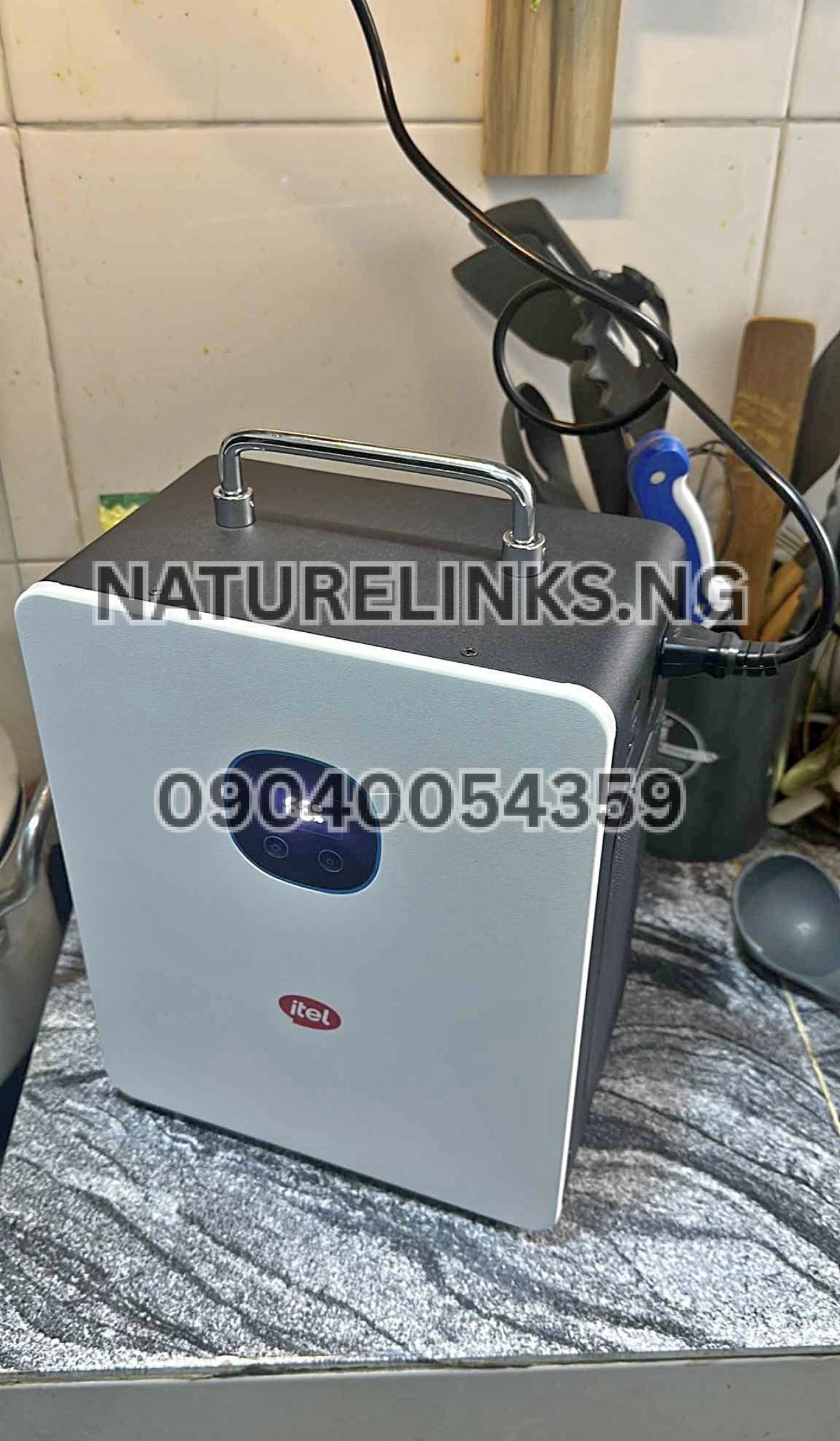
An Itel Power Tank works more like a large rechargeable battery system. Electricity is stored inside its battery, and an integrated inverter converts the stored DC energy into AC electricity that compatible household and business appliances can use.
Therefore, when you search for “What is the difference between Itel Power Tank and a generator?”, remember these basic differences:
| Feature | Itel Power Tank | Petrol Generator |
|---|---|---|
| Main energy source | Stored electrical energy | Petrol |
| Engine | No conventional combustion engine | Yes |
| Petrol required | No | Yes |
| Solar charging | Supported on compatible models | No |
| Grid charging | Supported | No |
| Exhaust fumes during battery operation | No | Yes |
| Engine noise | No engine noise | Engine noise |
| Routine engine servicing | Not required | Required |
| Battery | Rechargeable battery | Starter battery may be present but does not provide the main generation |
| Energy storage | Yes | Generally no |
| Portability | Designed to be portable | Depends on generator size |
| Indoor use | Depends on manufacturer instructions and model | Fuel generators should not be operated indoors |
| Continuous output | Limited by inverter rating | Limited by generator rating |
| Fuel cost while operating | None | Required |
| Solar integration | Possible on compatible models | Not directly |
The current Nigerian market commonly describes portable battery systems as solar generators, portable power stations or rechargeable generators, although technically these products store electricity rather than generating electricity through a combustion engine.
How Does Itel Power Tank Work?
An Itel Power Tank is designed around battery energy storage.
The basic operating process is:
Electricity or solar energy → battery storage → inverter → appliance
When connected to an appropriate charging source, the battery stores electrical energy. When you need backup power, the inverter converts the battery’s stored DC electricity into AC power for compatible appliances.
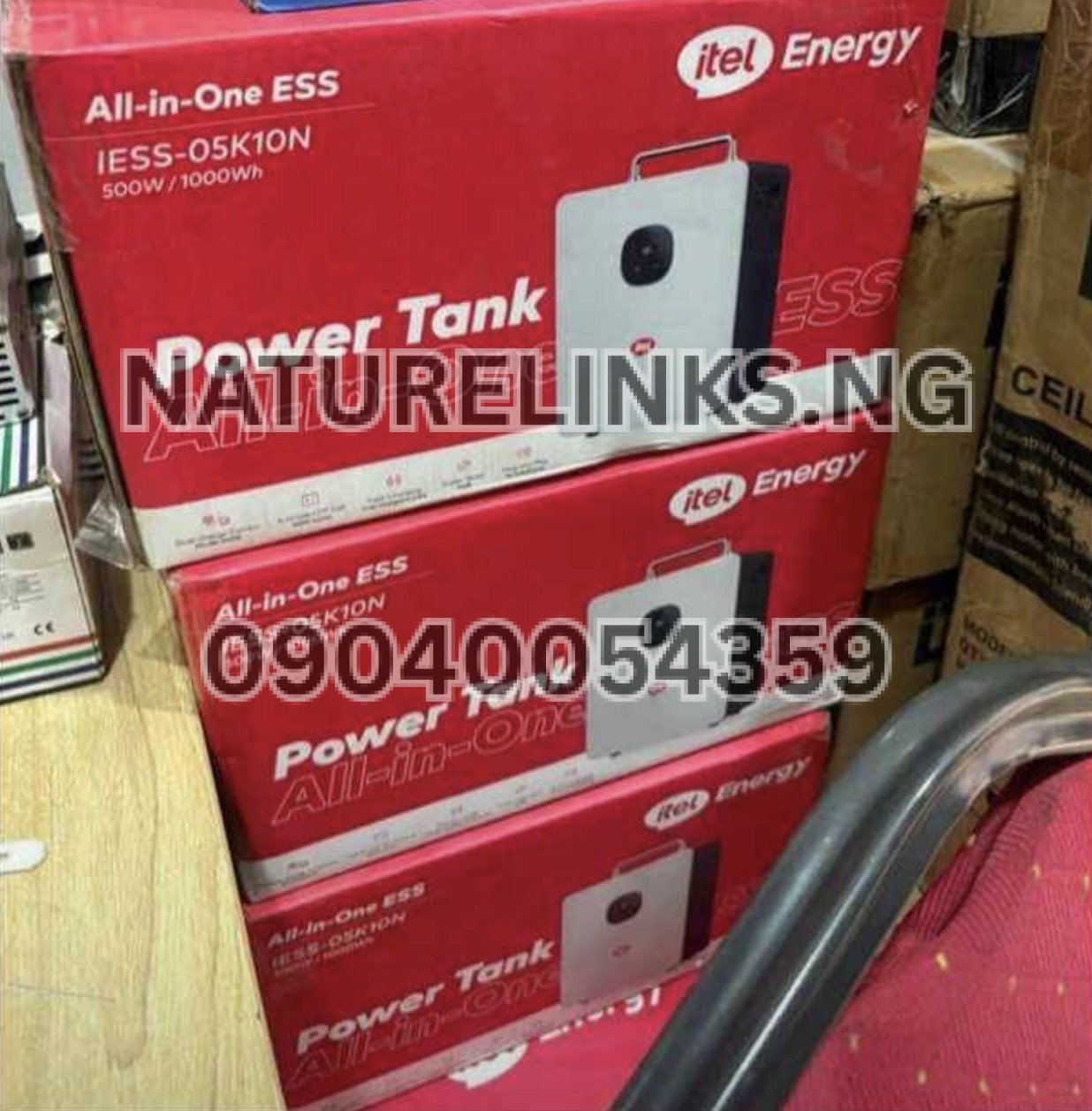
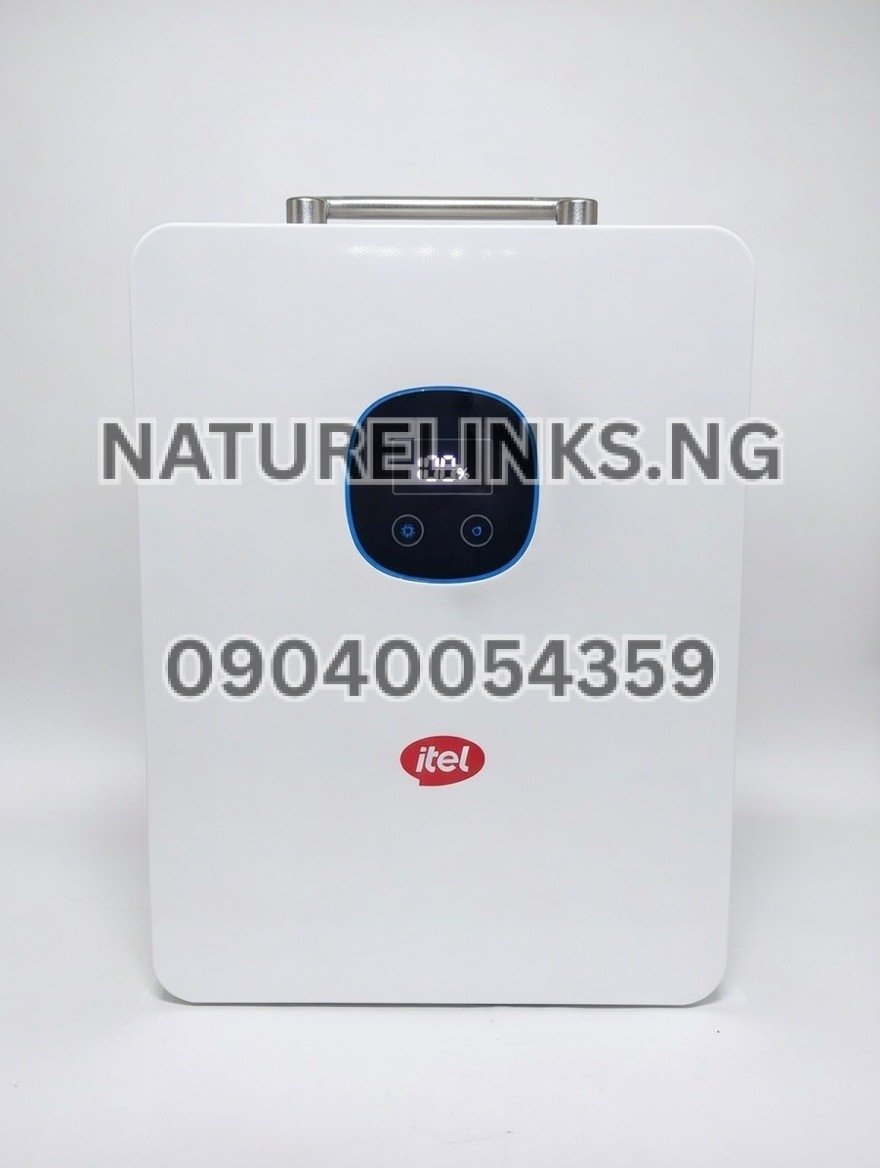
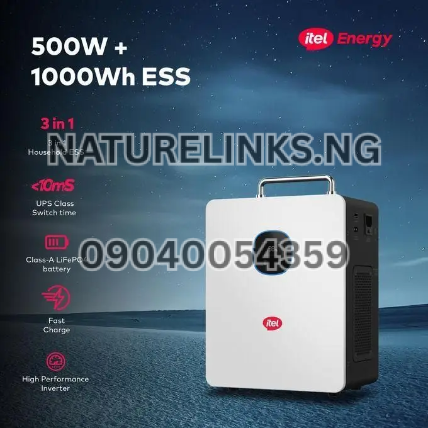
For example, a commonly listed 1,000Wh Itel Power Tank configuration uses a LiFePO4 battery and a 500W continuous AC inverter. Some listings also specify pure sine-wave output, solar charging, AC/grid charging, MPPT solar control and battery-management protection.
This means the Power Tank does not need to burn petrol every time you want to watch television, use a laptop, charge a phone or operate another compatible low-power appliance.
How Does a Petrol Generator Work?
A conventional petrol generator uses fuel to operate an engine.
The engine rotates an alternator or generator head, which produces electricity. As long as the generator has fuel and remains within its operating limits, it can continue producing electricity.
This makes fuel generators particularly useful where a user needs substantial power for long periods and has access to petrol or diesel.
However, they also introduce fuel costs, engine noise, exhaust emissions, vibration and mechanical maintenance.

Itel Power Tank vs Petrol Generator: Which One Is Different?
The difference becomes clearer when comparing everyday operation.
1. Fuel
An Itel Power Tank does not require petrol while supplying power from its stored battery.
A petrol generator requires petrol during operation.
For Nigerian users who spend significant amounts on generator fuel, the absence of fuel consumption during battery operation can be an important consideration.
2. Noise
A petrol generator has an operating engine and therefore produces mechanical noise and vibration.
An Itel Power Tank has no conventional petrol engine. It may use cooling fans, depending on the model and operating conditions, but it does not have the characteristic engine noise of a petrol generator.
This can make battery backup attractive for bedrooms, offices, shops, study areas and other situations where noise is undesirable.
3. Exhaust Fumes
A petrol generator produces exhaust because it burns fuel.
A battery power station does not produce combustion exhaust while operating from stored battery energy.
However, users should always follow the manufacturer’s instructions concerning ventilation, charging and safe placement.
4. Maintenance
A petrol generator contains an engine and mechanical components requiring periodic servicing.
Maintenance can include engine oil changes, spark-plug checks, air-filter maintenance, fuel-system care and other servicing depending on the generator.
An Itel Power Tank does not require conventional engine oil changes because it is a battery-based energy-storage system.
5. Charging
An Itel Power Tank can be recharged from supported electrical sources. Compatible models may also support solar charging.
Current Itel energy-storage products emphasize solar/energy-storage integration and LiFePO4 battery technology.
A petrol generator is refuelled rather than electrically recharged for its primary operation.
Is Itel Power Tank a Generator?
In everyday Nigerian advertising, you may see the Itel Power Tank described as a solar generator, rechargeable generator or portable generator.
Technically, however, a battery-based Power Tank is an energy-storage system or portable power station rather than a traditional fuel-powered generator.
It stores electricity and delivers it through an inverter.
This distinction matters because the way you use and recharge the device is different from the way you use a petrol generator.
So, if someone asks, “Is Itel Power Tank a generator?”, the practical answer is that it provides backup electricity like a generator, but its underlying technology is battery energy storage rather than fuel combustion.
Itel Power Tank 1000Wh vs Generator
One commonly listed Itel Power Tank configuration has a 1,000Wh / 1kWh battery and 500W continuous AC output. Some listings specify up to 1,000W surge output, while exact specifications should be confirmed against the particular model and datasheet before purchase.
The distinction between Wh and W is important.
Wh (watt-hours) describes stored energy.
W (watts) describes the amount of power the inverter can deliver at a particular time.
Therefore, a 1,000Wh Power Tank does not automatically mean it can continuously operate 1,000W of appliances.
For a commonly listed 500W configuration, the continuous AC output is 500W.
What Can Itel Power Tank Power?
A Power Tank’s suitability depends on the total wattage and starting requirements of your appliances.
Potentially suitable loads can include:
- LED bulbs
- Television
- Decoder
- Wi-Fi router
- Laptop
- Phone chargers
- CCTV equipment
- POS terminals
- Small fans
- Networking equipment
- Small electronic devices
Some current Nigerian listings specifically identify TVs, fans, laptops, routers, phones, LED lighting, CCTV and POS terminals as examples of compatible loads for the commonly listed 1,000Wh/500W configuration.
Always check the actual wattage of your appliances before connecting them.
Can Itel Power Tank Power a Fridge?
This depends on the fridge’s running wattage and, especially, its startup surge.
A refrigerator may consume relatively modest power during normal operation but require substantially more power when its compressor starts.
Therefore, you should not determine compatibility simply by looking at the fridge’s normal running wattage.
Check:
- Running wattage.
- Startup/surge requirement.
- Power Tank continuous output.
- Power Tank surge capacity.
- Manufacturer compatibility instructions.
For the commonly listed 500W configuration, a fridge should only be connected after confirming that its startup and running requirements are within the Power Tank’s limits.
Can Itel Power Tank Power a TV and Fan?
Yes, a TV and fan can potentially be suitable loads if their combined consumption stays within the Power Tank’s output rating.
For example, a television using 80W and a fan using 60W would have a combined nominal load of about 140W.
Other loads such as routers, phone chargers and LED lights would add to the total.
The important point is not simply the number of appliances but their combined wattage.
Can Itel Power Tank Power a Laptop?
Yes, a laptop is generally the type of low-power electronic load that battery power stations are designed to support.
A laptop charger may consume substantially less power than high-power appliances such as electric kettles, irons or cookers.
This makes an Itel Power Tank potentially useful for:
- Remote work
- Online meetings
- Studying
- Internet browsing
- Charging electronics
- Small office operations
Can Itel Power Tank Run an Electric Iron?
You should be careful.
Electric irons commonly consume hundreds of watts and can exceed the continuous output capability of a 500W Power Tank depending on the specific iron.
The commonly listed Itel Power Tank configuration has a 500W continuous output. Therefore, do not assume that an electric iron can be connected simply because the battery capacity is 1,000Wh.
Check the iron’s actual rated power and compare it with the Power Tank’s continuous and surge specifications.
Can Itel Power Tank Run an Electric Kettle?
Many electric kettles consume considerably more than 500W.
Consequently, a commonly listed 500W Itel Power Tank configuration may not be suitable for many electric kettles.
The same principle applies to:
- Electric cookers
- Water heaters
- Large microwaves
- High-power pressing irons
- Air conditioners
- Large pumps
Always compare appliance wattage with the Power Tank’s rated output before purchase.
Can Itel Power Tank Replace a Petrol Generator?
For some users and some loads, it can serve as an alternative form of backup power.
But whether it can completely replace a petrol generator depends on what you need to power.
An Itel Power Tank may be suitable when your priority is backup for relatively low-power electronics and appliances.
A petrol generator may be more appropriate when your requirements involve high-power appliances or long-duration loads that exceed the Power Tank’s inverter capacity.
Current Nigerian energy-storage guidance similarly emphasizes that the choice depends on power requirements, runtime, budget and the appliances involved.
Therefore, the correct approach is to calculate your actual load before deciding.
Itel Power Tank vs Generator for a Nigerian Home
For a typical Nigerian household, the decision can be based on the appliances you want to keep running during power outages.
If you mainly need:
- TV
- Decoder
- Router
- Phones
- Laptops
- LED lights
- Small fans
- CCTV
A Power Tank can be a practical battery-backup option, provided the combined load remains within its specifications.
If you need:
- Electric cooker
- Water heater
- Large pumping machine
- Air conditioner
- High-powered pressing iron
- Multiple high-wattage appliances
You should consider a larger-capacity power station, inverter system or appropriately sized generator instead of assuming a 500W Power Tank will handle them.
Itel Power Tank vs Generator for Office Use
For offices, noise can be an important consideration.
A fuel generator operating near an office can create noise, vibration, fumes and fuel-management requirements.
A battery-based Power Tank can provide stored backup energy for computers, routers, monitors, POS systems, lights and other compatible equipment.
The exact number of devices depends on their combined power consumption.
For example, an office running:
- 2 laptops
- Wi-Fi router
- Small monitor
- LED lights
- Phone chargers
may have a much lower combined load than an office running multiple desktop computers, printers, air conditioners and other high-power equipment.
Itel Power Tank vs Generator for Shops
Small Nigerian shops can use battery backup for:
- POS terminals
- Phones
- LED lighting
- CCTV
- Routers
- Small fans
- Small electronics
This can be useful where the primary requirement is keeping essential business equipment operational during short power interruptions.
However, shops using refrigeration, freezers, heavy machinery or other high-power equipment should calculate startup and running loads before purchasing.
Itel Power Tank vs Generator for POS Business
For POS operators, reliability and portability are often important.
A battery power station can provide electricity for POS terminals, phones, routers, lights and other small electronic equipment without requiring petrol during battery operation.
This can reduce the inconvenience of carrying and storing fuel.
The required capacity depends on the number of devices and how many hours you need them to operate.
Does Itel Power Tank Use Petrol?
No.
The Power Tank stores electrical energy in a rechargeable battery.
A commonly listed Itel Power Tank configuration uses a LiFePO4 battery, with charging through supported AC/grid and solar inputs.
This is one of the clearest differences between an Itel Power Tank and a conventional petrol generator.
Can Itel Power Tank Charge With Electricity?
Yes, compatible configurations support AC/grid charging.
This means you can charge the battery from an appropriate electrical supply and later use the stored energy during a power outage.
The exact charging method, adapter and charging specifications should be confirmed for the model you are buying.
Can Itel Power Tank Charge With Solar?
Compatible Itel Power Tank configurations support solar charging.
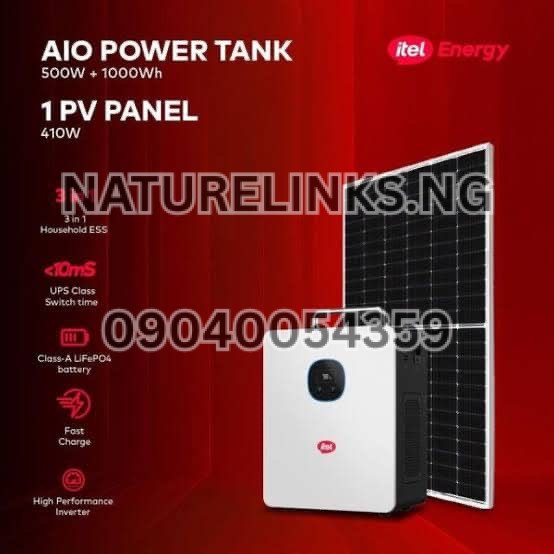
The commonly listed 1,000Wh/500W configuration includes an integrated MPPT solar charge controller and up to 400W PV input on the documented configuration.
This means users can potentially combine grid charging with solar charging, depending on the exact model and solar-panel configuration.
What Is the Difference Between a Solar Generator and a Petrol Generator?
A solar generator or portable power station stores electricity in batteries.
A petrol generator creates electricity through fuel combustion.
The main differences are therefore:
Solar/battery system:
- Battery storage
- Solar charging possible
- Grid charging possible
- No petrol required
- No engine exhaust during battery operation
- Low operating noise compared with fuel generators
Petrol generator:
- Petrol-powered engine
- Requires fuel
- Produces exhaust
- Produces engine noise
- Requires engine maintenance
- Can operate continuously while fuel is supplied and the generator remains within its limits
Nigerian energy-market sources describe the same fundamental distinction between battery-based solar generators and petrol generators.
Is Itel Power Tank Better Than a Generator?
The useful question is not simply which one is “better.”
The two systems are designed around different operating requirements.
Consider:
Power Tank considerations
- Quiet operation
- No petrol during battery operation
- Rechargeable battery
- Solar charging on compatible models
- Portable design
- Suitable for many electronic loads
- Limited by inverter output and battery capacity
Generator considerations
- Fuel-powered
- Suitable models can deliver high output
- Can run while fuel is available
- Requires refuelling
- Engine maintenance required
- Produces noise and exhaust
Your appliance requirements, required runtime, available charging options and budget should determine which technology fits your use case.
Itel Power Tank Advantages
Some of the main advantages of a battery-based Itel Power Tank include:
Fuel-Free Backup
Once charged, the Power Tank supplies stored energy without requiring petrol during operation.
Quiet Operation
There is no conventional combustion engine running while the battery supplies power.
Solar Charging
Compatible configurations can be integrated with solar charging.
Portable Design
The all-in-one form factor makes the system easier to move than many fixed inverter-and-battery installations.
LiFePO4 Battery
Current Itel energy-storage information highlights LiFePO4 battery technology as part of its ESS product philosophy.
Battery Management
Itel’s ESS information highlights intelligent battery-management protection and multiple layers of battery safety.
UPS Functionality on Supported Configurations
Some listed Power Tank configurations provide UPS-style switching, which can help maintain power to compatible equipment during interruptions.
Advantages of a Petrol Generator
Petrol generators also have characteristics that may suit certain applications.
They can:
- Produce substantial electrical power when correctly sized.
- Continue operating while fuel is supplied.
- Support loads that exceed the output of a small portable Power Tank when a sufficiently large generator is selected.
- Provide backup without waiting for a battery to recharge.
However, users need to account for fuel costs, engine servicing, noise, fumes and safe outdoor operation.
Itel Power Tank Disadvantages to Consider
An Itel Power Tank is not unlimited backup power.
Important limitations include:
Limited Inverter Output
A 500W configuration cannot continuously provide 1,000W simply because its battery stores 1,000Wh.
Battery Runtime
Runtime depends on the connected load.
Recharge Time
After significant battery depletion, the Power Tank must be recharged.
High-Power Appliances
Large heating appliances, pumps and air conditioners may exceed the inverter’s capabilities.
Battery Age
Rechargeable batteries gradually age with use, temperature and charging conditions.
Generator Disadvantages to Consider
Fuel generators also have operating costs and limitations.
These can include:
- Petrol expenses
- Engine noise
- Exhaust fumes
- Vibration
- Oil changes
- Mechanical maintenance
- Fuel storage
- Starting problems
- Carbon-monoxide risk when improperly used
A fuel generator should never be operated indoors or in an enclosed space because of dangerous exhaust gases.
Itel Power Tank 1000Wh Runtime
A 1,000Wh battery theoretically stores approximately 1kWh of energy.
A simple calculation is:
Runtime ≈ Battery energy ÷ appliance load
For example:
- 50W load → theoretical calculation of about 20 hours
- 100W load → theoretical calculation of about 10 hours
- 200W load → theoretical calculation of about 5 hours
- 500W load → theoretical calculation of about 2 hours
These are theoretical figures, not guaranteed real-world runtimes. Actual runtime is lower because of inverter losses, battery-management limits, appliance efficiency, battery condition and operating conditions.
Itel Power Tank 1000Wh Datasheet
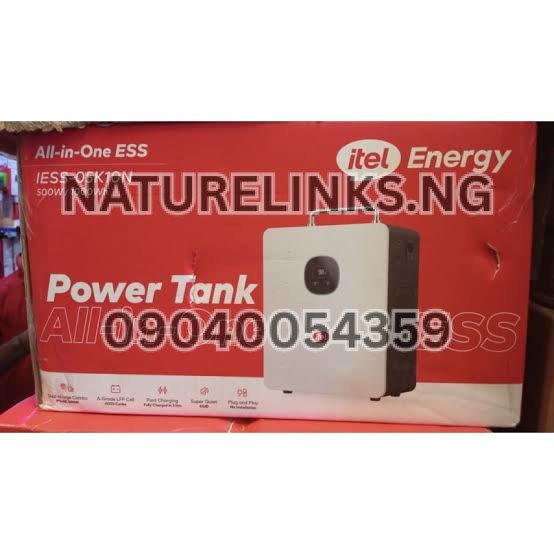
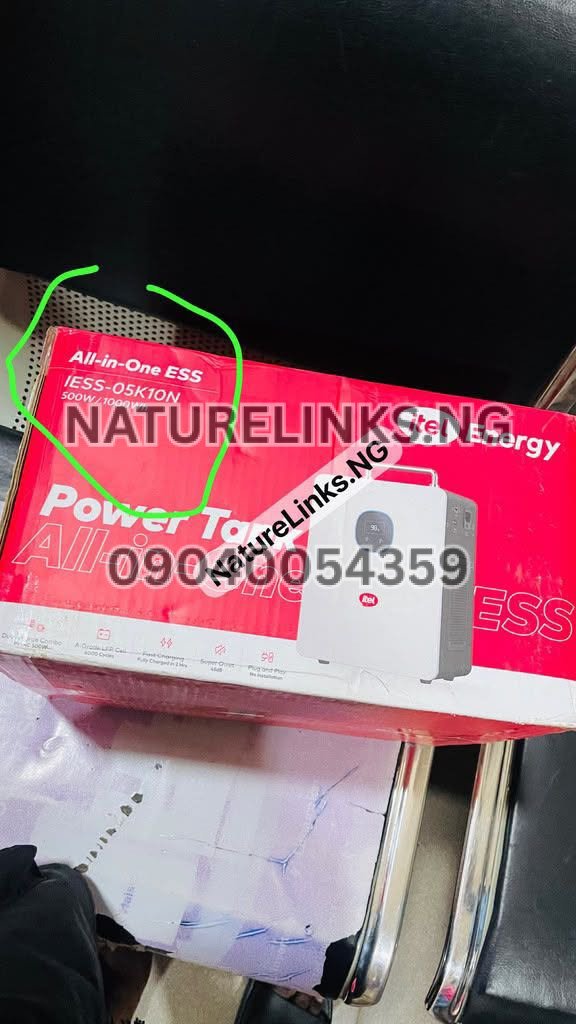
For the commonly listed IESS-05K10N configuration:
| Specification | Commonly listed value |
|---|---|
| Product | Itel Power Tank |
| Model | IESS-05K10N |
| Battery capacity | 1,000Wh / 1kWh |
| Battery type | LiFePO4 |
| Continuous AC output | 500W |
| Surge output | Up to 1,000W on listed configurations |
| Inverter | Pure sine wave |
| AC output | 230V |
| Frequency | 50Hz |
| Solar charging | Yes |
| Grid/AC charging | Yes |
| Solar input | Up to 400W on documented configuration |
| MPPT | Integrated |
| BMS | Yes |
| UPS function | Supported on documented configurations |
| Protection | Overload, short circuit, temperature and voltage protection |
Specifications can vary between configurations and sales packages, so confirm the exact model and datasheet before payment.
Itel Power Tank Price in Nigeria
The price of an Itel Power Tank in Nigeria can change depending on:
- Battery capacity
- Inverter output
- Exact model
- Seller
- Warranty
- Availability
- Included accessories
- Solar panels included or excluded
- Exchange-rate changes
Current Nigerian online listings for a 1,000Wh/500W configuration show different advertised prices, demonstrating why buyers should confirm the current price and exact package before making payment.
If you are searching “Itel Power Tank price in Nigeria”, ask the seller to confirm the exact model, battery capacity, inverter output, warranty and included accessories rather than comparing prices based only on the product name.
How to Choose Between Itel Power Tank and a Generator
Before buying, answer these questions:
What Appliances Do You Need to Power?
Make a list of every appliance.
What Is Their Total Wattage?
Add their running wattage.
Do Any Appliances Have High Startup Surge?
Fridges, freezers, pumps and motor-driven appliances may require additional startup power.
How Many Hours of Backup Do You Need?
A small load for several hours can require less energy than a large load for one hour.
Do You Have Solar Panels?
If yes, a compatible Power Tank can potentially use solar energy for recharging.
Do You Want Quiet Backup?
If noise is an important concern, battery storage offers an operating experience very different from a combustion generator.
Do You Need Heavy Loads?
If your main requirement is air conditioning, electric cooking, water heating or other high-power appliances, calculate the required inverter capacity carefully.
Where to Buy Genuine Itel Power Tank in Nigeria
For buyers looking for a genuine Itel Power Tank, confirm:
- Exact model number
- Battery capacity
- Rated inverter output
- Serial number
- Warranty
- Original accessories
- Charging specifications
- Solar input specifications
- Seller’s after-sales support
Best Seller: Nature Links Nigeria Limited [NatureLinks.NG]
Accredited Distributor: Nature Solar Global Limited
CEO: Mr. Joseph Chikeleze
Call: 07049528019
WhatsApp: 09040054359
Shop Address: F1571 Upstairs (F-Line), Alaba International Market. Lagos State 🇳🇬
Nature Links Nigeria Limited supplies energy-storage and backup-power products to Nigerian customers, while Nature Solar Global Limited is identified in this business information as the distributor.
Why Check the Exact Model Before Buying?
One of the biggest mistakes buyers make is assuming that every Itel Power Tank has identical specifications.
Energy-storage products can have different:
- Battery capacities
- Inverter ratings
- Solar-input limits
- Output ports
- Surge capabilities
- Charging speeds
- UPS functions
- Accessories
Even within the Itel energy-storage range, official Itel documentation shows different ESS models with different output and battery specifications.
Always request the datasheet for the exact model being offered.
Frequently Asked Questions About Itel Power Tank and Generators
1. What is the difference between Itel Power Tank and a generator?
An Itel Power Tank is a rechargeable battery-based energy-storage system that uses an inverter to supply electricity. A conventional generator uses an engine, normally powered by petrol or diesel, to produce electricity.
2. Is Itel Power Tank better than a petrol generator?
They serve different purposes. The Power Tank offers battery-based, quiet, fuel-free operation during use, while a fuel generator can provide continuous electricity as long as it has fuel and is appropriately sized. Your required appliances, power level and backup duration determine which system fits your needs.
3. Can Itel Power Tank replace a generator?
It can replace or supplement a fuel generator for some users, particularly those powering lower-wattage electronics and appliances. Whether it can replace your generator depends on the total wattage and runtime requirements of your appliances.
4. Does Itel Power Tank use petrol?
No. It stores electricity in a rechargeable battery and supplies power through an inverter. Compatible models can be recharged from AC/grid electricity and solar energy.
5. Can Itel Power Tank charge with solar?
Yes, compatible configurations support solar charging. A commonly listed 1,000Wh configuration includes an integrated MPPT solar charge controller and supports solar PV input.
6. Can Itel Power Tank charge with electricity?
Yes. Current listings for the commonly advertised configuration specify AC/grid charging. Always use the charging equipment and electrical input specified for the exact model.
7. Can Itel Power Tank power a TV and fan?
Yes, provided the combined wattage and startup requirements remain within the Power Tank’s rated output. TVs and fans are among the types of loads commonly listed for the 1,000Wh/500W configuration.
8. Can Itel Power Tank power a refrigerator?
It may be able to power some refrigerators, but you must check the refrigerator’s running and startup wattage. Compressor startup can require significantly more power than normal operation.
9. How long does an Itel Power Tank last?
Runtime depends on battery capacity, appliance wattage, inverter efficiency, battery condition and operating conditions. A 1,000Wh unit does not provide one fixed number of hours for every appliance.
10. Is Itel Power Tank a solar generator?
It is commonly marketed as a solar generator or rechargeable generator, but technically it is a battery-based energy-storage system or portable power station. It stores electricity and can use compatible solar panels for recharging rather than producing electricity through a petrol engine.
Itel Power Tank vs Generator: Final Buying Guide
The fundamental difference between an Itel Power Tank and a conventional generator is the way they provide electricity.
A petrol generator burns fuel to operate an engine and generate electricity. An Itel Power Tank stores electricity in a rechargeable battery and supplies that energy through an inverter.
The Power Tank can be particularly useful for people who want backup electricity for electronics, communication equipment, lighting, small appliances, home offices, POS businesses and other compatible loads without running a petrol engine.
A traditional generator remains useful for situations requiring higher continuous power, particularly when appropriately sized for heavy appliances and when fuel is readily available.
For buyers in Nigeria, the most important step is to calculate the wattage of your appliances before buying. Do not choose a Power Tank based solely on the 1,000Wh battery figure; check the continuous inverter output, surge capacity, appliance wattage and expected runtime.
If your requirements are within the Power Tank’s specifications, it can provide a convenient rechargeable backup solution. If your requirements exceed its inverter capacity, consider a larger energy-storage system or a suitably rated conventional generator.
For genuine-product enquiries, current availability, specifications and purchasing information, contact:
Nature Links Nigeria Limited [NatureLinks.NG]
Distributor: Nature Solar Global Limited
CEO: Mr. Joseph Chikeleze
Call: 07049528019
WhatsApp: 09040054359
Shop: F1571 Upstairs (F-Line), Alaba International Market, Lagos State 🇳🇬