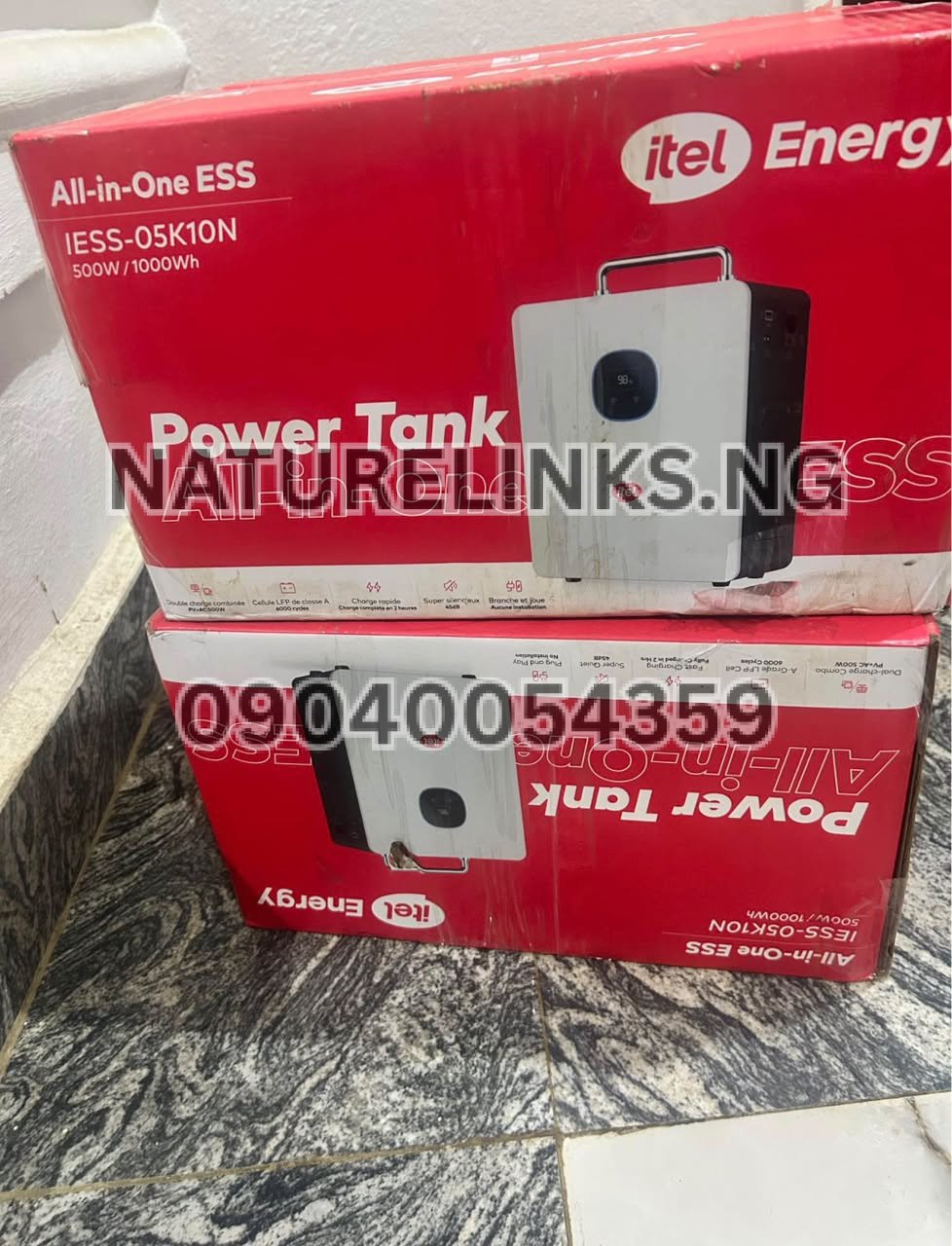
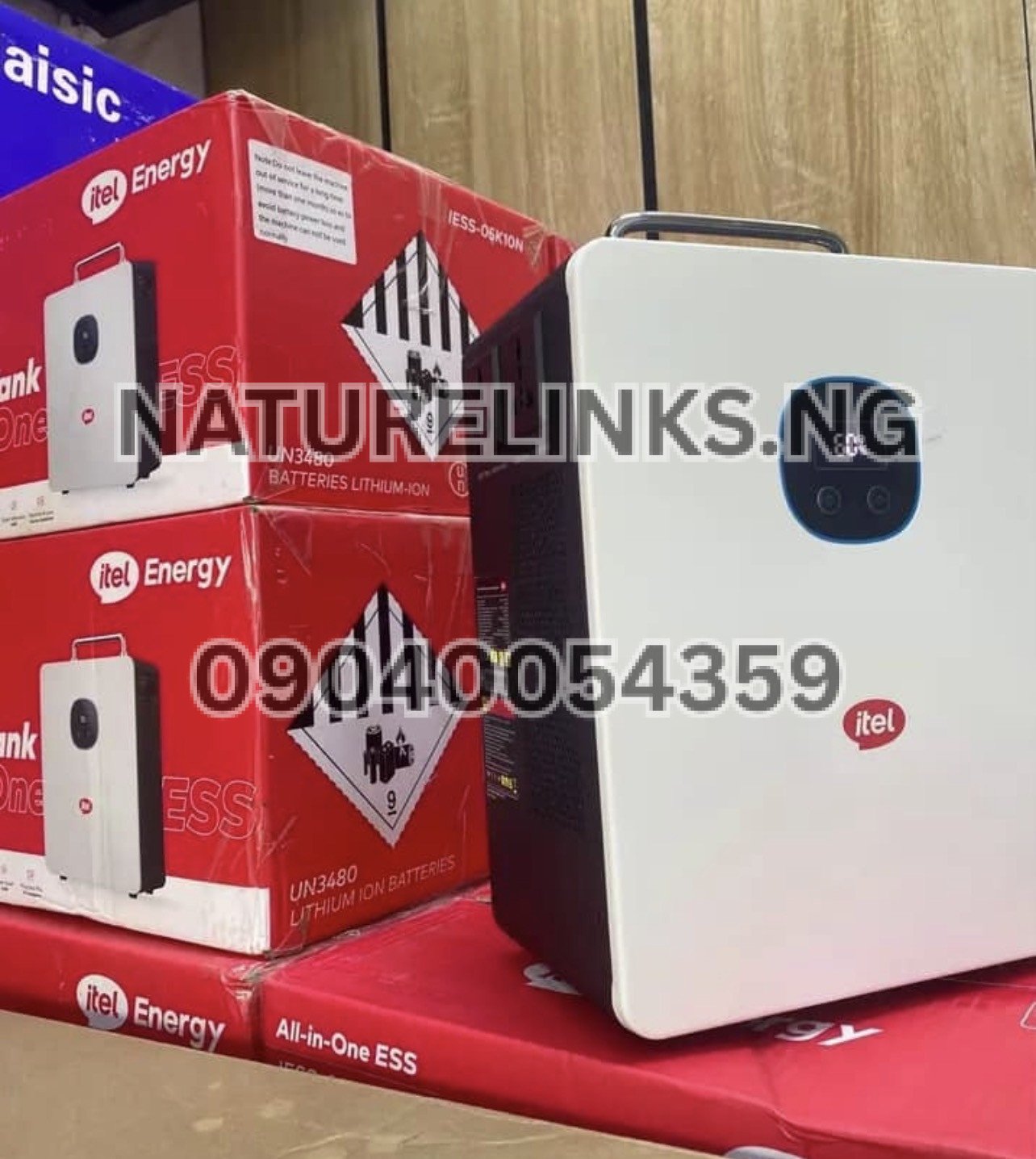
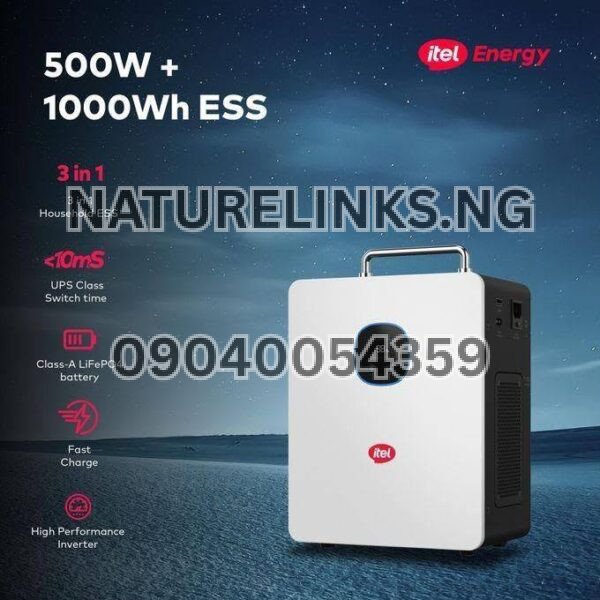
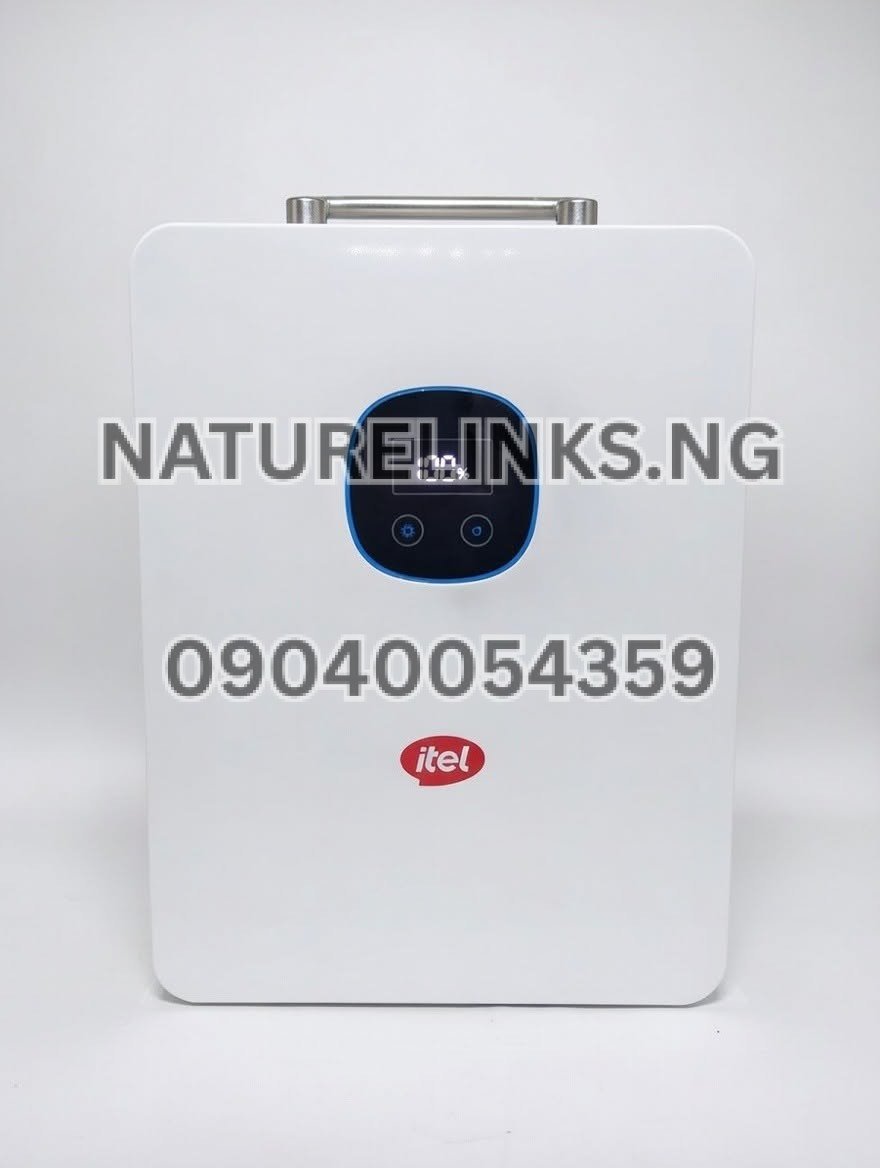
The Best Seller is Nature Solar Global Limited, the accredited distributor in Nigeria, working with Nature Links Nigeria Limited [NatureLinks.NG] to supply genuine itel Power Tank products and solar-energy solutions to customers across Nigeria.
If you are searching for “What Is the Battery Voltage of Power Tank?”, the answer depends on exactly which itel Power Tank model you mean. For the commonly listed itel Power Tank IESS-05K10N 500W/1,000Wh model, published specifications list a 3.2VDC rated battery cell voltage, with a 314Ah LiFePO₄ battery specification. Some technical listings describe the assembled battery system as approximately 25.6V, so buyers should distinguish between the individual cell voltage and the complete battery-pack voltage.
This distinction is important because battery voltage, battery capacity, inverter output voltage and solar-input voltage are four different specifications. A buyer looking for an itel Power Tank 1000Wh, 500W Power Tank, or 1kWh solar generator in Nigeria should check the exact model number before purchasing.

What Is the Battery Voltage of Itel Power Tank?
For the commonly listed itel Power Tank IESS-05K10N, published specifications identify the battery as LiFePO₄ (Lithium Iron Phosphate) with a listed rated cell voltage of 3.2VDC and rated capacity of 314Ah, giving approximately 1,000Wh/1kWh of energy.
However, some technical listings identify the assembled battery pack as 25.6V, which is consistent with an 8-series LiFePO₄ configuration: 8 × 3.2V = 25.6V nominal.
Therefore, when someone asks “What Is the Battery Voltage of Power Tank?”, it is essential to clarify whether they mean:
- Individual LiFePO₄ cell voltage: 3.2V nominal
- Assembled battery-pack nominal voltage: approximately 25.6V
- Battery capacity: 314Ah
- Energy capacity: 1,000Wh / 1kWh
- Battery chemistry: LiFePO₄
The exact specification should always be confirmed against the label and datasheet of the particular Power Tank model.
Itel Power Tank Battery Voltage and Capacity
Battery voltage and battery capacity are not the same thing.
The commonly listed IESS-05K10N has approximately:
| Specification | Published specification |
|---|---|
| Model | IESS-05K10N |
| Battery chemistry | LiFePO₄ |
| Rated cell voltage | 3.2VDC |
| Pack voltage | Approximately 25.6V nominal |
| Battery capacity | 314Ah |
| Energy capacity | 1,000Wh / 1kWh |
| Continuous inverter output | 500W |
| Maximum PV input | 400W |
| Maximum PV voltage | 60V |
| MPPT voltage range | 11–60V |
| AC output | 230V |
| Cycle life | Up to about 6,000 cycles |
The published technical information confirms the 3.2V cell rating, 314Ah capacity and 1kWh energy rating, while the detailed configuration identifies the battery pack as 25.6V.
Is Itel Power Tank 3.2V or 25.6V?
This is one of the most important points for buyers.
Both figures can appear in technical descriptions, but they refer to different parts of the battery system.
The 3.2V figure refers to the nominal voltage of an individual LiFePO₄ cell. The complete battery pack can be made by connecting multiple cells in series. For an 8-series configuration:
3.2V × 8 = 25.6V nominal pack voltage.
This is why one specification can show 3.2VDC while another technical listing identifies the assembled battery as 25.6V.
For purchasing purposes, do not assume that the external Power Tank battery terminals are simply a 3.2V battery connection.

Itel Power Tank 1000Wh Battery Voltage
The popular itel Power Tank 1000Wh/1kWh IESS-05K10N is designed as an integrated portable energy-storage system rather than a conventional standalone battery.
Its published specifications include:
- 1,000Wh battery energy
- LiFePO₄ chemistry
- 314Ah rated capacity
- 500W continuous AC inverter output
- 400W maximum PV input
- 60V maximum PV voltage
- Built-in MPPT solar charging
- 230V AC output
- Battery-management and protection systems.
This means you should not confuse the battery voltage with the 230V AC output voltage.
What Is the Voltage of the Itel Power Tank Battery?
For the IESS-05K10N, the published battery specification lists 3.2VDC nominal cell voltage and 314Ah capacity. Technical documentation for the assembled battery configuration gives a 25.6V nominal battery pack.
So a practical way to describe it is:
The itel Power Tank IESS-05K10N uses LiFePO₄ cells rated at 3.2V each, with the assembled battery pack operating at approximately 25.6V nominal.
This distinction is particularly important when discussing solar charging, battery replacement or electrical compatibility.
Is Itel Power Tank a 12V, 24V or 48V Battery?
The commonly listed IESS-05K10N 1kWh model is approximately a 24V-class battery system, rather than a conventional 12V or 48V battery system.
Its nominal assembled pack voltage is listed as approximately 25.6V, which is commonly described as a 24V-class LiFePO₄ battery.
This is different from a 12.8V LiFePO₄ battery or a 51.2V LiFePO₄ battery.
For example:
- 4 × 3.2V LiFePO₄ cells ≈ 12.8V
- 8 × 3.2V cells ≈ 25.6V
- 16 × 3.2V cells ≈ 51.2V
The IESS-05K10N’s published configuration corresponds to the approximately 25.6V class.
What Does 1000Wh Mean on Itel Power Tank?
1,000Wh does not mean 1,000V or 1,000W.
Wh means watt-hours, which measures energy storage.
The Power Tank is commonly listed with:
1,000Wh = 1kWh
This represents the approximate amount of energy stored in the battery under its specified conditions.
Meanwhile:
- V (volts) = electrical potential/voltage
- A (amps) = electrical current
- W (watts) = power
- Wh (watt-hours) = energy capacity
Understanding these differences makes it easier to choose the right Power Tank for your home, office, shop or backup-power needs.

Is the Itel Power Tank Battery 24V?
The assembled battery configuration is commonly described as approximately 25.6V nominal, which belongs to the 24V-class battery category.
This is normal for LiFePO₄ batteries because their nominal cell voltage is around 3.2V.
An eight-cell series arrangement gives:
8 × 3.2V = 25.6V
Therefore, if you see a listing describing the IESS-05K10N as a 24V-class Power Tank, while another specification shows 3.2V, these descriptions are not necessarily contradictory. One is describing the battery pack while the other is describing the individual cells.
What Is the Solar Input Voltage of Itel Power Tank?
Do not confuse battery voltage with solar-panel input voltage.
The IESS-05K10N’s published specifications list:
- Maximum PV input power: 400W
- Maximum PV input voltage: 60V
- MPPT operating range: 11–60V
- Start-up voltage: 11V
The integrated MPPT controller manages solar energy entering the Power Tank.
This means a solar panel should be selected based on the Power Tank’s PV voltage and wattage limits, rather than simply matching the battery’s nominal voltage.
Can I Connect Any Solar Panel to Itel Power Tank?
No. The solar panel must be electrically compatible with the Power Tank’s PV input specifications.
For the commonly listed IESS-05K10N, published specifications indicate a maximum solar input of 400W and a maximum PV voltage of 60V, with an MPPT range of approximately 11–60V.
Therefore, before purchasing a panel, check:
- Solar-panel rated wattage
- Open-circuit voltage (Voc)
- Maximum-power voltage (Vmp)
- Maximum-power current (Imp)
- Power Tank’s maximum PV voltage
- Power Tank’s maximum PV wattage
Never select a panel solely because its advertised wattage appears suitable.
Can I Use a 400W Solar Panel With Itel Power Tank?
The IESS-05K10N is commonly documented with up to 400W maximum PV input, so a properly compatible 400W solar configuration can be used within the manufacturer’s electrical limits.
However, the panel’s voltage must also remain within the Power Tank’s PV voltage limits.
A 400W panel that exceeds the maximum permissible PV voltage is not automatically safe simply because its wattage is 400W.
This is why professional solar-system sizing should consider both watts and volts.
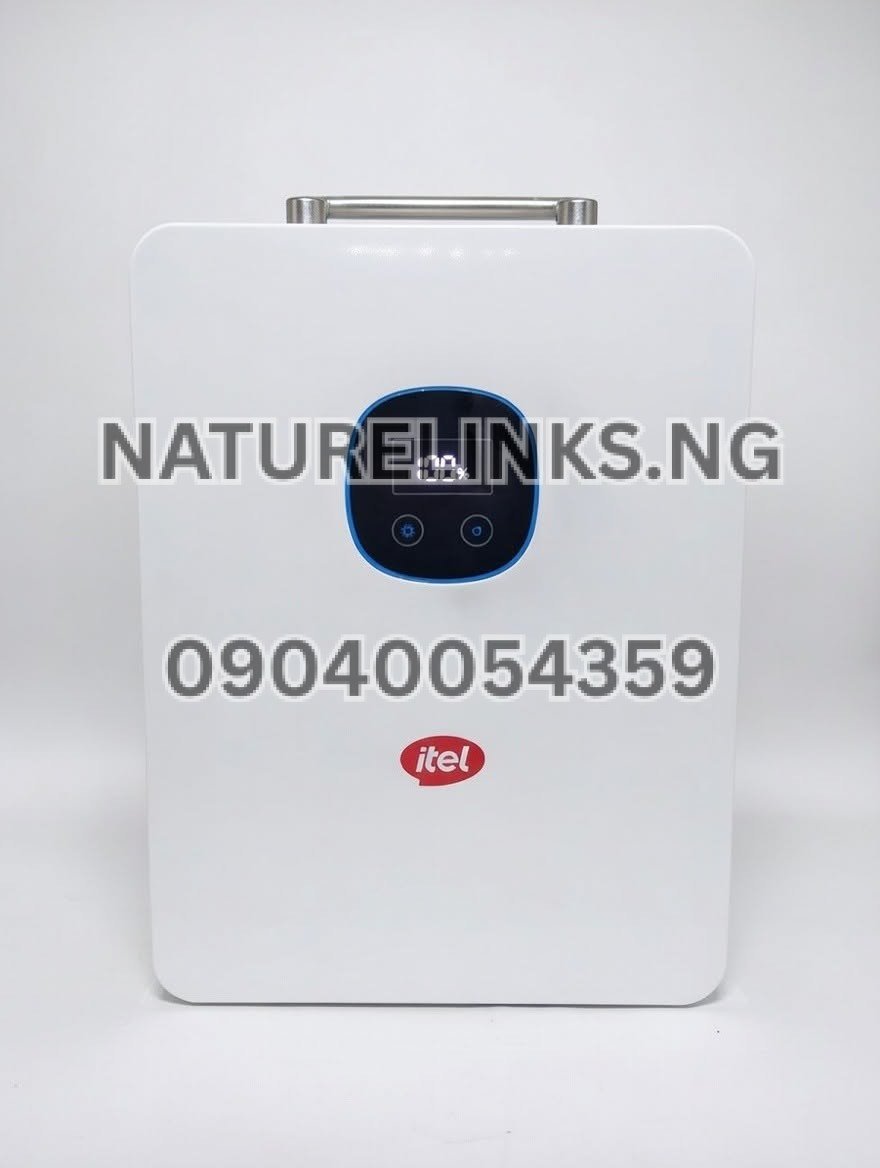
Itel Power Tank Battery Voltage vs AC Output Voltage
Another common search question is whether the Power Tank battery is 230V.
The answer is no.
The battery operates internally at a much lower DC voltage, while the integrated inverter converts stored DC energy into AC electricity.
The published IESS-05K10N specifications identify:
- Battery cell voltage: 3.2VDC
- Approximate assembled pack voltage: 25.6V nominal
- AC inverter output: 230VAC
- Continuous inverter output: 500W.
The inverter is therefore responsible for producing the household-style AC output.
Is the Itel Power Tank 500W or 1000Wh?
It is both, but the two numbers describe different things.
500W refers primarily to the inverter’s rated continuous output.
1,000Wh refers to the battery’s stored energy capacity.
For example, the published specifications for the IESS-05K10N identify a 500W nominal AC output and 1kWh battery energy.
This is why calling it a “1000W battery” can be misleading.
A 1,000Wh battery does not mean the inverter can continuously power a 1,000W appliance.
How Long Can a 1000Wh Itel Power Tank Battery Last?
Runtime depends on the connected load and system losses.
In simple theoretical terms:
| Load | Approximate theoretical energy consumption |
|---|---|
| 50W | 50Wh per hour |
| 100W | 100Wh per hour |
| 200W | 200Wh per hour |
| 300W | 300Wh per hour |
| 500W | 500Wh per hour |
Because real systems have inverter losses, battery-management limitations and other factors, actual runtime will be lower than a simple mathematical division in many circumstances.
For example, you should not automatically assume that a 100W appliance will run for exactly 10 hours simply because the battery is rated at 1,000Wh.
What Appliances Can Itel Power Tank Run?
The 500W-class IESS-05K10N is generally intended for electronics, lighting and compatible small appliances within its output limits.
Common examples include:
- LED television
- Decoder
- Wi-Fi router
- Laptop
- Phone chargers
- LED bulbs
- Small fans
- CCTV equipment
- POS equipment
- Modems
- Small electronic equipment
The combined running load must remain within the Power Tank’s rated output, while appliances with motors may also have higher starting requirements.
High-power appliances such as electric irons, kettles, electric cookers, heaters and air conditioners may exceed the continuous output capability of the commonly listed 500W model.
Does Battery Voltage Affect Solar Charging?
Yes, but users should not attempt to match the solar panel voltage directly to the battery voltage.
The Power Tank incorporates an MPPT solar charge controller. The MPPT controller is designed to manage the solar-panel input and convert the available solar energy appropriately for battery charging.
The published IESS-05K10N specifications give an MPPT range of approximately 11–60V and maximum PV input of 400W.
Therefore, the solar panel’s electrical characteristics need to be checked against the PV input specifications, not merely against the nominal battery voltage.
Itel Power Tank Battery Type
The IESS-05K10N uses LiFePO₄ (Lithium Iron Phosphate) battery technology.
LiFePO₄ is widely used in modern energy-storage systems because it offers long cycle life and good thermal characteristics when properly designed and managed.
The published specification for this Power Tank gives a cycle-life rating of approximately 6,000 cycles under specified conditions.
The Power Tank also incorporates battery and electrical protection features such as over-voltage, overload, short-circuit and over-temperature protection.

Itel Power Tank Battery Voltage and BMS
The Power Tank’s Battery Management System (BMS) is important because lithium battery packs require controlled charging and discharging.
A properly designed BMS can monitor and help protect against conditions such as:
- Overcharging
- Excessive discharge
- Over-current
- Over-temperature
- Cell imbalance
- Abnormal voltage conditions
The published product information lists battery and system protection features including battery fuse, PV over-voltage protection, overload protection, short-circuit protection and over-temperature protection.
Users should not bypass or modify the built-in battery-management system.
What Is the Battery Voltage of Power Tank Compared With Other Itel Models?
It is important to identify the exact model because “Power Tank” is a product family rather than one universal battery specification.
For example, the commonly listed IESS-05K10N is a 1kWh/500W model, while newer or larger Itel Power Tank configurations can have substantially different capacities and electrical specifications.
A newer IESS-1K20N listing, for example, is described with a 2,000Wh battery, 1,000W AC output and up to 1,200W PV input, showing why buyers should not apply the specifications of one Power Tank model to another.
Always provide the seller with the exact model number when asking about battery voltage, solar compatibility or replacement components.
Itel Power Tank IESS-05K10N Datasheet
| Parameter | Specification |
|---|---|
| Brand | itel |
| Product | Power Tank |
| Model | IESS-05K10N |
| Battery chemistry | LiFePO₄ |
| Rated cell voltage | 3.2VDC |
| Approx. battery pack voltage | 25.6V nominal |
| Rated capacity | 314Ah |
| Battery energy | 1,000Wh / 1kWh |
| Continuous AC output | 500W |
| Maximum apparent output | 600VA |
| AC output voltage | 230VAC |
| PV input | Up to 400W |
| Maximum PV voltage | 60V |
| MPPT range | 11–60V |
| Grid input | 90–280VAC |
| Cycle life | Up to approximately 6,000 cycles |
| Cooling | Intelligent fan |
| UPS switching | Less than approximately 20ms |
| Battery type | LiFePO₄ |
| Display | LED/state-of-charge display |
| Protection | Overload, short circuit, temperature and voltage protection |
These specifications are based on currently published listings for the IESS-05K10N; configurations and regional specifications should be verified before purchase.
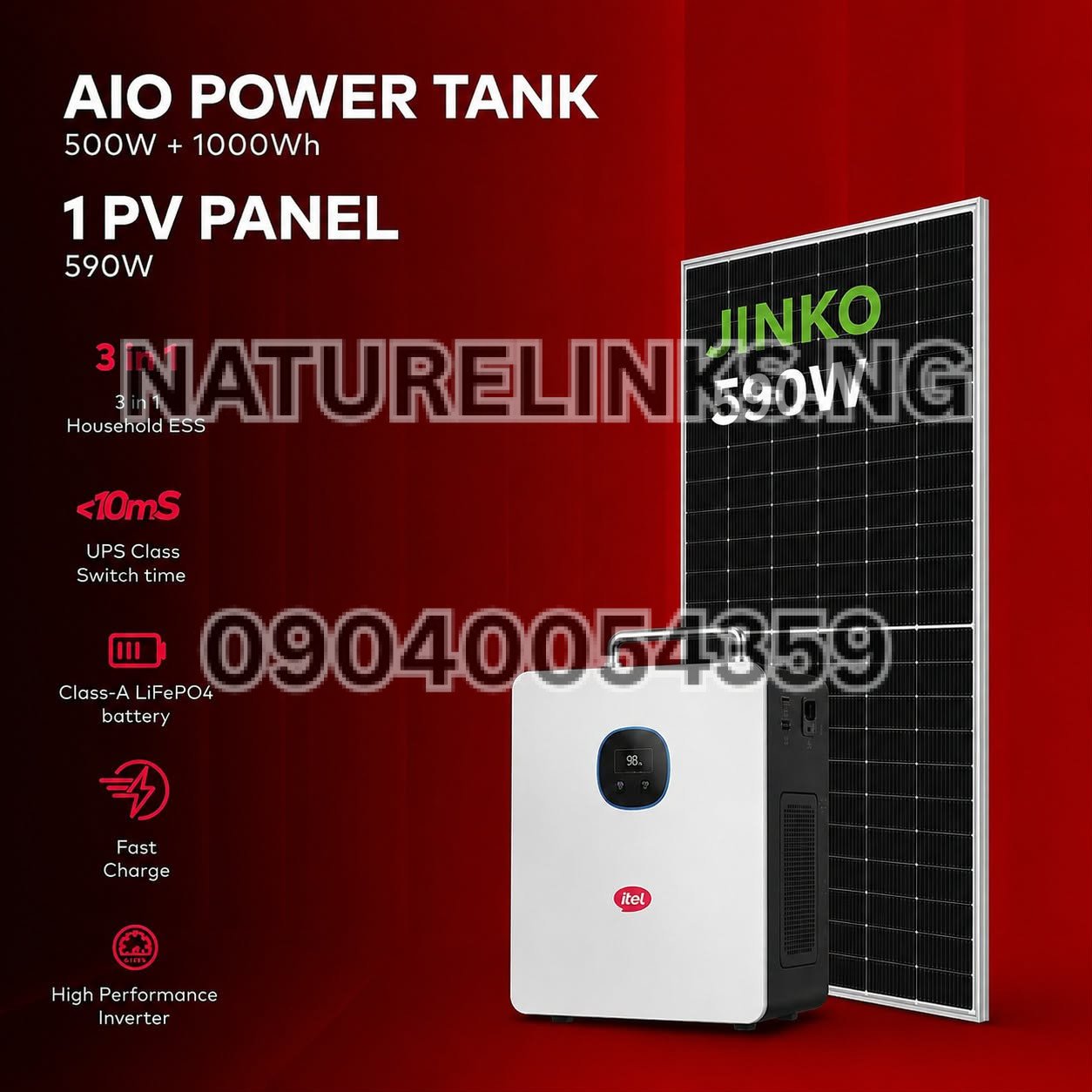
Where to Buy Genuine Itel Power Tank in Nigeria
If you are looking for an original Itel Power Tank in Nigeria, buyers should verify:
- Exact model number
- Battery capacity
- Battery chemistry
- Battery voltage
- Inverter rating
- Solar/PV specifications
- Warranty
- Included accessories
- Seller/distributor information
- Product authenticity
Nature Links Nigeria Limited / Nature Solar Global Limited
Best Seller: Nature Links Nigeria Limited [NatureLinks.NG]
Distributor: Nature Solar Global Limited
CEO: Mr. Joseph Chikeleze
Call: 07049528019
WhatsApp: 09040054359
Shop Address: F1571 Upstairs (F-Line), Alaba International Market, Lagos State 🇳🇬
For buyers in Lagos and other parts of Nigeria, contact the seller directly to confirm the current model, availability, price, warranty and compatible solar-panel options before making payment.
How to Choose the Right Solar Panel for Itel Power Tank
If your goal is to charge the Power Tank with solar energy, don’t choose a panel by wattage alone.
For the commonly listed IESS-05K10N, the documented limits include 400W maximum PV input and 60V maximum PV voltage.
Check:
1. Panel wattage
The total connected solar input should not exceed the Power Tank’s specified PV input rating.
2. Open-circuit voltage
The panel’s Voc must remain within the Power Tank’s permissible PV voltage.
3. Operating voltage
The panel should operate within the MPPT voltage range.
4. Current
The panel’s current should also be compatible with the controller.
5. Panel configuration
Connecting panels in series increases voltage, while parallel connections increase current. The configuration must therefore be designed carefully.
Why Battery Voltage Matters When Buying an Itel Power Tank
Battery voltage affects how the internal electrical system is designed.
A higher-voltage battery system can deliver a given amount of power at lower current compared with a lower-voltage system.
For example, the basic electrical relationship is:
Power (W) = Voltage (V) × Current (A)
However, users should not use this formula to modify the Power Tank or connect external batteries without manufacturer approval.
The Power Tank is an integrated energy-storage product with its own battery-management system, inverter and charging electronics.
Can I Replace the Itel Power Tank Battery?
Do not assume that the internal battery can be replaced with any 24V, 25.6V, 12V or 48V LiFePO₄ battery.
The battery is integrated with the Power Tank’s electronics and BMS. Using an incompatible battery can create electrical, charging and safety problems.
If your Power Tank develops a battery fault, contact the seller or an authorized service provider and provide the exact model number.
Can I Connect an External 24V Battery to Itel Power Tank?
The fact that the commonly listed IESS-05K10N has an approximately 25.6V nominal battery pack does not mean that an external 24V battery should be connected to it.
The Power Tank is designed as an integrated system.
Unless the manufacturer specifically documents an external-battery input, users should not connect an external battery directly to the internal battery terminals.

Frequently Asked Questions About Itel Power Tank Battery Voltage
1. What is the battery voltage of Itel Power Tank?
For the commonly listed IESS-05K10N, the published specification gives 3.2VDC nominal cell voltage, while the assembled LiFePO₄ battery pack is approximately 25.6V nominal.
2. Is Itel Power Tank 12V or 24V?
The IESS-05K10N is approximately a 24V-class battery system, with a nominal pack voltage of about 25.6V. The 3.2V figure refers to the individual LiFePO₄ cells.
3. Is Itel Power Tank a 25.6V battery?
The technical configuration is commonly identified as approximately 25.6V nominal for the assembled battery pack. Individual LiFePO₄ cells are rated at 3.2V nominal.
4. How many Ah is the Itel Power Tank battery?
The commonly listed IESS-05K10N specification gives a rated capacity of 314Ah and approximately 1,000Wh/1kWh of battery energy.
5. What type of battery does Itel Power Tank use?
The IESS-05K10N uses a LiFePO₄ (Lithium Iron Phosphate) battery. Its published cycle-life rating is approximately 6,000 cycles under specified conditions.
6. Is 1000Wh the same as 1000W?
No. 1,000Wh is an energy-capacity measurement, while watts (W) measure power. The commonly listed IESS-05K10N has a 500W continuous AC output and a 1,000Wh battery.
7. What is the solar voltage for Itel Power Tank?
The commonly documented IESS-05K10N has an MPPT voltage range of approximately 11–60V, with a maximum PV voltage of 60V.
8. How many watts of solar can Itel Power Tank use?
The commonly listed IESS-05K10N supports up to 400W maximum PV input. The panel voltage must also remain within the specified PV voltage range.
9. Can I use a 400W solar panel with Itel Power Tank?
A compatible 400W solar configuration can be used within the documented maximum PV input, provided its voltage and other electrical characteristics comply with the Power Tank’s PV-input requirements.
10. Does the 3.2V battery voltage mean the Power Tank outputs 3.2V?
No. The 3.2V specification refers to the nominal voltage of individual battery cells. The integrated system produces its specified outputs through its internal electronics, including a 230V AC output on the IESS-05K10N.
Important Buying Advice for Nigerians
When searching Google for “Itel Power Tank battery voltage”, “Itel Power Tank 1000Wh price in Nigeria”, “Itel Power Tank 500W”, or “Itel Power Tank solar panel”, avoid relying on the number in the product title alone.
A listing may say:
500W + 1000Wh
but this does not mean:
500V + 1000V
Instead:
- 500W = inverter power rating
- 1,000Wh = battery energy capacity
- 3.2V = nominal individual LiFePO₄ cell voltage
- ~25.6V = nominal assembled battery-pack voltage
- 230V = AC output voltage
- 60V = maximum documented PV input voltage for the IESS-05K10N
- 400W = maximum documented PV input power
This is one of the most important distinctions when buying an Itel Power Tank in Nigeria.
Why You Should Confirm the Exact Model Before Buying
Itel produces different energy-storage products, and specifications can vary significantly between models.
For example, the IESS-05K10N is documented as a 500W/1kWh system with up to 400W PV input, while the IESS-1K20N is listed as a 1,000W/2kWh system capable of up to 1,200W PV input.
Therefore, if a customer asks a seller, “What is the battery voltage of Power Tank?”, the seller should first establish:
Which Power Tank model?
This avoids applying the specifications of a 1kWh unit to a larger Power Tank.
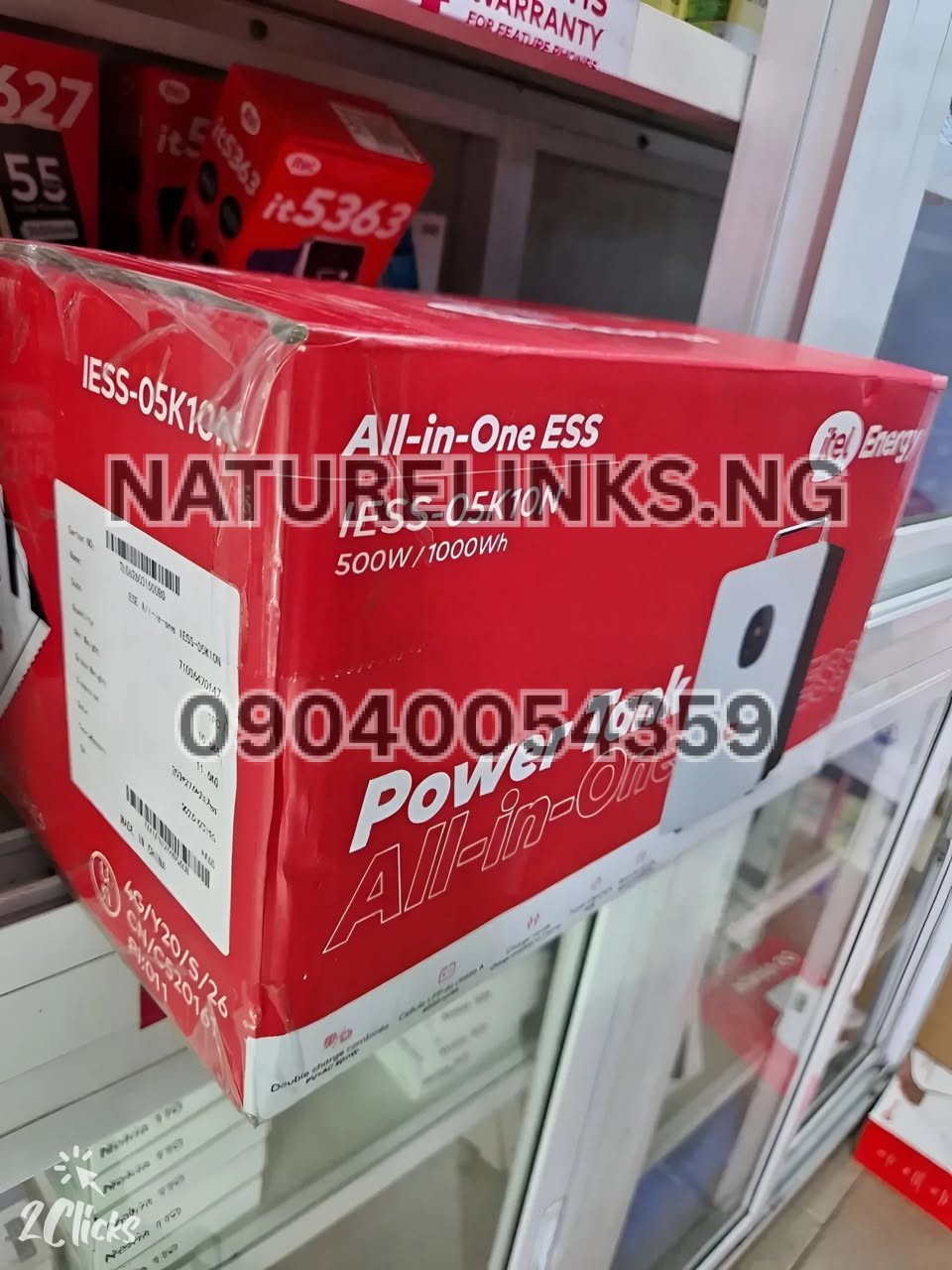
Conclusion
The answer to “What Is the Battery Voltage of Power Tank?” depends on the specific Itel Power Tank model. For the commonly listed itel IESS-05K10N 500W/1,000Wh Power Tank, the published specification identifies 3.2VDC nominal LiFePO₄ cell voltage, while the assembled battery configuration is approximately 25.6V nominal. The unit also has a 1,000Wh/1kWh energy capacity, 500W continuous AC output and up to 400W solar-PV input with a maximum PV voltage of 60V.
For Nigerians buying an Itel Power Tank, always confirm the exact model number, battery specification, solar-input limits, warranty and accessories before payment.
For genuine Itel Power Tank products and current availability in Nigeria, contact Nature Links Nigeria Limited / Nature Solar Global Limited:
Call: 07049528019
WhatsApp: 09040054359
Shop: F1571 Upstairs (F-Line), Alaba International Market, Lagos State 🇳🇬