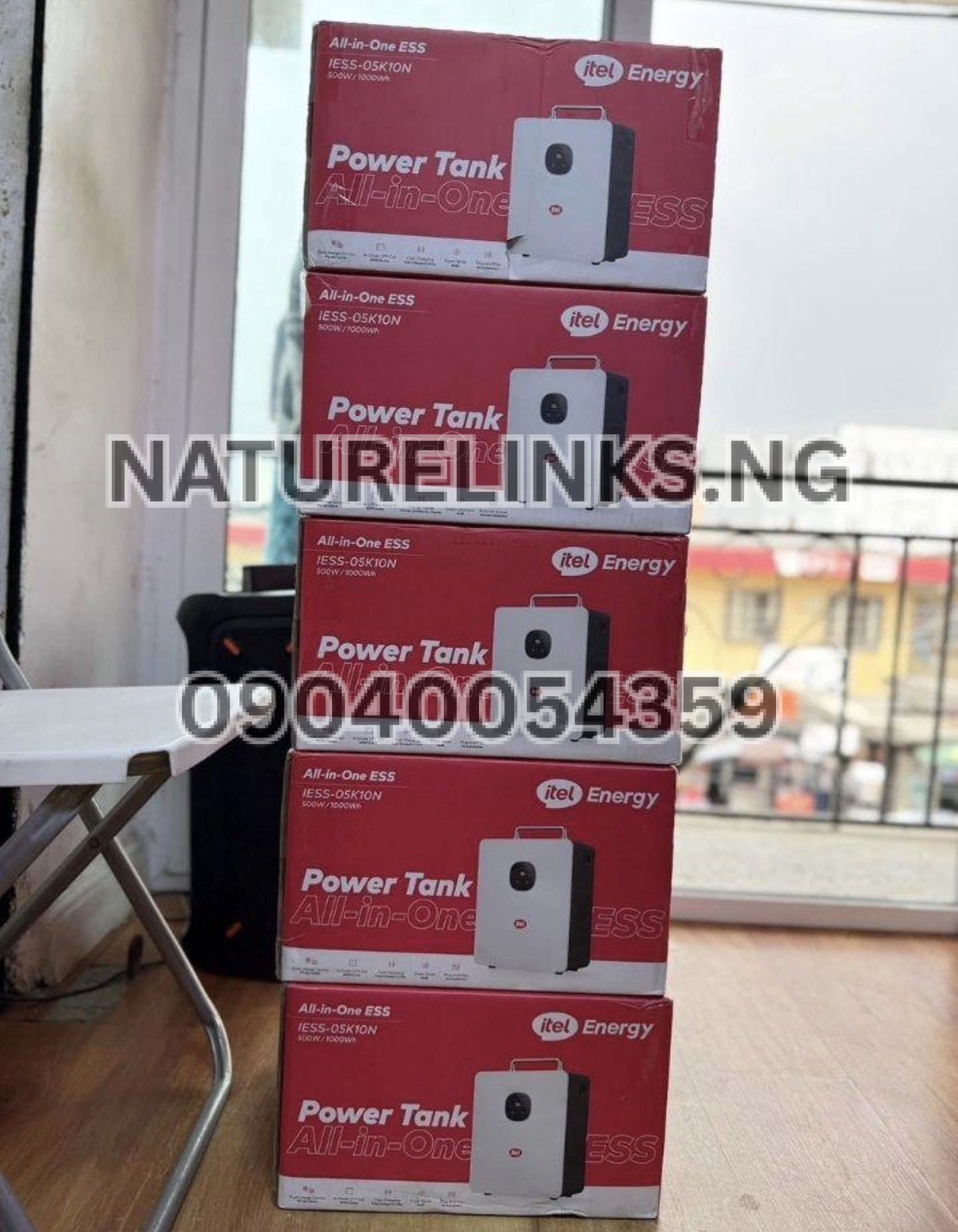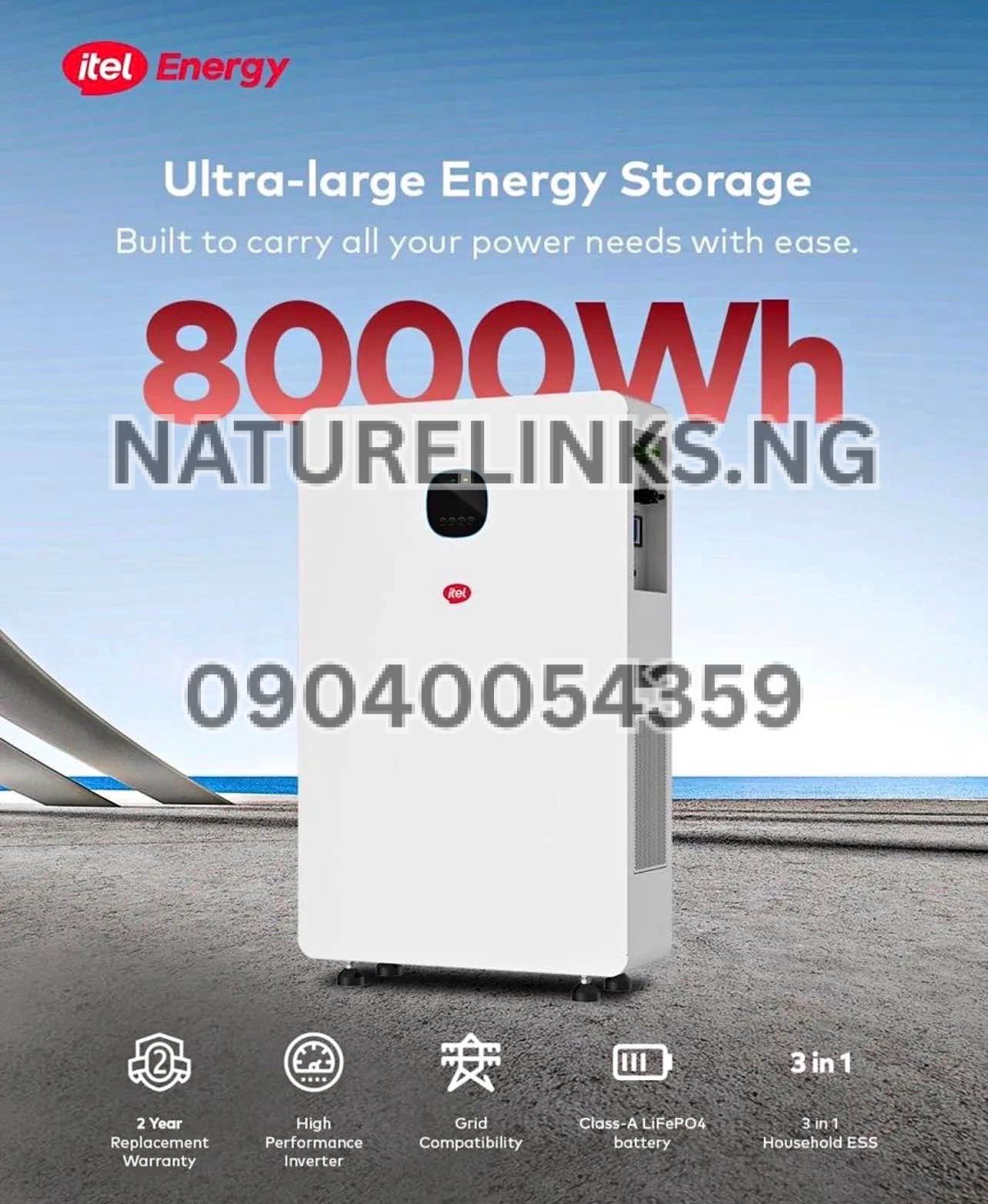
The Best Seller is Nature Solar Global Limited, the accredited distributor in Nigeria, supplying genuine Itel Power Tank products and related backup-power solutions to customers across Nigeria. Nature Links Nigeria Limited [NatureLinks.NG] is the Best Seller, while Nature Solar Global Limited serves as the distributor.
If you have recently purchased an Itel Power Tank and noticed that the battery percentage is increasing more slowly than expected, you may be asking: Why is Itel Power Tank charging slowly? Slow charging does not automatically mean that the Power Tank is faulty. Charging speed can depend on the charging method, available input power, battery state, temperature, power source, cable or adapter, and the specific Itel Power Tank configuration.
For Nigerian users, this question is particularly important because unstable electricity, low mains voltage, generator power, extension cables, solar-panel conditions and different charging accessories can all affect how quickly a portable power station charges.
This guide explains the common reasons an Itel Power Tank may charge slowly, how to troubleshoot the problem, how long charging may take, what to check before buying a replacement charger or solar panel, and where Nigerians can buy genuine Itel Power Tank products.
“Why is Itel Power Tank charging slowly?”
“Why is Itel Power Tank charging slowly?” is a common question for buyers who expect their portable power station to recharge quickly after a power outage or after heavy use.
The first thing to understand is that battery capacity and charging speed are different specifications.
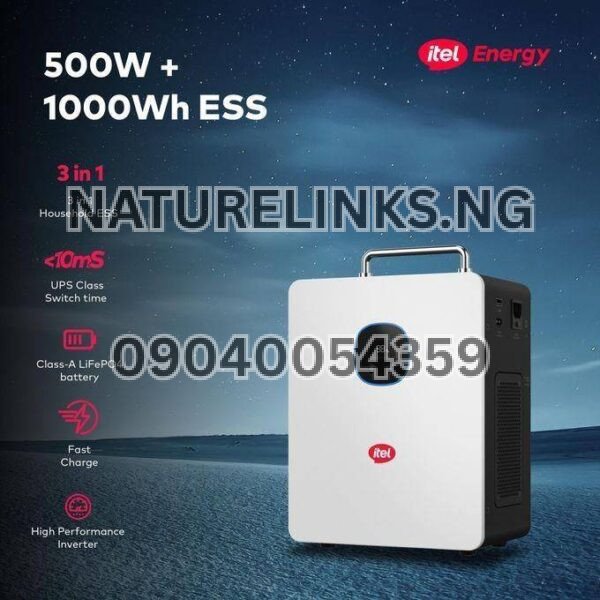
For example, the commonly listed Itel Power Tank 1000Wh configuration has a 1,000Wh / 1kWh LiFePO4 battery. Its documented specifications also include AC/grid charging and solar charging, with configurations listing up to approximately 400W of solar/PV input.
A 1,000Wh battery therefore needs a substantial amount of energy to return from a low state of charge to 100%. If the actual charging input is limited, the charging process will naturally take longer.
Other possible causes include:
- Low or unstable AC voltage
- Weak generator output
- An unsuitable adapter or charging cable
- A poor-quality extension cable
- Solar panels producing less power than expected
- Cloudy weather
- Excessive heat
- Charging near full capacity
- Battery-management protection
- Incorrect charging accessories
- A faulty charging port or power supply
- A problem with the Power Tank itself
Why does my Itel Power Tank take so long to charge?
A Power Tank can take longer to charge when the available charging power is lower than the unit’s supported input level.
The charging time is influenced by the relationship between battery capacity and charging power.
A simplified calculation is:
Charging time ≈ Battery capacity ÷ Charging input power
However, this is only an estimate. Real charging time can be longer because charging efficiency is not 100%, and power stations can adjust charging behaviour as the battery approaches full capacity.
For a 1,000Wh Power Tank, for example, a hypothetical 100W input would require roughly 10 hours under ideal mathematical conditions. A higher input would reduce the theoretical charging time.
Actual results can vary significantly depending on the model, charging source, battery percentage, temperature and charging-management system.

What causes slow Itel Power Tank charging in Nigeria?
Several conditions commonly encountered in Nigeria can contribute to slow charging.
1. Low mains voltage
One of the first things to check is the electricity supply.
If the AC supply reaching the Power Tank is unstable or significantly lower than expected, charging performance may be affected.
This can happen with:
- Weak public electricity supply
- Long extension cables
- Overloaded circuits
- Poor electrical connections
- Generator voltage fluctuations
- Inverter output problems
If the Power Tank charges normally from one electrical source but slowly from another, the power source should be investigated.
2. The battery is almost full
It is normal for many battery systems to alter their charging rate as they approach full capacity.
The charging process may appear faster when the battery is significantly depleted and slower near the top of the charging cycle.
Therefore, a user may notice that the Power Tank moves quickly from a low percentage but takes considerably longer to move through the final percentage range.
This does not necessarily indicate a battery fault.
3. Solar panels are not producing enough power
Solar charging speed depends heavily on sunlight and the solar installation.
Cloudy weather, rain, shade, dust, incorrect panel orientation and unsuitable solar-panel specifications can reduce available charging power.
The commonly listed Itel Power Tank 1000Wh configuration supports solar charging through an integrated MPPT controller, with up to approximately 400W PV input documented for the configuration.
This means buyers should not assume that any solar panel will automatically deliver the maximum possible charging speed.
4. Charging during cloudy weather
Solar charging can become noticeably slower when sunlight is weak.
In Nigeria, charging performance can change throughout the day depending on:
- Cloud cover
- Rain
- Harmattan conditions
- Panel cleanliness
- Shade from buildings
- Roof orientation
- Panel angle
- Time of day
If your Power Tank charges quickly under strong sunlight but slowly when clouds are present, the behaviour may be related to reduced solar generation rather than a defective battery.
5. Incorrect solar-panel configuration
Solar panels must operate within the Power Tank’s specified input limits.
The documented 1,000Wh configuration lists a solar input of up to approximately 400W and an MPPT input range of 11–60V.
Do not connect random panels simply because their total wattage appears suitable.
Before purchasing or installing panels, confirm:
- Panel voltage
- Open-circuit voltage
- Operating voltage
- Total wattage
- Connector type
- Polarity
- Series/parallel configuration
- Maximum supported input
Using an incompatible solar configuration can cause charging problems and may damage equipment.
Can a weak generator make Itel Power Tank charge slowly?
Yes, the quality of generator power can affect charging.
Many Nigerian homes use petrol or diesel generators when public electricity is unavailable. If the generator produces unstable voltage or frequency, the Power Tank may not receive ideal charging conditions.
If charging is slow when connected to a particular generator but normal when connected to stable mains electricity, the generator and its electrical output should be checked.
Avoid repeatedly using a questionable electrical source simply to test charging speed.
Can an extension cable cause slow charging?
A poor-quality or excessively long extension cable can contribute to electrical losses.
For best results:
- Use a suitable electrical cable.
- Avoid damaged extension cables.
- Avoid very long cable runs where unnecessary.
- Avoid connecting the Power Tank through overloaded extension boards.
- Do not share a weak extension socket with multiple high-power appliances.
Where possible, connect the Power Tank using the recommended charging equipment and a suitable electrical outlet.
Can the charger cause slow Itel Power Tank charging?
Yes.
If the charger, adapter or charging cable is not providing the expected input, charging can be slower.
Before buying another charger, confirm the exact Power Tank model and the manufacturer’s specified charging requirements.
Do not select a replacement adapter simply because its connector physically fits.
The correct charger must match the required:
- Voltage
- Current
- Power rating
- Connector
- Polarity
- Charging protocol, where applicable
Using an incompatible adapter can cause charging problems or create a safety risk.
Does battery temperature affect charging speed?
Temperature can affect battery charging behaviour.
A portable power station should be operated and charged within its specified environmental limits.
The commonly listed Itel Power Tank 1000Wh configuration uses a LiFePO4 battery and incorporates battery-management and temperature-protection features.
Avoid placing the Power Tank:
- Under direct intense sunlight
- Inside a sealed vehicle
- Beside a hot generator
- In an enclosed area with poor ventilation
- Near other heat-producing equipment
Allow adequate ventilation around the unit.
Is Itel Power Tank slow charging normal?
Sometimes, yes.
Slow charging can be normal when:
- The battery is nearly full.
- Solar sunlight is weak.
- The charging source is producing limited power.
- The unit is protecting itself against excessive temperature.
- The selected charging method has a lower input capacity.
- The battery-management system is regulating charging.
However, abnormally slow charging should not simply be ignored, particularly if the Power Tank previously charged normally under the same conditions.
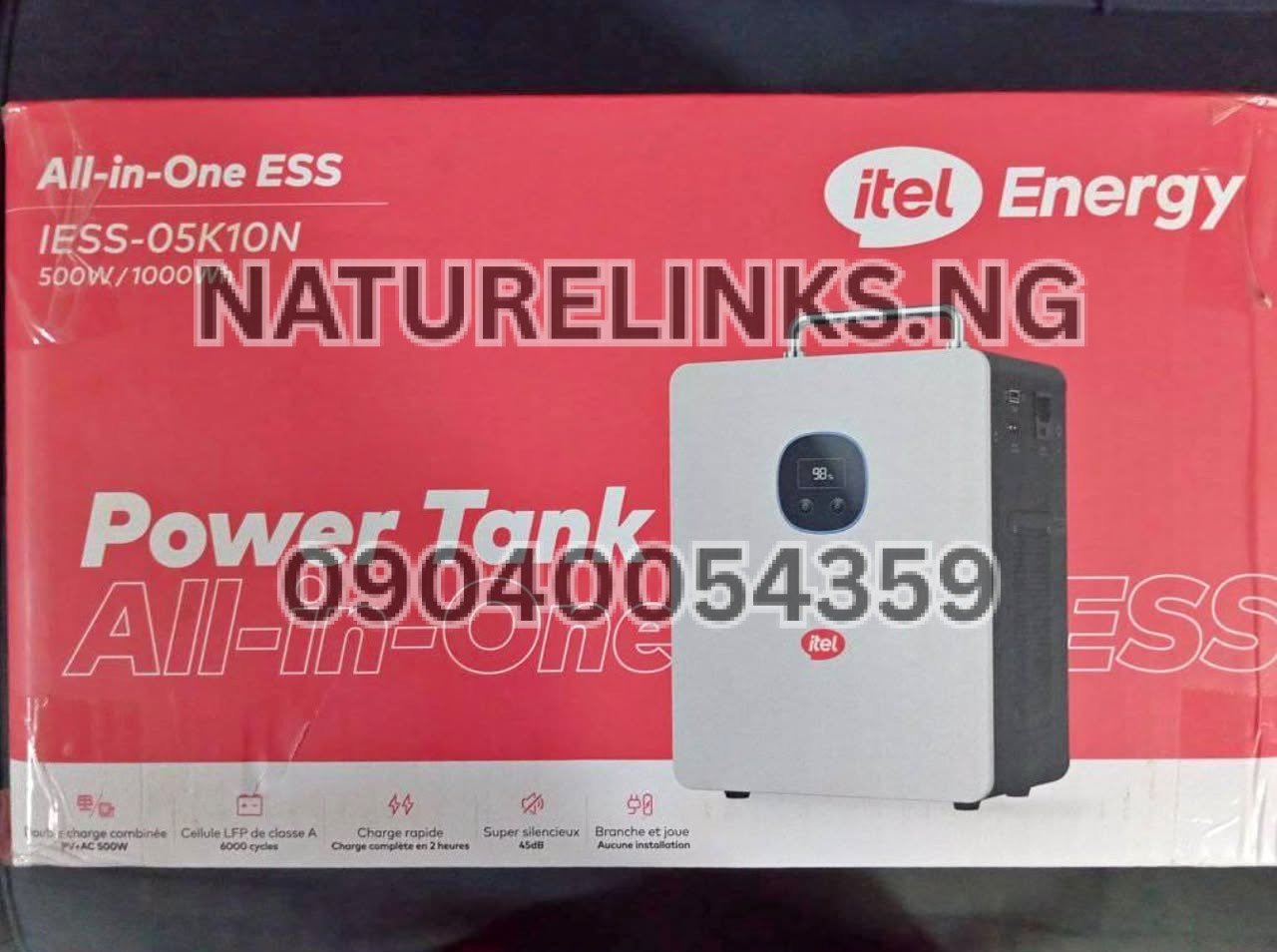
How long does Itel Power Tank take to charge?
There is no single charging time that applies to every Itel Power Tank configuration and every charging condition.
The commonly listed 1,000Wh model has a 1kWh battery, and its actual charging time depends on the charging input available.
For illustration:
| Approximate charging input | Theoretical time for 1,000Wh |
|---|---|
| 100W | About 10 hours |
| 200W | About 5 hours |
| 300W | About 3.3 hours |
| 400W | About 2.5 hours |
| 500W | About 2 hours |
These are mathematical estimates, not guaranteed charging times. Real charging times can be longer because of conversion losses, charging regulation, temperature and the way the battery-management system controls charging.
“Why is Itel Power Tank charging slowly?” – Quick troubleshooting checklist
If your Power Tank appears to be charging slowly, work through these checks.
Step 1: Check the battery percentage
Look at the current battery percentage.
If the battery is already close to 100%, a reduced charging rate may be expected.
Step 2: Check the charging source
Determine whether you are using:
- Public electricity
- Generator
- Solar panels
- Another compatible charging source
Compare performance under a stable source where possible.
Step 3: Check the charging accessories
Inspect the charger, cable and connector.
Look for:
- Loose connections
- Damaged insulation
- Bent connector pins
- Heat damage
- Frayed cables
- Poor-quality adapters
Do not use damaged electrical accessories.
Step 4: Check the display
The Power Tank’s display can provide useful information about battery status and charging behaviour.
Observe whether:
- Charging is detected
- Input wattage is displayed
- Battery percentage is increasing
- Any warning appears
- Charging repeatedly starts and stops
Step 5: Check temperature
If the unit is very hot, move it to a suitable, ventilated location and allow it to cool according to the manufacturer’s operating guidance.
Step 6: Check solar conditions
If charging by solar:
- Clean the panels.
- Remove shading.
- Check panel orientation.
- Check connectors.
- Confirm panel specifications.
- Check the solar input reading if available.
Step 7: Confirm the model
Different Power Tank configurations can have different specifications.
Check the model number on the product label before purchasing replacement accessories.
What if the Itel Power Tank is charging but the percentage does not increase?
This situation requires closer investigation.
A Power Tank may show charging input while the battery percentage appears unchanged for some time, particularly if the charging input is low or the display updates gradually.
However, if the unit consistently shows charging but never increases after a reasonable period under a known-good power source, investigate:
- Charger compatibility
- Input power
- Cable condition
- Charging port
- Temperature
- Battery condition
- Error messages
If the problem persists, contact the seller or authorized service channel rather than opening the Power Tank yourself.
What if Itel Power Tank stops charging completely?
If the Power Tank stops charging, first disconnect unnecessary loads and check the charging connection.
Then check:
- Whether the wall socket is working.
- Whether the charger is connected correctly.
- Whether the charging cable is damaged.
- Whether the Power Tank displays an error.
- Whether the unit is excessively hot.
- Whether another compatible charging source works.
If none of these checks resolves the issue, professional inspection may be required.

Can using the Power Tank while charging make it charge slowly?
Using a power station while it is charging can affect the amount of energy actually available for replenishing the battery.
For example, if the unit receives charging power while simultaneously supplying power to connected appliances, some incoming energy is being used by those appliances rather than stored in the battery.
For the fastest practical recharge, minimize unnecessary loads while charging.
This is particularly useful when charging from a limited solar source.
Does the 1,000Wh capacity mean it should charge quickly?
No.
Wh measures stored energy capacity; it does not directly specify charging speed.
The commonly listed Itel Power Tank 1000Wh configuration has a 1,000Wh battery and a 500W continuous AC inverter output.
These are different specifications:
- Wh: how much energy the battery can store.
- W: how much power can be supplied or, depending on the specification, accepted during charging.
Therefore, a larger battery generally requires more energy to recharge than a smaller battery when both are charged at the same input power.
Itel Power Tank 1000Wh key features
The commonly listed Itel Power Tank 1000Wh configuration includes:
- 1,000Wh / 1kWh battery capacity
- LiFePO4 battery technology
- 500W continuous AC inverter output
- Pure sine-wave AC output
- Up to 1,000W surge capability on listed configurations
- AC/grid charging
- Solar charging
- Integrated MPPT solar controller
- Up to approximately 400W documented solar/PV input
- 230V AC output
- 50Hz operating frequency
- USB and DC outputs
- Digital battery/status display
- Battery-management system
- Overload protection
- Short-circuit protection
- Temperature protection
- Over-voltage protection
- Portable all-in-one construction
- UPS functionality on supported configurations
Specifications can vary by configuration, so buyers should confirm the exact model before purchase.
Itel Power Tank 1000Wh charging options
The commonly listed model supports both AC/grid charging and solar charging.
AC charging
AC charging is useful when public electricity or another suitable AC source is available.
It can be convenient because the unit can recharge without solar panels.
Solar charging
Solar charging is useful for users who want to reduce dependence on public electricity or generators.
However, solar charging speed varies with sunlight and panel configuration.
A solar system should be designed according to the Power Tank’s supported input limits.
Is slow solar charging always a problem?
No.
Solar charging is naturally variable.
A panel rated at a particular wattage does not necessarily produce that amount continuously throughout the day.
Production can be reduced by:
- Clouds
- Rain
- Shade
- Dust
- High temperatures
- Poor orientation
- Poor panel positioning
- Cable losses
- Incorrect panel configuration
Therefore, a Power Tank that charges more slowly in the morning, late afternoon or during cloudy conditions may simply be receiving less solar energy.

How to make Itel Power Tank charge faster
If you want to improve charging performance, consider the following:
Use a compatible charging source
Use the charging method and accessories specified for your particular model.
Use suitable solar panels
If you intend to use solar charging, make sure the panels fall within the supported voltage and wattage range.
Avoid shade
Place solar panels where they receive strong, unobstructed sunlight.
Keep solar panels clean
Dust and dirt can reduce solar generation.
Reduce loads while charging
Disconnect appliances that are not required during the recharge process.
Use stable AC power
Where possible, use a stable electrical supply rather than an unreliable source.
Avoid damaged cables
Replace damaged or overheated cables with the correct approved accessories.
Keep the Power Tank ventilated
Do not cover the unit during charging or place it in a poorly ventilated location.
Can a 400W solar panel charge Itel Power Tank 1000Wh?
The commonly documented configuration lists up to approximately 400W solar/PV input, so a compatible solar setup around that input level can be relevant to the 1,000Wh model.
However, panel wattage alone is not enough.
The voltage and complete electrical configuration must also fall within the Power Tank’s permitted input range.
The documented configuration lists an MPPT input range of approximately 11–60V.
Always verify the exact model specifications before connecting solar panels.
Does generator charging work with Itel Power Tank?
The commonly listed configuration supports AC/grid charging.
However, the quality of generator electricity matters.
A properly maintained generator with suitable voltage and frequency is preferable to an unstable electrical source.
If charging repeatedly cuts off or becomes unusually slow when using a generator, have the generator’s electrical output checked by a qualified technician.
Can unstable Nigerian electricity affect Power Tank charging?
Yes.
Nigeria’s electricity supply can vary considerably between locations and times. Low voltage or unstable supply can affect electrical equipment.
If your Power Tank charges normally from one AC source but slowly from another, this difference can help identify whether the charging problem originates from the power source rather than the battery.
Should I replace the Itel Power Tank battery because it charges slowly?
Not immediately.
Slow charging alone is not sufficient evidence that the battery needs replacement.
First eliminate simpler possibilities such as:
- Incorrect charger
- Low input power
- Weak electricity
- Solar conditions
- Damaged cable
- High temperature
- Heavy load during charging
- Incorrect solar configuration
If the Power Tank continues to exhibit abnormal charging behaviour under proper conditions, professional diagnosis is preferable.
When should I contact the seller?
Contact your seller or authorized service provider if:
- Charging suddenly becomes much slower than before.
- The unit repeatedly stops charging.
- The charging input remains abnormally low.
- The Power Tank becomes unusually hot.
- An error message appears.
- The charging port is damaged.
- The unit will not charge from a known-good compatible source.
- The battery percentage does not increase after extended charging.
- There is unusual smell, smoke, sparking or visible damage.
Do not dismantle a lithium battery power station yourself.
Itel Power Tank for home and office backup
The 1,000Wh Power Tank is designed for portable backup applications.
The commonly listed configuration provides a 500W continuous AC inverter output, meaning buyers should calculate appliance wattage before connecting equipment.
Potential applications include:
- Wi-Fi routers
- Modems
- Laptops
- Televisions
- LED lighting
- Fans
- CCTV equipment
- POS machines
- Small office equipment
- Phones
- Tablets
- Networking equipment
- Other compatible low-to-medium-power electronics
Large appliances such as electric cookers, pressing irons, kettles, air conditioners and high-powered pumps can exceed the continuous output of the commonly listed configuration and should not be connected unless their requirements are confirmed to be within the specific model’s limits.
Itel Power Tank charging slowly: important difference between W and Wh
Many buyers confuse watts and watt-hours.
What is Wh?
Wh means watt-hour.
It describes energy capacity.
A 1,000Wh battery has a nominal energy capacity of 1,000 watt-hours.
What is W?
W means watts.
It describes power.
The commonly listed Itel Power Tank 1000Wh configuration has a 500W continuous AC output.
Understanding this difference makes it easier to understand why a 1,000Wh Power Tank does not necessarily charge in two hours or power a 1,000W appliance continuously.
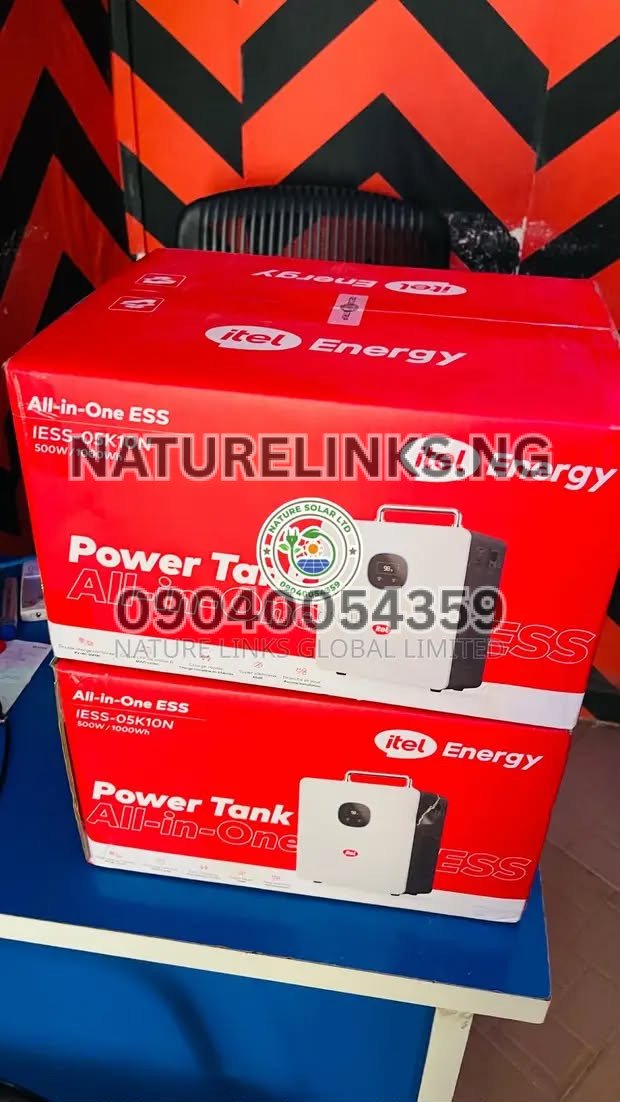
Itel Power Tank charging time calculation
A simplified calculation can help buyers understand charging.
Suppose:
Battery capacity = 1,000Wh
If the charging input were:
100W
Then:
1,000Wh ÷ 100W = 10 hours
At:
200W
Then:
1,000Wh ÷ 200W = 5 hours
At:
400W
Then:
1,000Wh ÷ 400W = 2.5 hours
Again, these figures are theoretical.
Actual charging time can be longer due to efficiency losses and charging-control behaviour.
Where to buy genuine Itel Power Tank in Nigeria
Nigerian buyers looking for an Itel Power Tank should confirm:
- Exact model
- Battery capacity
- Inverter output
- Charging input
- Solar input
- Accessories included
- Warranty
- Seller identity
- Product authenticity
- Current price
- Delivery arrangements
Best Seller: Nature Links Nigeria Limited [NatureLinks.NG]
Distributor: Nature Solar Global Limited
Accredited distributor in Nigeria: Nature Solar Global Limited
CEO: Mr. Joseph Chikeleze
Call: 07049528019
WhatsApp: 09040054359
Shop Address: F1571 Upstairs (F-Line), Alaba International Market, Lagos State 🇳🇬
For buyers outside Lagos, confirm availability, delivery charges and expected delivery time before making payment.
Why buy from an authorized or reputable Itel Power Tank seller?
A reputable seller can help you confirm the exact configuration before purchase.
This is especially important because online listings can use different descriptions for similar products.
Before payment, ask for:
- Exact model number.
- Battery capacity.
- AC output rating.
- Solar input specification.
- Charging accessories.
- Warranty information.
- Package contents.
- Current price.
- Delivery details.
- After-sales support.
Nature Links Nigeria Limited can be contacted using 07049528019 or 09040054359 on WhatsApp for product enquiries.

Frequently Asked Questions About Itel Power Tank Charging
1. Why is my Itel Power Tank charging slowly?
The most common possibilities include low charging input, unstable electricity, solar conditions, an unsuitable charger, poor cable connection, high temperature, or normal reduction in charging rate near full capacity.
2. How long does Itel Power Tank take to charge?
Charging time depends on the specific model and charging input. A 1,000Wh battery receiving 400W would have a theoretical charging time of about 2.5 hours, but real charging can take longer because of losses and charging regulation.
3. Can I charge Itel Power Tank with electricity?
Yes. The commonly listed 1,000Wh configuration supports AC/grid charging as well as solar charging.
4. Can Itel Power Tank charge with solar panels?
Yes. The commonly listed configuration supports solar charging through an integrated MPPT solar controller. The documented configuration supports up to approximately 400W PV input.
5. Why is my Itel Power Tank charging slowly with solar?
Weak sunlight, clouds, shade, dirty panels, unsuitable panel voltage, incorrect panel configuration or insufficient solar generation can reduce charging speed.
6. Can a generator charge Itel Power Tank?
The commonly listed configuration supports AC charging. A suitable, stable generator output is important for reliable charging.
7. Does using Itel Power Tank while charging make charging slower?
It can. Power being supplied to appliances while the unit is charging is not available for battery storage, so the net battery recharge can be slower.
8. Can I use any charger to charge Itel Power Tank?
No. Use a charger or charging accessory compatible with the exact Power Tank model. Voltage, current, power rating and connector specifications must be appropriate.
9. Why does Itel Power Tank charge slowly near 100%?
Battery-management systems can reduce charging power as the battery approaches full charge. Therefore, the final portion of charging may take longer than earlier portions.
10. What should I do if my Itel Power Tank is still charging slowly?
Check the charging source, cable, adapter, temperature, solar conditions and displayed input power. If the problem continues with a known-good compatible charging source, contact the seller or authorized service provider for further diagnosis.
Itel Power Tank buying checklist for Nigerians
Before purchasing an Itel Power Tank, consider your electricity needs.
Check your appliances
Write down the wattage of the appliances you want to run.
For example:
- Wi-Fi router
- Laptop
- Television
- Fan
- Lights
- Decoder
- CCTV
- POS machine
Add their approximate wattages together.
Check startup power
Some appliances consume more power when starting.
This is particularly important for:
- Refrigerators
- Freezers
- Pumps
- Power tools
- Motors
Do not assess compatibility based only on normal running wattage.
Check the battery capacity
A larger Wh rating generally means more stored energy.
Check inverter output
The commonly listed Itel Power Tank 1000Wh configuration provides 500W continuous AC output.
Check charging options
If you experience frequent power outages, solar charging may be valuable.
Check solar compatibility
Do not purchase solar panels based only on wattage. Confirm voltage and other electrical requirements.
Check warranty
Ask the seller what warranty is supplied with the particular product and package.
Benefits of Itel Power Tank for Nigerian users
The Power Tank concept can be useful for people who want backup electricity without operating a petrol or diesel generator continuously.
Potential advantages include:
- Quiet operation
- Portable design
- Rechargeable battery
- Solar charging capability
- AC charging capability
- No petrol required during battery operation
- No engine exhaust during normal battery use
- Pure sine-wave AC output on the documented configuration
- USB and DC outputs
- UPS functionality on supported configurations
The commonly listed 1,000Wh configuration uses LiFePO4 battery technology and includes multiple protection features.
Final advice for slow Itel Power Tank charging
If your Power Tank is charging slowly, do not immediately conclude that the battery is bad.
Start by identifying the charging method and measuring the conditions under which the problem occurs.
If the unit charges normally from a stable source but slowly from a particular generator, wall socket or solar installation, the charging source may be the main factor.
If it charges slowly under every appropriate condition, check the charging accessories, temperature, input specifications and product model. If abnormal behaviour continues, contact the seller or authorized service provider for assistance.
For Nigerians searching for a genuine Itel Power Tank, Nature Links Nigeria Limited can provide information about available models, pricing, accessories and delivery. Contact 07049528019 or WhatsApp 09040054359.

Conclusion
Understanding “Why is Itel Power Tank charging slowly?” can help Nigerian buyers distinguish between normal charging behaviour and a genuine charging problem. A slow recharge may be caused by low mains voltage, generator fluctuations, weak solar production, unsuitable charging accessories, high temperature, heavy loads during charging or the normal reduction in charging rate as the battery approaches full capacity.
The commonly listed Itel Power Tank 1000Wh configuration has a 1,000Wh LiFePO4 battery, 500W continuous pure sine-wave inverter output, AC/grid charging and solar charging, with up to approximately 400W documented PV input.
For the best charging performance, use compatible accessories, provide a stable charging source, keep the unit adequately ventilated, use correctly specified solar panels and avoid unnecessary loads while recharging.
For genuine Itel Power Tank products in Nigeria, buyers can contact Nature Links Nigeria Limited [NatureLinks.NG], with Nature Solar Global Limited identified as the distributor and accredited distributor in Nigeria.
Nature Links Nigeria Limited
CEO: Mr. Joseph Chikeleze
Call: 07049528019
WhatsApp: 09040054359
Shop: F1571 Upstairs (F-Line), Alaba International Market, Lagos State 🇳🇬