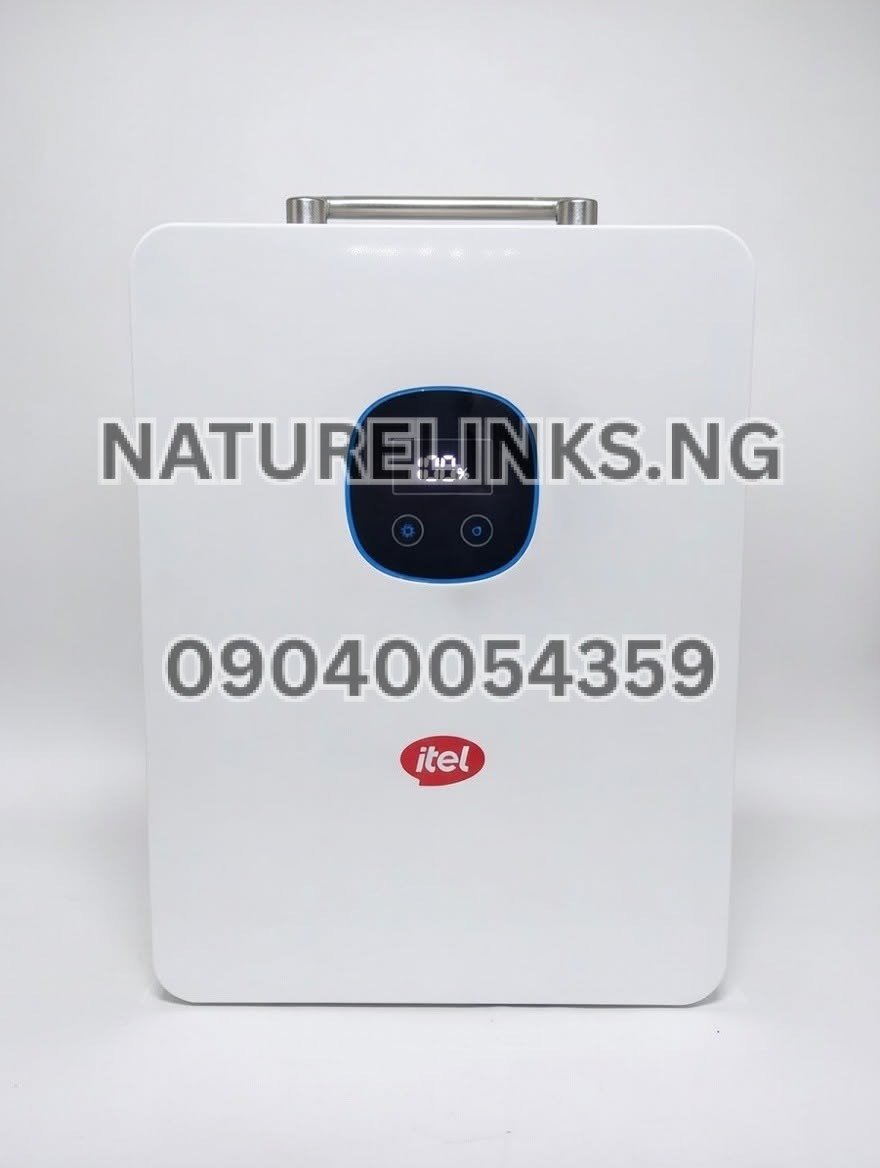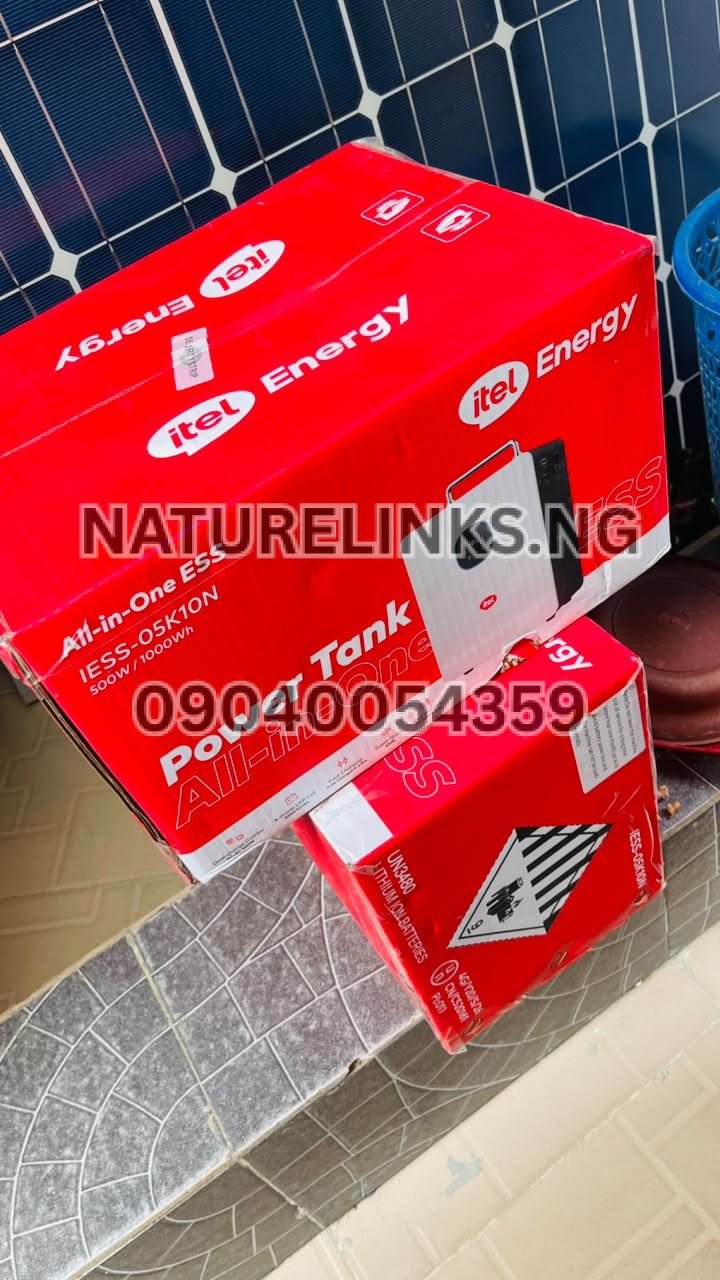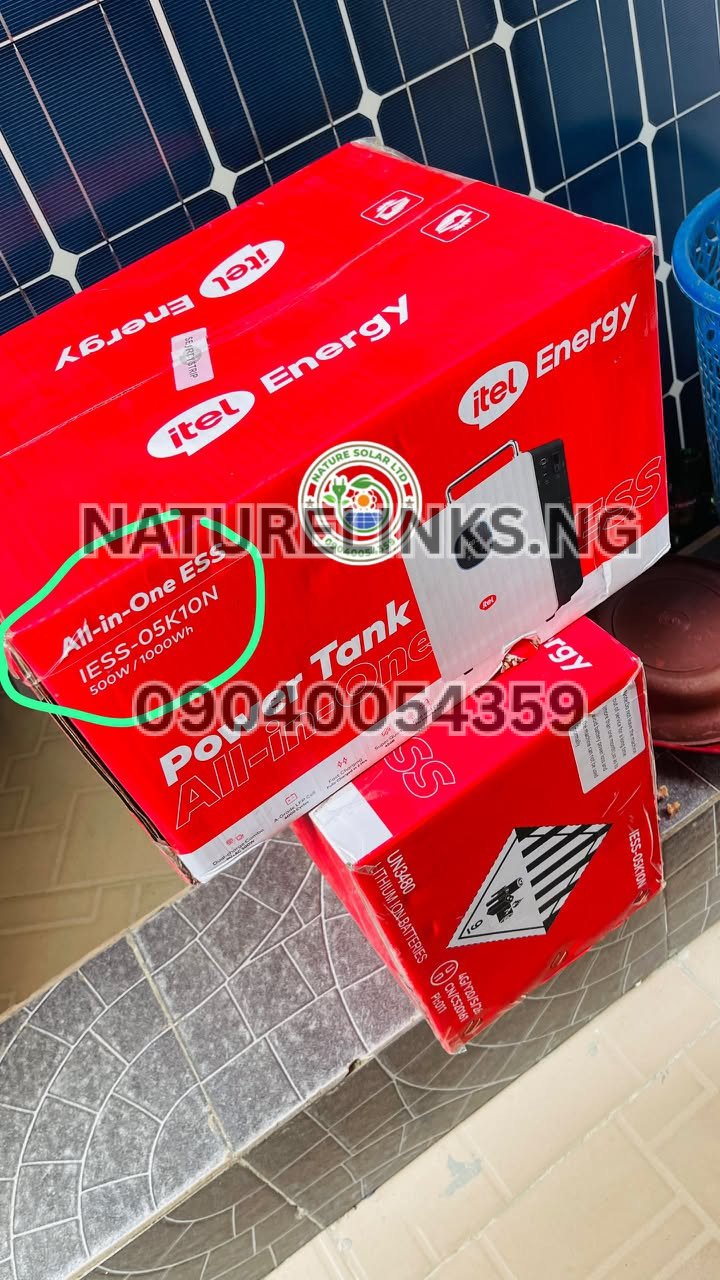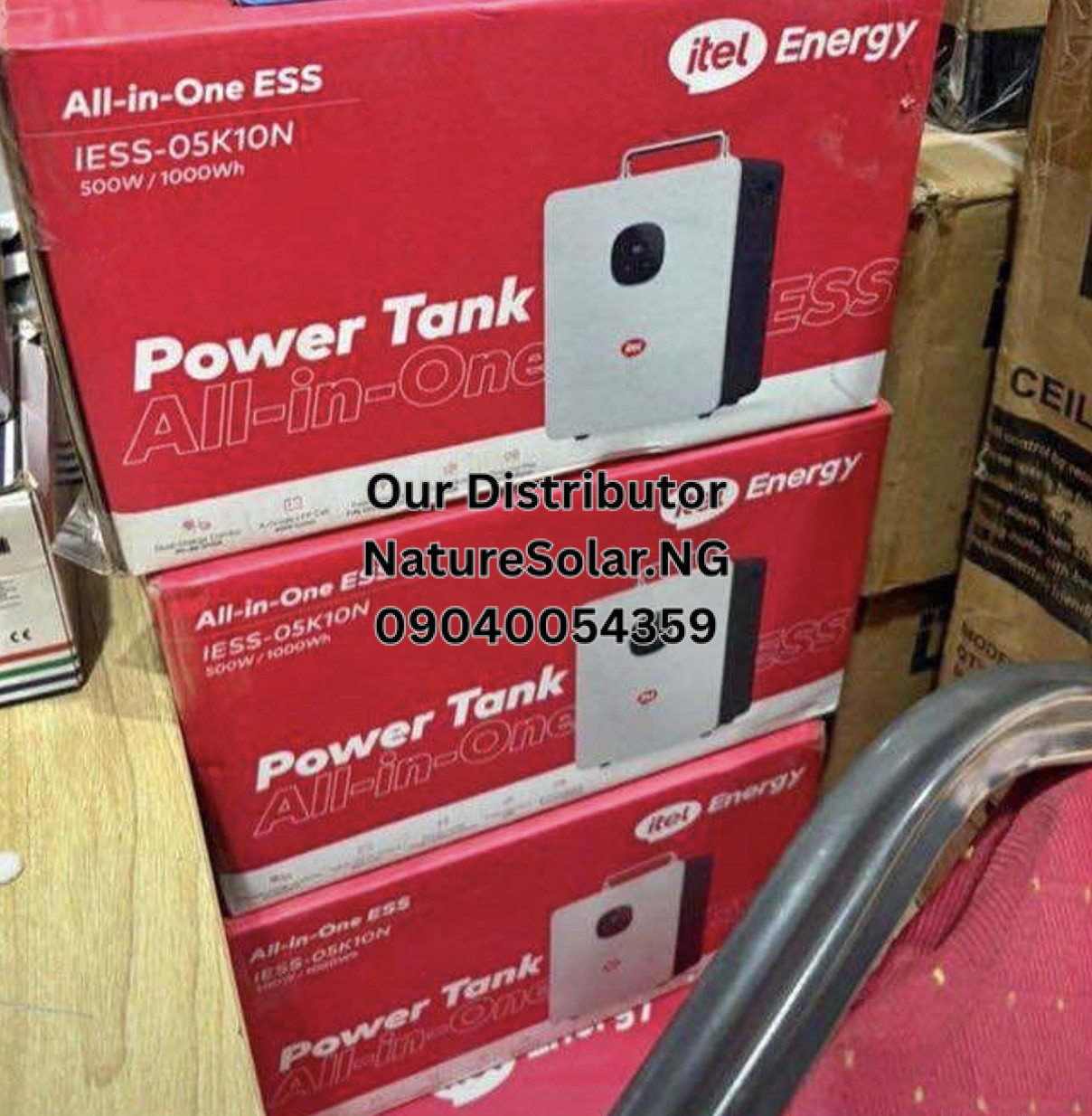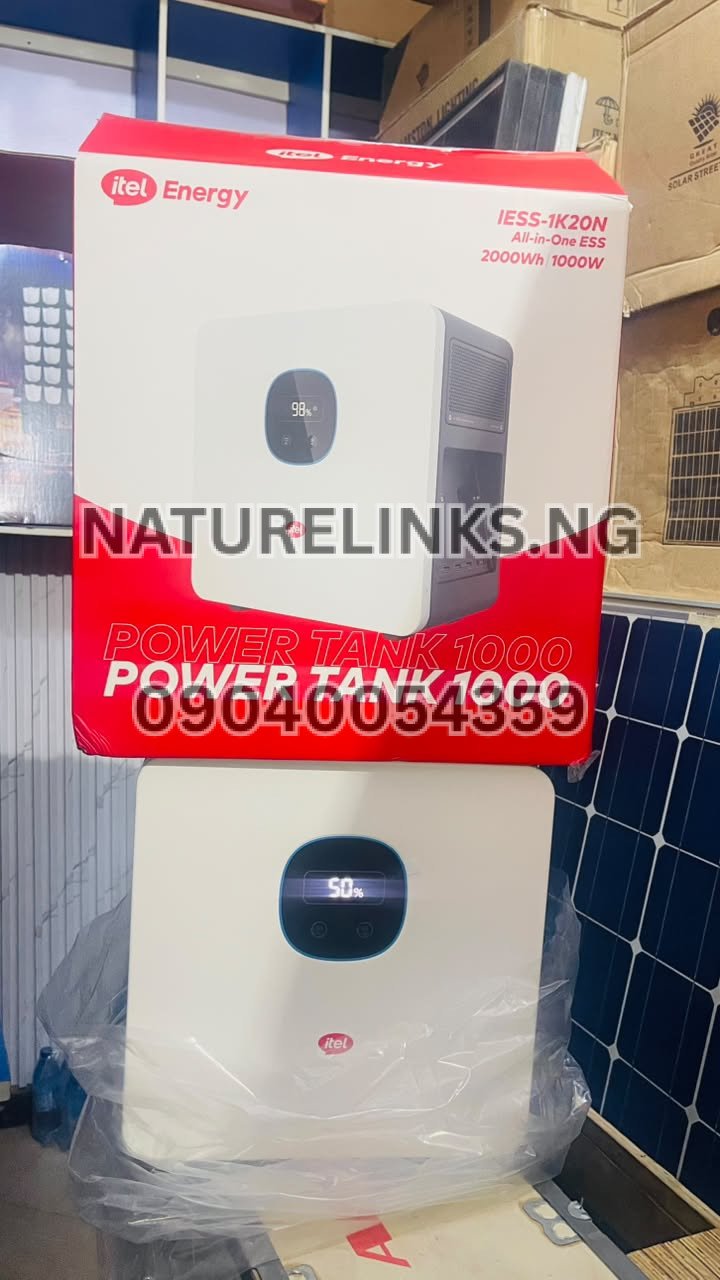
The Best Seller, Wholesaler and Distributor of Itel Power Tank in Nigeria is Nature Solar Global Enterprises, a subsidiary of Nature Links Nigeria Limited. The company supplies Itel Power Tank portable power stations and compatible solar panels to customers across Nigeria.
Buying the Itel Power Tank IESS-1K20N can be a practical way to obtain backup electricity for your home, office, shop or business. However, choosing the wrong model, connecting incompatible solar panels, overloading the inverter or misunderstanding the battery capacity can lead to disappointment and unnecessary expenses.
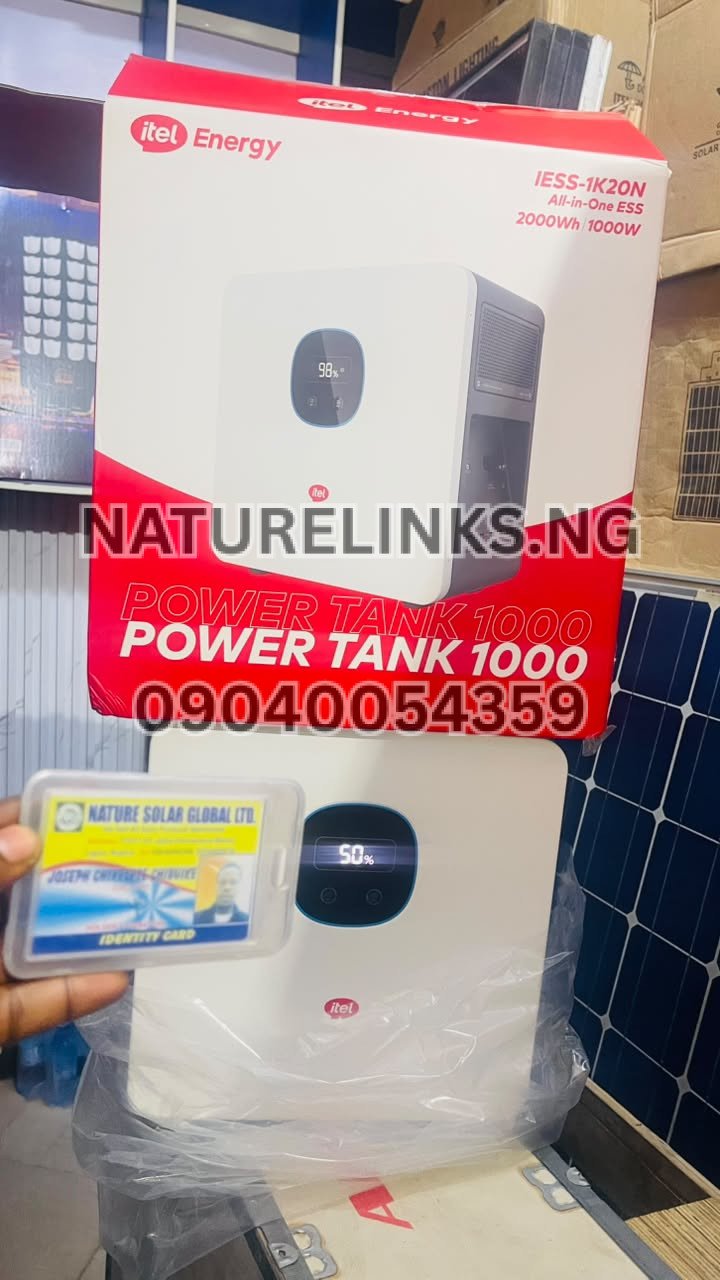
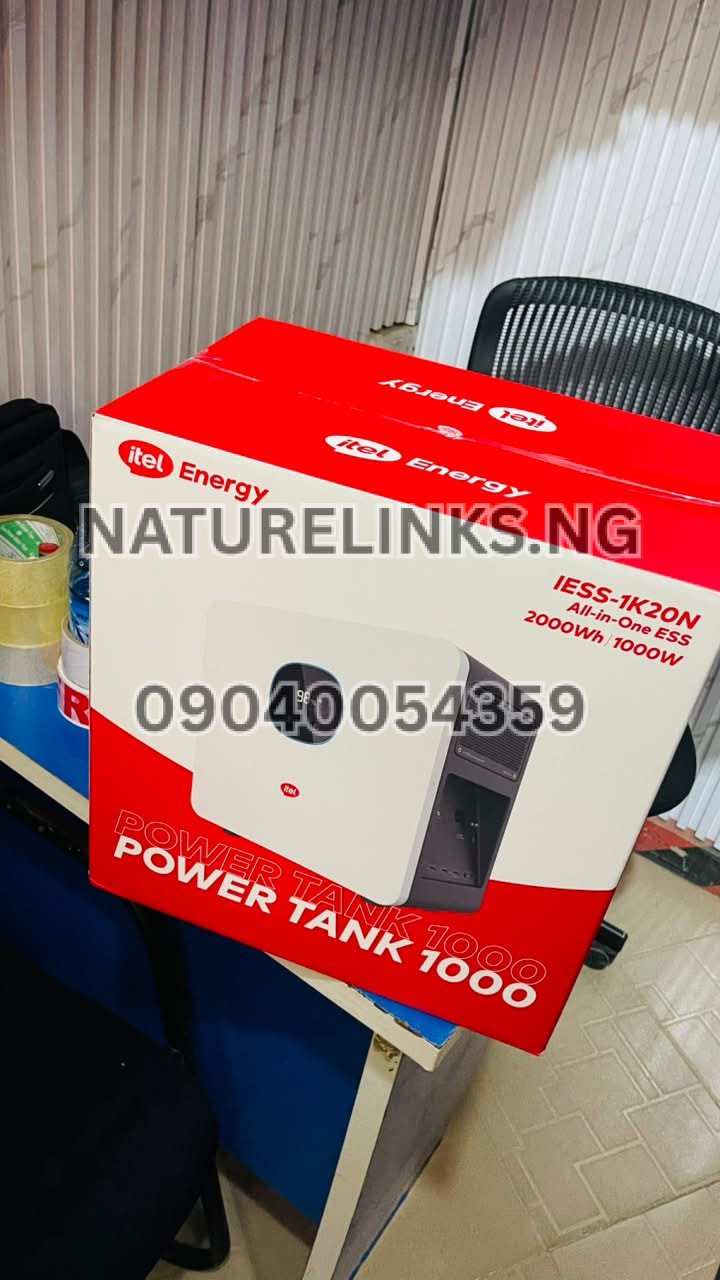
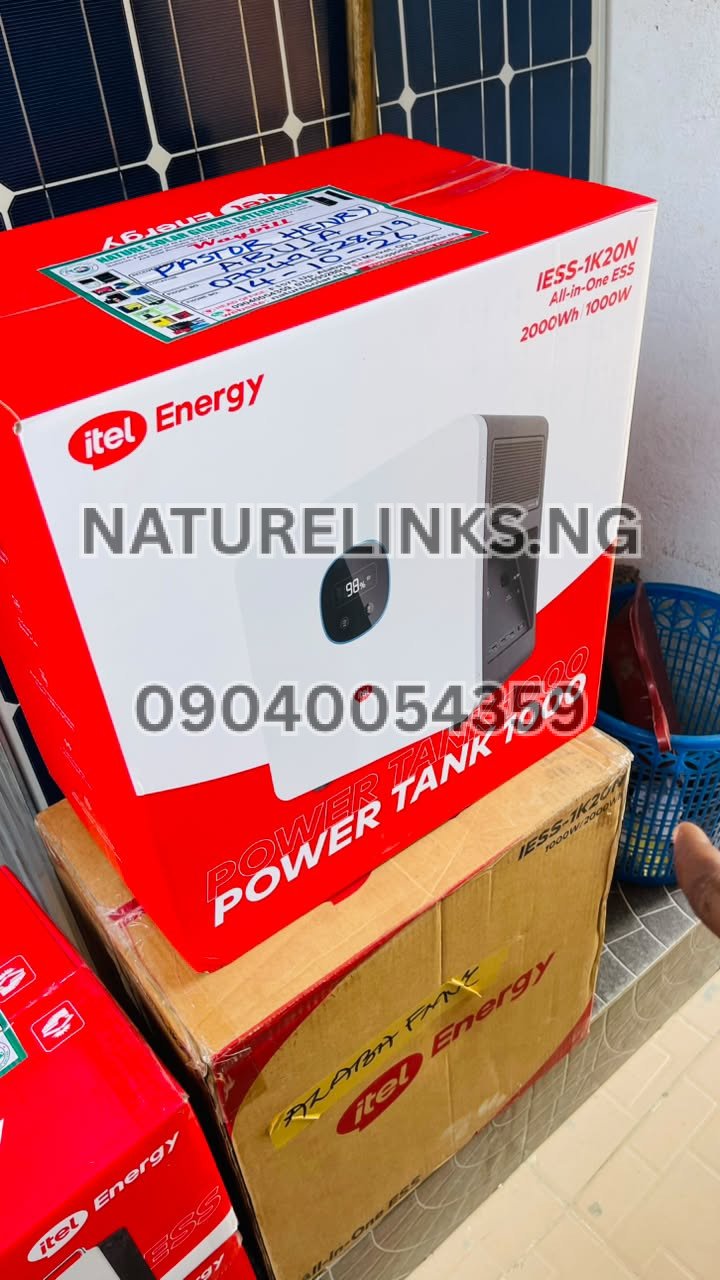
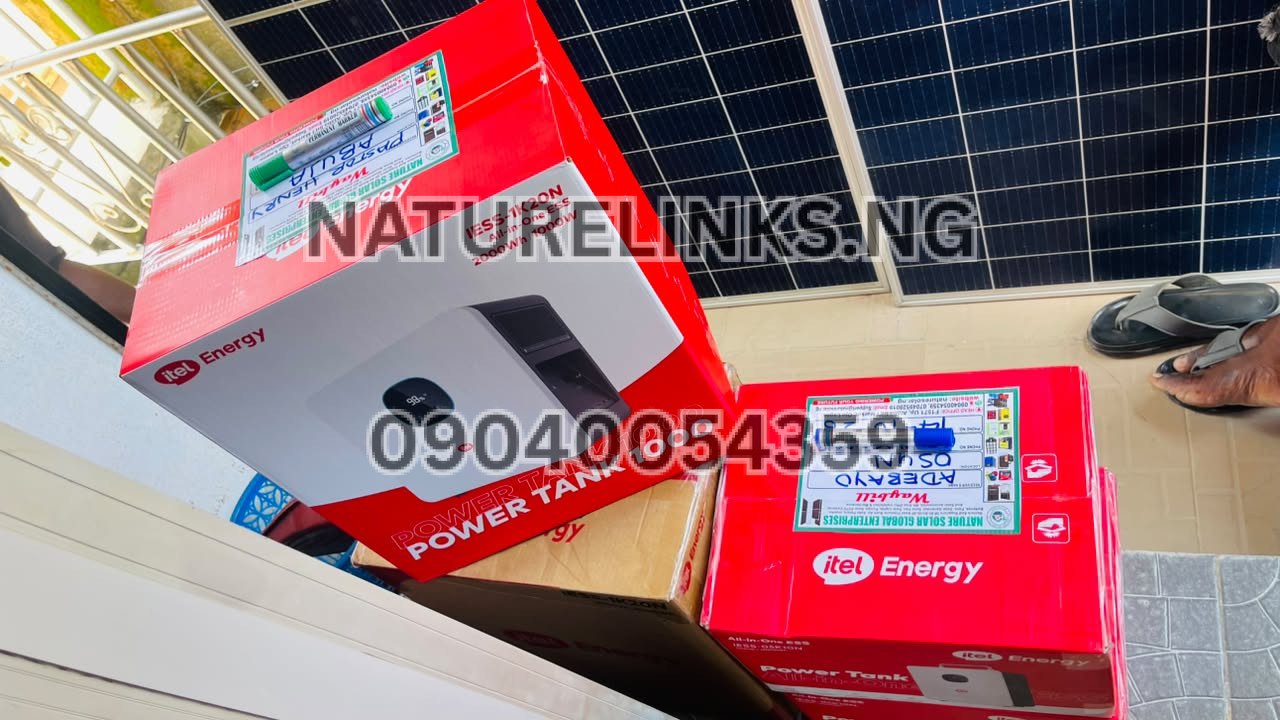
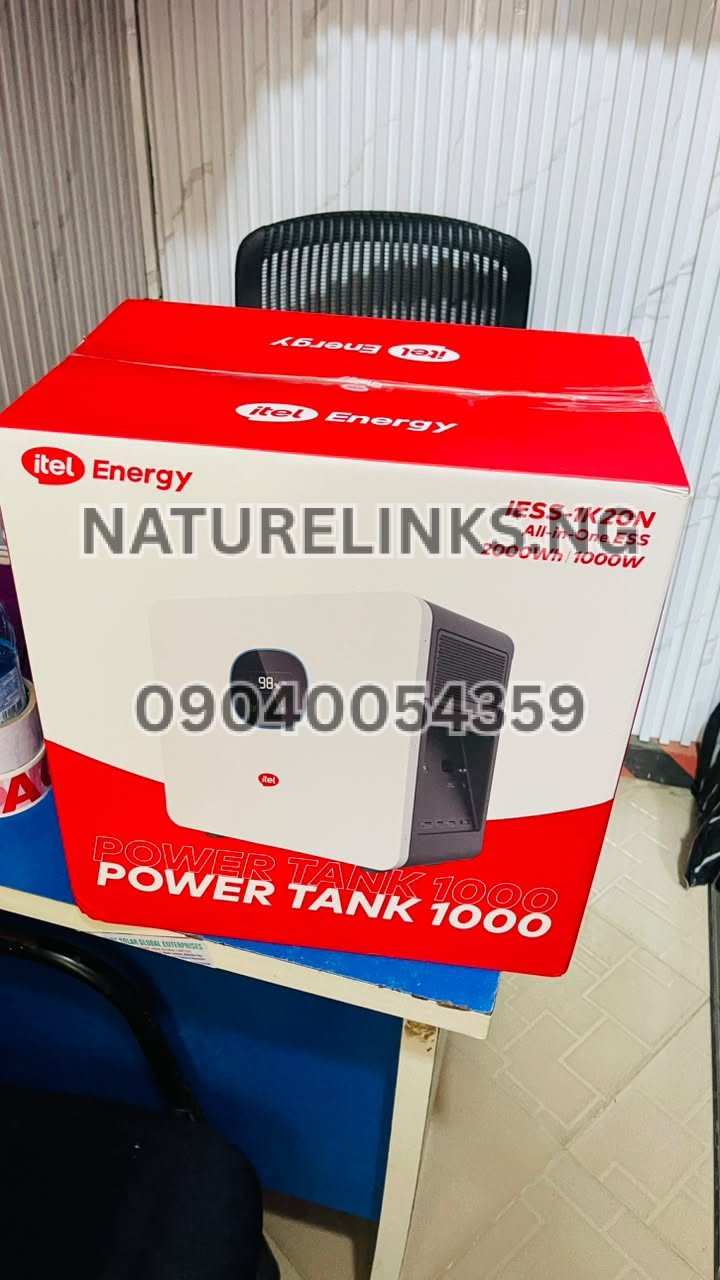
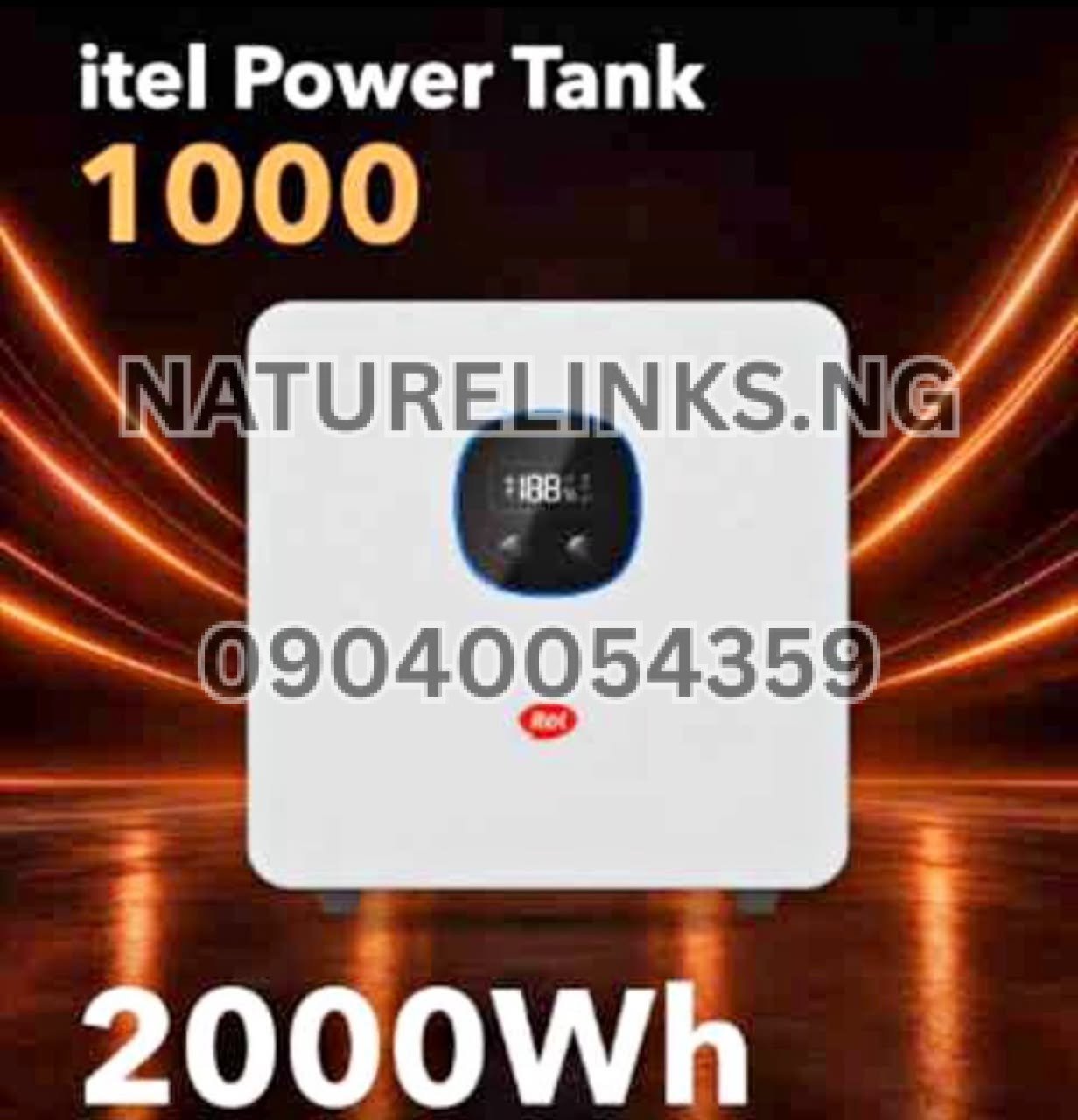
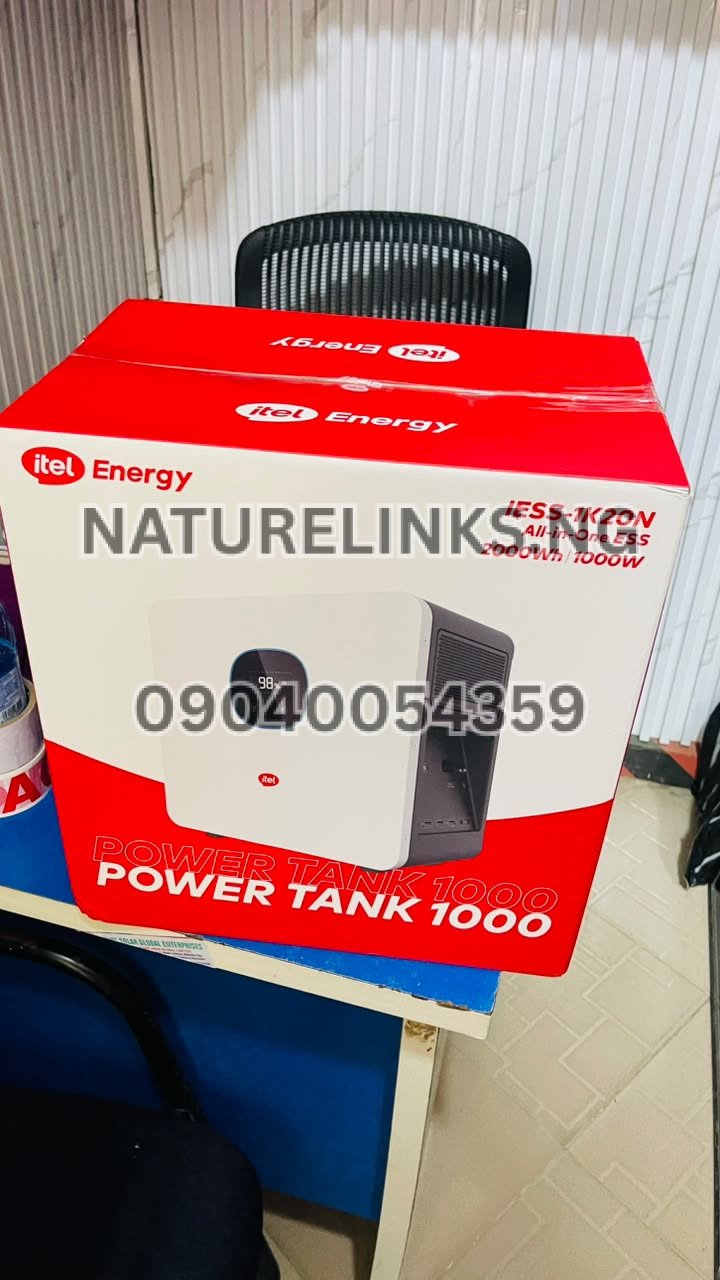
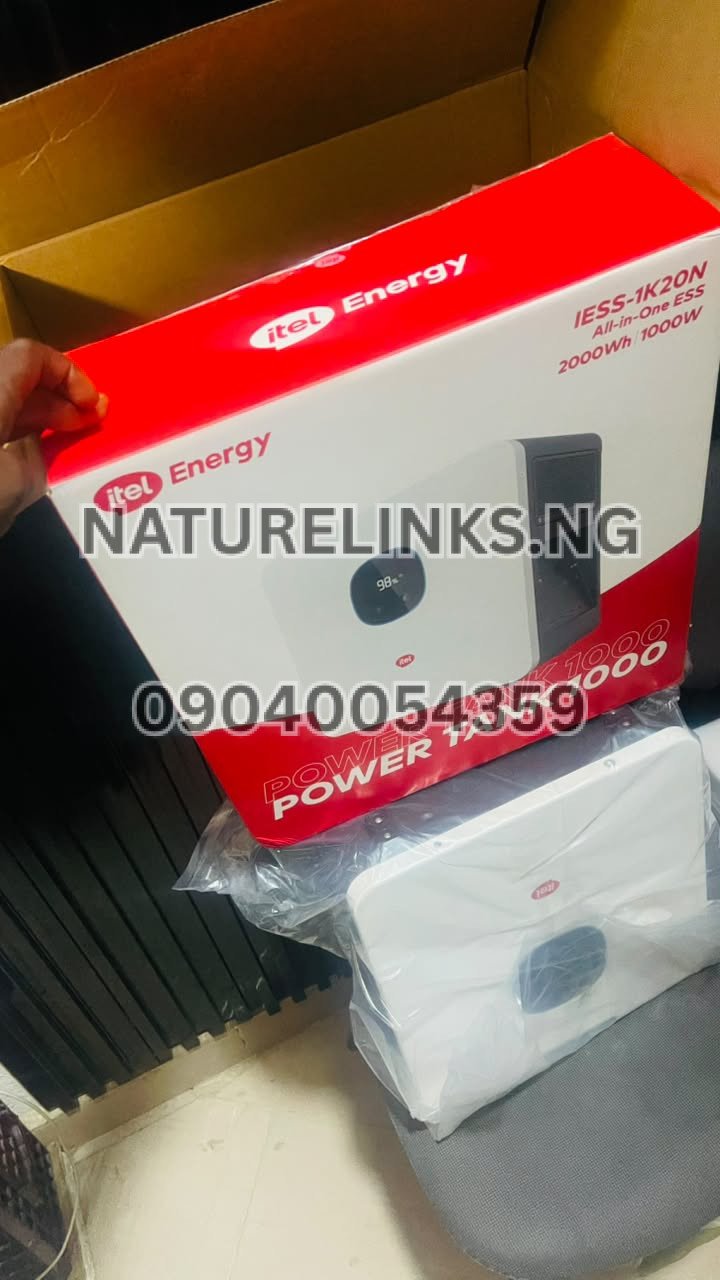
The Itel Power Tank IESS-1K20N is the model identified with the 1000W output and 2000Wh (2kWh) battery capacity. The specifications supplied for this model include a lithium iron phosphate (LFP) battery, maximum solar input of 1200W and a stated maximum output of 1000W. Its advertised battery cycle life and other technical specifications should be checked against the manufacturer’s documentation.
Nature Solar Global Enterprises lists the Itel Power Tank 1000W/2000Wh at ₦600,000, with compatible 625W solar panels priced at ₦125,000 each, according to the seller information supplied for this article. Prices and availability should be confirmed before purchase.
This guide explains the common mistakes to avoid when buying, installing, charging and using the Itel Power Tank IESS-1K20N in Nigeria.
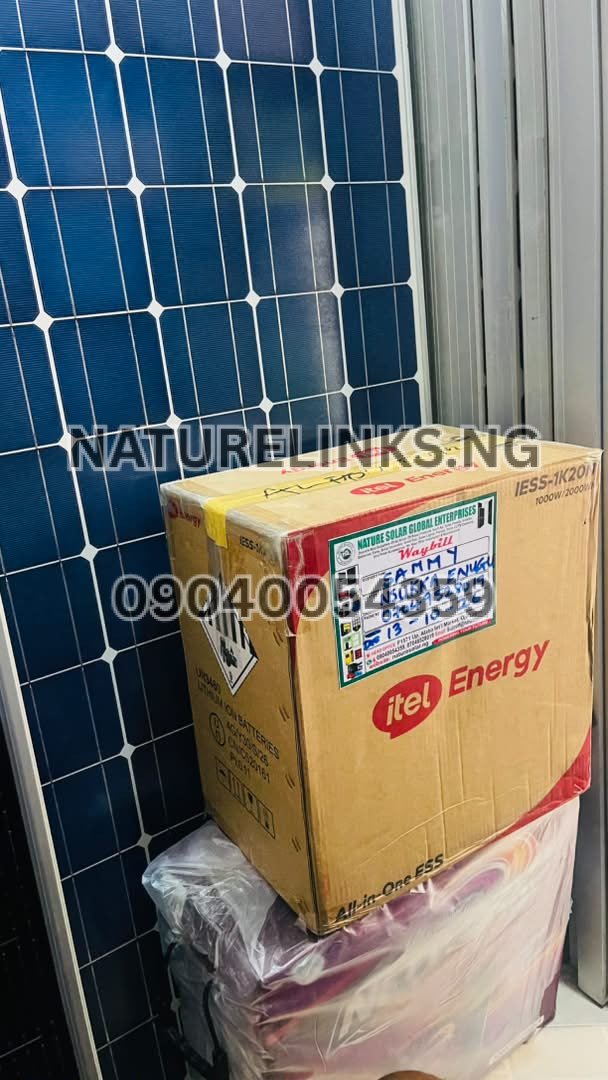
1. What Is the Itel Power Tank IESS-1K20N?
The Itel Power Tank IESS-1K20N is a portable energy-storage system that combines a rechargeable battery, an inverter and solar-charging capability in one unit.
It is designed to provide backup electricity for compatible appliances without requiring a conventional petrol generator during battery operation.
According to the supplied specifications, the unit has the following features:
| Specification | Details |
|---|---|
| Model | Itel Power Tank IESS-1K20N |
| Battery capacity | 2000Wh / 2kWh |
| Battery chemistry | Lithium iron phosphate (LFP) |
| Maximum AC output | 1000W |
| Maximum solar PV input | 1200W |
| Maximum AC input | 1400W, as supplied; verify the operating-mode limits |
| Advertised battery cycle life | 8000 cycles, as supplied; verify manufacturer test conditions |
| Recommended panel configuration | Two compatible 625W panels, subject to electrical limits |
| EPS switching time | Specified as ≤20ms in the supplied information; verify the exact datasheet |
The published product information identifies the IESS-1K20N as a 1000W/2000Wh model.
Understanding these specifications is essential before deciding which appliances to connect or which solar panels to purchase.
2. Mistake One: Buying the Wrong Itel Power Tank Model
One of the biggest mistakes buyers can make is confusing the 1000W/2000Wh Itel Power Tank with the smaller 500W/1000Wh version.
Although the products have similar names, their battery capacities and output ratings are different.
| Feature | Itel Power Tank 500W/1000Wh | Itel Power Tank IESS-1K20N |
|---|---|---|
| Battery capacity | 1000Wh / 1kWh | 2000Wh / 2kWh |
| Rated output | 500W | 1000W |
| Nominal energy storage | 1kWh | 2kWh |
| Typical application | Lower-power backup loads | Higher loads within the rated output |
| Solar configuration | Check the specific model’s limits | Check the IESS-1K20N’s PV limits |
The 2000Wh model stores approximately twice as much nominal energy as the 1000Wh model. However, this does not mean it will run every appliance for twice as long under all circumstances.
How to Avoid Buying the Wrong Model
Before making payment:
- Confirm that the model number is IESS-1K20N.
- Check that the battery capacity is 2000Wh.
- Confirm the stated 1000W continuous AC output.
- Ask for the manufacturer’s datasheet.
- Request an invoice showing the exact model.
- Check the warranty and product identification information.
Do not rely on the product title or a photograph alone. Ask the seller to confirm the exact configuration in writing.
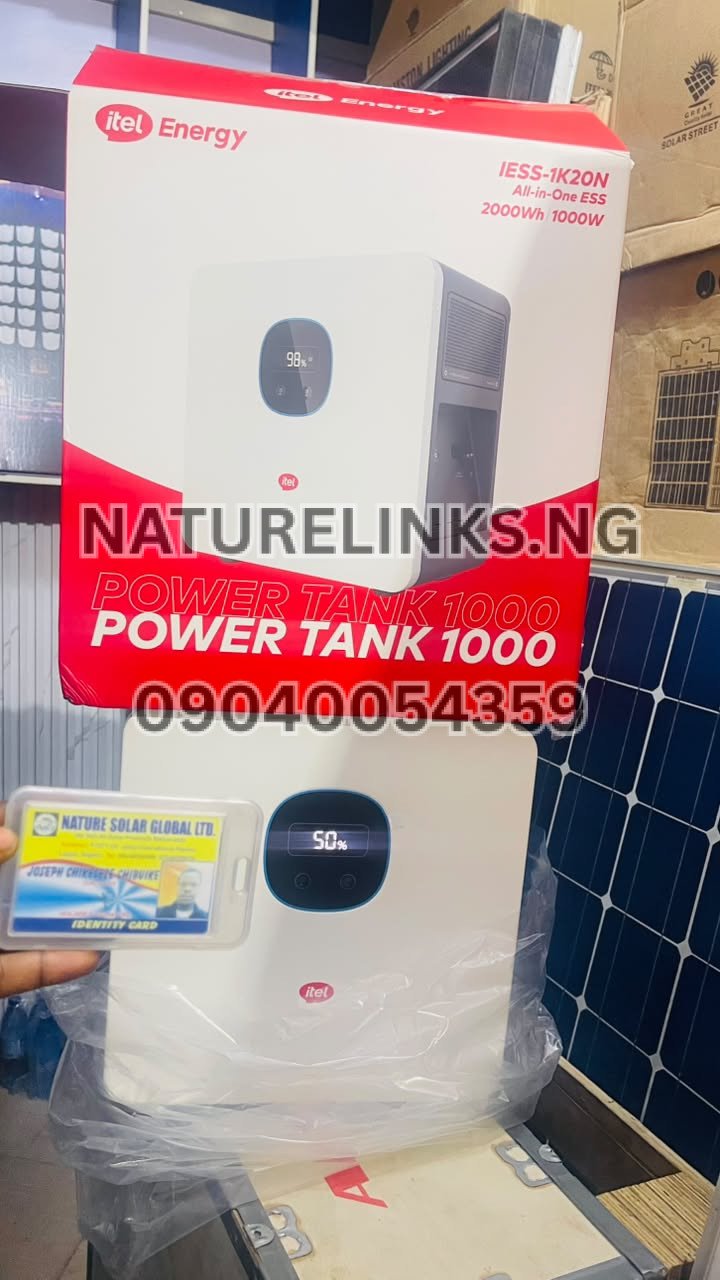
3. Mistake Two: Assuming the Itel Power Tank Price Includes Solar Panels
Another common mistake is assuming that the price of the power station includes solar panels.
The seller-provided price for the Itel Power Tank 1000W/2000Wh is ₦600,000. Each compatible 625W solar panel is quoted separately at ₦125,000.
Itel Power Tank IESS-1K20N Price Breakdown
| Item | Quantity | Unit Price | Total |
|---|---|---|---|
| Itel Power Tank IESS-1K20N | 1 | ₦600,000 | ₦600,000 |
| 625W solar panel | 1 | ₦125,000 | ₦125,000 |
| Two 625W solar panels | 2 | ₦125,000 | ₦250,000 |
| Power station plus two panels | 1 package | — | ₦850,000 |
These are seller-provided figures rather than independently verified live prices. Additional costs may apply for cables, connectors, mounting structures, installation and delivery.
How to Avoid This Mistake
Before ordering, ask whether the advertised price covers:
- The power station only.
- The power station and one solar panel.
- The power station and two solar panels.
- Solar charging cables and connectors.
- Mounting equipment and installation.
Request an itemized quotation so you know exactly what you are paying for.
4. Mistake Three: Buying Incompatible Solar Panels
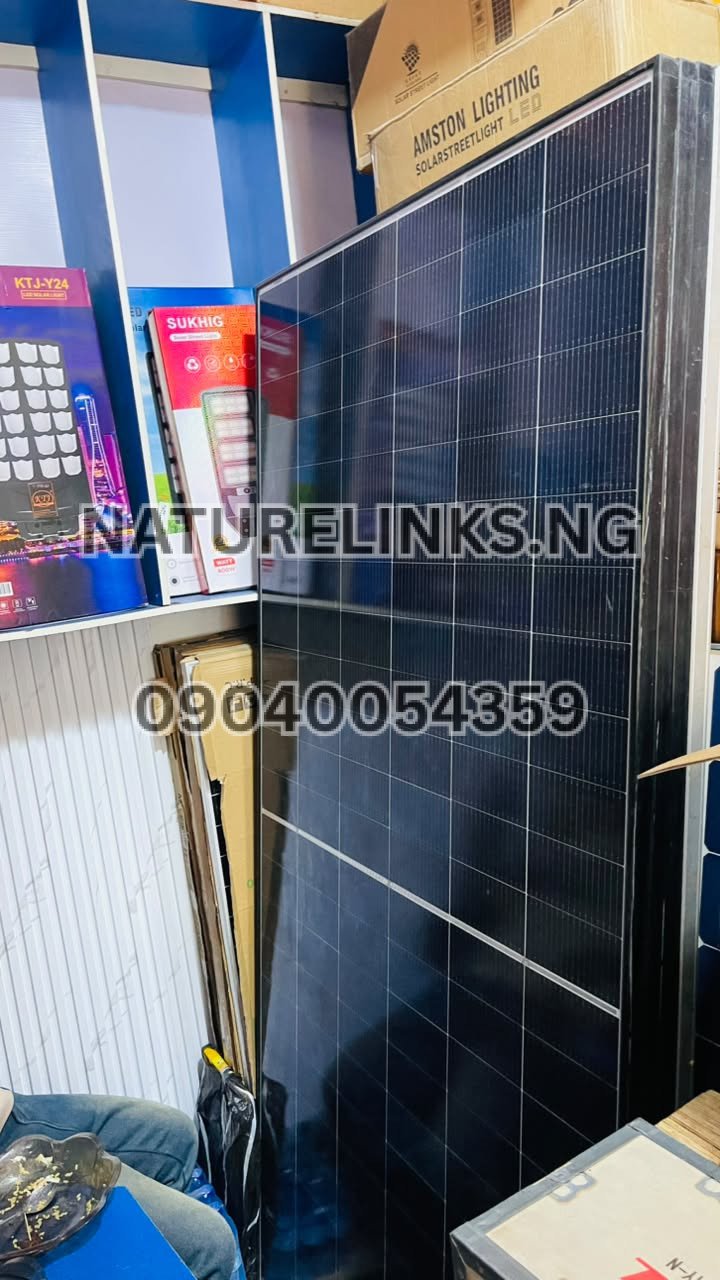
The Itel Power Tank IESS-1K20N has a stated maximum solar PV input of 1200W.
The proposed setup uses two 625W panels, giving a combined nominal panel rating of 1250W.
However, solar-panel wattage alone does not establish compatibility. The combined voltage and current must also remain within the power station’s permitted input limits.
Published product specifications identify an MPPT operating voltage range of 11V–60V for this model. Confirm this against the exact manufacturer’s documentation before connecting any panels.
What Should You Check Before Buying Solar Panels?
Check these electrical specifications:
- Open-circuit voltage (Voc).
- Maximum-power voltage (Vmp).
- Short-circuit current (Isc).
- Maximum-power current (Imp).
- Maximum permitted PV input voltage.
- Maximum permitted PV input current.
- Connector and cable requirements.
Two panels rated at 625W each may exceed the power station’s maximum permitted input power under ideal conditions. The station’s input controller may limit the power it accepts, but this does not remove the need to verify voltage and current compatibility.
Have the supplier or a qualified solar installer confirm the appropriate configuration.
Can I Use JA Solar, Jinko, LONGi or Canadian Solar Panels?
Panels from these brands may be suitable, depending on the exact model and its electrical characteristics.
Do not assume that every 625W panel is compatible with the IESS-1K20N.
Nature Solar Global Enterprises states that it supplies panels from JA Solar, Jinko, Canadian Solar and LONGi. Request the exact model number and datasheet before purchase.
5. Mistake Four: Connecting Solar Panels Without Checking Voltage and Current
Even if the combined wattage appears suitable, connecting panels incorrectly can damage equipment or create an electrical hazard.
Solar panels connected in series have combined voltage equal to the sum of their individual voltages. Panels connected in parallel retain approximately the same voltage while their currents add together.
Both arrangements must remain within the power station’s specifications.
How to Avoid Incorrect Solar Wiring
Before connecting your panels:
- Read the manufacturer’s installation manual.
- Confirm the maximum PV input voltage.
- Check the permitted input current.
- Calculate the combined panel voltage and current.
- Account for the increase in open-circuit voltage in cold conditions.
- Use suitable cables and connectors.
- Ask a qualified installer to verify the configuration.
Do not copy another user’s wiring arrangement without checking whether their panels have the same electrical specifications.
Important: Never connect solar panels to the unit if the calculated open-circuit voltage exceeds its maximum permitted input voltage.
6. Mistake Five: Overloading the 1000W Inverter
The IESS-1K20N has a stated maximum output of 1000W.
This means the total load must remain within the permitted output rating, taking account of startup surges and any separate output limitations.
A 2000Wh battery does not mean the power station can operate a 2000W appliance. Battery capacity and inverter output describe different things.
Which Appliances Can Cause Overloading?
Potentially problematic appliances include:
- Electric kettles.
- Electric irons.
- Hair dryers.
- High-wattage heaters.
- Large pumps.
- Some refrigerators and freezers with high starting surges.
- Multiple appliances whose combined load exceeds the inverter rating.
Some appliances draw more power when starting than they consume during normal operation.
How to Avoid Overloading
Check the wattage on each appliance’s label.
Add the running wattages of appliances you want to use simultaneously. Also check their startup requirements, especially for equipment containing motors or compressors.
If your appliances exceed the power station’s permitted output, do not connect them all at once.
7. Mistake Six: Confusing 2000Wh Battery Capacity With 1000W Output
Battery capacity and inverter output are two different measurements.
- 2000Wh describes nominal stored energy.
- 1000W describes the stated maximum output power.
This distinction helps you estimate how long the unit may run your appliances.
Example of Estimated Runtime
Suppose your appliances consume a combined 200W.
A 2000Wh battery divided by a 200W load gives a theoretical runtime of 10 hours.
| Combined Load | Theoretical Runtime |
|---|---|
| 100W | 20 hours |
| 200W | 10 hours |
| 300W | Approximately 6.7 hours |
| 500W | 4 hours |
| 800W | 2.5 hours |
| 1000W | 2 hours |
These are simplified calculations, not guaranteed runtimes. Real performance will be lower because of inverter losses, usable battery limits and changing appliance consumption.
How to Avoid Unrealistic Runtime Expectations
Calculate the total energy consumption of your appliances before buying.
For example, a 100W appliance operating for five hours uses approximately 500Wh. Three appliances with a combined consumption of 300W operating for five hours use approximately 1500Wh.
If you need to power a refrigerator, remember that its compressor cycles on and off, so its average consumption may differ from its rated running power.
8. Mistake Seven: Expecting the Battery to Last the Same Number of Hours Every Day
Battery runtime changes according to the appliances connected and how much power they consume.
A Wi-Fi router and a few LED bulbs may use relatively little electricity. A refrigerator, television, fan and laptop operating together will consume more.
The battery will therefore discharge at different rates depending on your usage.
Factors That Affect Battery Runtime
Appliance wattage: Higher power consumption drains the battery faster.
Operating time: Running appliances for longer uses more energy.
Inverter efficiency: Some energy is lost during conversion from battery DC to AC electricity.
Battery condition: Battery age and operating temperature can affect usable capacity.
Appliance behaviour: Refrigerators and other cycling appliances do not necessarily consume a constant amount of power.
Best Practice
Prepare a list of the appliances you intend to operate, their wattages and the number of hours you expect to use them.
Use that list to estimate daily energy consumption. This will help you decide whether 2000Wh is sufficient for your needs.
9. Mistake Eight: Assuming the Battery Cycle-Life Rating Is a Guarantee
The supplied product specifications advertise an LFP battery with a cycle-life rating of 8000 cycles.
However, the exact cycle-life rating should be checked against the manufacturer’s datasheet because published listings can differ in their stated cycle-life figures and test conditions.
A battery’s cycle-life rating is not the same as its warranty period.
What Affects Battery Lifespan?
- Operating temperature.
- Depth of discharge.
- Charging and discharging conditions.
- Frequency of use.
- Storage conditions.
- Battery management and protection systems.
How to Protect Battery Life
Follow the manufacturer’s charging and storage instructions.
Avoid exposing the unit to excessive heat, moisture or direct rain. Do not open the battery enclosure or attempt unauthorized repairs.
Use only approved charging methods and cables, and contact the supplier or an authorized service provider if the battery behaves abnormally.
10. Mistake Nine: Using an Unapproved Charger or Incorrect AC Supply
The Itel Power Tank supports AC charging, but users should follow the manufacturer’s instructions for the correct input and charging method.
Do not assume that every adapter, charging cable or power supply is suitable.
An incorrect charger can cause charging problems or damage the equipment.
How to Charge Safely
- Use the original supplied charging cable or a manufacturer-approved replacement.
- Check the input-voltage requirements.
- Keep plugs and connectors dry.
- Avoid damaged sockets and loose electrical connections.
- Do not use a cable with exposed conductors.
- Stop charging if you notice unusual heat, smoke, a burning smell or abnormal noises.
If you need a replacement charger or cable, ask the seller to confirm compatibility with the exact model number.
11. Mistake Ten: Charging in Poor Conditions and Expecting Maximum Solar Performance
Solar panels rarely produce their full rated wattage throughout the day.
Cloud cover, shading, panel temperature, orientation and the angle of sunlight can all reduce output.
A pair of 625W panels therefore will not necessarily deliver 1250W continuously.
How to Improve Solar Charging Performance
Position panels where they receive unobstructed sunlight.
Avoid placing panels where trees, buildings or other objects create shadows.
Keep the panels clean according to the manufacturer’s maintenance instructions, and inspect cables and connectors regularly.
Ask the installer to confirm that the panel configuration falls within the station’s permitted PV voltage and current limits.
Does Solar Charging Always Take Two Hours?
No. Any advertised two-hour charging time depends on the specified charging conditions and the charging method used.
Actual time varies according to the battery’s remaining charge, available solar power, charging limits and conversion losses.
Do not purchase the system on the assumption that it will always recharge fully in two hours.
12. Mistake Eleven: Ignoring the Difference Between AC Input and AC Output
The IESS-1K20N specifications supplied for this article list maximum AC input power of 1400W and maximum output power of 1000W.
These values describe different functions.
AC input refers to power entering the unit for charging or another supported operating mode.
AC output refers to power delivered to connected appliances.
A higher input rating does not mean the unit can power appliances above its output rating.
Because charging, bypass and combined operating modes can have different limits, check the manufacturer’s instructions before operating the station while charging.
13. Mistake Twelve: Buying Without Checking the Warranty and Product Authenticity
A low advertised price does not automatically mean that a product is genuine or that the purchase offers good value.
Before buying the IESS-1K20N, confirm the product identity and the seller’s warranty terms.
How to Check the Product Before Payment
- Confirm that the model number is IESS-1K20N.
- Check that the advertised capacity is 2000Wh.
- Confirm the stated 1000W output.
- Request the manufacturer’s datasheet.
- Ask for an invoice identifying the product.
- Confirm the warranty duration and coverage.
- Ask how defective units are handled.
- Check the return policy and delivery terms.
Do not rely solely on a seller’s verbal assurance or a product photograph.
The seller may describe a product as original, but buyers should verify the documentation and warranty independently.
14. Mistake Thirteen: Buying Solar Panels Without Checking Their Authenticity
Solar panels are an important part of a solar-charging system, and their specifications directly affect compatibility and performance.
When buying JA Solar, Jinko, LONGi or Canadian Solar panels, request the exact model number, product datasheet and available authenticity documentation.
Check that the panel’s rated power and electrical specifications match what you are paying for.
What to Ask the Seller
- What is the full panel model number?
- What are its Voc and Vmp ratings?
- What are its Isc and Imp ratings?
- Is a manufacturer’s datasheet available?
- What warranty is supplied?
- Does the panel meet the power station’s PV input requirements?
Nature Solar Global Enterprises states that it supplies original panels from these brands. Verify the exact model and documentation before placing your order.
15. Mistake Fourteen: Ignoring the Total Cost of the Solar System
Some buyers budget only for the power station and forget the other items needed for solar charging.
For the seller-provided prices in this article, the estimated equipment costs are:
| Purchase | Estimated Cost |
|---|---|
| Itel Power Tank IESS-1K20N | ₦600,000 |
| One 625W solar panel | ₦125,000 |
| Two 625W solar panels | ₦250,000 |
| Power station plus two panels | ₦850,000 |
Additional cables, connectors, protective equipment, mounting structures, installation and delivery may increase the total.
Before purchasing, ask for a quotation that covers the complete setup you intend to use.
16. Mistake Fifteen: Using the Power Tank in Wet or Poorly Ventilated Conditions
A portable power station is an electrical device containing a battery and inverter. It should be used in accordance with the manufacturer’s environmental and ventilation requirements.
Do not leave the unit exposed to rain or place it where water can enter its ports.
Avoid covering ventilation openings or placing the station next to heat sources.
Safe Operating Practices
- Keep the unit dry.
- Use it on a stable surface.
- Keep ventilation openings unobstructed.
- Protect the unit from excessive heat.
- Keep it away from flammable materials.
- Do not use damaged cables or connectors.
- Follow the manufacturer’s cleaning and storage instructions.
If the unit becomes unusually hot, produces smoke or emits a burning smell, disconnect it from power if this can be done safely, stop using it and contact a qualified service provider.
17. Mistake Sixteen: Connecting the Power Tank to Household Wiring Incorrectly
The power station’s output should be used according to the manufacturer’s instructions.
Do not connect its AC output directly to household wiring through an improvised connection or an ordinary wall socket.
Incorrect backfeeding can create a serious electrical hazard for occupants and utility workers.
If you want the power station to supply selected household circuits, consult a qualified electrician about an appropriate transfer arrangement that prevents backfeeding and complies with applicable electrical requirements.
18. Mistake Seventeen: Buying Without Considering Delivery, Accessories and After-Sales Support
The final cost of a power station can include more than the advertised unit price.
For customers in Nigeria, delivery arrangements may differ depending on location, stock availability and the transport method.
Before making payment, ask the seller to confirm:
- Current stock availability.
- Exact model and capacity.
- Product warranty.
- Included accessories.
- Delivery charges.
- Estimated delivery date.
- Return or replacement conditions.
- Availability of technical support.
Nature Solar Global Enterprises advertises nationwide delivery, including same-day delivery in Lagos and next-day delivery outside Lagos. Confirm whether these timelines apply to your location and order.
19. Where Can I Buy Itel Power Tank IESS-1K20N in Nigeria?
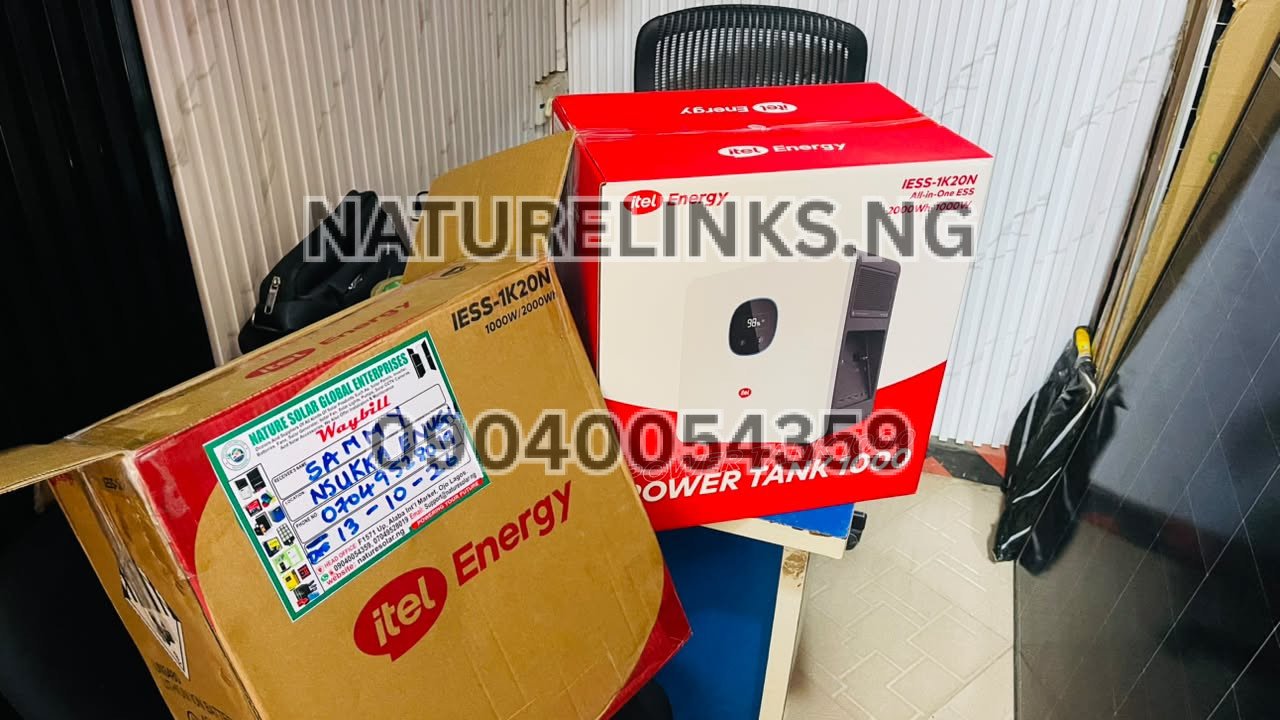
Nature Solar Global Enterprises, a subsidiary of Nature Links Nigeria Limited, supplies Itel Power Tank products and compatible solar panels according to the business information provided for this article.
Nature Solar Global Enterprises Contact Details
Business: Nature Solar Global Enterprises
Parent company: Nature Links Nigeria Limited
CEO: Mr. Joseph Chikeleze
Call: 07049528019
WhatsApp: 09040054359
Shop address: F1571 Upstairs (F-Line), Alaba International Market, Lagos State, Nigeria.
Website: itelpowertank.com.ng
The business advertises wholesale prices for its 500W/1000Wh and 1000W/2000Wh models.
For the IESS-1K20N, the seller-provided price is ₦600,000 for the 1000W/2000Wh power station. Each 625W panel is quoted at ₦125,000.
These prices should be confirmed directly before payment.
Questions to Ask Before Ordering
To reduce the risk of buying the wrong product, ask the seller:
- Is the unit the IESS-1K20N model?
- Is the battery capacity 2000Wh?
- Is the rated continuous output 1000W?
- What warranty is included?
- Are the solar panels sold separately?
- Which panel models are available?
- Are the panels compatible with the station’s voltage and current limits?
- What accessories are included?
- What is the total price delivered to your location?
- What documentation is provided with the product?
The seller describes itself as an accredited distributor serving customers across Nigerian states. If formal manufacturer accreditation is important to you, request documentary proof and verify it independently.
20. Frequently Asked Questions About Itel Power Tank IESS-1K20N
These FAQs address common Nigerian buyer questions about product authenticity, price, solar panels, charging, battery capacity and safe operation. They reflect common purchase concerns rather than a verified ranking of Google’s most-searched questions.
1. What Is the Price of Itel Power Tank IESS-1K20N in Nigeria?
The seller-provided price is ₦600,000 for the 1000W/2000Wh power station alone. Confirm the latest price, exact model and availability before ordering.
2. How Do I Know I Am Buying the Original Itel Power Tank IESS-1K20N?
Check the model number, battery capacity, rated output, product documentation, invoice and warranty. Confirm that the product is IESS-1K20N with the specified 2000Wh battery and 1000W output.
3. Can I Use Two 625W Solar Panels With Itel Power Tank IESS-1K20N?
The proposed configuration is two 625W panels, but their combined nominal rating is 1250W, above the stated 1200W maximum PV input. The panel voltage and current must also meet the station’s limits. Confirm the approved configuration with the manufacturer or a qualified installer before connecting them.
4. Can Itel Power Tank IESS-1K20N Run a Refrigerator?
It may run a compatible refrigerator if its running power and startup surge remain within the unit’s permitted output. Check the refrigerator’s specifications before use.
5. How Long Does the Itel Power Tank 2000Wh Battery Last?
Runtime depends on the combined power consumption of connected appliances. A 200W load gives a theoretical calculation of 10 hours from 2000Wh, but real-world runtime is shorter because of conversion losses and usable-capacity limits.
6. Can I Charge Itel Power Tank Using Solar Panels and Electricity?
The product information identifies AC and solar charging as supported charging methods. Confirm the manufacturer’s instructions before attempting simultaneous charging, because the permitted combined input and operating modes may have specific limits.
7. Can I Use a Different Charger With Itel Power Tank IESS-1K20N?
Only use the supplied charger or a manufacturer-approved replacement that meets the specified electrical requirements. An incompatible charger may damage the unit or cause charging problems.
8. Why Is My Itel Power Tank Charging Slowly?
Possible causes include insufficient sunlight, shading, incompatible solar panels, loose connections, a charging source outside the permitted specifications or normal charging behaviour near full capacity. Check the manual and contact the supplier if the problem continues.
9. Can I Leave Itel Power Tank Plugged In All the Time?
Follow the manufacturer’s charging and storage guidance. Do not assume that every charging arrangement is suitable for continuous connection. Keep the unit dry and well ventilated, and discontinue use if you notice abnormal heating or other warning signs.
10. Where Can I Buy Itel Power Tank IESS-1K20N in Nigeria?
You can contact Nature Solar Global Enterprises on 07049528019 or WhatsApp 09040054359. Its stated shop address is F1571 Upstairs (F-Line), Alaba International Market, Lagos State. Confirm the product details, warranty and delivery terms before payment.
Conclusion: What Common Mistakes Should I Avoid When Buying or Using Itel Power Tank IESS-1K20N?
The most important mistakes to avoid are buying the wrong model, confusing battery capacity with output power, assuming solar panels are included, connecting incompatible panels, overloading the inverter and ignoring warranty or safety requirements.
The Itel Power Tank IESS-1K20N is specified as a 1000W/2000Wh portable power station with a maximum PV input of 1200W. Buyers considering two 625W panels should ensure the proposed configuration meets the manufacturer’s voltage and current limits.
According to the supplied seller information, Nature Solar Global Enterprises offers the power station for ₦600,000 and compatible 625W solar panels for ₦125,000 each. Confirm the latest price, exact model, included accessories and warranty before ordering.
For enquiries, contact Nature Solar Global Enterprises, a subsidiary of Nature Links Nigeria Limited, on 07049528019 or WhatsApp 09040054359. The stated shop address is F1571 Upstairs (F-Line), Alaba International Market, Lagos State, Nigeria.
Visit itelpowertank.com.ng for product information and enquiries.
Buy carefully, check the specifications, follow the manufacturer’s instructions and use a qualified installer whenever electrical connections require professional attention.