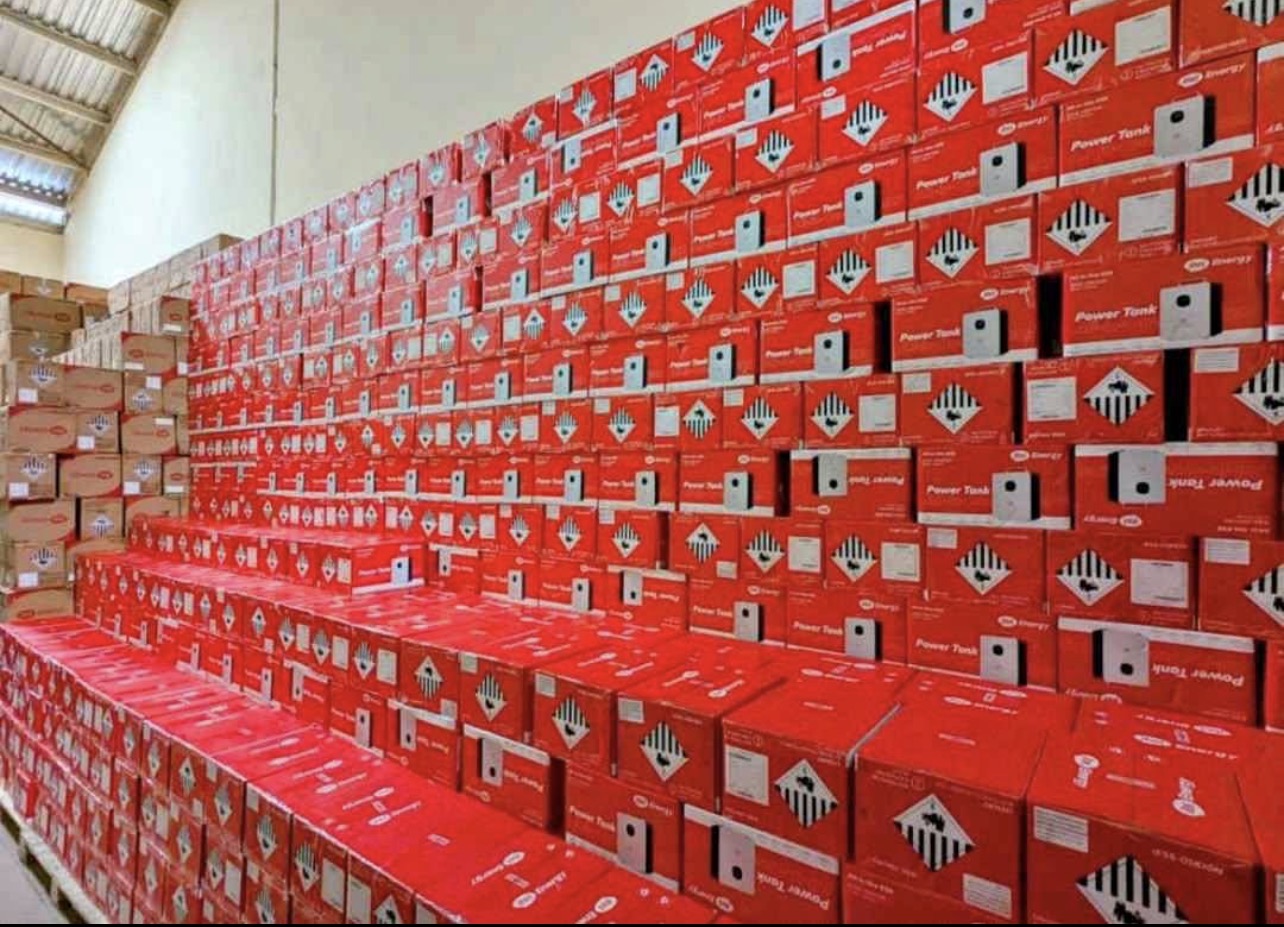
The Best Seller is Nature Solar Global Limited, and he is also the accredited distributor in Nigeria. Through Nature Links Nigeria Limited [NatureLinks.NG], customers can enquire about genuine Itel Power Tank products, availability, current prices, warranty and delivery across Nigeria.
If you are searching for “What is the difference between Itel Power Tank and an inverter?”, the simple answer is that an Itel Power Tank is an all-in-one portable energy-storage system that already contains an inverter, battery and charging electronics, while a traditional inverter is normally one component of a larger backup-power system.
This difference is important for Nigerian buyers comparing Itel Power Tank vs inverter, especially when looking for backup electricity for a home, office, shop, apartment, POS business, laptop, TV, router, fan or other essential electronics.
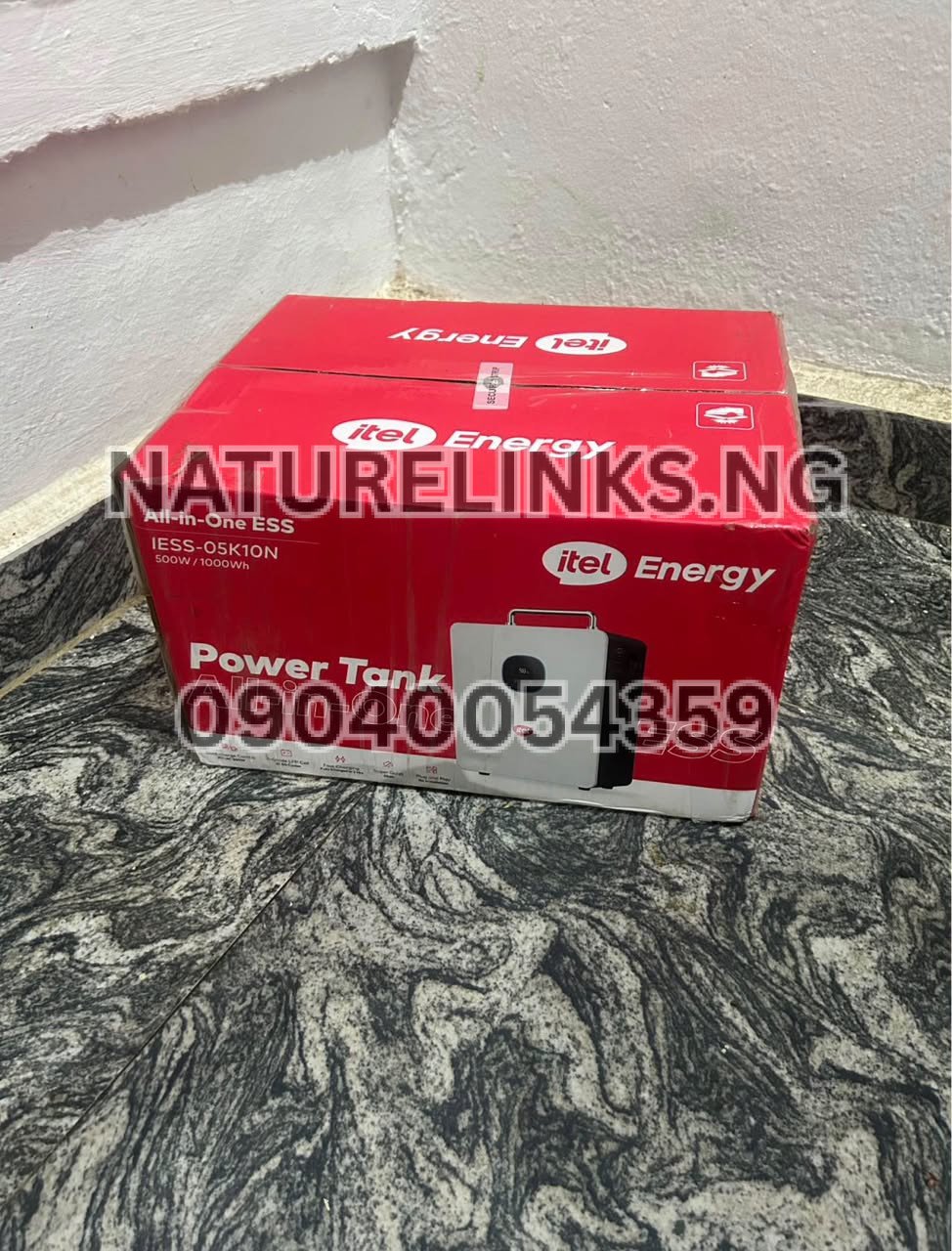
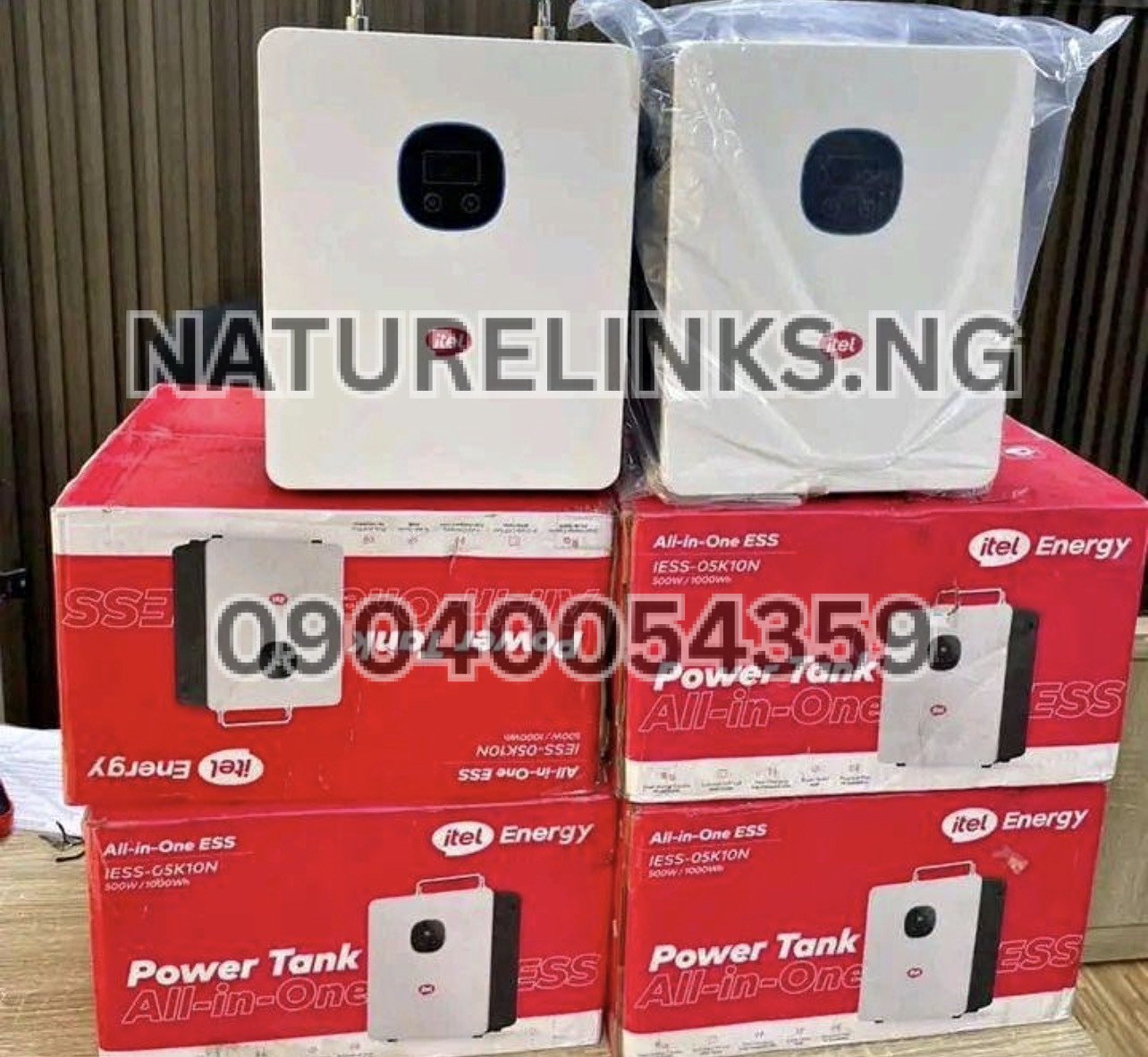
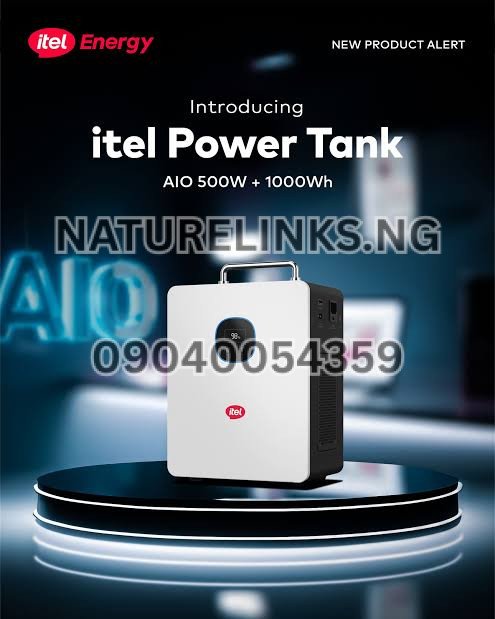
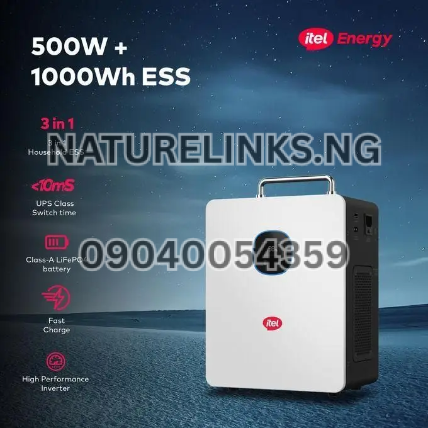
The commonly advertised Itel Power Tank 500W/1000Wh configuration combines a 1,000Wh (1kWh) LiFePO₄ battery with a 500W pure-sine-wave inverter and charging equipment. Some configurations also include MPPT solar charging, AC/grid charging, DC and USB outputs and UPS functionality.
What is an Itel Power Tank?
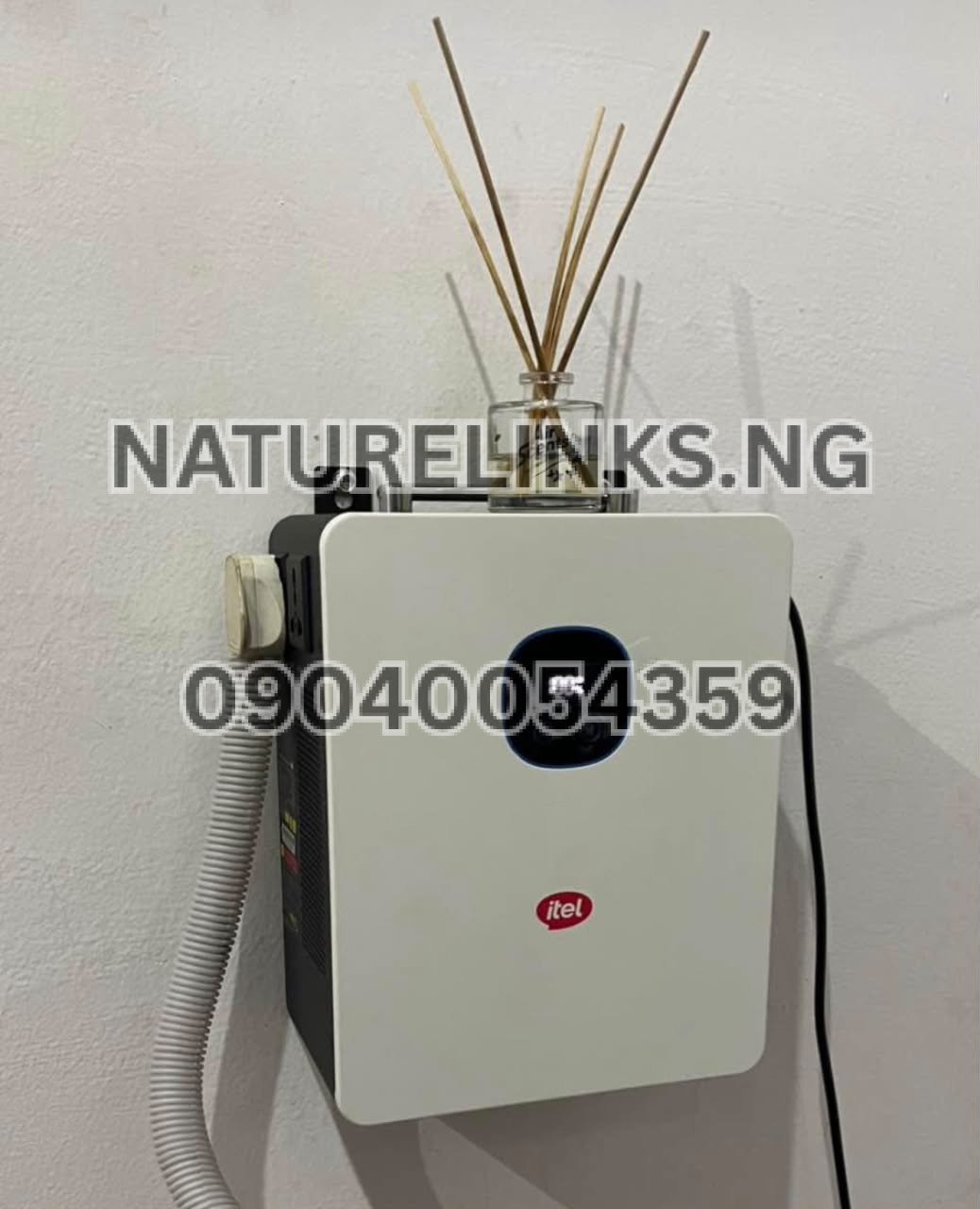
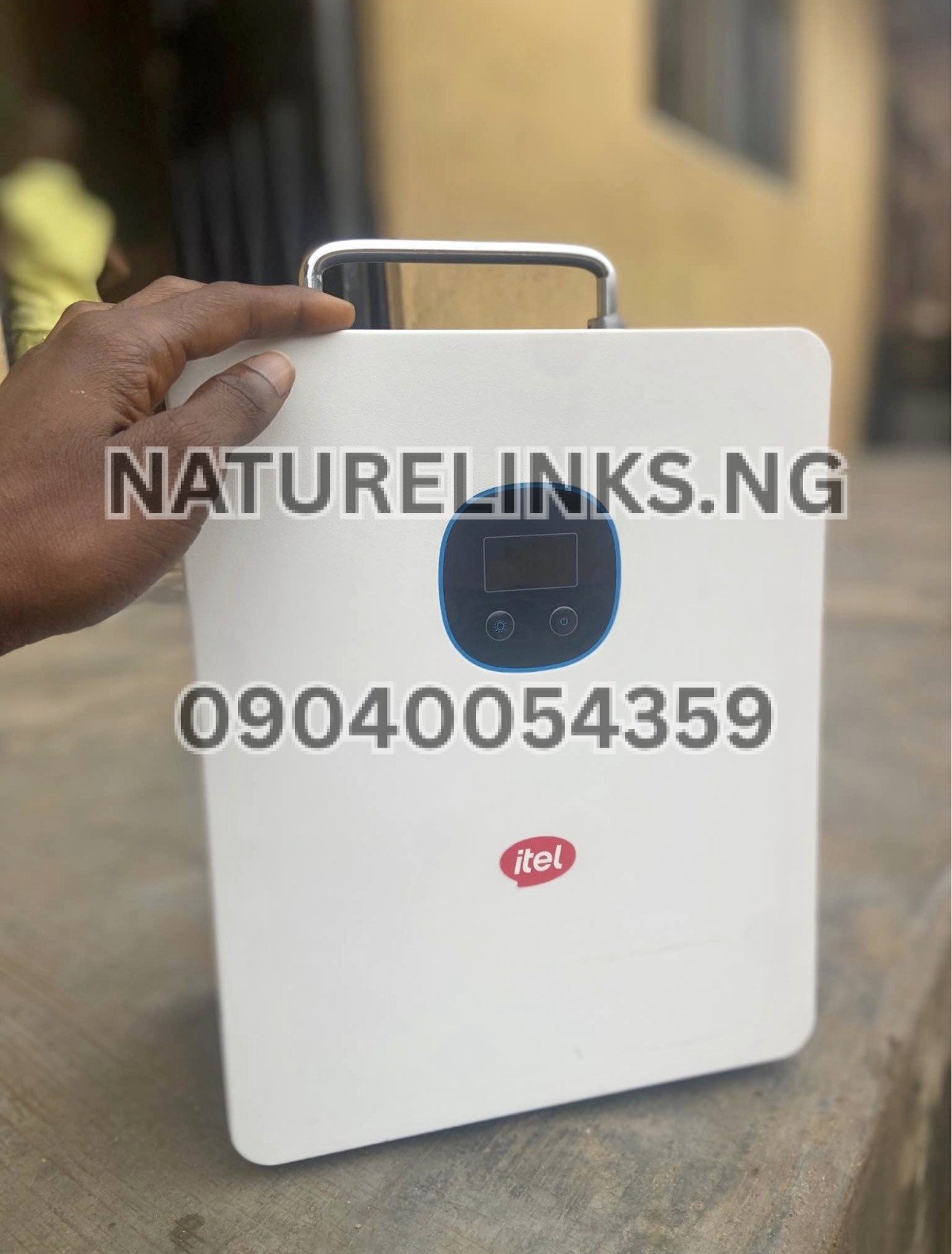
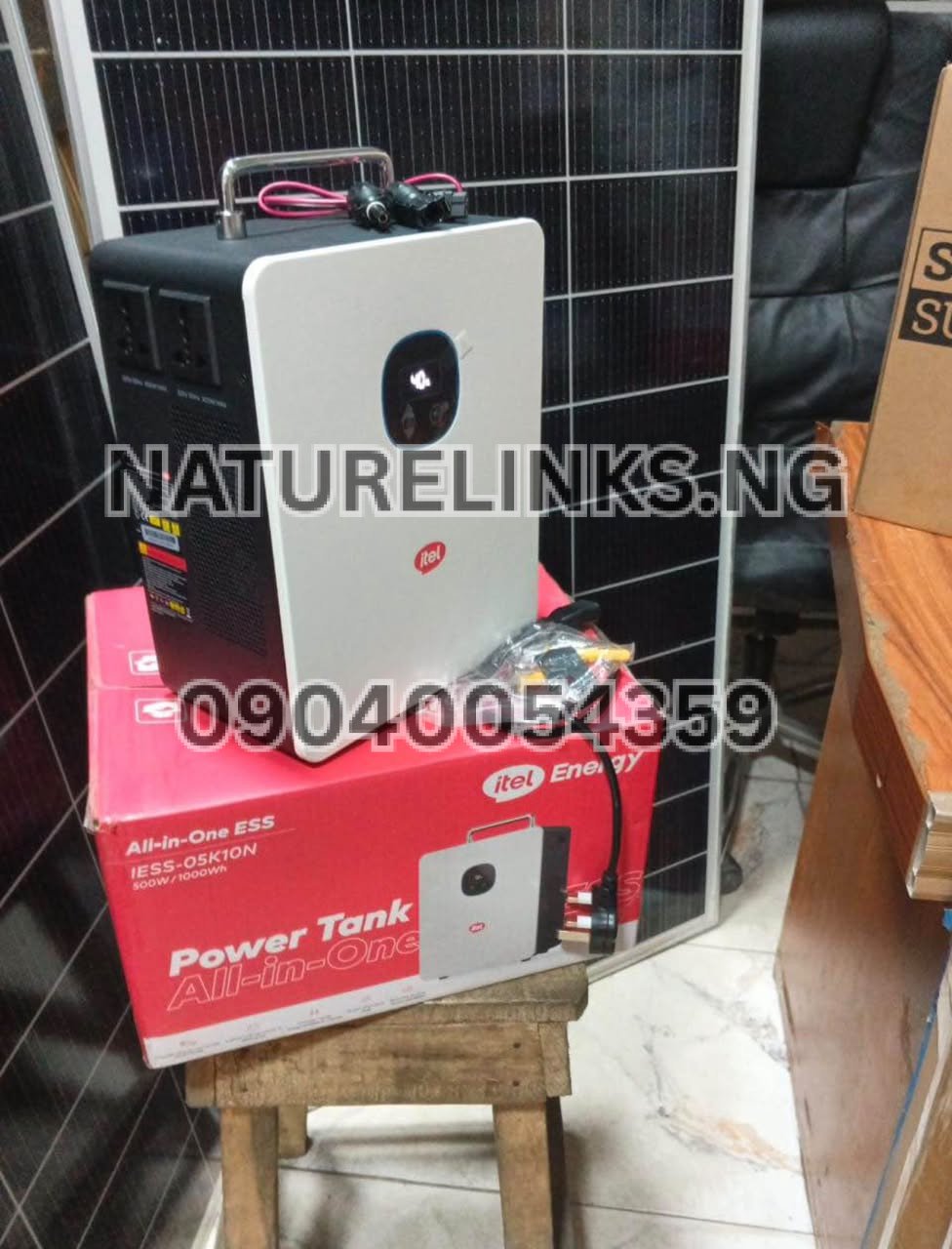
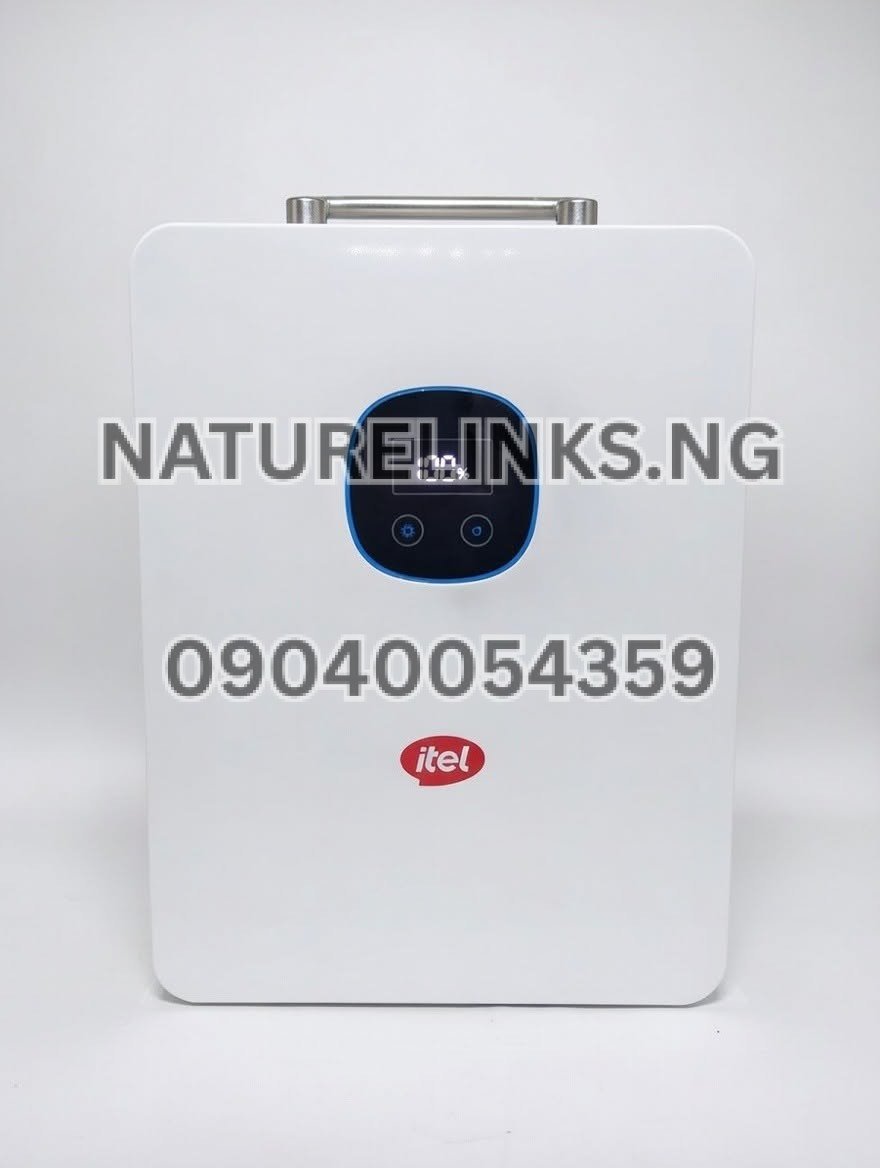
An Itel Power Tank is an all-in-one portable energy-storage or power-station system designed to store electricity and provide backup power through different outputs.
Instead of purchasing a separate battery, inverter and charge controller and then connecting them together, the Power Tank integrates these functions into one portable unit.
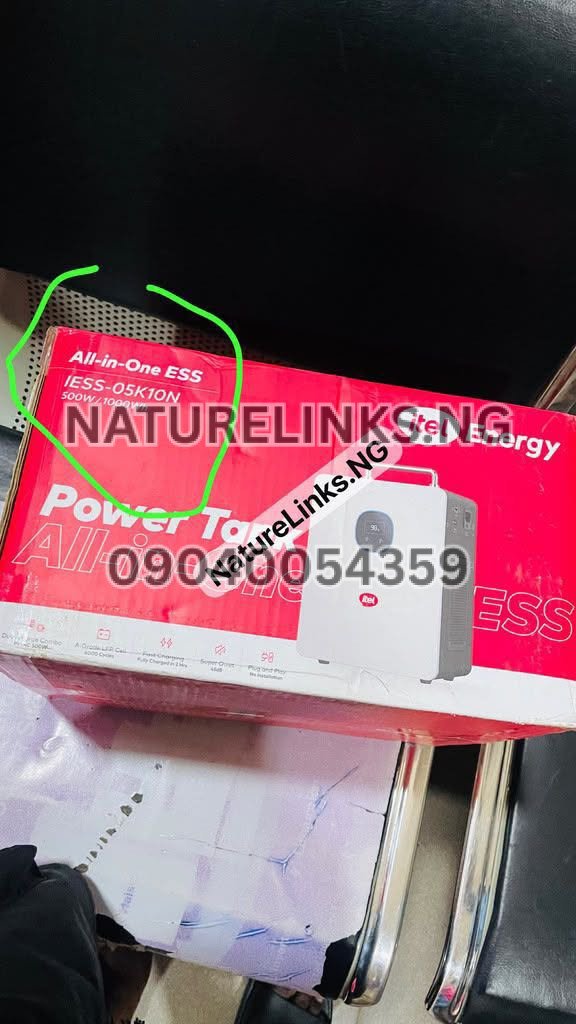
For the commonly advertised 1kWh/500W configuration, Nigerian product listings specify:
- 1,000Wh / 1kWh battery capacity
- 500W rated AC inverter output
- LiFePO₄ lithium battery
- Pure sine-wave inverter
- AC/grid charging
- Solar charging
- Integrated MPPT solar controller on listed configurations
- AC, DC and USB outputs
- Battery Management System (BMS)
- Digital battery/status display
- Portable all-in-one construction
- Protection against conditions such as overload and short circuit
- UPS functionality on compatible configurations.
Therefore, the Power Tank should not be confused with a battery alone. It is an integrated backup-power system.
What is a traditional inverter?
An inverter is an electrical device that converts DC electricity from a battery into AC electricity that can be used by AC appliances.
In a conventional Nigerian home solar/inverter installation, the inverter is usually connected to a separate battery bank. Depending on the system, the installation may also contain solar panels, a charge controller, changeover equipment, protection devices, cabling and other components.
In other words:
Traditional inverter system = inverter + battery + charging/solar components + installation
Whereas:
Itel Power Tank = battery + inverter + charging electronics + outlets + protection in one portable unit
This is one of the biggest differences between an Itel Power Tank and a conventional inverter system.
“What is the difference between Itel Power Tank and an inverter?”
The main difference is integration and system design.
An Itel Power Tank is a complete portable energy-storage product. A conventional inverter is usually a component that needs to work with a separate battery and other electrical equipment.
| Feature | Itel Power Tank | Traditional Inverter System |
|---|---|---|
| Design | All-in-one | Usually separate components |
| Battery | Built in | Usually purchased separately |
| Inverter | Built in | Separate |
| Portability | Portable | Usually fixed installation |
| Solar charging | Integrated on compatible configurations | Depends on inverter/controller |
| Installation | Generally plug-and-play | Usually requires installation |
| Expansion | More limited | Can be configured/expanded depending on system |
| Battery replacement | Model-dependent | Usually easier to configure separately |
| Home wiring | Mainly appliance-by-appliance | Can be connected to selected house circuits |
| Convenience | High | Depends on installation |
| Capacity options | Determined by Power Tank model | Can be designed around required capacity |
| Use outdoors | Convenient | Usually less portable |
| Small electronics | Suitable within output limit | Depends on system size |
| Large household loads | Limited by model | Can be designed for higher loads |
The commonly listed Itel Power Tank 500W/1000Wh model has a 500W continuous inverter output, so buyers should compare their actual appliance requirements with that rating rather than looking only at the 1,000Wh battery capacity.
Is Itel Power Tank an inverter?
Yes, an Itel Power Tank can contain an inverter.
This is an important point for people searching “Is Itel Power Tank an inverter?”
The Power Tank is more than an inverter because the inverter is only one part of the complete system.
The commonly advertised configuration combines:
LiFePO₄ battery + inverter + charging system + solar charging + protection + output ports
into one unit. Current Nigerian listings describe the system as an all-in-one solar generator/power station.
Therefore, saying that an Itel Power Tank is simply an inverter is incomplete.
A better description is:
Itel Power Tank is an all-in-one portable power station with an integrated inverter and battery.
Is Itel Power Tank a solar generator?
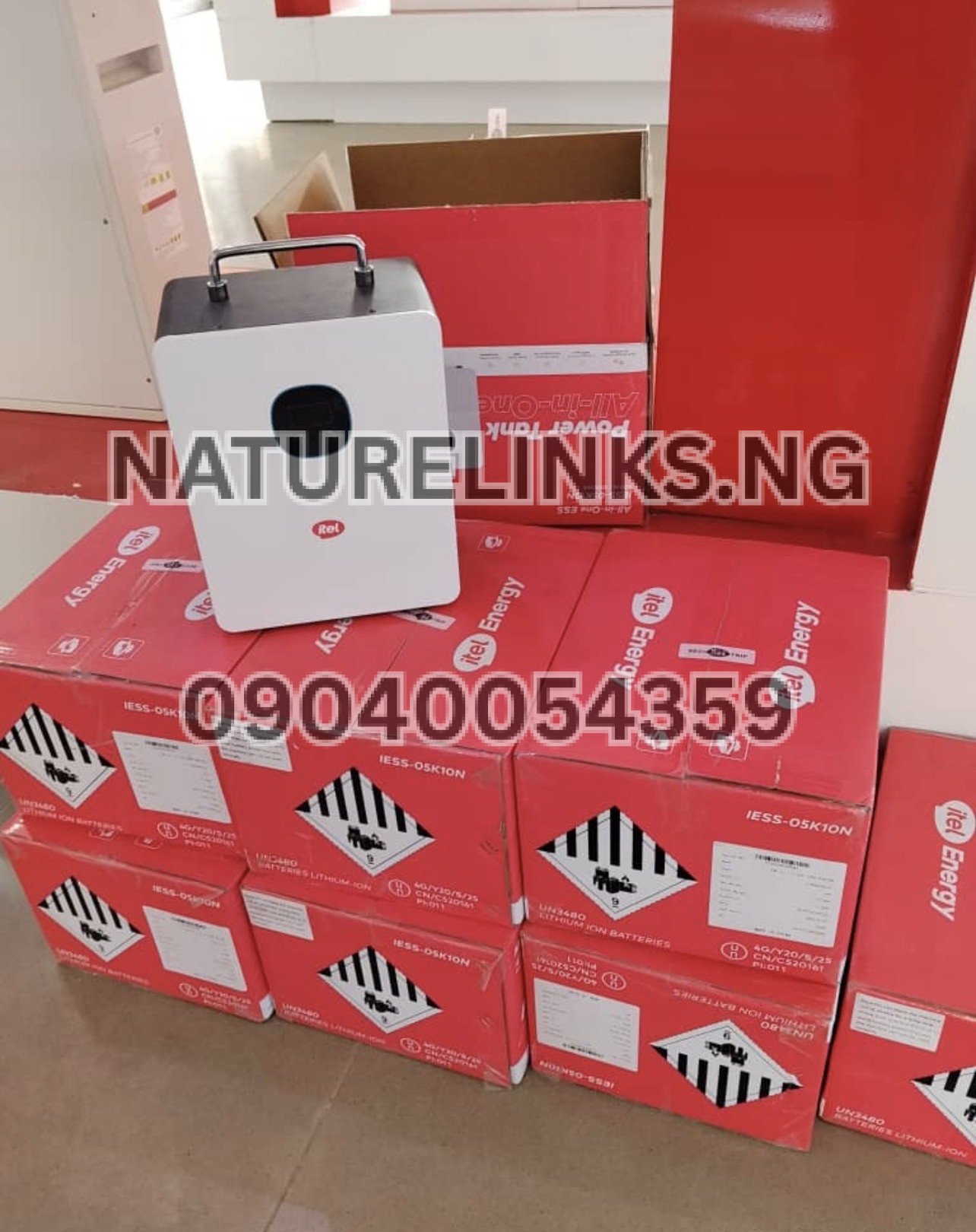
Itel Power Tank is commonly marketed in Nigeria as an all-in-one solar generator or portable power station.
However, unlike a petrol generator, it does not generate electricity by burning fuel.
Instead, the battery stores electrical energy. Depending on the configuration, the battery can be recharged from mains electricity or compatible solar panels.
Current listings for the 1kWh/500W configuration specify AC/grid charging and solar charging, with some configurations listing an integrated MPPT controller and up to 400W PV input.
This makes the Power Tank particularly relevant to Nigerian buyers who want backup electricity without petrol or diesel.
Itel Power Tank vs inverter: how do they work?
How Itel Power Tank works
The basic process is:
Electricity/solar → battery → inverter → appliance
For example:
- You charge the Power Tank from AC mains.
- The internal battery stores the energy.
- During a power outage, the battery supplies DC electricity internally.
- The built-in inverter converts it to AC electricity.
- You connect compatible appliances to the Power Tank.
If a compatible solar charging configuration is used, the solar panel can recharge the battery through the integrated charging system.
How a traditional inverter works
A conventional inverter system generally works like this:
Grid/solar → charger/controller → external battery → inverter → appliances
The exact arrangement depends on the inverter and installation.
A conventional system can therefore be designed around the power requirements of a particular house or business.
Which has the battery: Itel Power Tank or inverter?
The answer depends on what is meant by “inverter.”
A standalone inverter normally does not function as the battery itself. It converts stored DC energy into AC electricity and usually requires an external battery.
An Itel Power Tank includes the battery inside the unit.
The commonly listed Power Tank configuration has a 1,000Wh / 1kWh LiFePO₄ battery and a 500W inverter output.
This is why comparing the Power Tank with only the inverter component can be misleading.
A more accurate comparison is:
Itel Power Tank vs complete inverter-and-battery system.
What does 1,000Wh mean on Itel Power Tank?
The 1,000Wh specification refers to the approximate energy-storage capacity of the battery.
Wh means watt-hours.
For example, theoretically:
- 100W load for 10 hours = 1,000Wh
- 200W load for 5 hours = 1,000Wh
- 50W load for 20 hours = 1,000Wh
However, actual runtime will normally be lower because of inverter conversion losses, battery operating conditions and the power consumption of the connected equipment.
Most importantly, 1,000Wh does not mean the Power Tank can continuously operate a 1,000W appliance.
The commonly advertised model has a 500W continuous AC inverter rating.
What does 500W mean on Itel Power Tank?
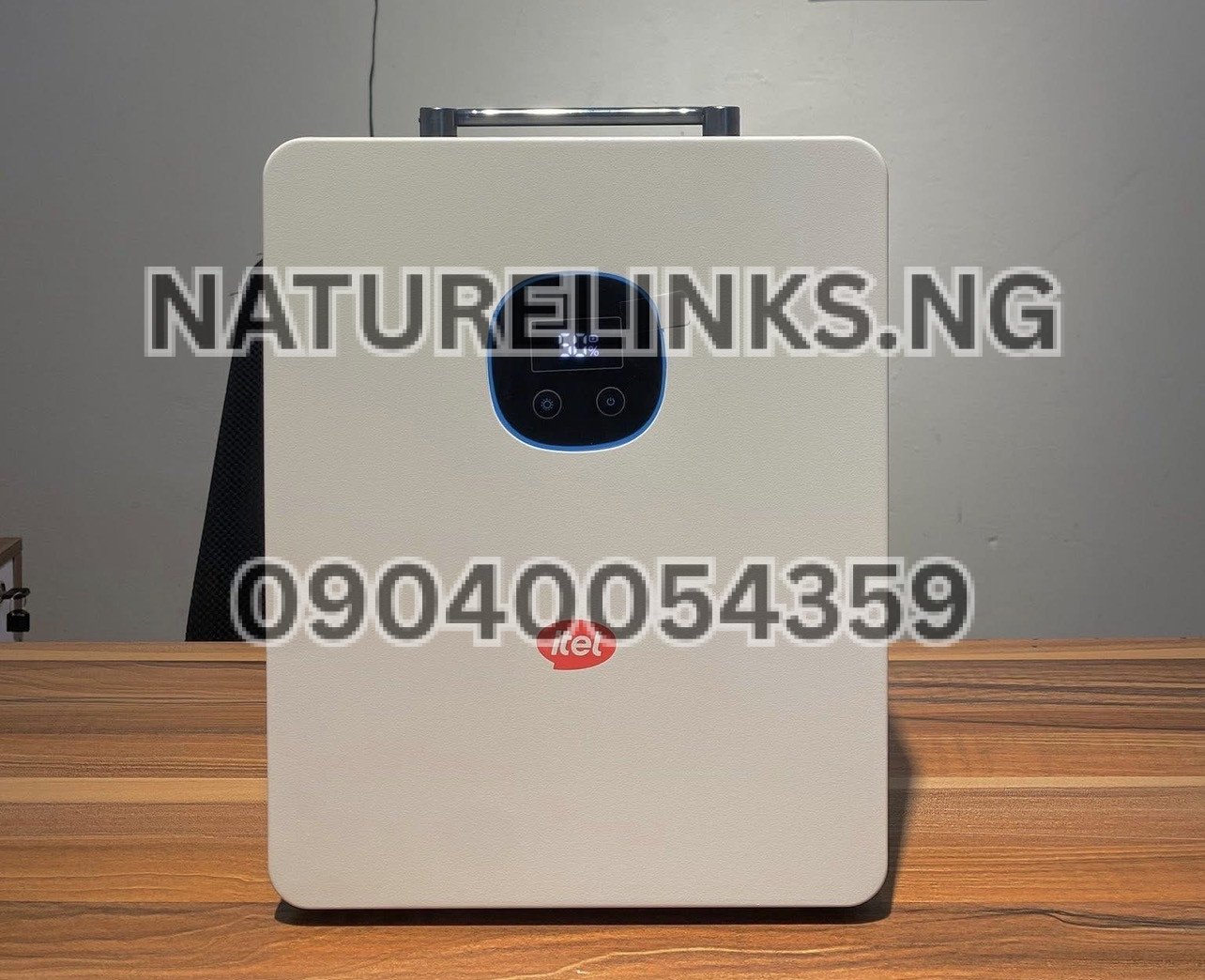
The 500W specification refers to the rated continuous AC output of the inverter on the commonly advertised configuration.
This means the total connected AC load should generally remain within the manufacturer’s specified output limit.
For example, a buyer should not assume that because the battery is 1,000Wh, the Power Tank can continuously run a 1,000W appliance.
This distinction between Wh and W is one of the most important things to understand before buying an Itel Power Tank.
Wh = stored energy.
W = power being delivered at a particular time.
Can Itel Power Tank replace an inverter?
For some users, an Itel Power Tank can serve the role of a complete small backup-power solution and therefore eliminate the need to purchase a separate inverter, battery and charge controller.
But whether it can replace a conventional home inverter depends on the required load.
For example, a 500W Power Tank may be suitable for:
- TV
- Decoder
- Wi-Fi router
- Laptop
- Phones
- LED lights
- Small fans
- CCTV
- POS equipment
- Other compatible low-power electronics
It may not be appropriate for simultaneously powering several high-wattage appliances.
A conventional inverter system can be sized around a much larger load if the appropriate inverter, battery and supporting components are selected.
Can Itel Power Tank power a fridge?
This requires checking the fridge’s running wattage and starting/surge requirement against the particular Power Tank model.
A refrigerator can draw considerably more power when its compressor starts than its normal running consumption.
For a commonly listed 500W Power Tank, buyers should not assume that every refrigerator will work simply because its average running consumption appears below 500W.
Check:
- Refrigerator running wattage
- Compressor starting surge
- Power Tank continuous output
- Power Tank surge rating
- Manufacturer’s compatibility requirements
For appliances with substantial starting loads, obtaining the correct technical specification before purchase is important.
Can Itel Power Tank power a TV?
Yes, a compatible TV can generally be powered by a Power Tank provided its consumption is within the unit’s output rating.
Televisions typically consume considerably less than 500W, although actual consumption depends on the screen size, technology, brightness and other factors.
A buyer should check the TV’s rating label or power specification and add the consumption of any connected devices such as:
- Decoder
- Sound system
- Streaming device
- Wi-Fi router
- Game console
The combined load should remain within the Power Tank’s output capability.
Can Itel Power Tank power a fan?
A compatible fan can be powered by an Itel Power Tank if its power consumption is within the unit’s limits.
This can be useful during Nigerian power outages because fans, routers, phones, lights and televisions are common backup-power requirements.
However, buyers should calculate the combined load when running several appliances simultaneously.
For example:
Fan + TV + decoder + router + laptop
is different from running only a fan.
The total wattage matters.
Can Itel Power Tank power a laptop?
Yes, a compatible laptop can generally be powered from the Power Tank using an appropriate AC, DC or USB output depending on the laptop and Power Tank configuration.
Laptop power consumption is generally much lower than the 500W continuous output of the commonly listed model.
Actual battery runtime depends on the laptop’s charger rating, workload, battery condition and other connected loads.
Can Itel Power Tank power a Wi-Fi router?
Yes. A Wi-Fi router is one of the types of low-power electronics commonly suited to portable power stations.
For a router or modem, the important considerations are:
- Correct voltage
- Correct connector
- Correct output type
- Router wattage
- Whether other devices are connected
Using the correct output and cable is essential.
Can Itel Power Tank power a pressing iron?
A pressing iron may not be suitable for the commonly advertised 500W Power Tank because many irons can consume more power than the inverter’s continuous rating.
The same caution applies to:
- Electric kettles
- Electric cookers
- Hot plates
- High-power heaters
- Hair dryers
- Large air conditioners
- High-power pumps
Always check the appliance’s wattage before connecting it.
Itel Power Tank vs inverter for a Nigerian home
The answer depends on the type of home backup required.
A portable Power Tank is designed around convenience. You can place it near the appliances you need to operate and move it when necessary.
A conventional inverter system can be installed as part of a home’s electrical system and can be sized for significantly higher loads.
For example, a Nigerian household wanting backup for selected low-power electronics may consider an all-in-one Power Tank.
A household wanting to operate multiple heavy appliances may need a larger purpose-built inverter and battery system.
Itel Power Tank vs inverter for an apartment
For apartment residents, portability can be an important consideration.
A Power Tank does not necessarily require the same type of permanent installation associated with a conventional home inverter system.
This can be useful for renters or people who move frequently.
The commonly listed Itel Power Tank 1000Wh model is designed as a portable all-in-one unit, with AC, DC and USB outputs and charging options including mains and solar on applicable configurations.
Itel Power Tank vs inverter for a shop
For a small shop, the appropriate option depends on the equipment.
If the main requirements are:
- POS terminal
- Phone charging
- LED lighting
- Router
- Small fan
- Laptop
- Small electronics
an appropriately sized Power Tank can provide convenient backup.
For larger equipment, a conventional inverter system may need to be considered because it can be designed around the shop’s total load.
Itel Power Tank vs inverter for a POS business
POS operators often need reliable electricity for:
- POS terminals
- Smartphones
- Routers
- Small lights
- Fans
- Laptop or tablet
An all-in-one Power Tank can be convenient because the battery and inverter are integrated.
However, the buyer should calculate the total load and expected operating time rather than buying based solely on battery capacity.
Which is easier to install: Itel Power Tank or inverter?
An Itel Power Tank is generally easier to deploy because the main components are already integrated.
A conventional inverter system can require:
- Inverter installation
- Battery installation
- Battery cables
- Solar controller where required
- Solar panels
- Protection equipment
- Appropriate changeover arrangements
- Electrical wiring
- Professional installation
The exact installation requirements vary considerably by system.
This makes the Power Tank attractive to buyers searching for plug-and-play backup power in Nigeria.
Which is more portable?
The Itel Power Tank is designed as a portable power station.
The conventional home inverter is generally designed as a fixed installation.
If you need to move your backup power between:
- Bedroom
- Living room
- Office
- Shop
- Outdoor location
- Temporary workspace
a portable Power Tank provides a different form factor from a permanently installed inverter system.
Can Itel Power Tank charge from electricity?
Yes. Current Nigerian listings for the commonly advertised configuration specify AC/grid charging in addition to solar charging.
This means the unit can be charged from mains electricity when public power is available and used later during an outage.
The exact charger/input specification should always be checked against the particular model being purchased.
Can Itel Power Tank charge with solar panels?
Yes, compatible Itel Power Tank configurations support solar charging.
Listings for the commonly advertised 1kWh/500W configuration specify an integrated MPPT solar charge controller, with some documentation indicating up to 400W of PV input.
Solar charging makes the Power Tank useful for buyers who want to recharge their stored energy using sunlight rather than relying exclusively on the Nigerian electricity grid.
However, the solar panel voltage, current, connector and maximum PV input must match the Power Tank’s specifications.
Does an Itel Power Tank have an inverter inside?
Yes.
The commonly listed configuration includes a 500W pure sine-wave inverter.
This inverter converts the battery’s stored DC energy into AC power for compatible AC appliances.
The Power Tank also combines other components into the same system, which is why it is different from buying an inverter alone.
Is the Itel Power Tank pure sine wave?
The commonly advertised 500W/1000Wh configuration is listed with a pure sine-wave inverter.
Pure sine-wave output is useful for many modern electronic devices and appliances.
Nevertheless, buyers should always confirm the specifications of the exact model supplied, especially where different configurations or listings are involved.
What type of battery does Itel Power Tank use?
The commonly advertised 1kWh Power Tank uses a LiFePO₄ (lithium iron phosphate) battery.
LiFePO₄ is widely used in energy-storage applications because of its characteristics for repeated charging and discharging.
The Power Tank also includes a Battery Management System on listed configurations, helping manage battery operation and protection.
What is the difference between a lithium inverter and Itel Power Tank?
A lithium inverter system can refer to a conventional inverter connected to a separate lithium battery.
An Itel Power Tank integrates the battery and inverter into one portable product.
Therefore:
Lithium inverter system:
Separate inverter + separate lithium battery + other system components.
Itel Power Tank:
Integrated lithium battery + inverter + charging system + outlets + protection.
The first approach can provide greater flexibility in system sizing, while the second emphasizes an integrated and portable design.
Can an Itel Power Tank be used as a UPS?
UPS functionality is available on compatible Power Tank configurations.
Some published Nigerian listings specify UPS functionality and fast switching on documented configurations.
However, buyers who specifically need uninterrupted operation for sensitive equipment should confirm the exact UPS switching specification of the model they intend to purchase.
Itel Power Tank battery capacity vs inverter capacity
This is another common source of confusion.
Suppose a Power Tank is advertised as:
1,000Wh / 500W
The figures do not mean the same thing.
1,000Wh
This describes the energy storage capacity.
500W
This describes the inverter’s rated continuous output.
Therefore, a 1,000Wh battery does not automatically mean the Power Tank can operate a 1,000W appliance.
The commonly advertised configuration is rated at 500W continuous AC output.
Itel Power Tank price in Nigeria
The price of an Itel Power Tank varies according to:
- Model
- Battery capacity
- Seller
- Warranty
- Stock availability
- Exchange-rate conditions
- Included accessories
- Solar-panel package
- Delivery location
Current Nigerian listings show significant variation. For example, one current Nigerian retail listing advertises a 500W/1,000Wh unit at ₦310,000, while other Nigerian listings show prices ranging from roughly ₦279,000 upward depending on the seller and package.
Jumia Nigeria listings also currently show multiple 500W/1000Wh Power Tank offerings at different prices, illustrating why buyers should confirm the exact package rather than relying on a single advertised price.
Always confirm the latest price, exact model, warranty and accessories before payment.
Why is Itel Power Tank more expensive than a basic inverter?
A direct price comparison with an inverter alone can be misleading.
A standalone inverter is only one component.
The Power Tank can combine:
- Battery
- Inverter
- Charging system
- Solar charging
- MPPT controller
- BMS
- Display
- AC outputs
- DC outputs
- USB outputs
- Protective electronics
- Portable enclosure
into one product.
Therefore, the relevant comparison is the price of an equivalent complete inverter-and-battery system, not simply the price of an inverter box.
What are the advantages of Itel Power Tank?
Important advantages include:
1. All-in-one design
The major components are integrated into one unit.
2. Portability
The Power Tank can be moved between locations.
3. No petrol required
It stores electricity instead of using an internal combustion engine.
4. Quiet operation
It does not operate like a petrol generator.
5. Multiple charging options
Compatible configurations can support AC/grid and solar charging.
6. Built-in battery
There is no need to purchase a separate external battery for the integrated system.
7. Pure sine-wave output
The commonly listed configuration provides pure sine-wave AC output.
8. Simple operation
The integrated design reduces the number of separate components a user has to manage.
9. Suitable for small electronics
It can be useful for TVs, laptops, routers, lights, fans and similar loads when operated within the rated capacity.
10. Solar compatibility
Compatible configurations can be connected to suitable solar panels.
What are the limitations of Itel Power Tank?
The Power Tank also has limitations that buyers should understand.
Limited inverter output
The commonly advertised configuration has a 500W continuous output.
Limited expansion compared with a custom system
A conventional inverter system can often be designed around larger battery banks and higher loads.
Appliance compatibility matters
High-power appliances may exceed the inverter’s capacity.
Battery capacity determines runtime
Higher-wattage appliances consume the stored energy faster.
Exact specifications vary by model
Buyers should verify the model and datasheet rather than assuming every Itel Power Tank has identical specifications.
What appliances can a 500W Itel Power Tank run?
Potential compatible loads include:
- LED bulbs
- Wi-Fi routers
- Modems
- Laptops
- TVs
- Decoders
- Phone chargers
- Tablets
- CCTV equipment
- Small fans
- POS terminals
- Small office electronics
The actual combination depends on the total wattage.
For example, running a TV, router, decoder and fan simultaneously requires adding their power consumption.
The combined load should remain within the Power Tank’s rated output.
What appliances should you avoid connecting to a 500W Power Tank?
Do not assume that appliances are compatible simply because they can plug into the AC socket.
Check the appliance rating first.
Potentially unsuitable high-power loads include:
- Electric kettle
- Pressing iron
- Electric cooker
- Hot plate
- High-power heater
- Large microwave
- Large air conditioner
- High-power water pump
Some appliances also have high startup/surge requirements.
The Power Tank’s output rating and surge capability must therefore be considered.
Itel Power Tank vs inverter: portability comparison
If portability is a major requirement, the Power Tank’s all-in-one design is significant.
A conventional inverter system usually has separate components that may be installed in a particular location.
With a portable Power Tank, the user can move the unit as needed, subject to its weight and safe handling.
This can be particularly useful for renters, students, small businesses, field workers and people who do not want a permanent backup-power installation.

Itel Power Tank vs inverter: solar charging comparison
Both types of systems can support solar charging depending on the equipment.
With the Power Tank, the solar charging electronics can already be integrated.
With a conventional inverter system, solar charging depends on the inverter’s built-in solar controller or an additional charge controller.
This means buyers should compare the complete system, not just the inverter’s name.
Itel Power Tank vs inverter: maintenance
An integrated Power Tank reduces the number of external components.
A conventional inverter installation may have:
- Inverter
- Battery
- Solar panels
- Charge controller
- Cables
- Breakers
- Fuses
- Changeover equipment
- Mounting equipment
Maintenance requirements therefore depend heavily on the type of system installed.
With either option, keeping the equipment properly ventilated, dry and operated within its specifications is important.
Itel Power Tank vs inverter: battery replacement
With a conventional inverter system, the battery is normally a separate component.
This makes it possible to select different battery capacities and battery technologies depending on the inverter and system design.
An integrated Power Tank is designed as a complete product, so battery servicing or replacement depends on the manufacturer’s design and authorized service arrangements.
Buyers should therefore ask about:
- Warranty
- Battery warranty
- Service support
- Replacement policy
- Availability of genuine accessories
- Availability of technical support
before purchasing.
Is Itel Power Tank good for Nigerian power outages?
The Power Tank is designed for backup electricity applications, and its portable all-in-one design can be useful during power outages.
It can store electricity before an outage and provide AC/DC/USB power for compatible equipment.
The actual usefulness depends on:
- Battery capacity
- Appliance wattage
- Duration of the outage
- Number of connected appliances
- Charging availability
- Solar input
- Battery condition
For longer outages and heavier loads, a larger system may be necessary.
Should you buy Itel Power Tank or a conventional inverter?
The answer should be based on your actual electricity requirements.
Consider an Itel Power Tank if your priorities include:
- Portability
- Simple setup
- Small-to-medium electronic loads
- Integrated battery and inverter
- No petrol
- Quiet operation
- AC and solar charging
- Backup for electronics
Consider a conventional inverter system if your requirements include:
- Permanent home installation
- Larger household loads
- Higher inverter capacity
- Larger battery banks
- Future expansion
- Dedicated house circuits
- Customized solar installation
Neither description alone determines suitability. The correct choice depends on the required load, backup duration, budget, installation preference and future expansion requirements.
What should I check before buying an Itel Power Tank in Nigeria?
Before paying a seller, check:
- Exact model number
- Battery capacity
- Inverter continuous output
- Surge output
- Battery chemistry
- AC charging specification
- Solar input specification
- Maximum PV voltage
- Maximum PV current
- Charging time
- Output ports
- UPS functionality
- Warranty
- Accessories included
- Seller’s after-sales support
- Product authenticity
- Current price
- Delivery arrangements
- Return/service policy
- Compatibility with your appliances
This is particularly important because online Nigerian listings can show different configurations and prices for products marketed under similar Power Tank descriptions.
Itel Power Tank datasheet: commonly listed 1kWh/500W configuration
| Specification | Commonly listed detail |
|---|---|
| Brand | itel |
| Product | Power Tank |
| Battery capacity | 1,000Wh / 1kWh |
| Battery chemistry | LiFePO₄ |
| Continuous AC output | 500W |
| Inverter | Pure sine wave |
| Solar charging | Yes, compatible configuration |
| MPPT | Integrated on listed configurations |
| PV input | Up to 400W on documented configurations |
| AC/grid charging | Yes |
| BMS | Yes |
| AC output | 230V on documented configurations |
| Frequency | 50Hz on documented configurations |
| USB/DC outputs | Available, configuration-dependent |
| UPS | Available on compatible configurations |
| Design | Portable all-in-one |
These specifications are based on currently available Nigerian listings and should be checked against the exact unit’s documentation before purchase because specifications can vary by configuration.
Where to buy Itel Power Tank in Nigeria
If you are searching for an Itel Power Tank dealer in Nigeria, Itel Power Tank price in Nigeria, Itel Power Tank 1000Wh 500W, Itel Power Tank original, or genuine Itel Power Tank distributor, contact:
Best Seller: Nature Solar Global Limited
Accredited Distributor in Nigeria: Nature Solar Global Limited
Seller: Nature Links Nigeria Limited [NatureLinks.NG]
CEO: Mr. Joseph Chikeleze
Call: 07049528019
WhatsApp: 09040054359
Shop Address: F1571 Upstairs (F-Line), Alaba International Market, Lagos State 🇳🇬
Before making payment, confirm the current price, exact model, battery capacity, inverter rating, accessories, warranty and delivery terms.
Why buy from Nature Links Nigeria Limited?
When buying an energy-storage product, buyers should verify that the seller can provide clear information about:
- Product model
- Battery capacity
- Inverter rating
- Warranty
- Accessories
- Charging requirements
- Solar compatibility
- After-sales support
Nature Links Nigeria Limited can be contacted for information on Itel Power Tank availability and current purchasing details.
Itel Power Tank and inverter: simple explanation
For someone who wants the simplest possible explanation:
An inverter converts battery power into usable AC electricity.
An Itel Power Tank combines an inverter with a battery and charging system in one portable product.
So, an Itel Power Tank contains an inverter, but an inverter by itself is not the same thing as an Itel Power Tank.
“What is the difference between Itel Power Tank and an inverter?”
The biggest difference is that the Power Tank is a complete integrated energy-storage product, whereas a conventional inverter is generally one component of a larger backup system.
The Power Tank’s battery, inverter and charging electronics are integrated into the same portable unit.
A conventional inverter can be connected to an external battery and other components, allowing the system to be customized around the user’s requirements.
Frequently Asked Questions About Itel Power Tank vs Inverter
1. Is Itel Power Tank the same as an inverter?
No. The Itel Power Tank is an all-in-one energy-storage system that contains an inverter as one of its major components. The commonly advertised model combines a 1kWh battery with a 500W inverter.
2. Does Itel Power Tank have an inverter inside?
Yes. The commonly listed 500W/1000Wh configuration includes a pure sine-wave inverter.
3. Is Itel Power Tank better than an inverter?
The two products are not directly identical. A Power Tank prioritizes an integrated portable design, while a conventional inverter system can be configured with separate batteries and components. The appropriate option depends on the user’s power requirements.
4. Can Itel Power Tank replace a home inverter?
It can serve as a backup-power solution for compatible loads, but a 500W Power Tank may not replace a larger home inverter system designed to power numerous high-wattage appliances.
5. Can Itel Power Tank charge with electricity?
Yes. The commonly advertised configuration supports AC/grid charging.
6. Can Itel Power Tank charge with solar?
Yes, compatible configurations support solar charging, with current listings specifying integrated MPPT charging and, on documented configurations, up to 400W PV input.
7. What is the battery capacity of Itel Power Tank?
The commonly advertised Nigerian configuration has a 1,000Wh or 1kWh LiFePO₄ battery.
8. How many watts can Itel Power Tank power?
The commonly advertised configuration has a 500W continuous AC inverter output. Its surge capability depends on the exact configuration, so buyers should verify the model specification.
9. Can Itel Power Tank power a TV, fan and laptop?
These devices can generally be suitable for a 500W Power Tank when their combined power consumption remains within the unit’s rated output. Actual runtime depends on their wattage and battery condition.
10. Where can I buy genuine Itel Power Tank in Nigeria?
Buyers can contact Nature Links Nigeria Limited [NatureLinks.NG] / Nature Solar Global Limited for current availability, pricing and product information.
Call: 07049528019
WhatsApp: 09040054359
Address: F1571 Upstairs (F-Line), Alaba International Market, Lagos State 🇳🇬

Final conclusion
The difference between an Itel Power Tank and a conventional inverter is primarily the way the backup-power system is designed.
An inverter is normally the component that converts DC battery electricity into AC electricity. A conventional inverter system may require a separate battery, solar controller, wiring and other installation components.
An Itel Power Tank takes a different approach by integrating the battery, inverter, charging electronics, protection system and output ports into one portable energy-storage unit.
The commonly advertised Itel Power Tank configuration combines a 1,000Wh/1kWh LiFePO₄ battery with a 500W pure-sine-wave inverter, while compatible configurations support AC/grid and solar charging.
For Nigerians searching for portable backup power for TVs, laptops, routers, fans, lights, phones, POS equipment and other compatible electronics, understanding the difference between battery capacity (Wh) and inverter output (W) is especially important.
If your requirements involve heavier household appliances or a permanently installed whole-home backup system, compare the required total load and battery capacity with a suitably sized conventional inverter system.
For current Itel Power Tank price in Nigeria, genuine product availability, specifications, warranty and purchasing information, contact Nature Links Nigeria Limited / Nature Solar Global Limited using the details provided above.