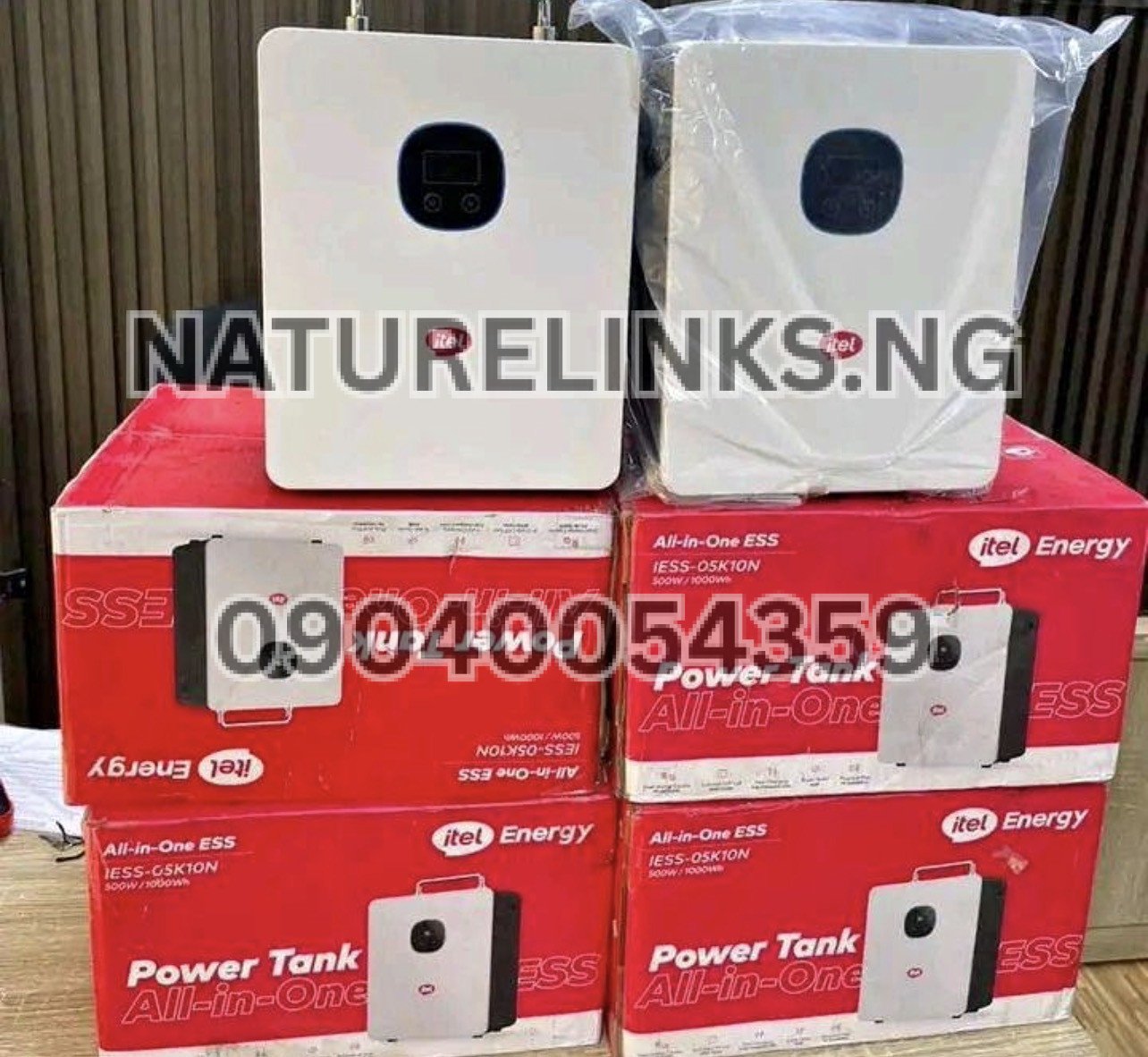
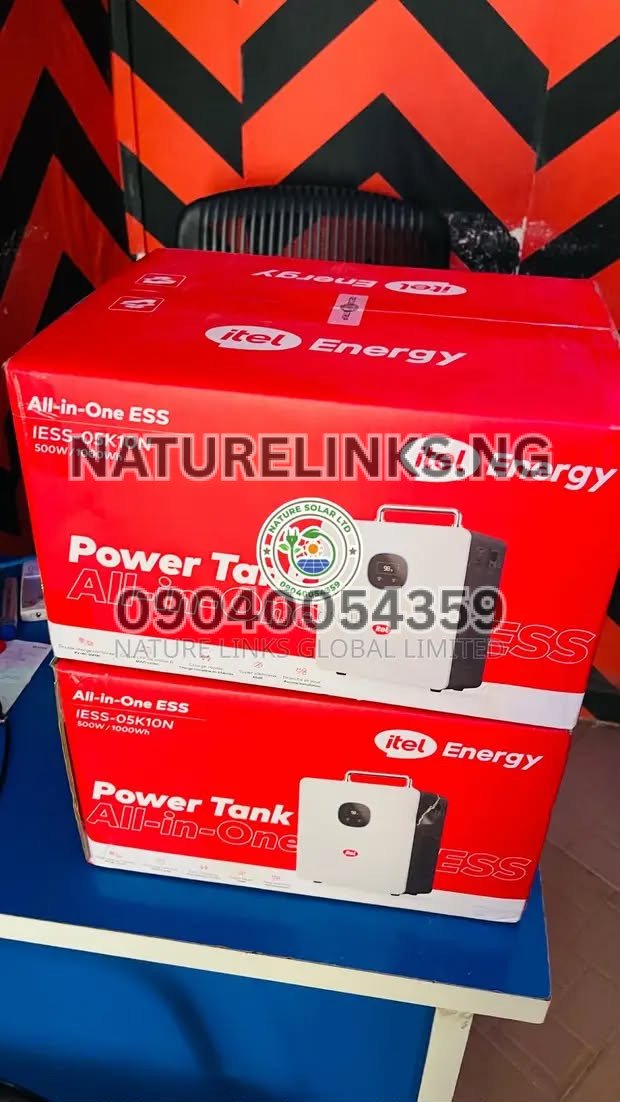
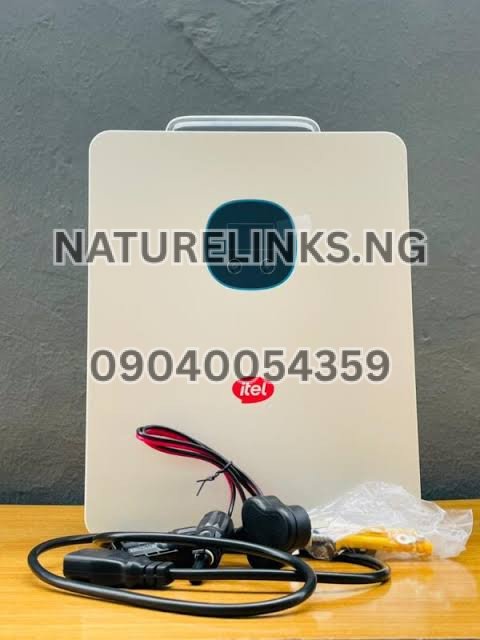
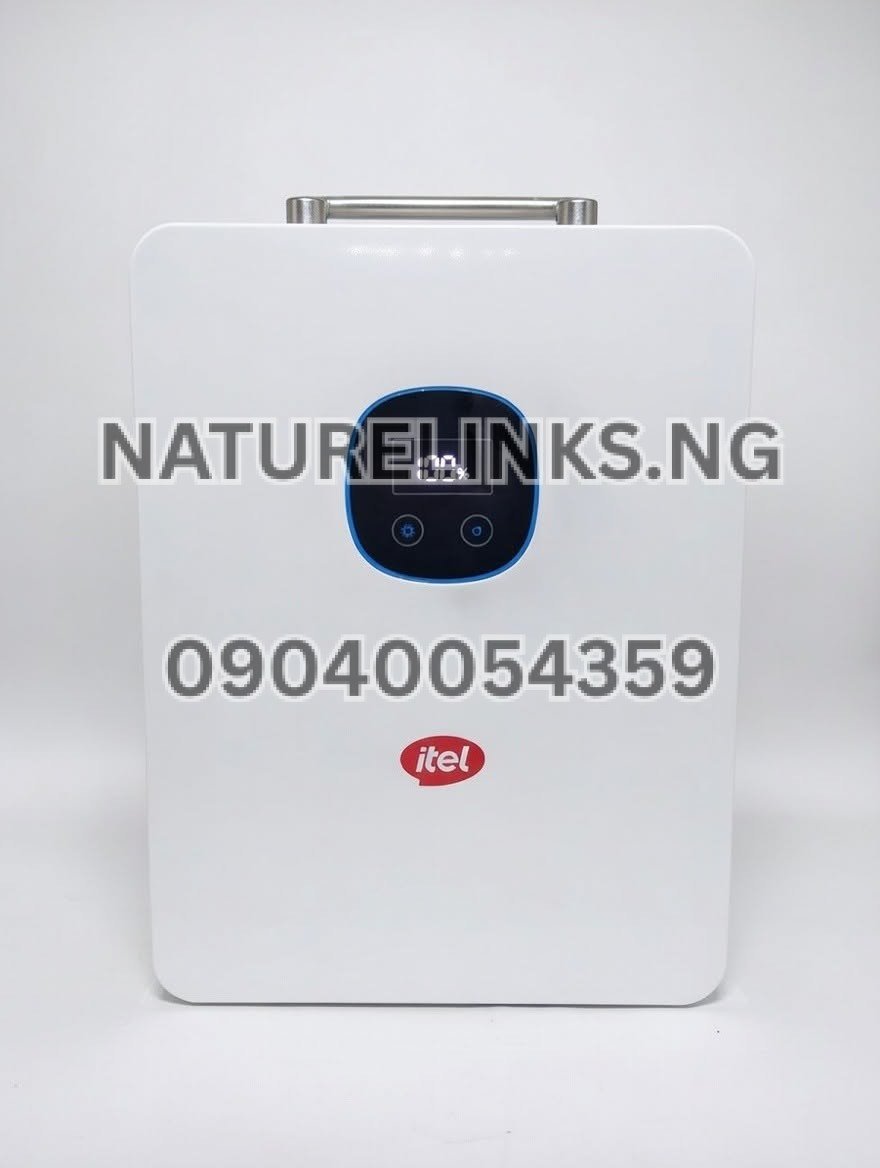
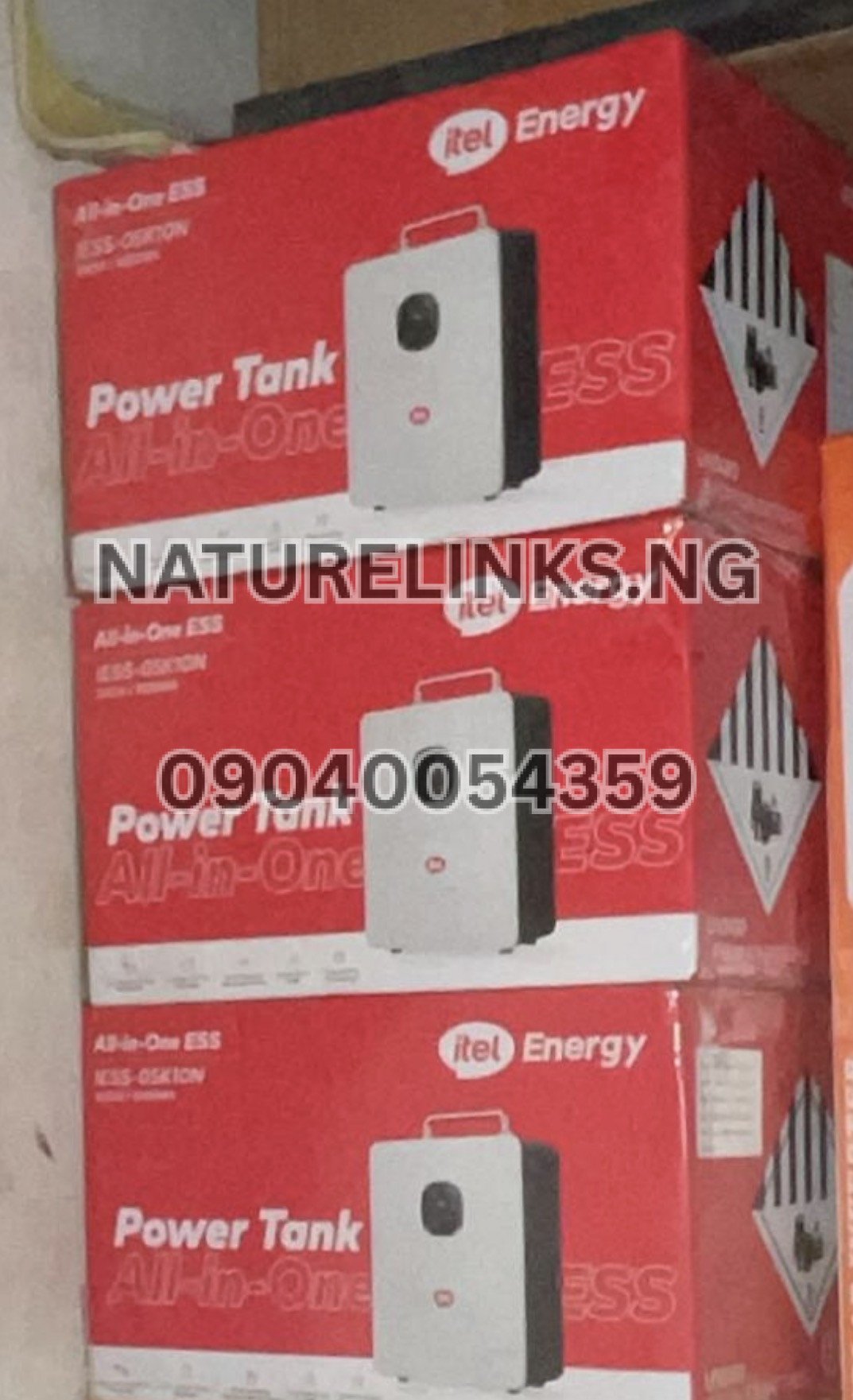
The Best Seller is Nature Solar Global Limited, the accredited distributor in Nigeria, with Nature Links Nigeria Limited [NatureLinks.NG] serving customers looking for genuine Itel Power Tank and solar-power solutions across Nigeria.
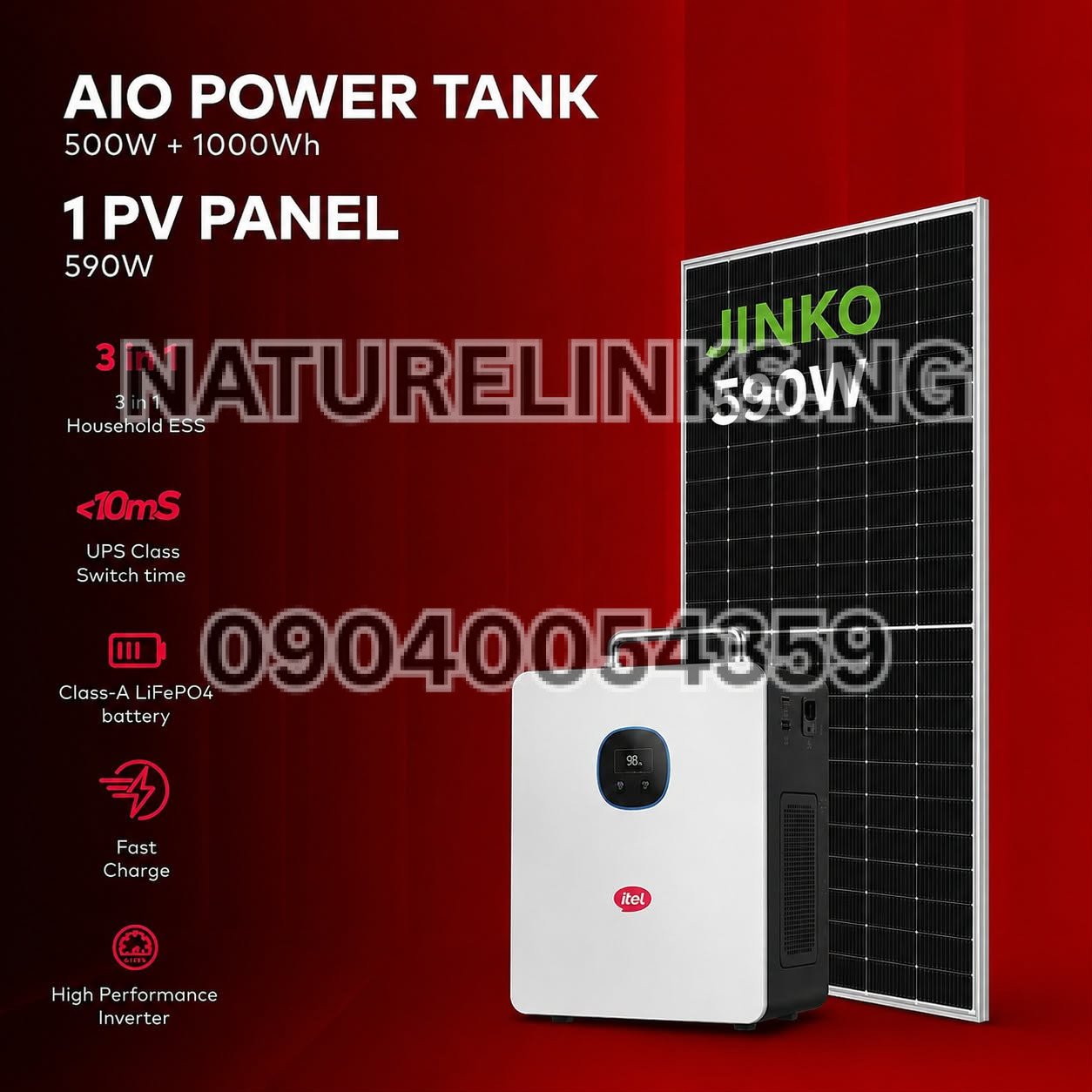
If you are searching for “Can Power Tank Work With Solar Panels?”, the answer is yes for the commonly listed Itel Power Tank 1000Wh/500W configuration. It has an integrated MPPT solar charge controller and supports solar/PV charging. Current published listings for the commonly documented IESS-05K10N configuration indicate up to 400W PV input, although buyers should confirm the exact model and datasheet before connecting a panel.
For Nigerians dealing with unstable electricity supply, combining an Itel Power Tank with compatible solar panels can provide a convenient way to recharge the battery during daylight and use the stored energy later.
Can Power Tank Work With Solar Panels?
Yes. The Itel Power Tank can be charged from solar panels when the panel’s voltage, wattage, connector and electrical characteristics are within the Power Tank’s specified PV-input limits.
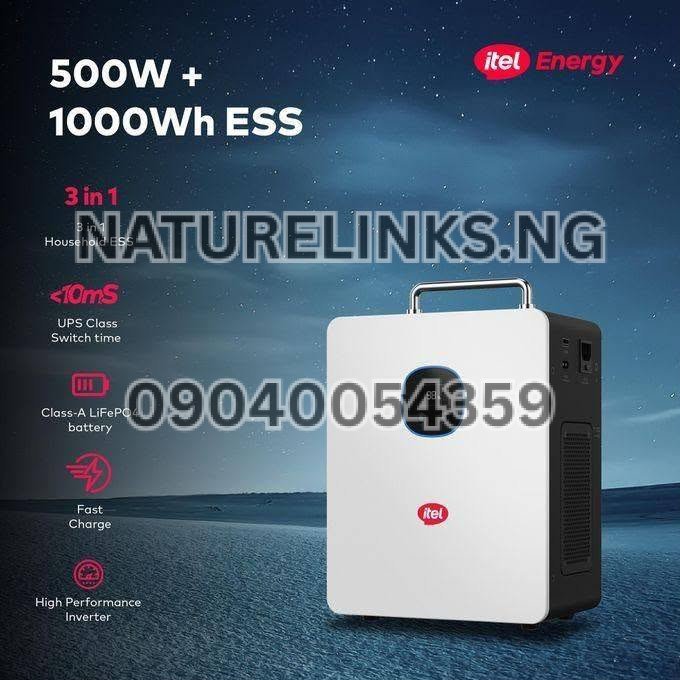
The commonly listed 1,000Wh/1kWh model has:
- 1,000Wh battery capacity
- 500W continuous AC output
- LiFePO4 battery
- Built-in MPPT solar charge controller
- Solar/PV charging
- AC/grid charging
- Up to approximately 400W PV input on the documented configuration
- 230V AC output
- Pure sine-wave inverter
- Battery Management System (BMS)
This means the Power Tank is not dependent only on PHCN/NEPA electricity for recharging.

How Does Itel Power Tank Work With Solar Panels?
The solar panel converts sunlight into DC electricity. The Power Tank’s integrated MPPT controller manages the incoming solar energy and uses it to recharge the internal battery.
The basic process is:
Sunlight → Solar Panel → Solar Charging Cable → Power Tank MPPT Controller → LiFePO4 Battery → Inverter/Outputs → Appliances
The MPPT controller is particularly useful because it manages the solar input so that available solar energy can be transferred efficiently to the battery within the system’s operating limits.
What Size Solar Panel Can Power Tank Use?
For the commonly documented Itel Power Tank 1000Wh/500W configuration, published Nigerian product information specifies up to 400W PV input.
Therefore, a properly matched solar setup can be built around the Power Tank’s solar-input specification.
However, do not choose a solar panel based on wattage alone. The panel’s voltage and the Power Tank’s allowable PV voltage range also matter.
One currently published specification for the commonly listed configuration gives an MPPT voltage range of approximately 11–60V, with maximum PV input of up to 400W. Always verify the specification printed on your particular unit before installation because configurations can differ.
Can I Use a 400W Solar Panel With Itel Power Tank?
A compatible 400W solar panel is within the documented maximum PV-input wattage for the commonly listed configuration.
This can be an attractive option because the panel’s rated output is close to the Power Tank’s stated maximum PV input.
Actual solar charging power will not necessarily remain at 400W. Solar output changes according to:
- Sunlight intensity
- Time of day
- Cloud cover
- Panel orientation
- Temperature
- Dust on the panel
- Cable losses
- Panel efficiency
- Battery state of charge
Consequently, a 400W-rated panel should not be expected to produce exactly 400W throughout the day.
Can I Use a 450W Solar Panel With Power Tank?
This requires caution.
A 450W panel may be physically capable of working with some power stations, but the documented maximum PV input of the commonly listed Itel Power Tank configuration is up to 400W.
Some Nigerian product information recommends 450W panels, but that recommendation conflicts with the stated 400W maximum on the product specifications.
Therefore, do not assume that a 450W panel is automatically appropriate simply because it is advertised for the Power Tank. Confirm the exact model’s manufacturer-approved PV input limits first.
Can I Use a 500W Solar Panel With Itel Power Tank?
A 500W solar panel should not automatically be connected to a configuration whose specified maximum PV input is 400W.
The important distinction is between:
- Solar panel’s rated wattage
- Power Tank’s maximum accepted PV wattage
- Solar panel voltage
- Power Tank’s PV voltage range
A panel with a higher wattage rating can potentially exceed the Power Tank’s permitted solar-input specification.
For that reason, buyers should have the exact model and datasheet checked before using a 500W panel.
What Is the Best Solar Panel for Itel Power Tank?
For the commonly documented 1,000Wh/500W configuration, the key requirement is compatibility, not simply buying the highest-wattage panel available.
A suitable panel should meet the Power Tank’s:
- Maximum PV wattage
- PV voltage range
- Current/input requirements
- Connector requirements
- Solar charging specifications
A properly matched monocrystalline solar panel can be considered where its electrical specifications fall within the Power Tank’s permitted input range.
For Nigerian buyers, it is also important to consider panel quality, warranty, availability of genuine products and the installer or seller’s ability to verify compatibility.
How Many Watts Does Itel Power Tank Solar Charging Support?
The commonly documented IESS-05K10N configuration supports up to approximately 400W of solar/PV input.
This is one of the most important specifications to check when purchasing a solar panel for the Power Tank.
It should not be confused with the Power Tank’s 500W AC inverter output.
Important difference
1,000Wh = battery energy-storage capacity.
500W = rated continuous AC output.
400W = documented maximum PV/solar input.
These three figures describe different parts of the system.
“Can Power Tank Work With Solar Panels?” — Yes, But Check Compatibility
The answer to “Can Power Tank Work With Solar Panels?” is yes, provided that the solar panel is electrically compatible with the Power Tank.
Do not connect an arbitrary solar panel simply because it has an MC4 connector or because its wattage appears suitable.
Before connecting a panel, verify:
- Maximum PV input
- PV voltage range
- Panel open-circuit voltage (Voc)
- Panel operating voltage (Vmp)
- Panel current
- Maximum PV power
- Connector/cable compatibility
If you are uncertain, ask the seller or a qualified solar technician to verify the panel specifications before connection.

How to Connect Itel Power Tank to Solar Panel
A typical solar connection involves:
Solar Panel → Appropriate Solar Cable → Power Tank Solar/PV Input
General steps include:
- Position the solar panel where it receives strong direct sunlight.
- Ensure the panel is securely mounted.
- Check the panel’s electrical specifications.
- Check the Power Tank’s PV-input specifications.
- Use the appropriate solar charging cable.
- Connect the panel to the Power Tank’s solar input as specified by the manufacturer.
- Check the Power Tank display or charging indicator.
- Monitor charging performance.
Do not force connectors together or modify cables without understanding the polarity and electrical requirements.
Does Power Tank Have a Built-In Solar Charge Controller?
Yes. The commonly documented Itel Power Tank configuration includes an integrated MPPT solar charge controller.
This is important because the Power Tank is designed to accept solar charging without requiring buyers to assemble a separate external solar charge controller for the supported PV input.
The built-in MPPT system helps manage the solar energy entering the battery.
Can Power Tank Charge Directly From Solar Panel?
Yes, the supported configuration is designed for direct connection of compatible solar panels to its PV/solar input.
However, “directly” does not mean that every solar panel can be connected without checking specifications.
The panel must fall within the Power Tank’s allowable electrical input parameters.
For safety and correct operation, check the exact model’s manual or datasheet before installation.
How Long Does Solar Take to Charge Itel Power Tank?
Charging time depends on the solar input actually available.
A theoretical calculation can provide an estimate:
Charging time ≈ Battery capacity ÷ Solar charging power
For a 1,000Wh battery receiving a sustained 400W input:
1,000Wh ÷ 400W = 2.5 hours
But this is only a simplified theoretical calculation.
Real-world charging can take longer because solar panels rarely deliver their maximum rated output continuously. Weather, panel orientation, temperature, cable losses, charging efficiency and battery-management behaviour all affect charging time.
A Nigerian product guide estimates approximately 3–4 hours under ideal conditions using a 400W panel, while emphasizing that real conditions vary.
Can Power Tank Charge on Cloudy Days?
Yes, solar panels can still produce electricity under cloudy conditions, but their output is normally reduced compared with strong direct sunlight.
Therefore, an Itel Power Tank may continue charging during periods of reduced sunlight, but:
- Charging may take longer.
- Solar input may fluctuate.
- Heavy cloud can significantly reduce power.
- Rainy-season conditions can affect charging performance.
For Nigerian users, proper panel positioning and keeping panels clean can help maximize available solar generation.
Can Power Tank Charge From Solar and Electricity?
The documented configuration supports both solar/PV charging and AC/grid charging.
This gives users two principal charging options:
Solar charging
Use compatible solar panels during daylight.
AC charging
Use the supplied/appropriate AC charging system from mains electricity.
This flexibility is useful in Nigeria because users can charge from the grid when electricity is available and use solar when sunlight is available.
Do not assume that connecting independent power sources together is permitted unless the product documentation specifically supports simultaneous charging.
Can You Use Power Tank While It Is Charging From Solar?
Published information for the Itel Power Tank describes solar charging and pass-through/UPS-style functionality on supported configurations.
However, the practical result depends on the exact model and connected load.
For example, if the appliances consume 150W while the solar panels are supplying 250W, some of the solar energy can potentially support the load while the remaining energy goes toward charging.
If the connected load is higher than the available solar input, the battery may continue discharging even though the solar panel is connected.
Therefore, solar input does not automatically mean the battery percentage will increase while appliances are running.
Can Solar Panels Power Appliances Directly Through Power Tank?
The Power Tank is primarily an energy-storage system.
Solar energy can enter the Power Tank, charge the battery and support connected loads through its inverter and output ports.
The Power Tank’s commonly documented continuous AC output is 500W.
Therefore, you should calculate your appliance load before connecting multiple devices.
For example:
| Appliance | Example Load |
|---|---|
| LED bulb | 10W |
| Wi-Fi router | 10–20W |
| Laptop | 45–100W |
| LED TV | 50–150W |
| Fan | 40–100W |
| Small combined setup | Depends on actual ratings |
Actual consumption varies by appliance model.
What Can an Itel Power Tank Power With Solar?
A properly charged Power Tank can provide backup electricity for compatible low- and moderate-power electronics.
Common applications include:
- LED lights
- Television
- Laptop
- Wi-Fi router
- Modem
- Rechargeable fan
- Smartphones
- Tablets
- CCTV systems
- POS terminals
- Small office electronics
- Networking equipment
The commonly listed 500W inverter configuration is intended for loads within its rated capacity. High-power appliances such as electric kettles, pressing irons, electric cookers and air conditioners can exceed the rated output and require separate evaluation.
Can Solar Panels Reduce Dependence on NEPA for Power Tank Charging?
Yes. Solar charging can reduce the need to recharge the Power Tank exclusively from grid electricity.
Instead of waiting for electricity to return before recharging, a user can use available sunlight to replenish the battery.
This can be particularly useful for:
- Homes
- Shops
- Offices
- Remote work
- CCTV systems
- Internet equipment
- Small businesses
- Emergency backup
- Locations with unreliable grid supply
The amount of energy generated depends on the solar panel capacity and actual sunlight conditions.
Itel Power Tank 1000Wh Solar Specifications
| Specification | Commonly Documented Configuration |
|---|---|
| Product | Itel Power Tank |
| Battery capacity | 1,000Wh / 1kWh |
| Battery chemistry | LiFePO4 |
| Continuous AC output | 500W |
| Surge output | Up to 1,000W on listed configuration |
| Solar charging | Yes |
| Solar controller | Integrated MPPT |
| Maximum PV input | Up to 400W |
| PV voltage range | Approximately 11–60V on a documented configuration |
| AC charging | Yes |
| AC output | 230V |
| Frequency | 50Hz |
| Inverter | Pure sine wave |
| BMS | Yes |
| Battery cycle rating | Up to approximately 6,000 cycles under stated conditions |
Specifications can vary by model, regional configuration and package, so verify the exact unit before purchase.
Itel Power Tank Solar Panel Compatibility Checklist
Before buying a solar panel, check these five things:
1. Panel wattage
Confirm that the panel does not exceed the Power Tank’s permitted PV power.
2. Voltage
Check the panel’s Voc and operating voltage against the Power Tank’s PV voltage range.
3. Current
Ensure the panel’s current characteristics are compatible.
4. Connector
Confirm that the solar cable and connector are compatible.
5. Exact model
Check the model number printed on your Power Tank and verify its current datasheet.
This is particularly important because product specifications can vary between configurations.

Itel Power Tank Solar Panel Price in Nigeria
The price of a complete solar setup depends on whether you are purchasing:
- Power Tank only
- Solar panel only
- Power Tank + solar panel
- Power Tank + panel + cables
- Complete installation package
Current online Nigerian listings for the commonly advertised 1,000Wh/500W Power Tank show prices around ₦279,000 and above, while packages containing compatible solar panels can cost considerably more. Prices vary with seller, stock, warranty and package contents.
Because solar equipment prices can change, Nigerian buyers should confirm the current price and package contents before making payment.
Where to Buy Genuine Itel Power Tank in Nigeria
For buyers looking for an Itel Power Tank, solar panels and related power solutions in Nigeria, contact:
Best Seller: Nature Links Nigeria Limited [NatureLinks.NG]
Distributor: Nature Solar Global Limited
Accredited Distributor in Nigeria: Nature Solar Global Limited
CEO: Mr. Joseph Chikeleze
Call: 07049528019
WhatsApp: 09040054359
Shop Address:
F1571 Upstairs (F-Line), Alaba International Market, Lagos State 🇳🇬
Before purchasing, ask for the exact Power Tank model, current datasheet, warranty information and compatible solar-panel specifications.
Why Buy an Itel Power Tank With Solar Charging?
An Itel Power Tank combined with compatible solar charging can provide several practical benefits.
Fuel-free operation
Solar charging does not require petrol or diesel.
Quiet backup power
The Power Tank does not operate like an engine-driven generator.
Rechargeable energy storage
Solar energy can be stored in the battery for later use.
Portable design
The all-in-one Power Tank integrates battery, inverter and charging electronics.
Multiple charging options
The commonly listed configuration supports both solar and AC/grid charging.
LiFePO4 battery
The documented configuration uses LiFePO4 battery technology and is rated for up to approximately 6,000 cycles under specified conditions.
“Can Power Tank Work With Solar Panels?” — What Nigerian Buyers Should Know
If you searched “Can Power Tank Work With Solar Panels?”, the key point is that the answer is yes, but solar-panel compatibility must be checked carefully.
For the commonly listed Itel Power Tank 1000Wh/500W, the documented solar input is up to approximately 400W, with an integrated MPPT controller.
Do not confuse the 500W inverter rating with the solar-input rating. The 500W figure describes how much AC load the inverter can continuously supply, while the 400W figure describes the documented maximum PV input.
Frequently Asked Questions
1. Can Itel Power Tank work with solar panels?
Yes. The commonly documented Itel Power Tank 1000Wh/500W configuration supports solar charging through its integrated MPPT controller.
2. How many watts of solar panel can Itel Power Tank use?
The commonly documented configuration supports up to approximately 400W of PV input. Always verify the exact model before purchasing a panel.
3. Can I use a 400W solar panel with Itel Power Tank?
Yes, a compatible 400W panel corresponds with the documented maximum PV-input rating of the commonly listed configuration. Voltage and current specifications must also be compatible.
4. Can I use a 450W solar panel?
Do not assume that a 450W panel is suitable. The commonly documented configuration specifies up to 400W PV input, so the exact model’s manufacturer specifications should be checked first.
5. Can I use a 500W solar panel?
A 500W panel should not automatically be connected to a Power Tank specified for a maximum 400W PV input. Verify the model’s PV specifications before using one.
6. Does Itel Power Tank have MPPT?
Yes. The commonly documented configuration includes an integrated MPPT solar charge controller.
7. How long does a 400W solar panel take to charge Power Tank?
Under ideal conditions, a 400W panel can theoretically supply 400Wh per hour. A simple 1,000Wh ÷ 400W calculation gives 2.5 hours, but actual charging normally takes longer because solar output varies and charging involves system losses. A Nigerian product guide gives roughly 3–4 hours under ideal conditions.
8. Can Power Tank charge when there is no NEPA electricity?
Yes, provided compatible solar energy is available. Solar charging allows the Power Tank to recharge without relying exclusively on grid electricity.
9. Can I use appliances while Power Tank is charging from solar?
Supported configurations can provide pass-through/UPS-style operation, but the result depends on the exact model and load. If appliance consumption exceeds available solar input, the battery can still discharge while charging from solar.
10. Where can I buy Itel Power Tank and solar panels in Nigeria?
Buyers can contact Nature Links Nigeria Limited / Nature Solar Global Limited for availability, current pricing, genuine-product information and compatible solar-panel options.
Call: 07049528019
WhatsApp: 09040054359
Address: F1571 Upstairs (F-Line), Alaba International Market, Lagos State 🇳🇬
SEO Meta Description
Can Power Tank work with solar panels? Learn about Itel Power Tank solar charging, 400W PV input, MPPT, compatible panels, charging time, specifications, and where to buy in Nigeria.
Conclusion
Can Power Tank Work With Solar Panels? Yes. The commonly documented Itel Power Tank 1000Wh/500W configuration is designed to support solar charging and includes an integrated MPPT solar charge controller, with published specifications indicating up to approximately 400W PV input.
For the best result, choose a solar panel based not only on wattage but also on voltage, current, connector and the exact Power Tank model’s PV-input limits. A properly matched solar panel can allow Nigerian households, offices, shops and small businesses to recharge their Power Tank from sunlight and reduce dependence on grid electricity.
For genuine Itel Power Tank products, compatible solar panels, current pricing and availability in Nigeria, contact Nature Solar Global Limited / Nature Links Nigeria Limited on 07049528019 or WhatsApp 09040054359, at F1571 Upstairs (F-Line), Alaba International Market, Lagos State 🇳🇬.