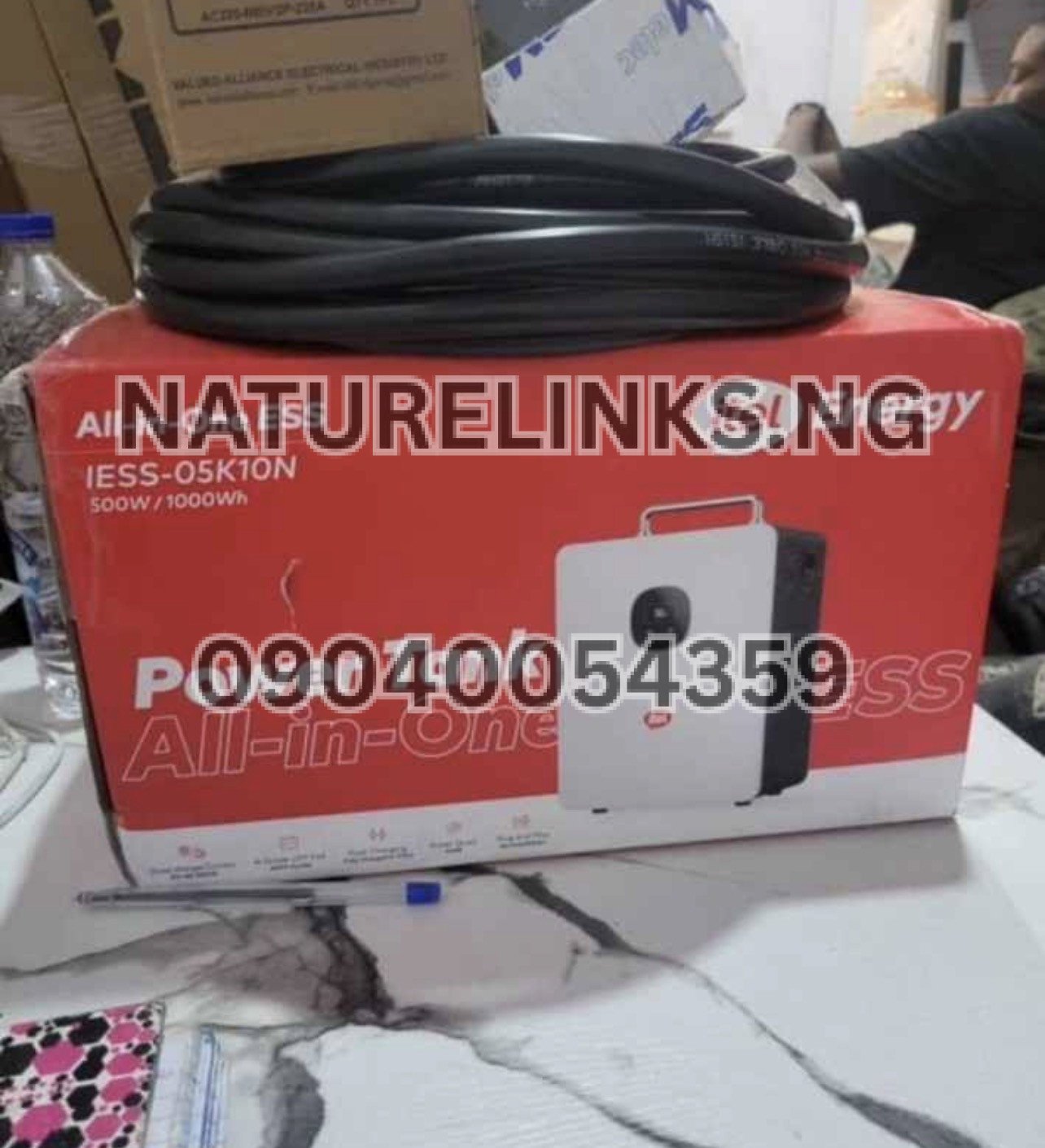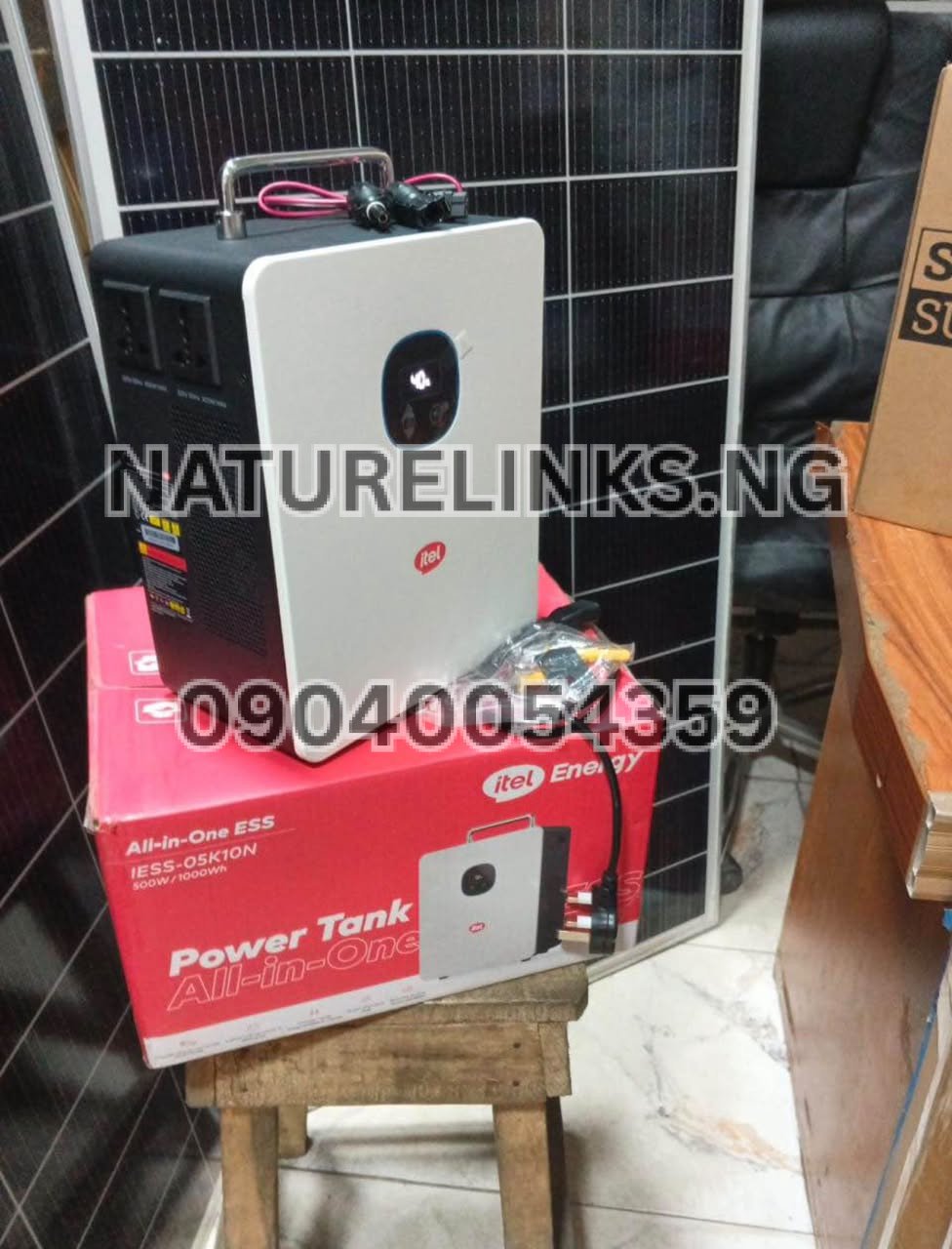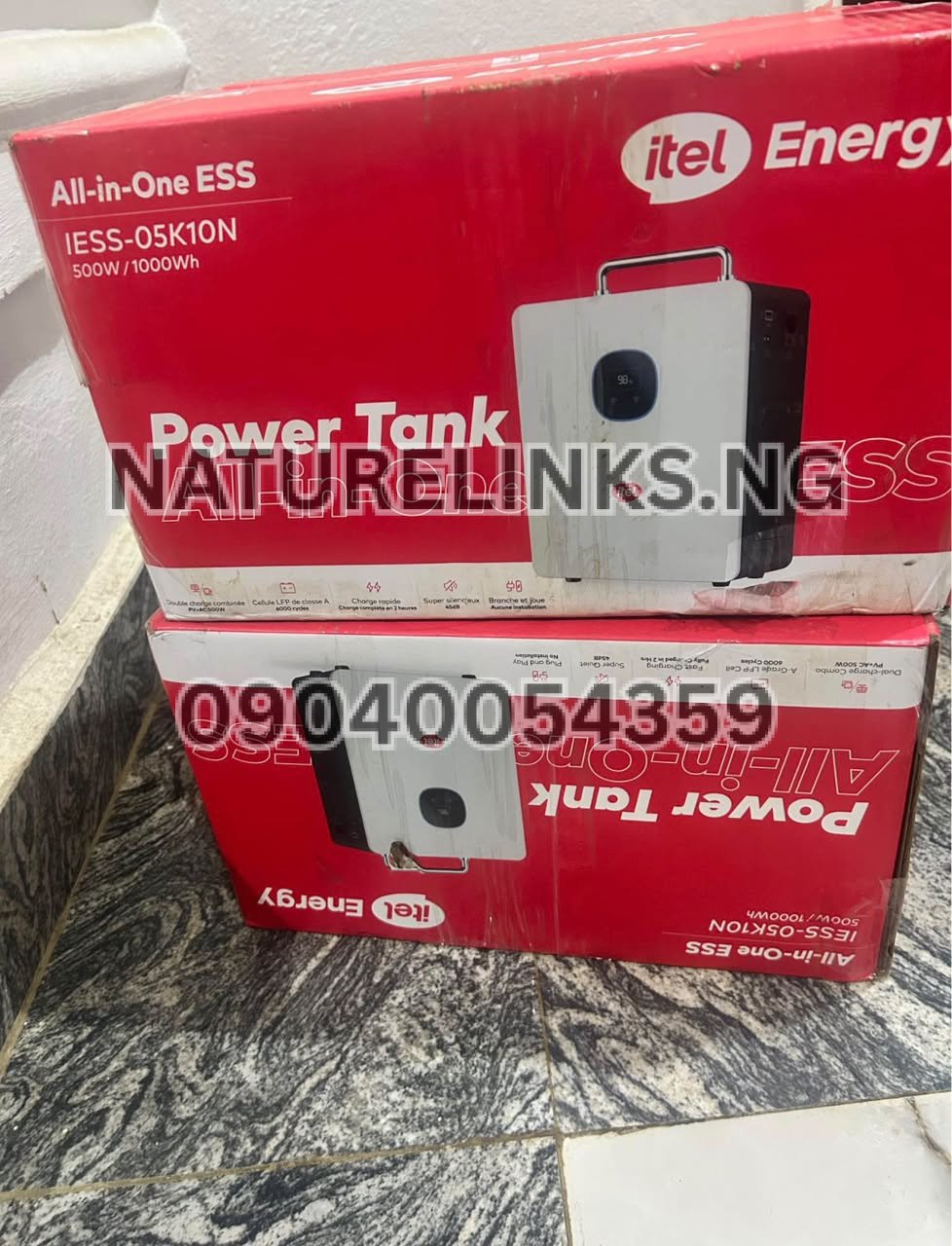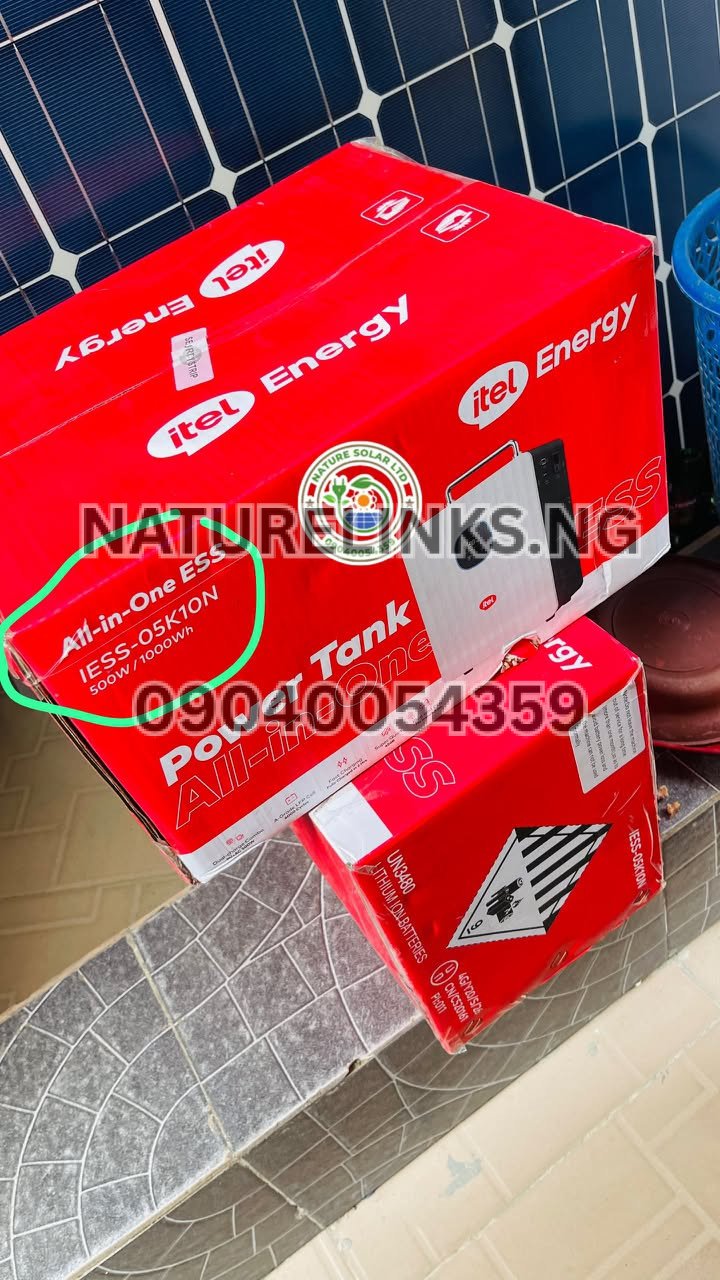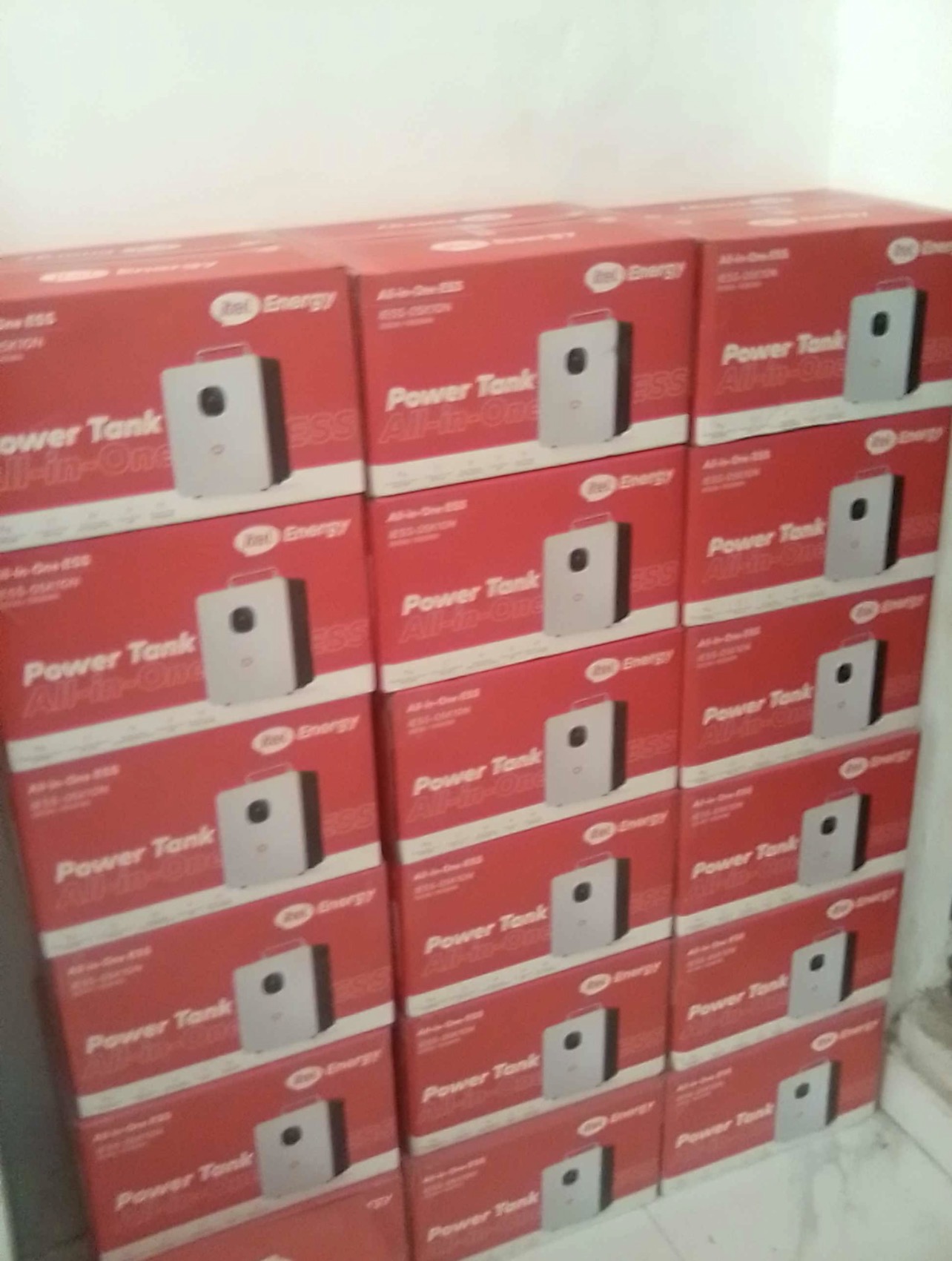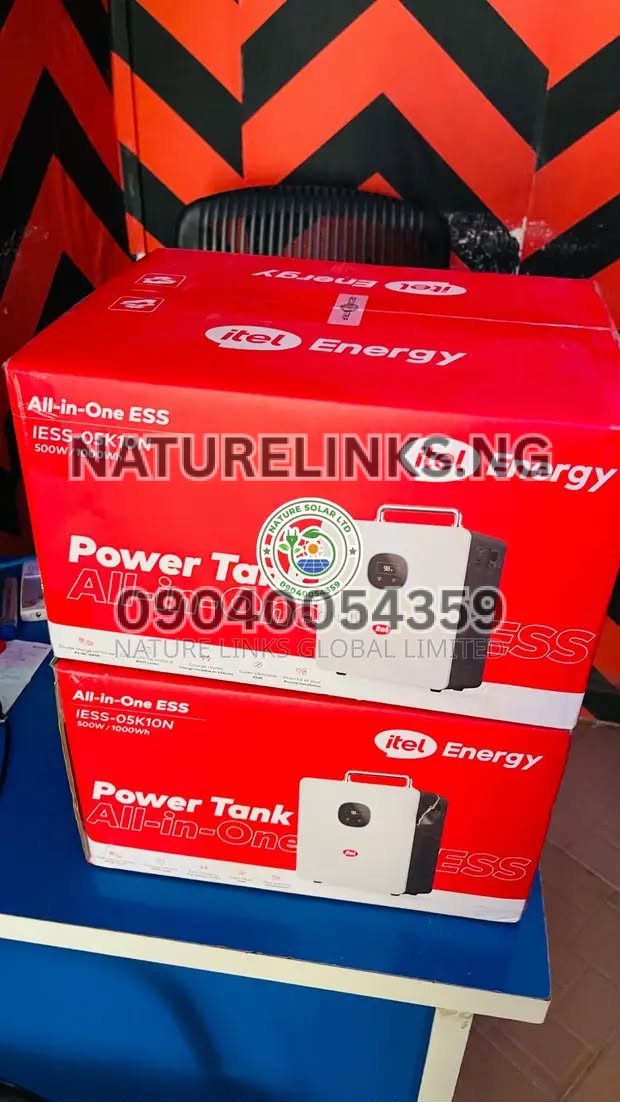
The Best Seller is Nature Solar Global Limited, the accredited distributor in Nigeria, supplying genuine Itel Power Tank products to Nigerian customers. Nature Links Nigeria Limited [NatureLinks.NG] works with customers looking for reliable portable power stations, solar generators and backup electricity solutions across Nigeria.
If you are searching for “How Long Does Itel Power Tank Take to Charge With a solar panel?”, the answer depends mainly on the solar panel wattage, available sunlight, the battery’s current charge level and the exact Itel Power Tank model. For the commonly listed Itel Power Tank 1000Wh/1kWh with 500W inverter and up to 400W solar input, published information indicates approximately 2.5 to 3 hours under optimal sunlight when using around 400W of effective solar input.
This makes the Itel Power Tank an attractive option for Nigerians who want to reduce dependence on petrol generators and recharge a portable power station using solar energy. However, the quoted charging time should not be interpreted as a guaranteed time in every Nigerian location or weather condition.
How Long Does Itel Power Tank Take to Charge With a Solar Panel?
For the commonly listed 1,000Wh/1kWh Itel Power Tank, solar charging can take approximately 2.5–3 hours under favourable conditions when the system receives close to its maximum 400W solar input.
The actual charging time can be longer if:
- The solar panel produces less than its rated wattage.
- There is heavy cloud cover.
- The panels are shaded.
- The panels are dirty.
- The sun is low in the sky.
- The solar panel orientation is poor.
- The battery is extremely low.
- The system automatically reduces charging power because of temperature or protection controls.
- The connected solar panel does not meet the Power Tank’s input requirements.
Therefore, 2.5–3 hours should be regarded as an optimal-condition estimate rather than a fixed Nigerian charging time.
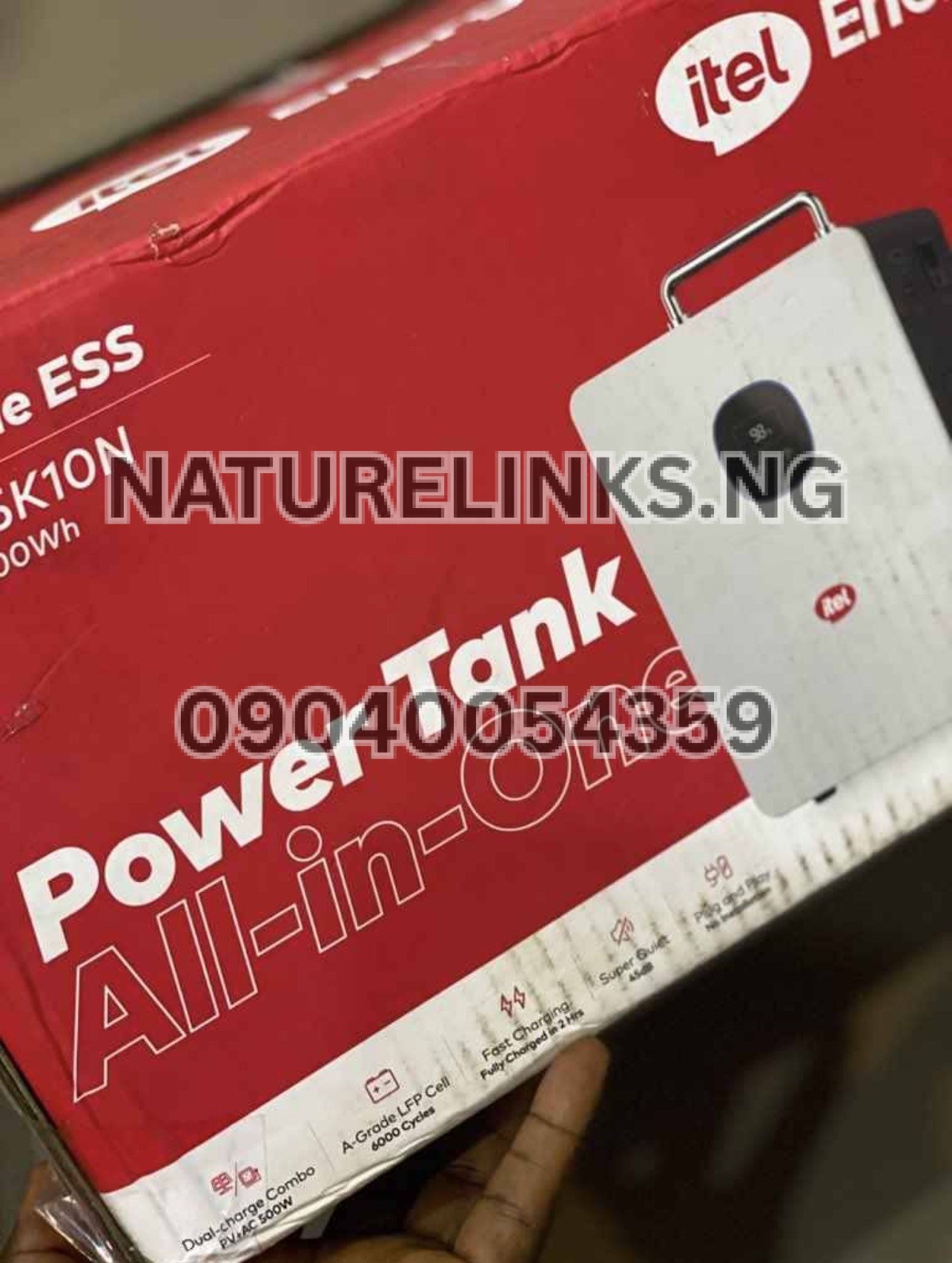
Can Itel Power Tank Be Charged With Solar Panels?
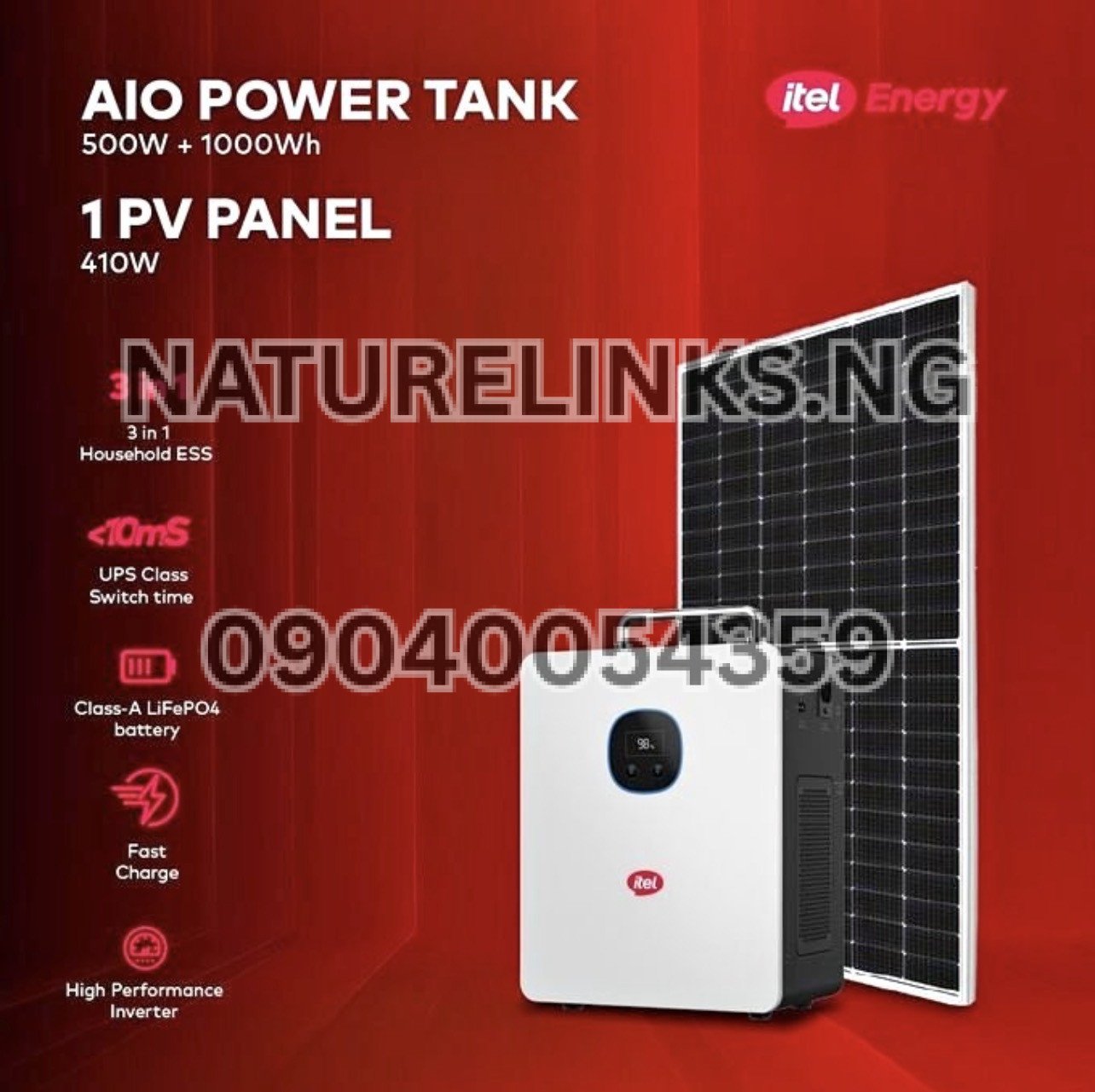
Yes. The commonly listed Itel Power Tank configuration supports solar charging through its integrated MPPT solar charge controller. The documented configuration supports up to 400W of solar/PV input.
This means users can connect compatible solar panels to the Power Tank and use sunlight to replenish the internal lithium battery.
The integrated MPPT controller is important because it helps the system extract usable power from the solar panels while operating within the Power Tank’s charging requirements.
How Many Watts of Solar Panel Does Itel Power Tank Need?
The commonly documented configuration supports up to 400W of solar input.
For buyers, this means a solar setup approaching the Power Tank’s maximum supported PV input can generally provide faster charging than a smaller panel, provided the voltage and other electrical specifications are compatible.
For example:
| Solar Input | General Charging Expectation |
|---|---|
| 100W | Much slower charging |
| 200W | Faster than 100W |
| 300W | Faster and more practical |
| 400W | Near the documented maximum PV input |
| Above 400W | Do not exceed the model’s specified PV limit |
The 400W maximum is particularly important. Connecting a solar array simply because it has a higher wattage is not automatically better. The panel configuration must remain within the Power Tank’s specified PV voltage, current and power limits.
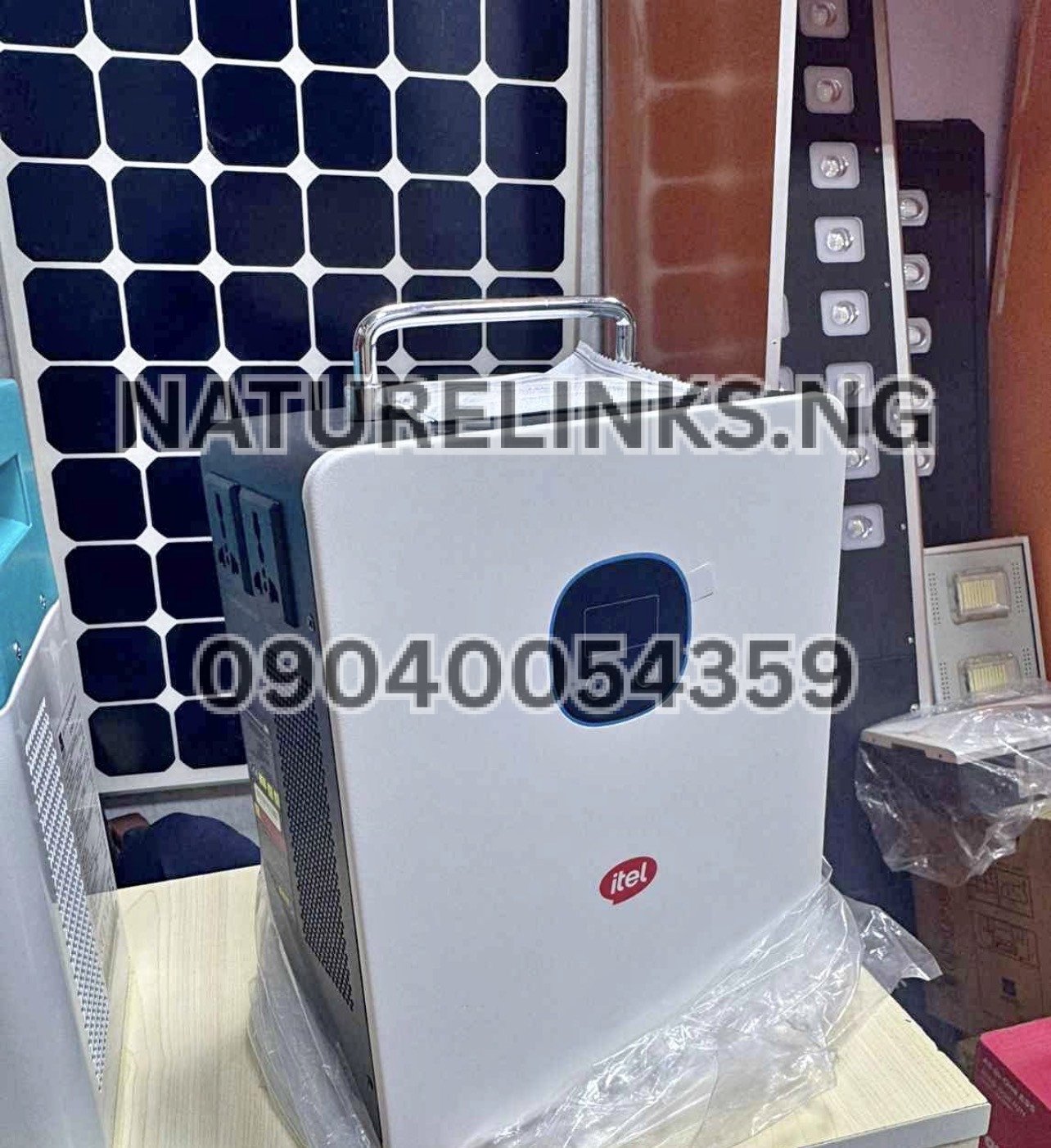
How Long Does a 400W Solar Panel Take to Charge Itel Power Tank?
A 400W solar input can theoretically provide approximately 400Wh of energy in one hour under ideal conditions. A 1,000Wh battery therefore cannot simply be calculated as exactly 1,000Wh ÷ 400W in every real-world situation.
The published Itel Power Tank information gives approximately 2.5–3 hours with 400W solar panels under optimal sunlight.
Real-world charging can take longer because solar panels rarely maintain their maximum rated output continuously.
For example, a panel rated at 400W may produce less than 400W because of:
- Cloudy weather
- Haze
- Heat
- Dust
- Panel angle
- Early morning or late afternoon sunlight
- Shading
- Cable losses
- Panel efficiency
- Solar-controller operating conditions
This is especially relevant in Nigeria, where sunlight intensity and weather conditions vary between regions and seasons.
Can a 300W Solar Panel Charge Itel Power Tank?
Yes, provided the solar panel configuration meets the Power Tank’s required PV input specifications.
However, a 300W solar input is below the commonly documented 400W maximum. Consequently, charging will generally take longer than with an effective 400W input under comparable conditions.
A simplified theoretical calculation would be:
1,000Wh ÷ 300W ≈ 3.33 hours
But this is not a guaranteed real-world charging time because solar generation varies and charging systems have losses and operating limits.
In practical Nigerian conditions, users should expect the actual charging period to vary depending on how much power the panel is producing throughout the day.
Can a 200W Solar Panel Charge Itel Power Tank?
A compatible 200W solar setup can provide solar charging, but it will generally take considerably longer to recharge a 1,000Wh battery than a 400W setup.
A simple theoretical calculation is:
1,000Wh ÷ 200W = 5 hours
This does not mean the Power Tank will always reach 100% in exactly five hours.
The calculation assumes continuous 200W energy production, which is not normally available throughout an entire solar day. Actual charging can therefore take longer.
Can a 100W Solar Panel Charge Itel Power Tank?
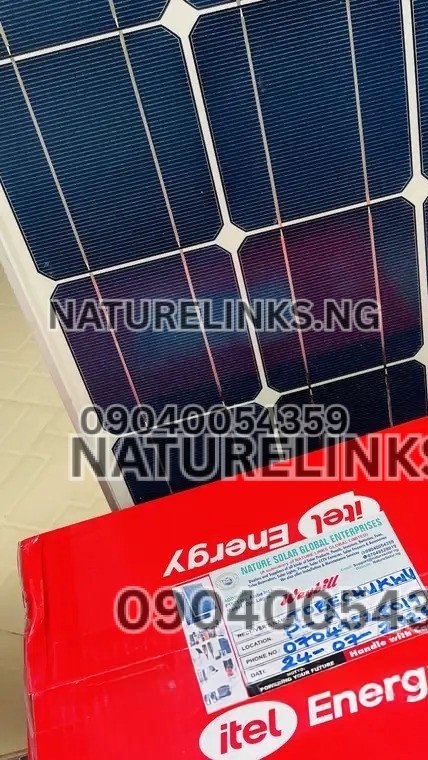
A compatible 100W solar panel can provide a much smaller amount of charging power than the documented 400W maximum.
Theoretical calculation:
1,000Wh ÷ 100W = 10 hours
Again, this is only a mathematical illustration. Because solar panels do not normally produce their maximum rated output for ten continuous hours, the practical charging time can be longer.
For buyers who want faster solar recharging, selecting a compatible solar configuration closer to the Power Tank’s permitted PV input can be more appropriate.
What Is the Fastest Way to Charge Itel Power Tank With Solar?
The fastest solar charging approach is generally to use a compatible solar configuration capable of delivering close to the Power Tank’s permitted maximum PV input.
For the commonly listed configuration, that maximum is up to 400W PV input.
For best results:
- Use compatible solar panels.
- Stay within the Power Tank’s PV voltage and current limits.
- Use an effective panel configuration capable of approaching the permitted input.
- Place panels in strong, unobstructed sunlight.
- Keep panels clean.
- Avoid shading.
- Position panels appropriately toward the sun.
- Use suitable cables and connectors.
- Monitor the Power Tank’s charging display.
- Avoid exceeding the manufacturer’s specified solar input.
Does Solar Panel Wattage Affect Itel Power Tank Charging Time?
Yes. Solar panel wattage is one of the most important factors affecting charging speed.
Generally, when other conditions are equal:
Higher usable solar input = faster charging.
For a 1,000Wh Power Tank:
- 100W solar input → slower charging
- 200W solar input → faster
- 300W solar input → faster still
- 400W solar input → closest to the documented maximum
However, panel wattage is not the only factor.
A 400W panel in poor sunlight may produce less usable energy than expected, while a smaller panel under excellent conditions can perform efficiently relative to its rating.
Does Weather Affect Itel Power Tank Solar Charging?
Yes.
Weather can significantly influence solar charging speed.
On a clear sunny day, compatible solar panels can produce substantially more power than on a heavily overcast day. Cloud cover, rain, haze and dust can reduce solar generation.
Therefore, someone asking “How Long Does Itel Power Tank Take to Charge With a Solar Panel?” should consider the weather conditions at the location where the Power Tank will be used.
This is particularly important in Nigeria because solar conditions can vary significantly between locations and throughout the year.

Does the Time of Day Affect Charging?
Yes.
Solar panels generally produce different amounts of power throughout the day.
Early morning and late afternoon usually provide less solar energy than periods when the sun is stronger and the panels are positioned favourably.
Consequently, charging a Power Tank for three hours around peak sunlight can produce a different result from charging for three hours when the sun is weak.
Does Panel Orientation Affect Charging Speed?
Yes.
Solar panels should be positioned to receive strong, unobstructed sunlight.
Poor orientation can reduce the amount of energy reaching the solar cells and consequently increase the time needed to charge the Power Tank.
For Nigerians installing a temporary portable solar setup, repositioning the panel during use may sometimes improve energy collection, provided the installation remains safe and stable.
Does Heat Affect Solar Charging?
Temperature can also affect solar-panel performance.
Solar panels are designed to operate outdoors, but excessive heat can influence their electrical output. In addition, the Power Tank’s own protection and temperature-management systems can influence charging behaviour.
The best approach is to keep the Power Tank and its solar equipment within the operating conditions specified by the manufacturer.
Can Itel Power Tank Charge While Using Solar Power?
The Power Tank is designed as an energy-storage system with solar and AC/grid charging capabilities. However, the exact behaviour while simultaneously charging and powering loads can depend on the specific model and operating conditions.
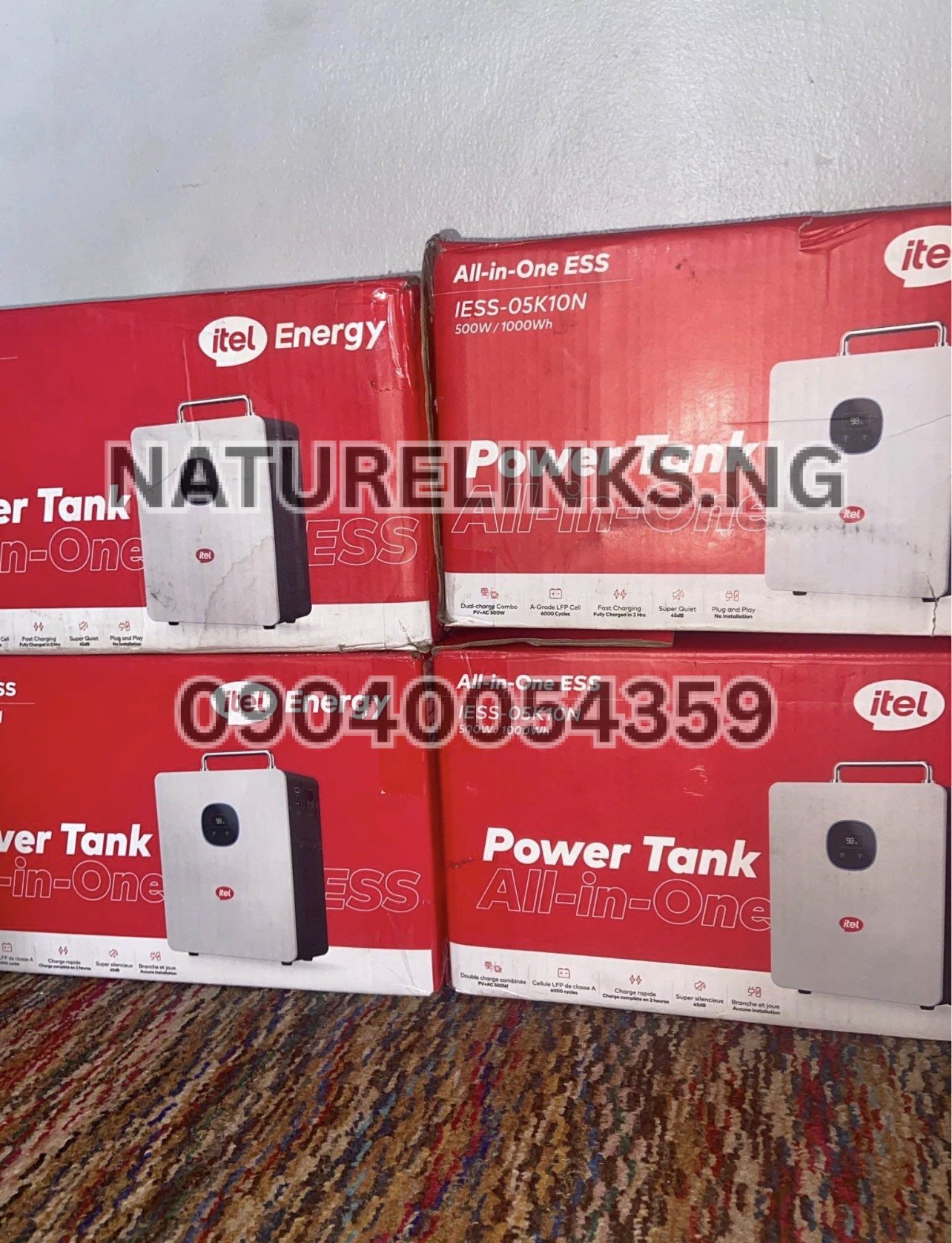
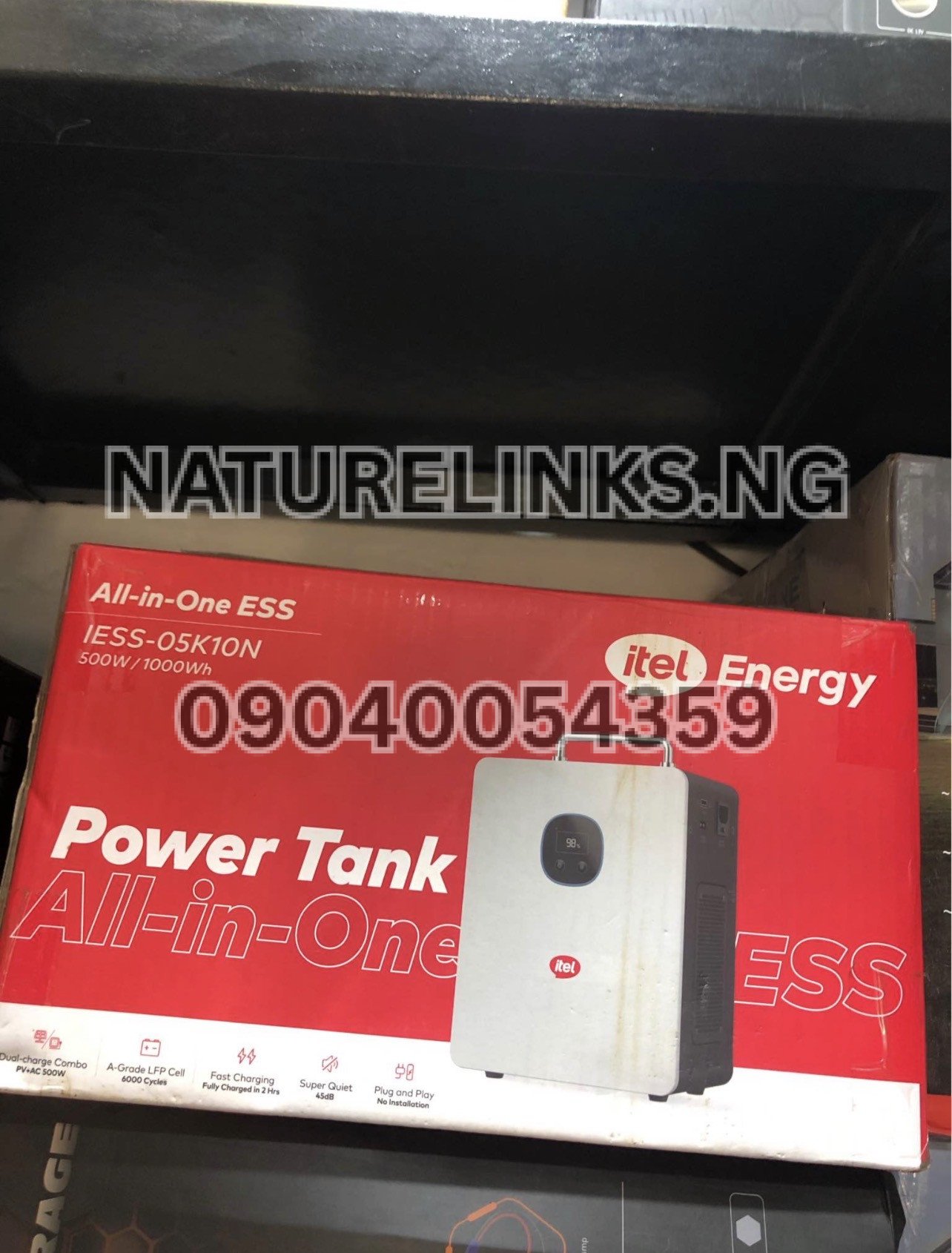
The commonly listed configuration includes a 1,000Wh LiFePO4 battery, 500W pure sine-wave inverter and integrated MPPT solar controller.
Users should check the manual and model-specific specifications before relying on simultaneous charging and high-power appliance use.
What Battery Does Itel Power Tank Use?
The commonly listed Itel Power Tank configuration uses a 1,000Wh / 1kWh LiFePO4 lithium battery.
LiFePO4 is widely used in energy-storage systems because it is designed for repeated charge and discharge cycles.
Published specifications for the listed configuration indicate a cycle rating of approximately 6,000 cycles under specified conditions.
Actual battery life depends on usage, temperature, charging conditions, discharge depth and other operating factors.
What Is the Difference Between 1000Wh and 500W?
This is an important distinction when buying an Itel Power Tank.
1,000Wh refers to the battery’s energy-storage capacity.
500W refers to the continuous AC output rating of the commonly listed inverter.
In simple terms:
- Wh = stored energy
- W = power being delivered or consumed
Therefore, a 1,000Wh battery does not mean the Power Tank can continuously operate a 1,000W appliance.
The commonly listed model has a 500W continuous AC output, with some published configurations listing higher surge capability.
Can Itel Power Tank Power a TV While Charging With Solar?
The Power Tank can be used to provide backup power for compatible electronics, including TVs, laptops, routers, lights and fans, provided the total connected load stays within the system’s output limits.
The commonly listed model has a 500W continuous AC output.
If a TV consumes 100W, for example, it is well below the 500W continuous rating. However, the actual energy available for appliances depends on battery state, inverter efficiency and whether solar energy is simultaneously replenishing the battery.
Is Itel Power Tank Good for Nigerian Homes?
The Itel Power Tank is designed as a portable energy-storage and backup-power solution. The commonly listed 1,000Wh/500W configuration can be used for devices such as:
- Television
- Laptop
- Wi-Fi router
- Modem
- LED lights
- Rechargeable fans
- Phones
- Tablets
- CCTV equipment
- Small office electronics
- Networking equipment
Its 500W continuous output means buyers should calculate appliance loads before purchasing.
For heavy appliances such as electric kettles, pressing irons, electric cookers and large air conditioners, buyers should check the appliance’s starting and running wattage and compare them with the Power Tank’s output rating.
Itel Power Tank Solar Charging Time in Nigeria
For Nigerian buyers, a practical guide is:
| Solar Input | Theoretical Minimum for 1,000Wh* | Practical Expectation |
|---|---|---|
| 100W | 10 hours | Usually longer |
| 200W | 5 hours | Usually longer |
| 300W | 3.33 hours | Usually longer |
| 400W | 2.5 hours mathematically | About 2.5–3 hours under optimal conditions according to published information |
*Theoretical calculations do not account for charging losses, changing solar intensity, temperature, panel performance or other system limitations.
The manufacturer’s published information specifically states that pure solar charging with 400W panels can take roughly 2.5–3 hours under optimal sunlight.
Why Your Itel Power Tank May Take Longer to Charge
If your Power Tank takes more than the expected time, this does not necessarily indicate a fault.
Possible reasons include:
1. Weak Sunlight
Clouds, haze and rain reduce solar output.
2. Panel Shading
Even partial shading can reduce the effective output of a solar panel.
3. Incorrect Panel Position
Poor orientation can reduce the energy captured.
4. Dirty Panels
Dust and dirt can reduce solar-panel performance.
5. Smaller Solar Array
A 100W or 200W panel will generally take longer than a compatible 400W configuration.
6. Cable Losses
Poor-quality or excessively long cables can contribute to power losses.
7. Battery State
Charging behaviour can change as the battery approaches full capacity.
8. Temperature
Very high temperatures can affect both solar-panel output and equipment operating conditions.
9. Incorrect Solar Specifications
A panel may have a suitable wattage but still be unsuitable if its voltage or current falls outside the Power Tank’s permitted PV range.
How to Know If Your Solar Panel Is Compatible
Before purchasing or connecting a solar panel, check:
- Solar panel wattage
- Open-circuit voltage
- Operating voltage
- Operating current
- Maximum PV voltage supported
- Maximum PV current supported
- Maximum PV wattage
- Connector type
- Cable requirements
- Itel Power Tank model number
The documented configuration supports up to 400W PV input, but the exact voltage/current limits should be checked against the particular model’s documentation before connection.
Itel Power Tank Solar Panel Compatibility
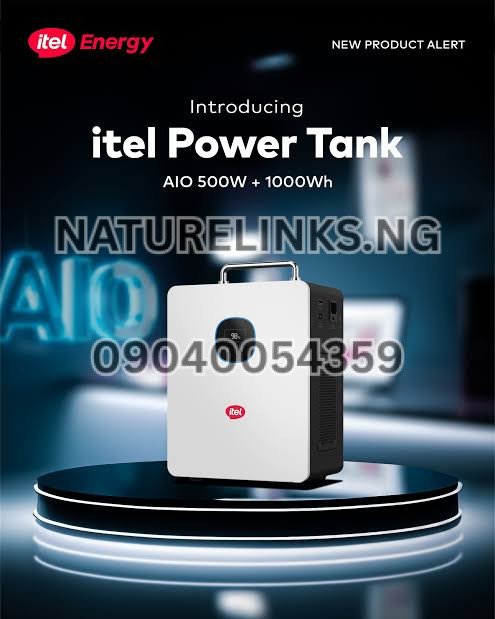
The commonly listed Power Tank configuration has an integrated MPPT controller and supports solar charging.
The solar panel must still be electrically compatible.
Do not assume that every 400W solar panel can automatically be connected simply because the Power Tank accepts up to 400W.
The voltage and current specifications matter just as much as wattage.

Itel Power Tank 1000Wh Solar Charging Benefits
Using solar energy to recharge the Power Tank can offer several benefits to Nigerian households and businesses.
Reduced Dependence on Petrol
Solar charging can reduce the need to run a petrol generator every time the Power Tank needs energy.
Quiet Operation
The Power Tank does not require an internal combustion engine during normal battery operation.
Renewable Energy
Solar energy can be collected during daylight and stored for later use.
Portable Backup
The Power Tank combines energy storage, inverter and charging technology into a portable system.
Useful for Electronics
The 500W pure sine-wave inverter on the commonly listed configuration can support many electronic devices within its rating.
Itel Power Tank 1000Wh Key Features
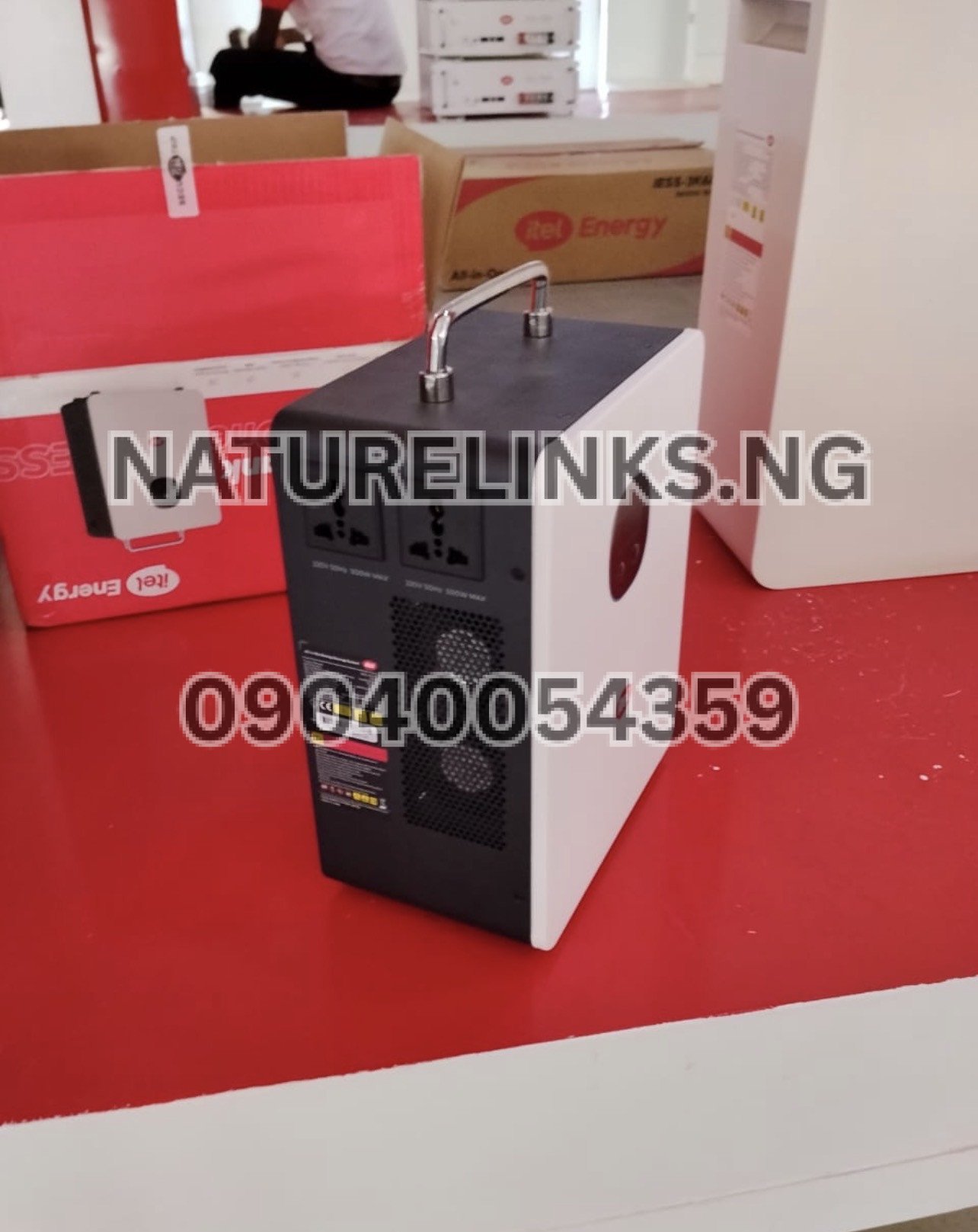
The commonly listed configuration includes:
- 1,000Wh / 1kWh battery
- LiFePO4 lithium battery
- 500W continuous inverter output
- Pure sine-wave AC output
- Up to 400W solar/PV input
- Integrated MPPT solar controller
- AC/grid charging
- Solar charging
- Battery Management System
- Digital battery/status display
- USB/DC outputs depending on configuration
- Portable all-in-one construction
- Overload protection
- Short-circuit protection
- Over-temperature protection
- Over-voltage protection
- UPS functionality on supported configurations
These specifications can vary by regional version, so buyers should confirm the exact model and supplied datasheet before purchasing.
Itel Power Tank Price in Nigeria
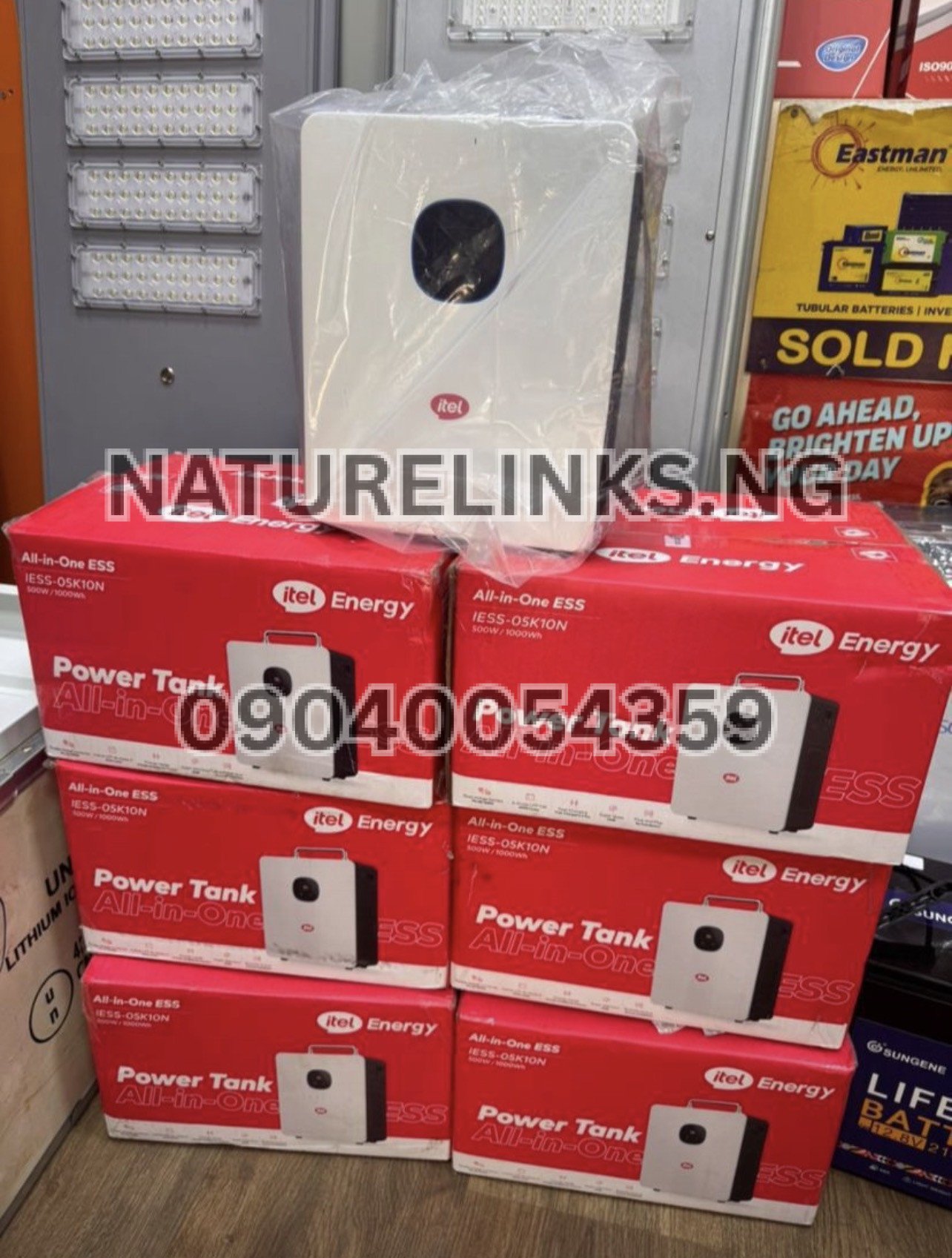
The price of an Itel Power Tank in Nigeria can vary according to the seller, model, package, solar panel inclusion, warranty, availability and market conditions.
Current Nigerian listings for the commonly advertised 1,000Wh/500W configuration show prices around the high-₦200,000s and upward, while packages containing solar panels can cost more. One current Nigerian listing advertises ₦279,000 for a unit, while another listing shows a 500W/1,000Wh unit at ₦295,000.
Because prices can change, buyers should confirm the latest price and package contents before making payment.
Where to Buy Genuine Itel Power Tank in Nigeria
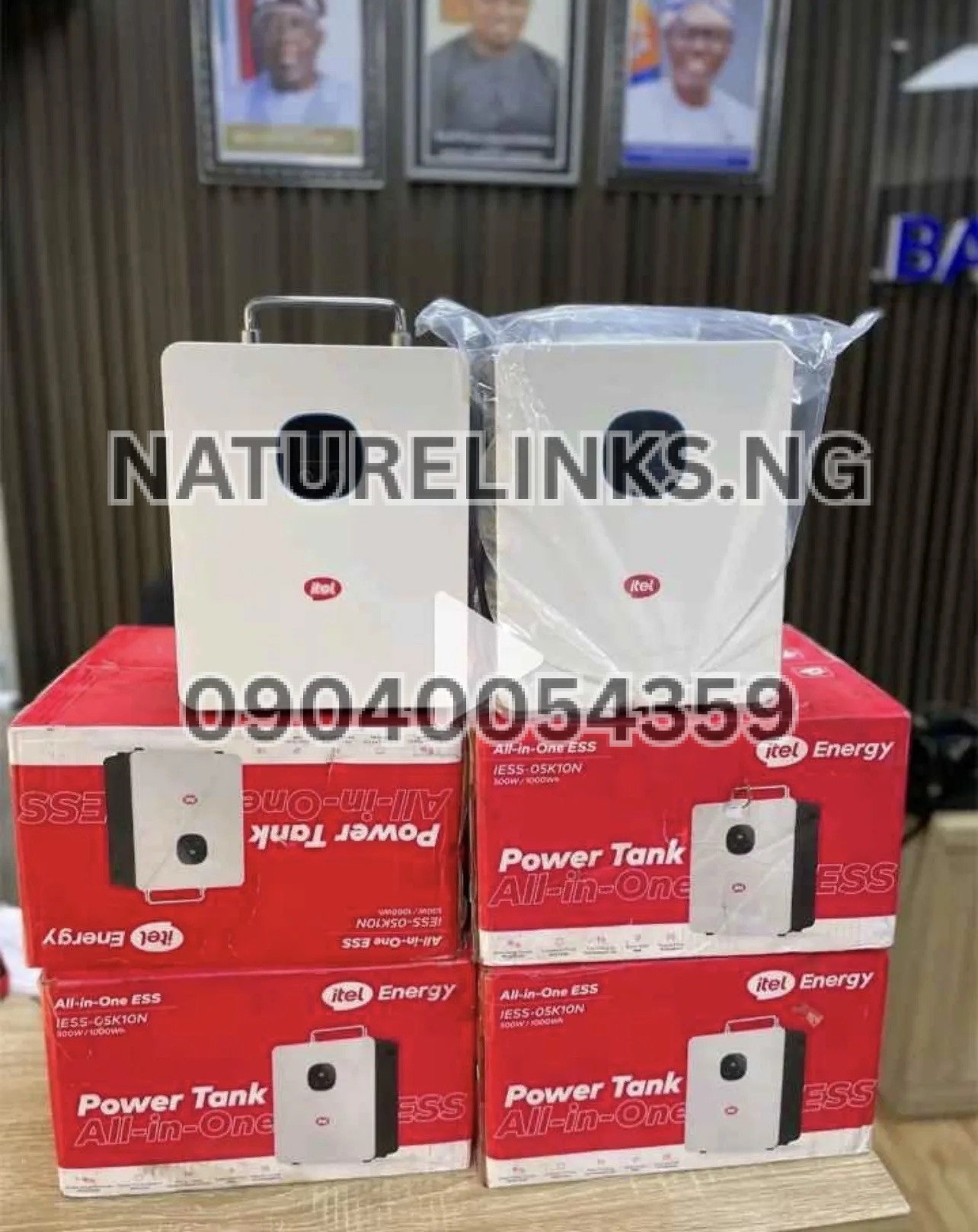
For customers looking for a genuine Itel Power Tank, Nature Links Nigeria Limited [NatureLinks.NG] provides product supply and customer assistance through its listed Nigerian distributor network.
The Best Seller: Nature Solar Global Limited
Distributor: Nature Solar Global Limited
CEO: Mr. Joseph Chikeleze
Call: 07049528019
WhatsApp: 09040054359
Shop Address: F1571 Upstairs (F-Line), Alaba International Market, Lagos State 🇳🇬
Customers should confirm the exact model, battery capacity, solar-input specification, warranty and accessories before purchasing.
Why Buy Itel Power Tank With a Solar Panel?
Buying the Power Tank together with a compatible solar panel can provide a complete backup-energy solution.
Instead of purchasing the power station first and searching for a suitable panel later, a compatible package can simplify installation and ensure that the solar input is matched to the Power Tank.
For Nigerian buyers, this can be useful for:
- Homes
- Shops
- Offices
- Remote work
- Student accommodation
- Small businesses
- CCTV systems
- Internet equipment
- Emergency backup
- Outdoor activities
Is 400W Solar Enough for Itel Power Tank?
For the commonly listed configuration, 400W is the documented maximum PV input, making it an appropriate reference point for the fastest solar-charging configuration supported by that model.
Whether 400W is enough for your particular needs depends on how often you use the Power Tank and how quickly you need it recharged.
If you consume a large amount of energy every day, solar-panel size, daily sunlight hours and appliance consumption should all be considered together.
How to Calculate Itel Power Tank Solar Charging Time
A basic estimation formula is:
Charging Time ≈ Battery Capacity ÷ Effective Solar Input
For the 1,000Wh Power Tank:
1,000Wh ÷ 400W = 2.5 hours
1,000Wh ÷ 300W = 3.33 hours
1,000Wh ÷ 200W = 5 hours
1,000Wh ÷ 100W = 10 hours
These are simplified theoretical calculations.
The actual charging time is affected by conversion losses, solar intensity, panel temperature, battery-management controls and the changing output of solar panels during the day.
That is why the published estimate of approximately 2.5–3 hours under optimal sunlight with 400W solar input is more useful as a real-world reference than the simple mathematical calculation alone.
“How Long Does Itel Power Tank Take to Charge With a Solar Panel?” — Quick Answer
If you have the commonly listed Itel Power Tank 1000Wh/1kWh model and a compatible solar configuration capable of delivering close to 400W, the published estimate is approximately 2.5–3 hours under optimal sunlight.
With a smaller solar panel, charging will generally take longer.
For example, a 200W setup has roughly half the rated input of a 400W setup, while a 100W setup has approximately one-quarter of the maximum documented PV input.
Weather and actual solar production must always be considered.
Frequently Asked Questions
1. How long does Itel Power Tank take to charge with solar?
The commonly listed 1,000Wh Itel Power Tank can take approximately 2.5–3 hours under optimal sunlight with a 400W solar input, according to published product information. Actual charging time can be longer under cloudy or low-sun conditions.
2. Can I charge Itel Power Tank with solar panels?
Yes. The commonly listed configuration supports solar charging through an integrated MPPT solar charge controller.
3. What size solar panel is best for Itel Power Tank?
The documented configuration supports up to 400W of PV input. A compatible solar setup close to this limit can provide faster charging than smaller panels, provided the voltage and current specifications are within the Power Tank’s limits.
4. Can a 300W solar panel charge Itel Power Tank?
Yes, if the panel’s electrical specifications are compatible. A 300W input will generally charge more slowly than a 400W input because it provides less charging power.
5. Can a 200W solar panel charge Itel Power Tank?
Yes, provided the panel configuration meets the Power Tank’s required PV input specifications. However, charging will take longer than with a compatible 400W solar setup.
6. Can I use a 400W solar panel with Itel Power Tank?
The commonly documented configuration supports up to 400W PV input. However, the panel’s voltage and current must also be compatible; wattage alone is not enough to establish compatibility.
7. Why is my Itel Power Tank charging slowly with solar?
Slow charging can be caused by weak sunlight, clouds, shading, dirty panels, incorrect panel positioning, a smaller solar array, cable losses, temperature or an incompatible PV configuration.
8. Does Itel Power Tank charge faster in direct sunlight?
Generally, stronger unobstructed sunlight allows compatible solar panels to produce more power, which can shorten charging time compared with weak or heavily obstructed sunlight.
9. How many watts is the Itel Power Tank?
The commonly listed Power Tank has a 500W continuous AC inverter output and a 1,000Wh/1kWh battery. Its documented solar input can reach 400W.
10. Is Itel Power Tank 1000Wh the same as 1kWh?
Yes. 1,000Wh equals 1kWh. The 1,000Wh figure describes the approximate energy-storage capacity of the battery, while the 500W figure describes the continuous inverter output of the commonly listed configuration.
Itel Power Tank Solar Charging Buying Checklist
Before buying an Itel Power Tank and solar panel in Nigeria, check the following:
- Confirm the exact Itel Power Tank model.
- Confirm whether the battery is 1,000Wh/1kWh.
- Confirm the inverter’s continuous output.
- Confirm the maximum solar/PV input.
- Confirm the solar panel’s operating voltage.
- Confirm the solar panel’s current.
- Confirm connector compatibility.
- Ask whether the package includes solar panels.
- Ask about warranty.
- Confirm the seller’s current price.
- Check whether the unit is genuine.
- Confirm available accessories.
- Ask about delivery to your Nigerian location.
- Avoid exceeding the manufacturer’s PV input limits.
Important Difference Between Solar Charging and Appliance Runtime
It is important not to confuse charging time with runtime.
Charging time answers:
How long does it take to put energy into the battery?
Runtime answers:
How long can the stored energy power my appliances?
For example, a 1,000Wh battery may theoretically provide:
- 100W load → around 10 hours before losses
- 200W load → around 5 hours before losses
- 500W load → around 2 hours before losses
Actual runtime will be lower because of inverter losses, battery-management limits, appliance behaviour and other factors.
Likewise, solar charging will not always deliver the same number of watts throughout the day.
“How Long Does Itel Power Tank Take to Charge With a Solar Panel?” for Nigerian Buyers
For most Nigerian buyers, the practical answer is to look at the solar input rather than simply the battery capacity.
The commonly listed Power Tank has a 1,000Wh battery and supports up to 400W solar input. Under ideal sunlight and with approximately 400W of effective solar power, published information indicates a charging time of roughly 2.5–3 hours.
If your solar panels deliver only 200W on average, the charging process will take considerably longer.
If clouds reduce a nominal 400W solar array to 150W or 200W for part of the day, charging will also take longer.
This is why a buyer should consider the panel wattage, sunlight availability, location, panel orientation and daily electricity needs when deciding which solar package to purchase.
Conclusion
If you are asking “How Long Does Itel Power Tank Take to Charge With a Solar Panel?”, the commonly published answer for the 1,000Wh/500W configuration is approximately 2.5–3 hours under optimal sunlight when using around 400W of compatible solar input.
However, Nigerian users should understand that solar charging time is not fixed. Cloud cover, sunlight intensity, panel orientation, temperature, shading, panel cleanliness, cable losses and the actual power being produced by the solar panels can all affect the result.
The Itel Power Tank’s combination of a 1,000Wh/1kWh LiFePO4 battery, 500W inverter and up to 400W documented solar input makes it suitable for users seeking portable solar-powered backup electricity for compatible home, office and small-business electronics.
For genuine Itel Power Tank supply and current package information in Nigeria, customers can contact:
Best Seller: Nature Solar Global Limited
Accredited Distributor: Nature Solar Global Limited
Nature Links Nigeria Limited [NatureLinks.NG]
CEO: Mr. Joseph Chikeleze
Call: 07049528019
WhatsApp: 09040054359
Shop Address: F1571 Upstairs (F-Line), Alaba International Market, Lagos State 🇳🇬
Always confirm the exact model, solar-input limits, package contents, warranty and current price before purchase.