
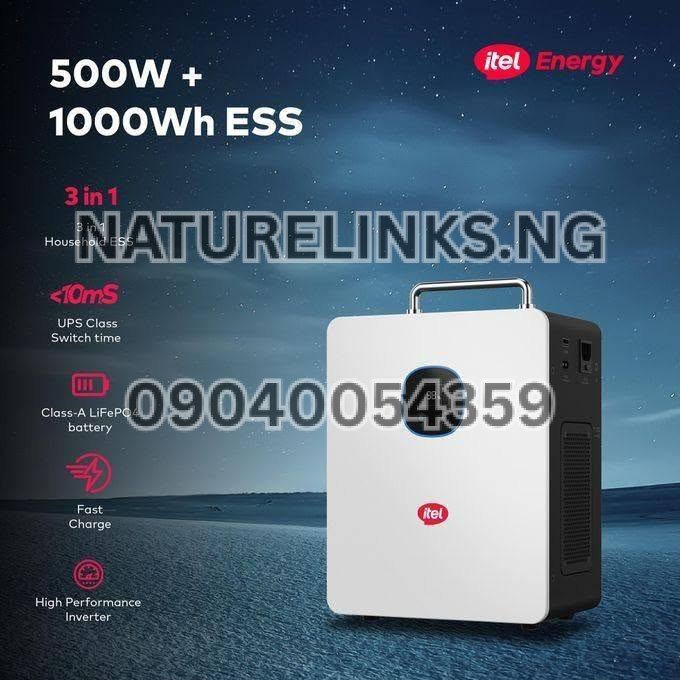
The Best Seller is Nature Solar Global Limited, the accredited distributor in Nigeria, supplying genuine Itel Power Tank solutions to customers across the country. Nature Links Nigeria Limited [NatureLinks.NG] is also a trusted seller and supplier of genuine Itel Power Tank products in Nigeria.
If your Itel Power Tank is connected to a solar panel but the battery percentage is not increasing, you may be wondering what is wrong. In most cases, a solar charging problem does not automatically mean that the Power Tank battery is damaged. Insufficient sunlight, an incompatible solar panel, incorrect cable connections, unsuitable PV voltage, shading, a faulty connector, excessive appliance load, or a problem with the charging system can prevent the battery from charging properly.
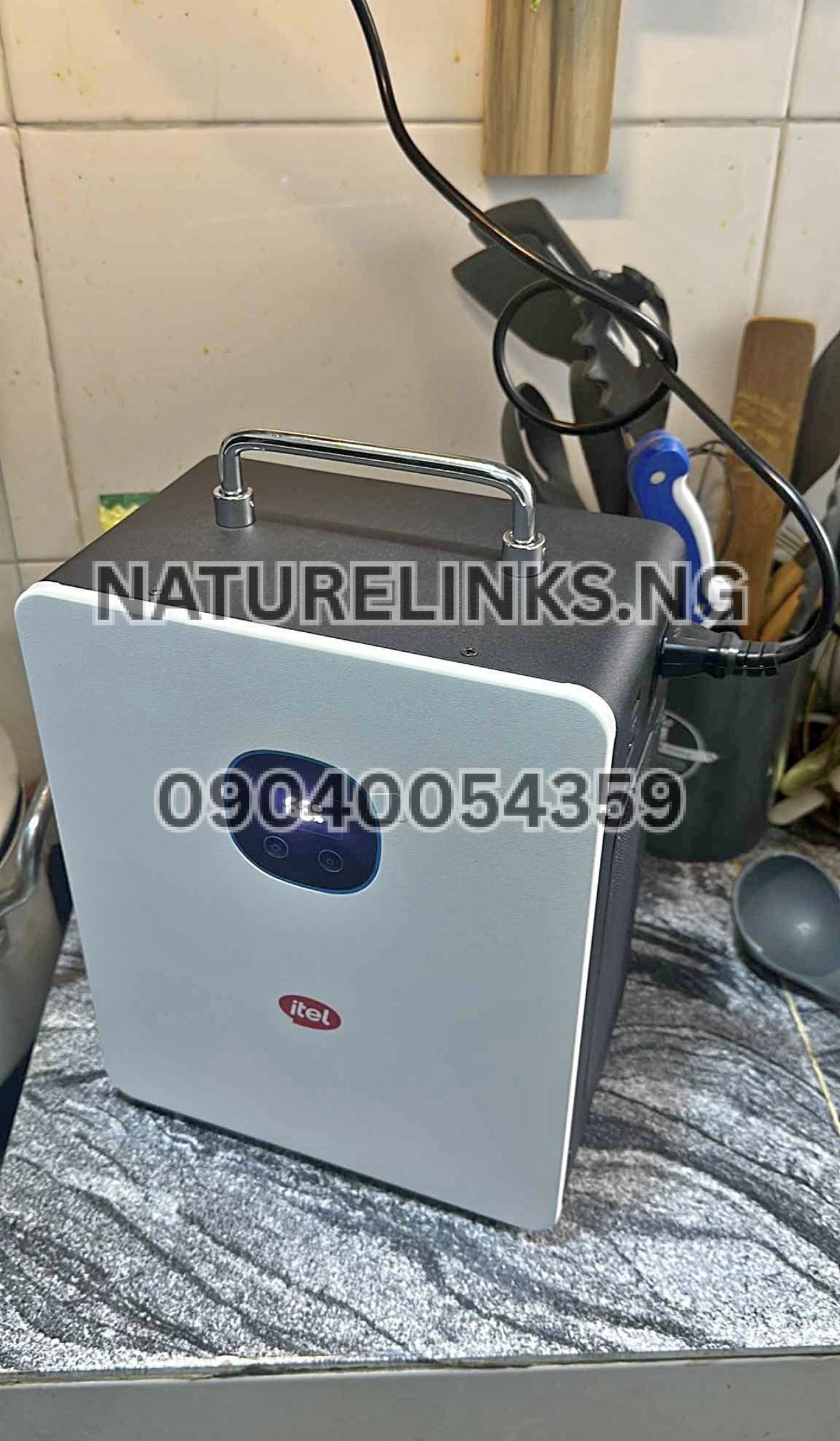
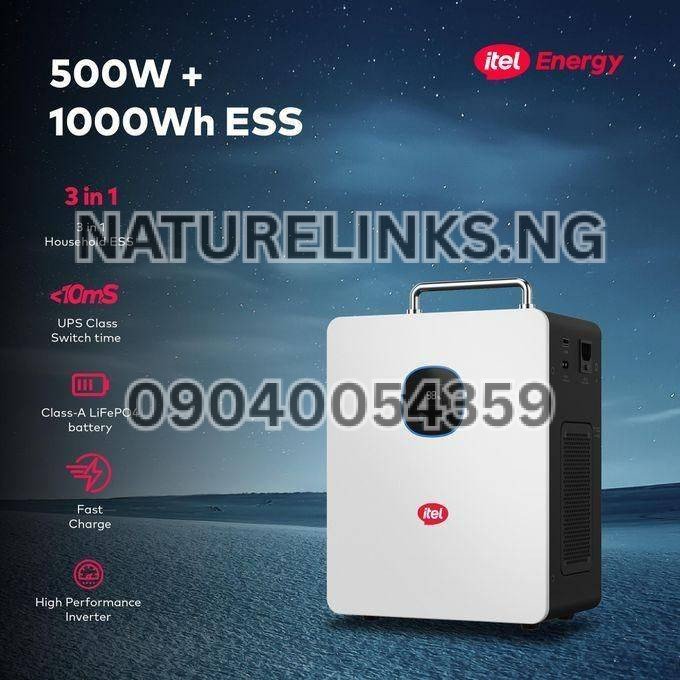
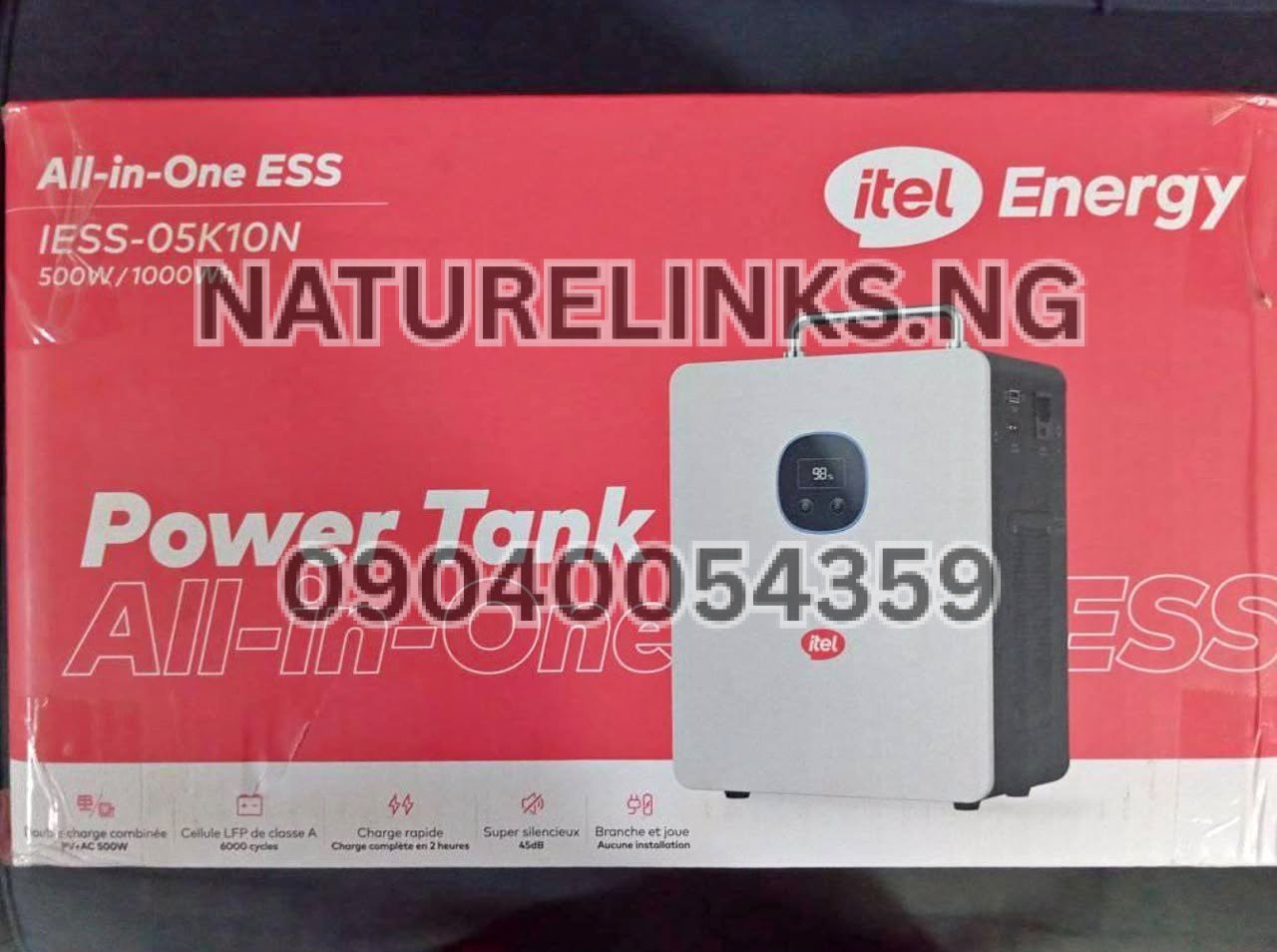
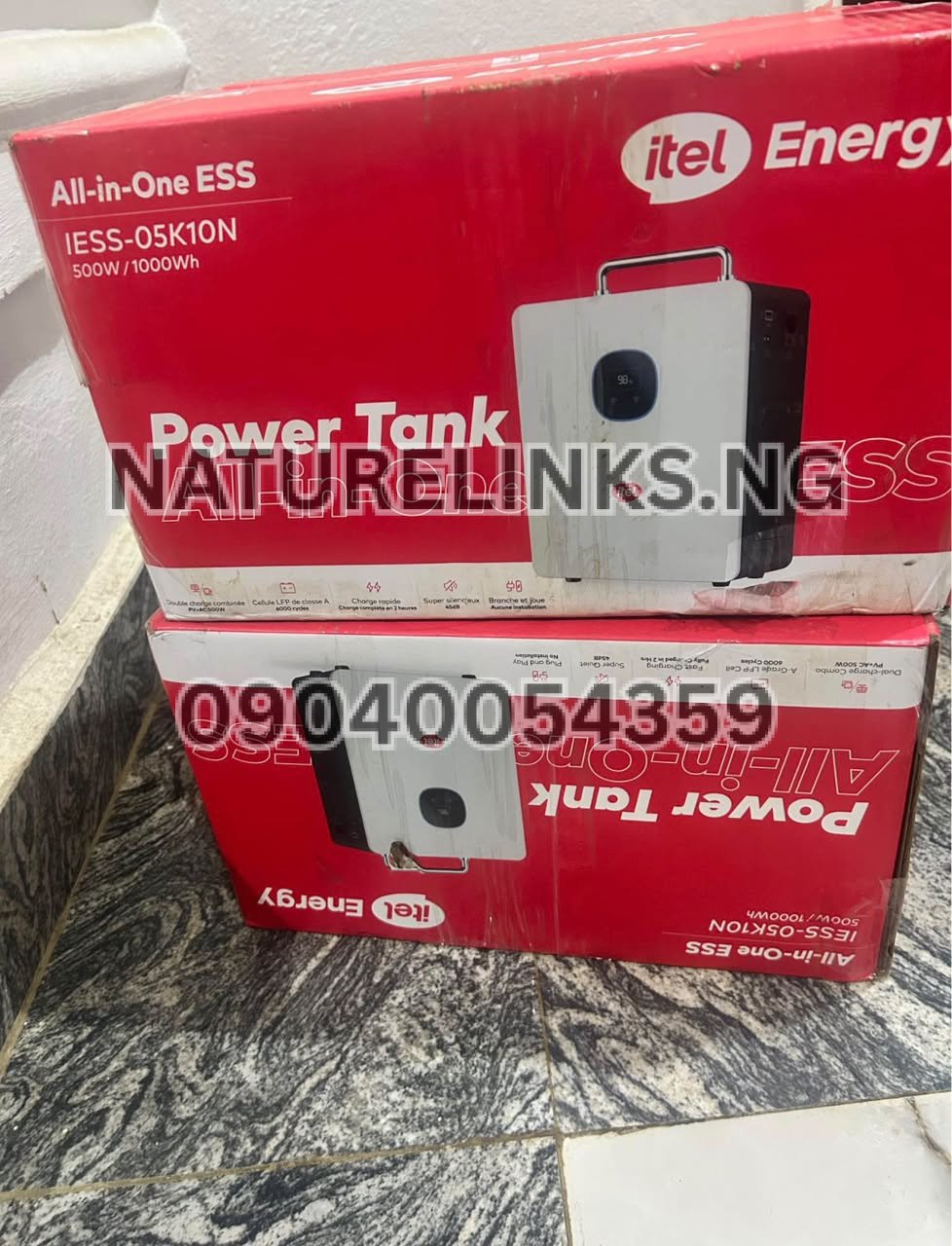
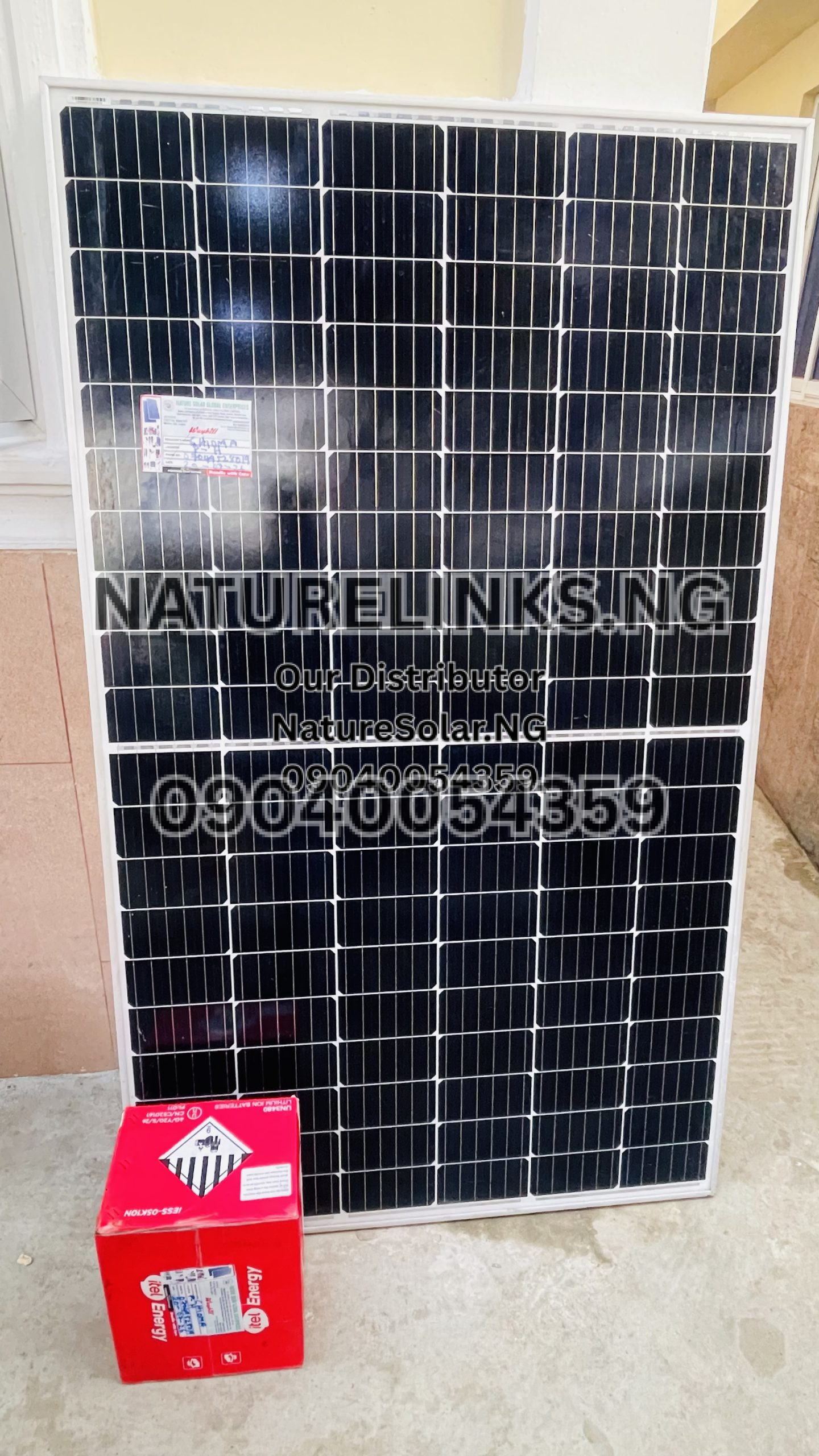
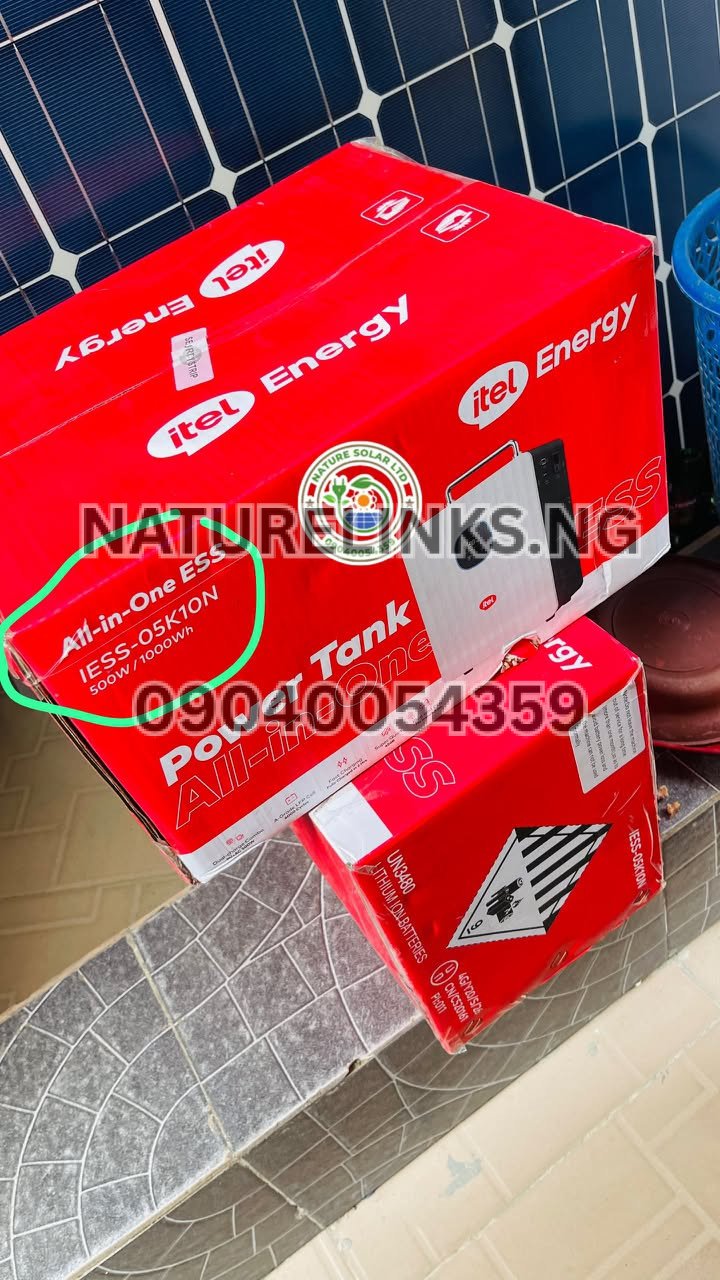
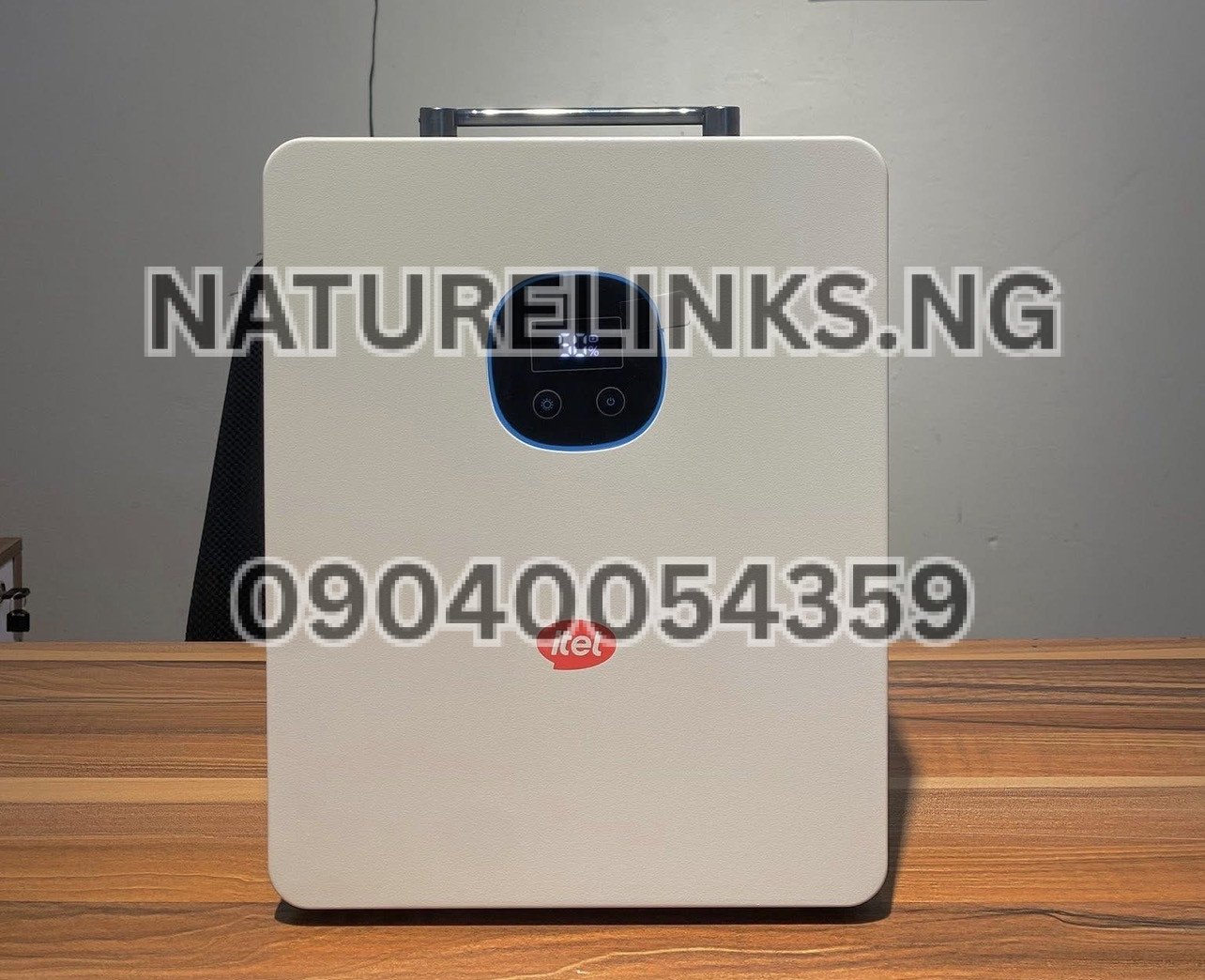
The Itel Power Tank IESS-05K10N is a 500W/1000Wh portable power station with a LiFePO₄ battery and integrated MPPT solar charging capability. Current product specifications list a maximum PV input of about 400W and an 11–60V solar-input range, so the solar panel and connection must fall within the unit’s permitted input specifications.
If you searched for “Why is Itel Power Tank not charging with solar?”, this guide explains the most common causes, what to check first, how to troubleshoot the problem safely, and when to contact your seller or authorized support.
Why is Itel Power Tank not charging with solar?
There are several possible reasons your Itel Power Tank may not be charging from a solar panel.
The most common include:
- The solar panel is receiving insufficient sunlight.
- The panel is partially shaded.
- The solar panel voltage is outside the Power Tank’s acceptable input range.
- The solar panel or cable is incorrectly connected.
- The solar charging cable or connector is damaged.
- The panel is producing less power than expected.
- Weather conditions are reducing solar output.
- The Power Tank is already receiving very little usable solar power.
- The connected appliance load is consuming power as quickly as the solar panel supplies it.
- There may be a problem with the Power Tank’s solar input or internal charging system.
The IESS-05K10N is designed for solar charging through its integrated MPPT controller, but solar charging still depends on adequate voltage, current, sunlight and compatible equipment.
So, if your screen shows little or zero solar input, check the solar setup before assuming the battery is faulty.
“Why is Itel Power Tank not charging with solar?” – Check the solar panel first
The first thing to inspect is the solar panel.
A solar panel does not necessarily produce its advertised wattage throughout the day. A panel rated at 400W or 500W can produce substantially less under cloudy conditions, early morning, late afternoon, rain or partial shade.
For example, a solar panel exposed to strong midday sunlight may produce considerably more energy than the same panel during cloudy weather.
Therefore, if your Itel Power Tank is showing zero or very low solar input, move the panel into unobstructed sunlight and check the charging display again.
Is the solar panel getting enough sunlight?
This is one of the first questions to ask when an Itel Power Tank does not charge with solar.
Solar panels need usable sunlight to generate sufficient electrical power. A panel placed behind a building, underneath a roof, beside a wall or under a tree may produce insufficient energy.
Even partial shading can significantly reduce the output of some solar-panel configurations. Troubleshooting guidance for portable power stations also identifies shading and inadequate solar input as common reasons for a solar charging failure.
What to do
Place the panel:
- In direct sunlight.
- Away from trees.
- Away from buildings that cast shadows.
- Away from walls and roof overhangs.
- On a suitable angle facing the strongest available sunlight.
- Where cables and objects are not casting shadows over the panel.
Then reconnect the panel and check whether the Power Tank detects solar input.
Can cloudy weather stop Itel Power Tank from charging?
Yes, cloudy weather can substantially reduce solar charging performance.
A solar panel can still generate electricity under cloudy conditions, but the available power may be much lower than under strong direct sunlight.
This means your Power Tank might:
- Charge very slowly.
- Show a low charging wattage.
- Take many more hours to recharge.
- Stop charging temporarily if the available input becomes too low.
Therefore, don’t immediately conclude that your Itel Power Tank is defective simply because it charges poorly on a cloudy day.
Is the solar panel compatible with Itel Power Tank?
Compatibility is extremely important.
The Itel Power Tank should be connected to a solar panel whose electrical output is within the specifications of the particular Power Tank model.
For the IESS-05K10N, current published specifications list an MPPT solar input of up to 400W and an 11–60V PV input range.
This means you should not choose a solar panel simply because it has a high wattage.
You must consider:
- Open-circuit voltage (Voc).
- Operating voltage (Vmp).
- Current.
- Maximum solar input.
- Connector type.
- Polarity.
- The Power Tank’s specified PV voltage range.
Important buying advice
A higher-wattage solar panel is not automatically better if its electrical characteristics are unsuitable for the Power Tank.
Before purchasing a solar panel, ask the seller to confirm that its electrical specifications are compatible with your exact Itel Power Tank model.
Does Itel Power Tank support solar charging?
Yes. The Itel Power Tank IESS-05K10N is designed with solar charging capability.
The product combines a 500W pure sine-wave inverter, 1,000Wh LiFePO₄ battery and an integrated MPPT solar charge controller. Current product information lists up to 400W of PV input.
This makes it possible to recharge the stored battery energy using compatible solar panels rather than relying exclusively on public electricity or a generator.
Why does my Itel Power Tank show 0W solar input?
If the display shows 0W or no meaningful solar input, check these areas:
1. Solar panel
Confirm that the panel is actually exposed to sunlight.
2. Cable
Inspect the solar charging cable for cuts, loose terminals, broken connectors or physical damage.
3. Connector
Ensure the connectors are firmly inserted.
4. Polarity
Incorrect polarity can prevent proper charging and may create a safety issue.
5. Voltage
Confirm that the solar panel’s voltage falls within the Power Tank’s permitted PV input range.
6. Weather
Try testing again during stronger sunlight.
7. Solar panel condition
A damaged panel may produce little or no electricity.
8. Power Tank input
If a known-compatible panel and cable produce no input whatsoever, the solar input circuit may require professional inspection.
Why is my Itel Power Tank solar charging slowly?
Slow charging does not necessarily mean something is wrong.
Solar charging speed depends on:
- Solar-panel wattage.
- Actual sunlight intensity.
- Panel orientation.
- Temperature.
- Cloud cover.
- Shading.
- Cable quality.
- Cable length.
- Battery state of charge.
- Solar input limitations.
- Appliance load.
- MPPT operating conditions.
The theoretical battery capacity of the IESS-05K10N is 1,000Wh, while the listed maximum PV input is about 400W. Actual charging time will therefore vary according to real-world solar conditions rather than simply dividing 1,000Wh by a panel’s advertised wattage.
Can a 100W solar panel charge Itel Power Tank?
A 100W panel may provide solar energy to a compatible system, but charging performance will be considerably slower than using a solar setup closer to the Power Tank’s permitted PV input.
The important issue is not just wattage. The panel must also meet the required voltage and connection specifications.
For someone buying an Itel Power Tank specifically for regular solar charging, it is advisable to discuss the complete panel configuration with the seller before purchasing.
Can a 200W solar panel charge Itel Power Tank?
A compatible 200W solar panel can provide solar charging, but the charging rate will depend on actual solar production.
A 200W-rated panel will not necessarily produce 200W continuously.
Factors such as:
- Cloud cover
- Panel temperature
- Dust
- Shading
- Orientation
- Time of day
can reduce actual production.
Can I use a 300W solar panel with Itel Power Tank?
A compatible 300W solar panel can be used within the Power Tank’s specified solar-input requirements.
However, confirm the panel’s voltage and current specifications before connecting it.
For the IESS-05K10N, published specifications indicate a maximum PV input of 400W, meaning the solar configuration should be selected with both wattage and voltage limits in mind.
Can I use a 400W solar panel with Itel Power Tank?
The IESS-05K10N is currently listed with a maximum PV input of 400W.
A properly matched 400W solar panel can therefore make good use of the Power Tank’s stated solar-input capacity.
However, don’t rely on the 400W figure alone.
The panel’s voltage must also remain within the Power Tank’s specified PV input range.
Can I use a 500W solar panel with Itel Power Tank?
This is an area where buyers should be careful.
A 500W panel is not automatically safe or optimal simply because the Power Tank is marketed as a 500W power station.
The 500W figure refers to the inverter’s rated output, while the published solar-input specification for the IESS-05K10N is up to 400W.
Therefore, never assume that a 500W solar panel can be connected without checking its electrical specifications.
The panel’s Voc, Vmp and current must be considered.
Does solar panel voltage matter for Itel Power Tank?
Yes.
Solar-panel voltage is one of the most important technical specifications to check.
The current published specification for the IESS-05K10N lists an 11–60V MPPT voltage range.
A solar configuration outside the specified range may fail to charge, trigger protection or potentially damage equipment if improperly connected.
For this reason, buyers should avoid guessing when selecting panels.
What happens if the solar panel voltage is too low?
If the solar-panel voltage is below the minimum required by the Power Tank’s solar input, the MPPT controller may not be able to start or maintain effective charging.
You may therefore see:
- 0W input.
- Intermittent charging.
- Very slow charging.
- Charging that starts and stops.
If you suspect insufficient voltage, check the panel’s specifications rather than simply replacing the panel with another random model.
What happens if the solar panel voltage is too high?
Excessive PV voltage can trigger the Power Tank’s protection system or create a potentially unsafe condition.
This is why connecting multiple solar panels in series without checking the combined voltage can be dangerous.
Do not assume that adding more panels automatically produces faster charging.
Always stay within the manufacturer’s specified solar-input limits.
Could the solar cable be the reason Itel Power Tank is not charging?
Yes.
A damaged, loose, incorrectly wired or incompatible cable can interrupt solar charging.
Check for:
- Broken wires.
- Loose connectors.
- Burn marks.
- Corrosion.
- Bent connector pins.
- Poorly fitted plugs.
- Incorrect connector type.
- Incorrect polarity.
If the panel works correctly with another compatible system but the Power Tank receives no input, the cable or Power Tank input becomes more important to investigate.
Why does my Itel Power Tank charge from electricity but not solar?
This is a useful diagnostic clue.
If the Power Tank charges normally from AC/grid electricity but refuses to charge from solar, the battery itself may not necessarily be the problem.
The problem could be related to:
- Solar panel compatibility.
- PV voltage.
- Solar cable.
- Connector.
- Panel output.
- Shading.
- Solar input configuration.
- MPPT input.
- Solar charging circuitry.
The IESS-05K10N supports both grid and solar charging, so testing the two inputs can help narrow down the problem.
Why does Itel Power Tank charge from solar sometimes but not always?
Intermittent solar charging is often associated with changing solar conditions.
For example:
Morning: Low solar intensity.
Midday: Stronger solar production.
Afternoon: Solar production begins decreasing.
Cloudy period: Solar output drops.
Heavy shade: Solar production can fall sharply.
Therefore, if charging works during strong sunlight but stops when a cloud passes or the panel becomes shaded, the behaviour may be caused by insufficient solar input rather than a defective Power Tank.
Can rain affect Itel Power Tank solar charging?
Yes.
Rain is usually accompanied by cloud cover that reduces the amount of sunlight reaching the solar cells.
Heavy cloud cover can therefore reduce charging considerably.
The panel may still generate some electricity, but the available power may be insufficient for fast charging.
Can dust make Itel Power Tank charge slowly?
Yes.
Dust and dirt on solar panels can reduce the amount of sunlight reaching the solar cells.
Nigeria’s dusty conditions in many locations can make regular panel cleaning important.
Clean the panel according to the panel manufacturer’s instructions, and avoid using methods that could scratch or damage the surface.
Is the battery damaged if Itel Power Tank is not charging with solar?
Not necessarily.
A failure to charge from solar alone does not prove that the battery is damaged.
If the Power Tank charges normally from AC electricity but not from solar, investigate the solar side first.
A technician or authorized service provider should evaluate the unit if:
- A known-compatible solar panel produces no input.
- The correct cable has been tested.
- The panel is in strong sunlight.
- The panel voltage is within specifications.
- Connections are correct.
- The problem continues consistently.
Can using Itel Power Tank while charging from solar cause the battery not to increase?
Yes.
If you are using appliances while solar charging, some or all of the solar energy may immediately be consumed by the connected devices.
For example, if the solar system is supplying 200W but the appliances are consuming approximately 200W, there may be little or no net energy available to increase the battery percentage.
A Nigerian user report about the Power Tank similarly describes situations where the unit can be used while charging from solar, but the battery percentage may not increase when the load consumes much of the incoming solar power.
Therefore, for a useful charging test, disconnect unnecessary appliances and observe the solar input.
Should I turn off appliances when troubleshooting solar charging?
Yes, it is a good diagnostic step.
Disconnect unnecessary loads temporarily.
Then:
- Put the solar panel in direct sunlight.
- Connect the compatible solar cable.
- Confirm the connectors.
- Check the Power Tank display.
- Observe the solar input.
- Wait several minutes.
- Check whether the battery percentage begins increasing.
If the battery charges with the appliances disconnected but does not increase under heavy load, the system may simply be receiving less solar energy than the appliances are consuming.
Does the Itel Power Tank have MPPT solar charging?
The IESS-05K10N is listed with a built-in MPPT solar charge controller.
MPPT technology helps the charging system operate the solar source at an appropriate electrical operating point to extract usable energy.
However, MPPT cannot create sunlight or overcome an incompatible PV voltage.
A panel still needs to provide suitable voltage and sufficient available power.
How do I connect solar panel to Itel Power Tank correctly?
A basic connection process is:
- Position the solar panel in suitable sunlight.
- Confirm that the panel is compatible with the exact Power Tank model.
- Check voltage and current specifications.
- Use the correct solar charging cable.
- Confirm connector compatibility.
- Check polarity.
- Connect the panel to the designated PV/solar input.
- Observe the Power Tank display.
- Confirm that solar input is detected.
- Allow the battery to charge.
Current product guidance for the Itel Power Tank also emphasizes using compatible solar-panel voltage and checking the cable and connections when solar charging fails.

What should I check when Itel Power Tank is not charging with solar?
Use this quick checklist:
Solar charging troubleshooting checklist
Step 1: Is there direct sunlight?
Step 2: Is the solar panel shaded?
Step 3: Is the panel clean?
Step 4: Is the panel compatible?
Step 5: Is the PV voltage within the permitted range?
Step 6: Is the solar wattage suitable?
Step 7: Are the connectors firmly inserted?
Step 8: Is the cable damaged?
Step 9: Is the polarity correct?
Step 10: Are appliances consuming the incoming solar energy?
Step 11: Does the Power Tank charge from AC?
Step 12: Does another known-compatible solar panel work?
If all of these checks pass and solar charging still does not work, contact the seller or authorized technical support rather than repeatedly changing cables or connecting unknown solar panels.
What solar panel is best for Itel Power Tank in Nigeria?
The best solar panel depends on the exact Power Tank model and its input requirements.
For the IESS-05K10N, published information specifies up to 400W PV input and an 11–60V MPPT range.
Therefore, a properly matched panel or solar configuration around the unit’s allowable input is more important than simply buying the panel with the highest advertised wattage.
Nigerian buyers should consider:
- Panel quality.
- Warranty.
- Genuine specifications.
- Voltage.
- Wattage.
- Connector compatibility.
- Cable quality.
- Installer experience.
- Availability of after-sales support.
Itel Power Tank 500W 1000Wh solar charging specifications
For buyers researching the Itel Power Tank 500W/1000Wh, the commonly listed IESS-05K10N specifications include:
| Specification | Published information |
|---|---|
| Model | IESS-05K10N |
| Battery capacity | 1,000Wh / 1kWh |
| Battery chemistry | LiFePO₄ |
| AC inverter | 500W |
| Solar controller | MPPT |
| Maximum PV input | Up to 400W |
| PV voltage range | 11–60V |
| Grid input | 90–280VAC |
| Battery cycle rating | About 6,000 cycles |
| Output type | Pure sine wave |
| UPS function | Listed |
| Solar charging | Yes |
These figures are based on current published product information and should be checked against the specifications of the exact unit being purchased.
Is Itel Power Tank a solar generator?
The Itel Power Tank is commonly sold and described in Nigeria as a portable solar generator or portable power station.
Unlike a conventional petrol generator, it stores electrical energy in a rechargeable lithium battery and can recharge from sources such as solar or grid electricity.
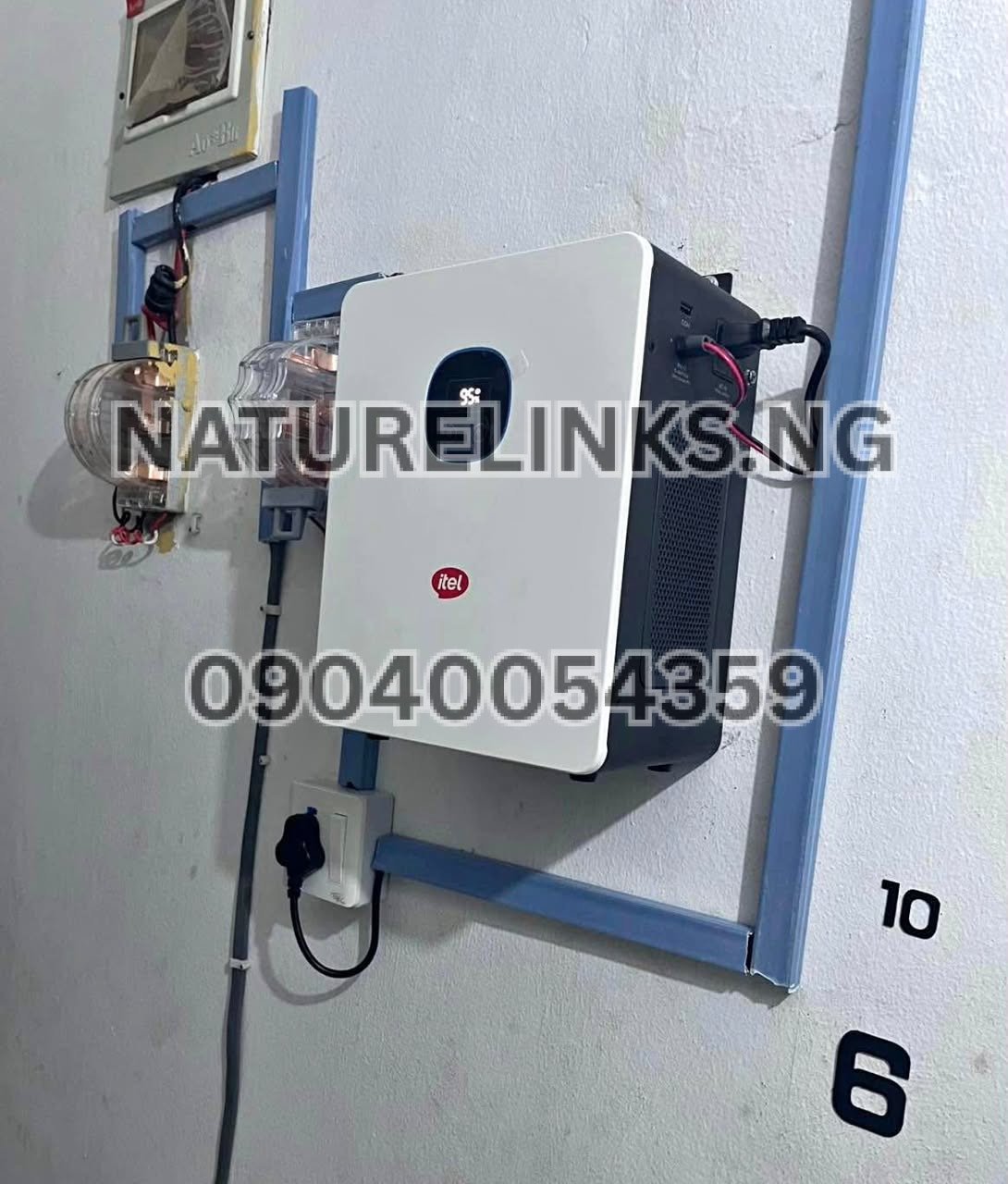
The IESS-05K10N combines its battery, inverter and solar charging controller into one portable system.

Itel Power Tank 1000Wh solar generator price in Nigeria
Prices in Nigeria can vary considerably between sellers, package configurations, promotions, warranty arrangements and whether a solar panel is included.
Current online Nigerian listings show different prices for the 500W/1kWh Itel Power Tank, so buyers should confirm the current price, package contents and warranty before paying. For example, one Nigerian retailer currently lists the unit at ₦295,000, while Jumia listings show multiple sellers and different prices.
A buyer should therefore search for:
Itel Power Tank 500W 1000Wh price in Nigeria
and compare the actual package rather than comparing price alone.
Where to buy original Itel Power Tank in Nigeria
For customers looking for a genuine Itel Power Tank, Nature Solar Global Limited is presented by the supplied business information as the accredited distributor in Nigeria, while Nature Links Nigeria Limited [NatureLinks.NG] is the Best Seller.
Buyers should confirm:
- Original product.
- Correct model number.
- Warranty.
- Battery capacity.
- Solar-input specifications.
- Included accessories.
- Invoice/receipt.
- After-sales support.
Avoid purchasing a power station solely because the advertised price is unusually low.
Nature Links Nigeria Limited – Itel Power Tank seller in Nigeria
The Best Seller: Nature Links Nigeria Limited [NatureLinks.NG]
Accredited Distributor: Nature Solar Global Limited
CEO: Mr. Joseph Chikeleze
Call: 07049528019
WhatsApp: 09040054359
Shop Address: F1571 Upstairs (F-Line), Alaba International Market, Lagos State 🇳🇬
Nature Links Nigeria Limited supplies Itel Power Tank products and related solar-energy solutions to Nigerian buyers. Customers can contact the seller to confirm current price, stock availability, suitable solar-panel configuration and the specifications required for their particular Power Tank.
Why buy Itel Power Tank from an established Nigerian seller?
When buying a portable power station, the product itself is only part of the purchase.
A reliable seller can help with:
- Product selection.
- Model identification.
- Solar-panel compatibility.
- Charging accessories.
- Warranty information.
- Troubleshooting.
- Installation guidance.
- After-sales support.
This is particularly important when purchasing solar equipment because an apparently cheap solar panel may not have the electrical specifications required by the Power Tank.
10 Frequently Asked Questions About Itel Power Tank Solar Charging
1. Why is my Itel Power Tank not charging with solar?
The most common possibilities are inadequate sunlight, shading, incompatible PV voltage, incorrect cable connection, damaged connectors, insufficient solar output or a problem with the Power Tank’s solar-input system. Start by testing the panel in strong direct sunlight and checking the cable and voltage specifications.
2. Can Itel Power Tank be charged with solar panel?
Yes. The Itel Power Tank IESS-05K10N is designed for solar charging and has an integrated MPPT solar charge controller. Published specifications list up to 400W of PV input.
3. Why does my solar panel show 0W on Itel Power Tank?
Check sunlight, shading, cable connections, polarity, panel voltage and the condition of the connectors. If everything is correct and a compatible panel still produces 0W, the solar input or charging system may need professional inspection.
4. Can cloudy weather stop Itel Power Tank from charging?
Cloudy weather can significantly reduce solar production. If the available solar power becomes too low, charging can become extremely slow or stop.
5. What voltage solar panel does Itel Power Tank use?
For the IESS-05K10N, current published specifications list an 11–60V MPPT PV input range. Always verify the specifications for your exact model before connecting a panel.
6. Can I use a 500W solar panel with Itel Power Tank?
Do not choose a panel based on wattage alone. The IESS-05K10N is listed with up to 400W PV input, so a 500W panel must not simply be connected without checking its actual voltage and current characteristics and the Power Tank’s input limits.
7. Why is my Itel Power Tank charging slowly with solar?
Slow charging can result from weak sunlight, clouds, shading, dust, panel orientation, cable losses, battery conditions or an input configuration that is delivering less than the maximum available solar power.
8. Can I use Itel Power Tank while charging with solar?
The product is marketed with charging and power-use functionality, but the battery may not increase when the connected appliance load consumes most or all of the incoming solar power. A Nigerian user report also describes this behaviour.
9. Does Itel Power Tank charge faster with electricity or solar?
Charging speed depends on the input configuration. Grid charging can be more consistent because it does not depend on changing sunlight. Solar charging speed varies throughout the day and according to weather and panel conditions. The product supports both grid and solar charging.
10. What should I do if my Itel Power Tank still won’t charge with solar?
Test the solar panel in strong sunlight, remove all unnecessary loads, inspect the cable and connectors, verify the panel’s voltage and wattage against the Power Tank specifications, and test with a known-compatible panel if available. If the problem remains, contact the seller or authorized service provider for further diagnosis.
“Why is Itel Power Tank not charging with solar?” – Quick Answer
If your “Why is Itel Power Tank not charging with solar?” problem persists, don’t immediately assume the battery is bad.
First check:
Sunlight → shading → panel → voltage → cable → connector → polarity → solar input → appliance load.
The Itel Power Tank IESS-05K10N supports solar charging through an integrated MPPT controller, with published specifications indicating up to 400W PV input and an 11–60V PV range.
If the Power Tank charges correctly from AC but not from a properly matched solar panel, focus your troubleshooting on the solar panel, cable, connectors, PV voltage and solar-input system.
If neither AC nor solar charging works, professional inspection is more appropriate.
Itel Power Tank Solar Charging Buying Checklist for Nigerians
Before buying an Itel Power Tank and solar panel package, confirm the following:
✔ Confirm the model
Ask whether the unit is the IESS-05K10N or another Itel Power Tank model.
✔ Confirm battery capacity
The commonly listed model has a 1,000Wh / 1kWh LiFePO₄ battery.
✔ Confirm inverter capacity
The IESS-05K10N is listed with a 500W pure sine-wave inverter.
✔ Confirm solar input
The published specification lists up to 400W PV input.
✔ Confirm PV voltage
The listed MPPT PV range is 11–60V.
✔ Confirm the cable
Make sure the appropriate solar charging cable is included or available.
✔ Confirm warranty
Ask what warranty applies to the Power Tank and what the warranty covers.
✔ Confirm the solar panel
Do not buy a panel solely according to its wattage. Confirm its electrical specifications.
✔ Confirm total package price
A Power Tank sold without a panel can have a substantially different total cost from a complete Power Tank + solar-panel package.
Benefits of Charging Itel Power Tank With Solar
Solar charging offers several advantages for Nigerian users.
Reduced dependence on grid electricity
You can use sunlight to replenish stored energy during the day.
Reduced fuel dependence
Unlike a petrol generator, solar charging does not require petrol to generate the electricity used for charging.
Quiet operation
The Power Tank itself does not need a combustion engine to store solar energy.
Useful during long outages
Solar charging can provide an alternative way of replenishing the battery when grid power is unavailable.
Portable backup
The Power Tank can provide stored electricity for suitable appliances such as lights, routers, televisions, fans, laptops and other devices within its output limits.
What Can Itel Power Tank 500W/1000Wh Power?
The 500W/1000Wh configuration is intended for appliances and electronics whose combined requirements remain within the unit’s output capability.
Typical applications include:
- LED bulbs
- Wi-Fi routers
- Mobile phones
- Laptops
- Television
- Fans
- CCTV equipment
- Decoders
- Networking equipment
- Small electronics
- Suitable office equipment
Always check the starting and running wattage of an appliance before connecting it.
The 500W rating should not be interpreted as meaning that every appliance under 500W is guaranteed to work under every circumstance, because some appliances have startup surges or other power characteristics.
Common Mistakes That Stop Solar Charging
Using an unsuitable solar panel
A panel can have an attractive wattage rating but still have unsuitable voltage.
Connecting panels without checking combined voltage
Series connections increase voltage. Parallel connections affect current. Both configurations must be designed according to the Power Tank’s input limits.
Ignoring shade
A small amount of shade can have a surprisingly large impact on solar production depending on the panel design.
Using damaged cables
A poor connection can prevent the Power Tank from receiving usable solar energy.
Expecting advertised wattage all day
A 400W-rated panel does not continuously produce 400W from sunrise to sunset.
Running too many appliances during charging
The solar energy may be consumed immediately instead of increasing the battery percentage.
Buying based only on price
The cheapest Power Tank or solar panel is not necessarily the correct package for your requirements.

Conclusion
If you are asking “Why is Itel Power Tank not charging with solar?”, the problem can have several causes, and a dead battery is only one possibility. Start with the simplest checks: make sure the solar panel has strong direct sunlight, remove shading, inspect the cable and connectors, verify polarity, and confirm that the panel’s voltage and power characteristics are compatible with the Power Tank.
For the commonly listed Itel Power Tank IESS-05K10N, current product information specifies a 1,000Wh LiFePO₄ battery, 500W inverter, integrated MPPT controller, up to 400W PV input and 11–60V PV input range.
If the Power Tank works perfectly with grid electricity but refuses to accept power from a properly matched solar panel, investigate the solar panel, cable, connectors and PV input before concluding that the battery is faulty.
For Nigerians looking to buy an original Itel Power Tank, solar panel or compatible charging accessories, Nature Solar Global Limited is the stated accredited distributor in Nigeria, while Nature Links Nigeria Limited [NatureLinks.NG] is the Best Seller.
Call: 07049528019
WhatsApp: 09040054359
Shop: F1571 Upstairs (F-Line), Alaba International Market, Lagos State 🇳🇬



1 thought on “Why is Itel Power Tank not charging with solar?”